
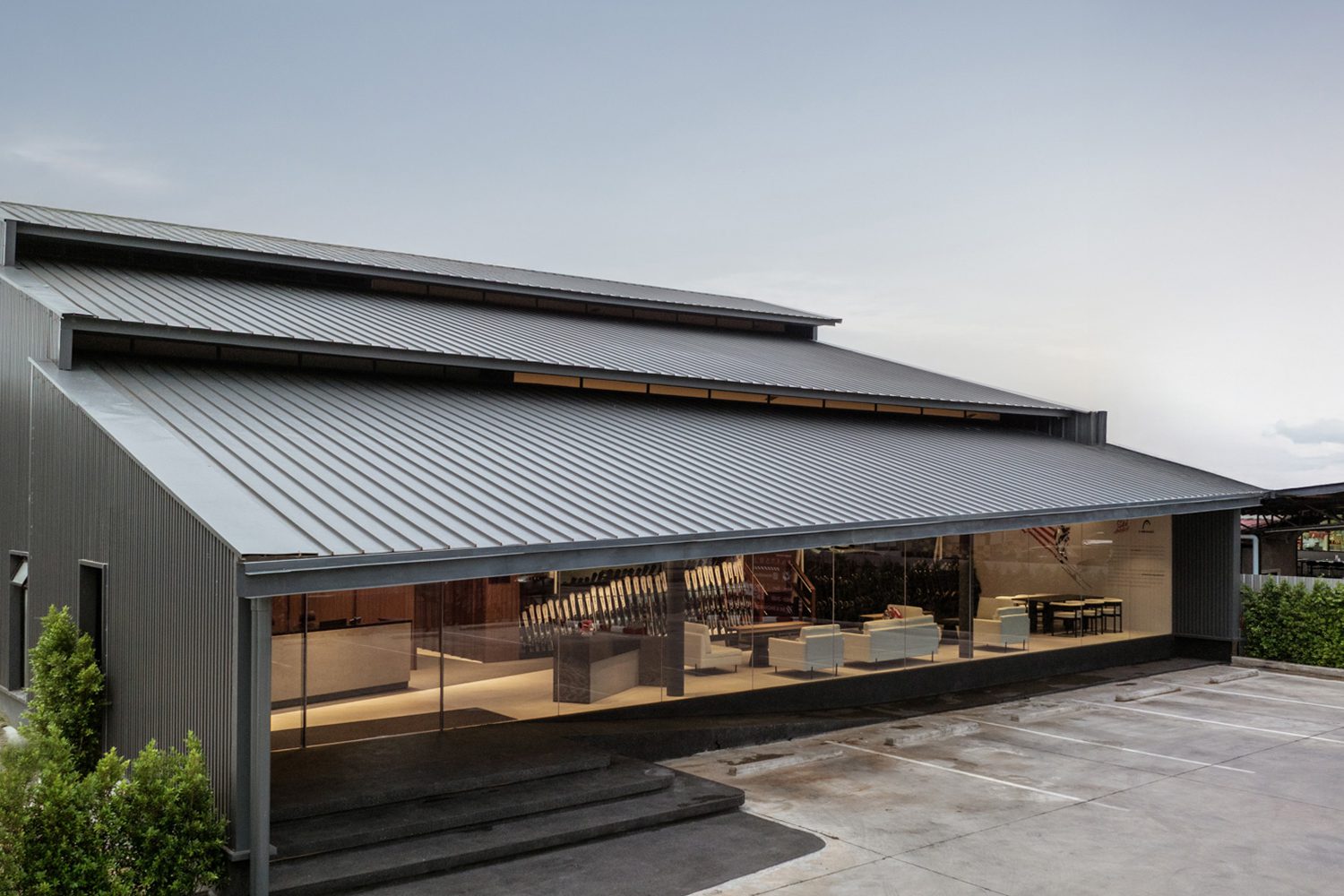
SKI ADDICT IS AN INDOOR SKI FACILITY DEFINED BY A SIMPLE FORM THAT EMPHASIZES INTERIOR FUNCTIONALITY UNDER THE CONCEPT ‘SLOPES WITHIN SLOPES’
TEXT: PHARIN OPASSEREPADUNG
PHOTO: WEERAPON SINGNOI
(For Thai, press here)
Skiing, a popular sport synonymous with the winter season, may be a familiar sight elsewhere, but in Thailand, where snow is absent, experiencing it typically requires carefully planned trips abroad. Beyond geography, skiing is also a discipline that demands time, instruction, and repeated practice; it is rarely mastered on the first attempt. Designed by Physicalist, a Thailand-based architectural studio, SKI ADDICT reimagines how skiing can be practiced in Thailand by offering year-round ski training within a purpose-built indoor environment specifically conceived to accommodate the sport.
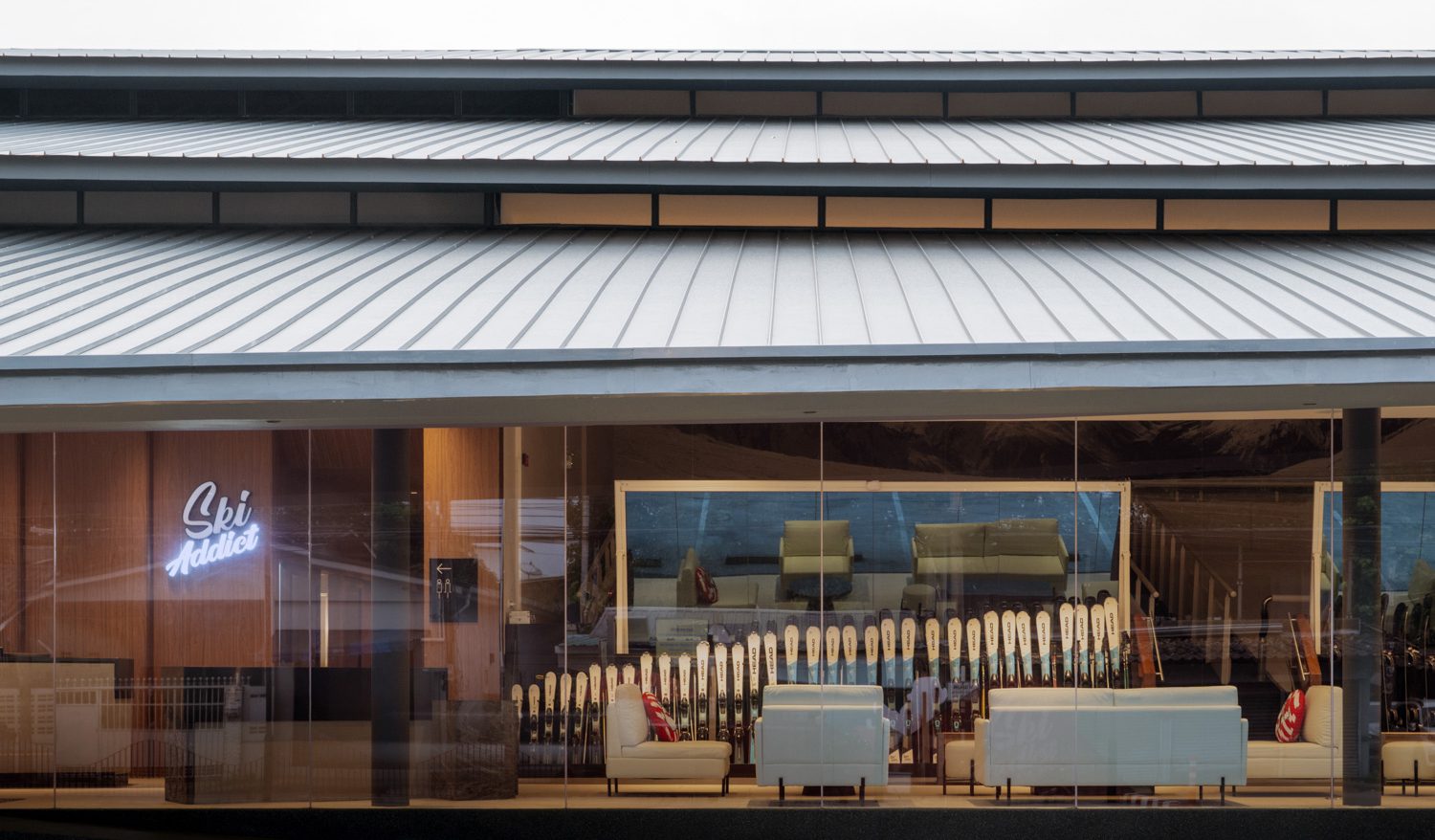
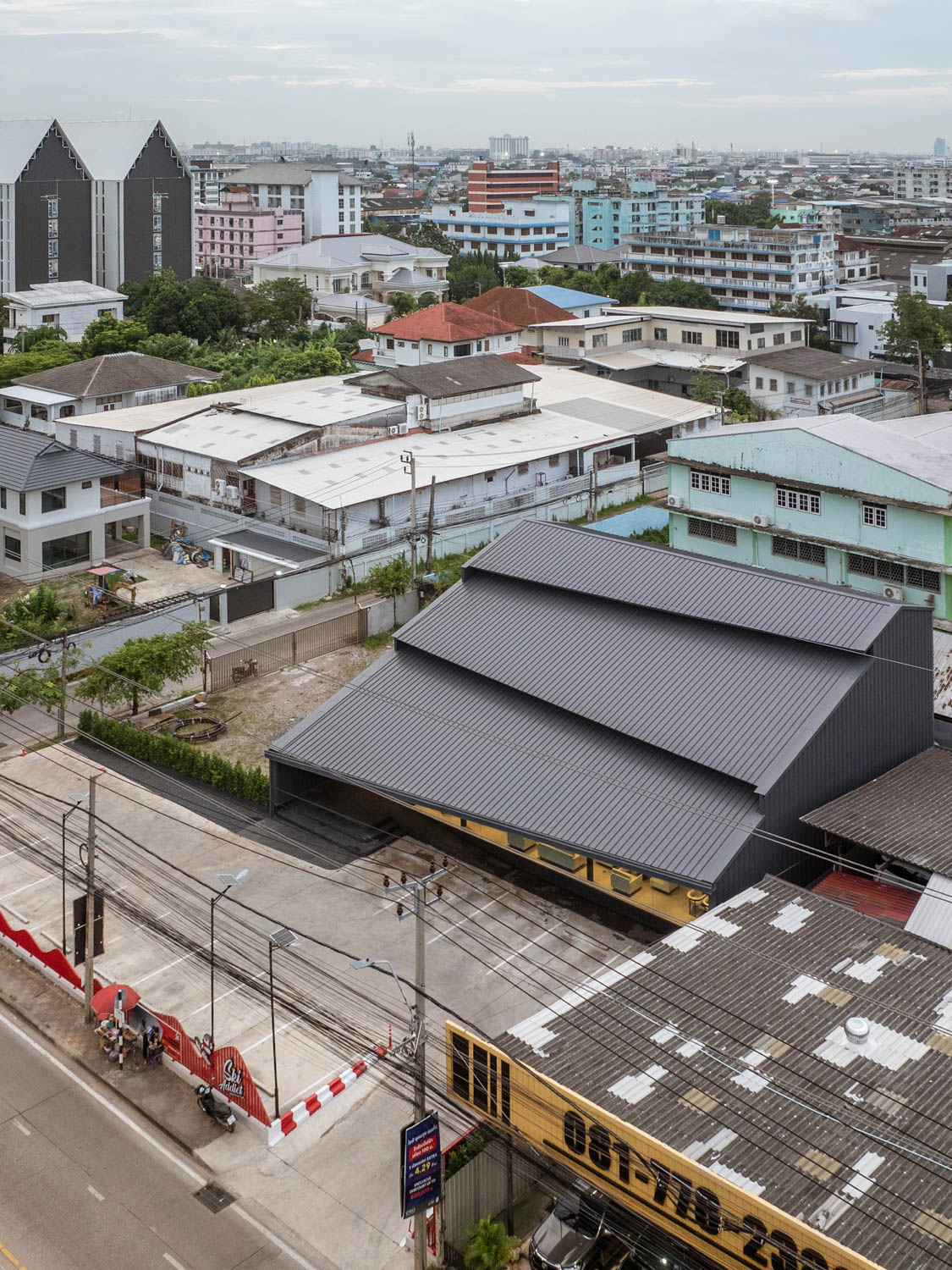
The architecture presents itself as a restrained, rectangular volume, its front elevation opened almost entirely through a large expanse of clear glazing. Located on Soi Bearing 30 in Bangkok, the structure is crowned by a steeply sloped gray metal-sheet roof. Rather than seeking visual excess, the building derives its character from clarity, allowing form to emerge directly from function. This logic culminates in the project’s guiding idea, ‘Slopes within Slopes,’ where layered inclined spaces respond directly to the steep gradients of the ski training apparatus. The result is a spatial simulation of alpine terrain, translating the sensation of skiing down a mountainside into an interior architectural experience.
The initial brief for the building was to create a space for learning and practicing skiing in Thailand. A key constraint was the inclusion of a large-scale ski simulator characterized by a steep incline. As a result, the building required a sloping front façade and a correspondingly tall interior volume. The primary form of the building was therefore inevitably designed to incline in parallel with the main apparatus, becoming a clear example of an approach grounded in the principle that form follows function.
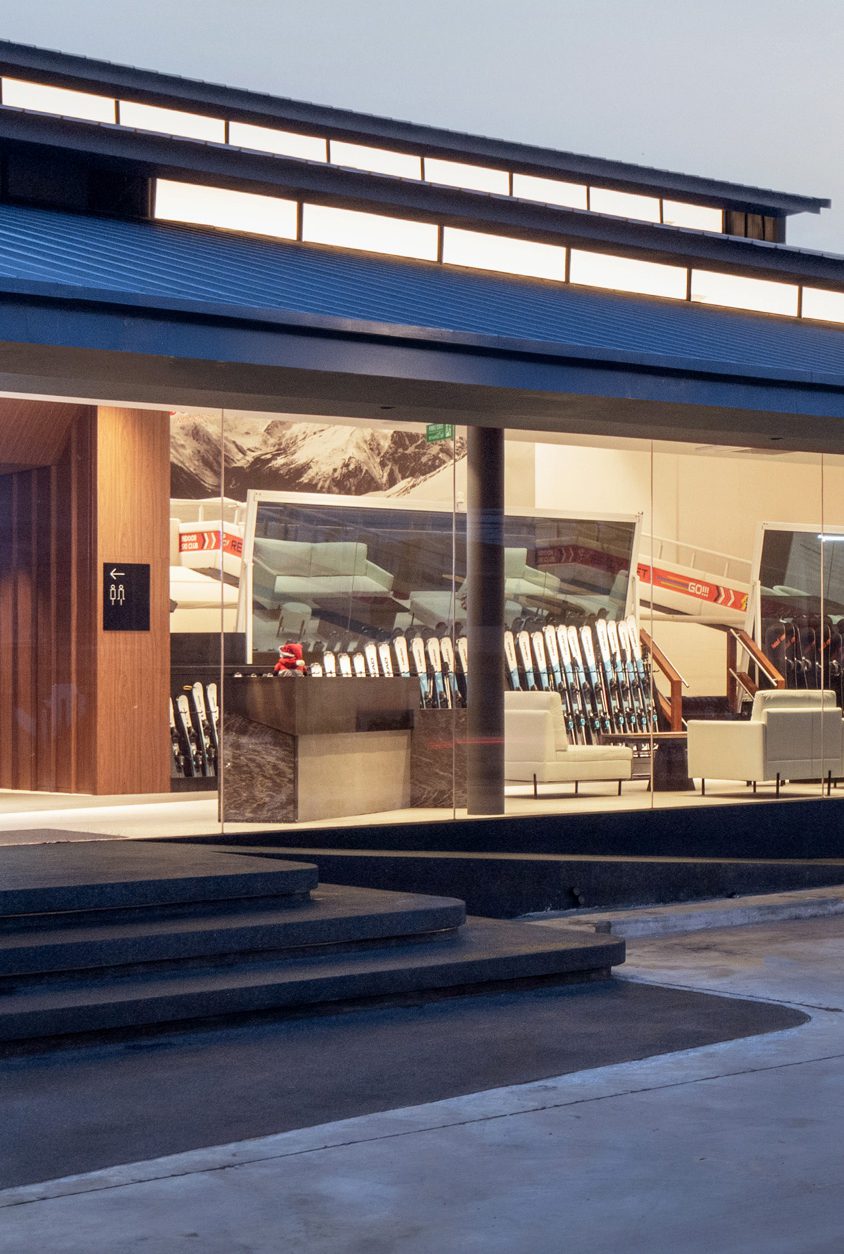
With the building’s mass defined by a sloped geometry, the roof emerges as a central architectural highlight. The gray, sloping roof plane is articulated into three tiers by two diagonal lines, each set at a slightly different angle. These lines subdivide the overall volume into three distinct proportions, reducing the perceived scale of the building and softening its industrial character. In doing so, the architecture is brought closer to a human scale, lending the building a more approachable presence and making it better suited to everyday use.
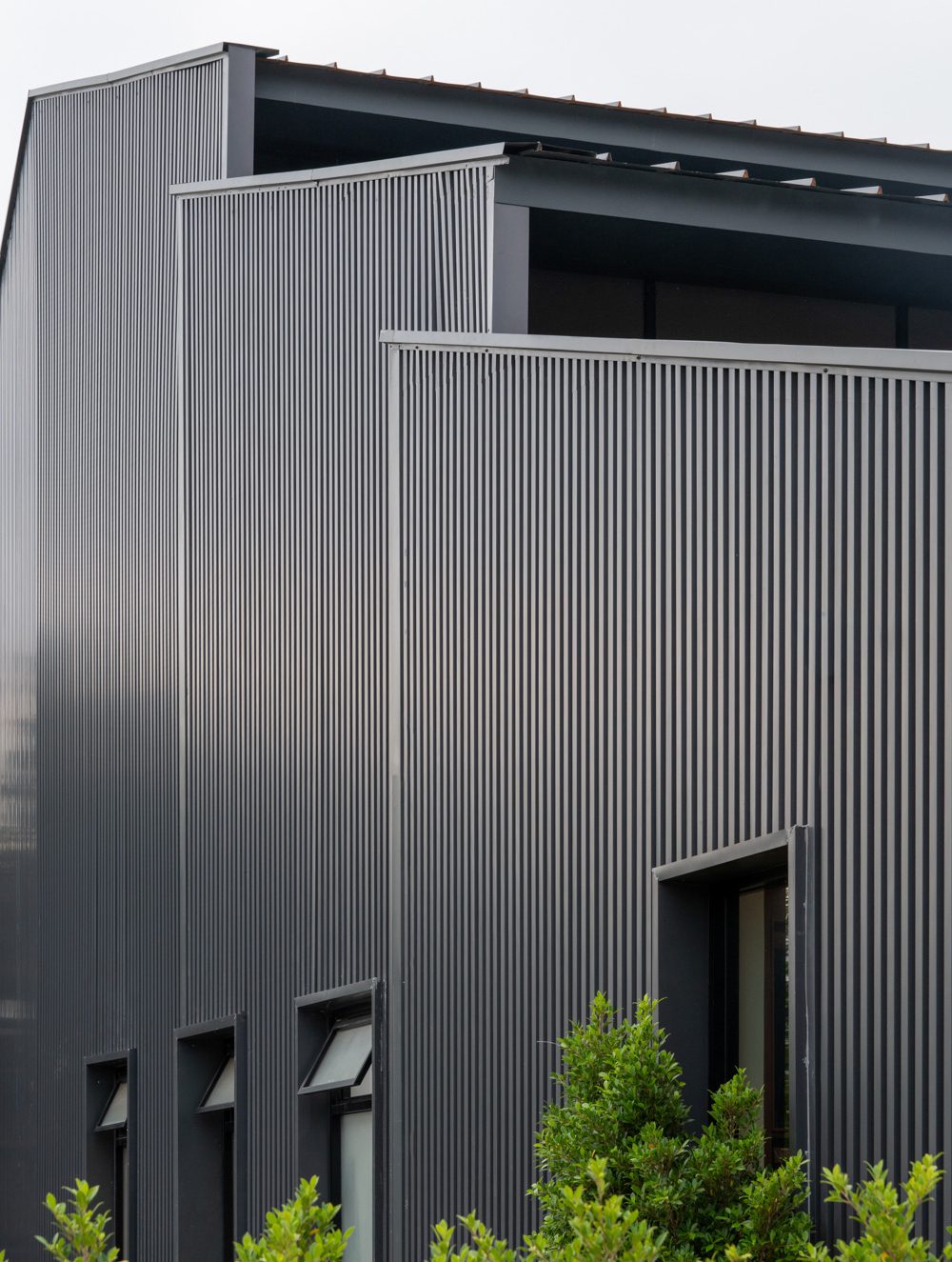
The two diagonal lines are not confined to the roof alone. They are extended along the side elevations, where they establish a stepped progression in the height of the massing. In certain areas, portions of these diagonal lines are cut away to function as skylights, allowing natural light to penetrate the interior ski training areas. This introduces a visual and atmospheric connection to the exterior while easing the sense of enclosure within the building.
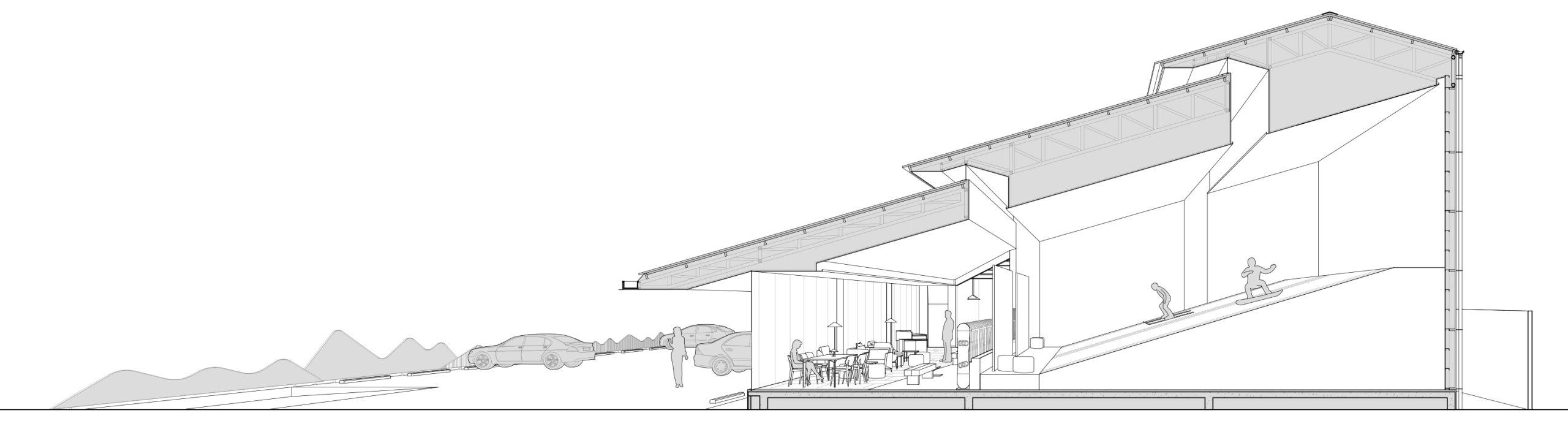
Through the articulation of these two diagonal lines, the architects intentionally divide the roof plane into three distinct segments, creating a rhythm of separation rather than a single continuous expanse. This corresponds with the exterior expression, where the roof reads not as one uninterrupted surface but as a series of overlapping planes. The strategy softens the rigidity of the interior environment, giving each spatial zone its own character while simultaneously assisting in the organization and management of the building’s internal program.
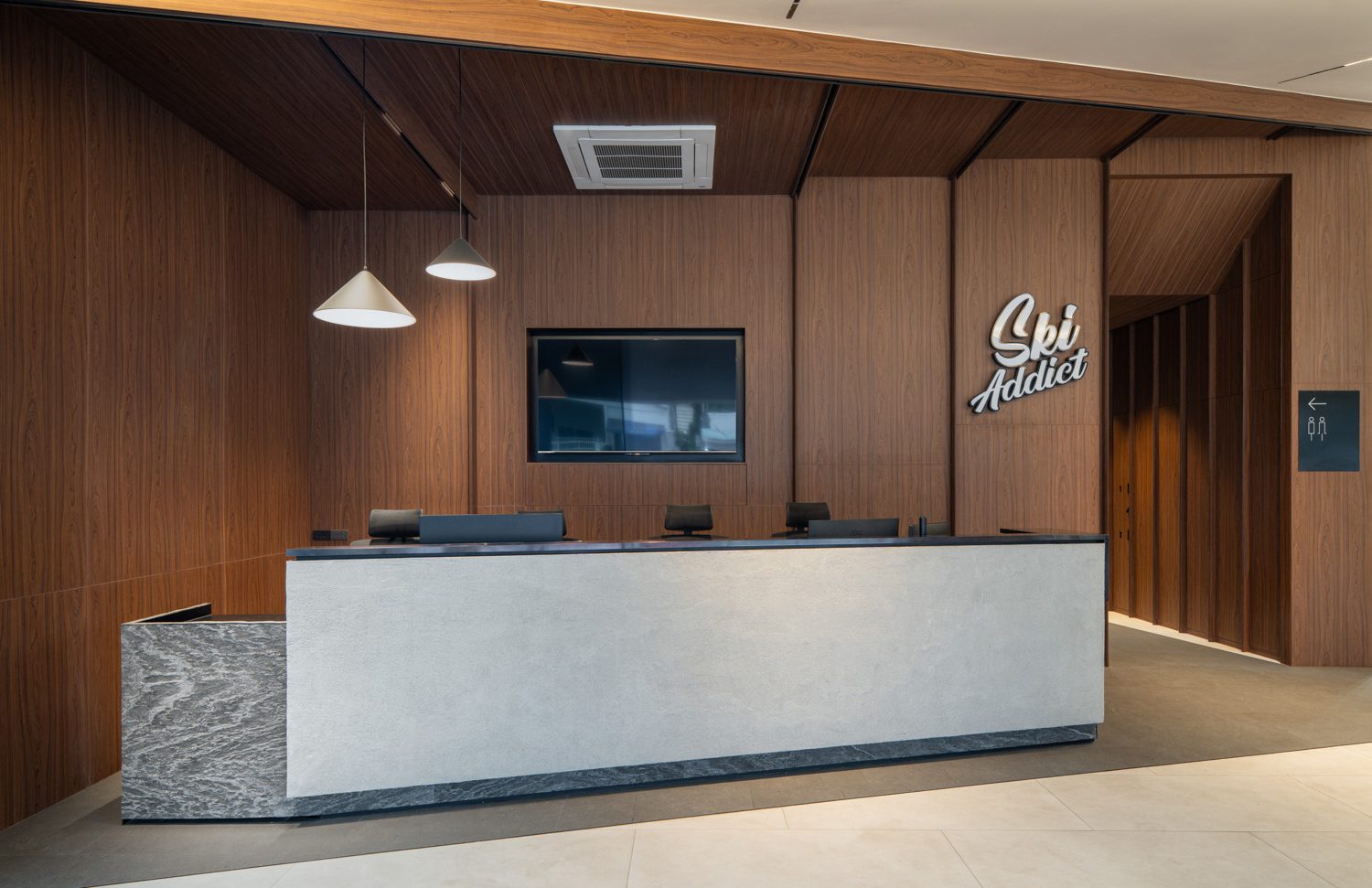
At the front of the building, where the height is at its lowest, the architects position the reception and lounge areas, integrating key functions such as the reception counter, snack bar, and lounge into a single, continuous space. This front hall is designed to remain open and visually connected, allowing activities inside the building to be clearly perceived. It serves as a welcoming threshold from the moment visitors arrive, offering an atmosphere conducive to waiting, casual conversation, or even working between training sessions. From here, the spatial sequence gradually transitions toward the sports and service areas at the rear, where the ceiling height increases. The building’s mass rises incrementally in a vertical progression, complemented by a panoramic glazed façade at the front that simultaneously opens horizontal views through a broad opening.
Beyond the reception area, as one moves deeper into the building, the program is clearly organized into a service zone. This zone includes locker areas, separate men’s and women’s restrooms, a shoe storage room, and staff rooms located further toward the rear. These spaces are connected to the building’s back-of-house service areas, supporting all behind the scenes operational functions.
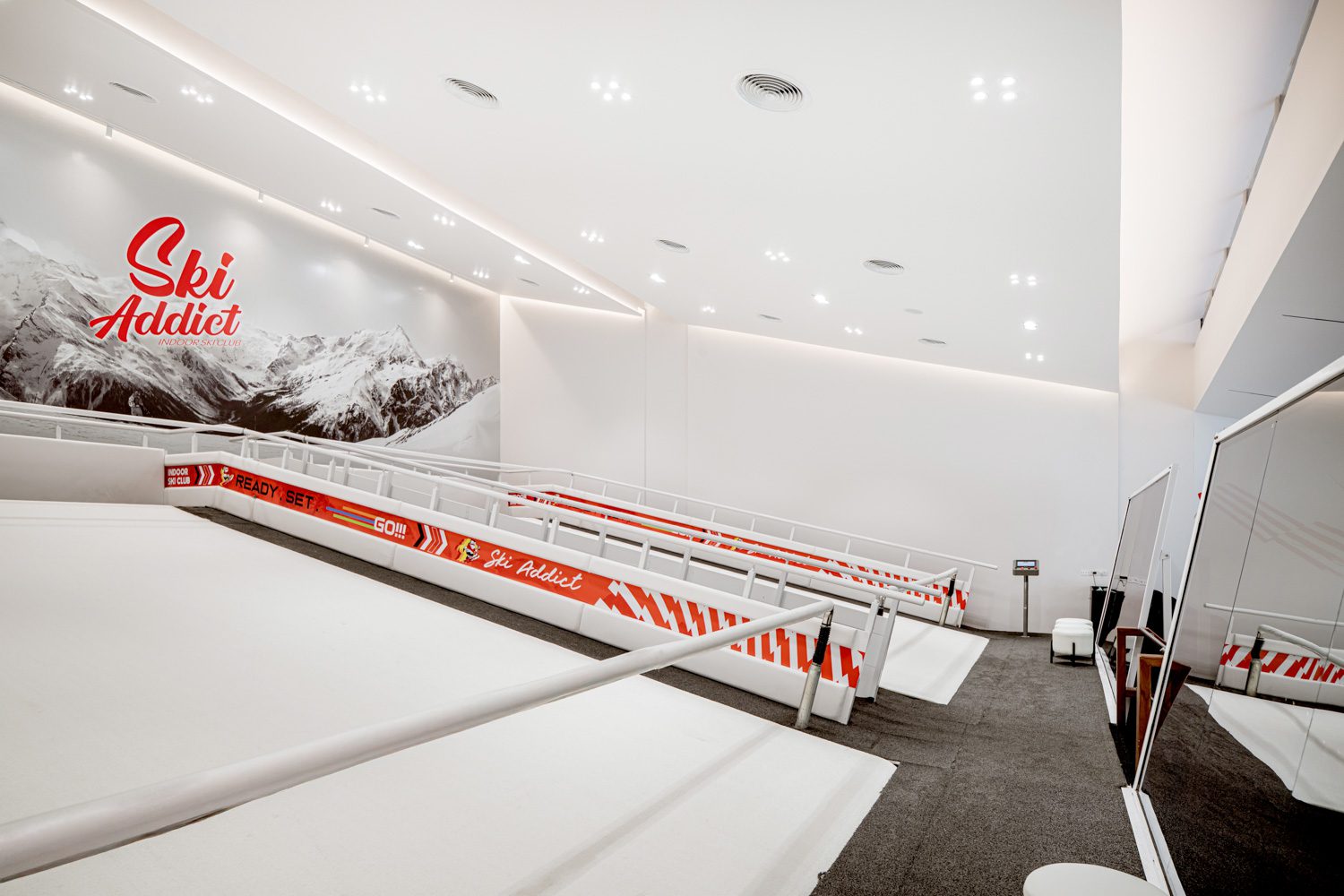
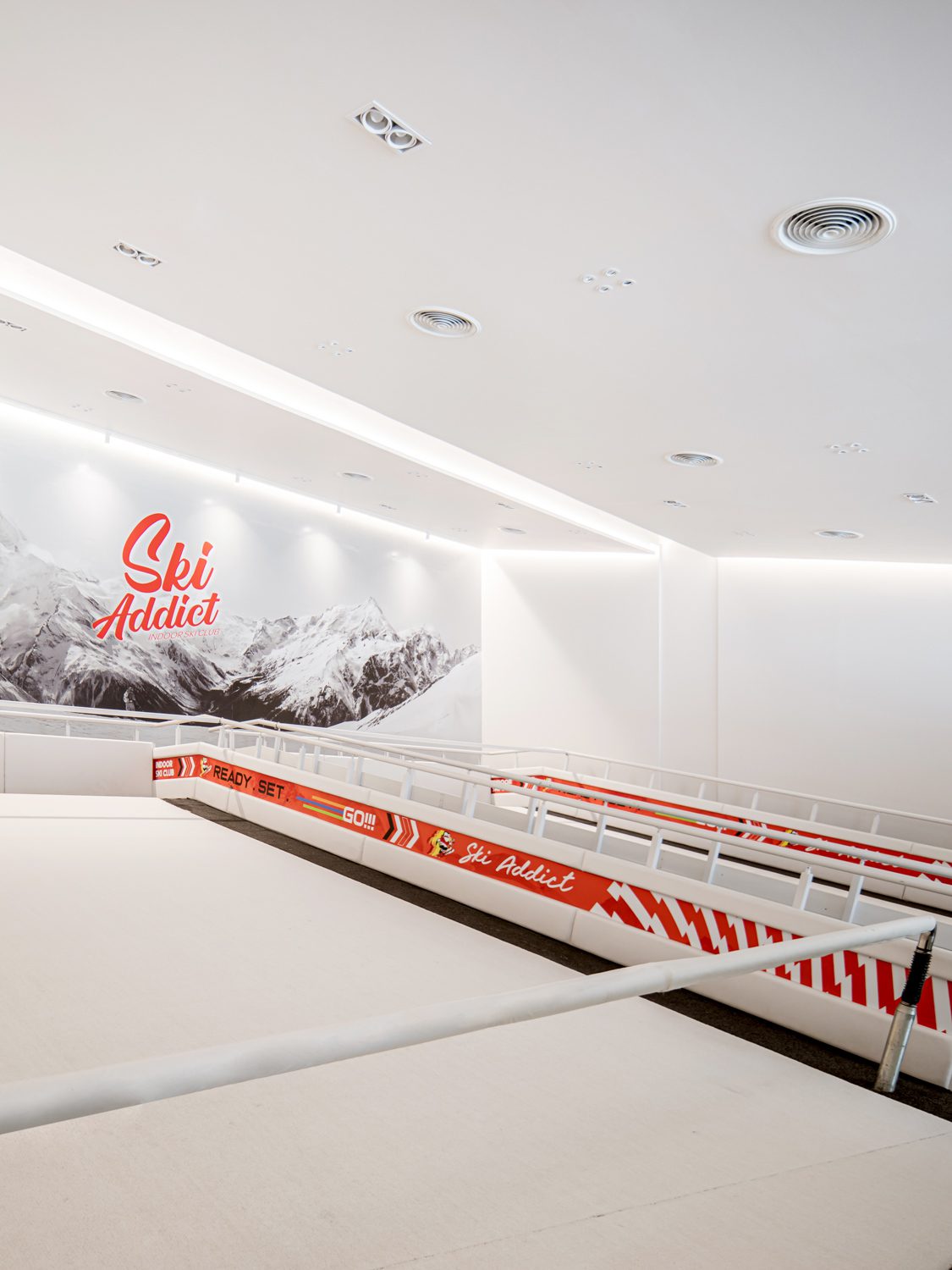
The main ski training area is located at the rear of the building. At present, the space is equipped with two ski training machines, designed to support use more akin to that of a fitness facility rather than a direct simulation of an actual ski resort environment. The emphasis is placed on a sports-oriented setting in which users can fully concentrate on movement and physical training, similar to the experience of working out in a gym.
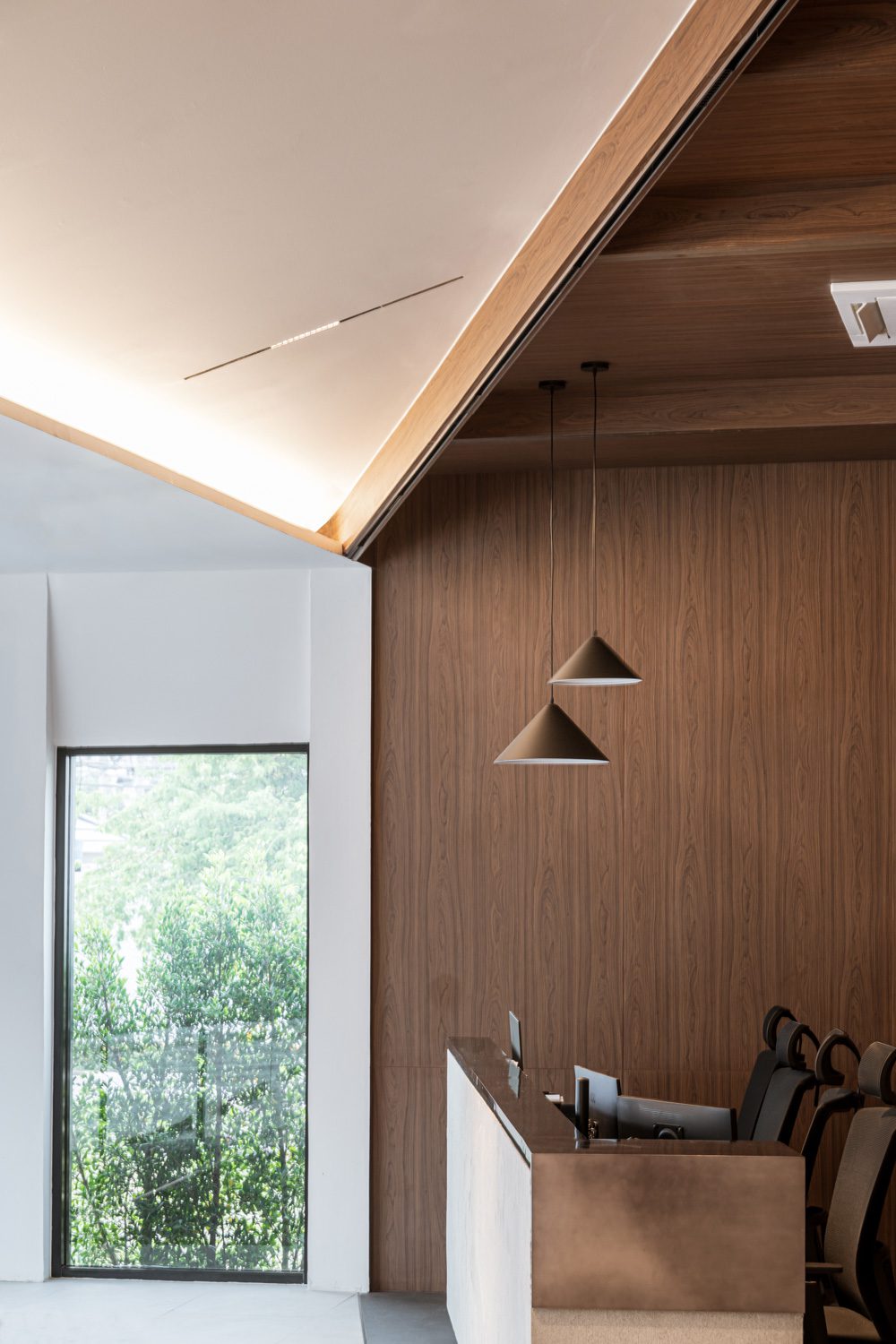
Another key design challenge for this indoor ski facility was achieving a balance between the warm atmosphere associated with ski resorts and the focused environment required for exercise and training. As a result, the building was not conceived with an overtly sleek or aggressively sporty aesthetic. Instead, it strikes a balance between spaces for physical activity and areas for rest, maintaining a warm and relaxed overall tone. This approach is evident in the material choices across different zones. In the front lounge area, wood finishes, white sofas, and a snack bar create an inviting and informal atmosphere. By contrast, the training zones employ white walls, graphic elements, and clear, functional lighting suited to serious and concentrated practice.
SKI ADDICT reflects an emerging approach to fitness and physical activity in Thai society, one that no longer depends on the arrival of winter or travel abroad. The building creates an experience and atmosphere that evoke the feeling of spending time in a real ski resort, while simultaneously meeting functional and operational requirements with balance and precision.
physicalist-architects.com
facebook.com/Physicalistarchitects