
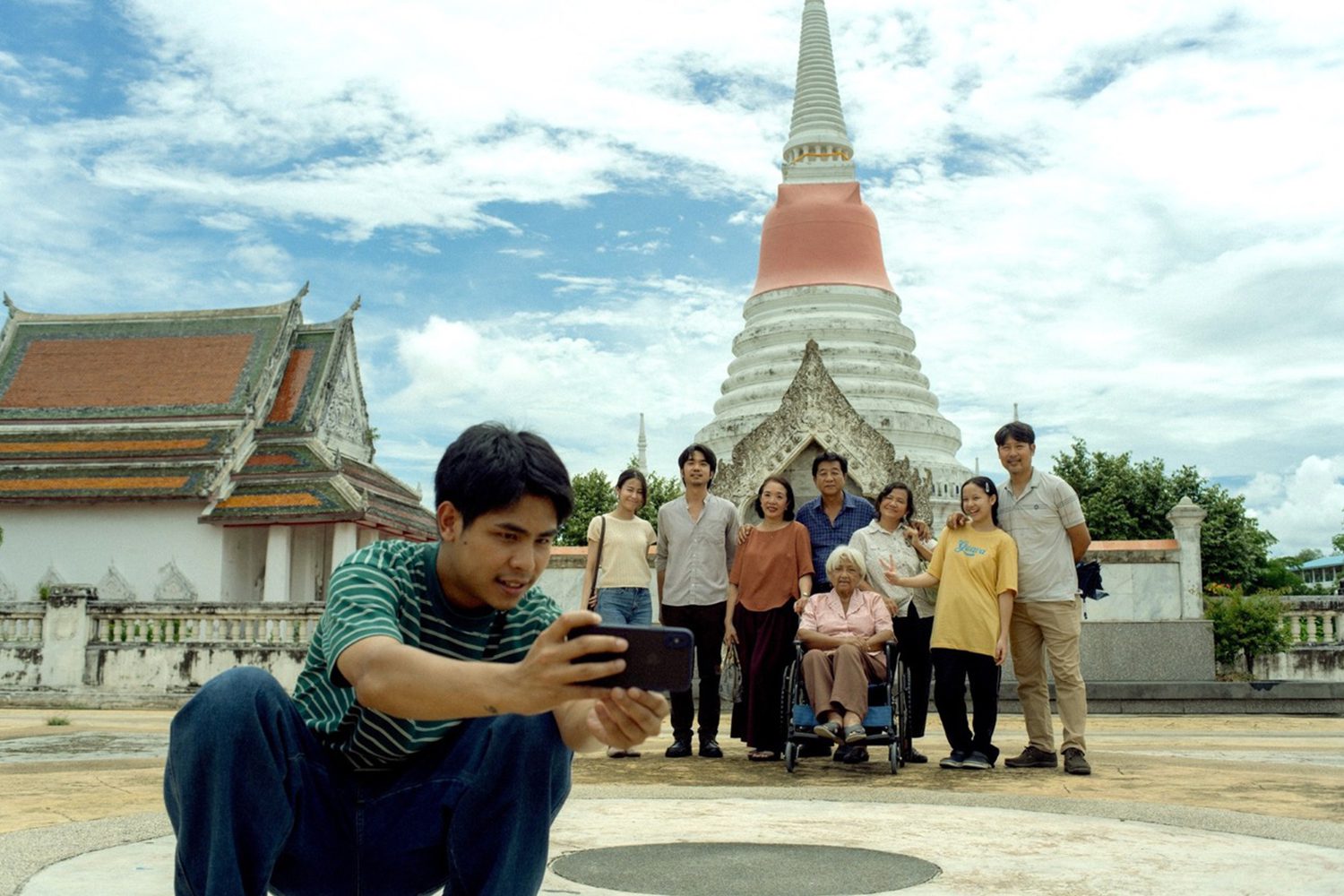
THAILAND’S OSCAR SUBMISSION FOLLOWS A FAMILY CHASING SPIRITUAL CREDIT ACROSS NINE TEMPLES — WEIGHING THE MERIT ECONOMY AGAINST FAMILY BONDS, THE FRAGILITY OF LIFE, AND THE PROMISE OF PEACE IN THE AFTERLIFE
TEXT: PRATARN TEERATADA
PHOTO COURTESY OF AT A TIME PICTURES
(For Thai, press here)
*This article contains some spoilers.
“There is but one word I long to hear, to bring joy to my restless, yearning heart…”
This Thai song is more than 60 years old. Its melody is simple, yet its lyrics remain deeply moving. Family members now in their sixties or older may remember when it was first released. The next generation might have heard their elders play it, while younger listeners may have encountered a cover by a contemporary artist before ever hearing the original. Each generation, therefore, brings a different perspective to the same song. 9 Temples to Heaven opens with Phiang Kham Diao (Just One Word), set inside a temple where preparations are underway for a funeral, seemingly inviting the audience to watch how the story will engage with death, temples, rituals, and the passage of time.
9 Temples to Heaven was written and directed by Sompot Chidgasornpongse, whose previous works include Railway Sleepers (2016) and The Physical Realm (2023). It was produced by Kissada Kamyoung and Apichatpong Weerasethakul, with French cinematographer Jonathan Ricquebourg—known for The Taste of Things and Eat Your Bones—behind the camera. This is, by any measure, a formidable team.
9 Temples to Heaven is a road movie built around the number nine, widely regarded as one of the most auspicious numbers in Thai culture. The number not only features in the film’s title: the project also took nine years to secure its financing, and follows nine people on their journey. The story begins when Sakol’s boss has a vision in which Sakol’s mother dies. He advises Sakol (Surachai Ningsanond) to make merit at nine temples in a single day to ward off misfortune before Grandma’s birthday. The merit-making party consists of Grandma, Sakol, his wife, his sister, his brother, his children, one child’s partner, and a grandchild—nine people in all.
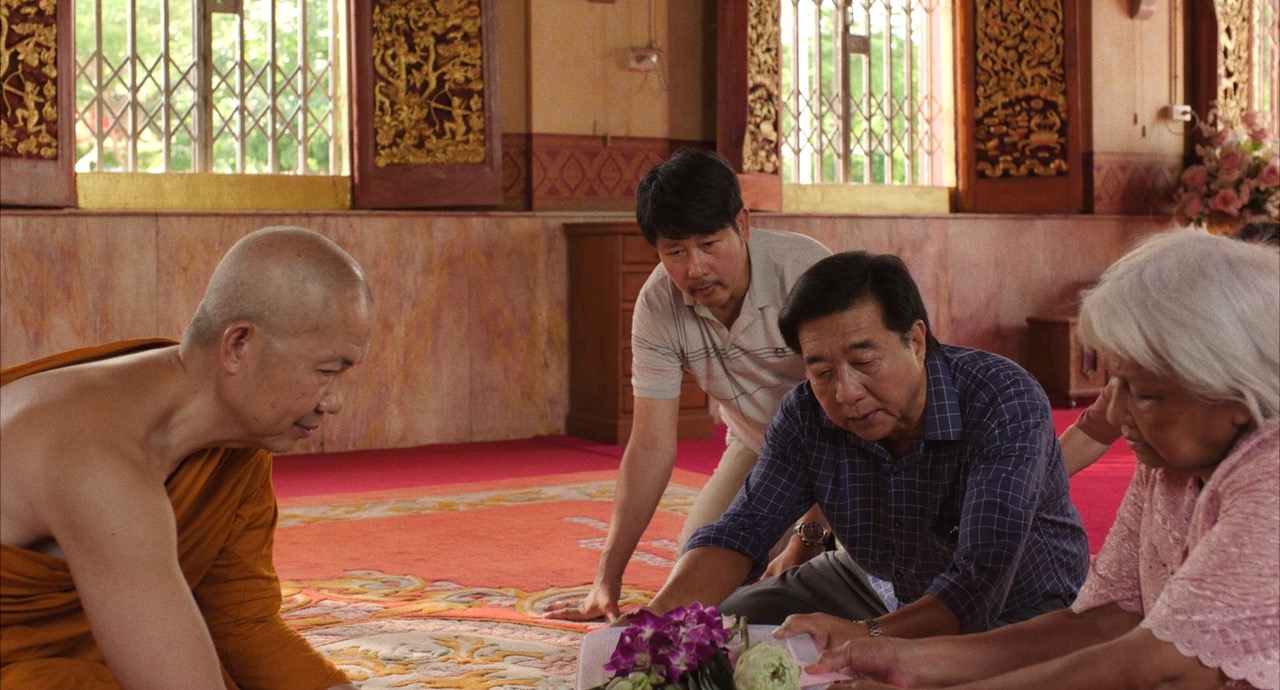
The film is a work of fiction that looks remarkably like a documentary. Traveling between temples to make merit and present offerings to monks is a familiar activity for Thai people, making the pilgrimage feel like an episode drawn from real life. Thais commonly combine merit-making with leisure travel, and this particular party could easily consist of people we know. Every member of the cast is a newcomer, and their performances are so convincing that they hardly appear to be acting at all. This is especially true of Grandma Saluay (Amara Ramnarong), who feels like someone’s actual grandmother rather than an actor playing one. The film follows the family from temple to temple as they repeatedly perform the same rituals, determined to complete all nine visits. What begins pleasantly enough gradually gives way to tension and exhaustion, both physical and emotional, until the fundamental truths of nature become increasingly difficult to ignore.
The film’s strengths can be divided into two parts.
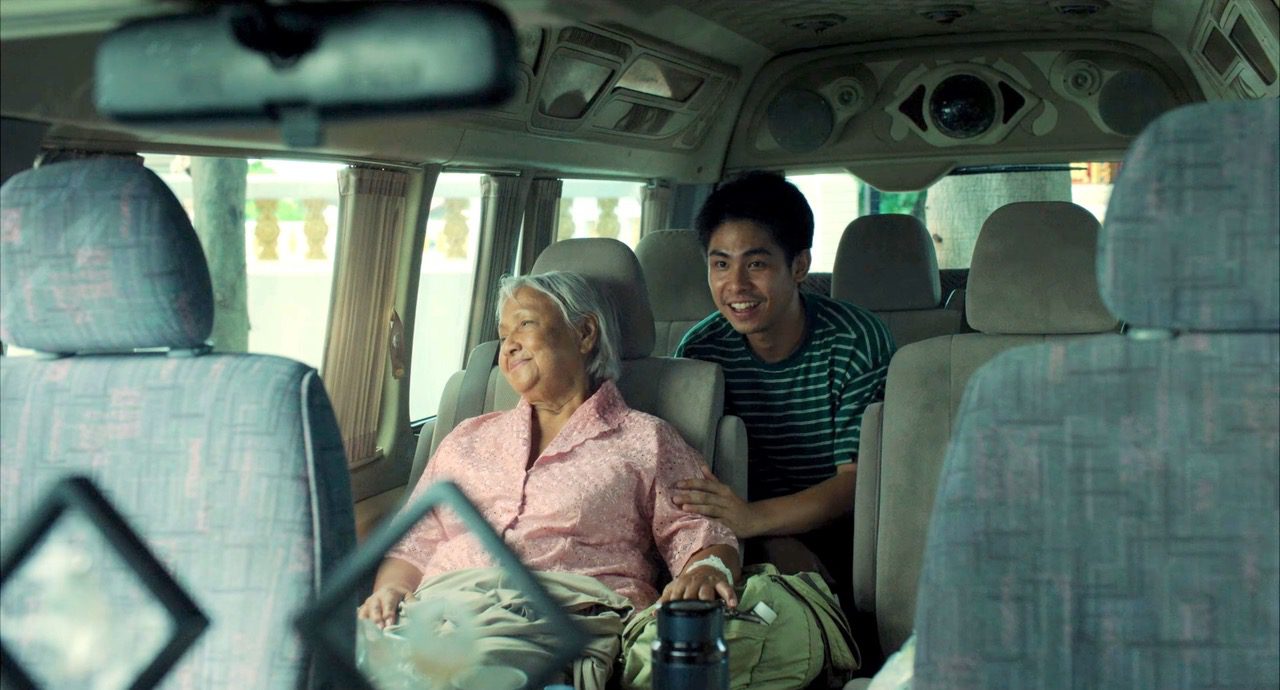
First, its visual and sonic storytelling is outstanding. Image and sound work in concert, carrying the audience along with the nine family members on their merit-making tour. The film deploys a range of cinematic techniques, particularly through its use of darkness and light, to blur the boundary between life and death until the two appear to overlap—as though they truly exist much closer together than we imagine.
Throughout the journey, the camera captures roads, architecture, temples, bridges, and houses that we might ordinarily overlook. Yet the film’s images seem to suggest that each of them has something to say, making everything appear worthy of attention. These are far removed from the postcard views prepared for tourists. Other images—a young girl selling flowers at a temple entrance, a great tree teeming with an army of nesting ants, a school of fish scrambling for food, and the animals living within temple grounds—reflect the inescapable reality of suffering in this world.
The cinematography works in tandem with the sound recording. Environmental sounds are exceptionally vivid: dogs barking, bells ringing, music playing inside the vehicle, and traffic swirling all around. These sounds frequently draw our attention away from the dialogue. At times, we find ourselves listening more closely to the surrounding environment than to what the characters are saying.
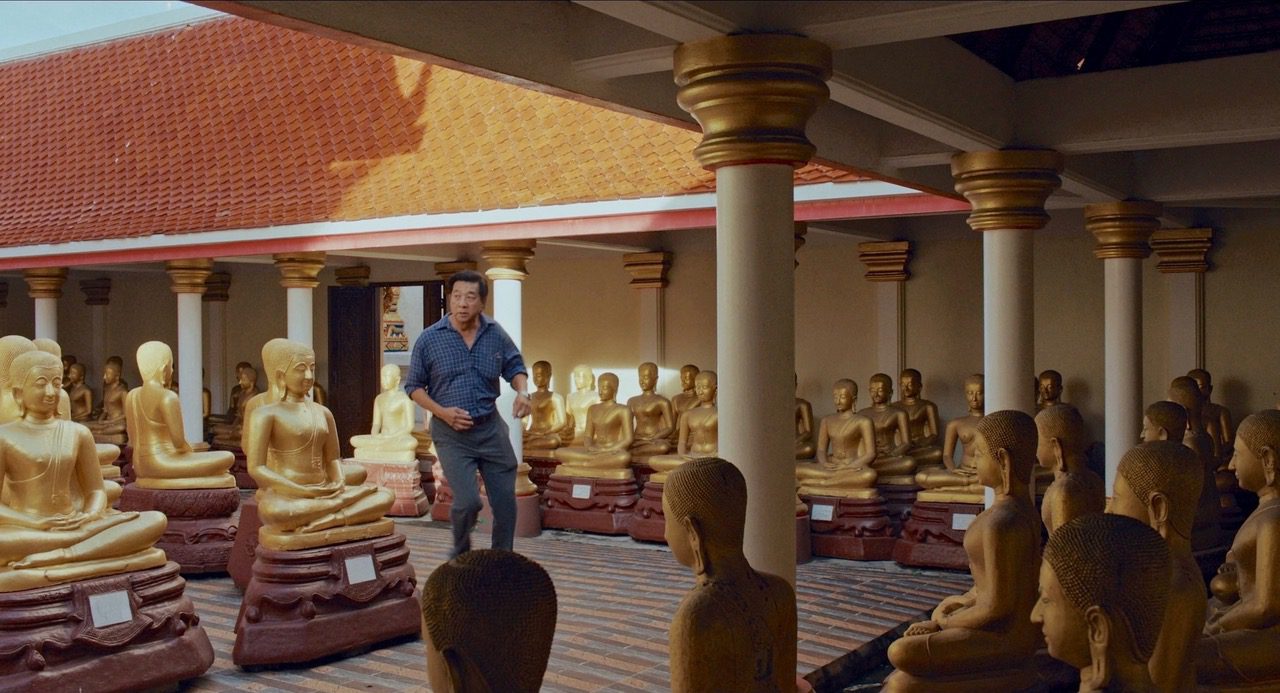
The film’s second strength is its storytelling through systems of belief. When Buddhism reached Thailand—or indeed other parts of the world—it had to adapt in order to establish itself seamlessly within the local social fabric. People had long lived with Brahmanical and Hindu beliefs while worshipping deities, spirits, and demons. Despite the apparent contradictions between these traditions and Buddhist principles, Buddhism succeeded in integrating itself into society and ultimately occupying a central position through compromise and accommodation. One of Buddhism’s fundamental principles is to see nature as it truly is. Its teachings guide people toward developing the mind until they can extinguish desire and every form of suffering, attain ultimate liberation, and escape the cycle of death and rebirth.
But if that sounds inconvenient—or if you are not in any particular hurry—Thai Buddhism offers another, considerably more popular option, one that can blend almost imperceptibly with materialism, consumerism, the accumulation of merit, and an advance investment in a better future, whether in this life or the next. These currents have turned merit-making, chanting, and paying respect to Buddha images into long-standing social customs. Chanting, in particular, occupies an important place in the film.
Over time, these practices have developed into a robust yet accommodating system. As the film shows, monks can ‘apply’ the rules according to the circumstances at hand. If the lay visitors forget the chants, the monks can hand them a crib sheet. If Grandma—the principal intended recipient of the merit—is unable to enter the temple herself, the merit can be transferred to her, or a monk can go out and sprinkle holy water over her while she remains in the car. Temples, meanwhile, continue developing their buildings to bring lay visitors as close as possible to an imagined experience of heaven, thereby attracting more people to make merit—not unlike advertising and persuasion within a capitalist system.
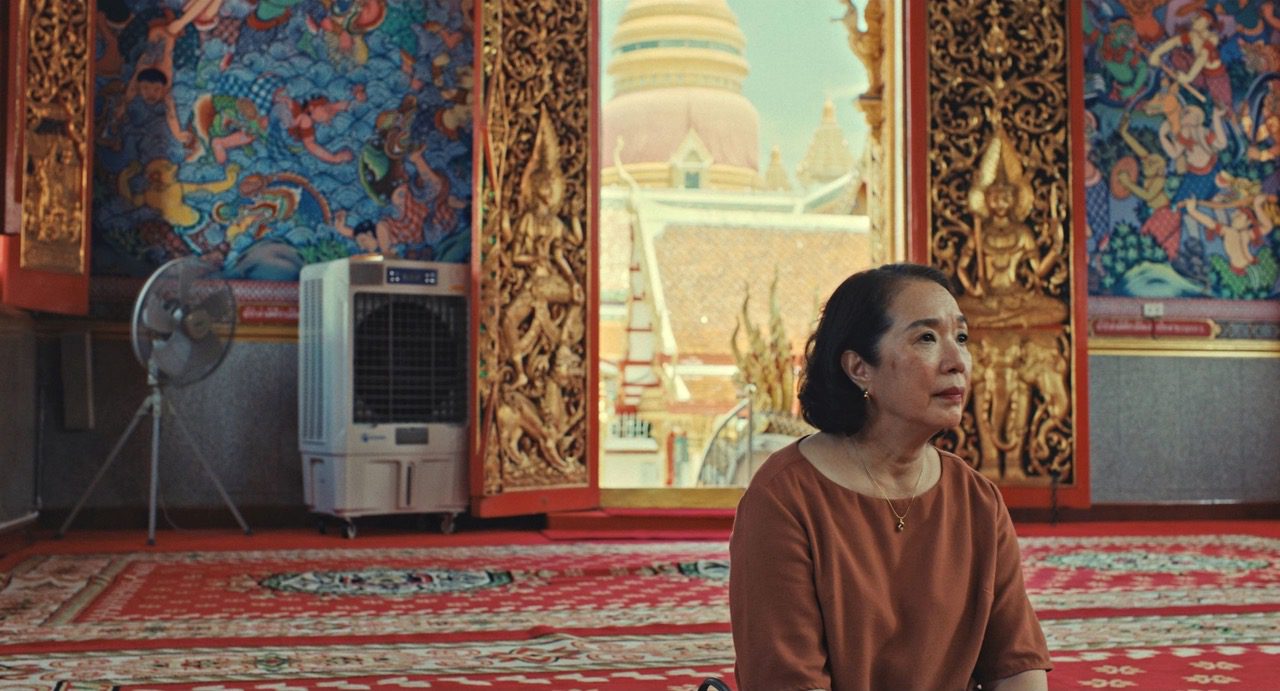
This resilient belief system binds people and temples closely together, with each side performing its part. At the micro level, the family applies the same system to its own way of life. Whether or not its members believe that this merit-making journey will produce the intended result, they proceed in accordance with tradition, external influence, the desire for social acceptance, and the need to soothe their own minds.
Sakol assumes that everyone in the family thinks as he does, although they do not. Each member of the same family sees the journey from a different perspective. Grandma resembles a hostage, uncertain whether she wants the merit at all. Her Alzheimer’s disease has left her consciousness untethered from the present. The others do not believe wholeheartedly either. One person doubts the entire undertaking. Another has no faith whatsoever. Someone else is perfectly willing to participate despite not even being Buddhist. Another endures the trip knowing that they will soon distance themselves far from this system.
The journey consequently becomes increasingly uneven and exhausting as their different perspectives collide. And what if this were not a family, but Thailand itself? The relationship would look remarkably similar: someone with good intentions gathers everyone together and leads them toward a common destination, yet generational differences produce gaps in understanding. A smoldering tension therefore accompanies them throughout the journey.

9 Temples to Heaven reflects contemporary Thai society, in which a traditional belief structure has remained firmly in place even as many other things have changed. The family members are diverse, and their differences carry long-standing resentment, dissatisfaction, and accumulated tension.
They—and we—may remain on the same journey because of blood ties, because we belong to the same system, or because of some other necessity, invoking ‘love’ as the force that holds everyone together. Yet something even more important has long been in short supply: ‘mutual understanding and empathy.’
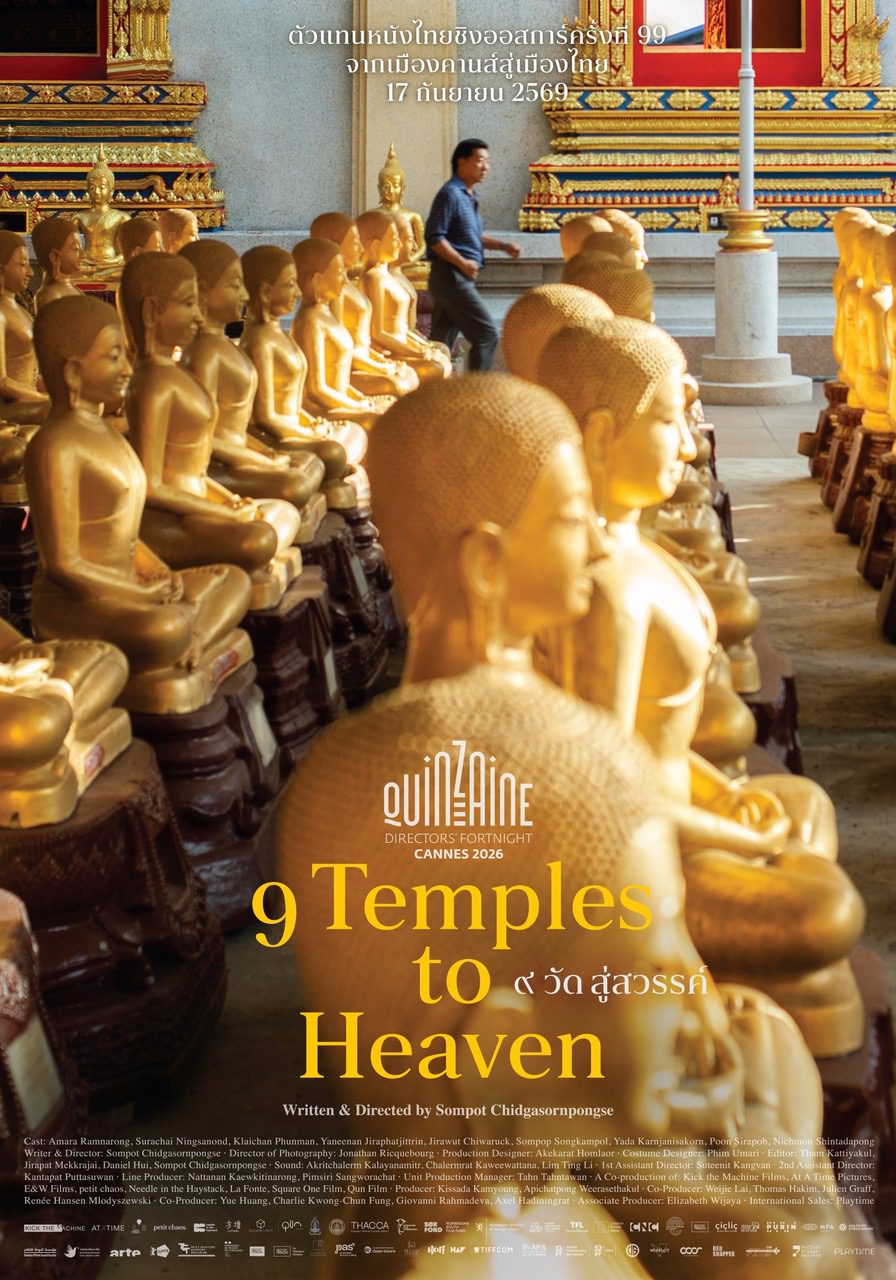
9 Temples to Heaven is Thailand’s submission for Best International Feature Film at this year’s Academy Awards. Its chances of reaching the final round may already be slim, but in terms of quality, the film is remarkably cohesive. The screenplay is incisive and laced with dark humor, the production is meticulous, and the actors perform as though they are not acting at all. Through both cinematic artistry and its engagement with Thai customs and culture, Sompot takes the audience into a dimension far deeper than the commonplace cultural promotion so often presented to us.