
SELECTED HIGHLIGHTS FROM THAILAND BIENNALE, PHUKET 2025: EXPLORING ‘ETERNAL KALPA’ THROUGH HISTORICAL TRACES AND PHUKET’S PROVINCIAL IDENTITY
TEXT: SARUNKORN ARTHAN
PHOTO: THITAPHAT CHIMPRASERT EXCEPT AS NOTED
(For Thai, press here)
‘Pearl of the Andaman, southern paradise, golden beaches, the Two Heroines, the blessing of Luang Por Chaem.’ For those who grew up memorizing Thailand’s provincial mottos, or who harbor a fascination with the country’s geography, the phrase is instantly recognizable as the official motto of Phuket. Thailand’s only island province has long been imagined as a place of leisure for Western tourists, or ‘Farangs’ in local parlance, as well as for travelers seeking both bodily and spiritual pleasure in this so-called ‘southern haven.’ Today, however, Phuket is shifting into a new role as an art destination. It serves as the main venue for Thailand Biennale, Phuket 2025, the international art event now entering its final stretch before closing at the end of April.
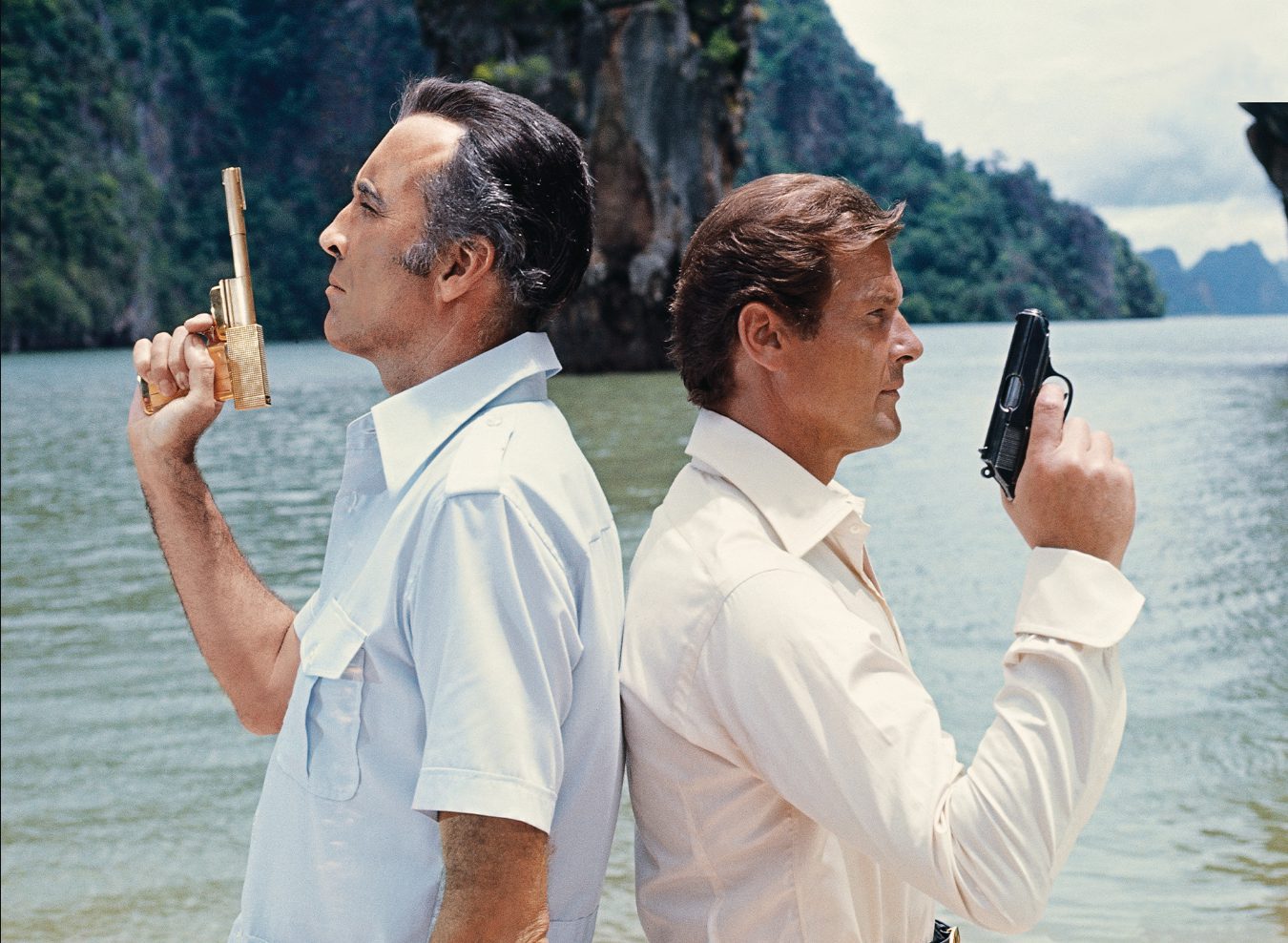
Photo courtesy of MGM Studios Inc.
Phuket’s past is no less compelling than its present. The island was once a center of tin smelting, a multiethnic settlement, and a site of heroic resistance in defense of the land. With the release of the James Bond film The Man with the Golden Gun in 1974, Phuket was transformed almost overnight into a tourist city. The arrival of foreign film crews and international media1 brought with it new forms of ‘American’ leisure, from full-service hotels to bowling alleys, once emblems of modernity. Over time, many of these places fell into disuse, becoming pockets of decay hidden within Phuket Town. They now linger alongside Sino-Portuguese houses, religious sites, and abandoned mines, residual traces within a southern paradise that has been relentlessly accelerated by the tourism industry for decades.
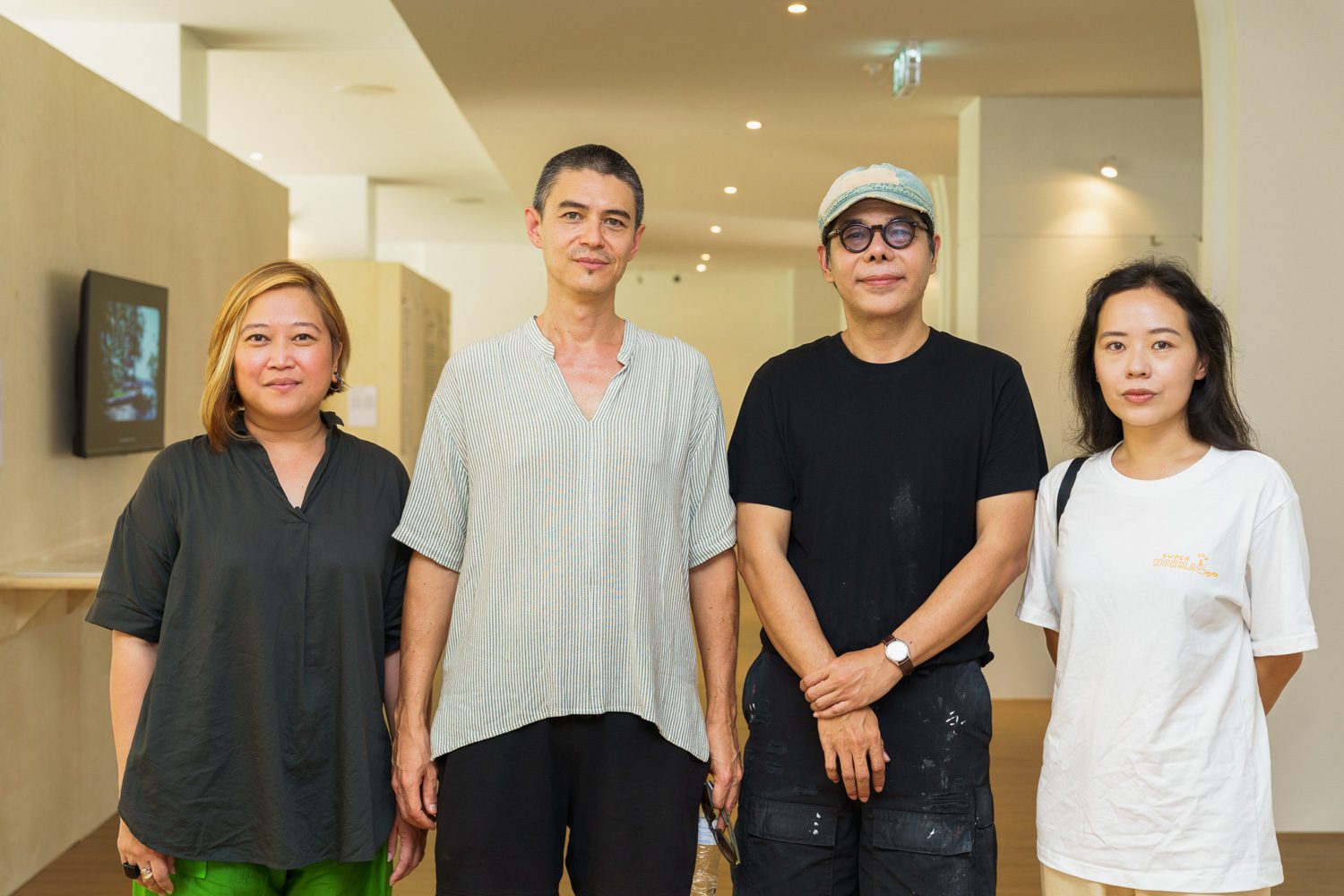
Curatorial Team of Thailand Biennale, Phuket 2025
(left to right) Marisa Phandharakrajadej, David Teh, Arin Rungjang, Hera Chan
Within this current of abrupt transformation, where prosperity and decline remain closely entangled, the curatorial team of Thailand Biennale, Phuket 2025, adopts the concept of ‘Eternal Kalpa’ as a kind of archaeological trowel, a tool with which to excavate the overlapping layers of time embedded across the island. The exhibition considers how humans might inhabit the present in an age of polycrisis, inviting us to pause from the hurried tempo of the capitalist world and turn instead toward inner time, as well as the memories sedimented within sites across Phuket, within the endless cycle of arising and passing away.
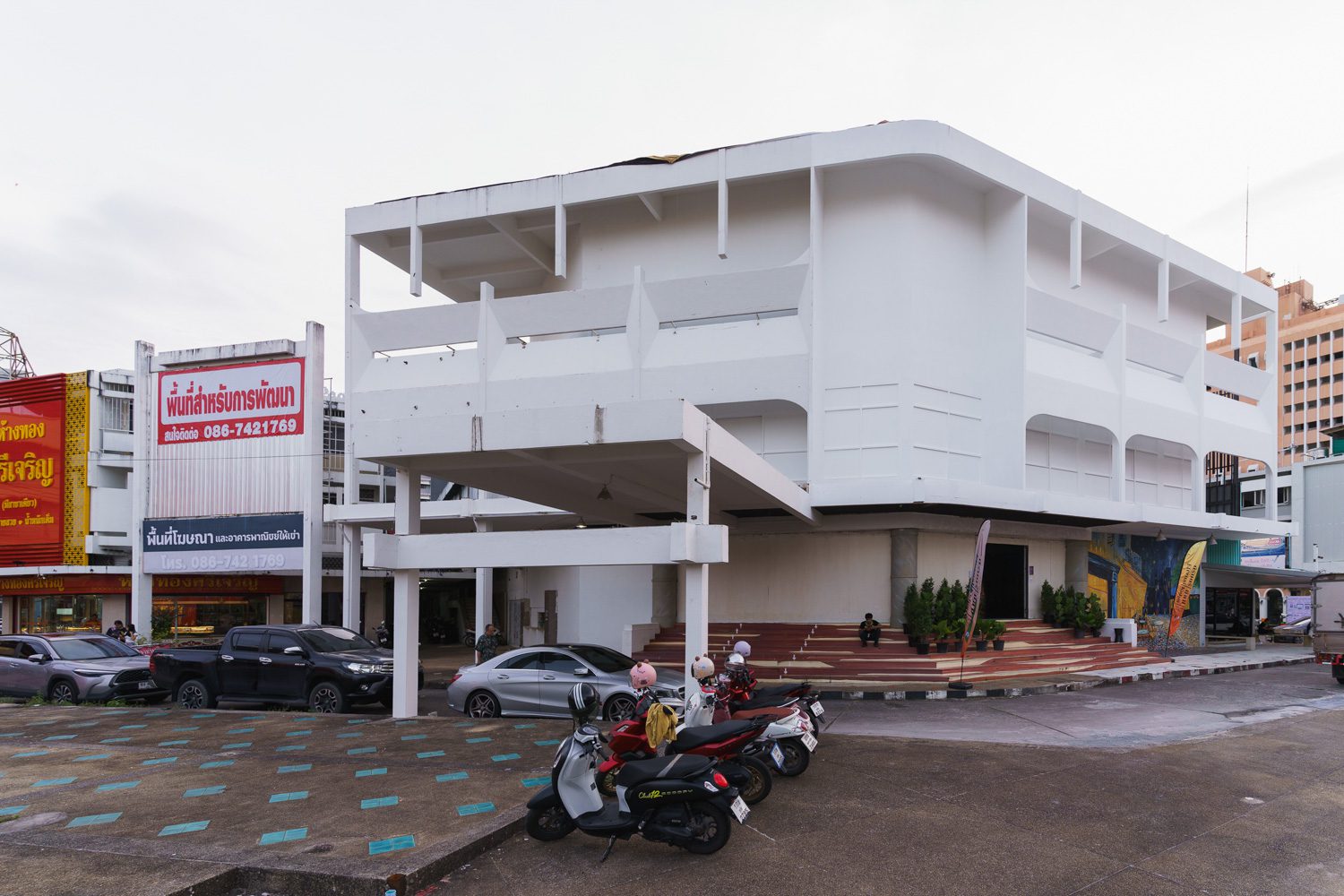
Pearl Theater
Pearl of the Andaman
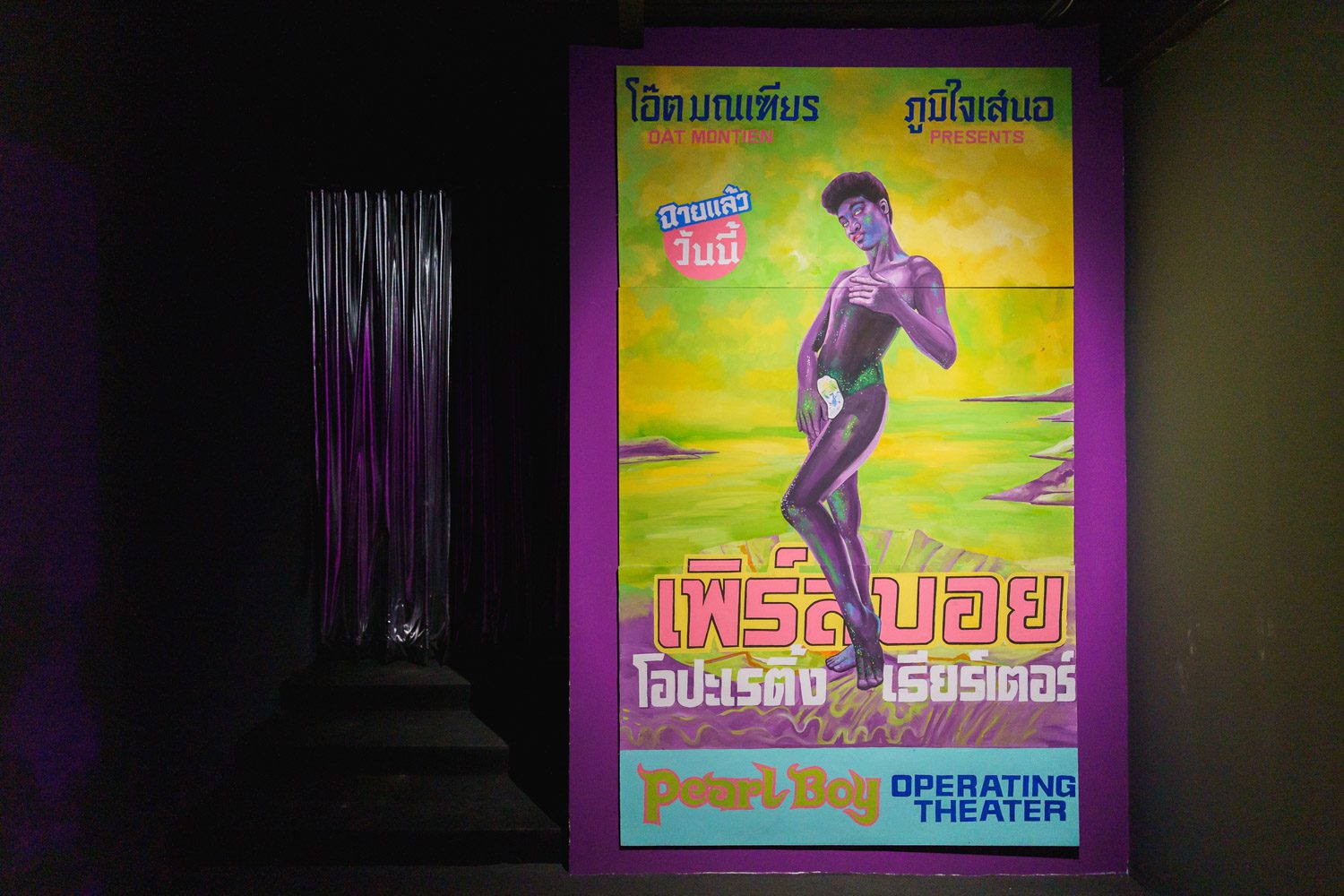
Perhaps because pearls are among the most popular souvenirs for tourists, we tend to notice only the lustrous surface they project, while paying little attention to their inner implications. In PEARL BOY, a video work, and Pearl Boy Operating Theatre, an installation staged at Pearl Theater in Phuket Old Town, Oat Montien dismantles the core mechanisms of the pearl industry and entwines them with the sex industry, both of which have long shaped Phuket and Thailand more broadly.
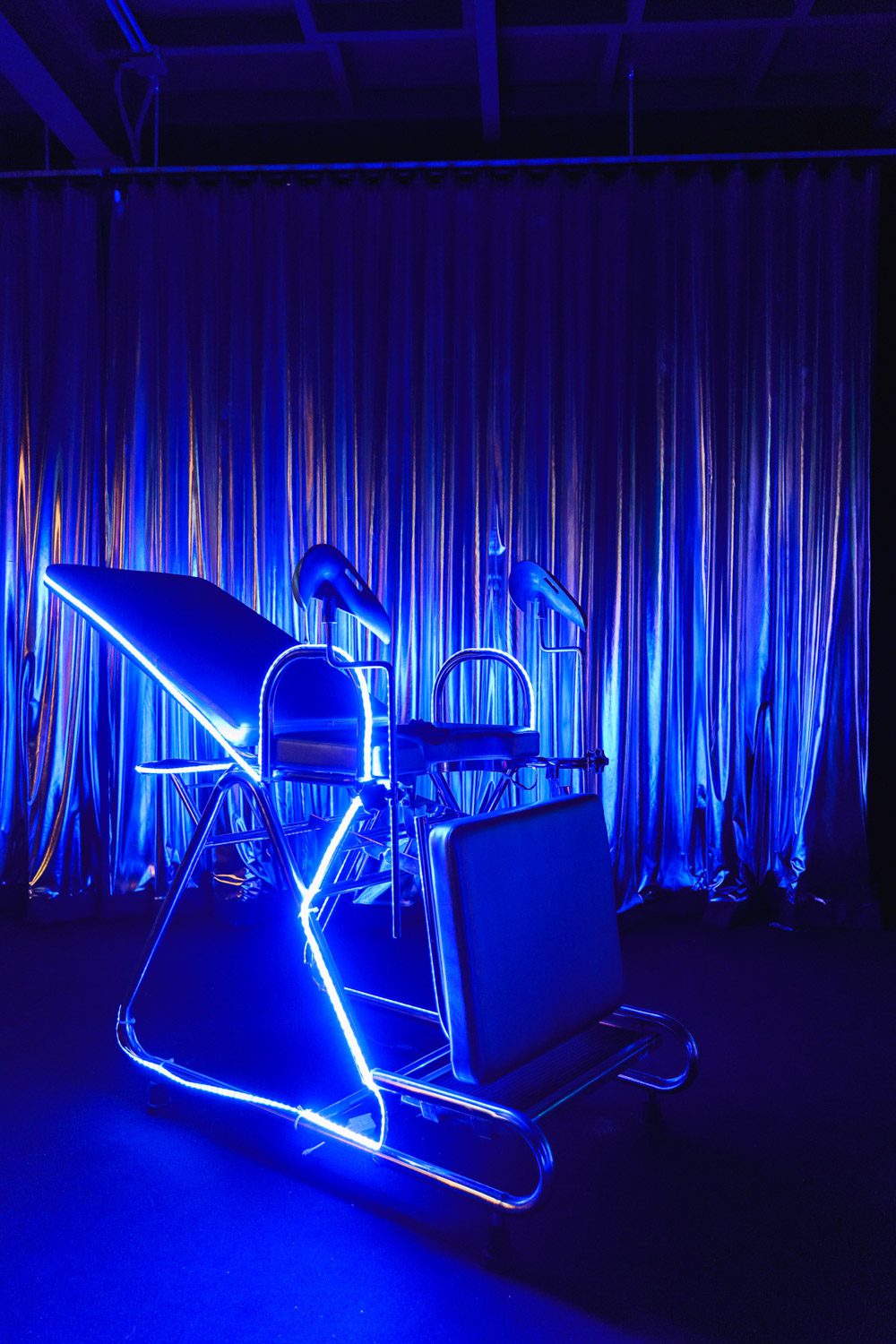
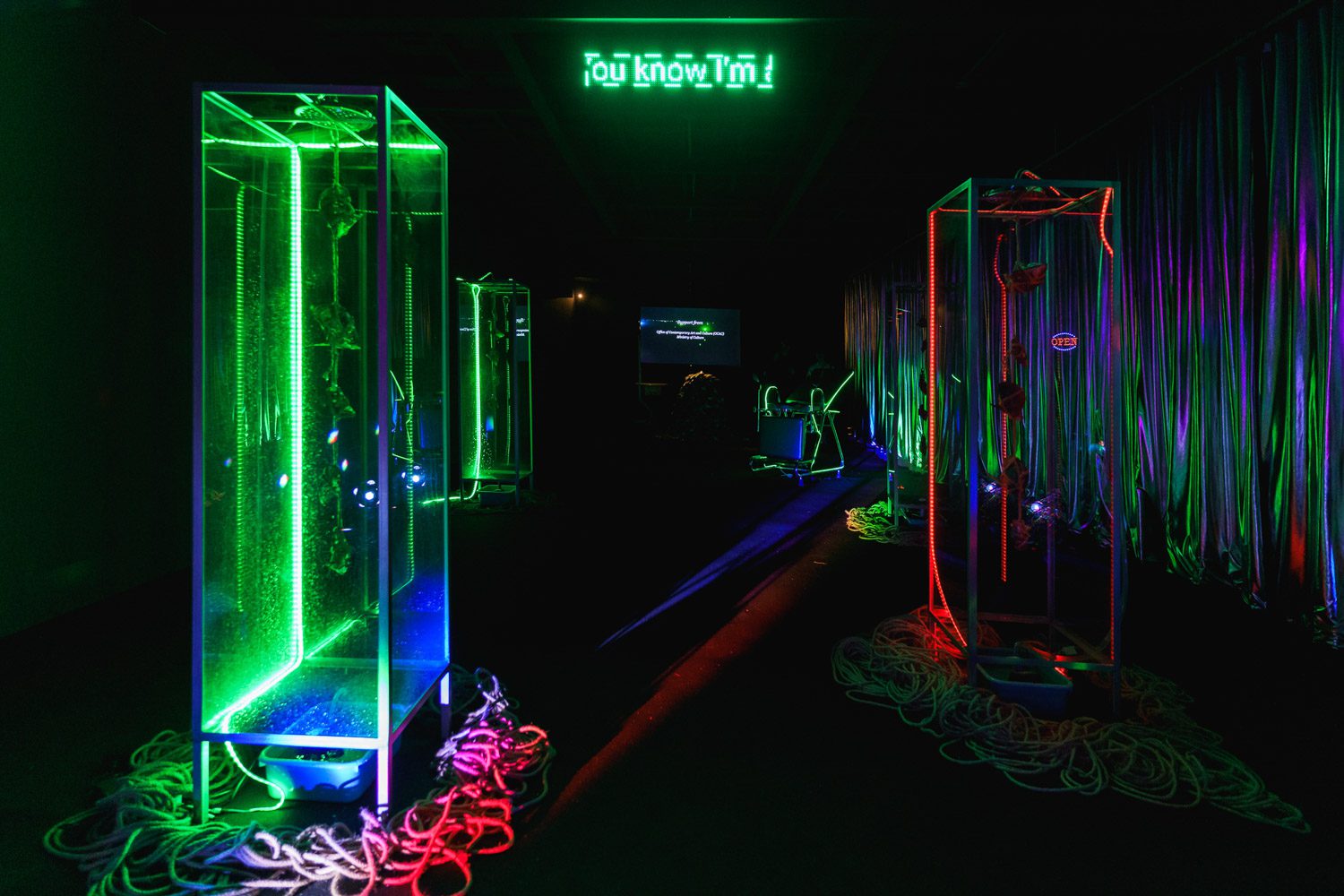
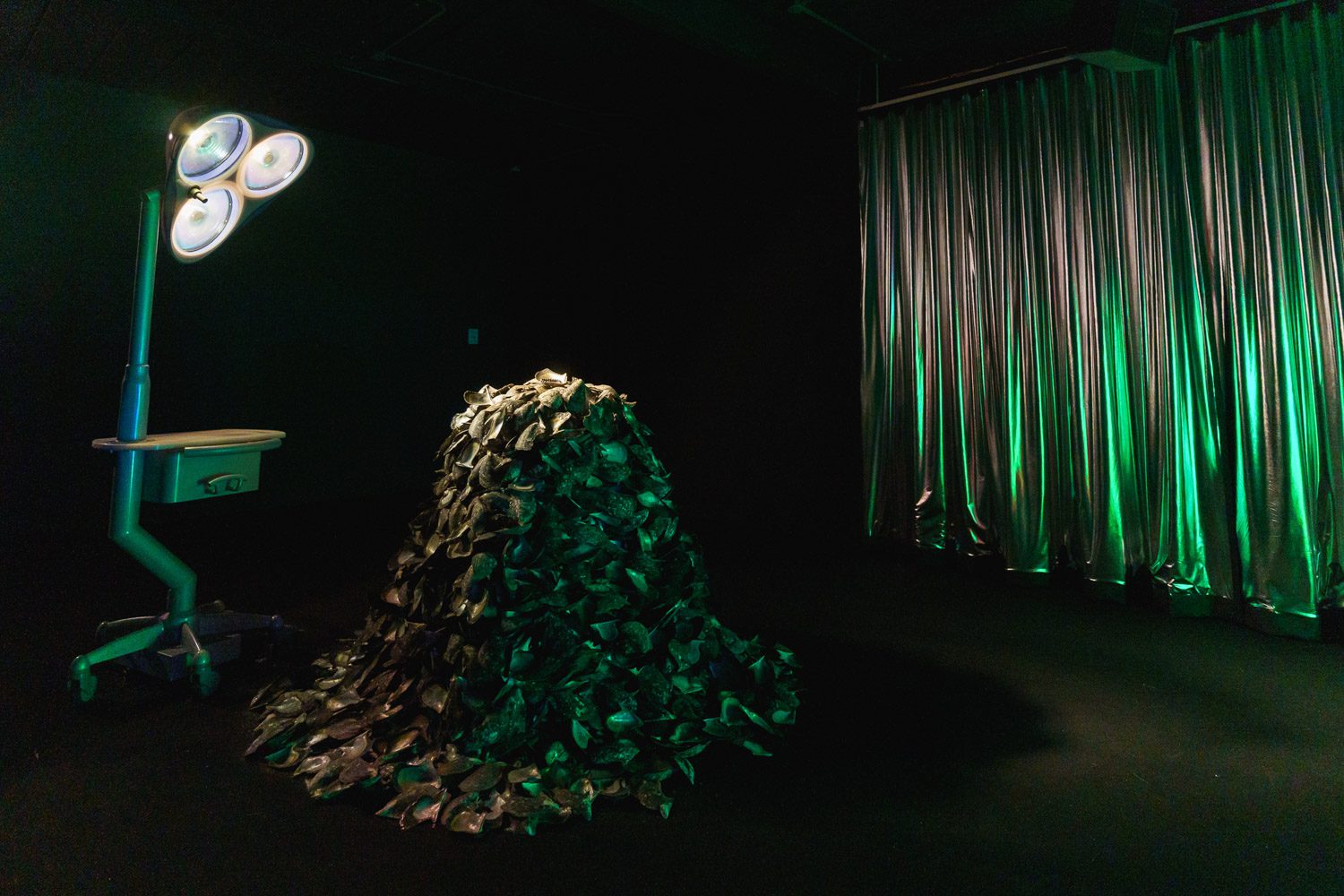
Oat transforms the space behind the silver screen of Pearl Theatre into an operating theatre. The work draws an analogy between pearl cultivation, in which an oyster is made to receive a foreign body into itself in order to produce a pearl, and the lives of sex workers, who are compelled to absorb ‘foreign bodies’ of both economic and social kinds. Set within an atmosphere saturated with vivid violet neon and the ambience of a nightclub, the work weaves the fierce rap vocals of SLUTTYP, a local queer rapper, into a tense musical score, conjuring a condition of production in which tenderness finds no place.
Mellow Pillow Hotel
Southern Paradise
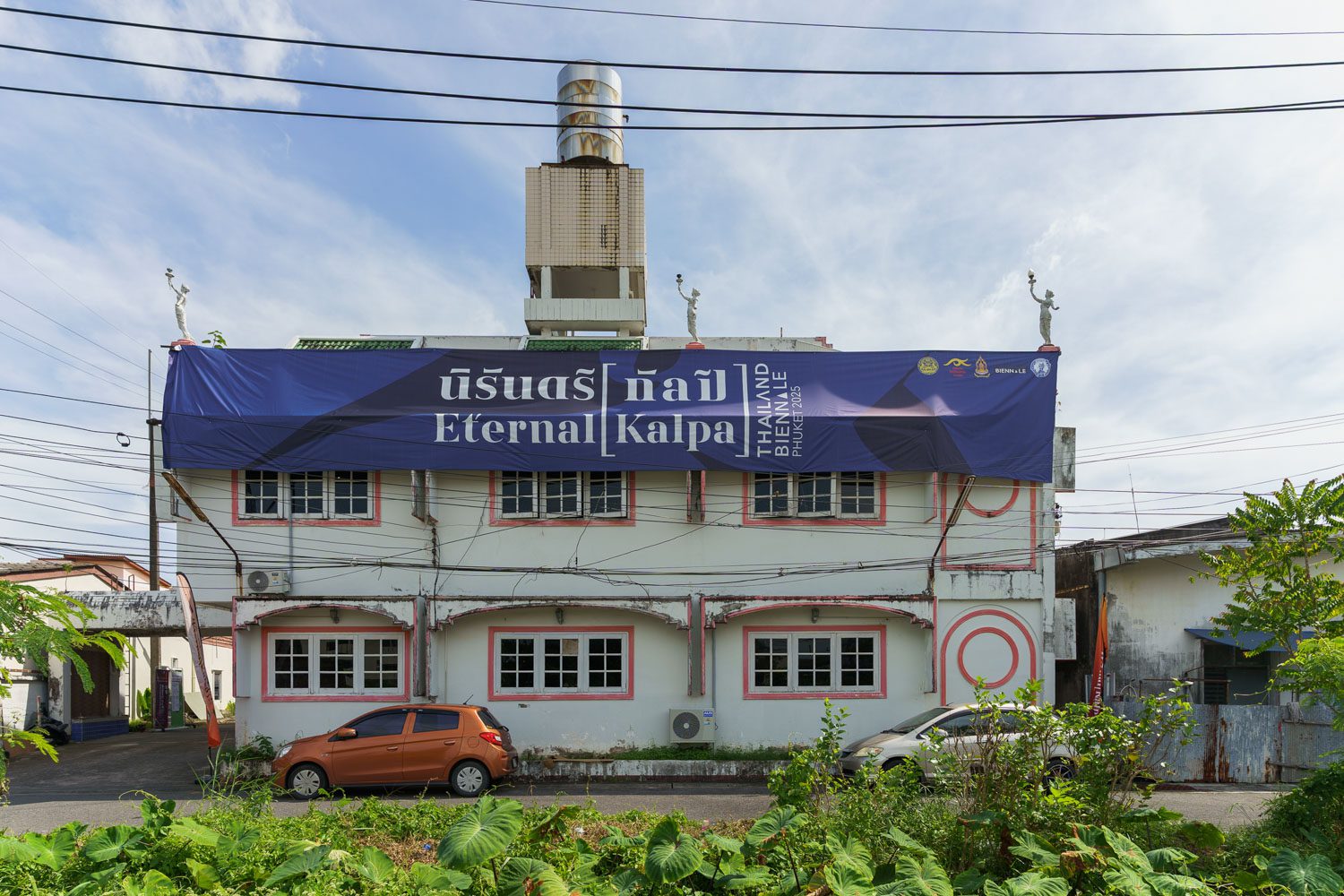
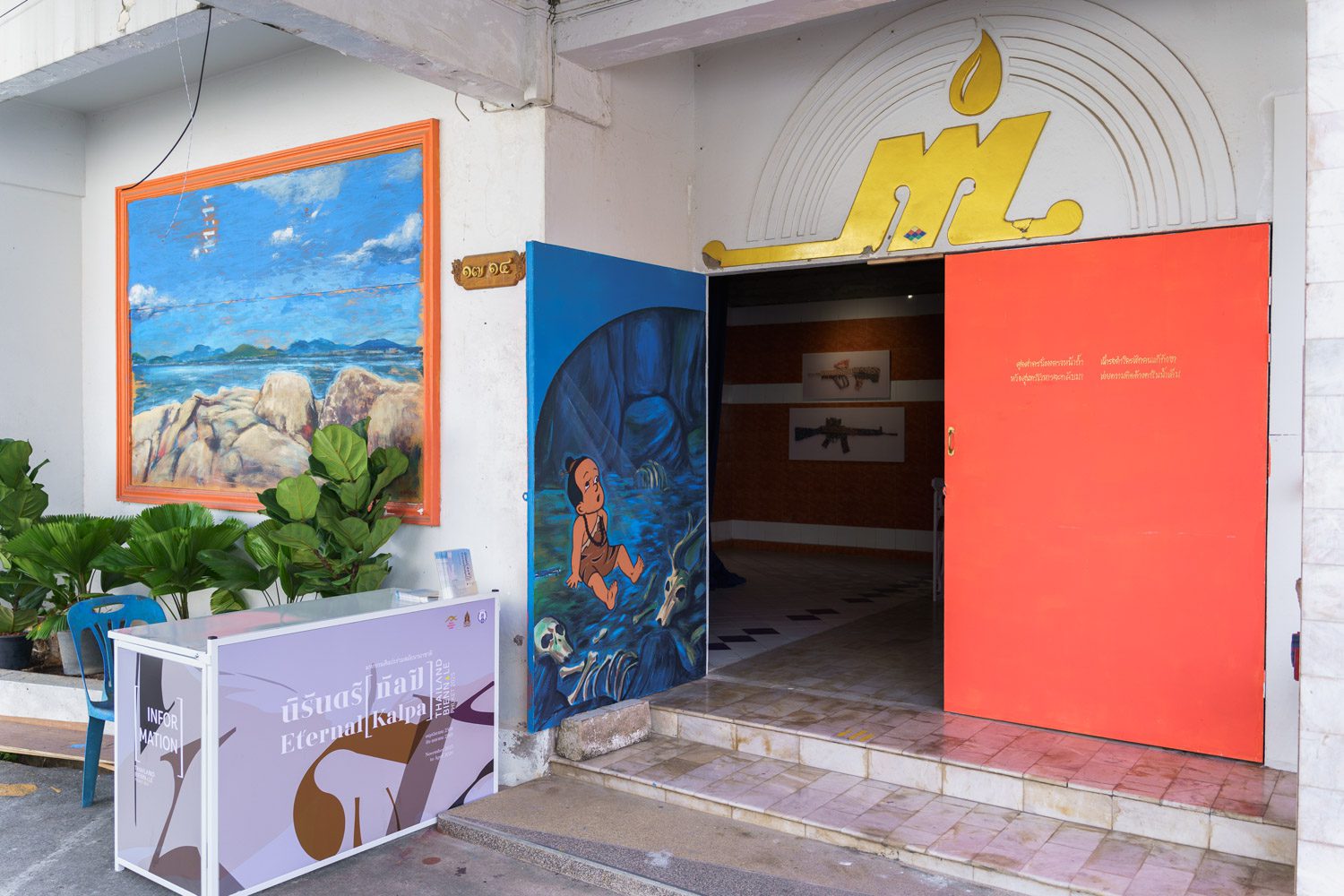
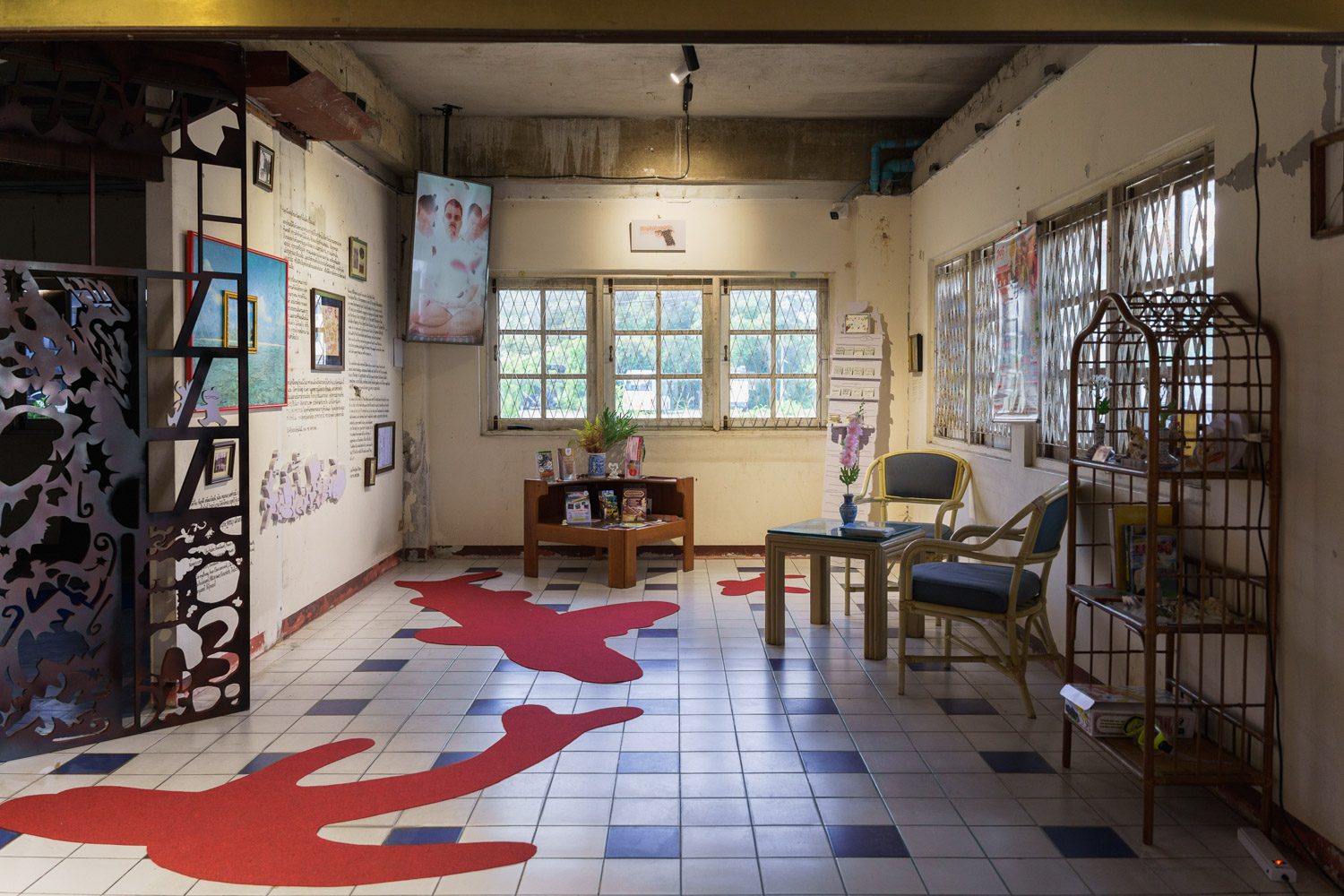
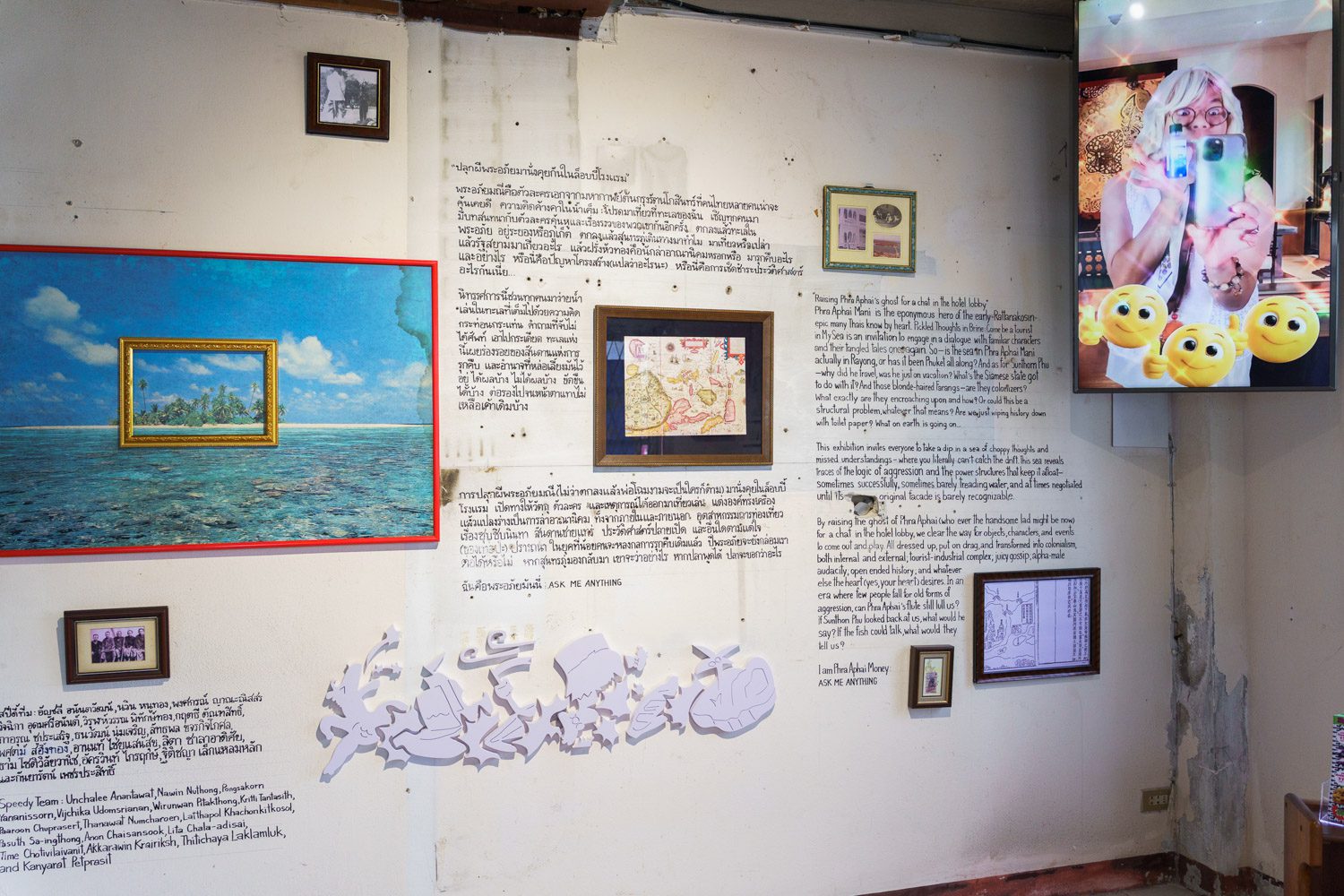
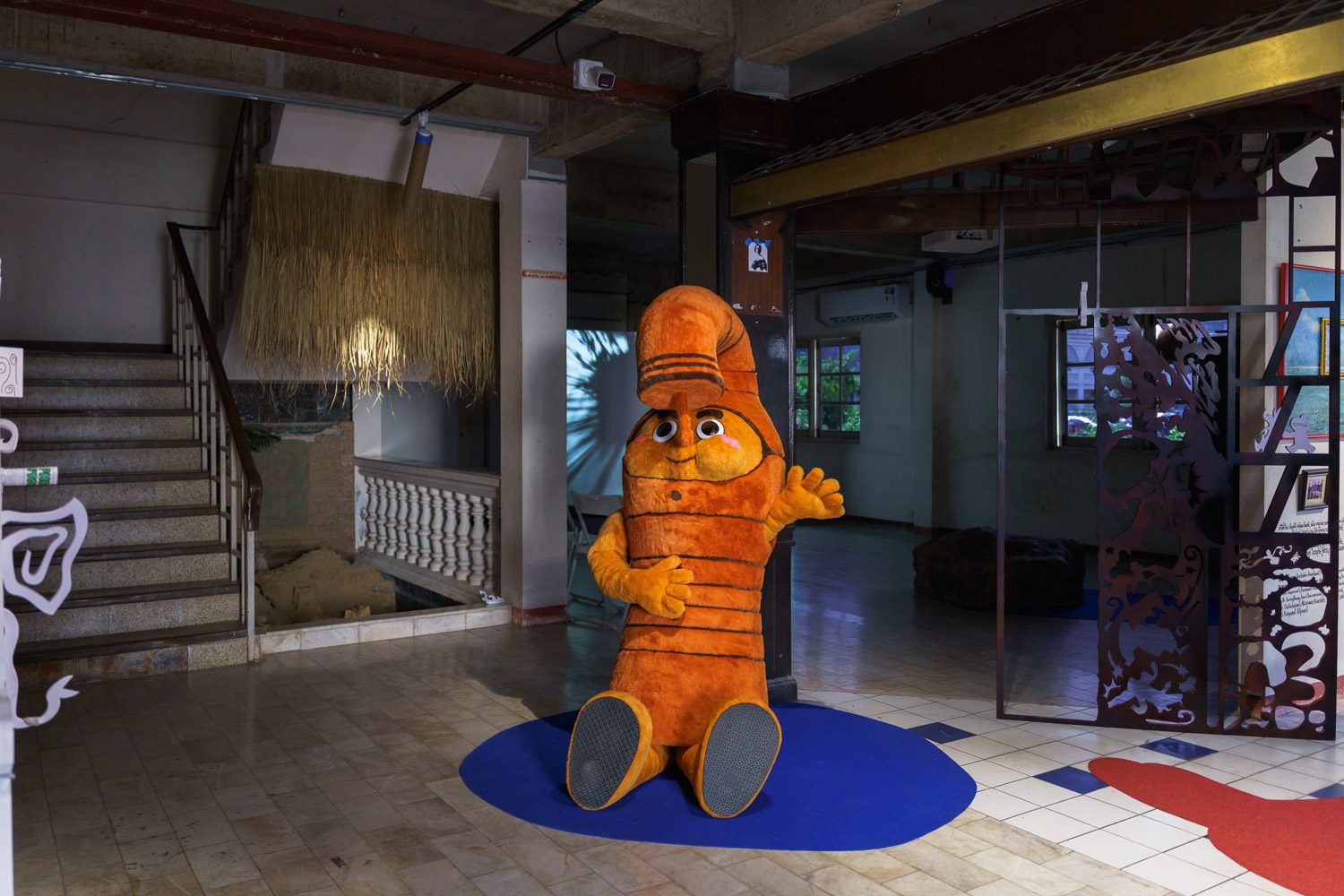
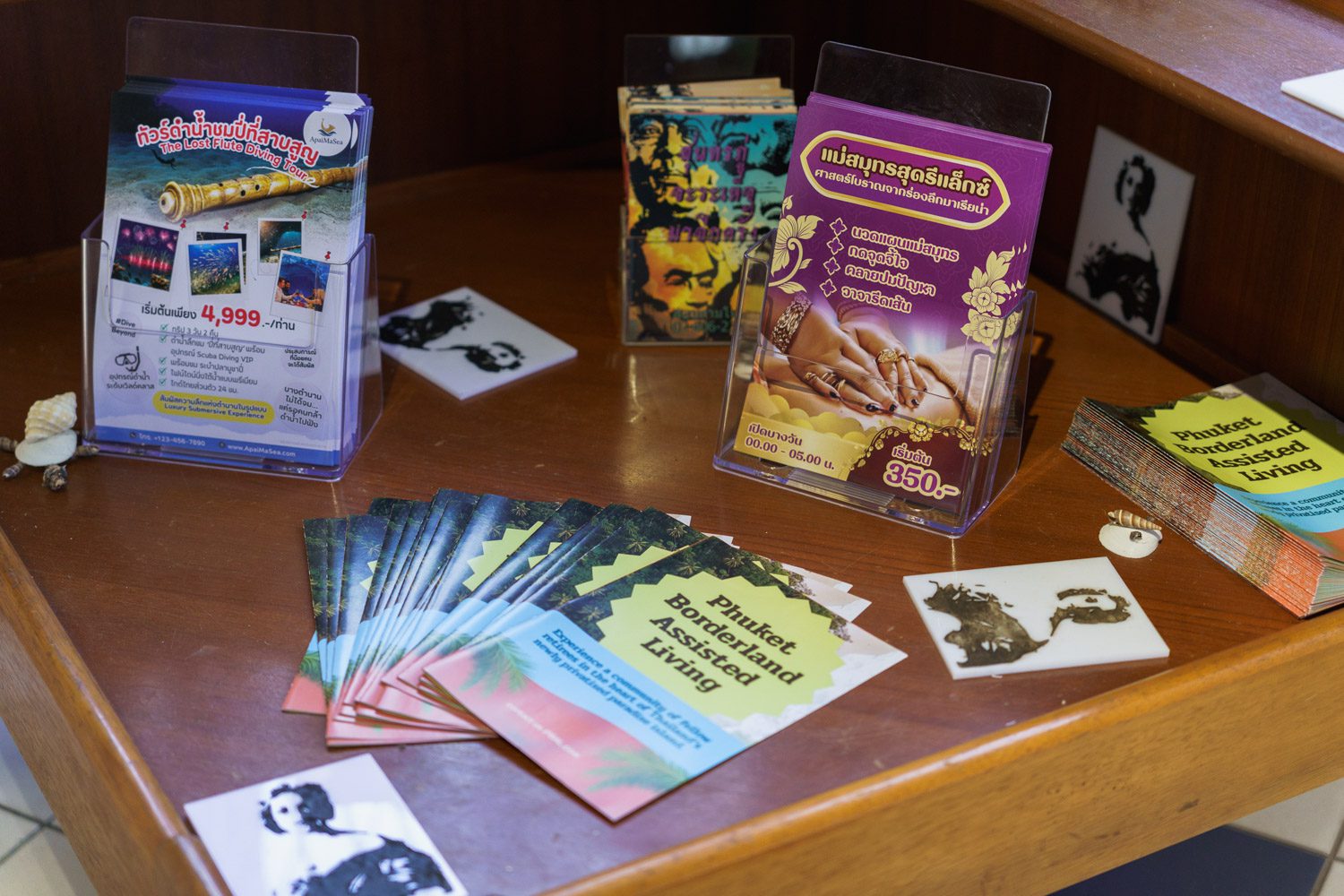
If the ‘pearl’ stands in for a body made to bear economic burden, then not far from Pearl Theater, Speedy Grandma turns to the idea of Phuket as a ‘southern paradise’ from the perspective of those who claim ownership over land and sea. In Pickled Thoughts in Brine: Come Be a Tourist in My Sea, the collective transforms the lobby of Mellow Pillow Hotel into a space for reconsidering the residues of colonialism through a playful yet pointed rereading of Sunthorn Phu’s epic Phra Aphai Mani. The work dusts off the literary classic and reimagines it with a seemingly unserious wit that carries considerable critical weight: a weary ‘withered flute’ mascot, exhausted from Phra Aphai’s endless playing; a video following a heartbroken vocational-school boy as he traces Phra Aphai Mani’s journey; and even the visual language of TikTok makeup trends. Together, these elements sharpen into a biting reflection on how colonialism, or neo-colonialism, arrives under the guise of tourism, settling into the ‘brine’ that preserves and pickles local identity until it becomes a commodity made to please its visitors.
Promthep Cape | Photo: Sarunkorn Arthan
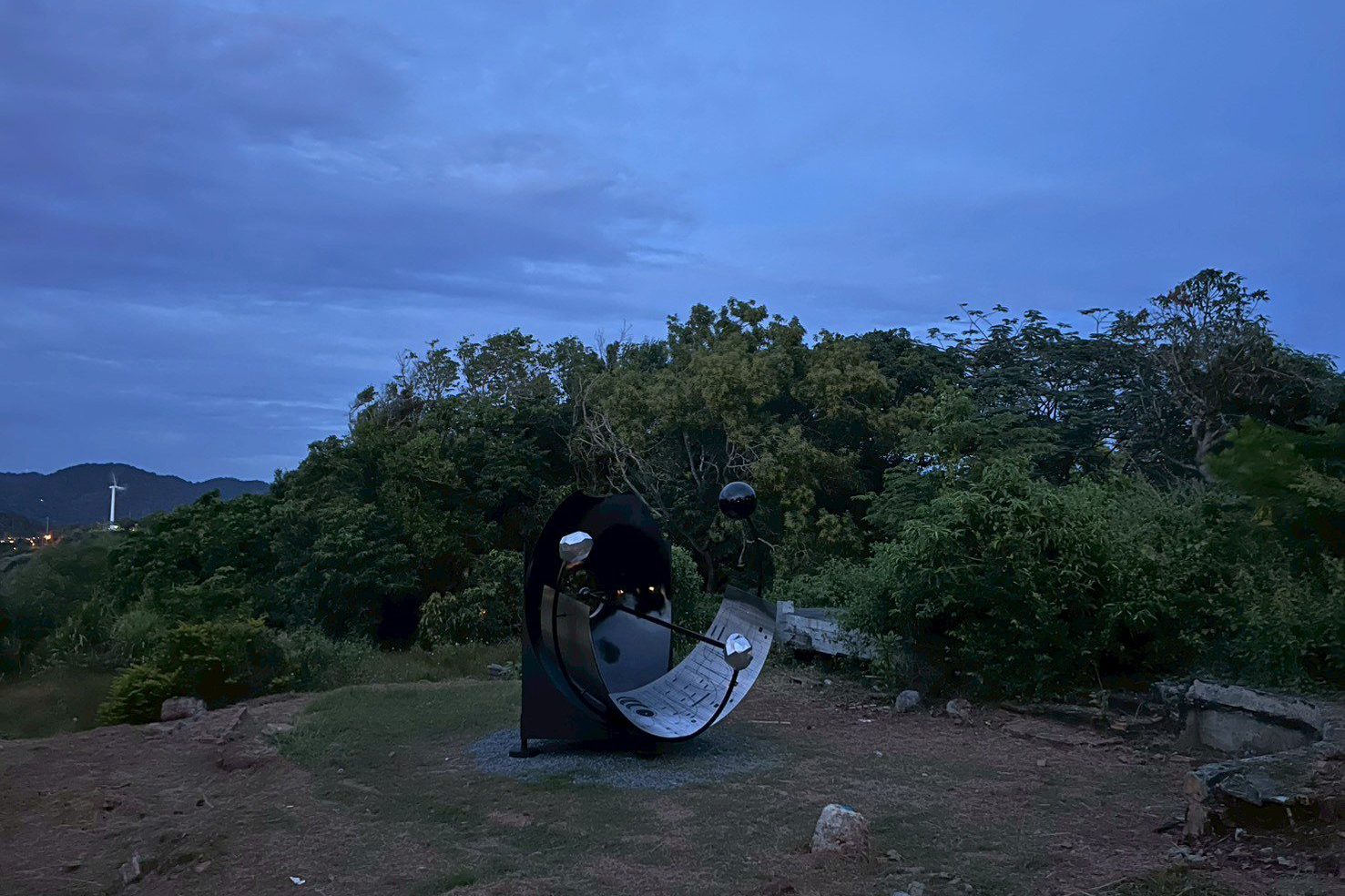 Photo: Sarunkorn Arthan
Golden Beaches
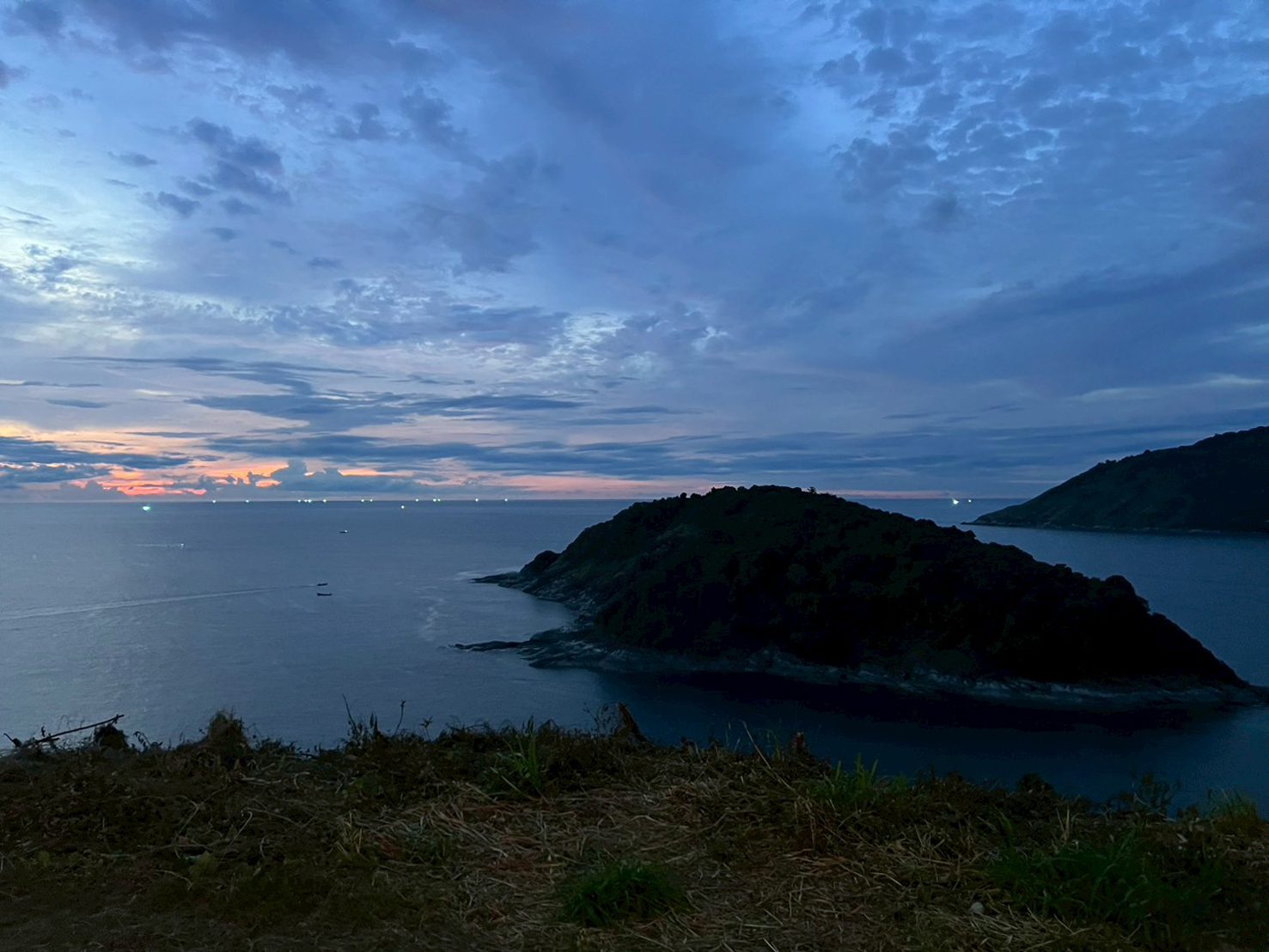
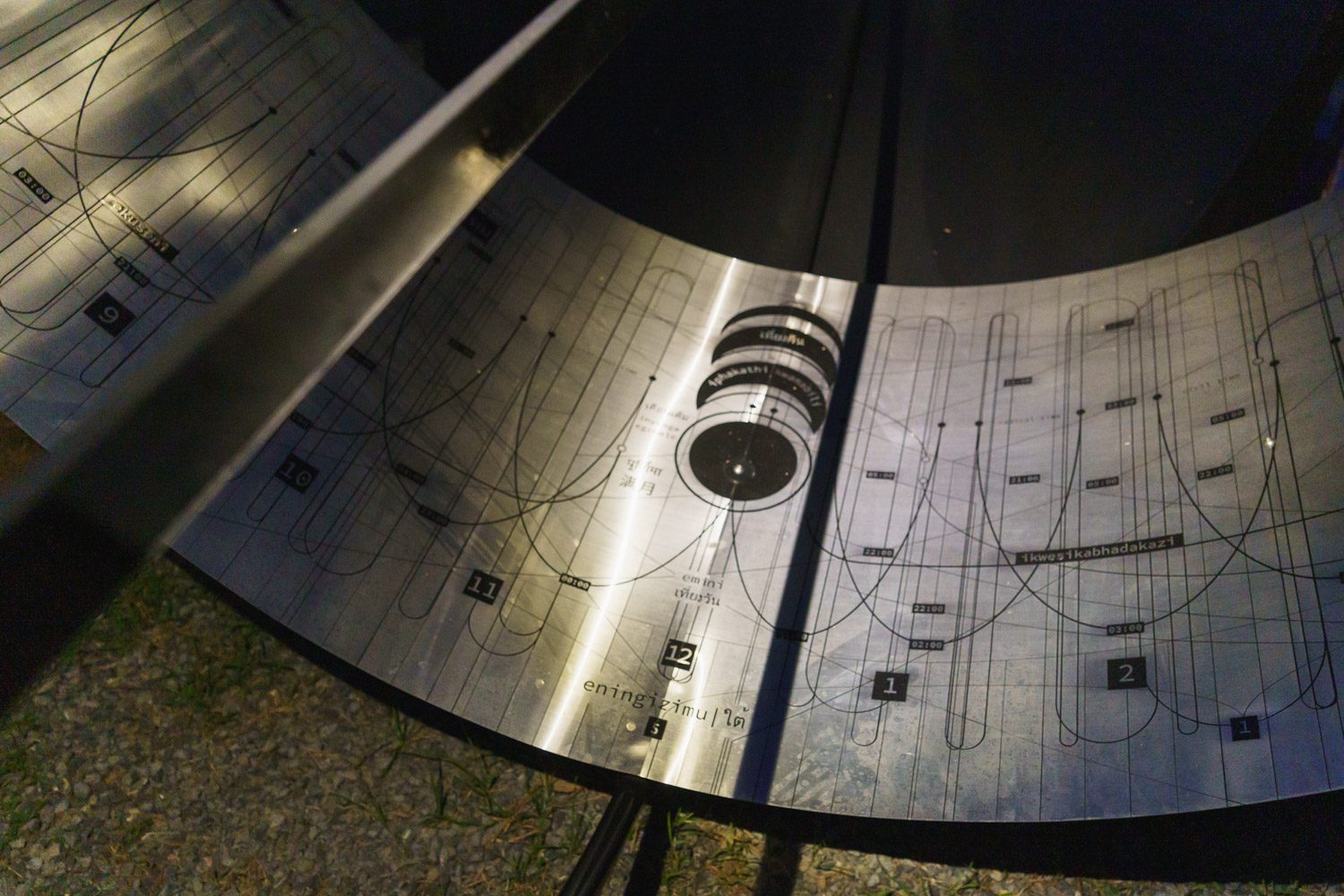
After lingering among hotels and Phra Aphai’s flute, one should travel a little farther, perhaps to experience Promthep Cape at dusk, when the horizon is woven with the gold of the setting sun. As darkness falls, the moon slowly appears, accompanied by a scatter of stars. At the Promthep Cape viewpoint stands Isinyanga by Nolan Oswald Dennis, a lunar clock, the counterpart to a sundial. This steel sculpture works with shadow and the rotation of the Earth, borrowing a Zulu word that means both ‘moon’ and ‘healer.’ In doing so, it challenges the solar calendar as a lingering inheritance of colonial rule and ‘centralized’ time, drawing us away from imposed schedules and back toward natural rhythms shaped by the shifting positions of celestial bodies.
Saphan Hin Park
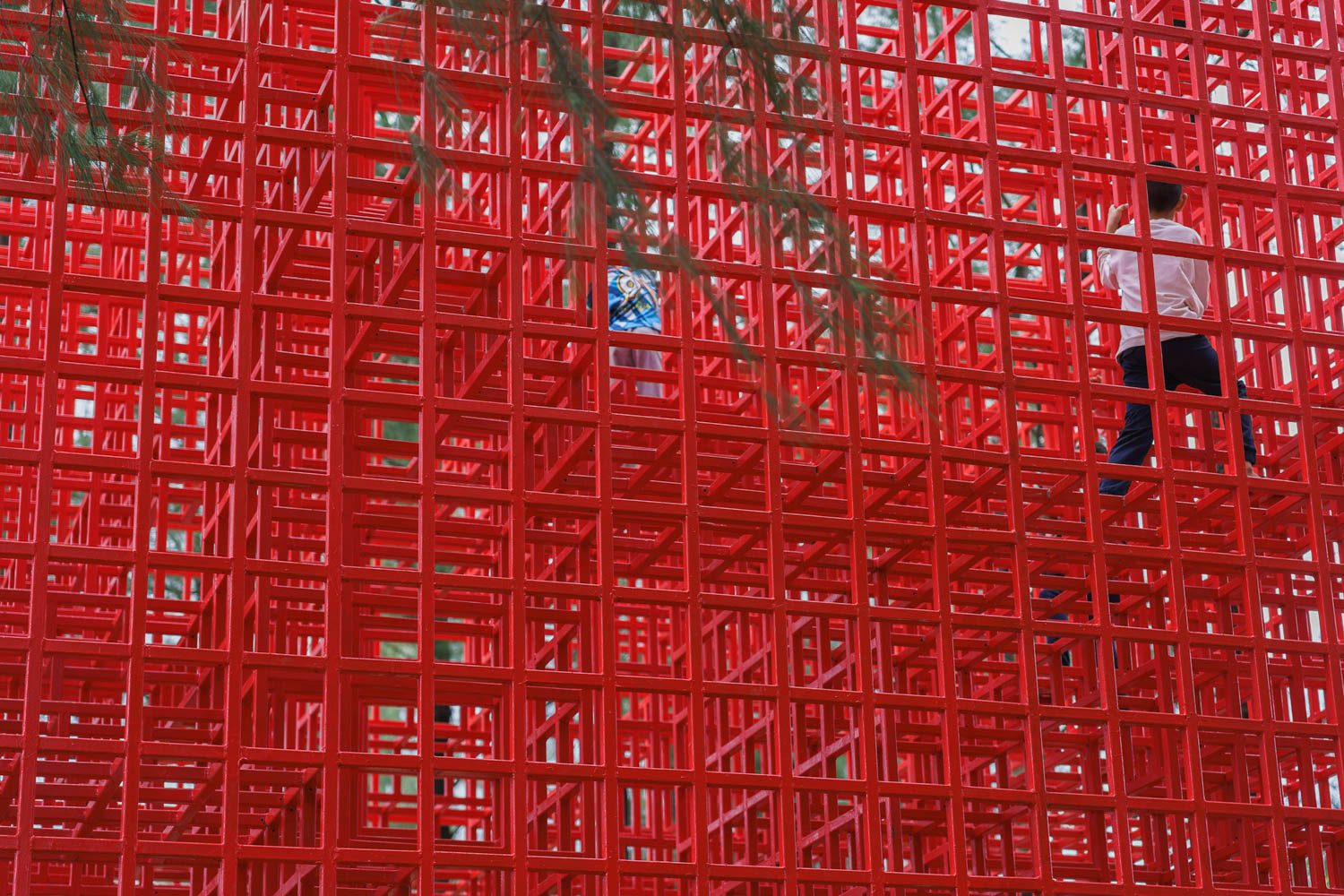
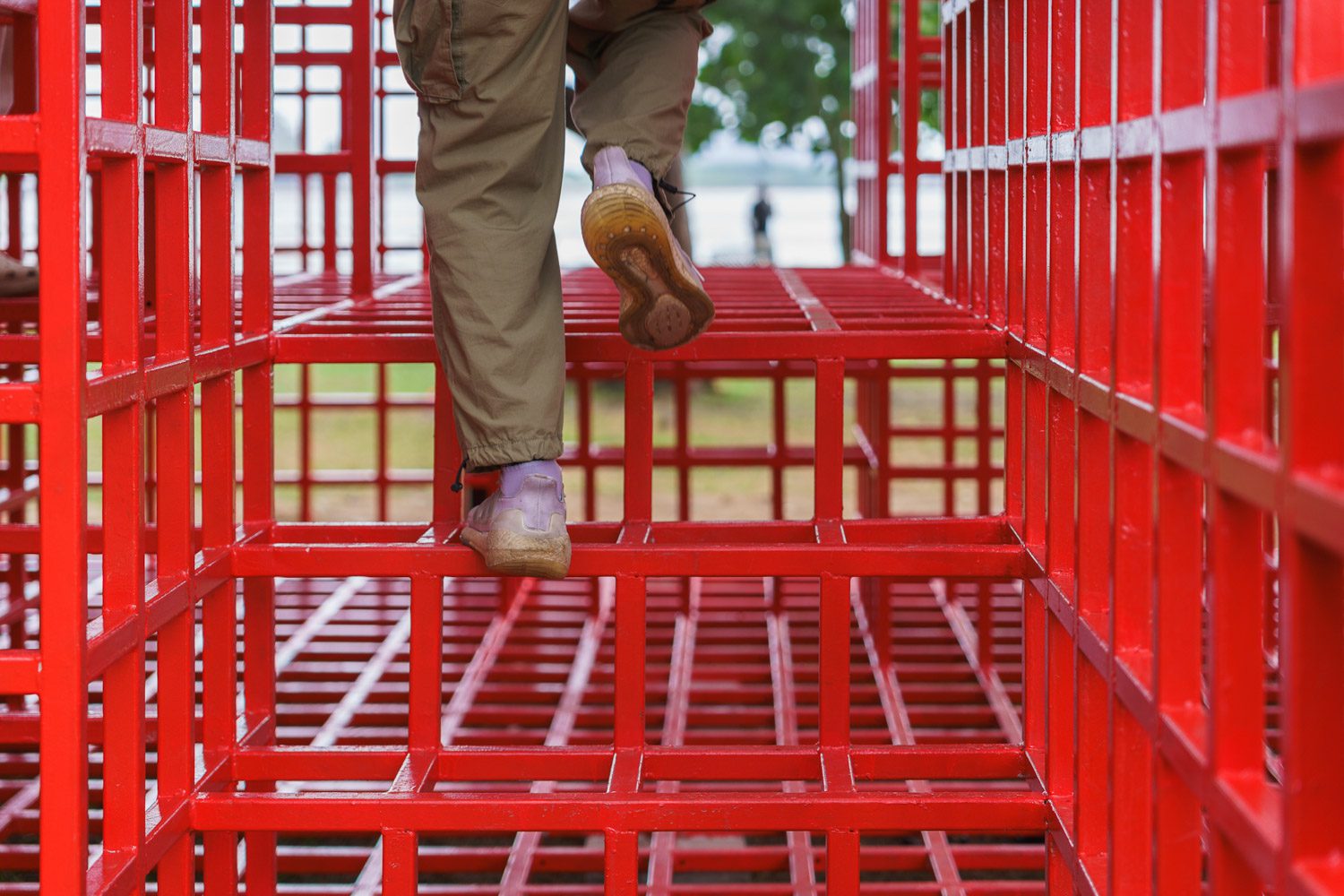
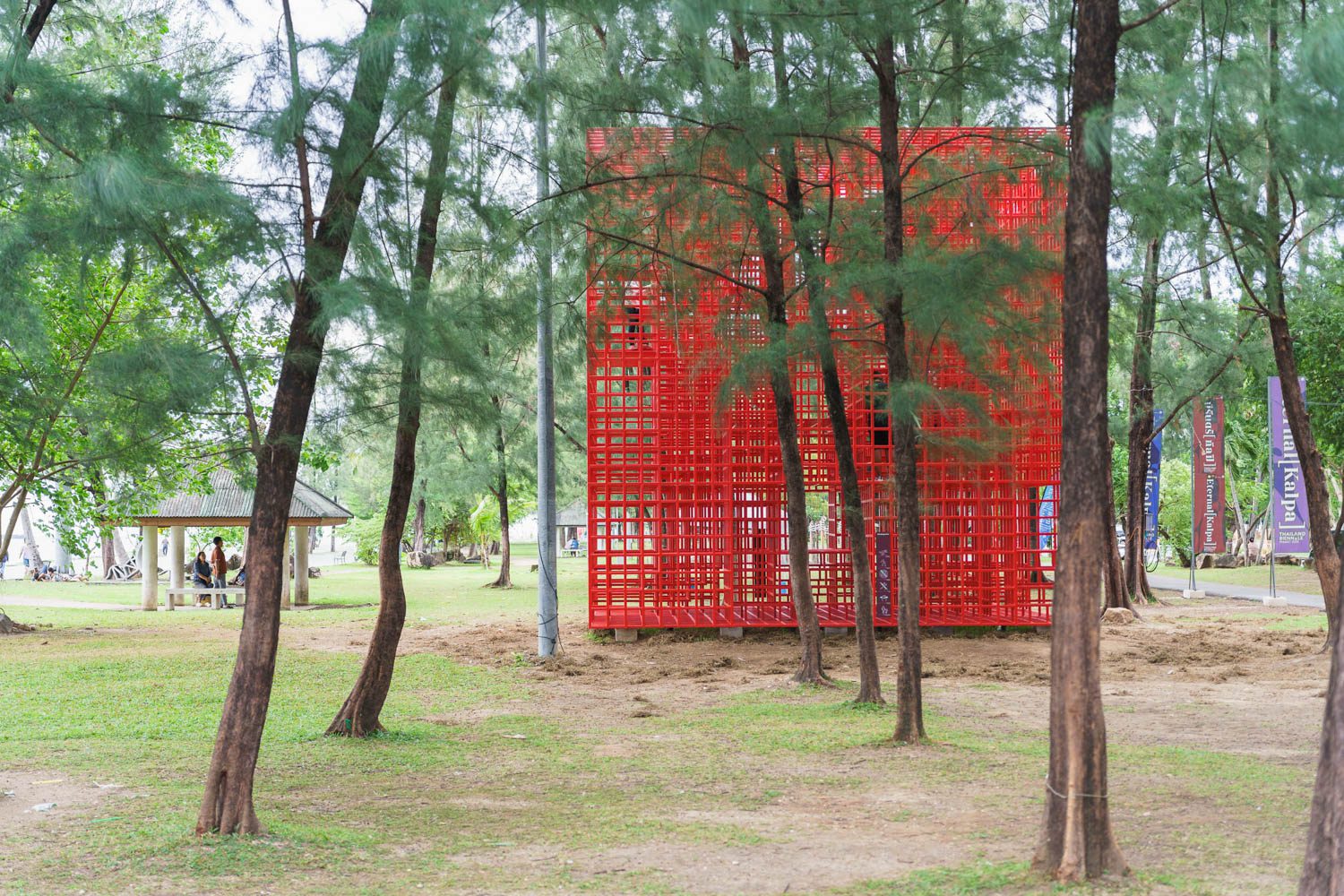
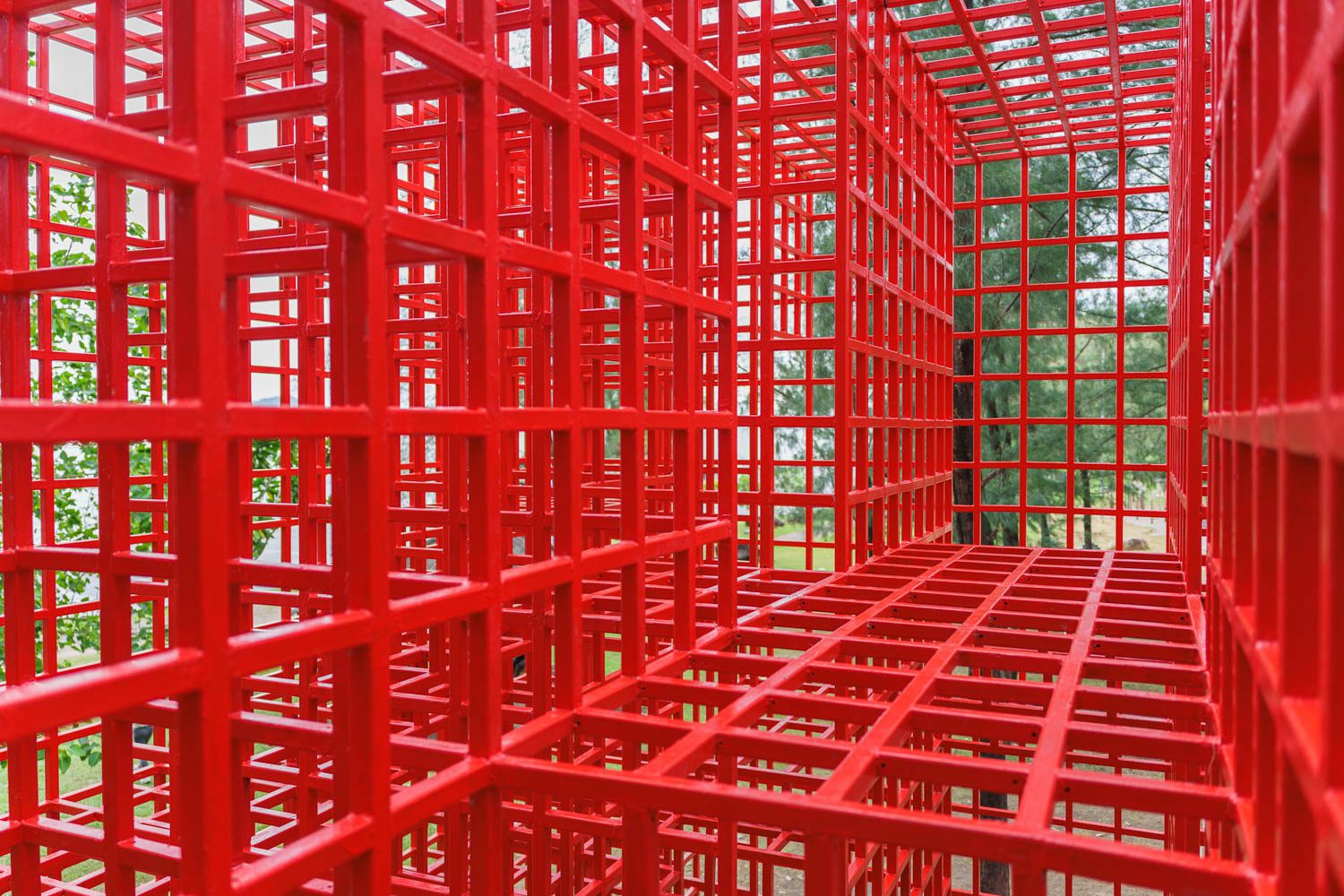
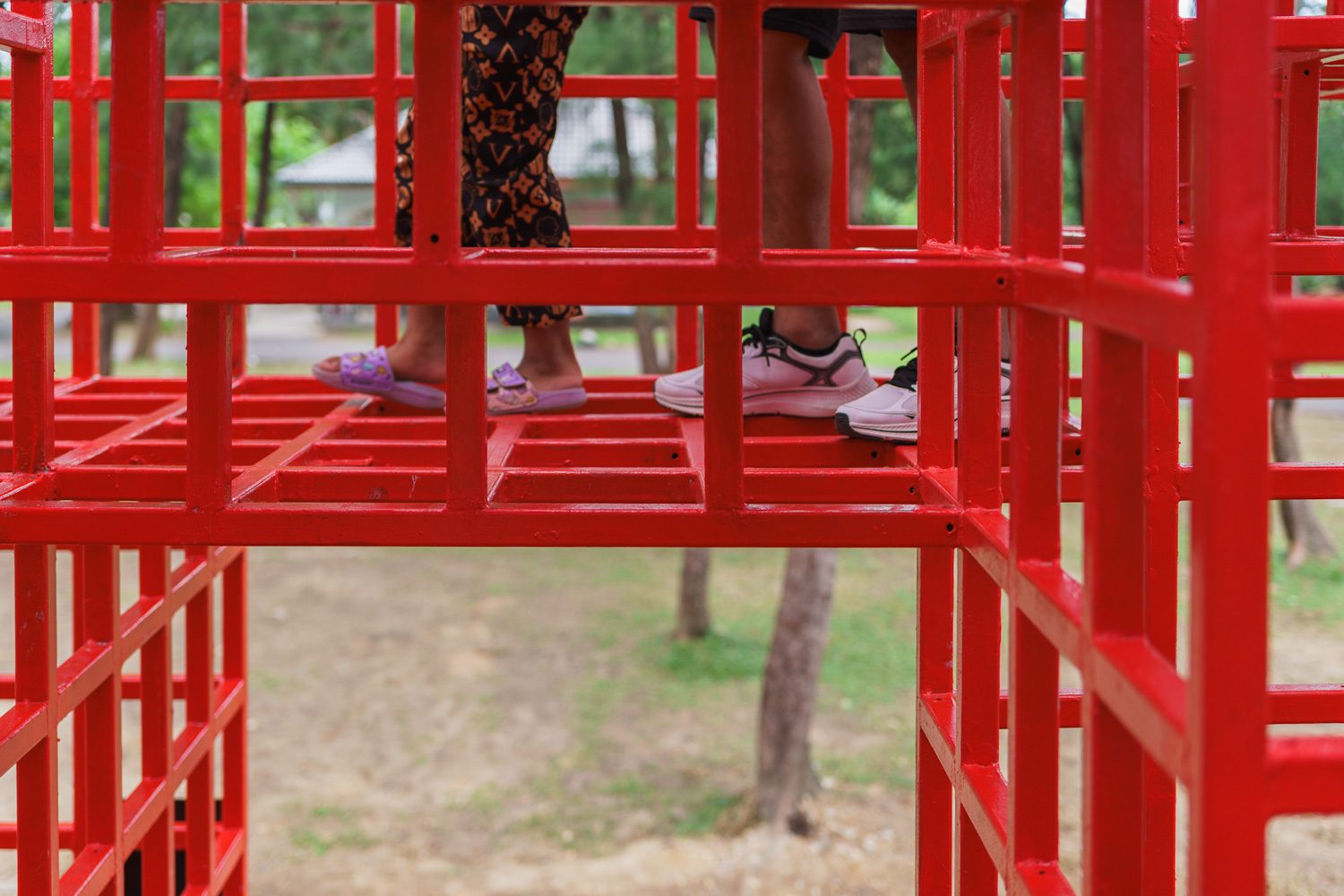
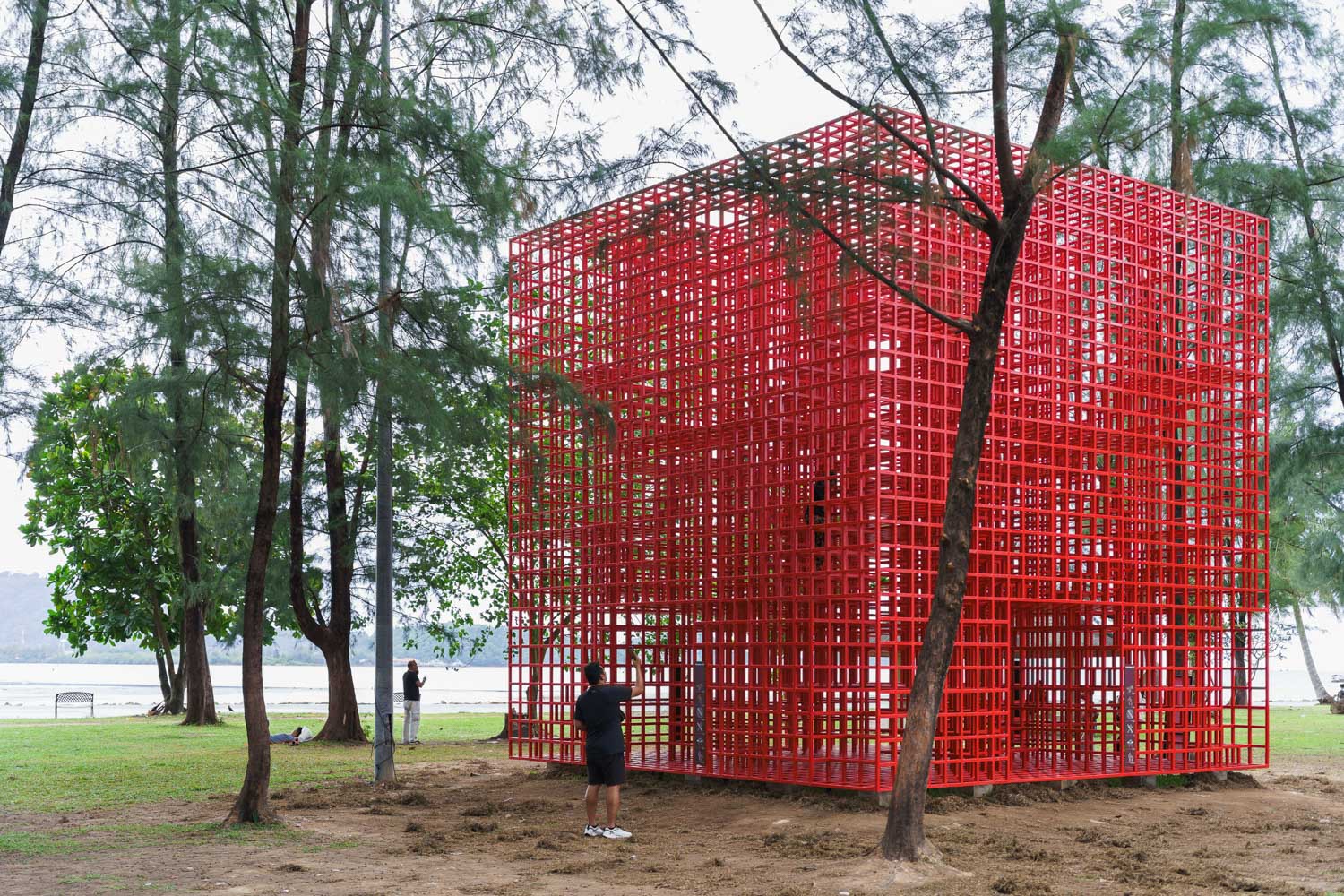
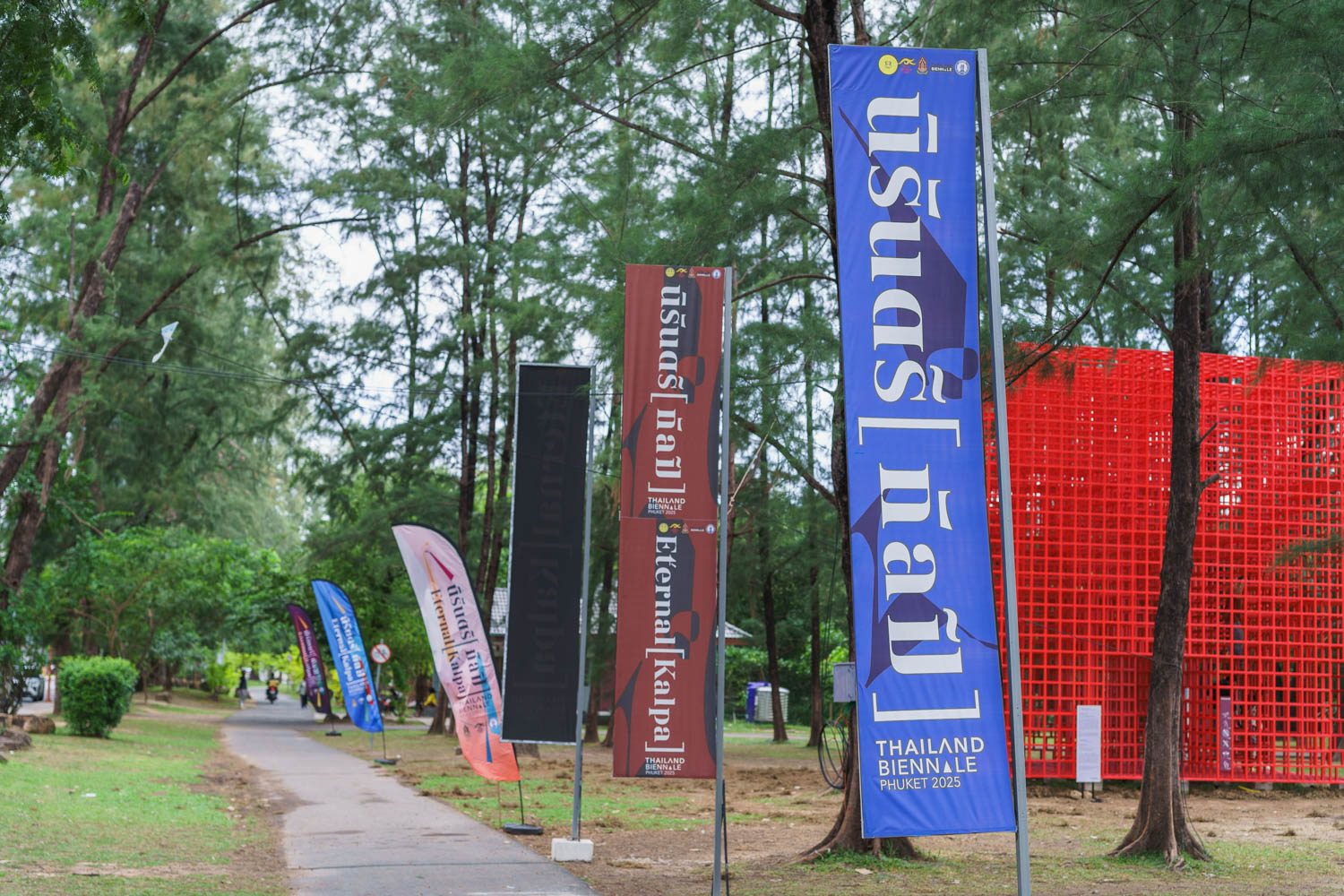
Across the island, at Saphan Hin Park, Pitupong Chaowakul’s The Labyrinth #2 waits to be entered. Measuring 700 x 700 x 700 centimeters, this vivid red cube commands attention by day and by night, but its real force lies in the experience of moving through it. No matter which entrance one takes, there comes a moment when paths circle back, and visitors encounter one another. Pitupong uses this architectural space to challenge us to look away from the smartphone screens that confine us to virtual worlds, and to step into the labyrinth in order to meet the gaze of another person, physically present before us. Passing each other, hearing laughter, and becoming aware of others within this red structure all work to restore the meaning of interaction in a physical world that feels increasingly fragile.
It is worth noting that both works are installed in public spaces and are accessible 24 hours a day. Visitors can walk around them, enter them, and engage with them freely.
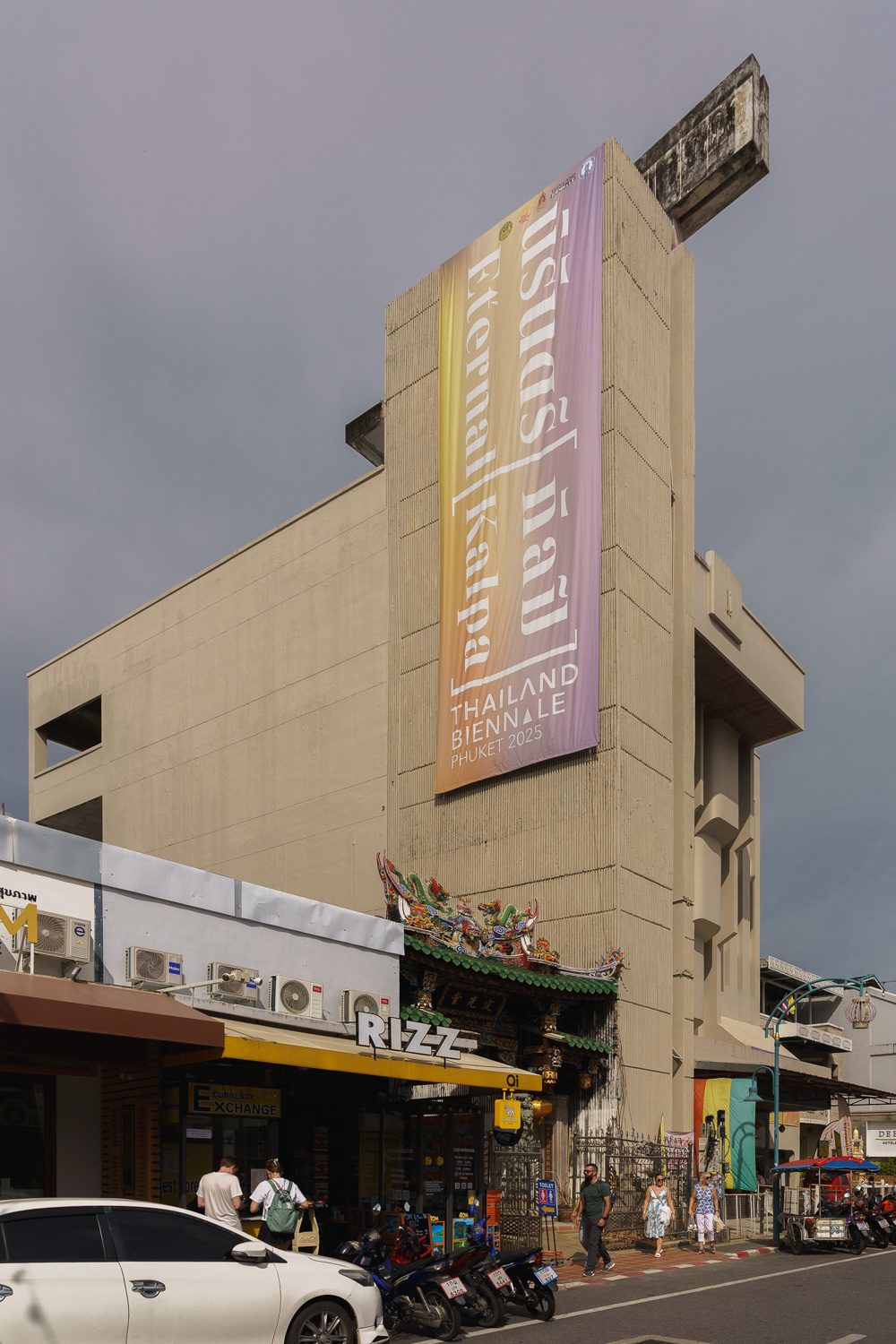
Former Bangkok Bank of Commerce (Phuket Branch)
The Two Heroines
From the edges of the island, where one looks toward the stars and the pathways of human connection, we turn inward to consider the spirit of the ‘heroines.’ Here, they are not only the monumental figures standing in Thalang, commemorating a celebrated act of resistance. They may also be the spirits of mothers, wives, daughters, and women, residing not only in metal sculptures but in every person born female. This presence emerges in at least two works shown at the former Bangkok Bank of Commerce, Phuket Branch, in Phuket Old Town.
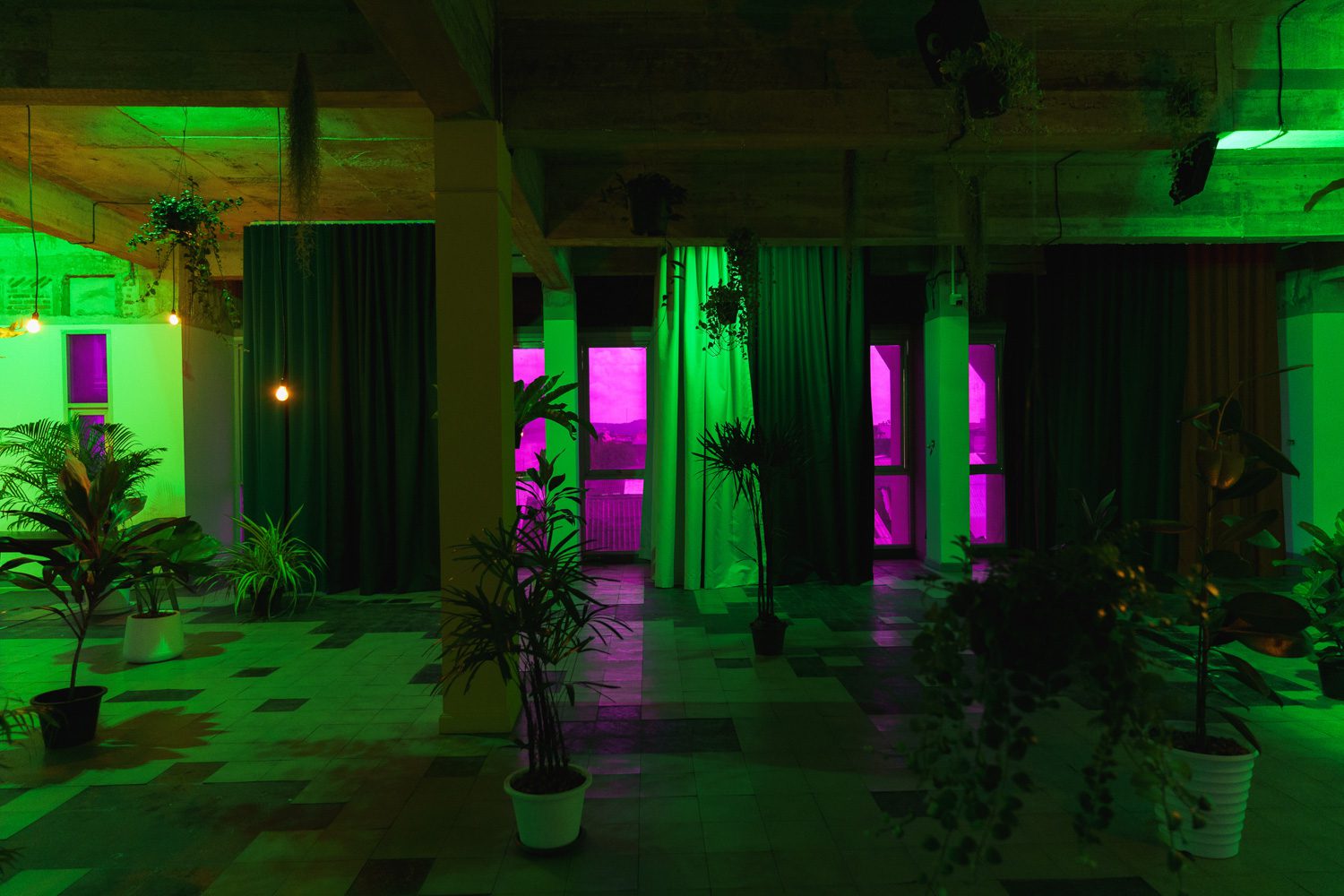
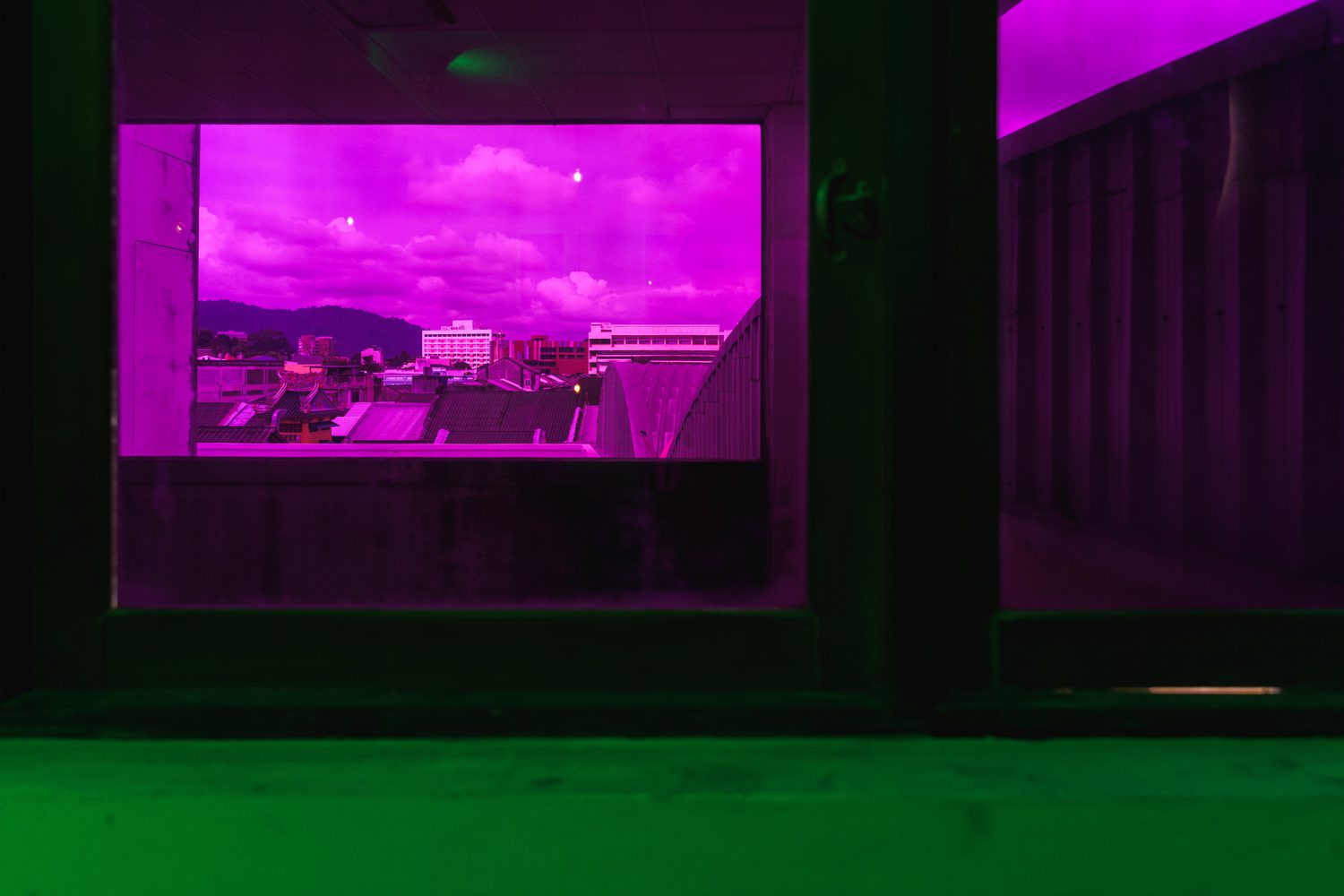
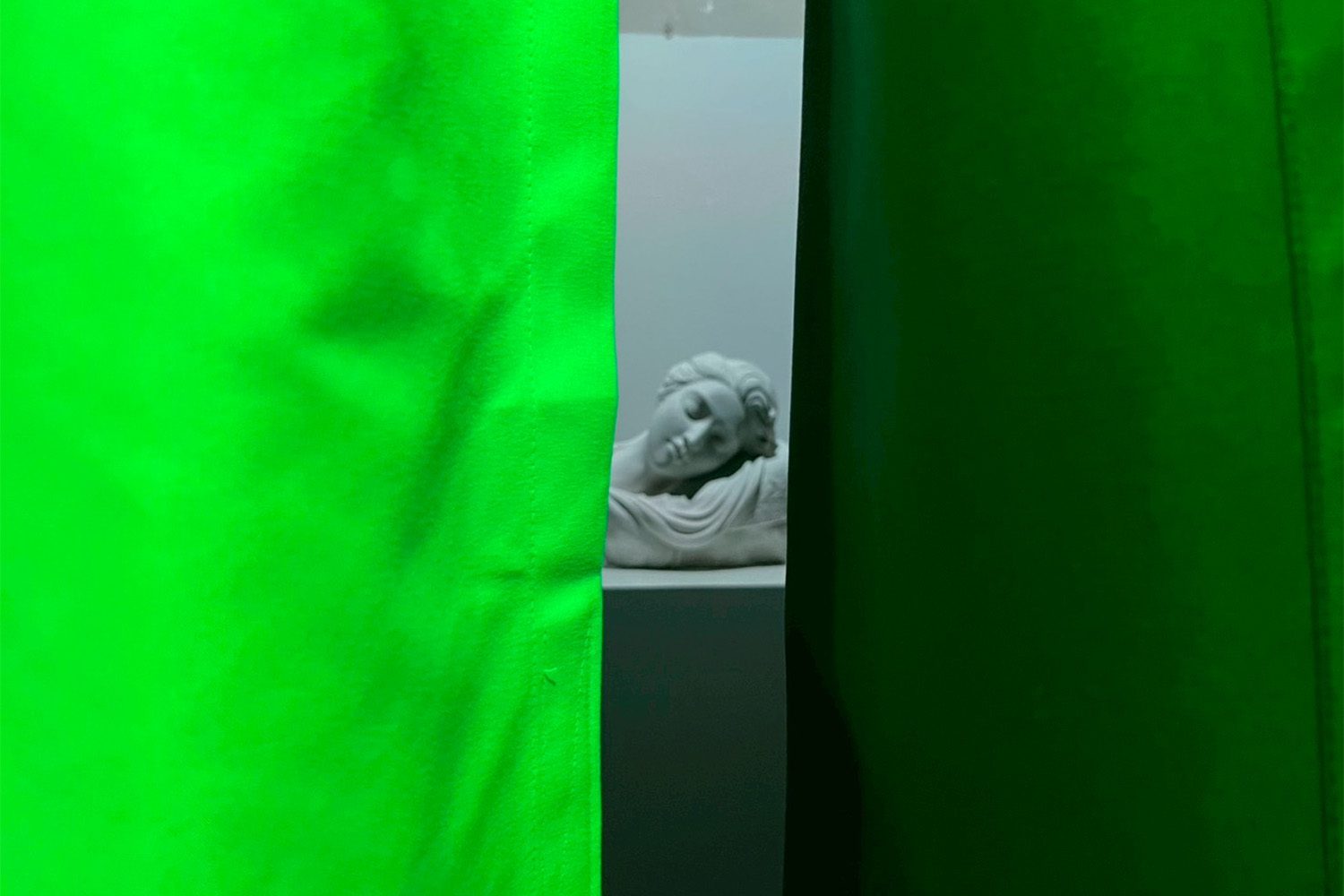
Across the spacious third floor, Kamol Phaosavasdi presents the story of Lady Lueat Khao in And then there comes a different kind of Nothing. Through VR, scent, and painting, the work dissects a tragic legend and evokes the ‘surreal, half-dream’ state of an innocent woman falsely accused and unjustly punished. Kamol uses this story to reflect on how, across time, the spirit of women has been made to carry the burden of proving itself under the watchful, oppressive gaze of invisible power. Like the figure of the ‘blameless’ innocent, women continue to be pressed beneath the weight of authority and tradition across eras.
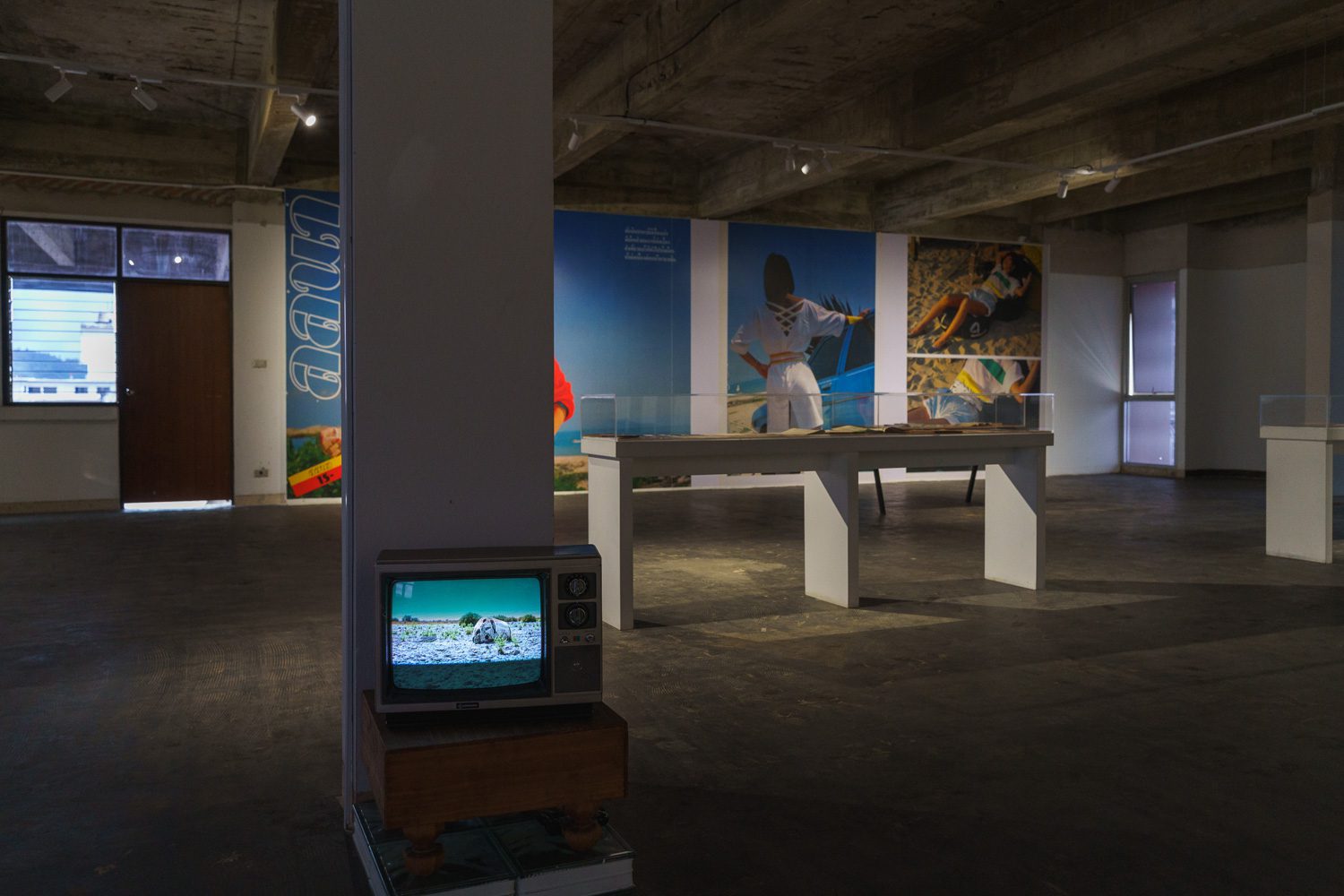
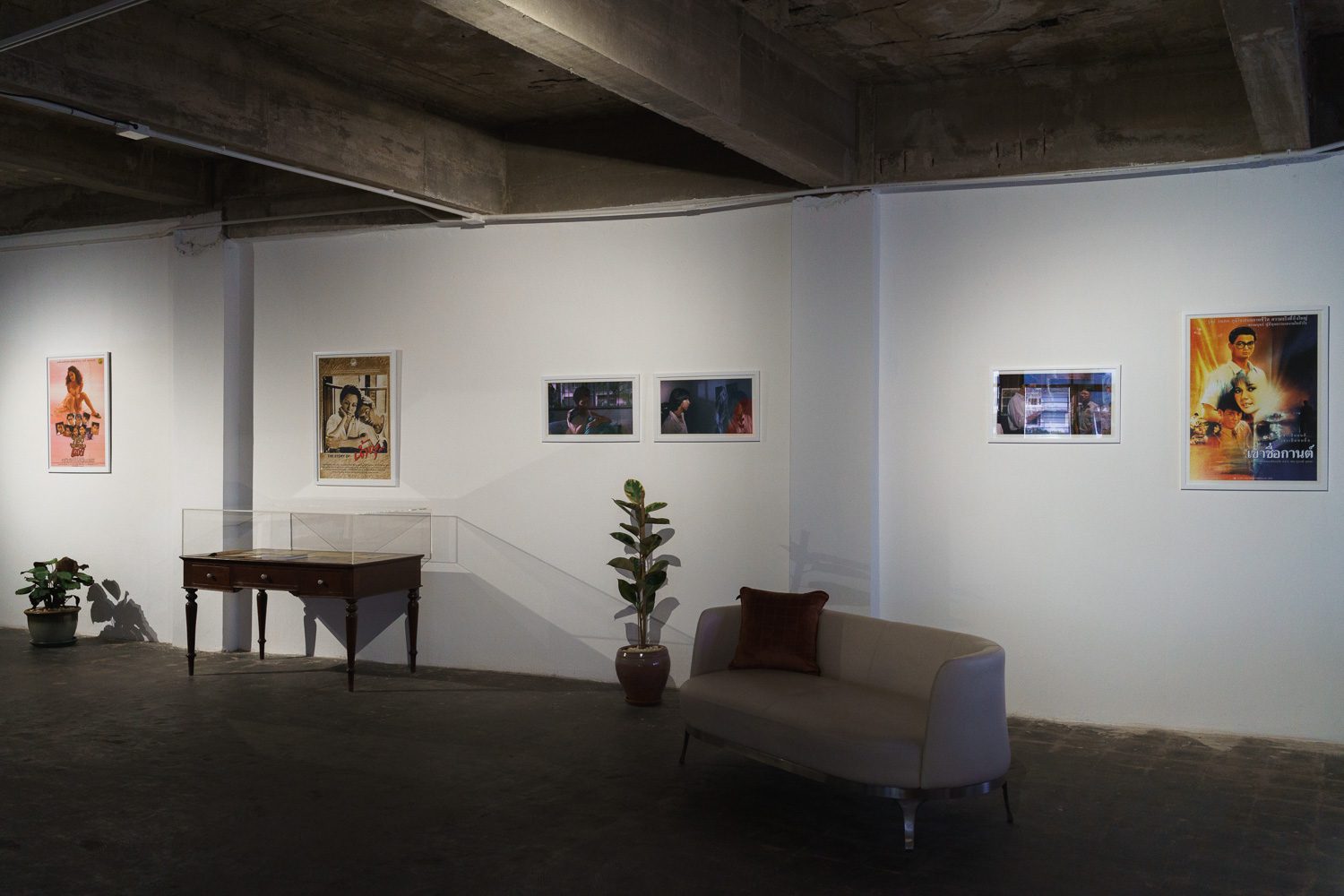
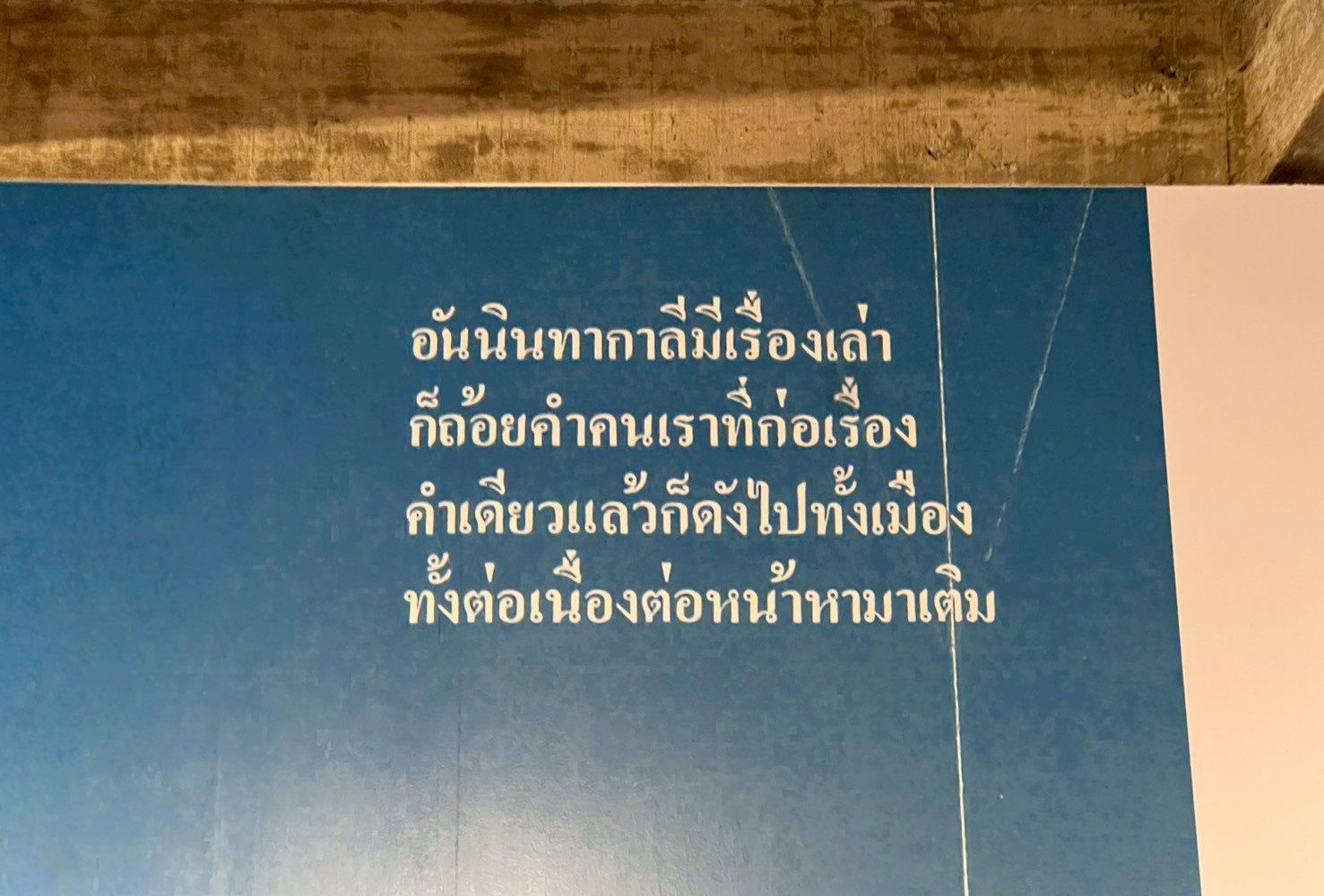
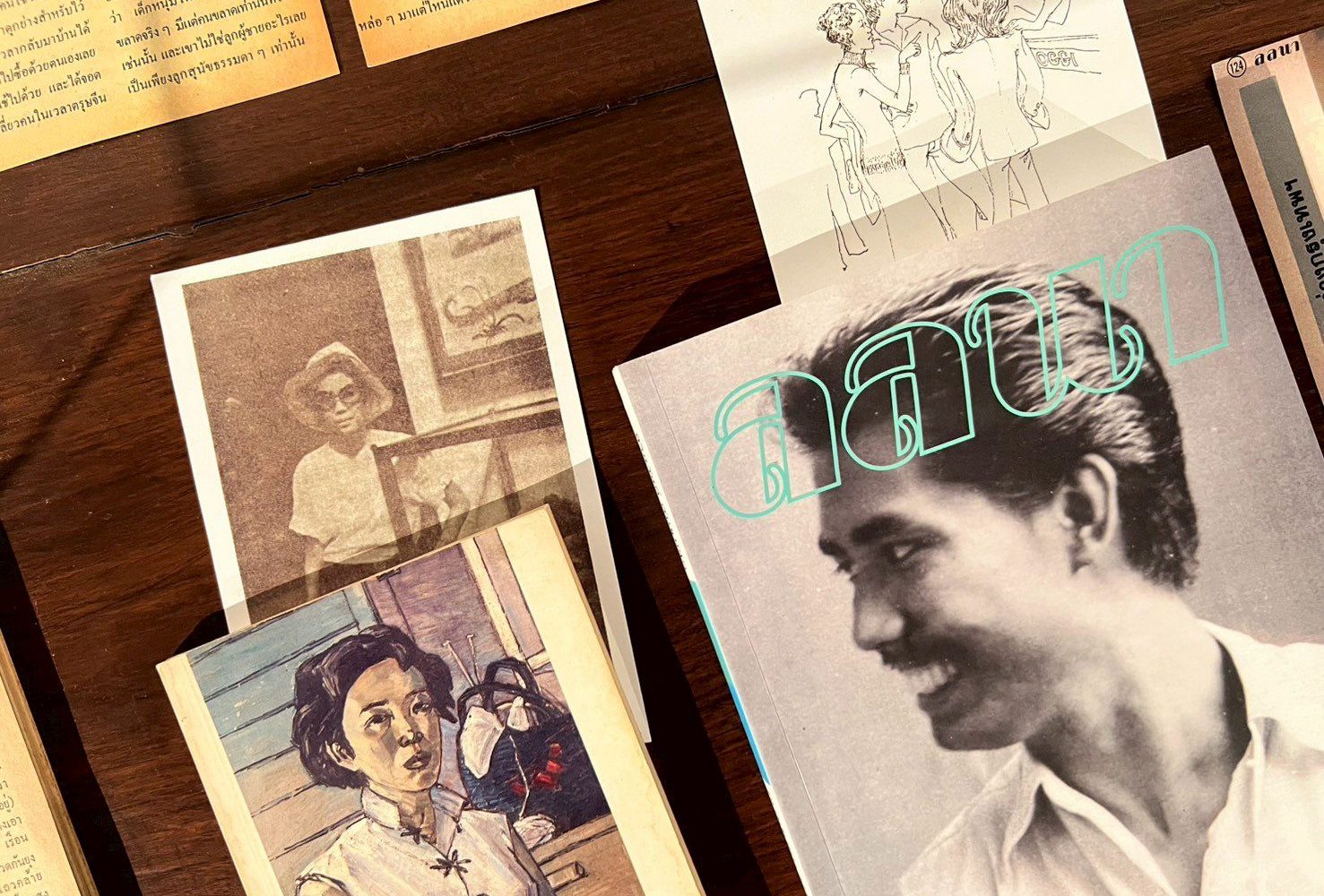
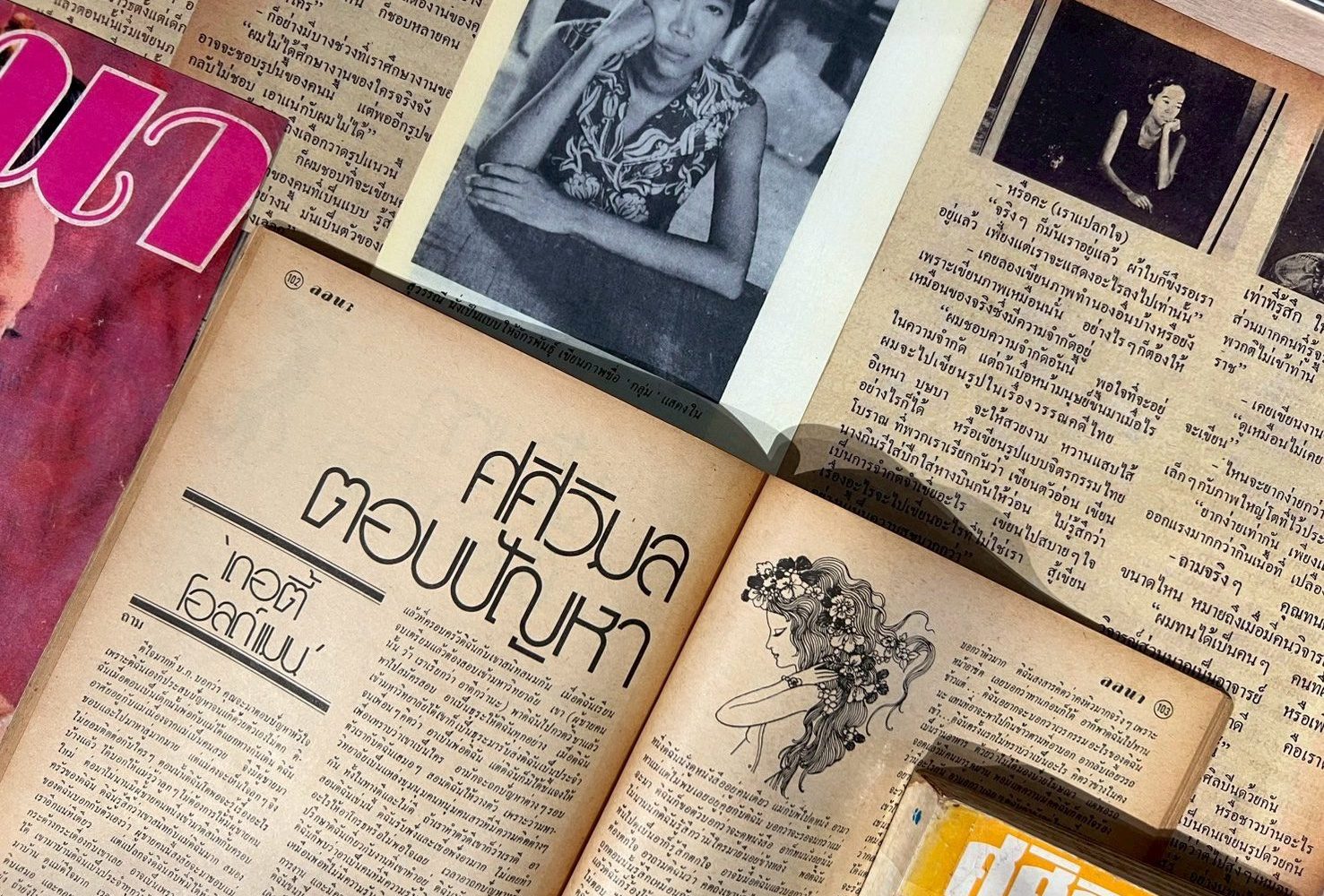
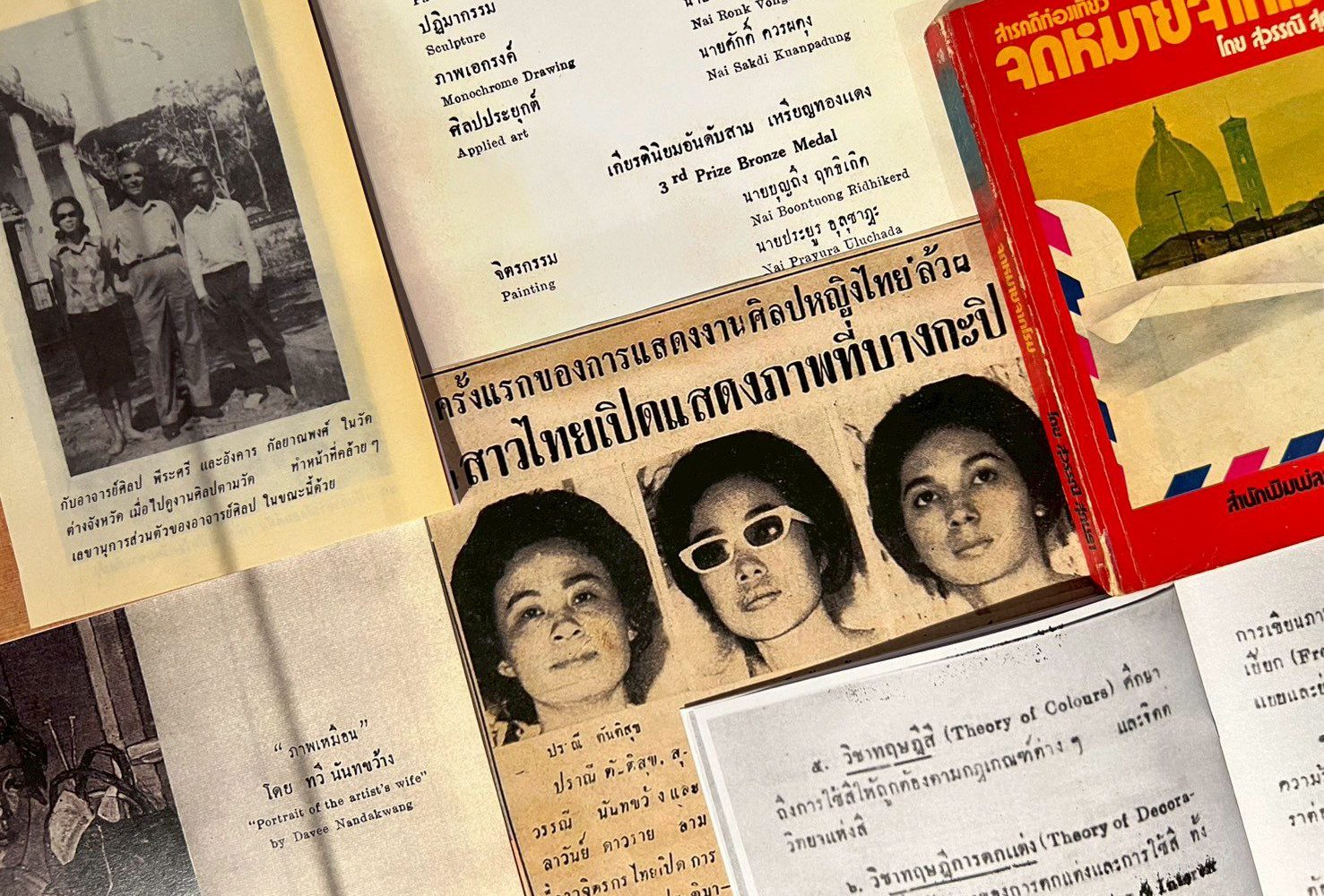
A similar condition might be traced in ‘Suwanni Sukhontha,’ the influential Thai writer and editor whose deeply personal account of her son Nampu became one of Thailand’s most enduring literary works. Suwanni, too, had to prove herself as a mother, a wife, and a woman in the professional world. Ariane Sutthavong researches her many roles, from her editorship of Lalana Magazine to a private life marked by friction, presenting her as a kind of ‘intellectual heroine’ who fought not with a sword, but with the pen. Ariane shows that to be a woman with a clear position in the 1960s to 1980s was to be in constant struggle against gender prejudice and the social frameworks that sought to contain her.
Kathu Shrine
The Blessing of Luang Pho Chaem
If womanhood must prove itself in order to be accepted within a patriarchal society, then the outsider status of the Huáqiáo, or overseas Chinese, has likewise had to be proven before those considered insiders, namely the Thai majority. At one point in Phuket’s history, displaced Chinese laborers in the island’s tin mines were seen merely as a troubling ‘thing’ to be feared. This tension reached its peak with the Ang Yi Rebellion of 1876, during which Luang Pho Chaem became a spiritual rallying figure in the resistance against the uprising, later receiving a monastic title from the Siamese government.
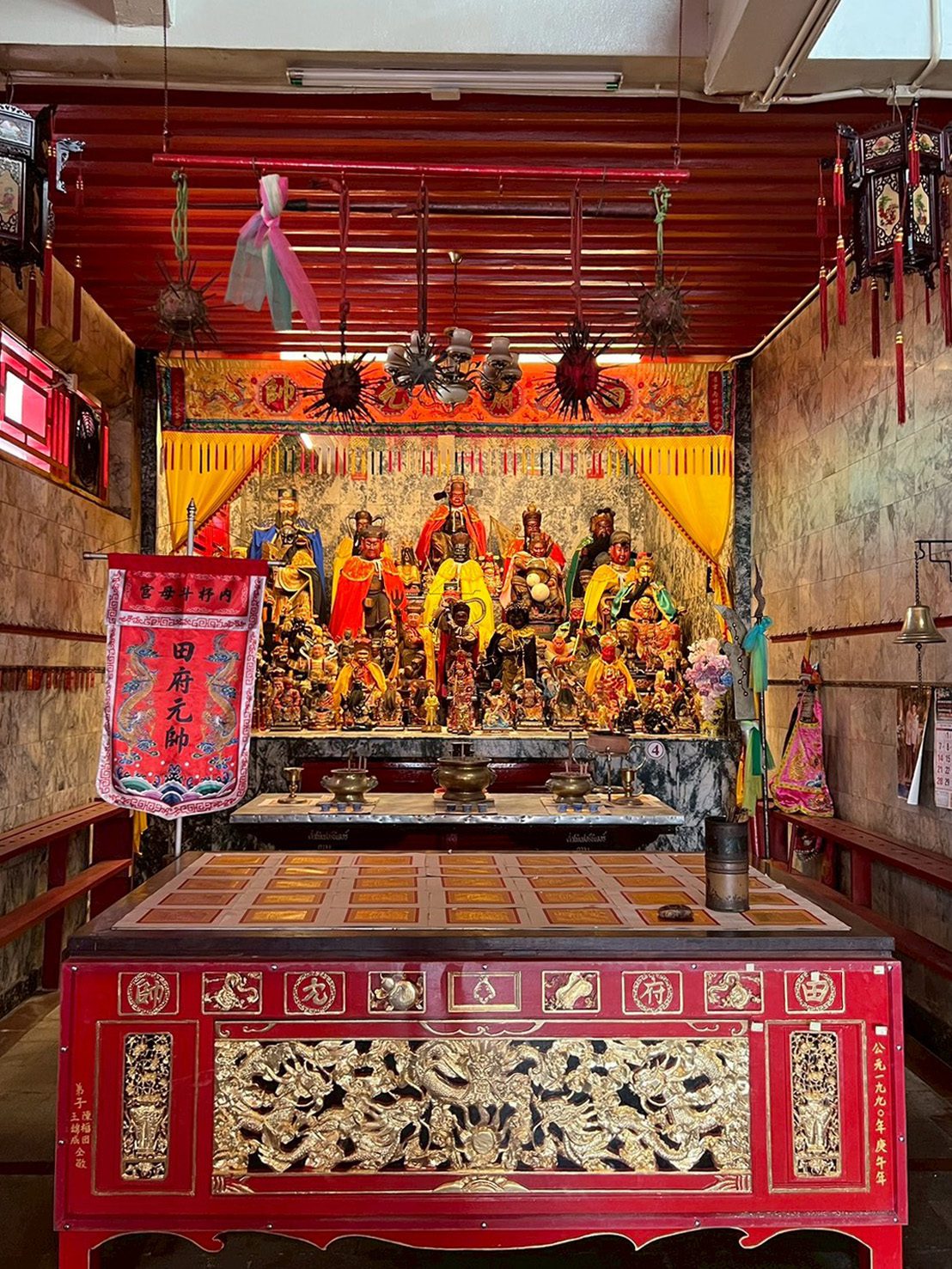
Photo: Sarunkorn Arthan
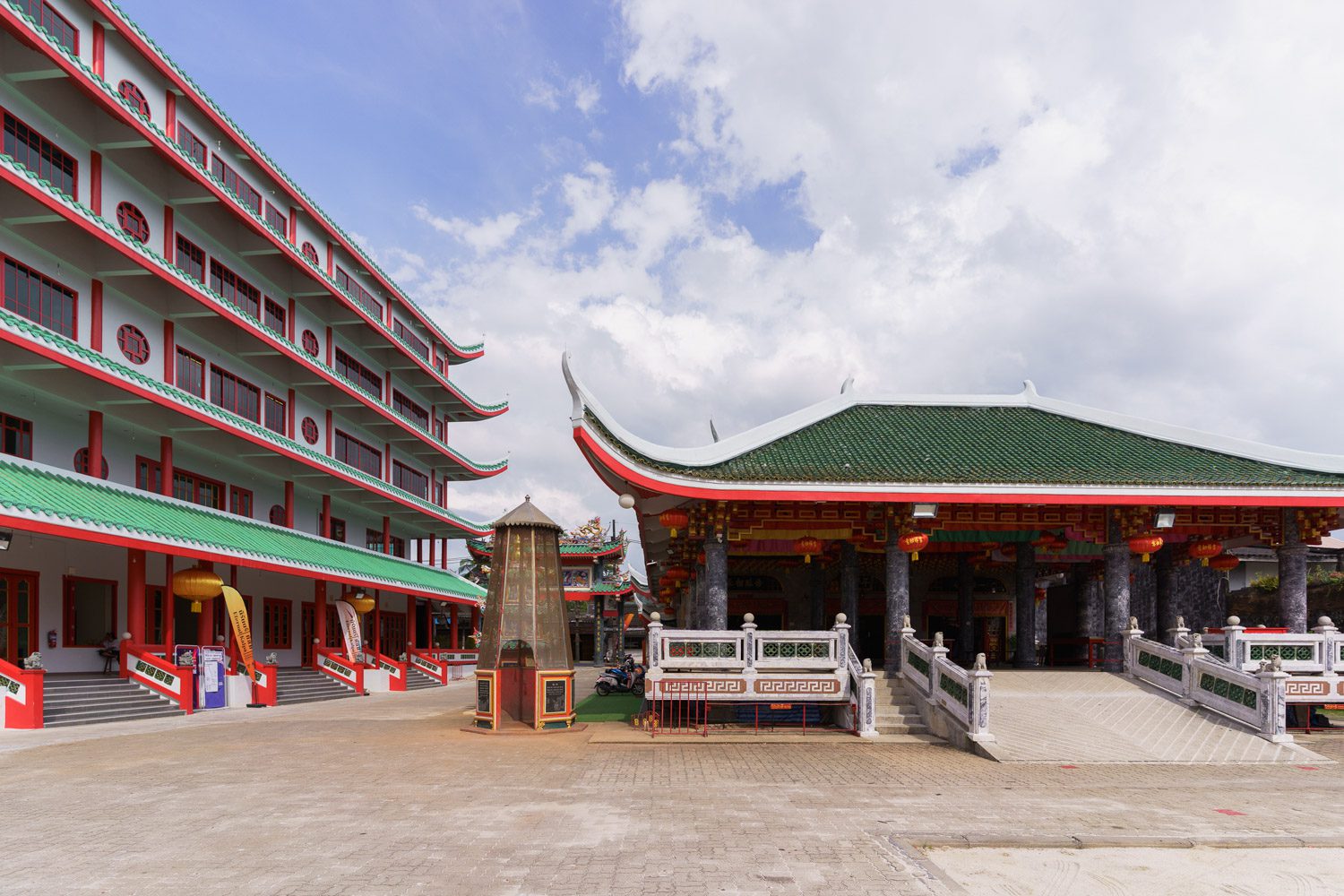
Kathu Shrine in Kathu District is one of Phuket’s oldest Hokkien shrines. It is also regarded as the birthplace of the Vegetarian Festival, and remains a spiritual center for Phuket’s Huáqiáo community. Yet the identity of the Huáqiáo, or overseas Chinese, is not confined to Thailand. It has taken shape across many countries and through multiple waves of migration, as seen in Tiger’s Head, Nail’s Tail, a series by Hong Kong artist Serene Hui.
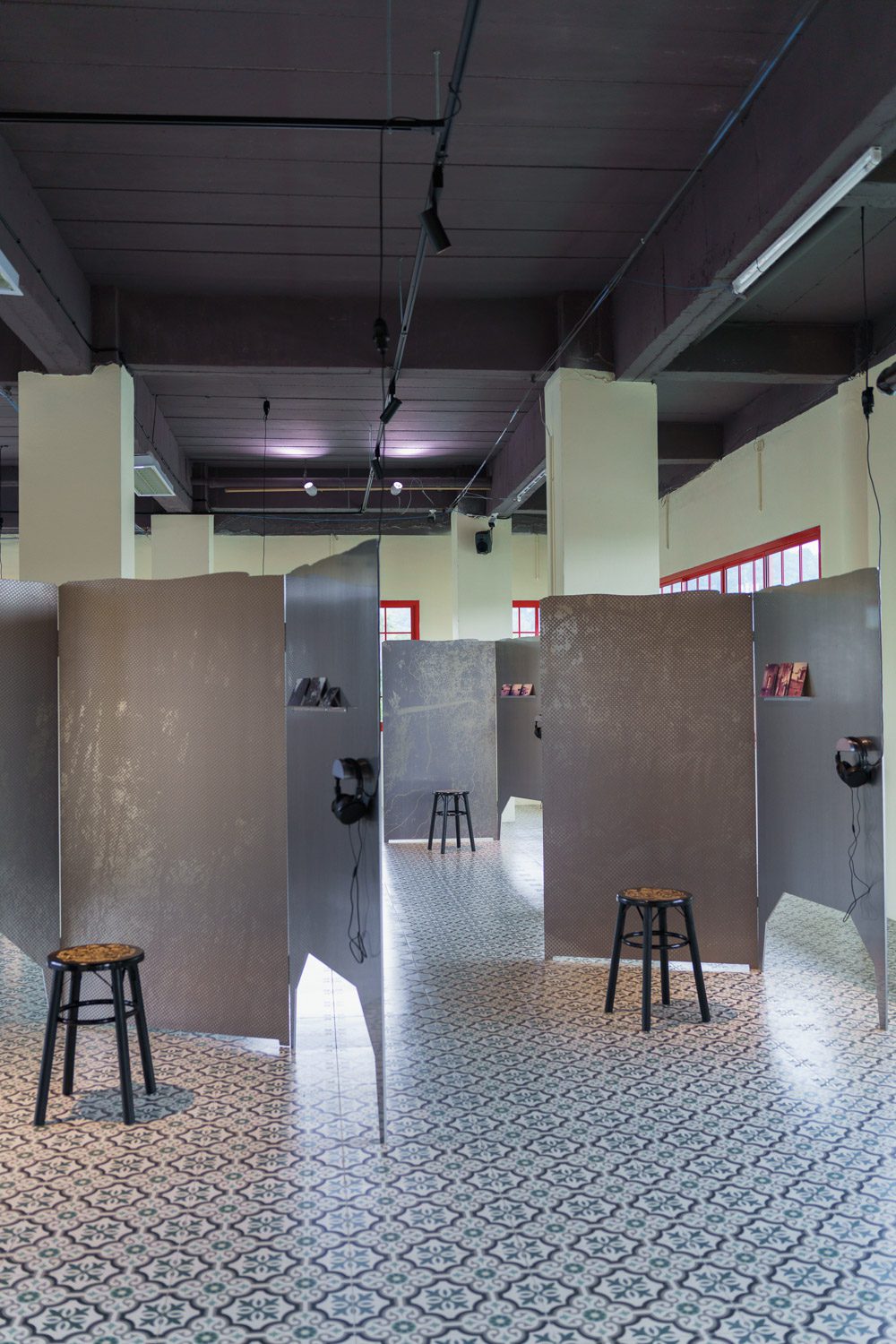
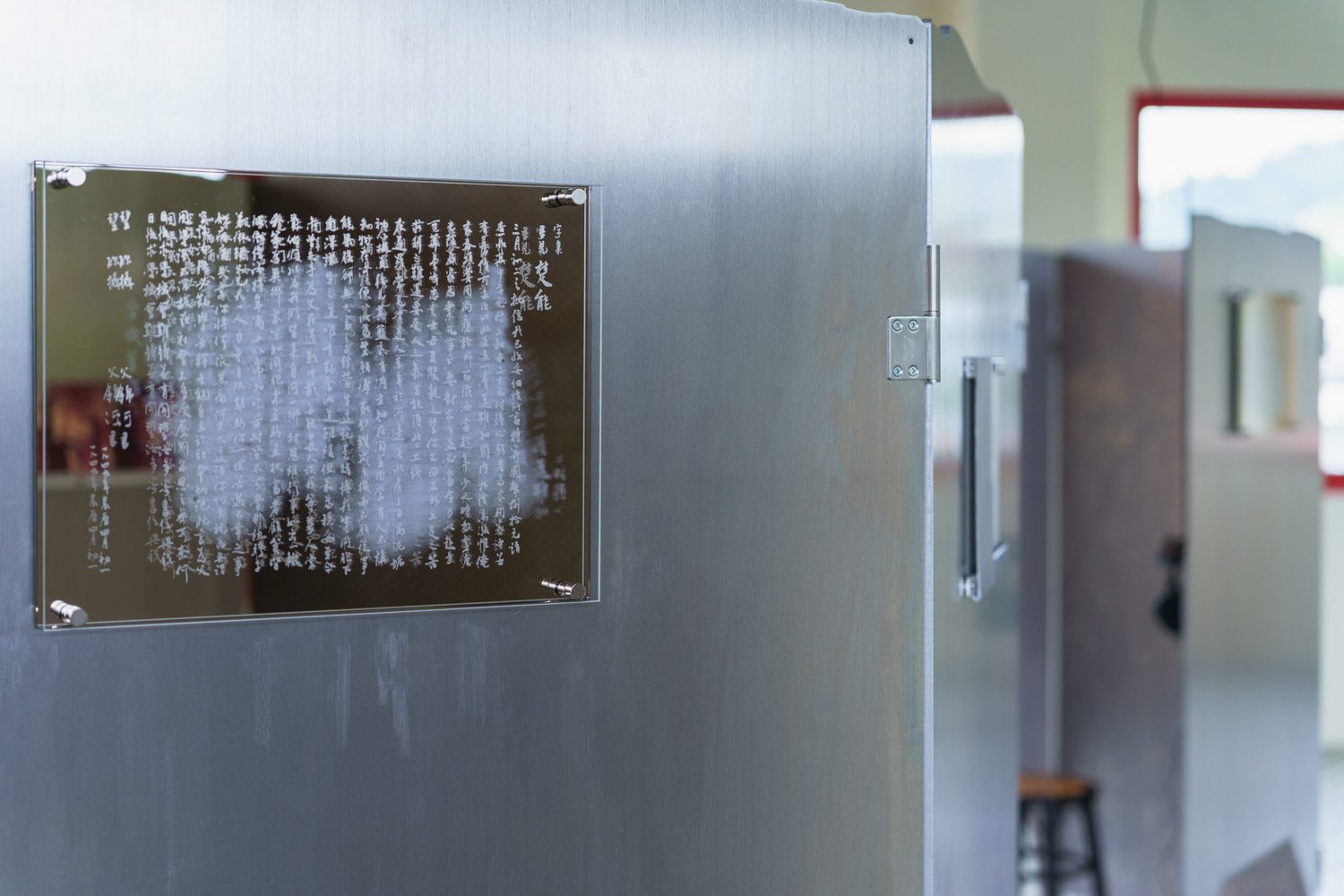
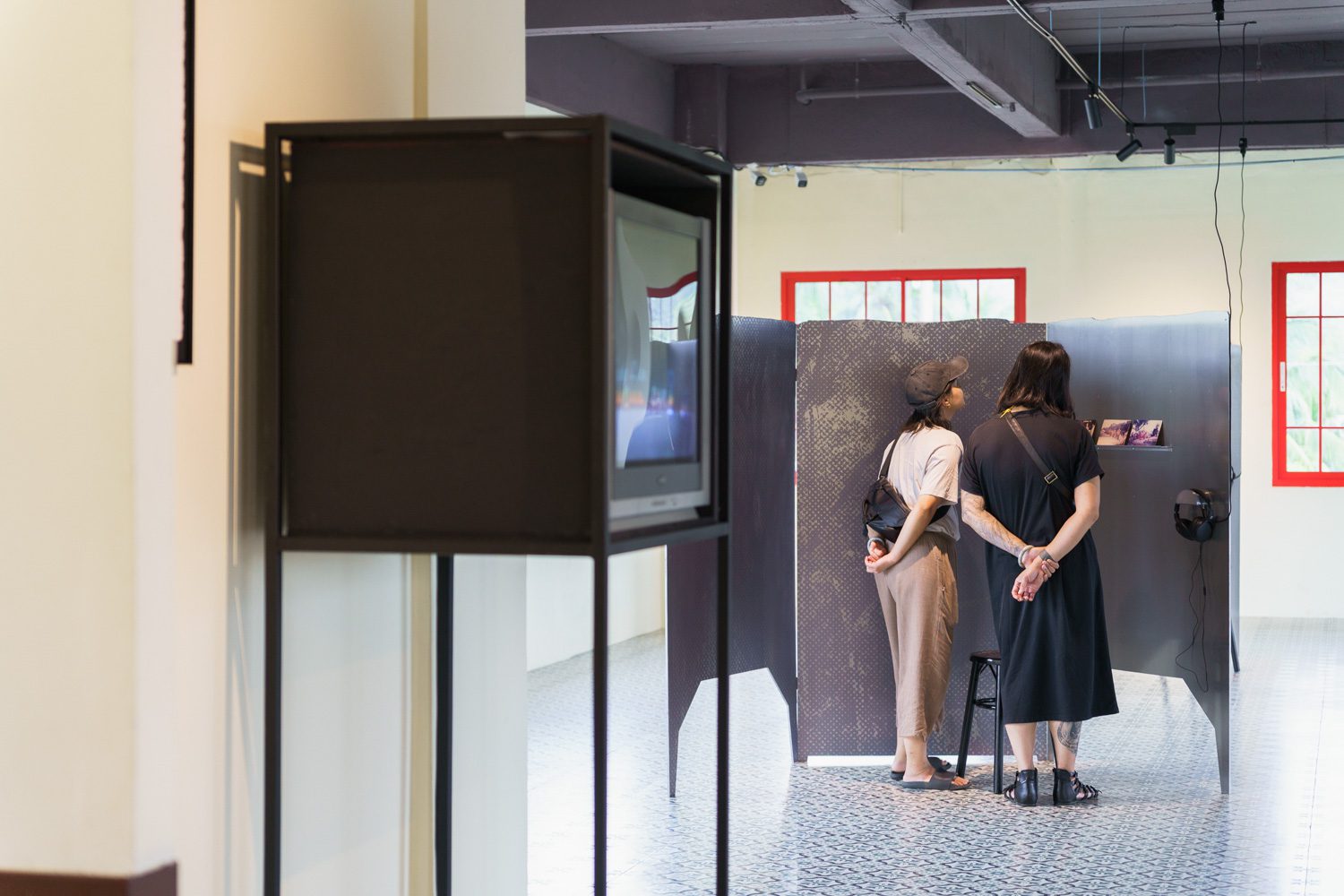
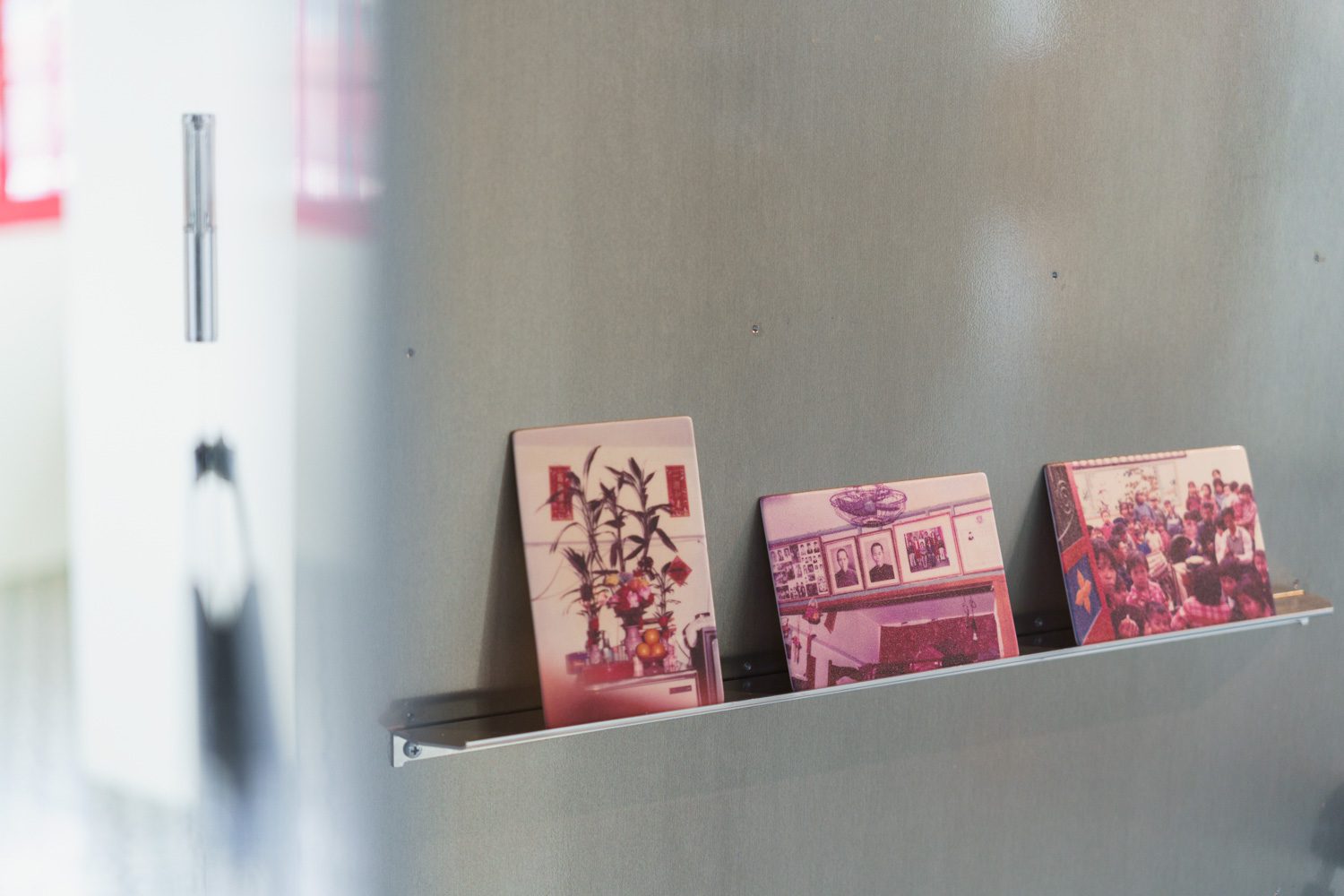
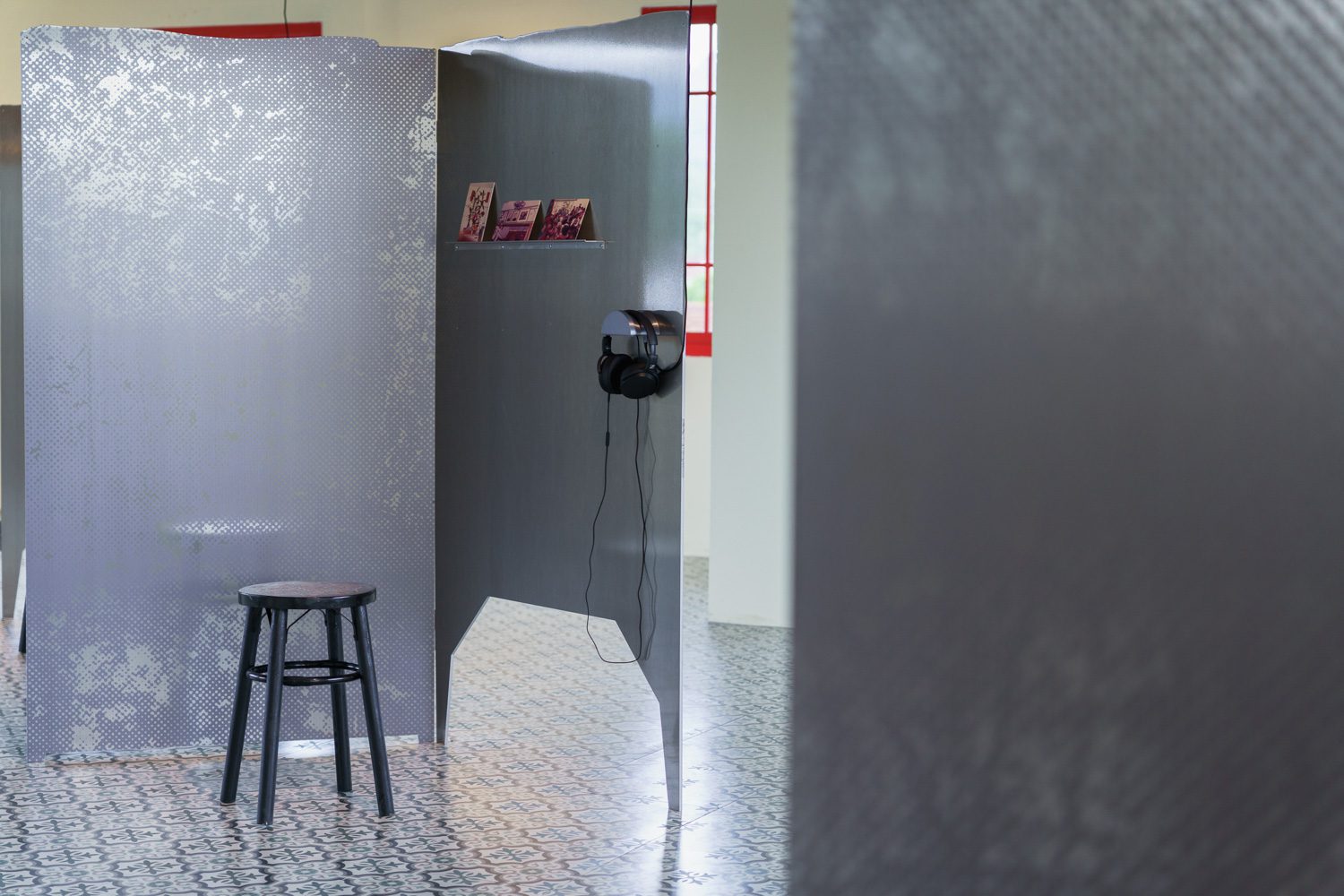
The work is installed on the new building of Kathu Shrine, perhaps reflecting the faith and ‘barami,’ or spiritual power, of the Nine Emperor Gods, whose presence continues to radiate in all directions. In Tiger’s Head, Nail’s Tail: The Scribe, Serene Hui turns to the story of her grandfather, who once worked as a letter writer for Huáqiáo communities in Vietnam and Hong Kong, helping them send messages back to their homeland. Across seven arch-like structures, the work contains recorded readings of letters in Chinese, alongside Thai and Chinese texts by Huáqiáo in Southeast Asia. These materials are drawn from Piguan/Qiaopi remittance letters, recognized by UNESCO’s Memory of the World, and from Supa Sirisingh’s novel Letters from Thailand. Alongside it, Tiger’s Head, Nail’s Tail: Nanyang Sojourners brings together the sound of Teochew opera with field recordings from Phuket, evoking the diversity of Chinese communities on the island, from Hokkien and Teochew to many others. Hui’s work opens another view of the Huáqiáo, not as thieves, criminals, or rebels seeking power, but perhaps simply as people seeking a more secure future.
Ultimately, Eternal Kalpa, the conceptual framework of this edition of Thailand Biennale, Phuket, may not be about seeking a timeless age. Rather, it asks us to accept that this island has always been woven from the fractures and hopes of ‘outsiders.’
_
1 Amornrat Charoonsmith. 2024. ‘The Origin of Phuket as a Tourist City.’ Thairath Online, The Issue, June 4, 2024. https://www.thairath.co.th/money/economics/thai_economics/2790338.