
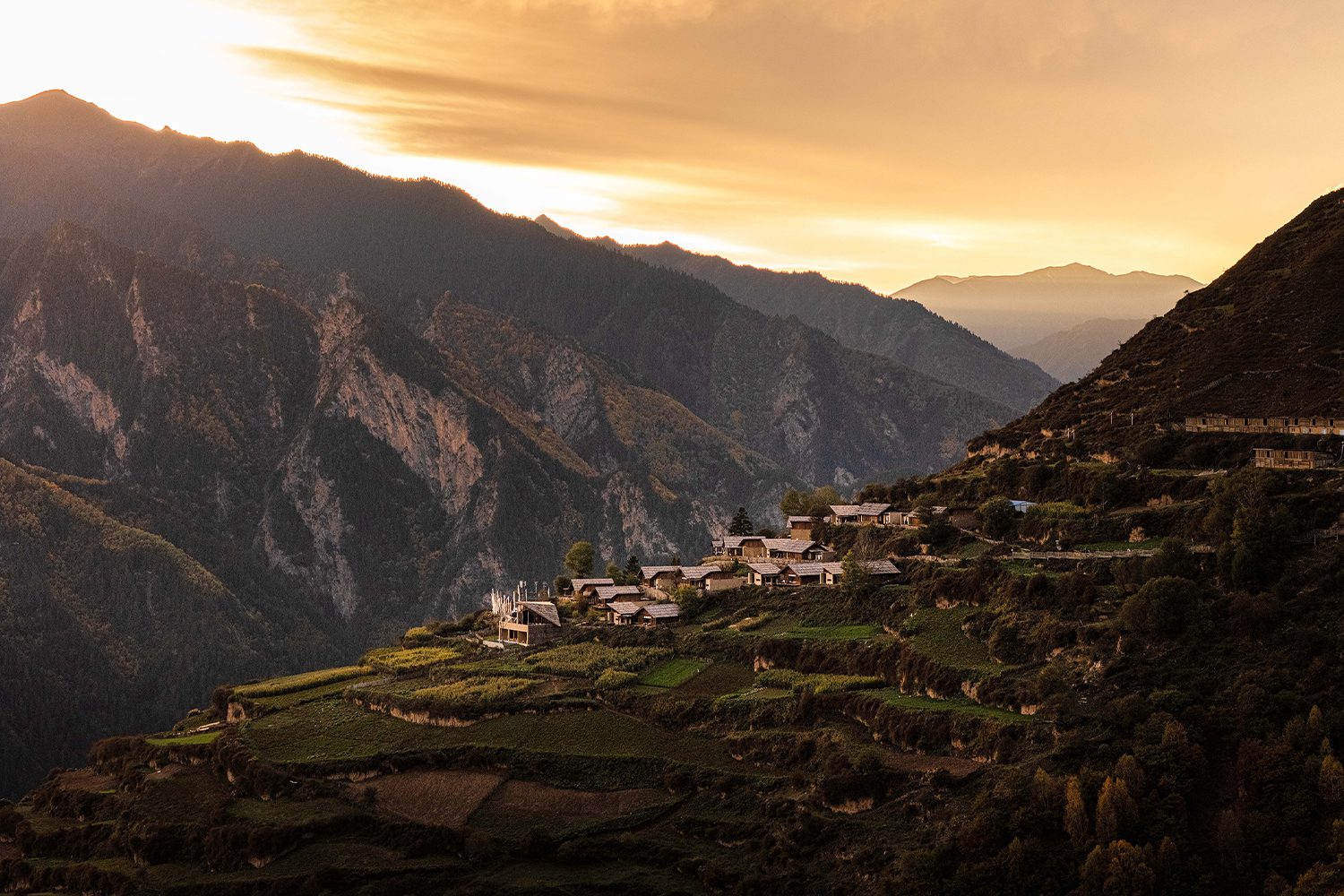
QUIET, WARM, AND UNDERSTATED, THE CHINESE-TIBETAN-INSPIRED SONGTSM TRAVEL HOTEL JIUZHAI SETTLES INTO THE MOUNTAIN LANDSCAPE OF JIUZHAIGOU VALLEY
TEXT: PHARIN OPASSEREPADUNG
PHOTO: YOU PU
(For Thai, press here)
At an elevation of more than 3,000 meters, high on a ridge overlooking Jiuzhaigou Valley, one of China’s most celebrated destinations, stands what was once the country’s smallest villages. The settlement has since been reimagined as Songtsm Travel Hotel Jiuzhai, a resort conceived to become as much a part of the natural setting as possible.
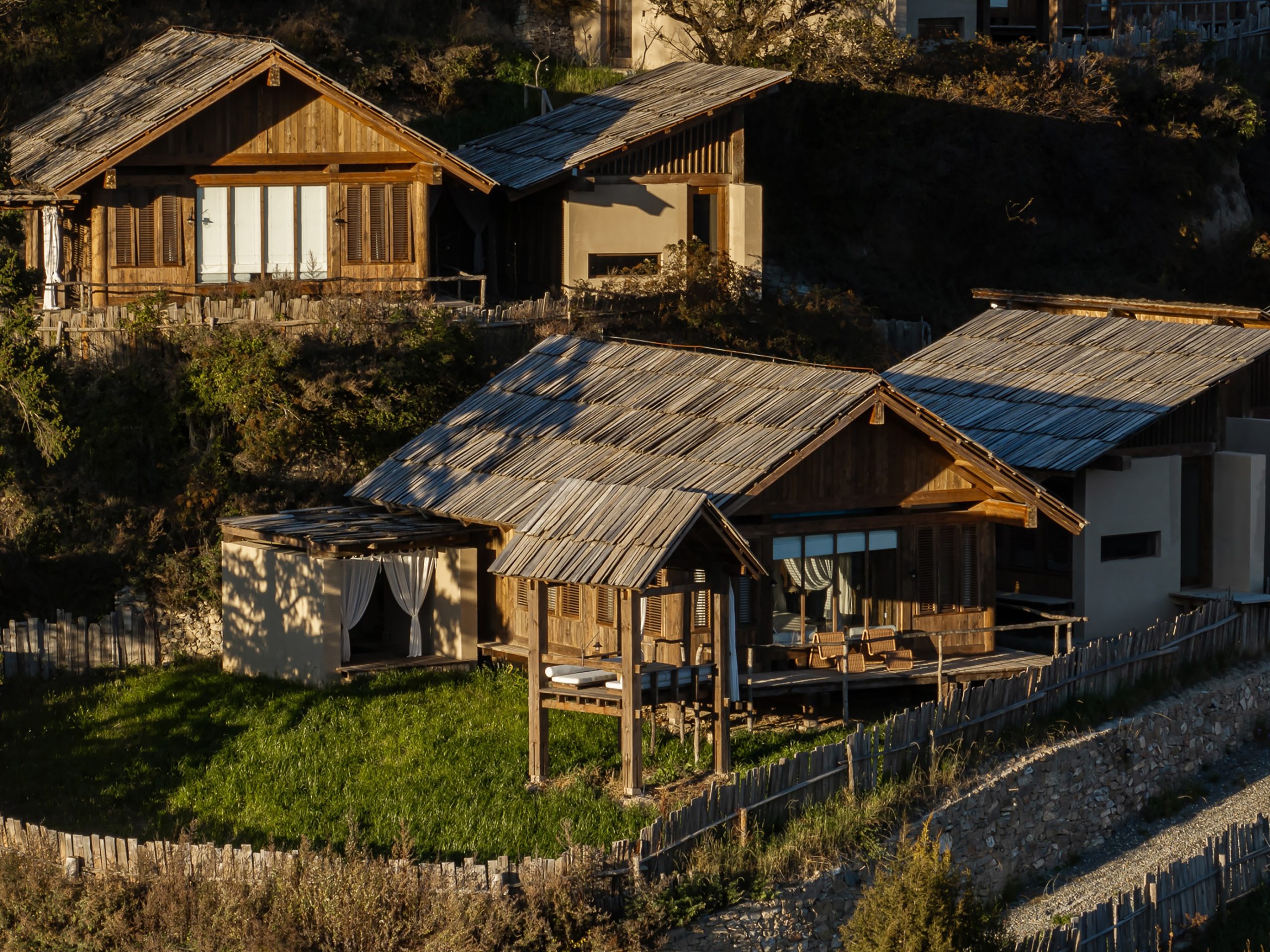
Located in Jiuzhaigou Valley in China’s Sichuan Province, the hotel was designed by Chinese architecture practice Thinking Design. The project is described as a ‘Waystation of Time,’ an architecture that transforms a stay into a memorable encounter with the mountains, clouds, and mist, drawing guests into a closer relationship with the landscape.
The site was formerly home to a small mountain community. Rather than viewing the project as an act of renovation, the architects approached it as a process of recollection, an attempt to recover memories held within the dust-laden earth, the traces of life concealed among the mountains, and the timber and other natural materials shaped by the passage of time. Embedded within the layered terrain, these fragments of the past are brought back into view, allowing the stories of the place to be heard once again.
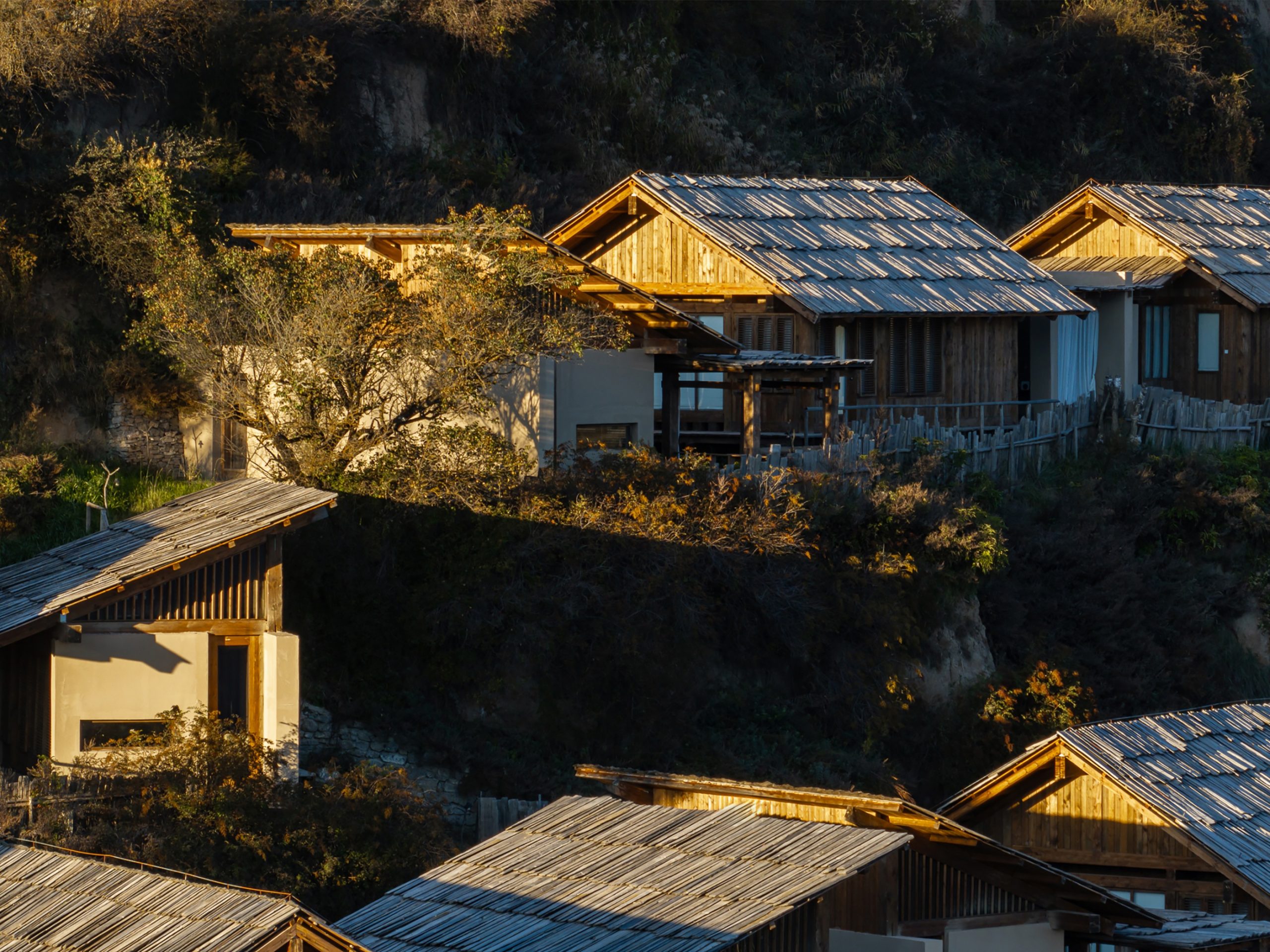
The resort comprises 12 individual guest villas, each occupying between 150 and 180 square meters, with approximately 80 square meters of usable interior space. Each villa is organized into four distinct zones: a living room, bedroom, indoor soaking pool, and tea pavilion. Although these spaces are physically separated, they remain perceptually connected as parts of a cohesive whole. The architecture draws from the character of Tibetan villages, preserving the tradition of timber dwellings with wooden roof structures and tiled coverings.
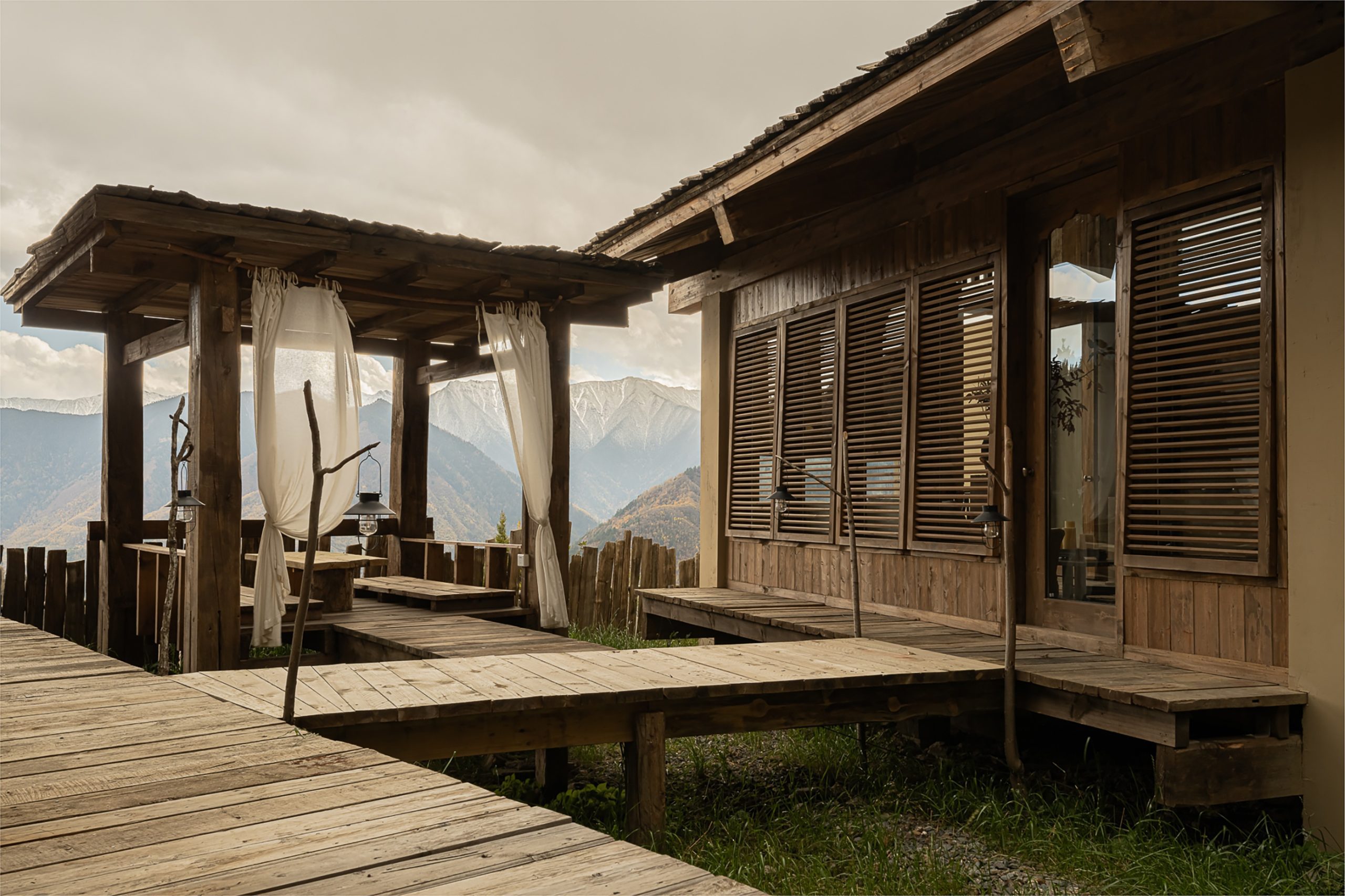
The architects deliberately chose readily available, unassuming materials rather than luxurious finishes, allowing the buildings to sit naturally within their surroundings while fostering a sense of warmth, ease, and repose. This approach also expresses the project’s idea of ‘returning to the essence of the natural world.’ Timber and wooden structures define the architecture throughout, attending to both physical comfort and a more contemplative experience. The result combines simplicity, warmth, and tranquility into a single, quietly balanced composition.
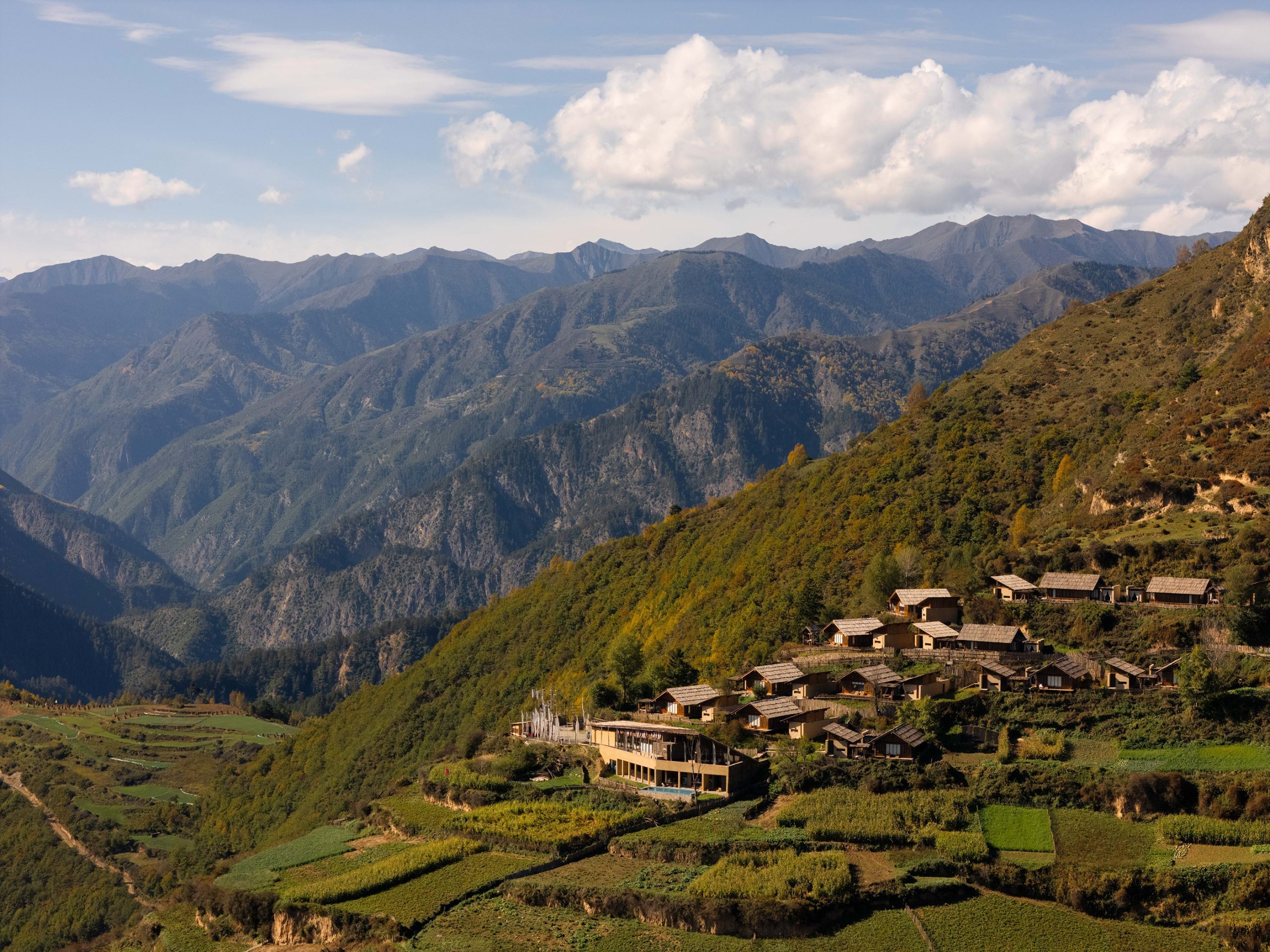
The 12 villas are arranged in a distinct spatial rhythm across the mountain’s uneven terrain. Set at varying elevations, the buildings rise and fall with the contours of the valley, creating an architectural sequence that gradually draws guests deeper into the landscape. Almost without realizing it, they are led toward closer views of the surrounding scenery and a more intimate experience of nature. Inside, timber surfaces and patterns envelop the rooms, extending even into the indoor soaking pools. The experience evokes bathing in a wooden cabin high in the mountains, creating a retreat that offers comfort to both body and mind.
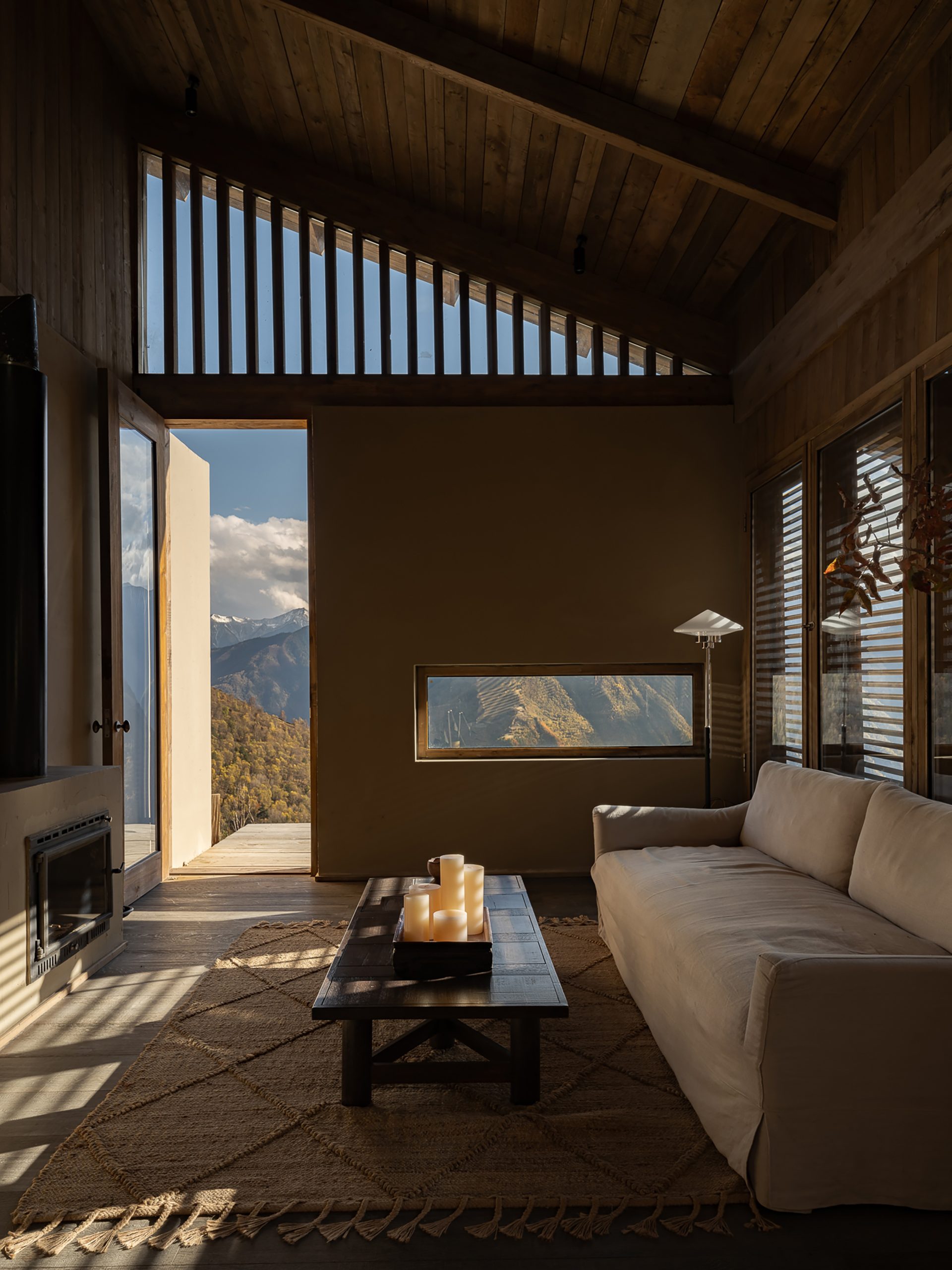
Each suite also includes its own living area, inviting guests to sit together and unwind on a soft white sofa. A small window beside it is positioned precisely at the seated eye level, ensuring that views of Jiuzhaigou’s mountains remain present throughout the room. The space therefore becomes more than a living area, taking on the quality of a quiet sanctuary for the mind.
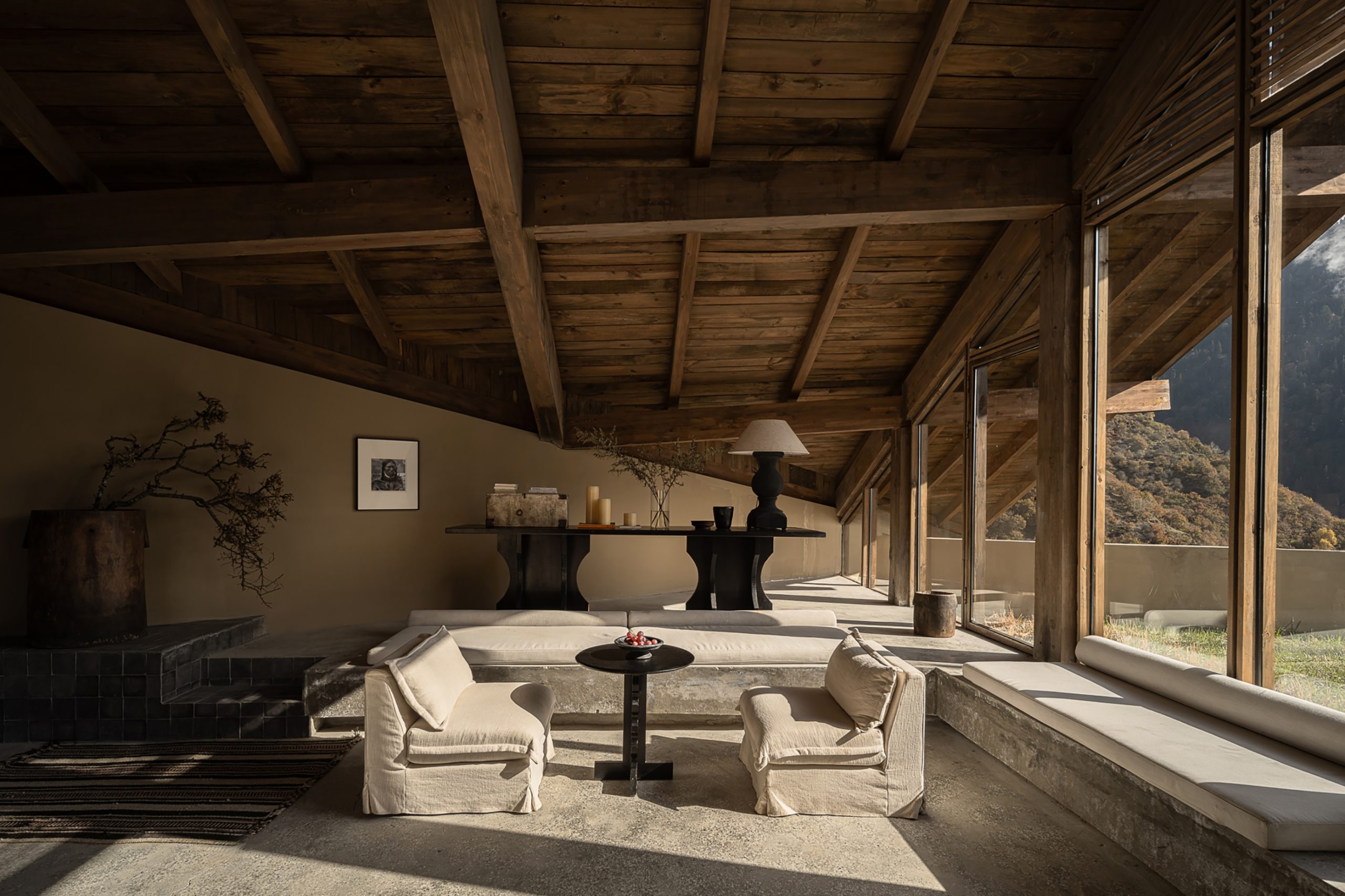
For the lobby and communal areas, the architects drew on the warmth of a family living room. A sense of familiarity is created through aged timber boards arranged across the ceiling, each retaining its own grain, tone, and marks of time. Their weathered character is softened by hand-finished plaster walls and floors, together with rustic furnishings. The composition gently weaves traces of time and nature into the interior.
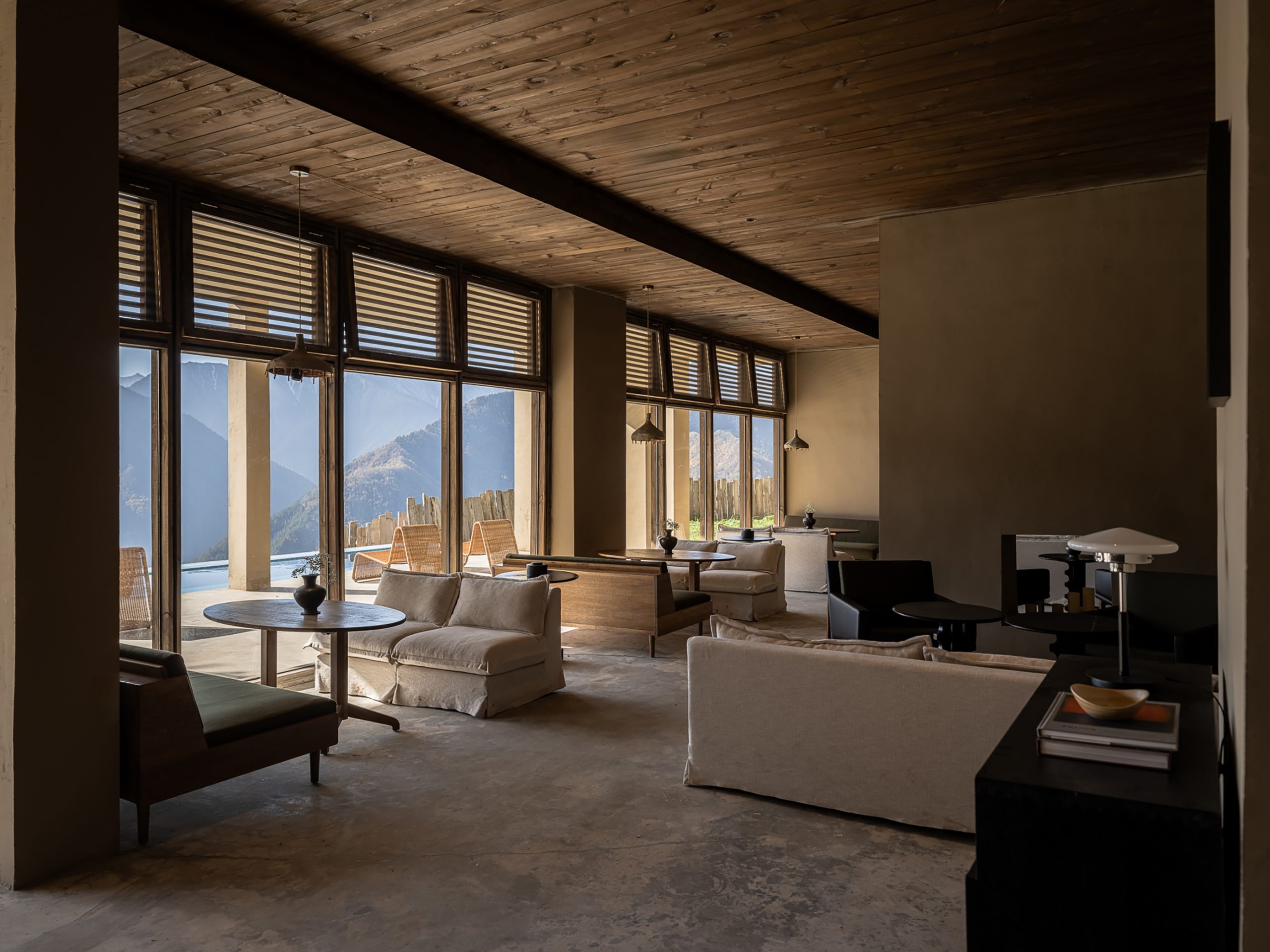
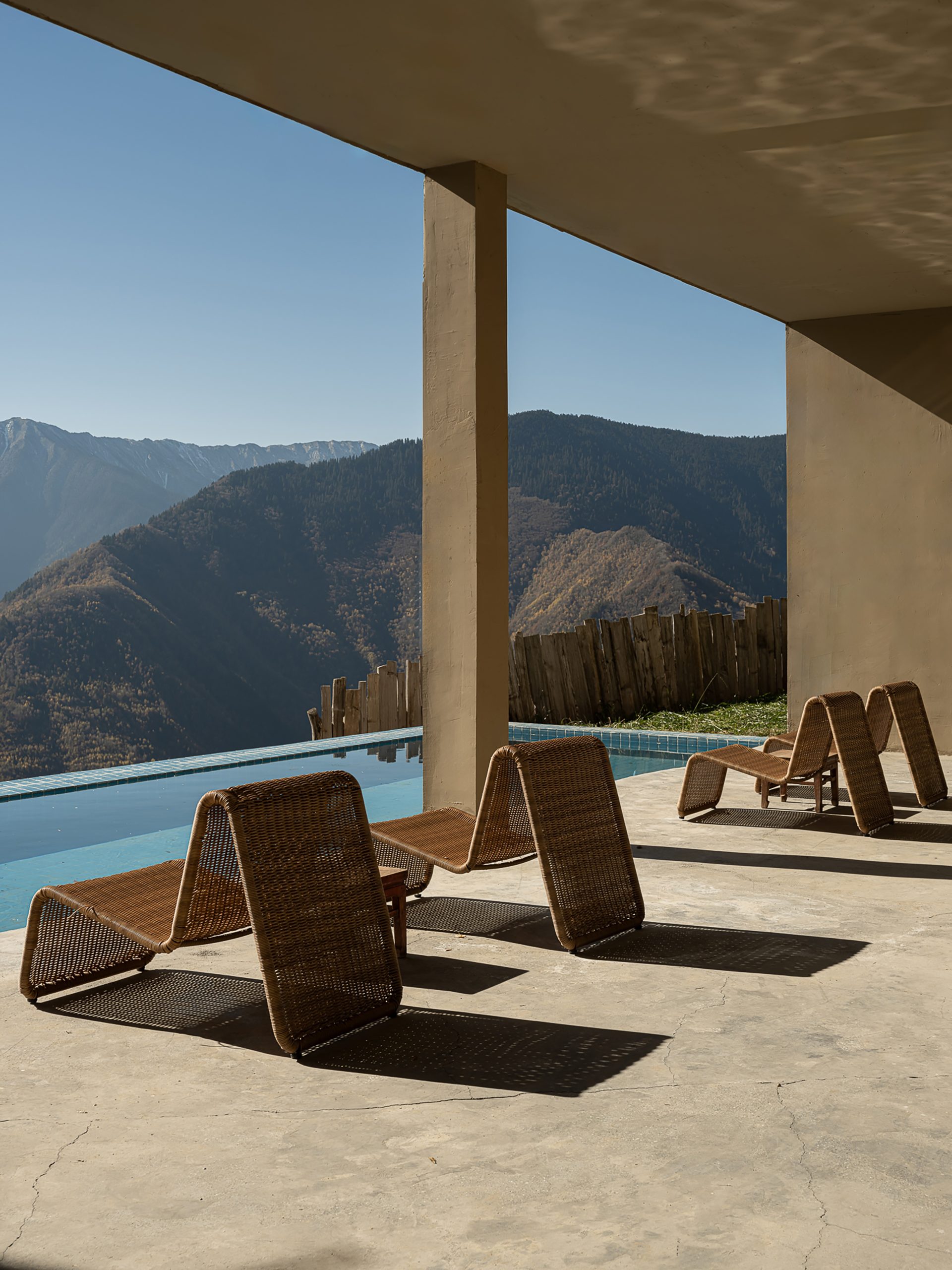
The architects also designed a series of supporting spaces, including a modest timber tea pavilion where soft mountain light falls across guests’ faces as they sit and drink tea. The restaurant and swimming pool follow the same sensibility. Each is conceived to awaken the senses, drawing visitors almost imperceptibly into a closer relationship with the landscape.
Songtsm Travel Hotel Jiuzhai is more than a hotel situated within a natural setting. It is an architectural retreat that seeks to diminish its own presence, settling quietly into the beauty of the mountains. The resort becomes a small opening through which visitors can briefly enter into a more intimate encounter with nature. However fleeting their stay, the experience is intended to endure in memory long after they have departed.