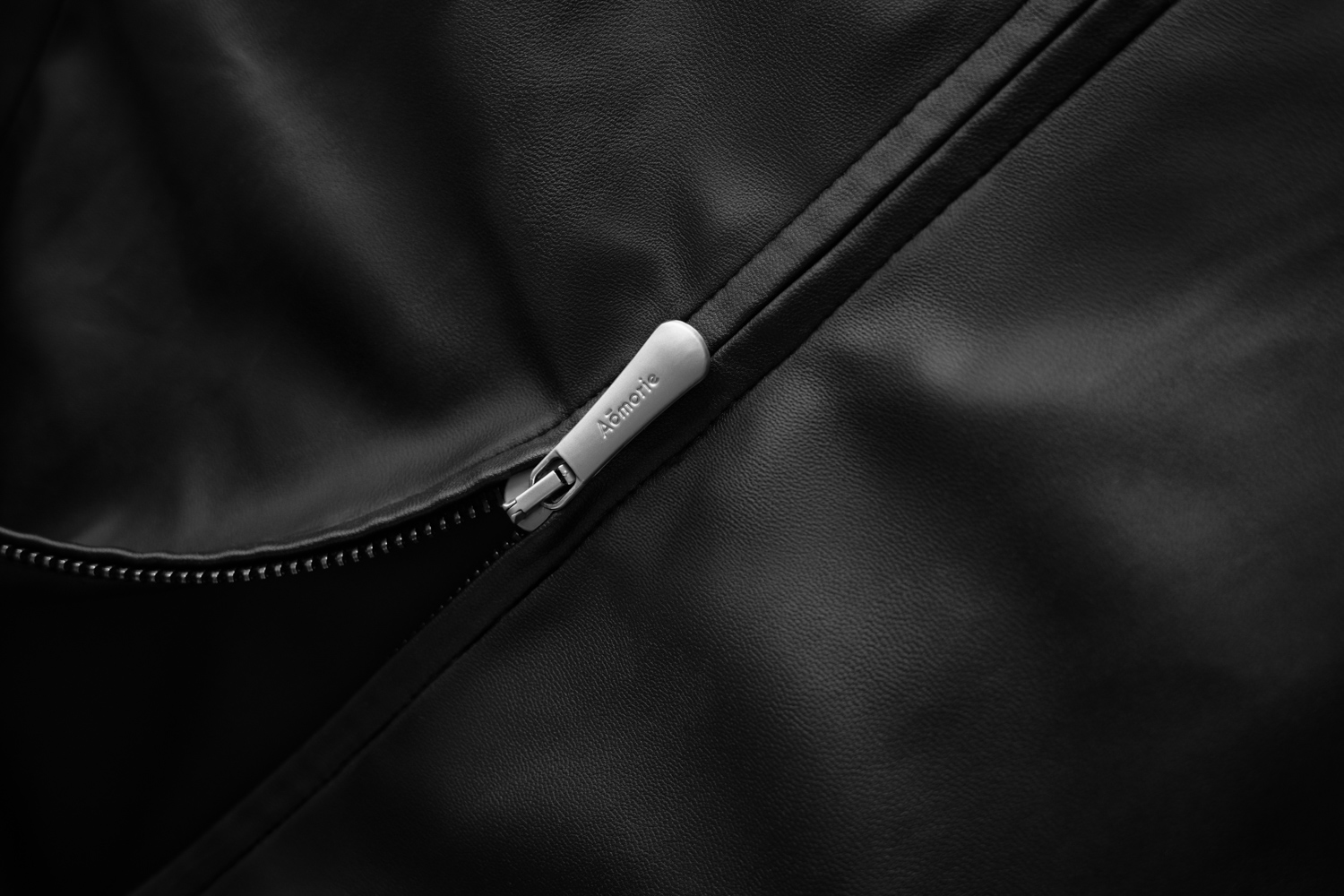
 Apple Lau
 APPLE LAU, FOUNDER OF AŌMORIE, IS REDEFINING THE VALUE IN FASHION DESIGN BY UTILIZING LEATHER THAT NEVER CAME FROM AN ANIMAL—INSTEAD, ONE MADE FROM COFFEE AND BAMBOO
TEXT: SARUNKORN ARTHAN
PHOTO COURTESY OF AŌMORIE
(For Thai, press here)
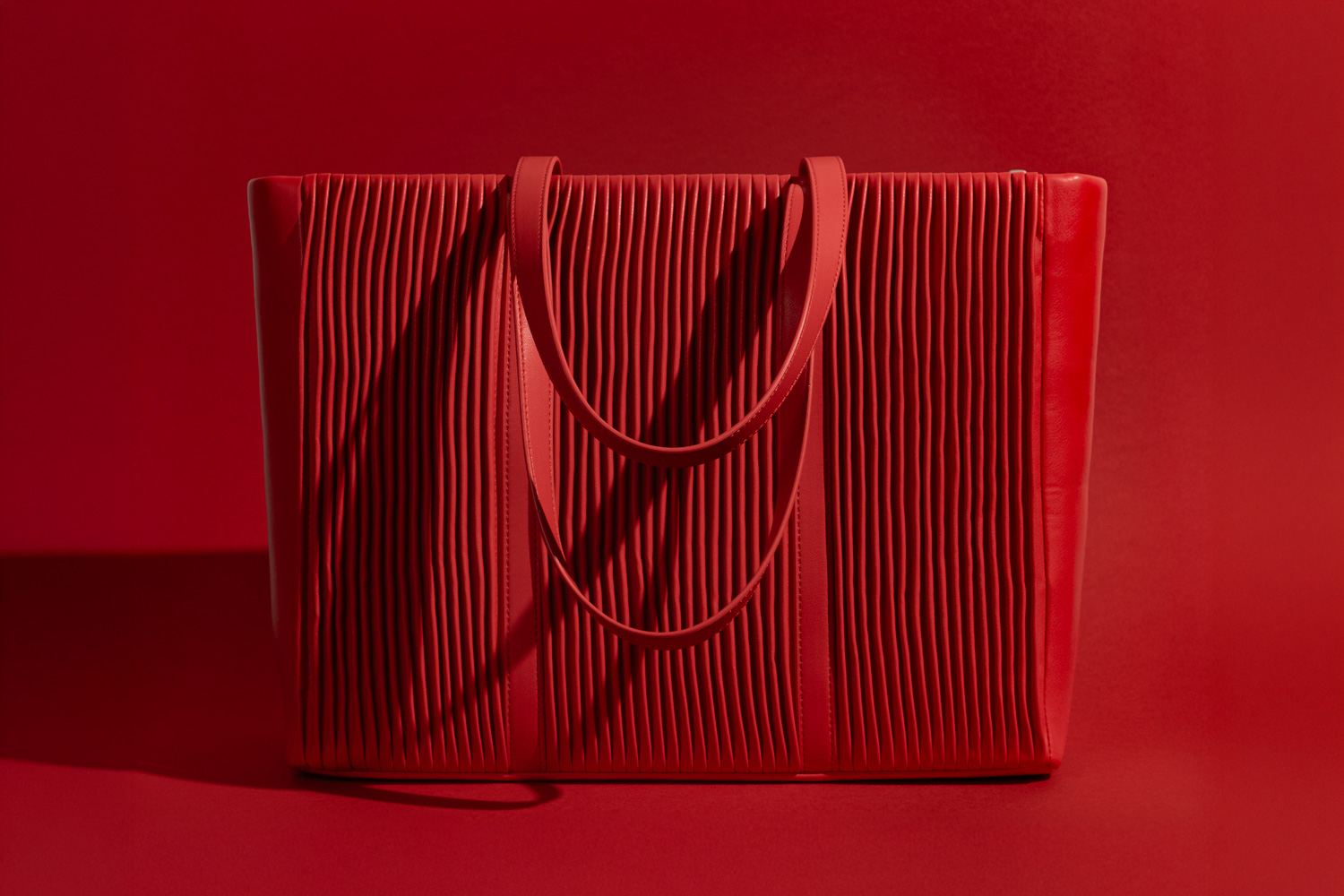
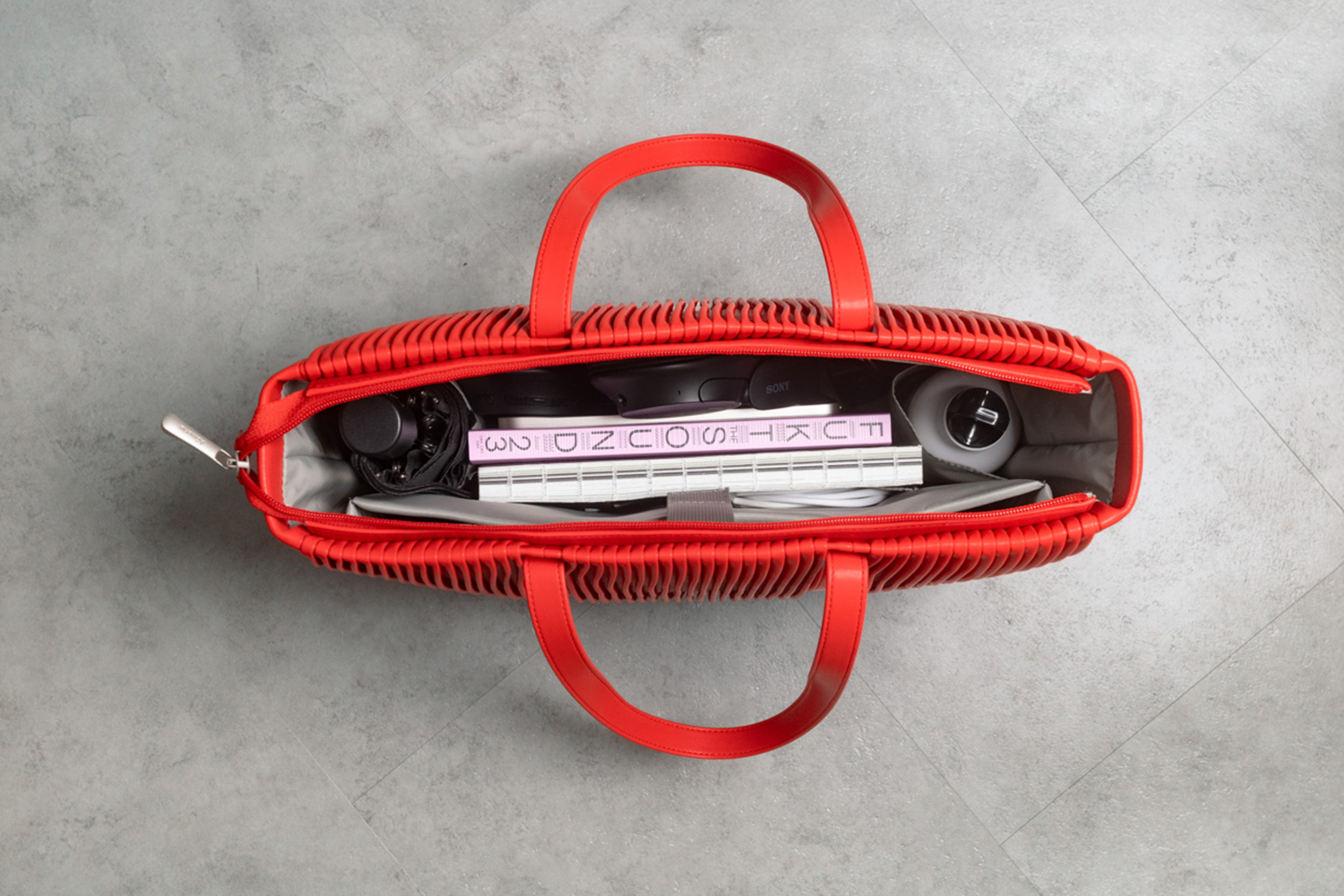
When we think of ‘leather,’ we usually associate it with a sense of luxury traditionally derived from animal hides. Yet, in an era where the fashion industry is challenged by sustainability, Singaporean design brand Aōmorie is redefining this value through its innovative ‘Coffee Leather.’ Utilizing an alternative material made from recycled coffee grounds and natural bamboo fibers, they transform its leather-like softness and subtle coffee aroma into new tactile surfaces through hand-pleating. Beyond material innovation, Aōmorie reinforces its commitment to the planet through a pre-order model that combats overproduction, restores a mindful rhythm to craftsmanship, and creates lasting value for the wearer.
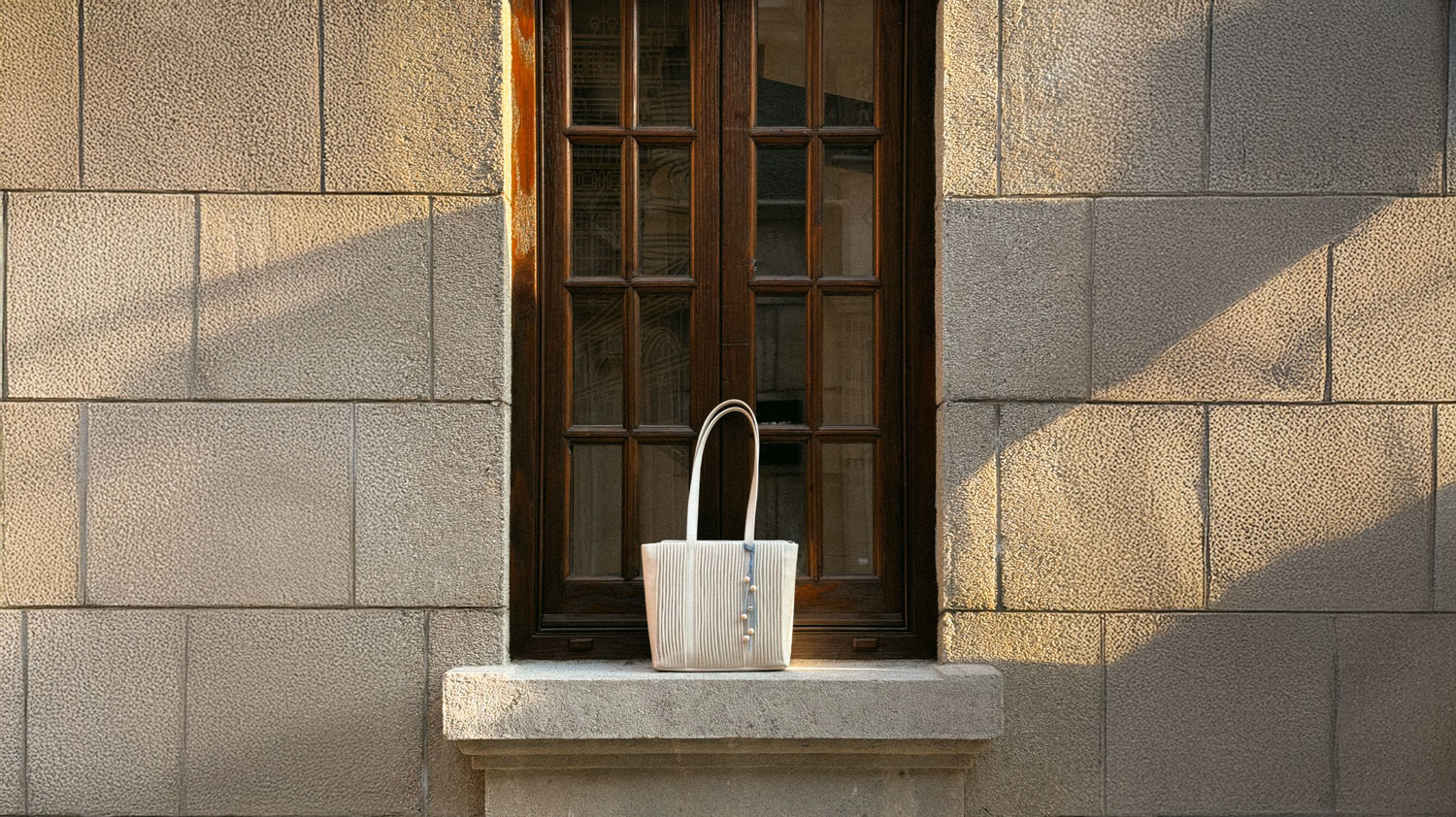
Bloom Bag
Following Aōmorie’s showcase at Boutiques Asia: The Bangkok Edition 2026 at ICONSIAM last July, art4d spoke with Apple Lau, the founder and designer driving this independent label, about her philosophy of bringing the tactile experience back to fashion. We dive into how she seamlessly weaves aesthetics with eco-innovation to create timeless pieces that honor both style and the planet.
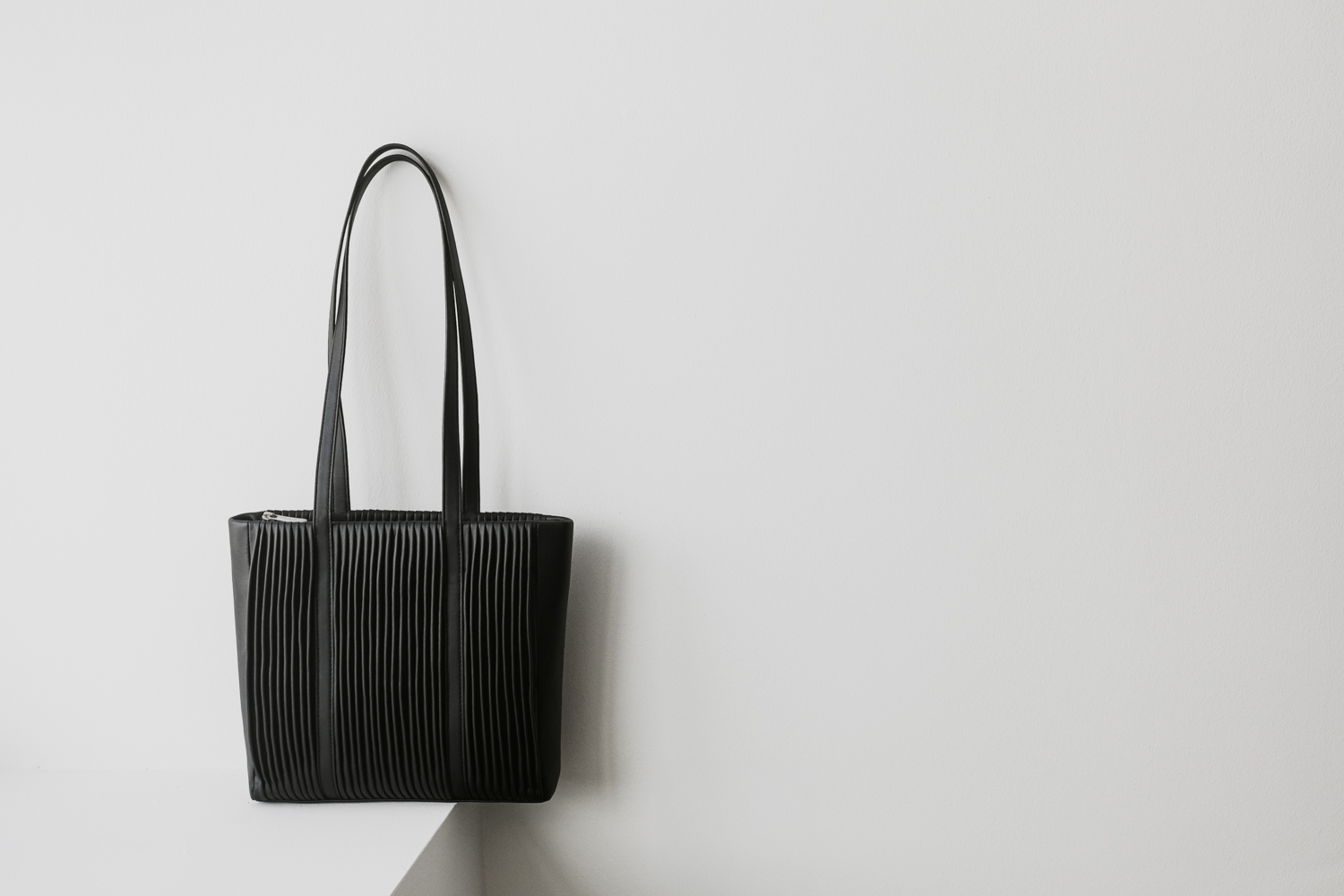
Bloom Bag
art4d: Why do you feel the fashion industry is losing its connection with touch in this digital shopping era, and how does Aōmorie address that?
Apple Lau: We live in a time where shopping happens through a screen, so decisions are often made based on images alone. Somewhere along the way, we began losing our connection with materials and craftsmanship—even the simple experience of how texture feels against our skin. That is why Aōmorie stands for the tactile, tangible, and textural.
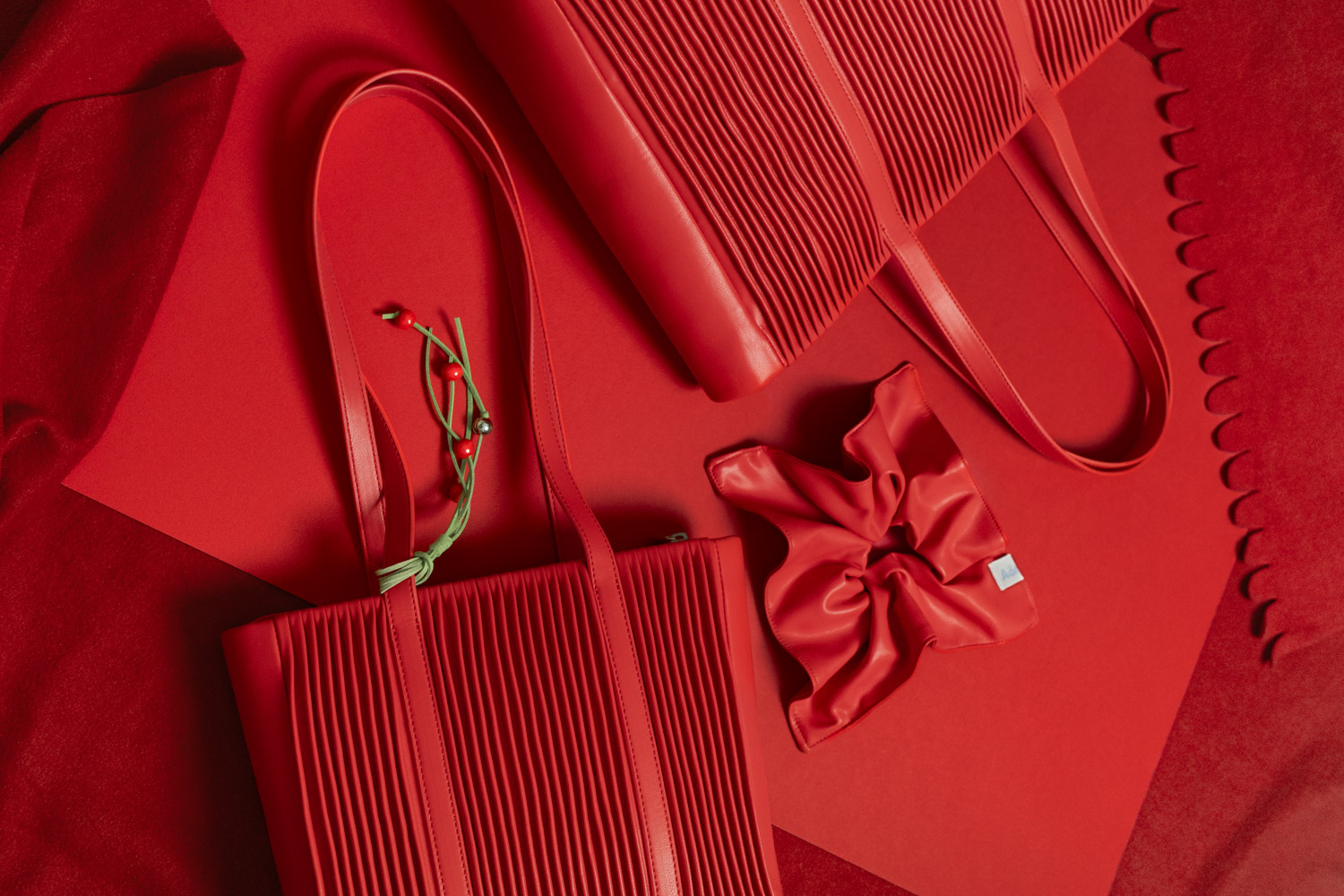 Bloom Bag
art4d: The brand’s name is inspired by the lushness and careful cultivation of apples in Aomori, Japan. How does the meticulous nature of Japanese agriculture parallel your own approach to fashion design and your brand’s ethos?
AL: What fascinated me wasn’t just the lushness of apples, but the idea that their quality is the result of many conditions coming together. It’s climate, nutrient-rich soil, seasonal changes, and years of cultivation. Excellence doesn’t happen by chance, they’re the result of the right conditions. I think about design in very much the same way. A good product isn’t defined by one standout feature, but by the accumulation of thoughtful decisions from material to function. Aōmorie believes that when the right conditions are created, good design comes naturally.

art4d: As a Singaporean designer, how do you define the ‘Aōmorie user/customer’? How do you successfully balance the desires of those who love high fashion with those who deeply care about the planet into a single garment?
AL: To me, caring about design and caring about the environment aren’t opposing ideas. In fact, our customers tend to buy less but intentionally, appreciating thoughtful and timeless design. I would say sustainability isn’t about asking people to compromise on design, but about designing more consciously from the start. Whether that’s exploring materials like coffee leather, producing in smaller quantities to reduce unnecessary waste, or creating timeless pieces that aren’t driven by trends, every decision is considered as part of the whole. If a product is beautiful and functions well, people naturally want to keep it! Perhaps that’s a more sustainable outcome we can hope for.
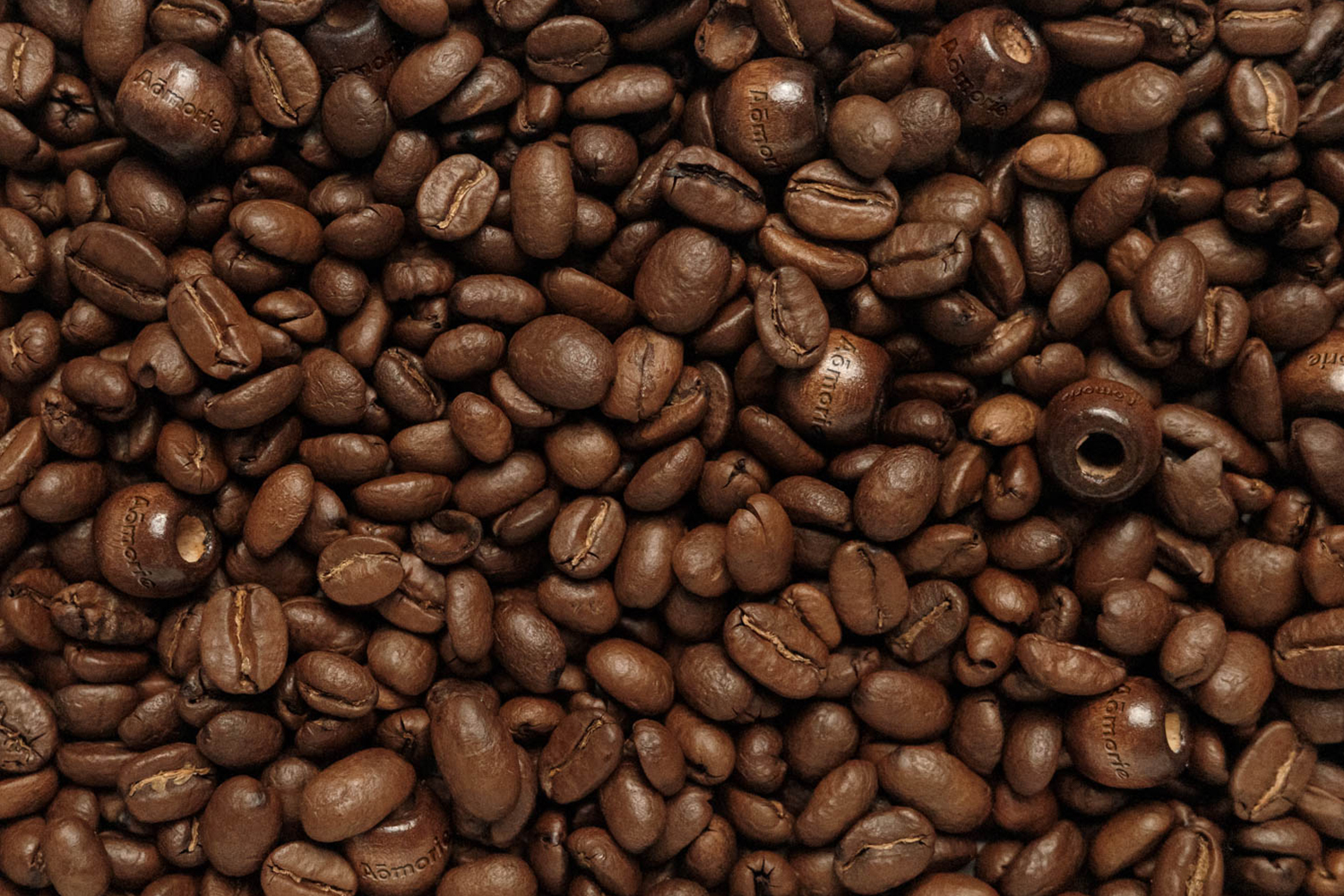
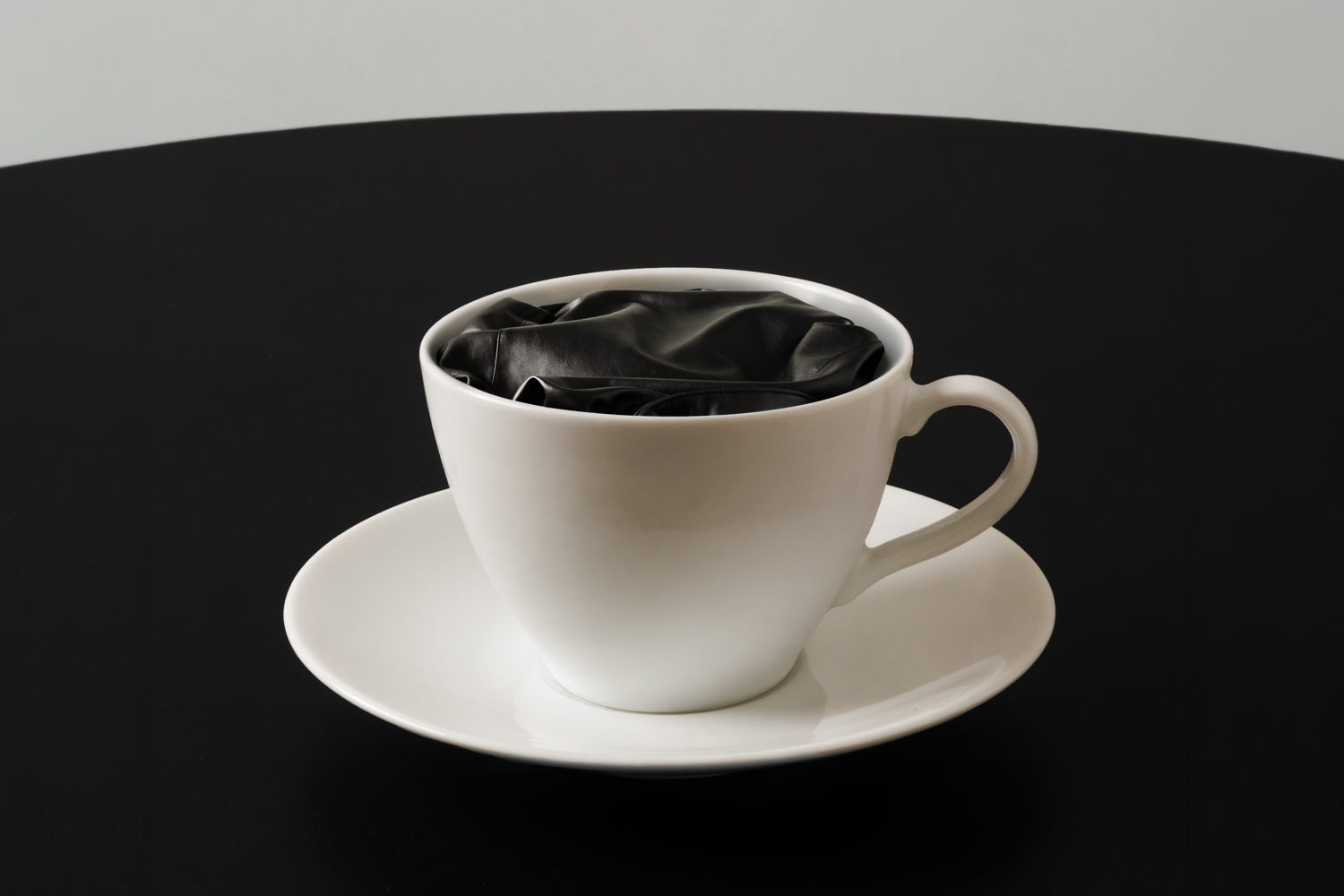
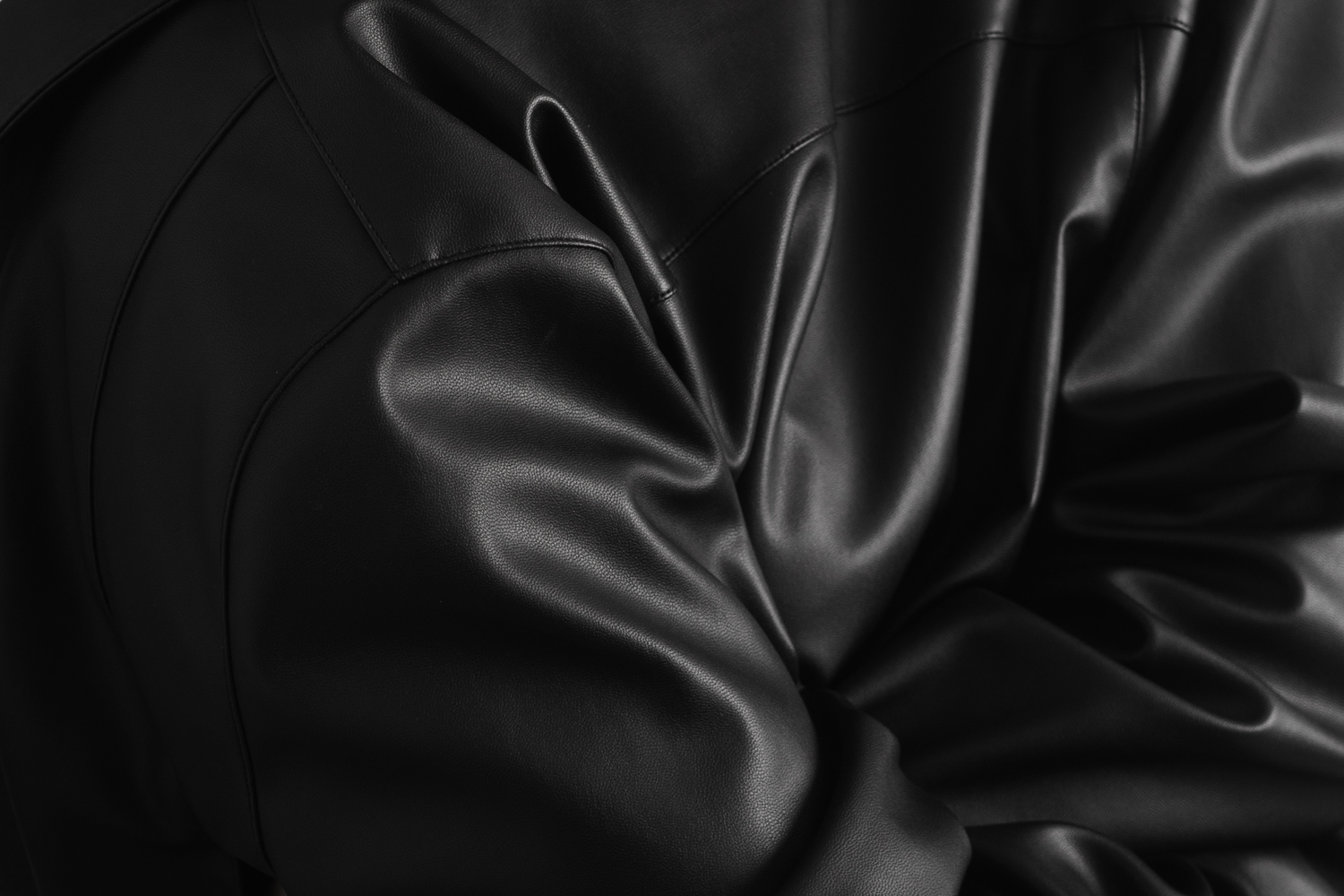
art4d: From a material science perspective, coffee grounds have a fine, powdery structure, while bamboo fibers consist of long, natural strands. What formula or process do you use to bind these two materials together to achieve the elasticity and durability required for garment tailoring?
AL: Powdery coffee grounds and bamboo fibre strands alone wouldn’t form a durable leather. They’re combined within a proprietary binding system and supported by a textile backing to create a flexible composite material. It is first supported by a strong 100% bamboo fibre base. For softness, a layer of Sorona® biobased foam is added before being bound together with a water-based resin. Finally, the material is infused with recycled coffee grounds to give the Coffee Leather its distinctive texture and depth. While the exact formulation belongs to our supplier, what interested me as the designer was how the material performed, its softness, flexibility and suitability for everyday use.
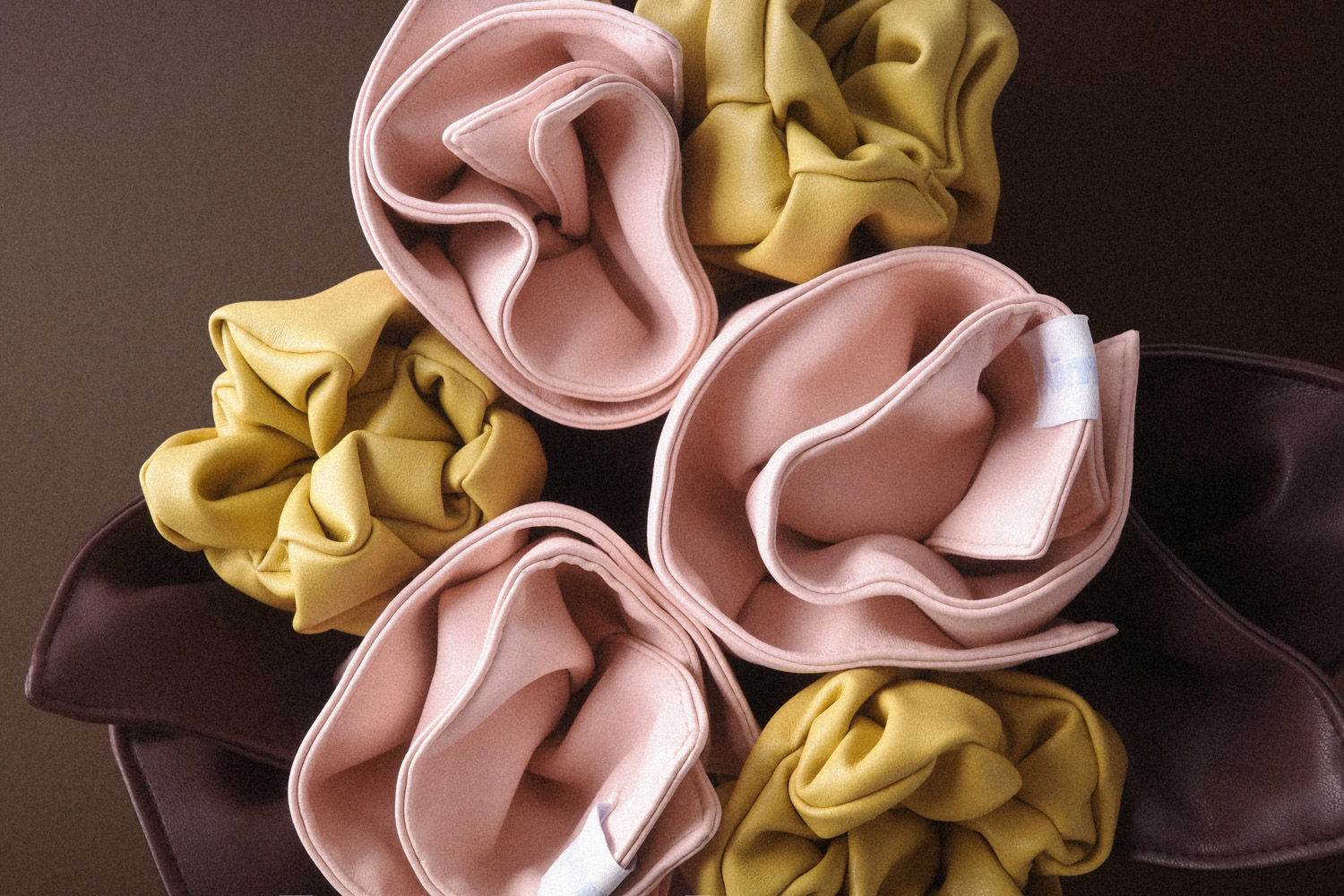
Bloom Scrunchie
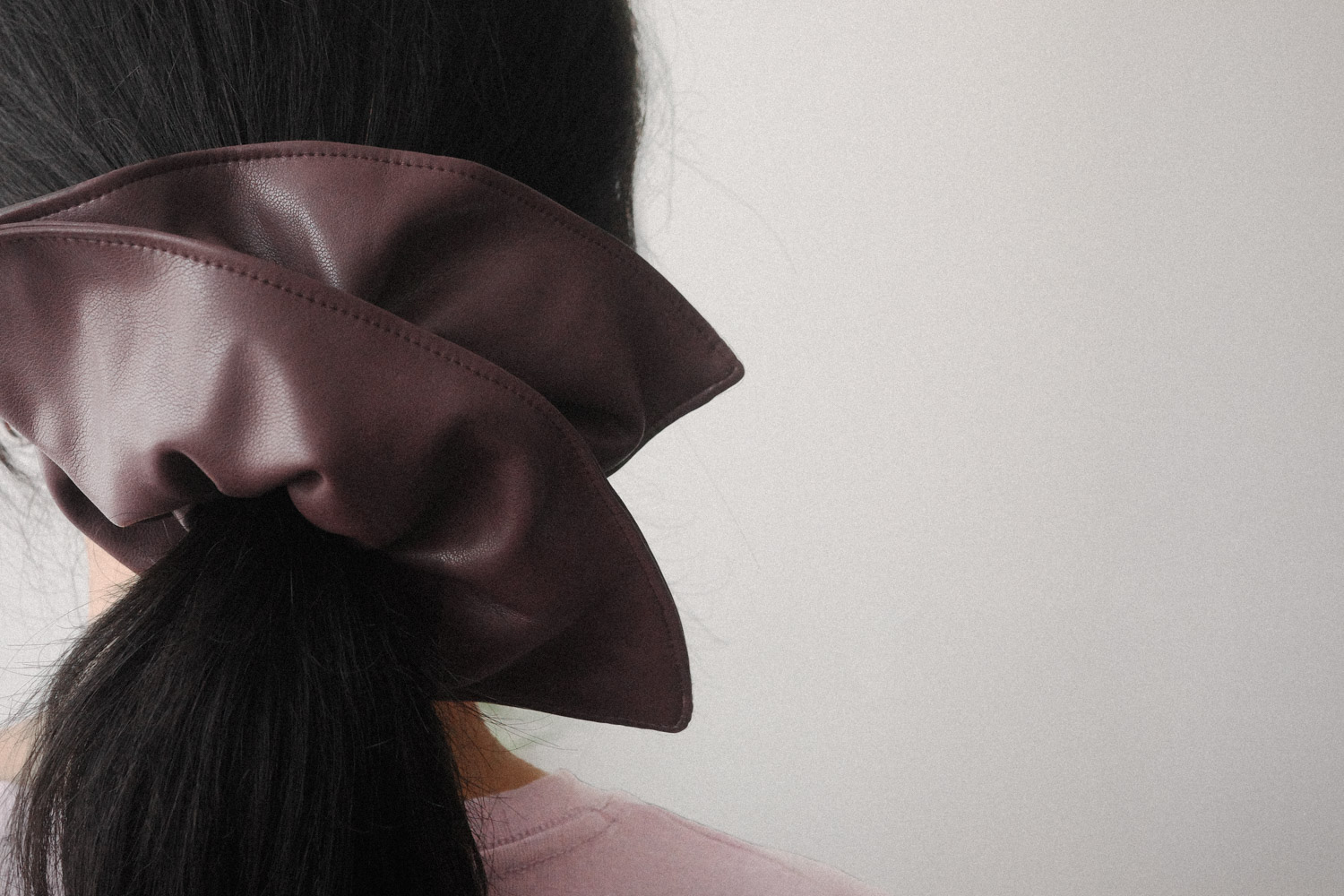
Bloom Scrunchie
art4d: We see stunning tactile details like pleats in pieces like the Bloom Scrunchie and Bloom Bag. How do you approach designing these intricate details to ensure they remain contemporary, timeless, and completely detached from the fast-fashion trend cycle?
AL: I intentionally avoid looking for inspiration when I begin the design process as I want ideas to emerge from the material itself rather than existing products. I usually keep some fabric samples on hand so I can explore how it behaves, how it stretches, how it holds structure, etc. For the pleats on our Bloom Bags, we went through many rounds of experimenting, testing multiple pleating variations before arriving at the final form. From there, I develop some prototypes at home to refine the details before translating the design to our manufacturing partners to bring into production.
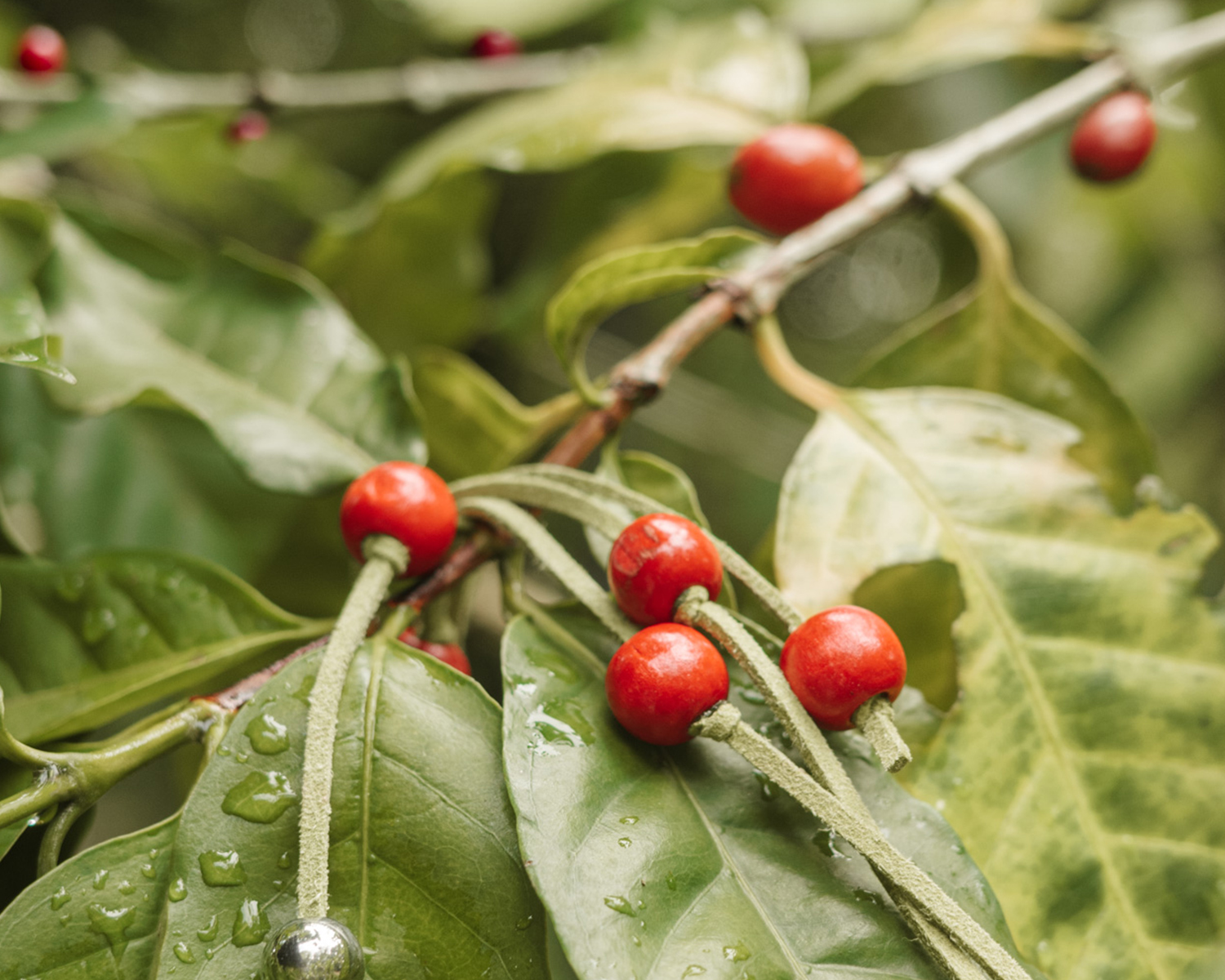
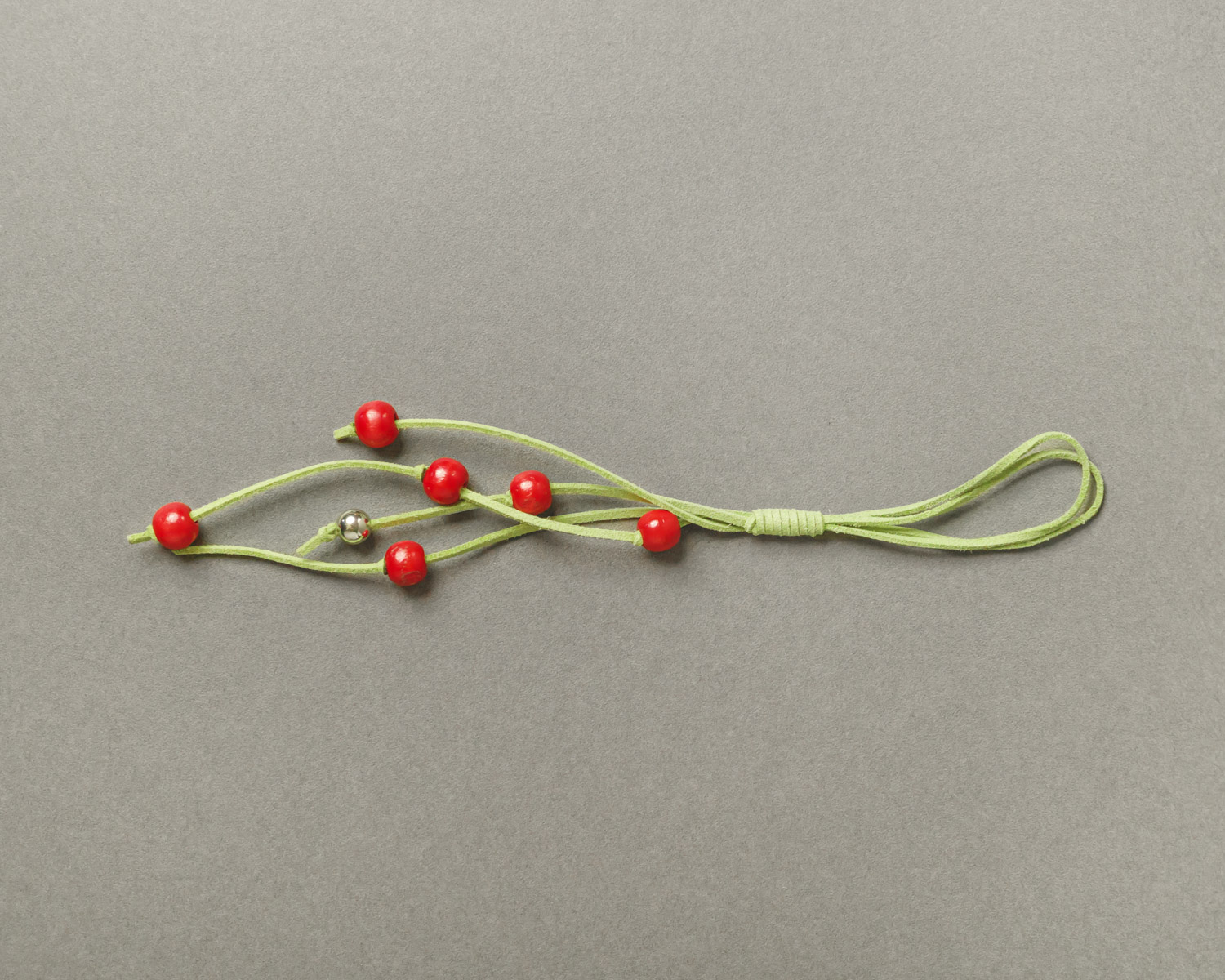
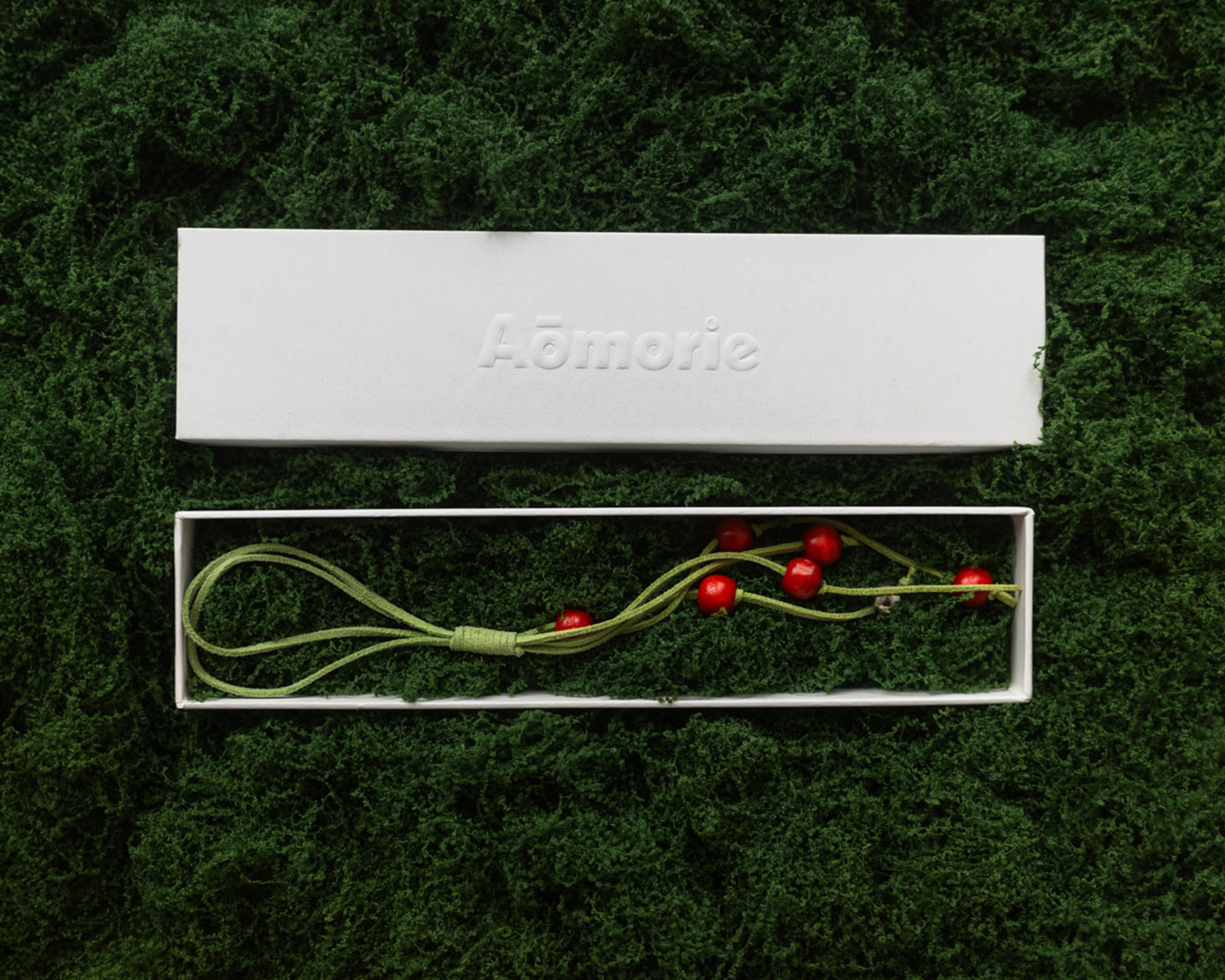
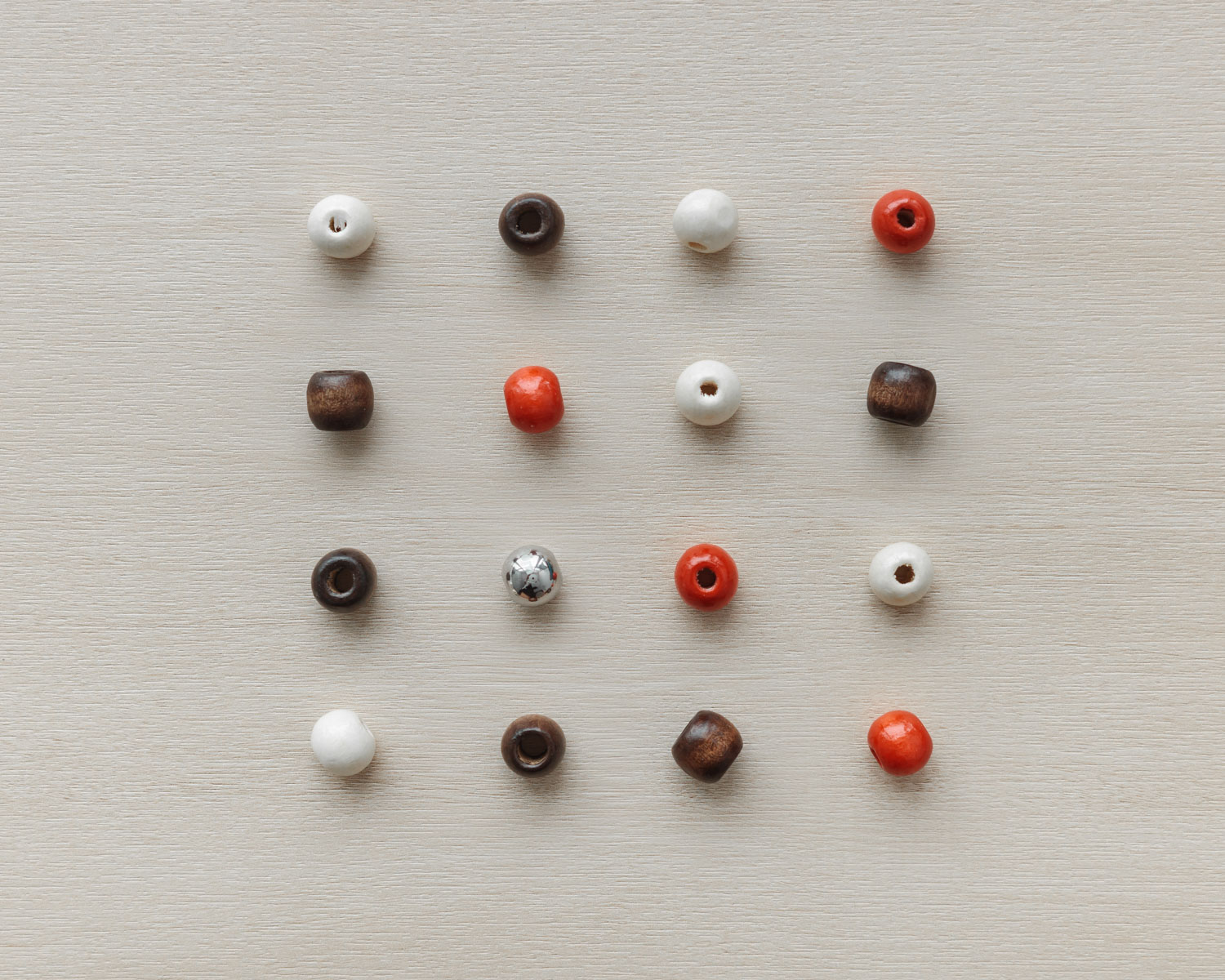 Coffee Charm
art4d: Adopting a pre-order business model to eliminate overproduction is a bold move. How do you manage your business operations and convince online consumers—who are heavily accustomed to the ‘instant gratification’ of e-commerce—to embrace waiting for artisanal craft?
AL: I think we have our customers’ trust to thank. We usually begin with a small production run to understand which colours and sizes resonate most with our customers, and once those sell through, we move to a pre-order model. This helps us produce more responsibly while ensuring we’re making what people genuinely want. Of course, pre-orders require patience, so transparency is important. We communicate clear timelines and keep customers updated throughout the process. I think our customers understand that they’re not waiting because of inefficiency, but because of the time and care that goes into each piece. For example, each pleat on the Bloom bag is individually folded, making the process more time-intensive. Many of them appreciate this approach and are happy to be part of the process.
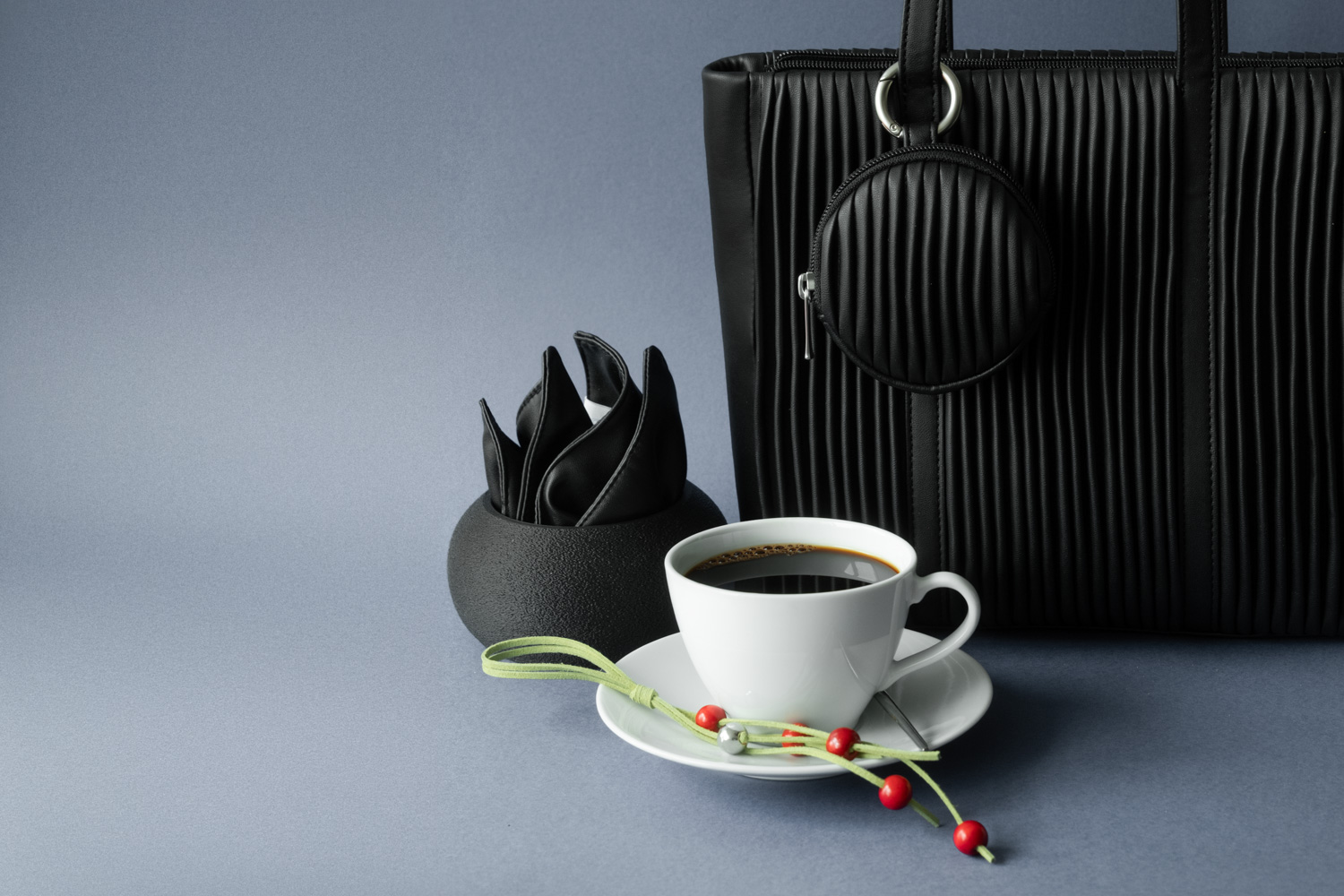
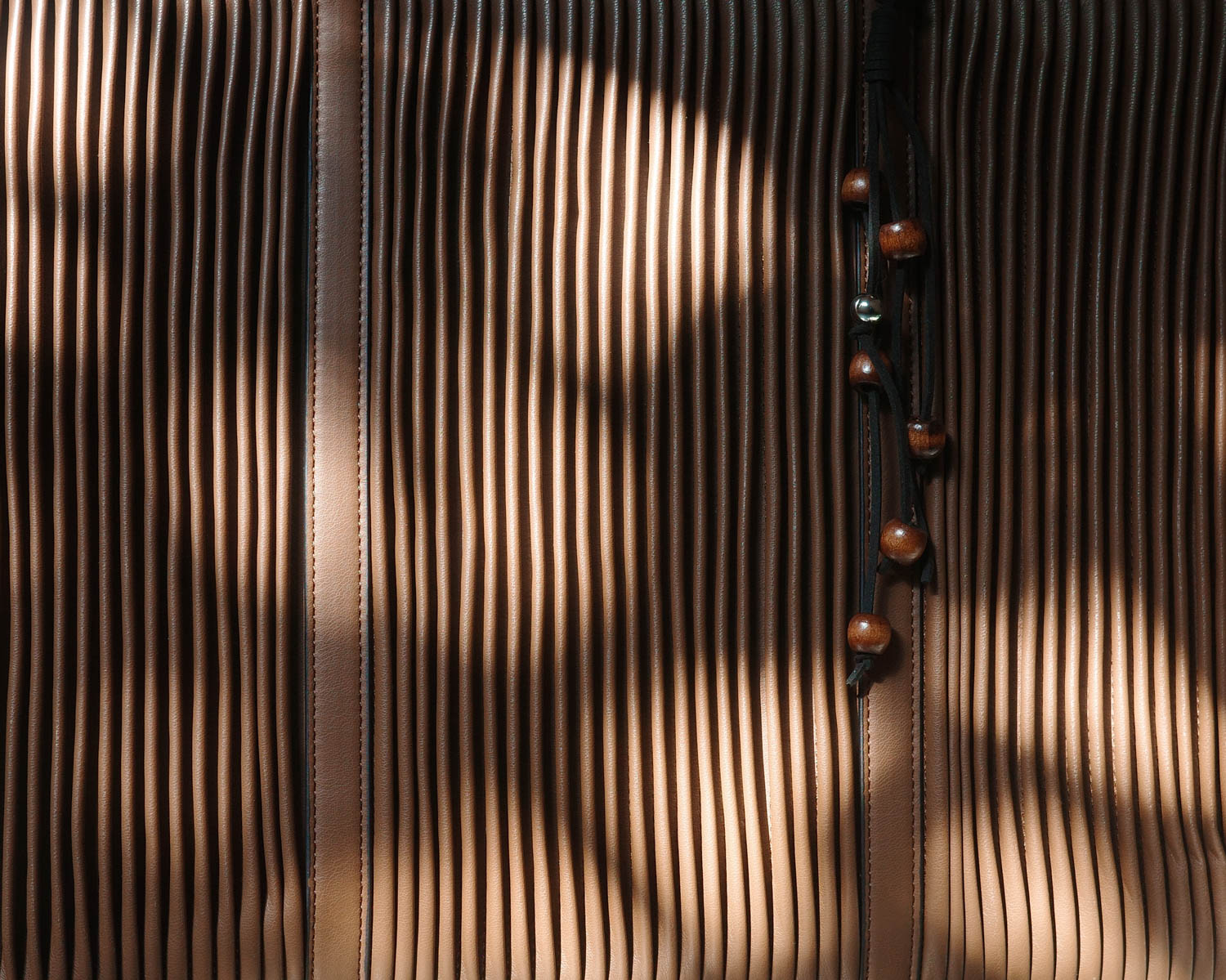
Coffee Charm
art4d: Since the heart of Aōmorie lies in the joy of touch, yet your storefront is primarily digital, what strategies do you use to convey texture, softness, and premium quality through photos and videos so that customers can almost ‘feel’ it through a screen?
AL: There’s an interesting paradox in trying to convey touch through a screen. Personally, this is one of the parts I enjoy doing the most! For every product launch, from pre to post-production, from lighting setups and set dressing to styling, cinematography and colour grading, each element is designed to evoke the tactile qualities of our products and help people imagine how Aōmorie might feel before experiencing it in person.
I believe that with thoughtful photography, close-up cinematography and carefully considered sound design, you can evoke texture in a way that sparks curiosity. That said, nothing replaces the real experience. When customers finally interact with our products in person, many are pleasantly surprised by just how soft and smooth they are on their skin. Rather than replacing touch, our digital content is designed to invite it.
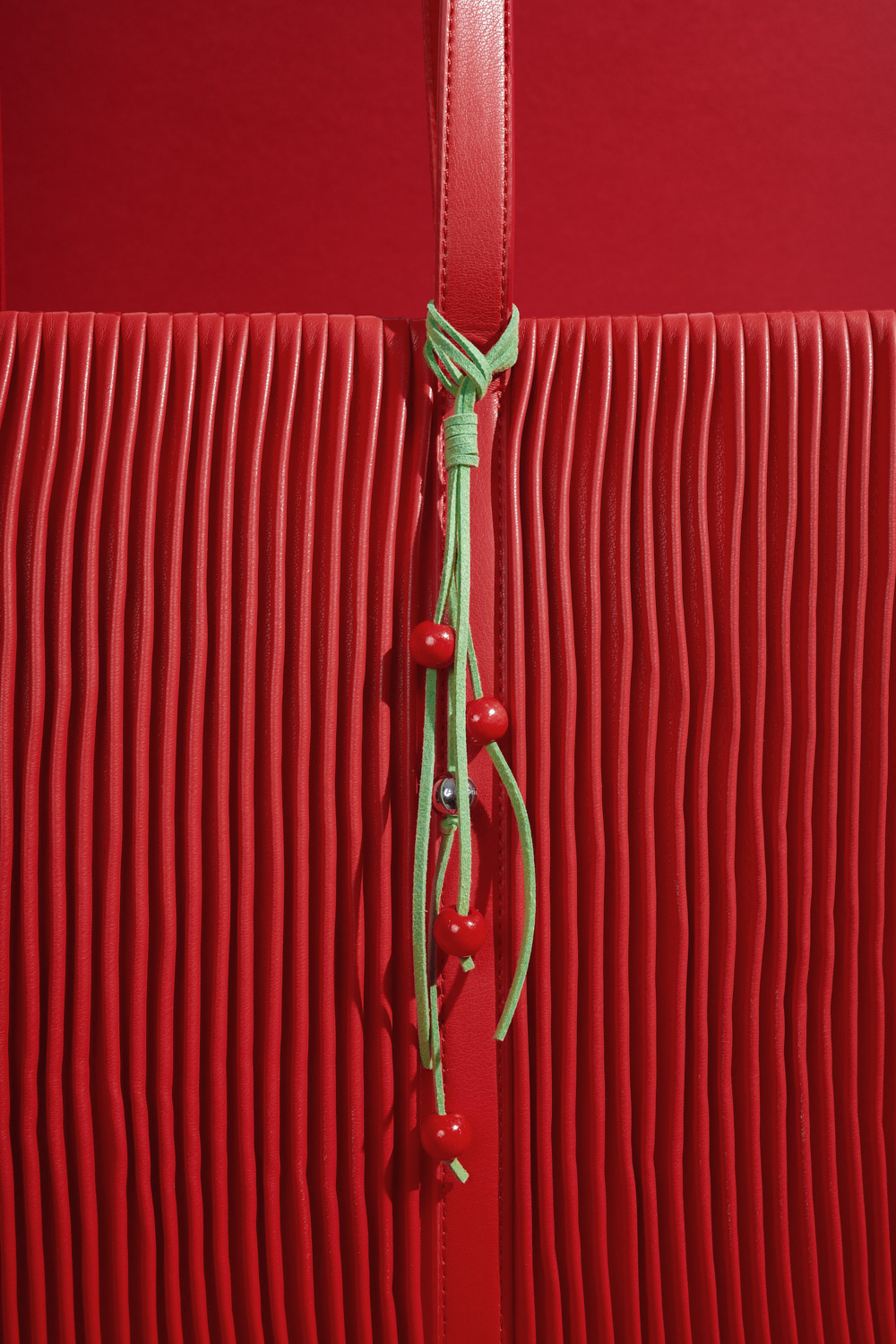
Coffee Charm
art4d: Aōmorie pieces are designed in Singapore but crafted in collaboration with artisans in Chengdu, Guangdong, and Jiangxi, China. What is your quality control process to guarantee that every single pleat and stitch lives up to the brand’s premium standards?
AL: We have a strict quality control process. Before production begins, I develop prototypes to refine every detail and ensure our manufacturing partners have a clear standard to work towards. Throughout production, we review products closely, paying particular attention to the form, stitching and overall finish. At the same time, we recognise that handmade craftsmanship comes with slight variations. A minor stitch that sits a millimetre off doesn’t necessarily affect the function or longevity of our products. Rather than discarding pieces with small cosmetic imperfections, we offer them as our Studio Seconds collection. It allows customers to own an Aōmorie piece at a lower price while helping us reduce unnecessary waste.
art4d: As a modern founder who has successfully bridged the gap between innovation, environmental ethics, and commercial viability, what advice would you give to the next generation of aspiring designers wanting to launch their own fashion brand today?
AL: Be patient with yourself and the process! People can feel sincerity, so don’t rush just to be seen.