
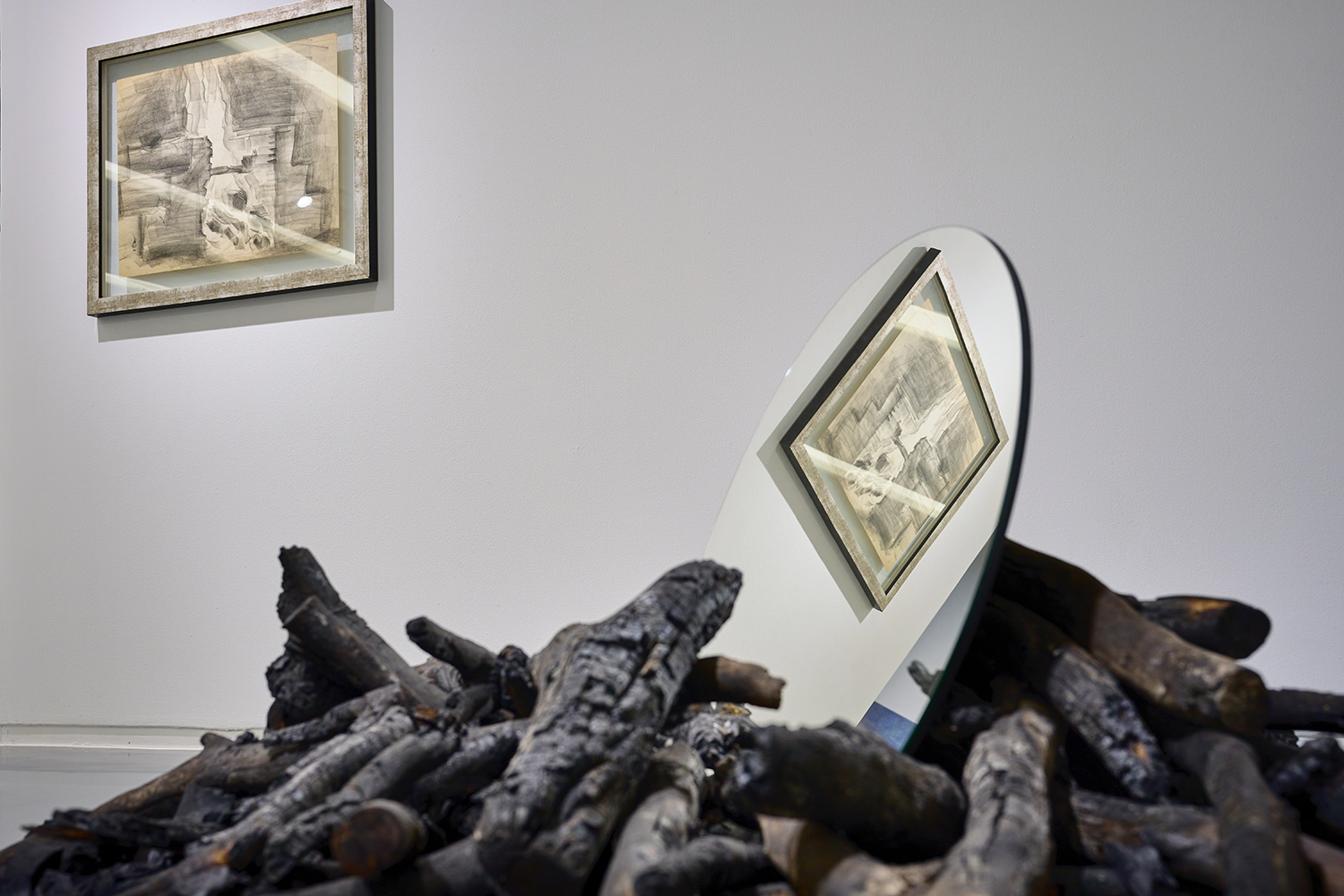
‘ASH AND ALTERATION’ IS AN EXHIBITION THAT EXPLORES THE VALUE OF OBJECTS AND MEMORIES THAT REMAIN AFTER DEATH, THROUGH THE PERSONAL BELONGINGS AND ARCHIVES OF ‘ANGKARN KALLAYANAPONG,’ REINTERPRETED AND REIMAGINED BY CONTEMPORARY ACADEMICS AND ARTISTS
TEXT: SARUNKORN ARTHAN
PHOTO COURTESY OF JWD ART SPACE EXCEPT AS NOTED
(For Thai, press here)
When someone journeys into the afterlife, what remains behind—perhaps even more tangibly than the goodness they once embodied—are the possessions left adrift in the human world, unable to follow their departed owner. These objects may seem like waste, since no one may ever use them again. Yet they are also ‘treasures,’ left behind by those who have traveled far beyond our reach, so that we may still have something to hold onto when longing returns.
This brings to mind YuenDeaw #14 by Mo Rodvanich, in which she speaks of her ‘father’s ghost’ and the task of sorting through the ‘things’ he left behind. It gives rise to a further set of questions: What is the proper way to handle objects once used by the dead? What should become of them? How—and why—should they be kept? More importantly, how do we determine the value these objects hold in relation to memory?
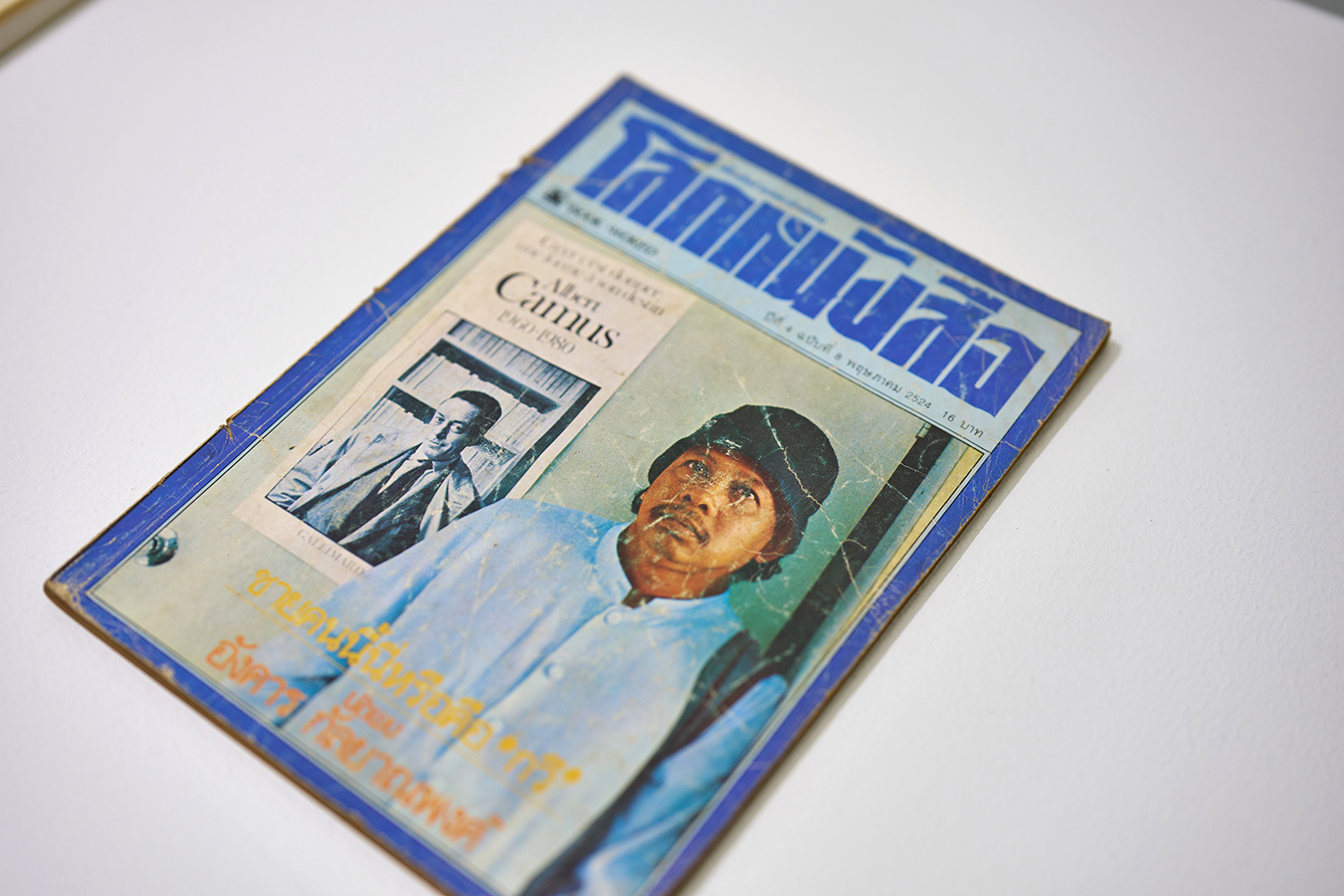
Ormkaew Kallayanapong, heir to and custodian of the material legacy of Angkarn Kallayanapong—her father, an artist and S.E.A. Write Award-winning poet who shed his mortal form and departed for Sukhavati more than a decade ago—established the Art and Archive of Angkarn Kallayanapong to collect and preserve his works, as well as to serve as the principal institution for research into his multifaceted practice. Caring for these surviving objects is, in itself, an act of reanimation: a way of allowing what remains to recover its voice and speak once more to people in the present.
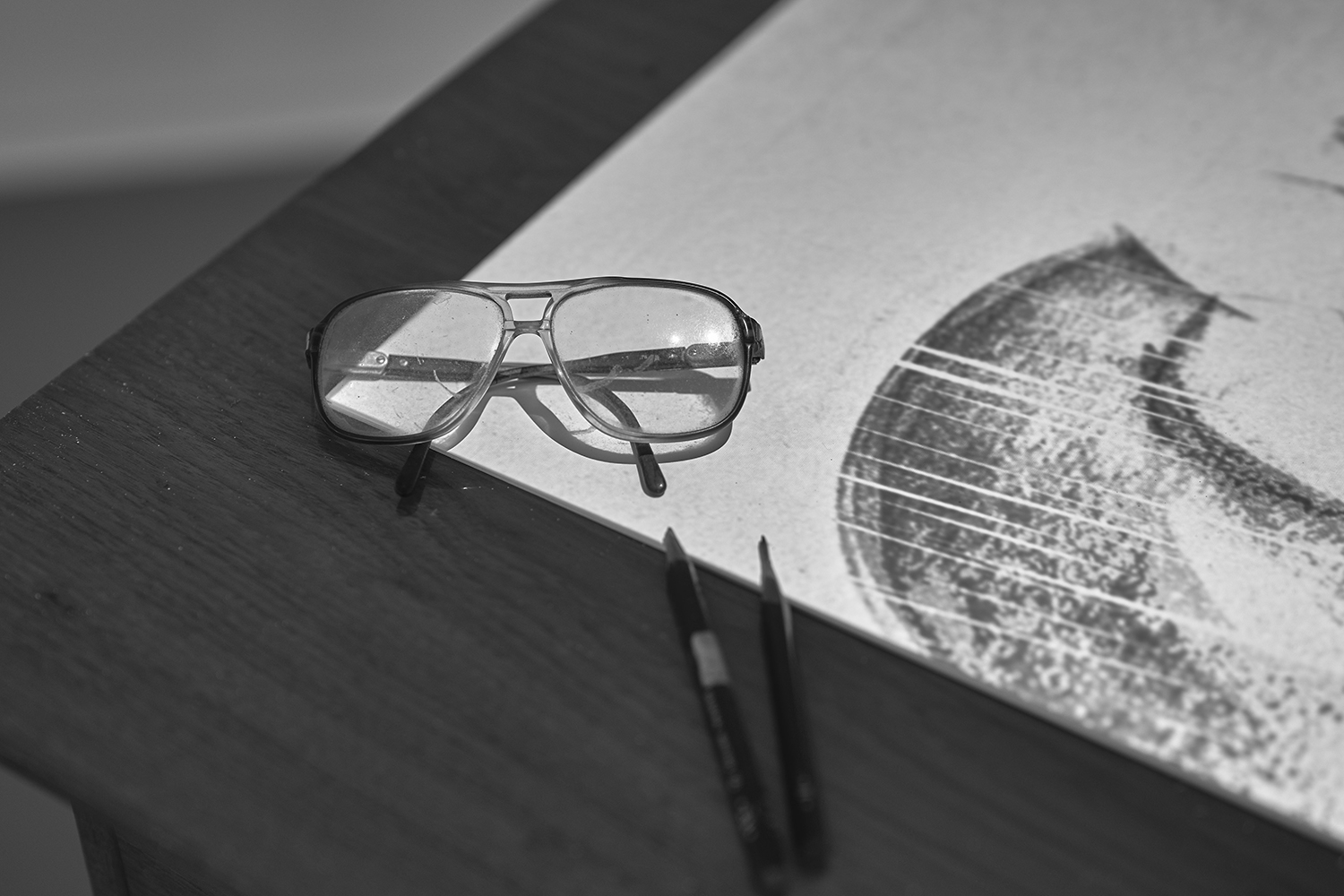
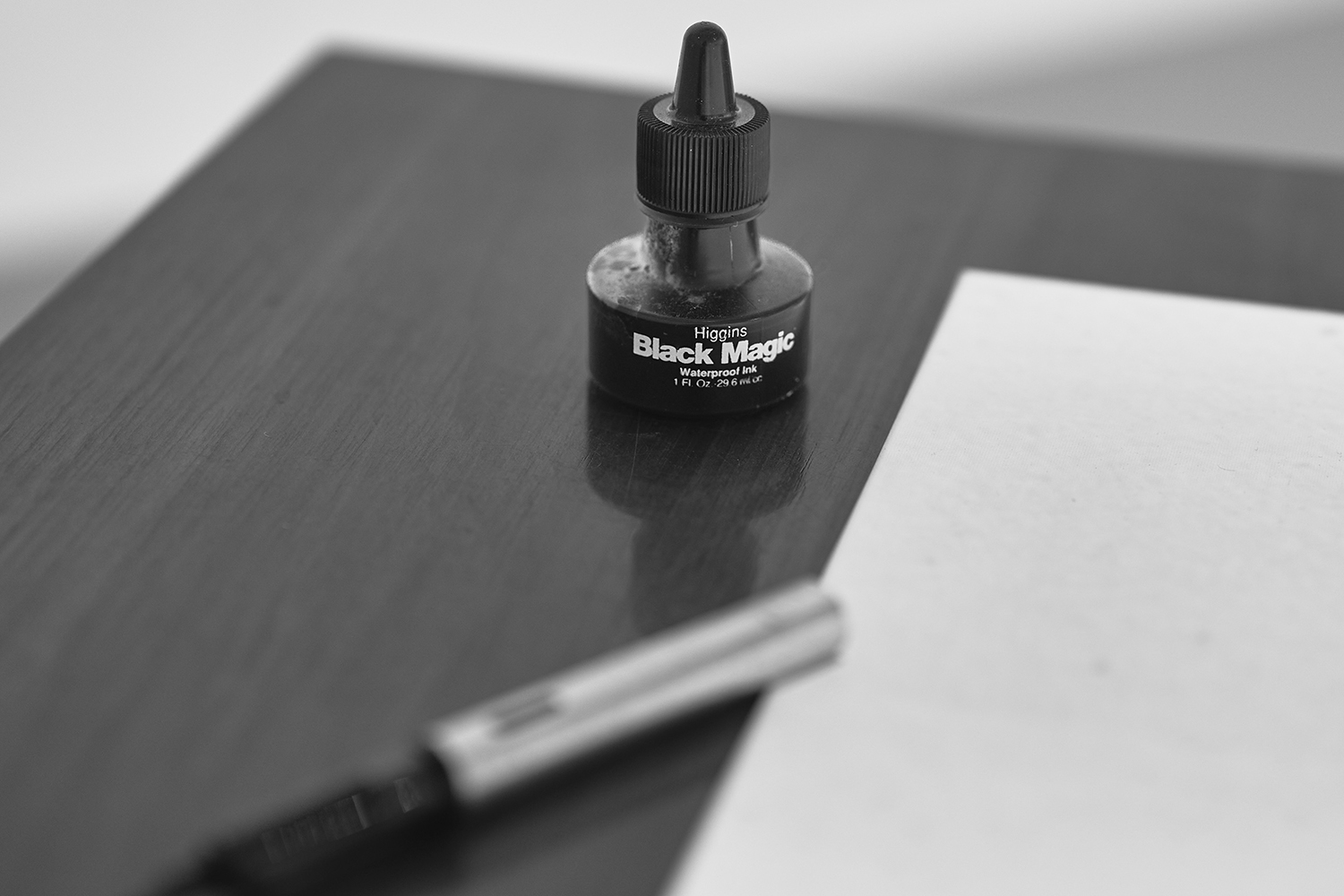
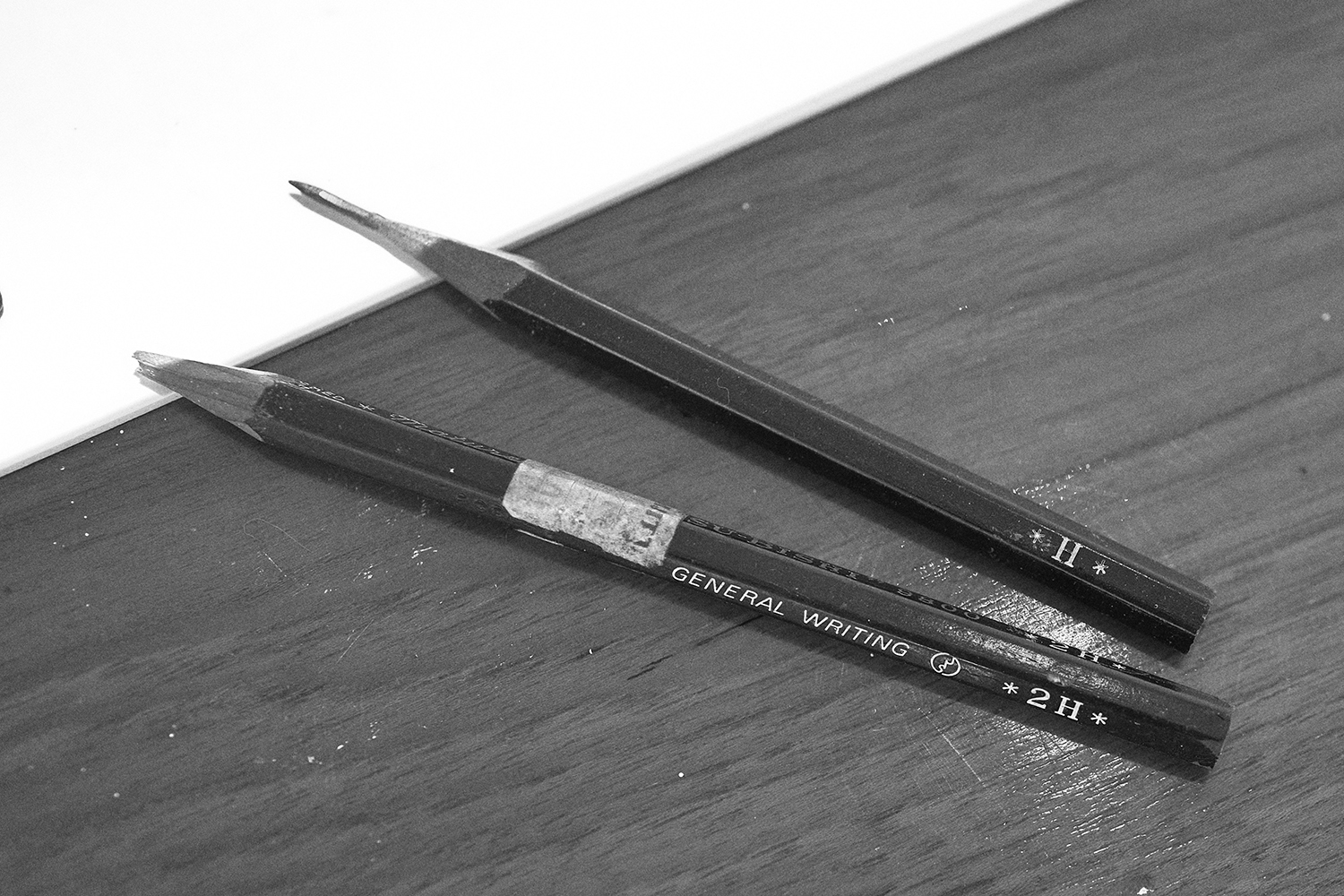
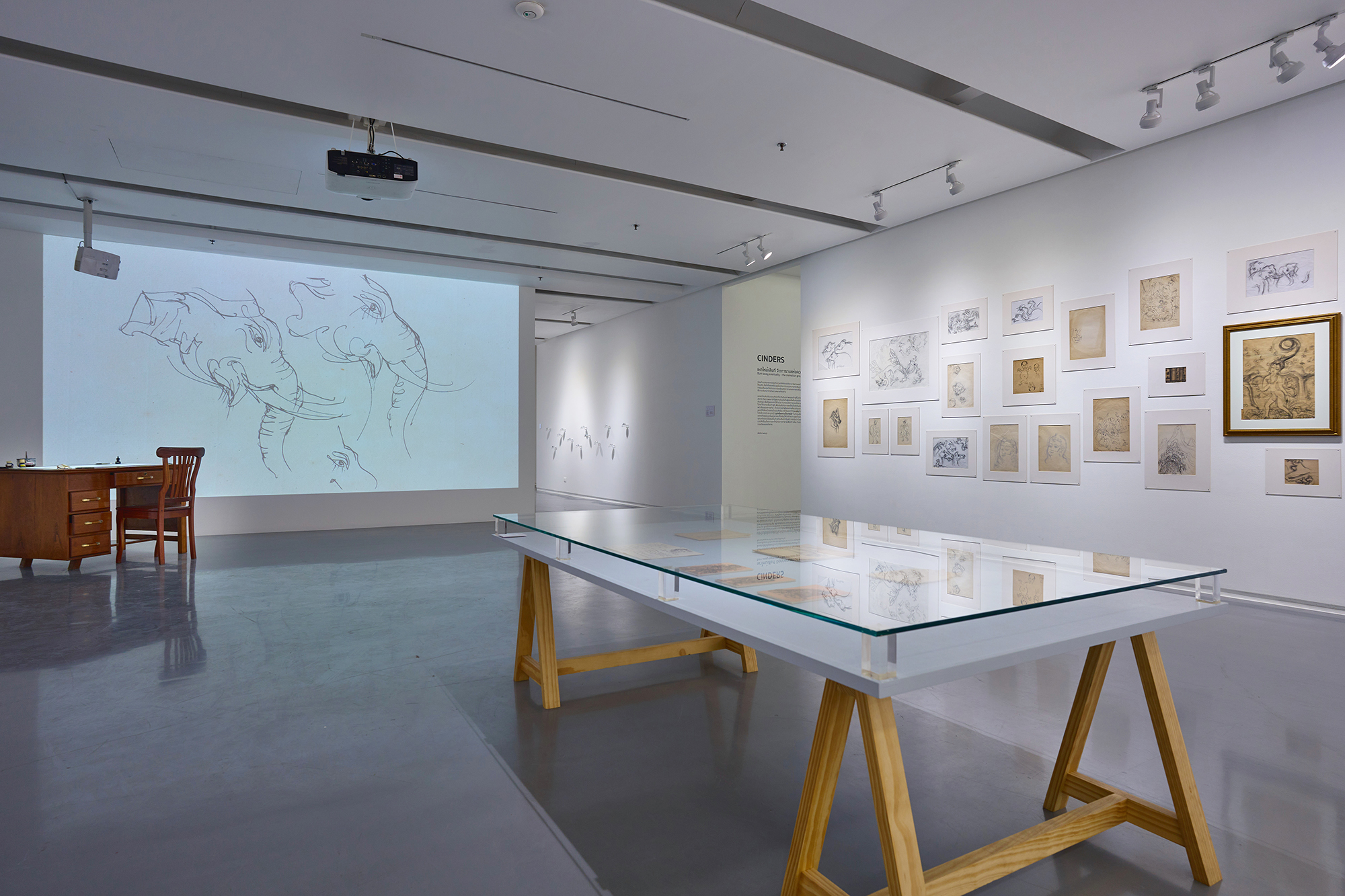
To us, Ormkaew’s approach to these vessels of memory begins to loosen the knot of questions surrounding ‘the value of objects after death.’ She unfolds these questions before us in Ash and Alteration at JWD Art Space. The exhibition brings Angkarn Kallayanapong’s ashes, archival materials, and inherited possessions into dialogue with artists and scholars, inviting us to ask how the things left behind by the departed might be transformed—and ‘altered back’—to carry new meanings for those who remain.
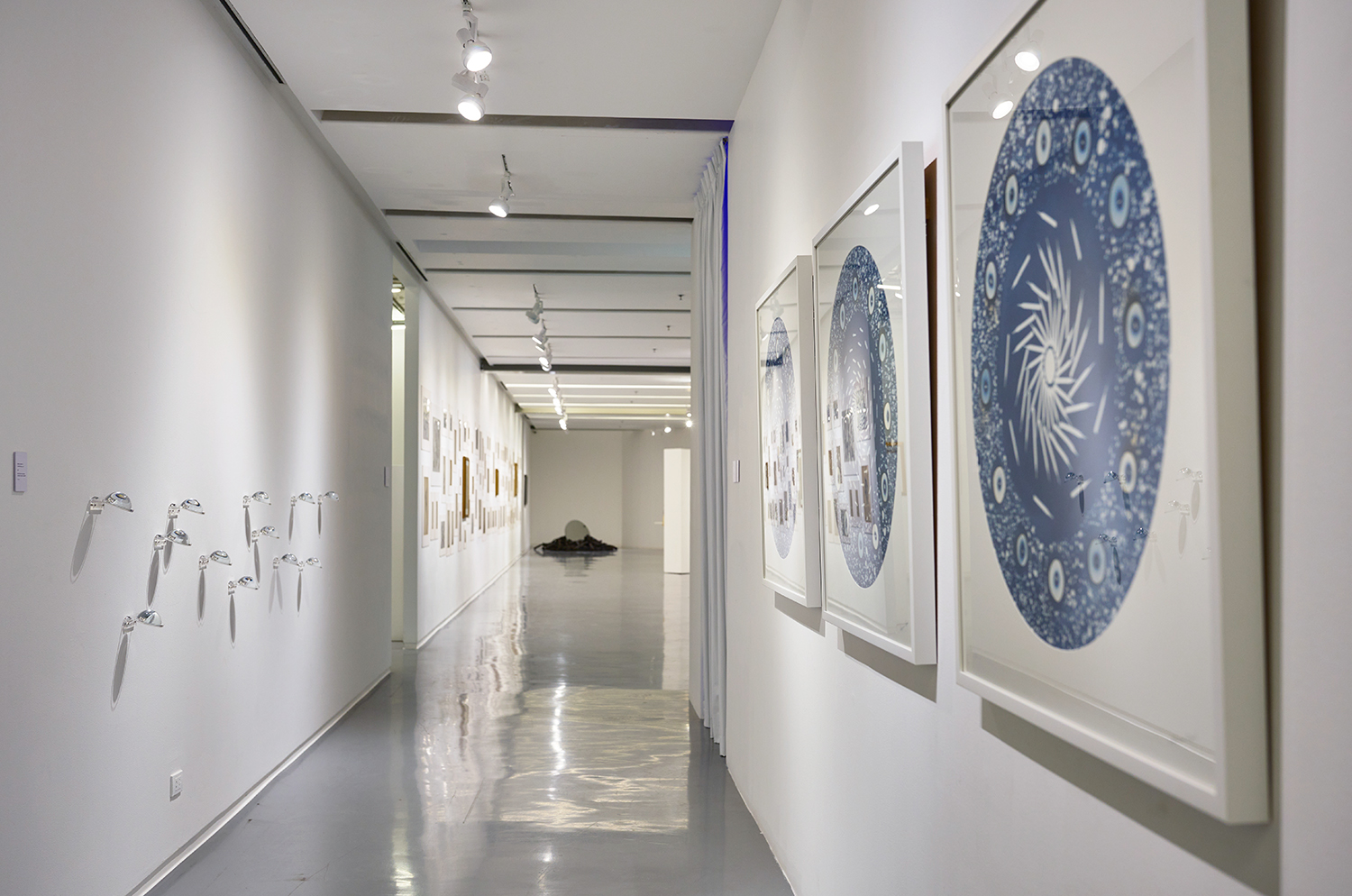
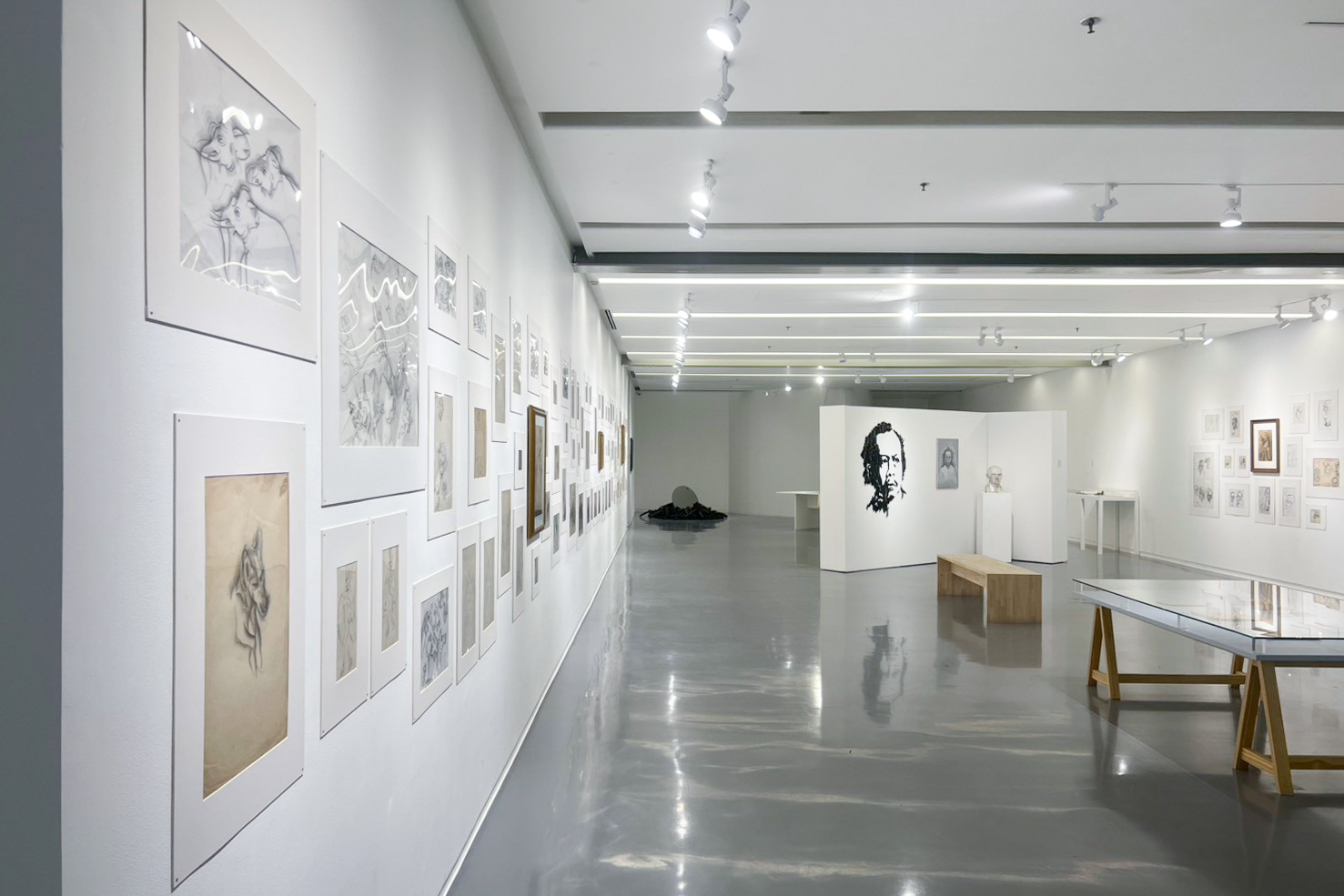
Photo: Sarunkorn Arthan
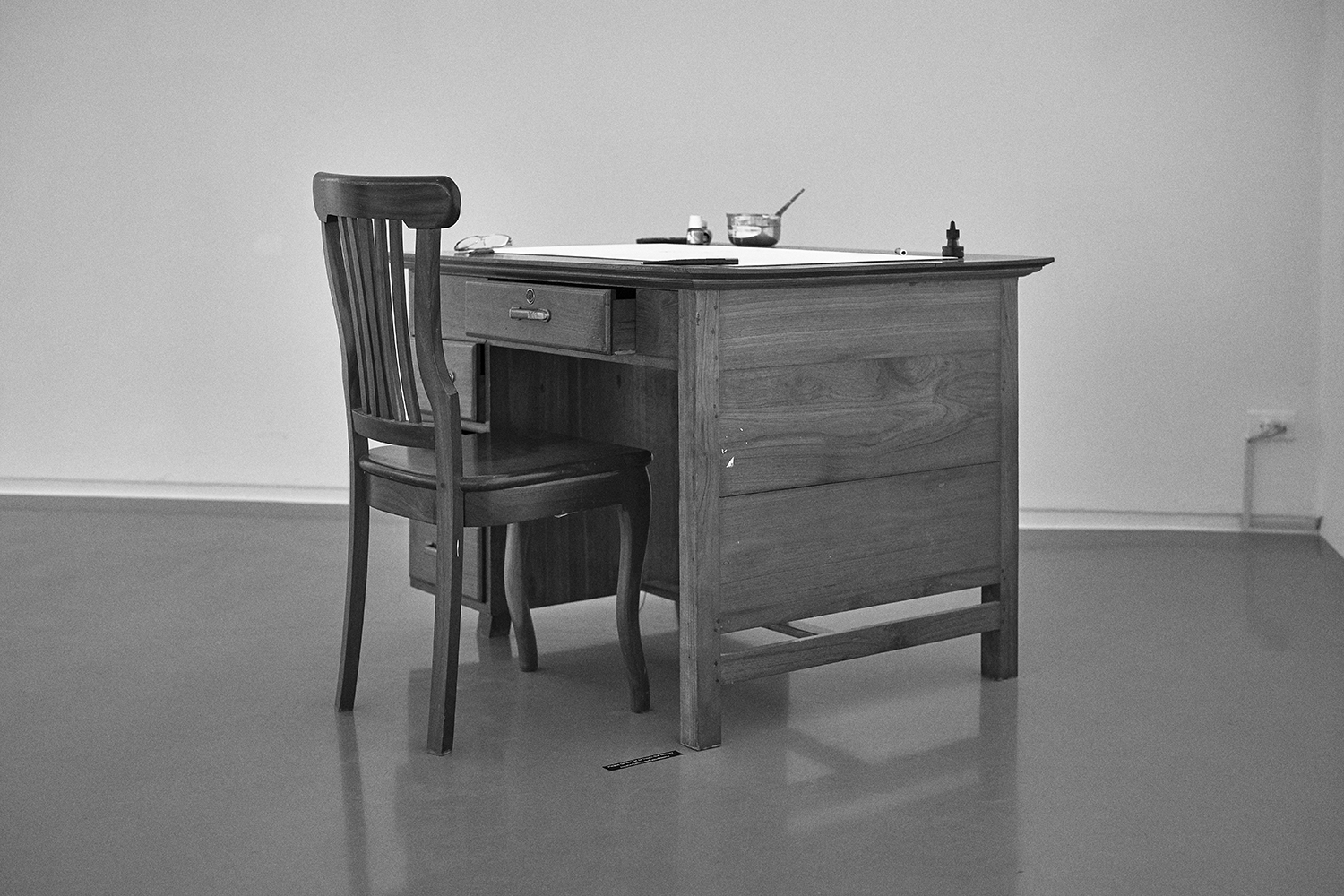
Upon entering JWD Art Space, we find ourselves in a long white gallery that does not compel us in any particular direction. Every route is ours to choose: how to approach, what to encounter, and how to learn from the ashes of Angkarn. The first things we come across are his miscellaneous possessions and ‘piles of rubbish,’ once scattered in disarray but now, through the selection and arrangement of Prapan Jangkitchai, transformed into an unexpectedly revealing account of the artist’s life and development. Prapan asks us to look again at things once deemed insignificant and to discover meanings that extend beyond their former use or perceived worth.
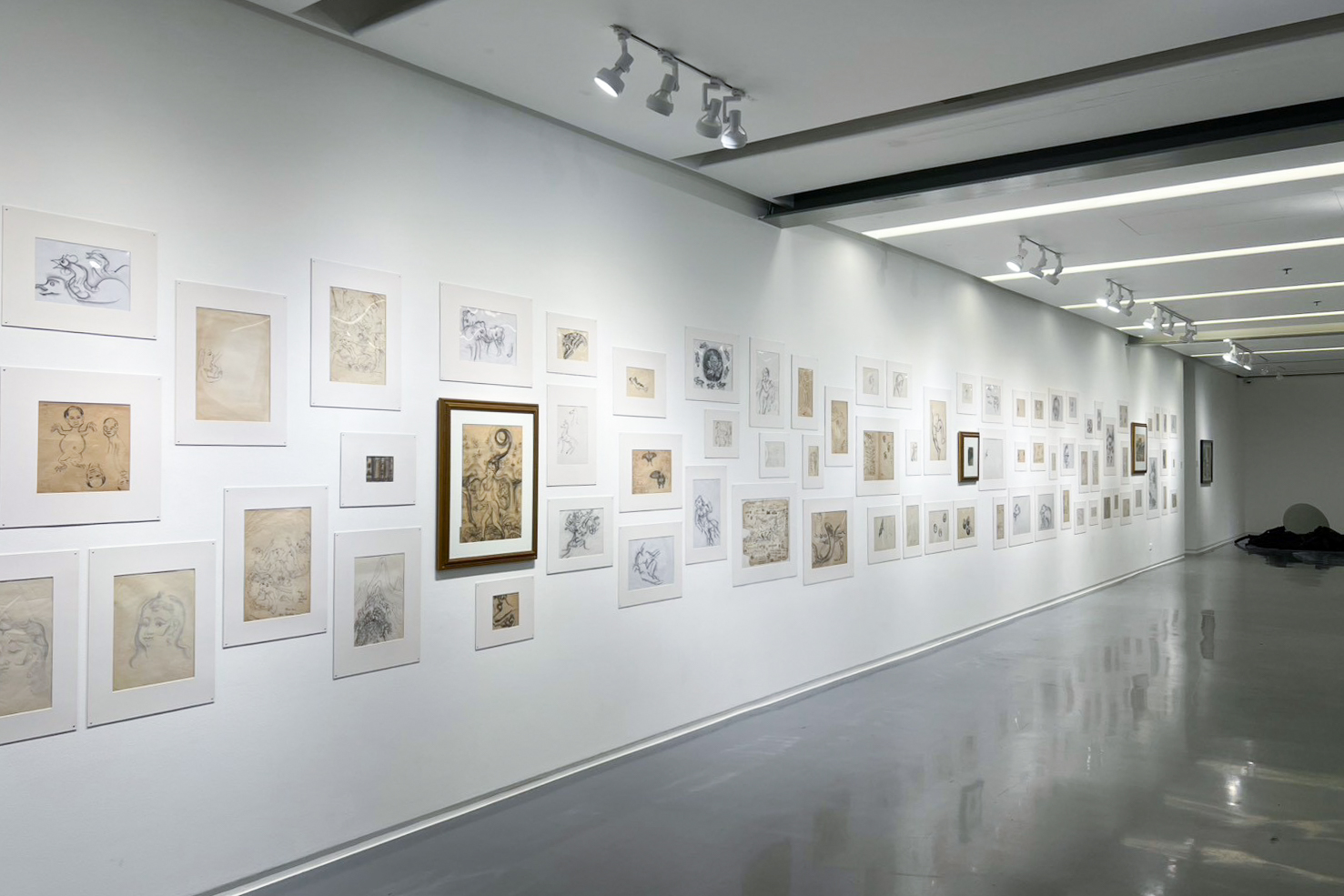
Photo: Sarunkorn Arthan
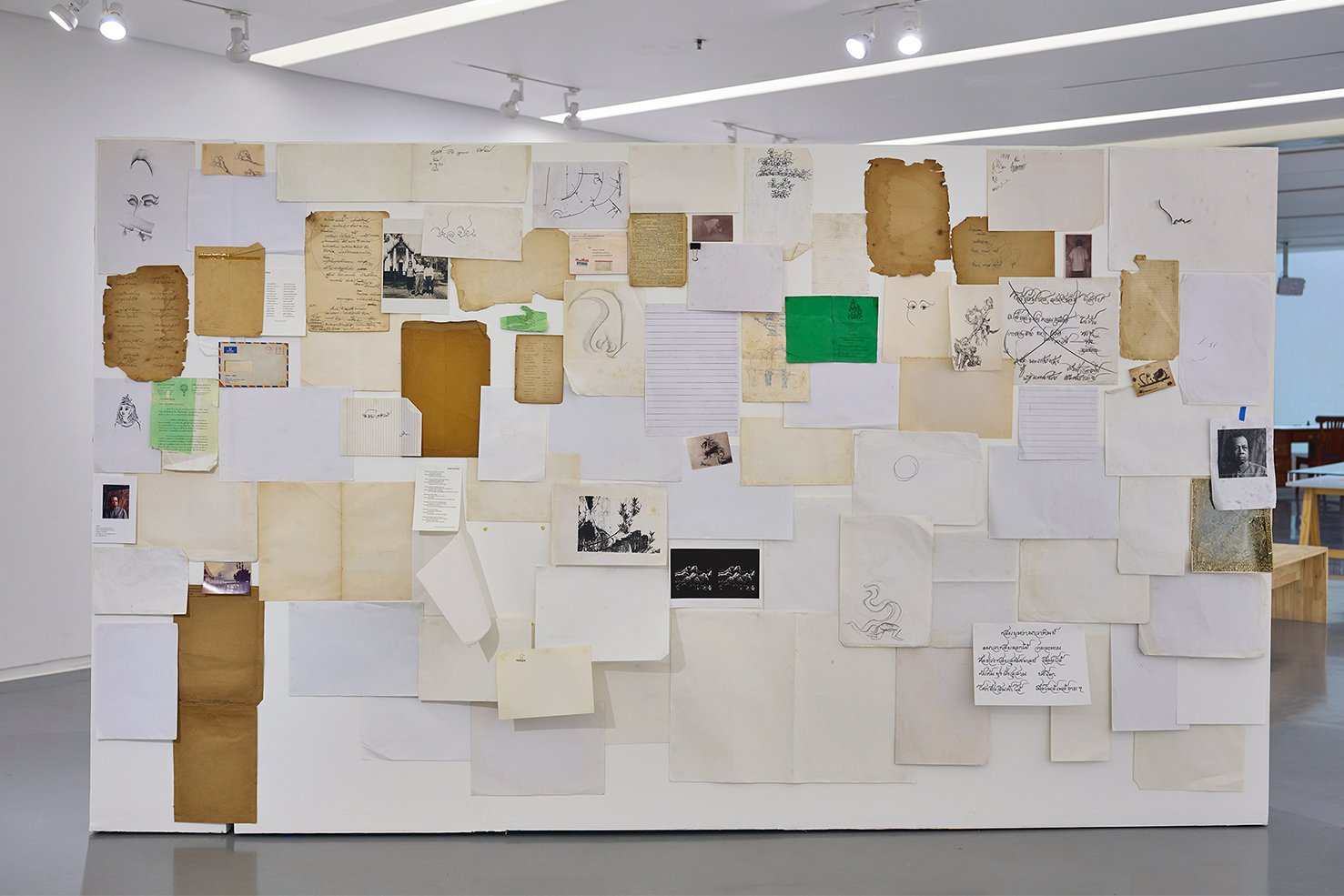
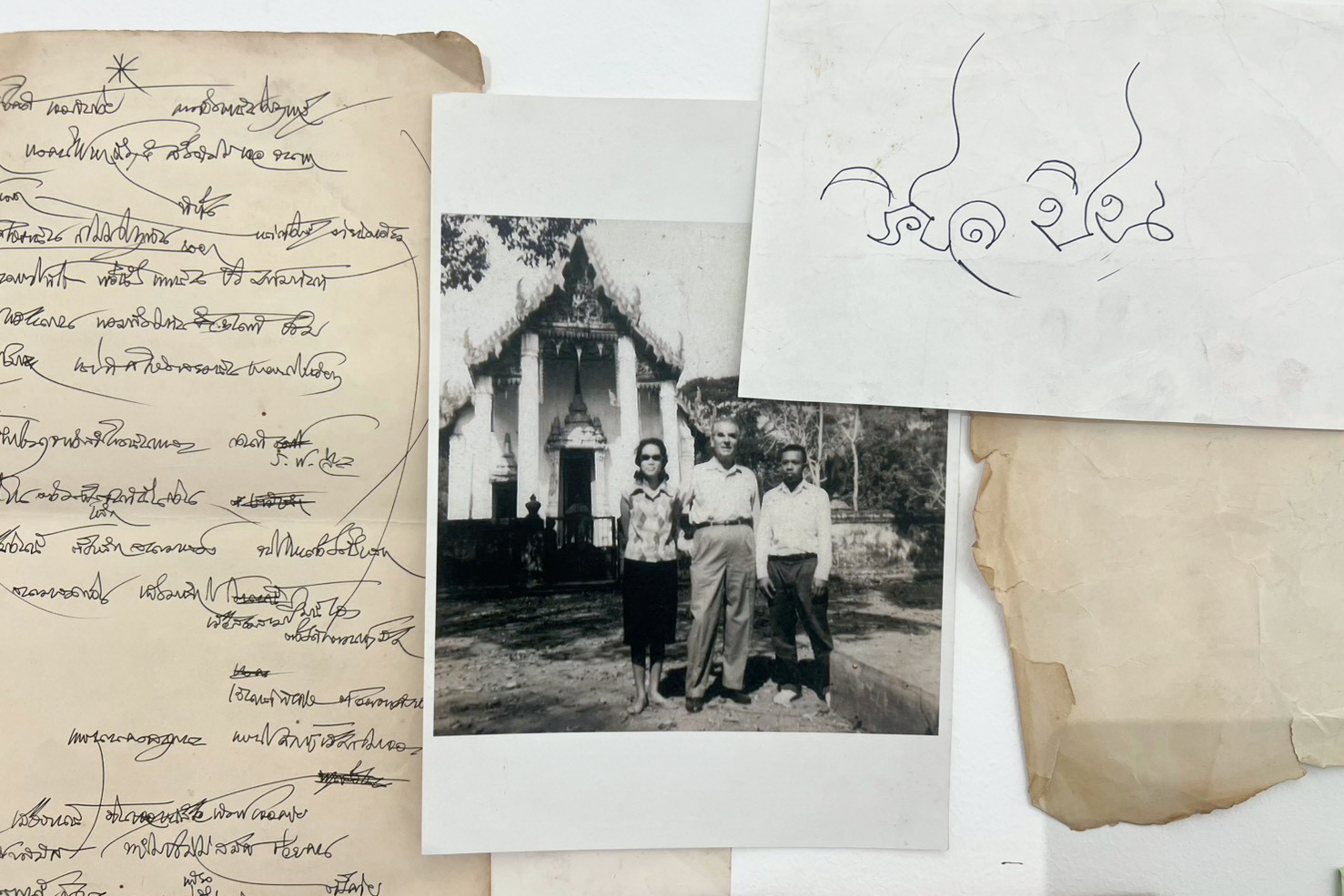
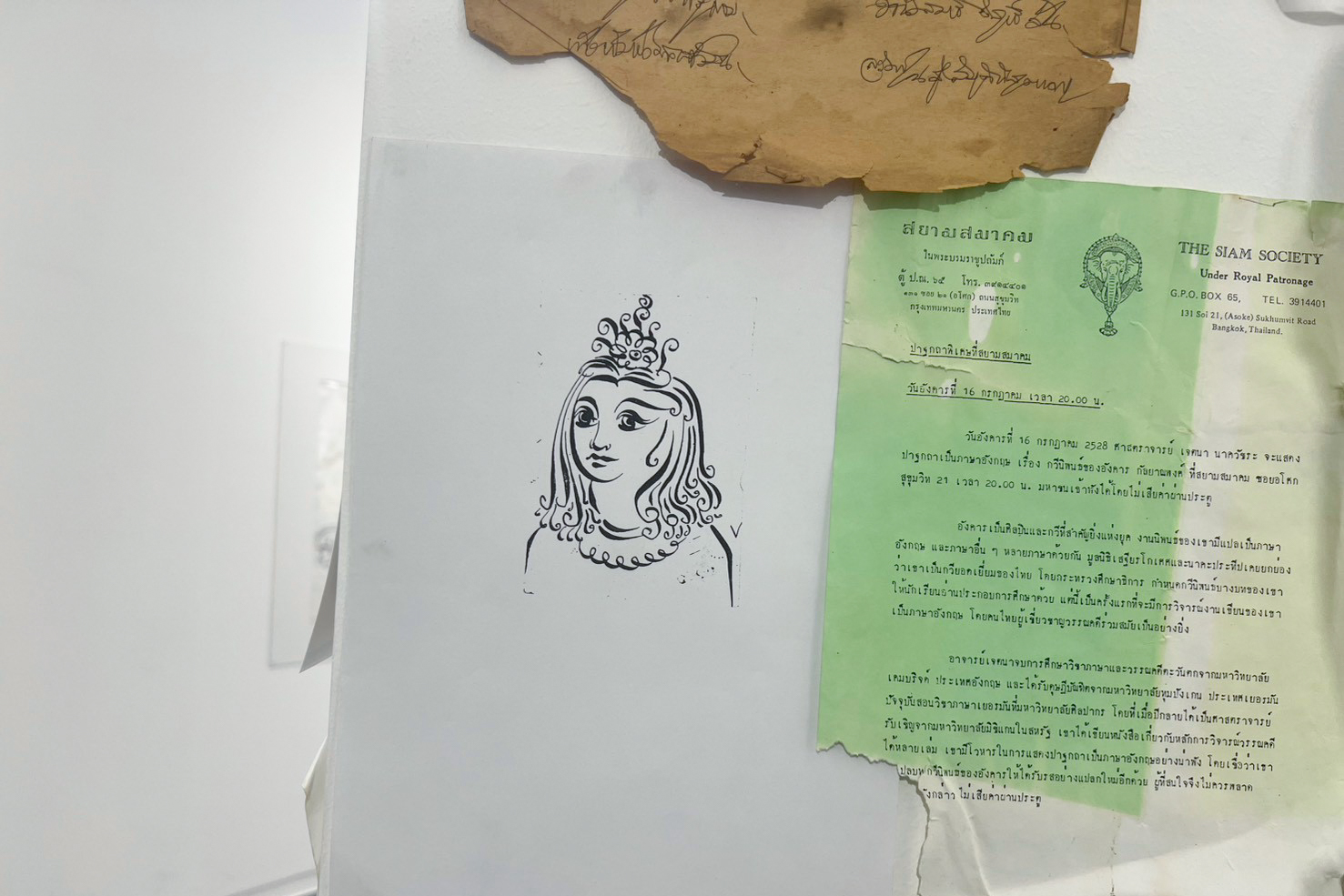
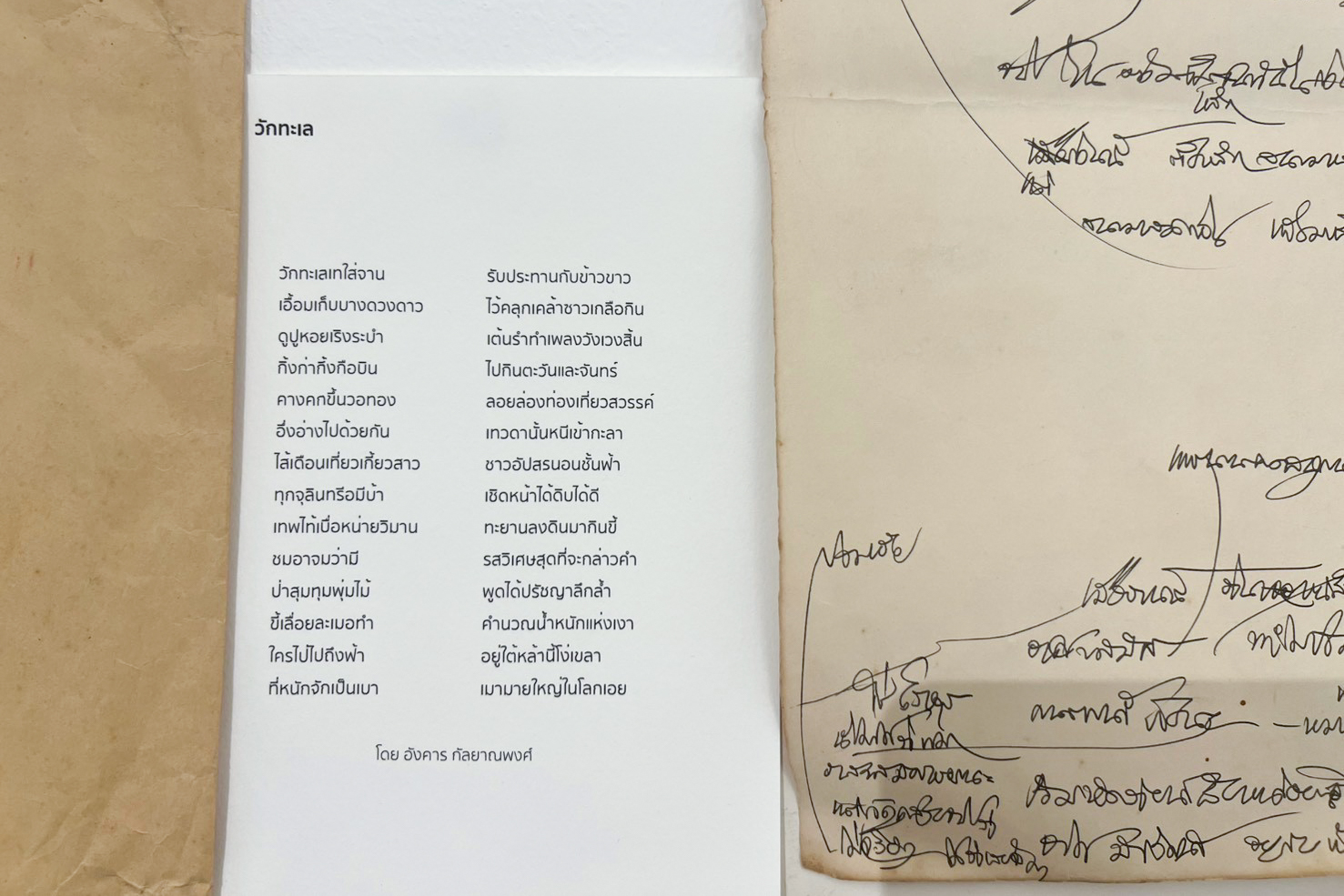
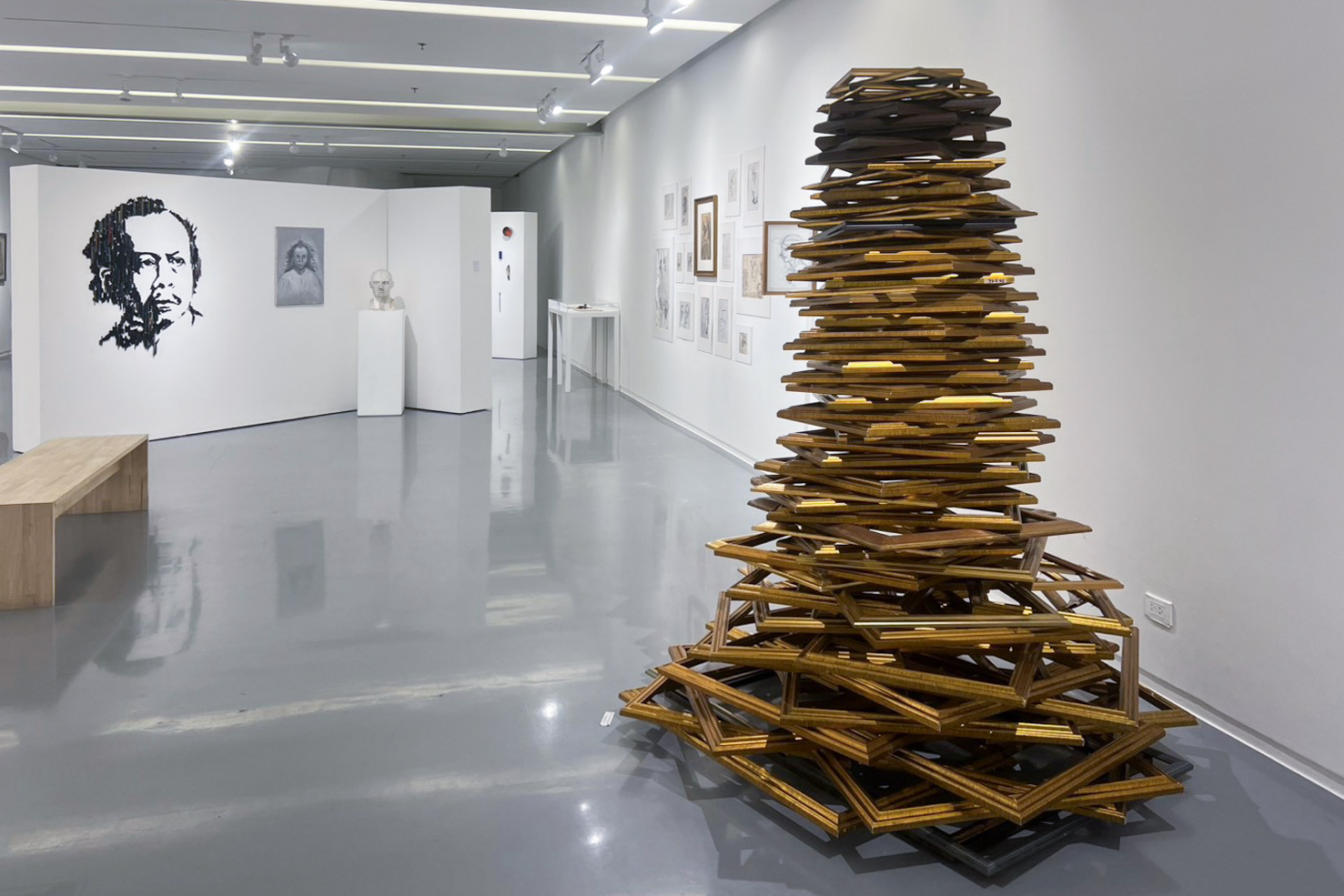
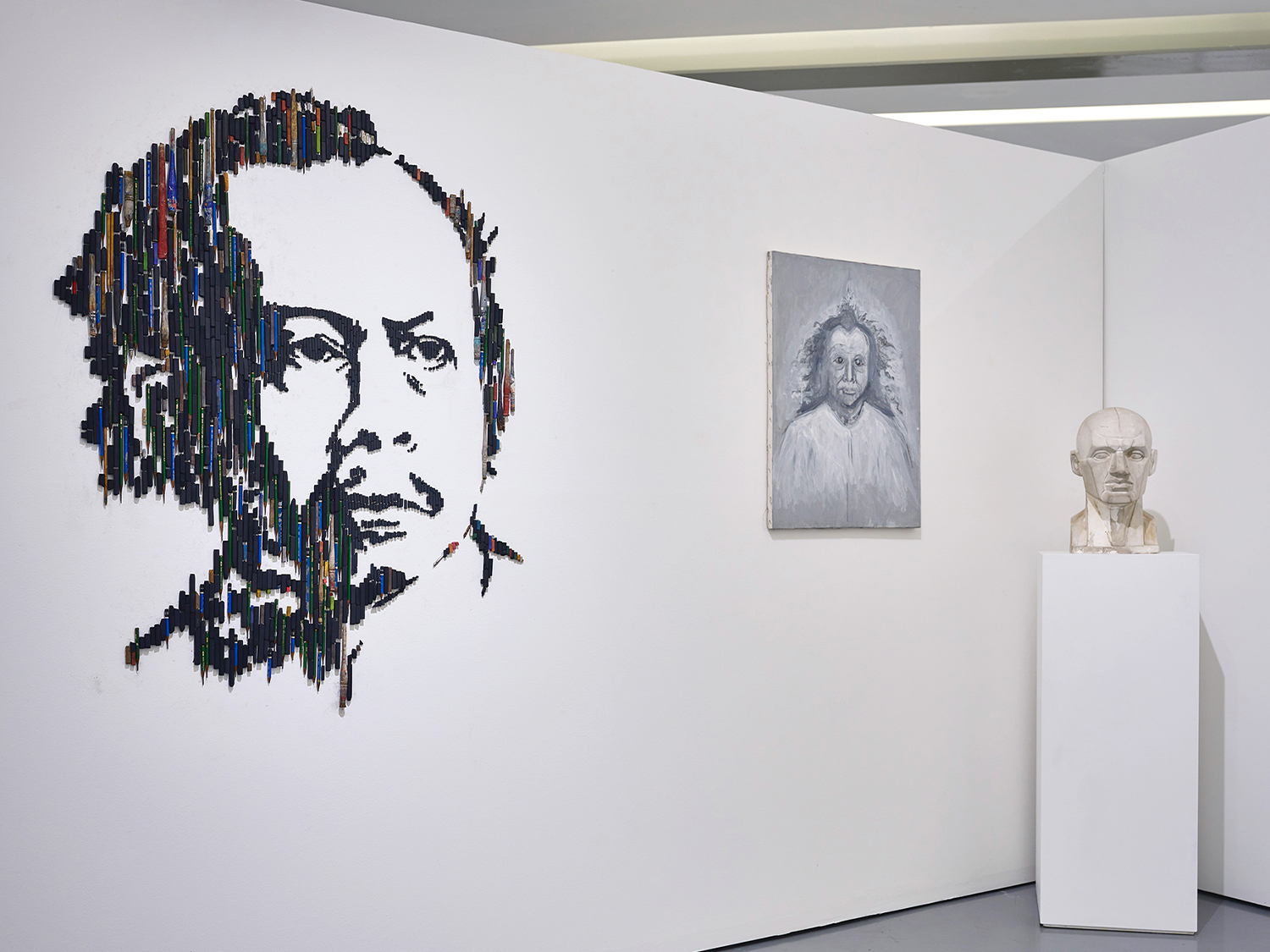
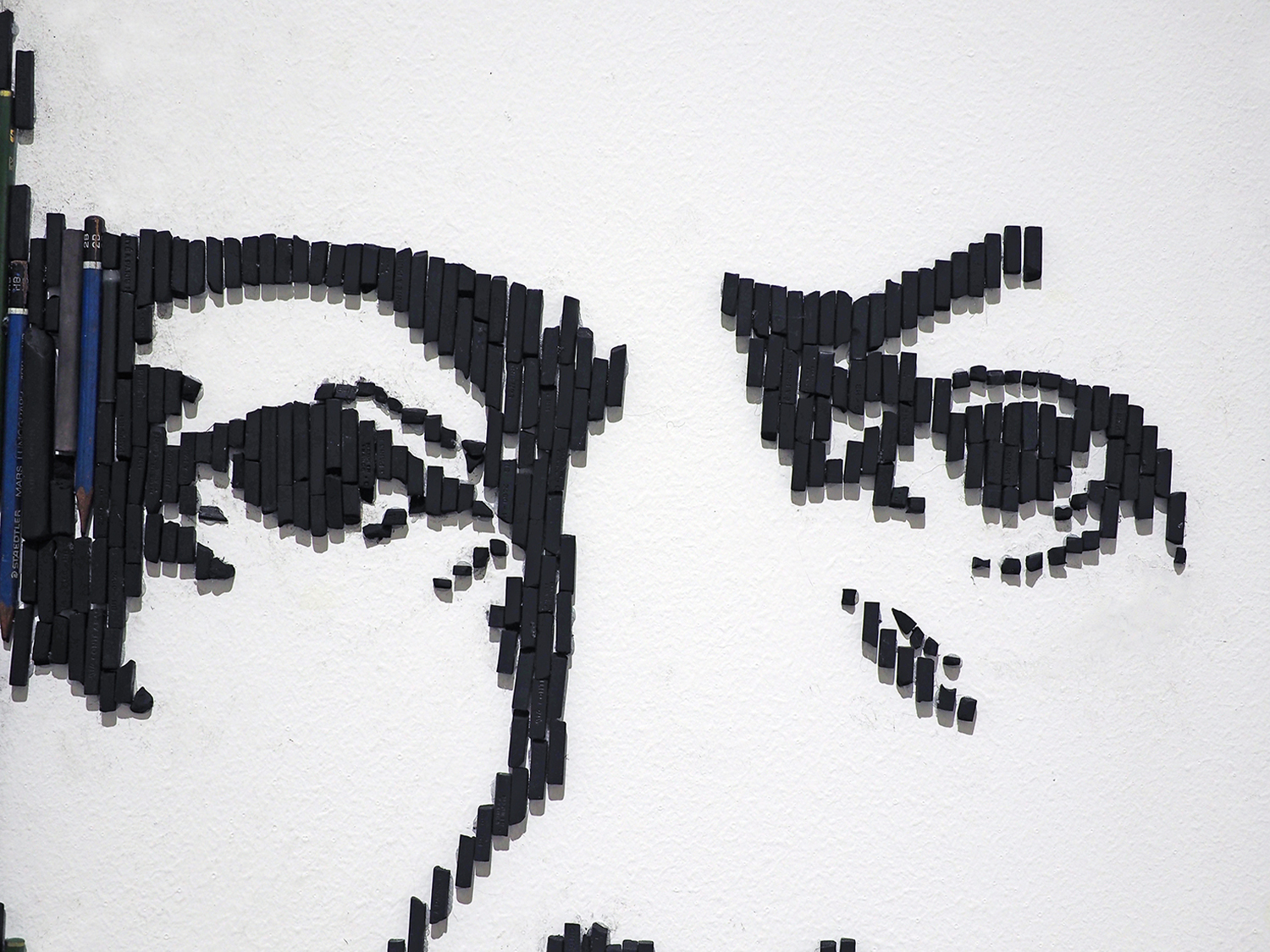
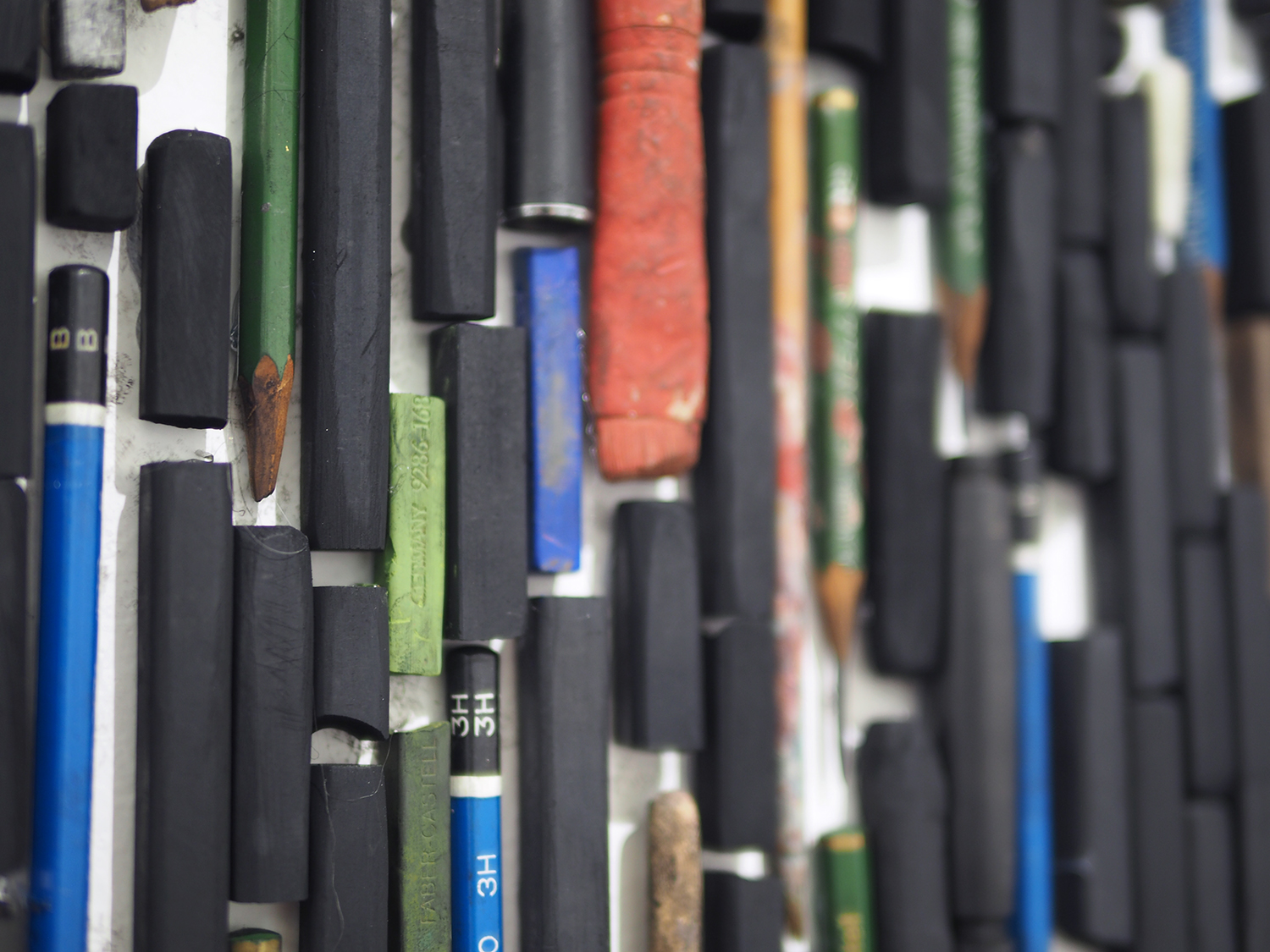
There is an old photograph of Angkarn standing before a Buddhist sanctuary with Silpa Bhirasri and Suwanni Sukhontha; sketches whose dates and sequence can no longer be determined; fragments of restless handwriting, some legible and others beyond deciphering; receipts stained with crayon; and picture frames Angkarn personally chose for his works, now removed and stacked like stupas. There are plaster models, art textbooks, works from his years at Silpakorn University, and even charcoal crayons—nearly reduced to ash themselves—arranged into the likeness of the departed artist.
These are the ‘remains of Angkarn’: fragments that persist as witnesses to his existence, to his having once existed, and to a presence that refuses to dissolve into currents of water or streams of electricity. They reveal that, although these long-stored possessions might once have been dismissed as Angkarn’s rubbish, they are not rubbish to others. Within their worn and weathered forms, they have become vessels carrying the breath of Angkarn.
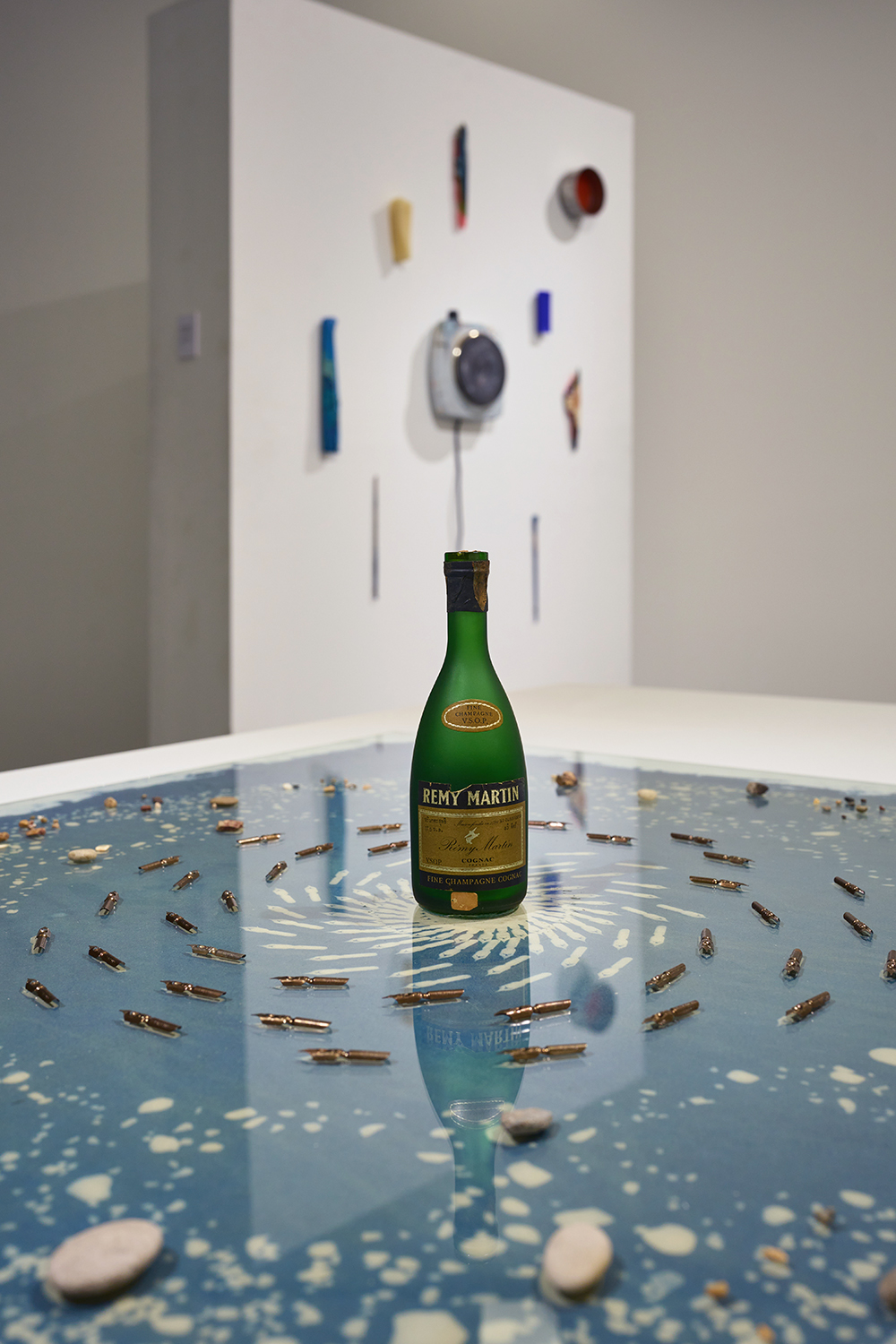
Nearby are remnants from the working processes of two contemporary artists: an induction cooktop and scraps of wax left behind from Tada Hengsapkul’s experiments, as well as cyanotype tests and printing matrices that Chulayarnnon Siriphol made from fragments held by the Art and Archive of Angkarn Kallayanapong. Both artists borrow—and perhaps even steal away—certain seeds of Angkarn’s thought, allowing them to germinate into works of their own.
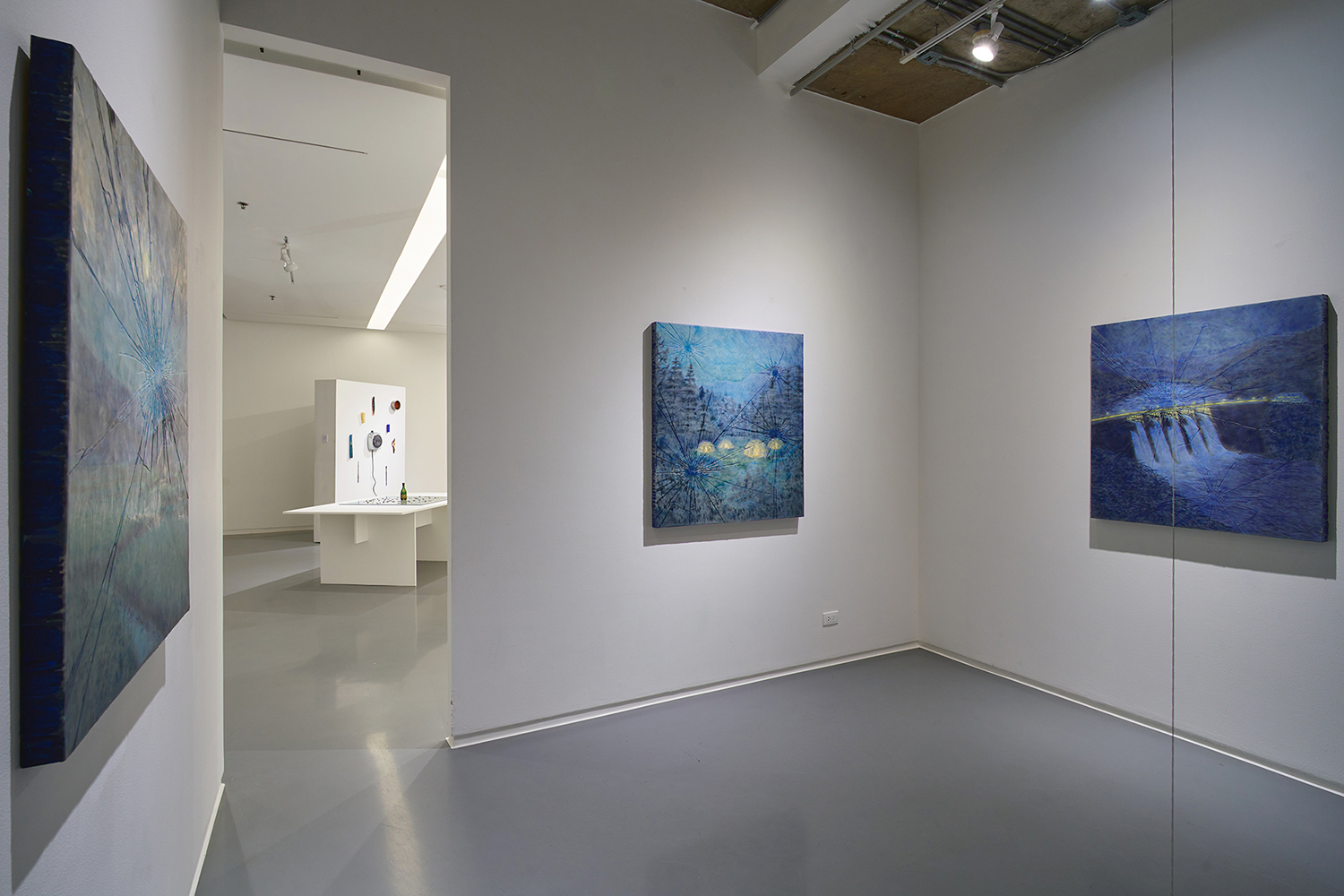
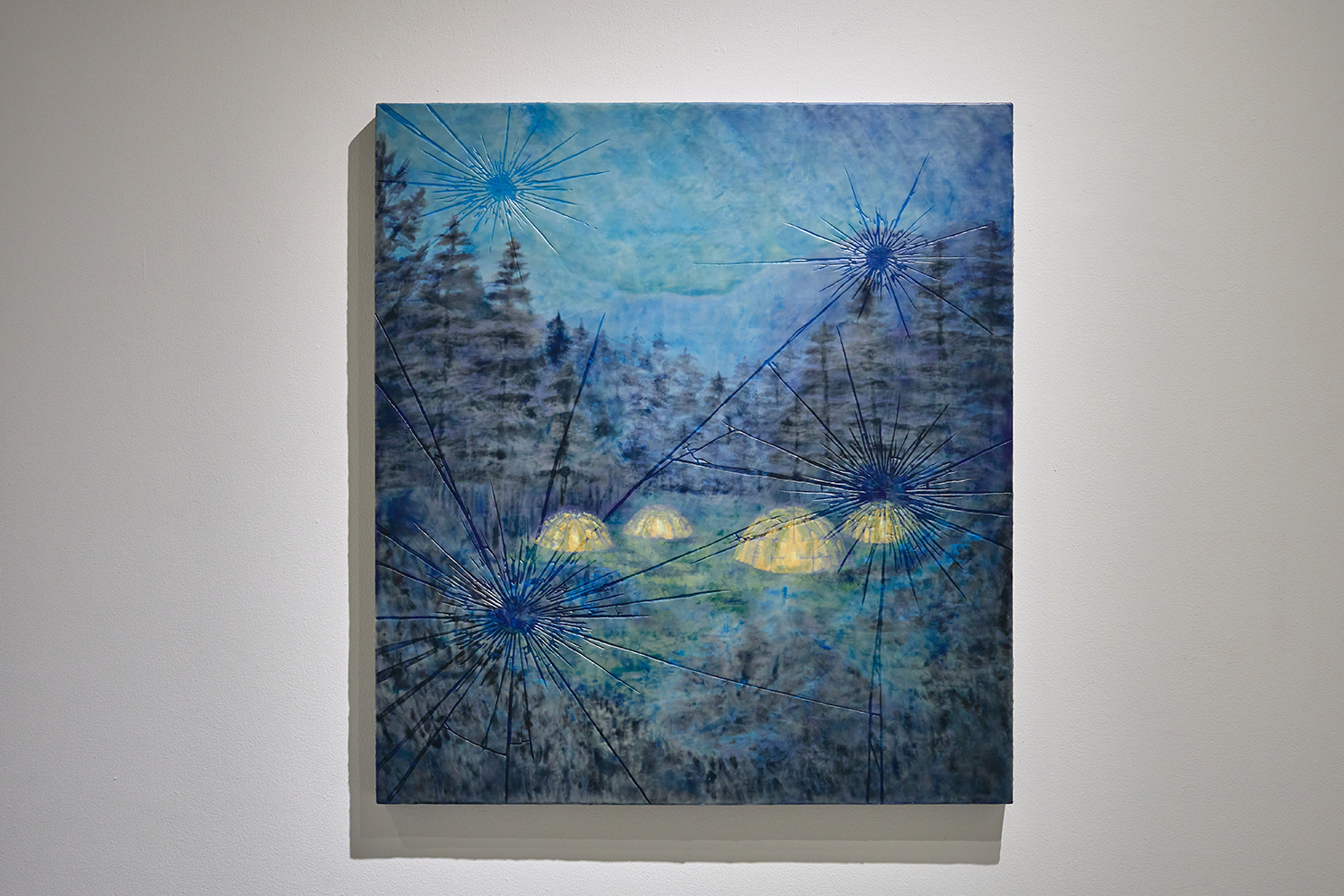 North, 2026.
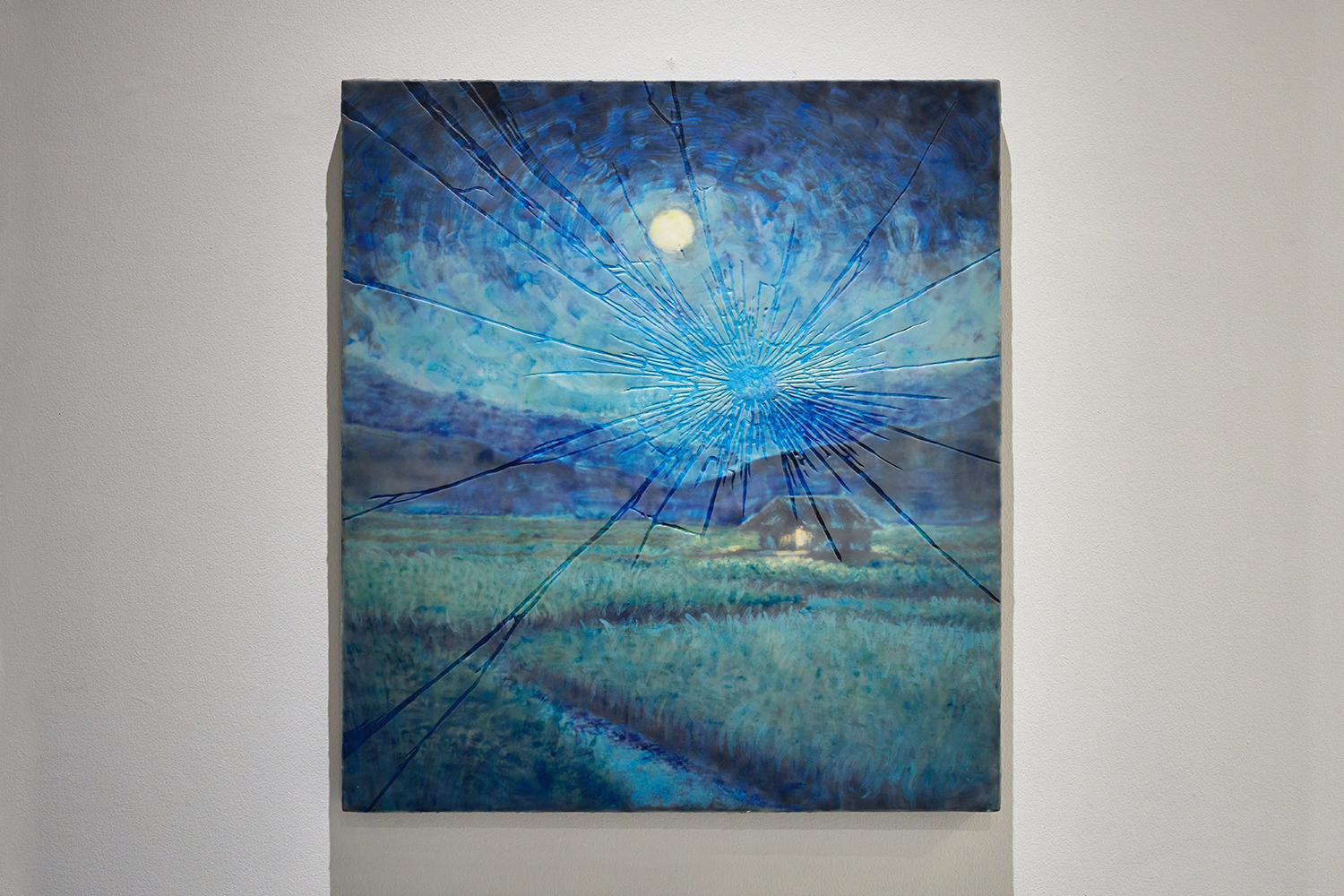
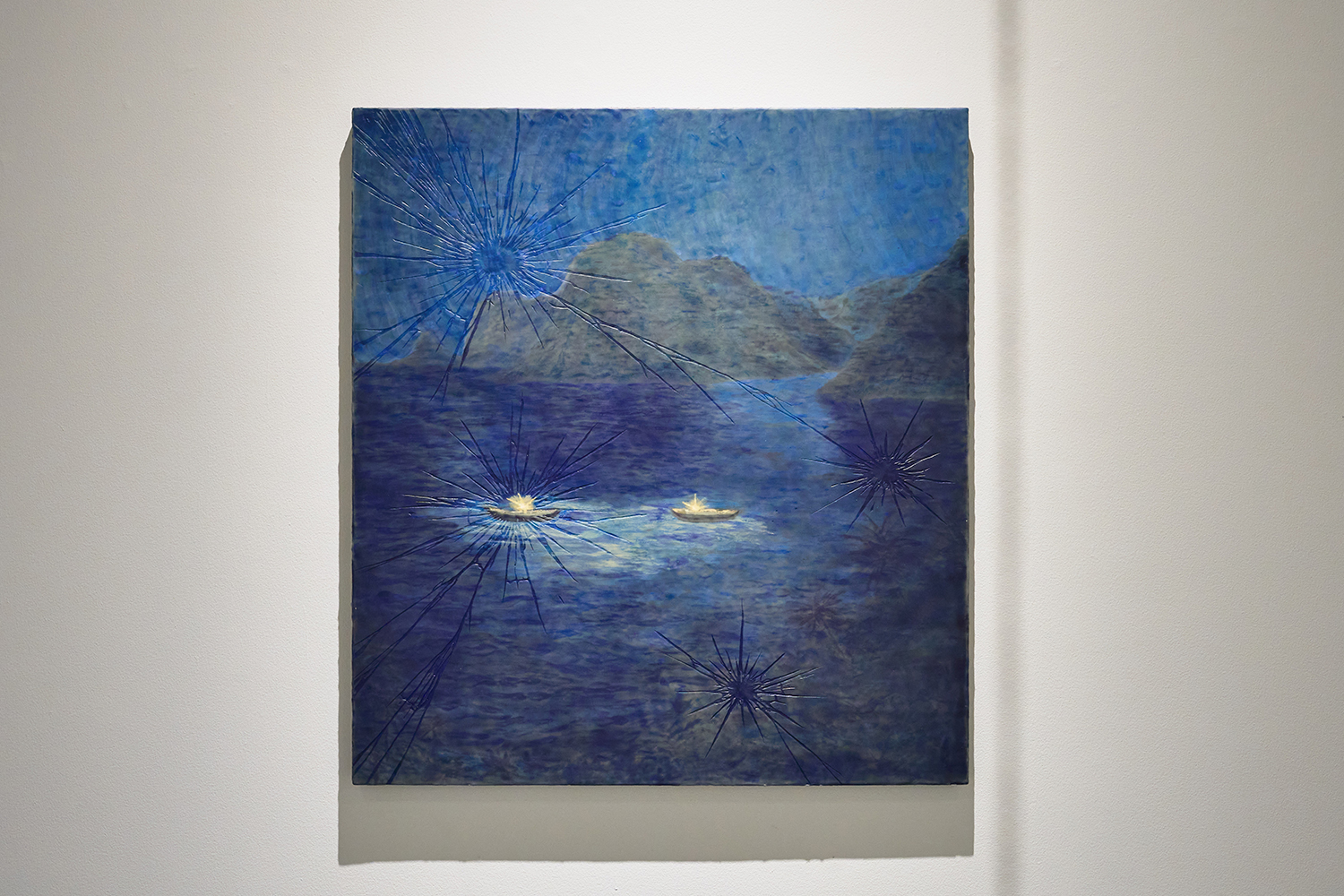
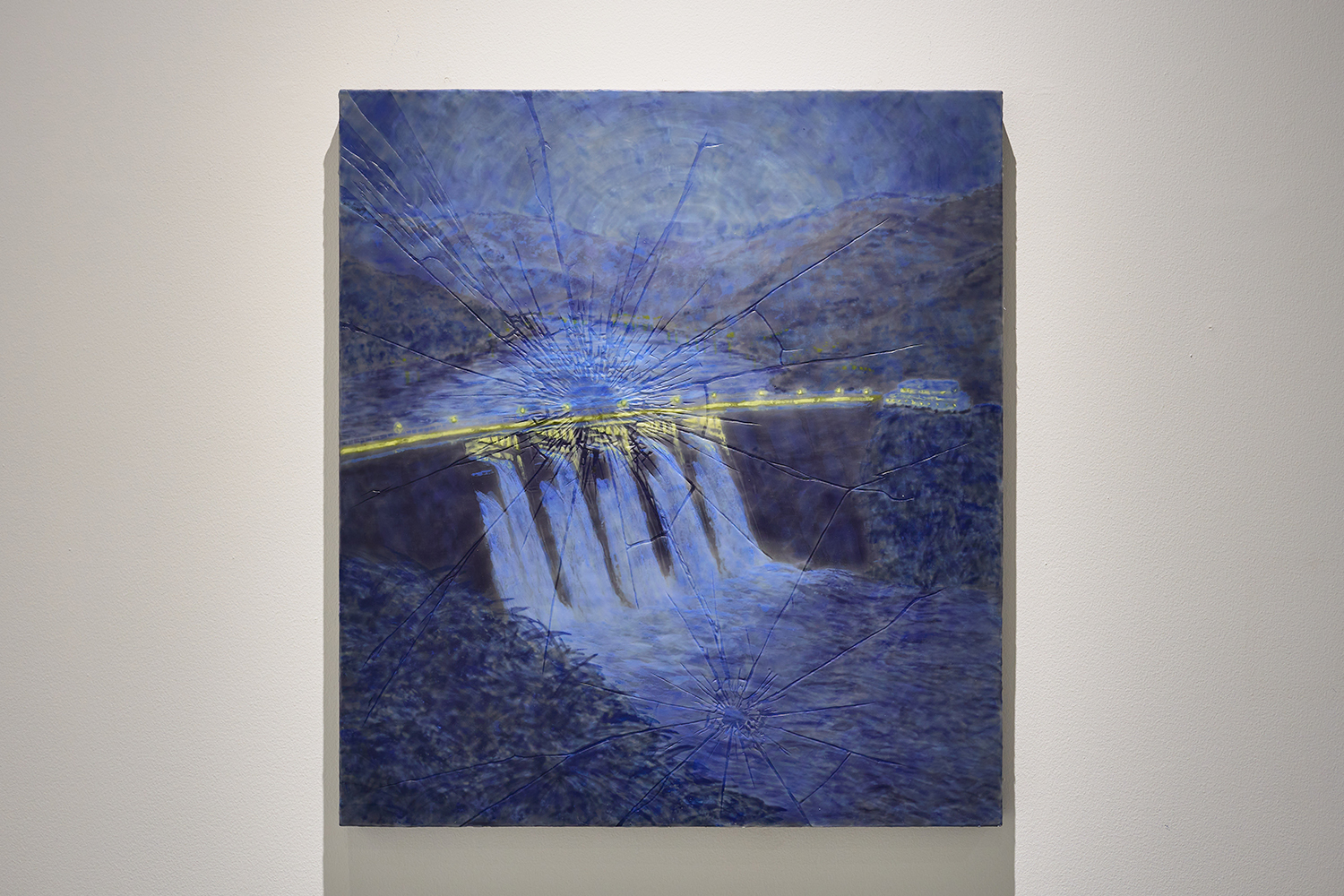
Tada’s work leads us through landscapes and histories of spatial conflict. In North / West / East / South (2026), he retraces Angkarn’s gaze as the poet-artist traveled through forests and natural terrains, recording what he saw. Yet Tada overlays those journeys with contemporary experience, unfolding an ‘emotional map of history’ that traces change, development, and fragility across Thailand’s four regions.
The works are created using encaustic painting, a process of applying heated wax. As the wax cools, a cloudy film known as wax bloom emerges across the surface. Tada also scrapes, scores, and chips away at the wax, producing cracks that function almost like a language—one that dismantles the serene, idealized landscapes of Angkarn’s imagination and rethreads them through political conditions and wounded territories, from the Cold War era, which overlapped with Angkarn’s lifetime, to the present. The works suggest that the land continues, inescapably, to bear the traces of human action.
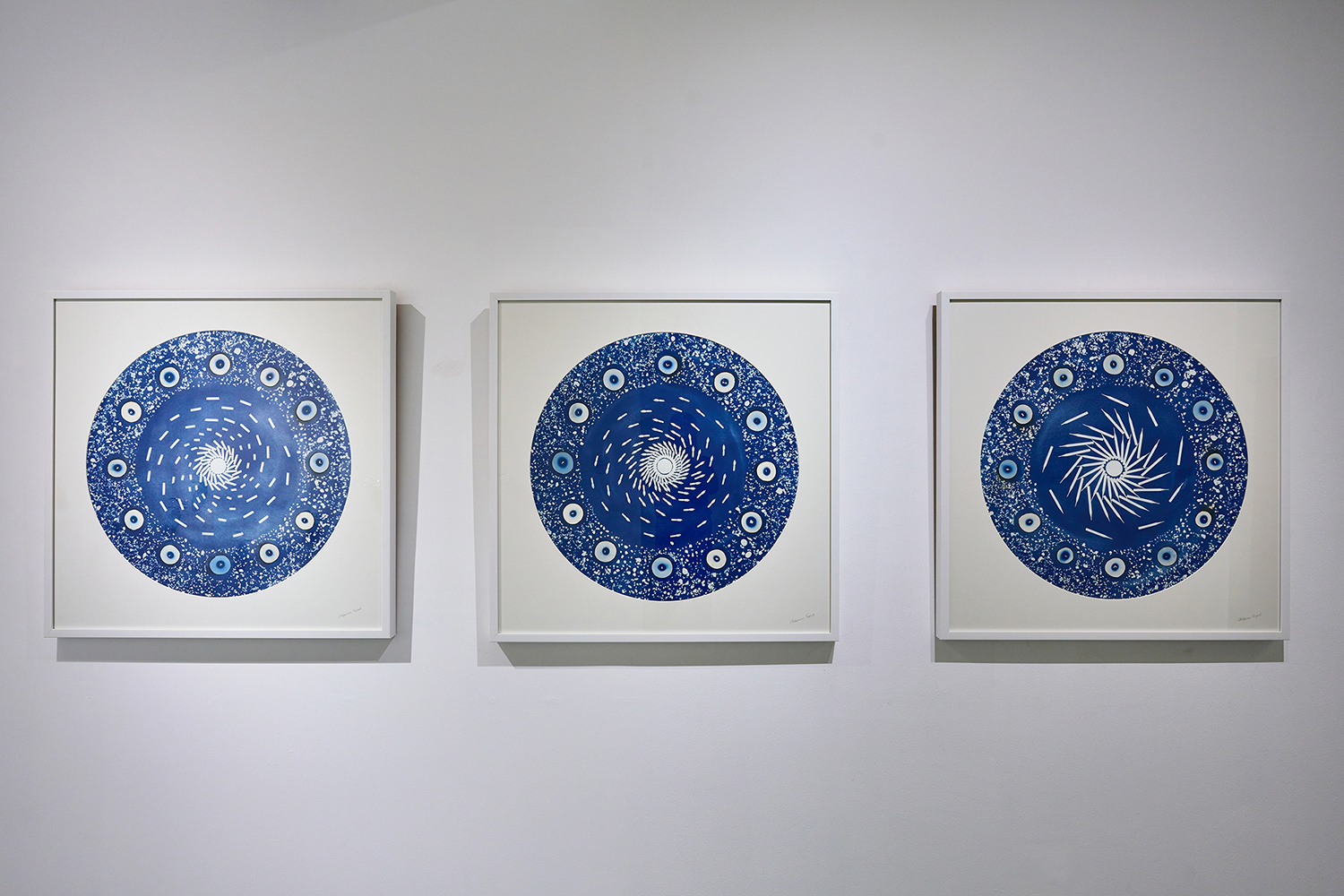
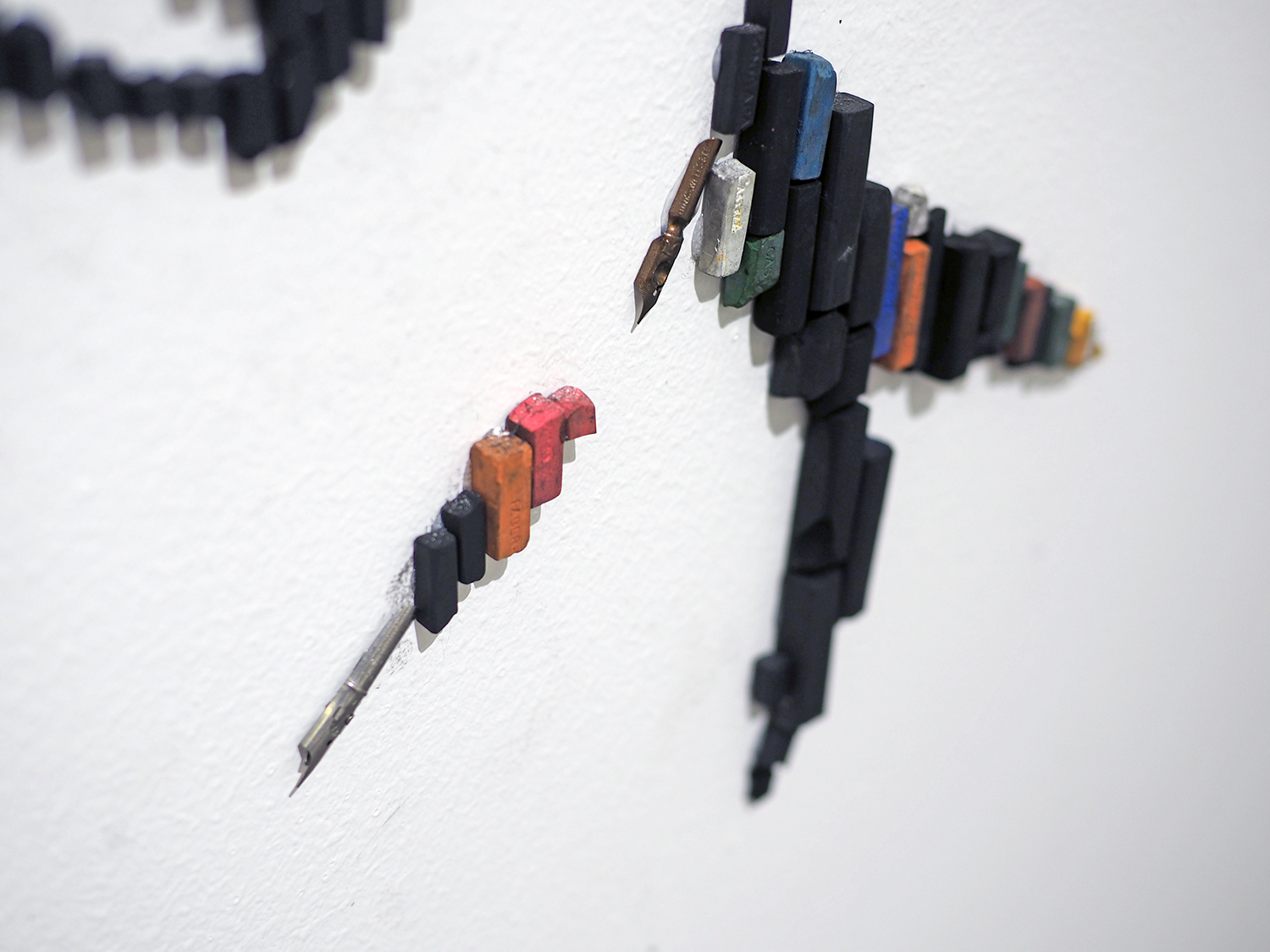
Kalachakra (Crayon), 2026. / Kalachakra (Dip Pen Nib), 2026. / Kalachakra (Pencil), 2026.
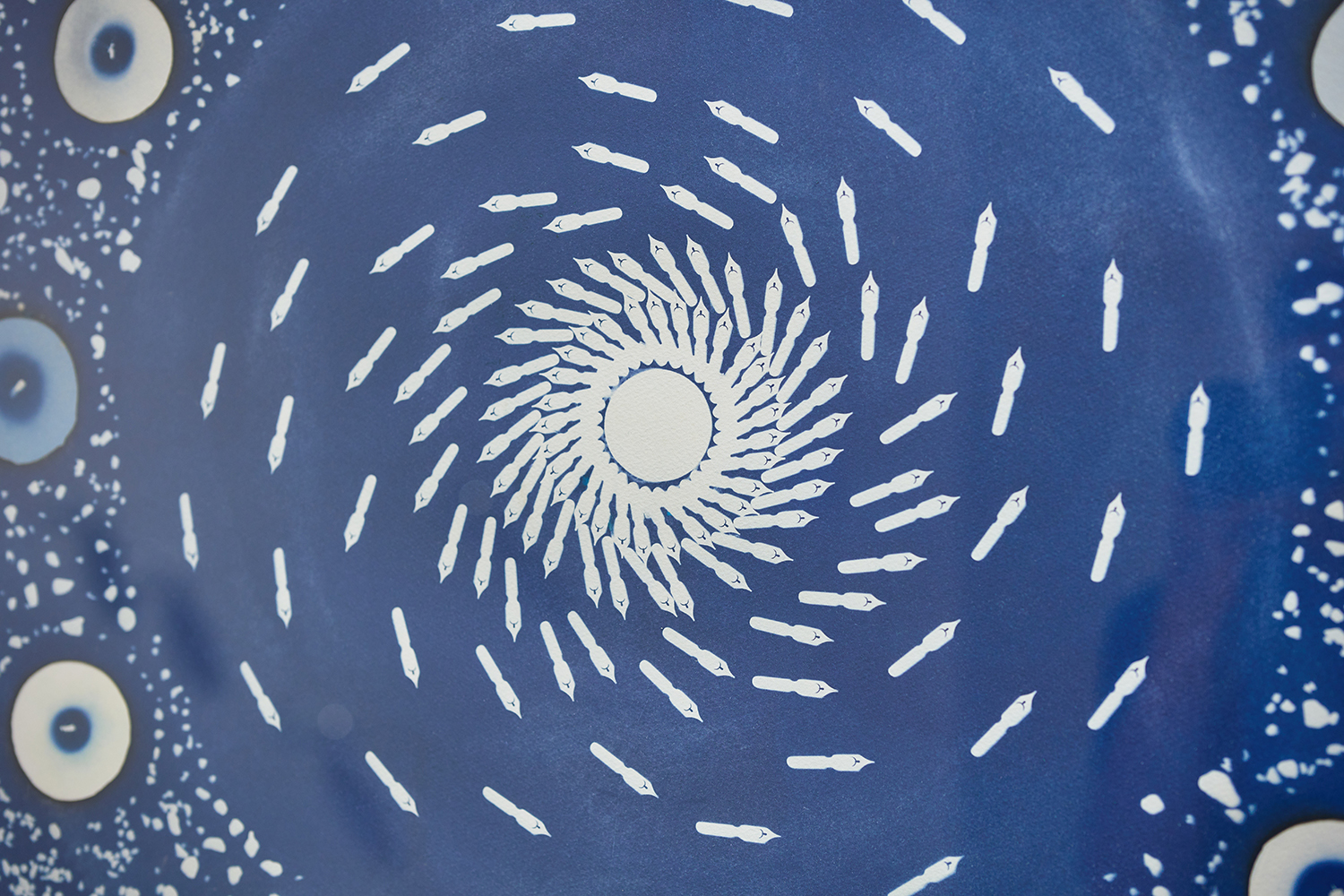 Kalachakra (Dip Pen Nib), 2026.
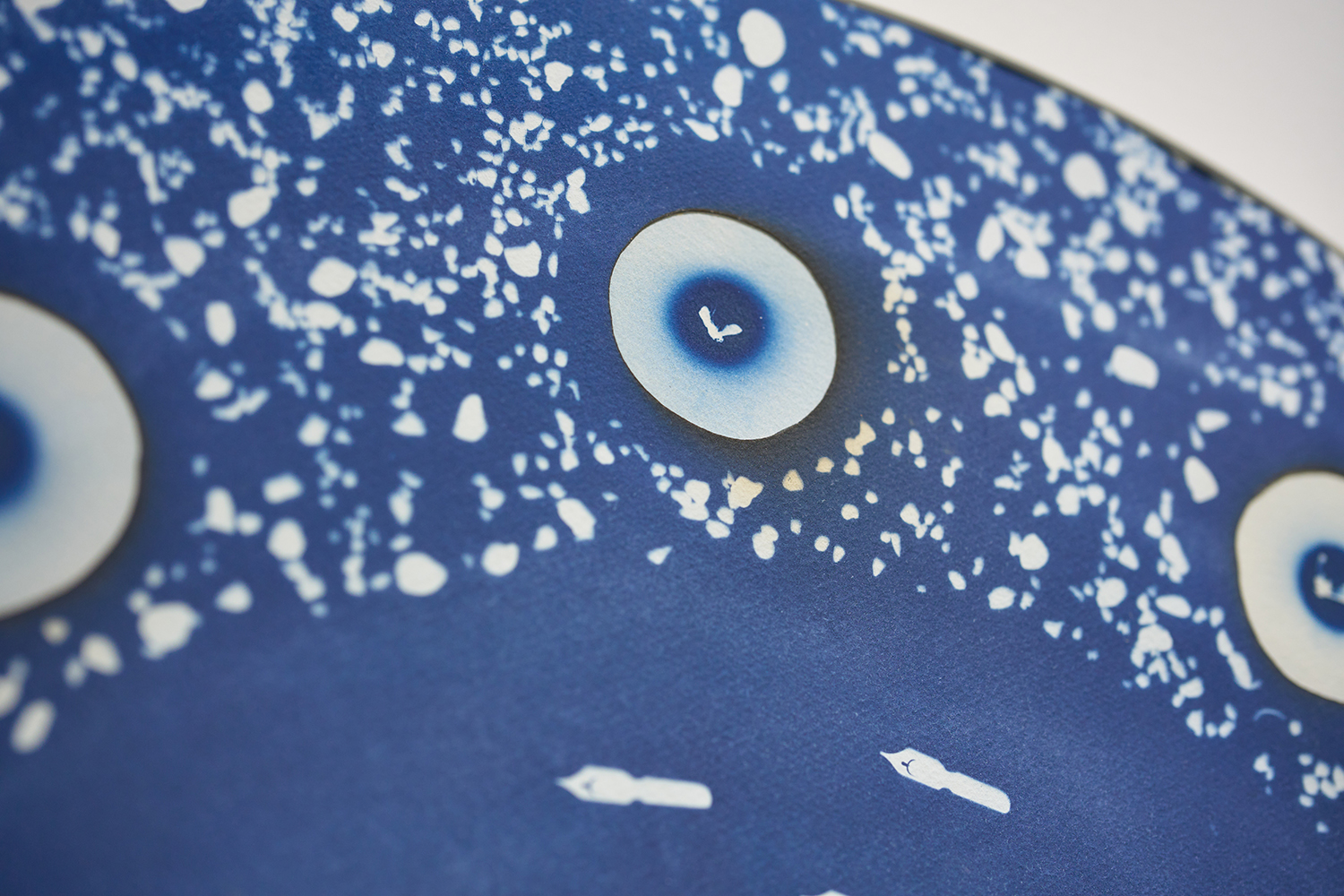
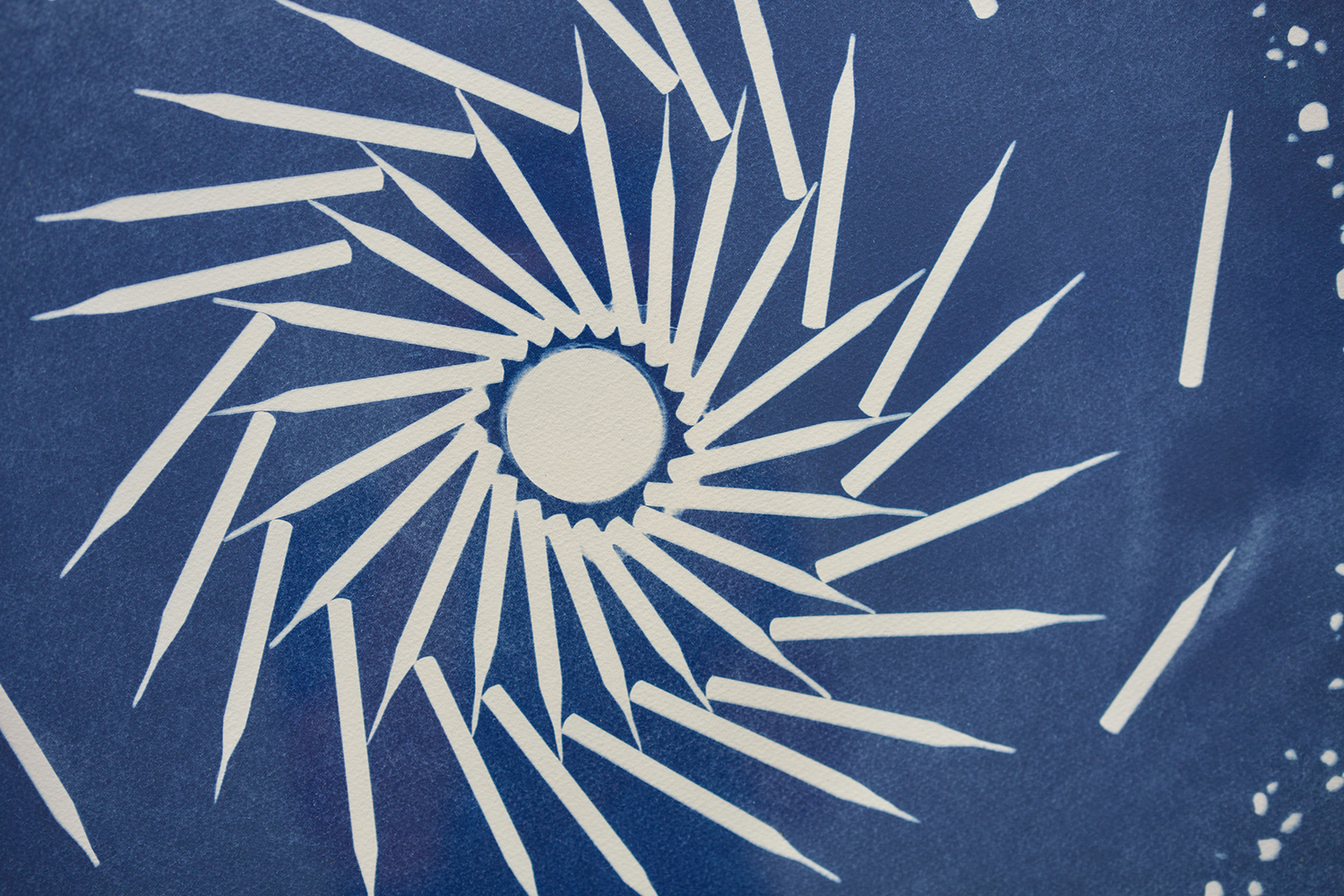
Chulayarnnon Siriphol, meanwhile, extends Angkarn’s legacy in two directions. In Kalachakra (2026), he borrows actual inherited objects from the archive—including dip-pen nibs, crayons, pencils, river stones, and liquor bottles—and exposes them to ‘real’ sunlight through the cyanotype process. The remnants of creative tools are transformed into silhouettes of stars suspended within an immeasurable cosmos, breathing life back into the poet’s instruments so that they may resonate once more with the truths of the natural world.
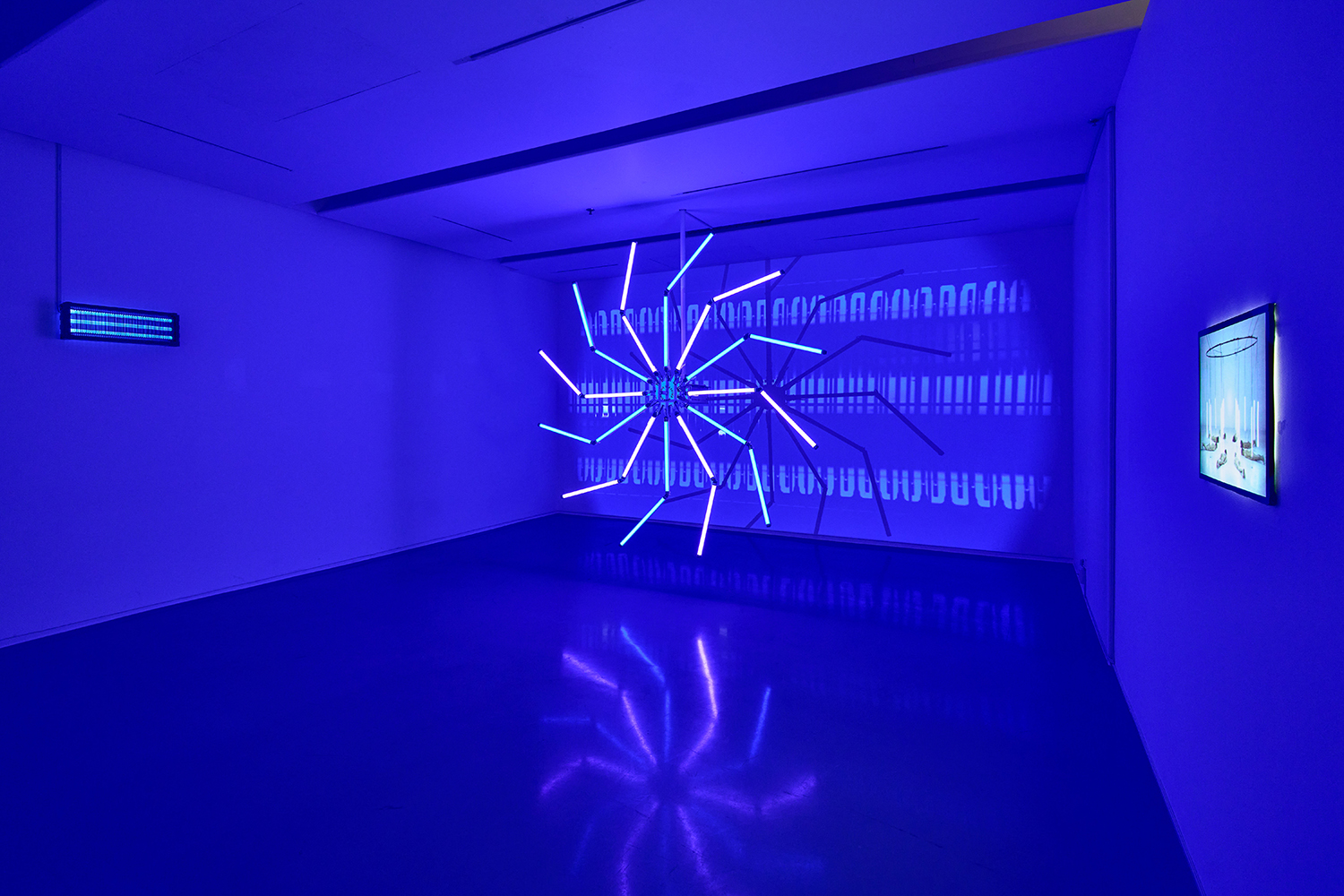
Paradise? #2, 2025.
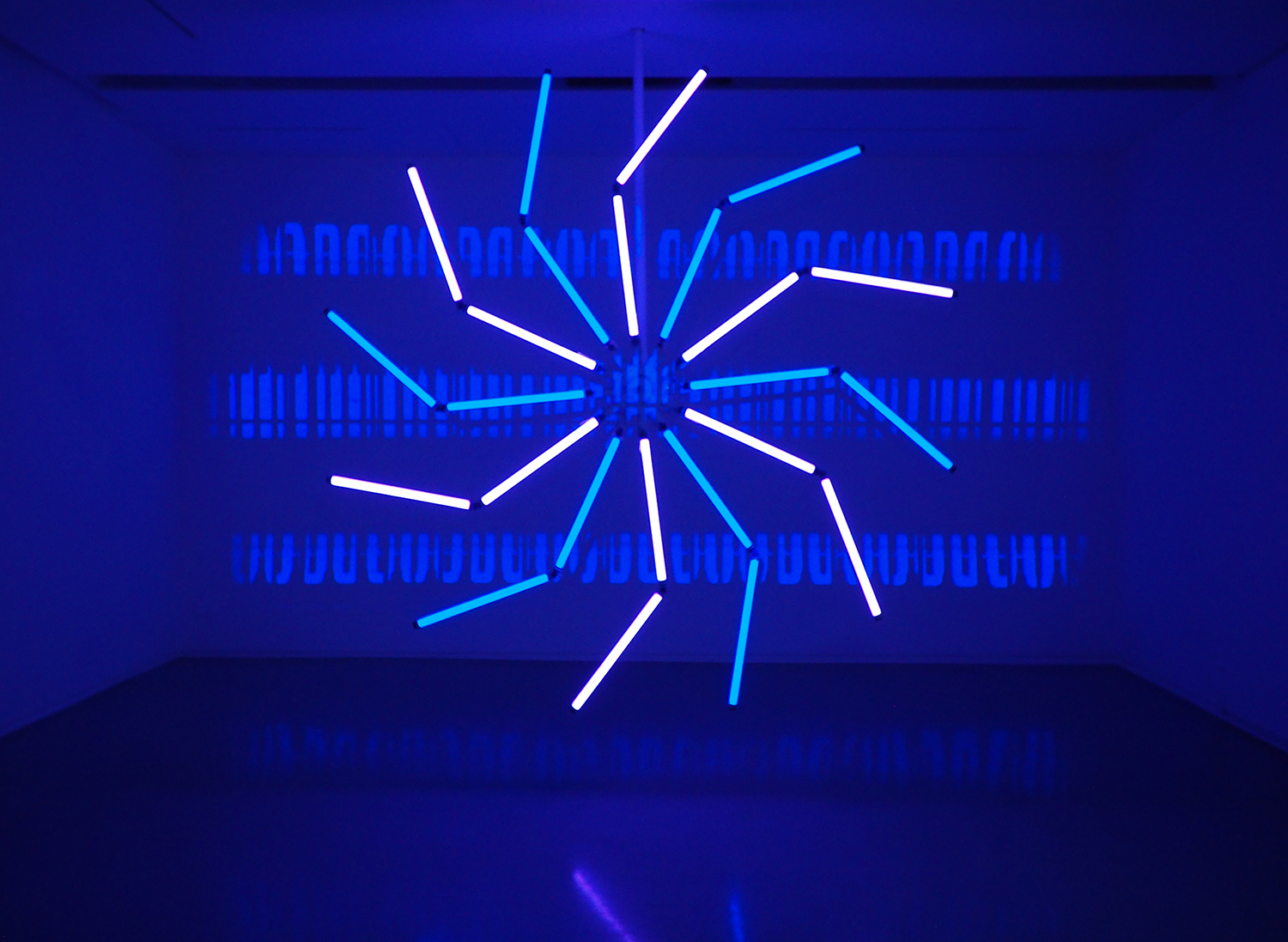
Paradise? #2, 2025.
In another dimension, however, Chulayarnnon’s light sculpture Paradise? #2 and video installation Zap transform ‘illumination’—a symbol of pure wisdom in Angkarn’s thought—into the synthetic electric glare of an insect zapper. Here, light no longer guides the way. It becomes a blazing wheel of torment, luring human beings into the snares of power: an allegory for ordinary people who are crushed, silenced, and made to disappear into death beneath an unjust state apparatus.
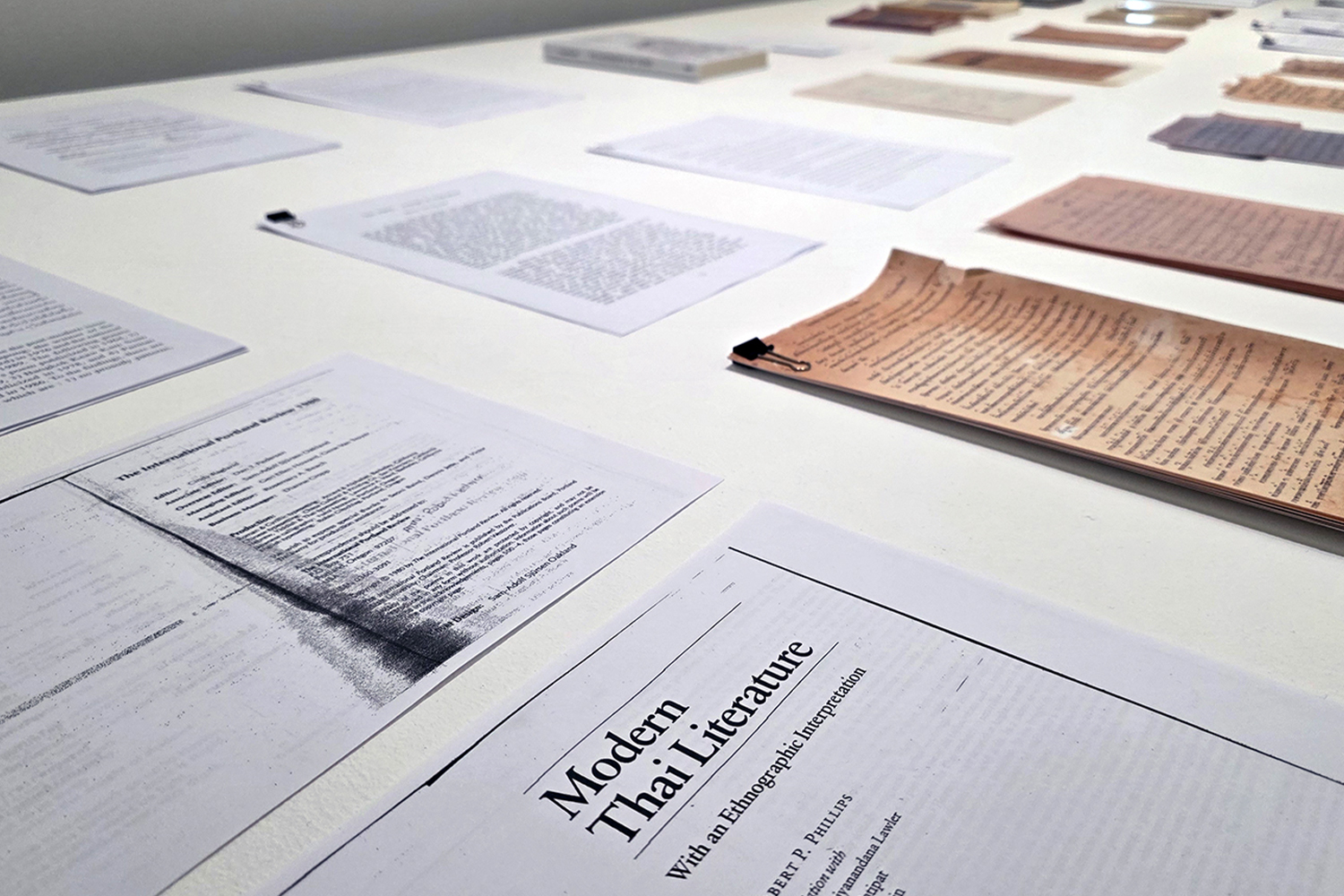
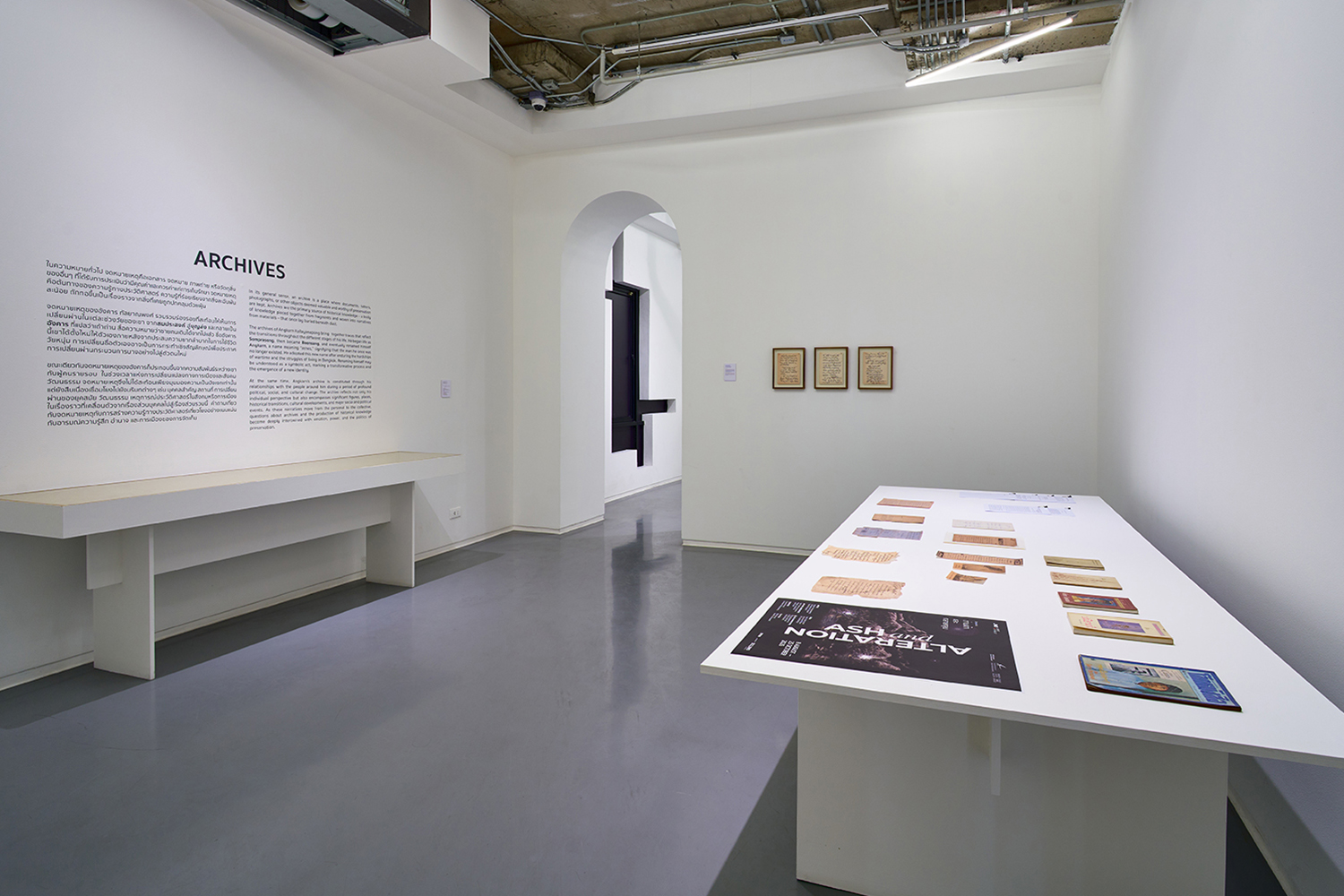 Half a Century of Criticism: Angkarn Kallayanapong by Artit Srijan
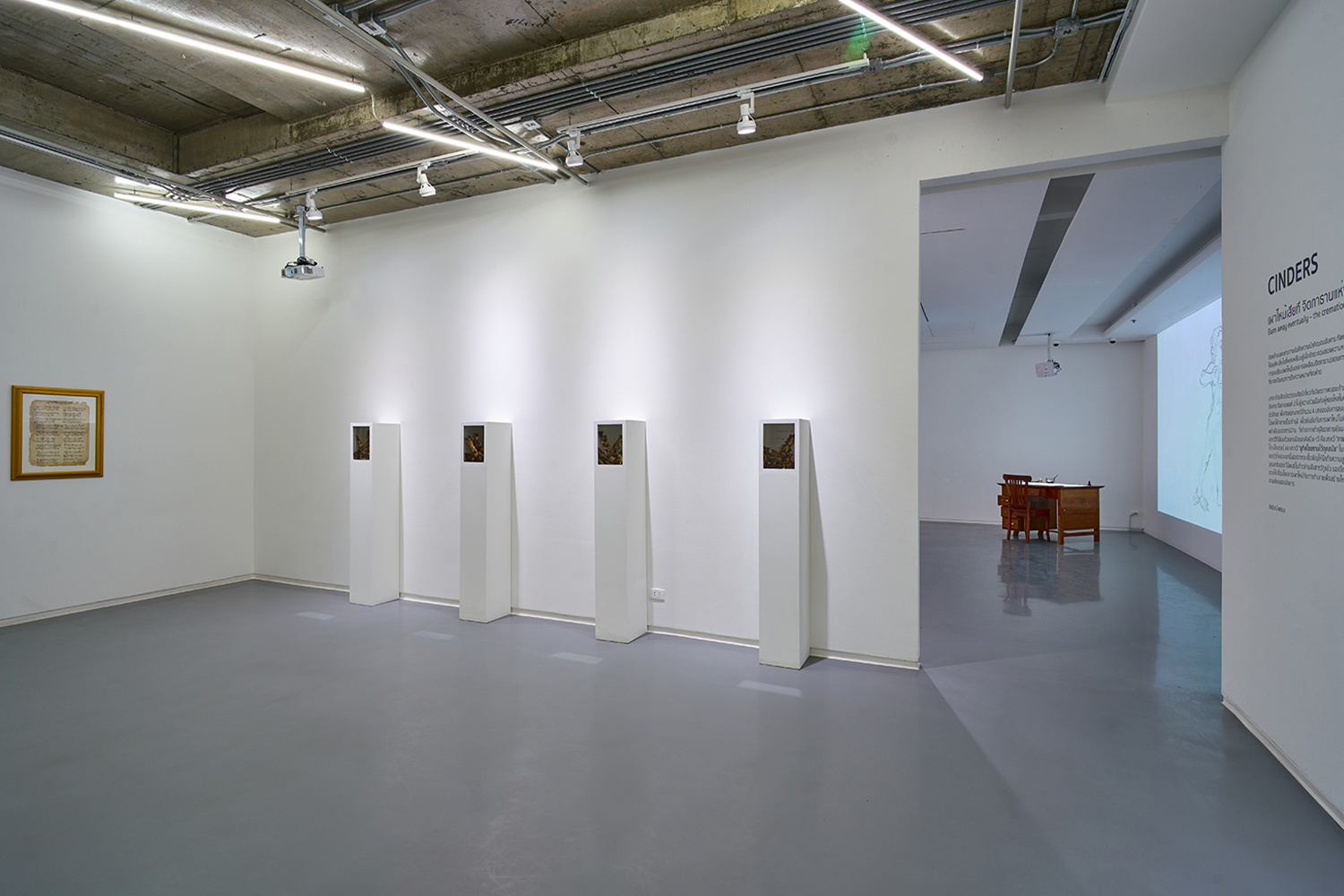
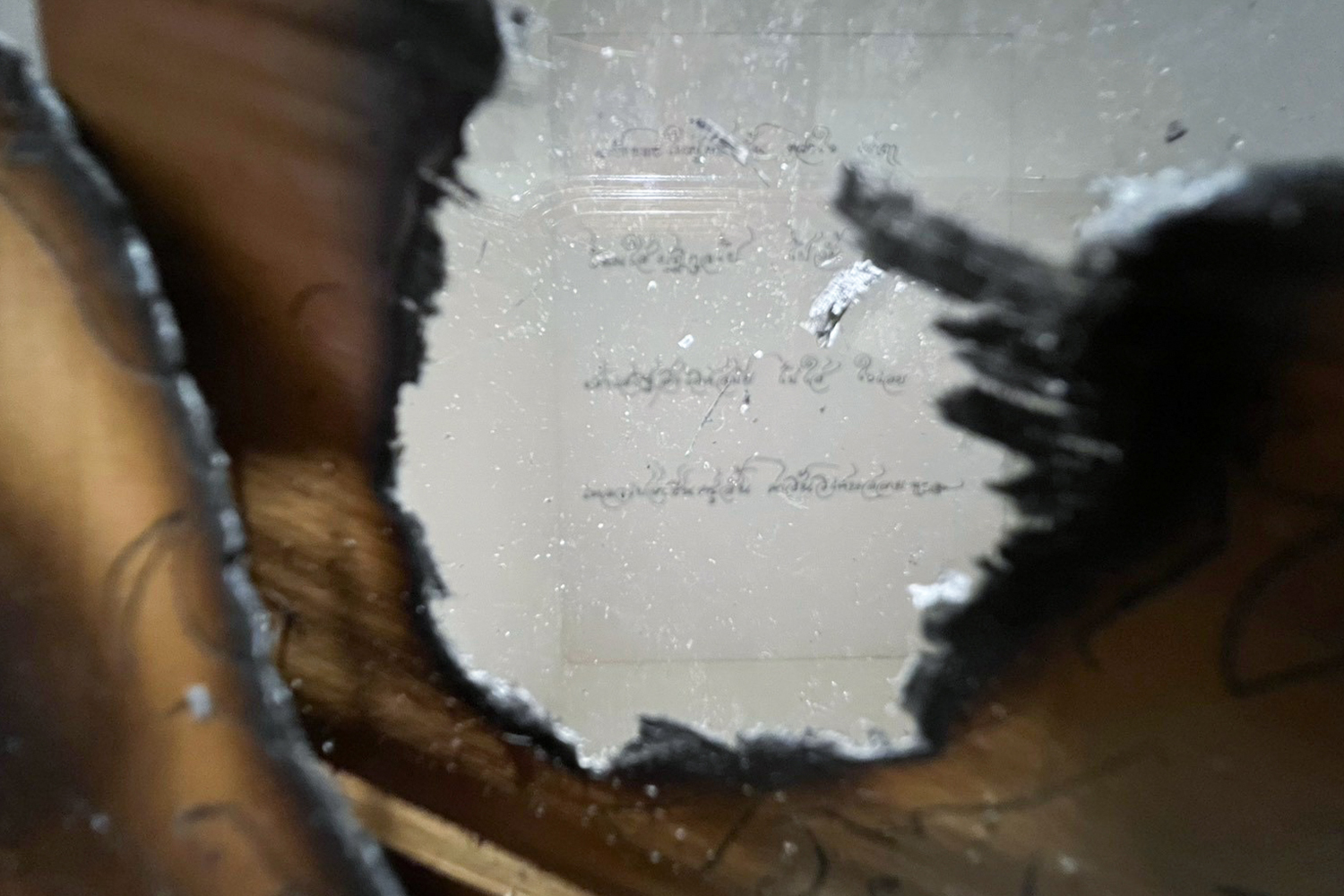
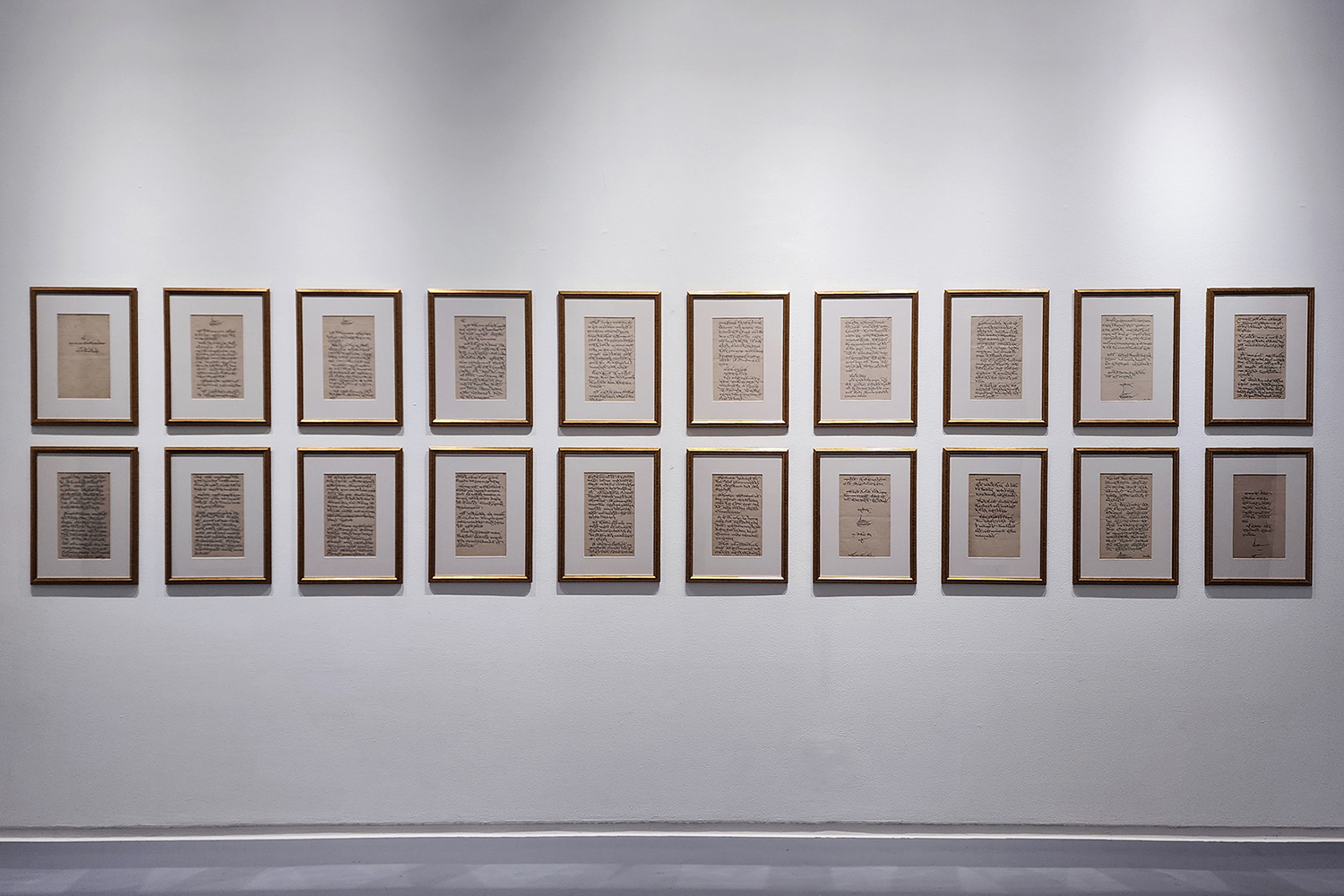
Finally comes the form most intimately associated with Angkarn: ‘literature.’ In this exhibition, the material body of inscription is rigorously dismantled through the work of Chairat Polmuk, who inscribes four poems onto palm leaves before burning them into ash. Reading is thus transformed from an act of looking at written words into an act of contemplating their dissolution and disappearance in the flames. Could this be akin to the ancient master who burned his own texts so that his disciples would commit their lessons more deeply to memory?
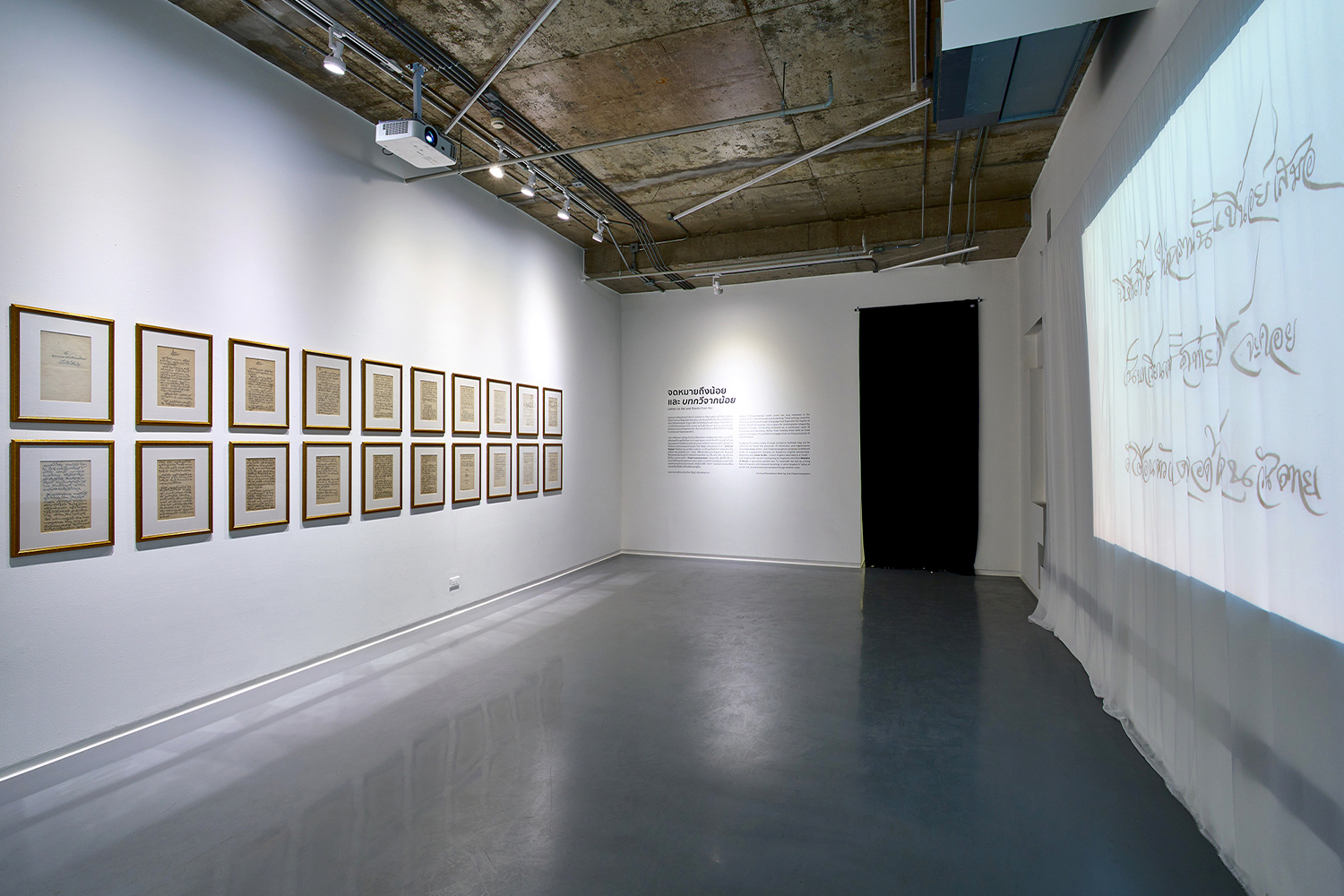
Jirat Chalermsanyakorn, meanwhile, enters into dialogue with Letters to Noi, a personal document that Angkarn intended to develop into a novel. Jirat reweaves the material into a work of fan fiction titled Poems from Noi, allowing a contemporary cadence to answer a voice from the past. Alongside this work is a literary study by Artit Srijan, who unravels the evolution of Angkarn’s writing across half a century, taking us on a journey through the letters, rhythms, and emotions that continue to linger within the works of Angkarn Kallayanapong.
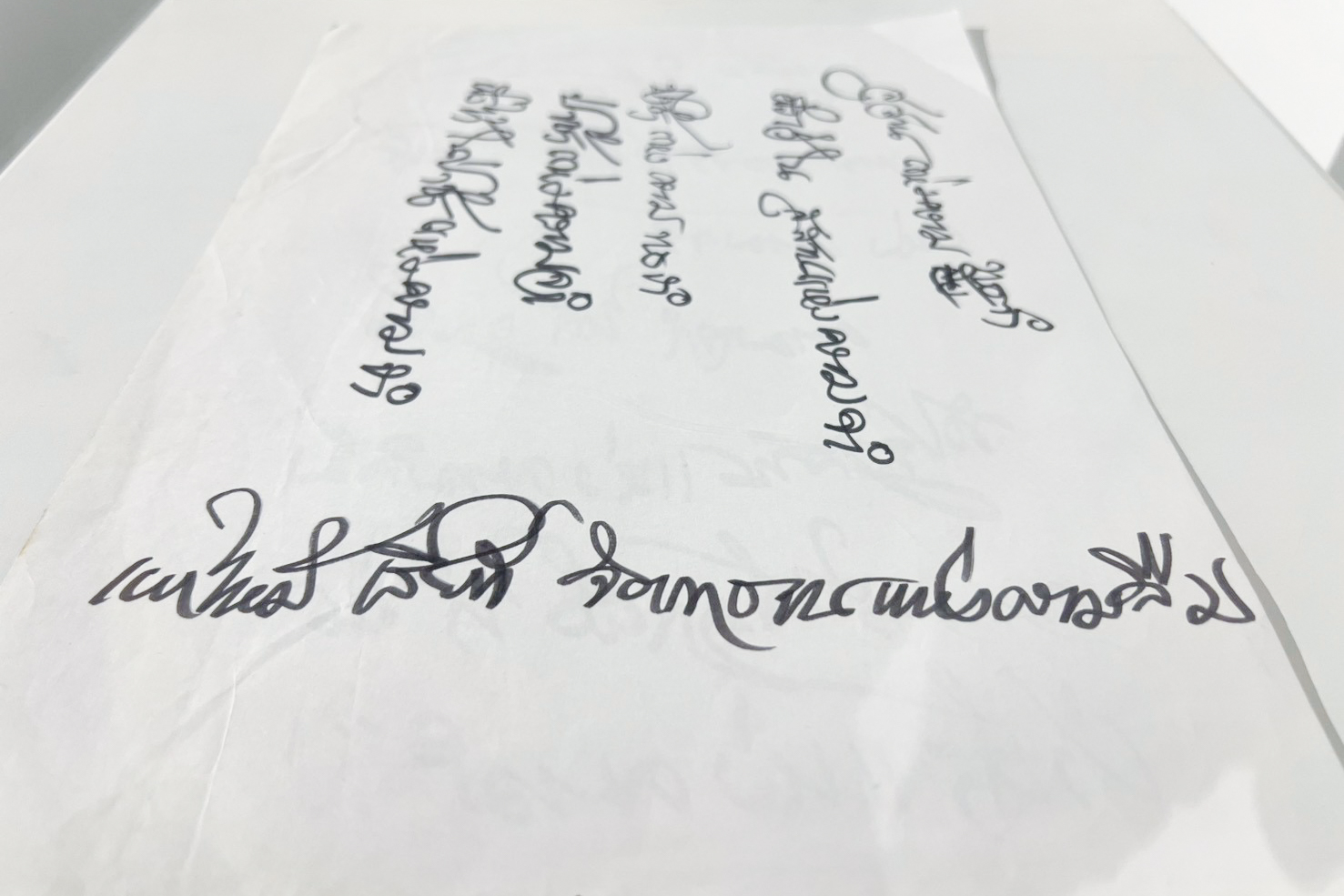
Photo: Sarunkorn Arthan
Beyond offering new interpretations of Angkarn’s ‘ashes,’ the exhibition reveals another facet of the artist and gives us another vantage point from which to look. It asks us to see Angkarn as a person—not the exalted ‘Master Angkarn,’ raised beyond the reach of ordinary humanity, but a figure altered back into an artist and a human being whose lofty spirit was also profoundly ordinary, living within a world of perpetual arrival and departure.
‘Angkarn’ is the ash of time.
‘Angkarn’ is what the flames have wrought from the bitter wreckage of bodily decay.
‘Angkarn’ is a state beyond extinction.
‘Angkarn’ is (more than) a living being—an exquisite meditation upon the poet’s pledge.
Ash and Alteration is on view at JWD Art Space from August 8 to October 25, 2026.