REIMAGINING ‘MACHIYA’ AND BRIDGING 160 YEARS OF HISTORY: UCHIDA SHOTEN HEAD OFFICE BY SCHEMATA ARCHITECTS
TEXT: BHUMIBHAT PROMBOOT
PHOTO: JU YEON LEE
(For Thai, press here)
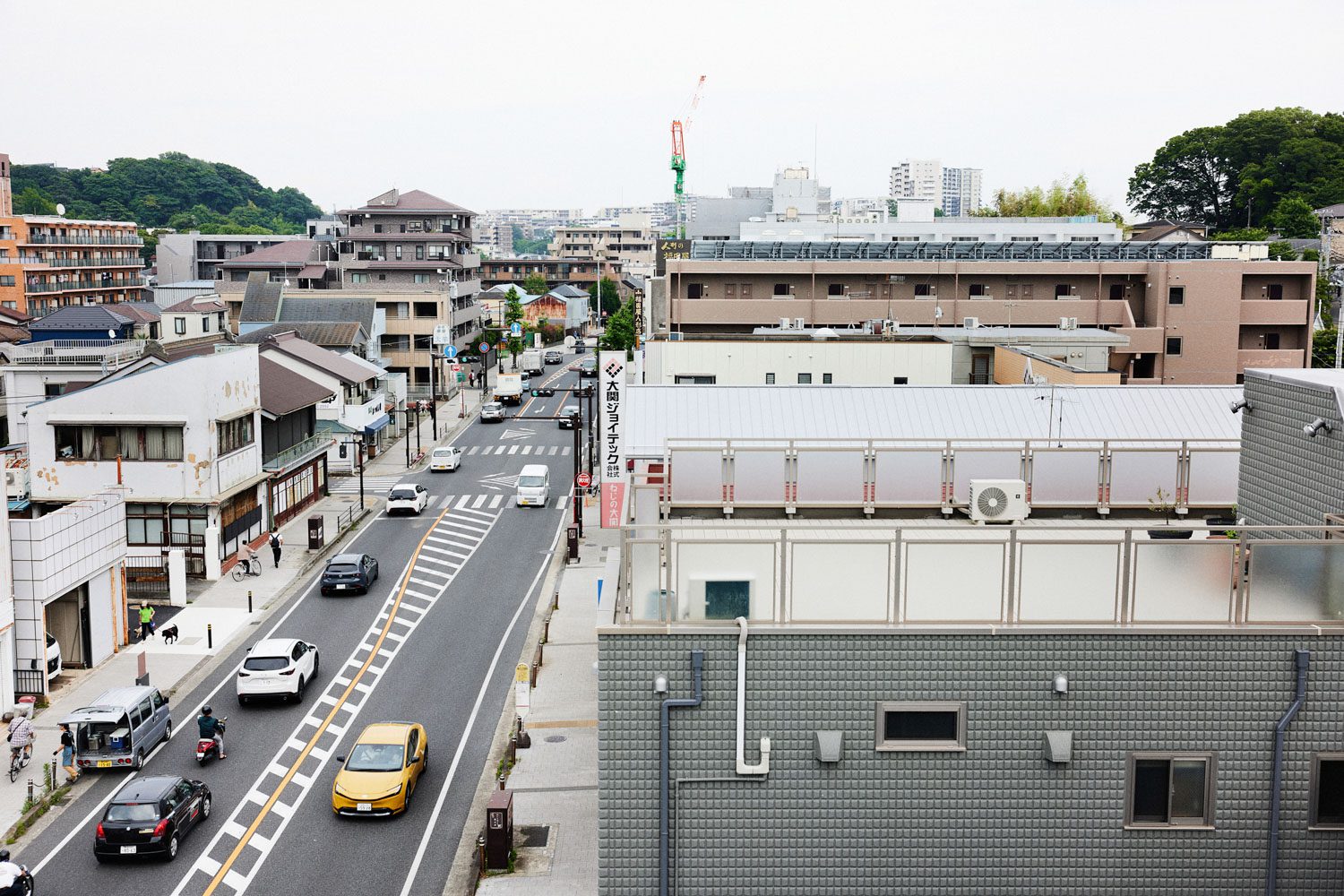
Fujisawa is a city that once functioned simultaneously as a place of rest, a teahouse town, and a thriving wholesale trading hub, long animated by merchants and travelers who came to shop, stay, and pass through as early as the Edo period. It was the sixth of the fifty-three stations along the Tōkaidō, the historic route linking Kyoto, the former imperial capital, with Edo, present-day Tokyo. The city’s distinctive traditional row-house architecture has now been reinterpreted through the renovation of the headquarters of Uchida Shoten, a hardware manufacturer with a 160-year legacy. The project was undertaken by Schemata Architects, the architectural practice founded by Jo Nagasaka, which translates this layered history into a contemporary architectural language that carefully negotiates the demands of business, community, and local heritage.
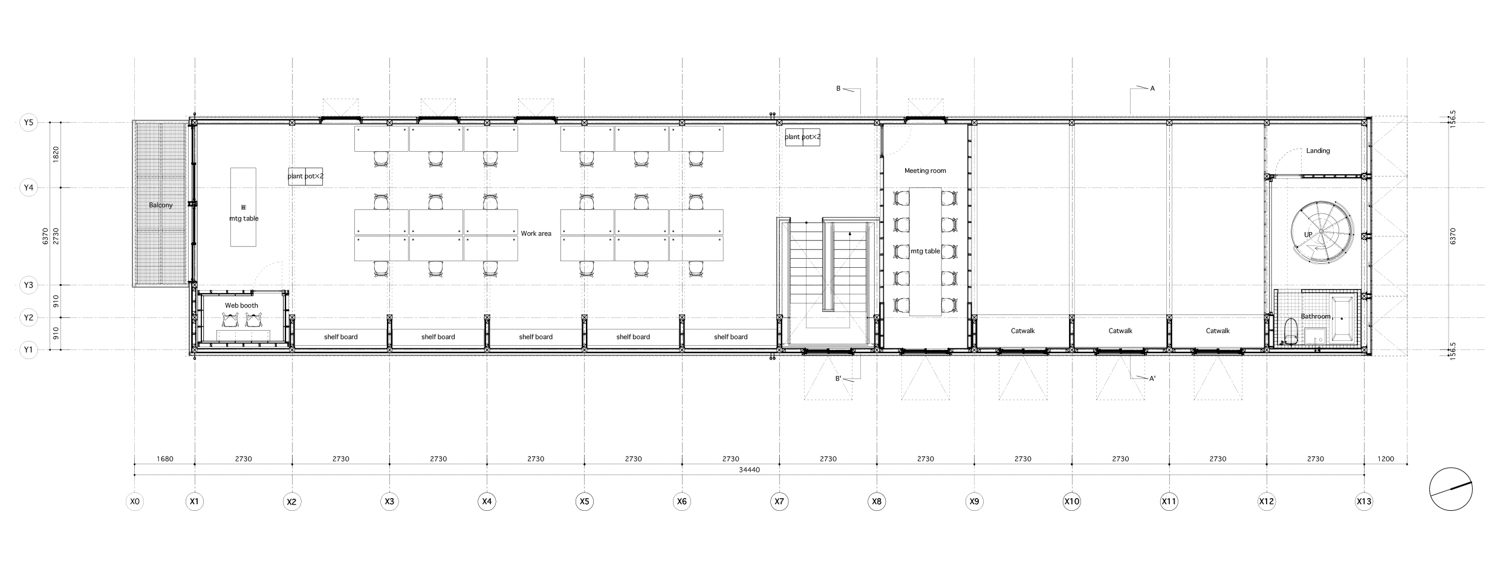
2nd floor plan
1st floor plan
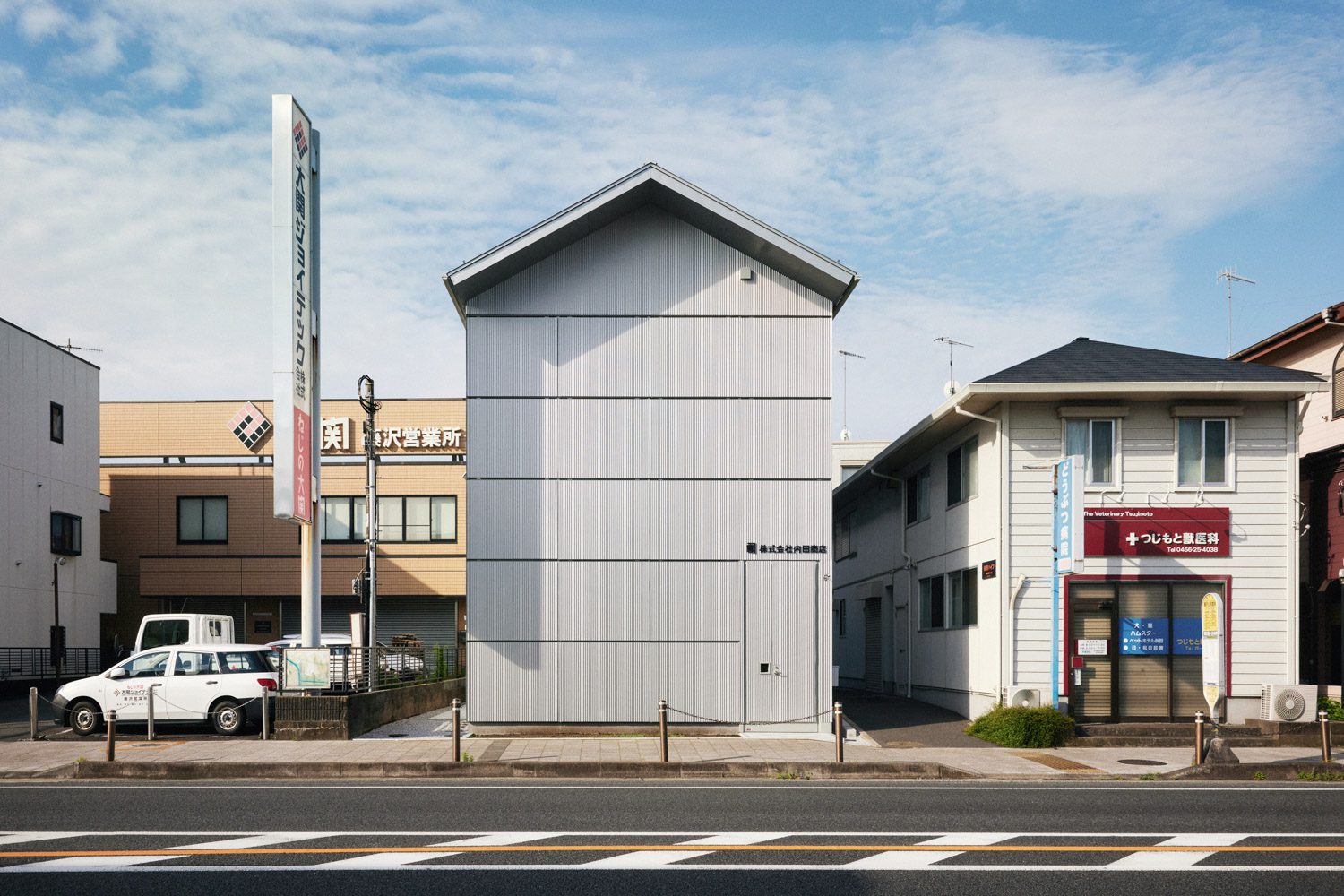
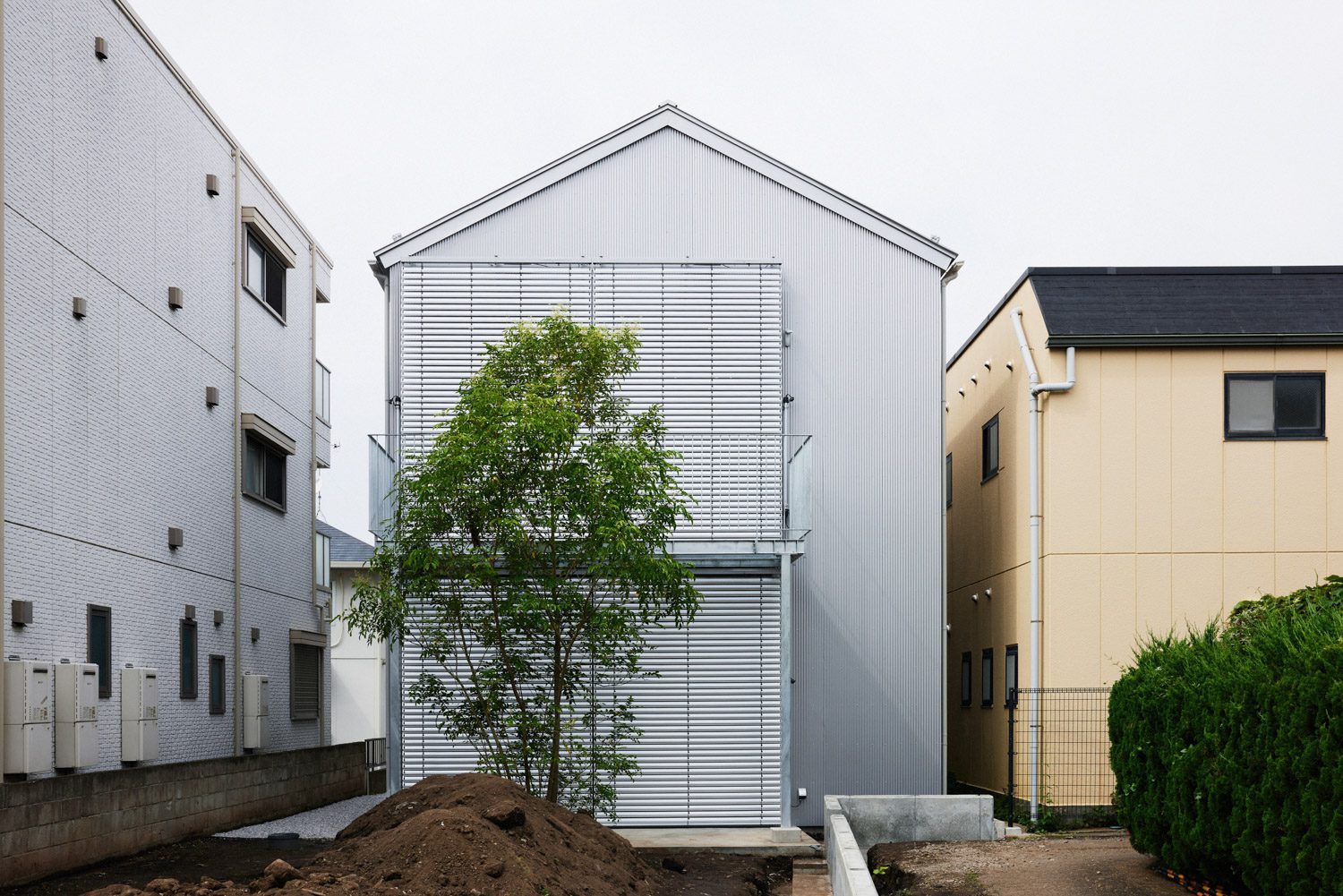
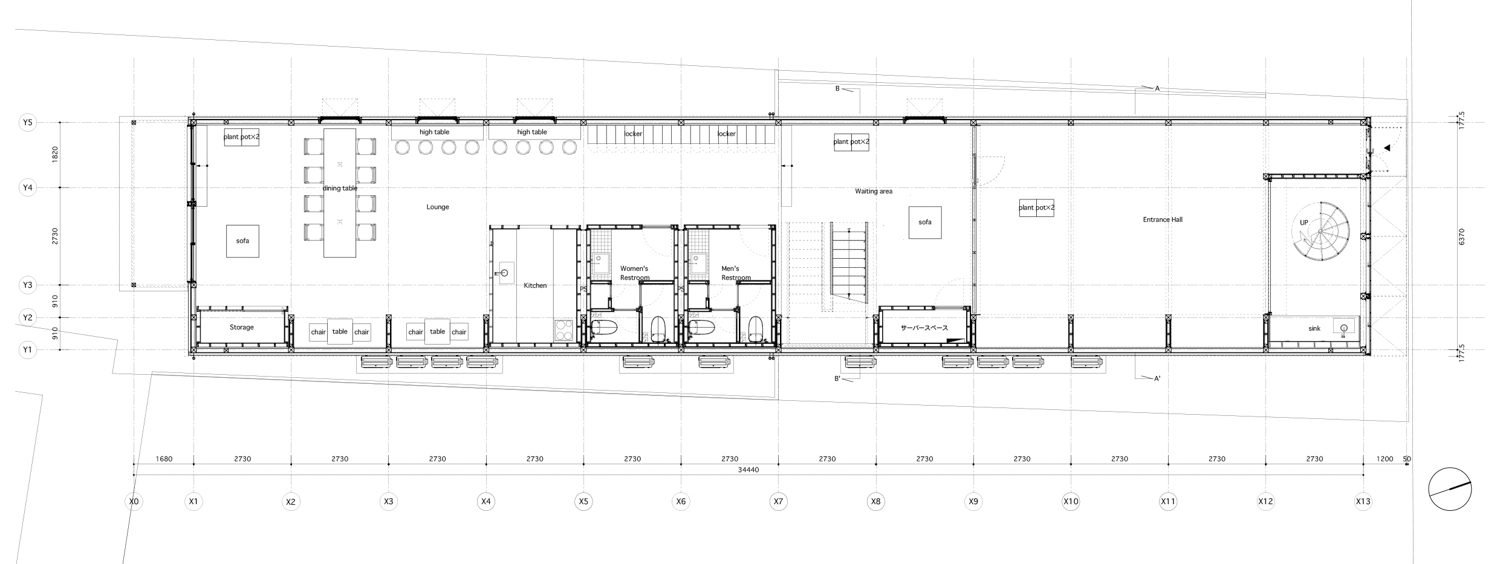
Narrow-fronted, deep plots are a physical manifestation of Fujisawa’s historical relationship to land, time, and urban life. From the city’s early development, land taxation was calculated according to the width of a plot’s frontage, a system that gave rise to a distinctive building typology known as ‘machiya.’ Literally meaning row houses or wooden townhouses, machiya were hybrid structures that combined living quarters with commercial functions under a single roof. Architecturally, this typology is defined by a narrow frontage and elongated interior aligned with the depth of the plot. The front of the building was typically devoted to retail or receiving guests, while storage areas or warehouses occupied the rear. Private living spaces and daily domestic activities were located on the upper floor. This characteristic spatial organization and land configuration led Schemata Architects to preserve key elements of the original building, including its structural framework and spatial layout. At the same time, the approach seeks to forge a dialogue between past and present, linking the new office building with its inherited urban context in order to articulate the social, cultural, and economic transformations that have shaped the city of Fujisawa over time.
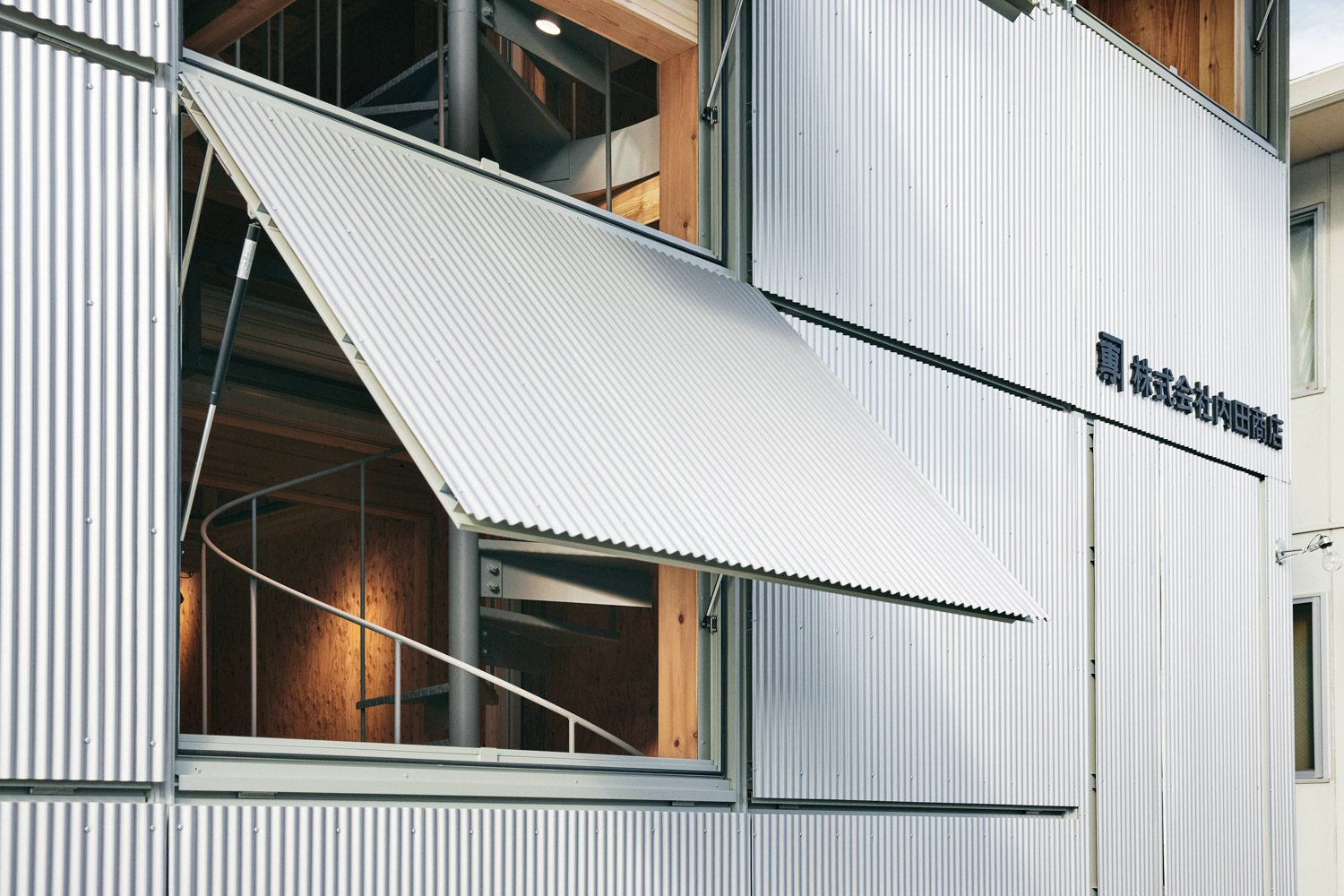
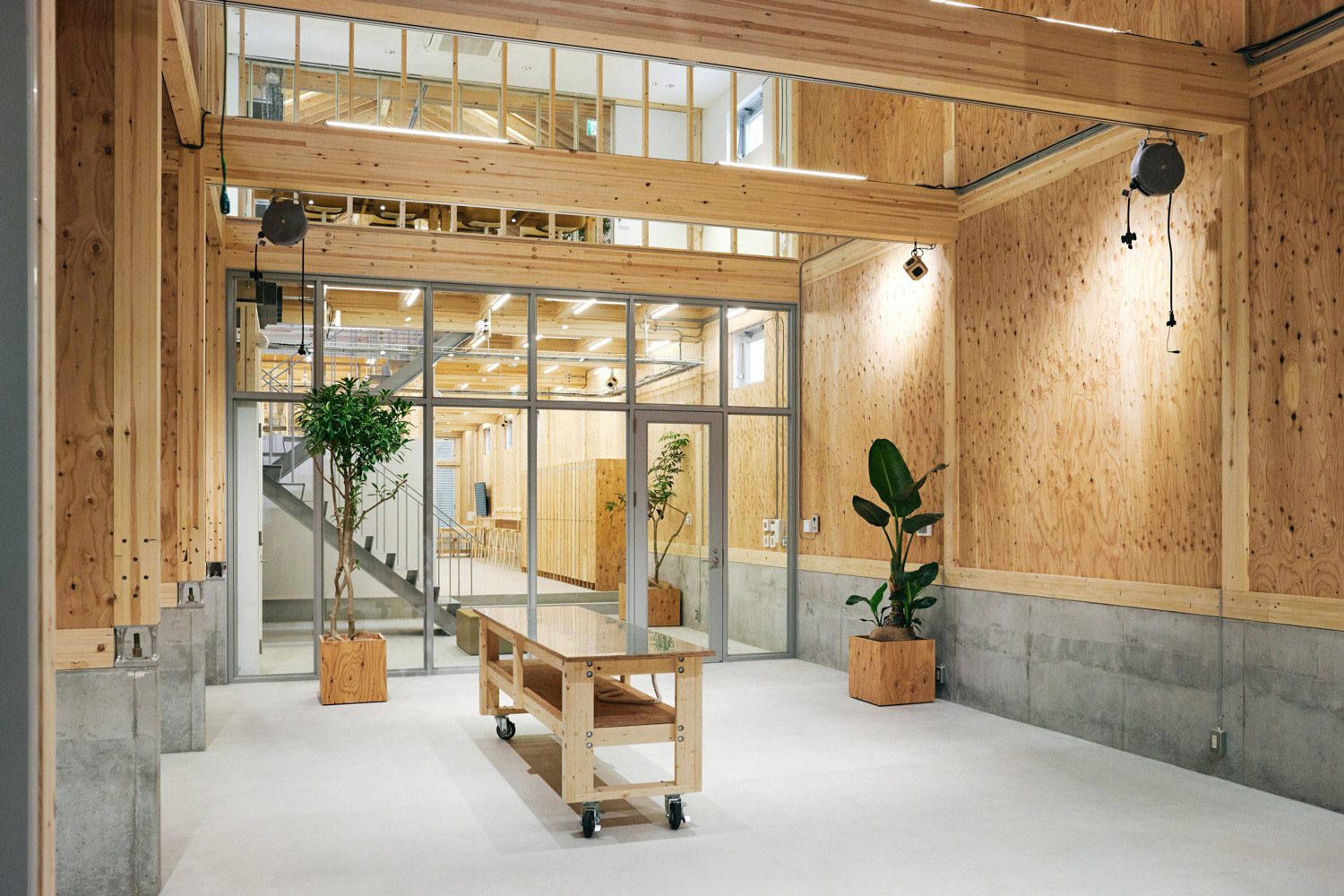
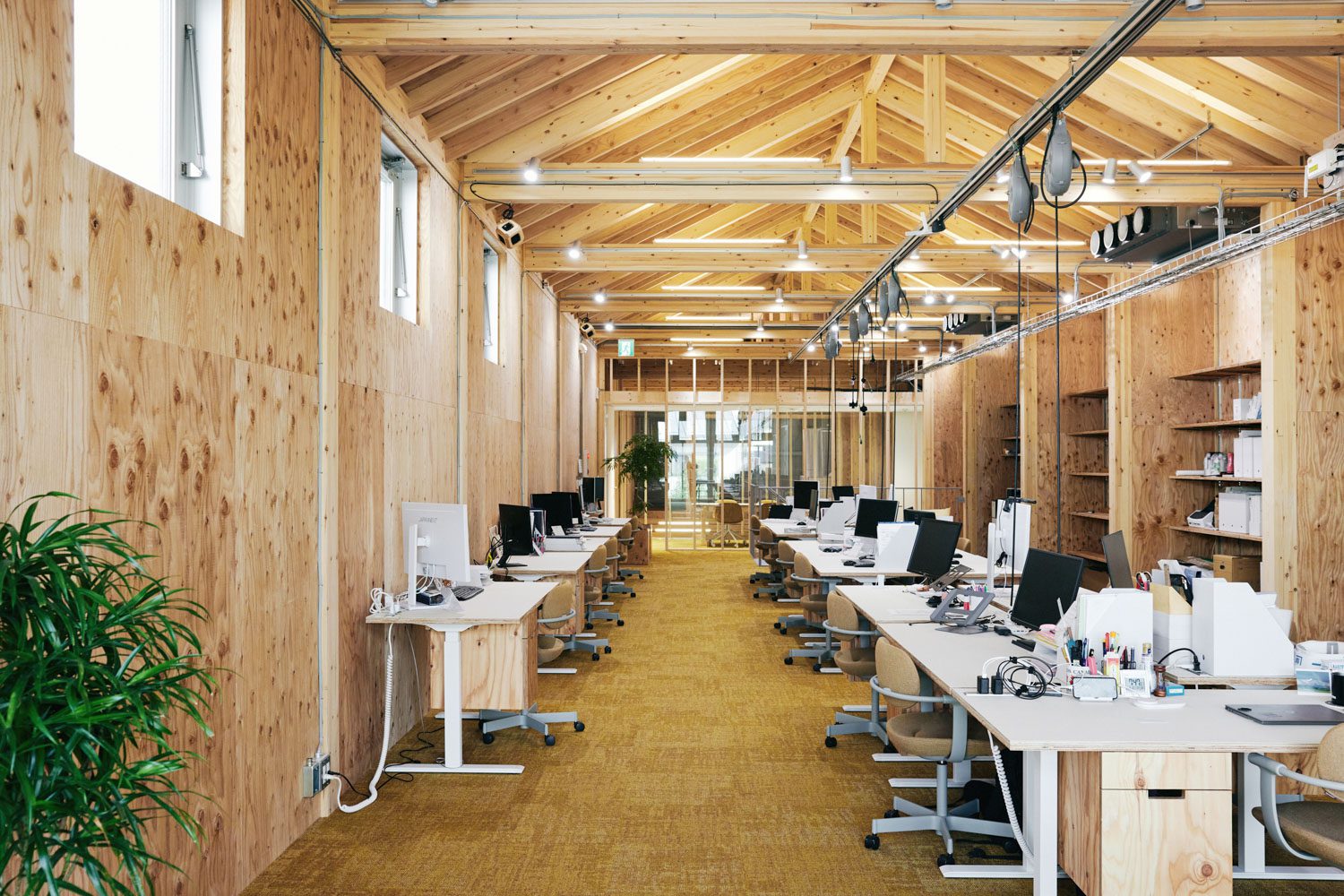
As the original office building had deteriorated over the years and suffered the cumulative effects of frequent earthquakes, Uchida Shoten decided to undertake a comprehensive renovation of its headquarters. The scale and proportions of the new office were deliberately kept close to those of the original structure, reflecting the company’s intention to maintain the existing scale of its operations. With no plans to increase staff numbers or to add extensions for future expansion, the project was able to proceed without making alterations in the overall building footprint. This approach allowed Schemata Architects to use the existing structural framework and spatial dimensions as a reference for both the interior and exterior redesign. Revisions to site coverage regulations, however, created opportunities to introduce additional functions beyond the office and reception areas. These include an artist-in-residence room inspired by the concept of ‘nedoko,’ a space that accommodates both relaxation and overnight living within a single setting. The two functions are brought into dialogue through a centrally positioned spiral staircase, located at the heart of the artist residency space.
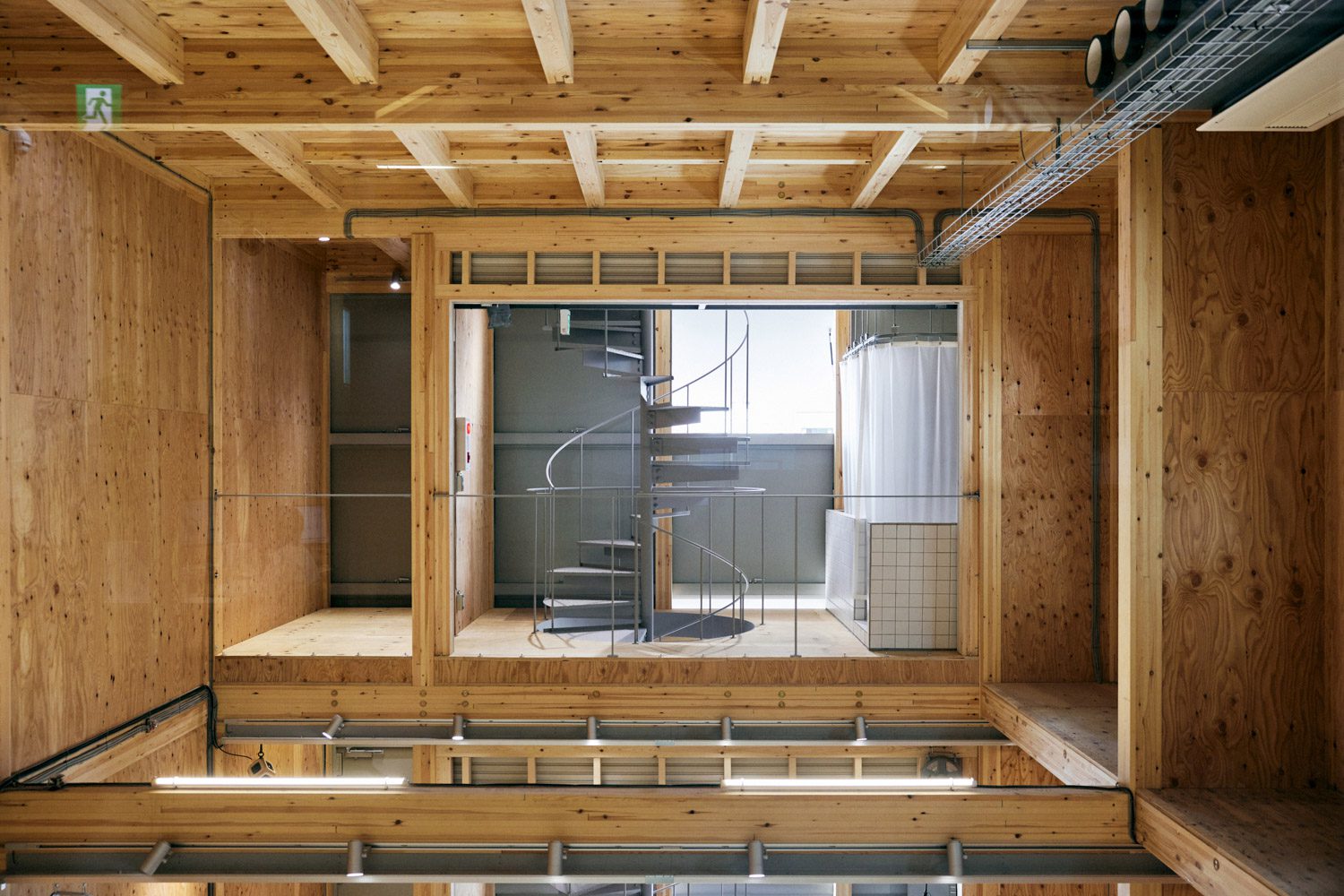
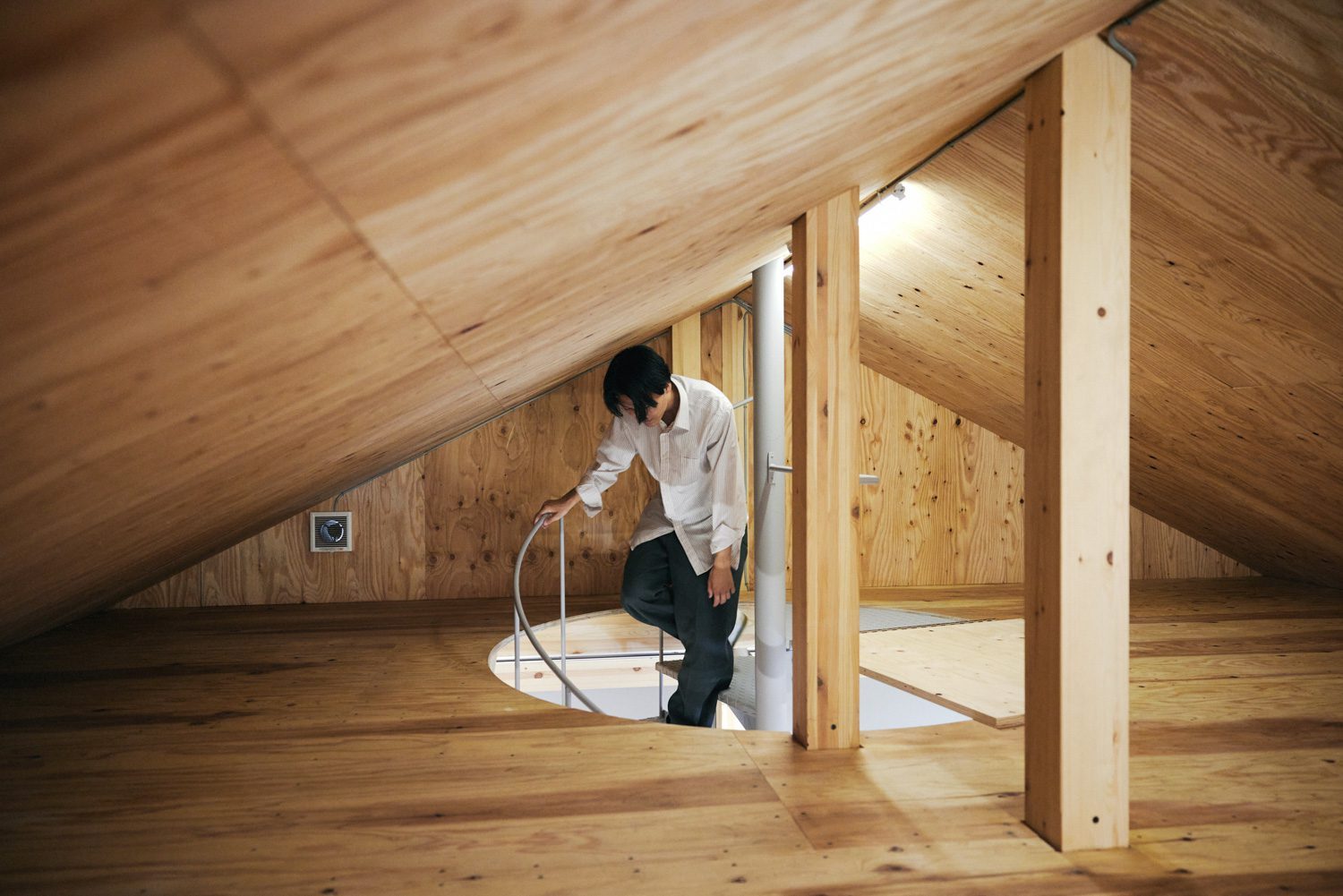
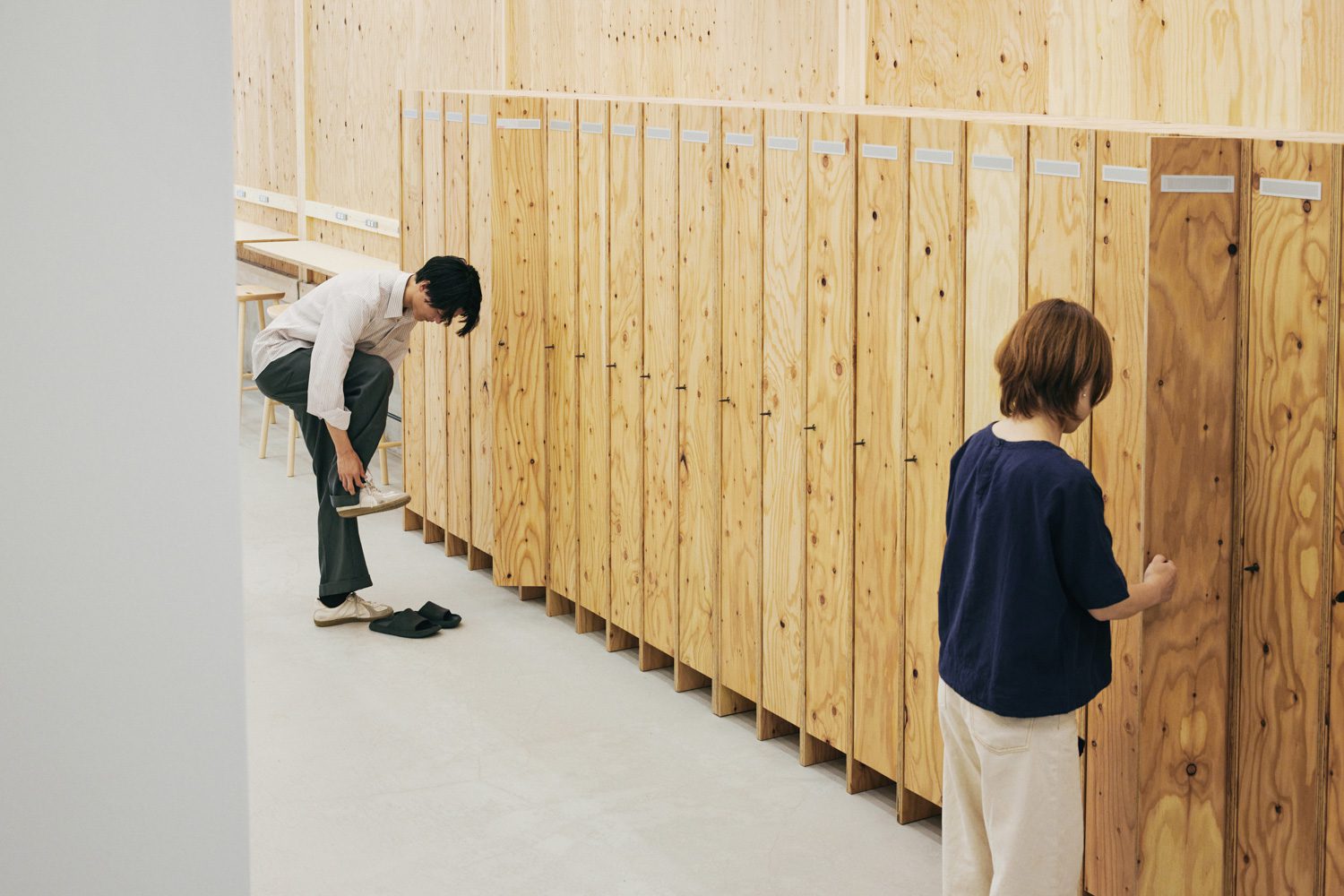
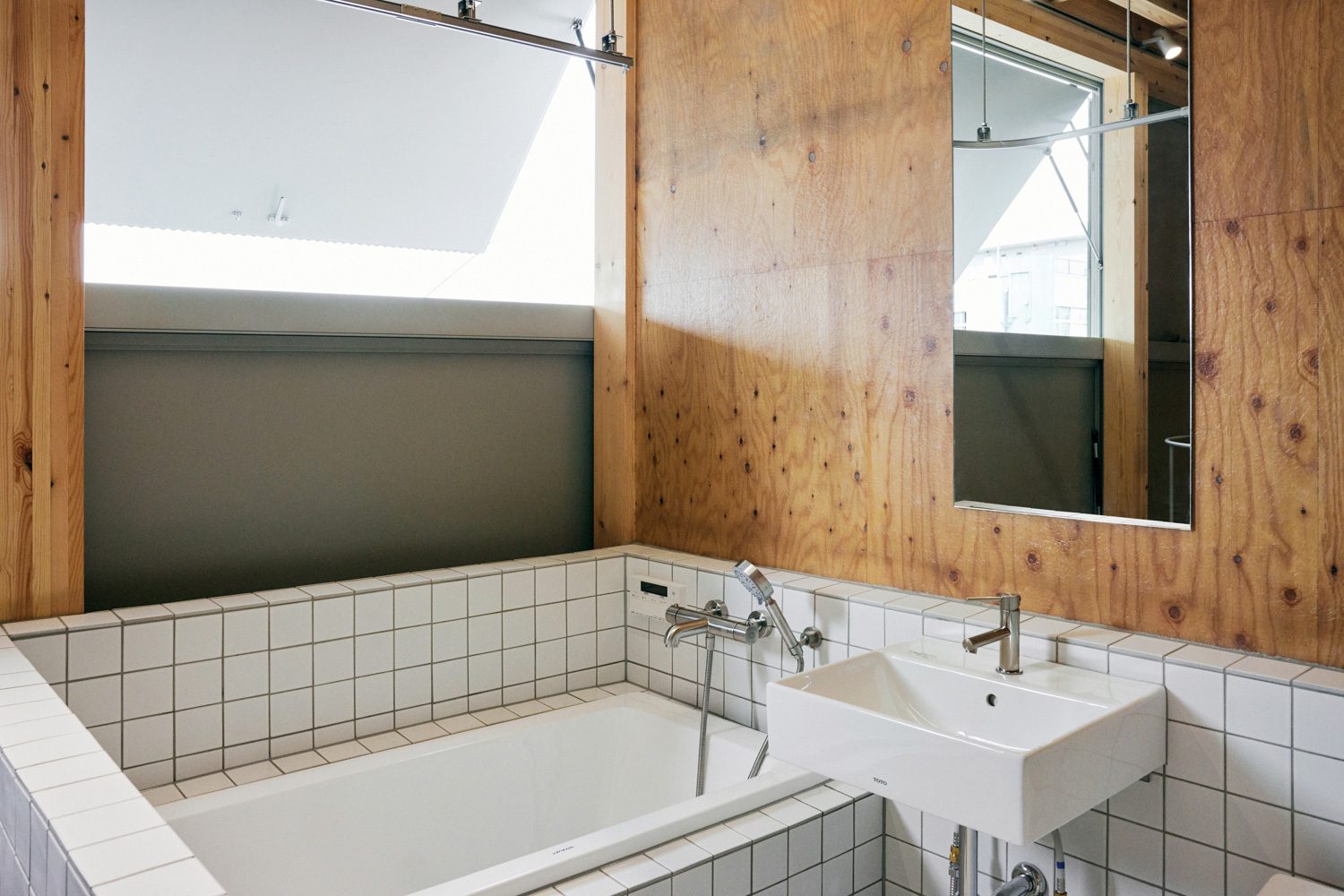
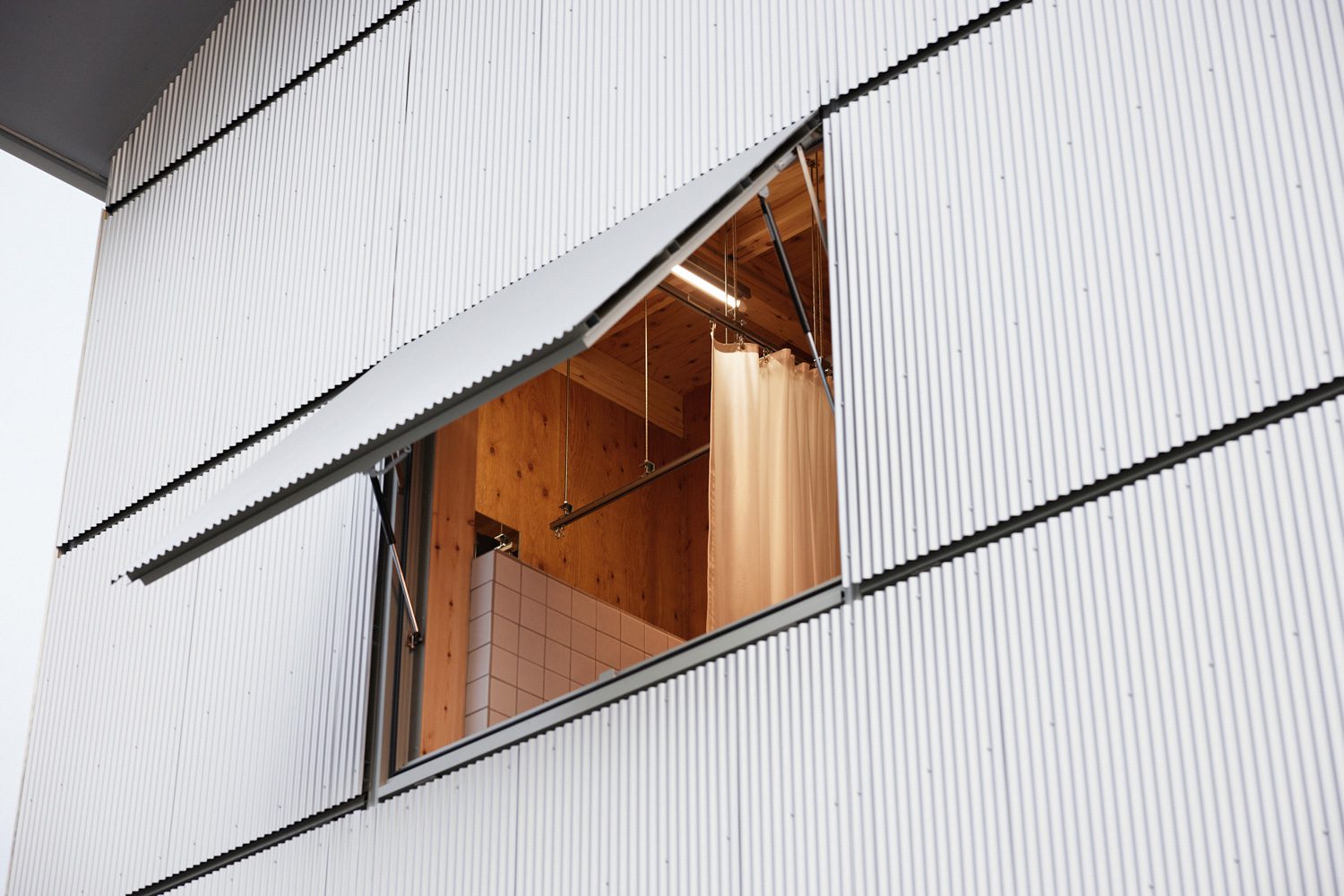
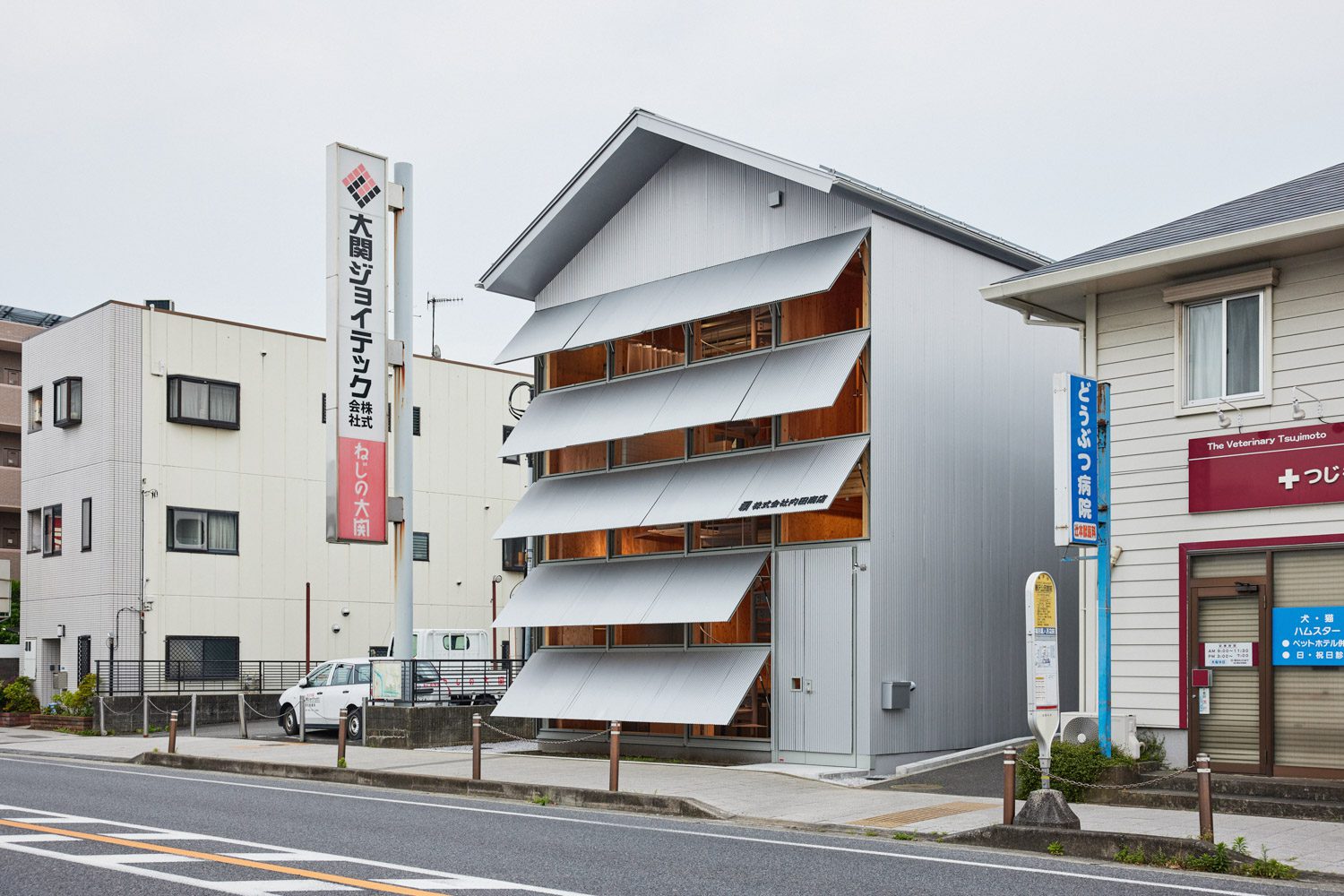
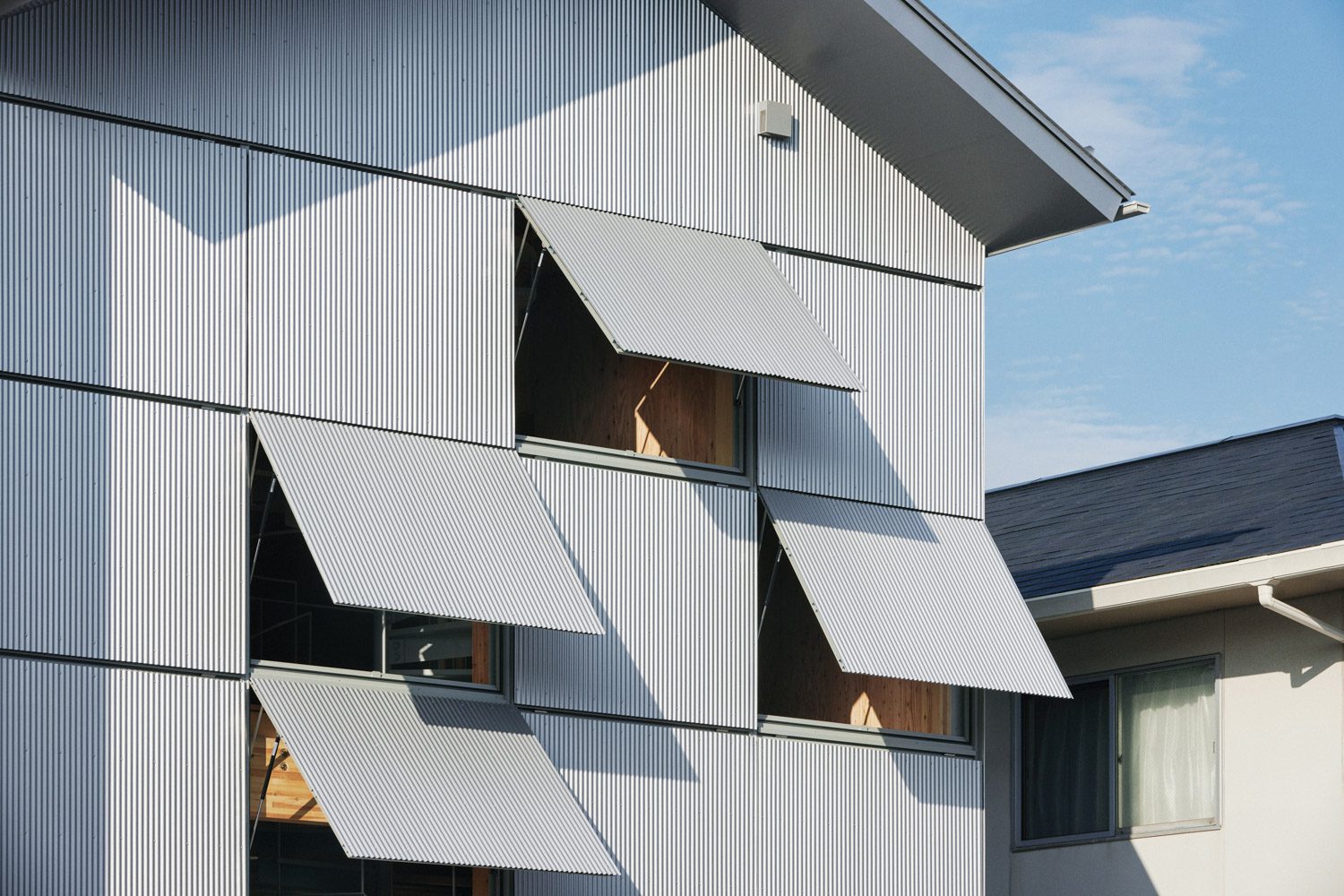
Connecting with the local community, the city’s historical fabric, and the wider world forms one of the central ambitions of the Uchida Shoten office renovation. This intent is articulated through an artist-in-residence program that welcomes designers from around the globe, ranging from students to established practitioners. The initiative invites artists with an interest in the cultural context of Fujisawa to actively participate in the development of new forms of knowledge within the community, through the production of works and the staging of exhibitions rooted in the city itself. To support this engagement, the design team positioned the artist-in-residence zone at the forefront of the building, allowing the interior to open directly toward the surrounding neighborhood. This spatial openness is achieved through a dedicated entrance and awning windows along the front façade, which is entirely clad in corrugated metal sheets arranged in a restrained and straightforward manner. The building’s proportions and the materiality convey a sense of seriousness and directness, while also offering clarity and efficiency in maintenance. When the awning windows are opened, they reveal an interior atmosphere that is warm and approachable, defined by the extensive use of natural pine wood throughout both the office areas and the artist residency, creating a contrast in mood and sensibility between interior and exterior surfaces.
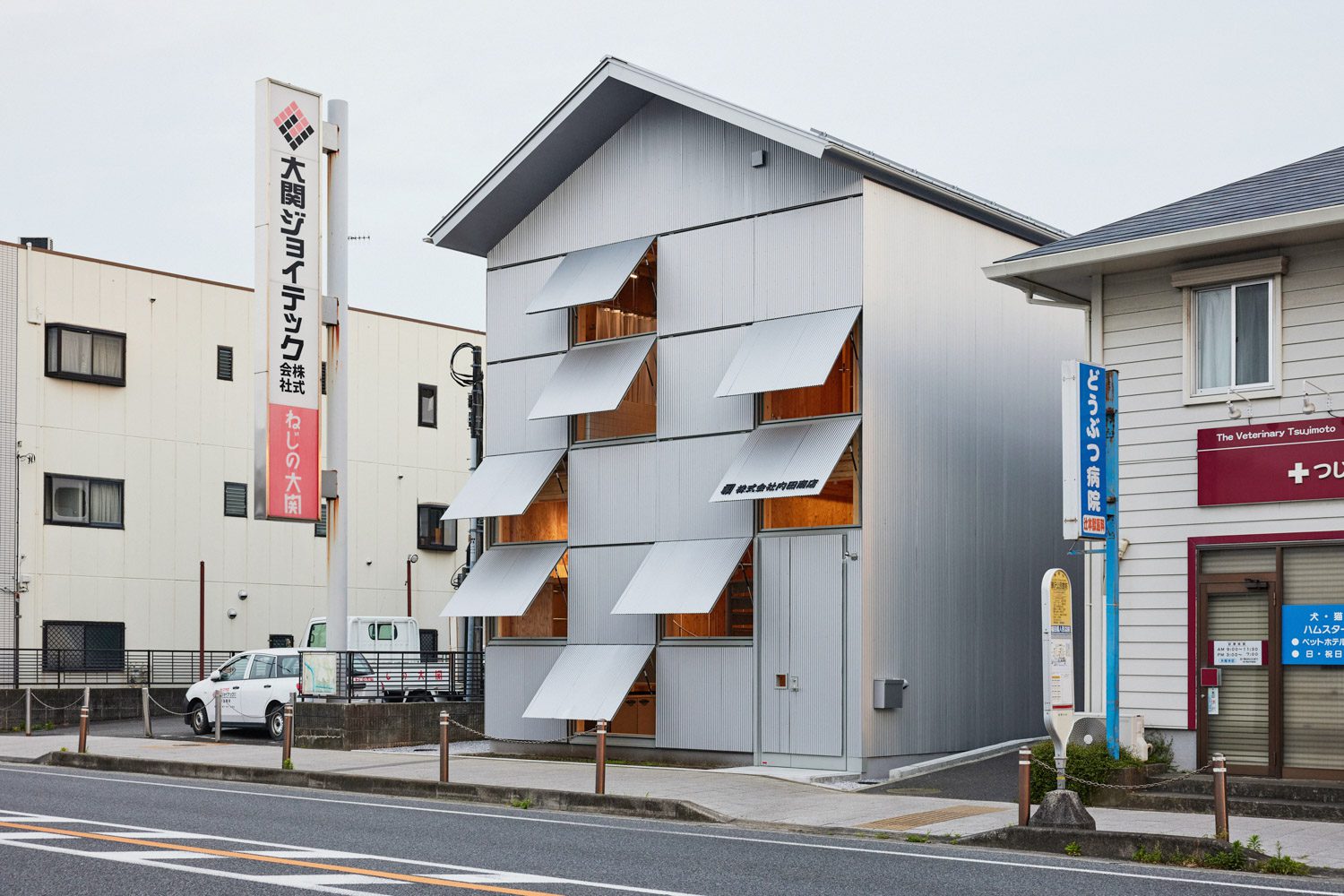
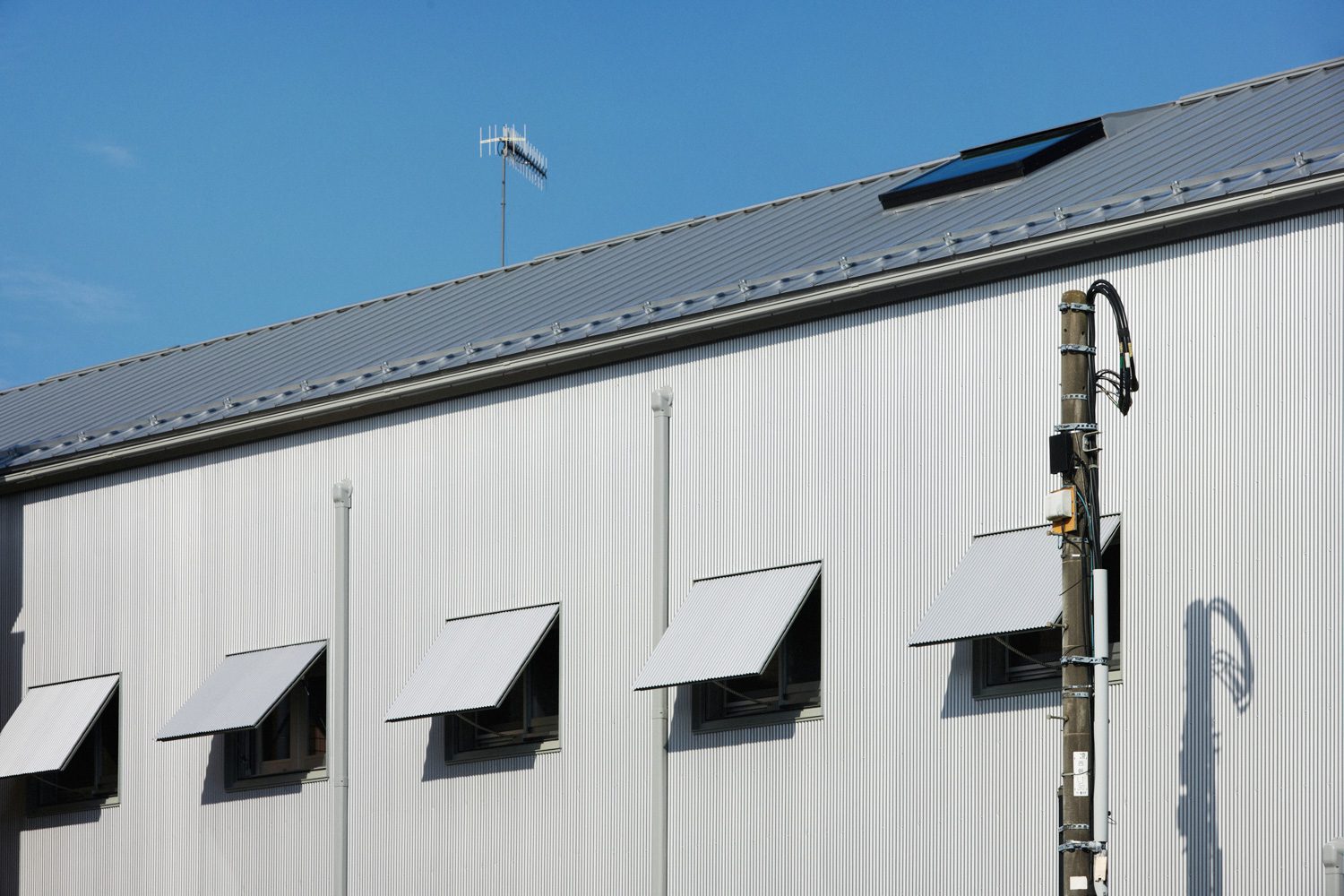
Rather than adopting a free-flowing open plan, the project is organized as a series of large, clearly defined volumes, each housing a specific program in a deliberate, sequential manner. This spatial strategy draws directly from the organizational principles of the machiya wooden townhouse, where semi-public and semi-private functions traditionally occupy the front portion of the building. In this case, the reception area and the artist-in-residence spaces are positioned toward the street, while functions requiring a greater degree of privacy, namely the office areas, are placed deeper within the building. This adherence to the machiya model reflects Schemata Architects’ intention to demonstrate respect for the site’s historical strata, collective memory, and the many lives that have inhabited, passed through, traded, and taken root in this place over time. These histories are embedded in the narrow-fronted, deep plot and its characteristic building form. Through a careful process of incremental extension, adjustment, enclosure, and selective revelation, the architects reinterpret these traces through contemporary architectural elements, without disrupting the original footprint of the building or attempting to erase the enduring presence of the machiya typology itself.
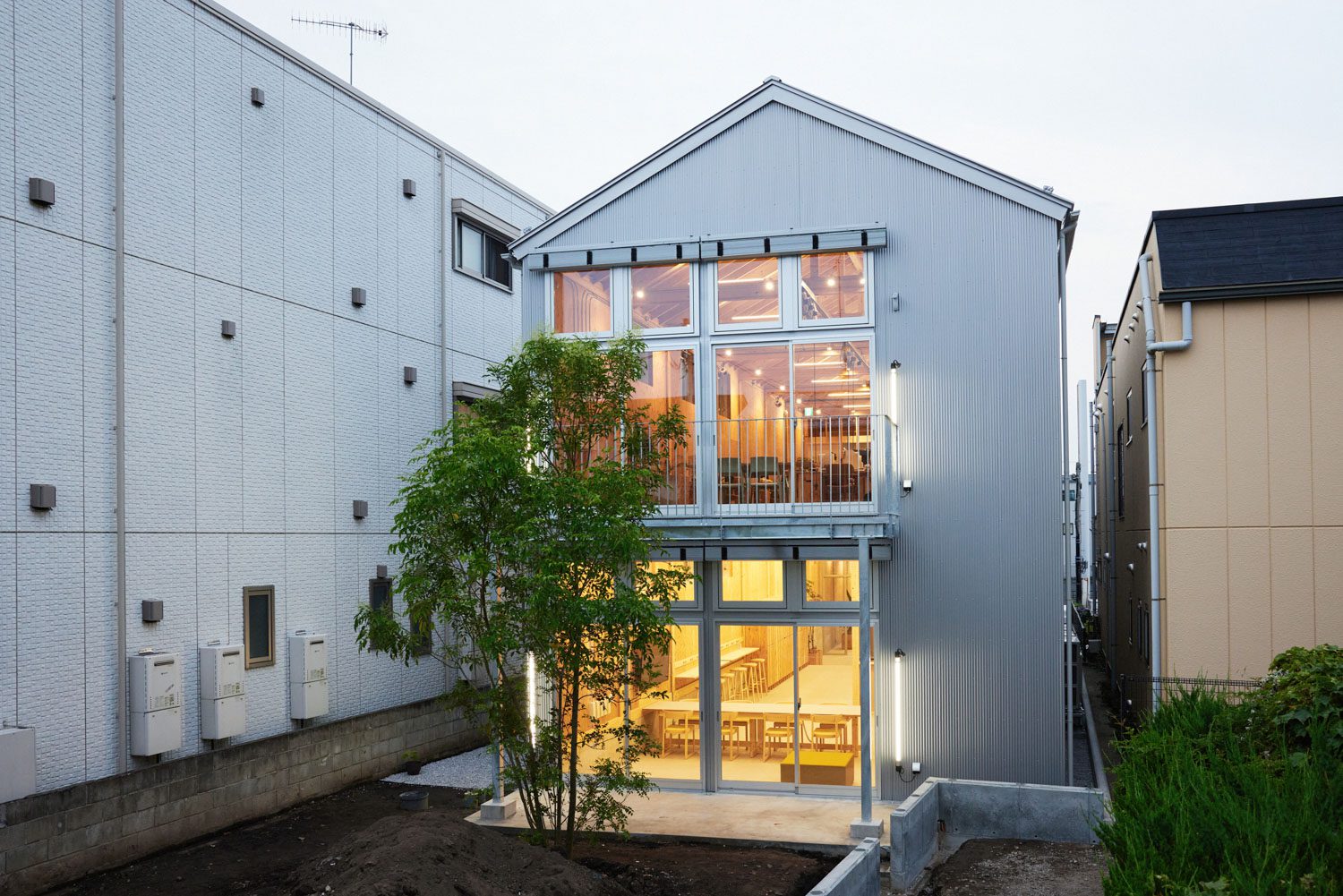
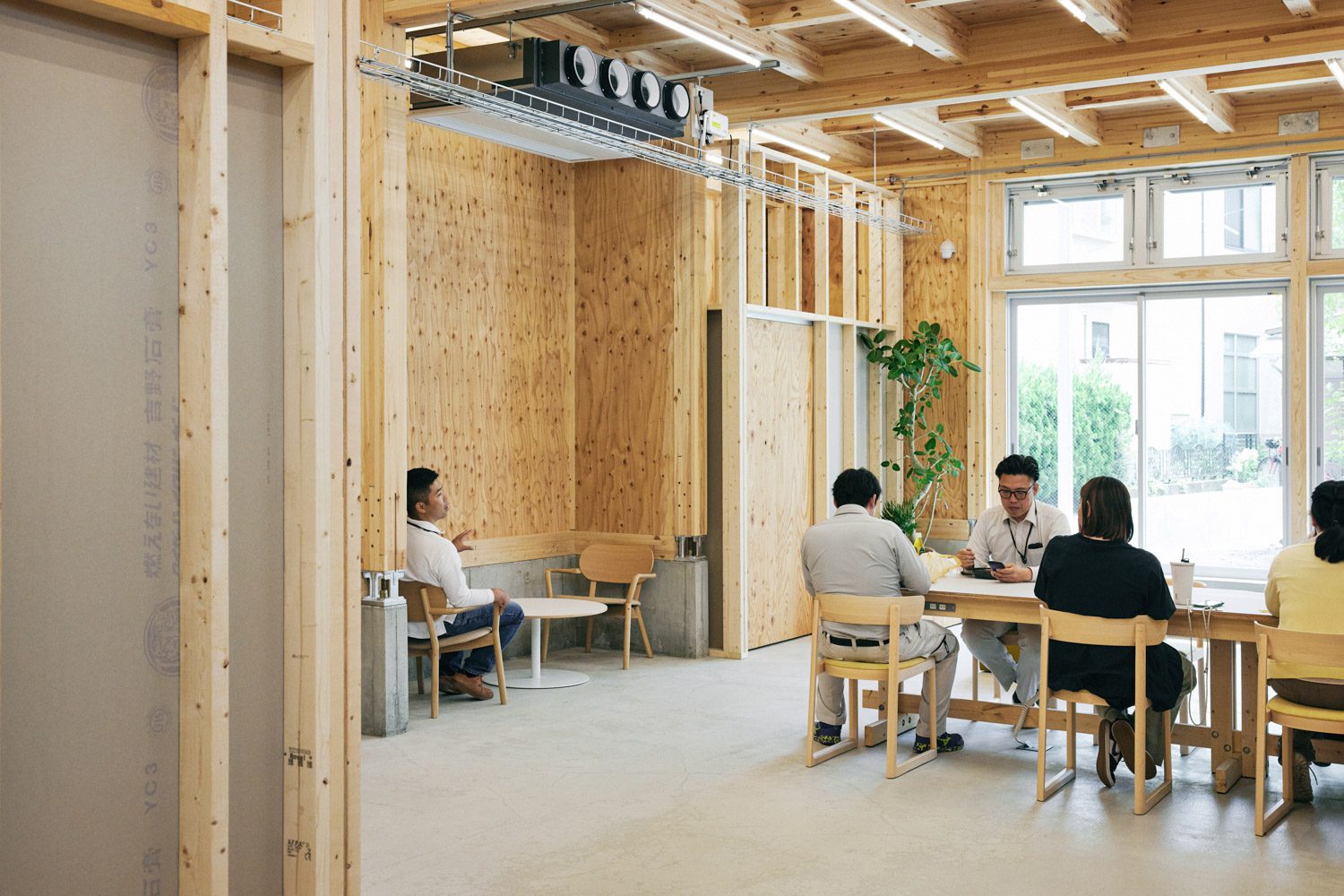
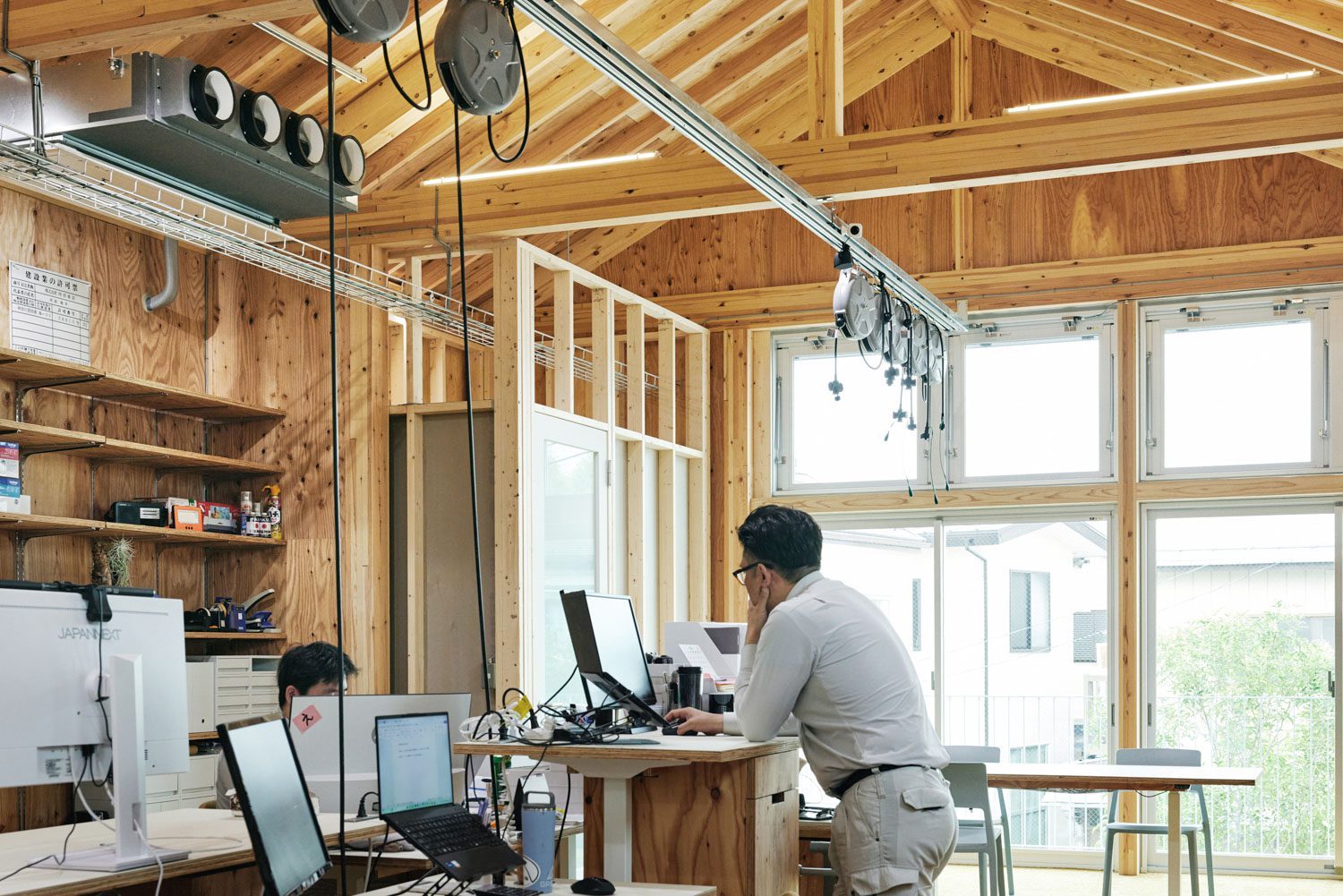
The new building, which extends slightly deeper into the site and rises only modestly beyond the proportions of the original structure, reflects Uchida Shoten’s measured approach to change and transition. Even as external conditions evolve at an accelerated pace, the project suggests that when people, the economy, the community, and architecture remain meaningfully connected and interdependent, a deliberate slowing of time within an increasingly complex society can be sufficient to sustain these relationships. Such temporal restraint allows them to adapt and evolve steadily, in step with their context, maintaining resilience and continuity over time.