
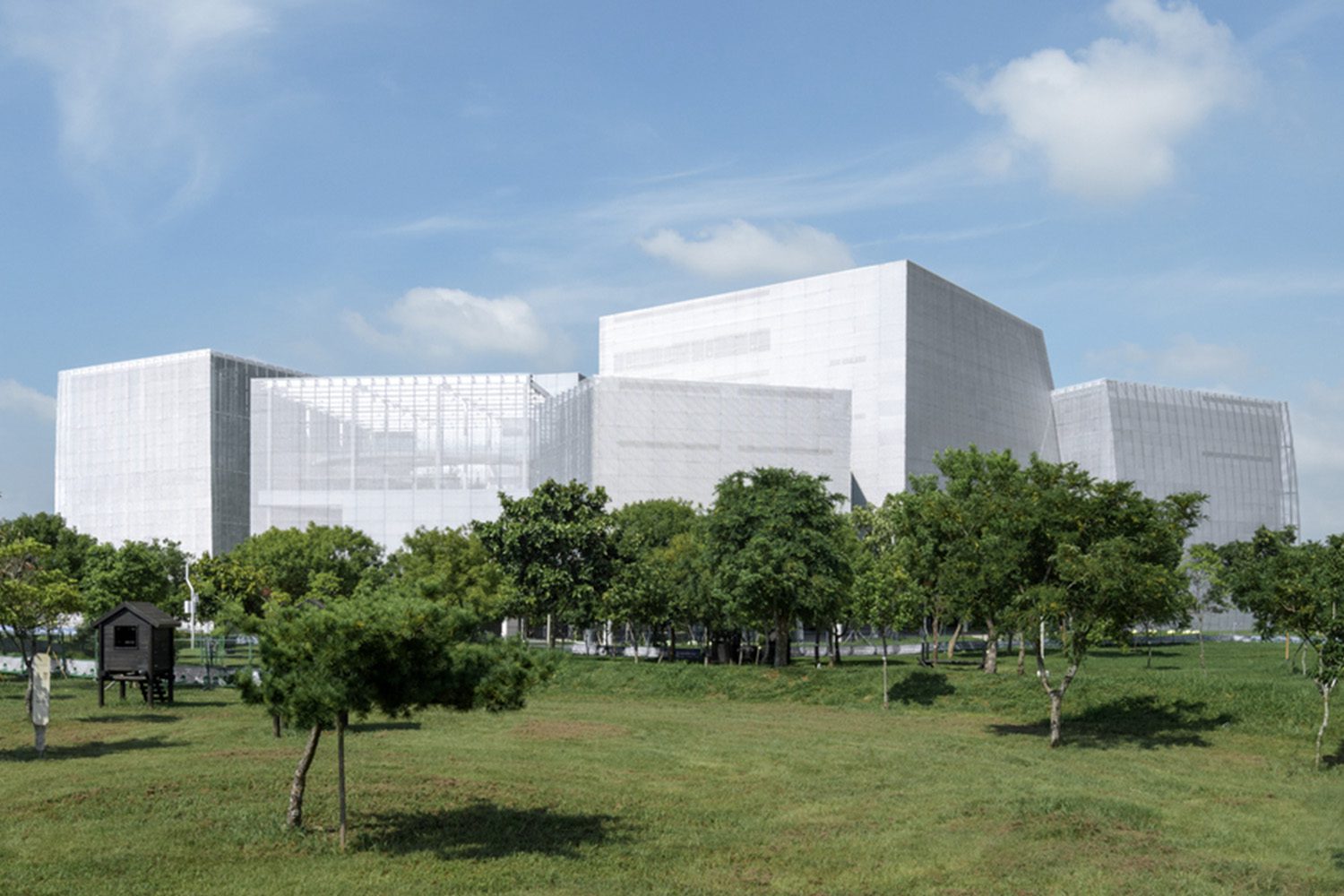
 Photo: Yi-Hsien Lee
 DESIGNED BY SANAA, THE TAICHUNG GREEN MUSEUMBRARY SERVES AS A NEW CULTURAL HUB WHERE ART, KNOWLEDGE, AND THE PARK’S GREENERY CONVERGE
TEXT: HSIEN TZU WANG
PHOTO CREDIT AS NOTED
(For Thai, press here)
For architecture enthusiasts, Taichung is firmly on the must-visit map of Taiwan. From I. M. Pei’s Luce Memorial Chapel at Tunghai University, Toyo Ito’s iconic Taichung National Theatre, to the recently opened CMP Inspiration Museum by Kengo Kuma, the city has continuously shaped its cultural identity through architecture. Each landmark reflects an ambition to embed design deeply into everyday urban life.
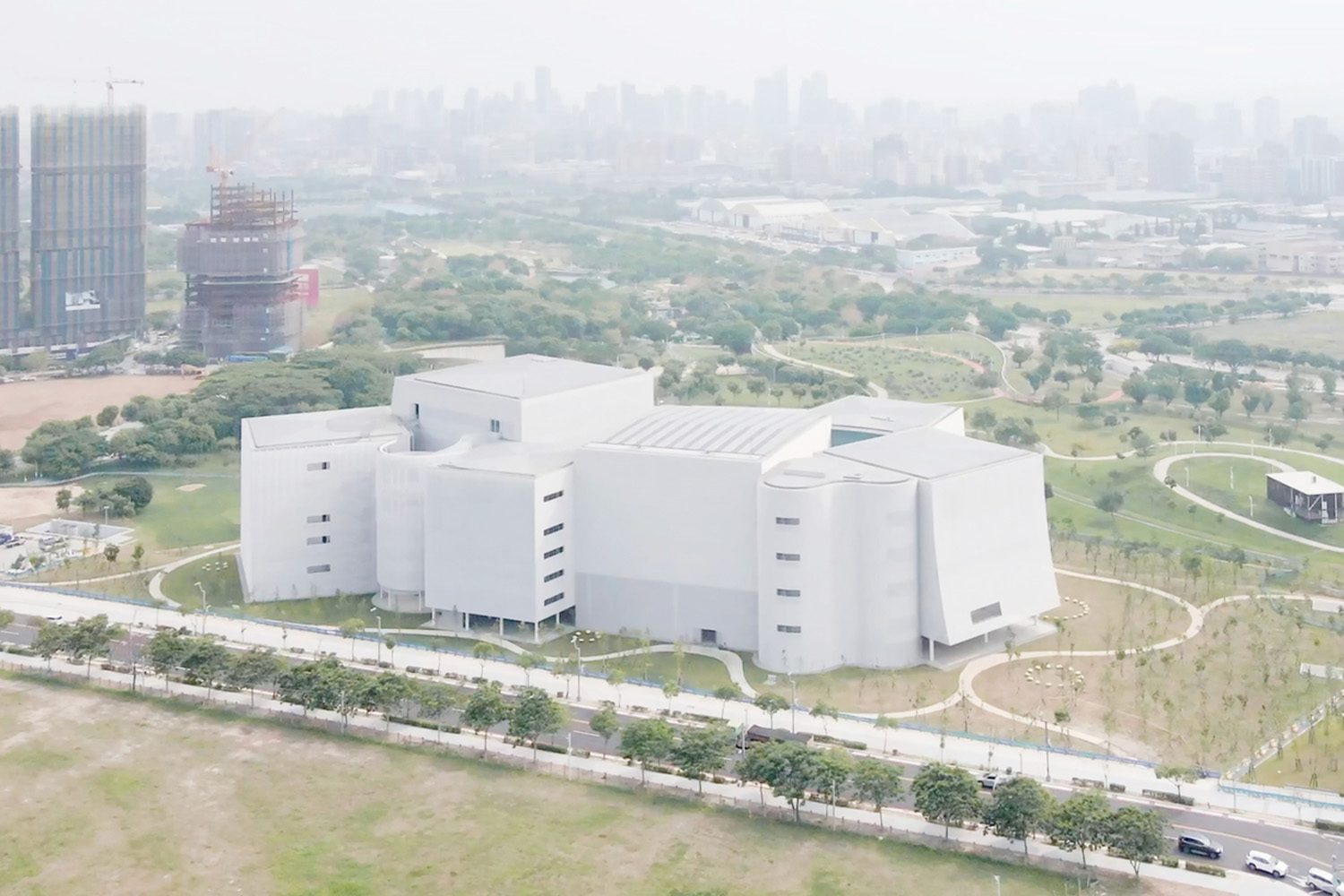
Exterior view of Taichung Green Museumbrary | Photo courtesy of Taichung Green Museumbrary
At the end of 2025, a new cultural landmark officially joined this lineage: Taichung Green Museumbrary. Designed by Pritzker Architecture Prize laureates SANAA, in collaboration with Taiwan’s local firm Ricky Liu & Associates Architects + Planners, the project merges two traditionally distinct cultural institutions, a museum and a library, into a single architectural organism, named ‘Taichung Green Museumbrary’, set within the vast greenery of Taichung Central Park.
Recognised with Best Design of 2025 Golden Pin Design Award, the Taichung Green Museumbrary stands out as one of the few recent public buildings in Taiwan that simultaneously addresses public accessibility, cultural function, and environmental integration, redefining what a contemporary civic cultural space can be.
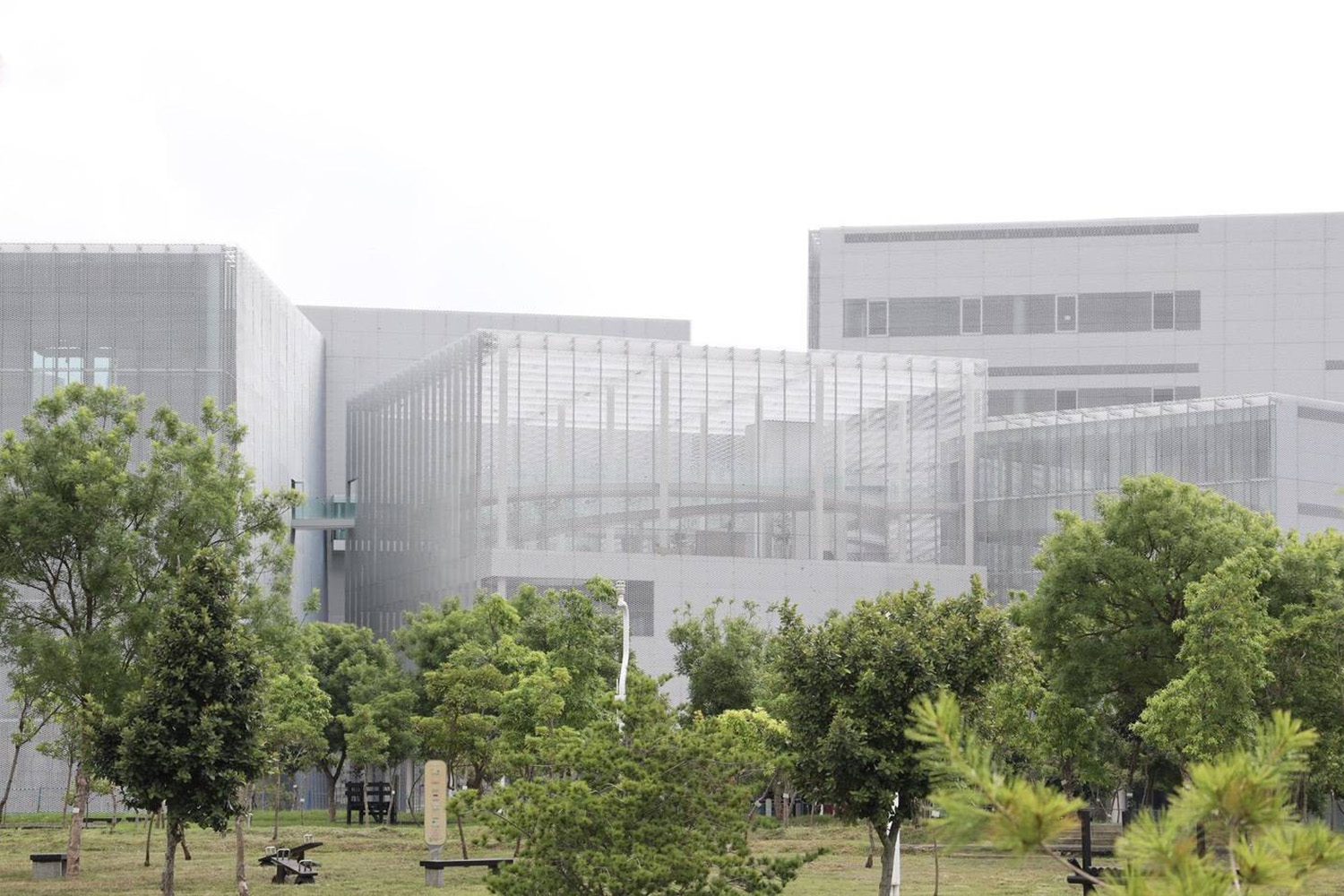
Exterior view of Taichung Green Museumbrary | Photo courtesy of SANAA
Lifted and Porous: How a Large-Scale Building Becomes Part of the Park
Facing the openness of Central Park, the challenge was clear: how could a complex of eight volumes spanning over 58,000 square metres avoid appearing massive, closed-off, or disruptive to the landscape?
“Taichung Green Museumbrary is also part of the park, we wanted the building to interact positively with its environment,” SANAA explains. With this ethos, the architects elevated the entire structure approximately six metres above ground, creating a series of shaded plazas beneath. These outdoor spaces allow visitors to walk freely through the building, seamlessly extending park pathways while encouraging natural airflow. Before even entering the interior, visitors experience a gradual cooling transition, easing the shift between outdoor and indoor environments.
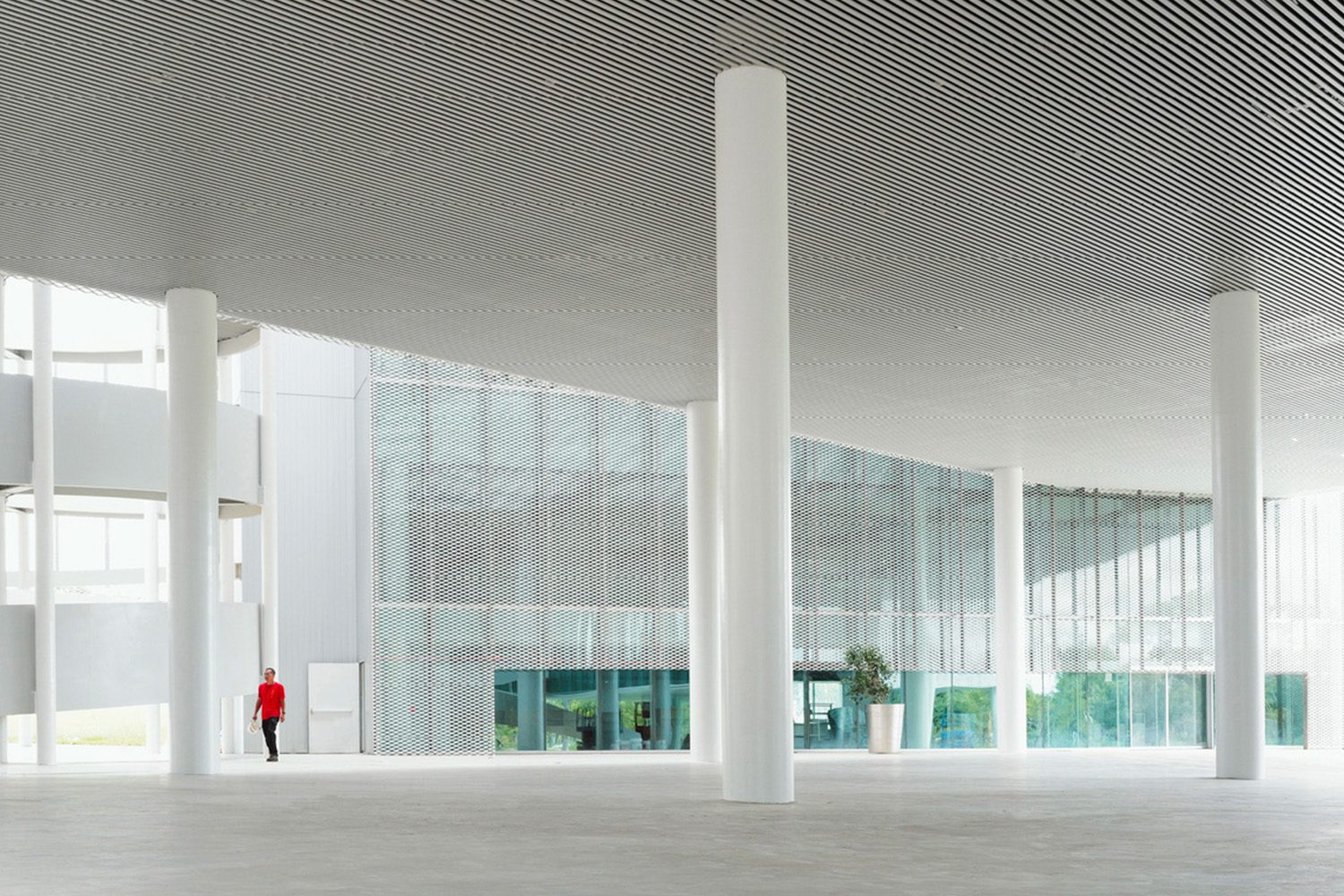
Shade Plaza | Photo courtesy of Taichung Green Museumbrary
The façade further reinforces this lightness. A double-layered envelope combines glass curtain walls with silver aluminium expanded metal mesh. While the inner glass layer ensures thermal insulation and daylight penetration, the perforated outer layer visually softens the building’s mass, allowing it to dissolve gently into the surrounding greenery.
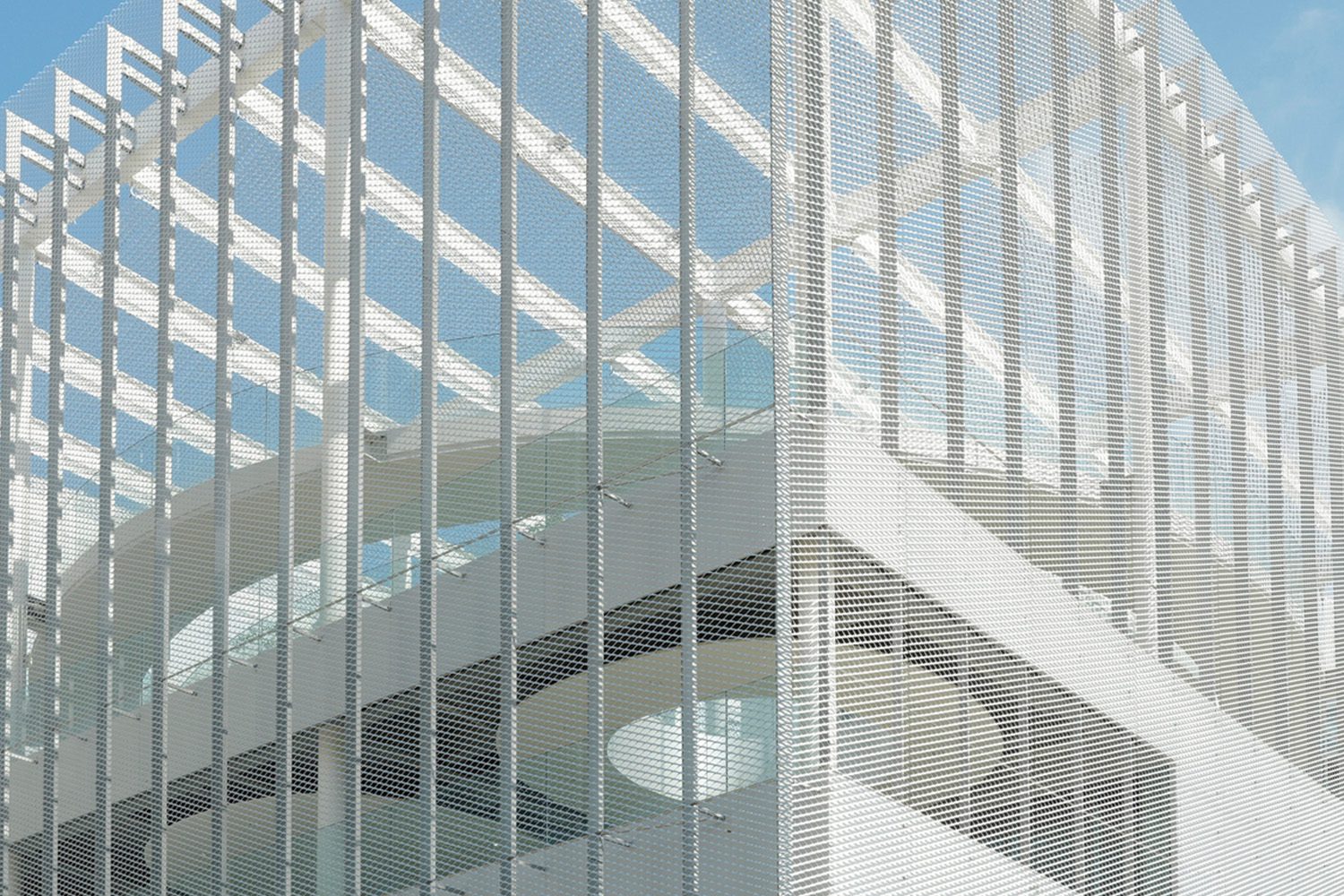
External view of Taichung Green Museumbrary | Photo courtesy of Taichung Green Museumbrary
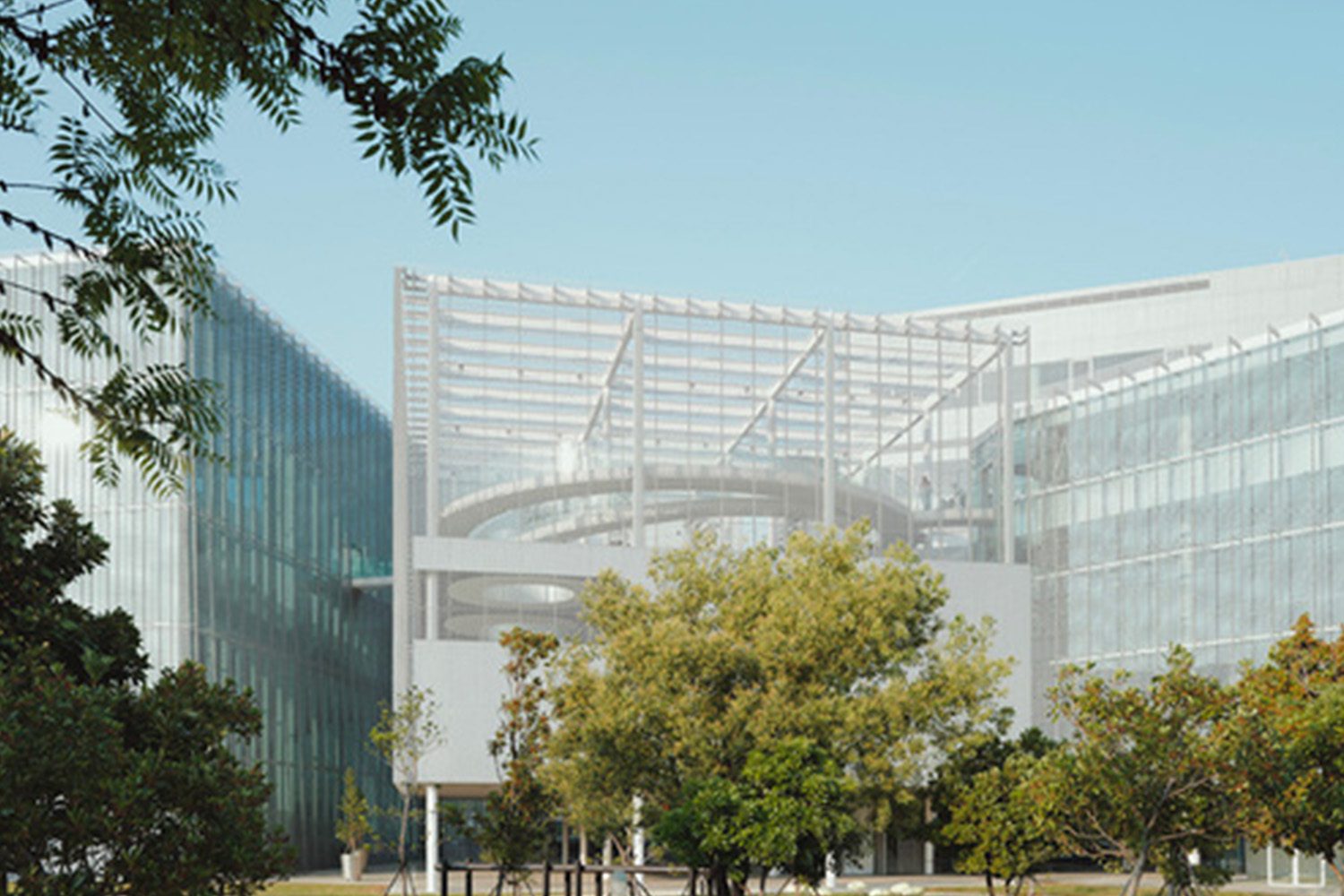 External view of Taichung Green Museumbrary | Photo courtesy of Taichung Green Museumbrary
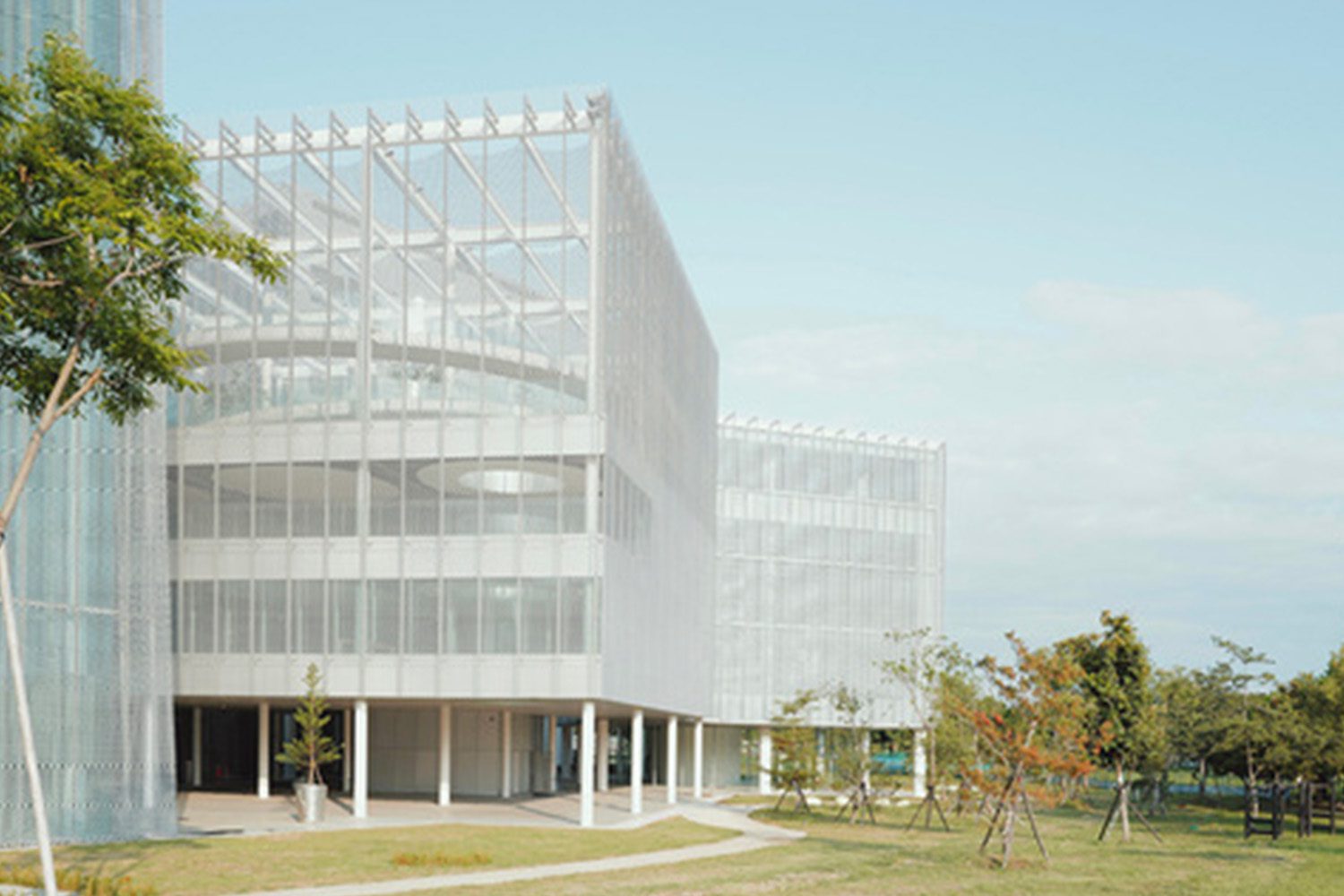
Rather than a singular, monumental entrance, visitors can approach from any side of the park, drifting naturally into the building. Without rigidly prescribed circulation, movement unfolds at the pace of a stroll, gradually leading people to the main lobby hall.
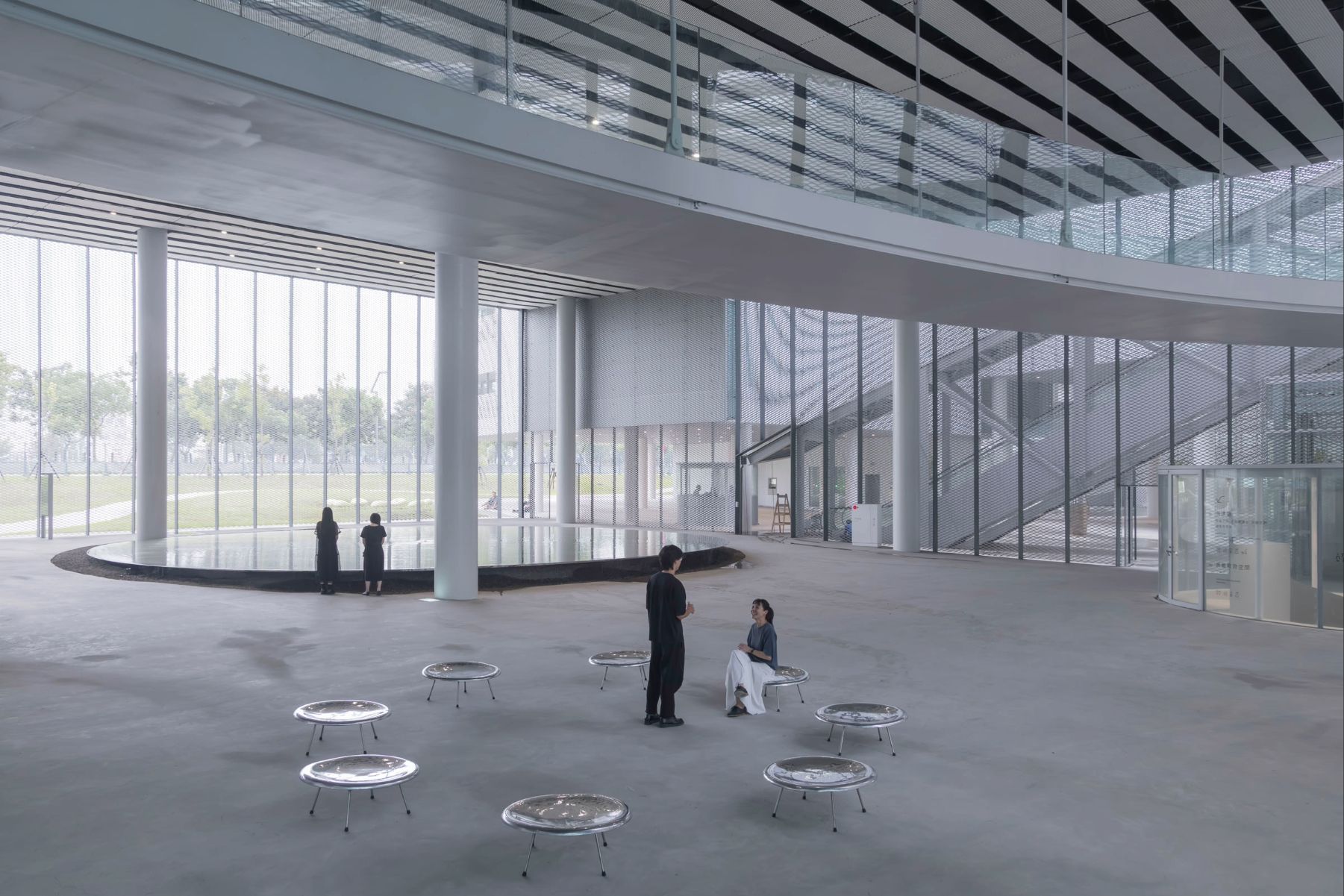
Main lobby of Taichung Green Museumbrary | Photo courtesy of Taichung Green Museumbrary
At the heart of this space lies a large reflective water basin formed by curved stainless-steel panels. SANAA partner Ryue Nishizawa describes the constantly flowing water as a metaphor for ‘the continuous wellspring of knowledge and creativity.’ Functionally, the pool reflects natural light and surrounding greenery while helping regulate indoor temperature, transforming the lobby into a comfortable space for pause and gathering.
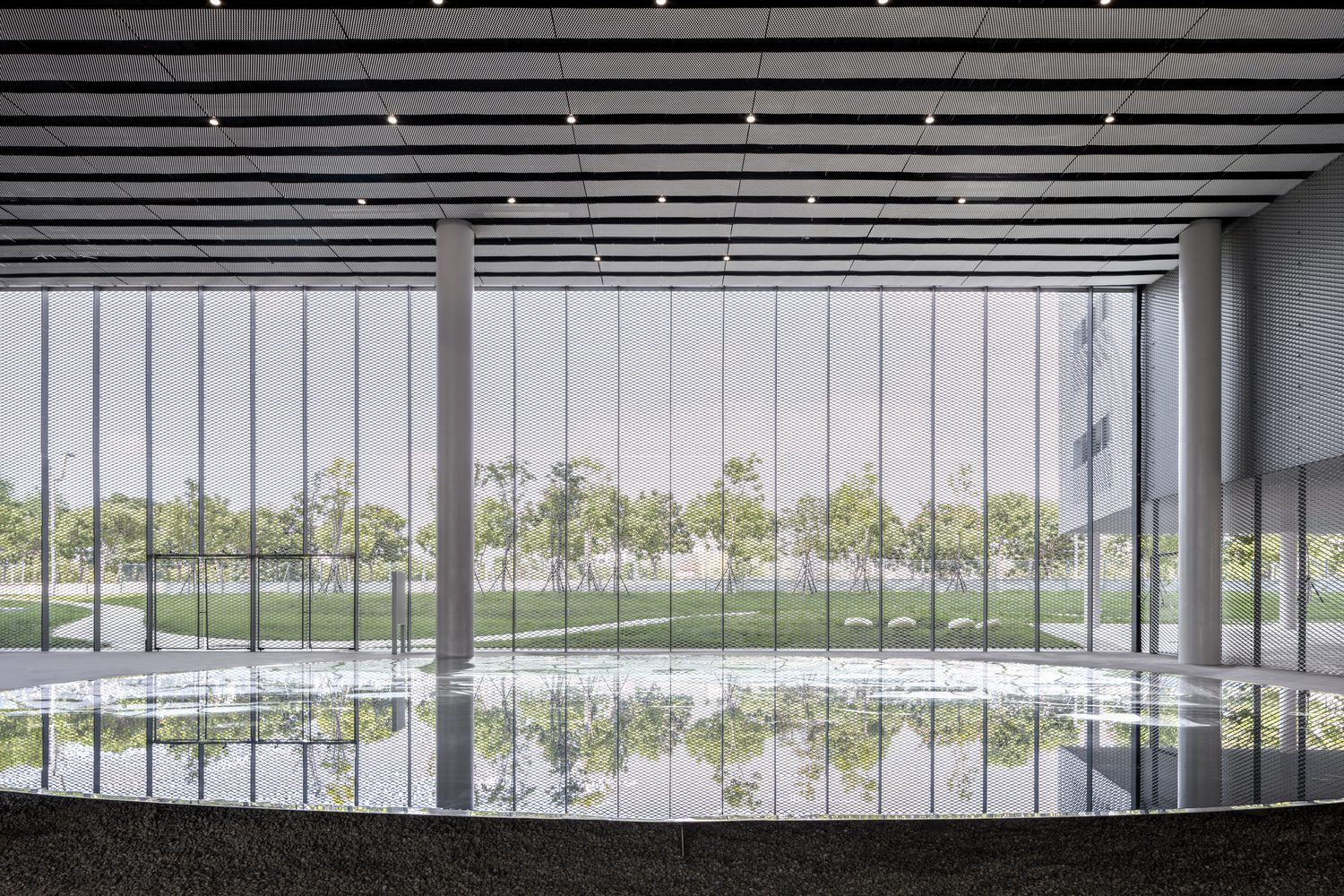
Main lobby of Taichung Green Museumbrary | Photo: Yi-Hsien Lee
When Art and Reading Become a Fluid Spatial Experience
As SANAA was first presented with the challenge of integrating a museum and a library, the architects described it as an exciting proposition. “We enjoy reconfiguring traditional buildings,” they note, “because it opens up new spatial imaginations.” This mindset became the conceptual foundation for how both institutions were designed.
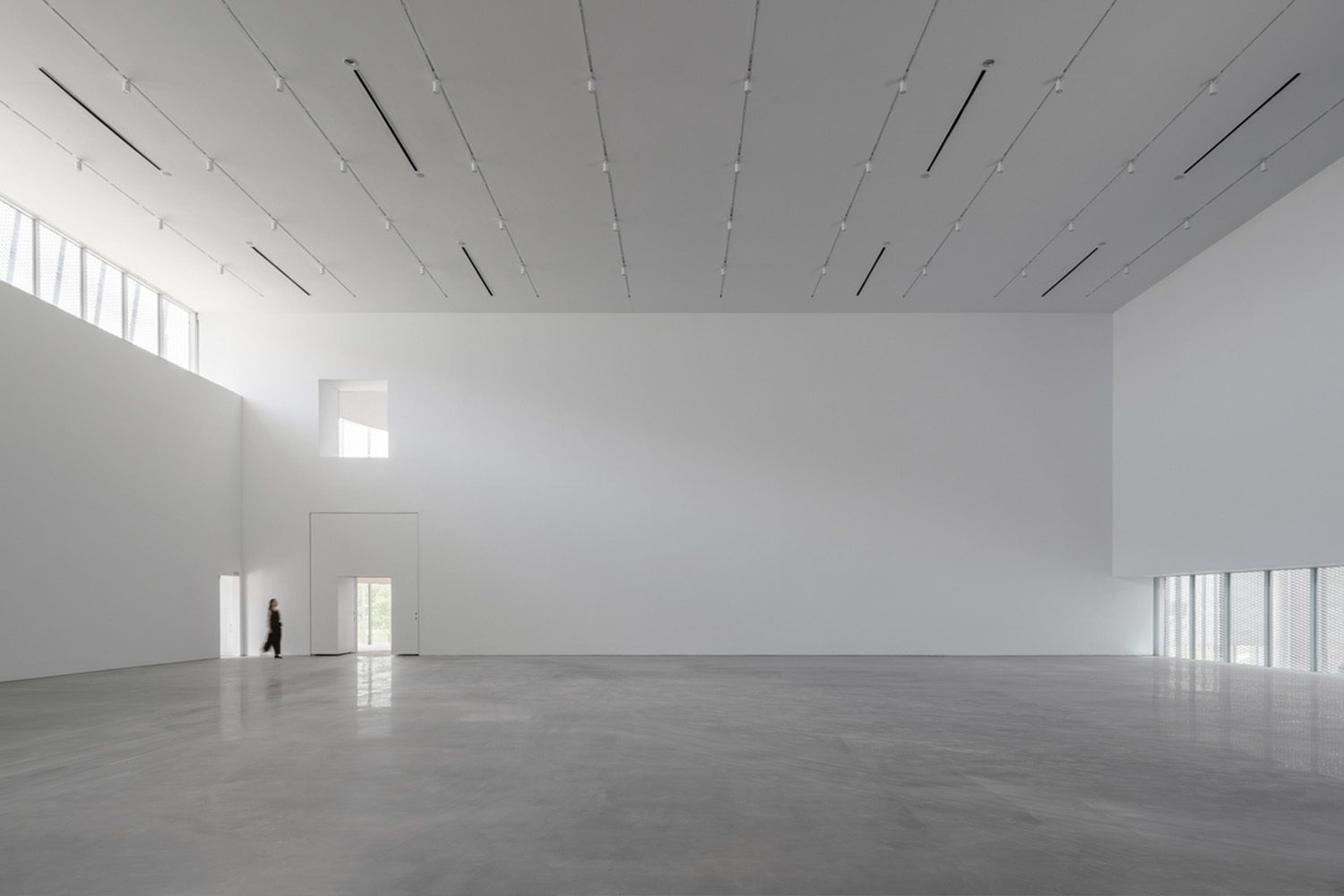
The museum’s most defining space is its 27-metre-high atrium, vertically spanning six floors, the tallest museum exhibition space of its kind in Taiwan. Together with 5 exhibition halls, it accommodates large-scale installations while allowing visitors to perceive artworks from multiple heights and perspectives, reinforcing the dialogue between art and architectural volume.
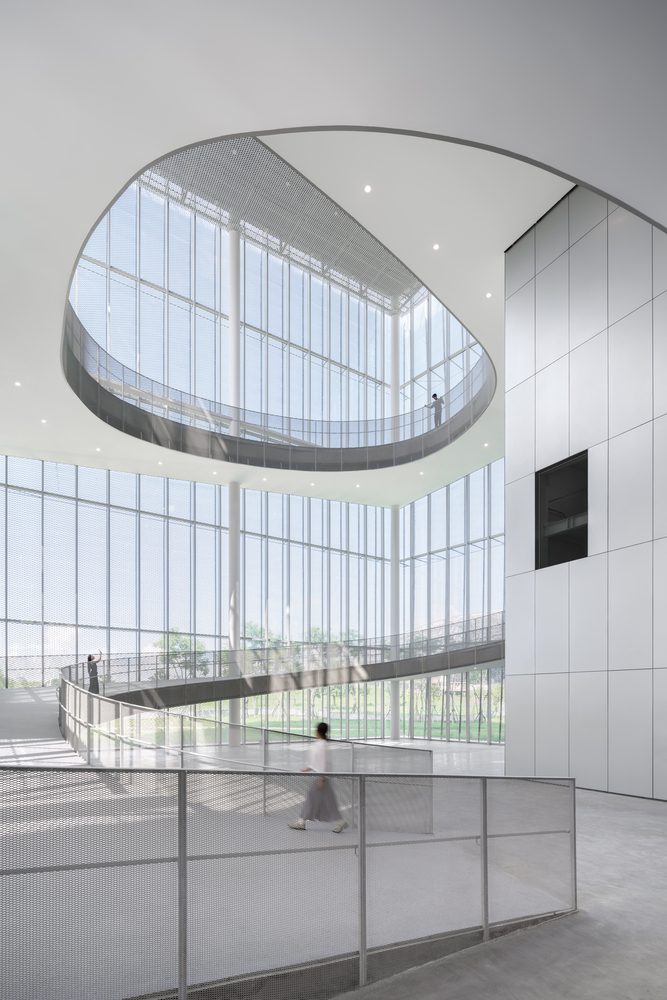
Museum lobby | Photo: Yi-Hsien Lee
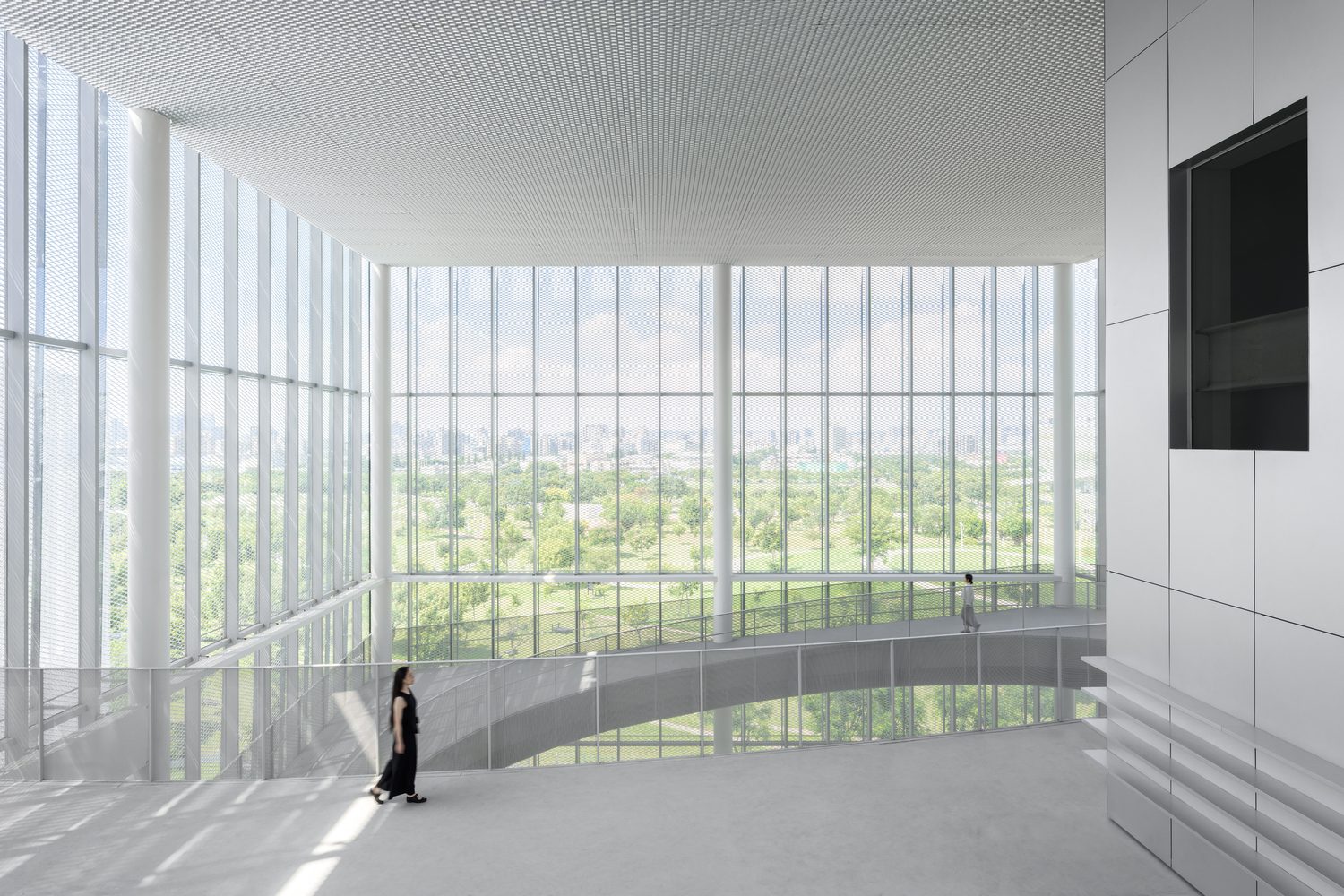 Museum lobby | Photo: Yi-Hsien Lee
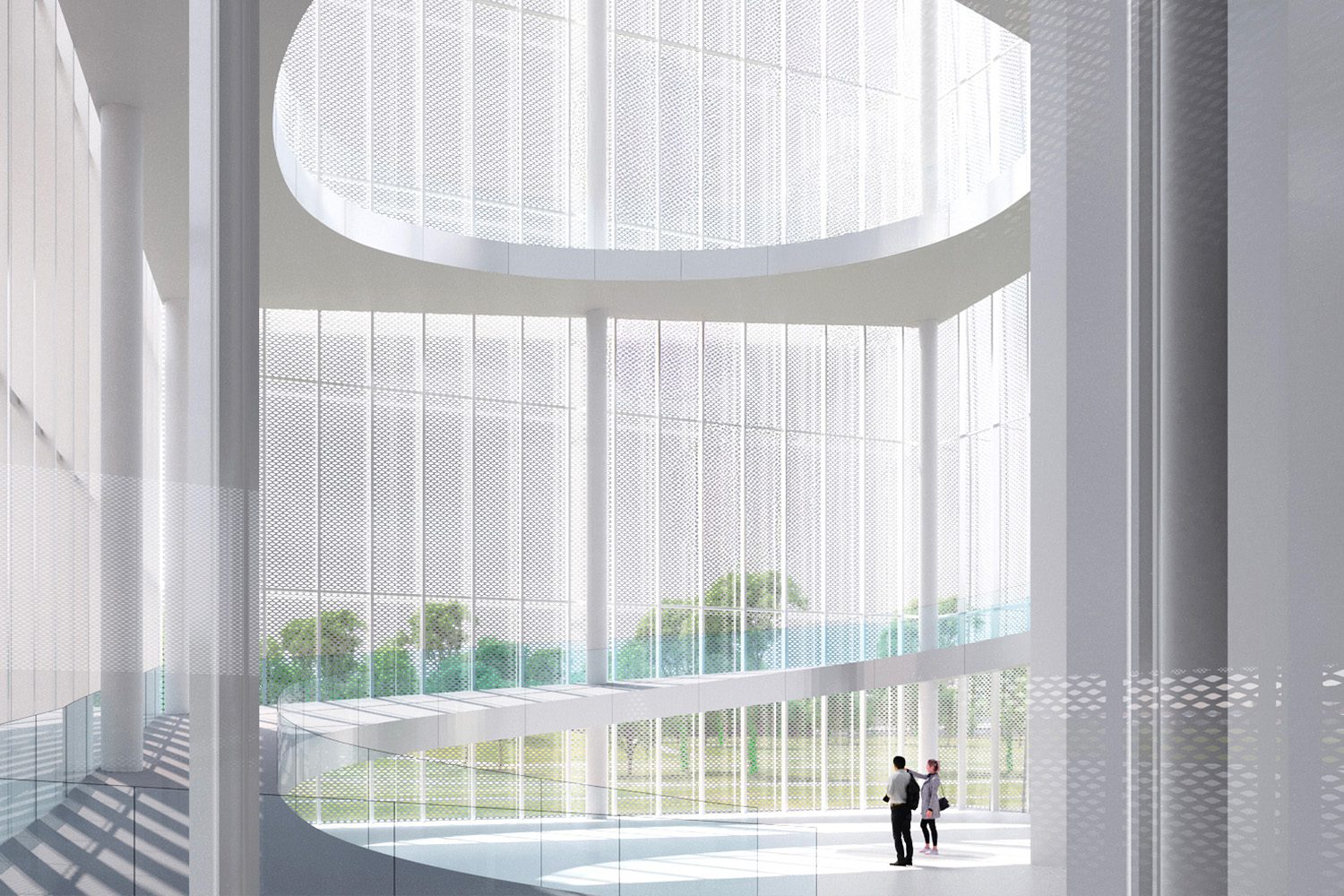
The library, by contrast, takes ‘fluidity’ as its core design principle. Reading spaces are organised by age group and functionality, including a 7-metre-high library hall where curving furniture and fluid lines guide movement like gentle currents. Walking, browsing, and reading merge seamlessly into one continuous experience.
Another key node is the two-storey Digital Hub, a creative and learning centre where a suspended circular screen displays real-time information about exhibitions, events, and books from both the museum and library, visibly staging the intersection of art and knowledge.
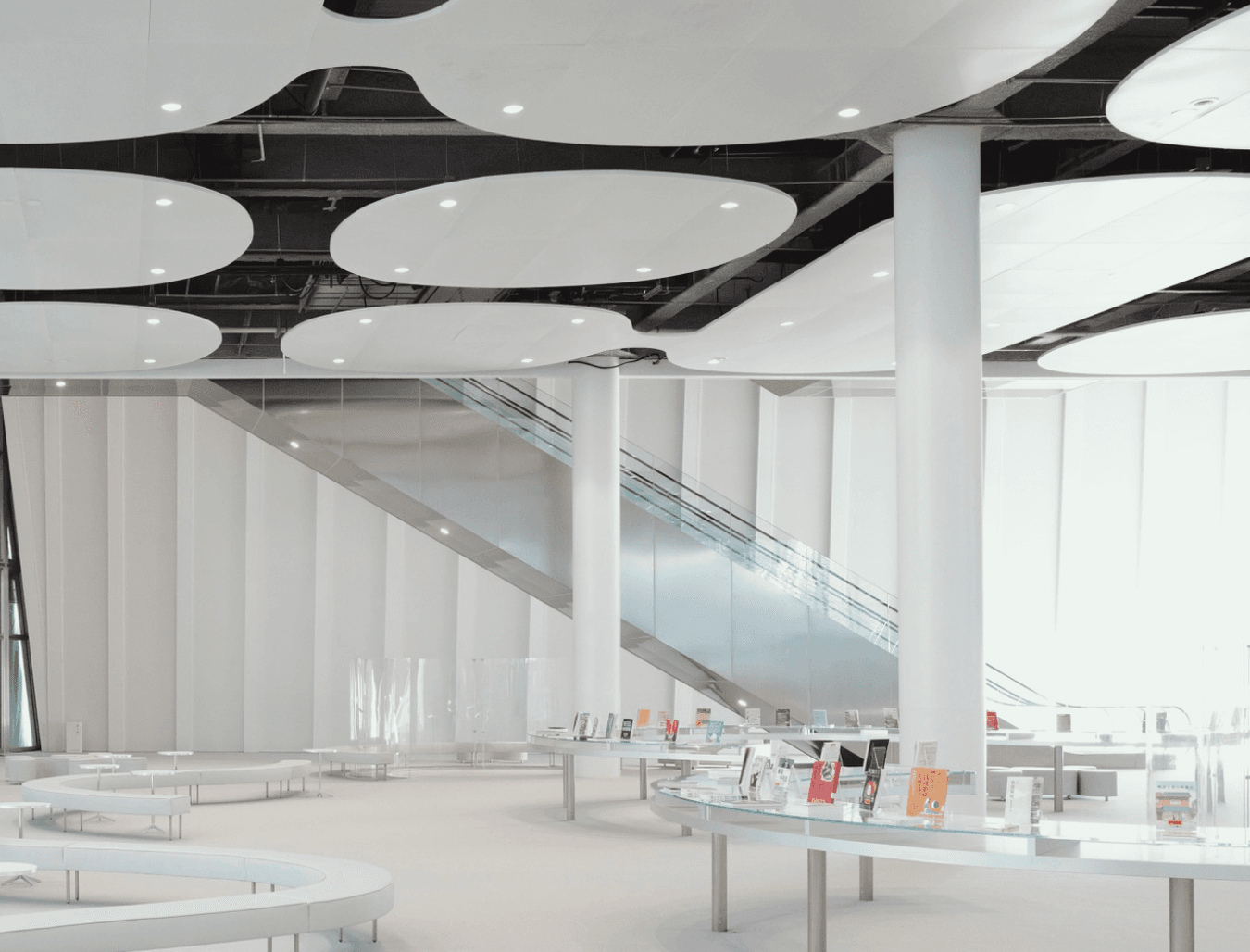
Library lobby | Photo courtesy of Taichung Green Museumbrary
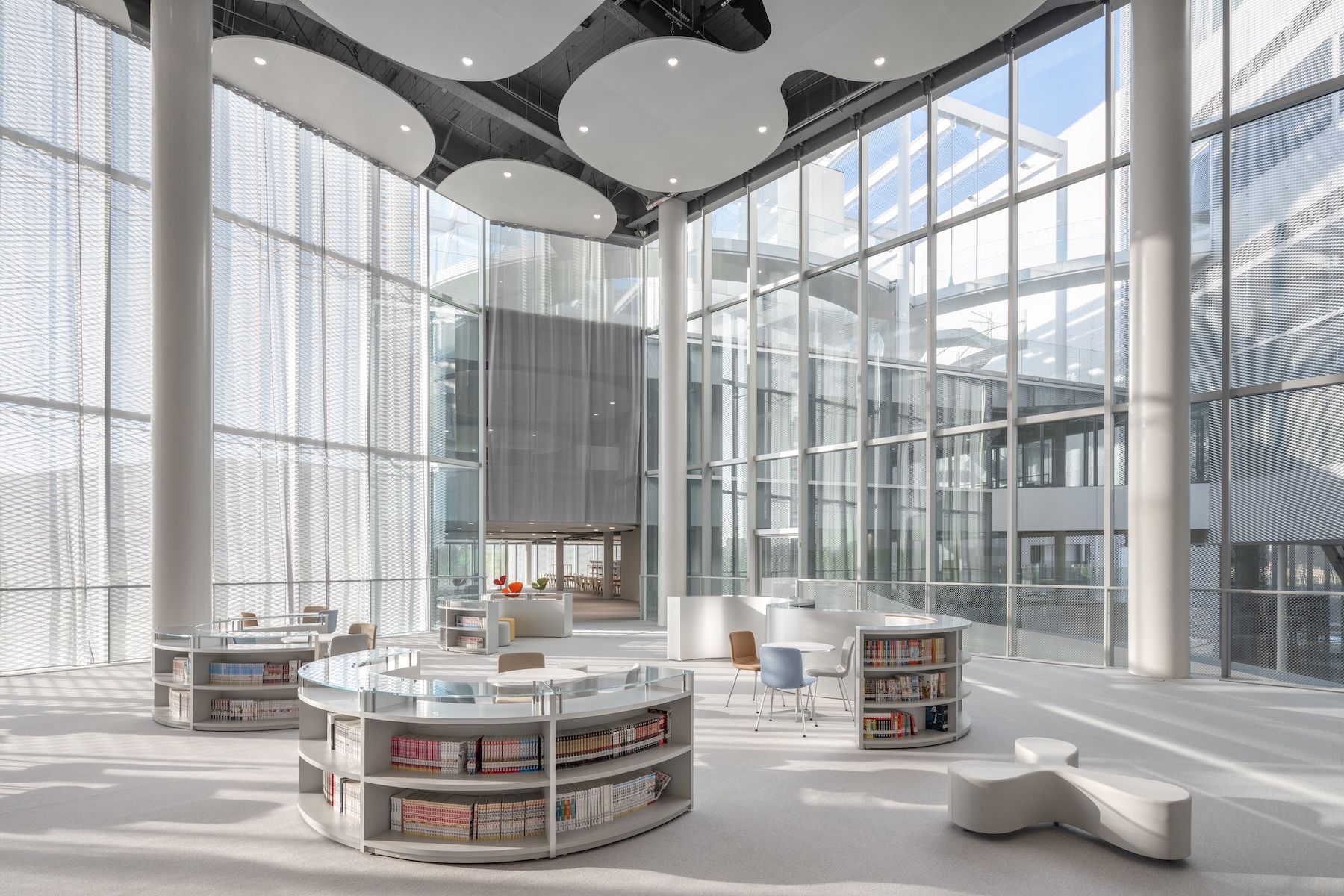
Library lobby | Photo courtesy of Taichung Green Museumbrary
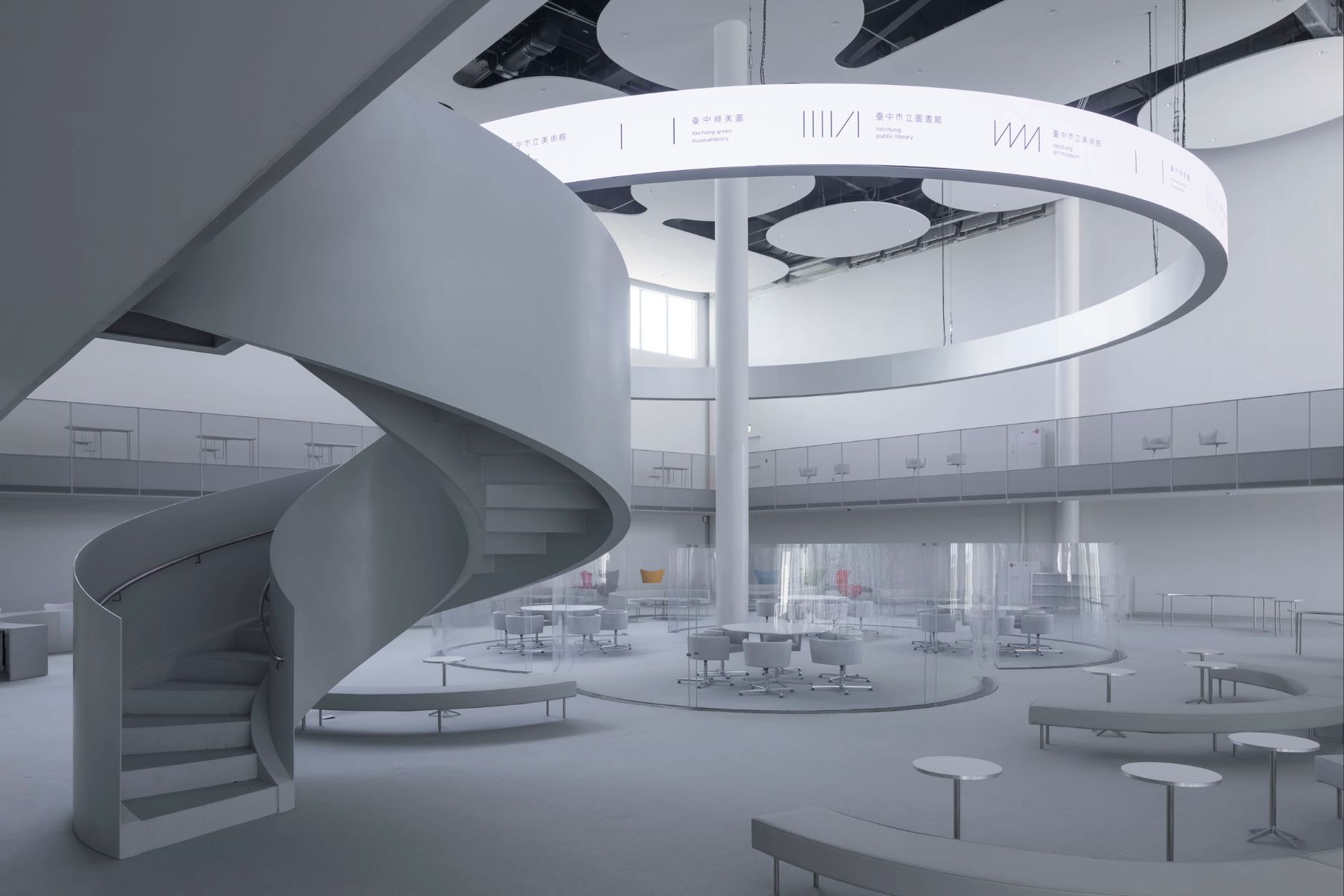
Digital Hub | Photo courtesy of Taichung Green Museumbrary
On the seventh floor, the highest reading zone adopts low bookshelves only 110 cm tall, intentionally opening up sightlines. Here, the panoramic view of Central Park becomes the backdrop to reading. Suspended between pages and landscape, reading is no longer an enclosed indoor act but a state of coexistence with nature.
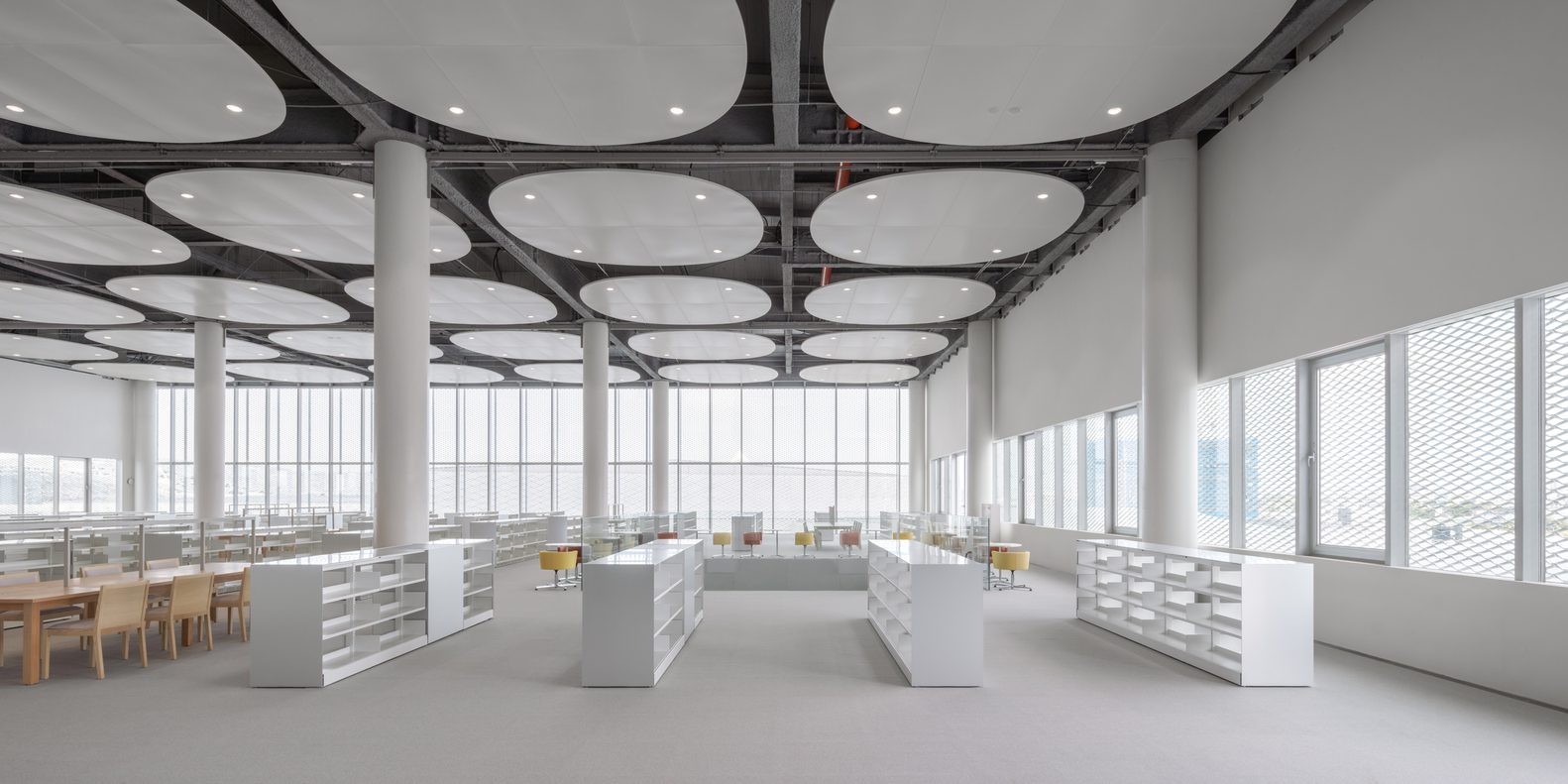
Reading area on 7th floor | Photo: Yi-Hsien Lee
Where Paths Cross, Imagination Continues
The museum and library do not operate as isolated entities. Instead, they intersect across multiple floors and bridges, forming an experience without a predetermined direction. One of the most symbolic spaces is the semi-outdoor rooftop zone, Cultural Forest, where a circular skybridge connects the two programs. Wrapped in the same expanded metal mesh, the architecture appears to drape naturally, blurring boundaries between structure and landscape.
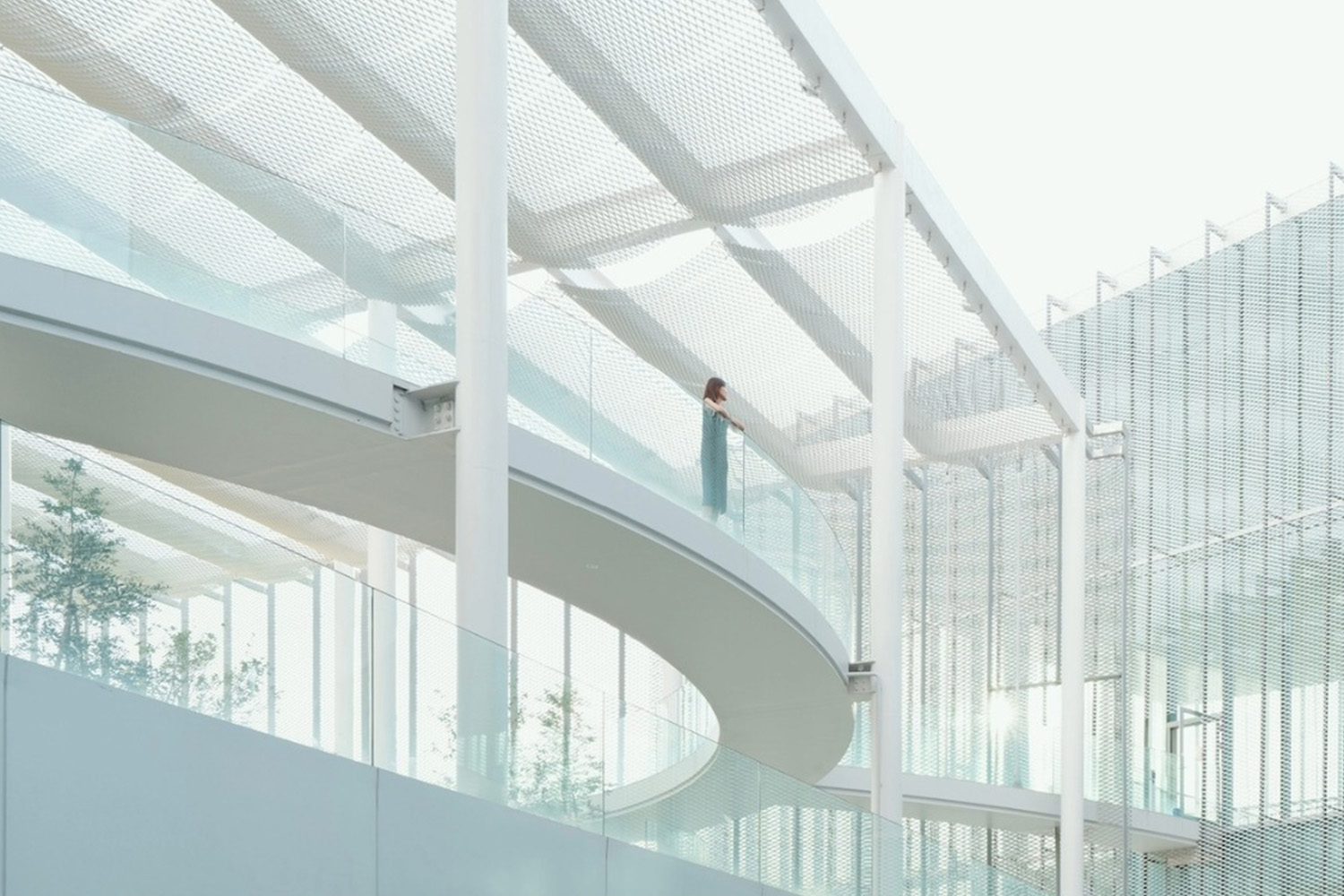 Cultural Forest | Photo courtesy of Golden Pin Design Award
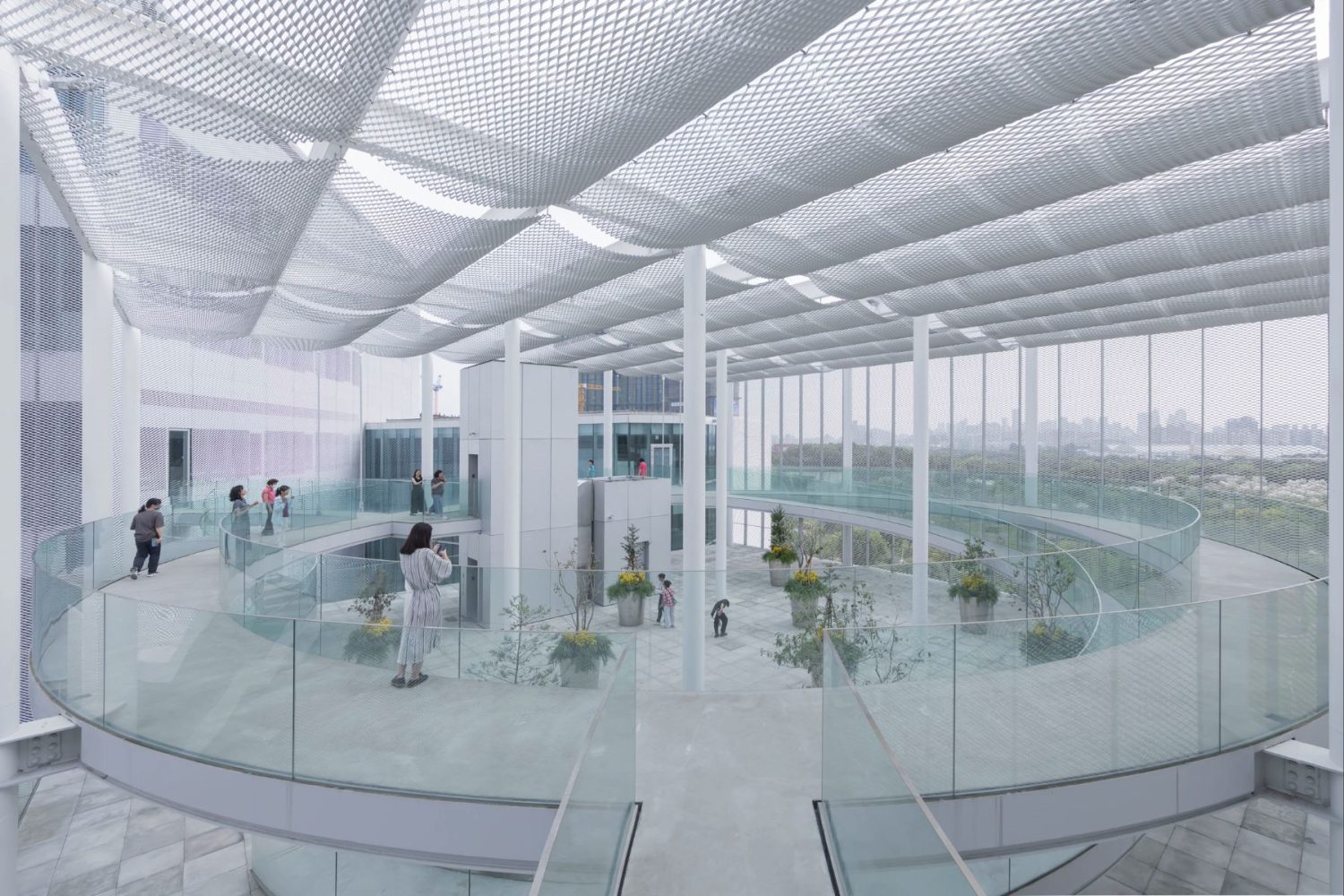
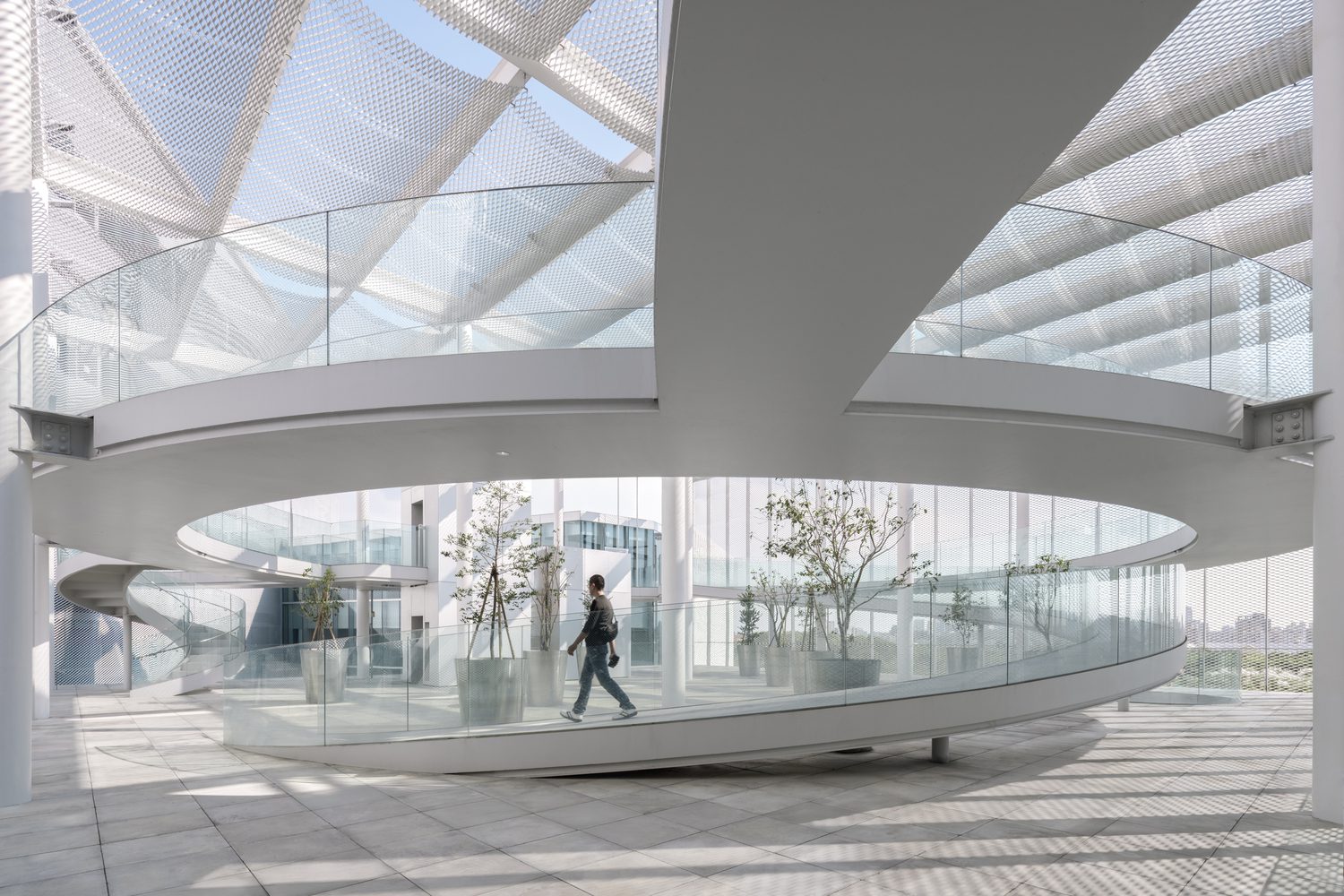
“I hope Taichung Green Museumbrary can feel like a park, a place where people linger comfortably,” SANAA reflects. By viewing the library, museum, and park as extensions of everyday life, the architects imagine visitors arriving for an exhibition or a book, only to discover unexpected experiences through wandering, encounters that exceed initial expectations.
At Taichung Green Museumbrary, architecture is not merely a container for functions. It is a spatial catalyst, inviting people to move, pause, and reflect at the intersection of art, knowledge, and nature. This is precisely why the project has been recognised as Best Design of the Golden Pin Design Award, being a landmark example of how public cultural architecture can be reimagined for contemporary life.
_
About the Golden Pin Design Award
The Golden Pin Design Award is the most prestigious design competition in the Taiwan, China, Macao, and Hong Kong markets. Its mission is to provide opportunities and support for outstanding design across various categories—from products to diverse creative works—originating in countries throughout Asia.
For more information, please visit: https://www.goldenpin.org.tw/en/