
 Photo: Ye Jianyuan
 BIG’S DESIGN FOR THE CONTEMPORARY MUSEUM UTILIZES COURTYARDS AND SEMI-OUTDOOR WALKWAYS TO CREATE A ‘MINIATURE MOUNTAIN’ SILHOUETTE, REFLECTING SUZHOU’S HISTORICAL CONTEXT
TEXT: KARN PONKIRD
PHOTO CREDIT AS NOTED
(For Thai, press here)
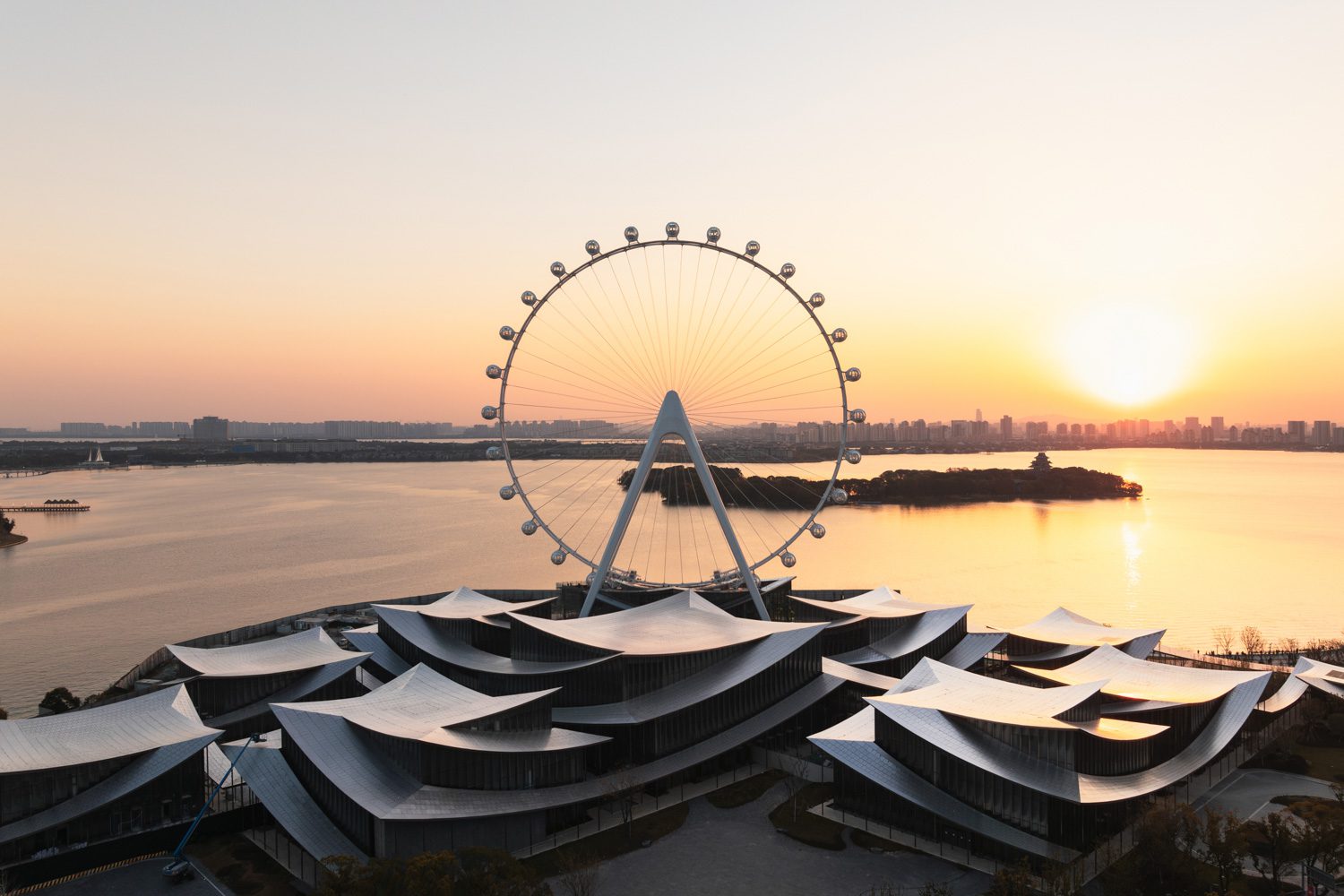
The Suzhou Museum of Contemporary Art, designed by BIG – Bjarke Ingels Group in collaboration with ARTS Group and Front Inc., is conceived as a constellation of twelve loosely arranged pavilion structures unified beneath a cascading roofscape. The layered roof forms evoke the fluid motion of fabric caught mid-drift, reinterpreting principles of traditional Chinese architectural composition, garden design, and Suzhou’s historic urban landscape. The museum will encompass more than 60,000 square meters of gross floor area and is scheduled to officially open in 2026.
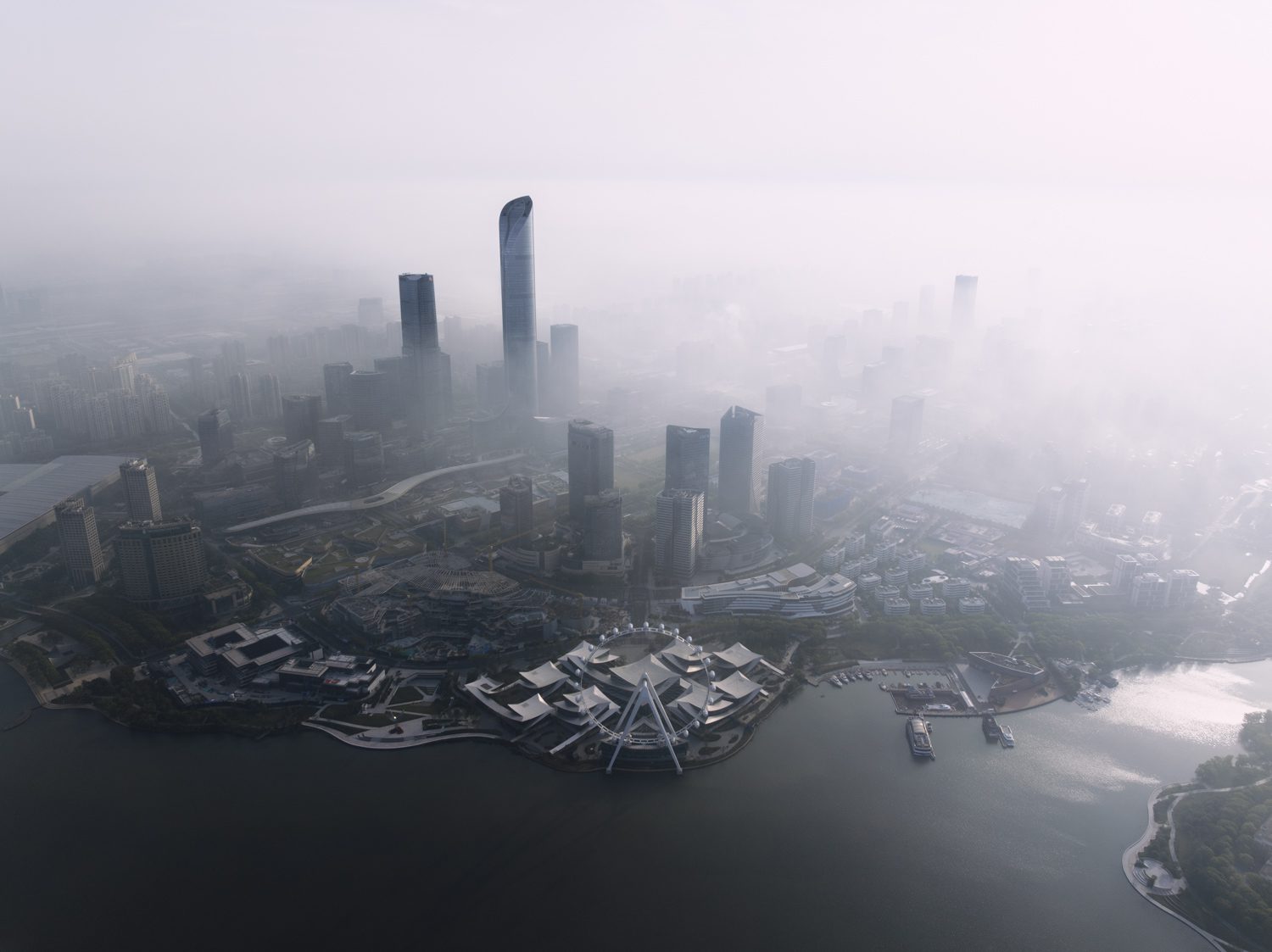
Photo: Ye Jianyuan
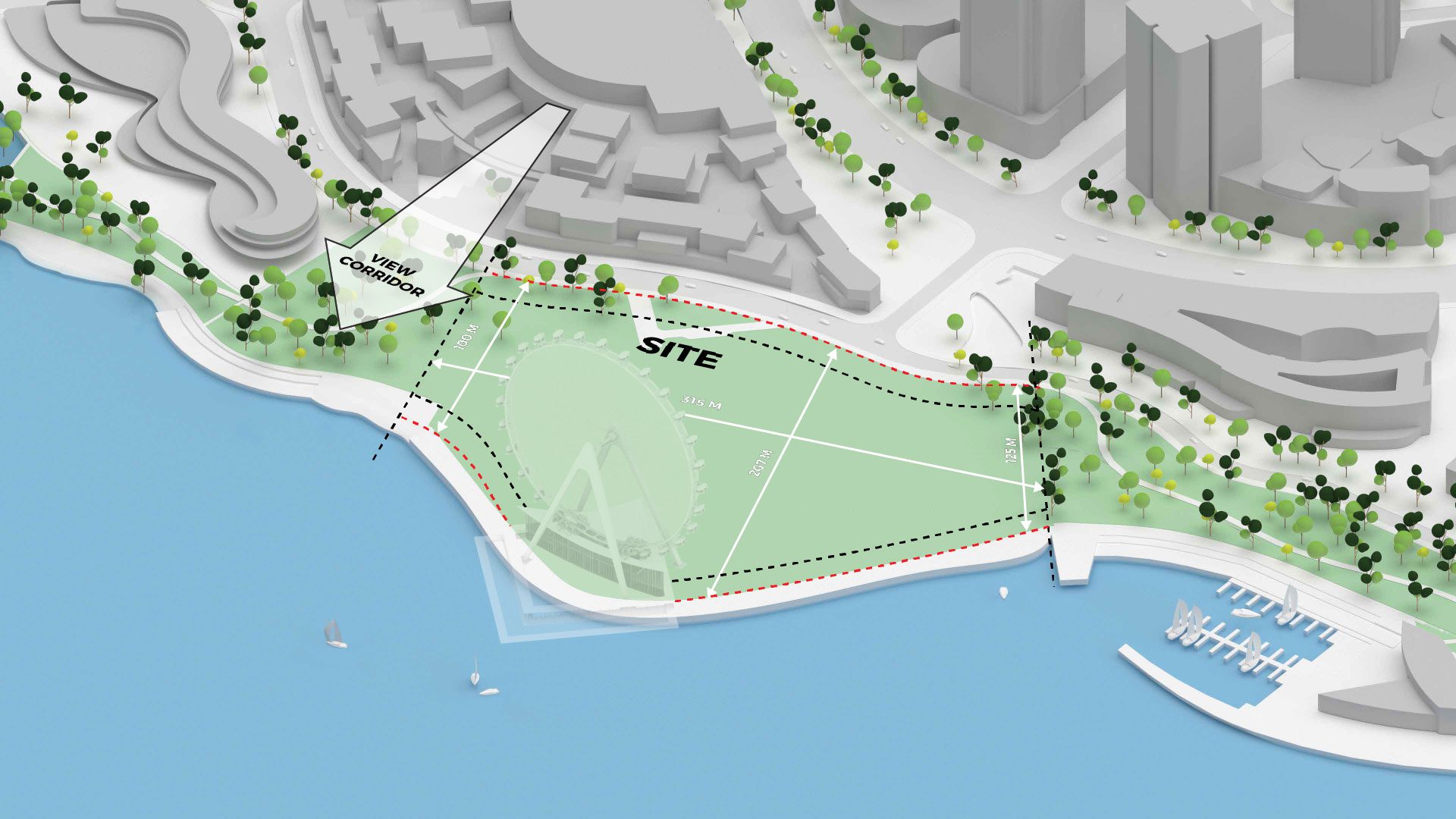
Situated along the shores of Jinji Lake, a large freshwater lake within Suzhou’s new urban district known as Suzhou Industrial Park in Jiangsu Province, the museum occupies a site within a landscape spanning approximately seven square kilometers. One of the area’s prominent landmarks along the lakeside is the Suzhou Ferris Wheel, a 120-meter-tall observation wheel completed in 2009. In subsequent years, the area beneath the Ferris wheel was redeveloped as the site of the Suzhou Museum of Contemporary Art.
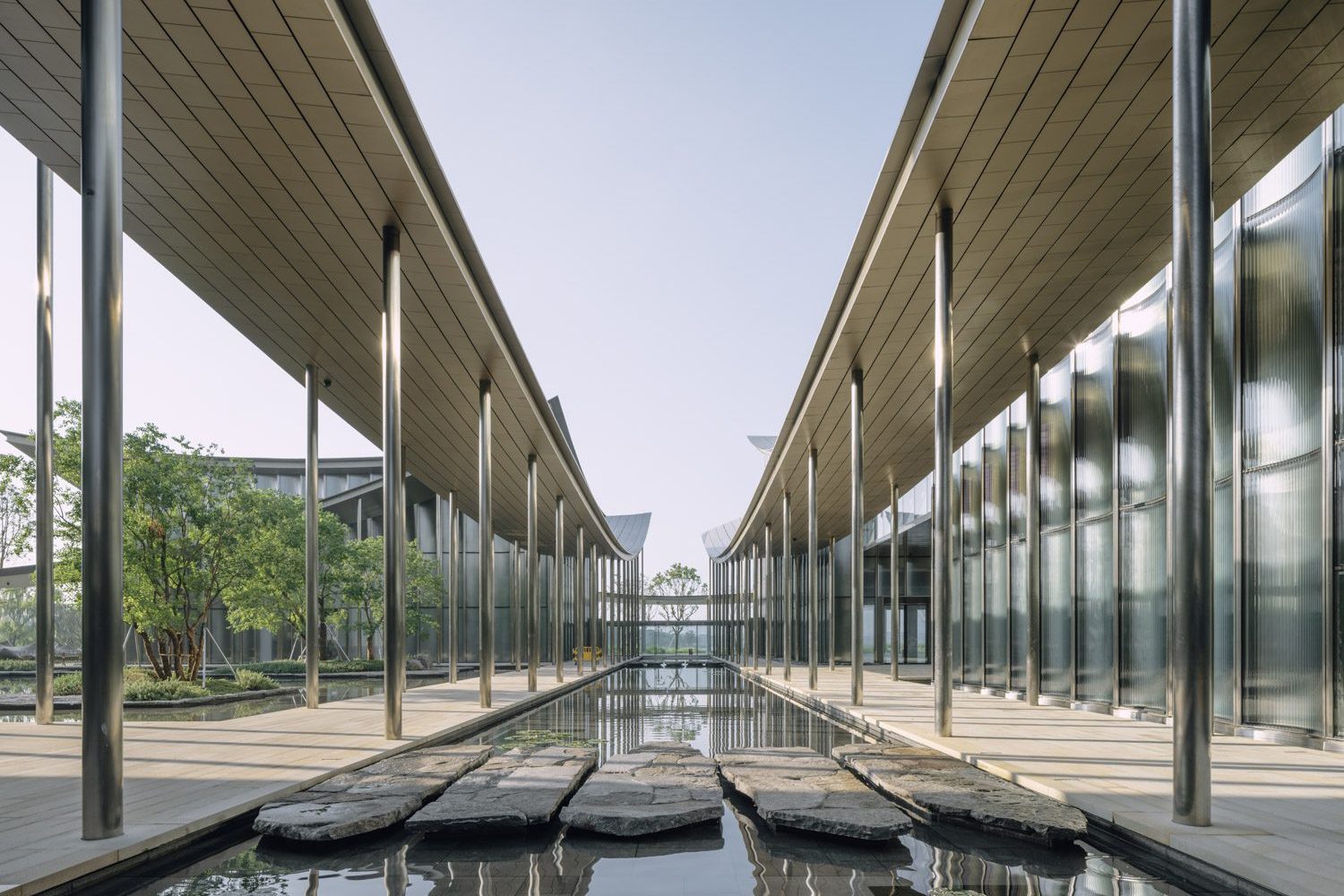 Photo: Ye Jianyuan
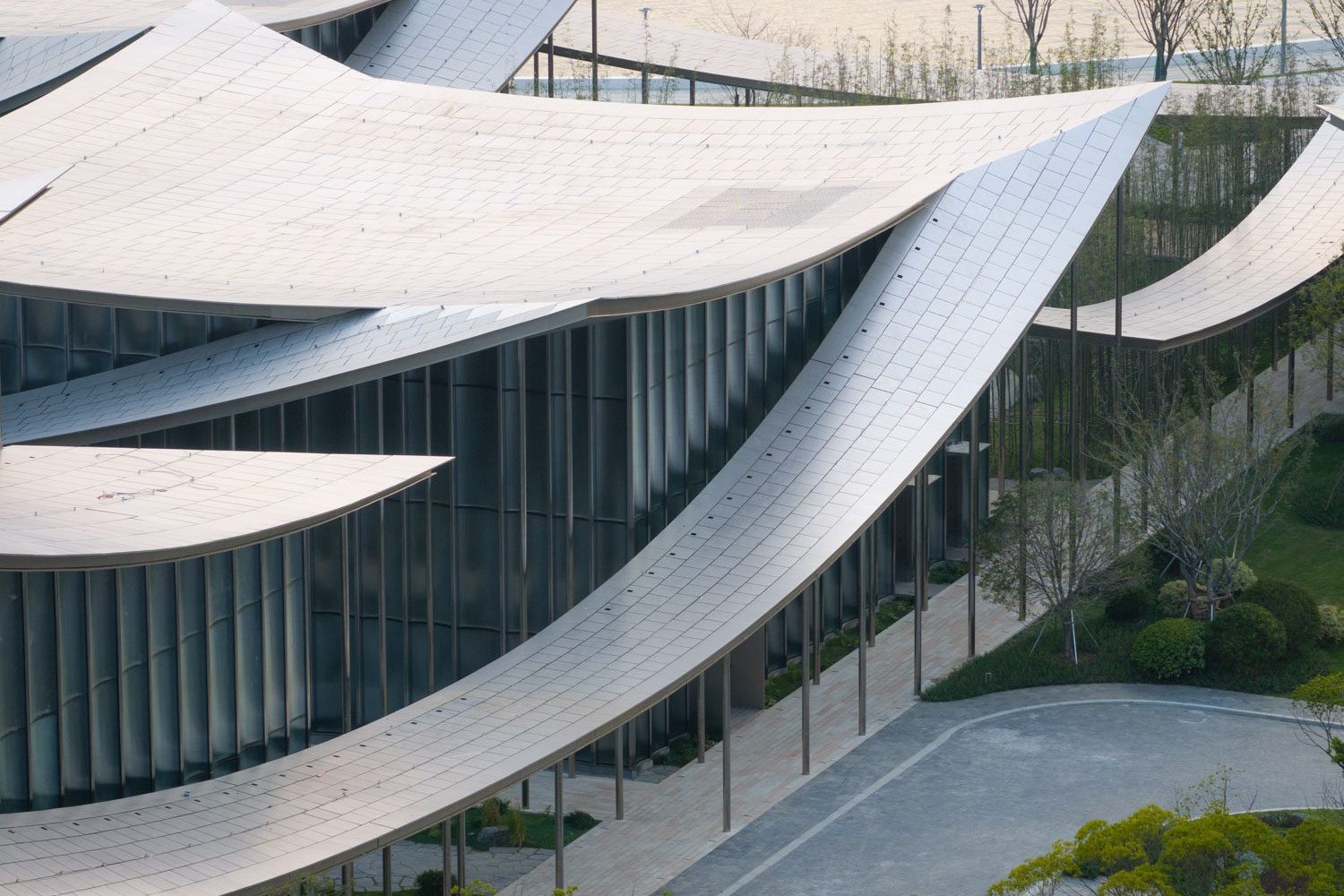
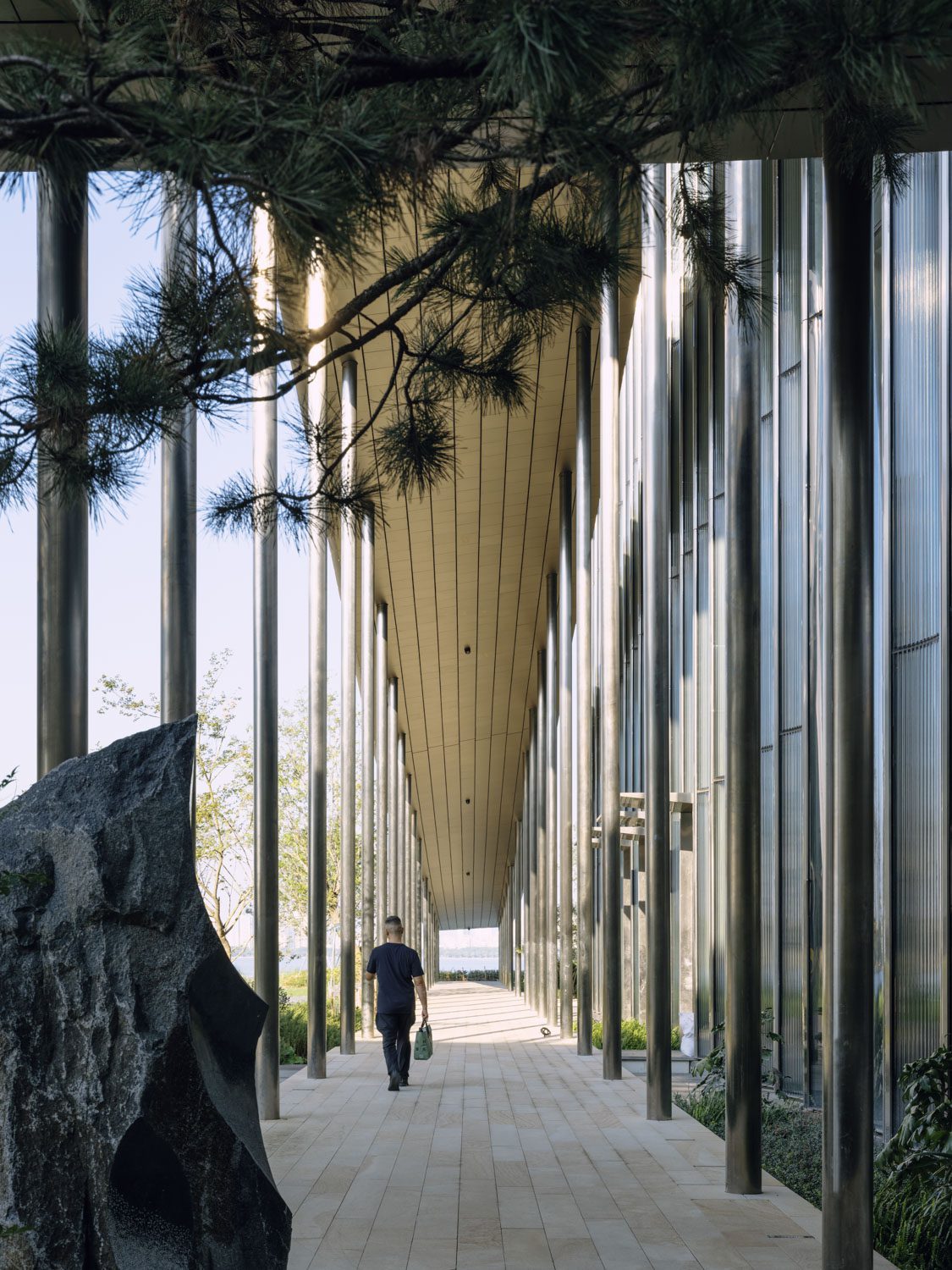
Photo: Ye Jianyuan
The museum’s architectural language is rooted in the concept of ‘Lang’ (廊, pronounced ‘Long’ in the Teochew dialect used in Thailand). In traditional Chinese architecture, a lang refers to a covered corridor that extends to connect separate buildings. It is also frequently employed to frame and enclose courtyards, a defining spatial element of the traditional Chinese house. Here, the typology is reinterpreted as a generative framework. Programmatic elements are pulled apart, creating voids between building volumes into which courtyards are inserted as a constellation of garden pockets. Circulation is displaced outward and articulated as a semi-outdoor ‘lang’ corridor, stretching between pavilions. These covered walkways are unified by a continuous stainless-steel roof finish consistent with the primary building roofs, visually stitching the twelve volumes into a cohesive whole.
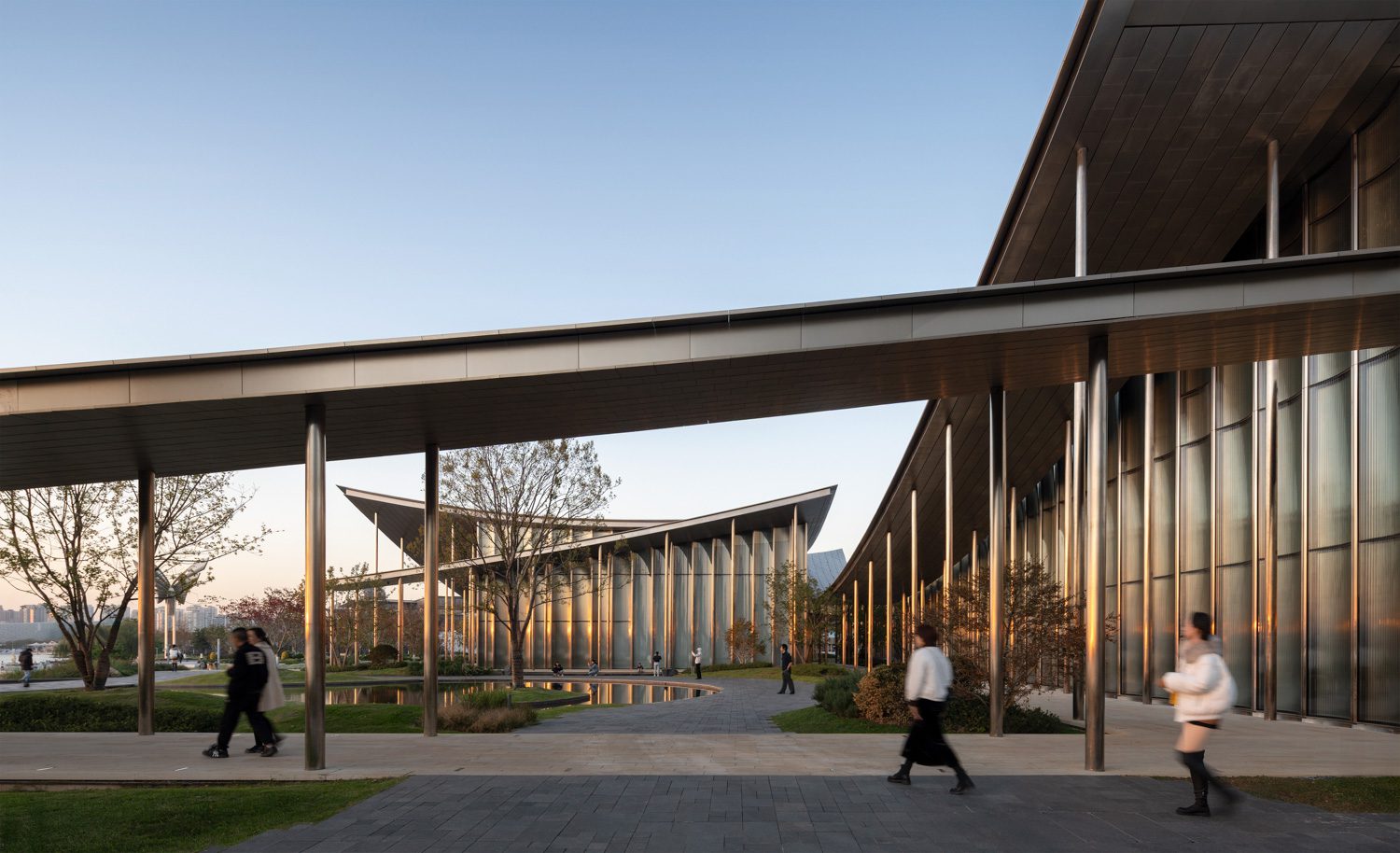
Photo: Justin Szeremeta
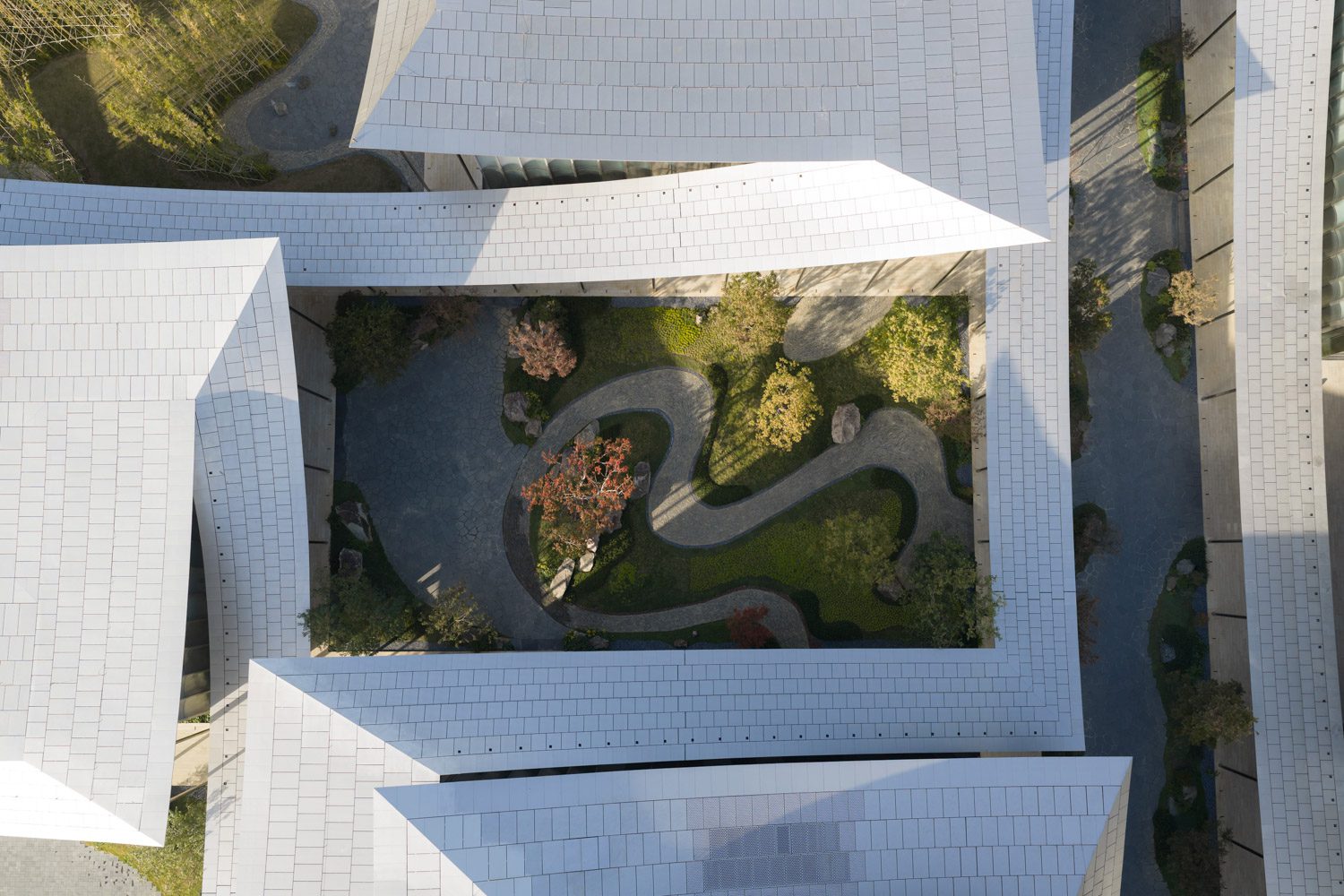
Photo: Justin Szeremeta
Together, they read as a vast Chinese garden landscape, composed of gently shifting artificial ‘hills’ that cascade toward the expansive waters of Jinji Lake. Two additional pavilions are planned to extend into the lake, linked by covered walkways with recessed roof forms, with construction scheduled to begin later this year.
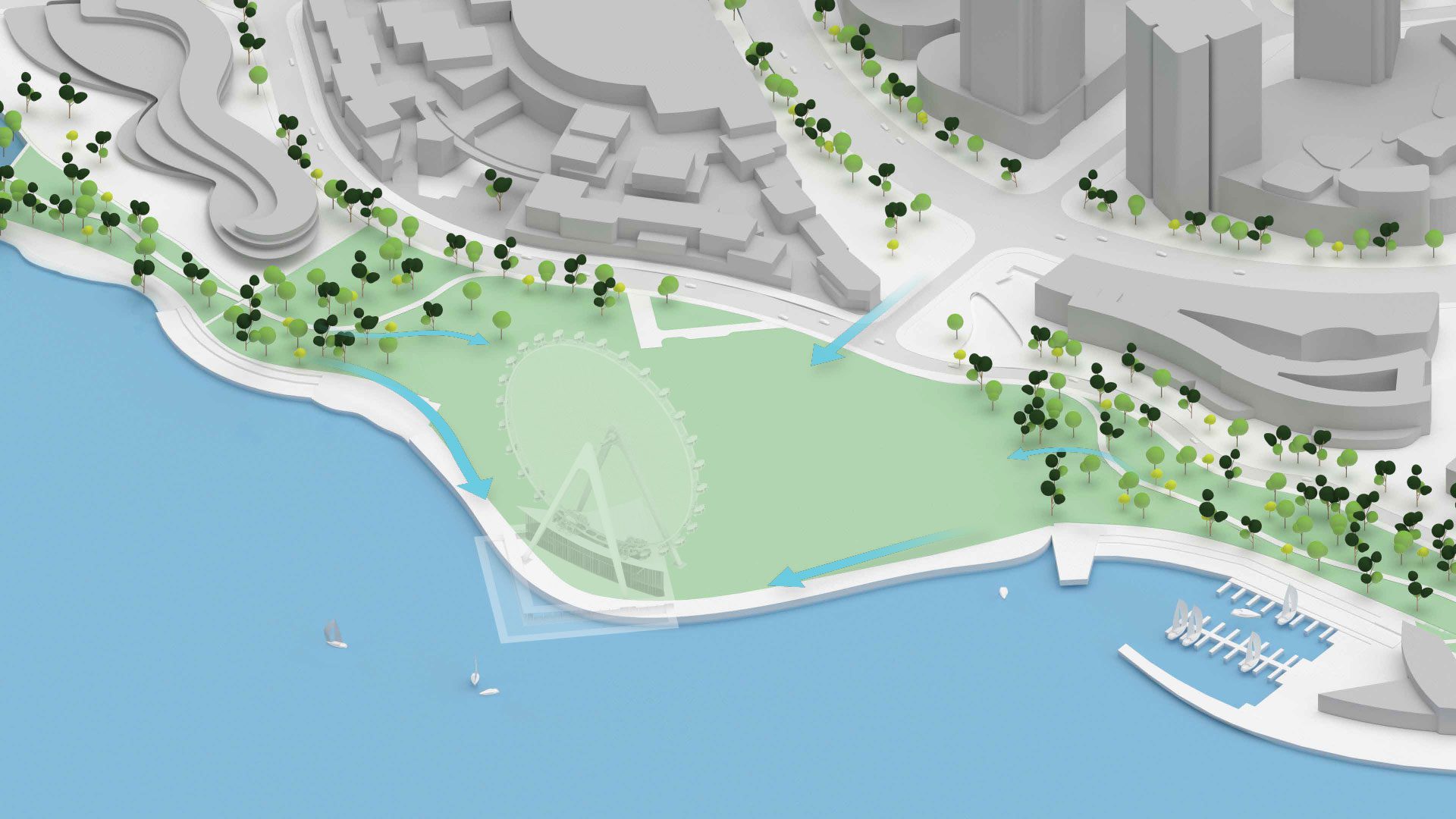
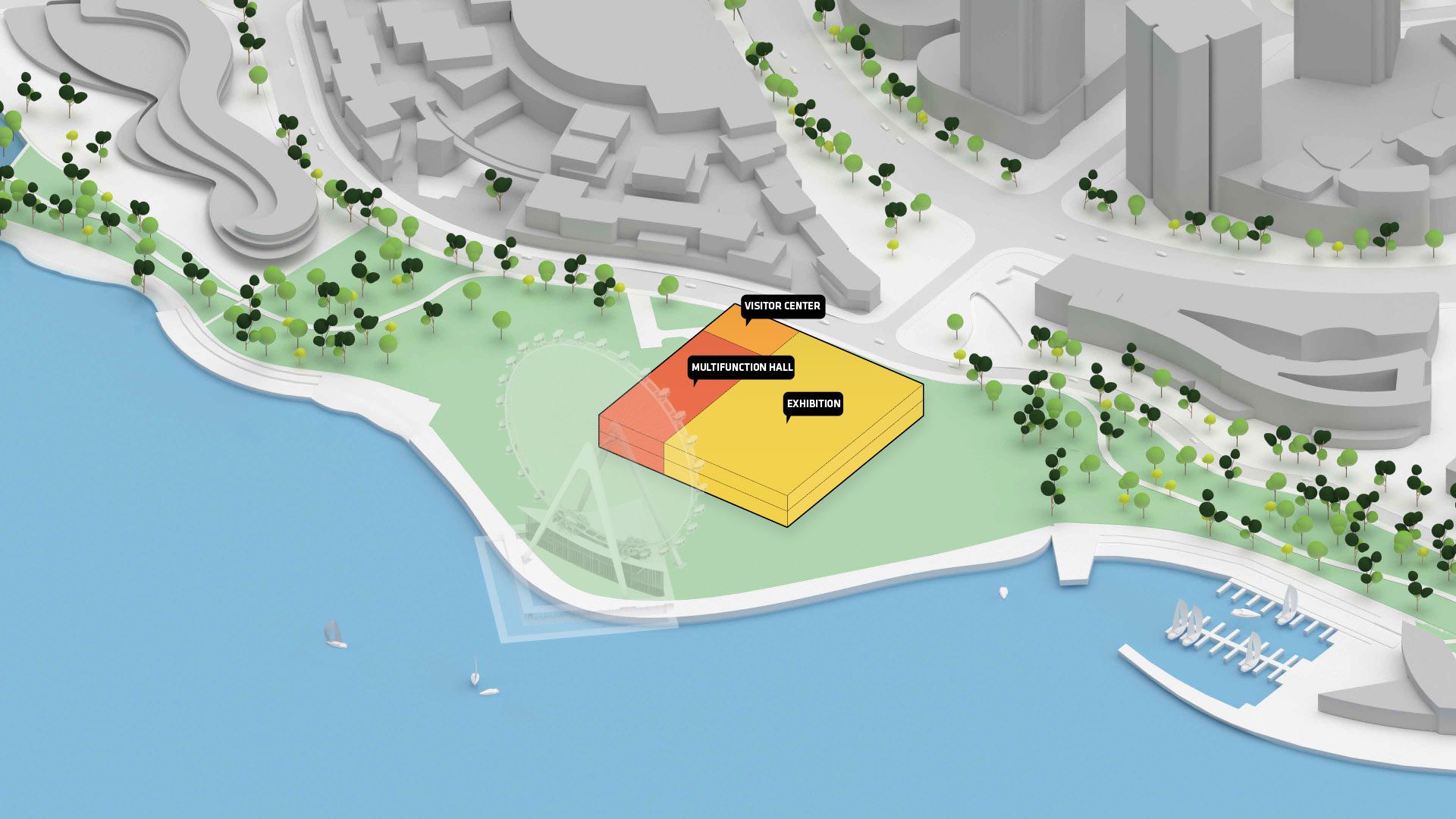
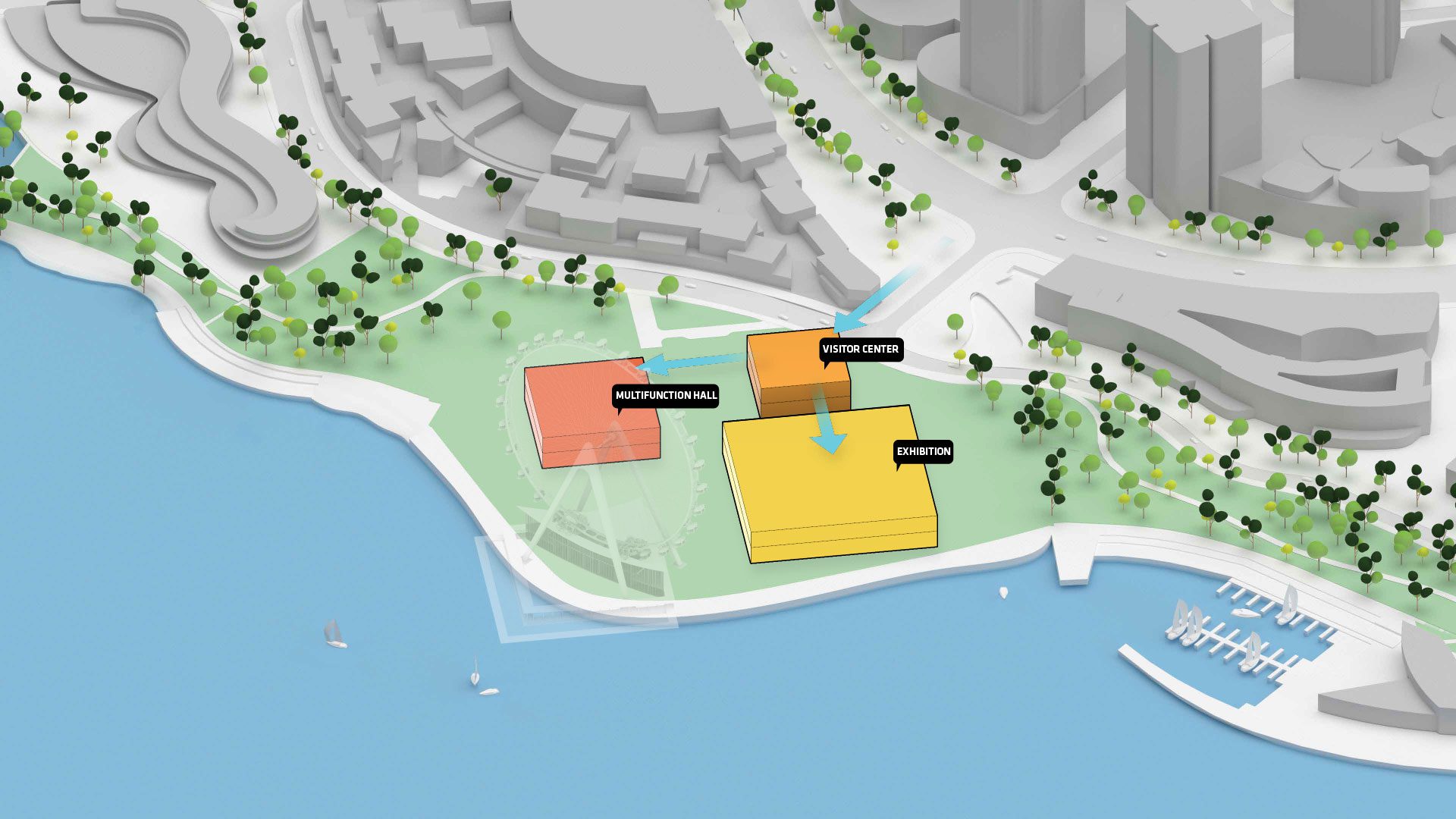
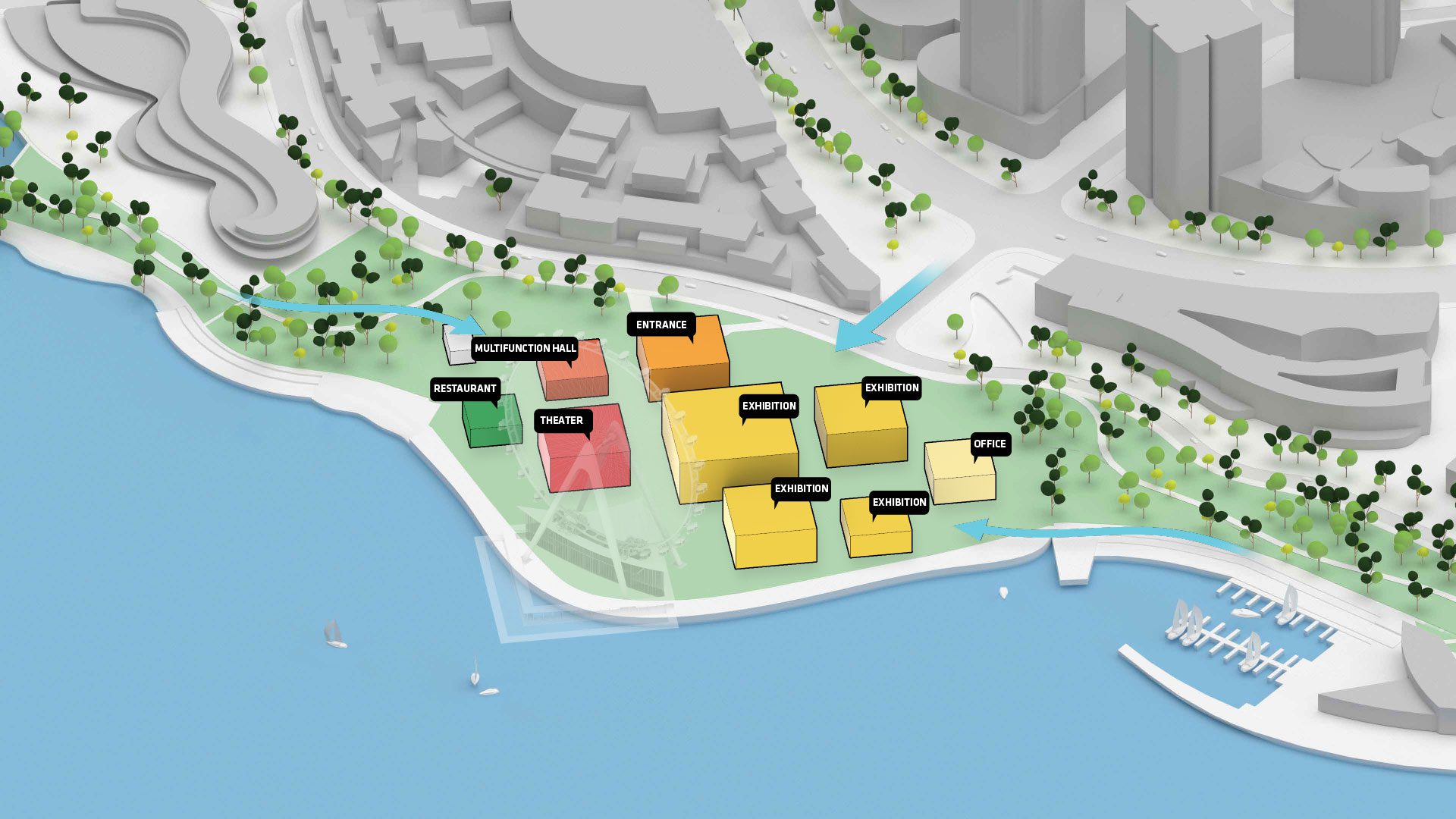
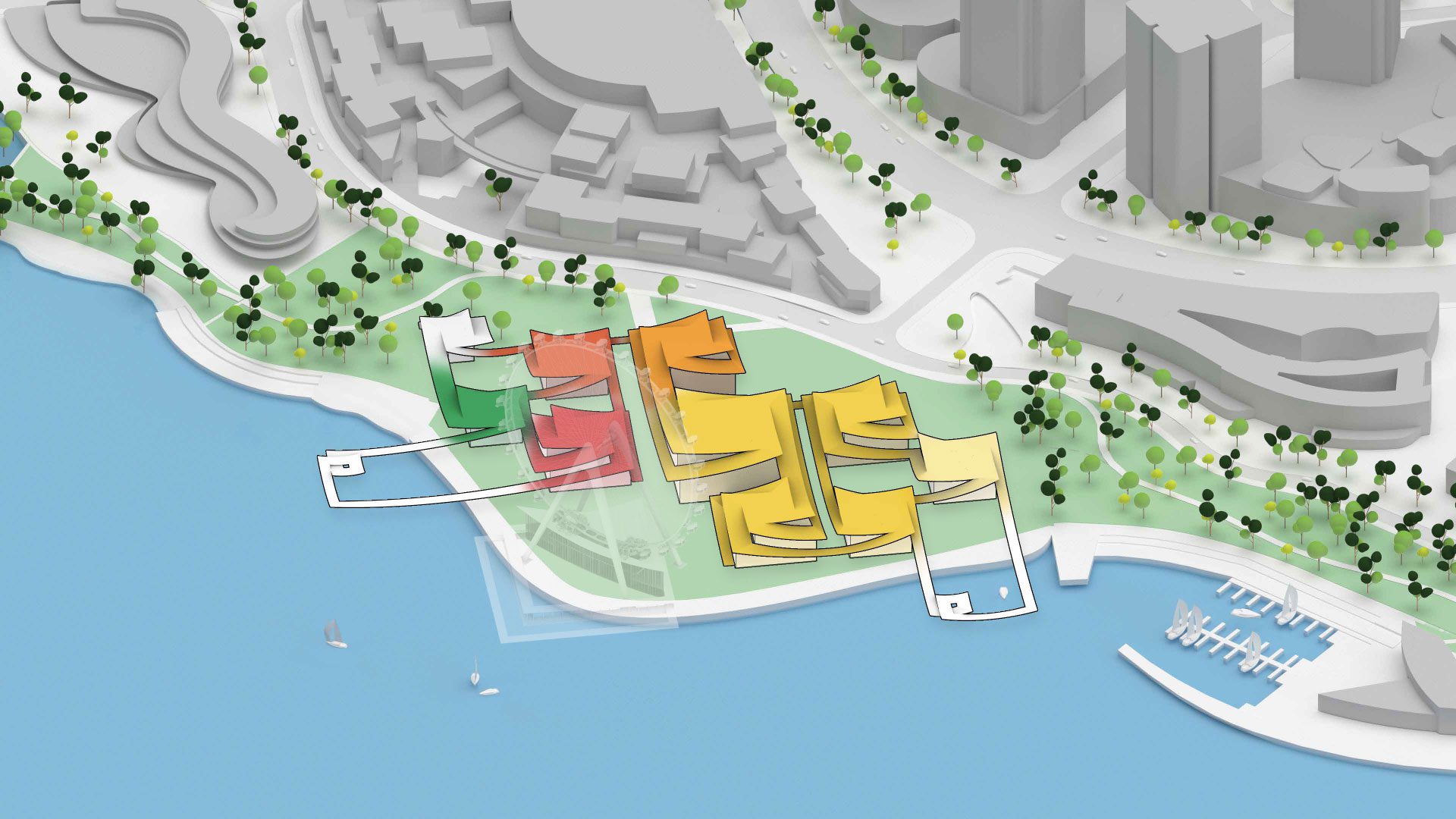
“Suzhou is the cradle of the Chinese garden. Our design for the Suzhou Museum of Contemporary Art is conceived as a garden of pavilions and courtyards. Individual pavilions are woven together by glazed galleries and porticoes, creating a Chinese knot of interconnected sculpture courtyards and exhibition spaces. Weaving between the legs of the Ferris wheel, the museum branches out like a rhizome, connecting the city to the lake. The result is a manmade maze of plants and artworks to get lost within. Its nodular logic only becomes distinctly discernible when seen from the gondolas above. Against the open space of the lake, the gentle conical curvature of the roofs forms a graceful silhouette on the waterfront. From above, the stainless roof tiles form a true fifth façade.”
– Bjarke Ingels, Founder & Creative Director, BIG
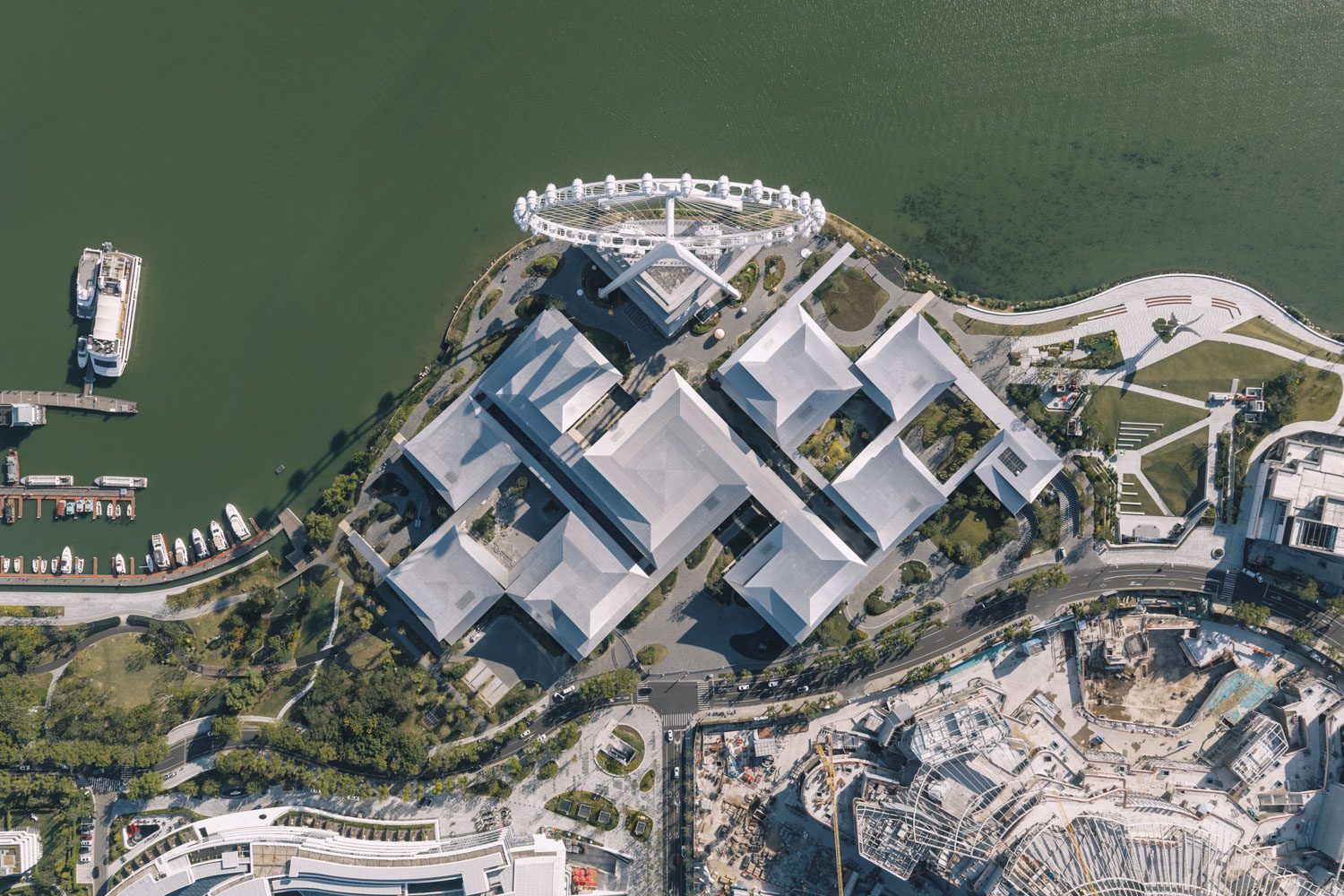
Photo: Ye Jianyuan
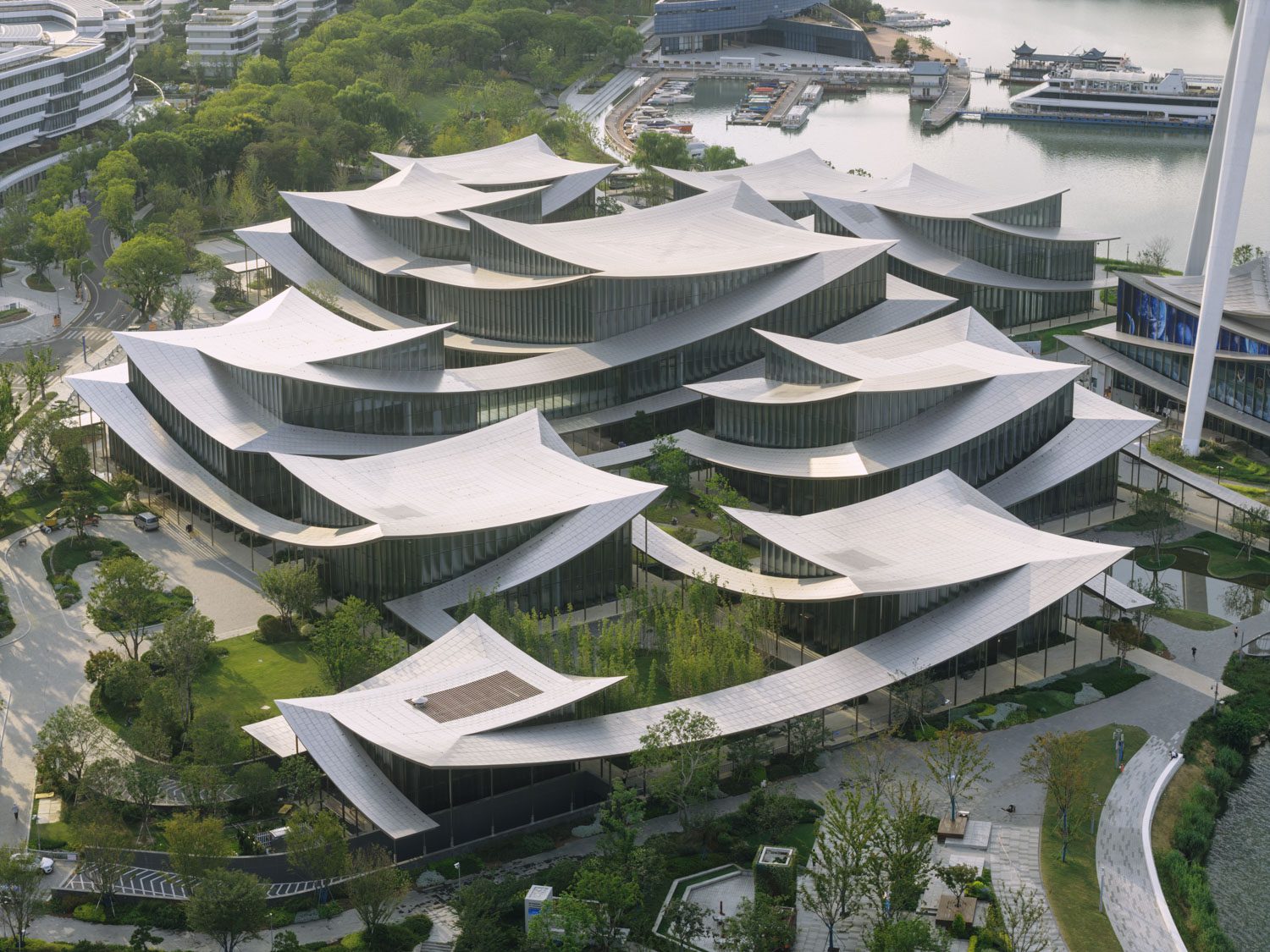
Photo: Ye Jianyuan
The remaining façades of the pavilions are wrapped in curved glass framed with warm-toned stainless steel. The surfaces reflect the sky, the lake, and the surrounding gardens, softening the boundary between architecture and landscape.
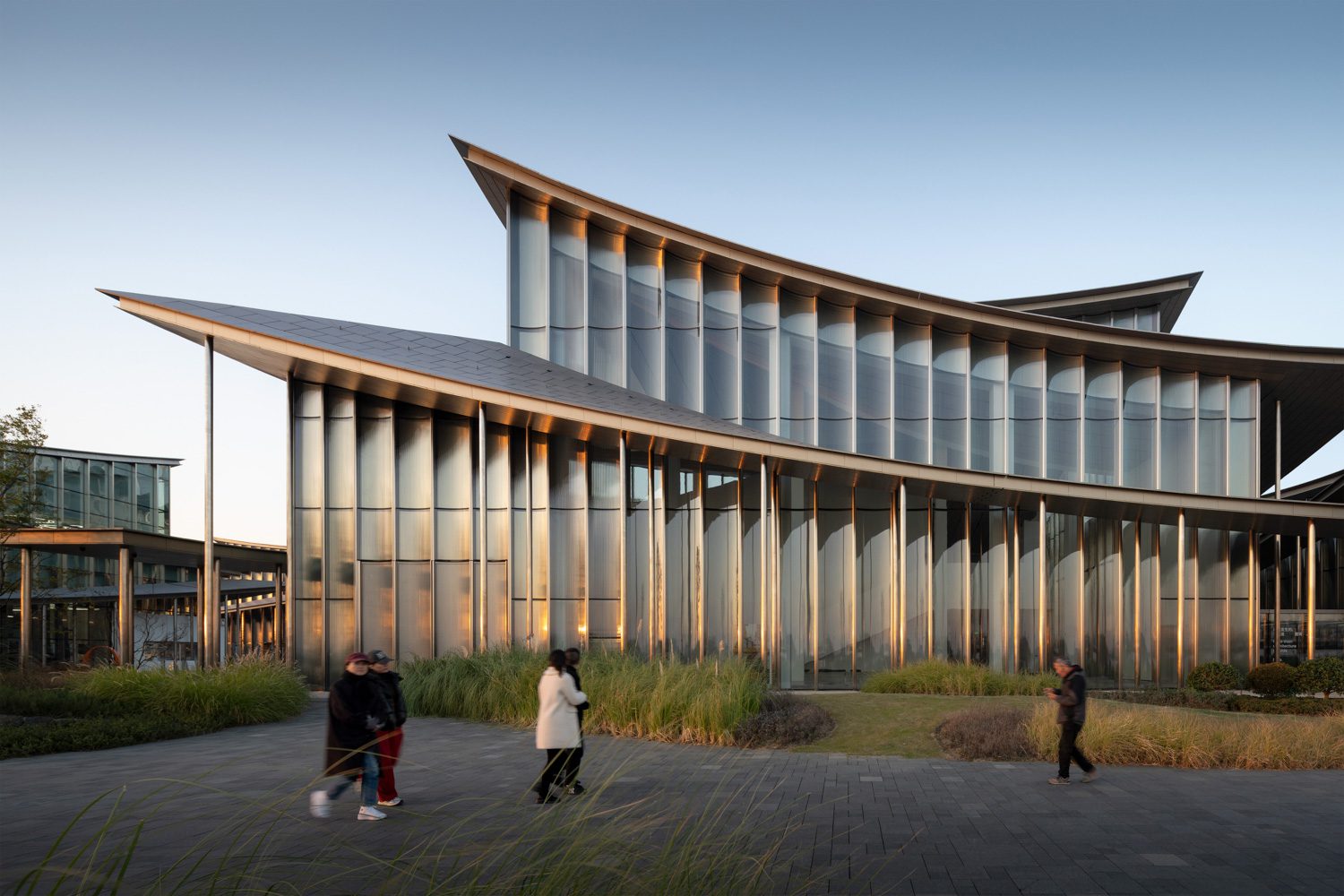 Photo: Justin Szeremeta
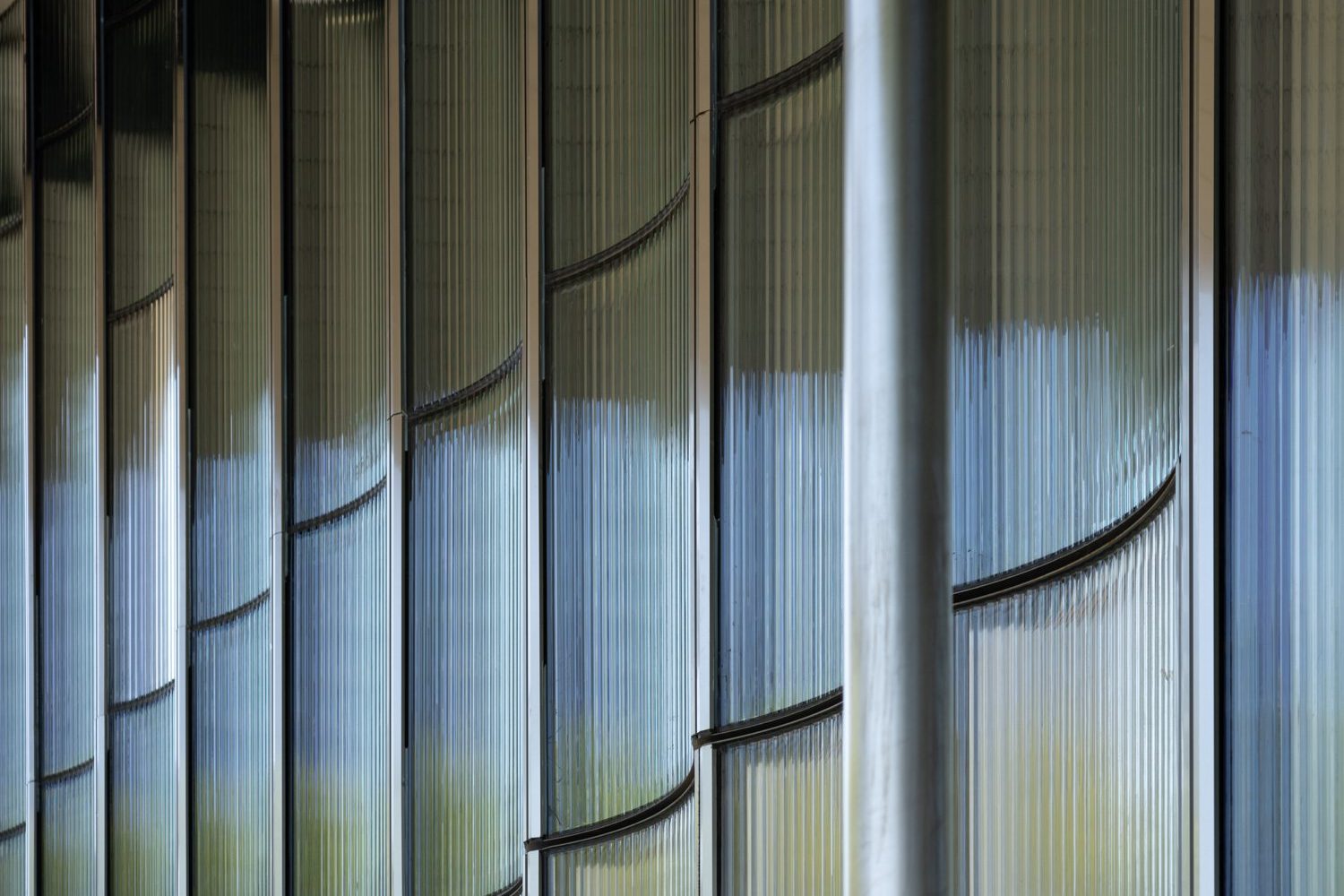
At the same time, the glazing draws natural light deep into the interiors, animating the galleries with shifting reflections and shadows throughout the day. Four of the museum’s pavilions are designated as primary gallery spaces. Among the inaugural exhibitions is Materialism, which presents Bjarke Ingels’ exploration of individual materials during his tenure as guest editor of Domus. The exhibition examines how stone, earth, concrete, metal, and other materials inform and shape architectural design.
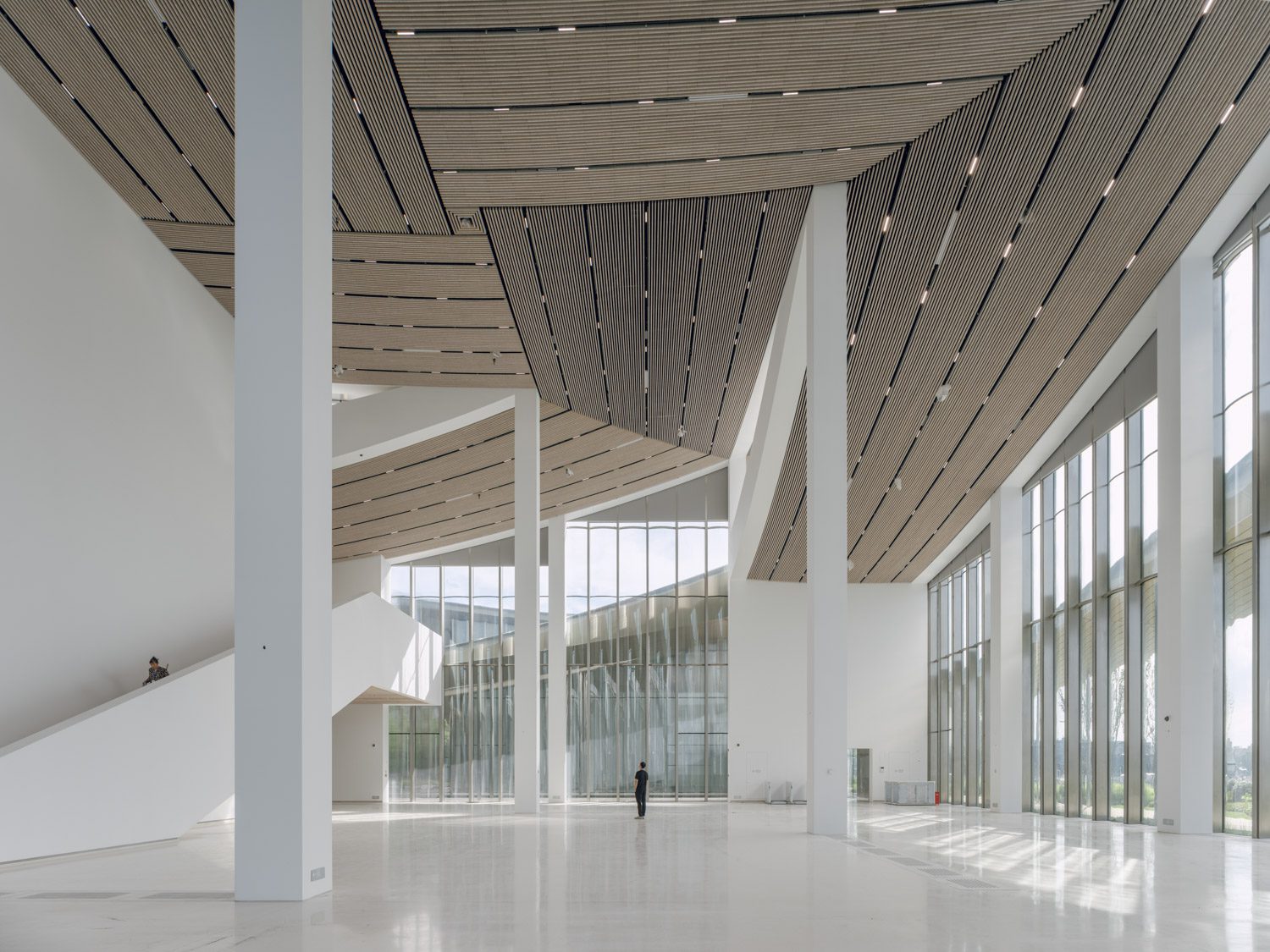
Photo: Ye Jianyuan
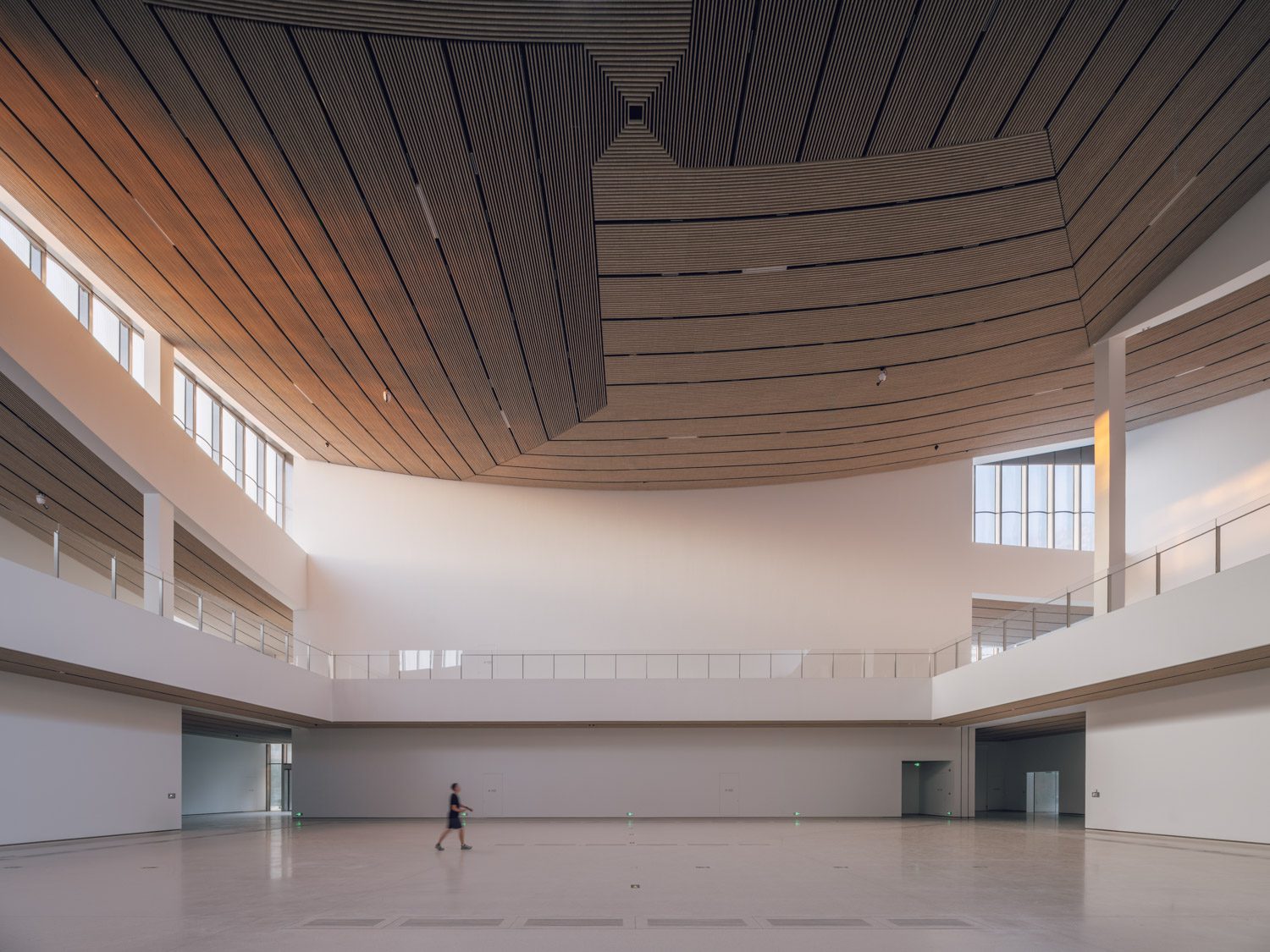
Photo: Ye Jianyuan
The remaining pavilions accommodate multipurpose rooms, a theater, and a restaurant. The surrounding landscape is designed to gradually transition into open plazas for outdoor activities and lakeside public leisure, extending the museum’s presence into the civic life of the city.
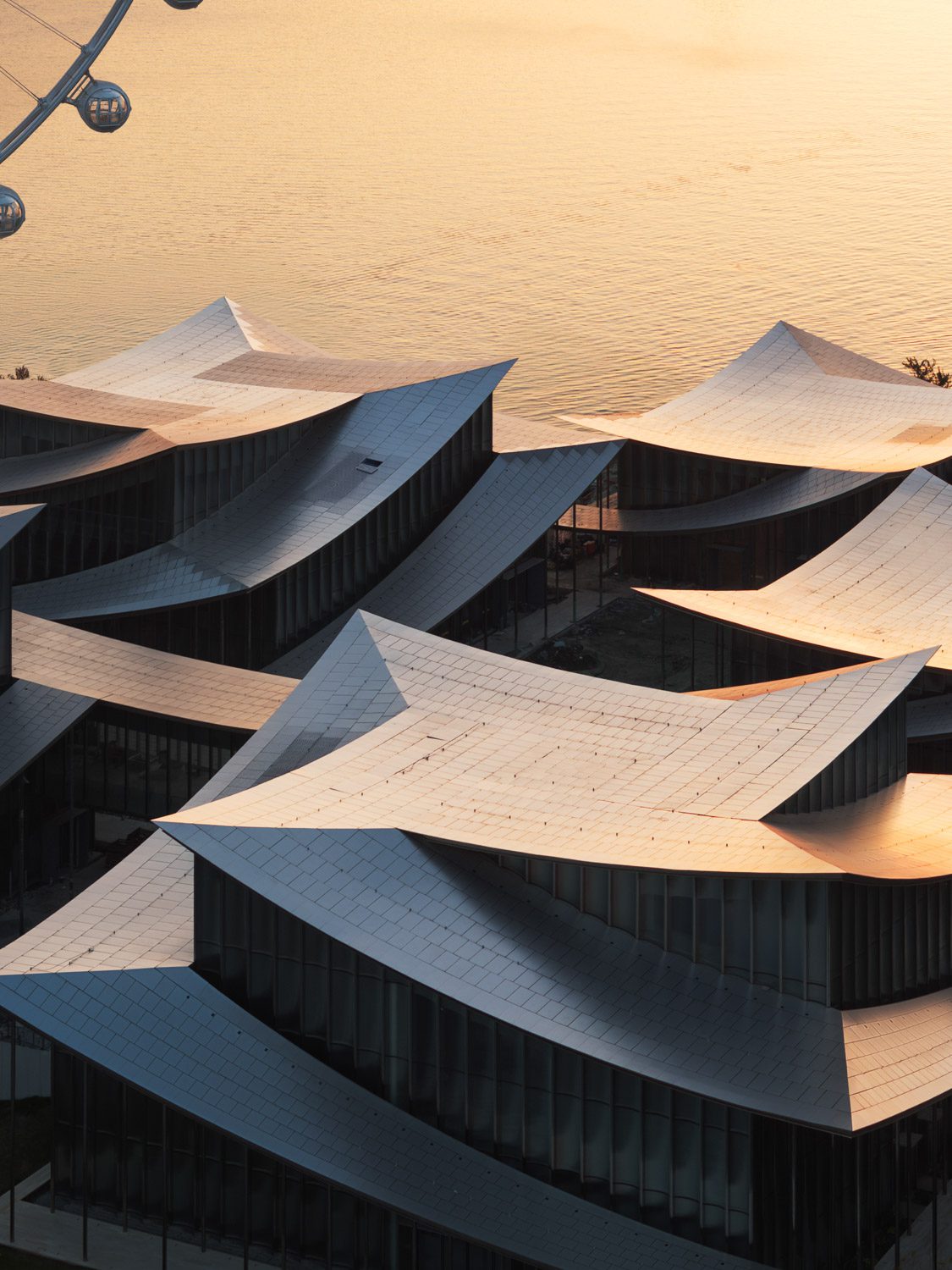
Photo: Ye Jianyuan