
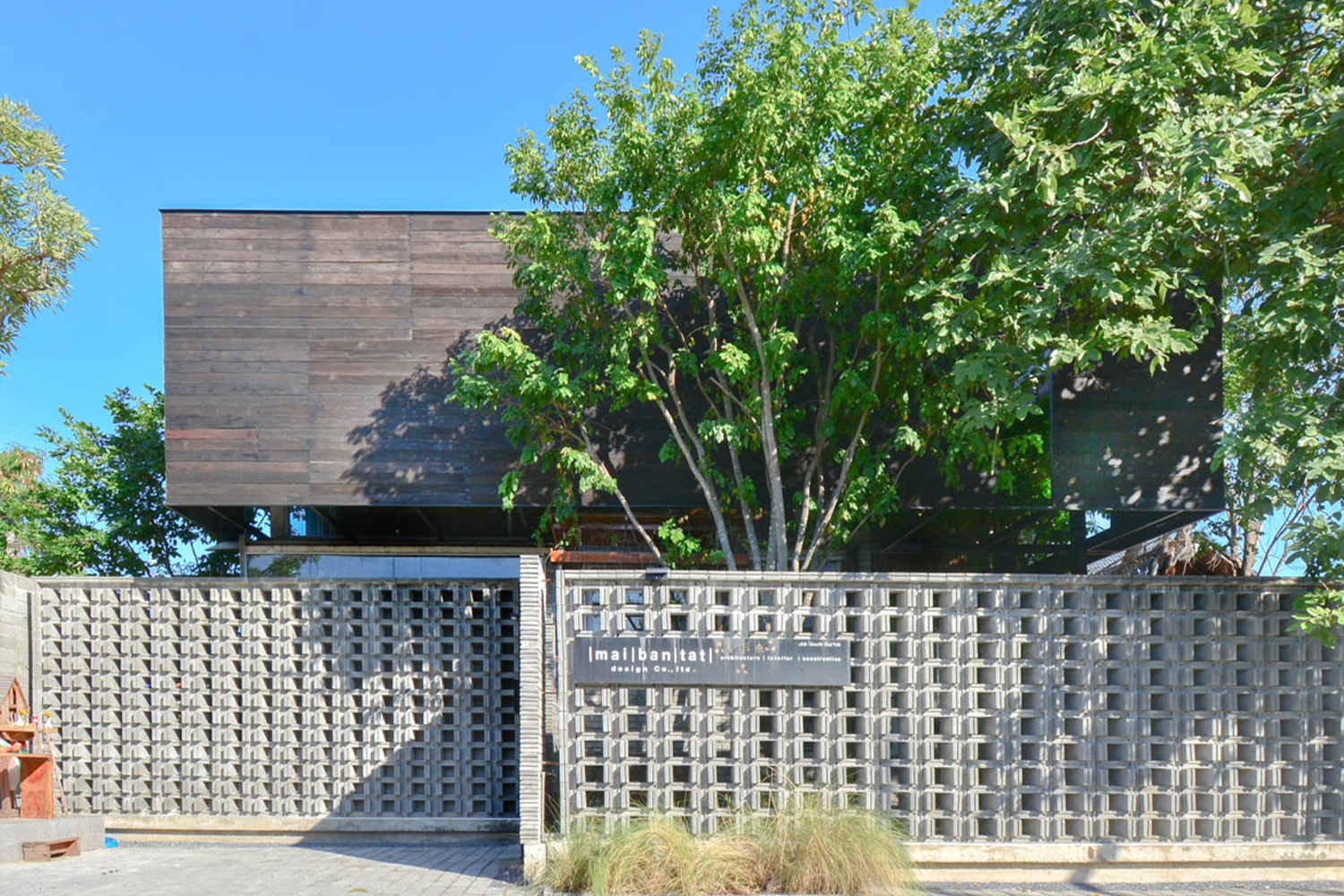
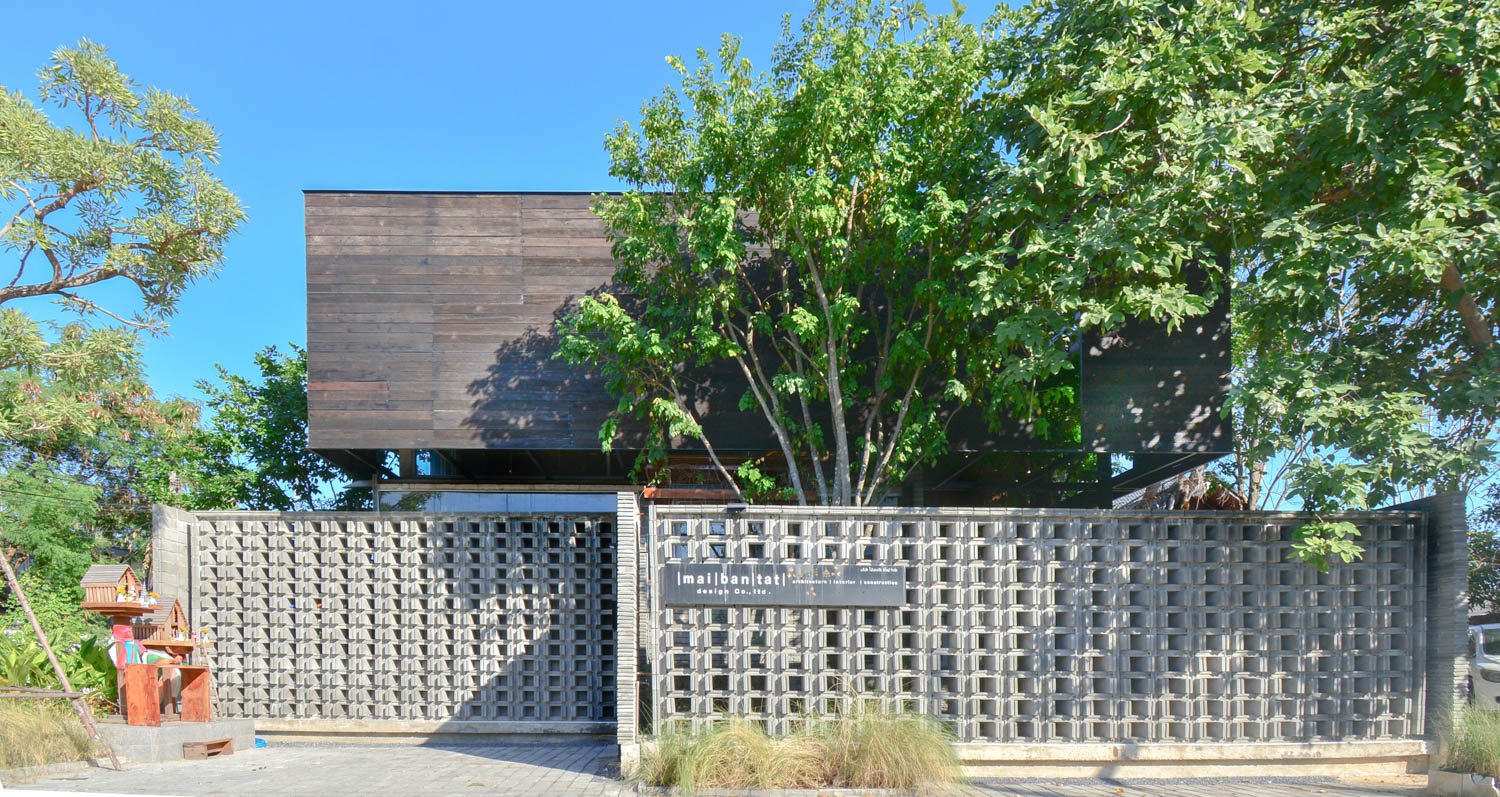
BANDIDTAT TOSAYANCHAI, FOUNDER AND ARCHITECT OF MAIBANTAT DESIGN, REPURPOSED SALVAGED MATERIALS FROM HIS FAMILY’S OLD HOUSE TO CONSTRUCT HIS NEW OFFICE, REINVENTING THE TRADITIONAL ‘HALF-WOOD, HALF-CONCRETE HOUSE’
TEXT: XAROJ PHRAWONG
PHOTO: BANDIDTAT TOSAYANCHAI
(For Thai, press here)
The term vernacular architecture is often understood as architecture made without the intervention of architects, shaped instead by local conditions, everyday needs, and the particular skills of each place. In Thailand, vernacular architecture has therefore taken on different forms according to the availability of local materials and the knowledge of local craftsmen. Yet one recurring type commonly found in rural areas is the timber house raised on precast concrete columns: the upper floor is used for living, while the lower level serves as a space for craftwork, parking, cooking, and bathing. When the owner has the means to extend the house, this lower level is enclosed with brick or concrete block walls, sometimes left rendered and unpainted, sometimes painted according to available means. These houses are commonly known as ‘baan krueng mai krueng poon,’ or ‘half-wood, half-concrete houses.’
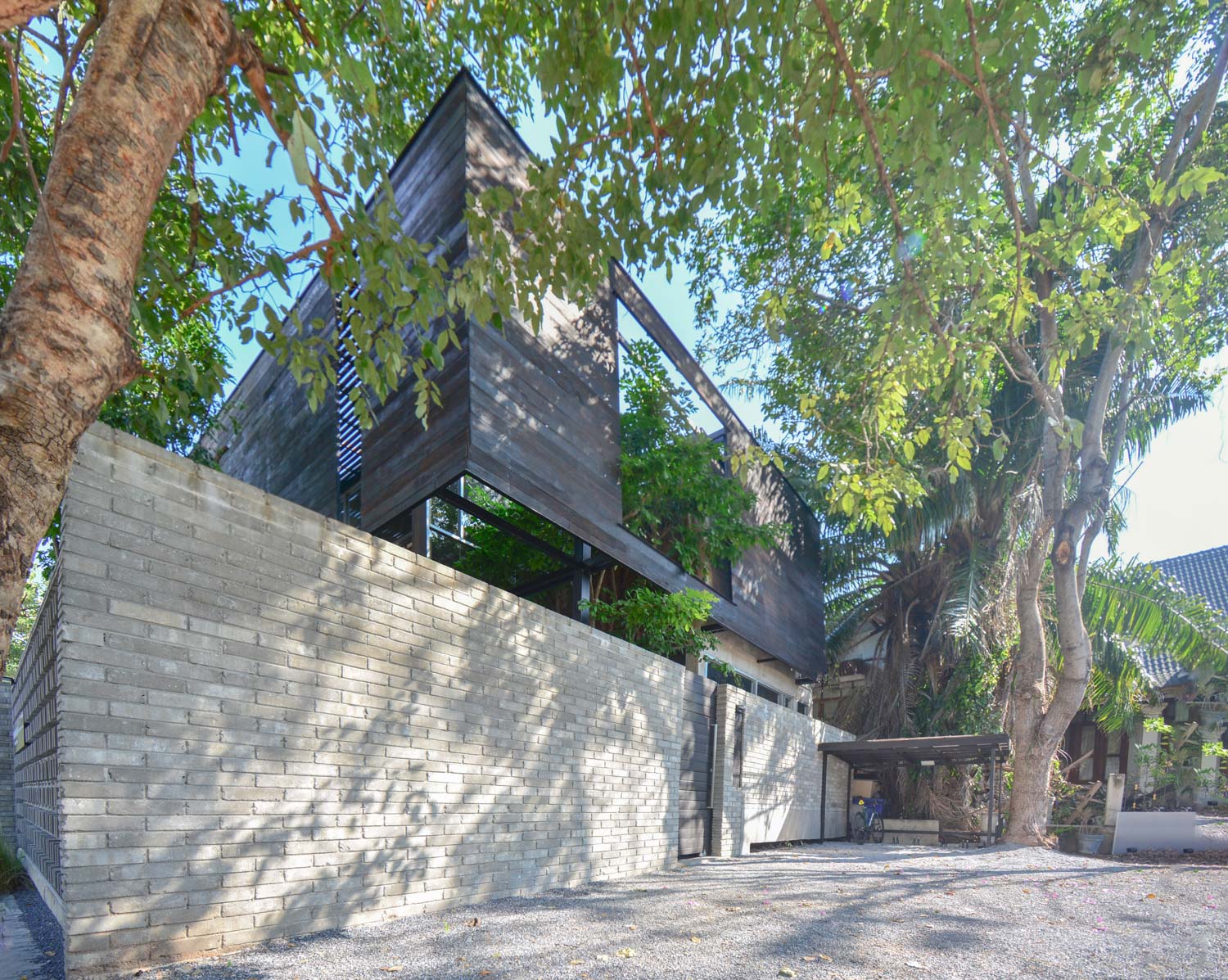
In the context of Korat, or Mueang Nakhon Ratchasima District, such half-wood, half-concrete houses are a familiar sight across suburban and rural areas. To many, they may suggest a house that is old-fashioned, out of step with the present. But not to the architects of Maibantat Design, who were searching for a site for their new office in Korat. When the architects acquired a plot of land and brought in materials salvaged from their family’s old half-wood, half-concrete house to construct the office, they saw in them the possibility of articulating a contemporary architectural language through old materials. What emerged was a new syntax assembled from a building type that is often overlooked.
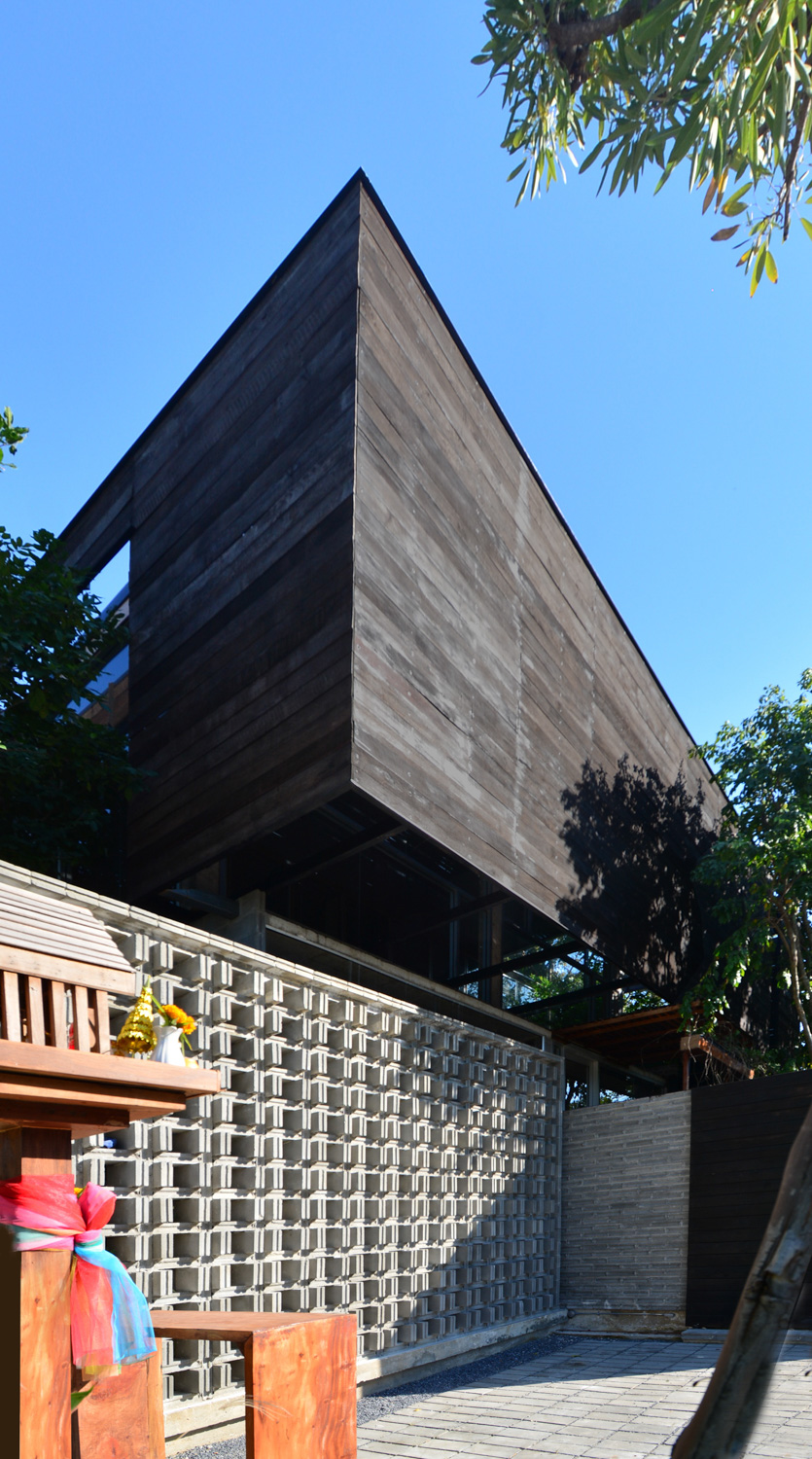
What the architects reinterpret from the vernacular is the possibility of producing an effect contrary to the expected expression of both material and construction method. Traditionally, old timber houses are characterized by horizontal timber siding, punctuated by openings such as doors and windows, giving their elevations a sense of lightness. Here, the architects deliberately make the timber wall appear solid and weighty by cladding it with tightly spaced boards and staining the wood black. Functionally, this helps protect the interior from the western sun. Perceptually, it allows the timber volume above to be read as heavy, reversing the conventional reading of material and weight in vernacular houses.
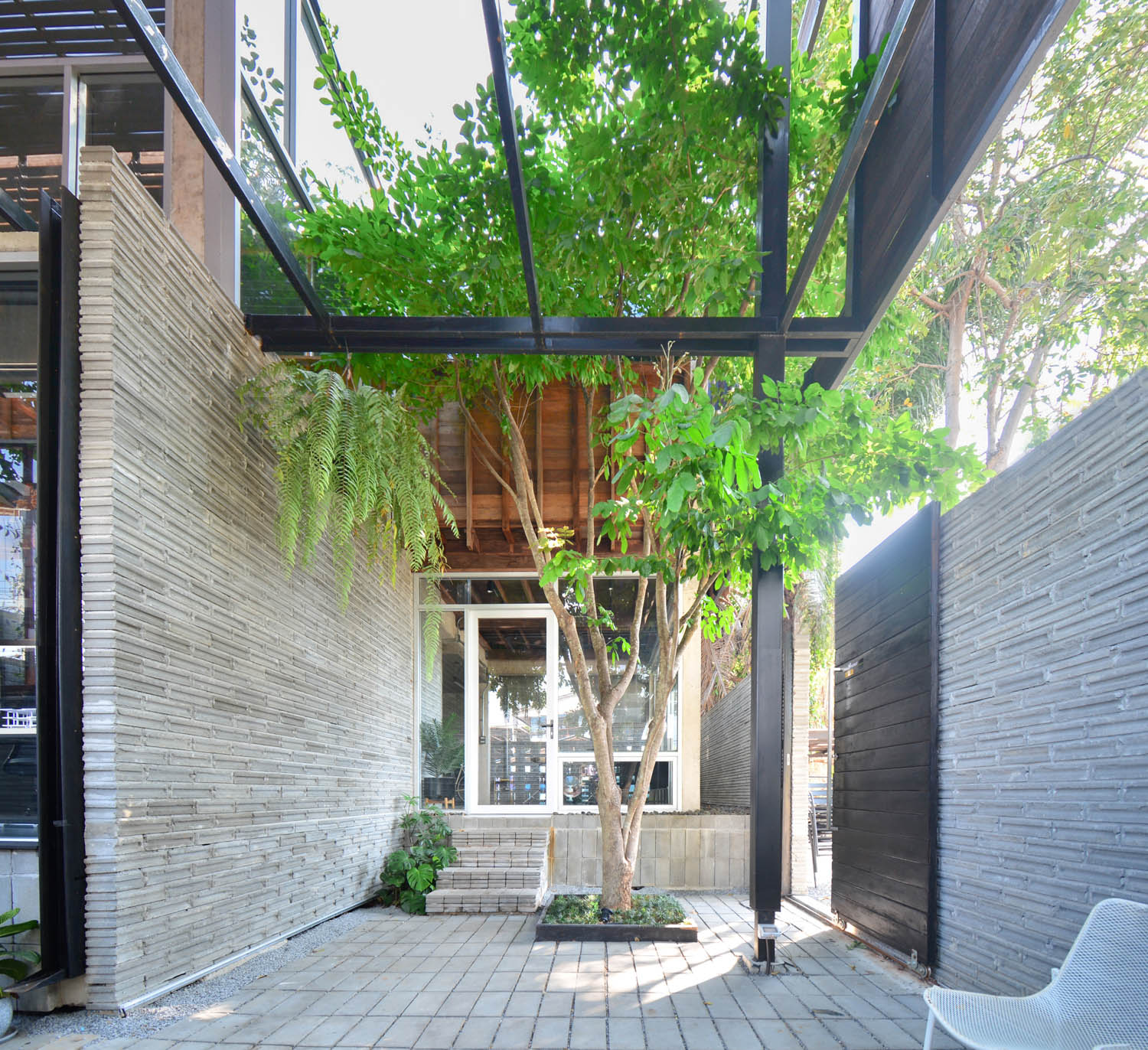
For the base of the building, the architects turn to a familiar, inexpensive, and readily available material rarely treated as a subject of architectural attention: the concrete block. Rather than using it conventionally, they assemble the blocks in a variety of patterns. In the traditional half-wood, half-concrete house, the lower portion is typically a rendered masonry wall that gives the base a sense of mass and heaviness. Here, the architects propose a semi-solid, semi-porous wall by alternating the arrangement of concrete blocks. The more solid sections are built in staggered courses that still allow gaps to emerge, set above horizontally laid blocks. This creates a relationship between the interior and the garden, as well as between the office and the surrounding community, while still maintaining a degree of privacy. Beyond the walls, concrete blocks are also used for the exterior paving, interior flooring, stairs, and shelving, establishing a sense of continuity throughout the project. Variation is introduced through pattern: full blocks and half blocks, vertical and horizontal orientations, and blocks cut into different sizes to wrap around the structure.
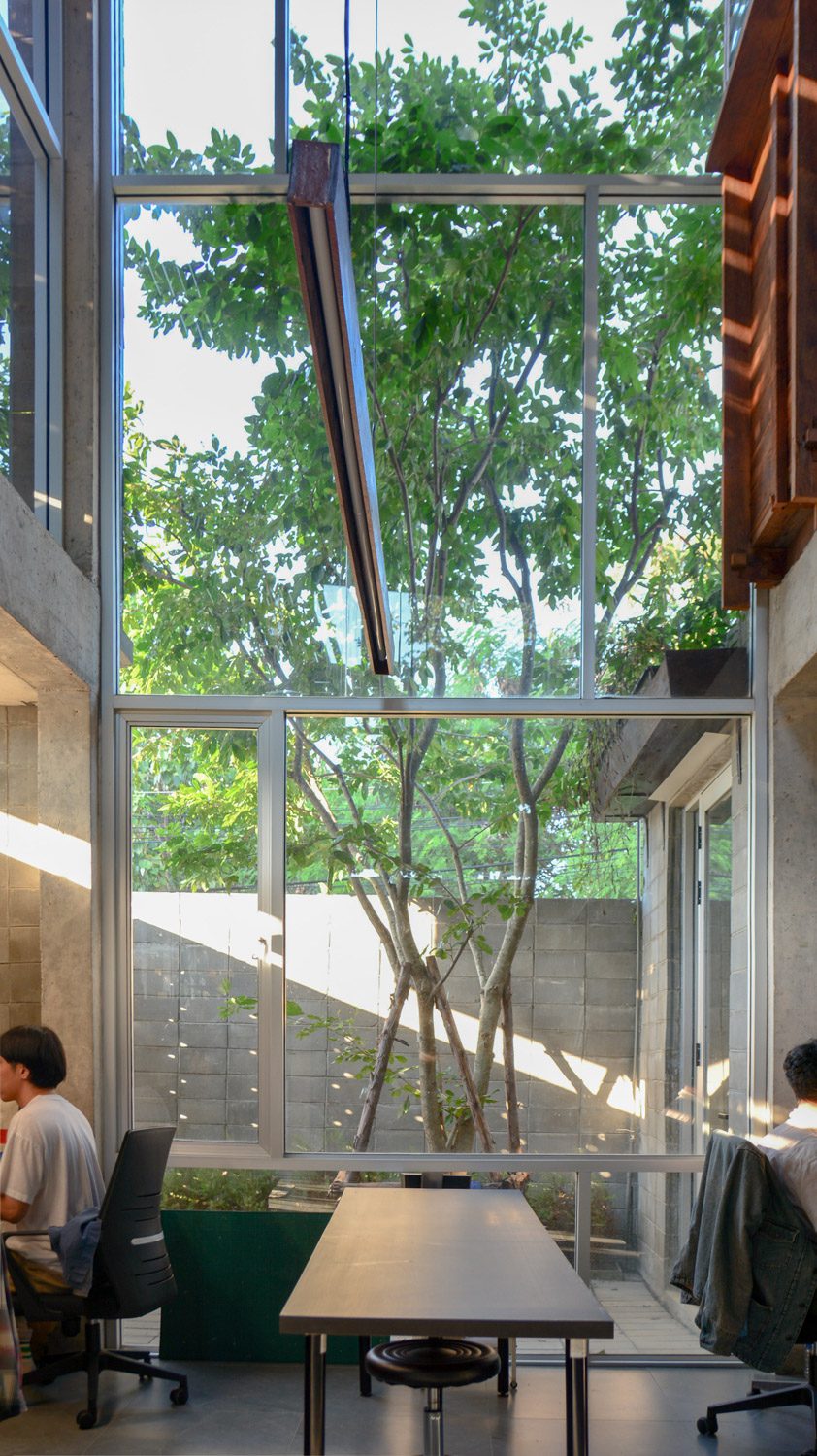
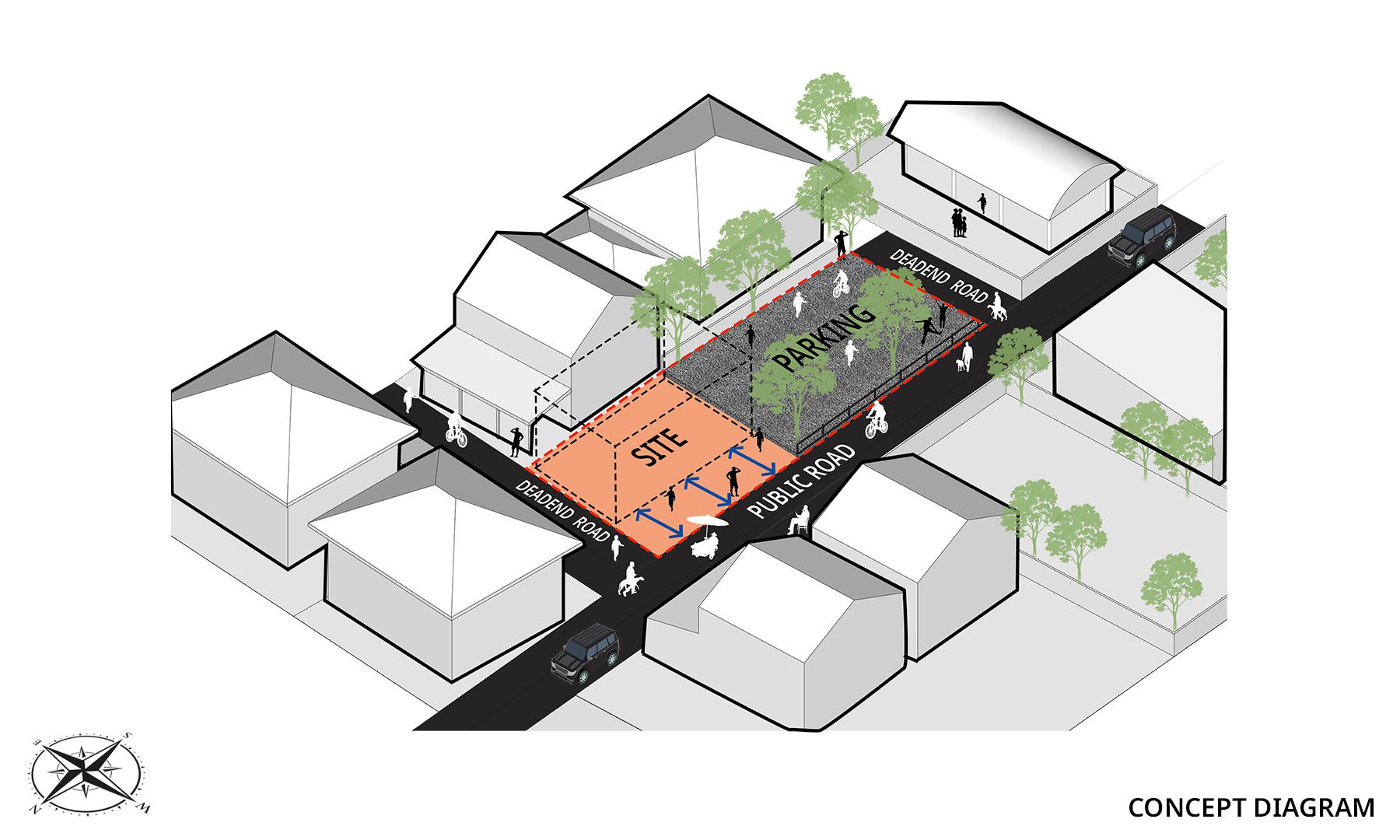
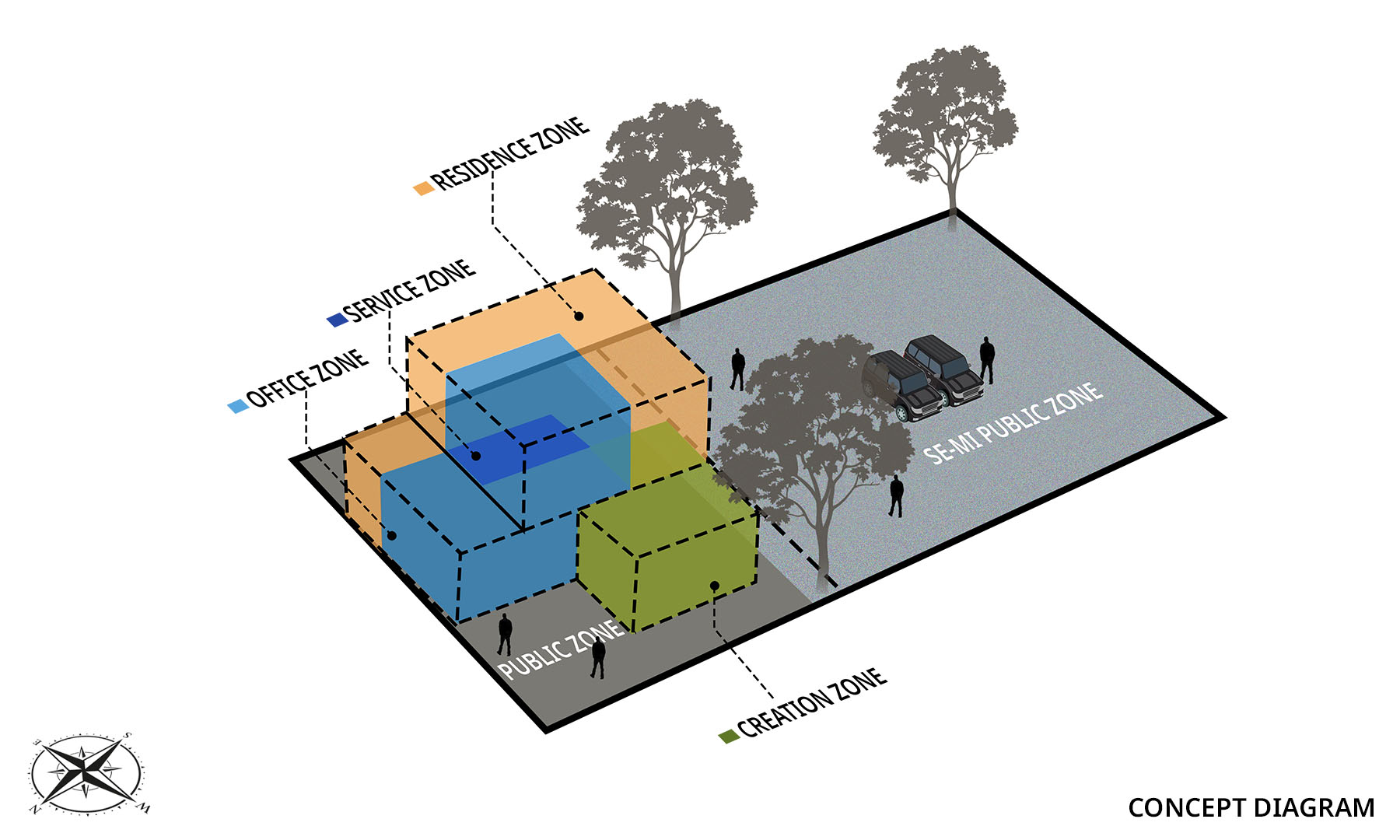
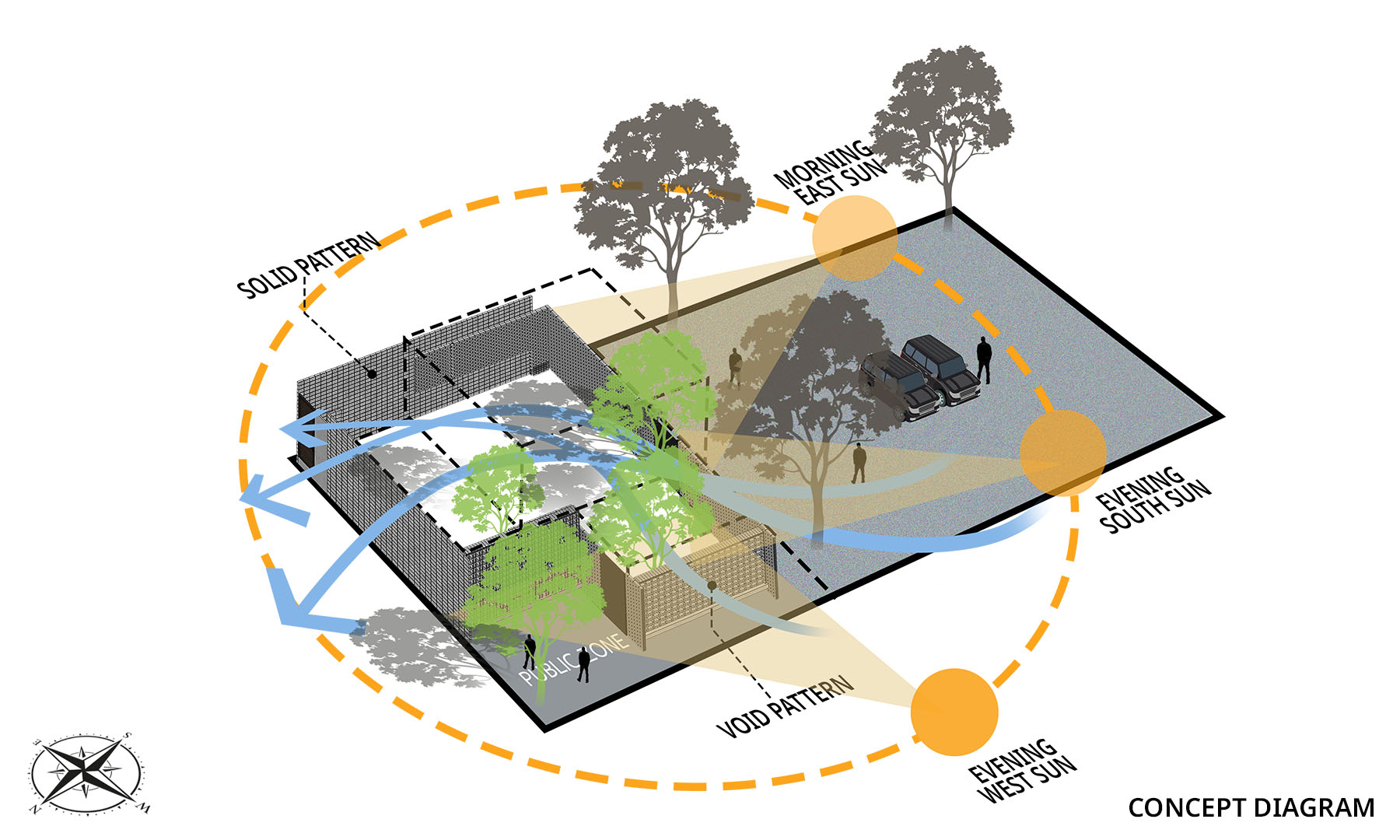
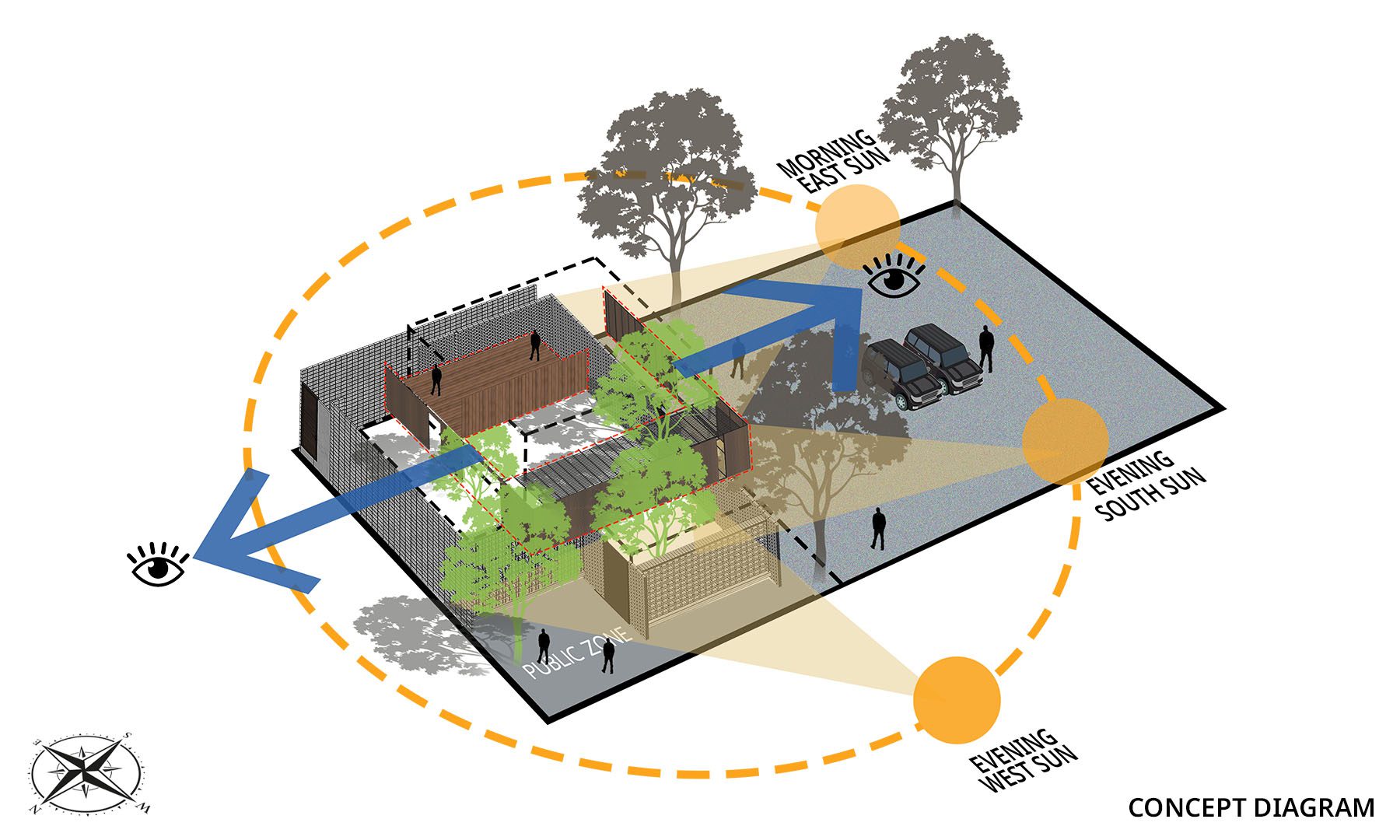
The building is situated within a residential community, surrounded by rows of two-story houses. Its spatial arrangement is shaped by the need for privacy: a solid wall to the north creates a focused working environment for the office, while the western side is treated as semi-solid at ground level, helping to connect the interior with its surroundings while reducing heat from the afternoon sun. The architects organize the first floor as a more public area for the architectural office, comprising both workspaces and recreational areas. The second floor, by contrast, is more private, containing a pantry and bedroom. The exterior envelope therefore reflects the internal organization, with the upper floor taking on a more enclosed appearance to provide privacy for the owner.
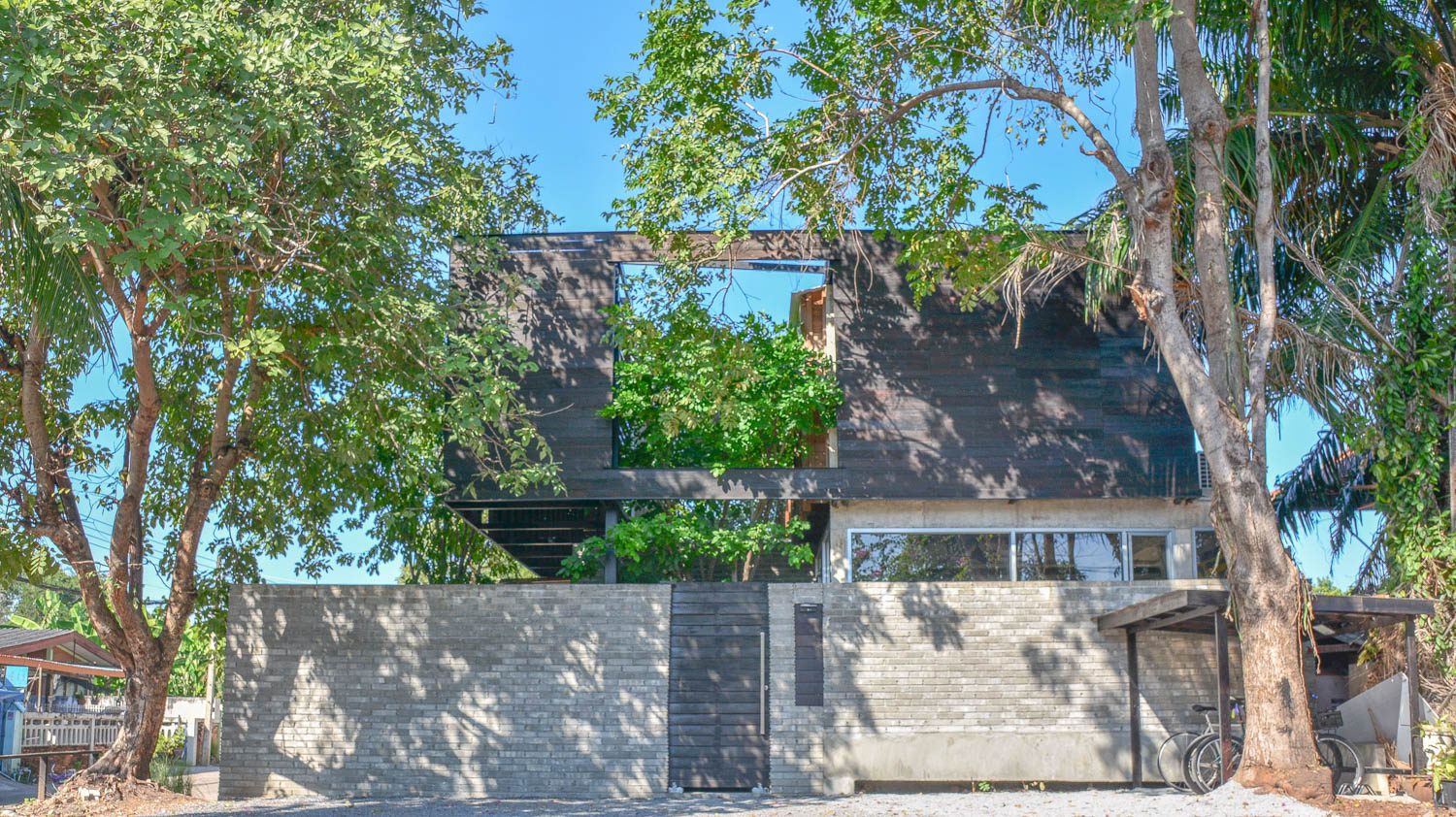
Looking at the project as a whole, the architects place emphasis on truth to materials and the craft of local builders. This does not mean pursuing immaculate refinement, but rather allowing a certain sincerity to emerge through the traces of wood grain, the rawness of unfinished concrete block, and surfaces that acquire character through the patina of time.
Bandidtat Tosayanchai, founder and architect of Maibantat Design, reflects on vernacular architecture and the beauty of material honesty:
“In my view, there are many possibilities for building upon what our predecessors have done. When we speak of the honest expression of materials, it is not merely about exposing surfaces, but about a truth that arises from tectonics, from the way each material is formed and assembled.”