
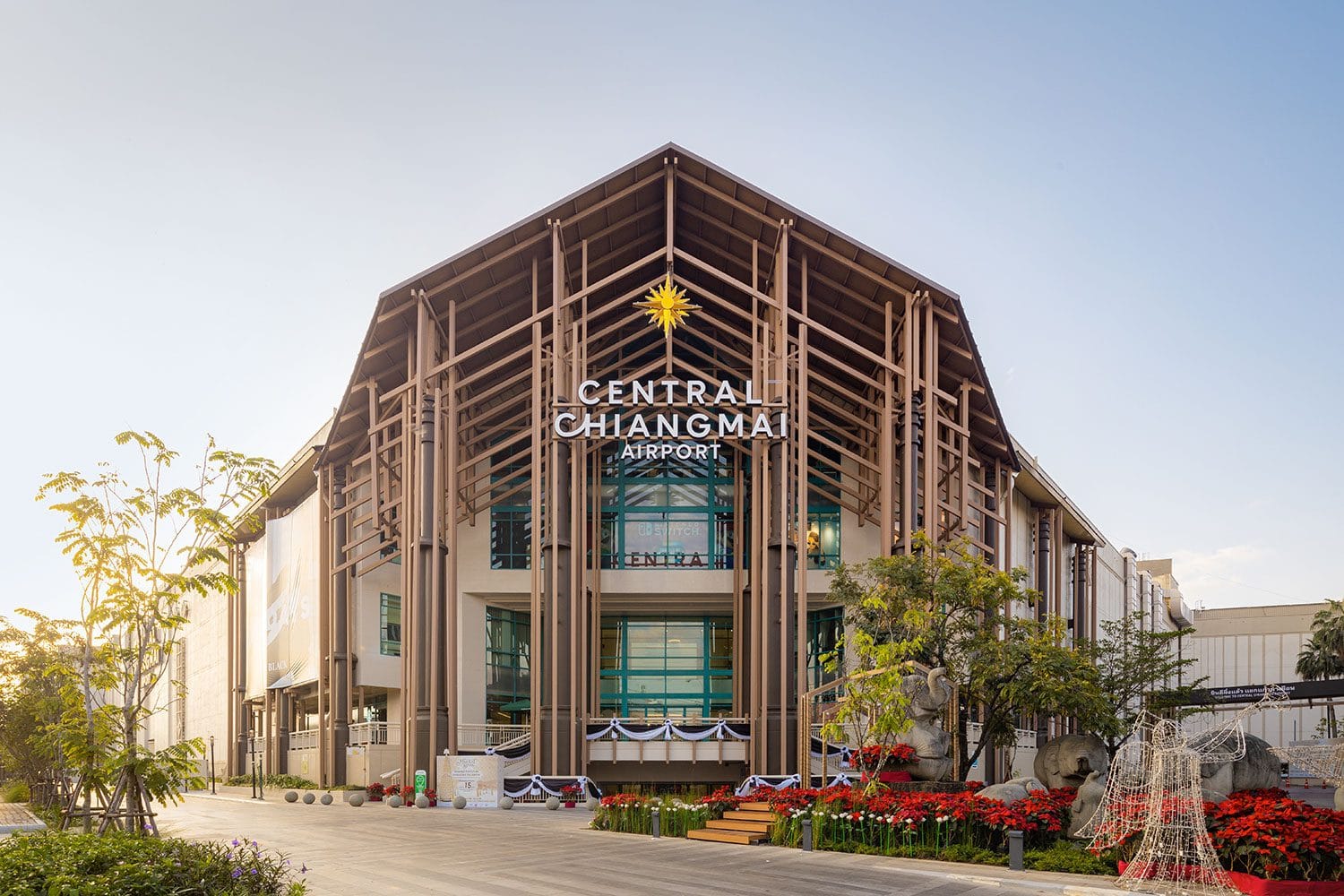
TRANSFORM CENTRAL CHIANGMAI AIRPORT INTO A NEW MIXED-USE LANDMARK UNDER THE IDEA OF ‘REIMAGINING LANNA,’ RECREATING LANNA’S IDENTITY WITH CONTEMPORARY LANGUAGE THROUGH THE DESIGN FROM THREE STUDIOS: EKAR ARCHITECTS, AMA DESIGN STUDIO, AND PANORAMA DECOR
TEXT: SARUNKORN ARTHAN
PHOTO: KETSIREE WONGWAN
(For Thai, press here)
When speaking of shopping malls embedded in the collective memory of Chiang Mai, one of the first names likely to surface is ‘Robinson’ or simply ‘Airport.’ Its location, after all, places it not only close to the airport but also within easy reach of the city center and neighboring districts such as Hang Dong and Saraphi. For both Thai and international travelers, it has long been remembered as a convenient stop for picking up souvenirs or passing the time before a flight. In this way, the mall has gradually become an informal point of connection between Chiang Mai residents and visitors alike. That very sense of connection, in fact, forms the design DNA of Central Chiangmai Airport, visible in the rhythms and gestures of its architecture across the past three decades.
In 2026, Central Chiangmai Airport marks its thirtieth year. To commemorate the milestone, Central Pattana is undertaking a major transformation, repositioning the complex not only as a shopping mall but also as a new mixed-use landmark for the province. Drawing on the connections between local communities and tourists, the redesign extends this idea of connectivity into an overarching design concept: ‘Reimagining Lanna.’ The concept brings elements of Lanna identity into dialogue with contemporary architectural language, with the aim of expressing local character with pride while creating a memorable impression for visitors. The renewed development brings together EKAR Architects, who designed the exterior façade, AMA Design Studio, responsible for the architectural design, and PANORAMA DECOR, who led the interior design.
Reinterpreting Lines and Layers on an Existing Structure / Reimagining Lanna (Façade)
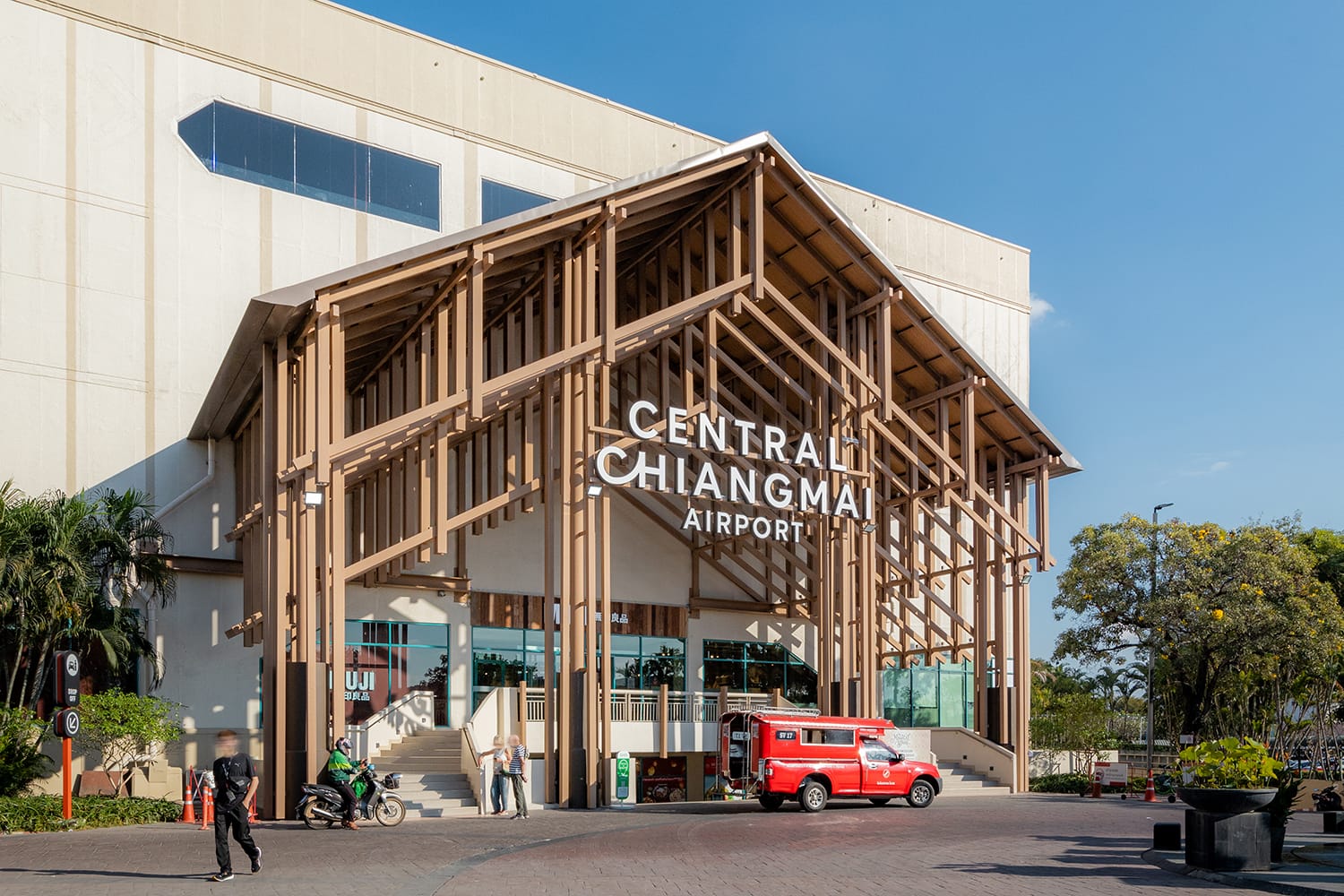
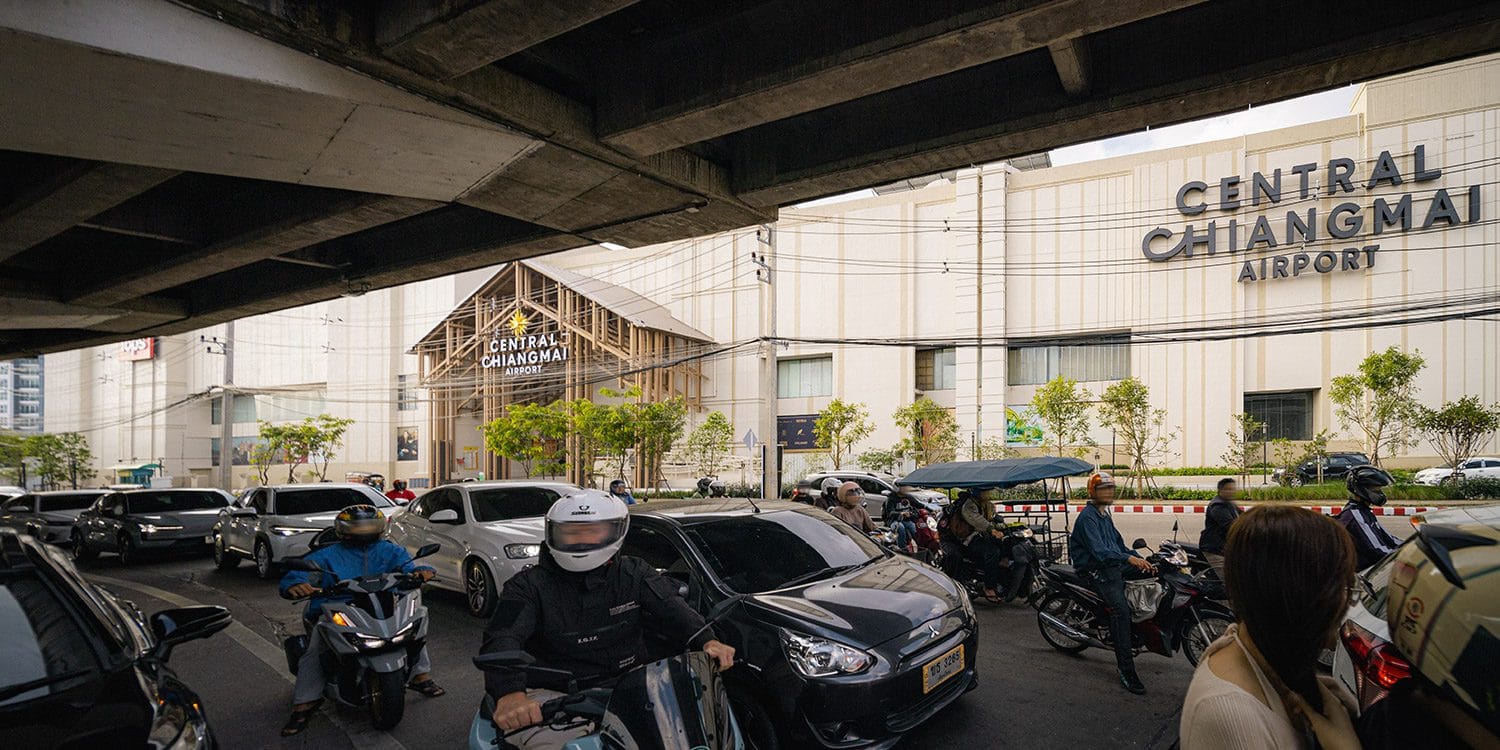
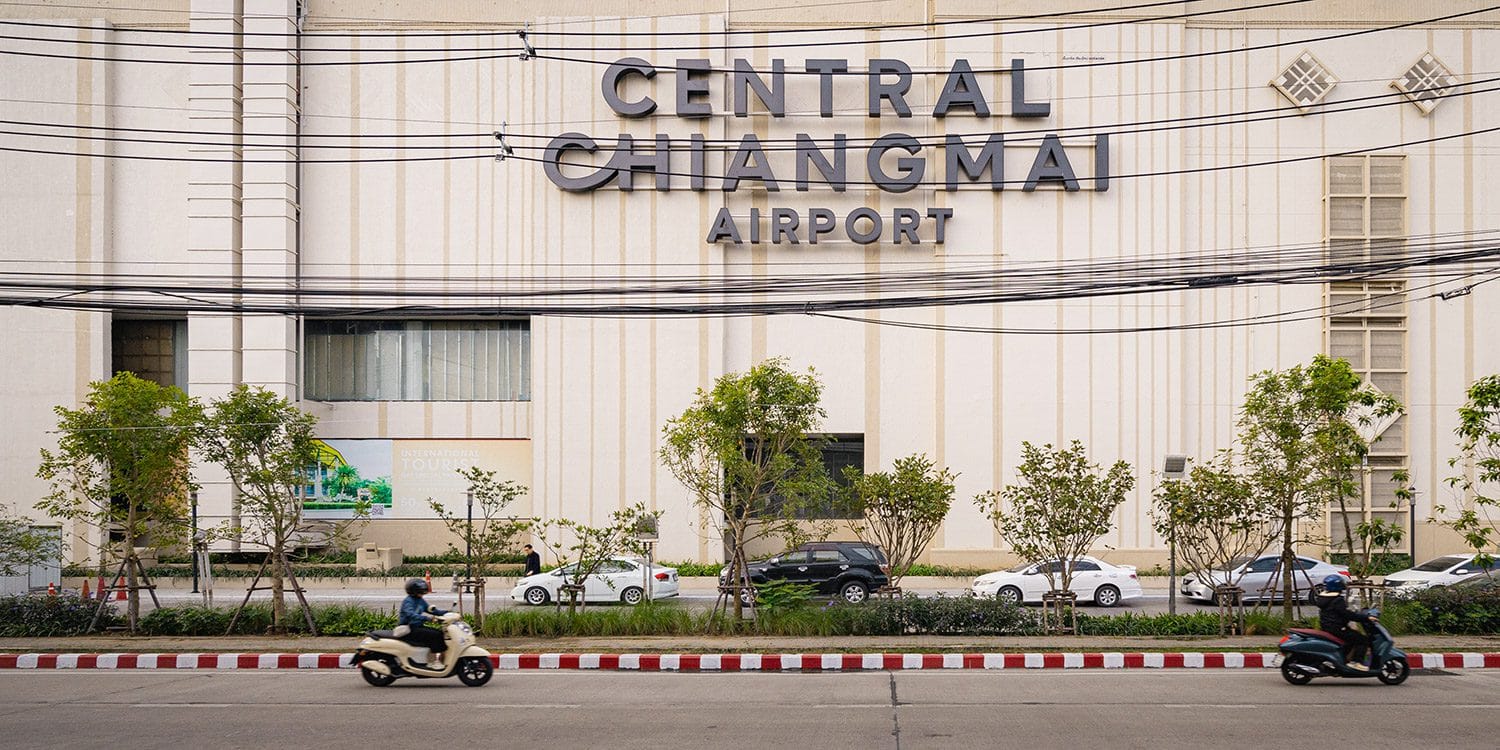
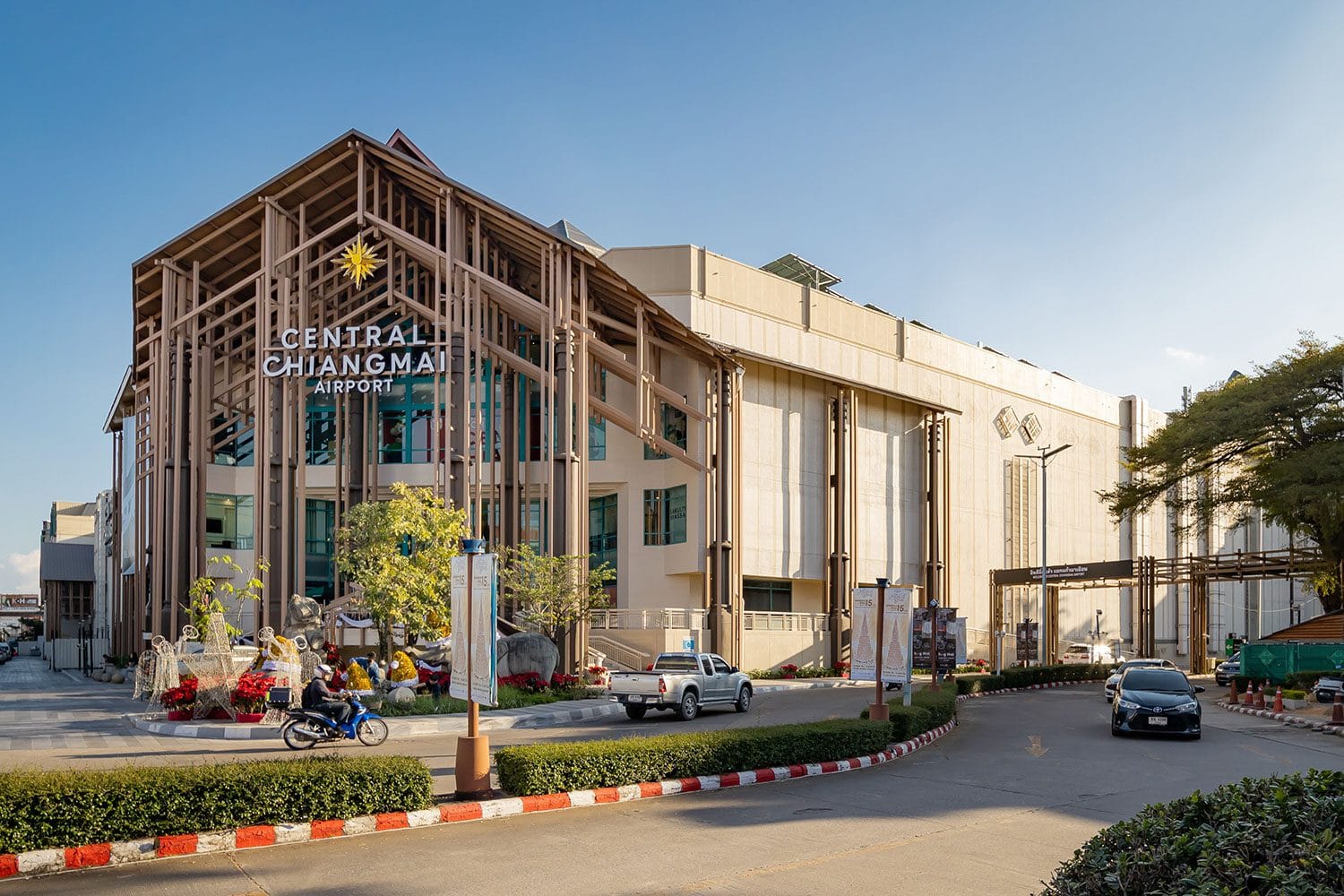
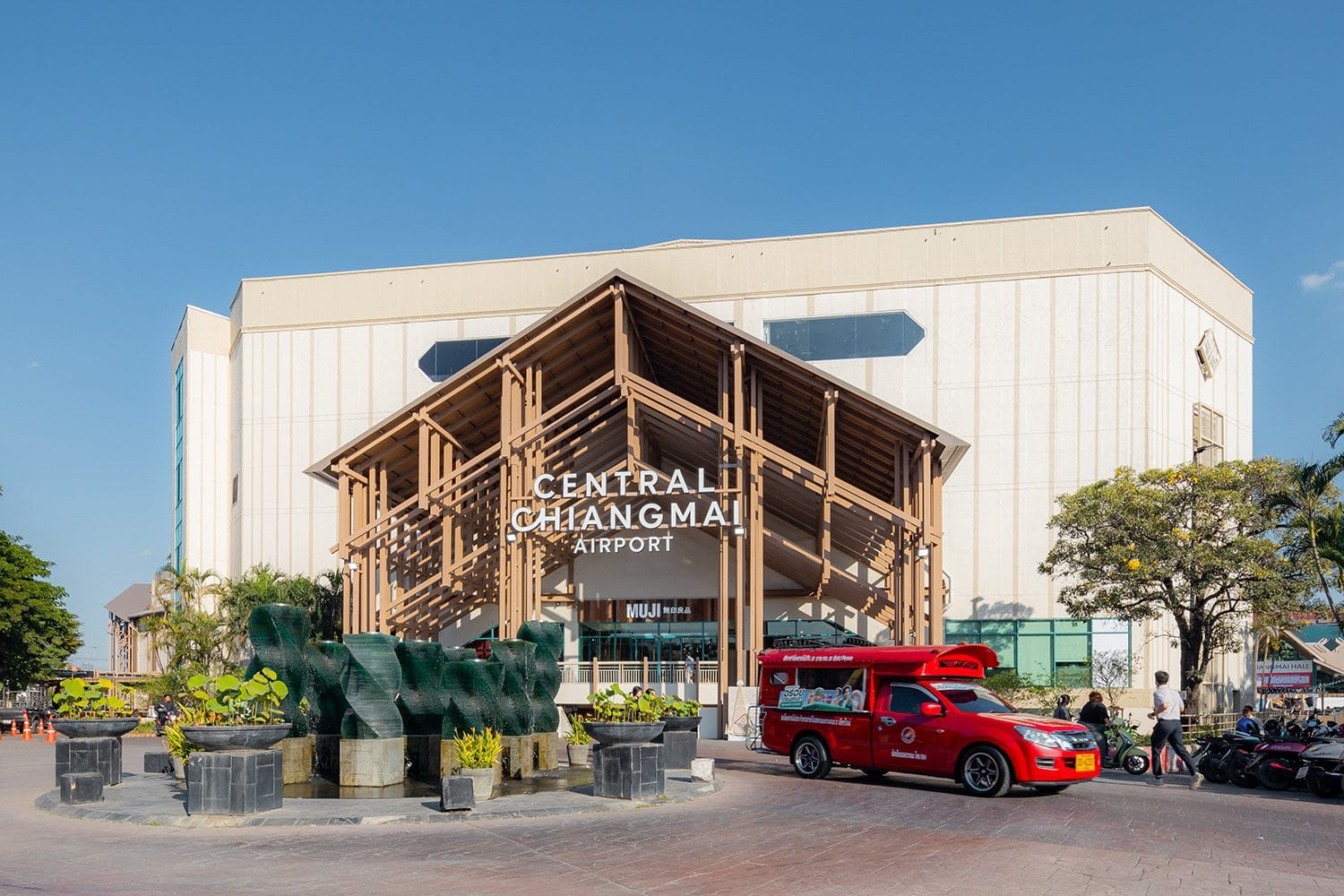
Whether encountered from the sidewalk or through the window of a passing car, the building first appears as a long, elevated wall in soft beige and alternating shades of brown. Walking further along, one arrives at the entrance portal, distinguished by a roof structure of notable complexity. Together, the wall and entrance form the newly redesigned façade of Central Chiangmai Airport by EKAR Architects, conceived to express the renewed identity of the renovated complex while remaining meaningfully connected to the historical roots of its setting.
At the main entrance, the challenge of this transformation lay in working within a limited timeframe and budget. Rather than begin anew, EKAR Architects chose to retain the existing primary structure and reinterpret its image through the idea of a ‘new city gate,’ rather than a merely superficial re-cladding of the façade.
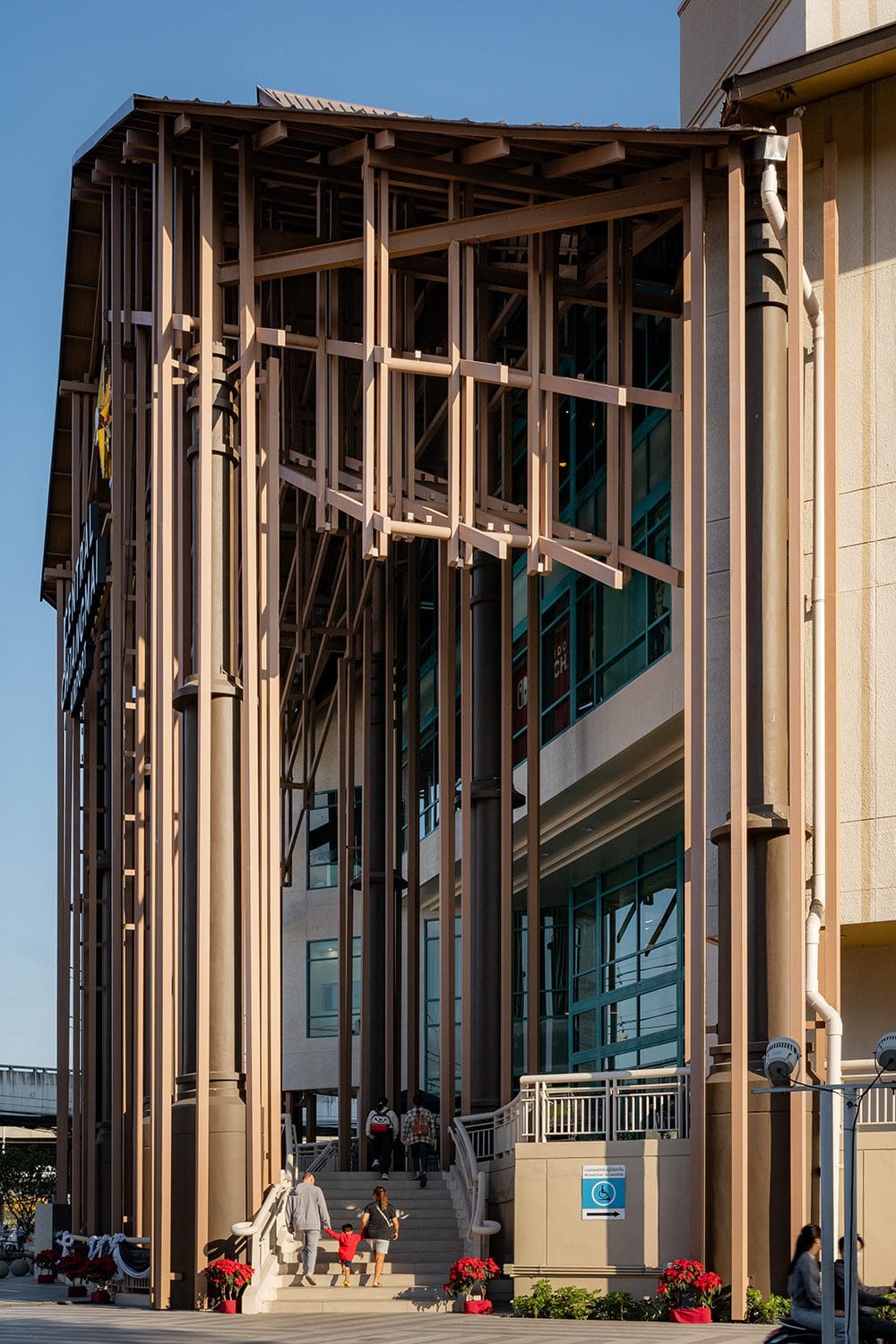
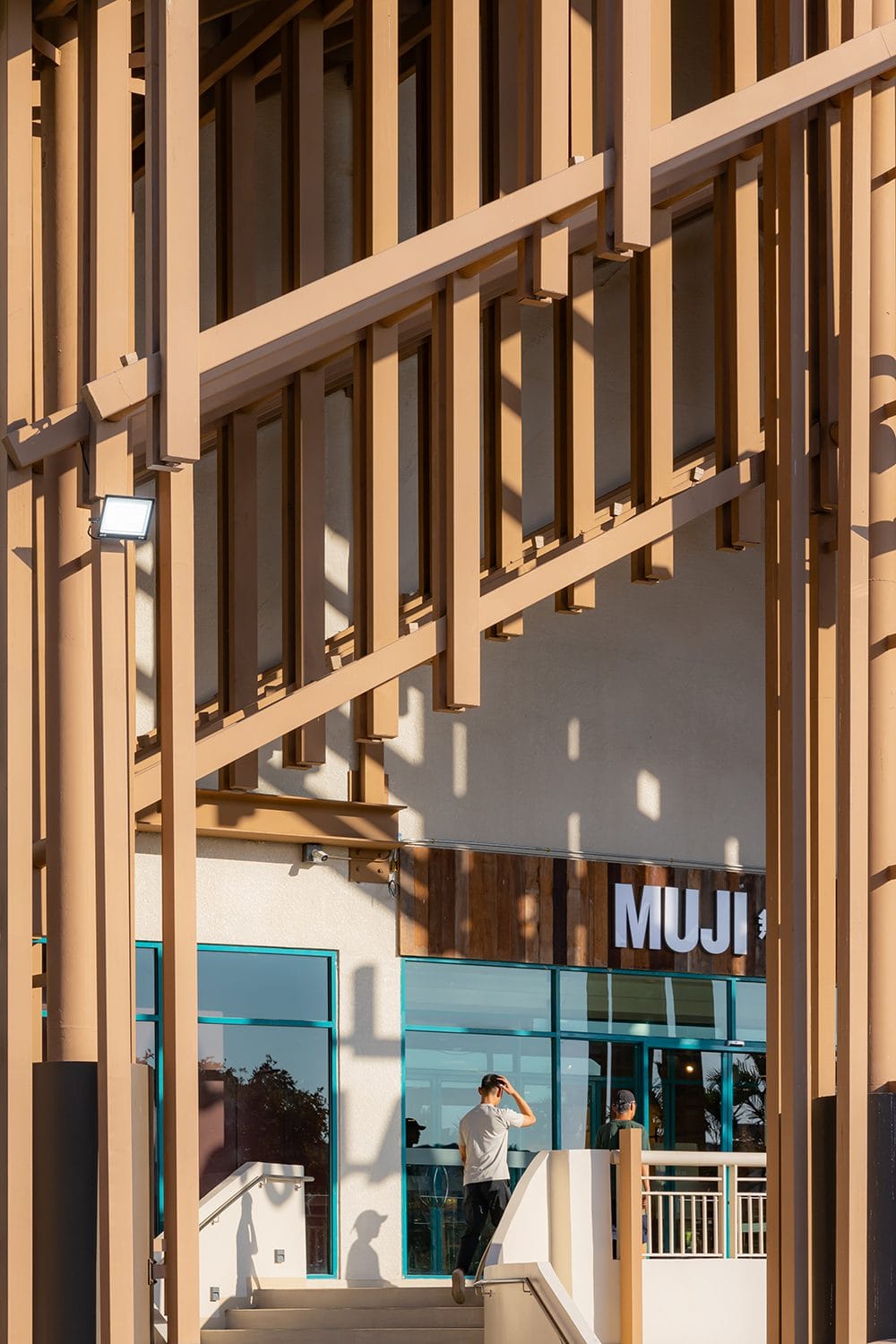
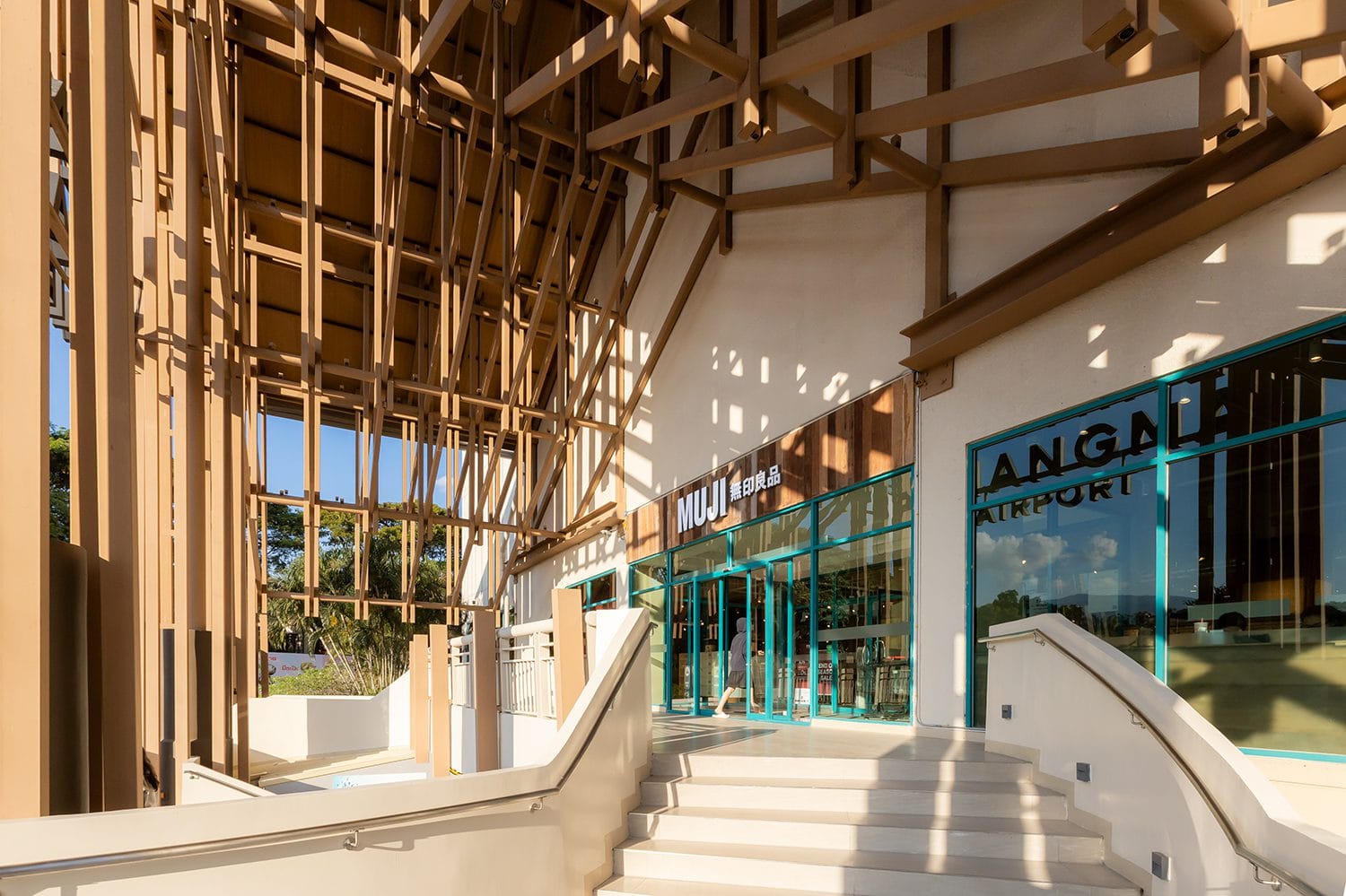
Instead of producing only a new architectural skin, the design takes on a civic role, operating as a gateway that welcomes people arriving in Chiang Mai from many directions. Equally important was the question of scale: how should a large shopping center relate to its surrounding context, which still retains the character of a relatively small city? In response, EKAR Architects proposed a ‘threshold space’ between exterior and interior, creating a moment of spatial transition before one properly enters the building. In doing so, the act of arrival becomes more deliberate and more meaningful.
The entrance portal is also designed to operate at multiple scales within a single architectural gesture. Seen from a distance along Mahidol Road, its overall form aligns with the mass of the building behind it, asserting itself clearly as a marker of entry. Yet as one approaches at eye level, its proportions begin to step down to a scale more closely attuned to the human body, making the experience of entering the building feel more intimate and comfortable.
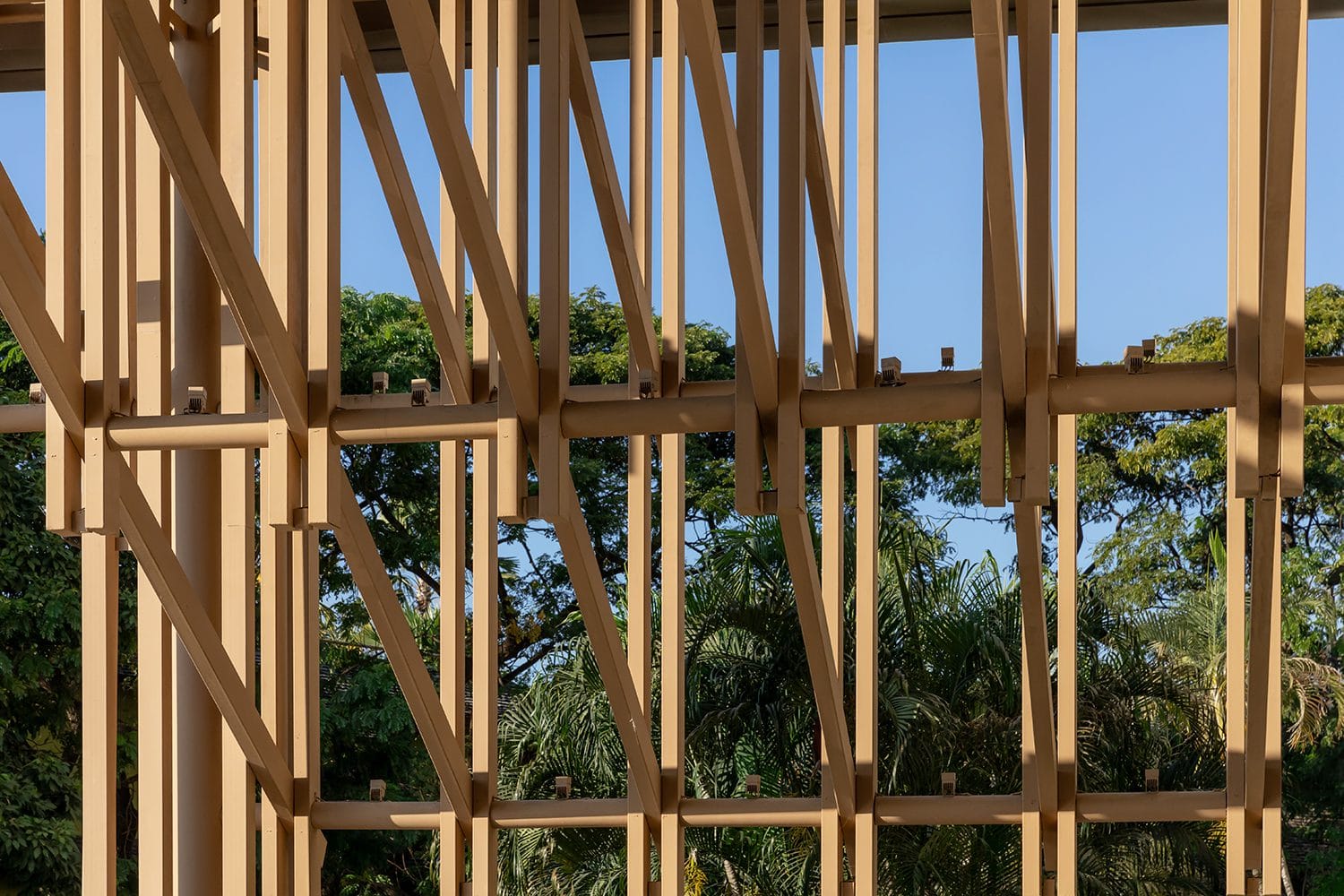
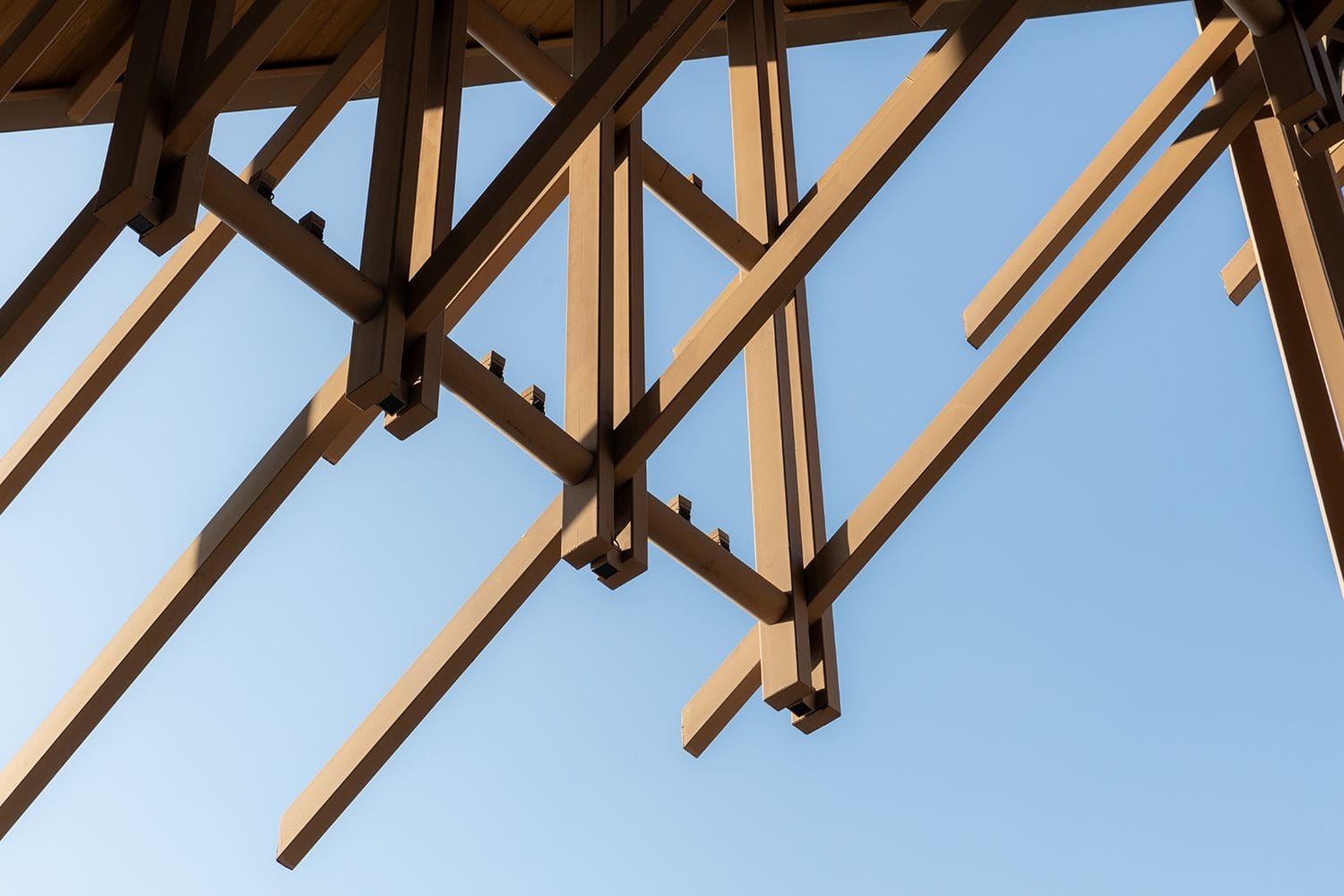
In terms of material and structure, EKAR Architects chose to work with steel, while detailing it in ways that draw from the tectonic logic of vernacular timber architecture. References can be seen in the articulation of joinery, the pairing of structural members in elements akin to ‘a-se’ and ‘ok kai,’ traditional timber members used in vernacular roof construction. The frame also adopts an unusually dense rhythm, with members spaced more closely than in a conventional steel system. Together, these elements produce something akin to a timber lattice structure, generating both mass and porosity within the façade. Beyond evoking the timber traditions of Lanna architecture, this three-dimensional envelope also expresses its structural system with clarity, while helping to mediate the scale of the large building in relation to its users. As a transitional space, it filters sunlight, softens glare, tempers the body to the outdoor climate, and gradually slows the pace of arrival. In this sense, the experience recalls passing through the entrance zone of traditional Lanna architecture, where proportions are measured, open, airy, and quietly humble.
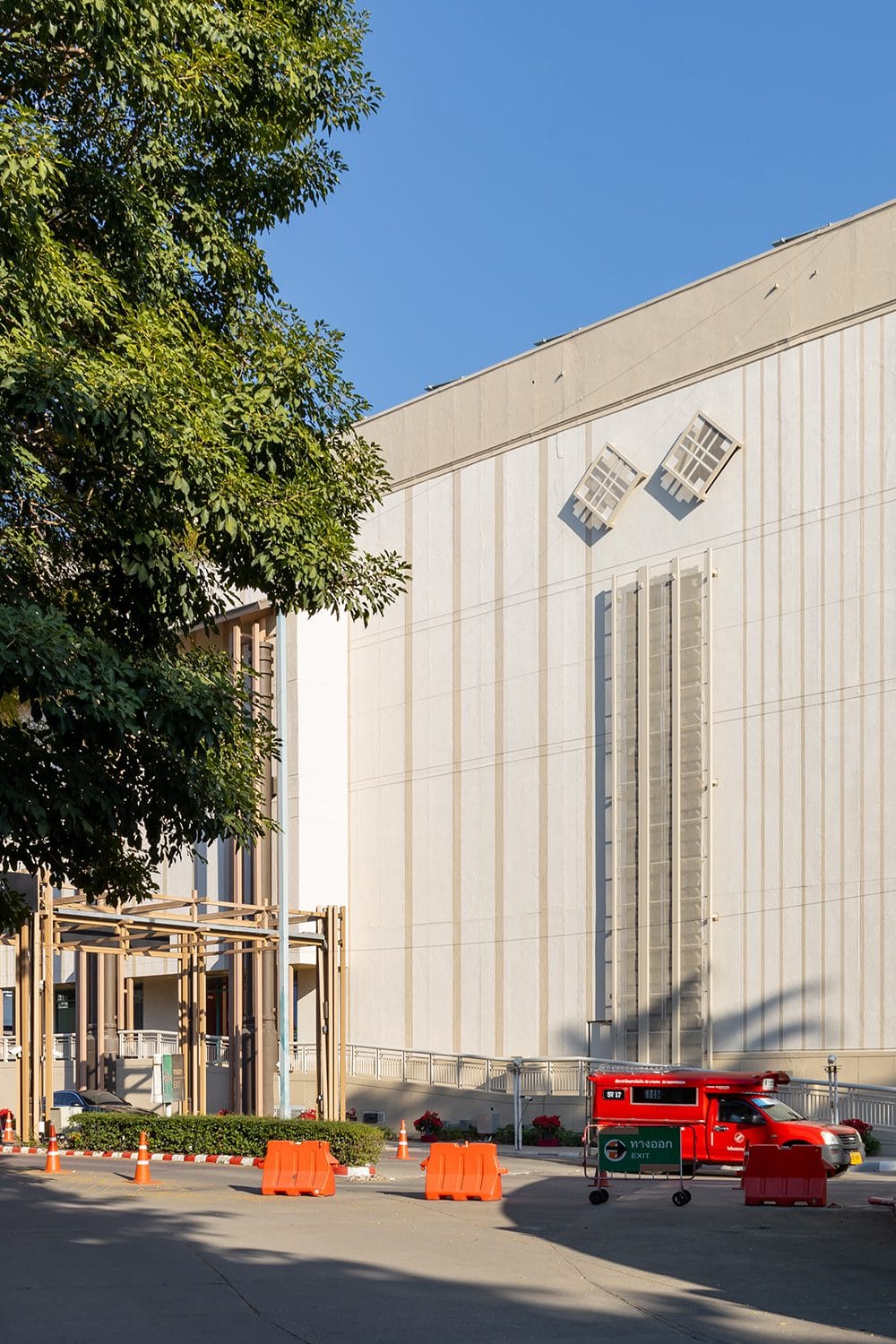
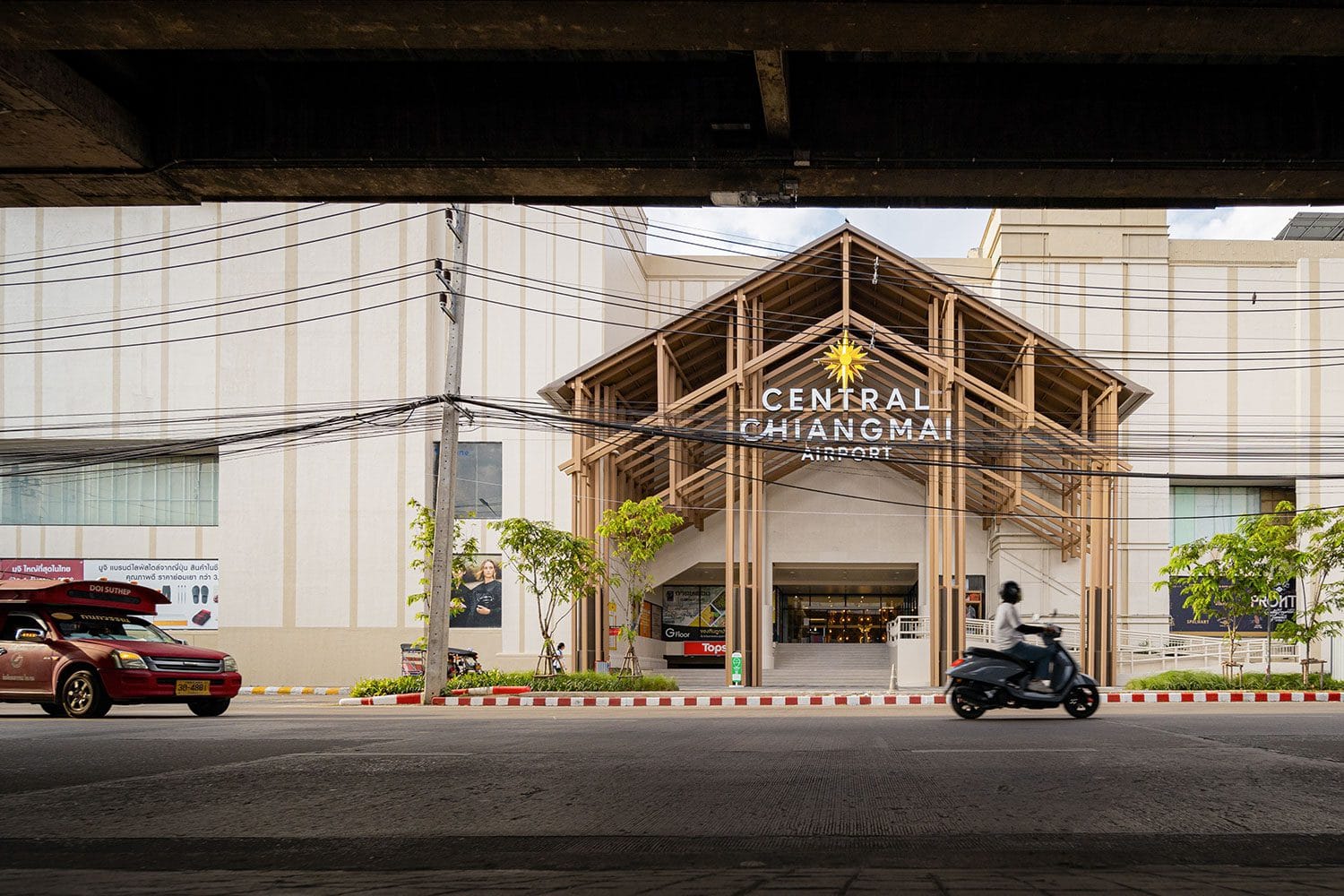
Beyond the main entrance, EKAR Architects extended this façade language to the building’s four other entry points, adapting the same structural vocabulary for each of them. These interventions are also tied to the surrounding wall surfaces of Central Chiangmai Airport, which were simplified and made more contemporary as part of the renovation. Here, EKAR Architects employed a deceptively simple strategy: painting the walls with vertical bands of varying widths and intervals. The intention was to evoke Chiang Mai’s cultural and geographical context while leaving room for individual interpretation. Some may be reminded of the woven patterns of Lanna textiles, while others may see the varying silhouettes of bamboo swaying in the wind against the backdrop of Doi Suthep. Whatever the reading, the design gestures ultimately return to the same underlying idea: that Central Chiangmai Airport is not a newly inserted object, but an existing building with a long history and a deep-rooted relationship with the people of the place.
Spatial Order and Natural Light / Reimagining Lanna (Space)
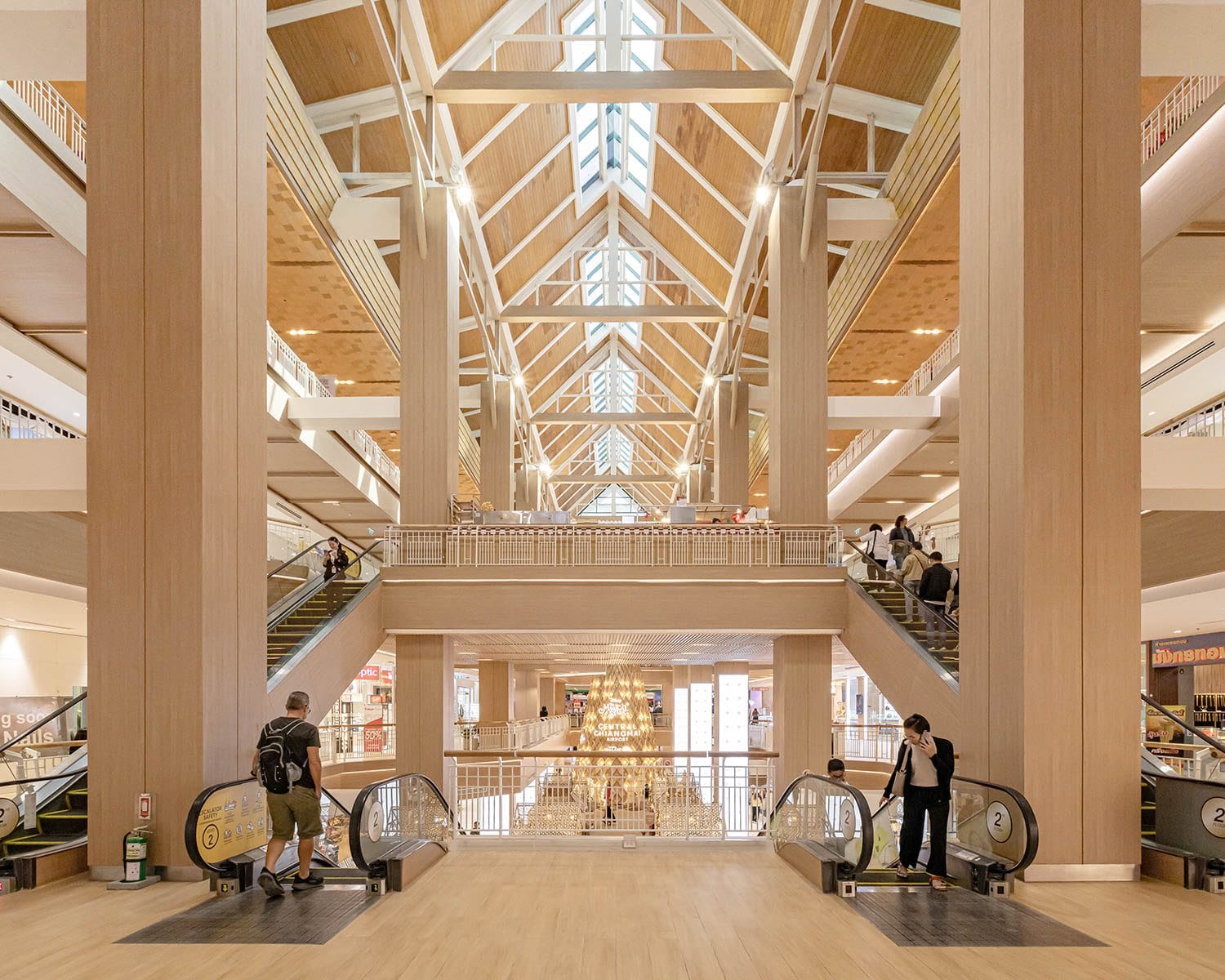
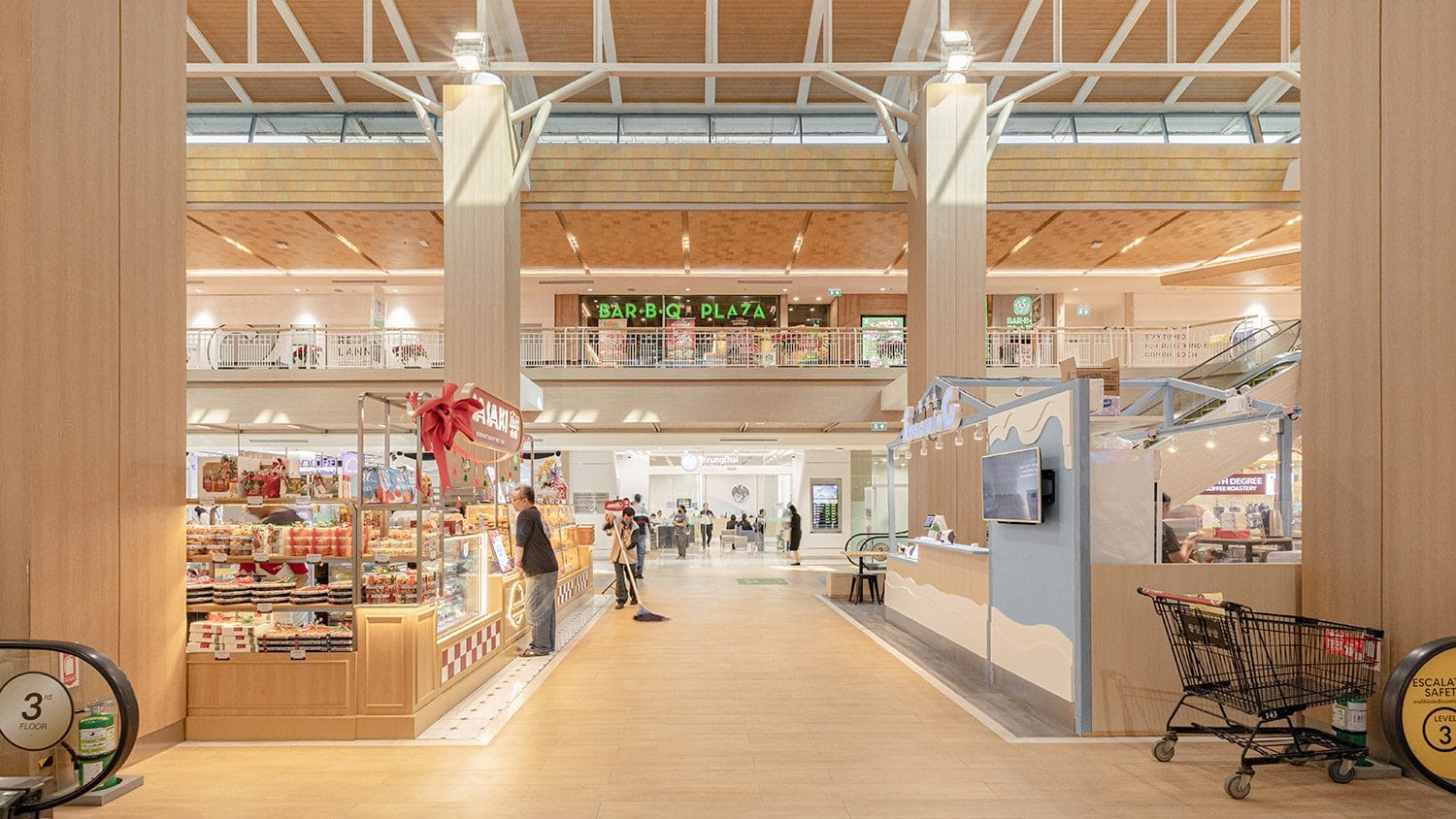
If the entrance pavilion serves as the project’s first gesture of welcome, the interior design continues that greeting by reshaping the rhythm of movement within the building, making movement far more fluid than before. To address the formerly overlapping sightlines, the architects reorganized the layout of the retail units throughout the building, including the kiosks, in order to create a clearer visual experience and a more open, interconnected field of view. At the same time, the overall planning has been refined so that both usable and circulation spaces feel more spacious, orderly, and better able to accommodate larger numbers of visitors.
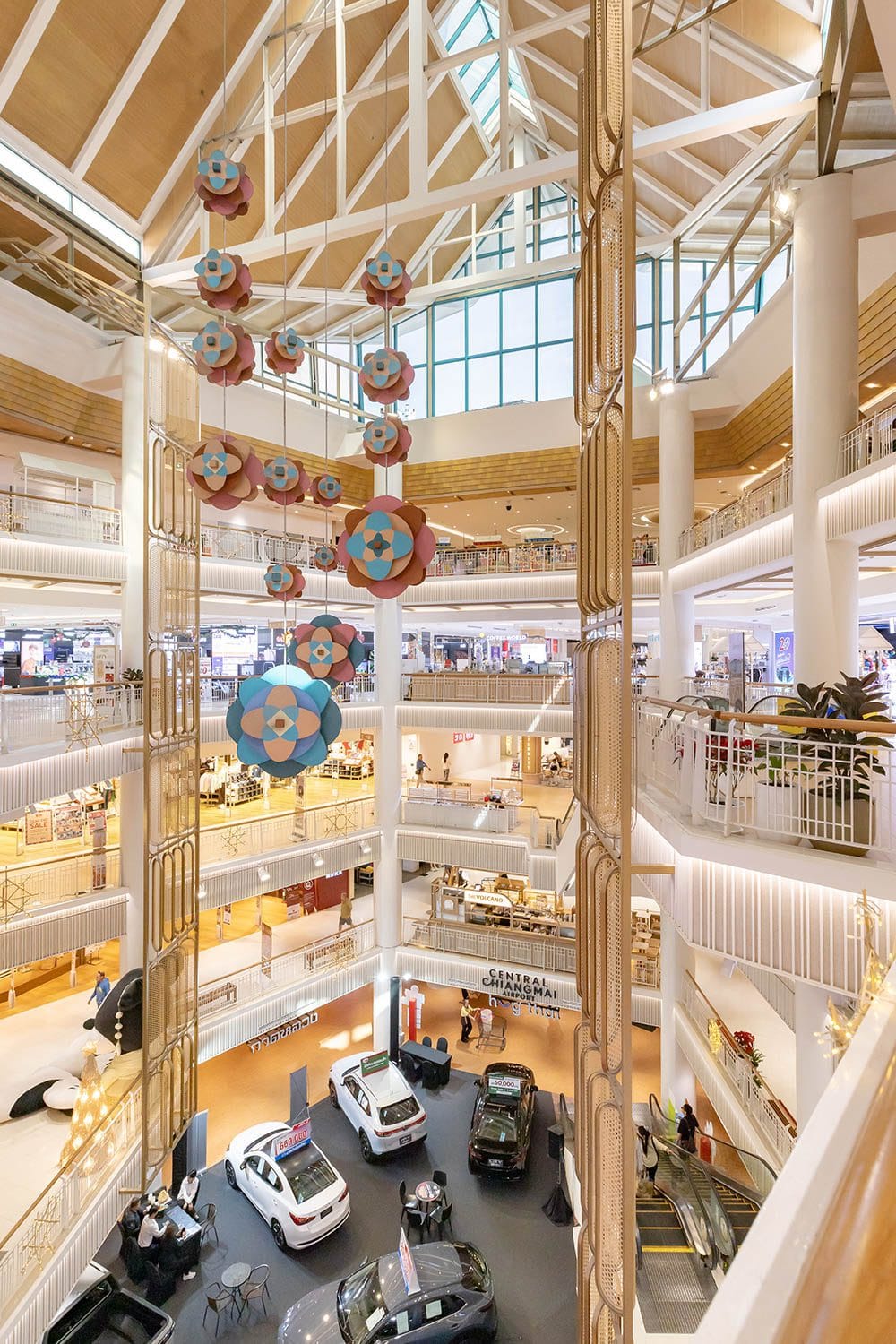
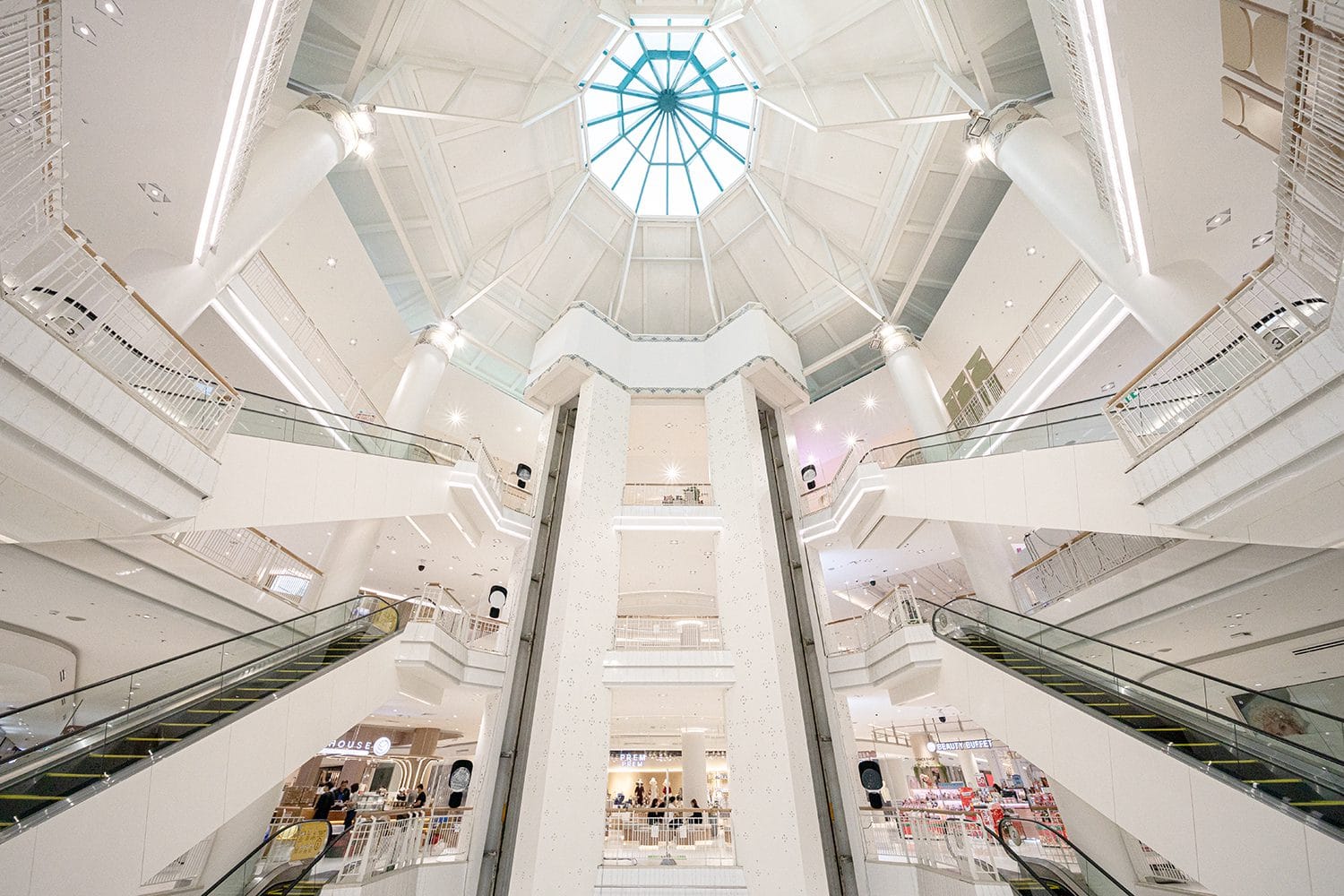
Yet AMA Design Studio did not approach the renovation as a complete act of replacement. Instead, the team chose to preserve the original skylights, allowing natural light to continue entering the building from above. In doing so, sunlight remains a quiet but constant presence, connecting those inside to the rhythms of the world outside while also preserving a sense of the building’s past.
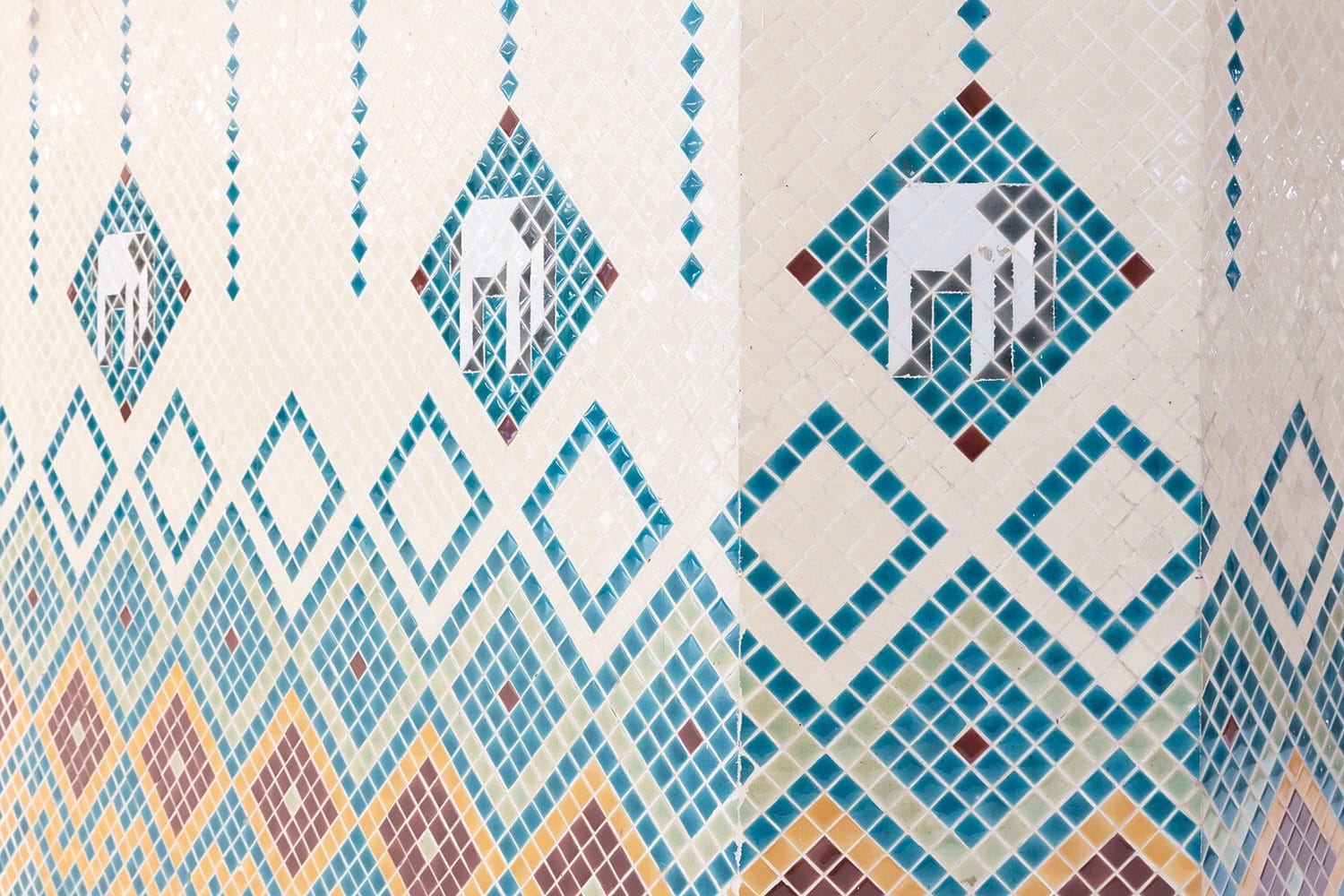
From the Urban Spirit of Chiang Mai to a Global Language / Reimagining Lanna (Lifestyle)
Beyond the reordering of space and the careful retention of selected original elements, the interior design by PANORAMA DECOR engages deeply with the idea of ‘Lanna identity’ through the concept of ‘Crafting Lanna Lifestyle.’ Distilling the essence of Lanna culture into spatial form, the design unfolds across all five floors of Central Chiangmai Airport as a kind of journey through the parts of a traditional heuan, or Lanna house, beginning with its ‘roots’ at the base and rising toward the ‘roof peak,’ here reimagined as a symbol of future technology.
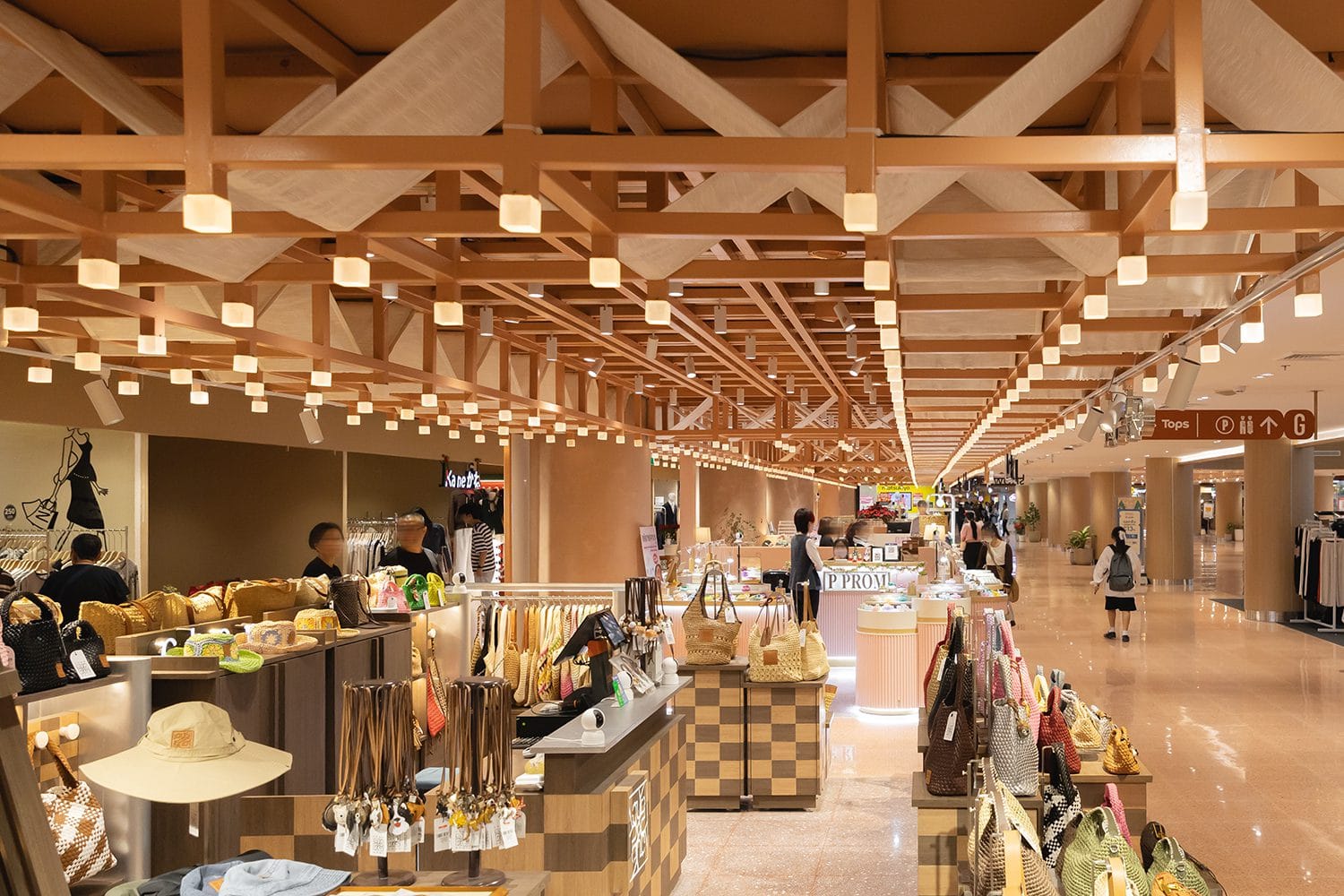
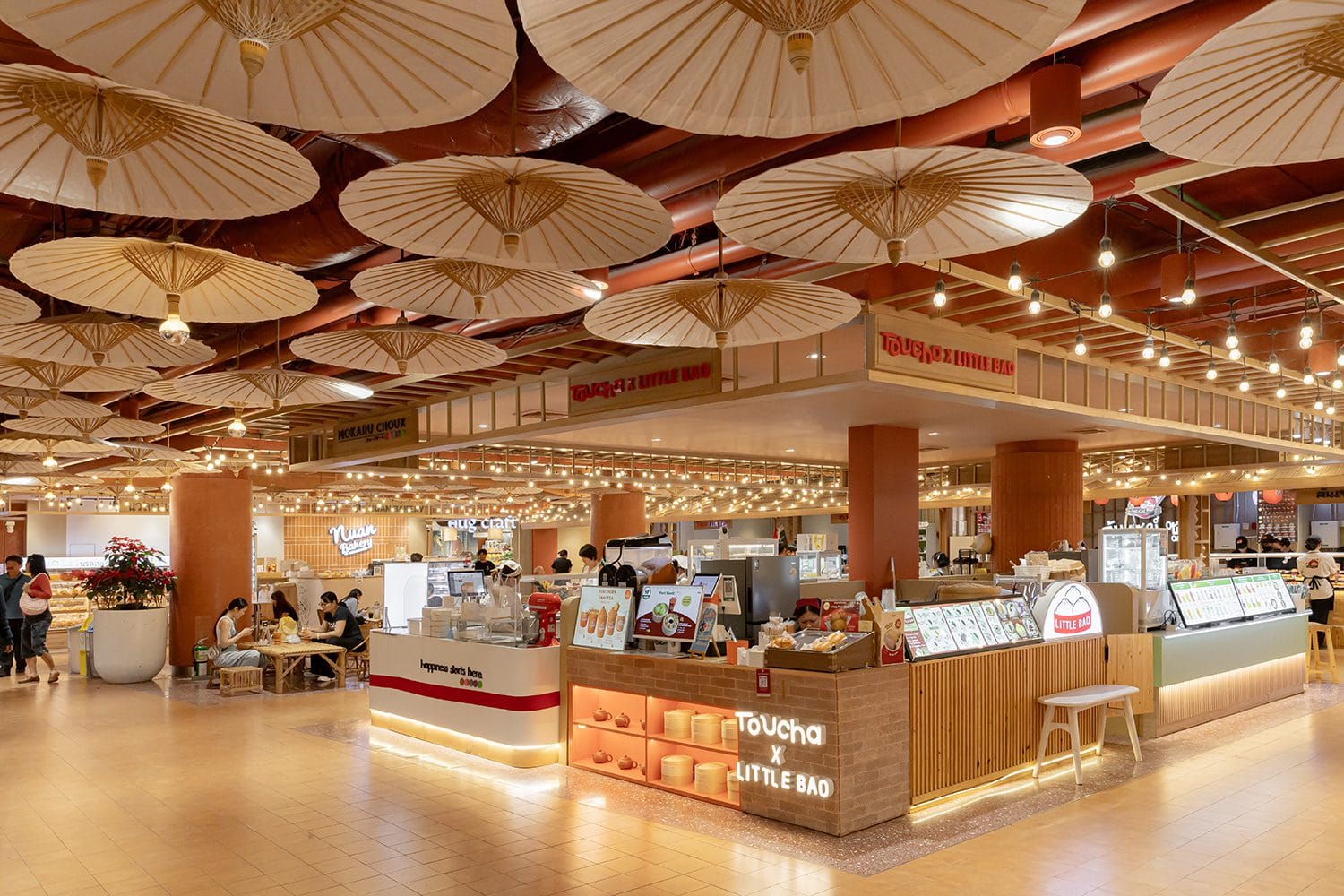
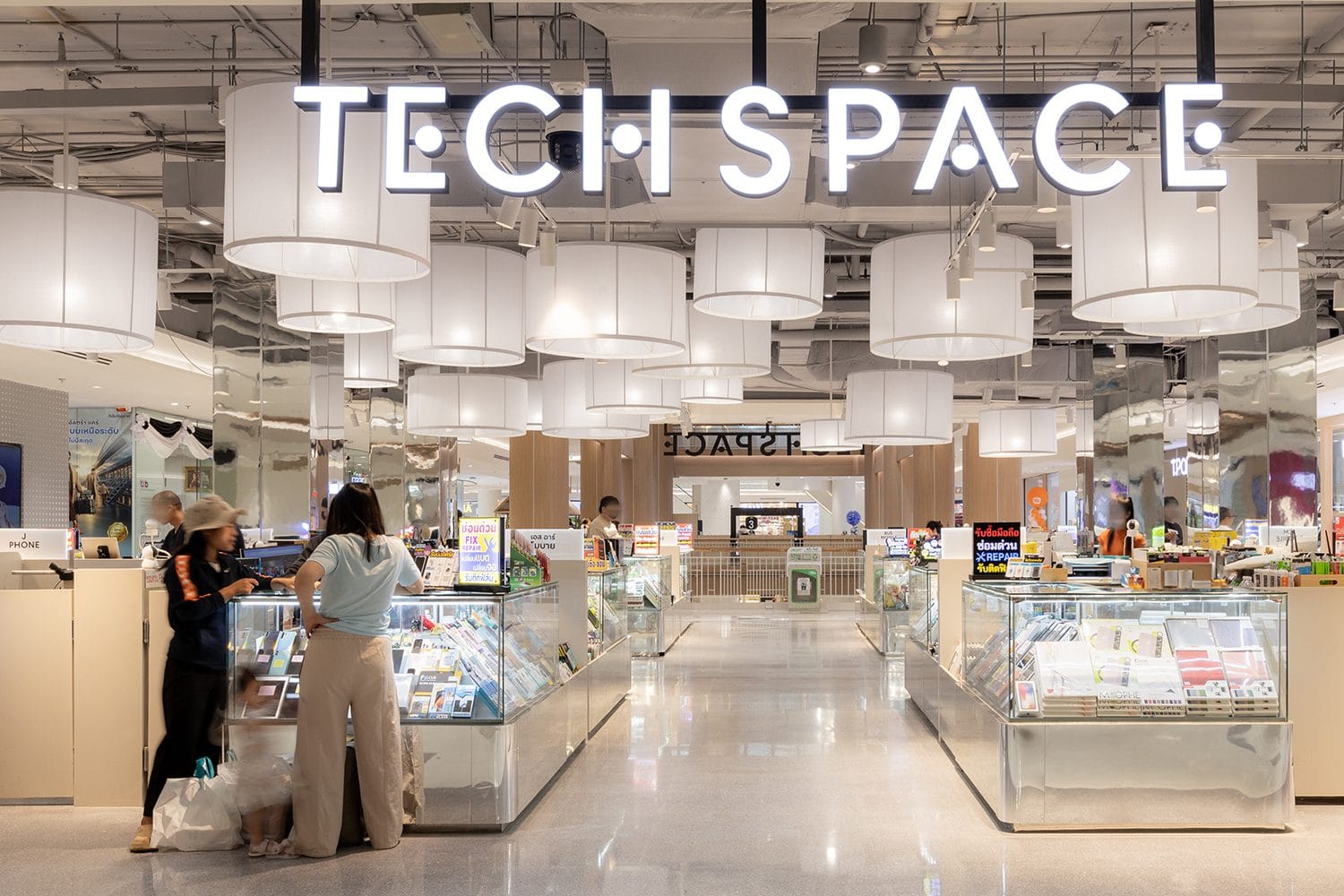
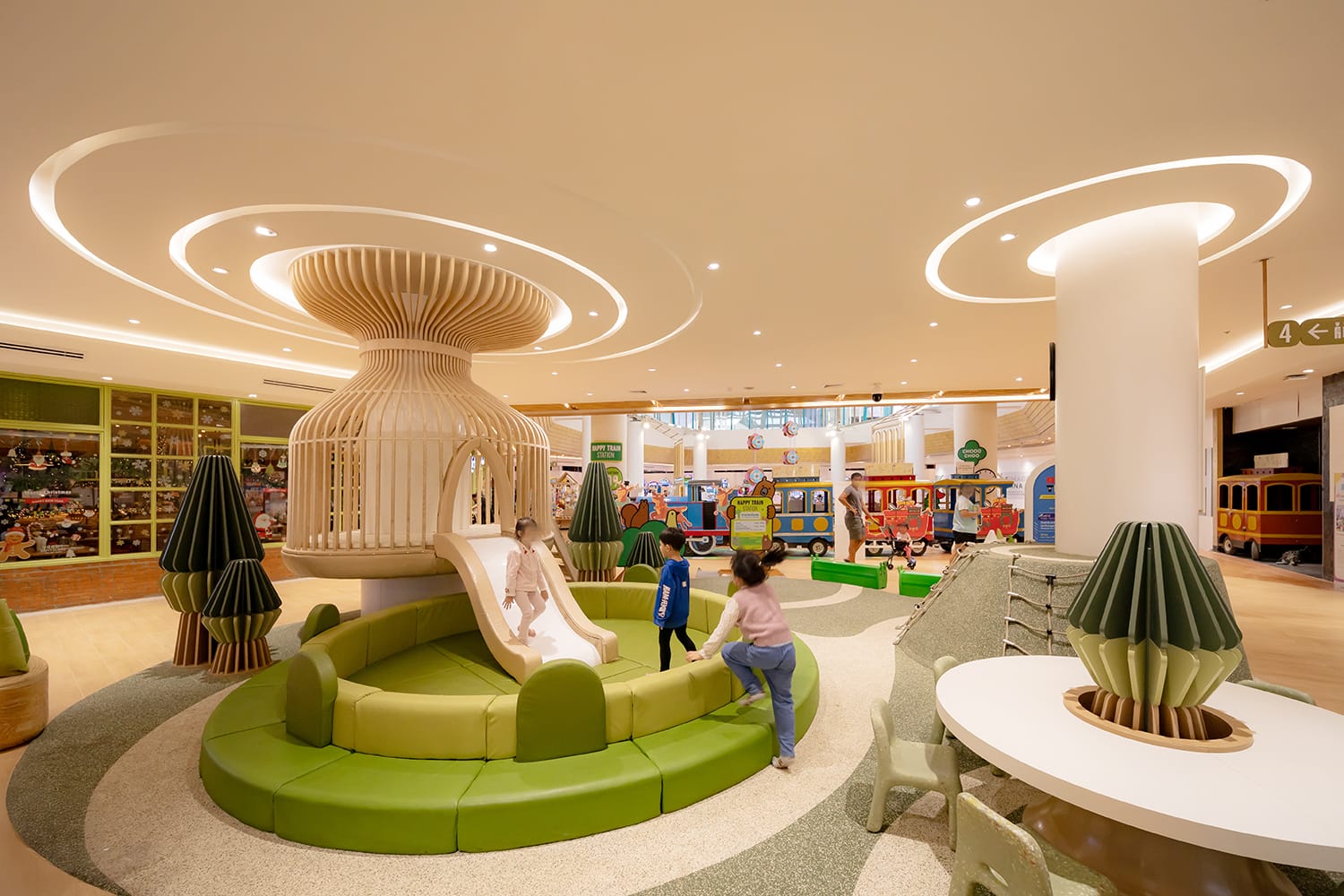
In design terms, PANORAMA DECOR draws on elements associated with Lanna culture, transforming their forms and colors into a more contemporary language. On the Ground Floor, conceived under the theme ‘Root of Lanna,’ warm-toned finishes create a sense of richness and welcome. By contrast, the third floor, ‘Top of Technology,’ and the fourth floor, ‘Taste of Nature,’ shift toward a lighter, airier palette of whites and soft neutrals, expressing ideas of innovation and nature in a more global register.
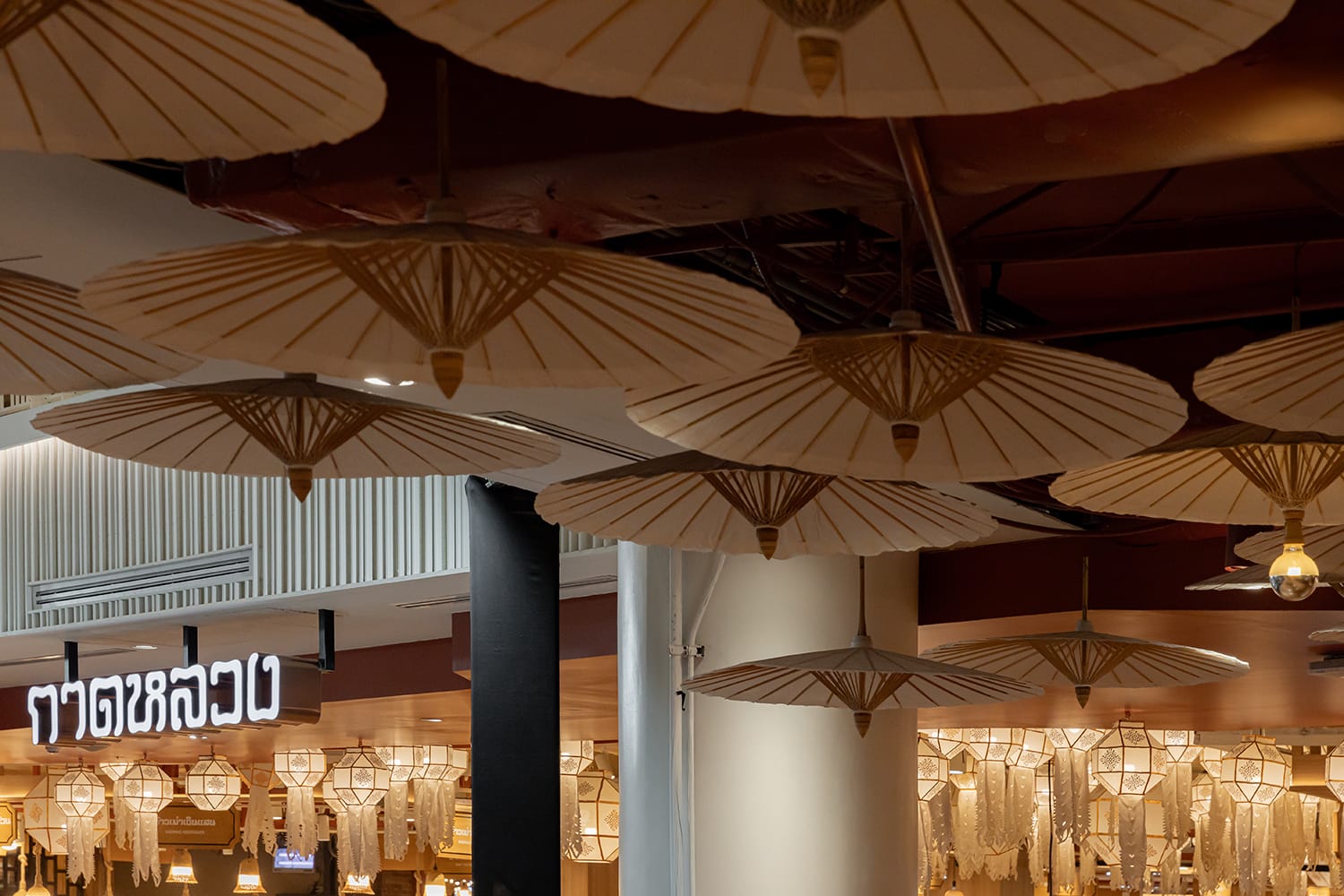
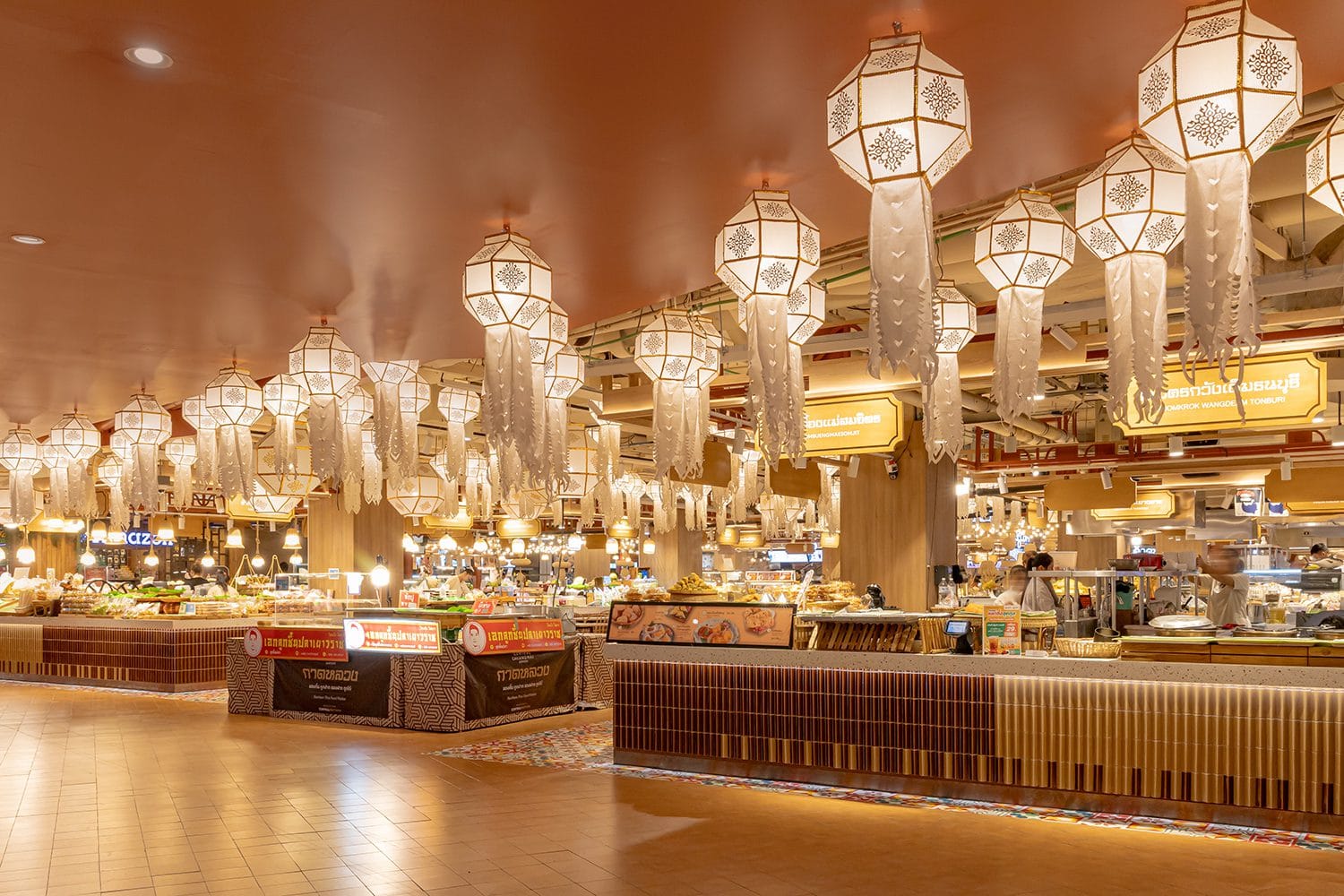
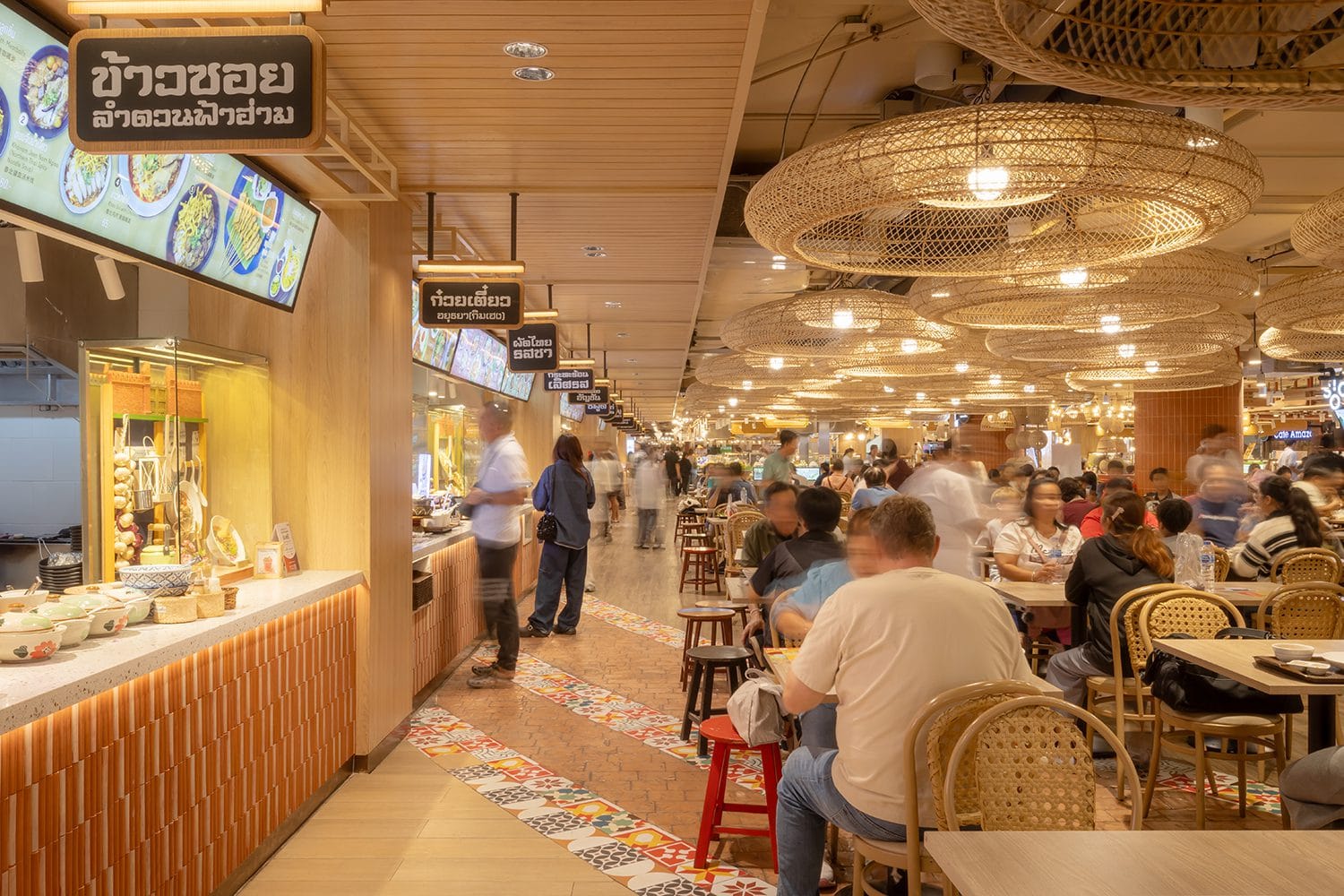
The orchestration of interior elements functions almost as a form of storytelling, transforming this branch of Central into a place with a narrative of its own, one shaped by architecture, history, and beauty. These layers can be sensed throughout the experience of the building, from quiet seating corners to the atmosphere of the ‘Kad Luang’ zone on the Ground Floor, a food hall bringing together well-known local eateries and regional specialties from across Chiang Mai. This, in turn, creates a contemporary Lanna lifestyle experience that feels alive and intimately woven into everyday life.
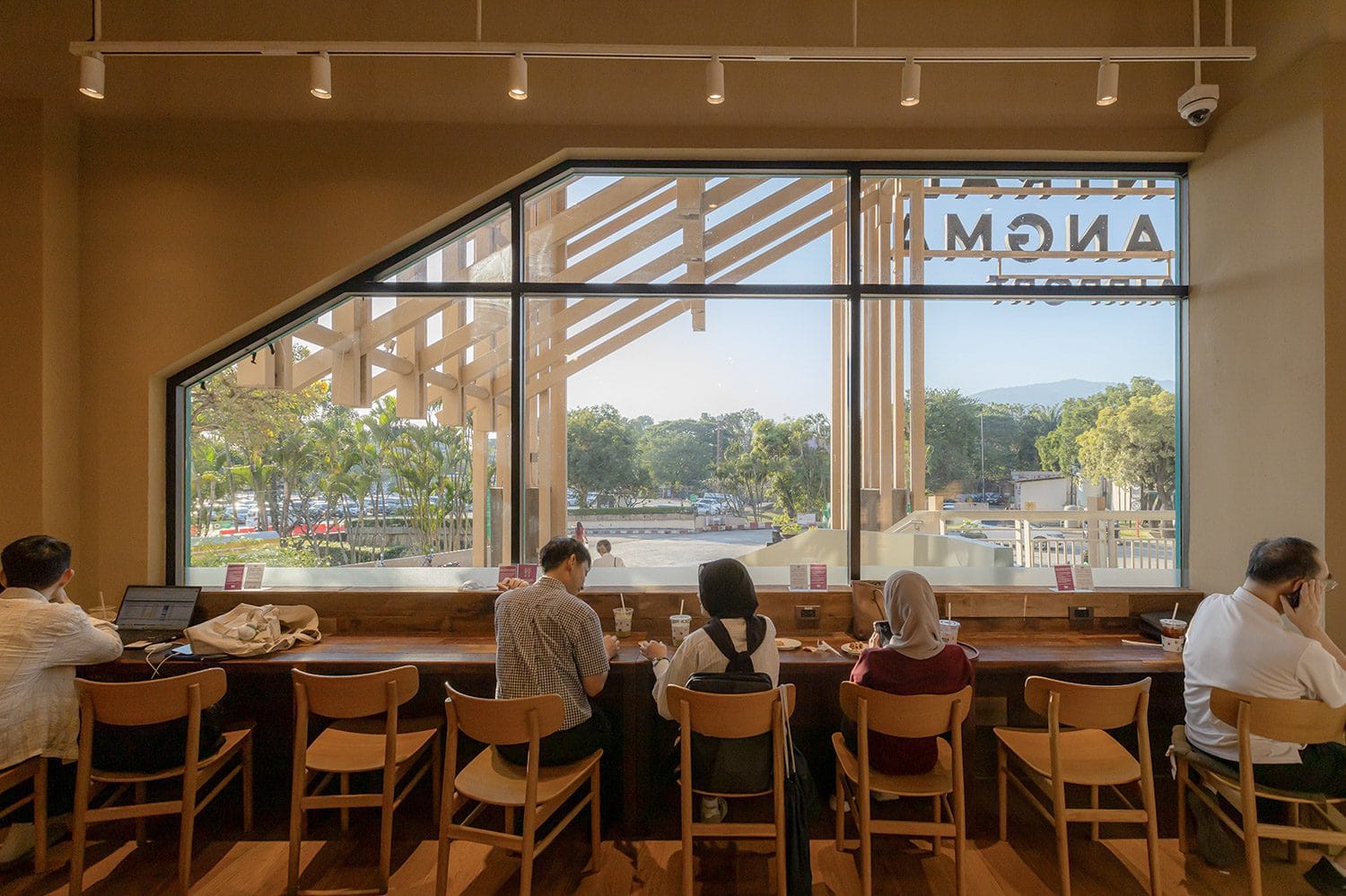
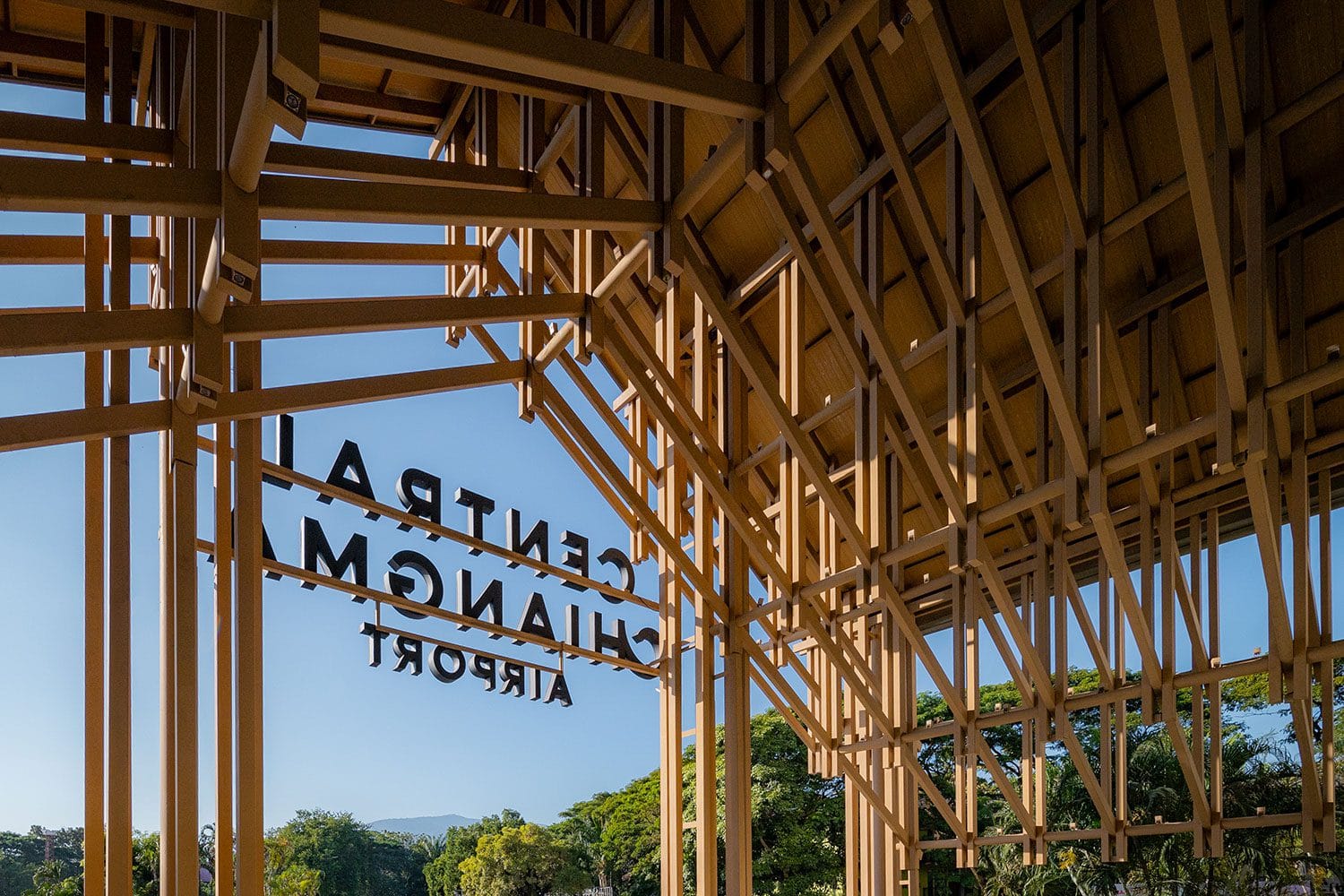
Ultimately, the transformation of Central Chiangmai Airport is about far more than updating a shopping center to keep pace with the times. It is also a declaration that Lanna’s identity continues to endure within the conditions of the present. In this sense, Central Chiangmai Airport continues to function as the ‘node’ it has been for the past three decades: not only a point of connection between the airport and the city, or between tourists and local residents, but also a place that links cherished memories of the past with renewed imaginaries of the future, all while remaining somewhere the people of Chiang Mai can still claim as their own with genuine pride.