
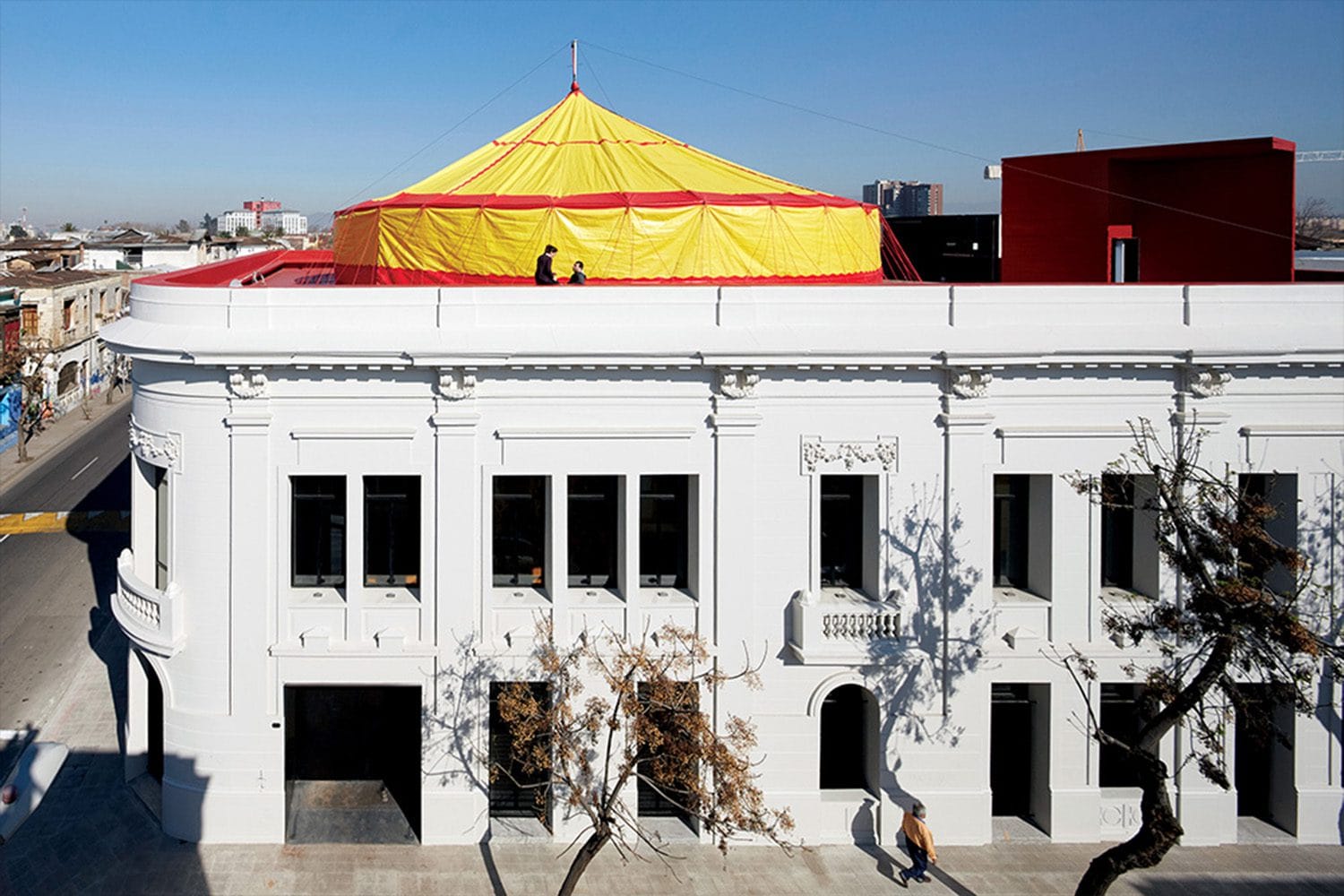
 NAVE, Performing Arts Center | Photo courtesy of Cristobal Palma
 EXPLORE THE STRANGE FAMILIARITY EMBEDDED IN THE WORKS AND ARCHITECTURE OF SMILJAN RADIC, WHO INSISTS ON AMBIGUITY WITHIN PRECISION IN CONSTRUCTION
TEXT: KRAIPOL JAYANETRA
PHOTO CREDIT AS NOTED
(For Thai, press here)
When I first learned that Smiljan Radic had been awarded the Pritzker Prize, I felt a quiet satisfaction that an architect often associated with a more poetic, marginal lineage, like Kazuo Shinohara or John Hejduk, had finally entered the main spotlight. It is a recognition that brings attention not only to his work but also to a way of thinking about architecture that resists easy definition.
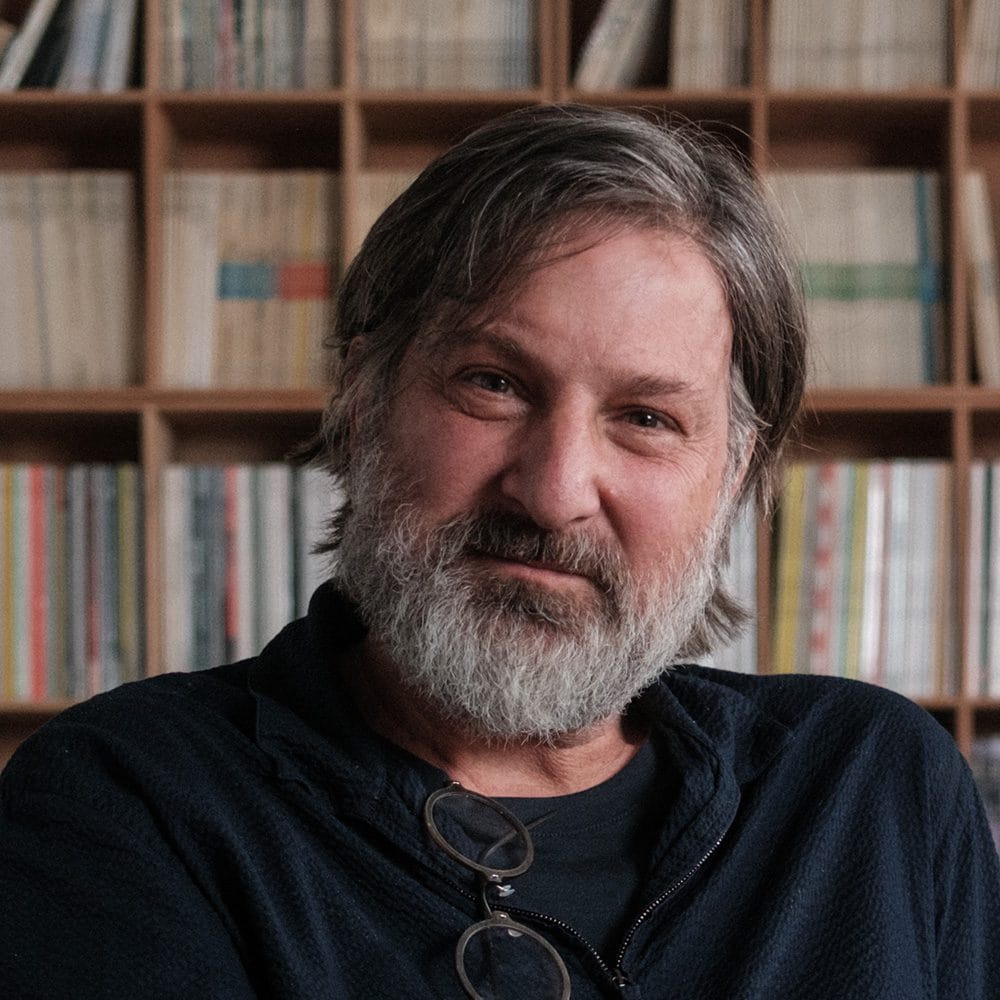
Smiljan Radic | Photo courtesy of The Pritzker Architecture Prize
My first encounter with Radic’s work took place at his solo exhibition at TOTO Gallery · MA, in Tokyo. I remember seeing a series of strange theatrical models, objects that felt at once familiar and displaced. Some carried the weight of folklore artifacts, others echoed Mies van der Rohe’s precision, while others seemed closer to the speculative drawings of Cedric Price or the utopian spatial thinking of Constant Nieuwenhuys.
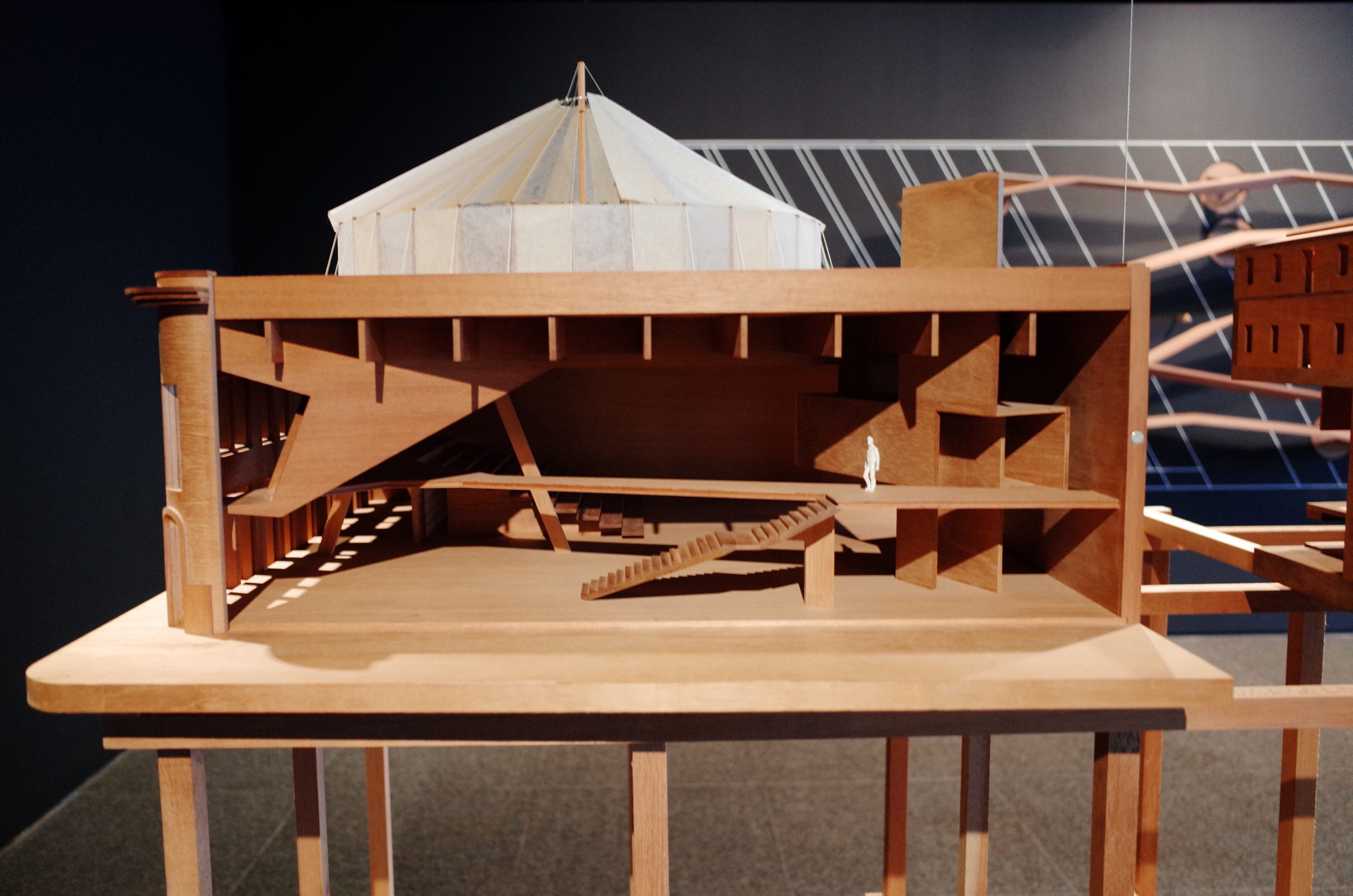
Photo: Kraipol Jayanetra
At the time, these references did not settle into a single reading. What remained instead was the persistence of these images. They lingered not as clear architectural proposals, but as condensed impressions that refused to stabilize. What stayed with me was not their formal diversity, but a quietly bizarre sense of intimacy formed through recognition and displacement at the same time.
Radic constructs architecture as a series of peculiar artifacts that produce a magical-realist sense of intimacy.
If this intimacy emerges so strongly, it is because his architecture does not begin with composition in a conventional sense. Instead, it operates through a process of condensation, in which references, spatial logic, and material instincts are compressed until they reach a point of emergence.
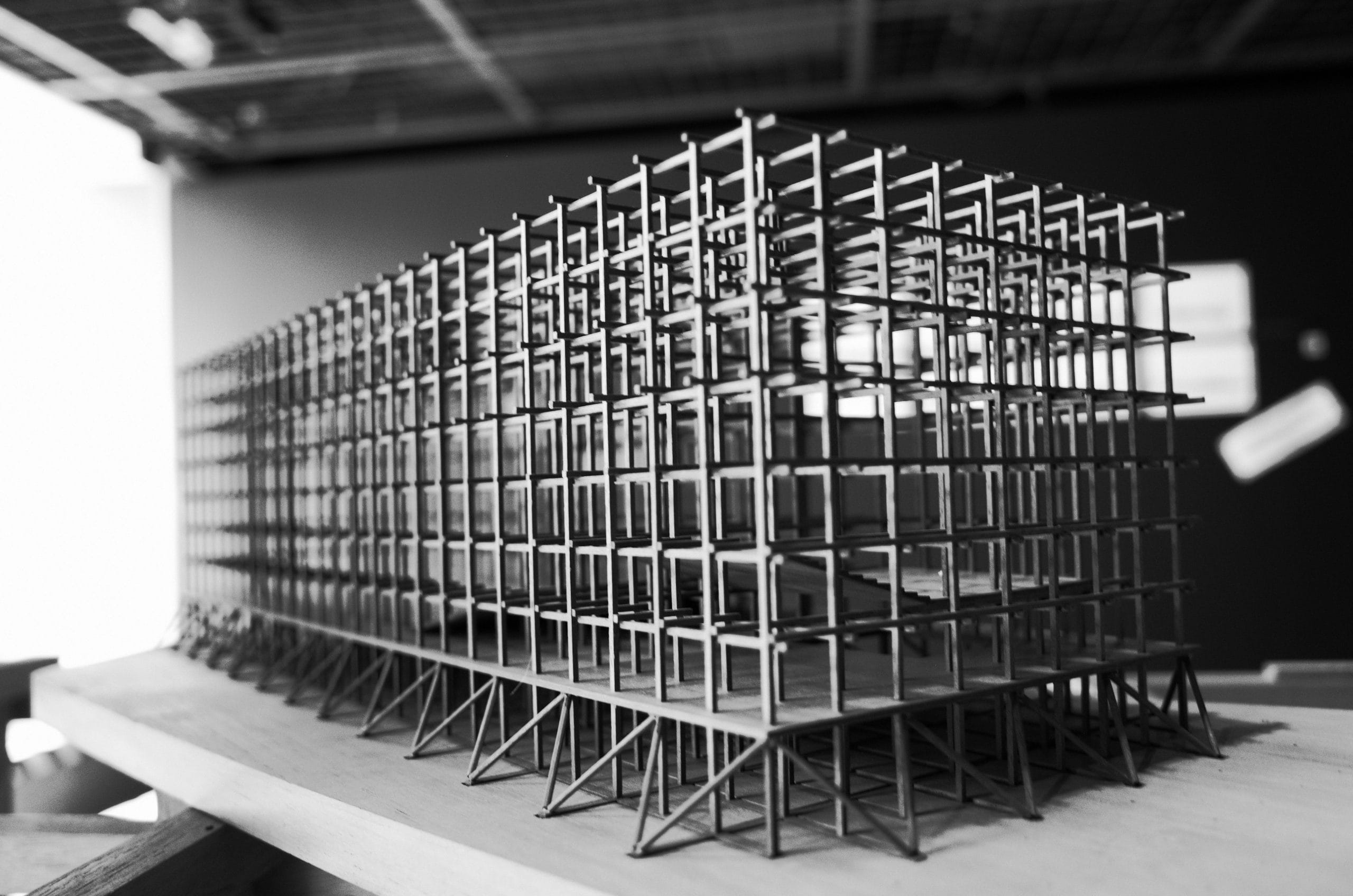
Teatro Regional del Biobio Model | Photo: Kraipol Jayanetra
In works such as Prism House + Room/Terrace, Radic’s sampling of Shinohara’s Prism House can be understood through the steep 45-degree roof. Rather than reproducing its strange quality directly, he reworks it into a lighter and more open configuration, where the original intensity is no longer literal but transformed into another form of spatial enigma.
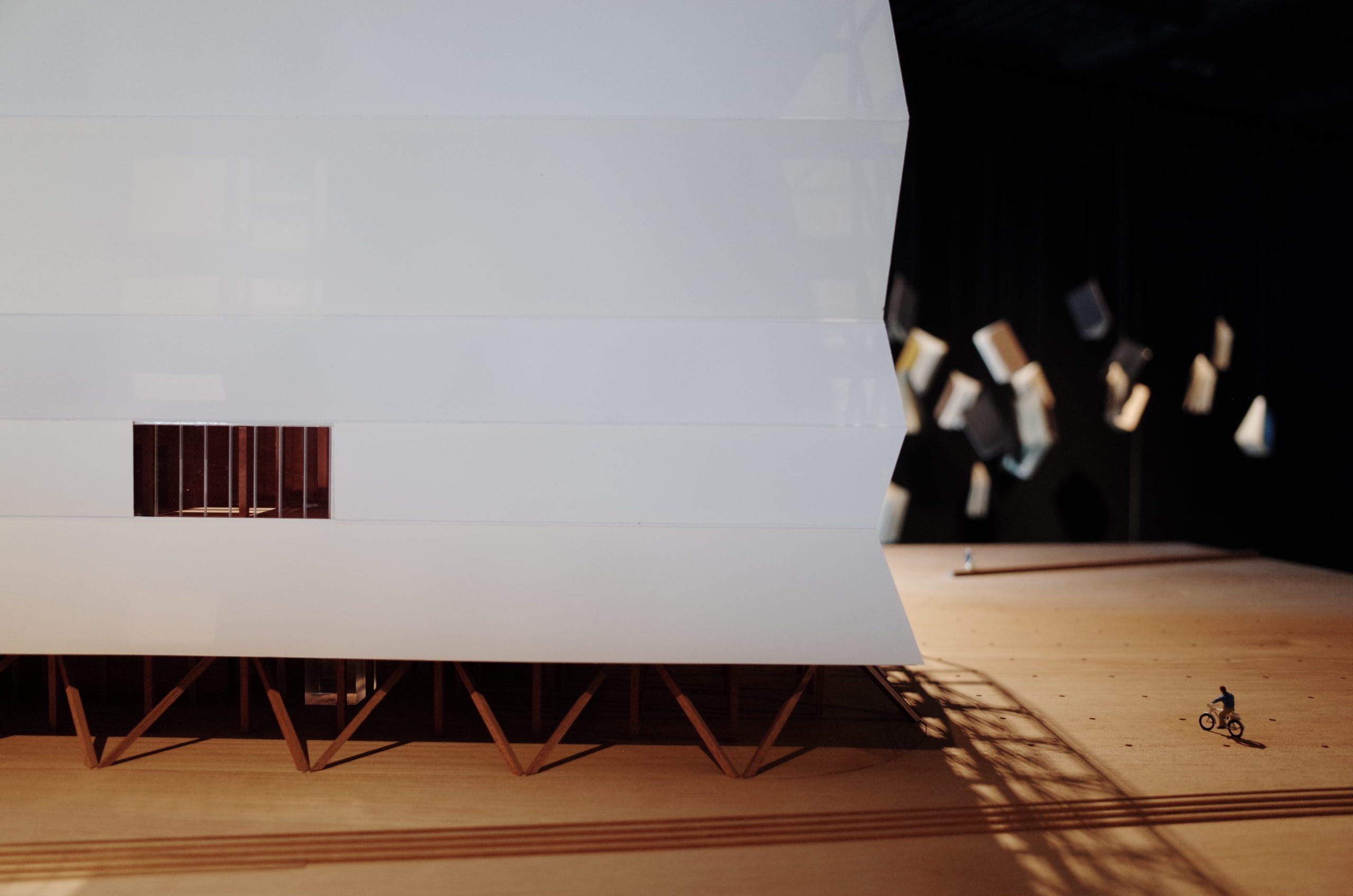
Teatro Regional del Biobio Model | Photo: Kraipol Jayanetra
This logic extends beyond architecture into a broader process of transposition. Many of Radic’s references originate in folklore and mythic imagery, already charged with ambiguity and concealment. Tracing David Hockney’s Illustrations for Six Fairy Tales from the Brothers Grimm, Radic develops a series of speculative artifacts, The Boy Hidden in an Egg, Fragile: A Tower of Wine Glasses, and The Selfish Giant’s Castle, Radic describes this body of work as a kind of ‘medieval bestiary,’ a collection of hybrid figures whose strange, composite nature anticipates the peculiar quality that later emerges in his architecture.
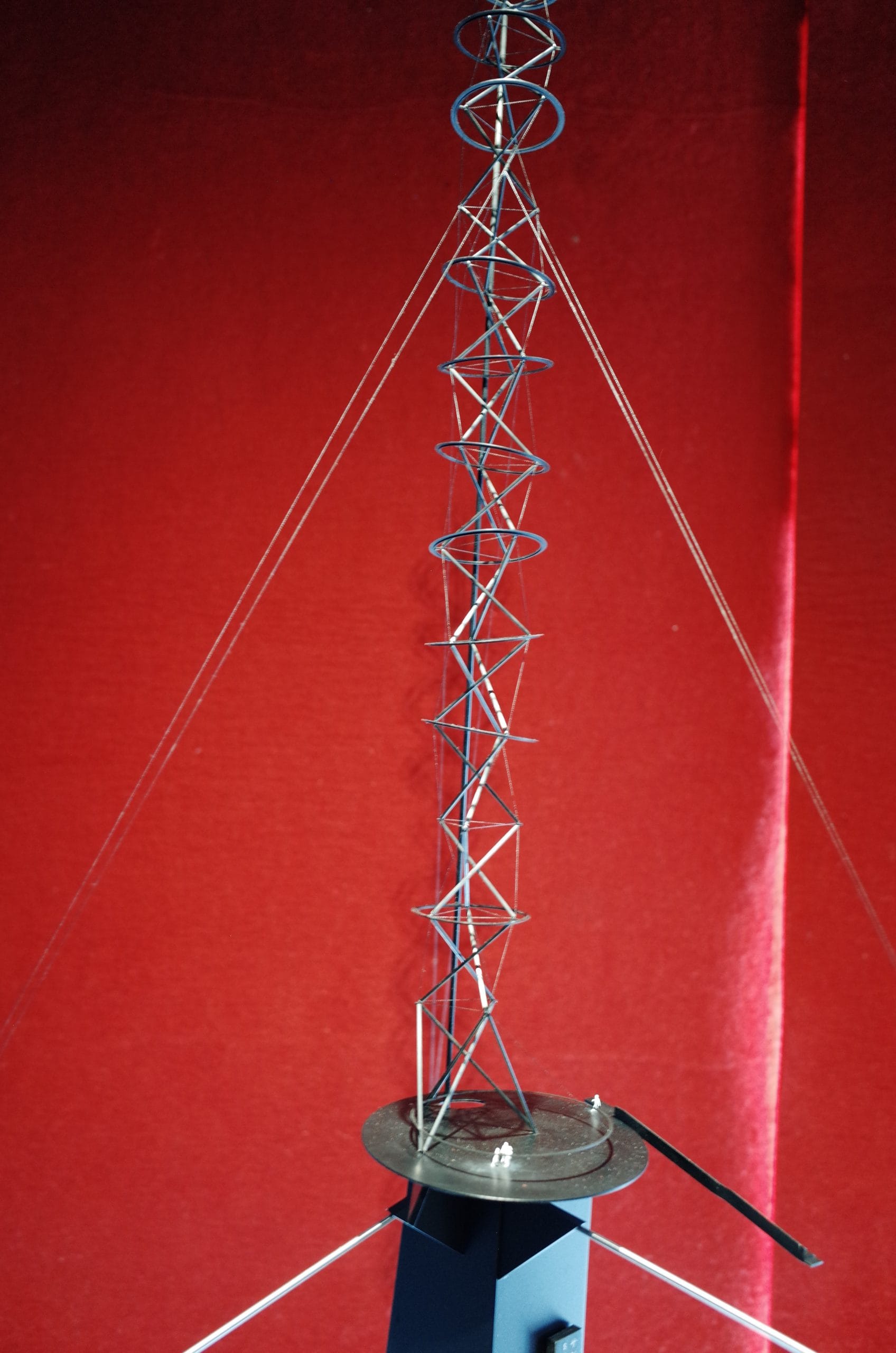
Fragile: A Tower of Wine Glasses Model | Photo: Kraipol Jayanetra
What matters here is not the continuity of form, but the continuity of operation. These figures are repeatedly translated across scales: from image to object, and from object to architecture. In this process, the image begins to detach from its origin, no longer read as a reference but as a condition. What persists is not the figure itself, but a faint residue, something carried across transformations without being fully visible. Fragile: A Tower of Wine Glasses finds an echo in the Santiago Telecommunications Tower, while The Selfish Giant’s Castle reappears and transforms into the Serpentine Pavilion. Across these shifts, what is compelling is not replication, but the precision of transformation.
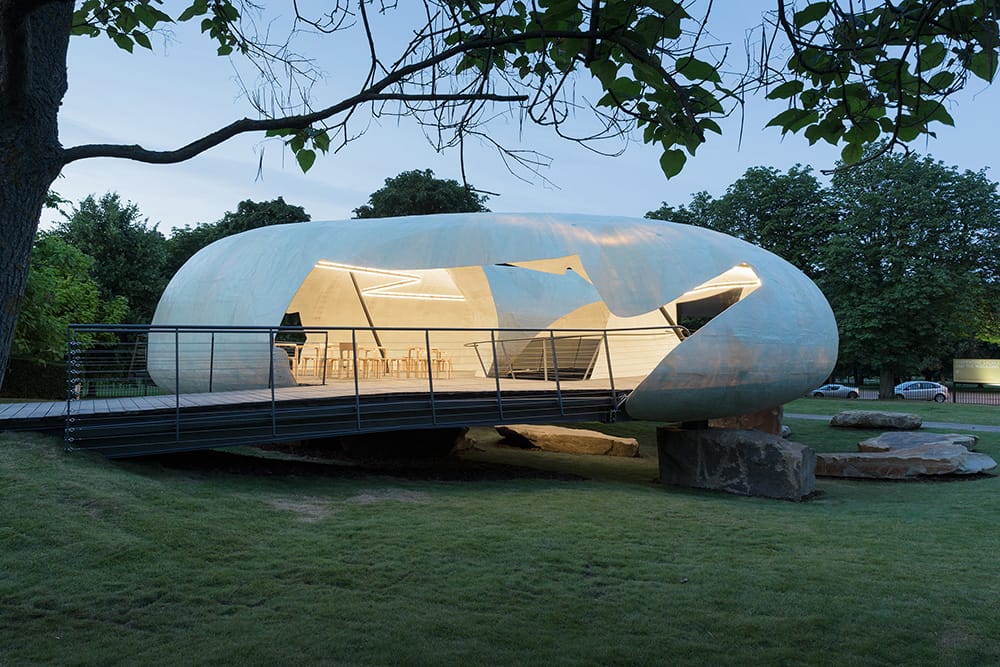 Serpentine Gallery Pavilion | Photo courtesy of Iwan Baan
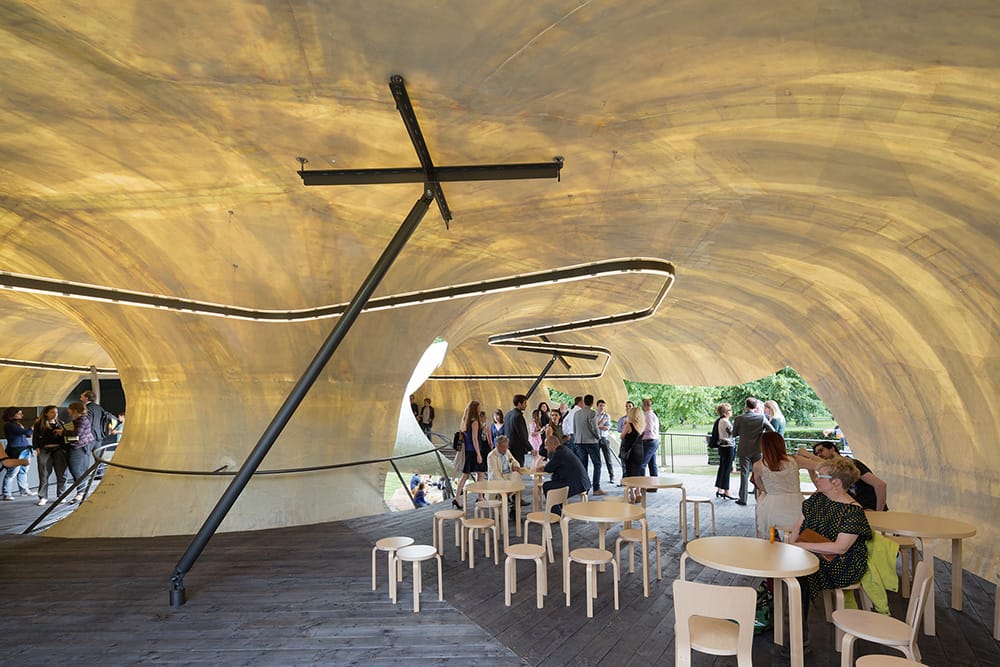
This recurring logic of transformation, where forms are translated and partially concealed across different states, echoes Radic’s reference to Nenia, an elegiac form of funeral poetry. To sing a nenia is to come into a quiet understanding with what remains after loss.
In this sense, architecture becomes less about presence than about the persistence of memory.
A similar sensibility appears in Ma(rra)queta Shelter. Here, inflated forms resembling Chilean rafts or bread loaves are used as temporary molds to shape a small shelter. Once removed, what remains is not the object itself, but the trace of its formation, a spatial memory left behind. Industrial elements, metal bases, gates, and tensioned cords, are introduced to produce a tension between vernacular reference and constructed control.
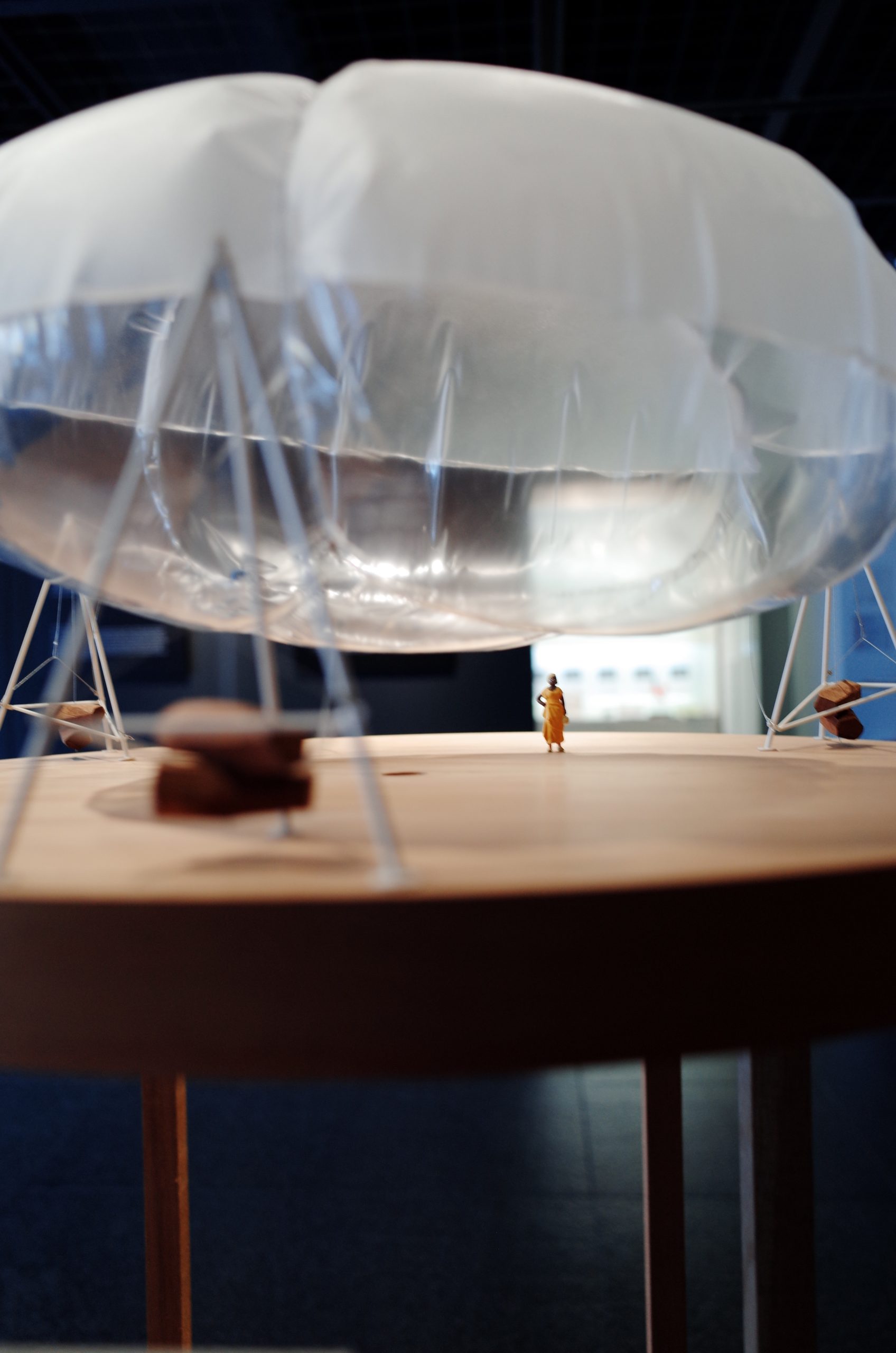
Photo: Kraipol Jayanetra
As his practice expands, this bestiary-like logic is carried into larger, urban conditions, most clearly in Nave. Radic was commissioned to transform a fire- and earthquake-damaged housing block into an experimental performing arts center. Radic approaches the building as an act of resurrection. The project is composed of three distinct layers: a restored, serene facade; a dark, industrial black box theatre; and a fragile, circus-like roof structure. Rather than resolving into a unified whole, these elements remain in tension, producing a building that oscillates between permanence and transformation.
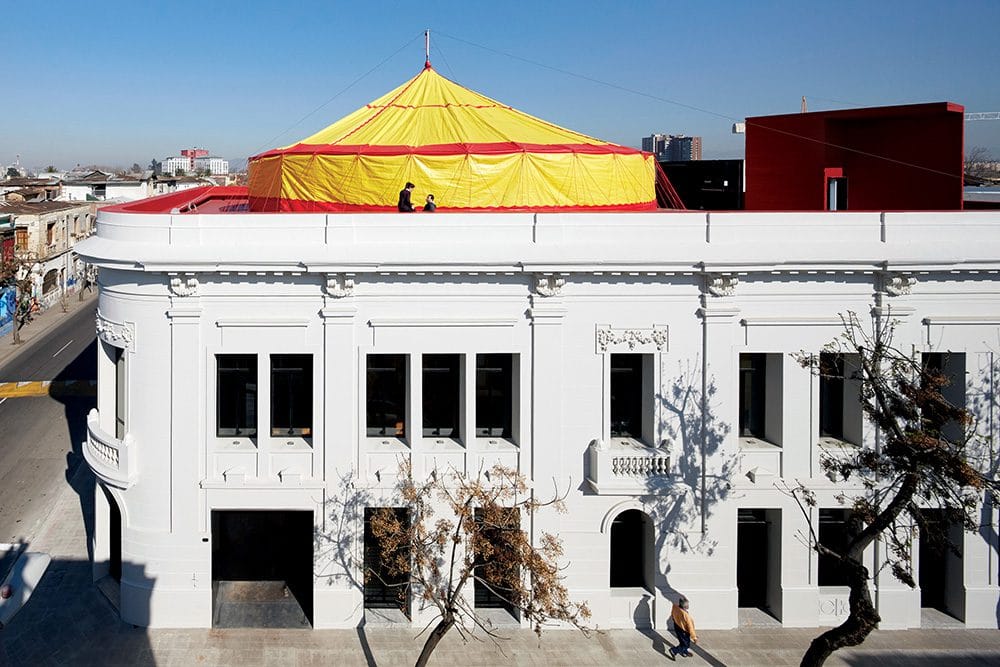
NAVE, Performing Arts Center | Photo courtesy of Cristobal Palma
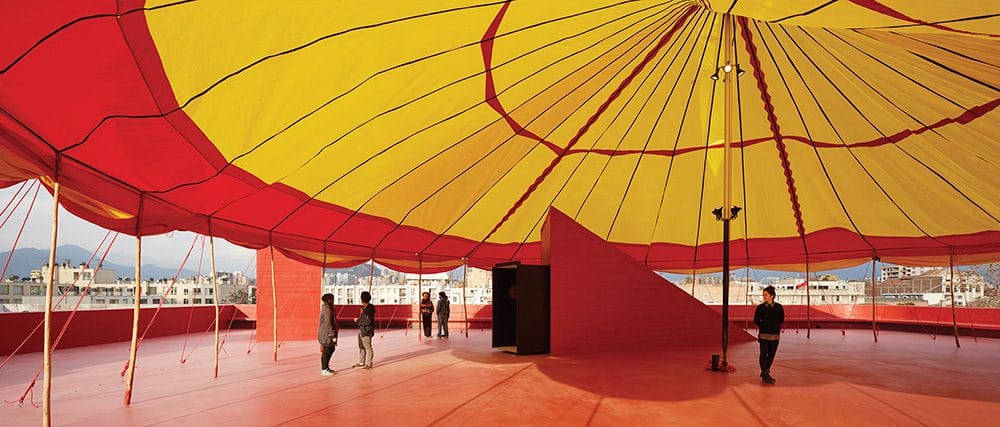
NAVE, Performing Arts Center | Photo courtesy of Cristobal Palma
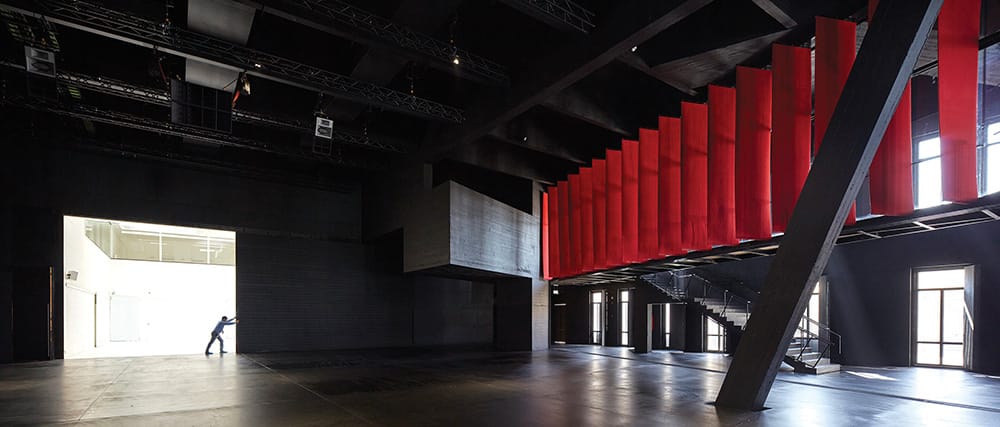
That same logic is continuously pushed further in Teatro Biobio, where it becomes more structural and systemic. Faced with a conventional demand for monumentality, Radic instead adopts a domestic scale of construction. Drawing from his earlier project Habitación (Room), he develops a lightweight structural grid that lifts and wraps around the theatre volumes. Organized the space frame for a short span of 3.9 meters, the structure allows for slender columns of just 30 by 30 centimeters, the dimensions closer to a domestic column. This shift in scale, along with the use of a translucent membrane face, replaces the expected heaviness with a surprising lightness. It produces a building that fulfills the public demand for stability on its own terms, recasting civic monumentality through the logic of domesticity.
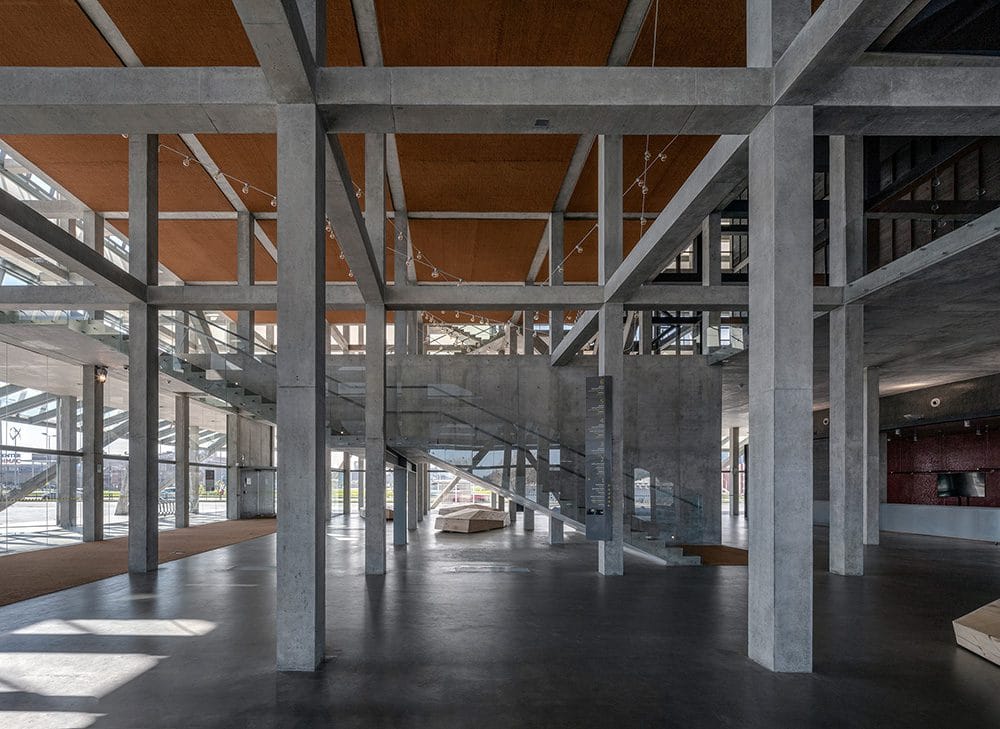
Teatro Regional del Biobio | Photo courtesy of Hisao Suzuki
Across these works, Radic’s architecture resists being understood as a fixed language or style. Instead, it operates through condensation, where images, objects, and spatial conditions are continuously translated and re-formed.
This is why his buildings feel both familiar and strange. They do not seek resolution but sustain a tension between recognition and uncertainty. It is within this tension that intimacy emerges, not as comfort, but as a subtle, quietly bizarre closeness to something not fully understood.
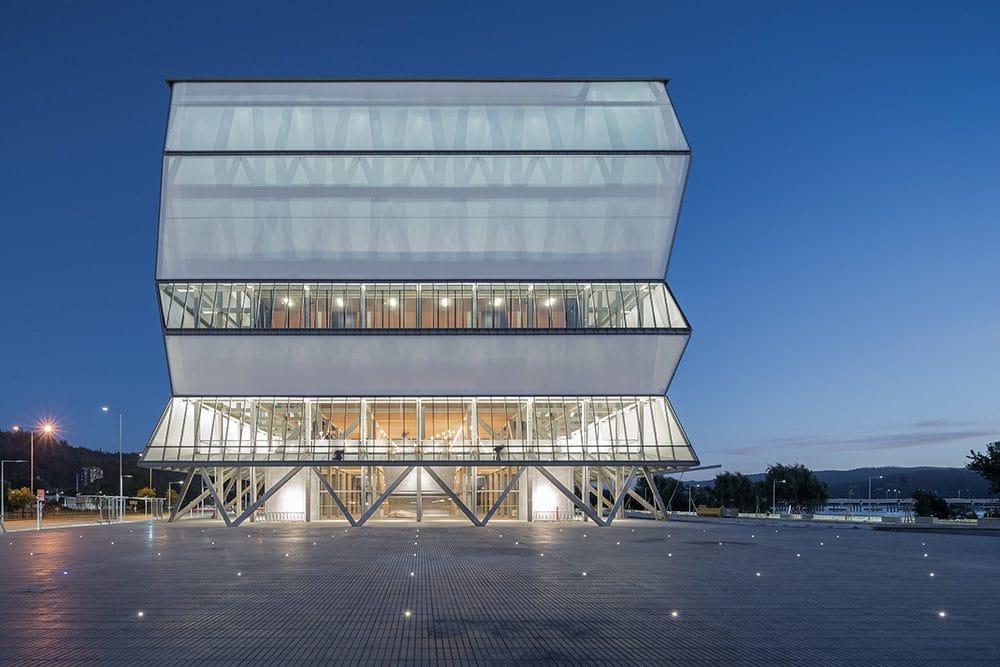
Teatro Regional del Biobio | Photo courtesy of Iwan Baan
Rather than a stylistic position, magical realism can be understood here as a way of seeing – one deeply embedded in Latin American cultural narratives, where the ordinary and the strange coexist without contradiction.
In this sense, Radic’s fascination with bestiary, nenia, and processes of condensation can be read not as isolated strategies but as extensions of this broader sensibility.
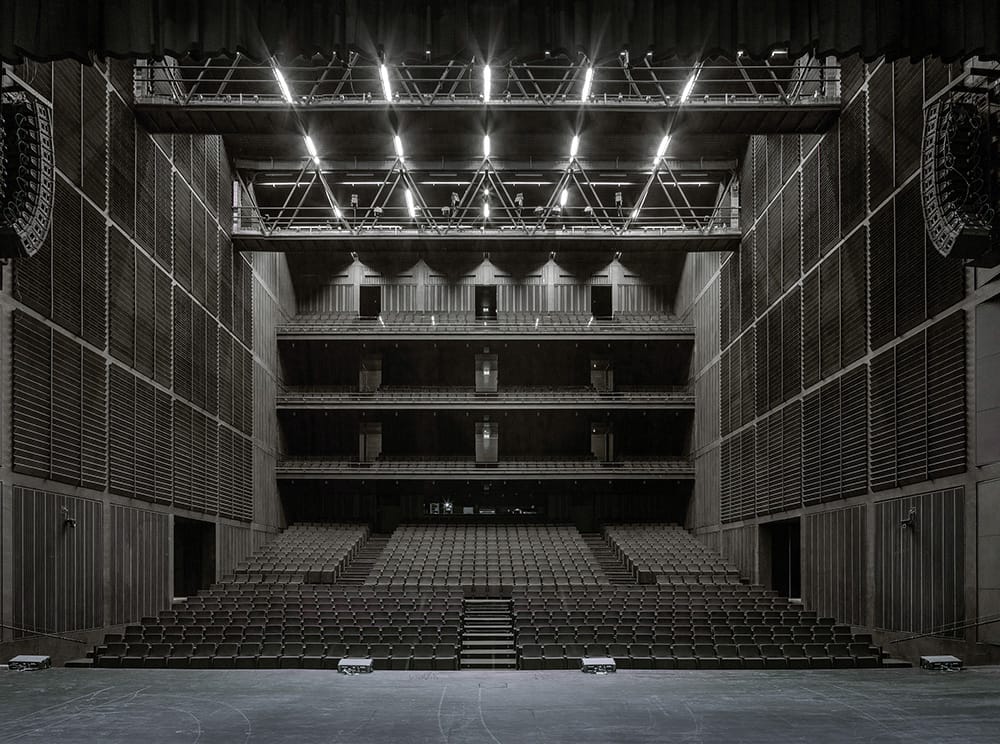
Teatro Regional del Biobio | Photo courtesy of Hisao Suzuki
Radic’s architecture can be read as a contemporary form of magical realism, not as a stylistic reference, but as a mode of operation. His work does not explain itself; it lingers, like an afterimage, continuing to unfold in memory long after the encounter. At a moment when architecture often seeks clarity, efficiency, and resolution, Radic’s work insists instead on ambiguity, on the value of what cannot be fully explained. What appears as poetic expression is grounded in a precise, pragmatic response, yet remains quietly bizarre.
_
Reference
a+u (Architecture and Urbanism), no. 21:08, “Smiljan Radic,” 2021.
El Croquis, no. 199, “Smiljan Radic,” 2019.