
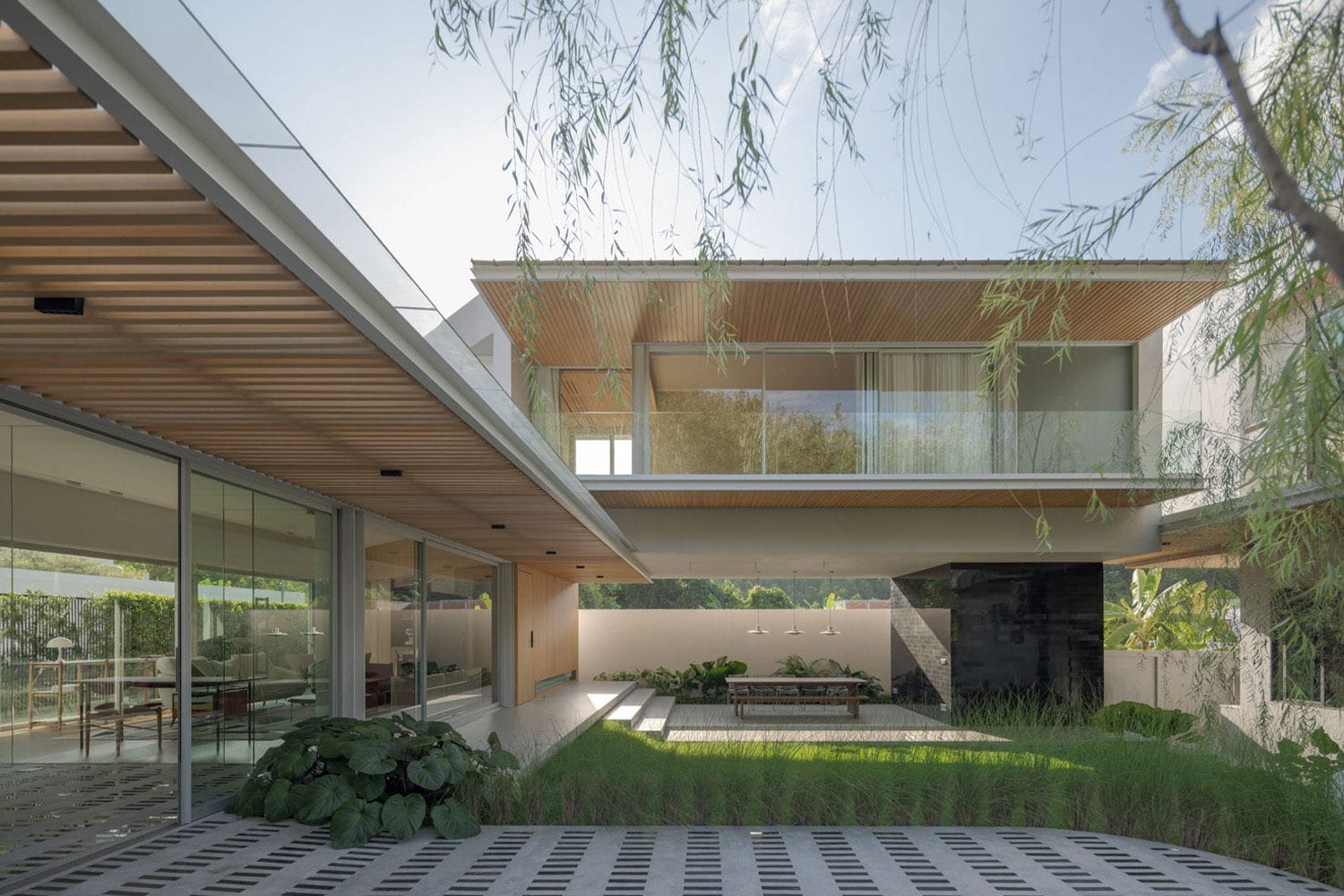
WONDERING IN HATYAI VILLA, WHERE PHYSICALIST TURNED THE ORIGINAL HOUSE INTO A MODEST RETREAT FOR THE JOYS OF EVERYDAY LIVING BY STEPPING OUT OF THE SAME PLACE
TEXT: PHARIN OPASSEREPADUNG
PHOTO: SOOPAKORN SRISAKUL
(For Thai, press here)
Hatyai Villa is a hillside residence designed as an extension, both in physical terms and in the more intimate dimension of its dwellers’ everyday experience. The project fully embodies the word ‘villa’: a modest retreat embedded within daily life. Built as an addition to an existing house on the same site, it opens up a new realm in which life can slow down and unwind.
Set against the foothills on the outskirts of Hat Yai, Songkhla, the L-shaped villa extends from the family’s original home and is designed by the architecture studio Physicalist. To the north, it connects to the existing house, which already accommodates the family’s essential domestic functions, while to the east, the site meets the mountain. The new timber L-shaped structure wraps around a central lawn, forming a new leisure-oriented setting for a family of four, with the mountain landscape held close along one side.
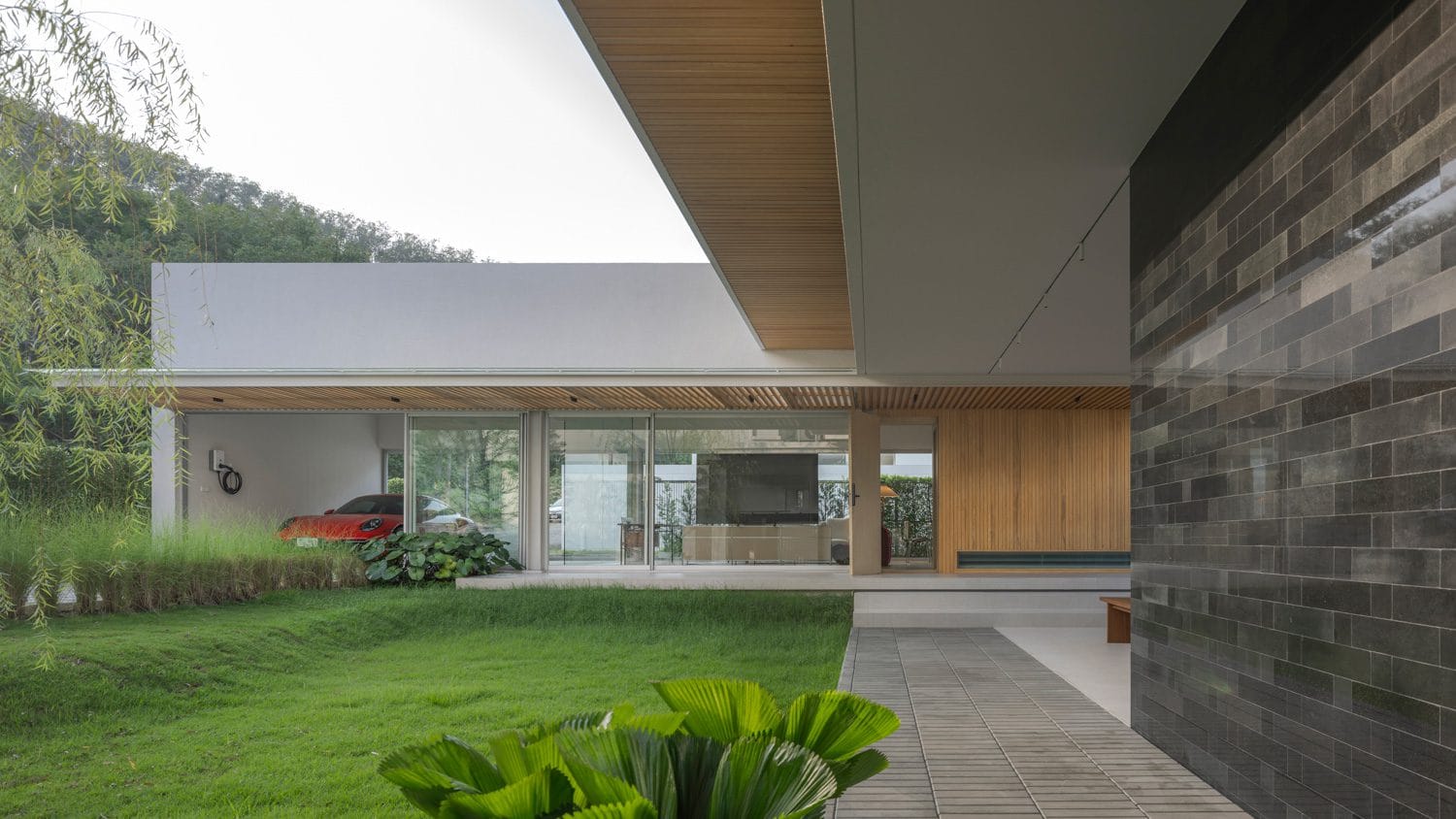
Because the project aims to evoke the atmosphere of a holiday home, the villa does not repeat the conventional functions of a typical house. Those needs are already met by the original residence. Instead, the architects devised a more flexible program: a multipurpose area, a coffee corner, a shaded open-air dining area beneath a raised structure, along with parking and car-washing areas, all naturally integrated into everyday life.
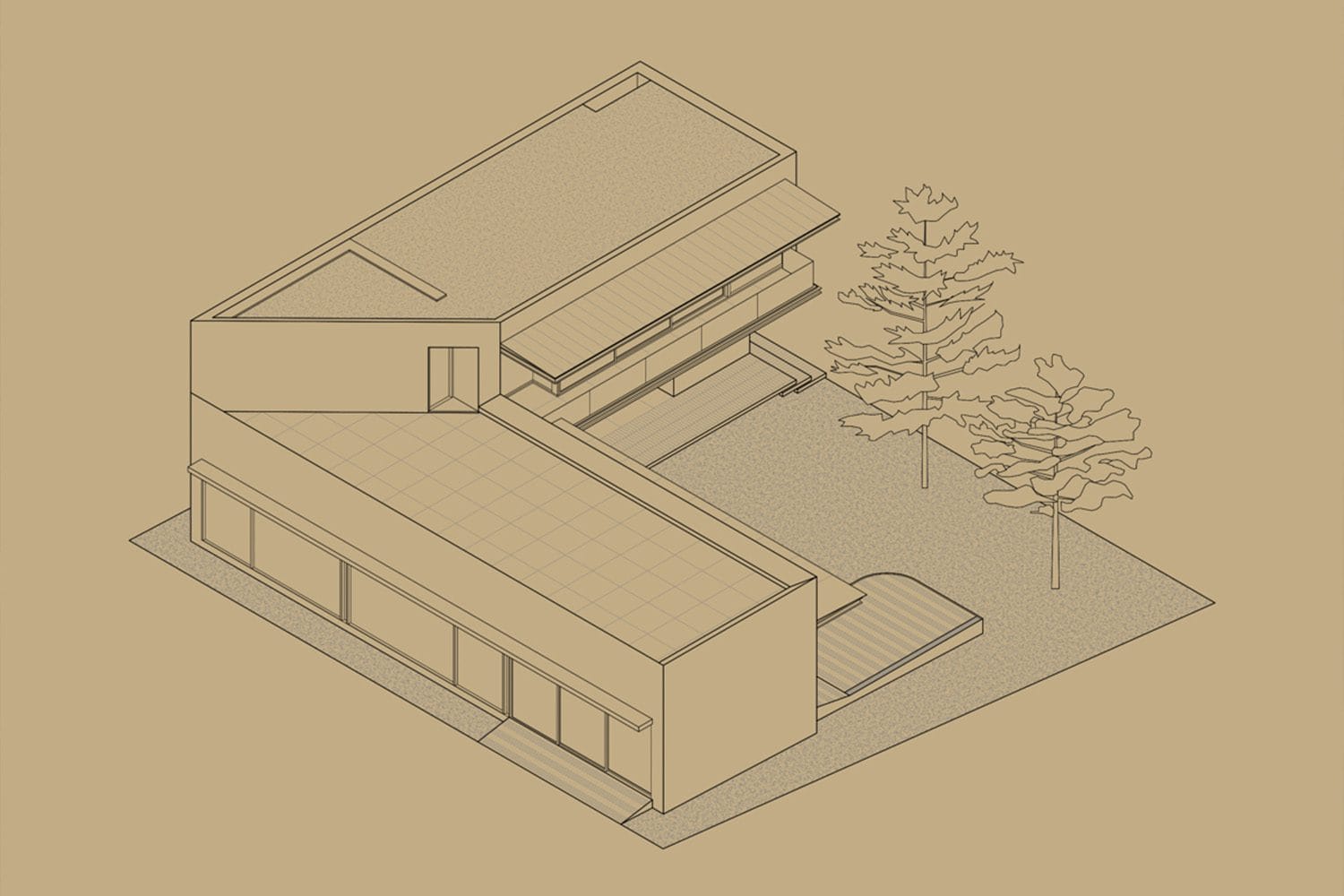
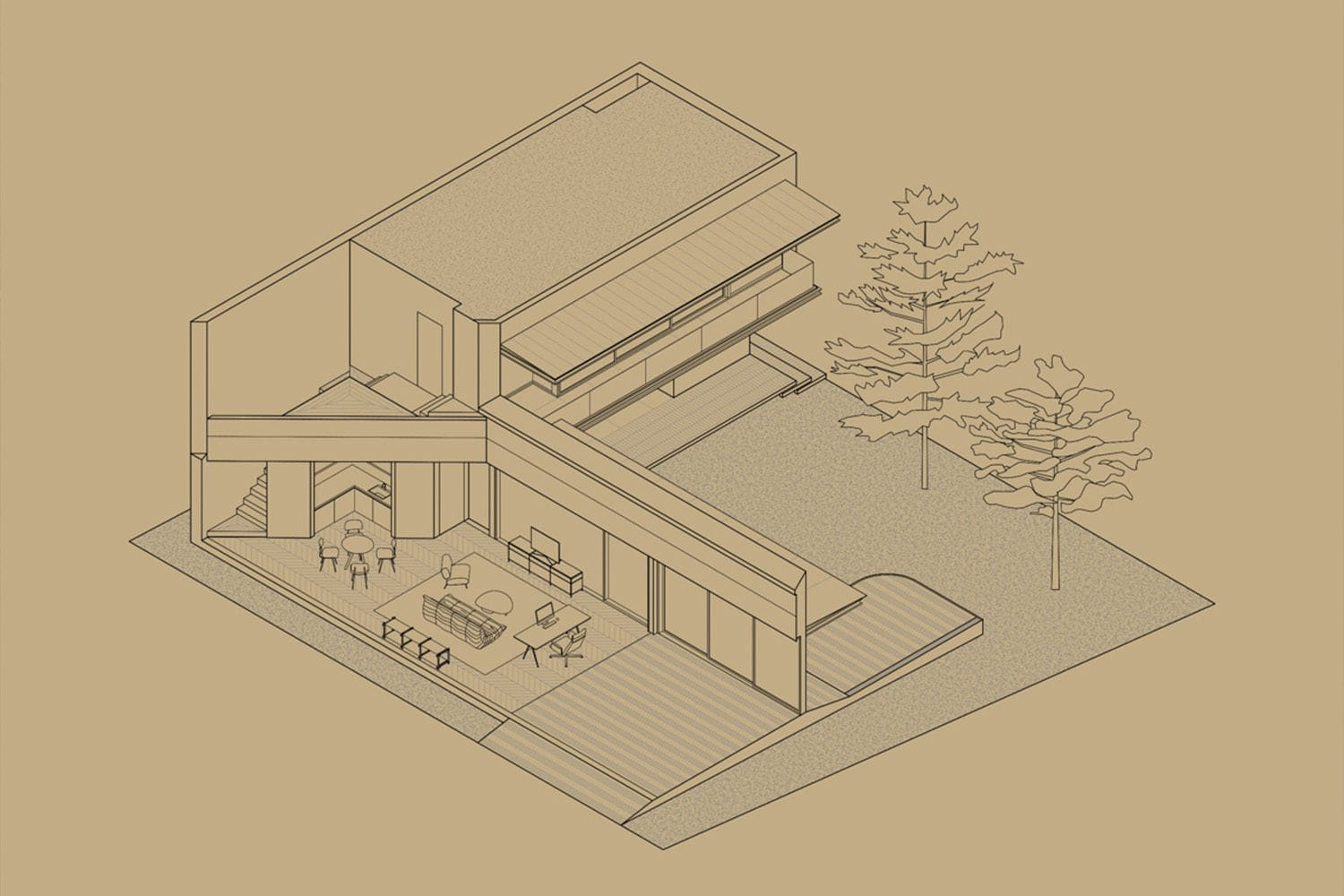
Seen from above, the L-shaped layout is set along the left flank of the plot, deliberately freeing the right-hand side to open fully toward the mountain view. This expanse is experienced both from the ground-level lawn and from the upper-floor bedroom. At the top of the site, the connection to the existing house is maintained, ensuring its continued use. The villa thus operates as an extension of the original home’s sense of well-being, with movement between the two designed to feel continuous and seamless.
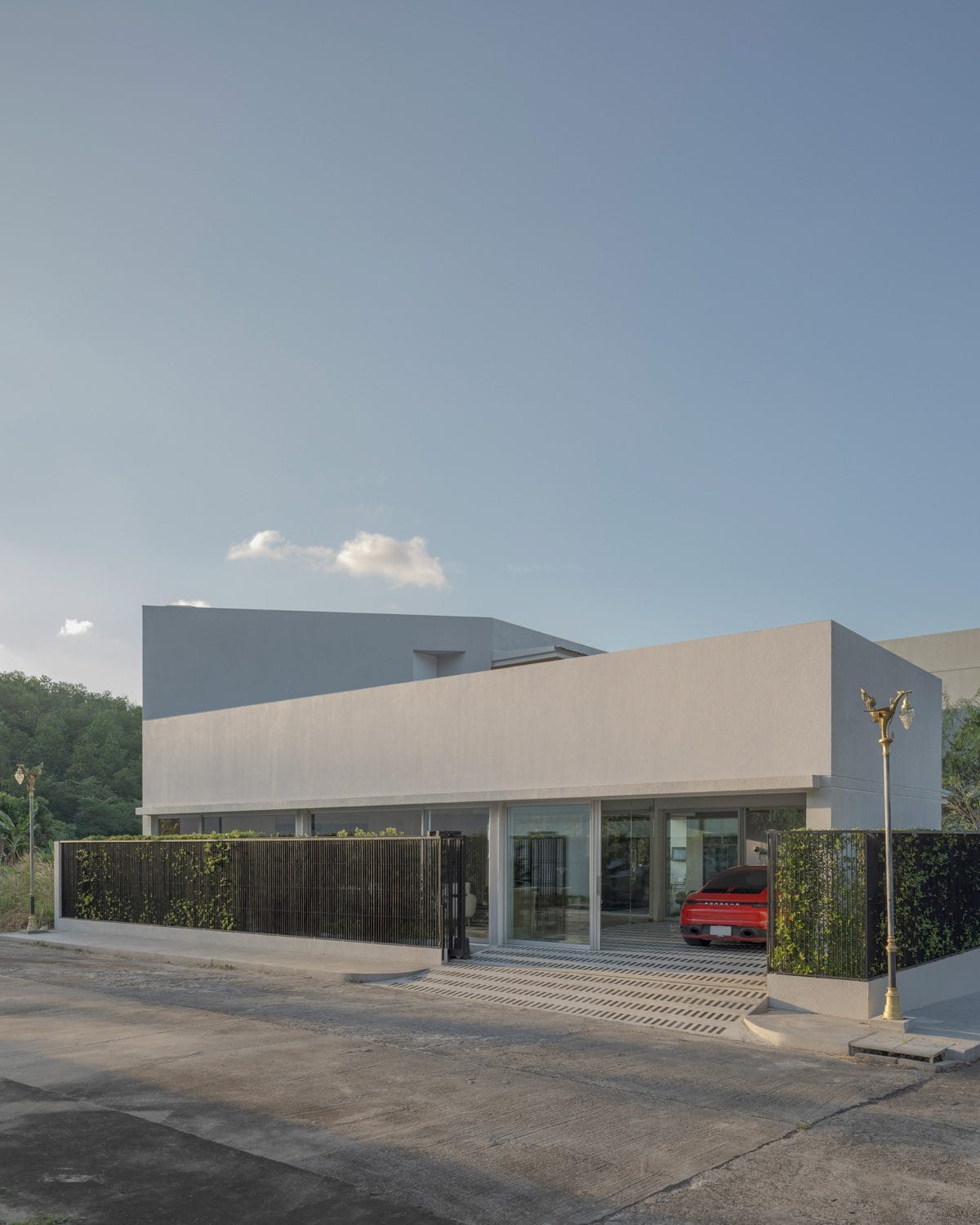
There are two points of entry. The first extends directly from the existing house, where a framed view unfolds toward the lawn and the elongated glass façade of the villa, aligned with the mountain beyond. This sequence introduces a subtle shift in atmosphere, encouraging daily movement outward into the new setting. The second approach is from the street, allowing direct access to the villa with adjacent parking. Here, the cars become part of the domestic composition, almost as if they were another piece of furniture.
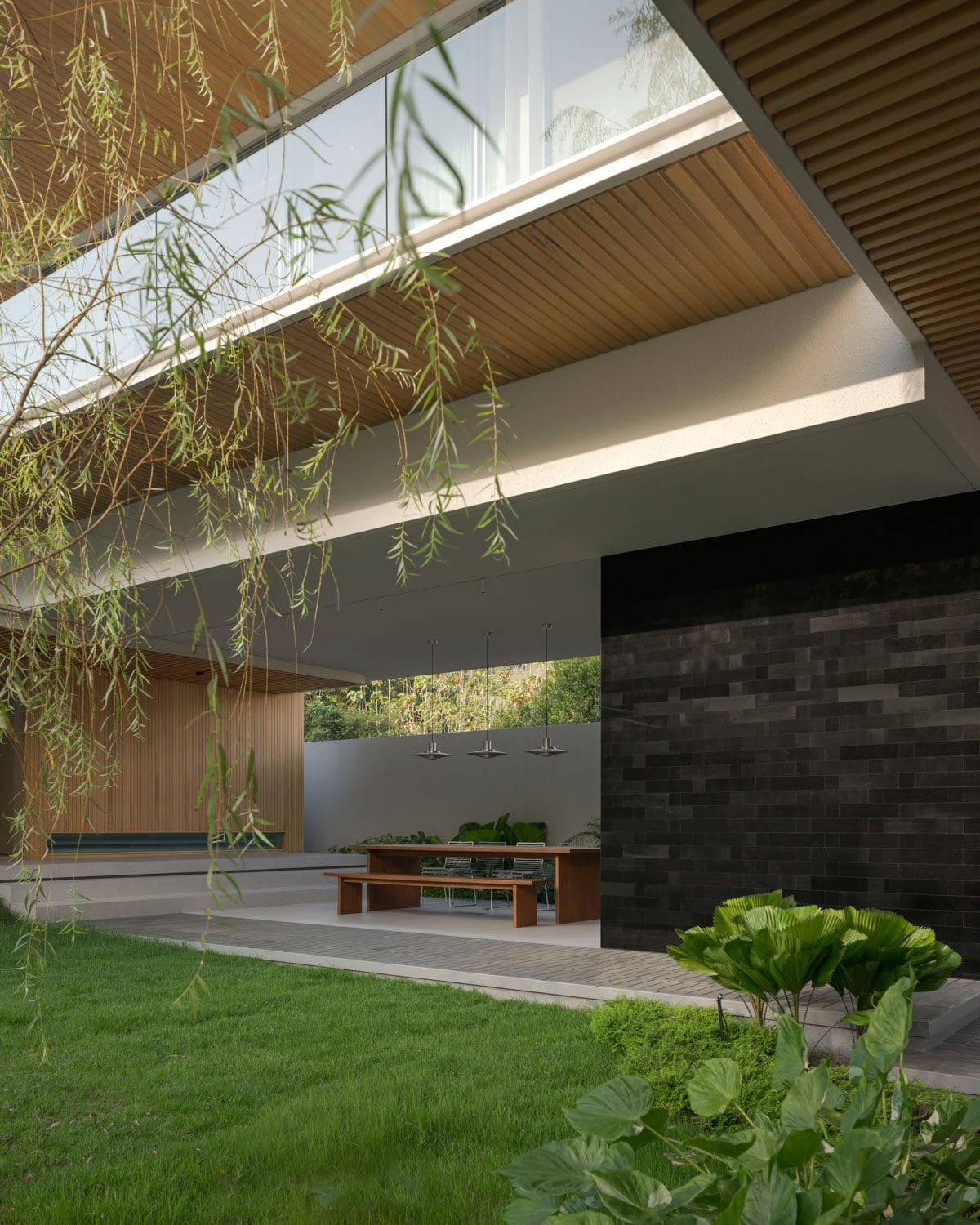
Stepping out from the original house onto the lawn, the right-hand side gives way to a shaded, open-air space beneath a raised structure, akin to a traditional Thai house. A dining table anchors this zone as a place for shared family moments. The architects intended it to remain flexible, capable of adapting to different uses over time. The raised structure invites breezes to pass through while receiving both morning and afternoon light, with the extended eaves of the upper-floor terrace filtering the sun to prevent excessive exposure.
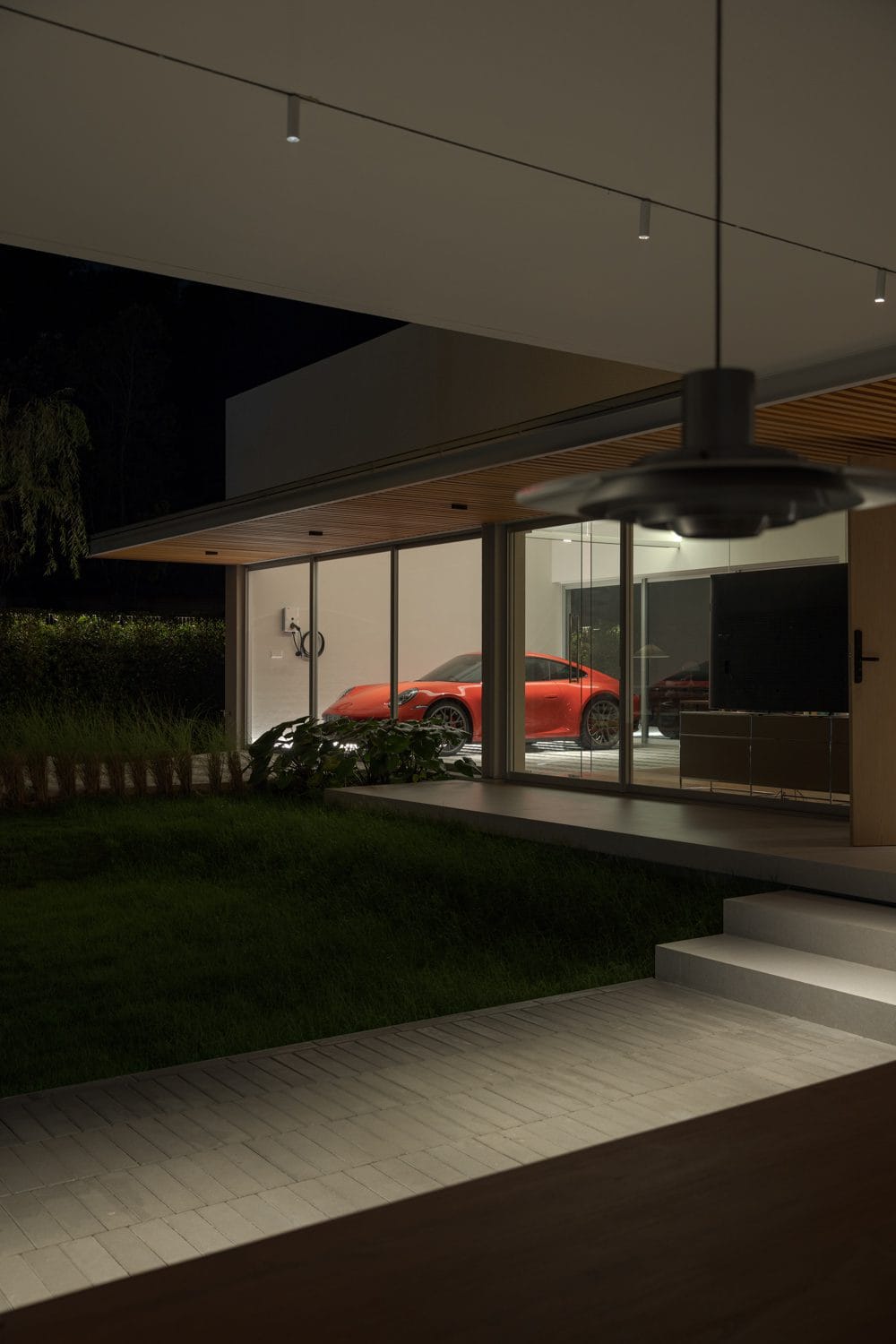
From the lawn, the parking area appears to the left and the lounge to the right. Although enclosed, the interior retains a sense of openness through a continuous horizontal run of 2.40-meter-high panoramic glass panels, enabling a seamless visual connection between inside and out. The carefully calibrated height of the glazing also provides a degree of privacy, shielding the interior from external views.
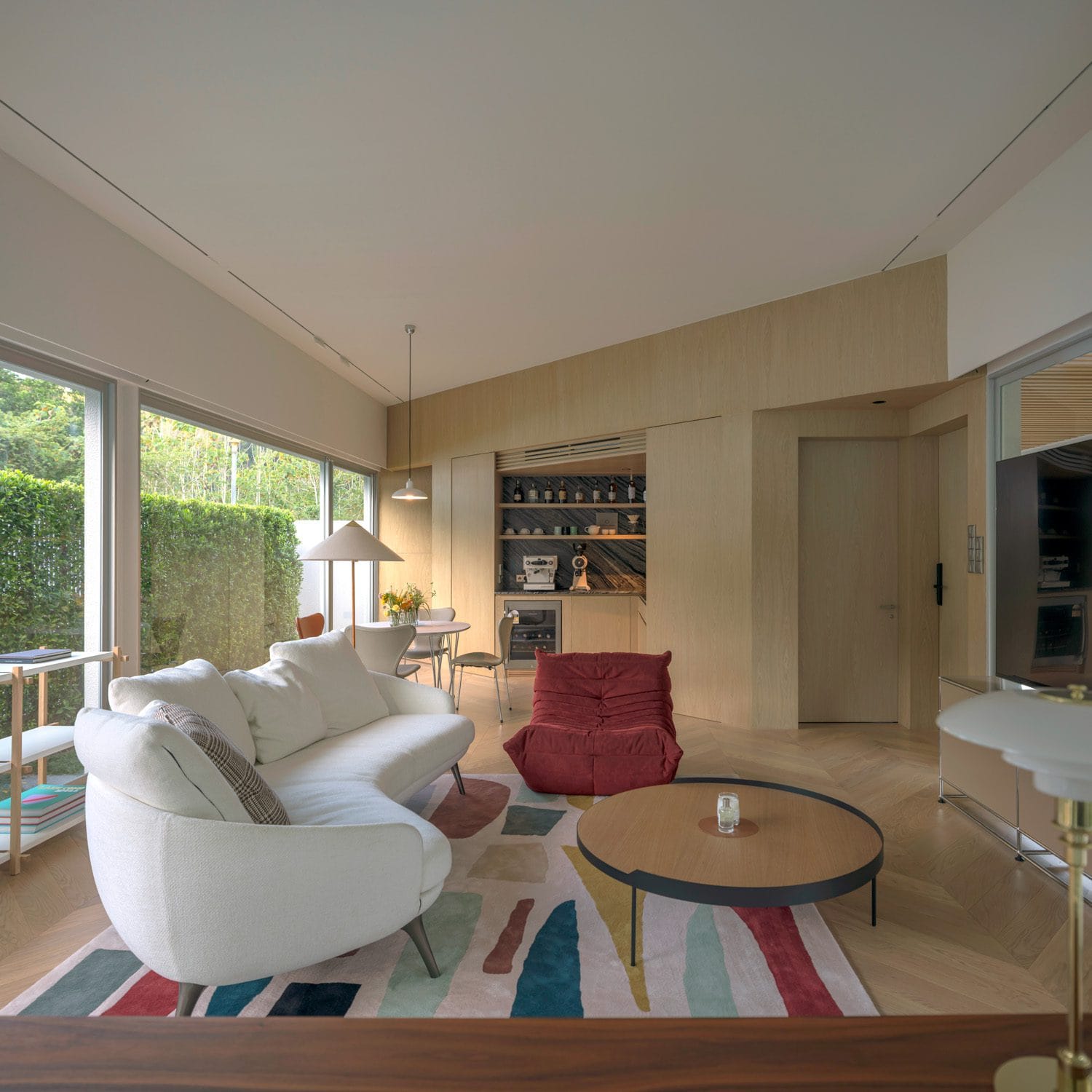
For the family’s lounge, the architects selected primarily loose furniture. Each zone is given its own character: a red sofa, a white sofa, a brightly colored rug, a work desk, and a compact coffee corner. Together, these elements establish distinct rhythms of use, allowing the area to function as a relaxed retreat accommodating different needs.
The lawn becomes the heart of the house: a primary green setting left open according to the owner’s intention. Connected to the adjacent car-washing area, it transforms days of rest into shared moments, from caring for beloved vehicles to giving children room to run and play amid nature.
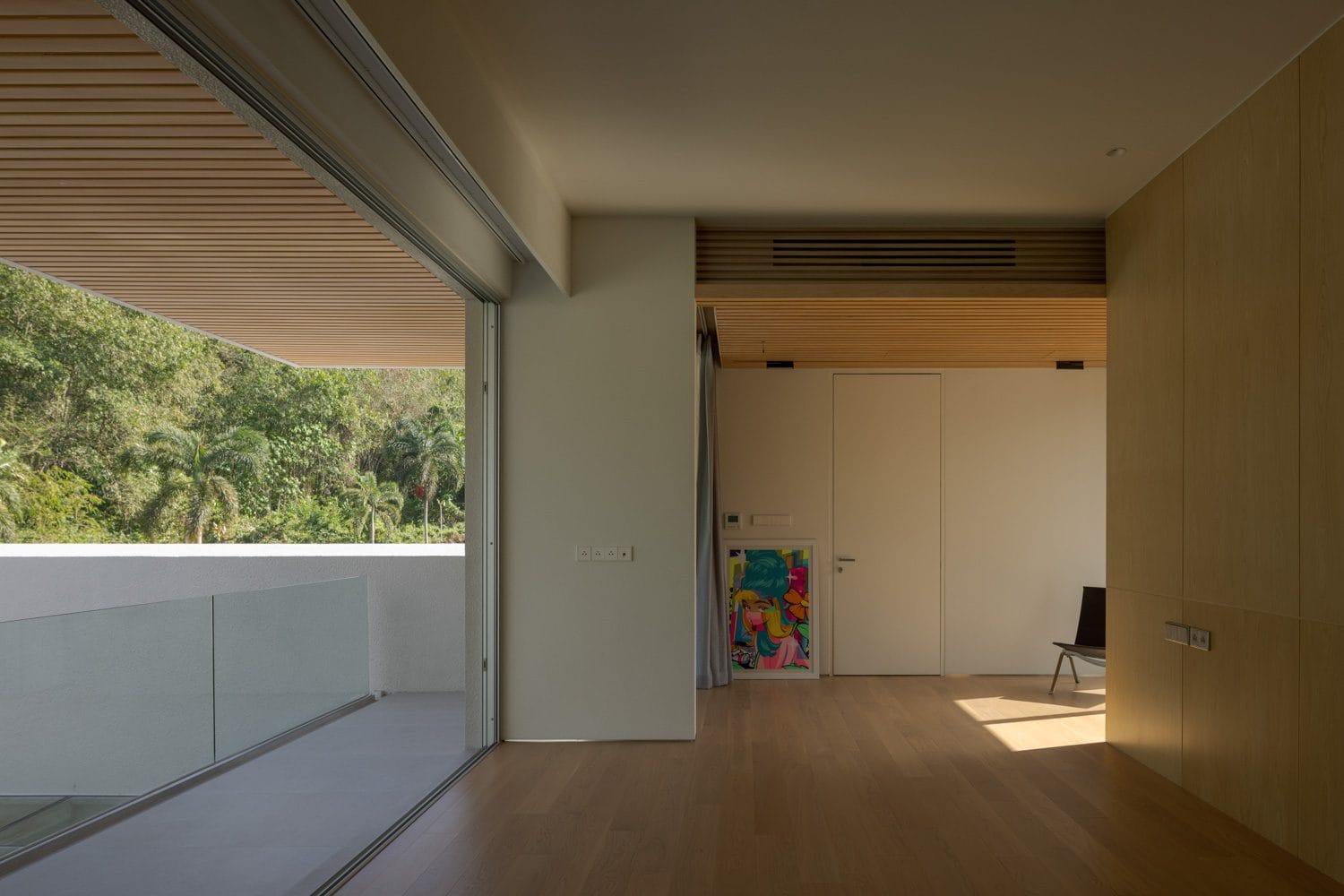
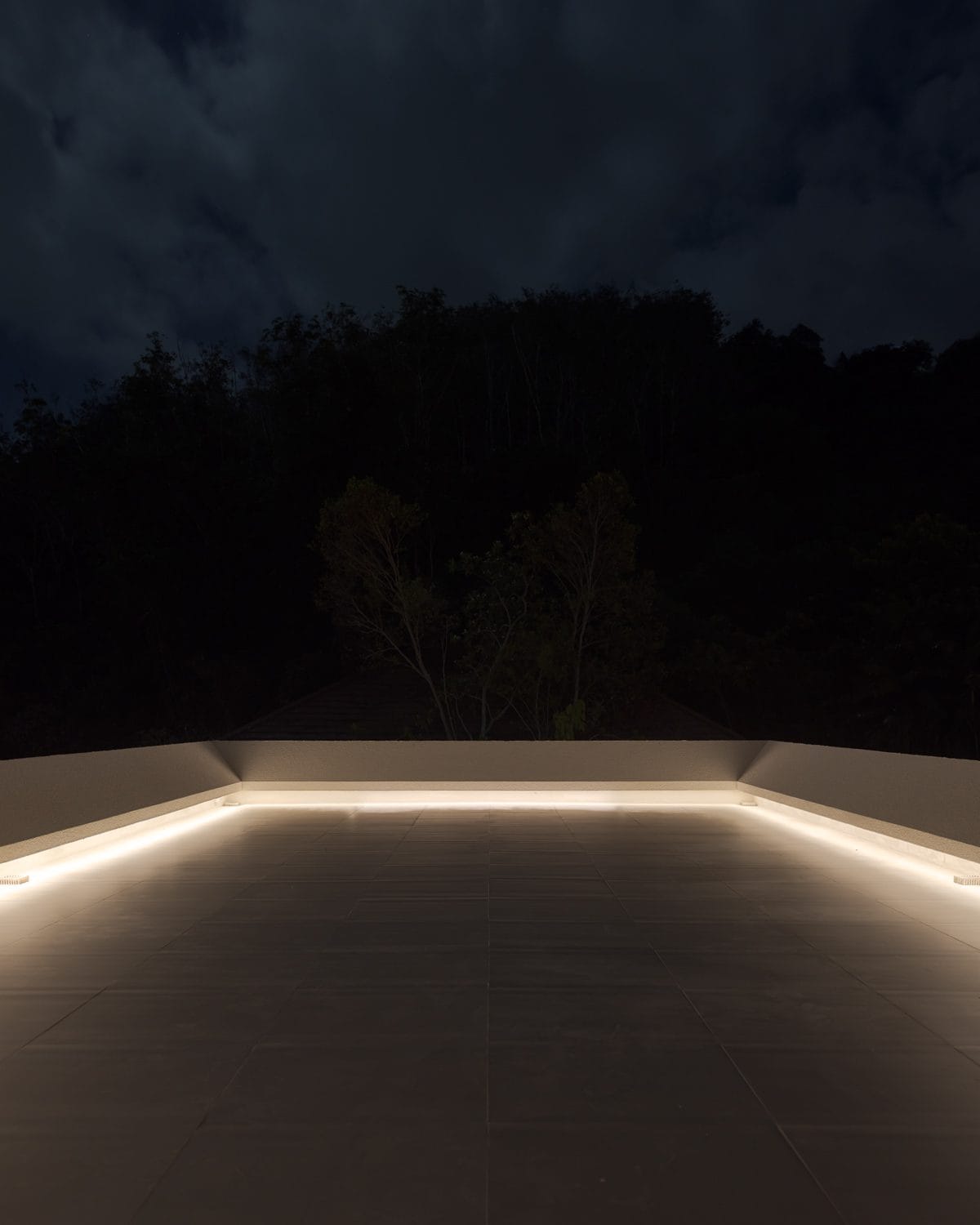
Ascending to the second floor, the bedroom lies to the left, complete with an en suite bathroom and oriented to fully embrace the mountain view. A panoramic window stretches across the room, establishing an atmosphere of genuine retreat. To the right, a viewing terrace extends outward, designed with a low edge of just 50 centimeters and a gentle 60-centimeter incline, ensuring safety without interrupting the continuity of the view.
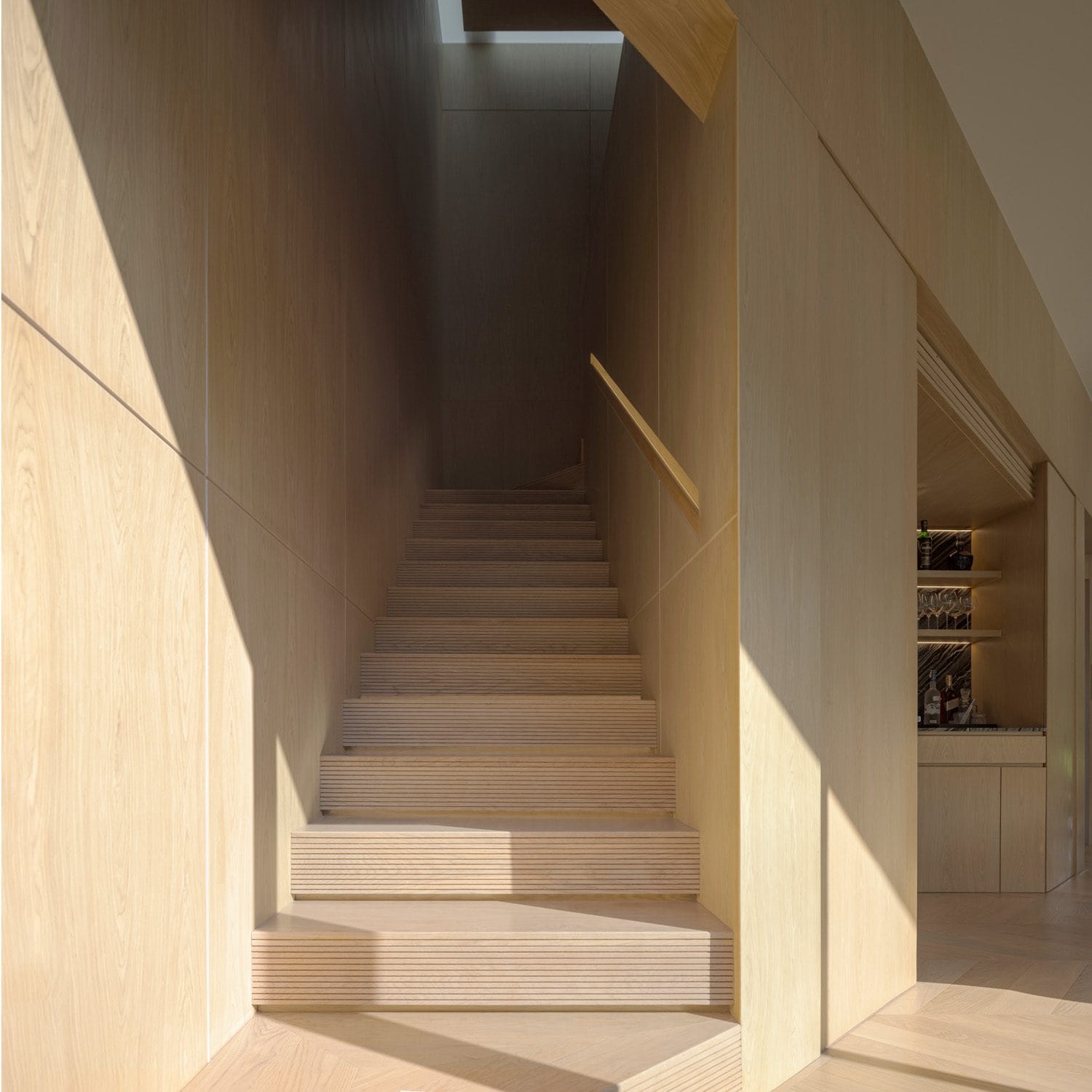
One of the villa’s more distinctive gestures is its triangular stair. Compact in footprint, it reclaims space for the final window bay, drawing more daylight into the interior. This corner of the villa takes on a triangular geometry, with the stairs discreetly tucked behind, leaving the area open for light and views to pass through unimpeded.
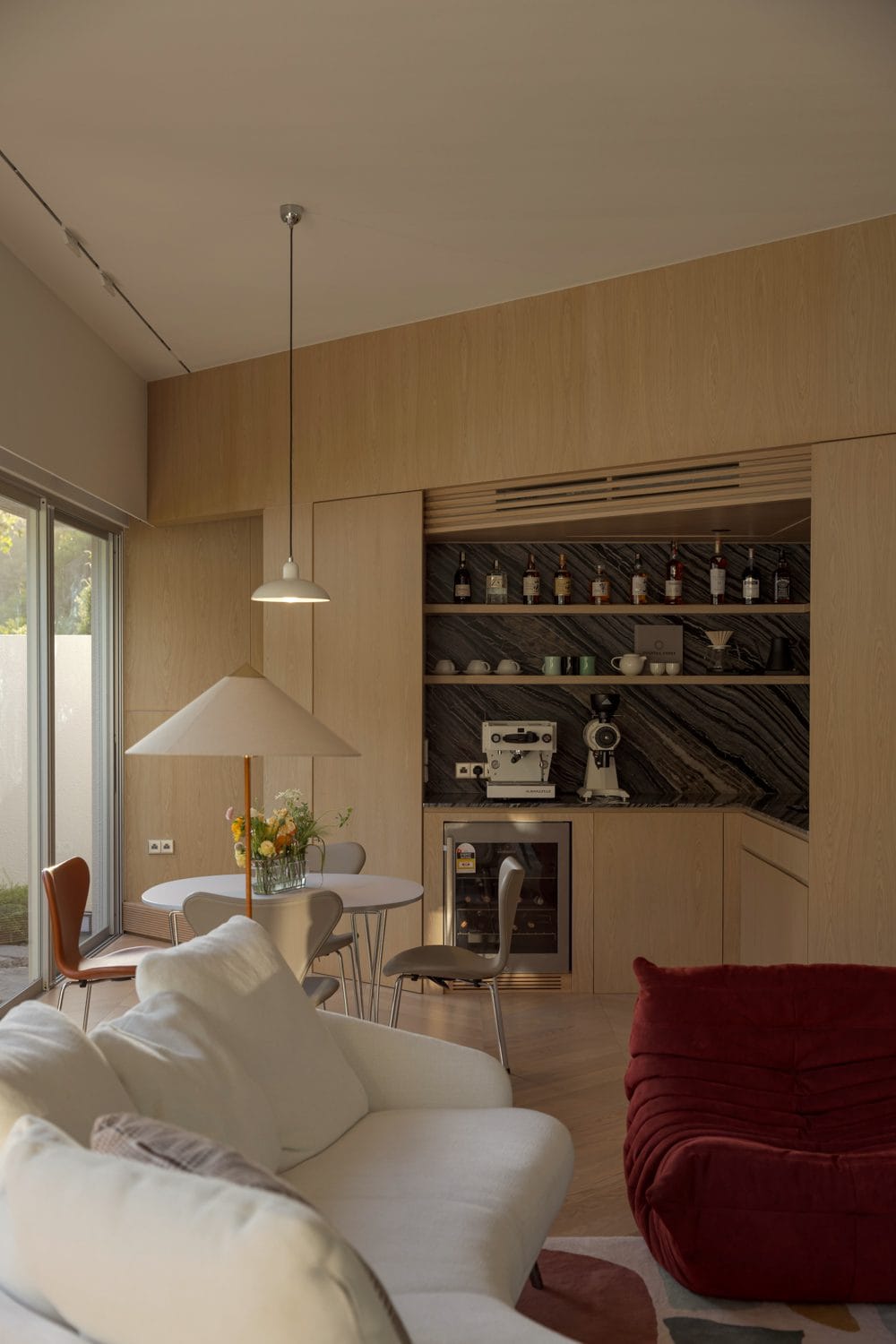
Within this same area, functions are subtly concealed. A small bathroom is tucked beneath the stairs, alongside a well-proportioned pantry for coffee preparation. By carving out the central mass beneath the stairs, the architects introduce a small table and a vase of flowers, bringing a sense of life to the corner. The area reads almost as a single block of wood, carefully whittled and shaped, its edges pared back to reveal a composition that accommodates multiple functions with quiet efficiency.
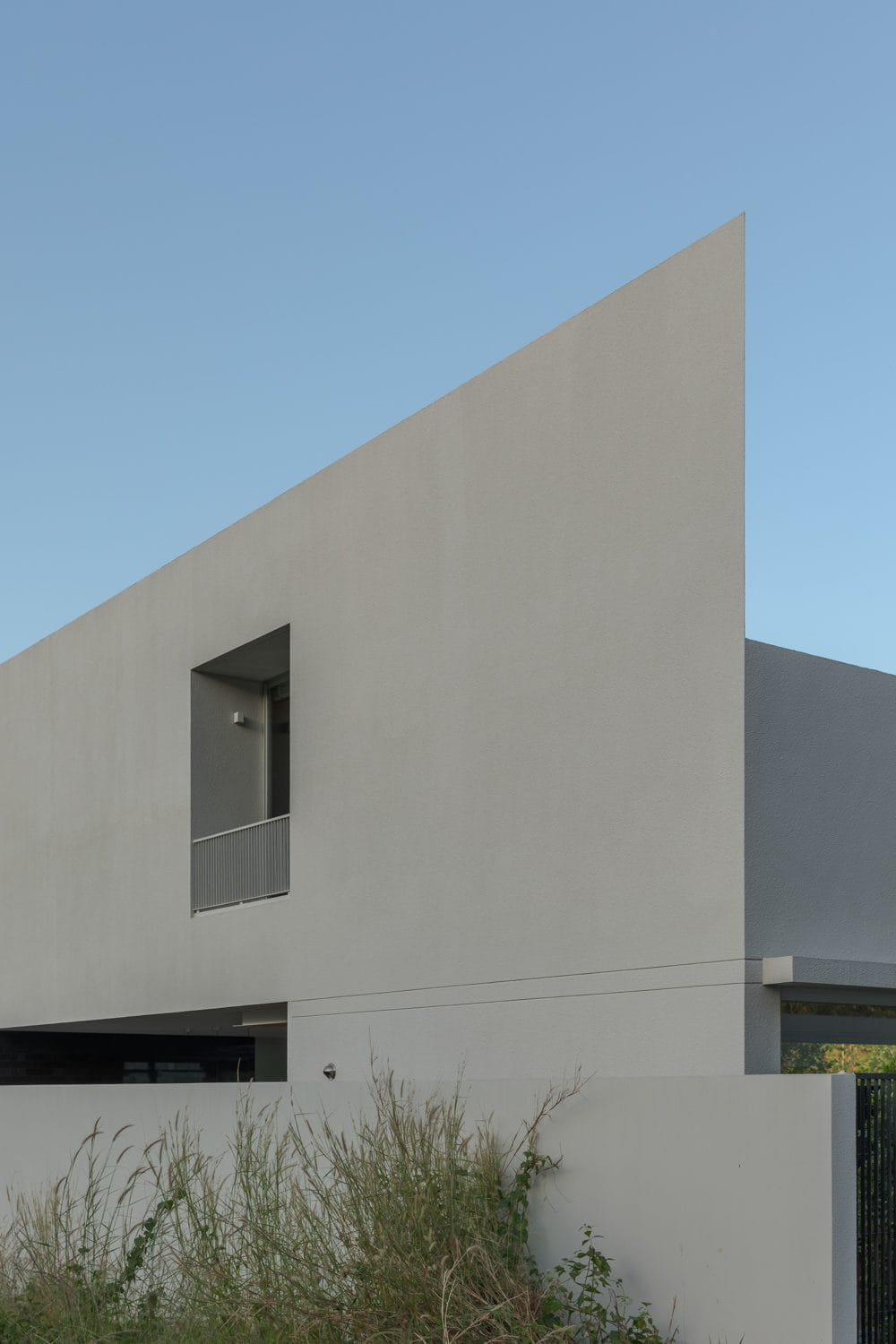
The character of this triangular hall lies not only in the density of functions it accommodates, but also in how it informs the roofscape above, one of the building’s defining features. Seen from the outside, the roof appears to tilt subtly to one side; in reality, it is a calibrated geometric twist, an optical gesture that lends the architecture a quiet but unmistakable character.
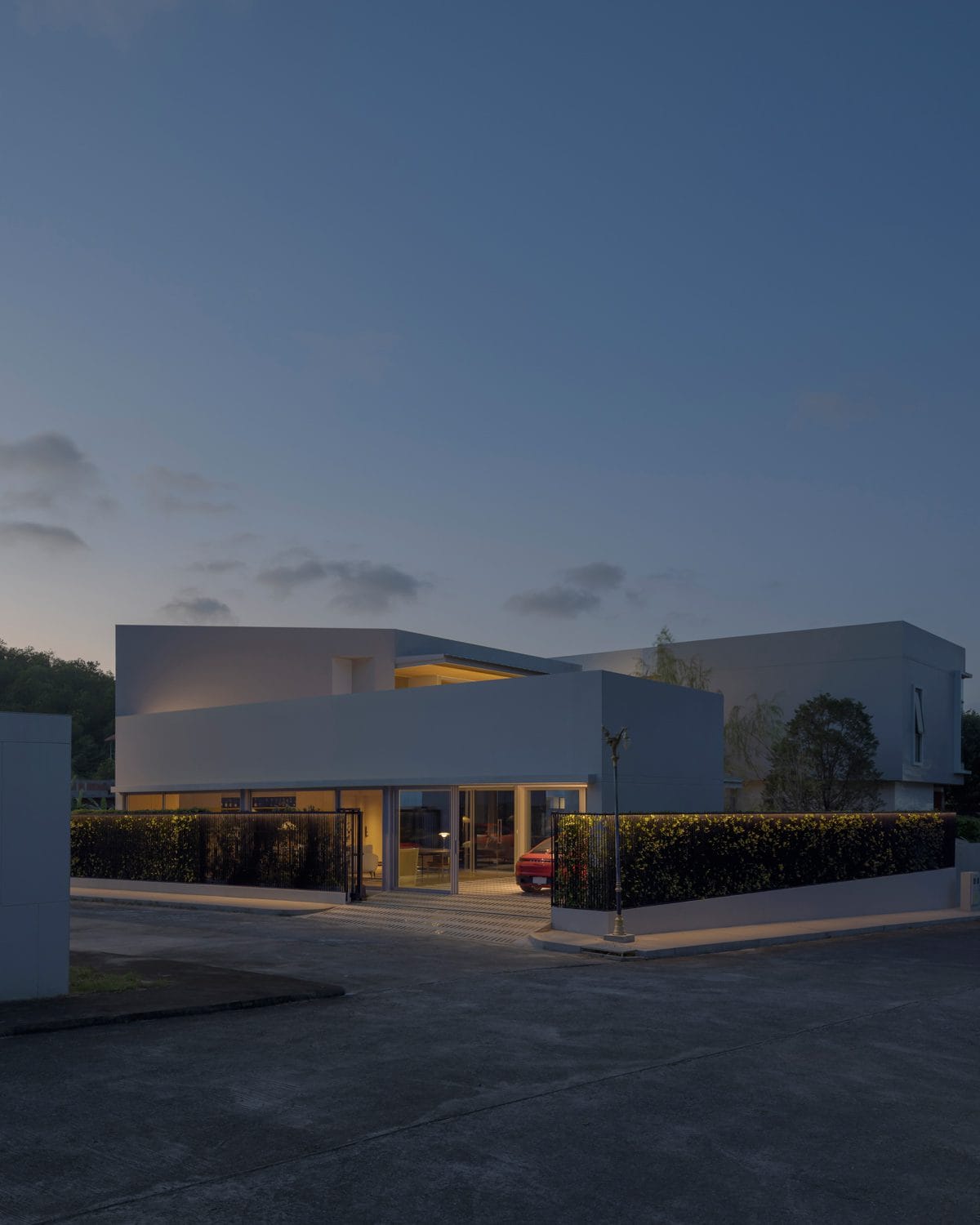
Across the villa, whether in the lawn, the shaded area beneath the raised structure, or the indoor living areas, each element is shaped by a single intent: to extend the spatial domain of the original house while expanding the experience of living. The project responds closely to the needs of the owners and their family, emerging from a shared sensibility between client and architect. What results is a place of retreat that feels almost like a private paradise, accessible simply by stepping out from the existing home into a setting designed for everyday repose.
physicalist-architects.com
facebook.com/Physicalistarchitects