
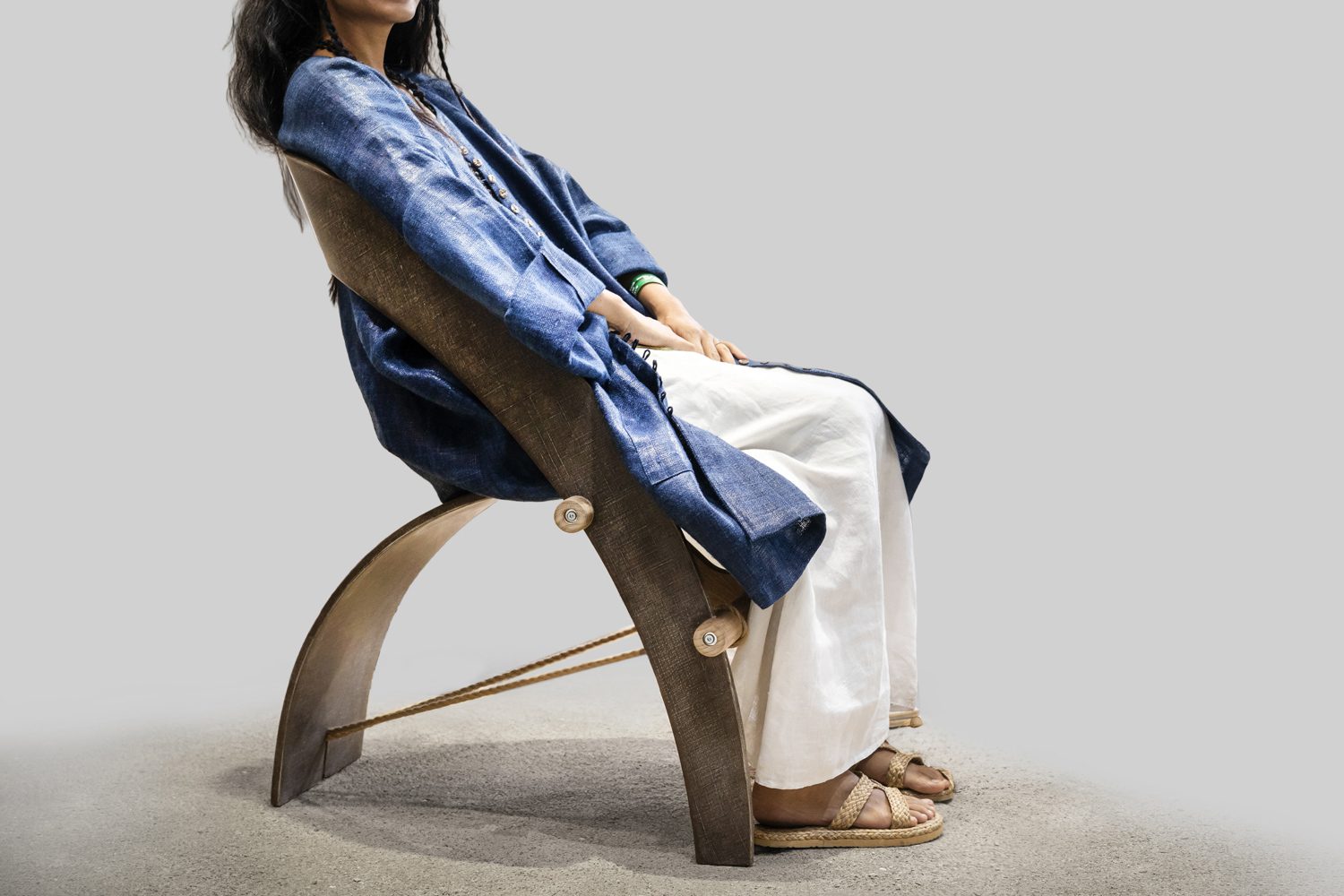
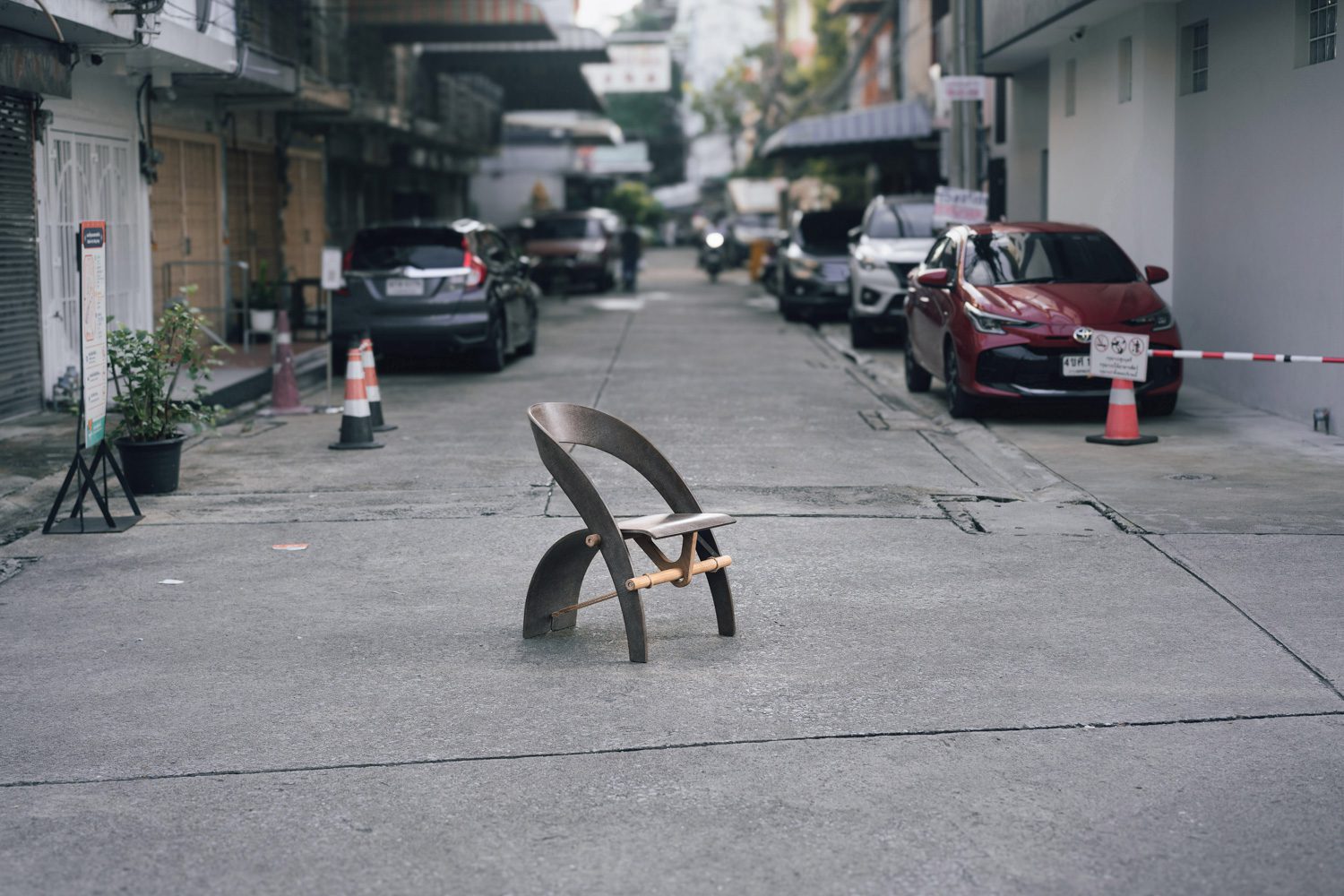
 Hemp Chair in upright sitting position. The hemp-fibre composite shells and tensioned rope system support an active, balanced posture.
 UTILIZING TENSION RATHER THAN NAILS OR BOLTS, VERONICA OLARIU’S HEMP CHAIR ACHIEVES STABILITY THROUGH THE BALANCE OF ROPE, PIVOT, AND A PLANT-BASED COMPOSITE OF HEMP FABRIC AND PINEAPPLE-LEAF FIBRE
TEXT: KITA THAPANAPHANNITIKUL
PHOTO: VERONICA OLARIU
(For Thai, press here)
Hemp Chair: A Study in Counterbalance is a chair made from hemp fibre, designed by Veronica Olariu, a Romanian architect and designer currently living and working in Thailand. The project explores the making of furniture through two key propositions. The first is the possibility of using a plant-based material as a strong, functional structural component. The second is an experiment in harnessing tensile forces to create balance in a chair composed of lightweight elements and only a minimal number of parts.
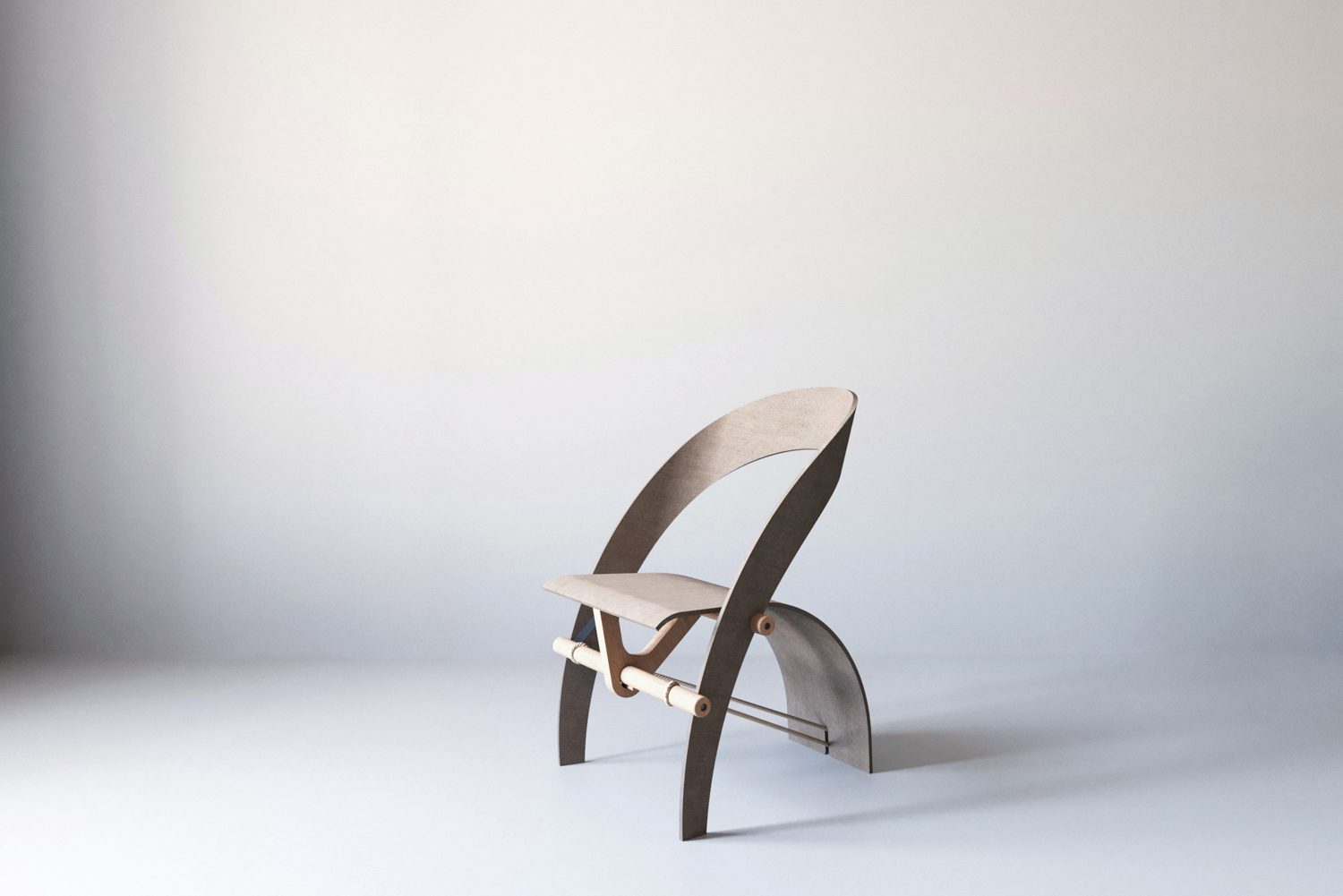
Front-side view of Hemp Chair highlighting the balance between hemp-fiber composite shells, wooden elements, and tensioned rope structure.
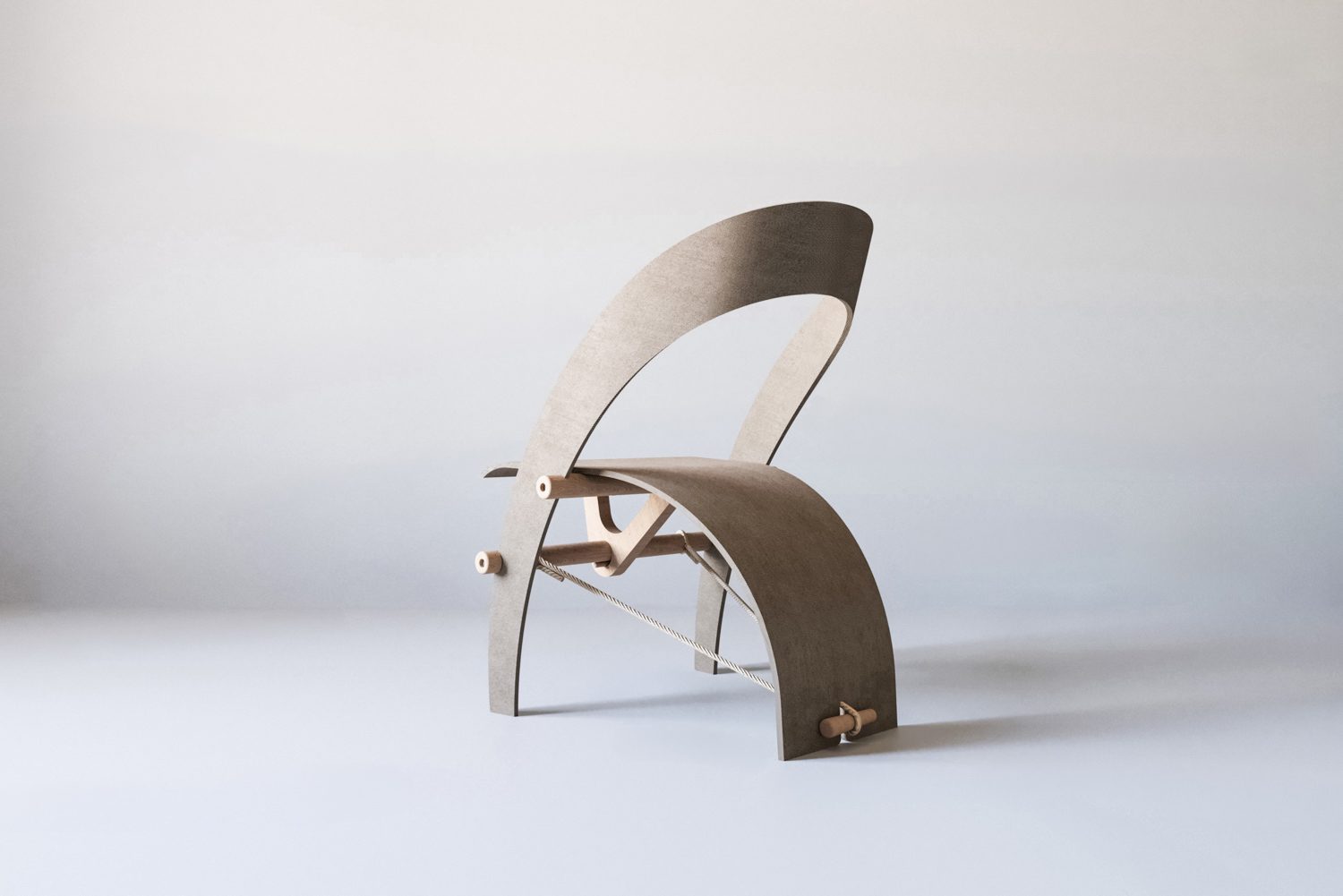
Back-side view showing the chair’s structural system and the relationship between the hemp-fiber composite shells, wooden elements, and tensioned rope structure.
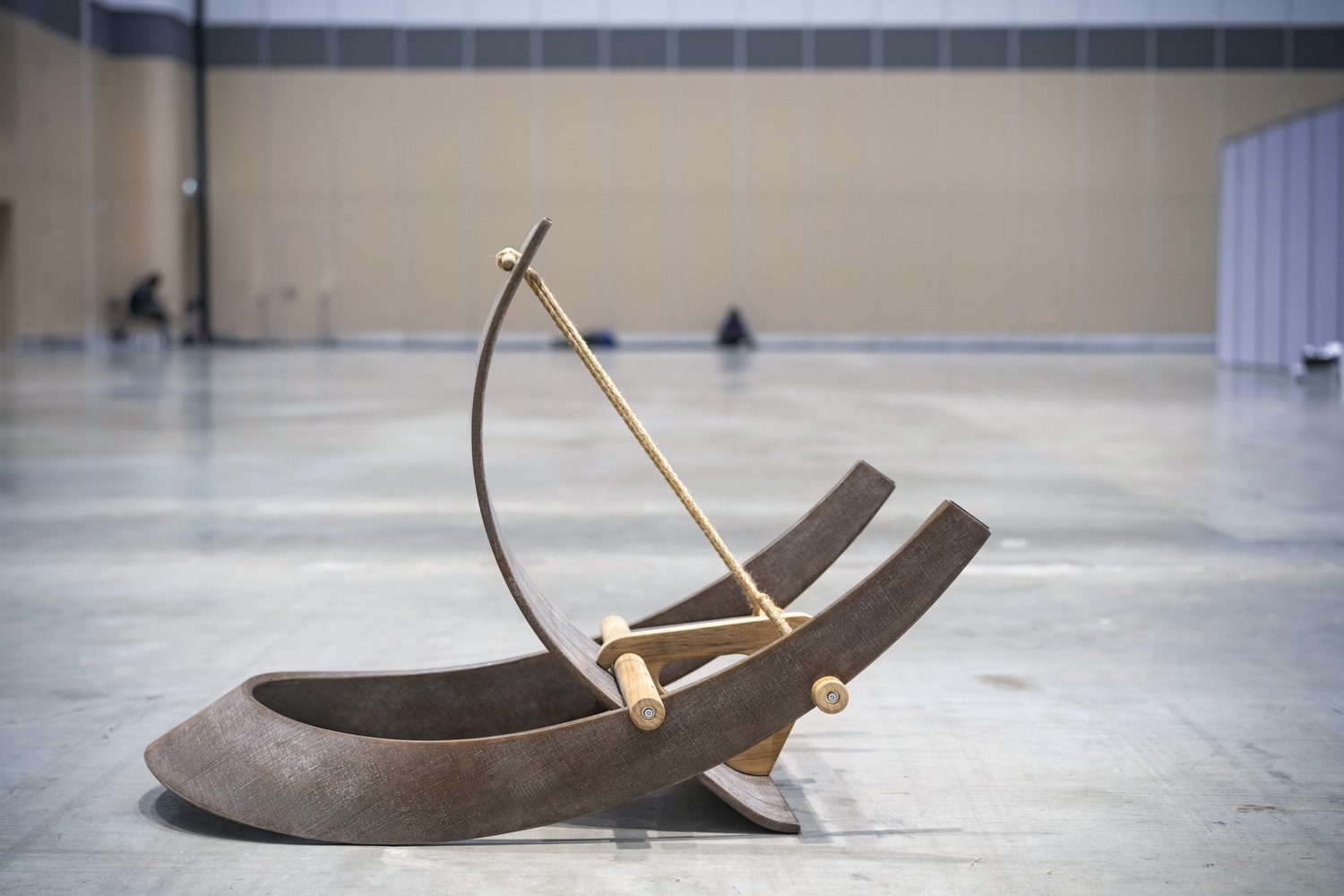 Structural angle view revealing the calibrated tension system that holds the hemp-composite shells in equilibrium.
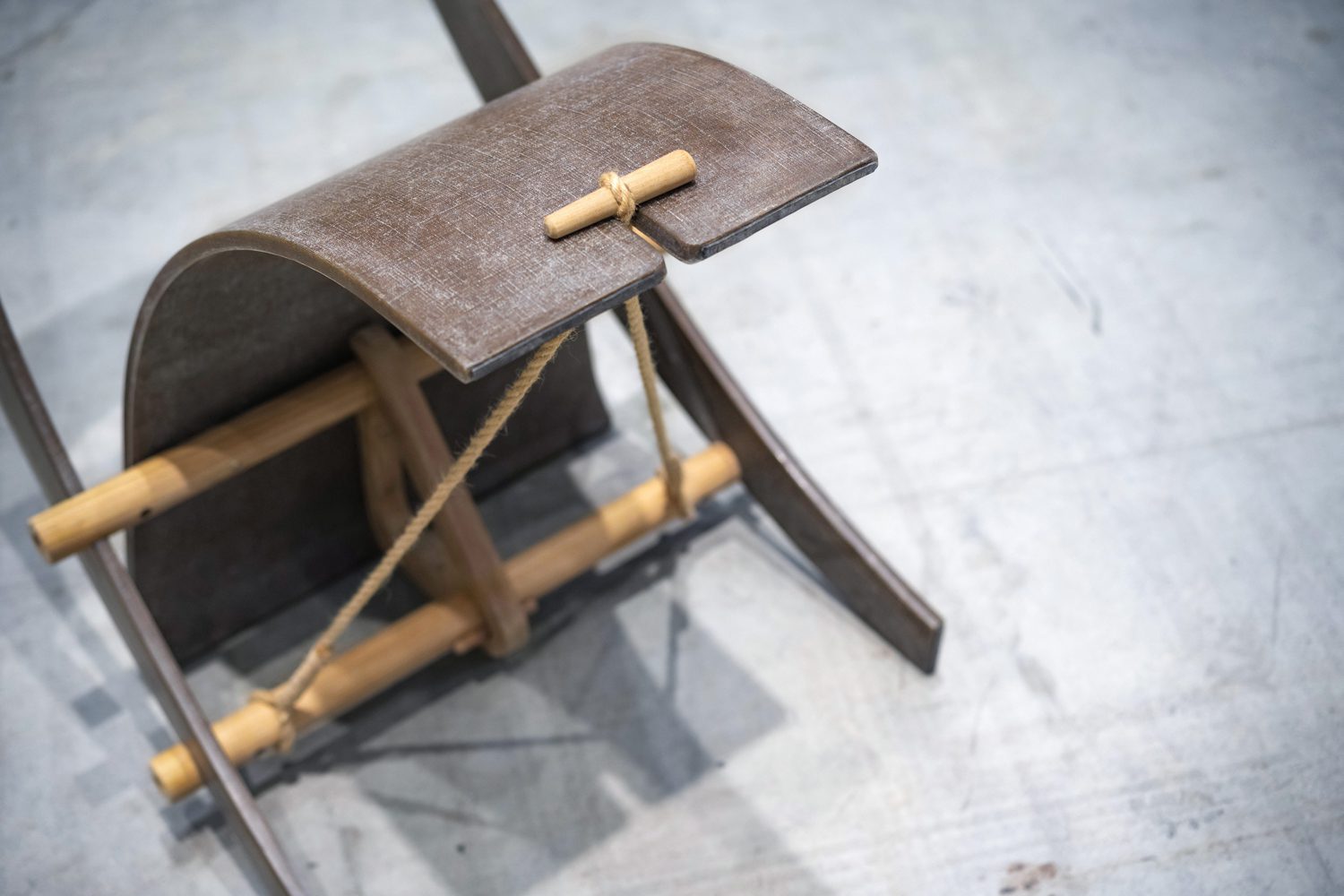
The structure of Hemp Chair is defined by its simplicity and by an emphasis on structural equilibrium rather than mechanical fixings such as nails or bolts. As a result, the chair presents a clear and legible structural logic, expressed through just three main components. The first is the ‘shell,’ formed by two curved planes: a wider plane that serves as the seat, and a narrower one that forms the backrest. The second consists of three wooden rods, which act as pivot points. The final component is the rope that generates tension. This tension force is converted into rotational force through the wooden rods, whose pivot points connect the two shell elements, bringing the structure into a state of balance. The principle is comparable to tensegrity structures, in which tensile and compressive forces are separated, as seen in tensegrity tables or tensegrity chairs, familiar examples often used in science demonstration videos.
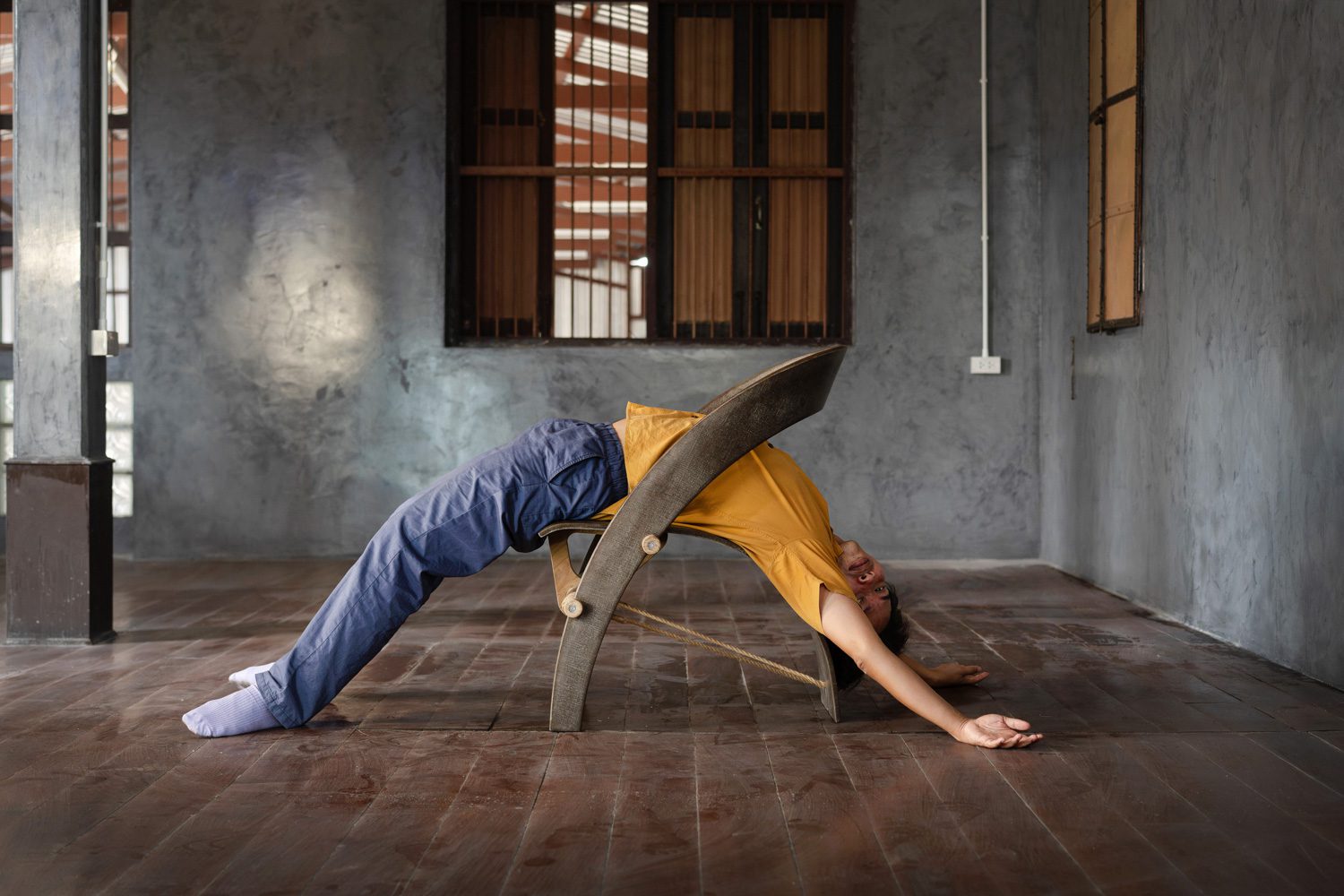
Hemp Chair in stretching posture, revealing the chair’s tensile structure that allows the spine to lengthen while the body reclines.
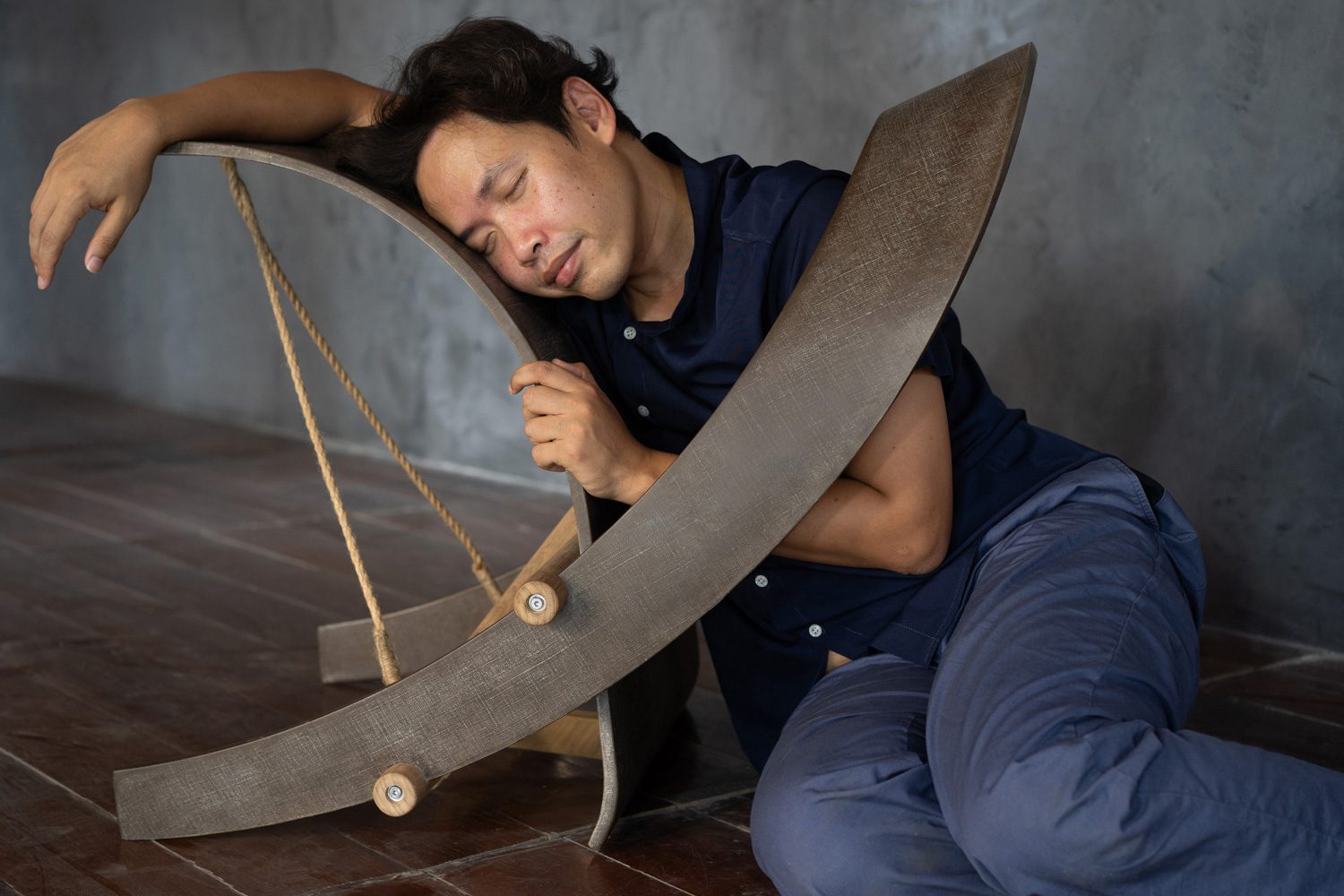
Movement research — testing the chair’s structure through embodied interaction. Still from movement improvisation documentation.
Through its direct expression of structure and restrained use of components, Hemp Chair carries a sense of lightness while still appearing robust. The curvature and proportions of the shell also open up an alternative mode of use that differs from a conventional chair, focusing on the natural support of the human body rather than forcing the sitter into a prescribed posture that works against it. Beyond sitting, Hemp Chair can also be used for reclining and stretching the back. This expanded possibility of use is conveyed in a video artwork by Veronica, which records the relationship between the chair and the user’s body in a manner that resembles performance art in itself. The video can be viewed here
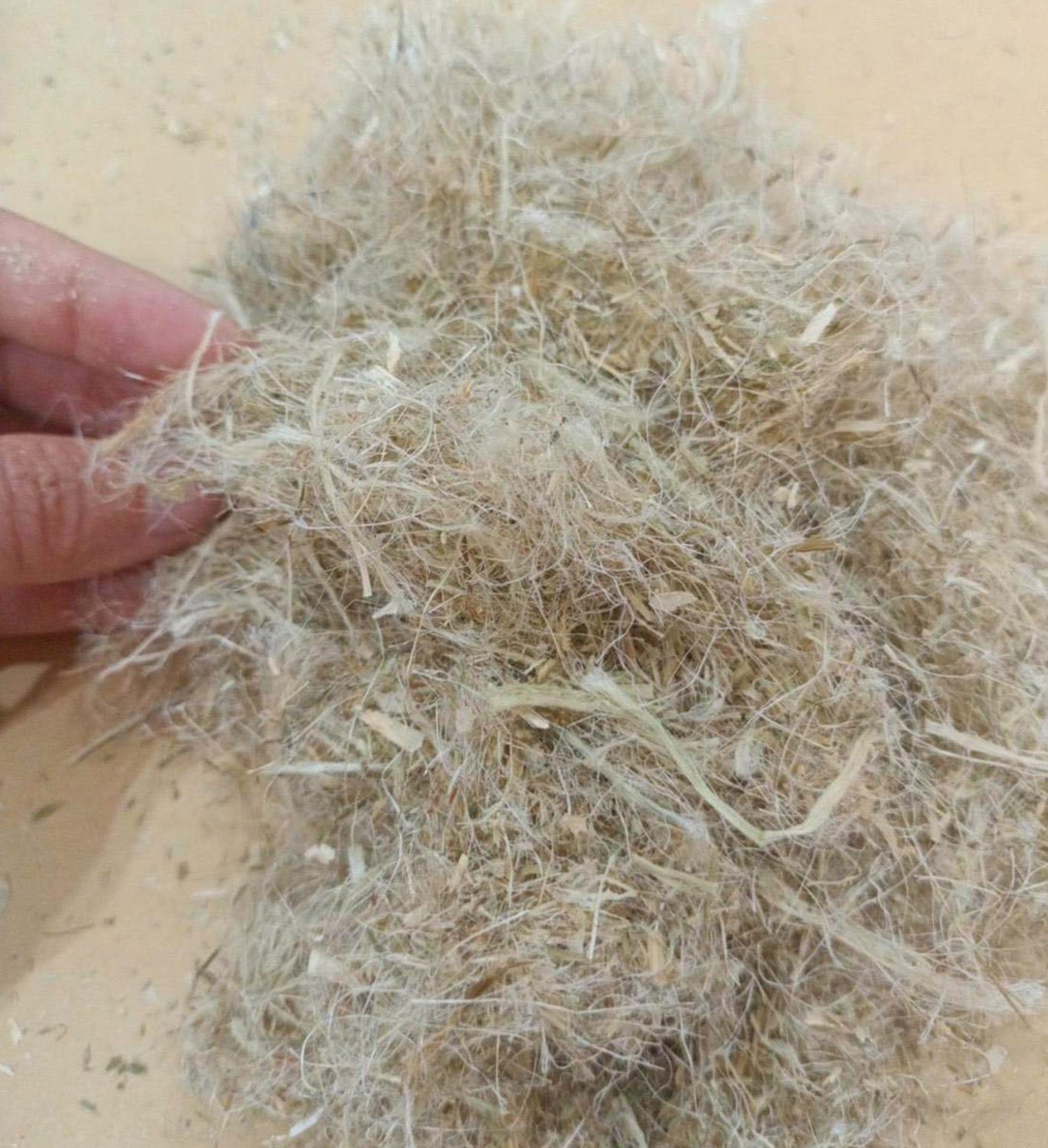
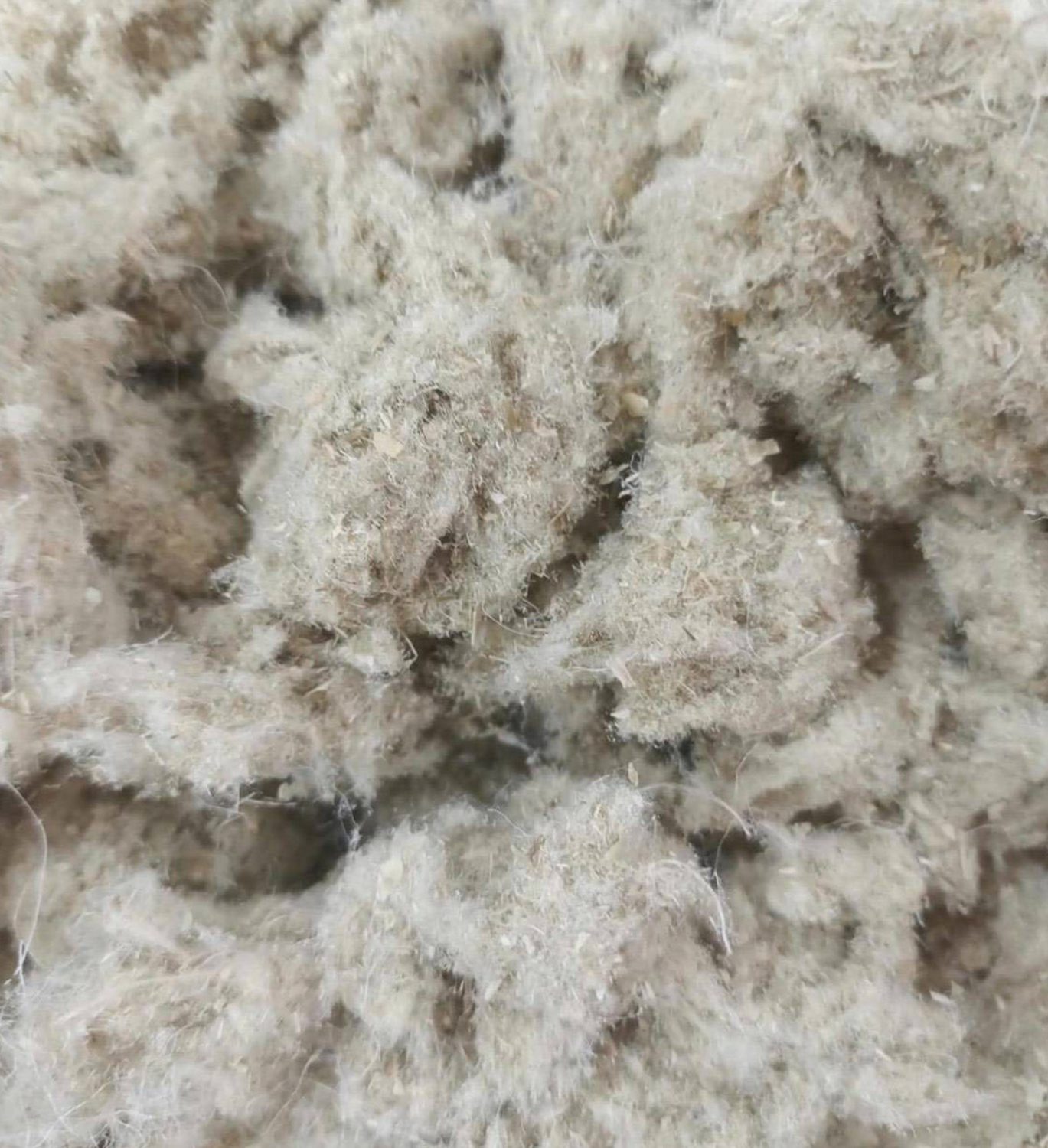
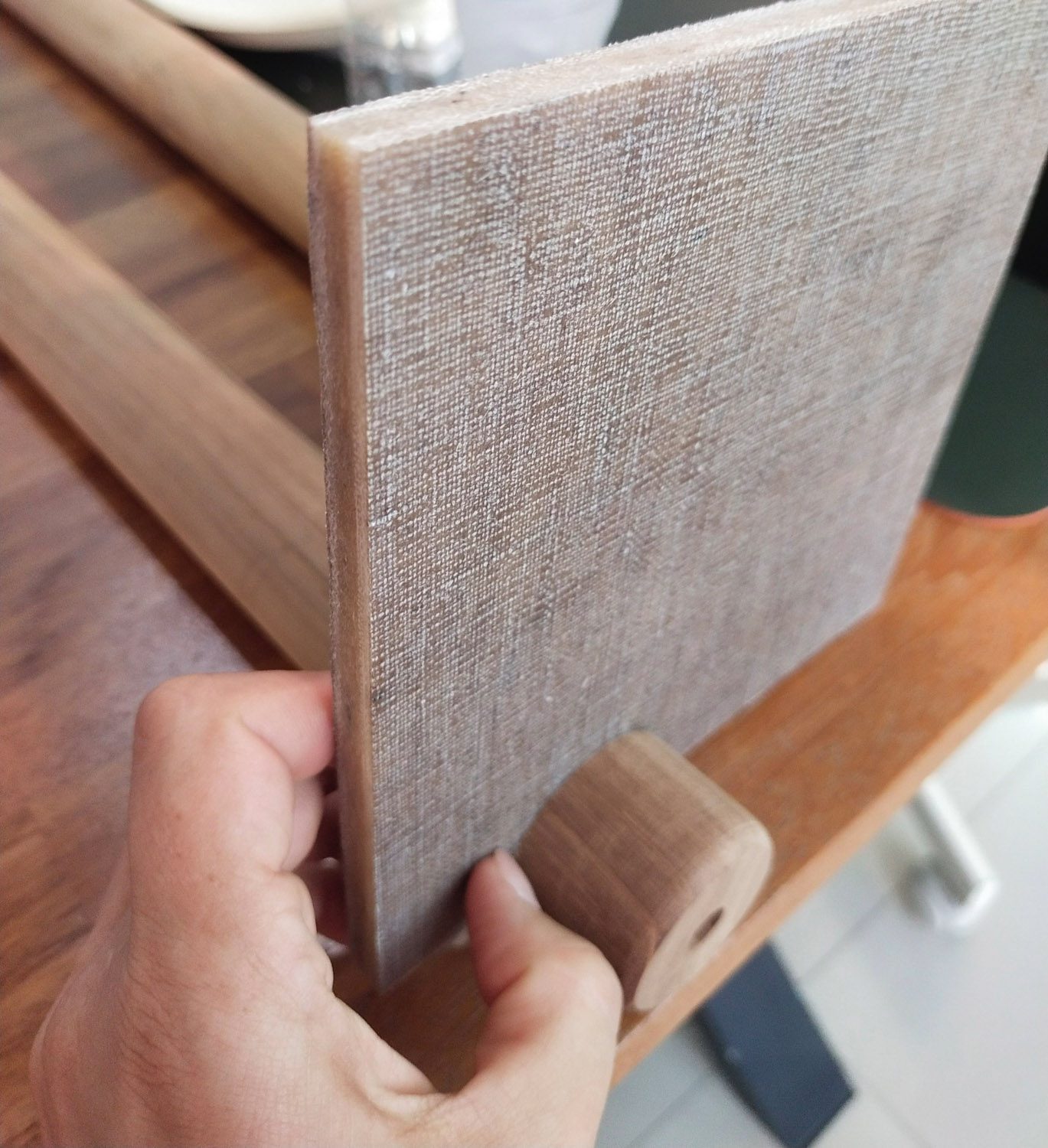
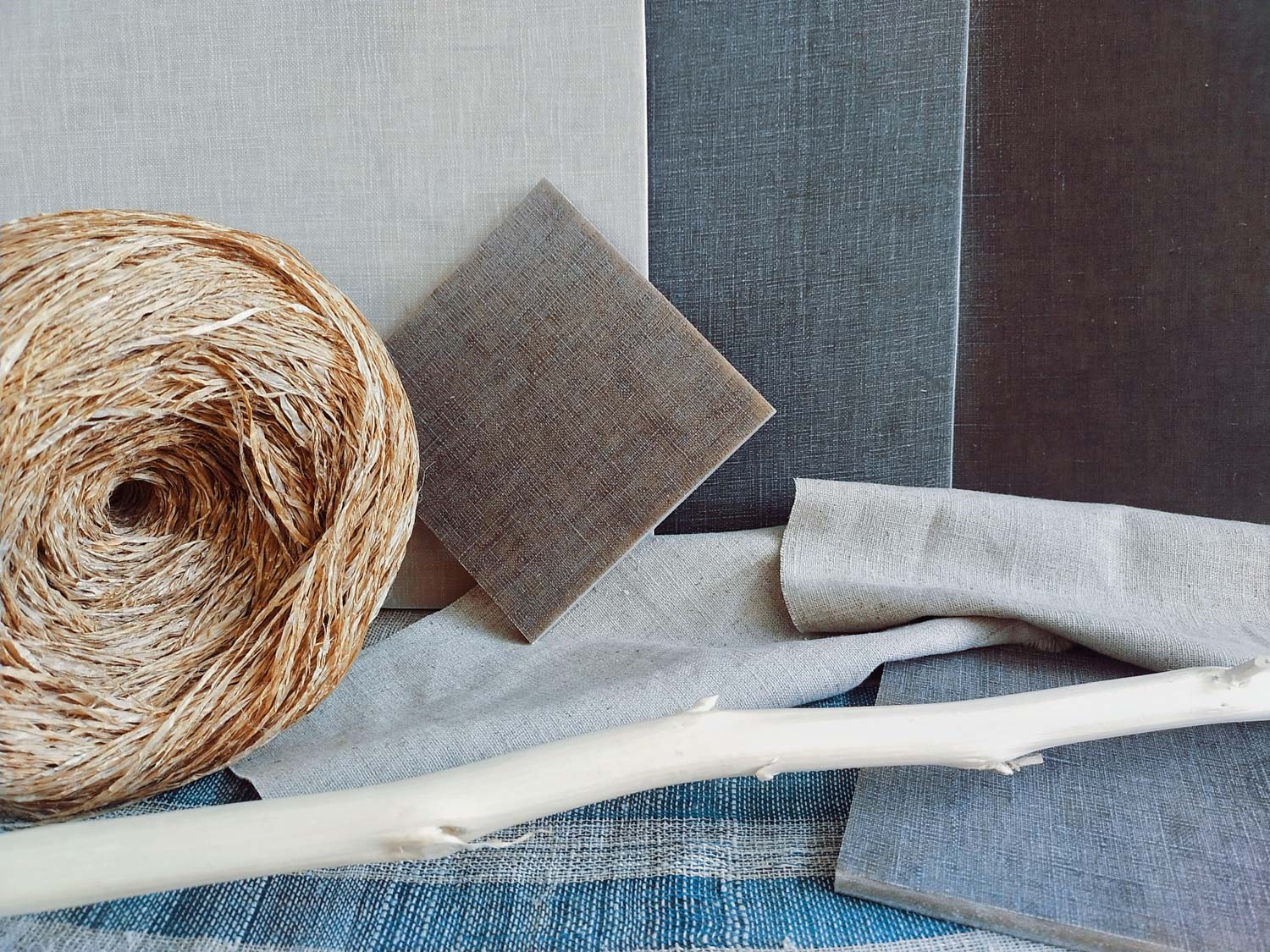
Another key aspect of Hemp Chair lies in its shell, a composite material that presents a compelling development in material science, linking design, vernacular culture, and technology in an unexpected way. As the designer, Veronica adapts resin transfer moulding, or RTM, a modern manufacturing process commonly used in industrial reinforced composites, and applies it instead to plant-based materials. Fibres from pineapple leaves, a by-product of Thailand’s pineapple industry that is typically discarded after harvest, are used as the core. Layers of hemp fabric are then placed on both outer sides before a plant-based resin is injected into the structure, giving the piece its strength.
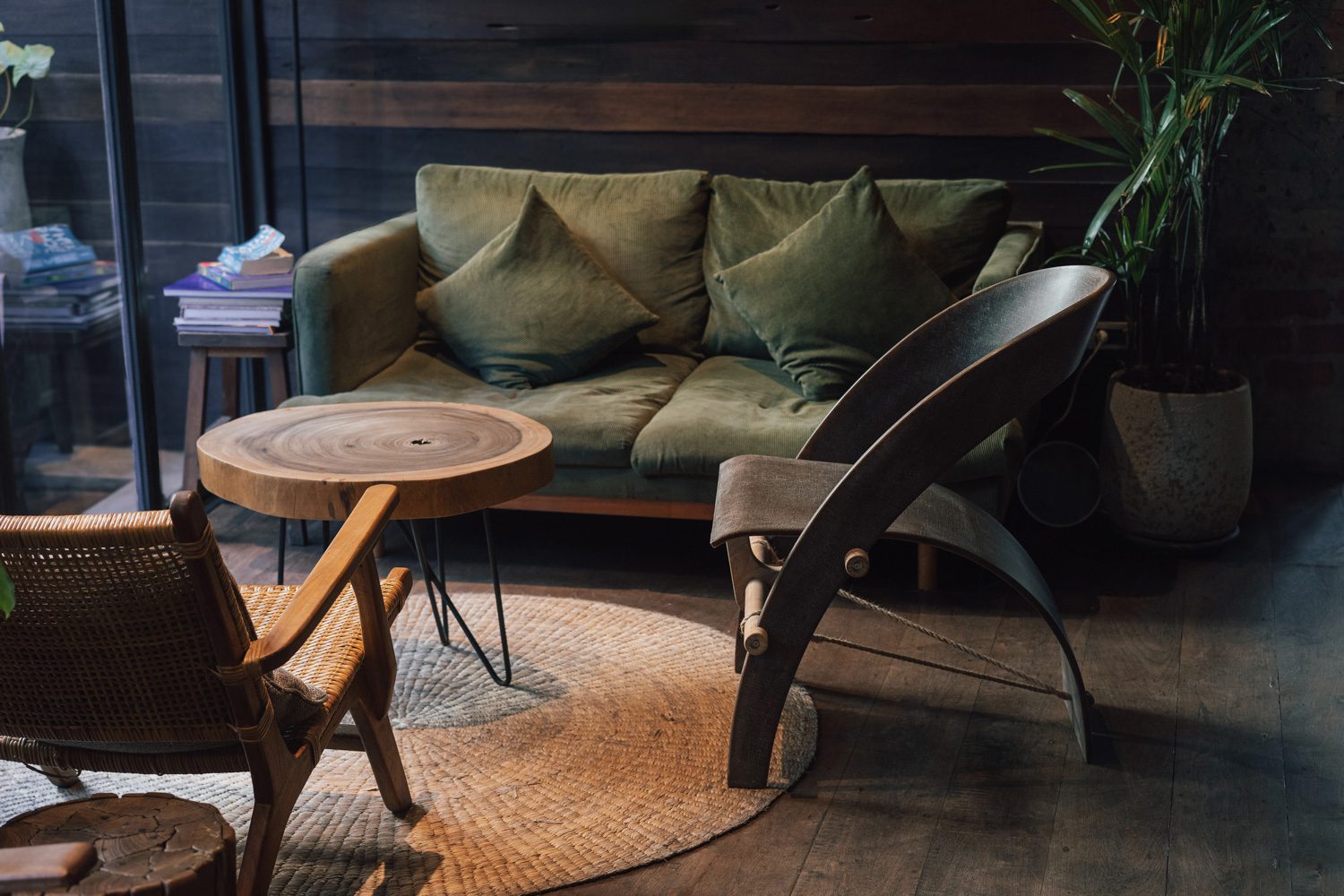
Beyond its ease of assembly, material innovation, and distinctive design language, Hemp Chair is grounded in a process of thinking that considers Thailand’s existing cultural and economic ecosystems from beginning to end. This ranges from the use of agricultural by-products to the contemporary adaptation of hemp fibre, a material connected to the cultural heritage and body of knowledge associated with the Hmong people. Even the chair’s appearance carries this line of inquiry, with Veronica drawing inspiration from the form of a loom. The strength of this approach also led Hemp Chair to make its debut at Milan Design Week 2026, as part of Isola Design Festival’s No Space for Waste exhibition.
Hemp Chair seems to propose a balance between several conditions at once: structural equilibrium, technology and cultural value, plant-based resources and industry, function and art. In doing so, it reveals compelling new possibilities for bridging the ‘old’ and the ‘new’ across multiple dimensions. For now, Hemp Chair remains an experimental project open to further development, whether with furniture manufacturers, artists, or others interested in exploring future collaborations around the work.