


‘MORTE CUCINA’ MAY NOT JUST BE ABOUT REVENGE, BUT RATHER DISSECTING HUMAN LUST, DESIRE, AND ATTACHMENT THROUGH AN INTERPRETATION OF BUDDHIST CONCEPTS
TEXT: SARUNKORN ARTHAN
PHOTO COURTESY OF 185 FLIMS
(For Thai, press here)
*This article contains some spoilers.
Honestly, when I first heard that Krua Sao (Morte Cucina) was making its way to the big screen, I wondered whether it might be a murder mystery along the lines of ‘The Ingredients,’ the Thai Health Promotion Foundation’s 2018 short film starring Sinjai Plengpanich and Nopachai Chaiyanam. But once I found out it was directed by Pen-ek Ratanaruang, the filmmaker behind 6ixtynin9, Monrak Transistor, and more, I had even less idea what kind of film it would become. The only thing I was sure of was that someone had to die. This was a ‘Pen-ek film,’ after all.
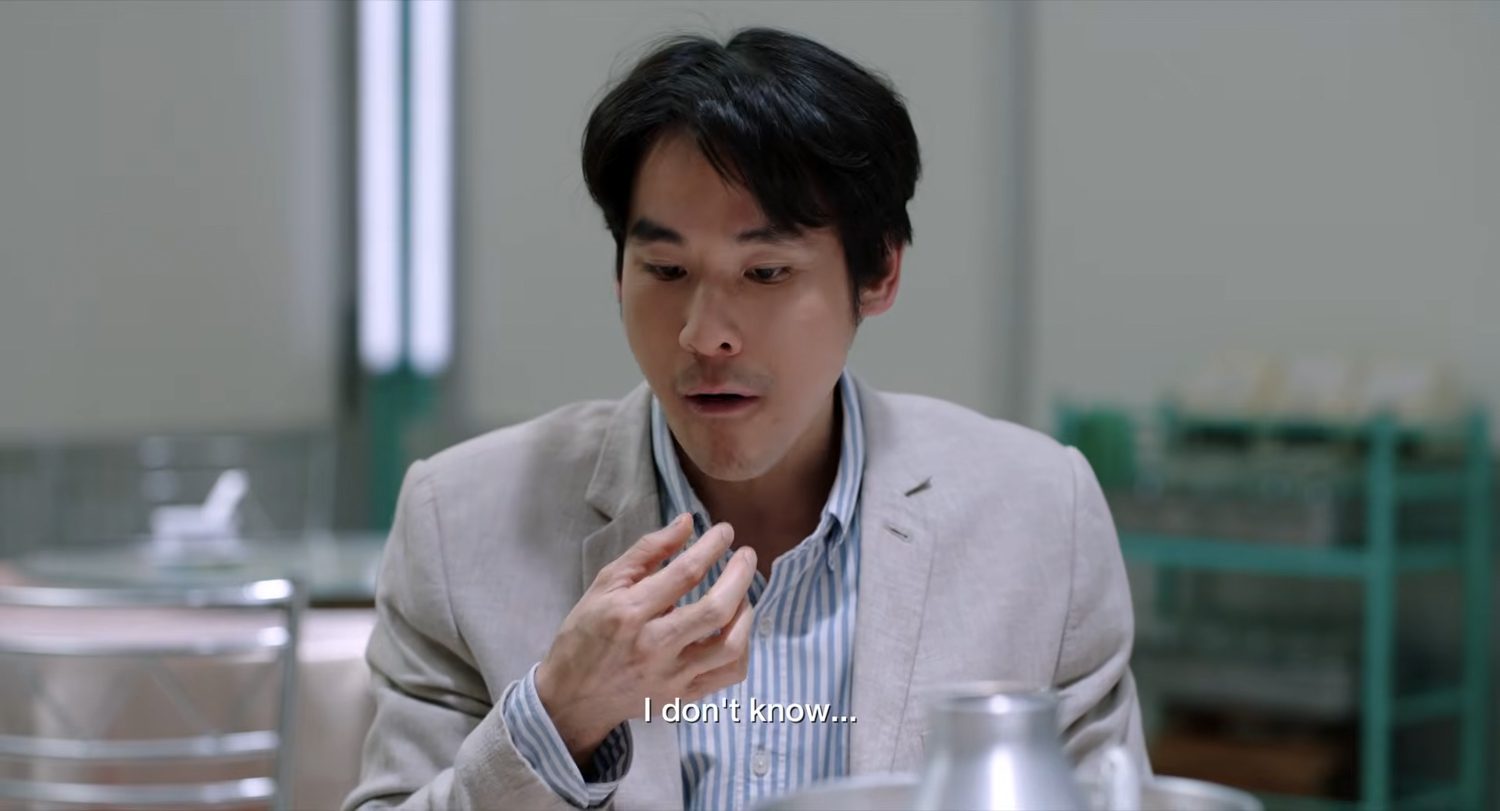

But after actually seeing it, I have to say the two films could hardly be further apart. To put it in culinary terms, comparing them would be like comparing massaman curry with southern gaeng som. Both are intense, but they differ entirely in flavor, texture, and even the kind of visual pleasure they offer. Morte Cucina is a murder story steeped in romance. It may unfold at a leisurely pace and be easier to follow than many of Pen-ek’s earlier films, but it is still unmistakably his. His signature is all over it, from the way the film cuts between different moments in time and lets its female protagonist carry the story, to the beautiful images shaped by the eye and craft of Christopher Doyle. The plot itself is fairly straightforward: Sao (Bella Boonsang) takes revenge on Korn (Krit Sripoomseth), using her talent in the kitchen to slowly bring about his death through food.
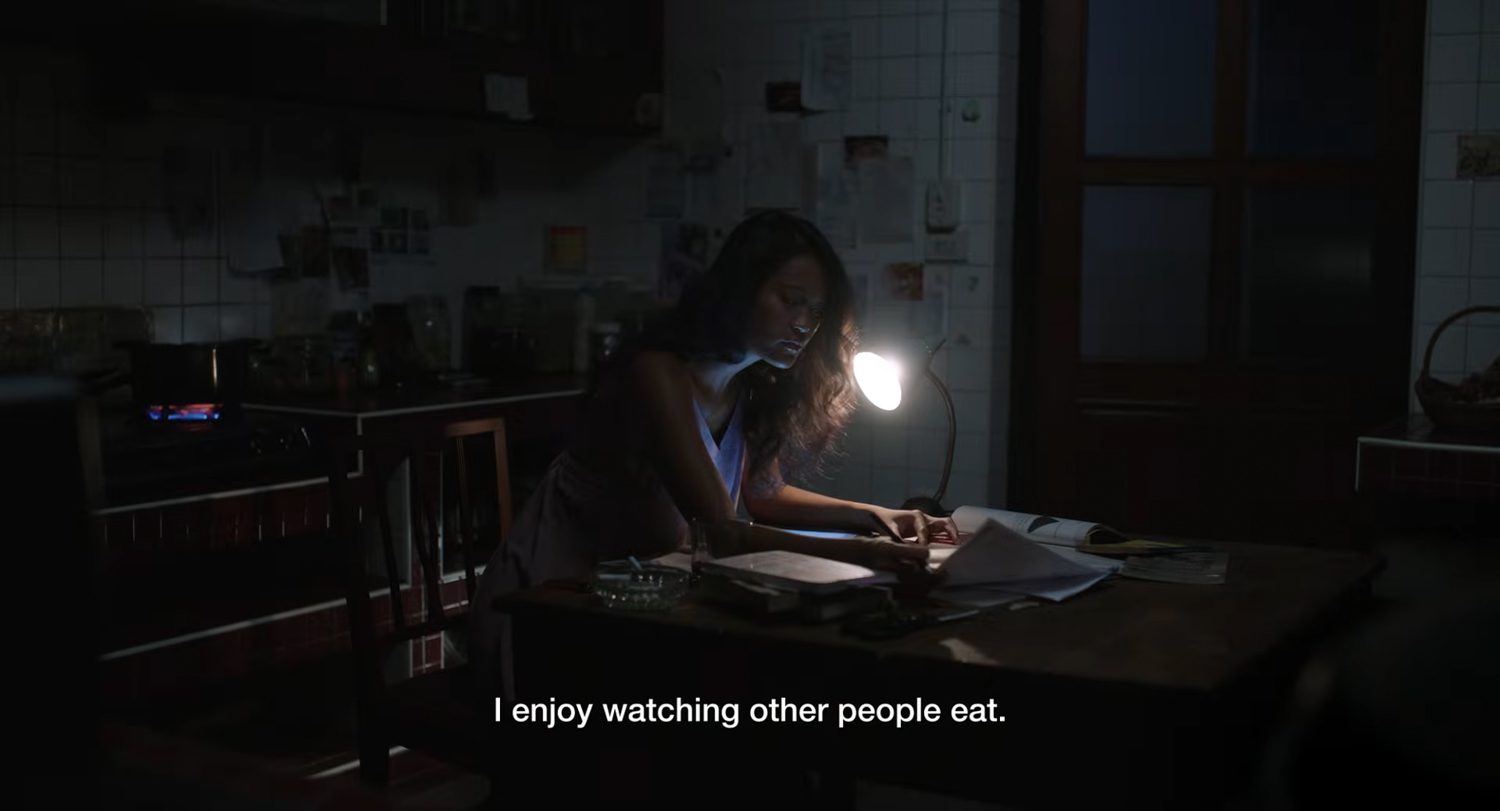
But there’s no need to spend too much time setting up the story. Viewed through a conventional lens, the film might seem to be a battle between victim and predator. Through a feminist lens, which may well be the film’s primary perspective, we see patriarchal oppression at work, while Sao’s revenge becomes an attempt to reclaim control over her own body and mind. But step back and consider the film through a ‘Buddhist lens,’ and it becomes something like a scalpel, chillingly dissecting the ‘contradictions of the human mind.’
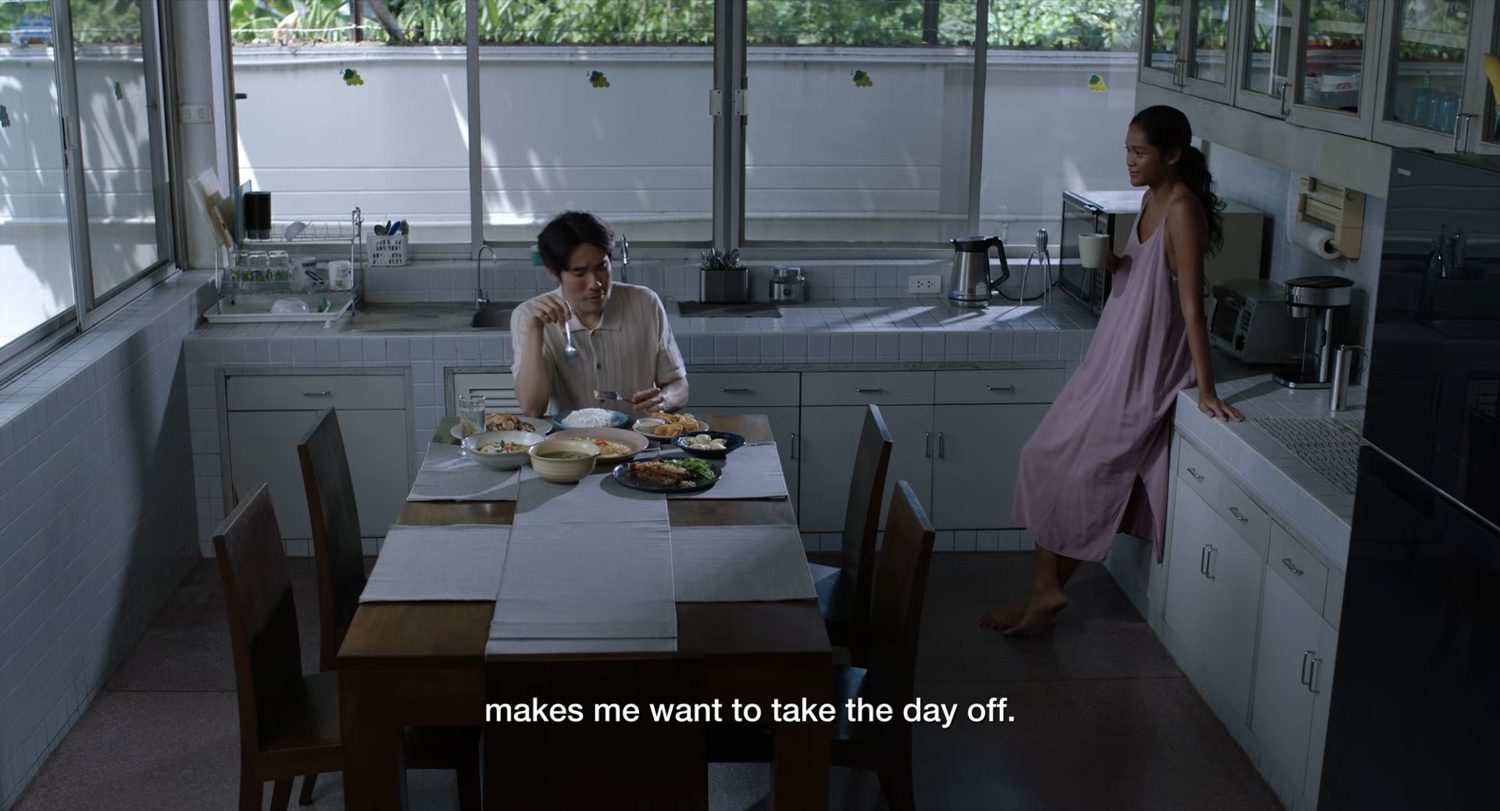
As the story unfolds, we learn that Korn already has a wife, (perhaps a curator, and one more successful than he is), yet he later begins a relationship with Sao. This could be read as a breach of the third and fourth precepts of the Five Precepts (pancha sila): refraining from sexual misconduct and false speech. Korn, then, is a man still consumed by tanha, or craving, the desire to acquire, possess, and become. Beyond that, he is burdened by kilesa, or defilements, and asava, or deep-seated mental taints. He remains absorbed in sensual desire, which is not limited to sex but encompasses attachment to pleasure and gratification, including the delight derived from consuming food that pleases both the eye and the palate.
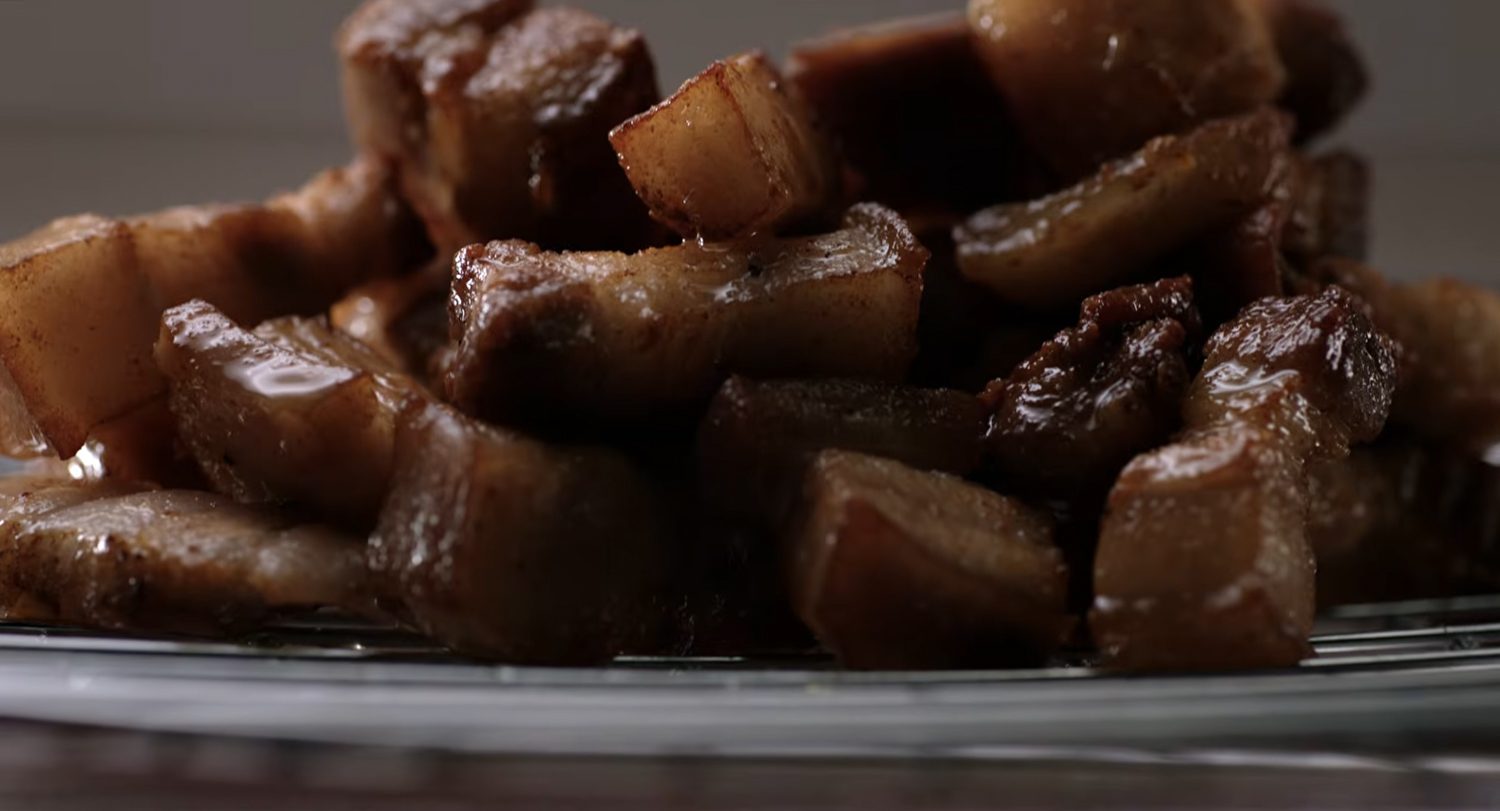
As for Sao, she does not want her revenge to leave her own hands visibly stained with sin. Instead, she looks for an indirect method that will make her feel less guilty. We see this most clearly when she asks the owner of a pig farm in Chiang Mai, where she has made a new home and opened a restaurant after fleeing Korn’s friends in Bangkok, not to bludgeon the pigs before slaughter because she is ‘afraid of sin.’ The owner then suggests a way to keep ‘her own hands from getting bloody’: slowly killing the pigs with gas.
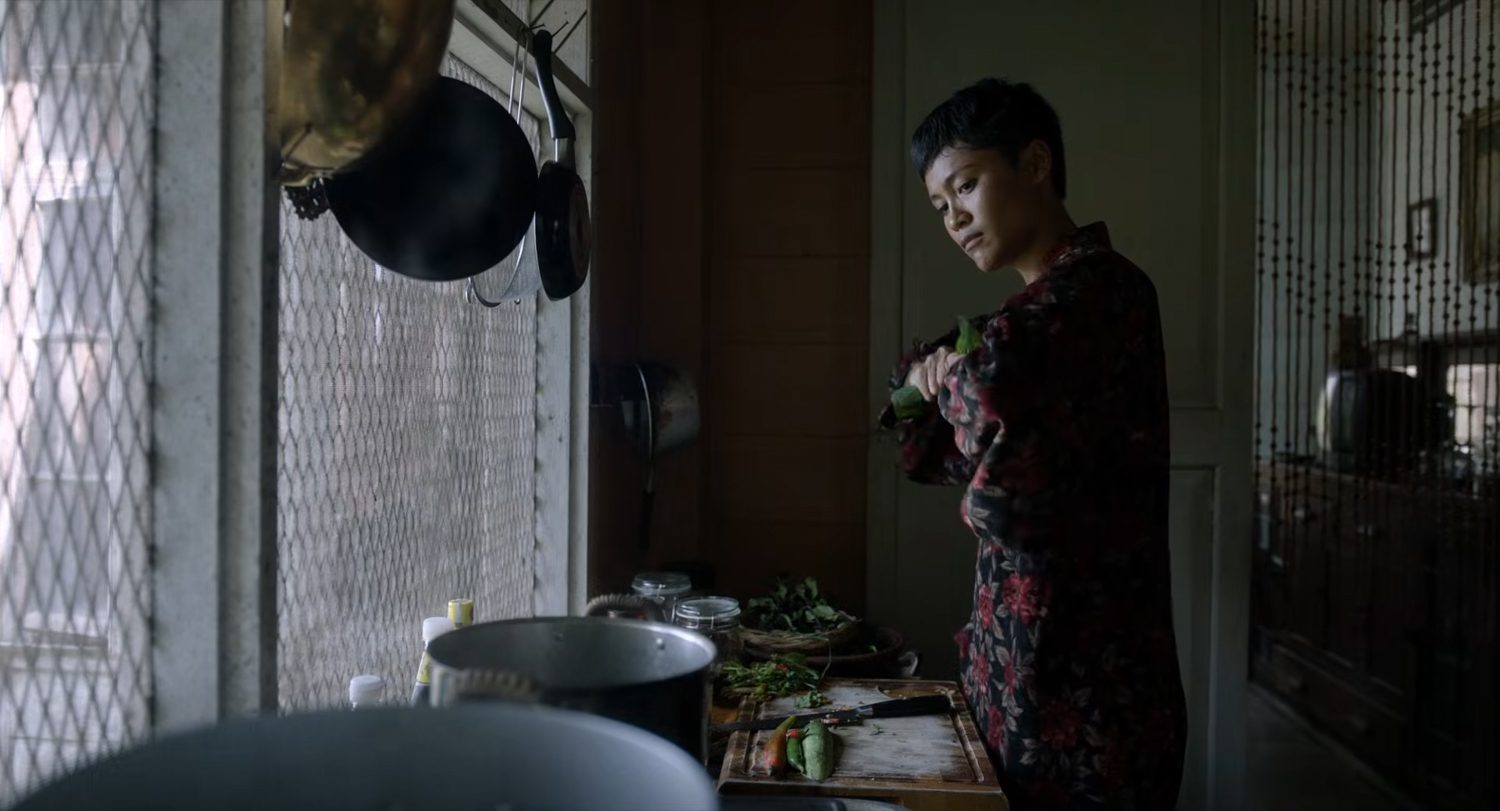
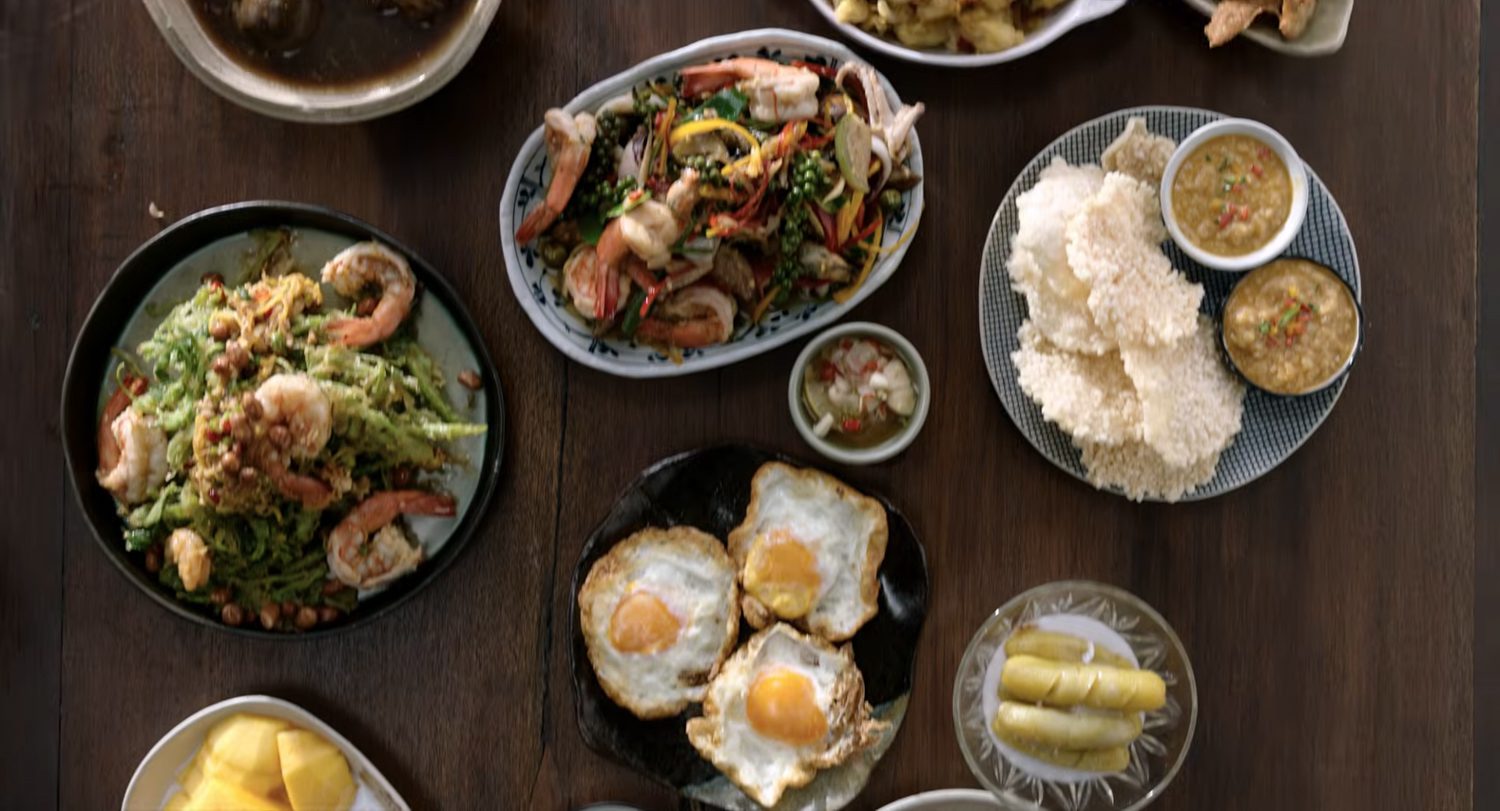
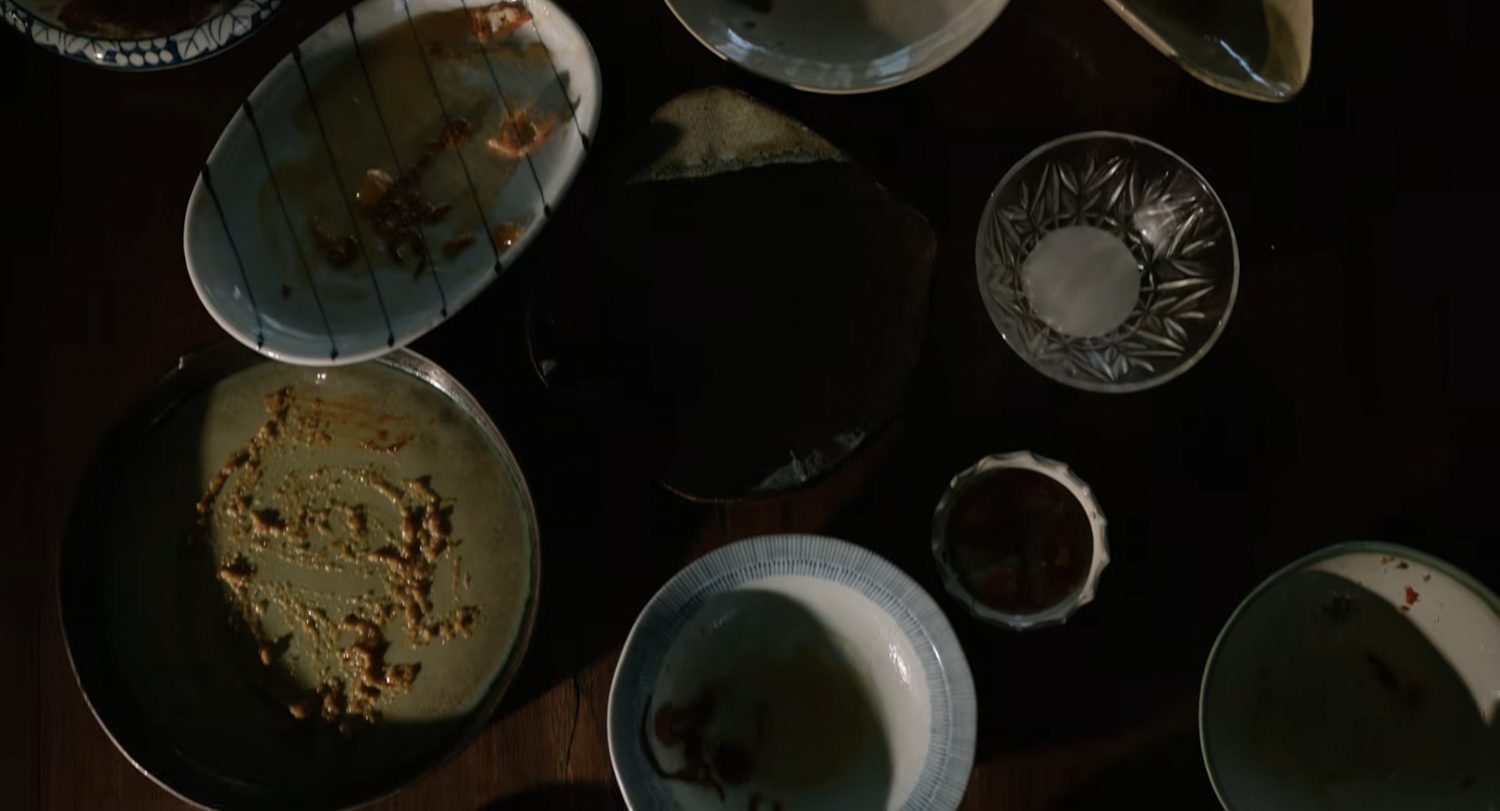
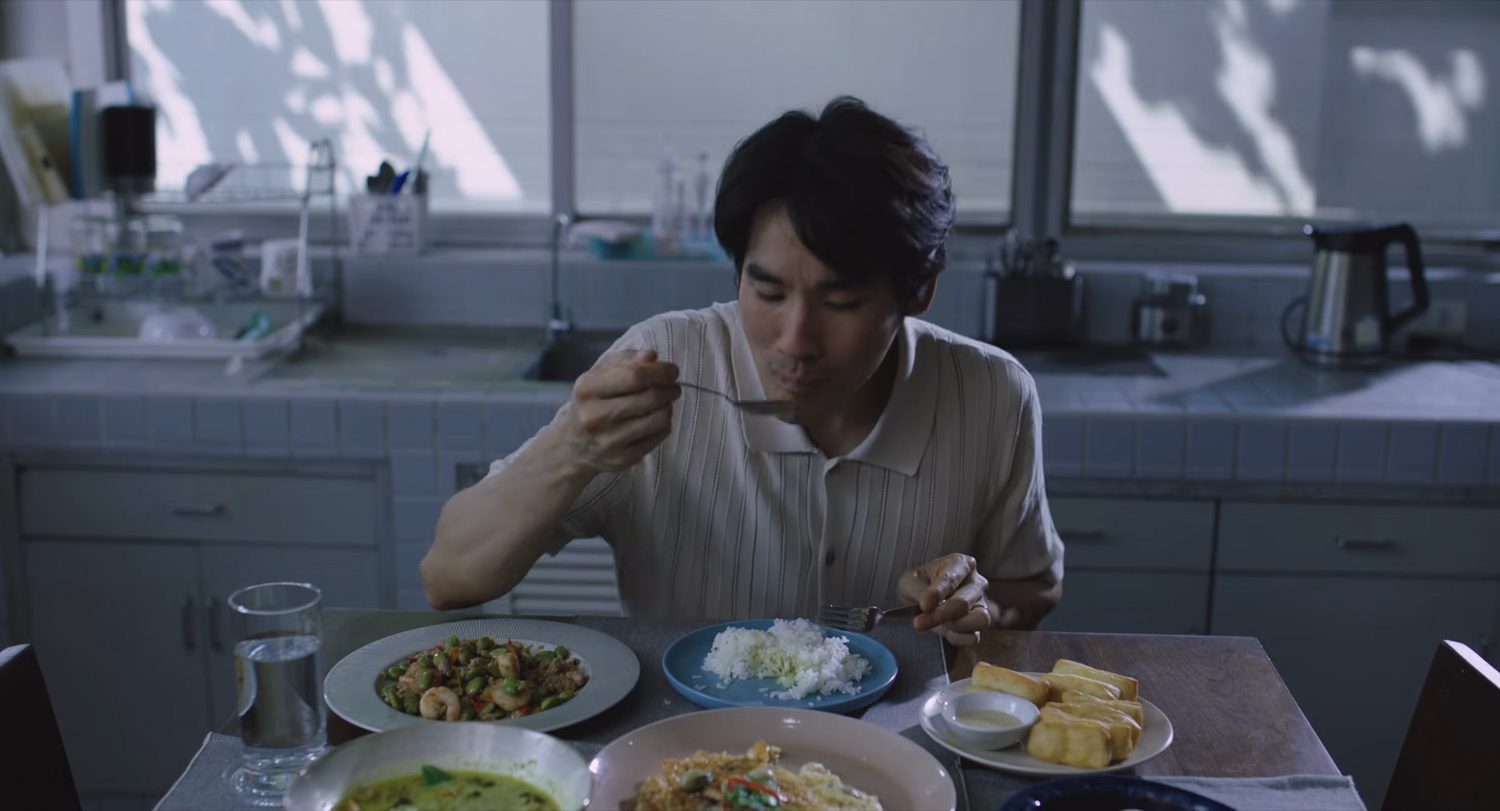
This method of killing, shaped by hiri-ottappa or Conscience, the Buddhist sense of moral shame and fear of wrongdoing, also makes it clear why Sao does not simply murder her husband, Korn, by slipping poison or some other lethal chemical into his food to kill him outright. Instead, she feeds him foods considered incompatible with his bodily constitution, turning the murder into something beautiful in appearance, aroma, and taste. We see this in the lavish spread she serves Korn at every meal, from stir-fried sato beans with shrimp and braised pork leg to bananas in syrup. These dishes become a kind of sugar-coated poison, slowly and cold-bloodedly destroying his body while Sao’s hands remain free of even a single drop of blood, quite literally. After all, the one who keeps swallowing the very ’cause of death’ until it finally takes its toll is, in truth, Korn’s own craving.
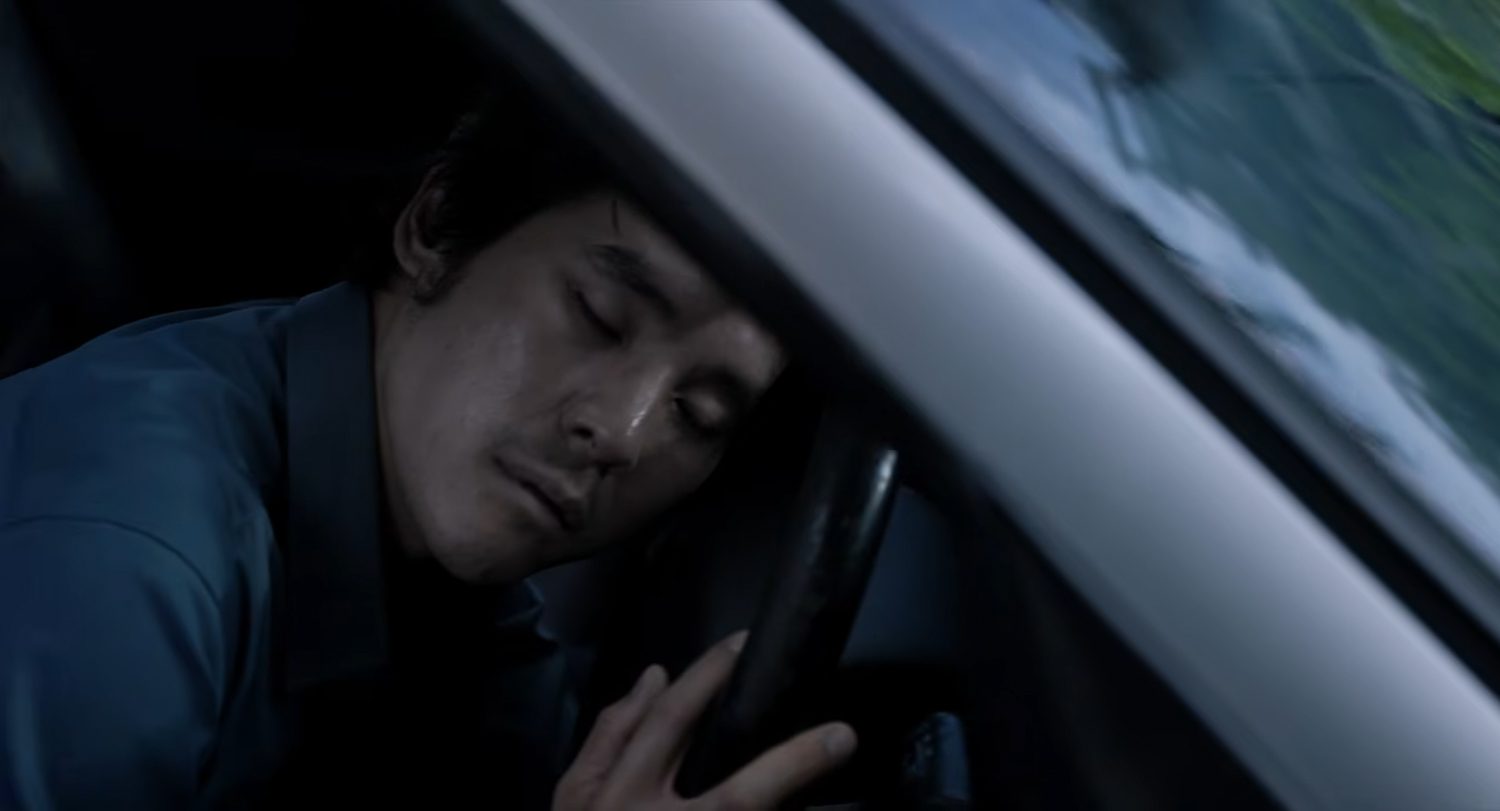

By the end of the film, even after Korn has died from his many illnesses and become a ghost, he still returns, perhaps because some lingering attachment, some last trace of defilement, has survived the body. He sits in the same place where he used to enjoy his meals, with the television on and a football match playing in the background. Peak male behavior. And in the end, whether because Sao is still attached herself or because her revenge does not yet feel complete, she sets out Korn’s favorite food to summon his spirit back for one final meal, before closing Krua Sao, her kitchen, for good.
Or is Morte Cucina really trying to teach us to let go of our defilements and finally break free from samsara, the wheel of rebirth…?