
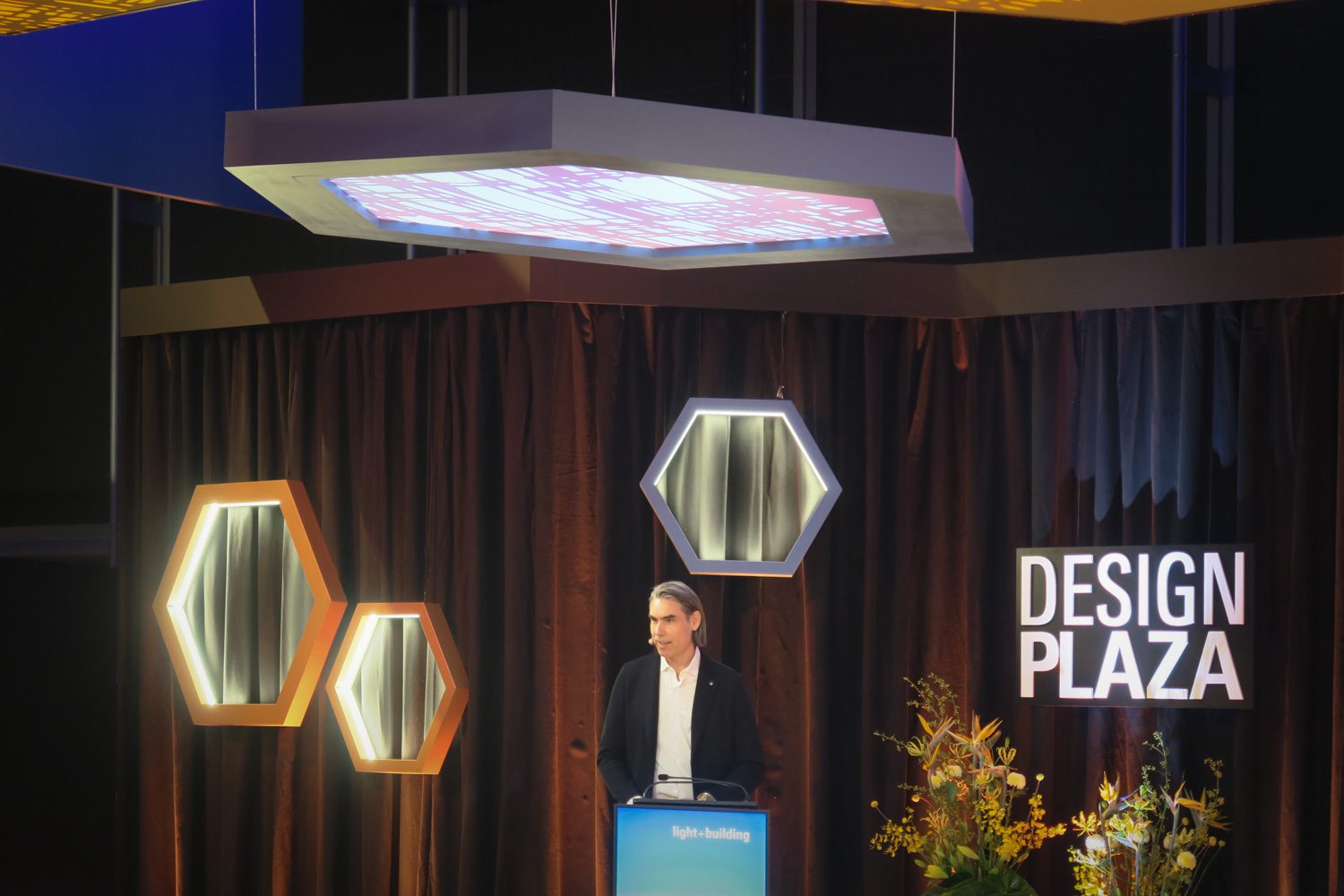
 Photo: Rungladda Chakputra
 PRESENTED AT LIGHT + BUILDING 2026, FROM A SCI-FI INSPIRED AUDI PAVILION TO A GLOWING INDOOR WATERFALL, A·G LICHT’S 30-YEAR LEGACY SHOWS THE POWER OF TREATING LIGHT AS AN ARCHITECTURAL ELEMENT
TEXT: NATHANICH CHAIDEE
PHOTO CREDIT AS NOTED
(For Thai, press here)
This year marks the 30th anniversary of a·g Licht, the Cologne-based lighting design studio founded in 1996 by Daniel Walden. Walden began as an architecture student in Cologne, where the university’s proximity to the Cologne Trade Fair gave students the opportunity to experiment with building booths within an actual fair setting. It was there that he began to explore structure, space, and the use of light firsthand, an experience that would go on to shape both his knowledge of and fascination with light as a medium. For Walden, lighting is not simply a technical layer applied to a space, but a means of attuning light to its environment, defining atmosphere, shaping emotion, and giving architectural space its function.
Over the past three decades, the studio has realized more than 800 projects in Germany and internationally. Its team brings together expertise across architecture, interior design, and product design, allowing a·g Licht to work across a wide range of scales, from everyday office environments to iconic projects such as BMW Welt in Munich, a media facade spanning more than 30,000 square meters, flagship stores in Cologne and Hamburg scheduled to open this year and next, and the Doha Metro stations.
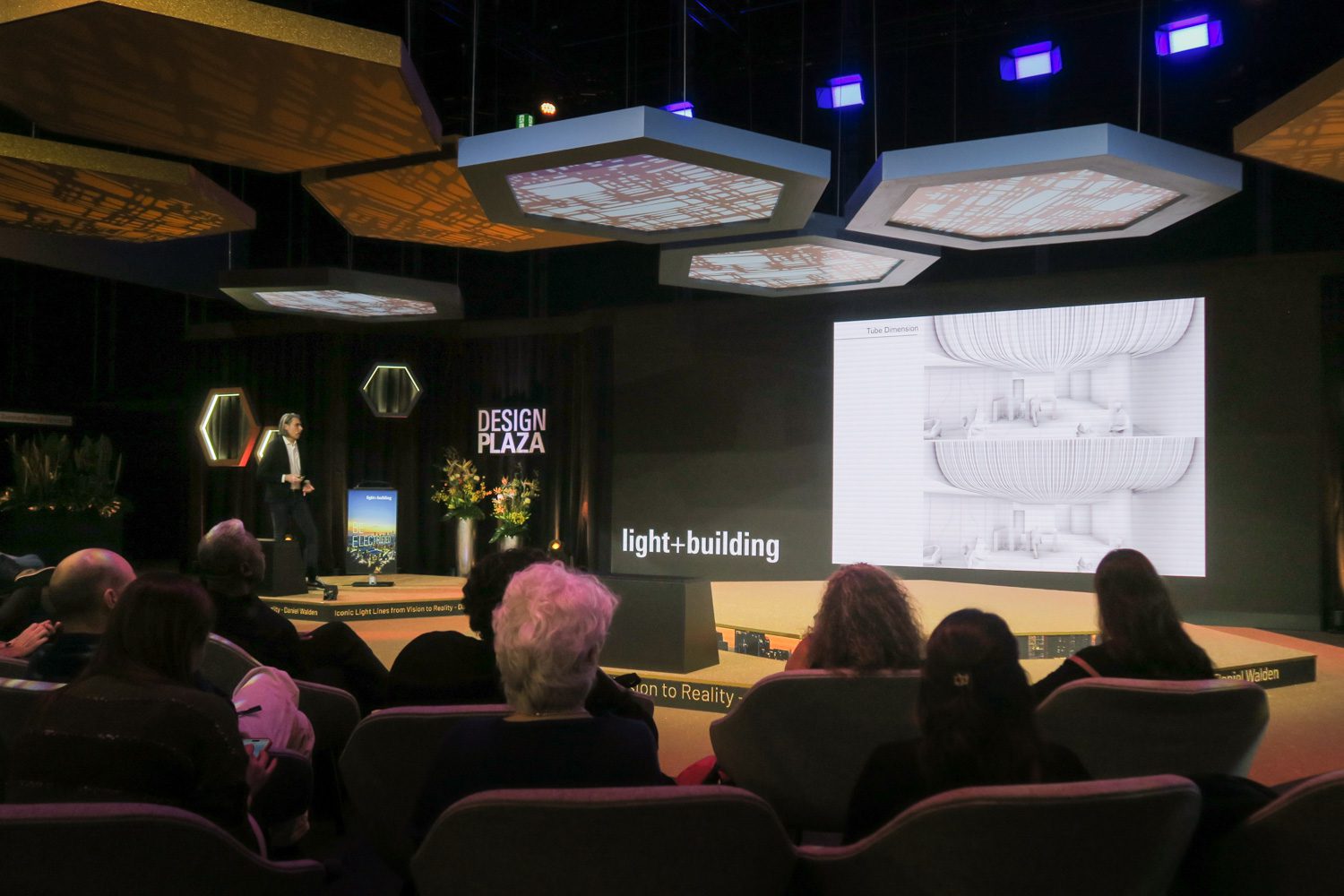
Photo: Rungladda Chakputra
One of the key projects Walden shared during Light + Building 2026 | Talk+Tour #02 was the Audi Pavilion at the 2012 Consumer Electronics Show in Las Vegas, marking Audi’s first participation in the global technology fair. For the pavilion, Audi sought to present its vision for the car of the future, one in which technology, connectivity, software, and digital systems would become integral components, from head-up displays to in-car multimedia experiences. The exhibition concept set out to demonstrate how something as elemental as a line of light, or the repeated use of a single type of luminaire, could define and shape the identity of an entire space.
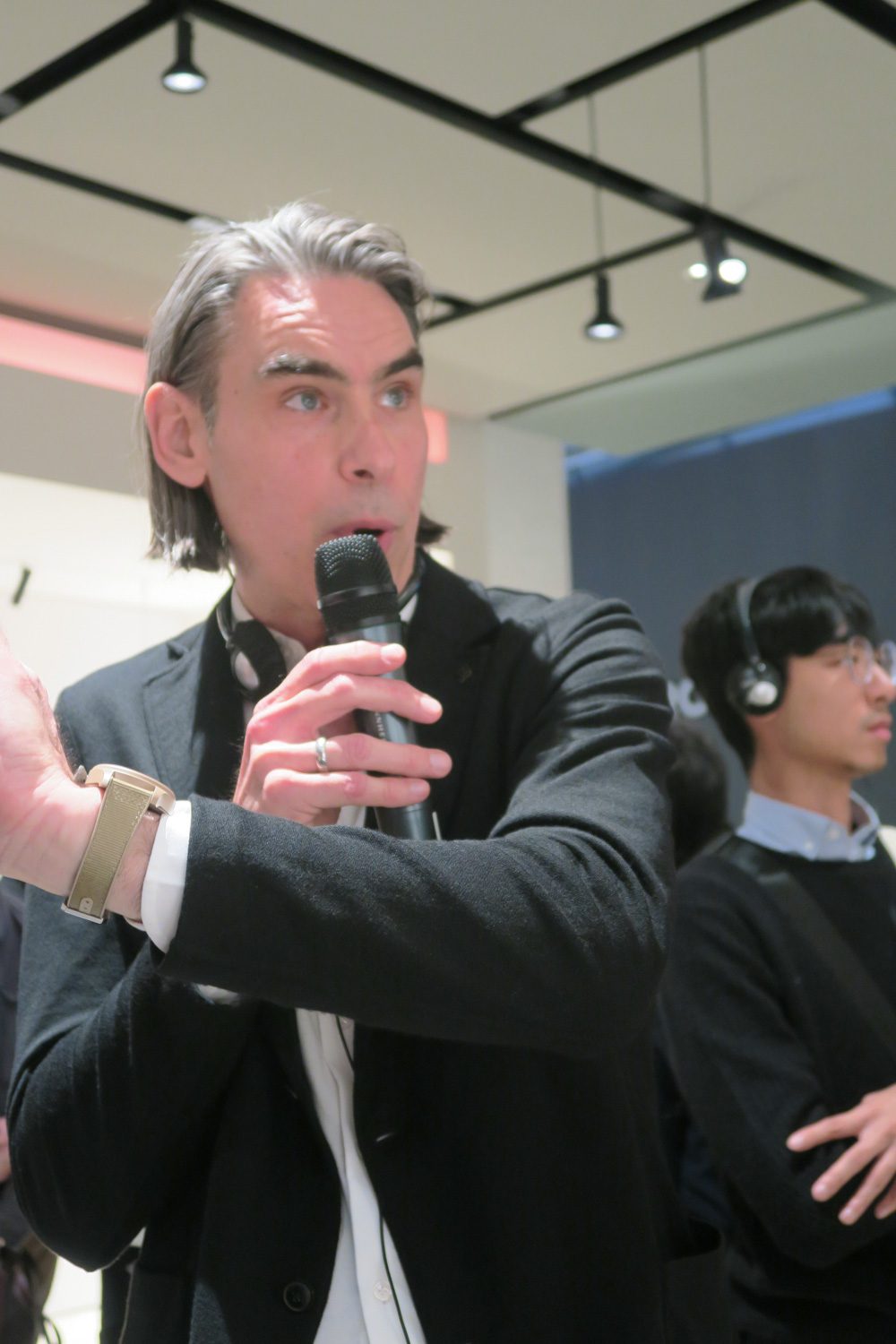
Photo: Rungladda Chakputra
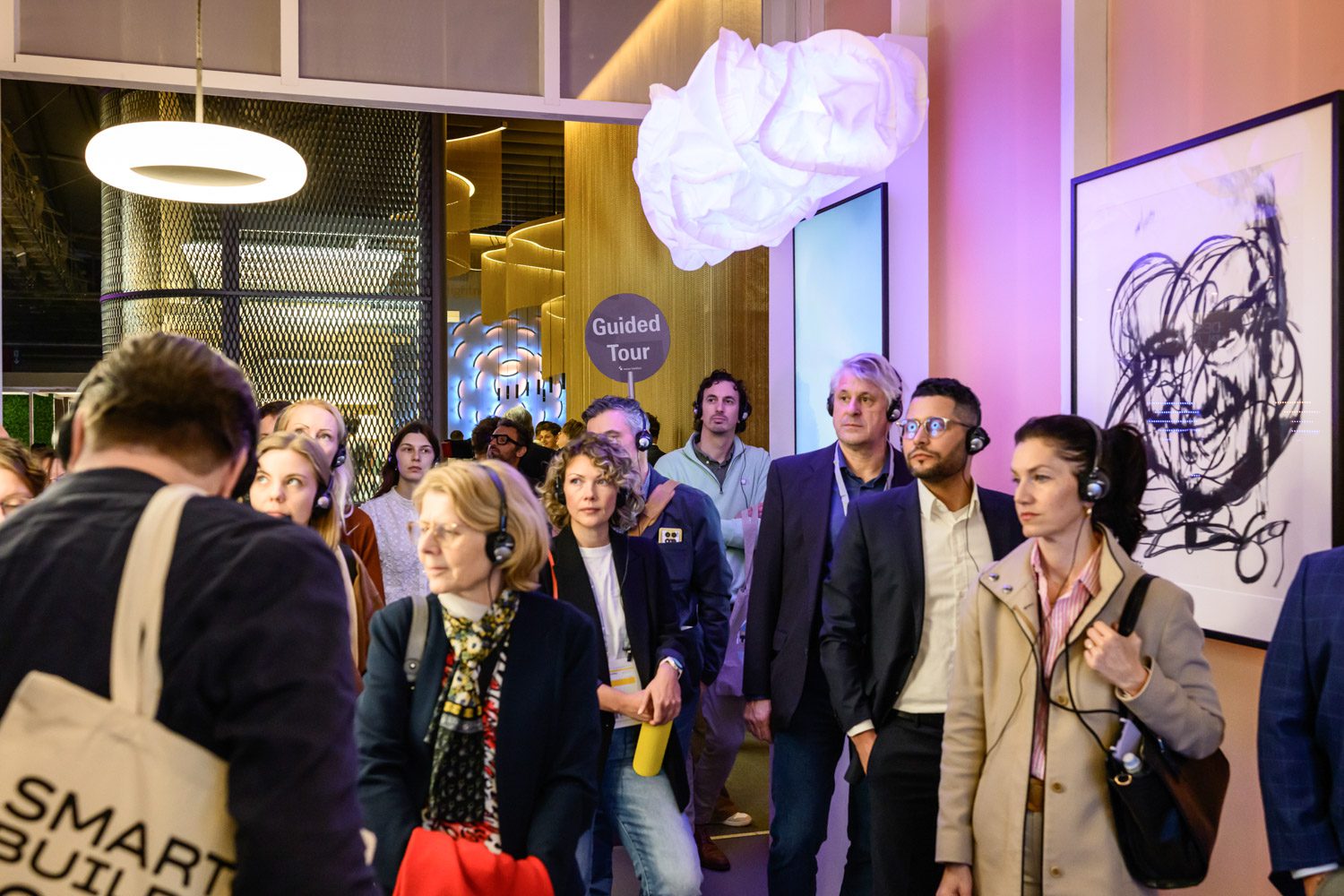
Photo courtesy of Messe Frankfurt Exhibition GmbH
These lines of light emerged from an interpretation of a concise set of keywords: connectivity, future, data stream, network, and identity. A science-fiction film released in 2010 became a key reference, with its luminous grid-like backdrops evoking a world of connection, the flow of information, and a fully digital future. From this visual language emerged the initial idea of constructing the entire environment from a single line of light, within an exhibition area of just 360 square meters, tasked with communicating Audi’s much larger vision.
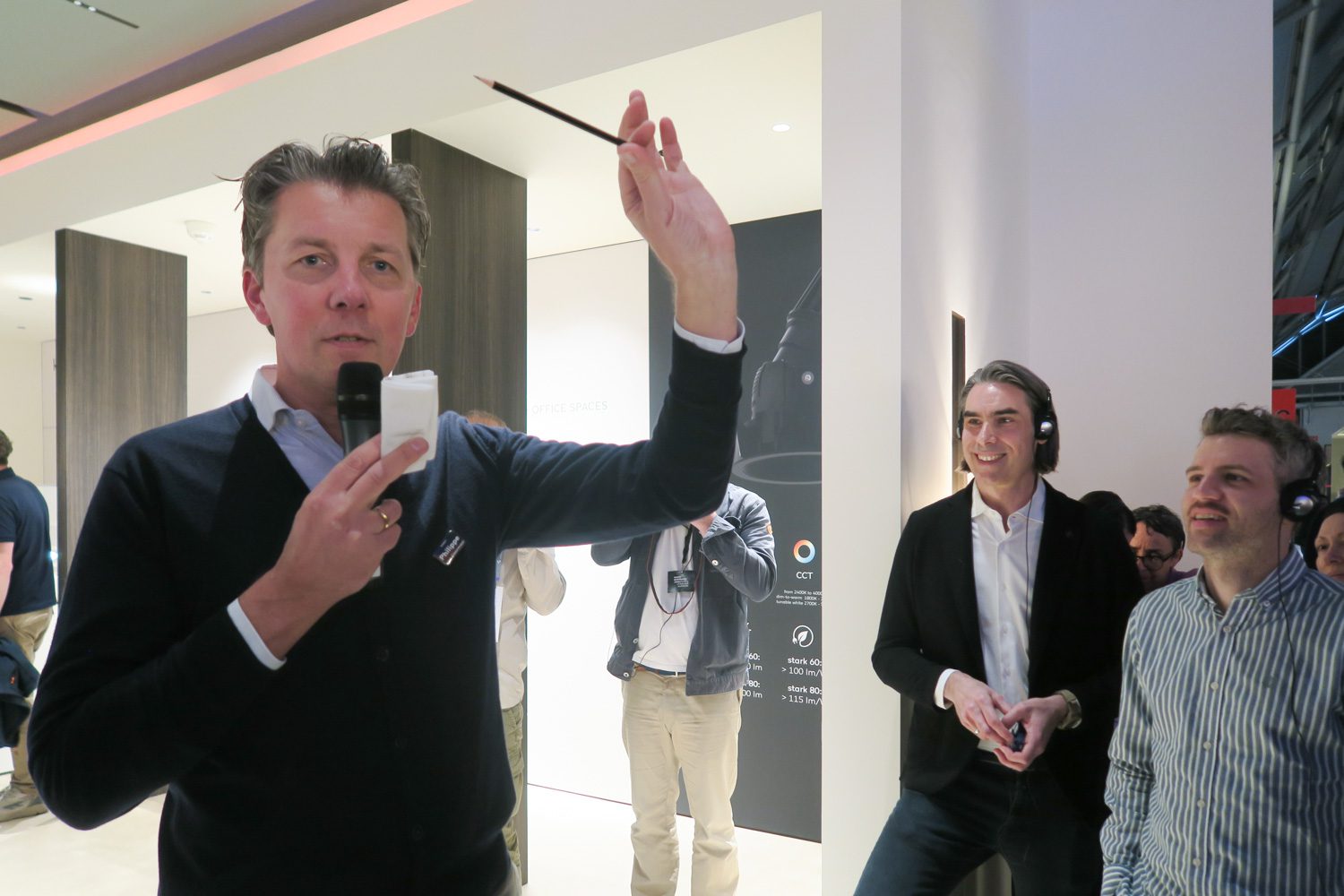
Photo: Rungladda Chakputra
Building on this concept, the next question was how a single type of luminaire could be used to expand the perception of space. The answer lay in material, reflection, and the creation of dimensional spatial illusion. The a·g Licht team began with simple sketches on a 120-by-120-centimeter grid, derived from the standard proportions of a 28-watt fluorescent tube. This ultimately led to an installation of more than 1,910 lamps set against high-gloss white surfaces and a mirrored ceiling, extending the illusion of depth into what appeared to be a boundless field. The result was a luminous structure that enveloped the space across every plane, transforming the pavilion into a vehicle for storytelling, identity, and experience. To meet safety standards in the United States, the team worked with a manufacturer in the Netherlands to produce the entire structure as a single unit, rather than shipping individual luminaires for assembly on site. This allowed the certification to cover the system as a whole.
Photo courtesy of Messe Frankfurt Exhibition GmbH
Photo: Rungladda Chakputra
The idea of an infinite line of light was later developed at a smaller scale in the paired elevators of 25hours Hotel The Circle in Cologne, designed in collaboration with Werner Aisslinger. Inside the elevators, linear light is used to create an endless visual illusion, turning the space into a popular photo spot on Pinterest and Instagram, to the point where guests reportedly lined up to take pictures before heading to their rooms. A more recent project further demonstrates how a single type of luminaire can define the identity of an entrance lobby: FOUR Frankfurt, for which a·g Licht received a brief distilled to a single word: ‘waterfall.’
To connect the project back to the idea of water, the team sought to translate the image of a waterfall into an architectural experience within a double-height entrance lobby. Although the space came with certain limitations, its vertical dimension opened up a compelling opportunity. The designers returned to a simple vocabulary of light and glass, testing degrees of transparency and opacity, as well as different backing surfaces, from bronze and white to gold, to understand how each material would respond to the luminaires when switched on and off. The aim was to find a sense of fluid movement, as if water were cascading from the ceiling down into the elevator hall.
Photo courtesy of Messe Frankfurt Exhibition GmbH
After repeated rounds of experimentation, the final result took shape as a monumental light sculpture suspended through the lobby like a glowing stream. Developed in collaboration with Zumtobel, the custom luminaire system went through an extensive mock-up process, from determining the diameter of the glass and designing the rippled surface that would catch and reflect the light, to ensuring that the light source could be seamlessly concealed within the structure. With an adjustable color temperature ranging from 2,700K to 6,500K, the atmosphere shifts throughout the day, delicately translating a natural rhythm into architectural light. While the idea may appear simple, its realization depended on close collaboration with a manufacturer capable of helping define the direction of the project and shaping the concept into physical form.
Photo courtesy of Messe Frankfurt Exhibition GmbH
For a·g Licht, light has become another material of architecture, one capable of setting mood, carrying narrative, and creating experiences that remain vividly in memory. These projects demonstrate how, at times, a single type of luminaire, when used with intelligence and precision, can be enough to define how a space is perceived and remembered. Equally important is the opportunity to experience light at full scale through physical mock-ups. Even in an age when AI and simulation tools can make the communication of ideas easier, the perception of light remains an experience that must be seen firsthand. Each time light touches a surface or enters a space, it reveals something new, something no tool can ever fully predict.