
AGROSEMILLAS OFFICES REIMAGINES THE AGRICULTURAL FACTORY THROUGH GREEN CONTAINERS, YELLOW OPENINGS, AND CONCRETE
TEXT: PHARIN OPASSEREPADUNG
PHOTO: DEL RIO BANI
(For Thai, press here)
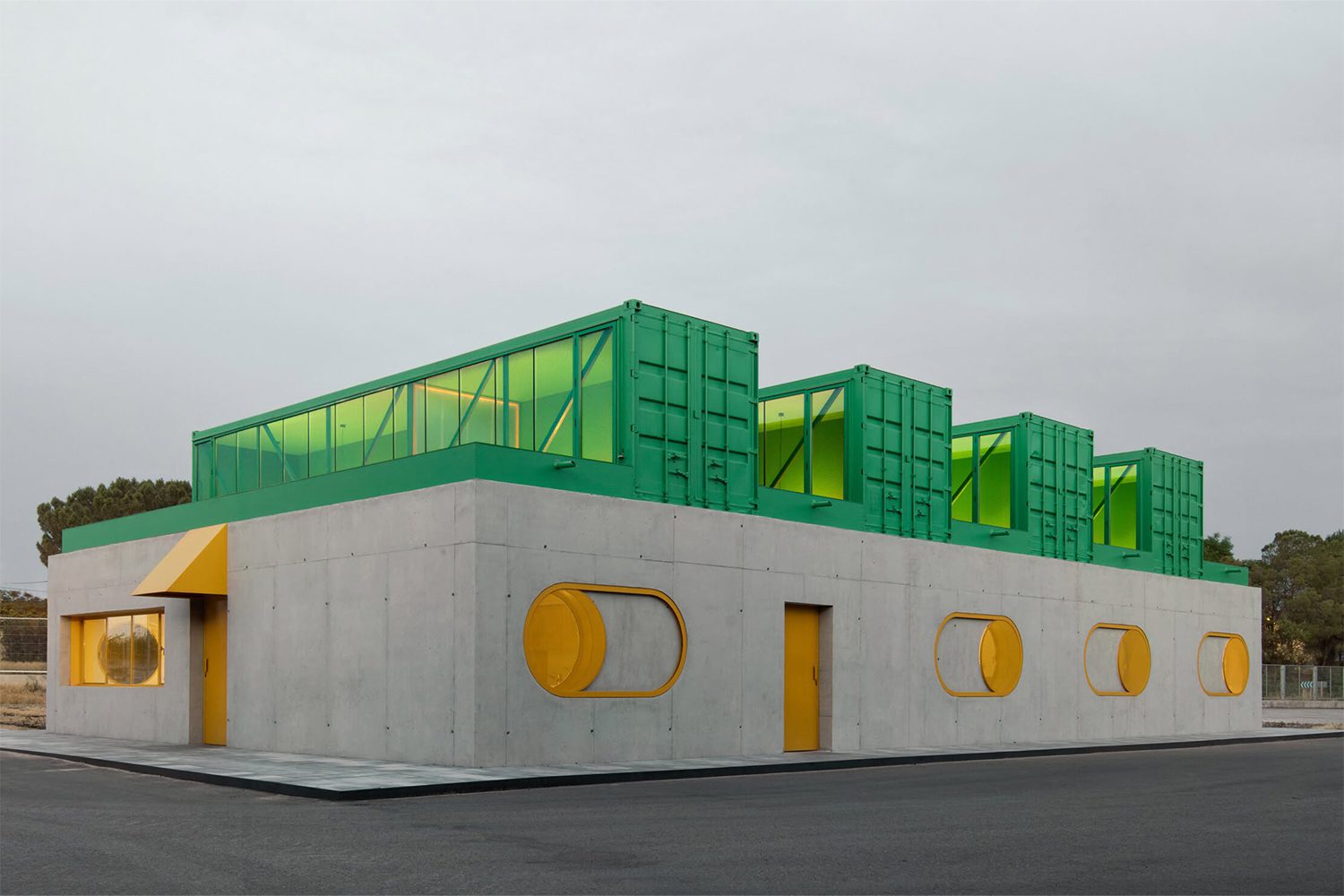
In its most elementary form, a building made of gray concrete can appear sober, direct, and almost deliberately ordinary. Yet in Agrosemillas Offices, Impepinable Studio introduces a simple but decisive act of transformation. A green shipping container is placed atop the concrete volume, while vivid yellow windows and doors punctuate the façade as though the building itself were looking back, giving this otherwise modest industrial structure a sense of wit and character.
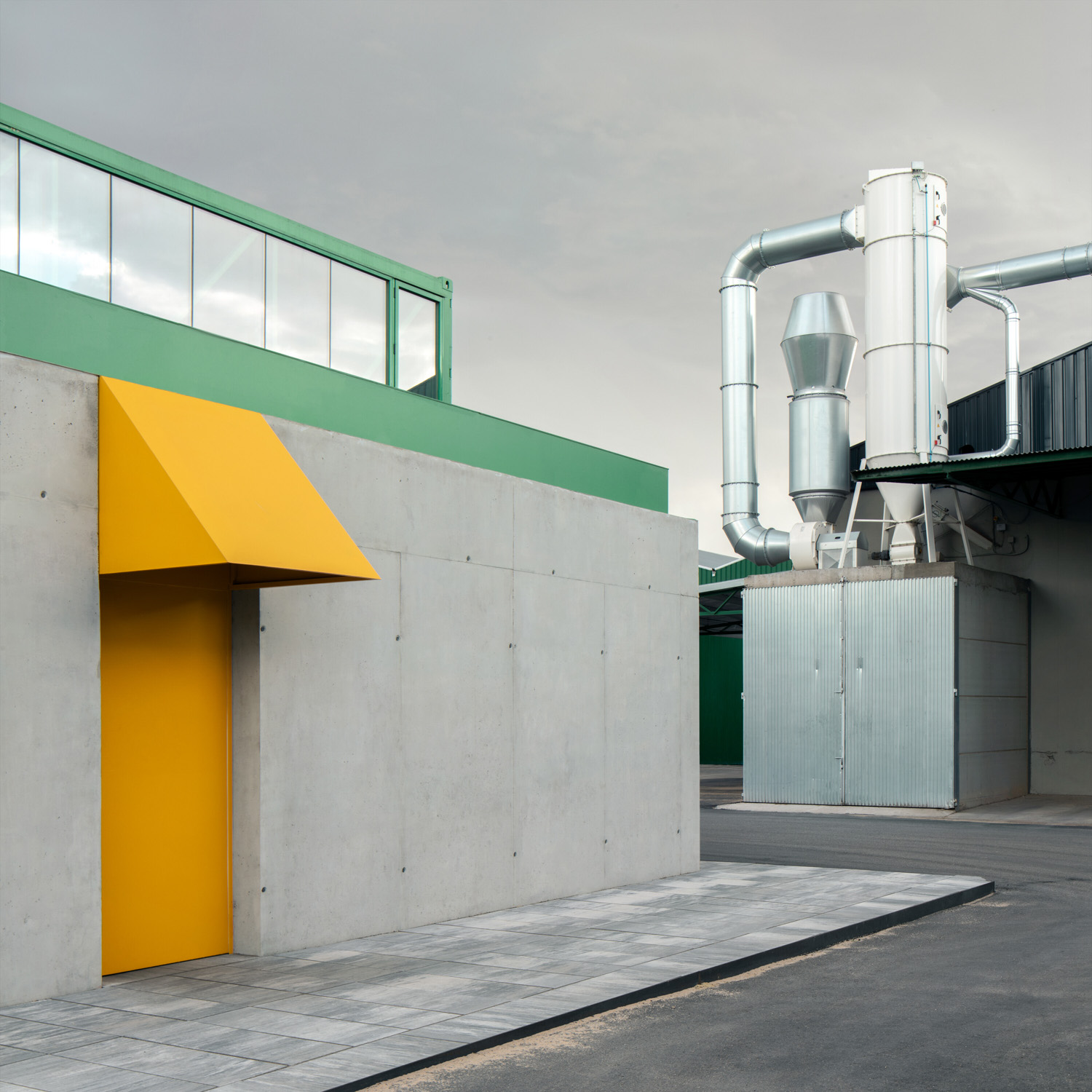
Designed by the Madrid-based architecture practice Impepinable Studio, Agrosemillas Offices is a compact workplace created as the new office for Agrosemillas, a seed production company operating within an agro-industrial factory complex.
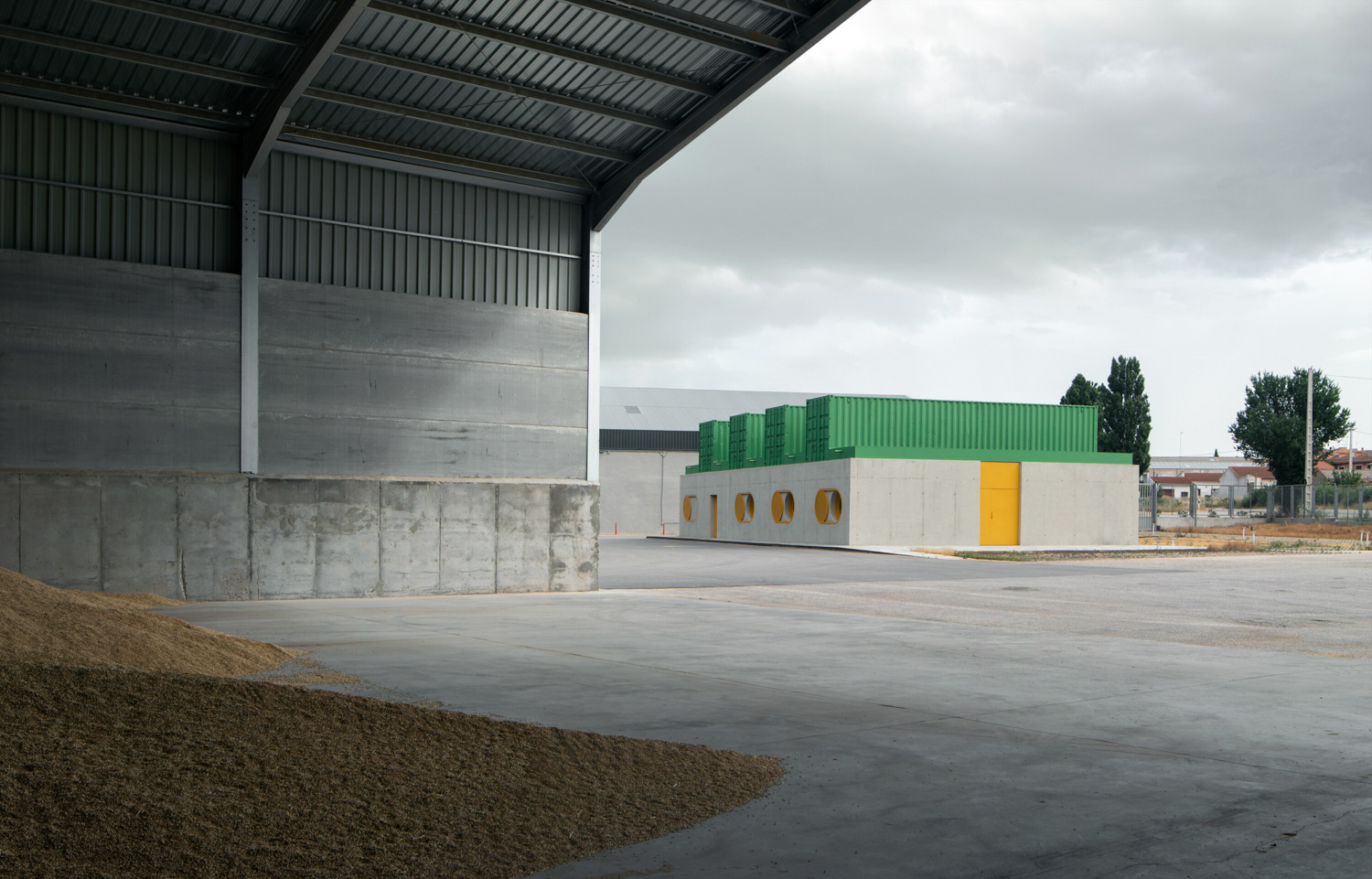
As Agrosemillas moves toward a new direction shaped by technological innovation and environmental responsibility, the building reflects this transition through the creation of a brighter, more flexible workplace. The design makes use of repurposed shipping containers and a straightforward construction system rooted in local craftsmanship, enlivening the industrial character of the building with carefully placed moments of color.
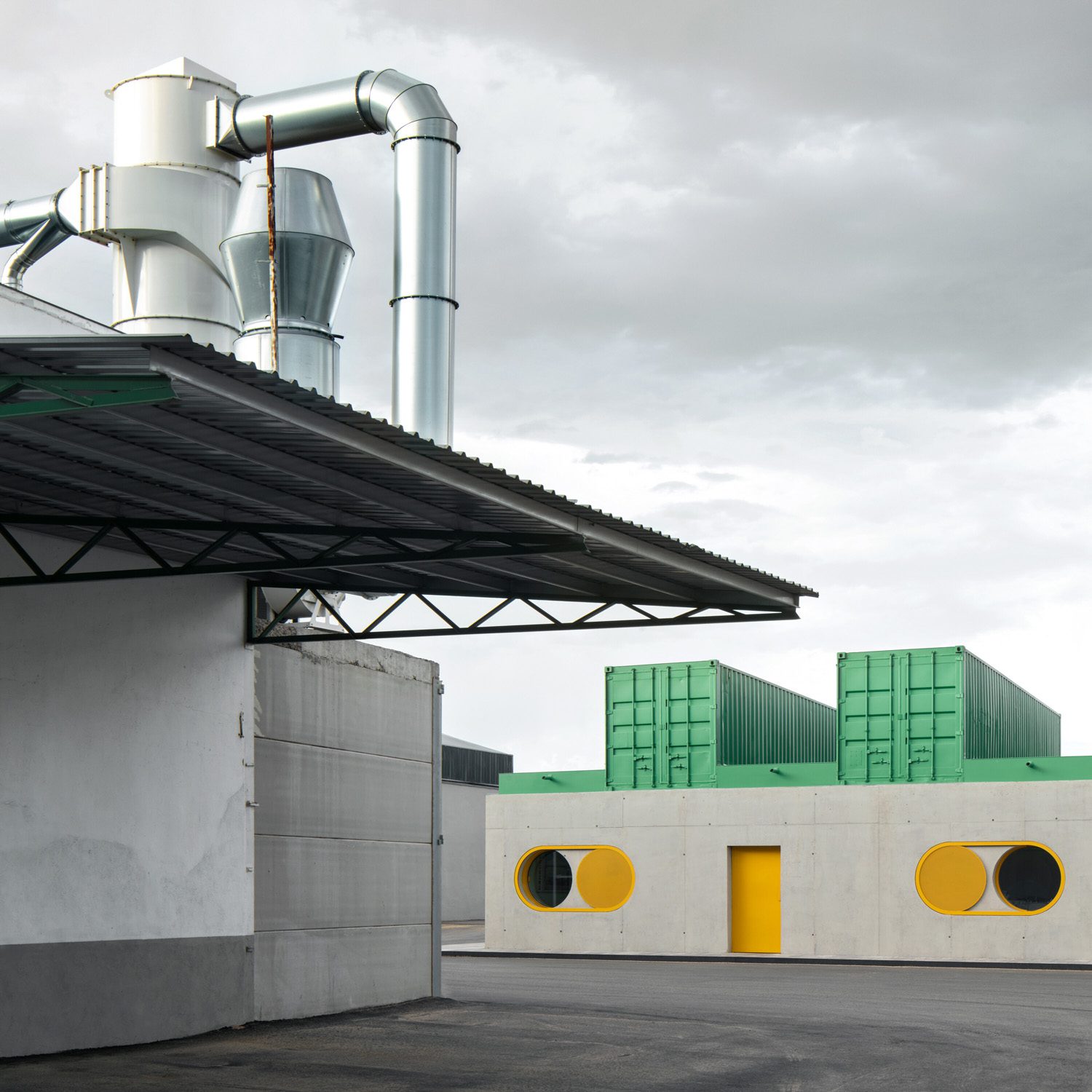
The office and its 4,500-square-meter factory complex stand along the main road of El Peral, a small municipality in the province of Cuenca, Spain, with a population of roughly 600 inhabitants. In this context, the building responds less to the scale of a conventional office than to that of large vehicles, transportation infrastructure, and factory production.
The architects also considered the site’s specific conditions, from heavy seasonal rainfall and harvest cycles to the shifting rhythms of the factory, where periods of stillness alternate with moments of activity. The building therefore accommodates a diverse range of functions, including work areas, quiet spaces, meeting rooms, and development areas exposed to noise, dust, and the logistical demands of the site. In response to these varied requirements, the office is conceived as a flexible and easily adaptable space, closely connected to the existing factory and extending the continuity of its architectural language.
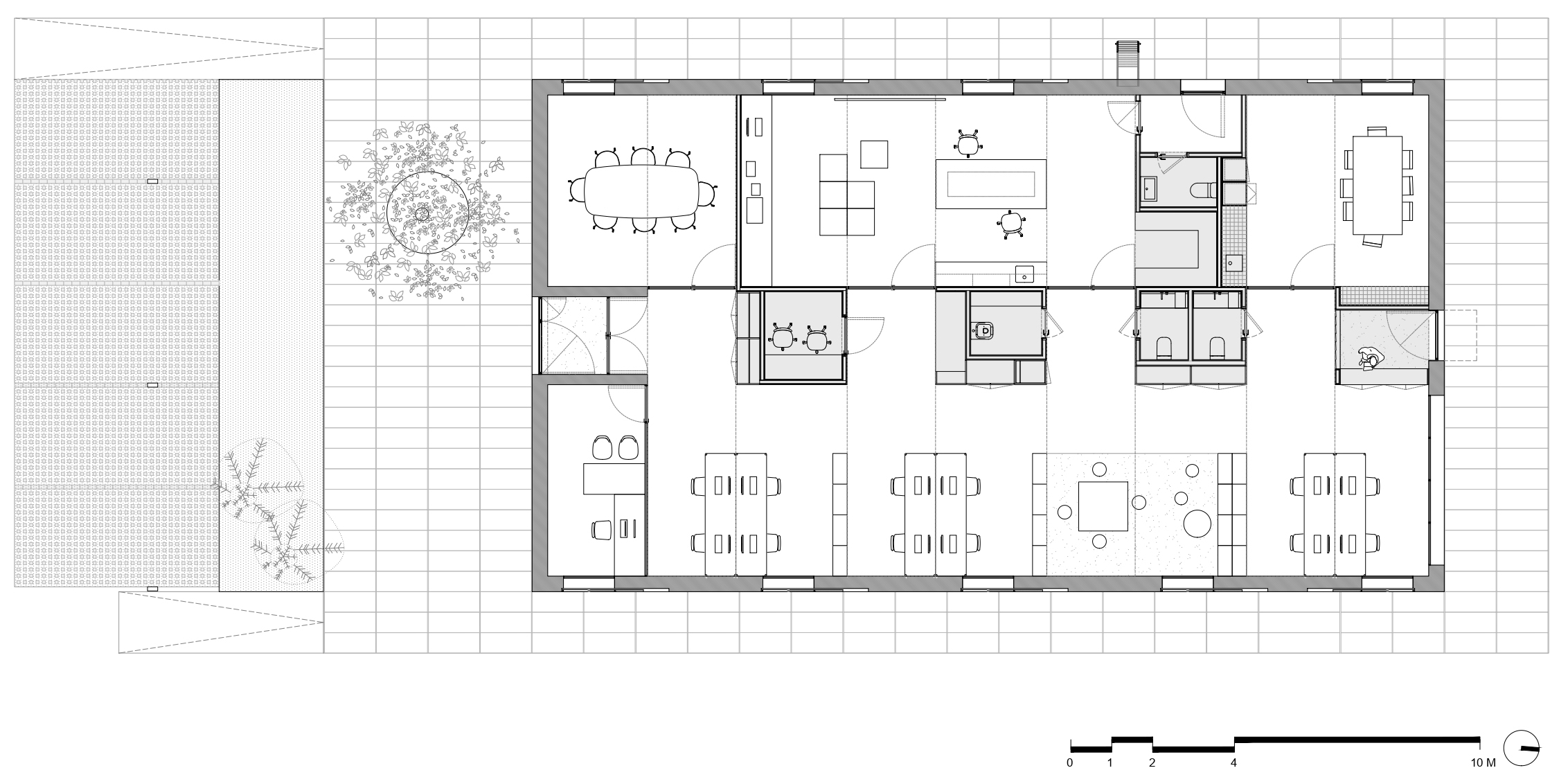
The building is organized through a simple structural logic, divided into three sequential zones according to use: an open work area, a service zone, and, at the end, a meeting area and laboratory. The entrance is separated for logistical convenience, while the central space of the building is used for experimental planting, bringing research, production, and architecture together within the same 280-square-meter volume.
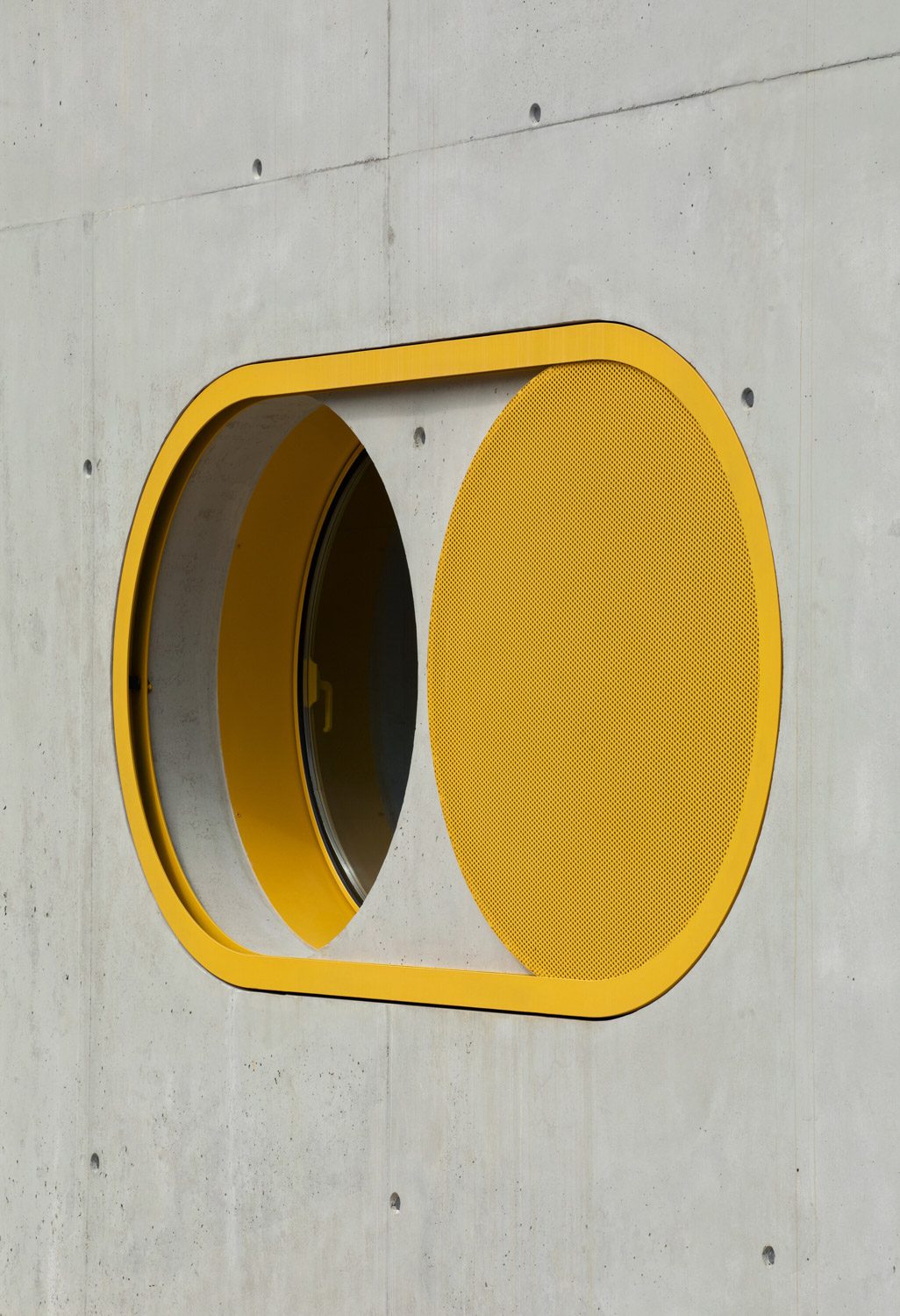
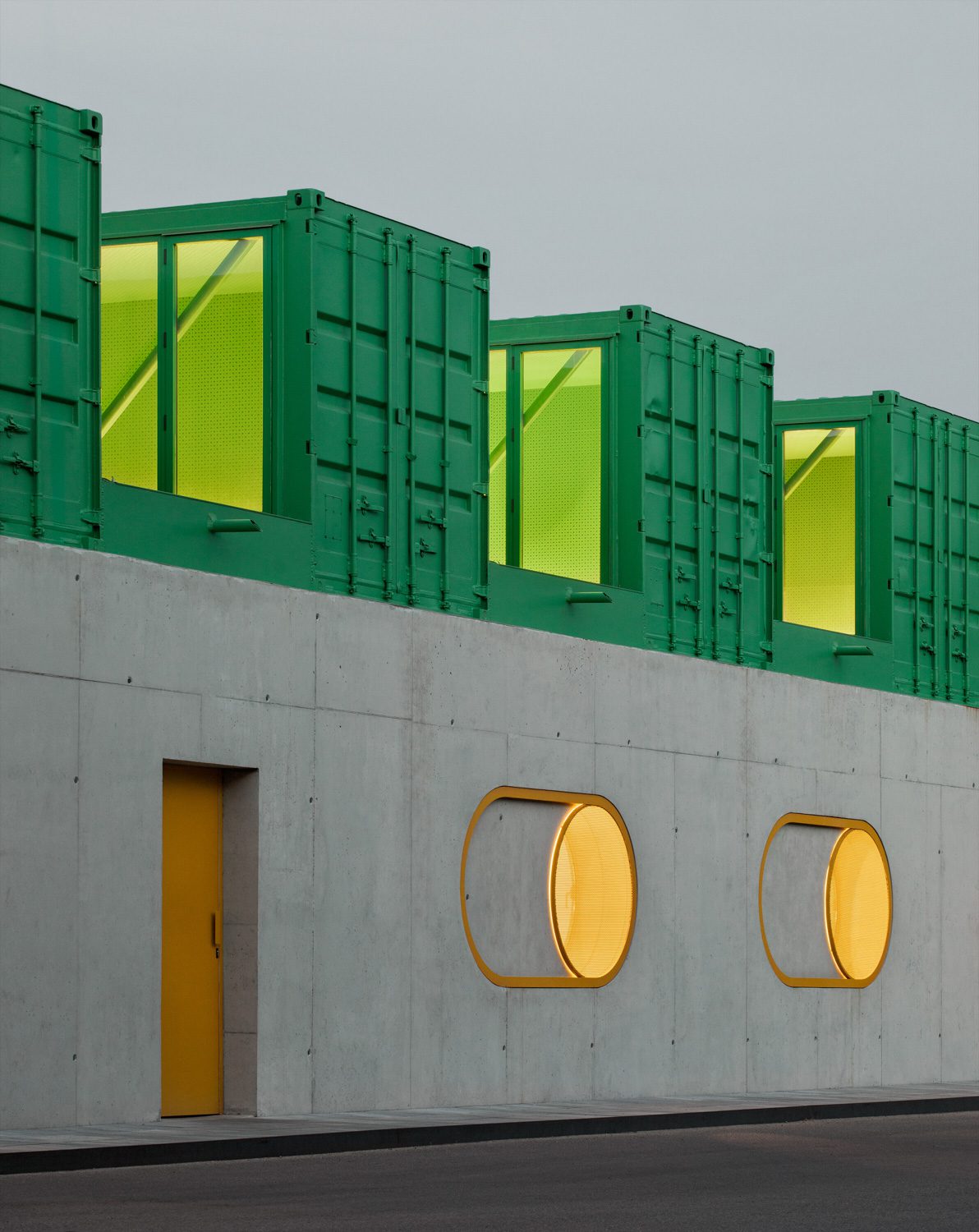
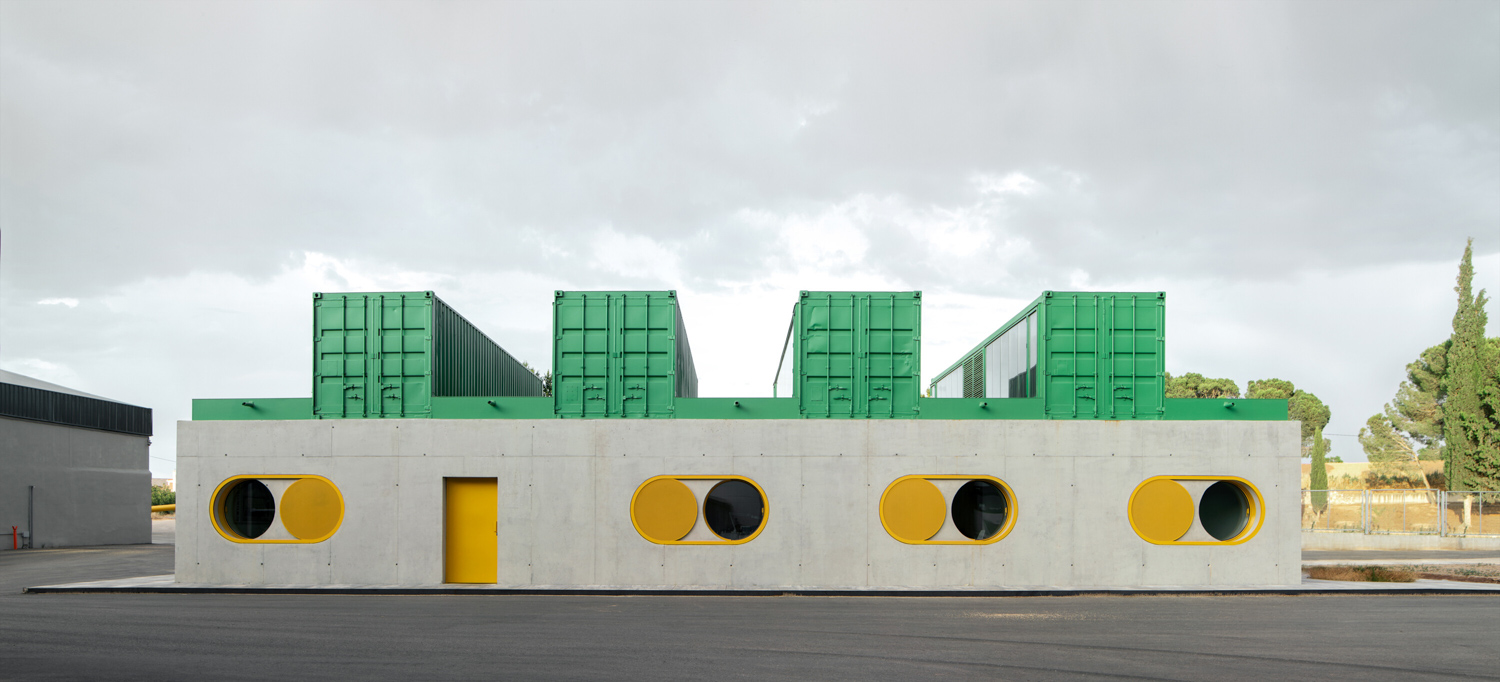
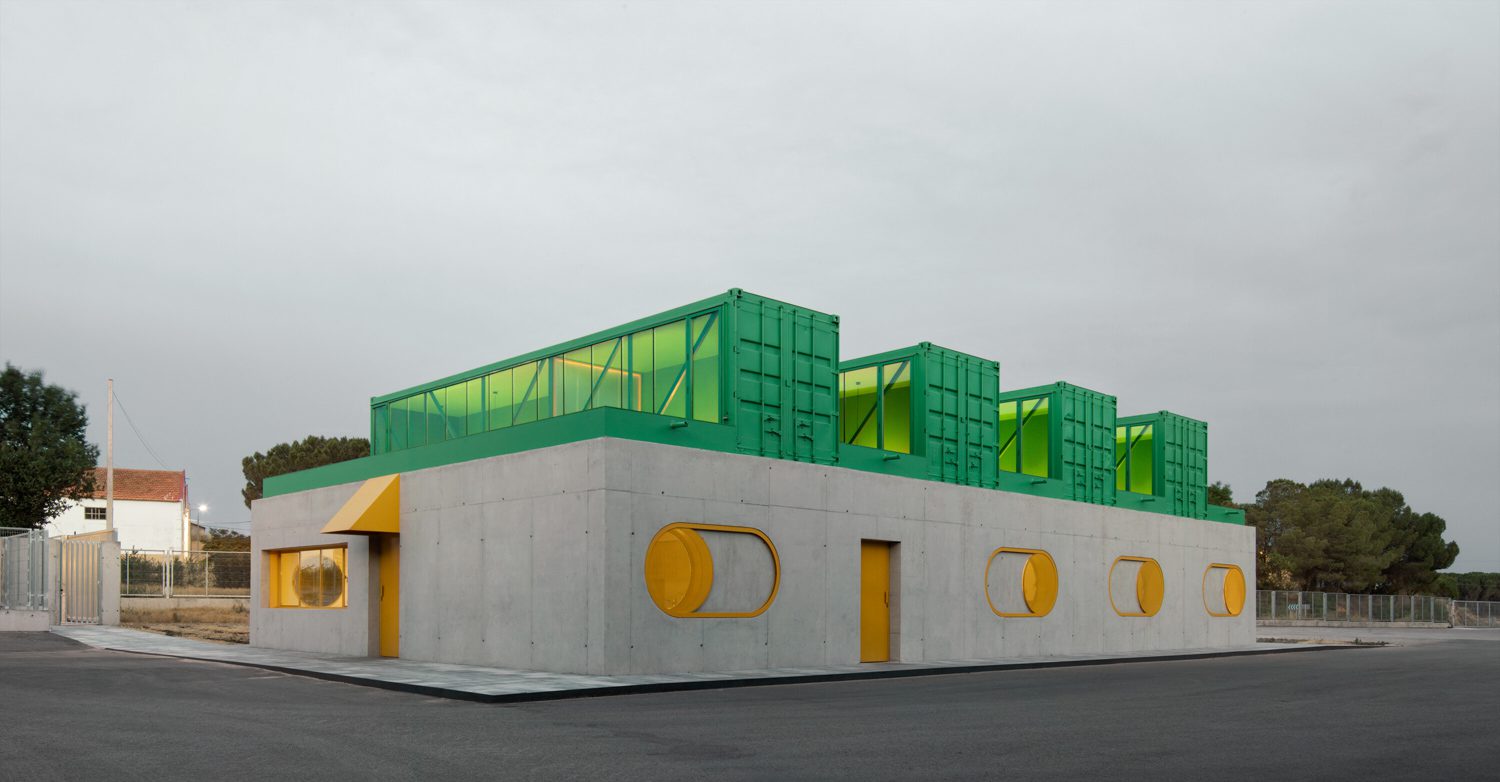
One of the project’s most striking features is, without doubt, its front façade. Above the simple rectangular concrete volume, a row of repurposed green containers is placed at intervals, punctuated by four windows and a modestly scaled door in vivid yellow. Each window is set at an equal distance from the next and designed to slide open and closed in a manner similar to a switch, making the façade both expressive and practical in use.
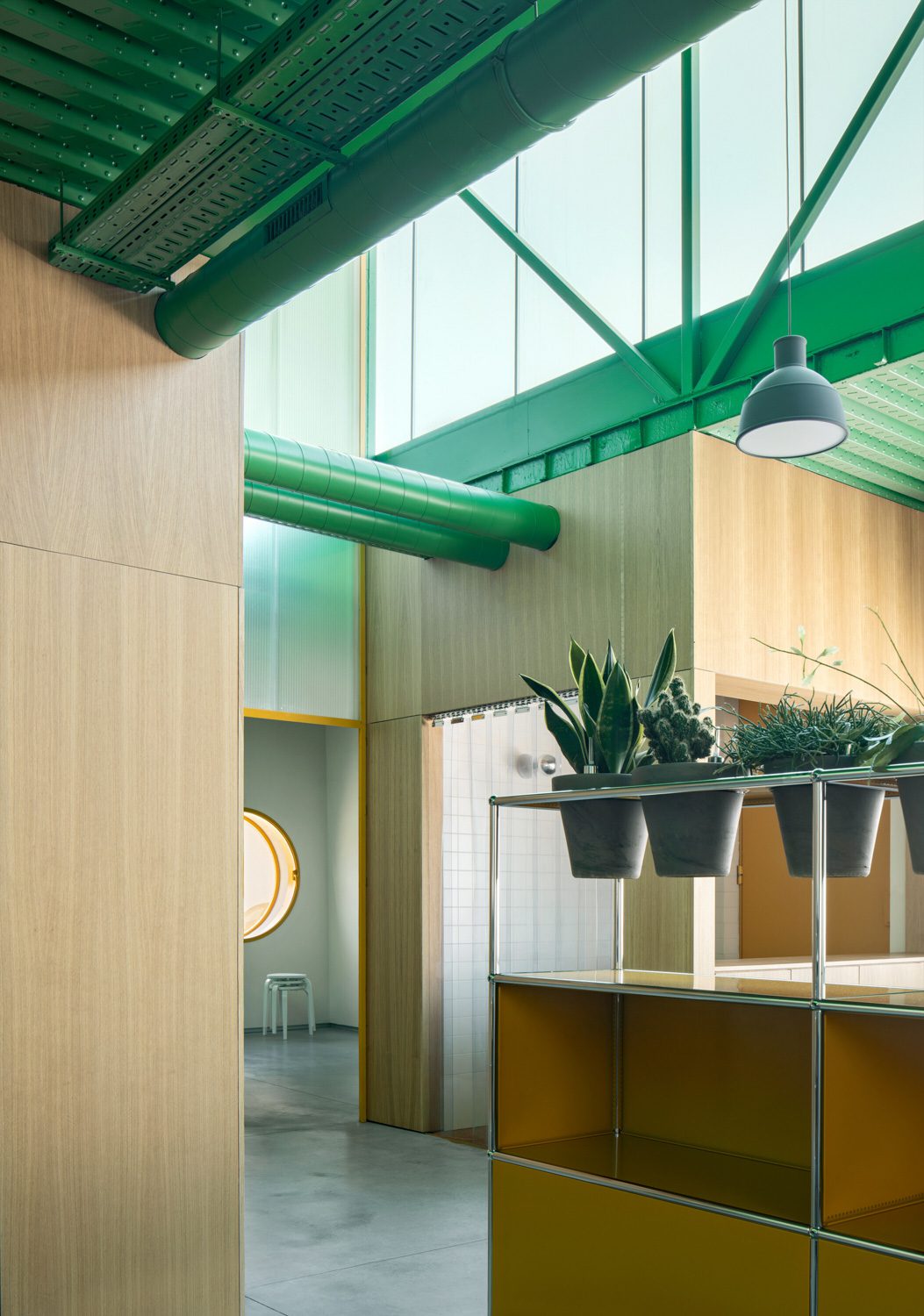
The alternating placement of the containers creates a rhythm of openings that allows natural light to enter in measured intervals, softening the atmosphere of the workplace during the day. Inside, oak is introduced as an interior material, tempering the intensity of the yellow and green and giving the overall space a warmer character. Stainless steel furniture is also used in selected areas, adding another layer to the building’s material composition.
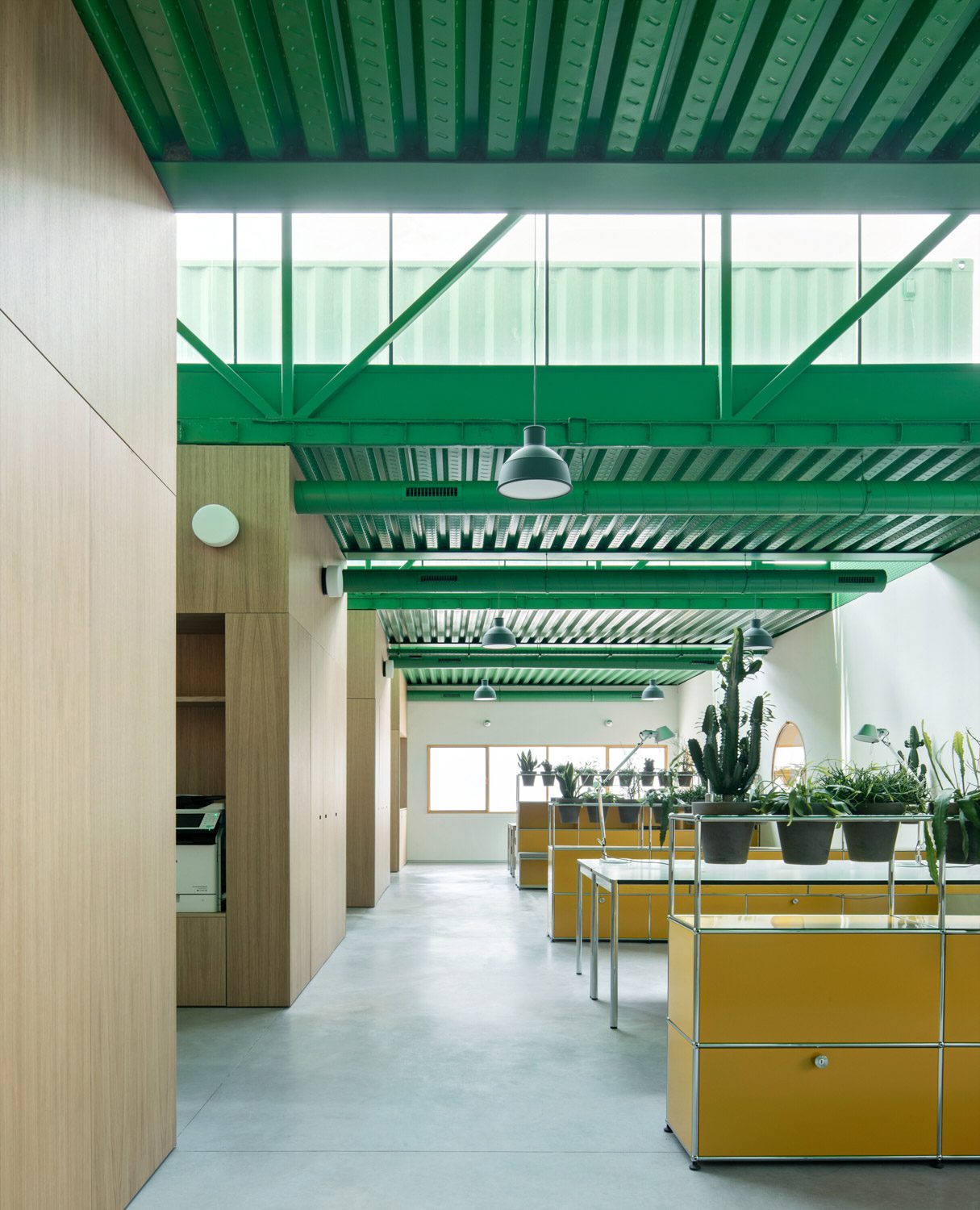
The concrete office was built in parallel with the production and warehouse areas, sharing construction systems, materials, and labor. The project also involved local craftspeople, including metalworkers, plumbers, carpenters, and industrial construction teams from the area. Their participation played an important role in the project’s technical decisions, reinforcing an architectural approach that is simple yet distinctive and memorable.
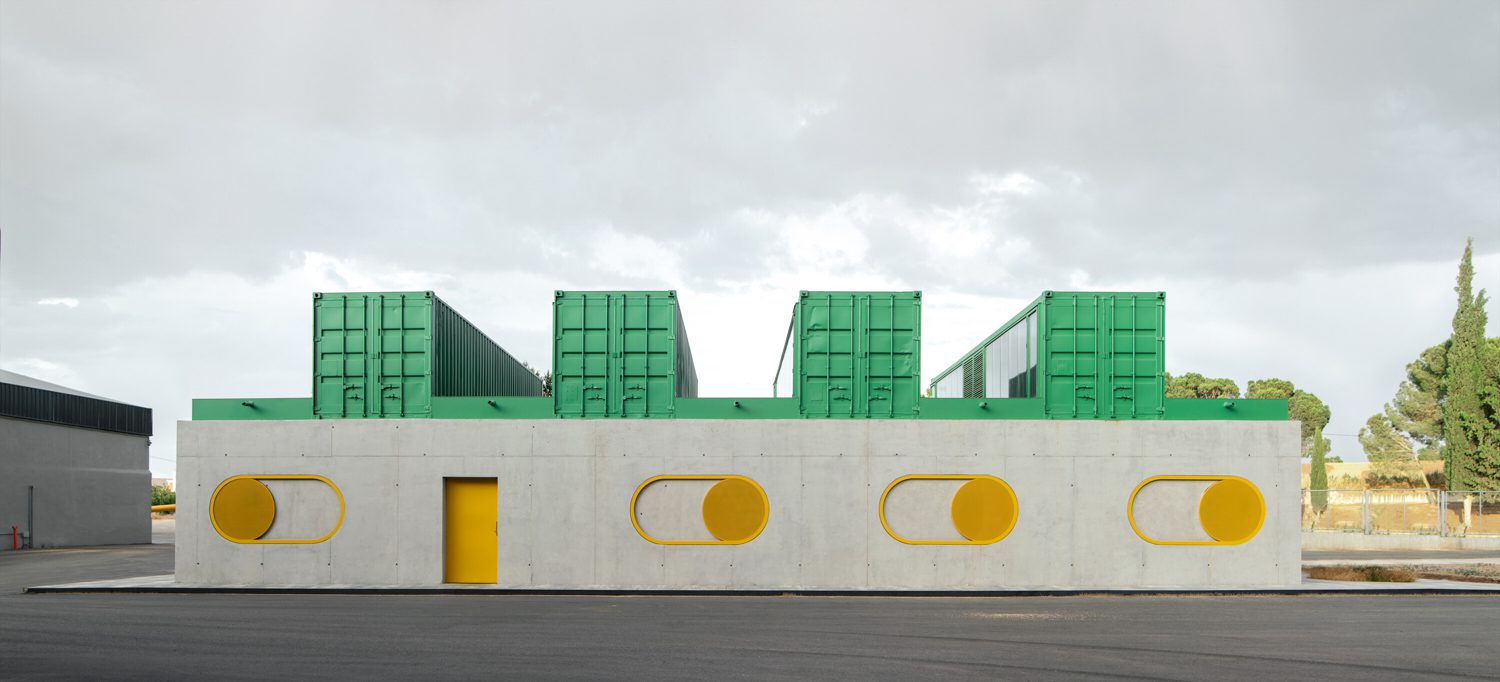
This single-story concrete office is therefore compelling not only for its spatial arrangement and purpose, but also for the clarity of its façade. Together, these elements form an architecture that brings multiple requirements into balance, accommodating everything from factory-based workflows to spaces for experimentation and research within a single building. At the same time, the project quietly gives a clear architectural expression to the company’s evolving identity.