
KHOTKOOL OFFICE: THE MASTERPIECE OF PLAY, SOFTENING THE FORMALITY OF WORK THROUGH COLOR, CRAFT, AND A THAI SENSE OF PLAY
TEXT: PHARIN OPASSEREPADUNG
PHOTO: JIRAYU RATTANAWONG
(For Thai, press here)
Designed by Spaceman Studio, the new office of the content production company KHOTKOOL is guided by the concept The Masterpiece of Play. Through fun Thai craft and familiar objects from everyday life, the project translates its character into spatial form, recasting these references within an environment designed to loosen the conventional seriousness of office life and make room for a more lively, approachable way of working.
The office occupies two adjoining shophouse units spanning five floors, with each level organized around the company’s practical requirements. The ground floor brings together a town hall and canteen, two flexible zones capable of accommodating a range of communal activities. The second and third floors provide additional workspaces in response to the company’s expanding team, while the fourth and fifth floors contain meeting rooms and a studio for producing the content programs associated with KHOTKOOL.
An overtly corporate office interior would have felt at odds with a company whose DNA is defined by a spirit of fun. Spaceman Studio instead turns to an architectural language that softens the tension of work through Thai-inflected craft and familiar material references. Terrazzo, timber doors embellished with carvings that carry playful meanings, collapsible steel grilles, and glass panels are incorporated throughout the interior. Many of these elements are drawn from the work of Thai designers.
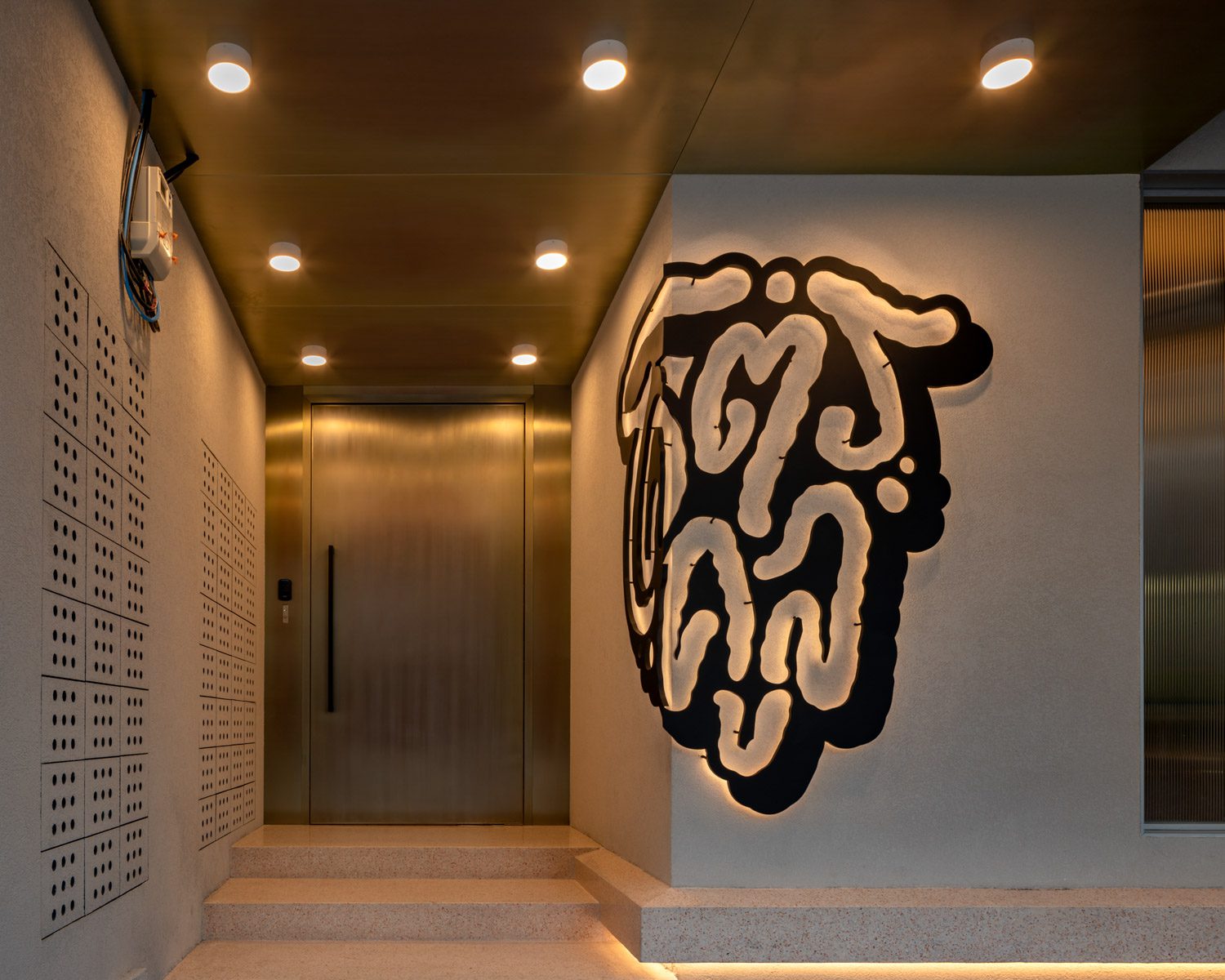
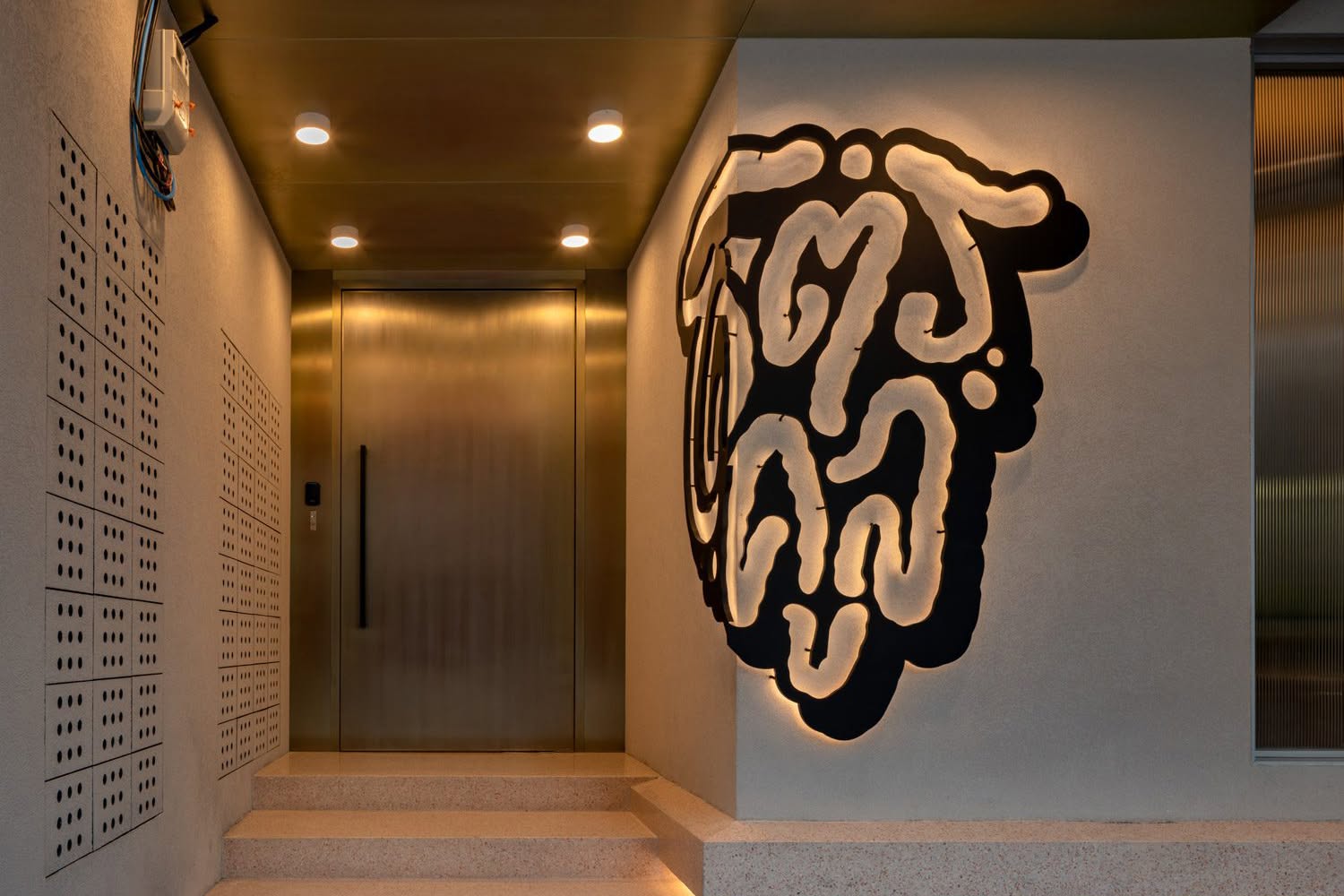
At the entrance, a black Thai-language sign bearing the company name, ‘โคตรคูล,’ is set neatly into the corner of the building. Running alongside it is a wall of shoe storage for the many employees who pass through each day. At first glance, it reads simply as a series of black lines framing an otherwise bare surface. In fact, each line conceals a pull-out compartment, complete with a detachable tag that staff can carry with them, helping them keep track of their assigned slot.
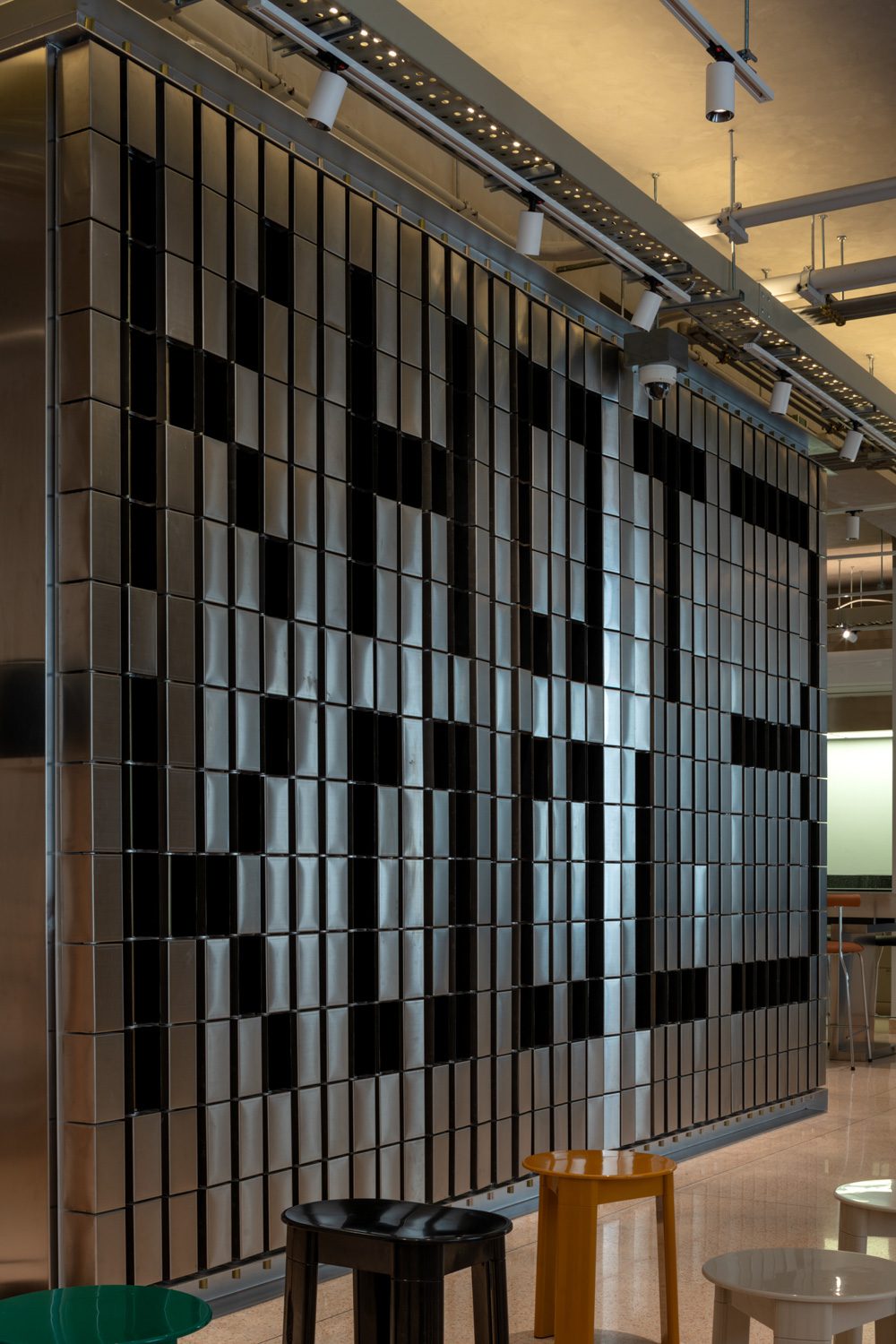
Beyond the door, an oversized KHOTKOOL sign comes into view. It evolves from an earlier black-and-yellow version whose rotating elements could be rearranged to spell both KHOTKOOL and other words. The new iteration retains the invitation to touch and play, but shifts its logic. Brass rods support a sequence of silver stainless-steel boxes, each lined in black and inscribed with the letters of KHOTKOOL. The individual boxes can still be turned by hand, though this time they remain faithful to a single word.
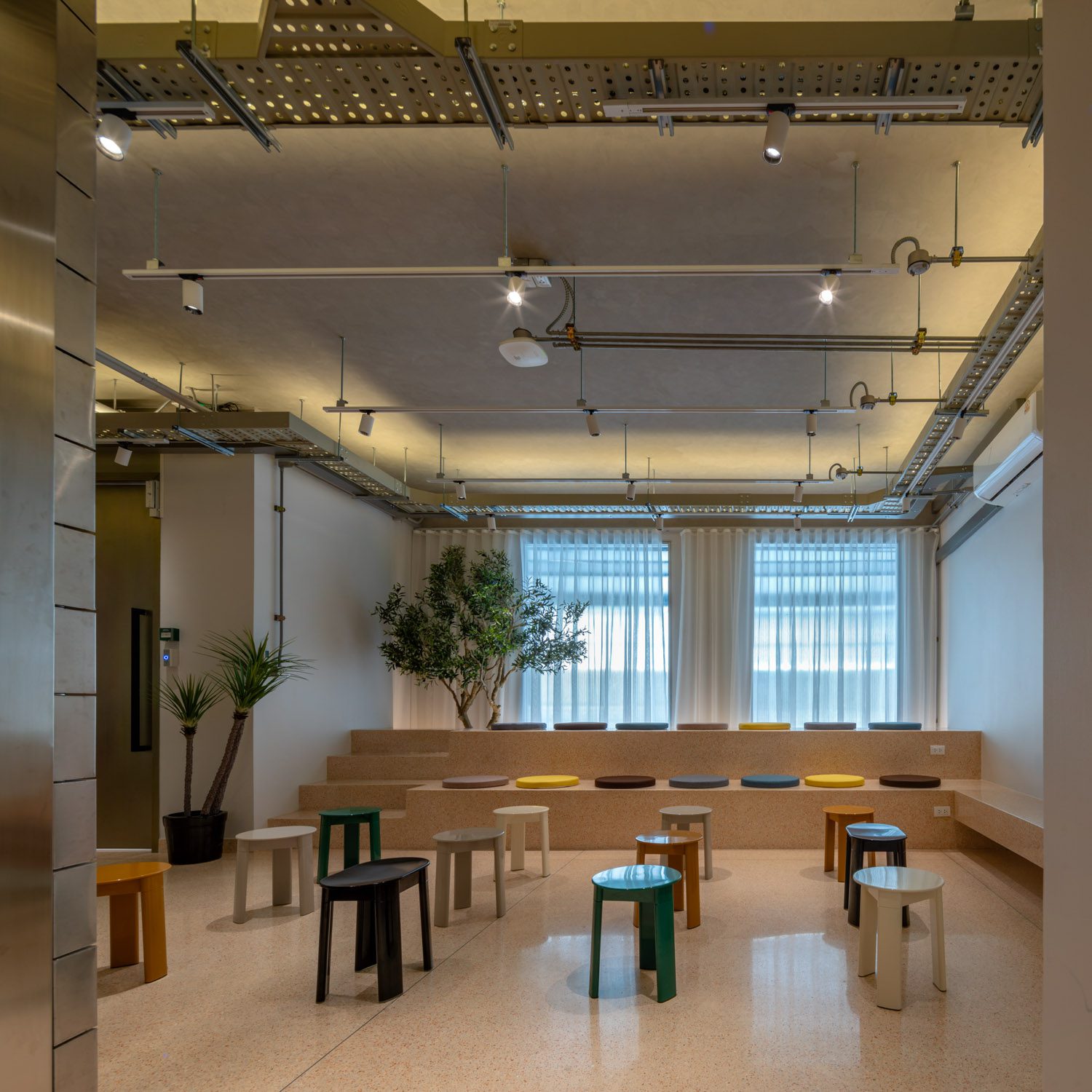
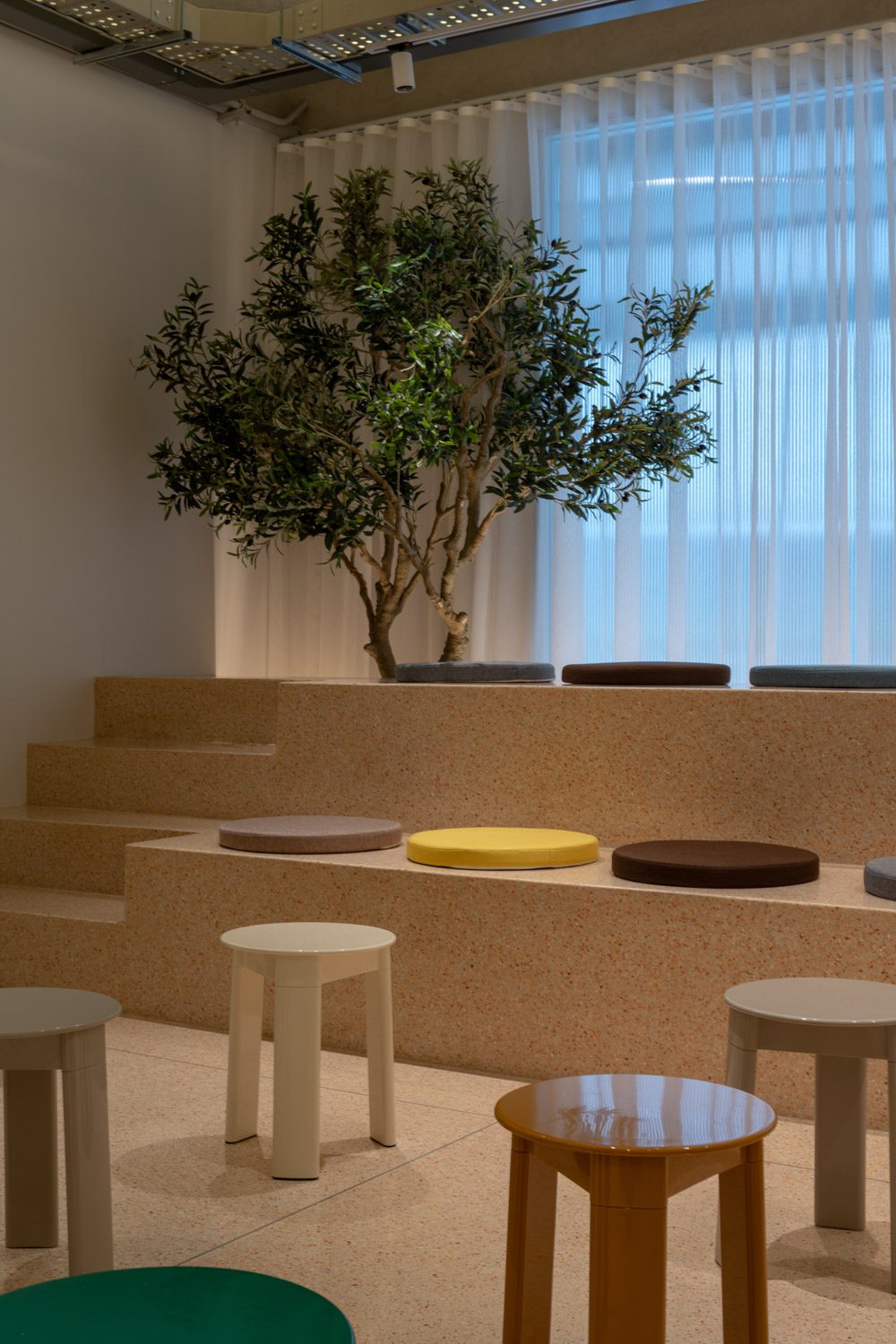
Further inside, the town hall forms the office’s shared center: a compact stepped seating area where employees can sit, work, or gather informally. The architects imagined it as a loose reference to the activity courts of childhood schools, those familiar places for eating, talking, and spending time together. Terrazzo brings that memory into the space, while a scatter of multicolored chairs introduces a brighter, more animated accent.
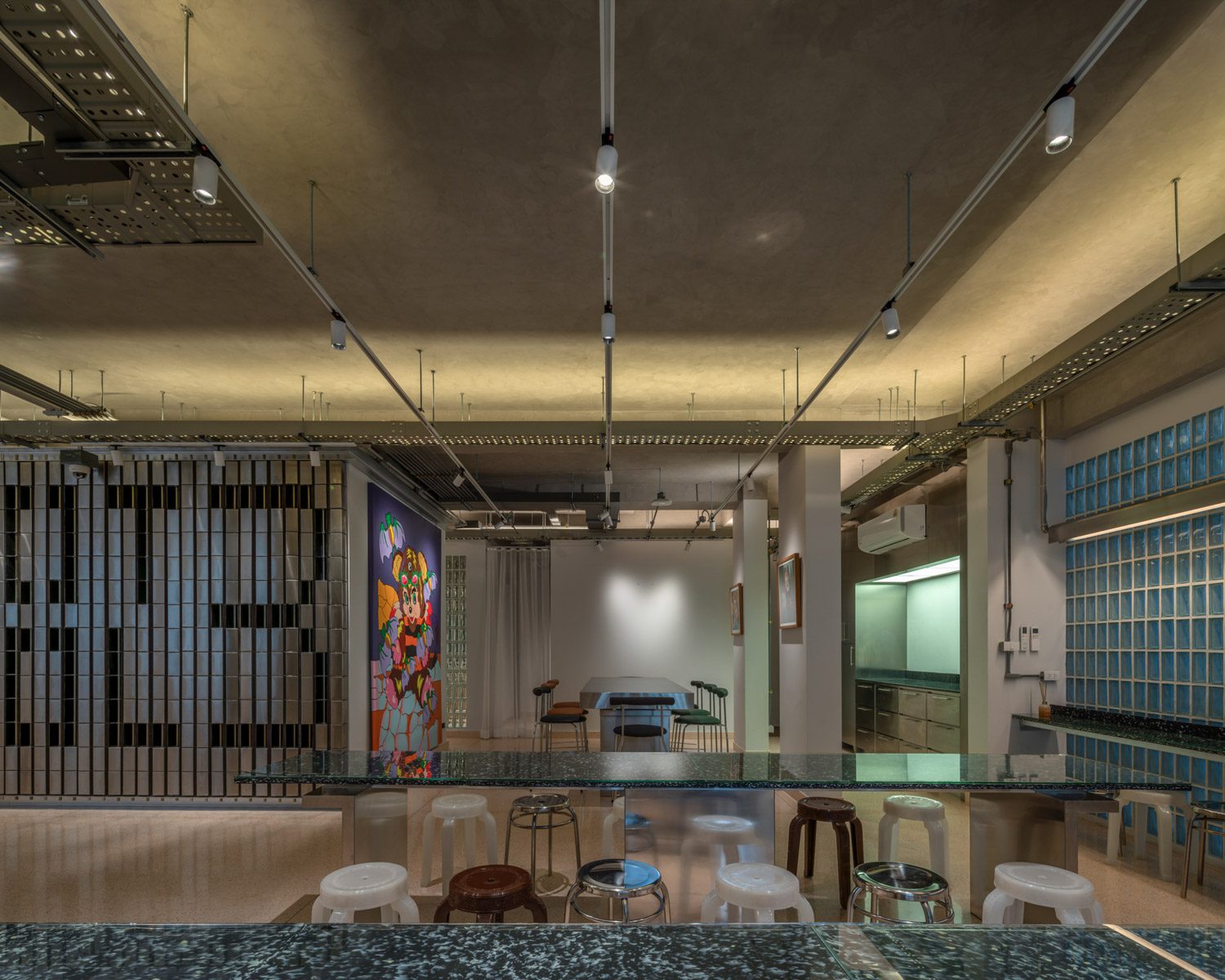
Adjoining the town hall is the canteen, where the terrazzo flooring continues into a more casual dining setting. Its tables are topped with recycled material by Thai brand Meltdistrict, protected beneath a layer of glass to extend their lifespan. They are paired with chairs by Rumba Bor, another Thai design brand that transforms discarded plastic into colorful seating. Together, these elements balance both the project’s visual ambitions with a broader commitment to Thai craft. The canteen connects to a Thai kitchen at the rear of the building, reflecting the staff’s enjoyment of cooking and sharing Thai food. Small meeting rooms are also dispersed throughout the floor, responding to a working culture in which conversations, brainstorming, and impromptu discussions can begin wherever they are needed.
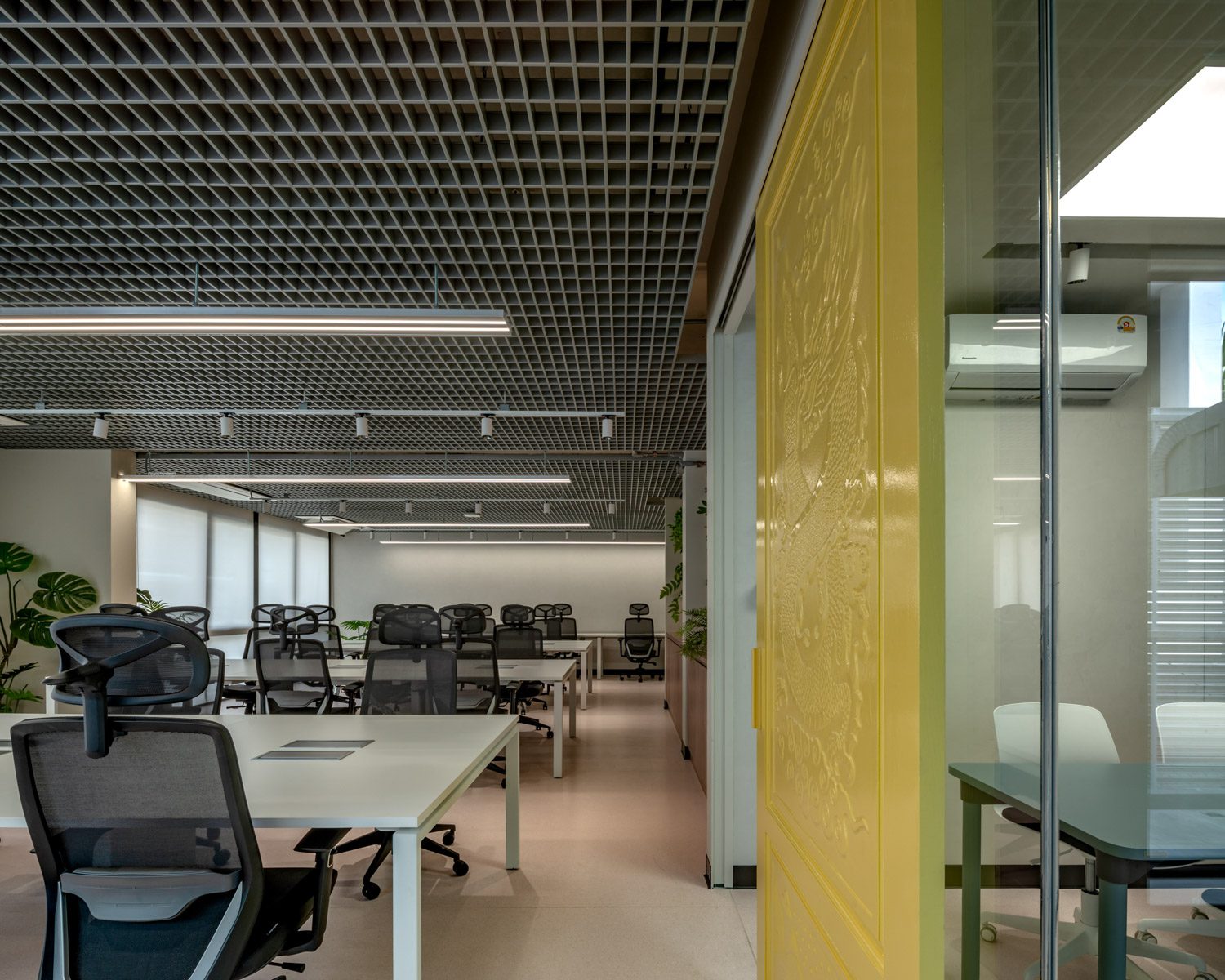
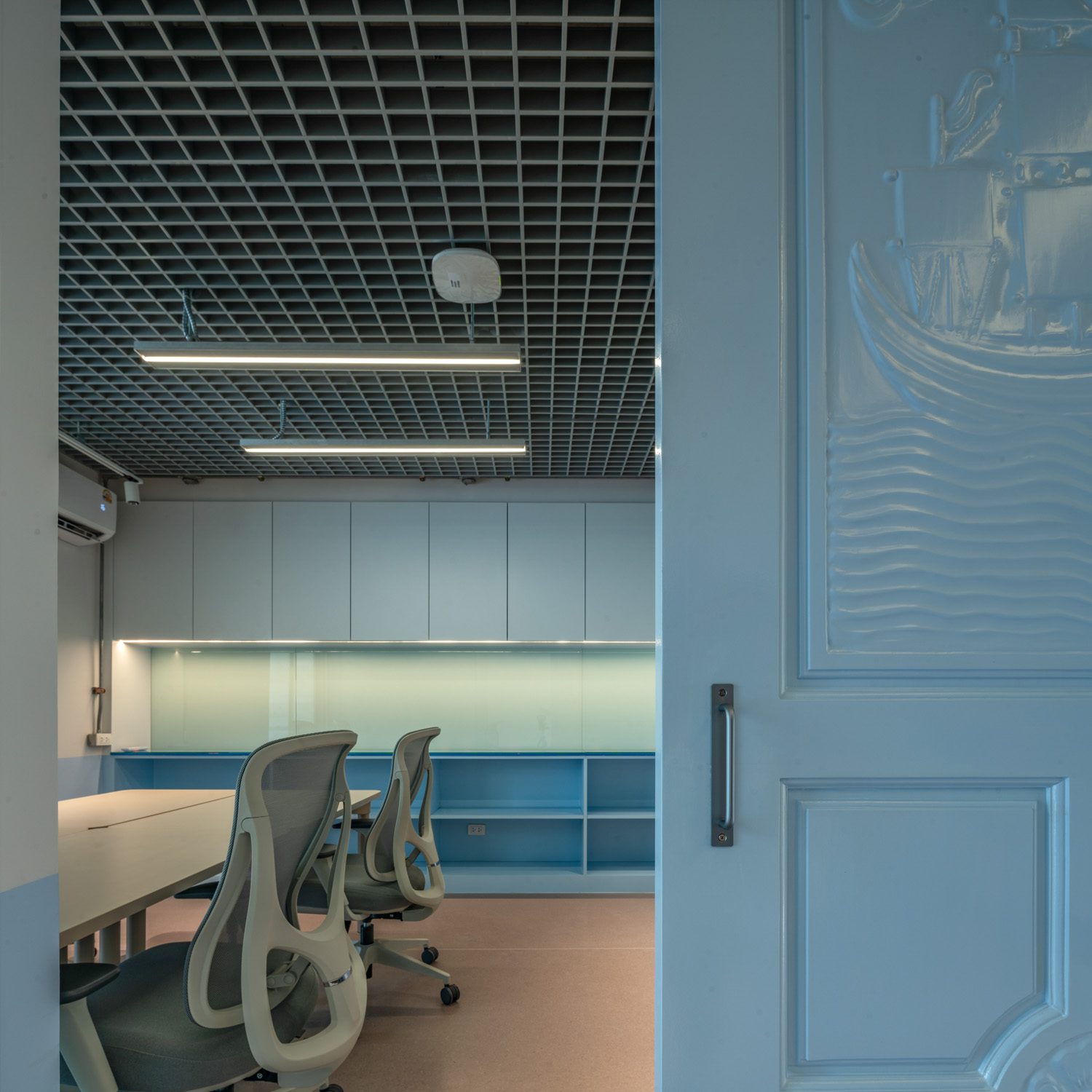
The second and third floors are organized as departmental workspaces, each identified by a distinct carved timber door. Differing in color and motif, these doors become more than thresholds; they act almost as emblems for the teams behind them. The coordination department, for instance, is marked by a pink door featuring an elephant, playing on a Thai-language pun between prasan ngan (‘coordination’) and prasan nga (‘joining tusks’). The creative department is announced by a yellow door, extending a running joke from the previous office around the sounds of ‘yellow’ and ‘mango,’ while dragons, deities, and celestial figures appear as if presiding over the working day. The newer merchandise department is marked by a door featuring a boat, a playful wish that its goods might travel freely and trade might flow with ease. A meeting room, meanwhile, is given a fish motif, forming a visual pun on the Thai word prachum, meaning ‘meeting,’ by replacing its opening syllable with pla, or ‘fish.’
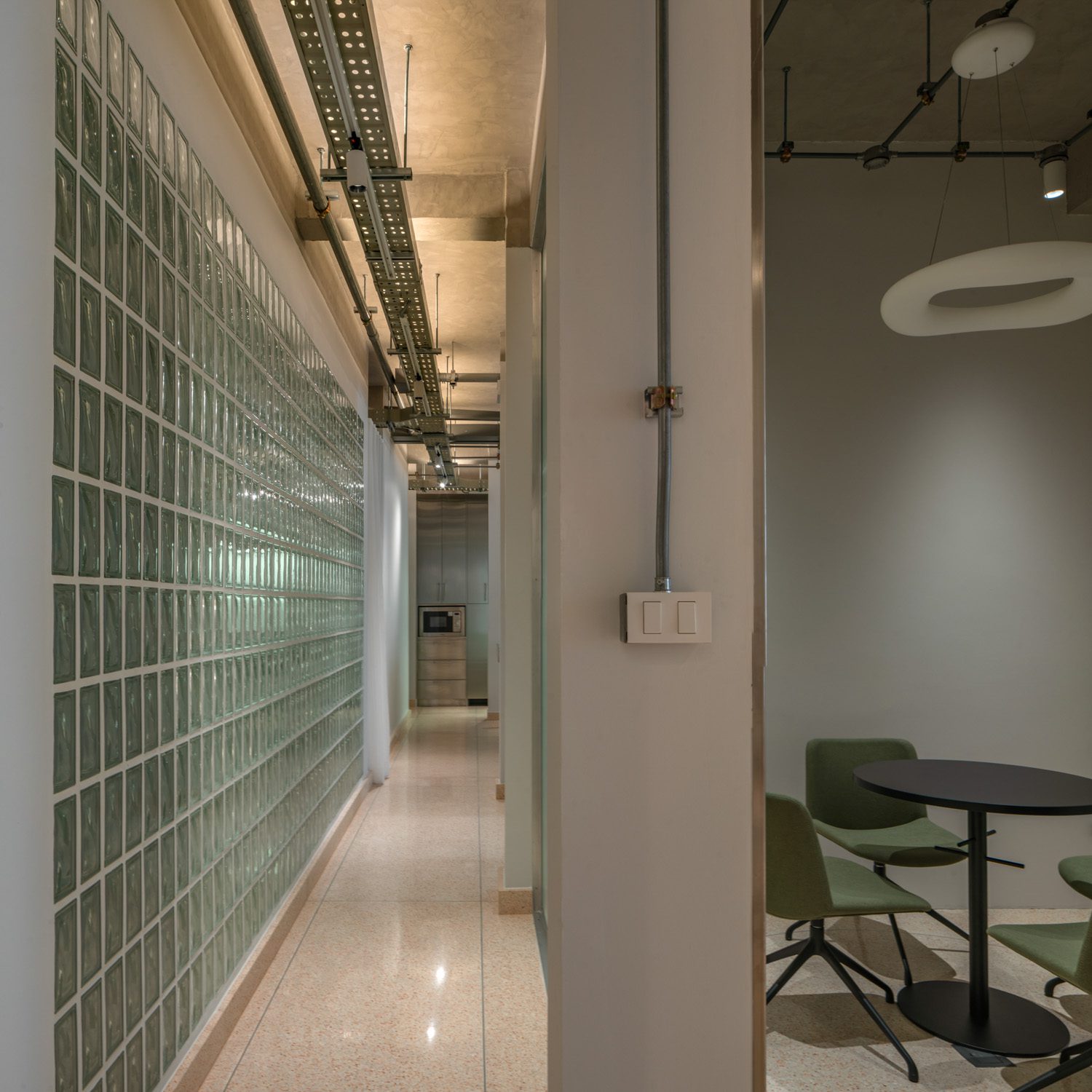
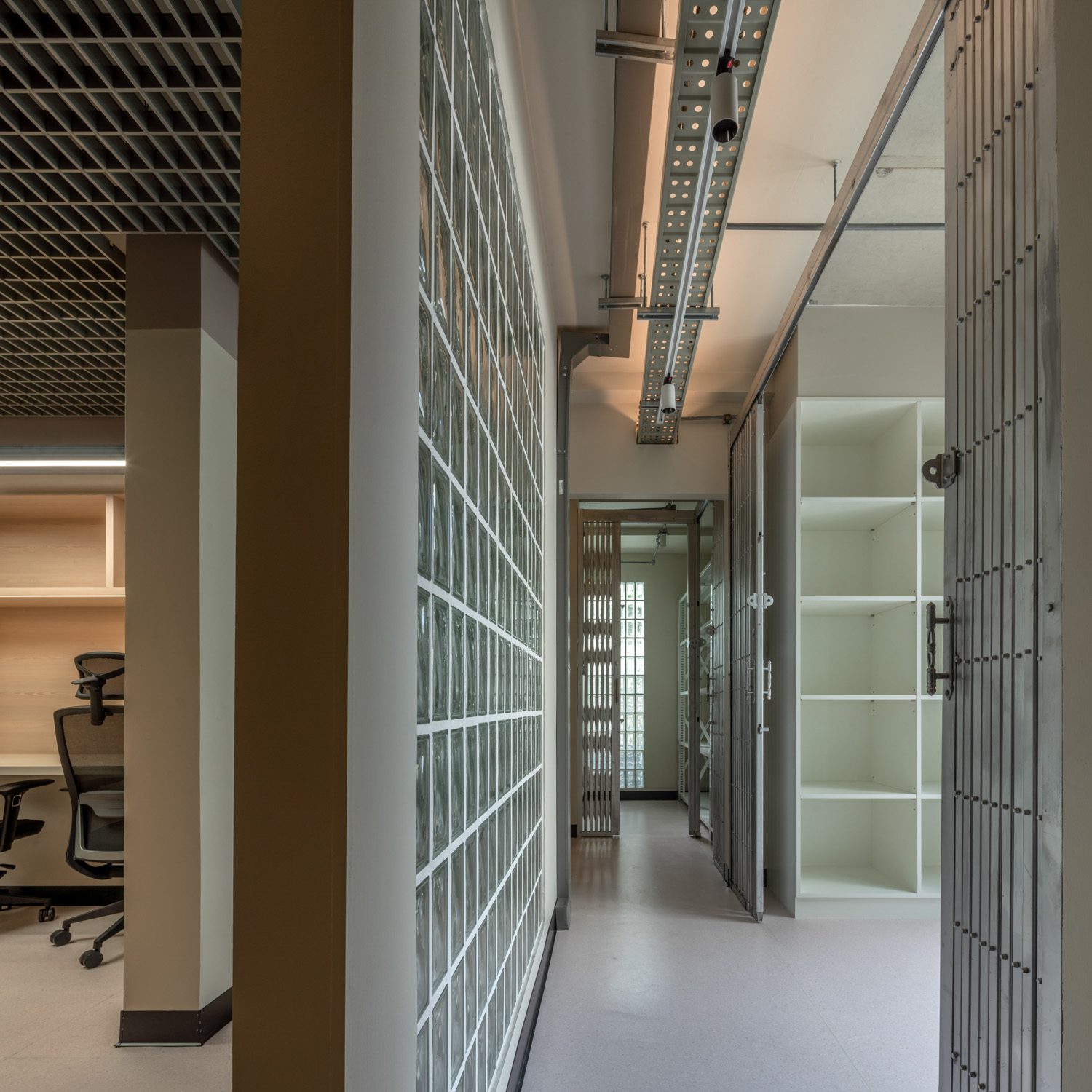
Throughout the office, two familiar materials recur: glass blocks and folding steel grilles, both fixtures of the Thai shophouse vernacular. Their inclusion is as much aesthetic as it is practical. Visually, they extend the project’s interest in Thai craft and everyday material culture; functionally, they serve as porous partitions between rooms, allowing daylight to filter inward. This is particularly valuable in the long, narrow shophouse plan, where spaces toward the rear would otherwise receive little natural light.
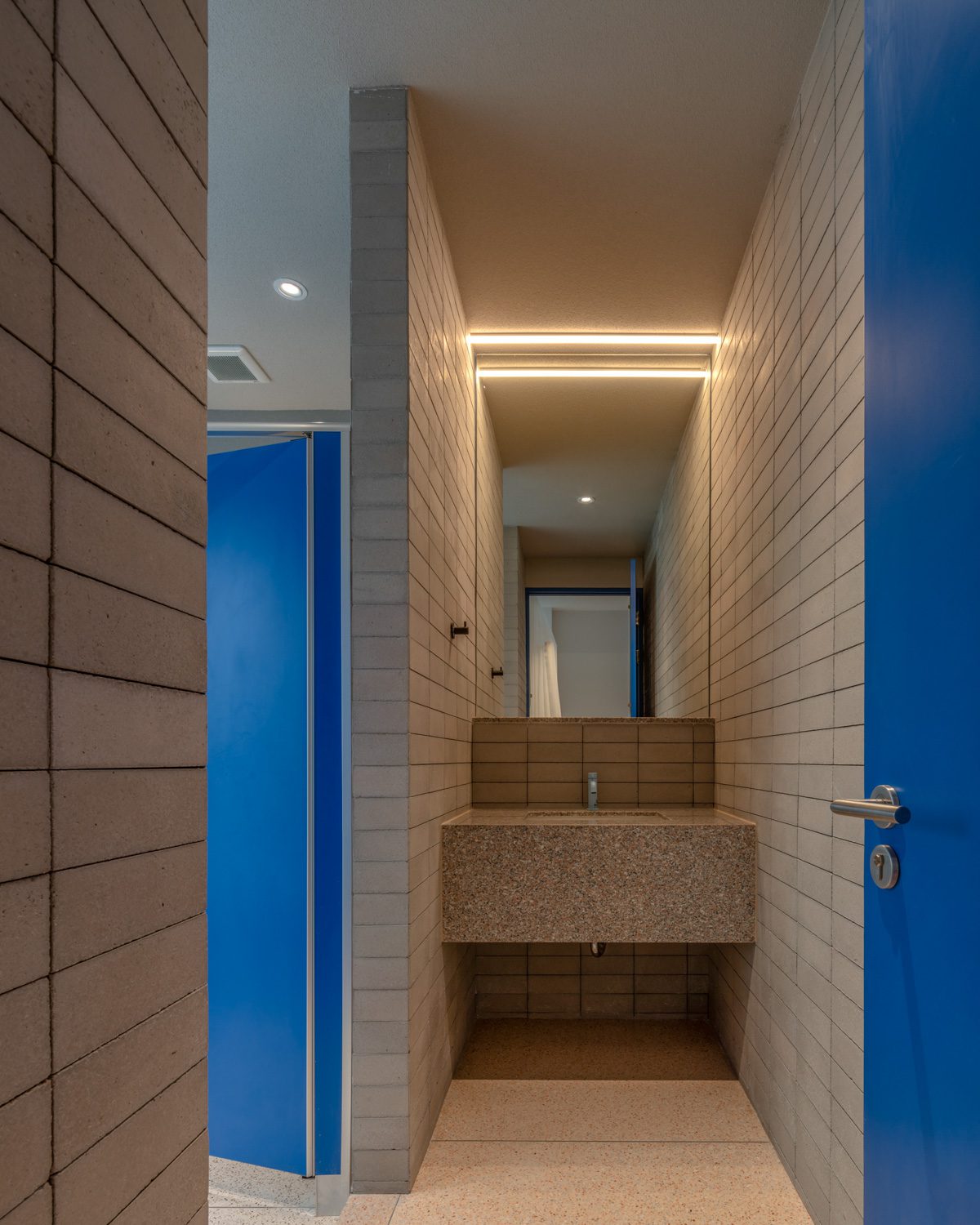
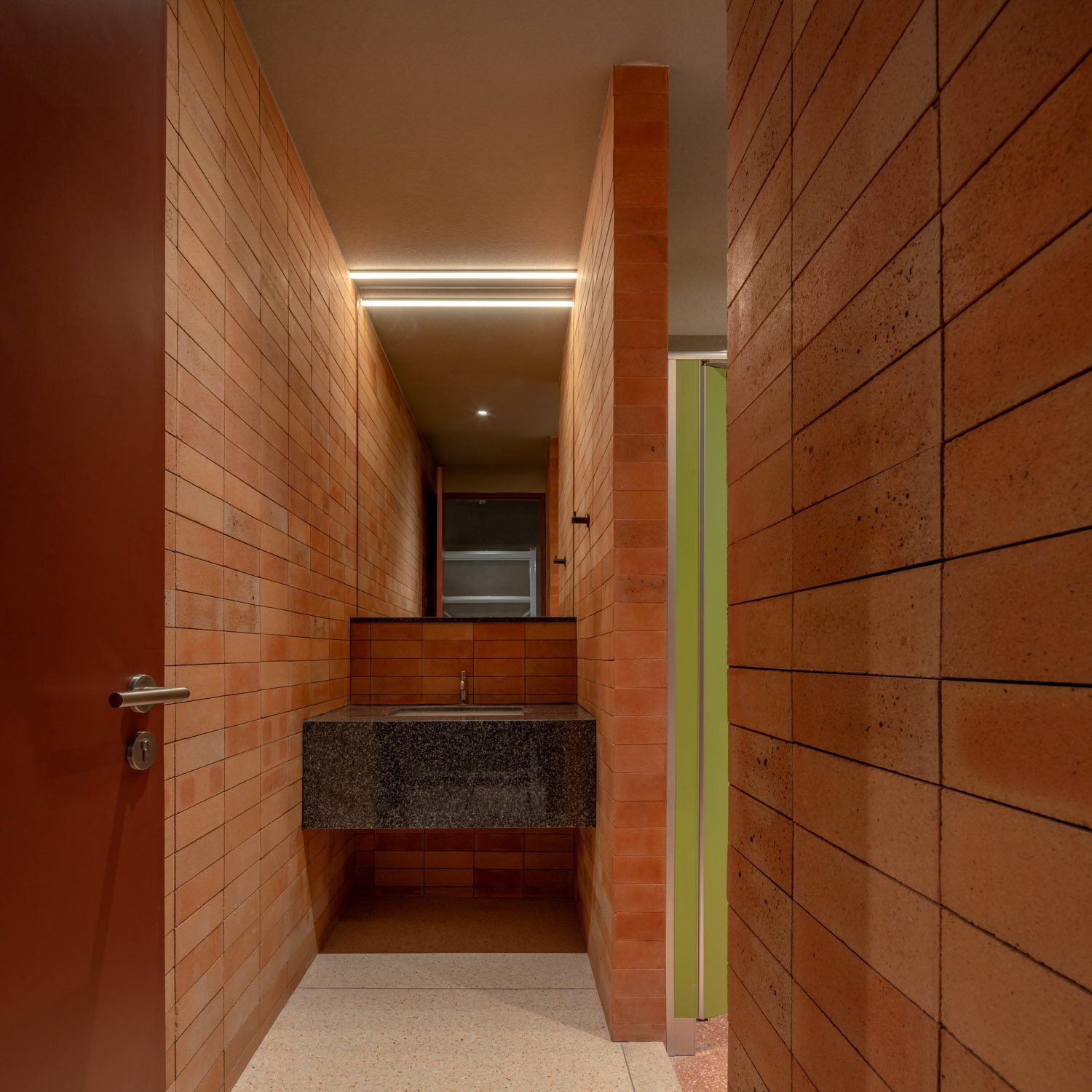
Elsewhere, the restrooms introduce another layer of color, with one finished in blue and the other in red. The choice emerged directly from the staff themselves, extending an idea first explored in KHOTKOOL’s previous office. When asked to decide the colors for the men’s and women’s restrooms, the team arrived at an unexpected pairing: red for the men’s room and blue for the women’s, bringing an additional note of character to even the most everyday spaces. Lighting is another aspect that sets the office apart from more conventional work environments.
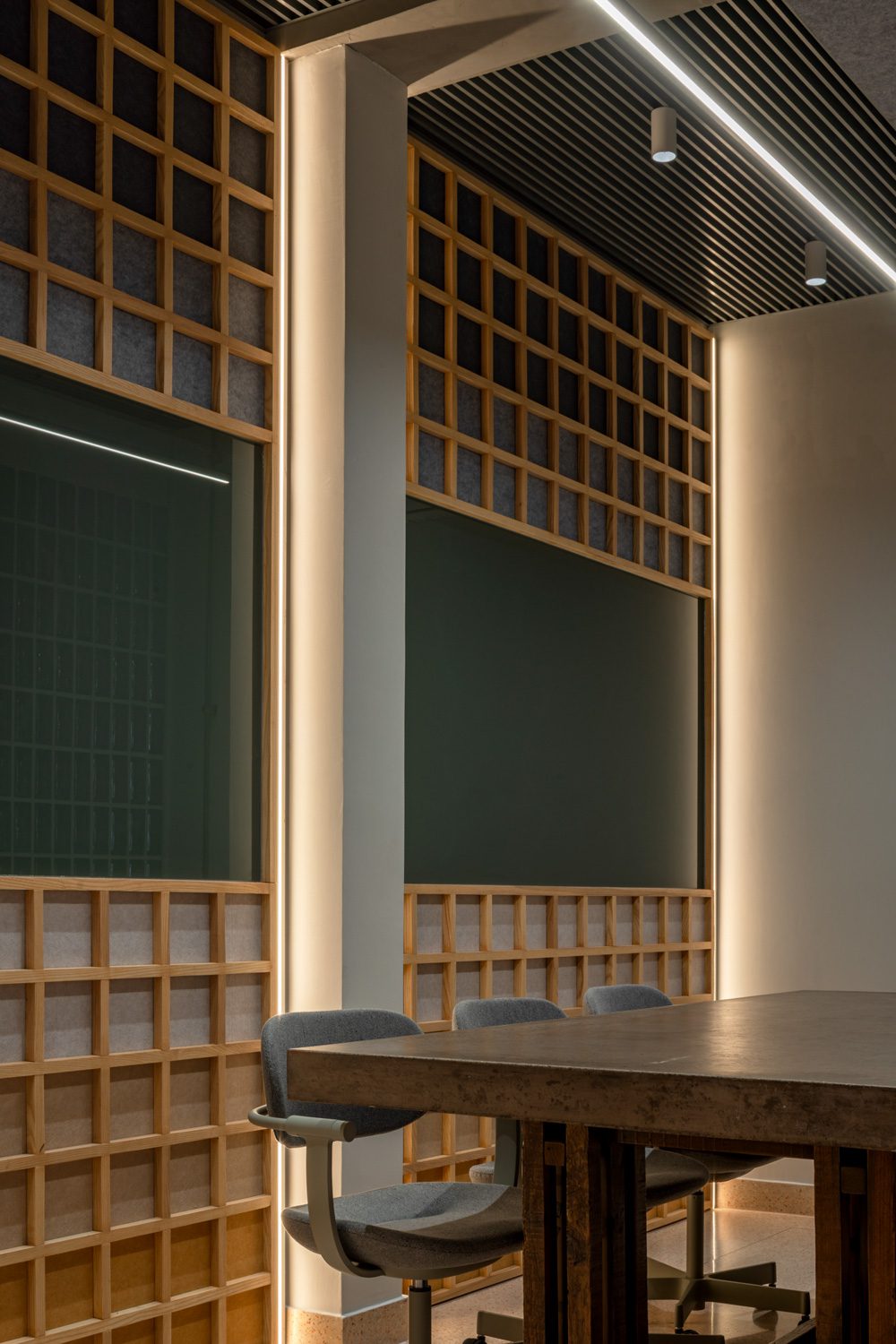
Rather than favoring bright, high-energy illumination, the staff expressed a preference for softer, more subdued light. On the ground floor, this gives the town hall and canteen an atmosphere closer to that of a restaurant than a typical office, reflecting a working culture that does not equate productivity with constant visual intensity.
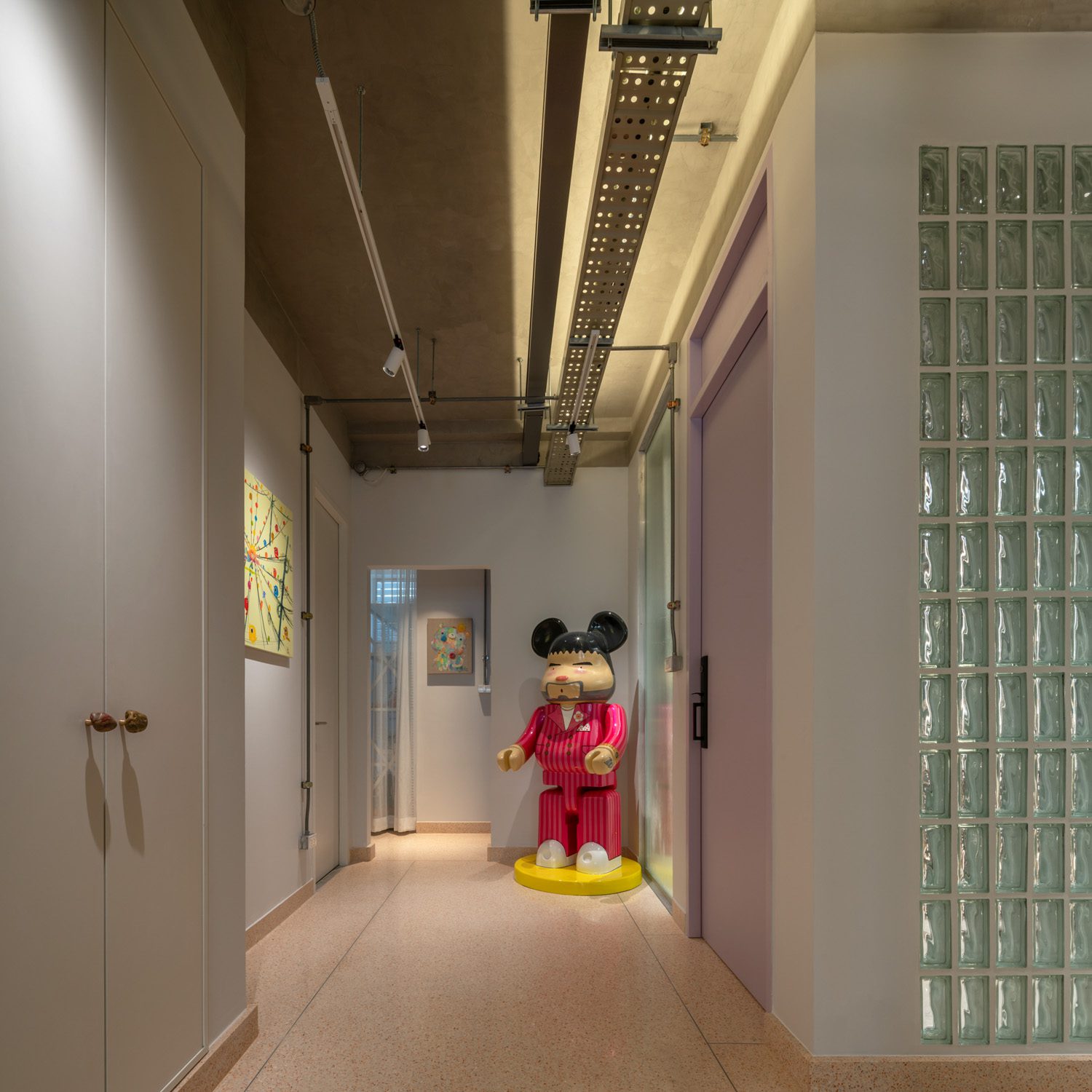
KHOTKOOL Office does not seek to project an image of the most futuristic workplace. Instead, it reworks familiar materials and objects, from terrazzo and carved timber doors to glass blocks and folding steel grilles, into an environment that clearly expresses the organization’s identity through spatial form. Here, playfulness is not confined to the content produced within its walls; it is embedded in the everyday spaces shared by people who work there.