
A CENTURIES-OLD TECHNIQUE FOR DODGING BRITAIN’S BRICK TAX BECOMES THE STRUCTURAL AND CONCEPTUAL BACKBONE OF LANZA ATELIER’S CURVING BRICK SERPENTINE PAVILION 2026—AN OBSERVATION ON HOW NECESSITY, MYTHOLOGY, AND MATERIAL MEMORY CAN STILL SHAPE THE WAY WE BUILD
TEXT: NATHANICH CHAIDEE
PHOTO: IWAN BAAN, COURTESY OF SERPENTINE EXCEPT AS NOTED
(For Thai, press here)
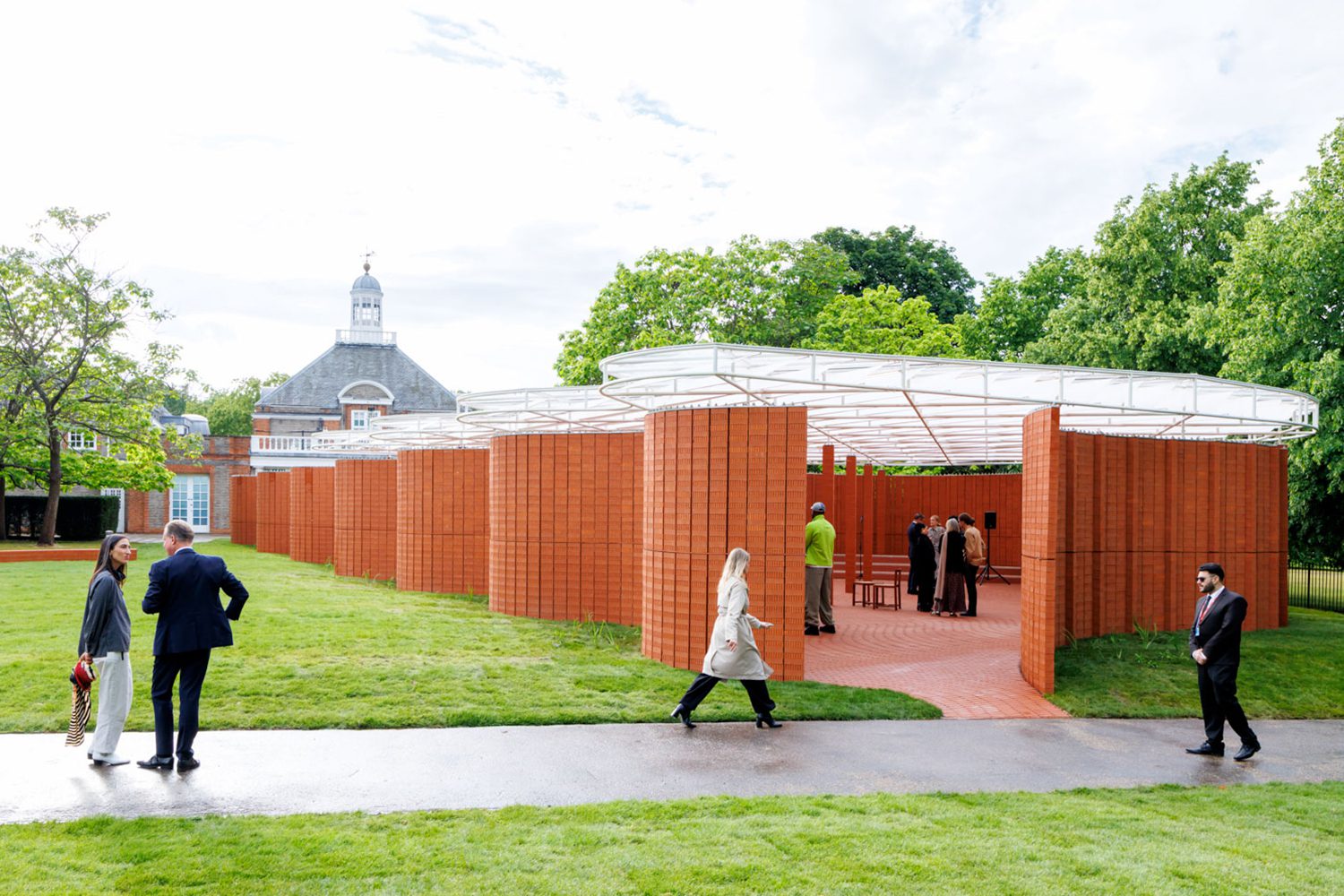
In literature, a ‘serpent’ is defined not simply as a common snake, but as a grand, mythical figure resembling a legless dragon. This directly correlates with the namesake of the Serpentine Gallery, which was inspired by the winding Serpentine lake. Today, the figure of the serpent serves as the generative architectural narrative for the 2026 Serpentine Pavilion by Mexican architects LANZA atelier. The pavilion officially opened to the public on June 6 and is set to run until October 25, 2026.

Isabel Abascal and Alessandro Arienzo of LANZA atelier | Photo: Pia Riverola
For Isabel Abascal and Alessandro Arienzo of LANZA atelier, the narrative of the serpent journeys through the multifaceted context surrounding both the word and the site. Tracing the symbol from ancient mythology to the present day—where in Mesoamerica, the serpent invokes a protective deity of wisdom—the designers embrace this curvilinear form as a generative force and architectural momentum for the Pavilion. This is articulated through the material language of the ‘crinkle-crankle’ brick wall, a structure that reflects the historical construction innovation of Suffolk, England, creating a built form that seamlessly dialogues with its interconnected narratives.
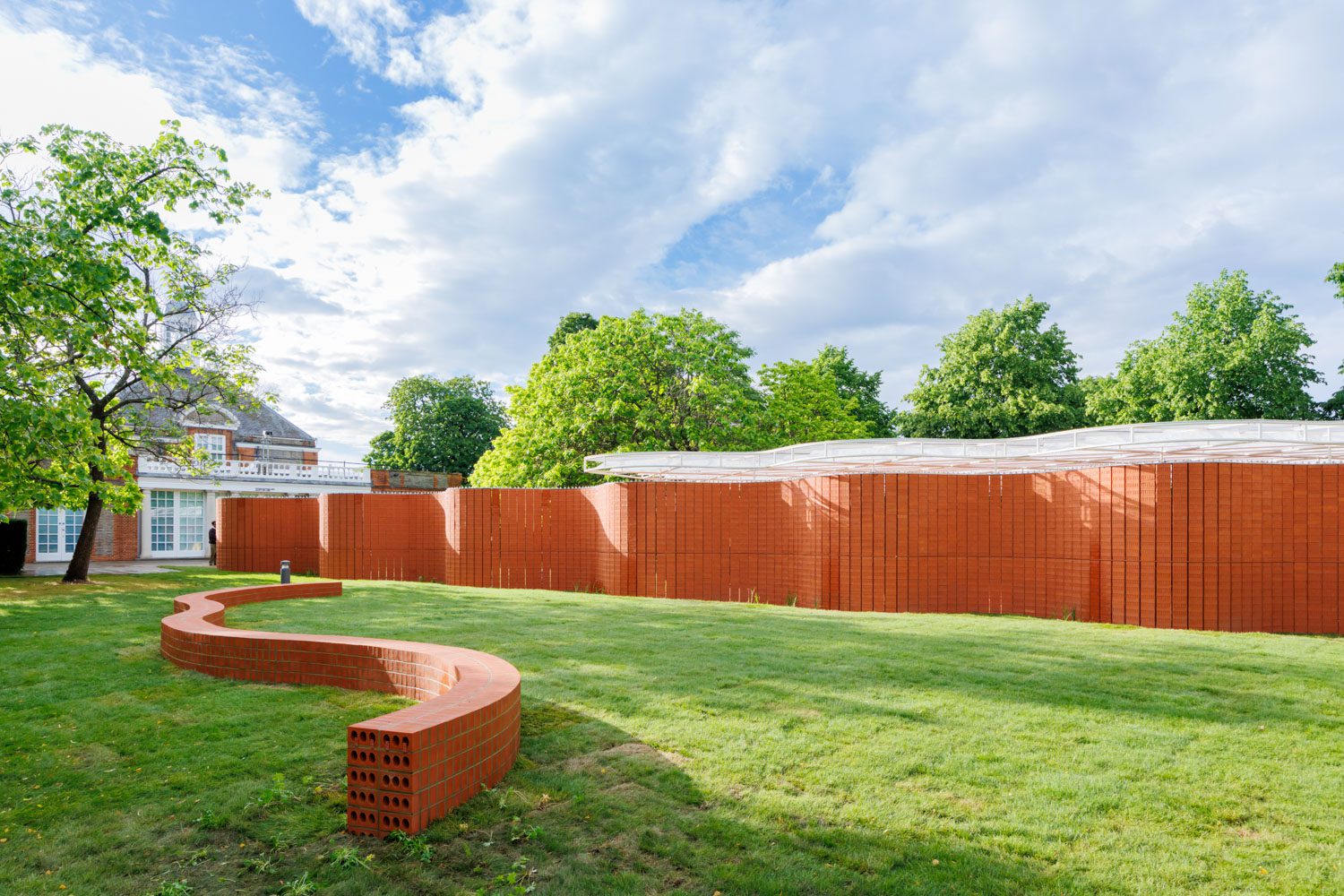
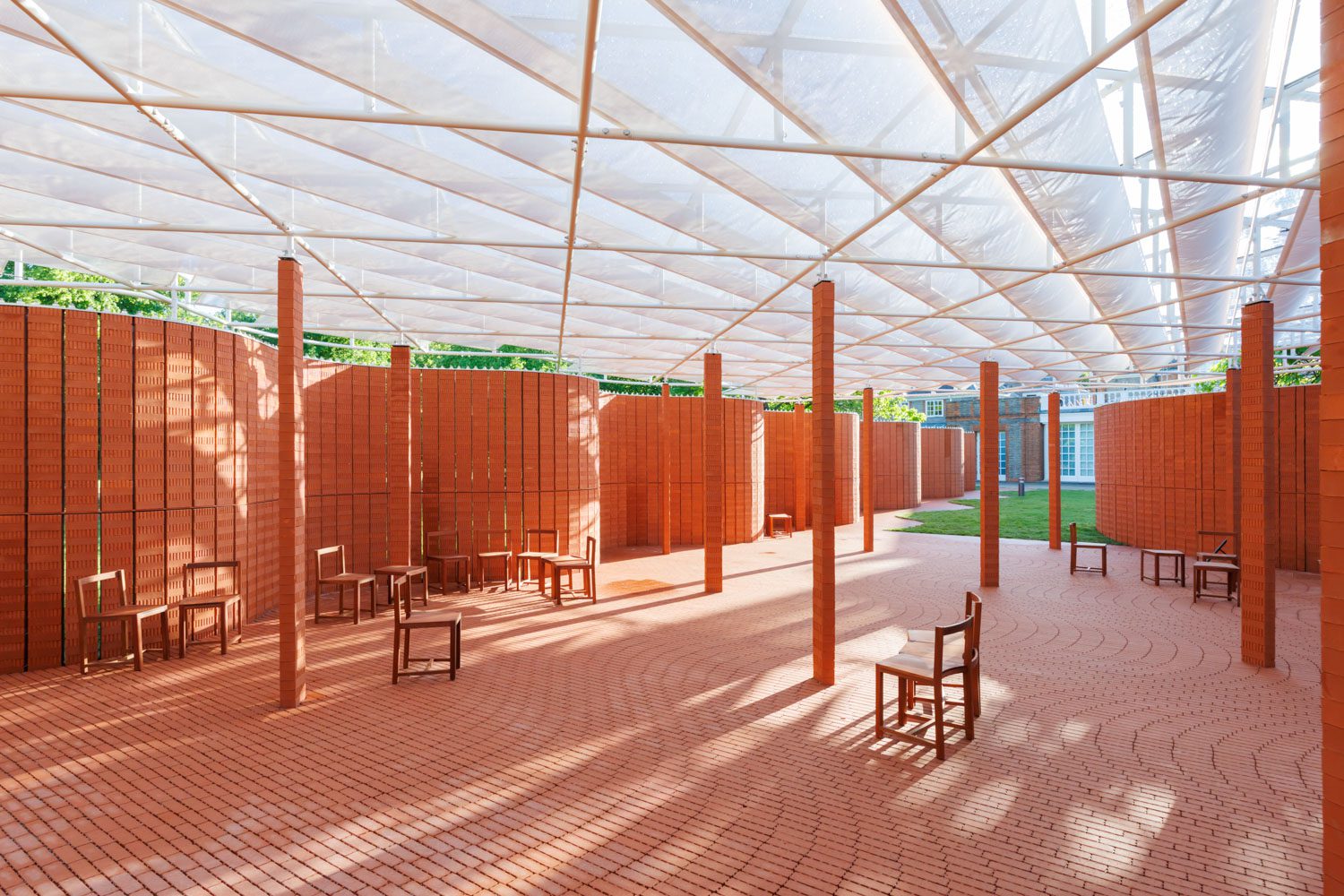
Conventionally, a wall serves as a rigid divider that segregates spaces. In this project, the designers employ a winding brick wall to introduce a fluid rhythm, transforming this boundary into an active device that shapes movement, modulates rhythm, and frames thresholds for pause and spatial interaction. The 279-square-meter pavilion footprint is divided into two distinct zones: a 244-square-meter main public space topped with a translucent roof, and an outdoor gathering area where the meandering wall stretches across, reinterpreting the site as a space ‘around a wall’ rather than one enclosed within it. The entire installation rests within a 541-square-meter site.
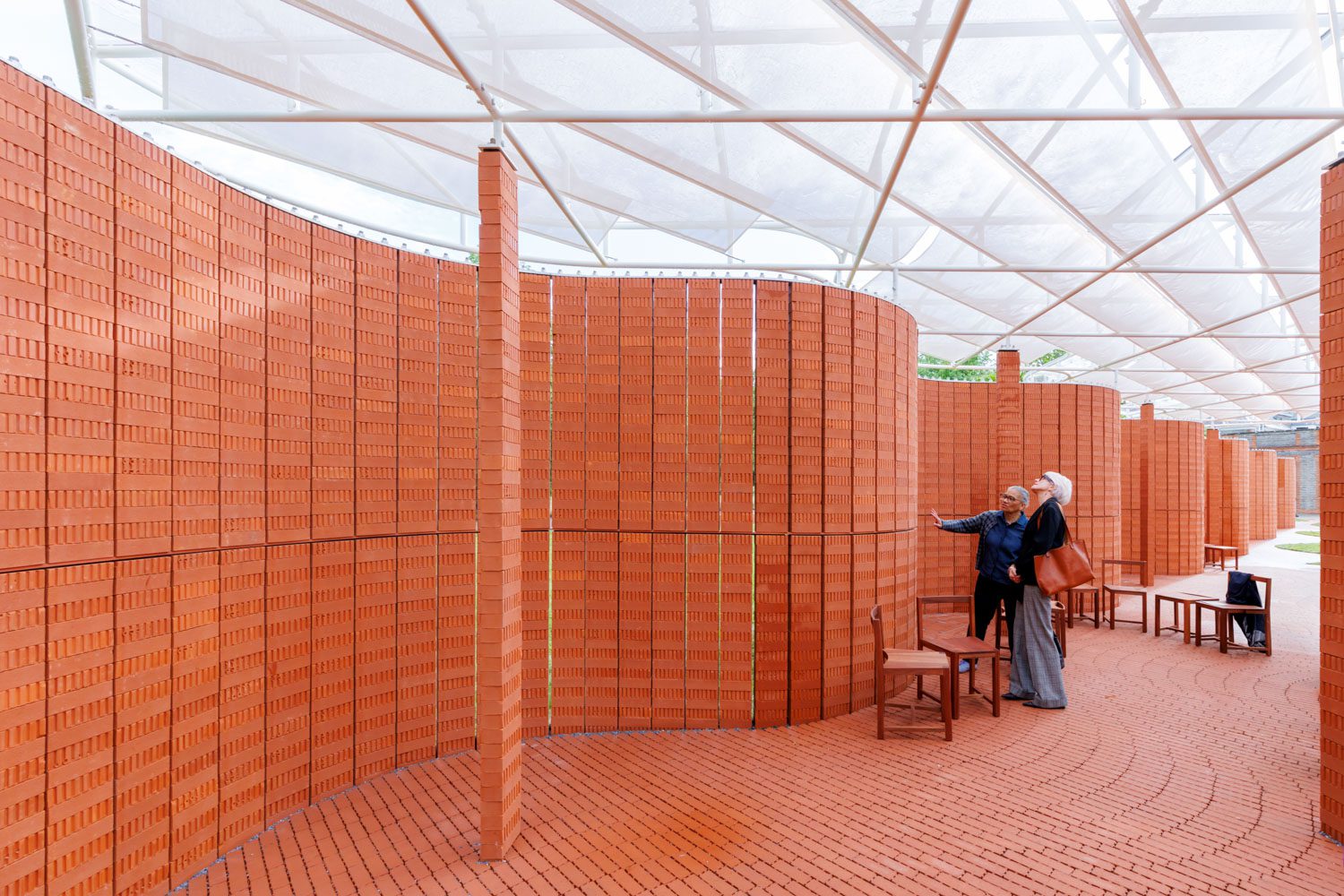
The crinkle-crankle wall originally emerged in response to the UK’s Brick Tax, which was levied until 1850, forcing builders to experiment with methods that minimized material use. The result was an alternating curved structure, where the undulating convex and concave geometries provide inherent lateral support, locking the sections together. This allowed a one-brick-wide wall to be built substantially taller without the need for periodic reinforcing piers typical of straight walls. This vernacular wisdom is advanced in this project through a collaboration with engineering teams from AECOM and Stage One. They developed a mortarless masonry system tailored for modular assembly to meet strict site constraints: no permanent piles or ground anchors allowed, a mandate to return the lawn to its virgin state, and a contemporary commitment to a sustainability where materials are fully repurposed beyond the pavilion’s first life.
The prestressed masonry system, a mortarless approach, utilizes a slender steel subframe and threaded bars threaded internally through the core of the brick walls. By applying tension from the top edge, the masonry units are compressed and locked together through compressive force rather than traditional mortar bonding. This structural arrangement enables the walls to control deflection and withstand both lateral wind loads and the weight of the roof, while ensuring that every brick can be recovered in its pristine state after dismantling.
Consequently, the key challenge shifted to managing natural variations in brick sizes without traditional mortar beds to absorb construction tolerances. To address this, the engineering team conducted full-scale testing, adopting a combination of soft joints, wedges, and shims to achieve uniform prestressing across the entire wall. This effectively distributed the load, preventing localized stress concentrations that could damage the bricks. Fully prefabricated in modular components at Stage One’s factory in York, this streamlined workflow optimized installation efficiency, allowing assembly on site to be completed in just 40 days.
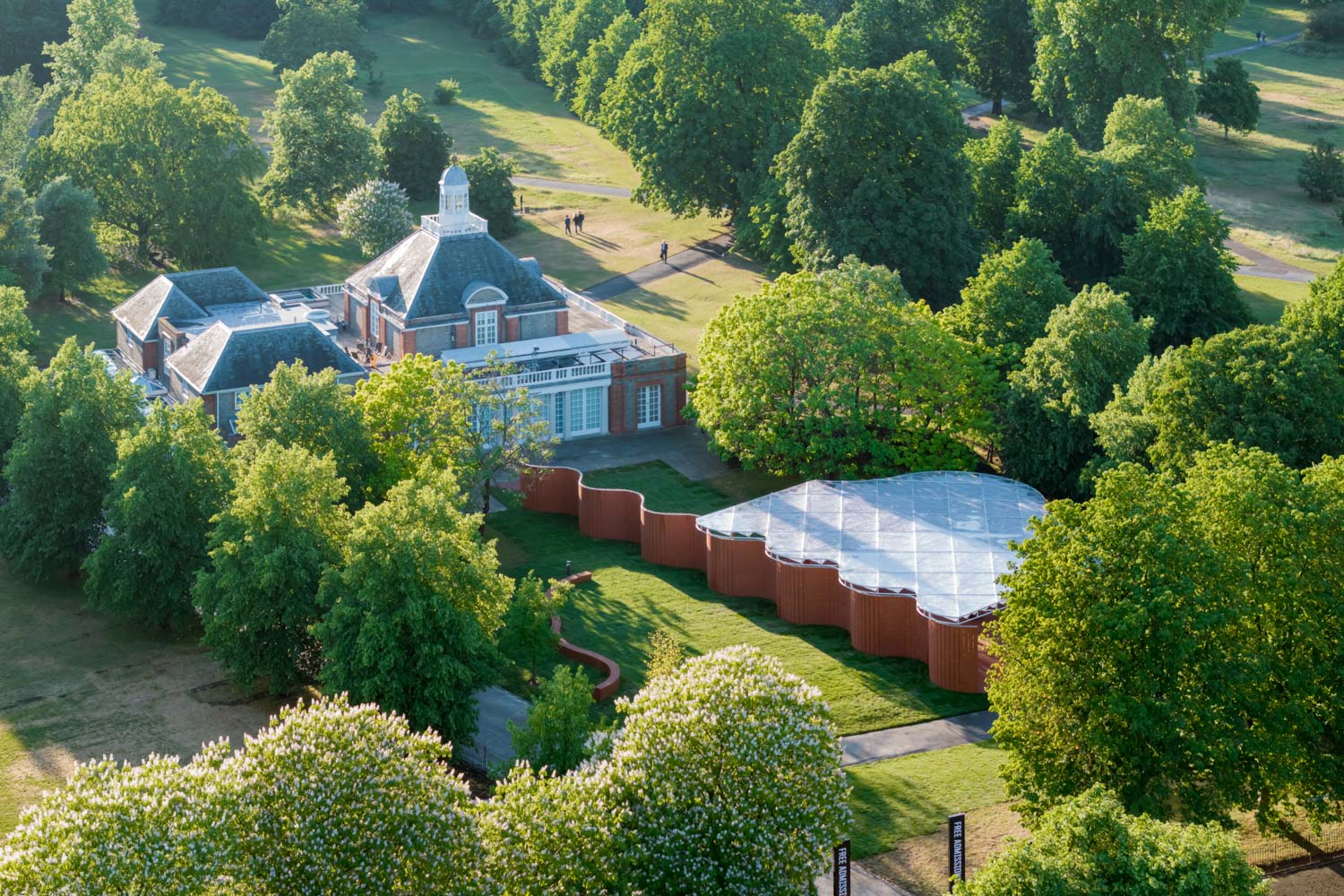
Another facet of the clay brick highlighted in this year’s Serpentine Pavilion is its dialogue between a new temporary structure and the permanent brick façade of the Serpentine South Gallery set against an English garden backdrop. In the words of LANZA atelier: ‘The first bricks humans employed some ten thousand years ago were also made of sun-dried clay. One could argue that the bricks were inanimate, but not entirely soulless.’ Ultimately, the pavilion acts as a catalyst, harmonizing the collective soul of the place, the architecture, and the people moving through it.
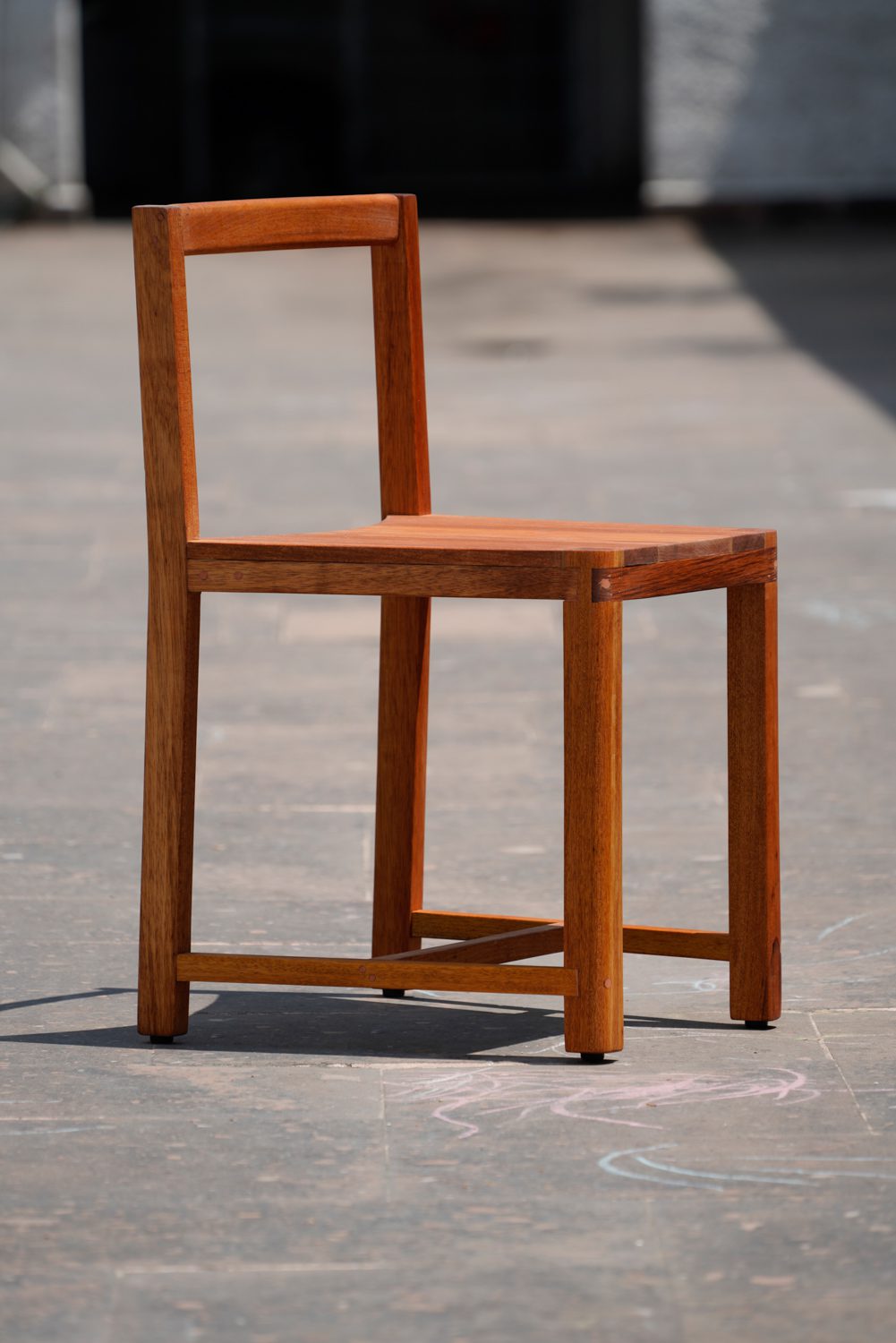 LANZA atelier, Chairs for 4 Couples Dining Set, 2020 | Photo: Fernando Ocaña
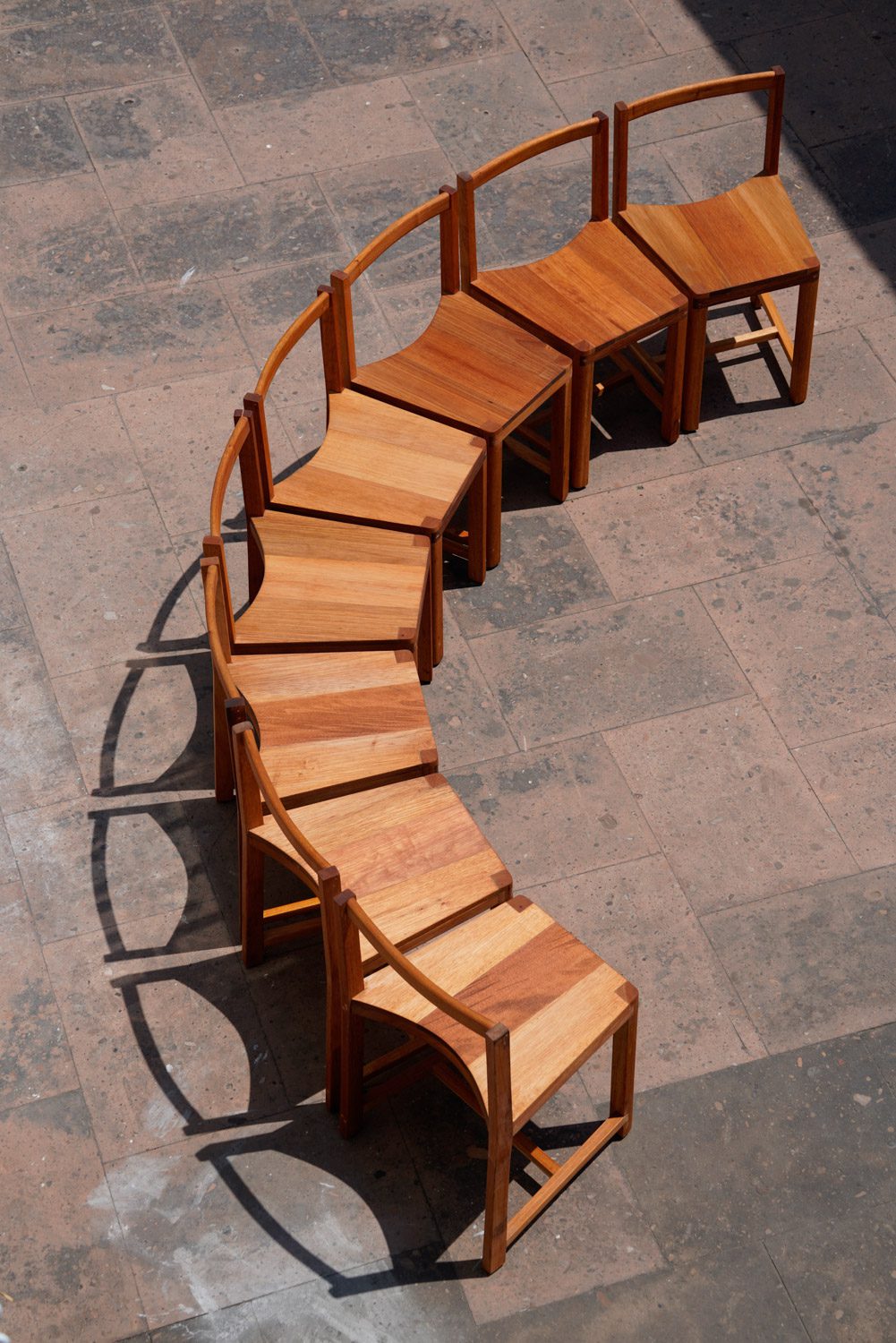
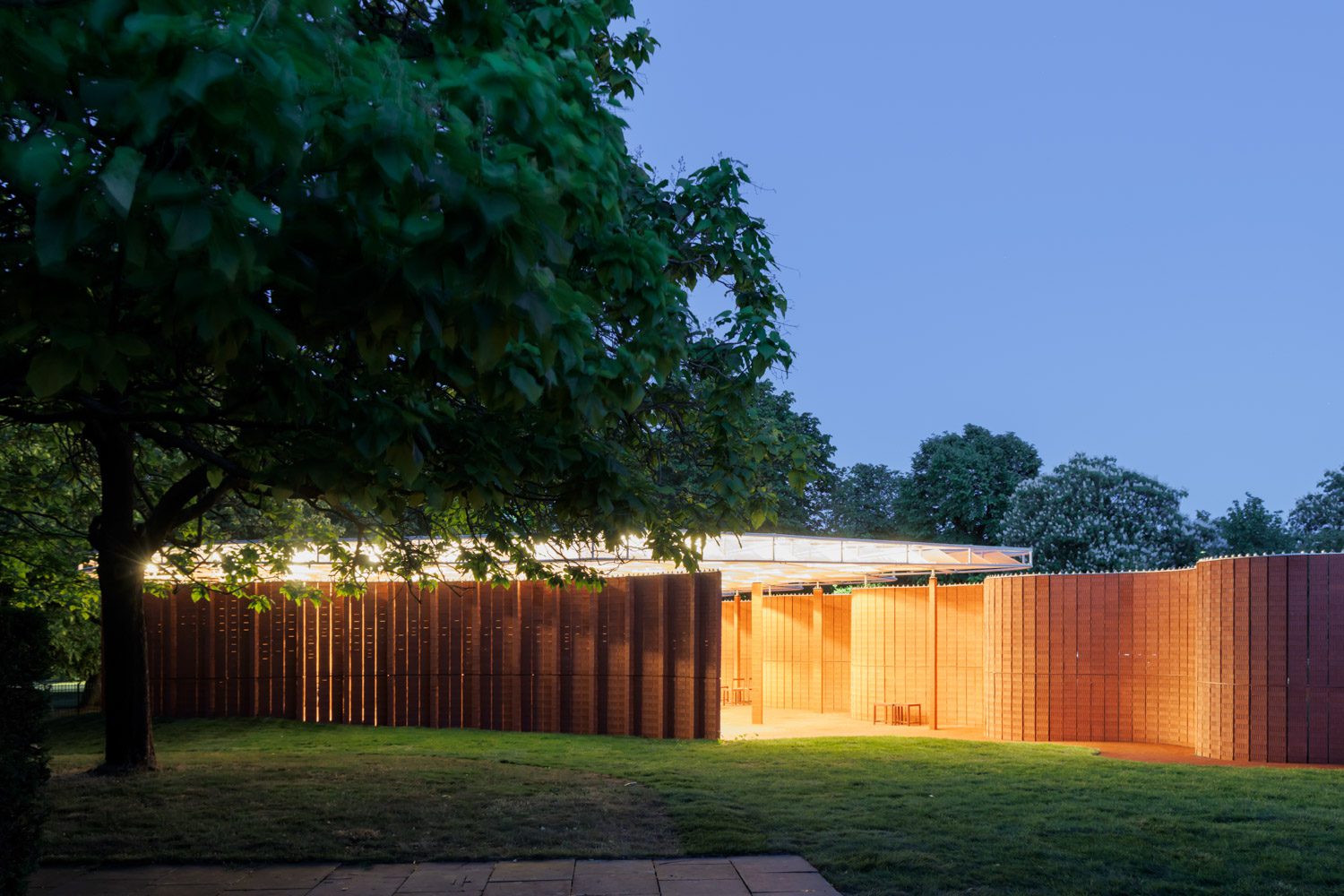
Upon entering, the internal spatial experience is shaped by the varying rhythms of the wall structure, transitioning from solid surfaces into a permeable interior defined by periodic brick columns. These columns support a translucent roof that rests lightly above, evoking the filtered shade of a tree canopy. During the day, light and air permeate the space freely. At night, the pavilion is transformed into a glowing element by an interior lighting design that illuminates the roof directly, where the solar shading fins modulate the light, mimicking rays of sun filtering through leaves. The interior is furnished with chairs and stools crafted from locally sourced sapele hardwood, featuring curved contours that seamlessly echo the geometry of the surrounding walls.
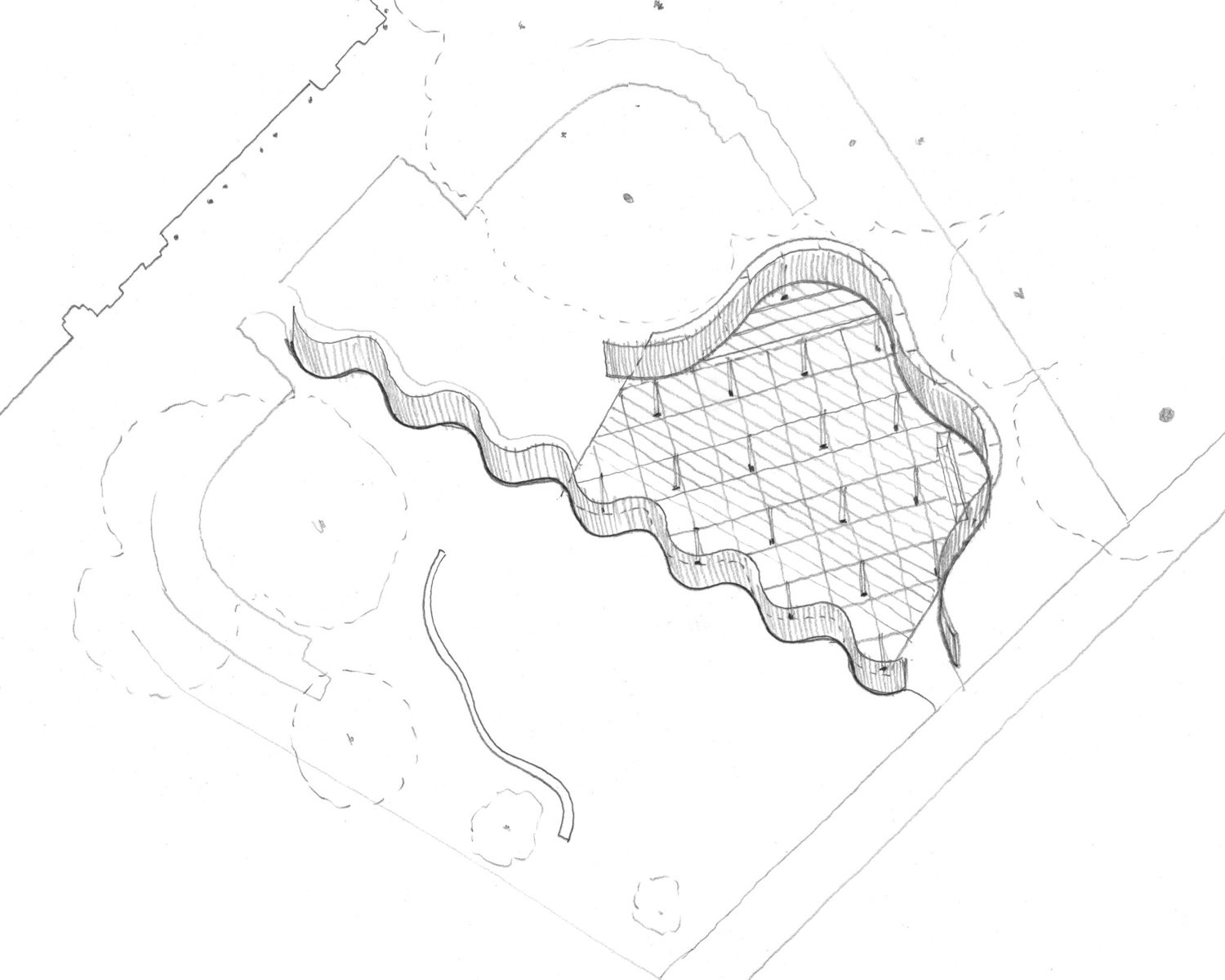
Image: LANZA atelier, Courtesy of Serpentine
In Serpentine Pavilion 2026, the design by LANZA atelier chooses to liberate the traditional wall structure from its rigid role of dividing spaces, allowing it to flow fluidly alongside the surrounding English garden while defining boundaries that craft both architectural and aesthetic experiences. When the pavilion’s lifespan reaches its end and each component is dismantled, what remains beyond mere memory is the culmination of innovation derived from vernacular wisdom. This stands as a definitive testament that temporary architecture does not always have to culminate in waste but can instead pass on concepts and methodologies to thrive sustainably within new contexts.