
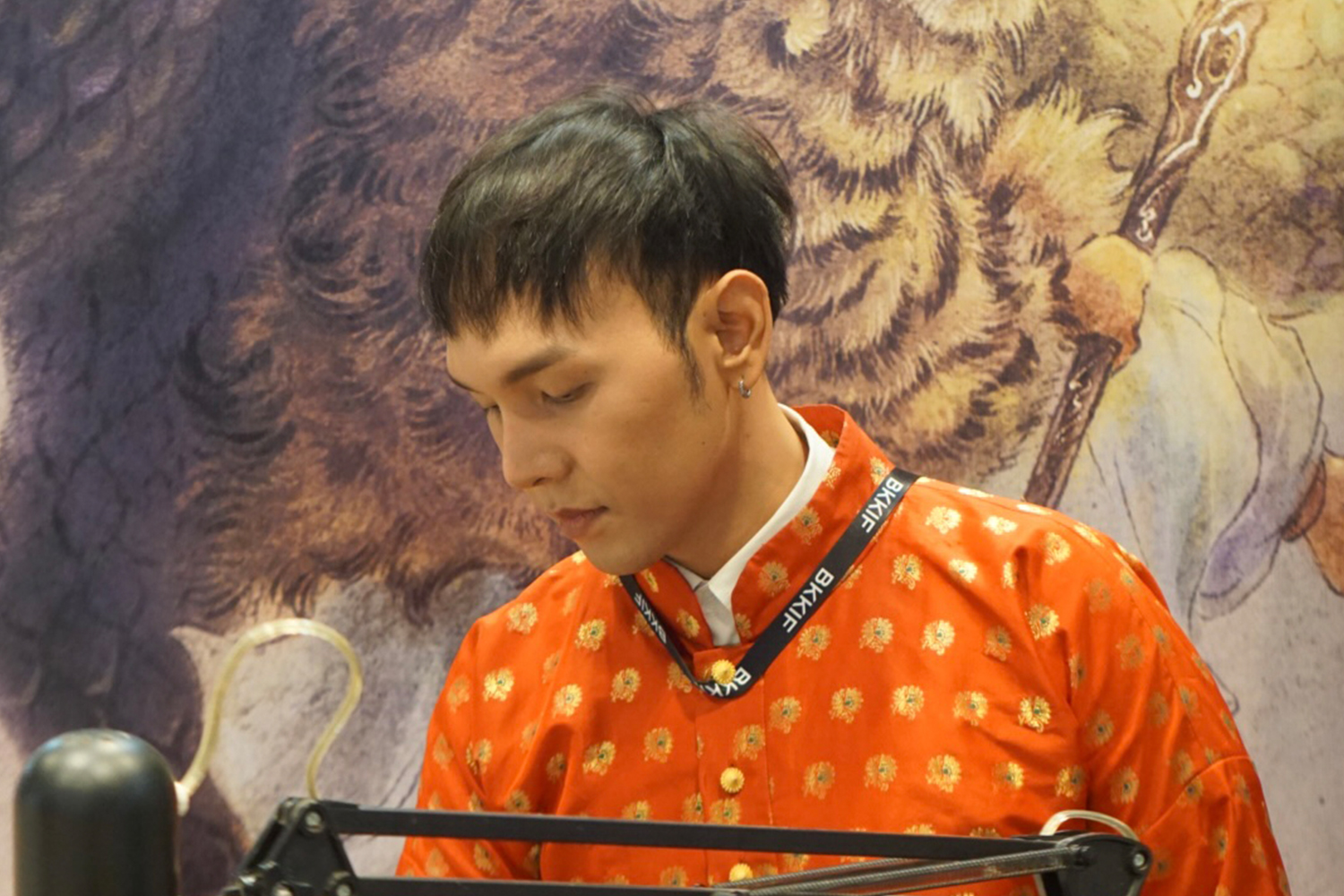
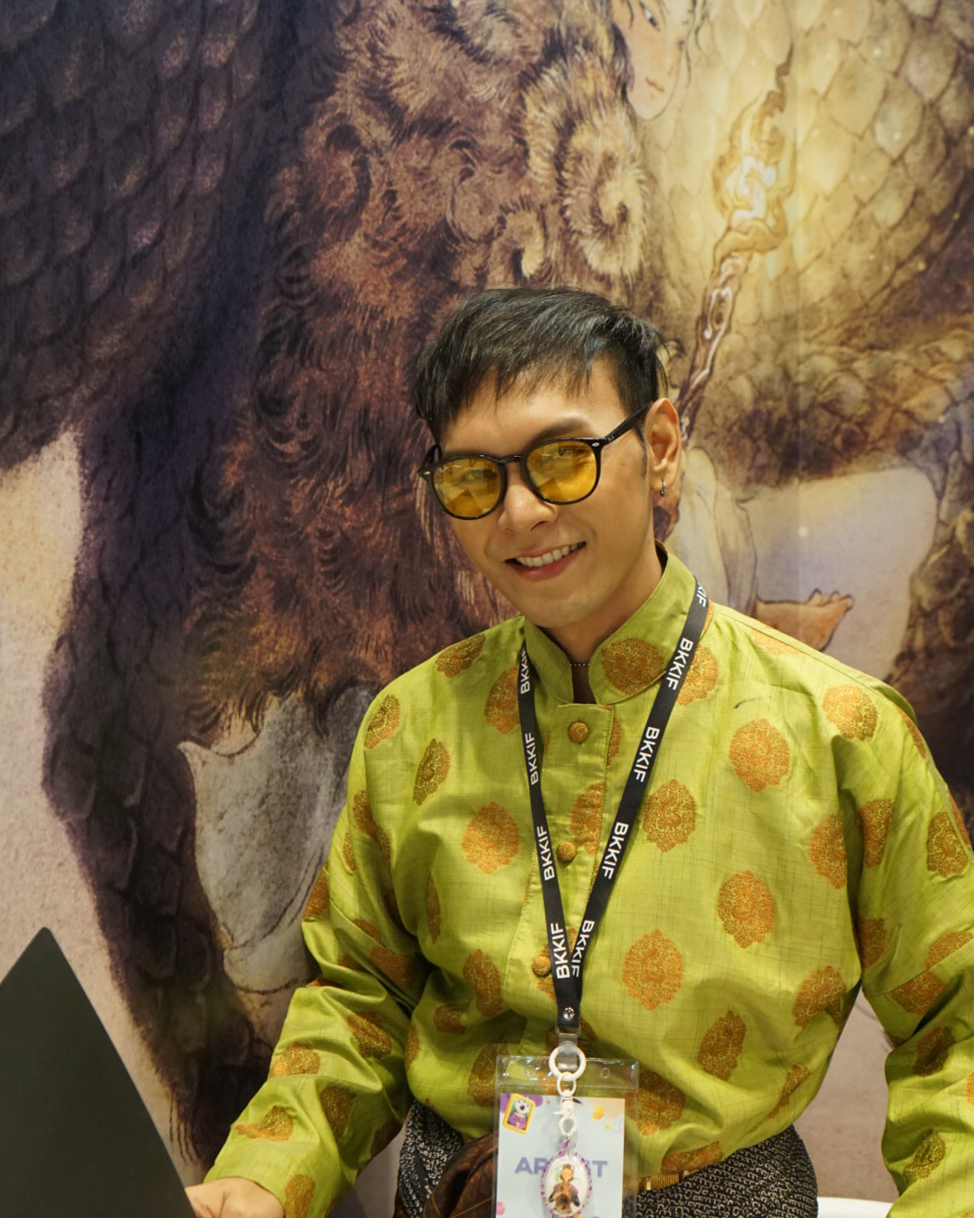
ART4D TALKS TO SRI SU RHA, A THAI ARTIST WHO BRINGS DANCE, LITERATURE, AND PAINTING TOGETHER IN HIS CONTEMPORARY INTERPRETATIONS OF TRADITIONAL THAI ART
TEXT: PEERAWICH RUANGPENG
PHOTO: COURTESY OF SRI SU RHA
(For Thai, press here)
art4d speaks with Golffie-Suracheddha Soommat, better known as SRI SU RHA, about the ideas, experiences, and creative process behind his work. The artist brings dance, literature, and painting together in his contemporary interpretations of traditional Thai art.
art4d: Why did you choose the name ‘SRI SU RHA’?
Suracheddha Soommat: At first, I wanted a name that could clearly represent both who I am and the work I create. I love watching old Thai films and television dramas, and many of their characters have names beginning with ‘Sri.’ I looked into the word and found that it conveys goodness and auspiciousness. I placed it in front of my first name, Suracheddha, and it became ‘Sri Sura’ or ‘SRI SU RHA.’ I liked the sound of it, and I felt that it reflected both my identity and my drawings, which often explore Thai and Southeast Asian cultures.
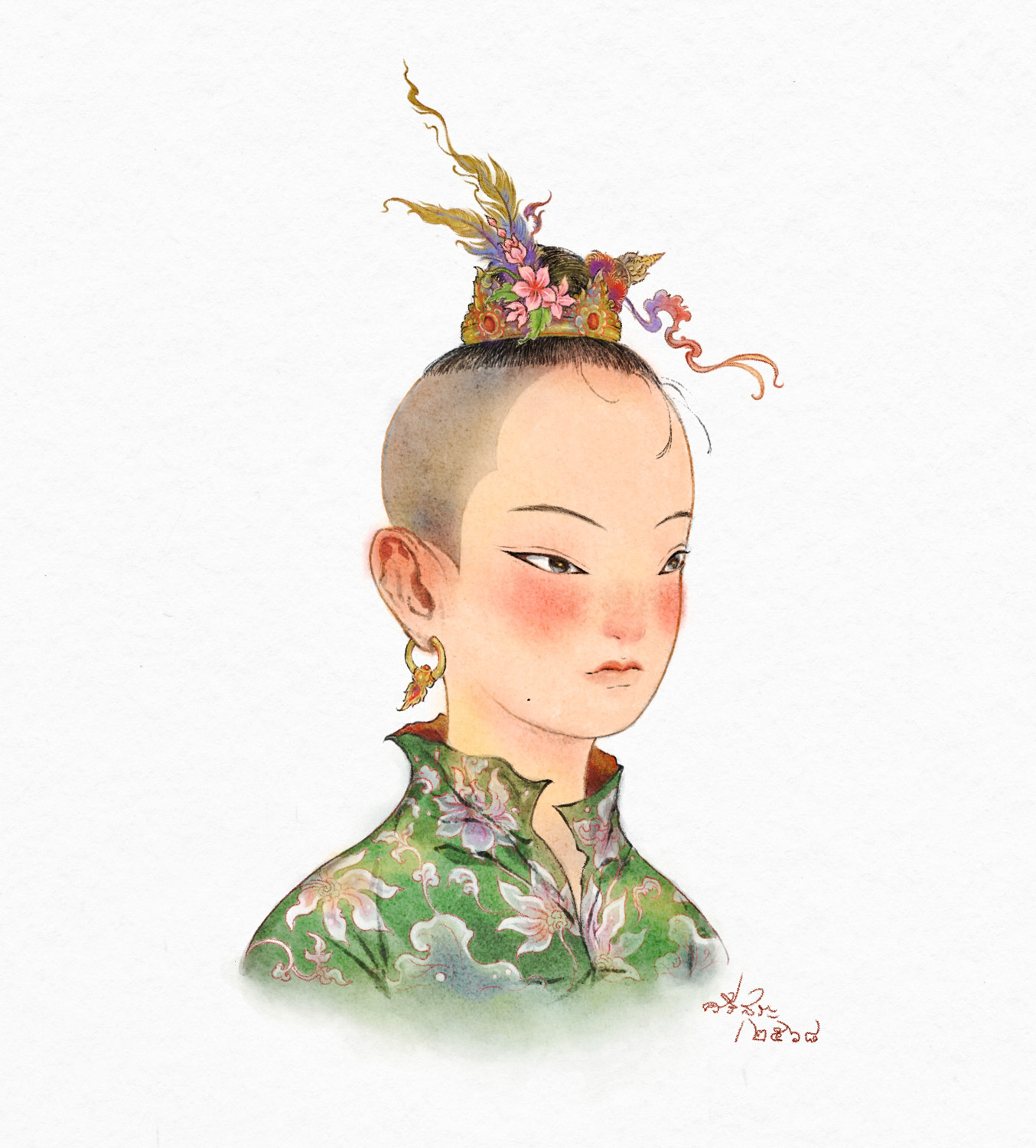
art4d: Why do you describe yourself as a ‘Thai neoclassical artist,’ and what does ‘neoclassical’ mean to you?
SS: Personally, I describe myself as a contemporary Thai artist. The term ‘Thai neoclassical artist’ is actually a name coined by viewers. To me, ‘neoclassical’ means taking elements of Thai culture and reinterpreting them in a more contemporary way. My work therefore draws on a broad range of Thai artistic elements without being confined to a single definition or established framework.
art4d: What was the turning point that led you from teaching Thai performing arts to becoming an artist?
SS: I grew up with Thai traditional music and majored in Thai classical singing at Bunditpatanasilpa Institute of Fine Arts. I learned a great deal there and also took part in dance activities with my friends. After graduating, I worked as a teacher for a while, which led me back to drawing as a way to teach the subject. I used to enter drawing competitions with my relative when I was about ten, but I stopped drawing for a long time after enrolling at the College of Dramatic Arts. Then COVID-19 hit and everything came to a halt. There were no opportunities to dance or sing. Drawing was another skill I felt I could do well, so I returned to it and have continued ever since.
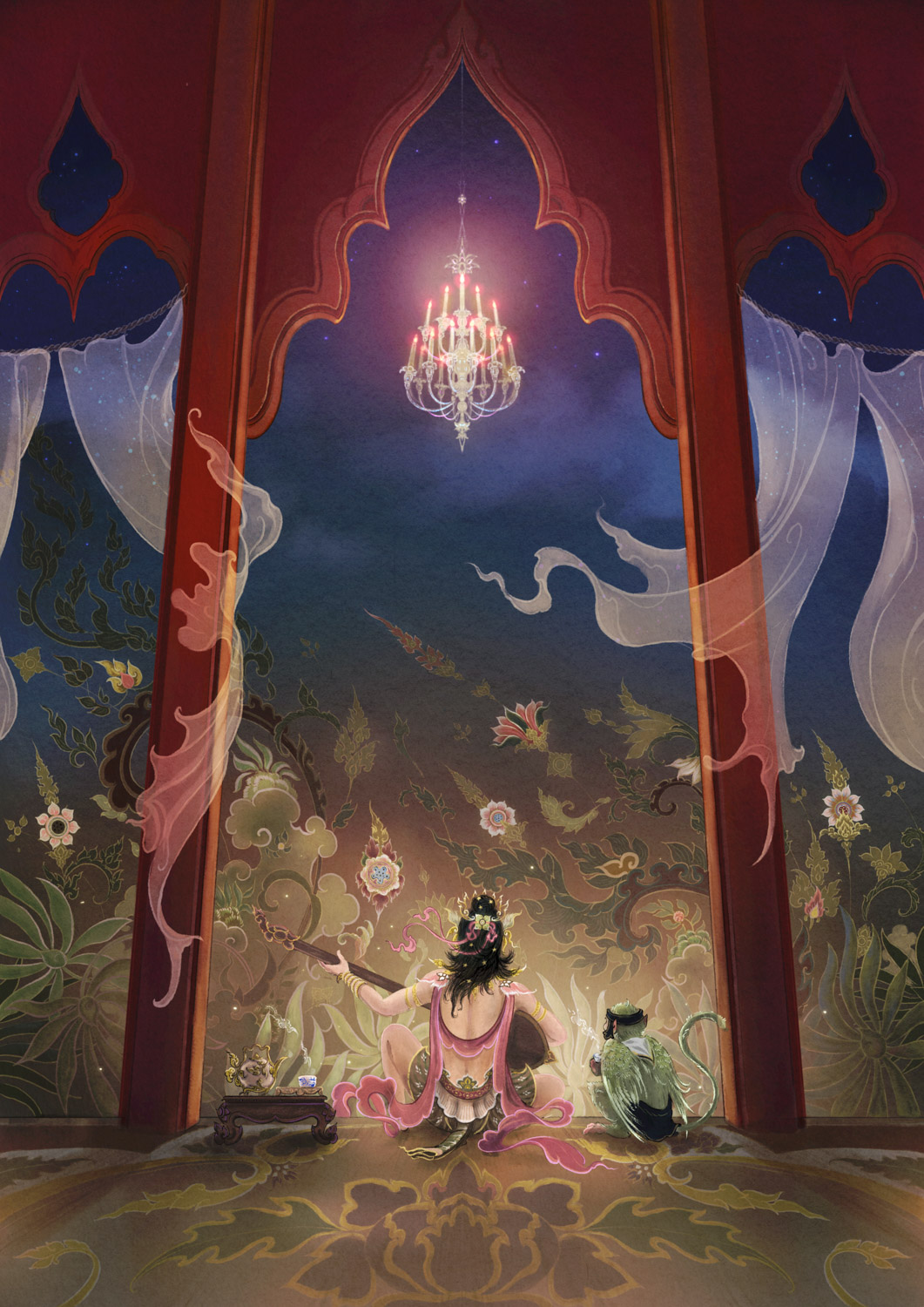
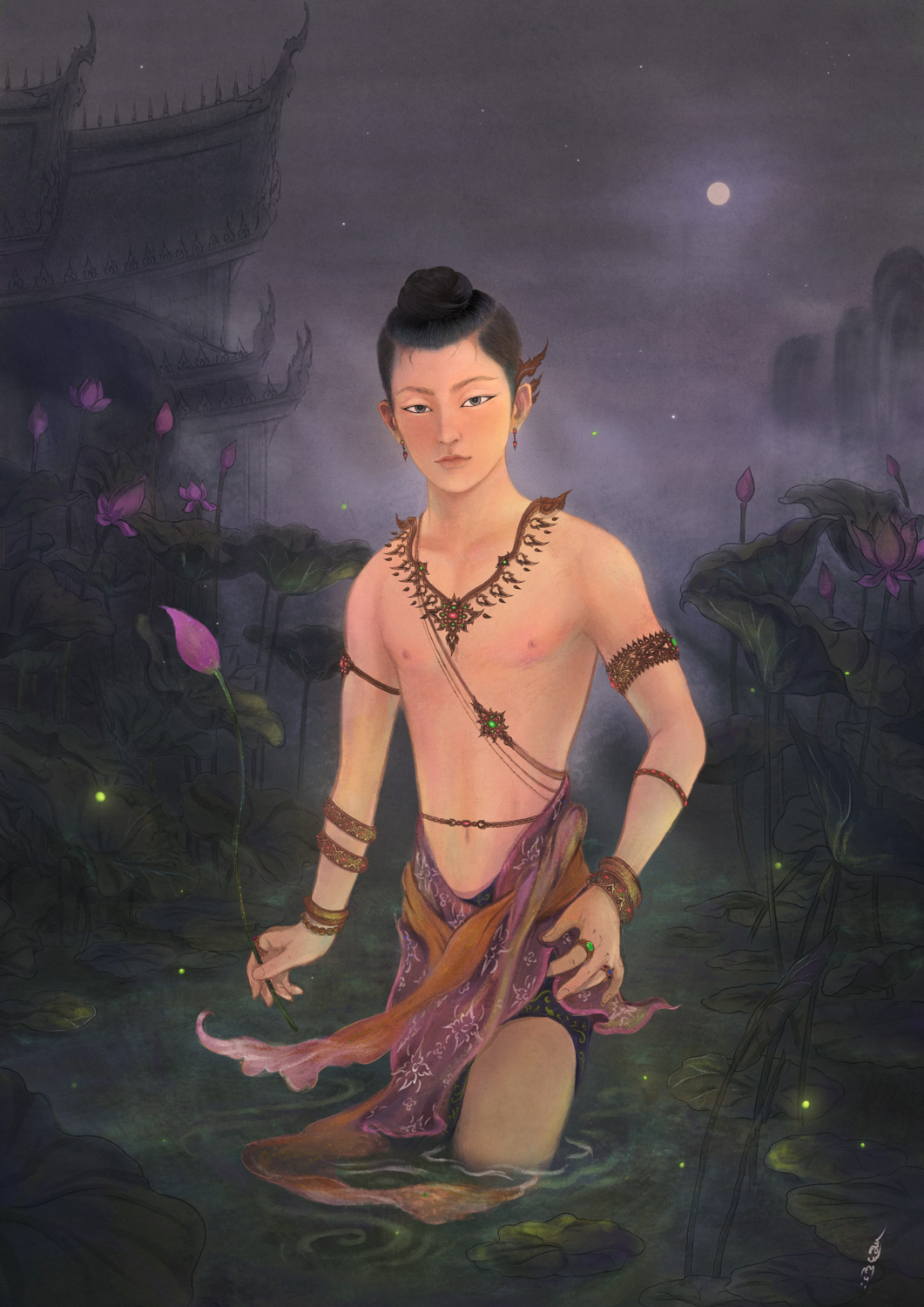
art4d: How has your background as a performing arts student influenced your work as SRI SU RHA?
SS: SRI SU RHA would not be where it is today without my performing arts education. That background helped make my lines and visual language clearer. In the past, I never really studied Thai art because it felt so familiar to me. I kept searching for my own direction until I came across Chinese artists whose presentations of Chinese culture I found very interesting. That made me wonder why I could not return to Thai culture and interpret it in my own way, just as they had done. That became another turning point and encouraged me to study Thai art more seriously. I began applying the skills and knowledge I gained from performing arts education to my artwork. I have a wealth of verse and poetry collections at home, for example, and I sometimes draw from these texts in my art.
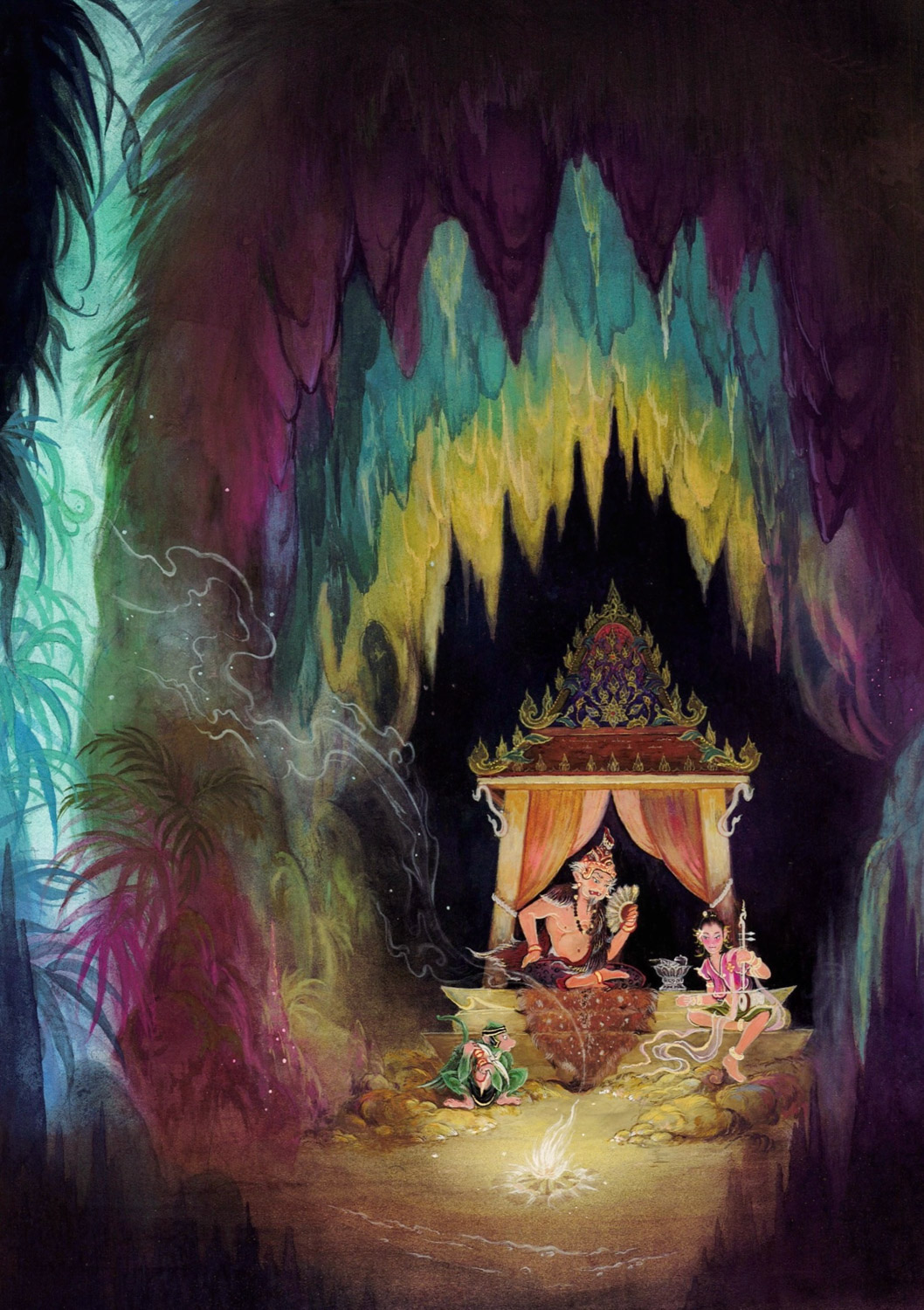
art4d: Are there any artists who have inspired you?
SS: I have studied the work of many master artists whom I deeply respect. I wanted to see how Thai painting could move beyond its familiar conventions, so I spent three or four months studying Chakrabhand Posayakrit’s work and approach to painting. I visited museums and spoke with his students before adapting some of what I had learned to my own practice. I also looked at the work of Mot Wongsawat, who painted theatrical scenery inspired by Thai painting, and drew from his use of color. Hem Vejakorn was another important influence, particularly in his approach of visual storytelling. When these influences came together with my performing arts background and its graceful movements—and with the work of several Chinese artists—my paintings began to develop their distinctive flowing lines and sense of movement.
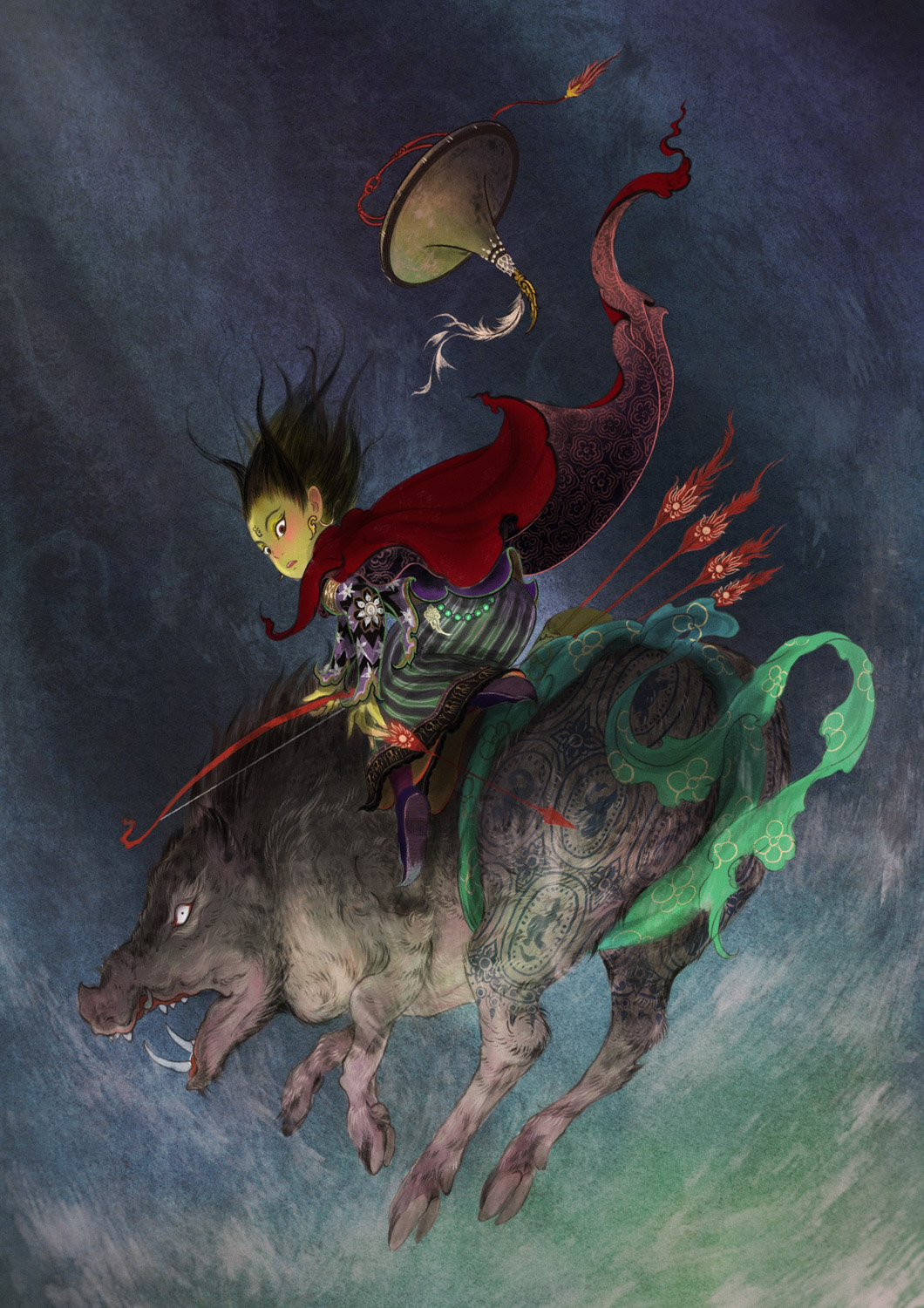
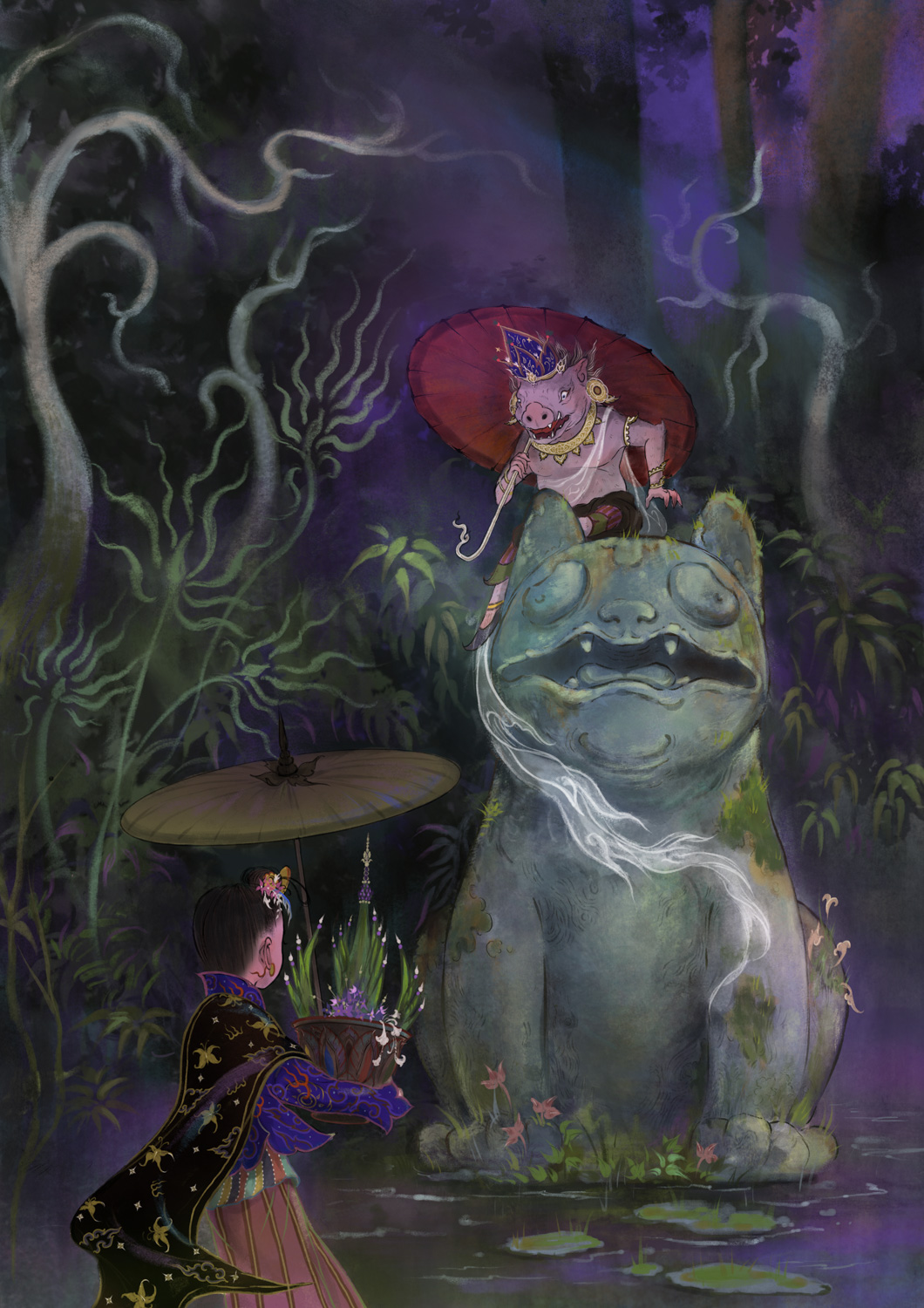
art4d: How do you select the scenes and images you want to depict? How do you reinterpret literary texts and translate them into visual form?
SS: Because I studied singing, I was already familiar with reading dramatic verse. These texts contain dialogue between characters and often establish their surroundings in detail. Klon paet, or eight-syllable verse, tends to be more broadly descriptive, so the imagery is not always as specific. I also enjoy choosing literary characters who have relatively minor roles in the original stories. The gap between ‘image’ and ‘word’ leaves room for me to reinterpret them freely within my own world.
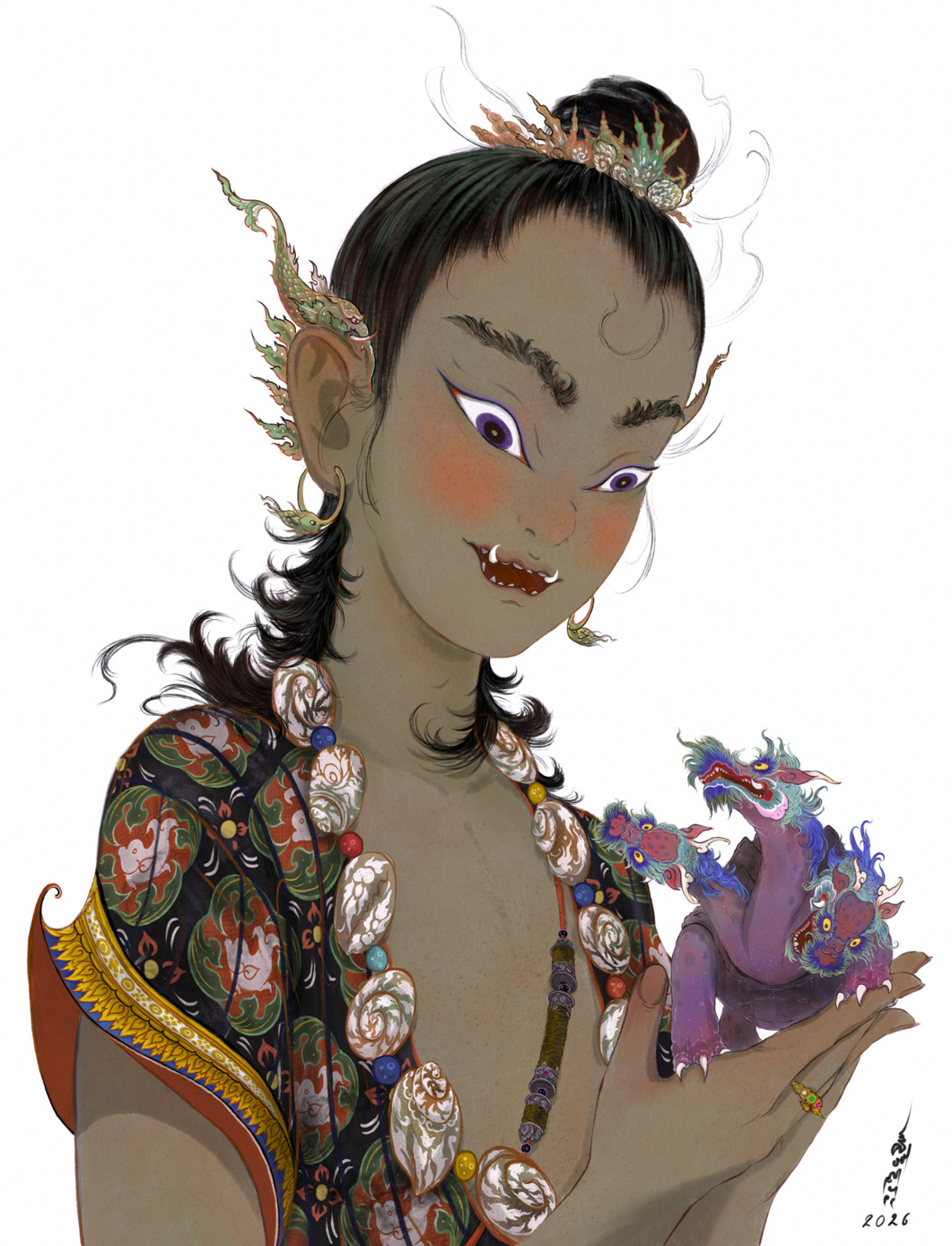
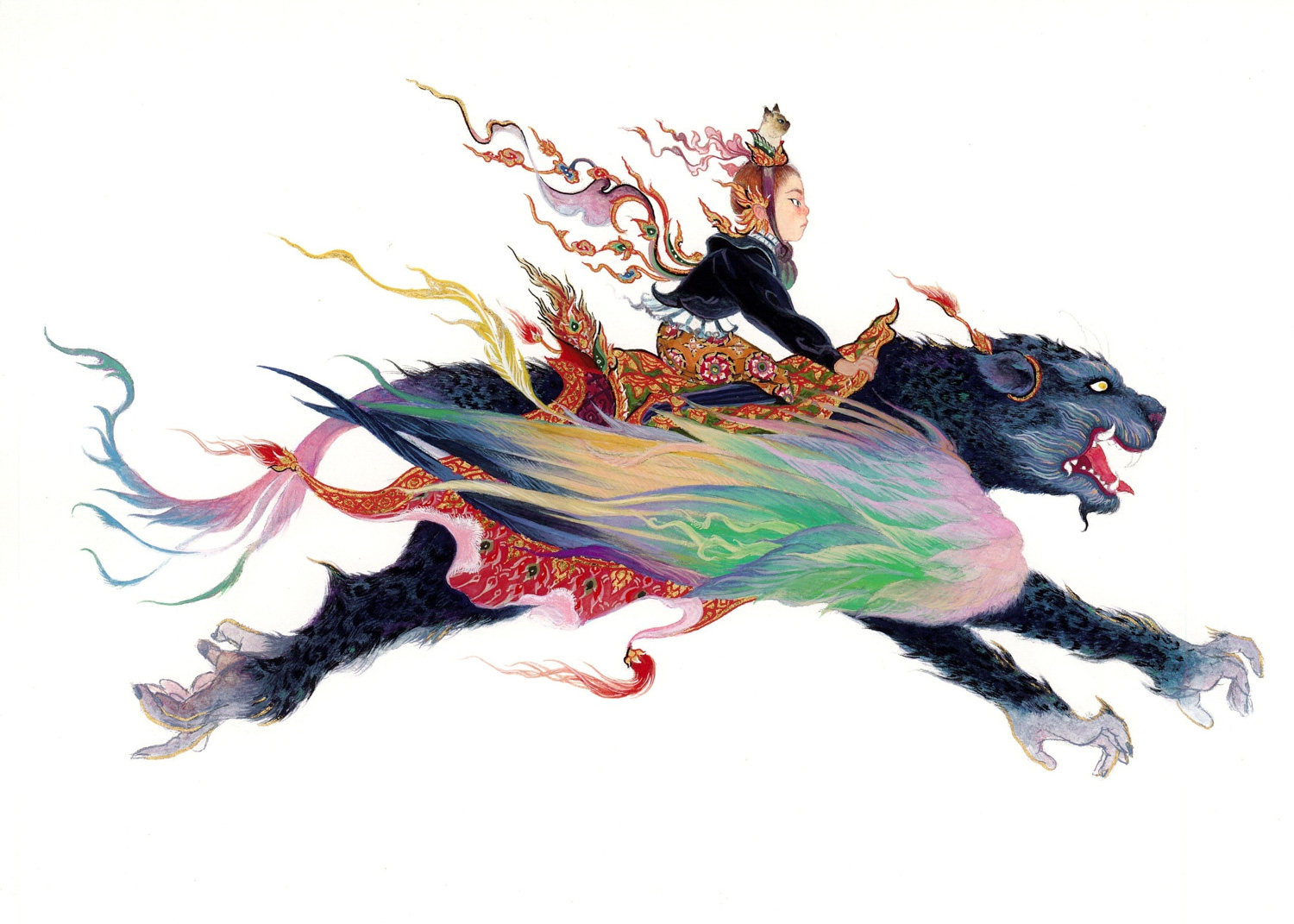
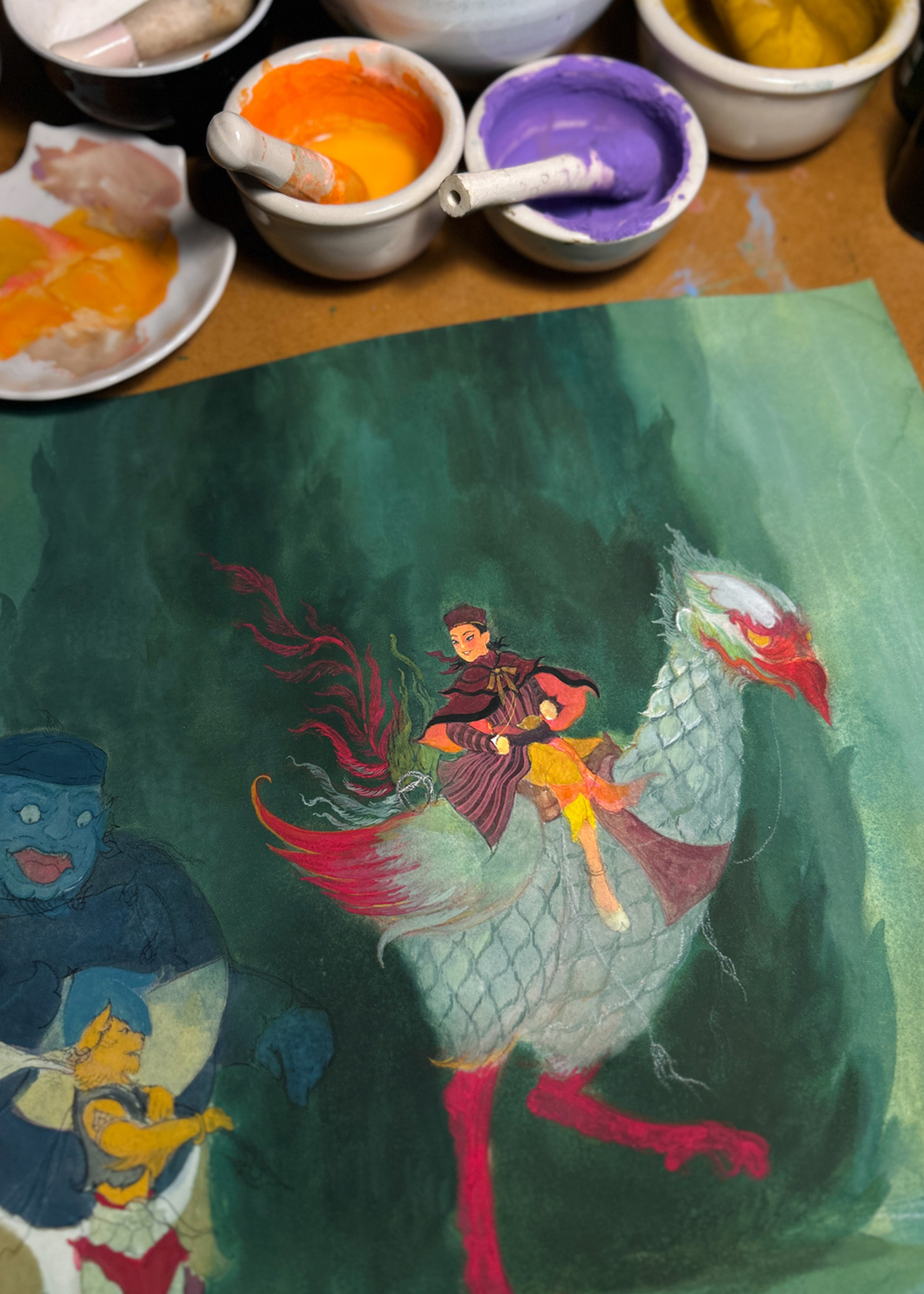
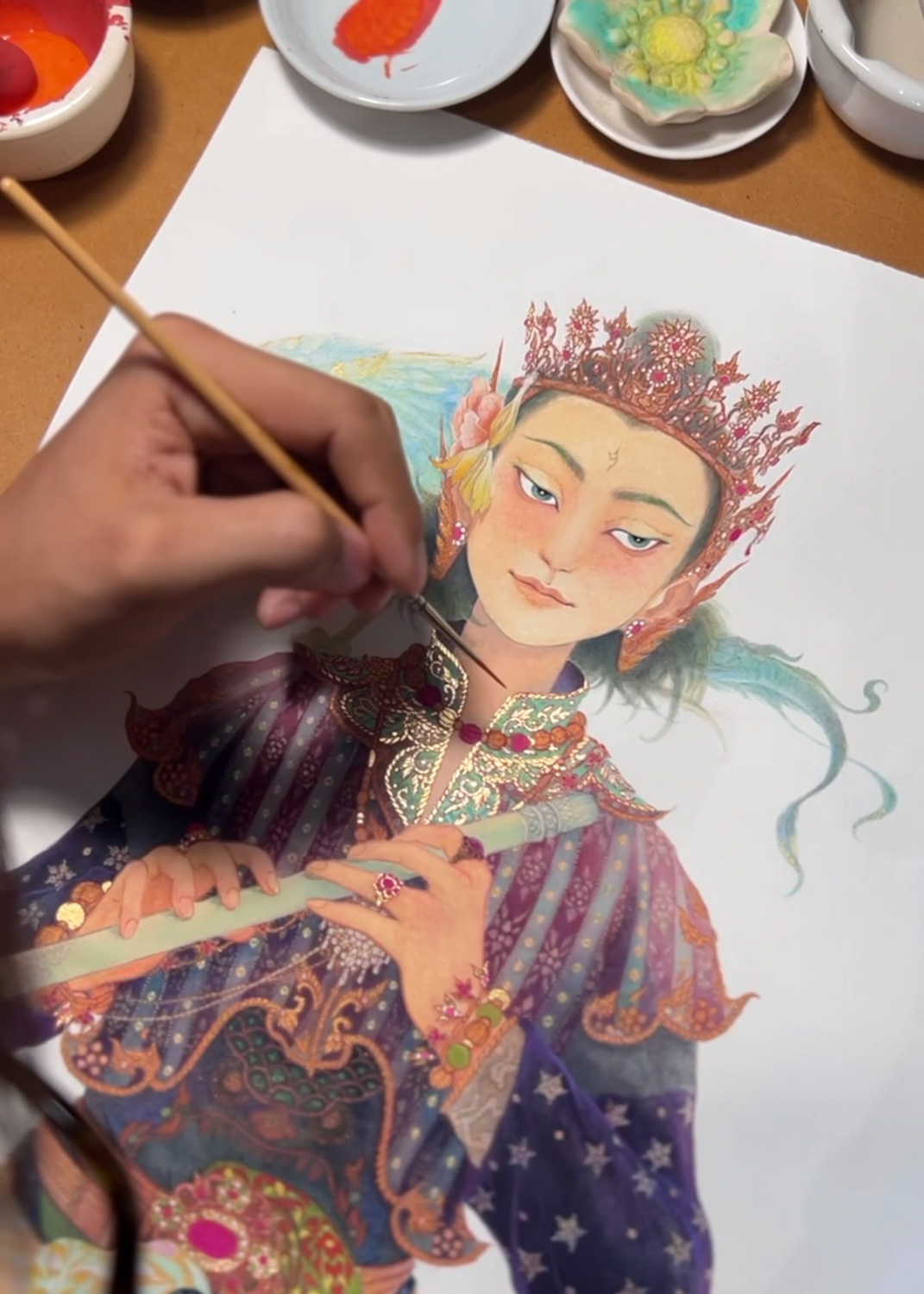
Take Sudsakorn, for example. In one passage, he says to Nin Mangkon, his dragon-horse companion, ‘Let’s go, my horse!’ I found this line very interesting and used it as the title of a work. The text also describes Sudsakorn as a young yogi who is ‘draped’ in tiger skin. I interpreted the word as describing a cloak. I then came across a Japanese print showing a samurai draped in tiger skin to camouflage himself in the forest, which caught my attention. With Gandharva—a character who also has a relatively small role—I combined elements of khon costume with the attire of siaokang, or Chinese-style door guardians, bringing these influences together in a single character. The long hair tied into a topknot was inspired by Ao Bing, the blue dragon character from the animated film Ne Zha.
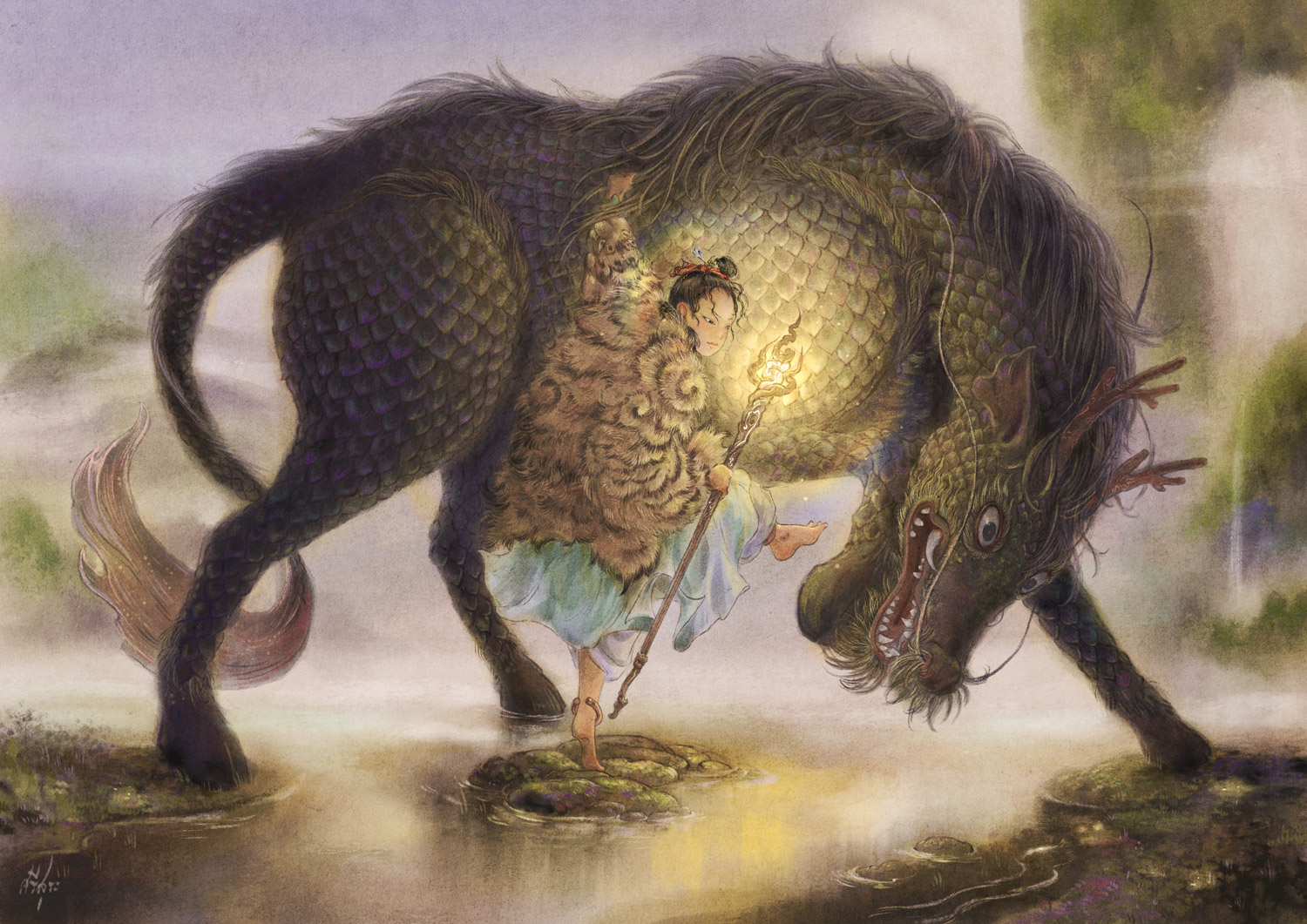
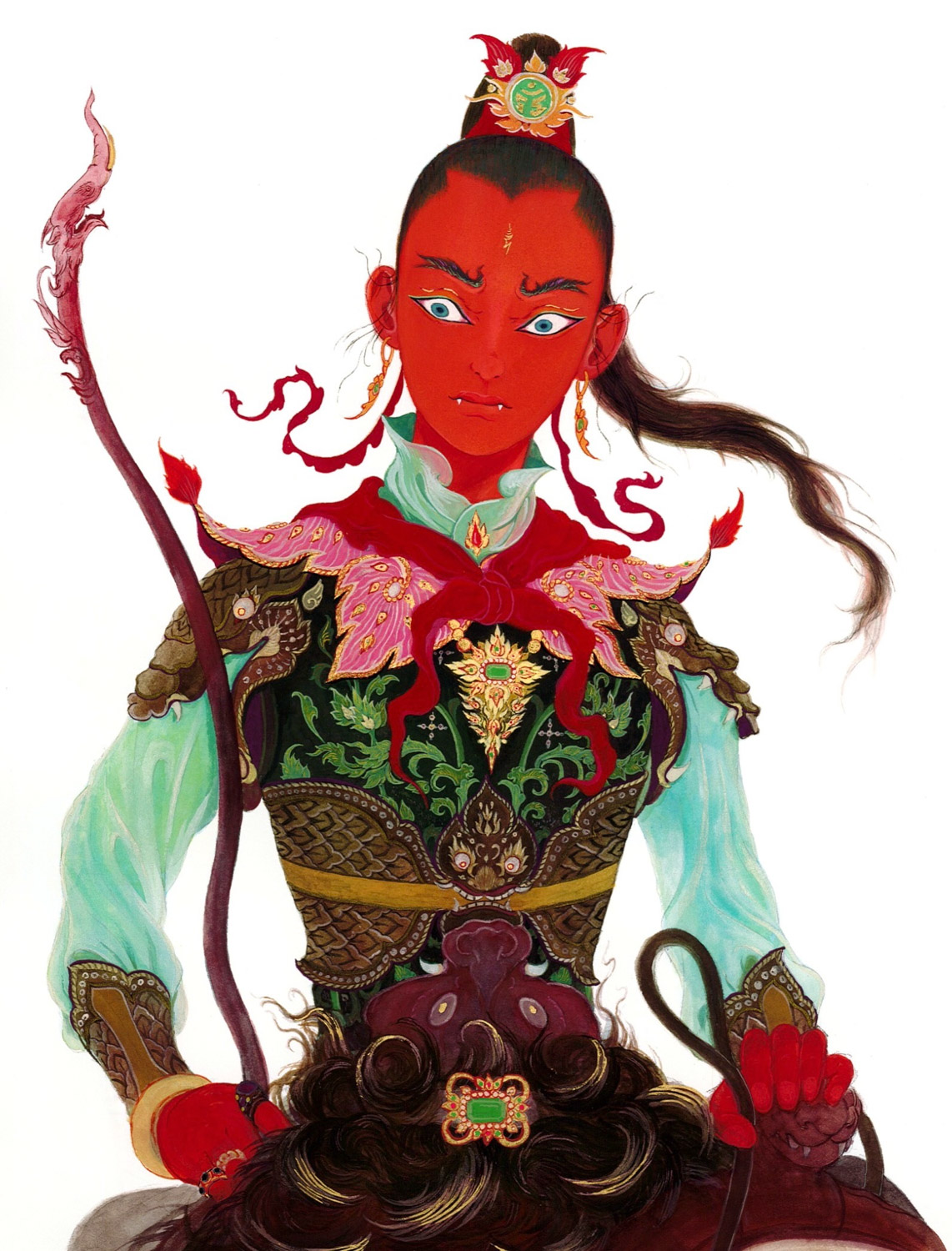
art4d: Why did you choose to work with traditional powder pigments? How does working with these pigments on paper feel different from using a medium such as an iPad?
SS: At first, I only used a few powder pigments, particularly special colors such as vermilion, which I used alongside gold, as well as yellow, earth tones, and indigo—colors that were relatively easy to find. I combined vermilion with poster color or modern powder pigments that I ground myself to produce a texture resembling real human skin. For me, powder pigments create ‘magic moments’ because they often give me unexpected results. I did not originally intend for the Gandharva’s skin to look the way it does. But when I mixed in vermilion, tiny particles appeared across the surface, almost like a natural flush beneath the skin. After that, I continued using powder pigments more regularly. I have always used the iPad alongside paper. I can now create brushes with the textures I want, making the experience feel as close to drawing on paper as possible. If you zoom in on my Sudsakorn work, for example, you can see a texture that closely resembles real paper.
art4d: What kind of response did you receive at BKKIF 2025?
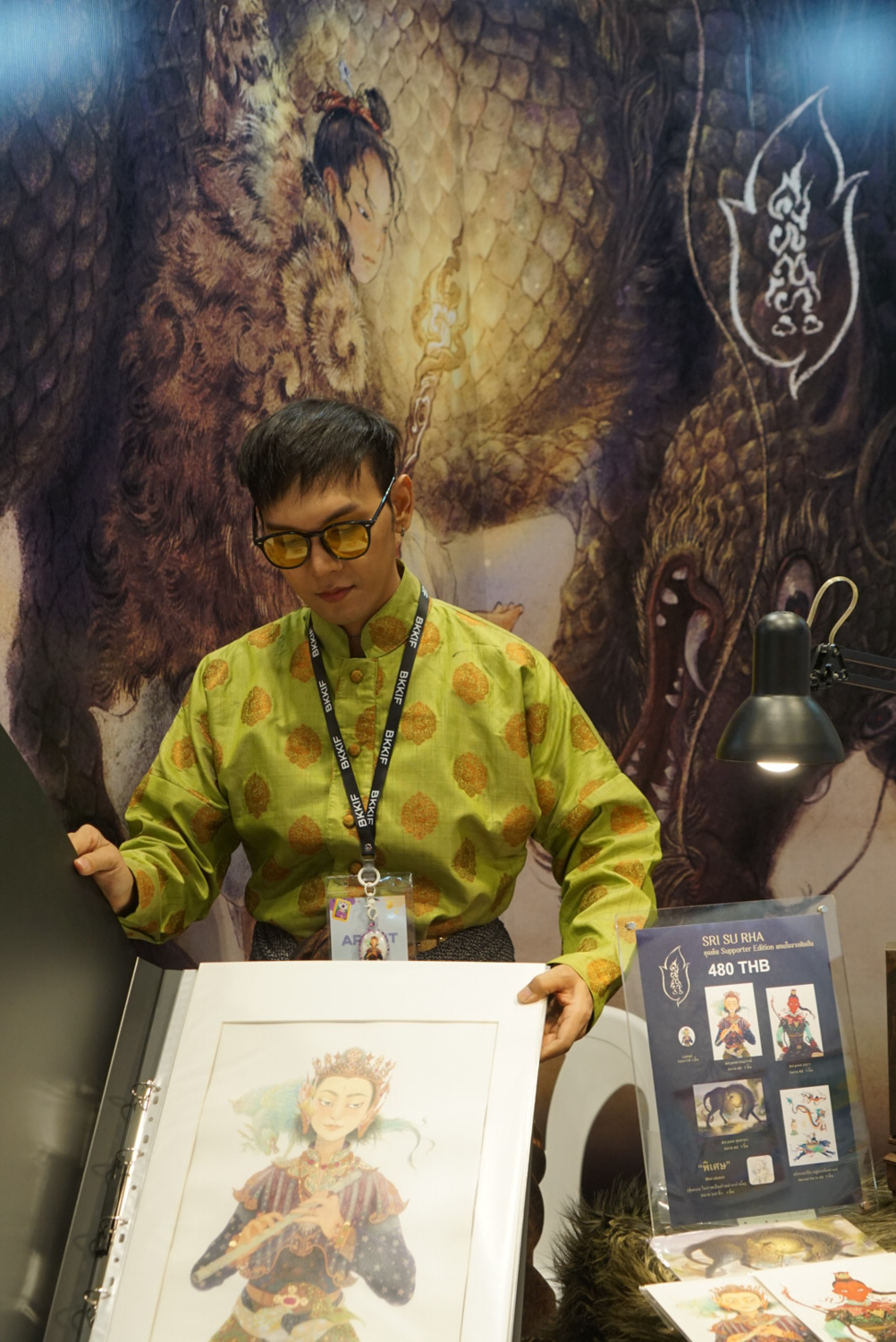
SS: It was my first time exhibiting at an event, and I did not have many products to sell. Even so, I described the collection as ‘A Set from the Artist’s Heart’ because I wanted everyone to come and meet me in person. A lot of people really did come—both followers who knew me online and visitors who discovered my work for the first time at the event. BKKIF became a bridge connecting me with the people who had previously only seen my work online. The set of products sold out within the first two days. Several brands later contacted me because they were interested in my drawing style. It was also an opportunity to meet other artists with similar interests, including artists from overseas. I would say that the booth was a success.
art4d: We understand that SRI SU RHA will also participate in BKKIF 2026. Could you tell us a little about what you will be presenting?
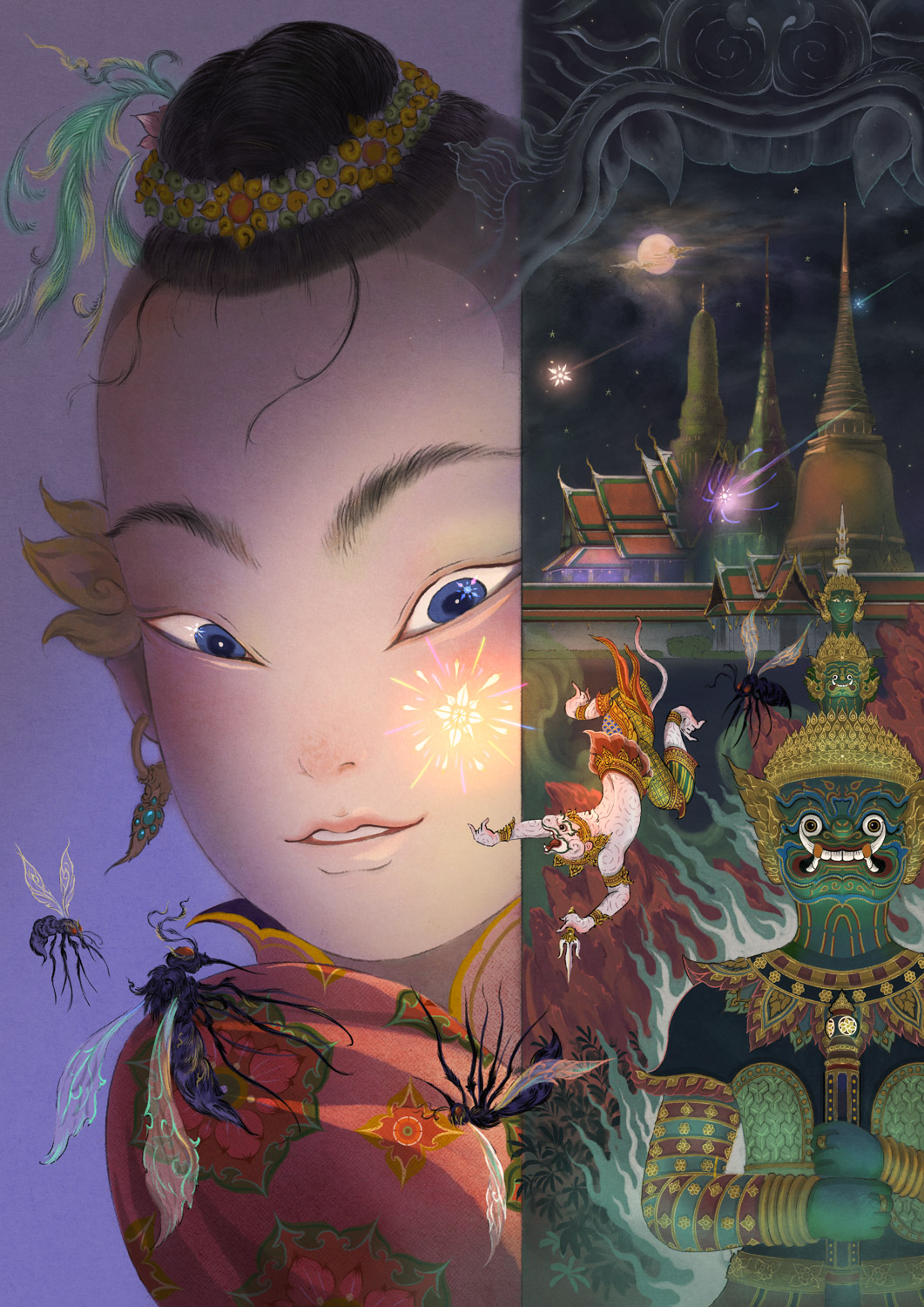
SS: This year, I am presenting a theme centered on the ‘Mekong Basin.’ It is something that has stayed on my mind for a long time because it was the starting point that made me want to draw and communicate the vernacular cultures of Southeast Asia. I want to explore the Mekong Basin through Nang Thiam and local beliefs surrounding spirits called Animism and Thiam, the God of The Sky. I am also preparing props to accompany the presentation at this year’s booth.
art4d: Finally, are there any upcoming projects, exhibitions, or new directions that we should look out for?
SS: For now, I am returning to research and experimenting with new techniques. I also plan to create content for my channel again and host livestreams where I can speak with viewers. In the future, you may see my work on larger canvases, as well as experiments with ink, crayons, and other materials. I would like to continue discovering new ways of creating work rooted in Thai art.