
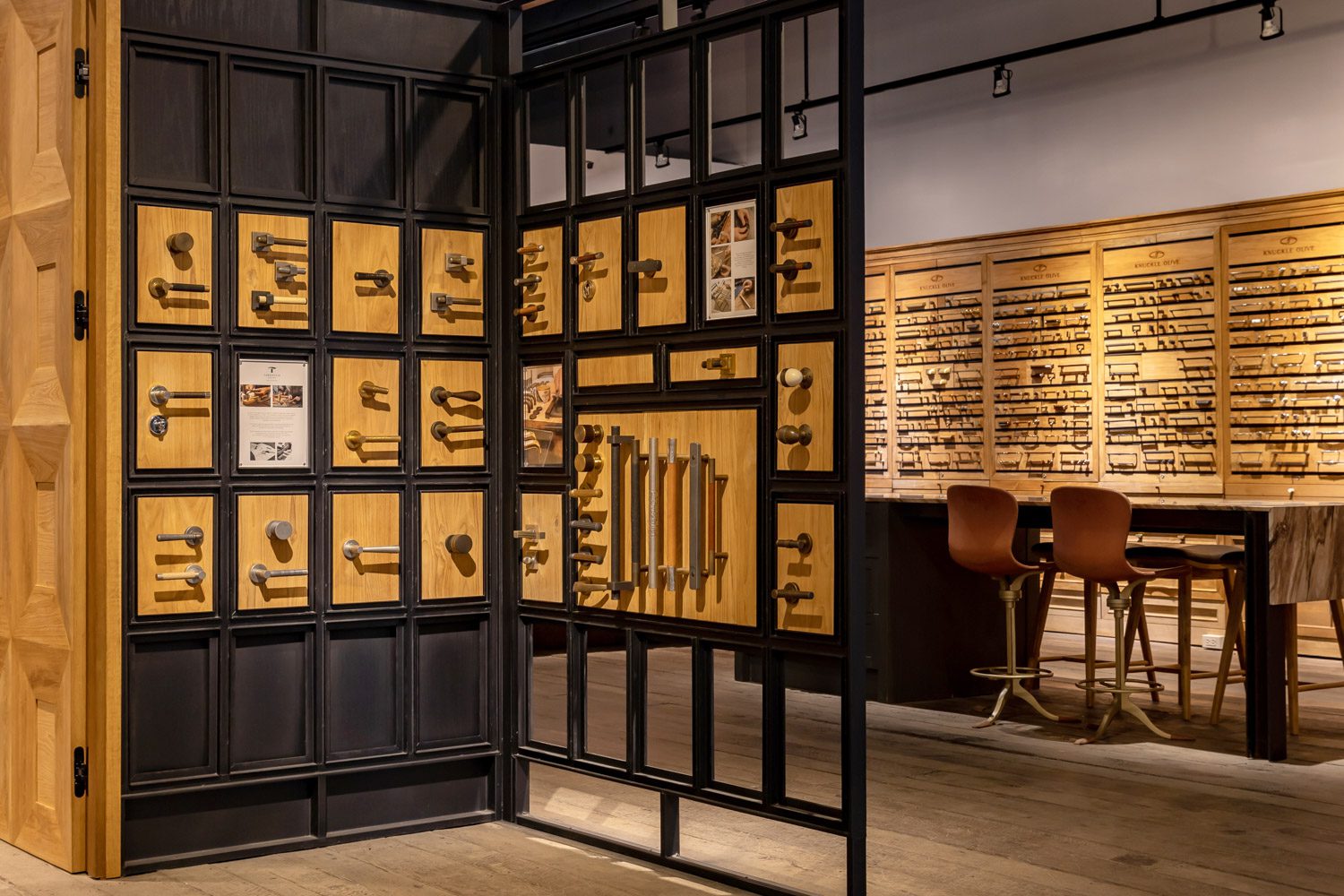
KNUCKLE OLIVE’S NEW SHOWROOM REFLECTS THE ‘PATINA OF TIME,’ MERGING THE BRAND’S IDENTITY WITH THE HISTORIC CONTEXT OF THE CHAROENKRUNG DISTRICT
TEXT: SARUNKORN ARTHAN
PHOTO: KETSIREE WONGWAN
(For Thai, press here)
If one were to wander through the narrow lanes of Charoenkrung, an old quarter that still breathes with the rhythms of art and memory, and step into Warehouse 30, the eye might be drawn to an unexpected detail: a door handle unlike any other. Solid yet graceful, it is quietly refined, without calling attention to itself. This is the new home of Knuckle Olive, a hardware brand that designs not only objects meant to be held, but also the sensations that emerge when the hand comes into contact with time itself.
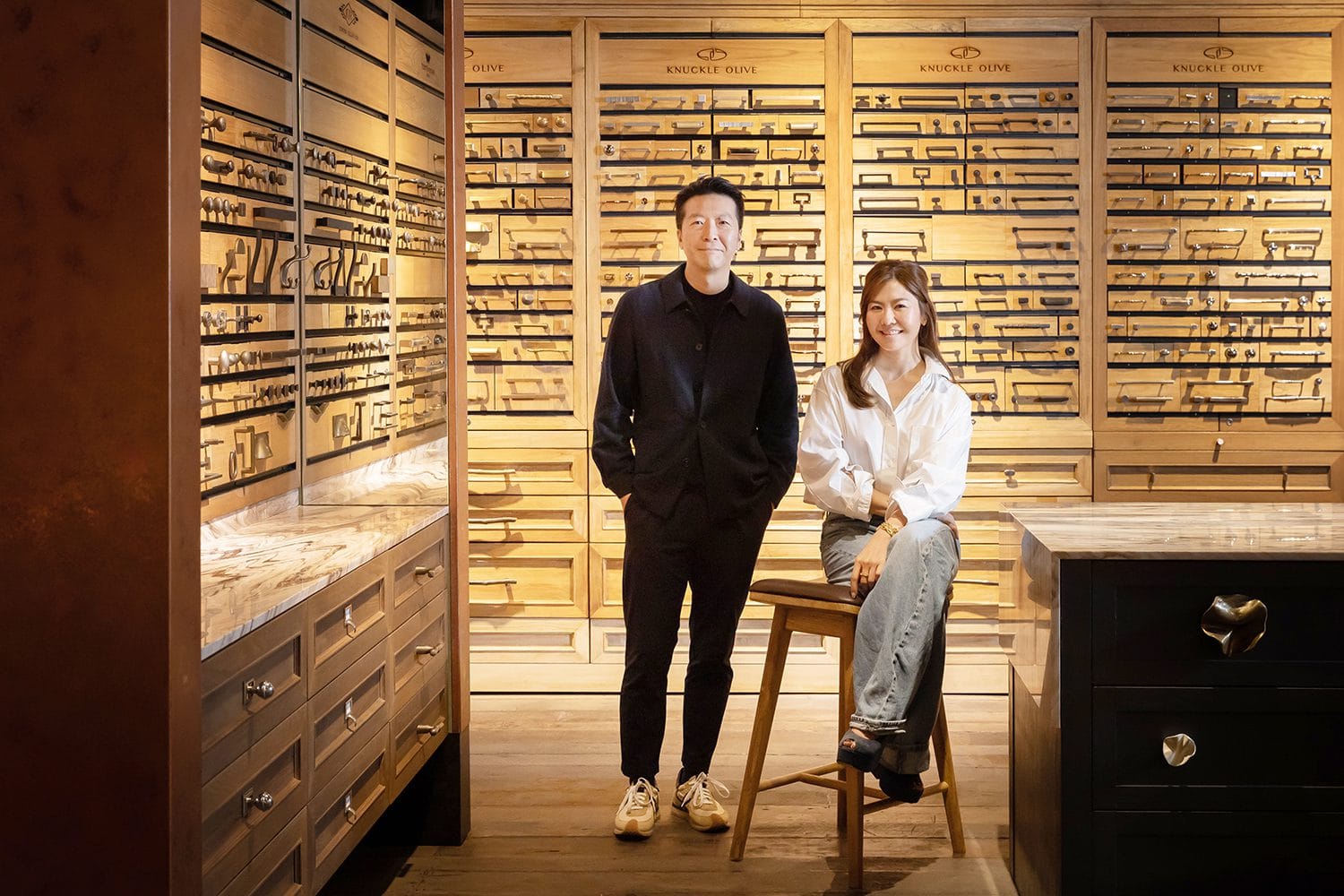
Narong Othavorn (left) and Sirin Phinyawatana (right)
On this visit, we explore Knuckle Olive’s showroom and speak with two key figures who form the backbone of the space: Sirin Phinyawatana, CEO of Knuckle Olive, and Narong Othavorn, founder and architect of SO Architect. Together, they reflect on the brand and the design of this flagship store in an atmosphere that feels relaxed, yet rich in details that invite closer discovery.
The Beginning of the Brand
Sirin begins by opening the conversation with a story of how the brand has reached its seventeenth year. Her journey started with a long-standing fascination with hardware, particularly door handles, dating back to her youth. This deep familiarity with the subject has earned her the self-described title of a ‘hardware enthusiast.’ The idea for Knuckle Olive was further shaped by challenges she encountered while renovating her own home, where a lack of attention to detail and insufficient access to reliable information about hardware solutions became evident. These experiences sparked a desire to create a hardware brand that would address such shortcomings, combining thoughtful solutions with a distinctly Thai sense of service. From this impulse, Knuckle Olive took shape and continues to evolve into what it is today.
Because a Door Handle Carries the Imprint of Time
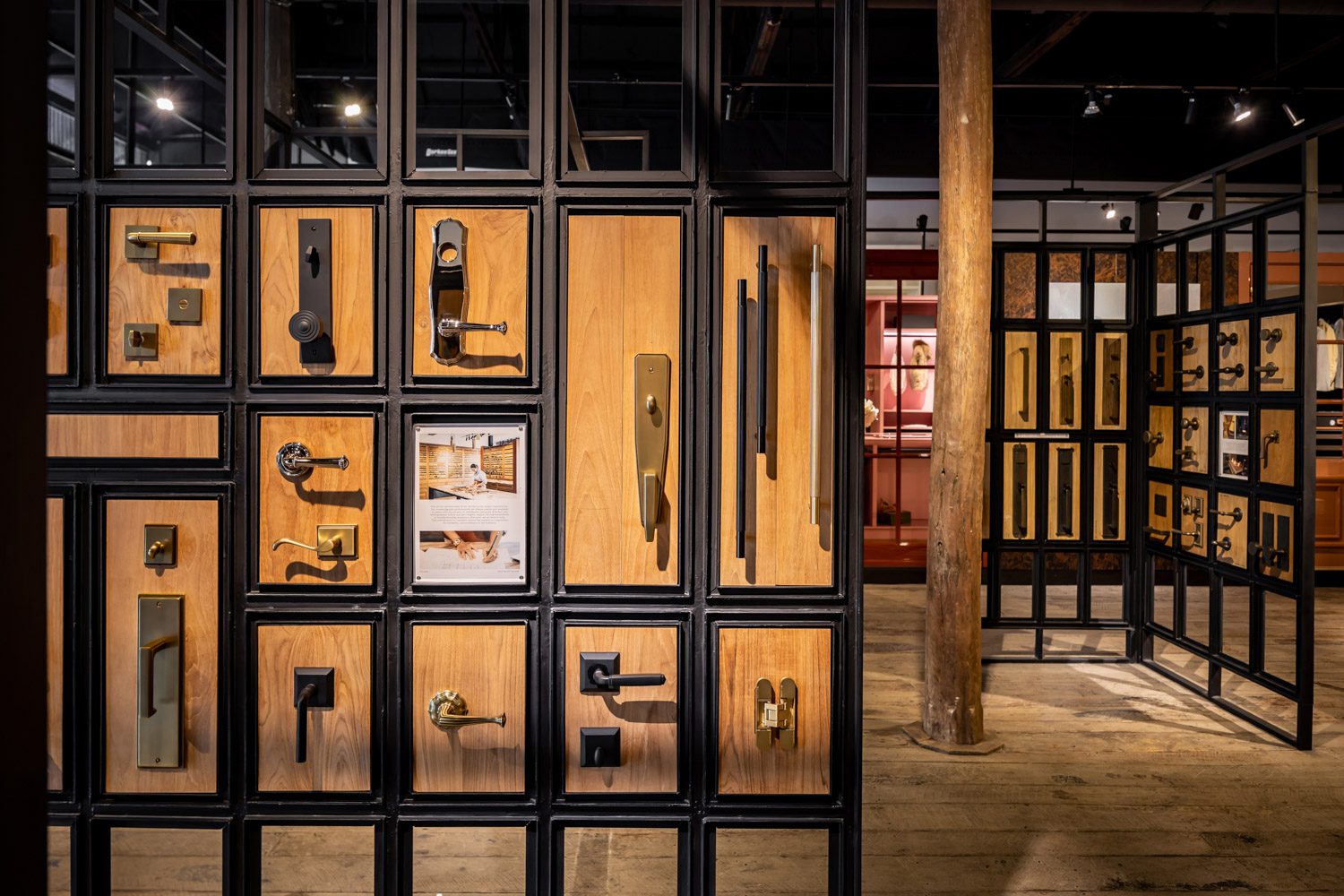
For Sirin, door handles are a form of domestic adornment with a unique character of their own, unlike the mass-produced objects commonly found on the market. They are elements that enhance both aesthetic value and emotional resonance, embodying the spirit of arts and crafts in a way that enriches architecture as a whole. Much like jewelry worn on the body, a handle has the capacity to elevate the beauty of its bearer.
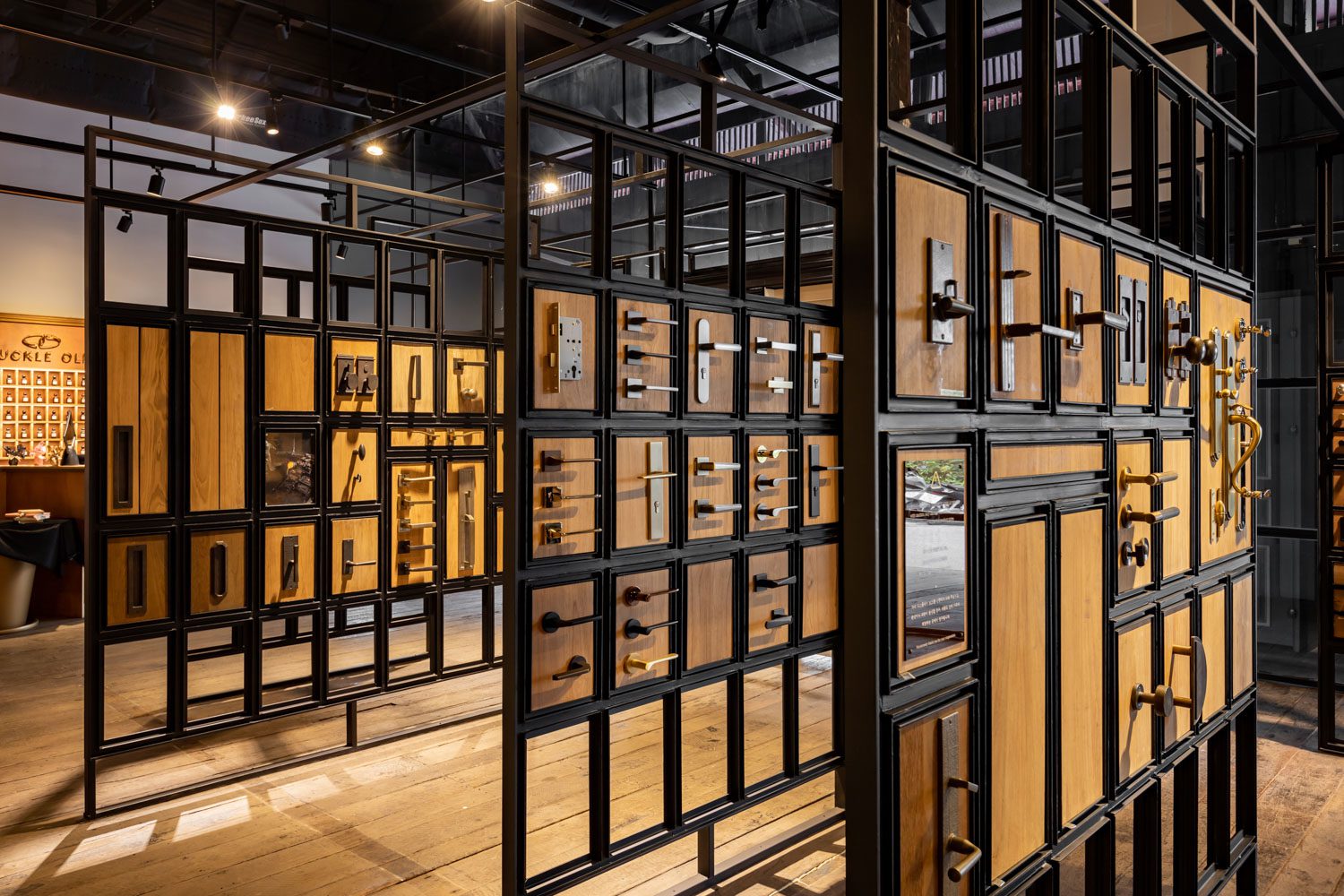
This philosophy is reflected in Knuckle Olive’s choice of materials. The brand works with a diverse palette, including brass, bronze, nickel, and sterling silver, almost as if composing a collection of jewelry that celebrates the various tactile qualities. Over time, through use, these materials develop what Sirin describes as a patina of time: bronze oxidizing into soft green hues, or brass gaining a warm, polished sheen through repeated touch. In this process, each handle acquires a distinct surface and character, transforming into a form of beauty shaped by use and duration; something singular, and rarely found in the conventional marketplace or custom-made.
From Sukhumvit to Charoenkrung
A combination of Sirin’s personal affinity for the area and a timely vacancy at Gallery 1–2 of Warehouse 30 led to a pivotal decision: the relocation of Knuckle Olive’s showroom from its former home in Sukhumvit, long constrained by limited parking and congested traffic, to the historic district of Charoenkrung. Sirin saw in this neighborhood a place undergoing rapid cultural growth as an emerging arts district. More importantly, she believed that Knuckle Olive did not need to position itself at the very center of everything, particularly within the commercial heart of the capital.
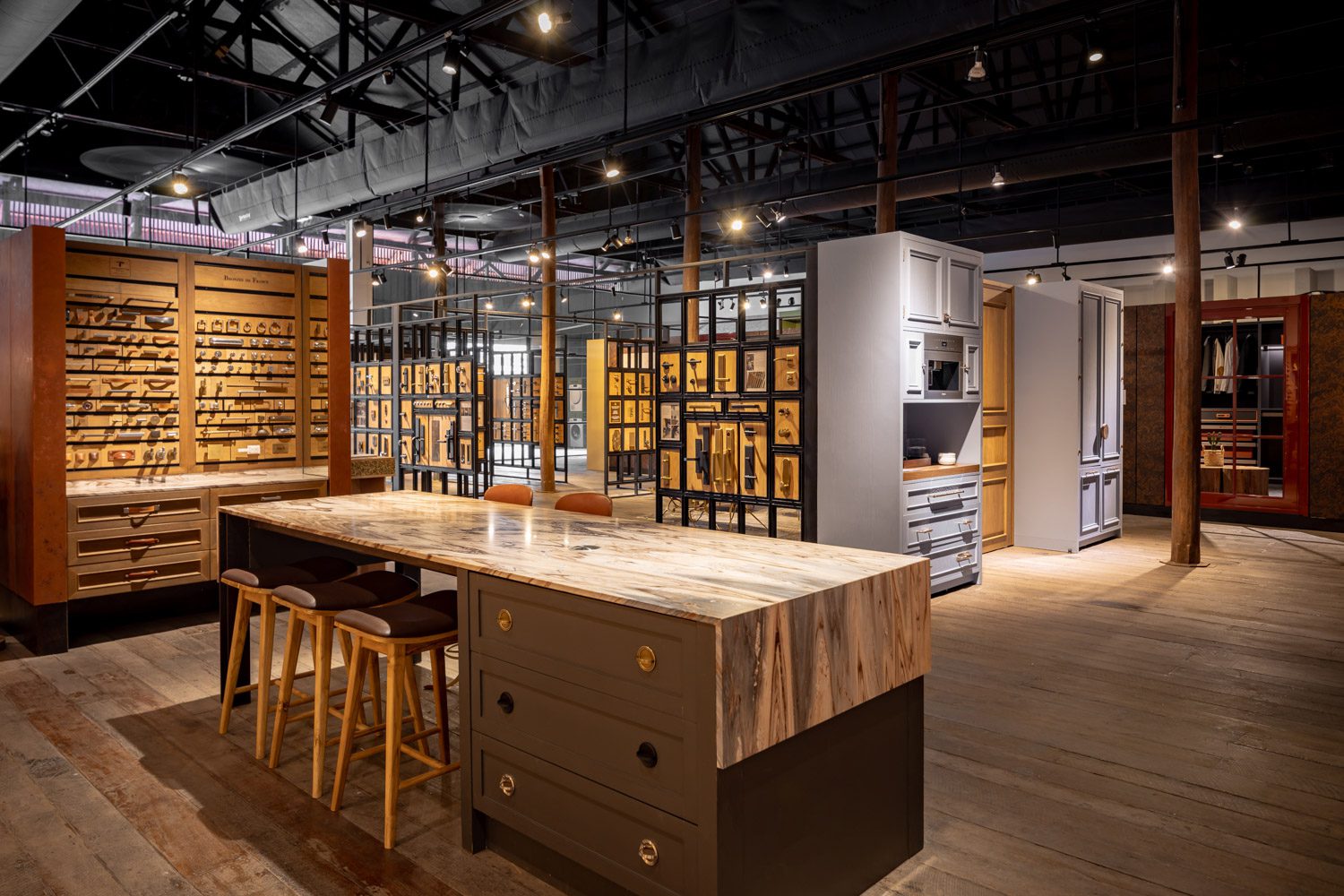
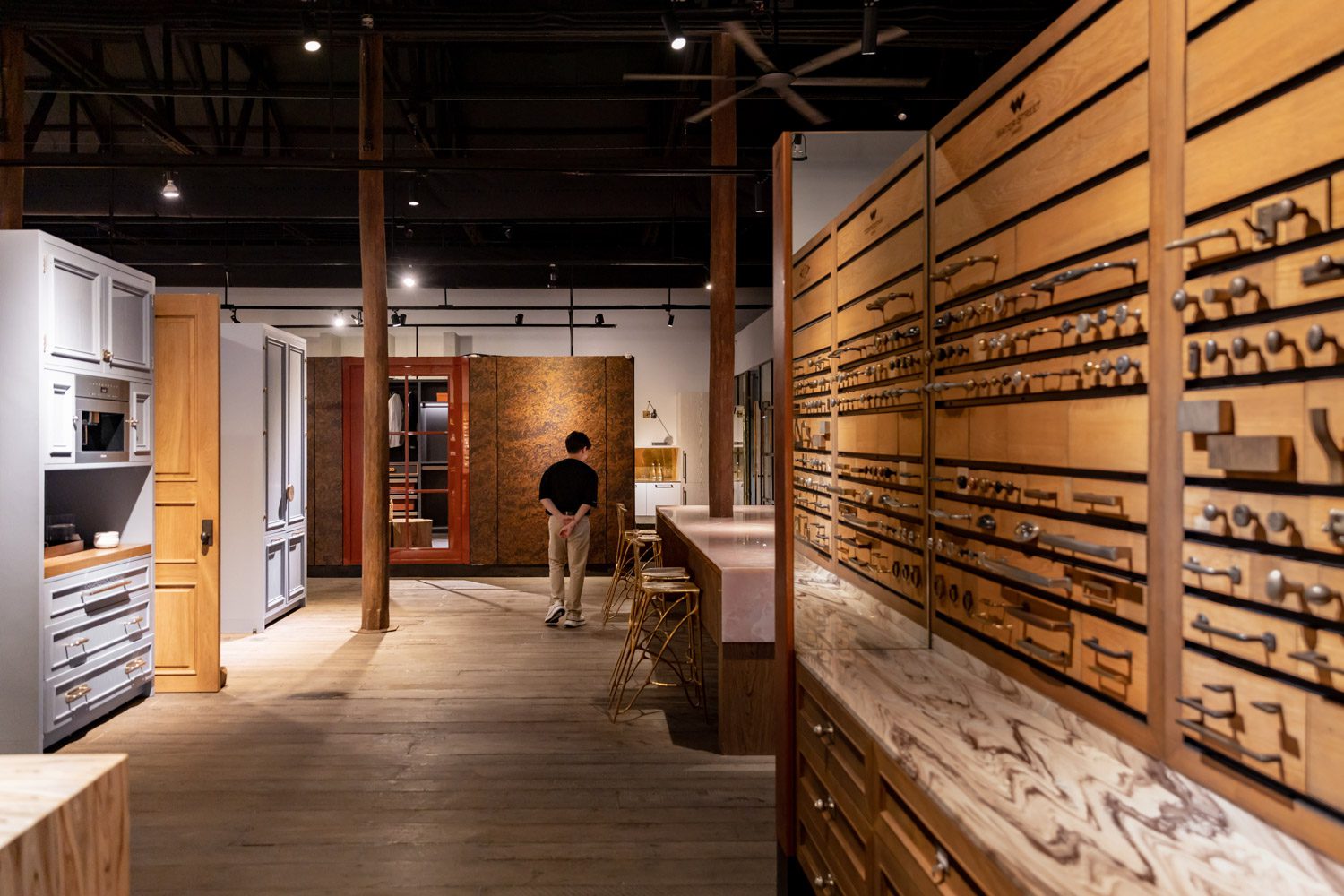
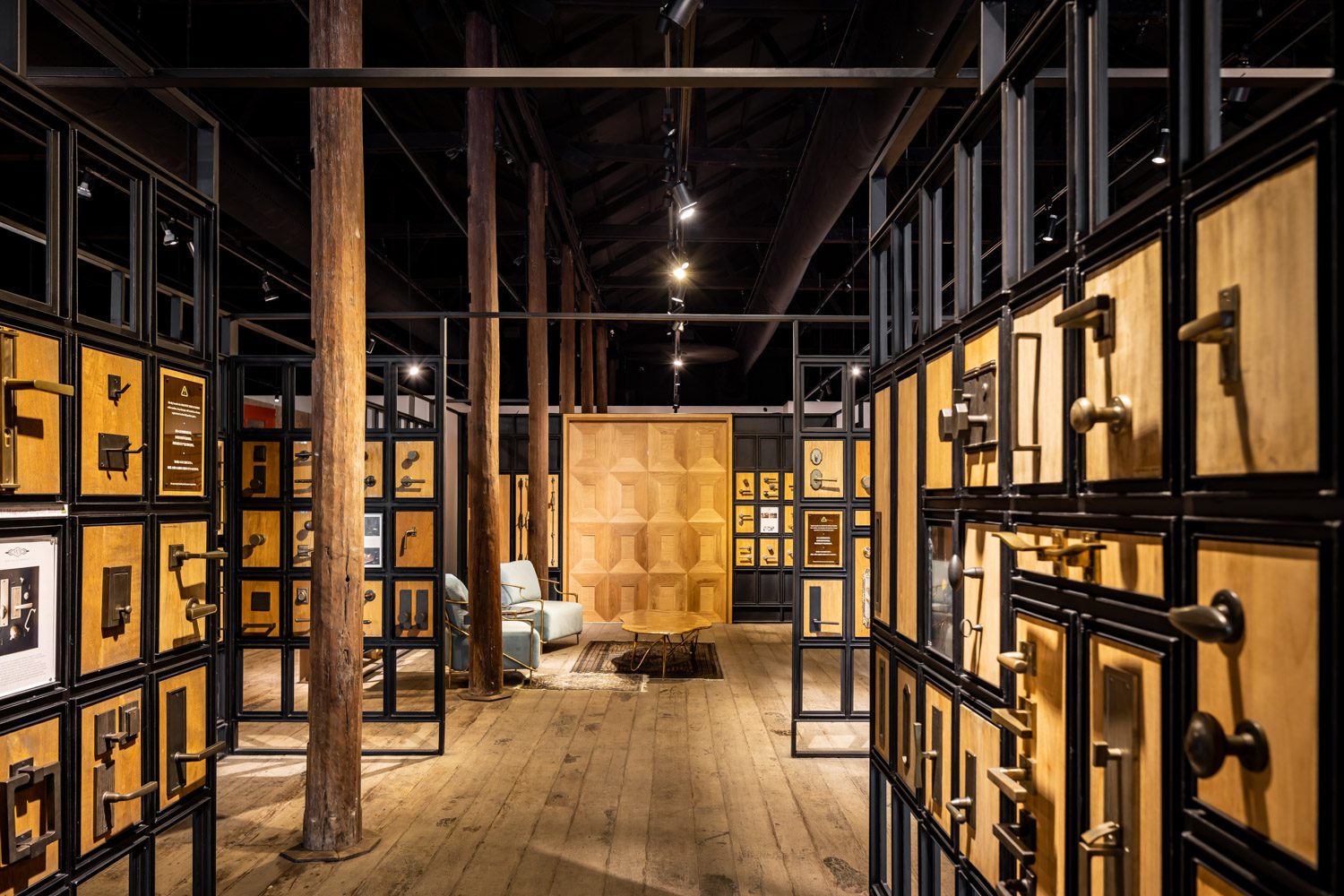
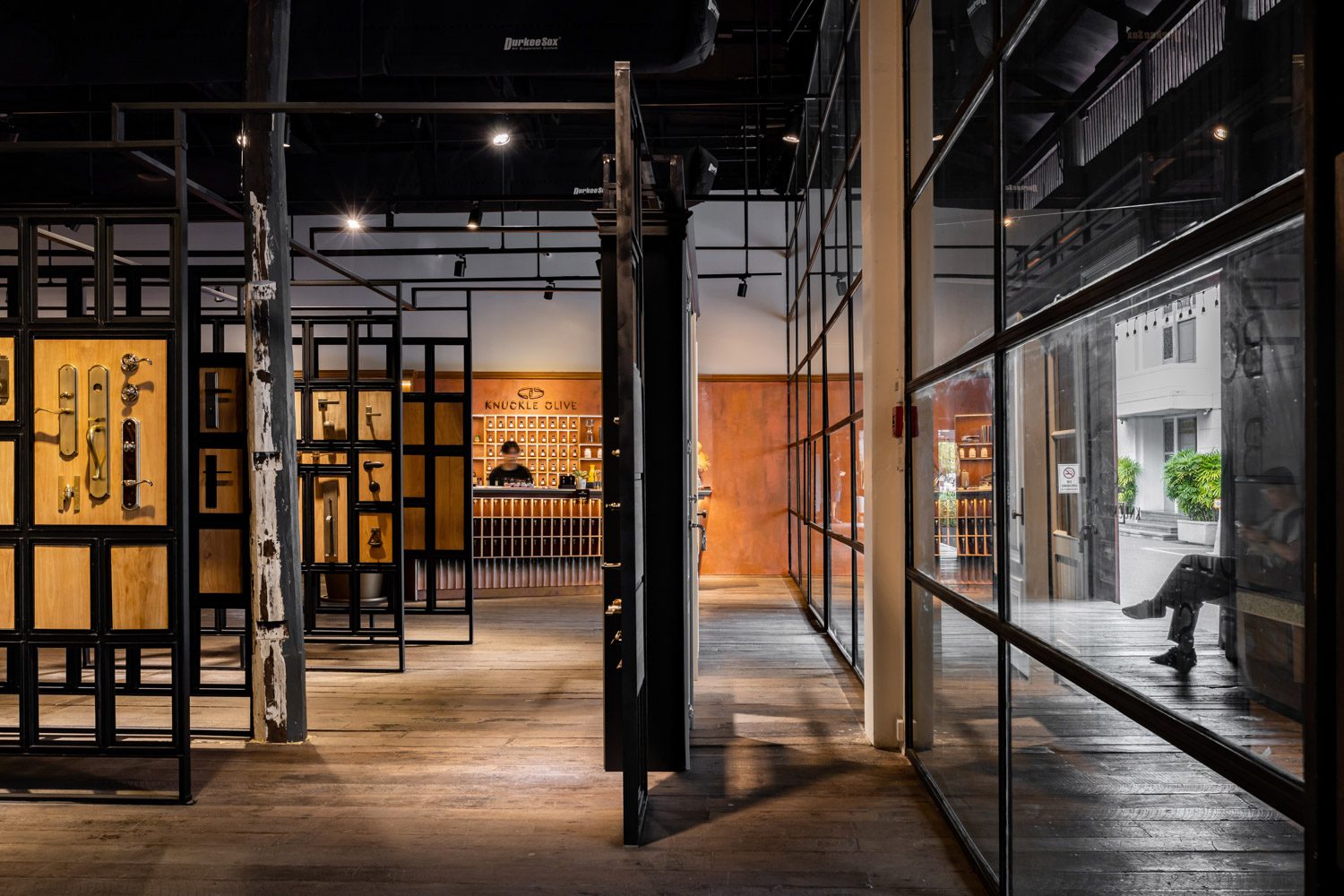
The move brought with it a subtle yet significant shift in the brand’s spatial approach. Sirin envisioned the new flagship store as a gallery-like environment. At 550 square meters, more than five times the size of the previous showroom, she and Narong worked closely together to rethink both design and user experience. The result is a spatial experience curated through careful attention to detail, to be explored in the following sections.
Integrating Identity, Interweaving Design
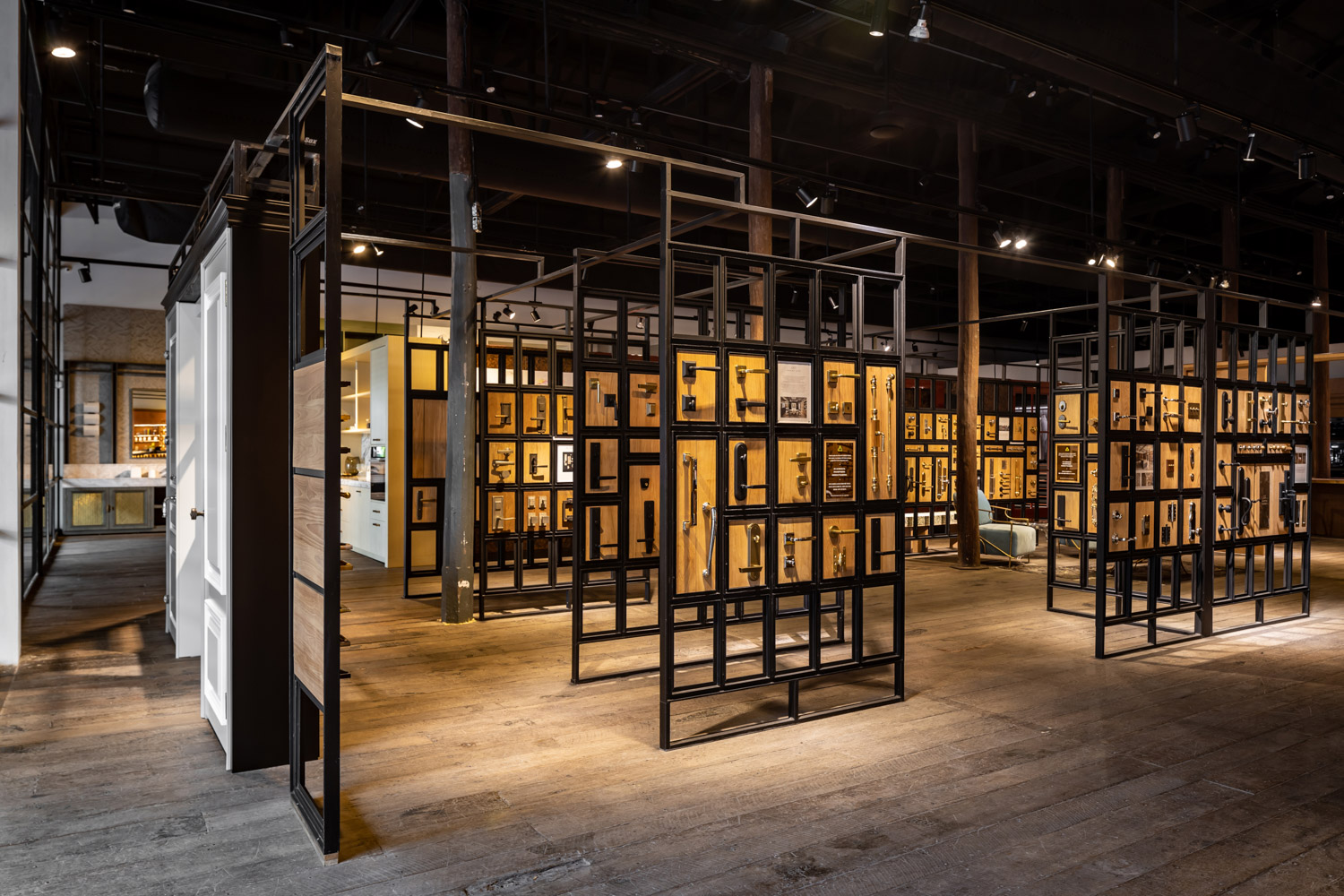
From a design perspective, Narong explains that Knuckle Olive’s identity is both clearly articulated and deeply rooted. Yet it blends seamlessly with the timeless character of Warehouse 30’s former warehouse structure. This inherent harmony meant that the new showroom did not require excessive formal intervention. Instead, the focus lay in carefully orchestrating the space to support functionality while amplifying the inherent beauty of the products, all while subtly embedding the brand’s character into the architectural framework. Through this process, Sirin and Narong collaborated by testing ideas and pushing beyond familiar design boundaries.
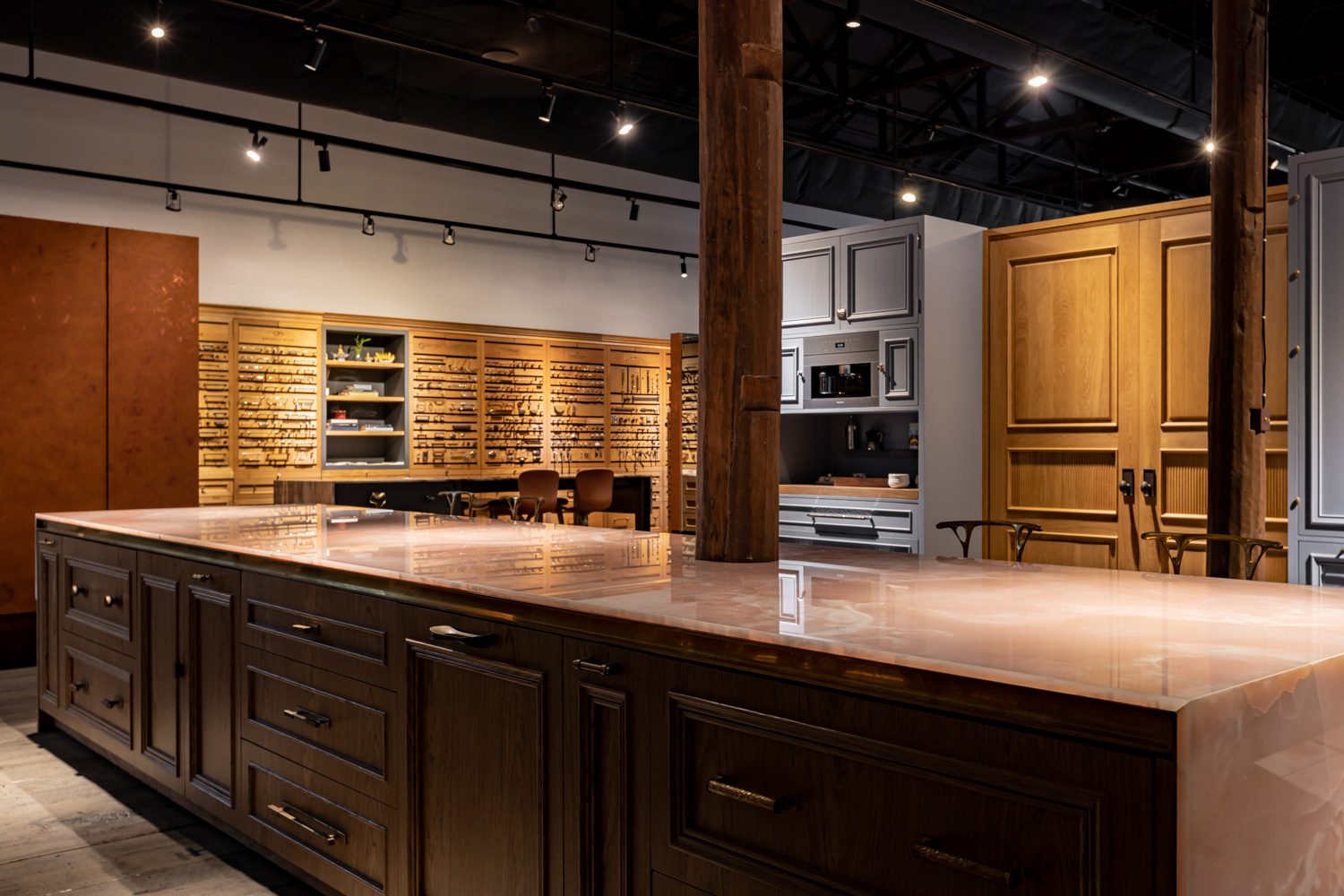
One of the most striking examples is the island counter in the kitchen zone, punctuated by a single wooden column rising through its center. The gesture challenges conventional architectural logic, yet it was intentionally conceived to resemble something made by ‘someone who does not quite understand design,’ attempting to build it themselves. The result is unexpectedly compelling: a dark wooden column that resonates with the softly toned pink countertop in a way that feels both intuitive and surprising.
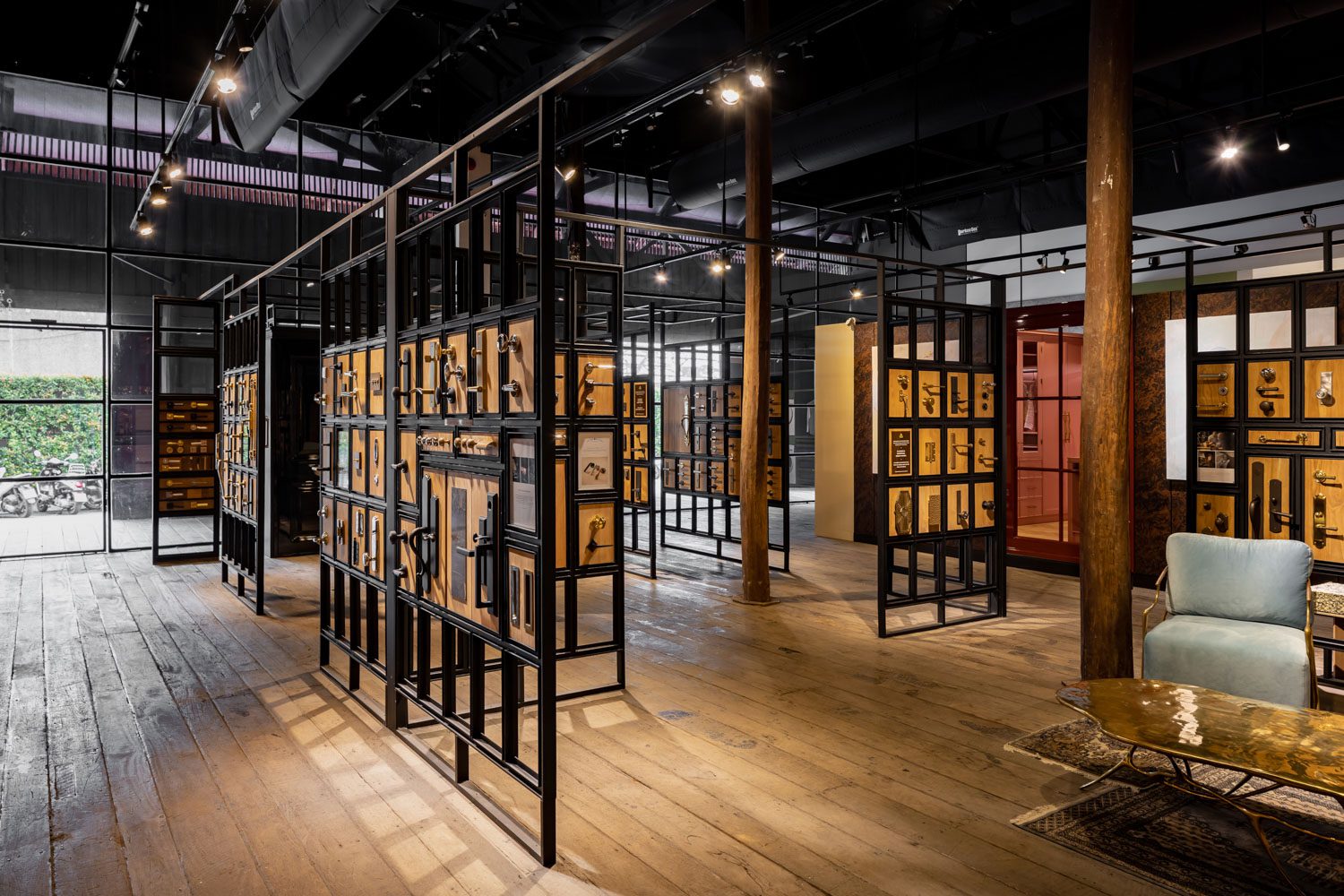
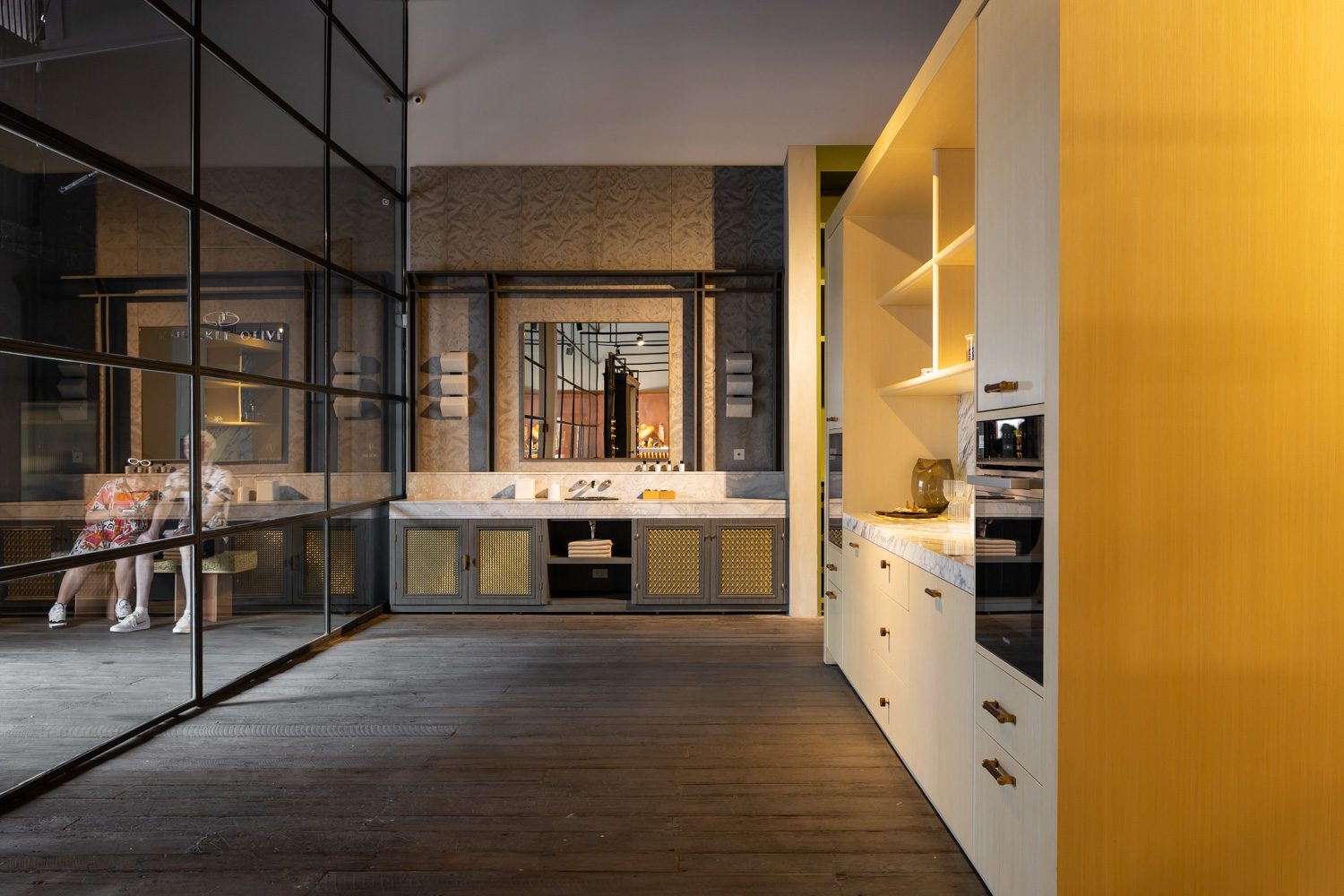
Narong also draws attention to another crucial element: light. Illumination here is not limited to artificial lighting directed at the products. Openings resembling window walls have been introduced to invite generous amounts of natural light into the space. This allows visitors to observe and compare the appearance of door hardware under both artificial and natural conditions, making material and color selection more intuitive and enhancing the overall experience of choosing each piece.
Designing the Visitor Experience
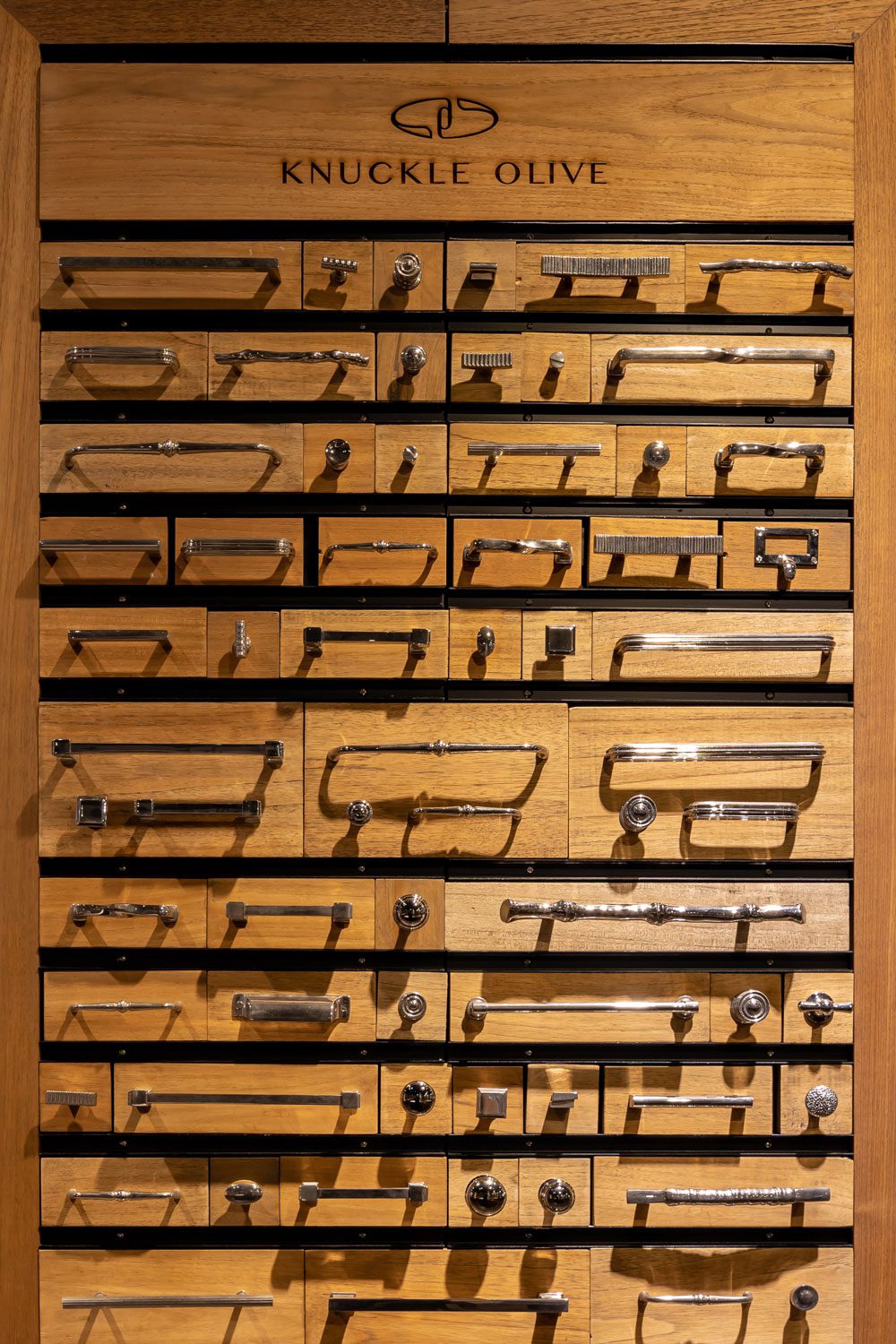
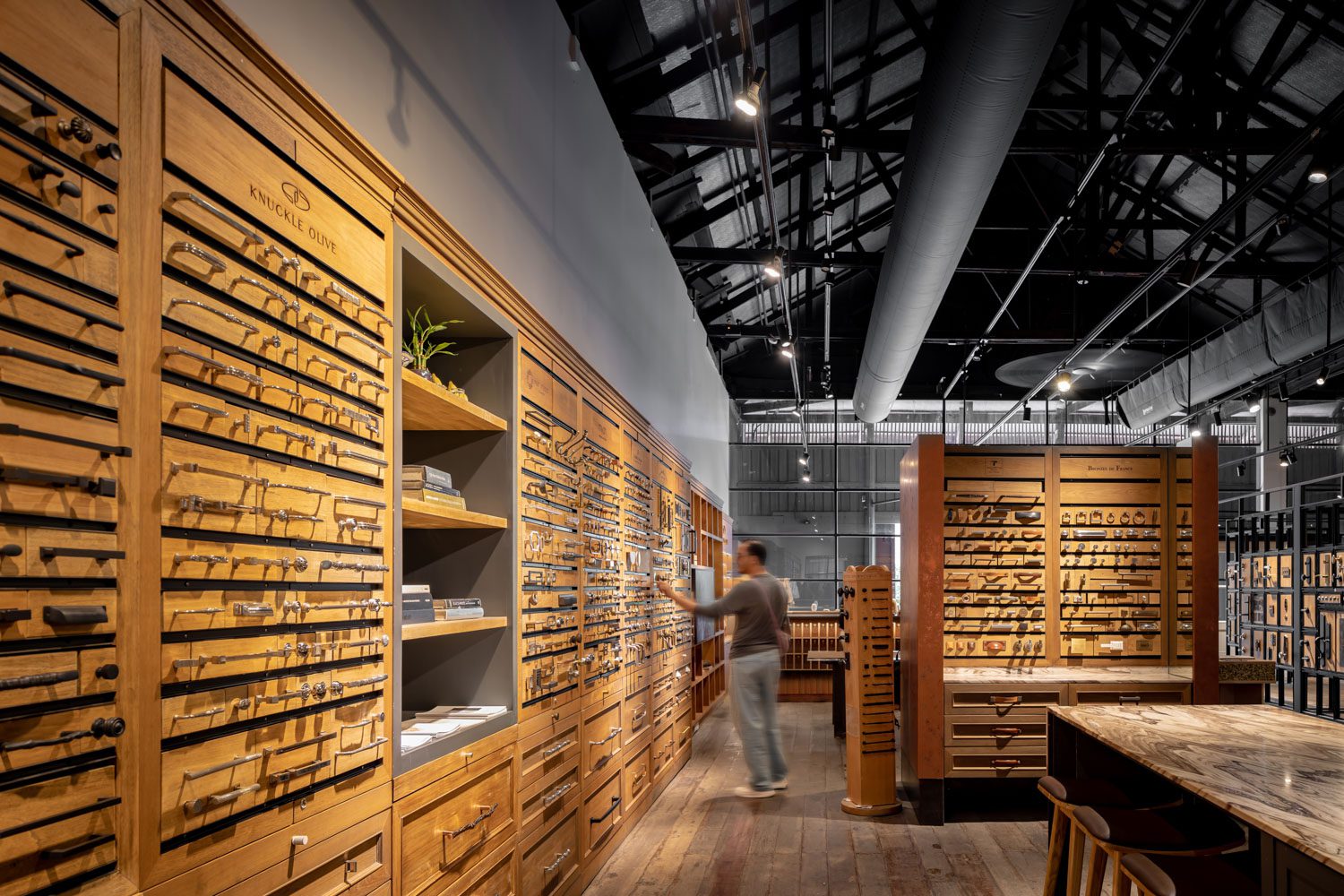
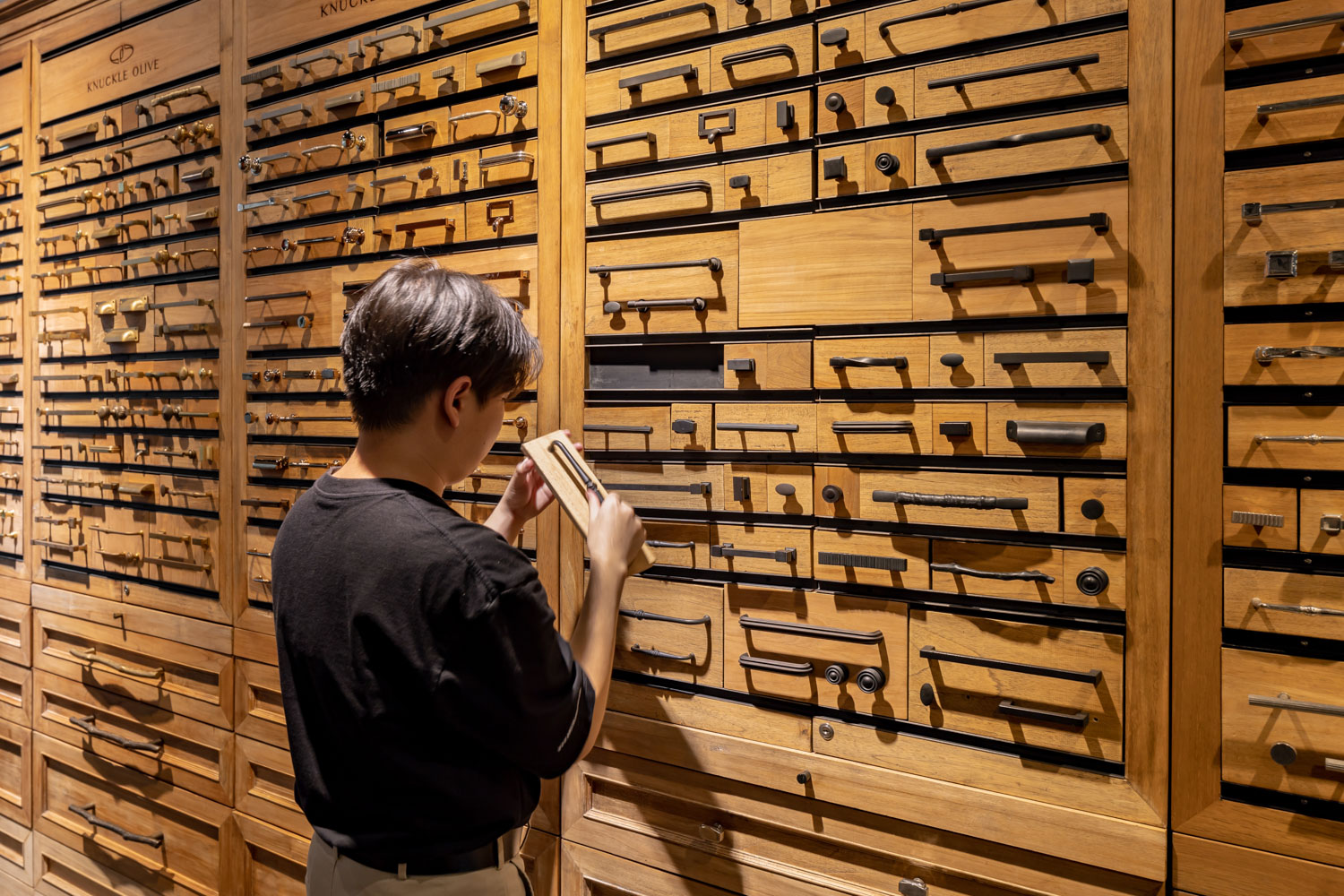
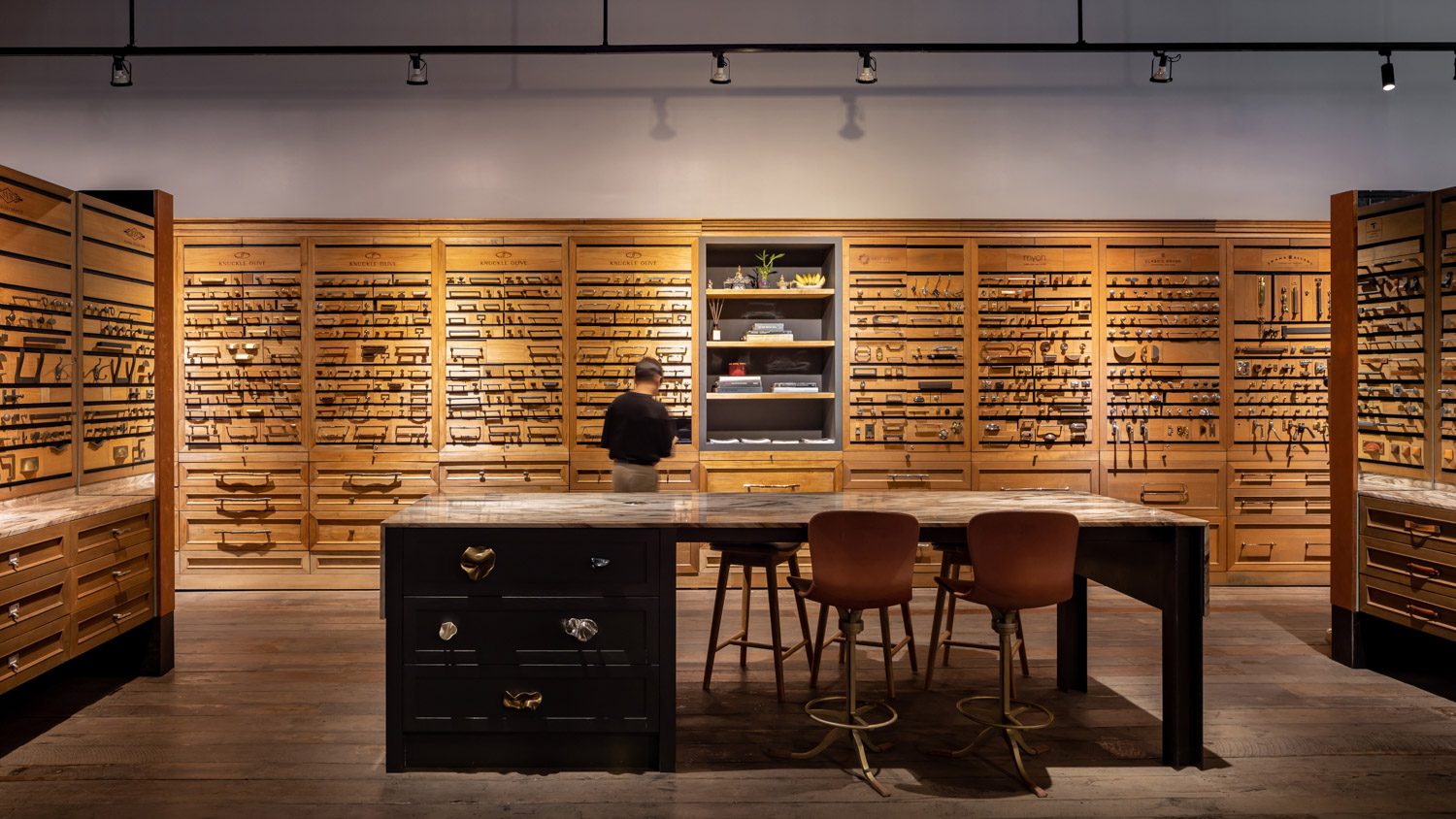
In creating the visitor experience, Sirin deliberately conceived a dedicated display for door and cabinet handles, presenting samples of every type mounted on magnetized teak panels. These panels are housed within a series of large wooden cabinets, arranged in succession to maintain a sense of understated elegance and visual continuity. The system allows visitors to easily examine, compare finishes, and physically handle each piece, offering a direct and realistic tactile experience.
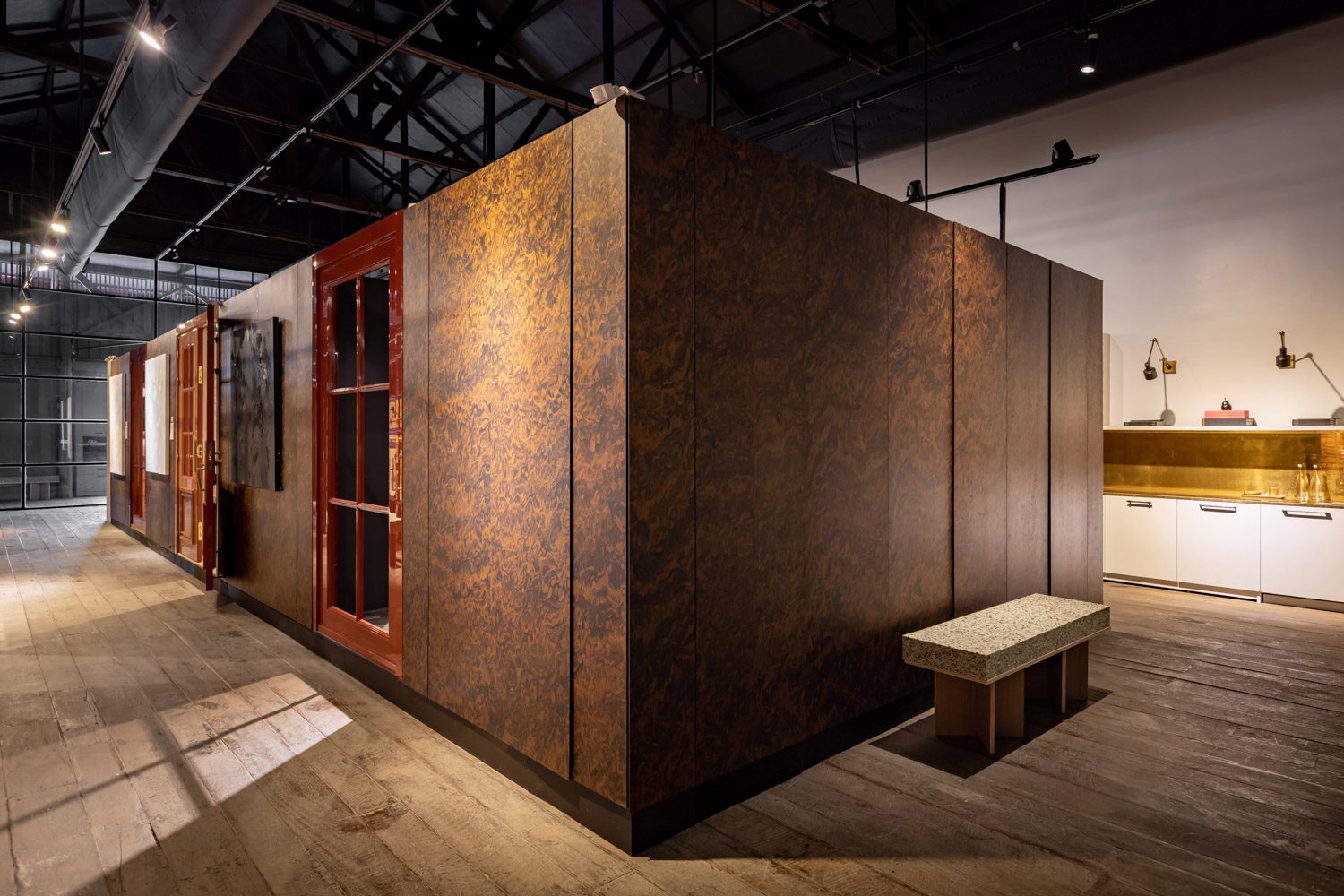
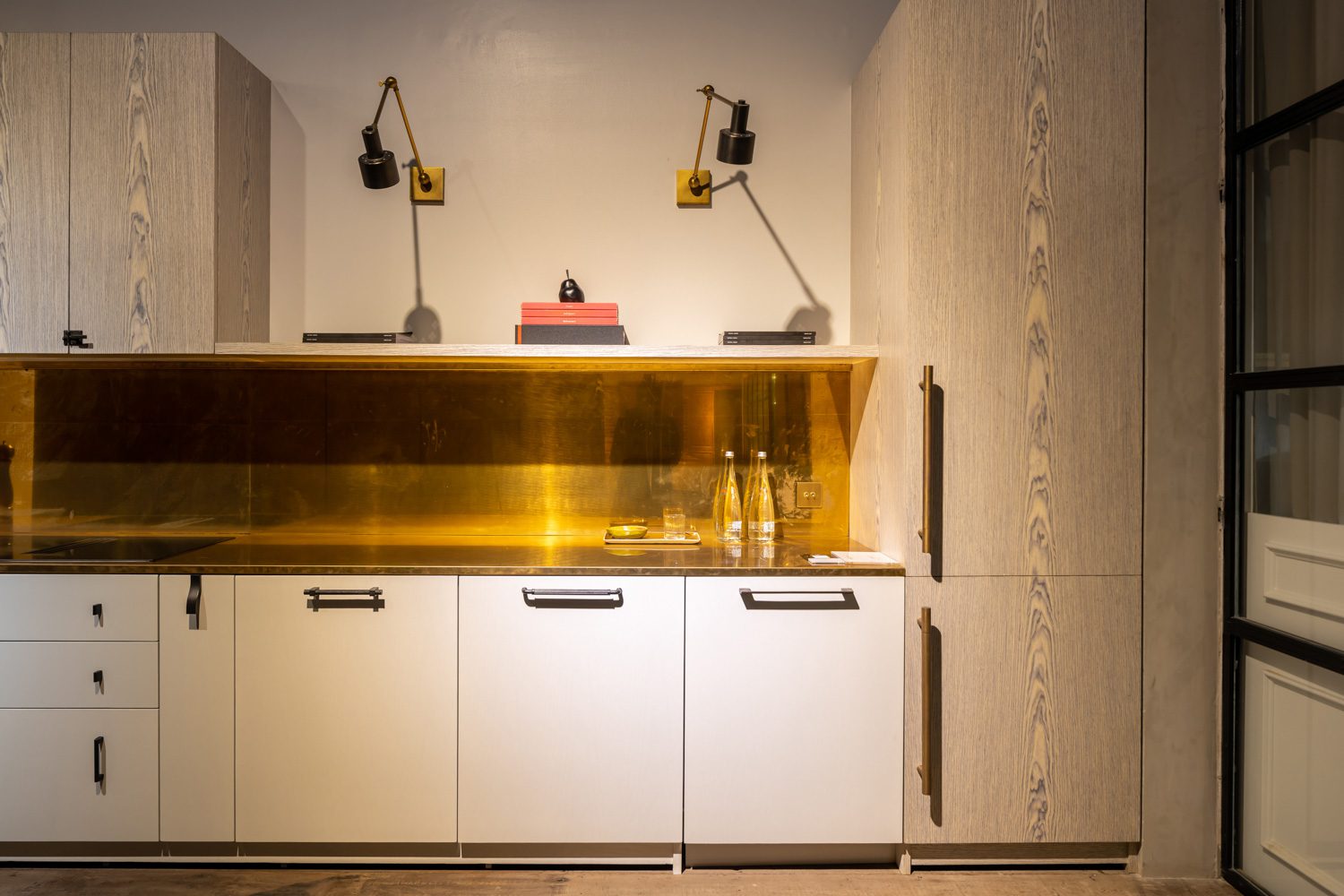
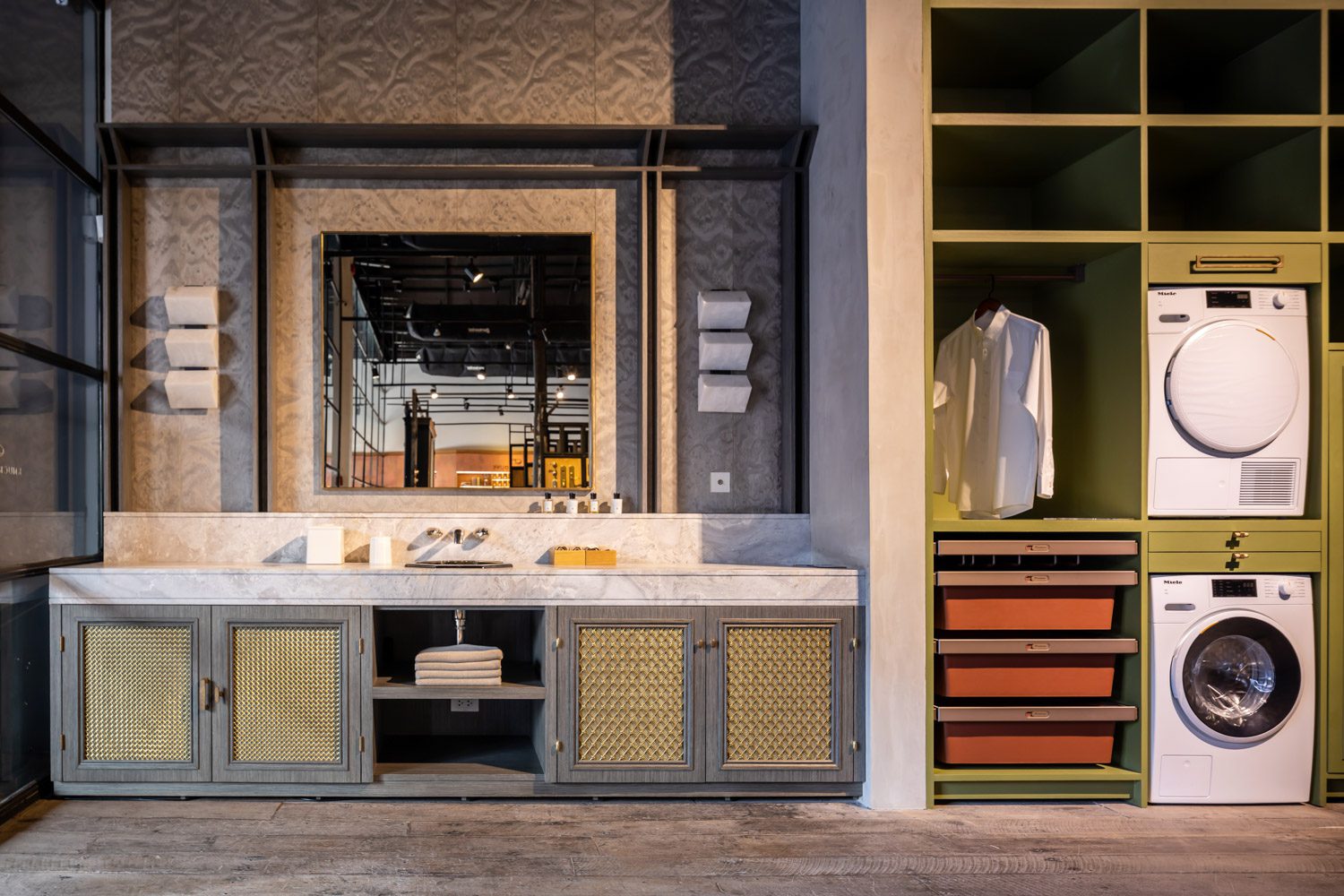
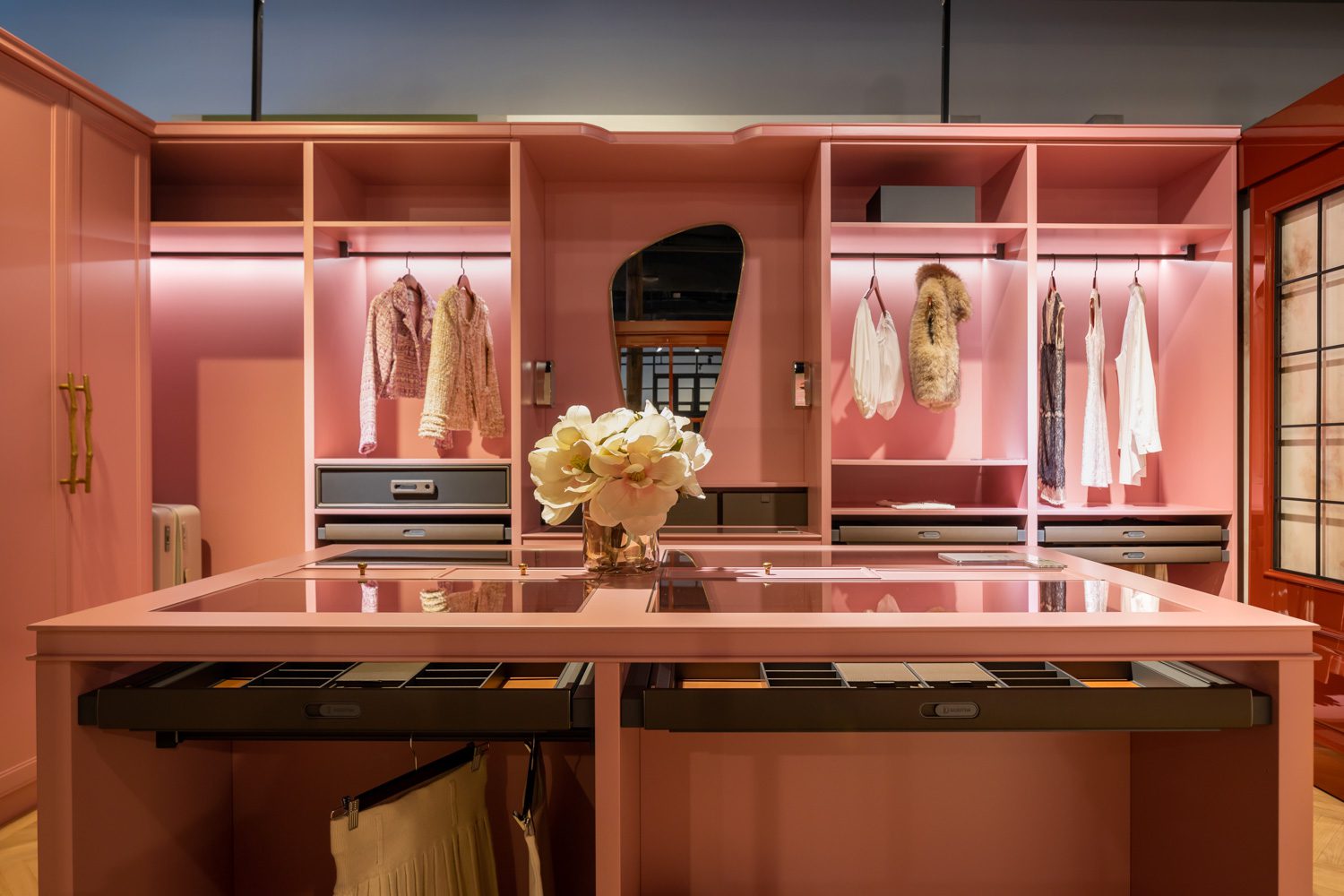
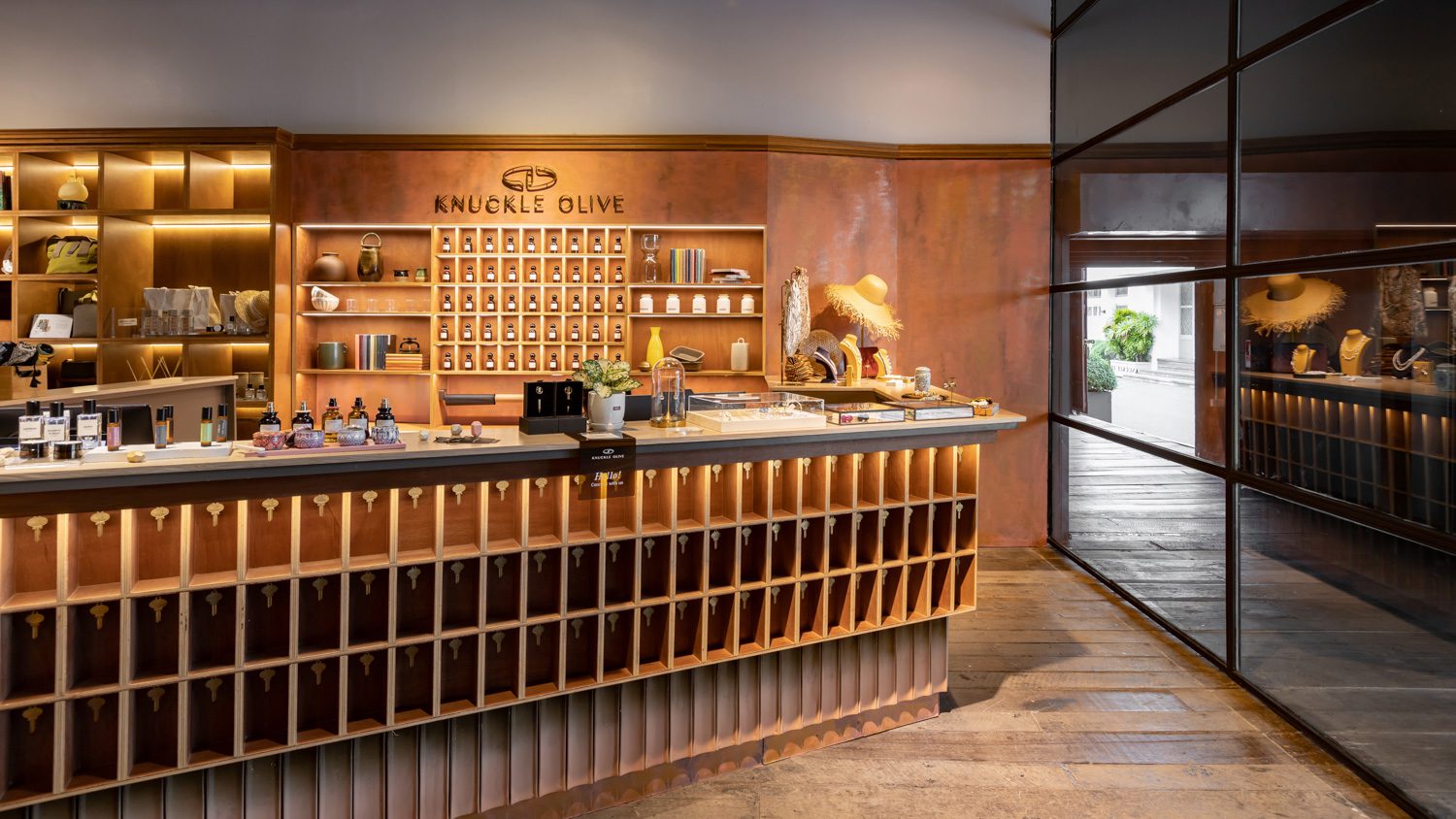
Beyond this, handles are also installed across a range of settings, including zones for appliances, kitchen fittings, wardrobe storage, and a curated shop area. This approach is intended to help visitors visualize how different handle designs might coexist within the same material context. Sirin notes that this strategy has noticeably reduced customer hesitation and uncertainty, explaining:
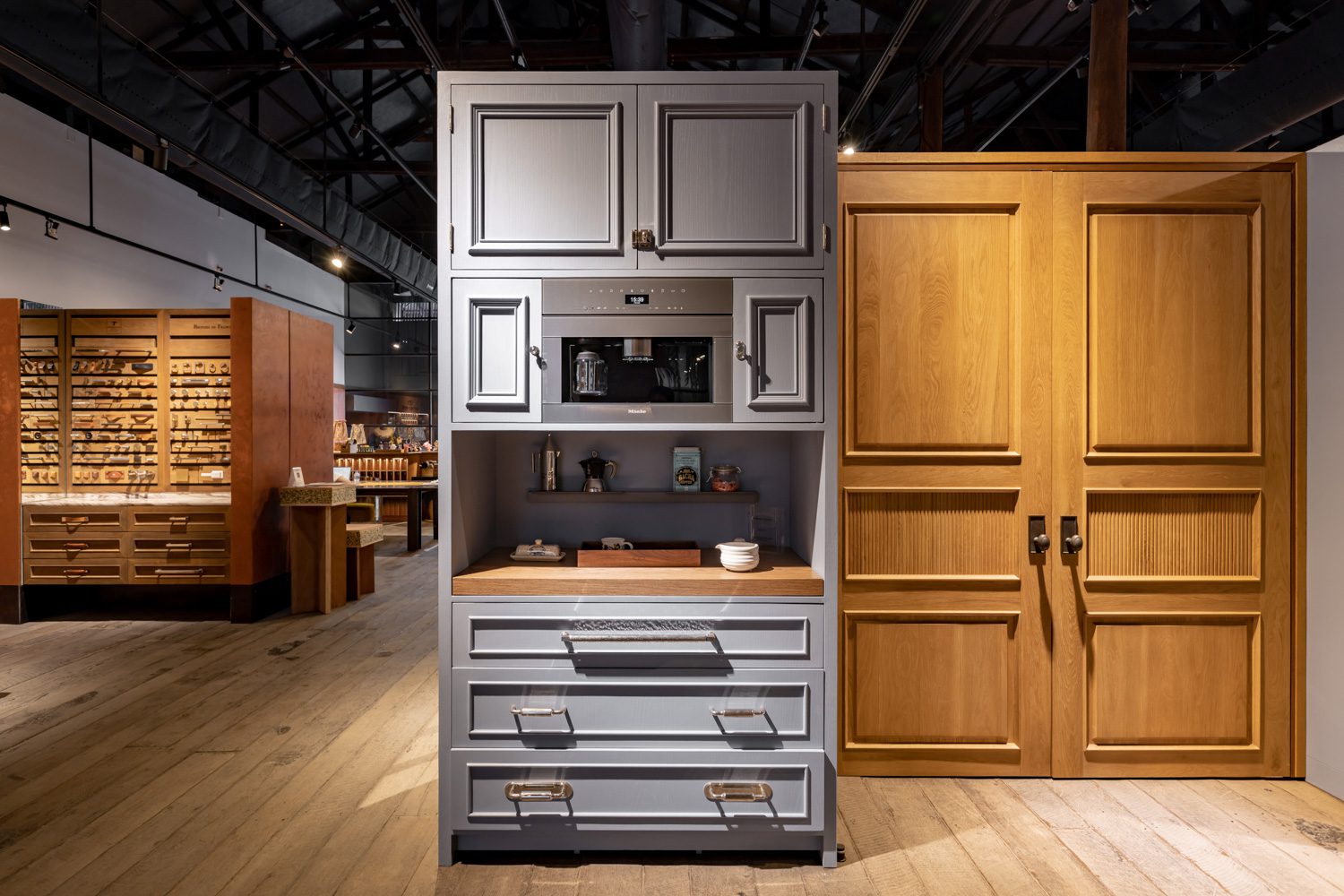
“Naturally, customers ask fewer questions when they can clearly visualize the outcome. For example, when we install handles at different price points on the same blue cabinet door, it helps dispel the assumption that only expensive items are beautiful. We want customers to see how different prices and forms each carry their own kind of beauty. Ultimately, they are free to choose what resonates with them.”
Crafting Experiences for the Design Community
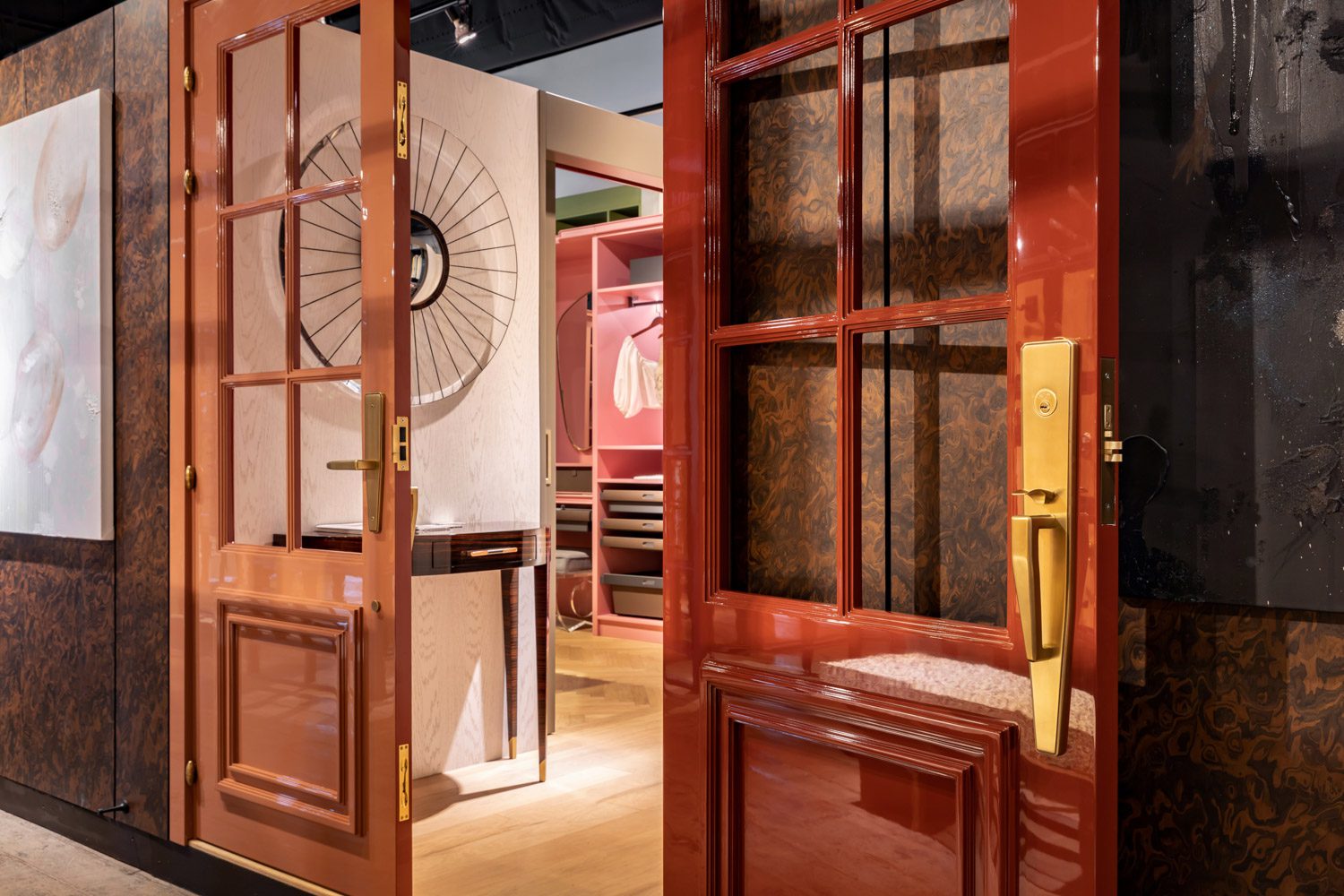
When speaking about experience design for the design community, Narong reflects on the role of perception and visual understanding. Humans, he notes, are accustomed to seeing a door as having only two sides. At Knuckle Olive, however, the door is presented with a third side: the edge, which reveals the latch and internal mechanism. This allows designers to clearly observe the relationship between form and function, including how the visual language of the handle aligns with its mechanical components. More importantly, it enables designers to better understand how handles and doors will truly appear when installed in real architectural settings. This perspective opens up new, more playful possibilities in design, with Knuckle Olive positioning itself as a catalyst that encourages designers to explore with greater confidence and imagination.
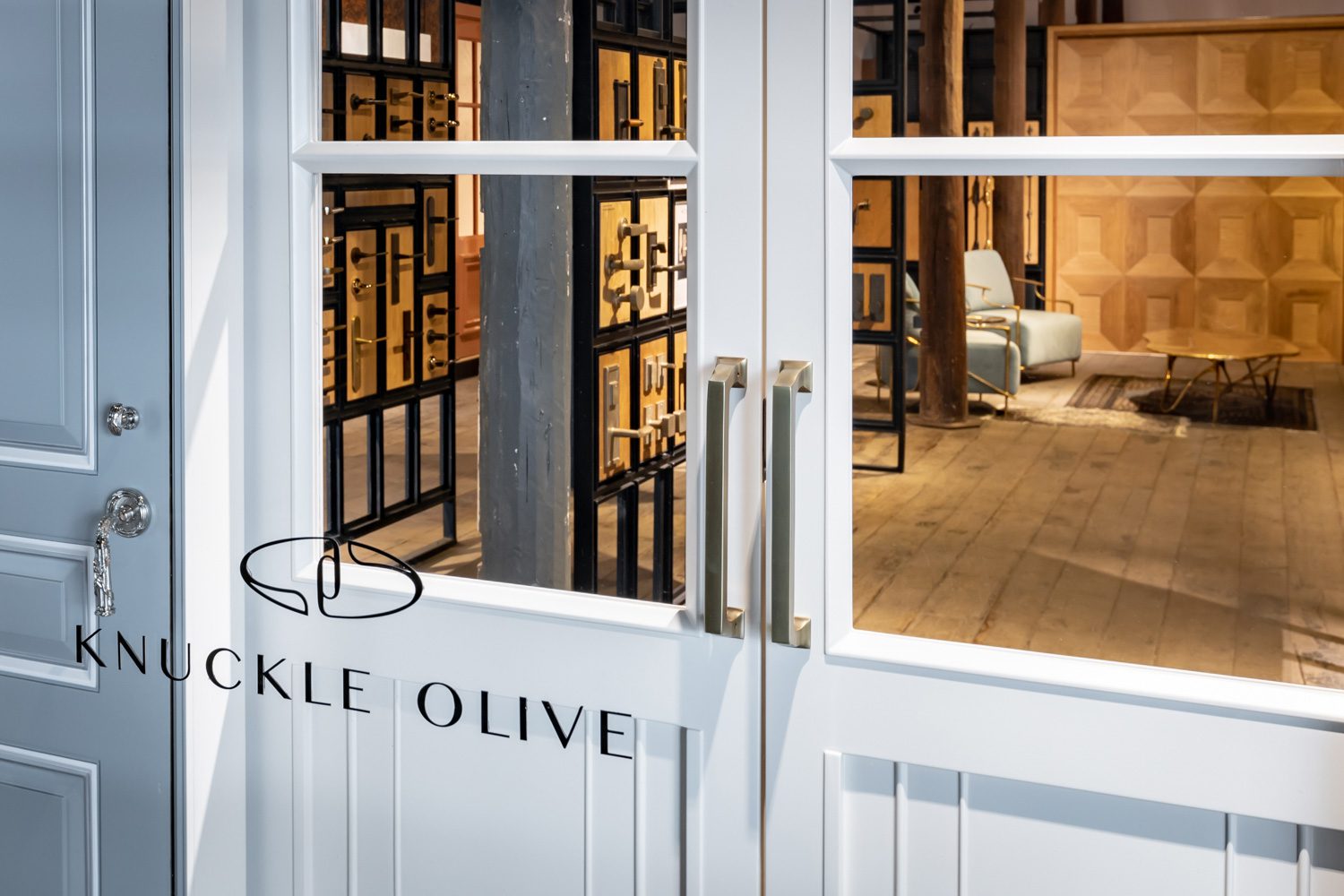
As Knuckle Olive moves into its eighteenth year, the brand stands on firm ground, guided by a clear vision to help propel the design industry forward. This trajectory aligns closely with its philosophy, ‘Simple details go a long way.’ Details that appear simple, yet are carefully considered, have the power to generate enduring value. While traces of time inevitably mark the journey thus far, these marks have become a form of accumulated wisdom. They have led Knuckle Olive to a deep understanding of how a single handle can beautifully connect the emotions of those who inhabit a space with the architecture that surrounds them.
knuckleolive.com
facebook.com/knuckleolive
instagram.com/knuckleolive
Line: @knuckleolive