
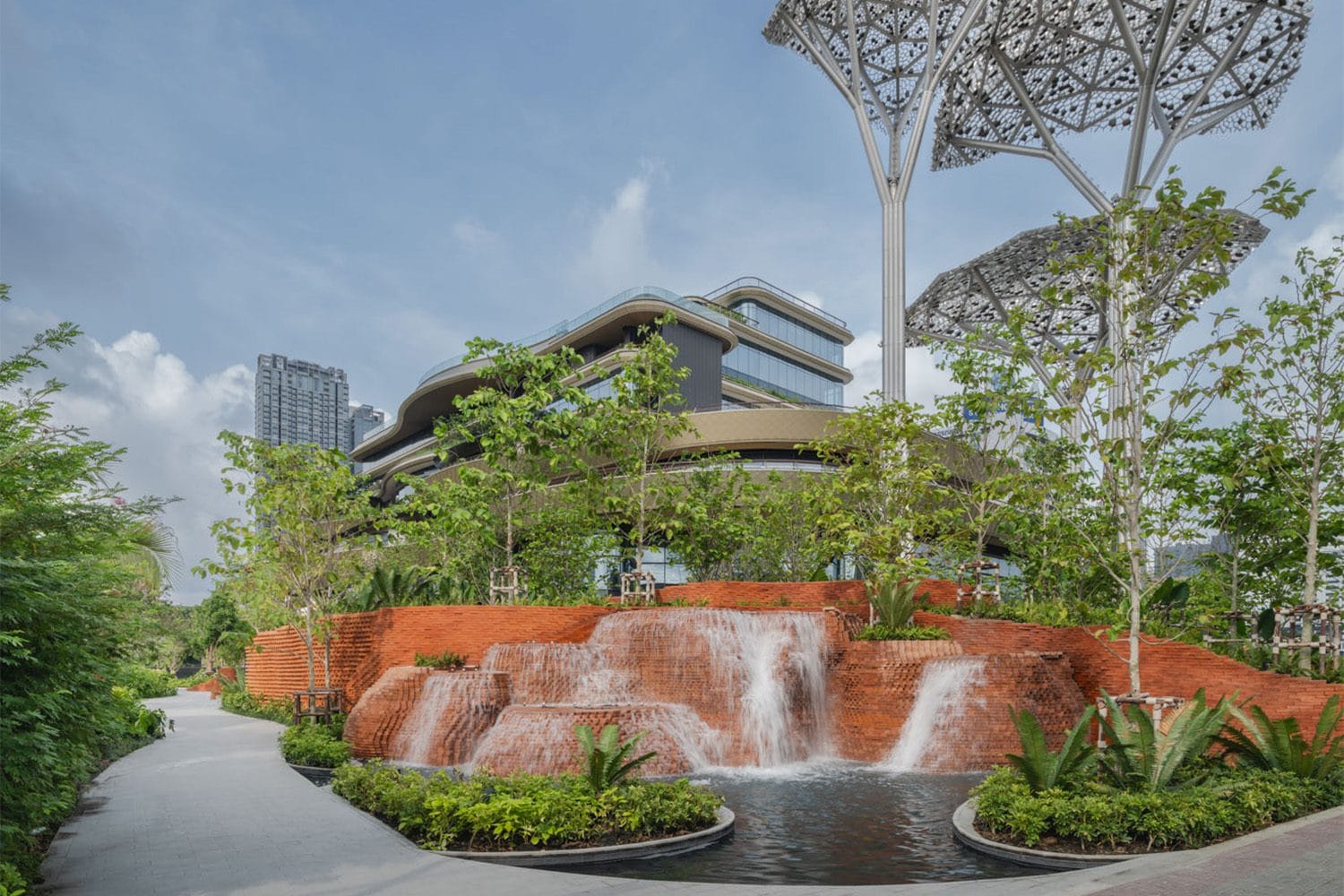
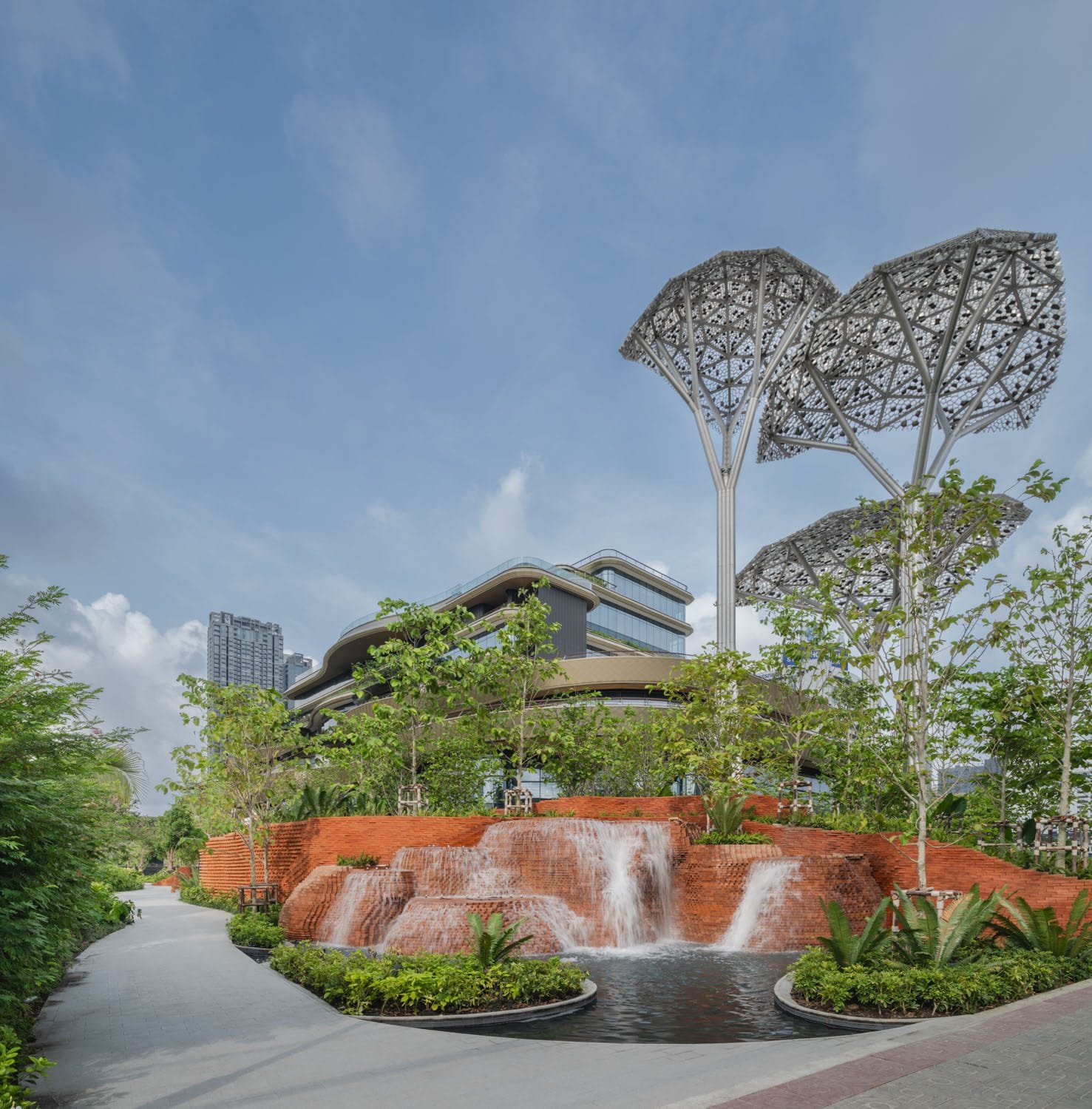
TO THE HEART OF THE FOREST AT HAPPITAT BY FOSTER + PARTNERS, WHERE OVER 200,000 SQUARE METERS IN BANGNA ARE TRANSFORMED INTO A VAST MIXED-USE PROJECT, A NATURE-CENTERED DESIGN FOR THE SUSTAINABLE WELL-BEING OF PEOPLE AND THE CITY
PHOTO: JINNAWAT BORIHANKIJANANA
(For Thai, press here)
Whether in the rhythm of flowers coming into bloom, the graceful ordering of geological strata, or the forest ecosystems that have coexisted in mutual support for millions of years, nature has long proven itself to be the world’s most intelligent and profound architect. It is for this reason that many works of architecture have turned to nature as a design blueprint, seeking to create spaces of lasting and truly sustainable value.
Happitat, a vast mixed-use development of more than 200,000 square meters in Bangkok’s Bangna district, comprising retail spaces, offices, and a center for learning and activities, was conceived with ‘nature’ as its guiding principle from the earliest stages of master planning. Foster + Partners, through their local entity in Thailand, F&P (Thailand) Ltd., as the designer, has envisioned Happitat as a place where architecture and nature are brought into close dialogue. “We designed this project with nature at its heart,” says Sunphol Sorakul, Director of F&P (Thailand) and Partner at Foster + Partners.
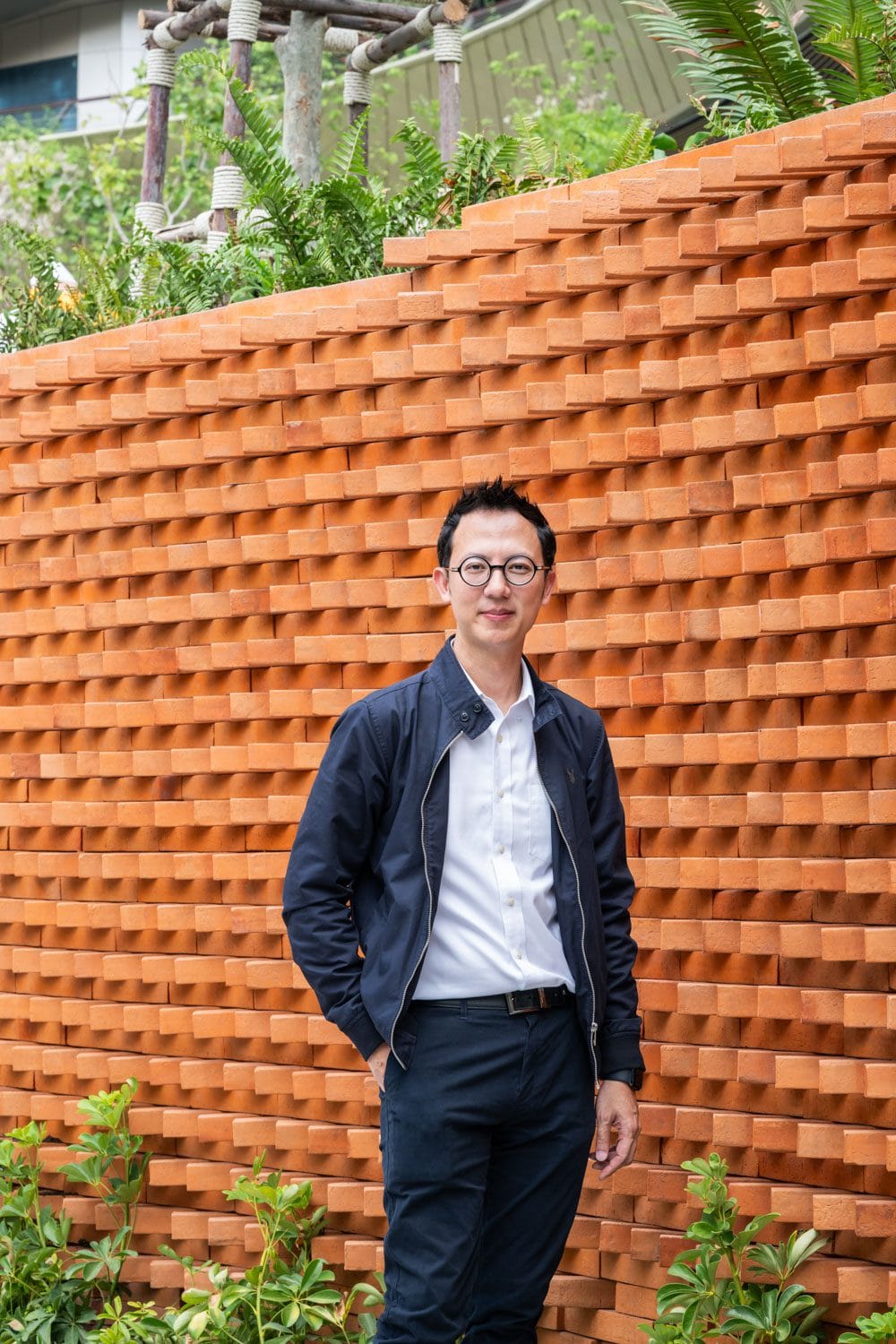
Sunphol Sorakul, Director of F&P (Thailand) and Partner at Foster + Partners
A Gradual Passage from City to Greenery
The project’s master plan is organized around the idea of ‘a journey into the heart of the forest,’ creating a seamless transition between the energy of Bangna-Trad Road at the front of the site and the lush green environment within. Positioned at the entrance are Bloominas and Wonderwild, the project’s commercial and office buildings. Placing these two buildings at the front is a considered decision: both are constantly animated by movement and activity, responding naturally to the dynamic condition of Bangna-Trad Road. Their large and distinctive architectural presence also helps draw the attention of passersby, inviting them into the project. At the innermost part of the site stands Festie Town, a center for conferences, performances, and events. The building sits in harmony with the shaded natural atmosphere that defines the project’s verdant landscape.
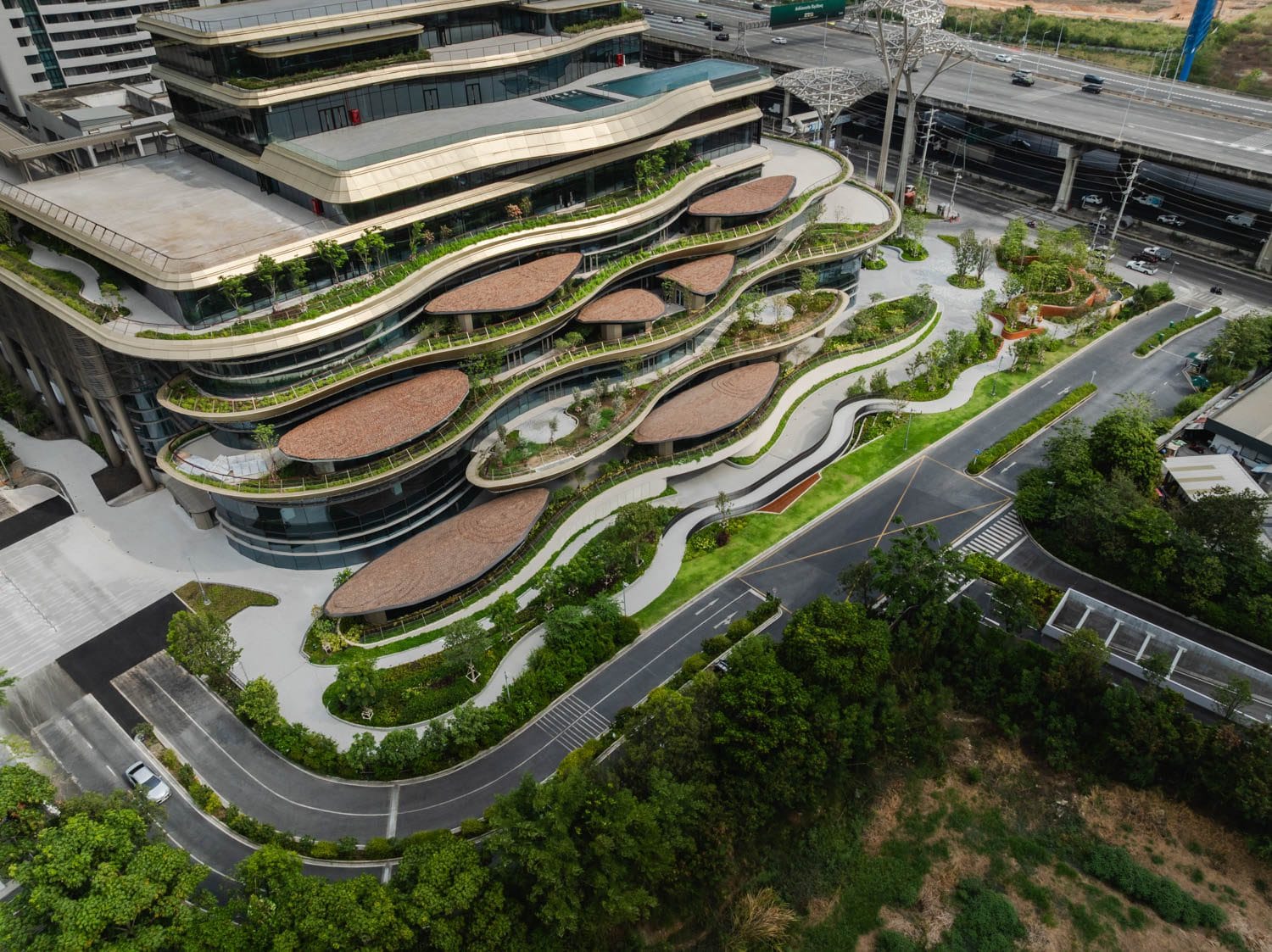
Bloominas Building
Throughout the route from the front of the project to its inner zones, green spaces are carefully layered into the experience, allowing visitors to encounter nature at every step. The idea of ‘nature-centered design’ is, therefore, not merely a concept, but something that can be physically felt and experienced.
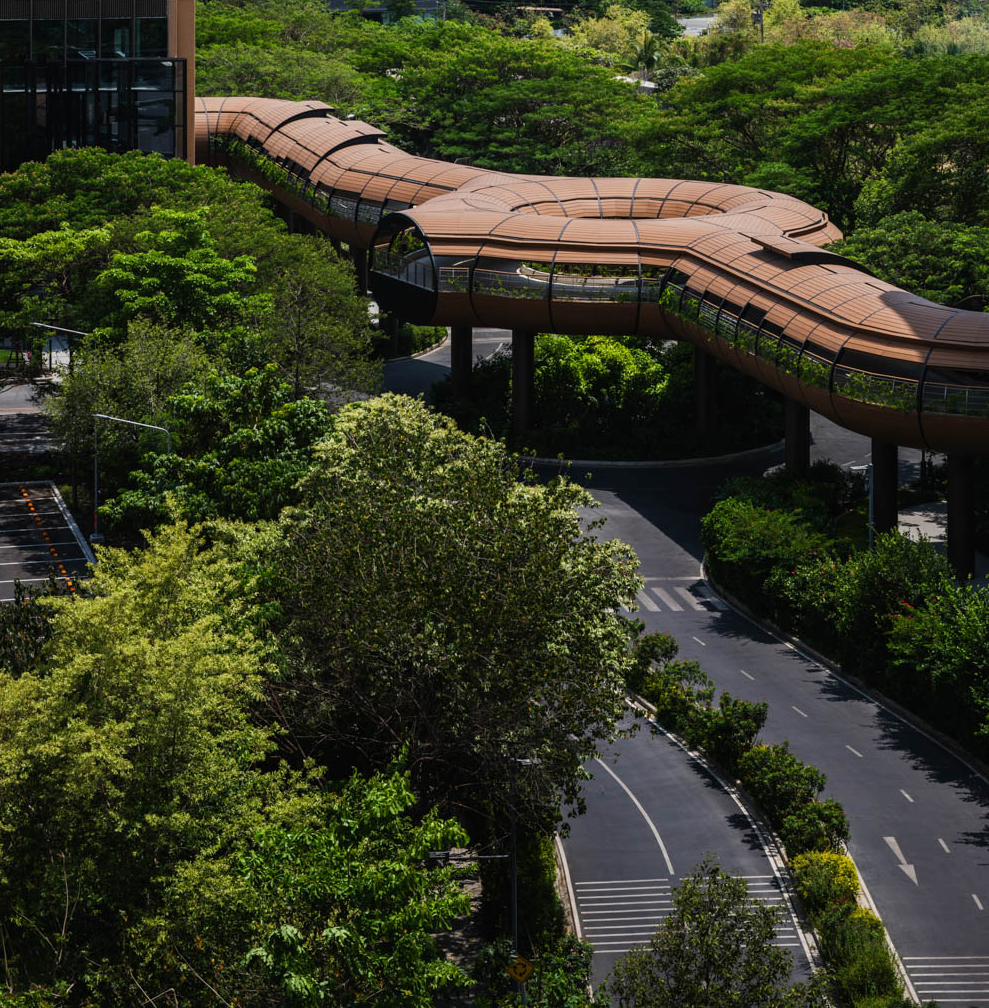
“We have lost contact with nature as cities become urbanized. It is only recently that people have started to recognize the benefits that we get from being close to nature. The root of this project is the idea of reintroducing nature back to the people and creating a much closer synergy between architecture and nature,” explains Toby Blunt, Deputy Head of Studio, Senior Partner at Foster + Partners, elaborating on the project’s underlying ambition to reconnect people with nature, a principle woven throughout the development.
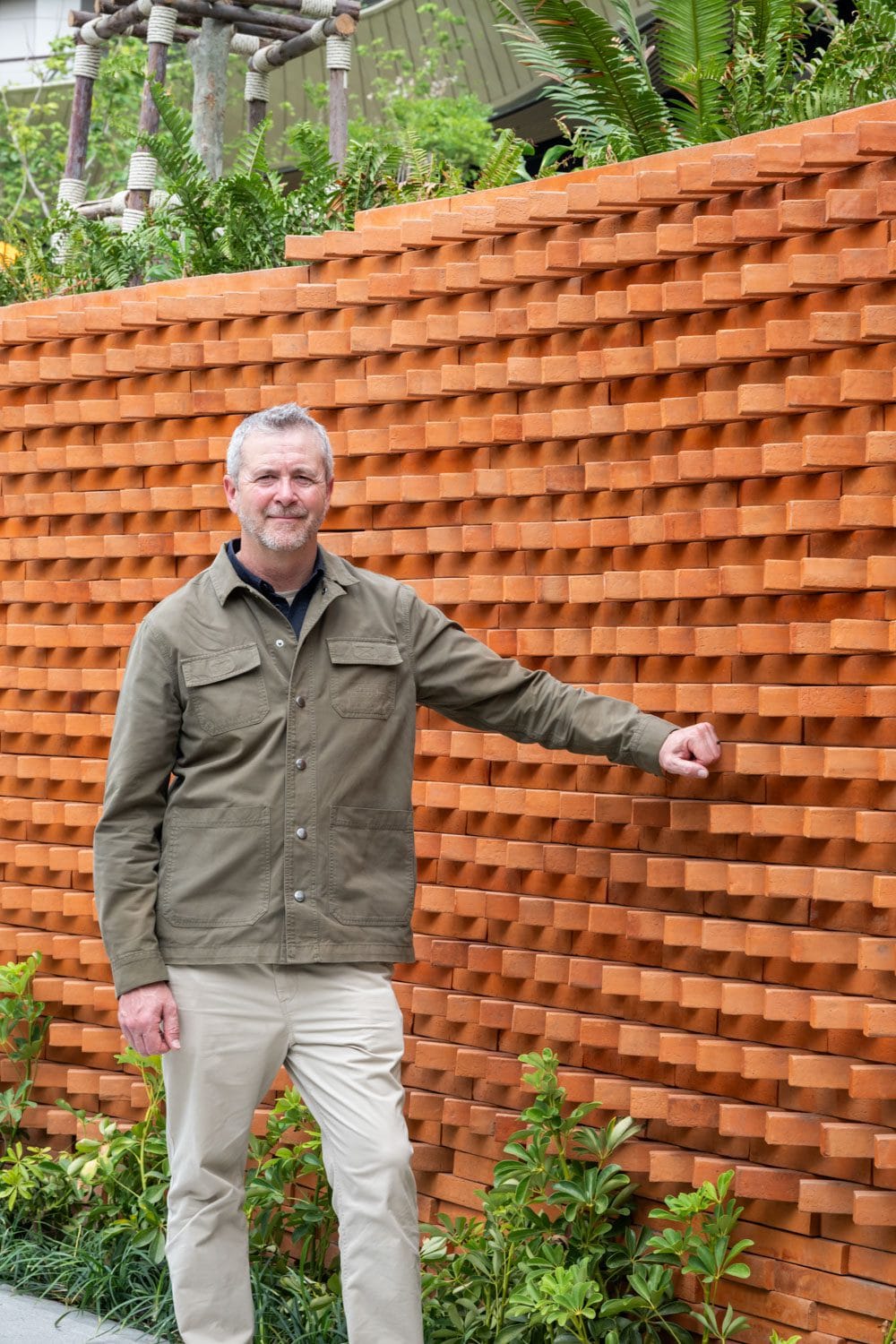
Toby Blunt, Deputy Head of Studio, Senior Partner at Foster + Partners
Composing Narrative Through Scale
Although Bloominas and Wonderwild are monumental in scale and clearly visible from the outside, the architects temper their mass by drawing on the form of ‘terraced mountains.’ The buildings gradually step down in height, creating a scale that feels more approachable and human. These stepped terraces also become outdoor balconies where users can pause, unwind, and enjoy the surrounding greenery. The trees planted along the terraces further soften the buildings’ appearance, giving them a shaded and lively character, while also functioning as a natural buffer against the heat, dust, and noise from the main road, creating a more comfortable environment within.
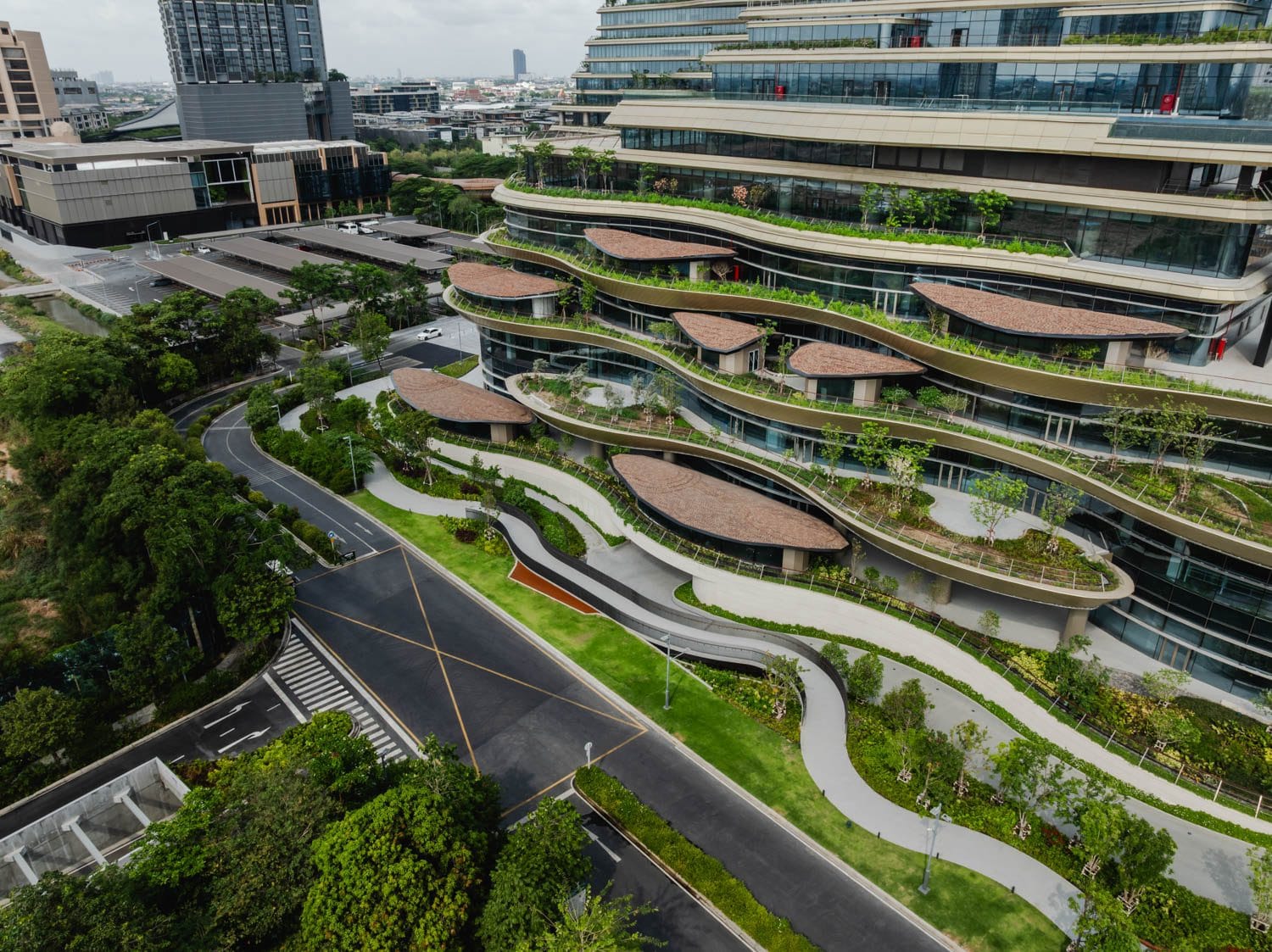
Bloominas Building
By contrast, Festie Town, located deeper within the development, is designed at a smaller scale, rising to only three stories in order to blend with the ground-level landscape of trees. It acts almost as a ‘gateway to the forest,’ leading visitors from the atmosphere of the city into an experience that feels more intimate and closely connected to nature.
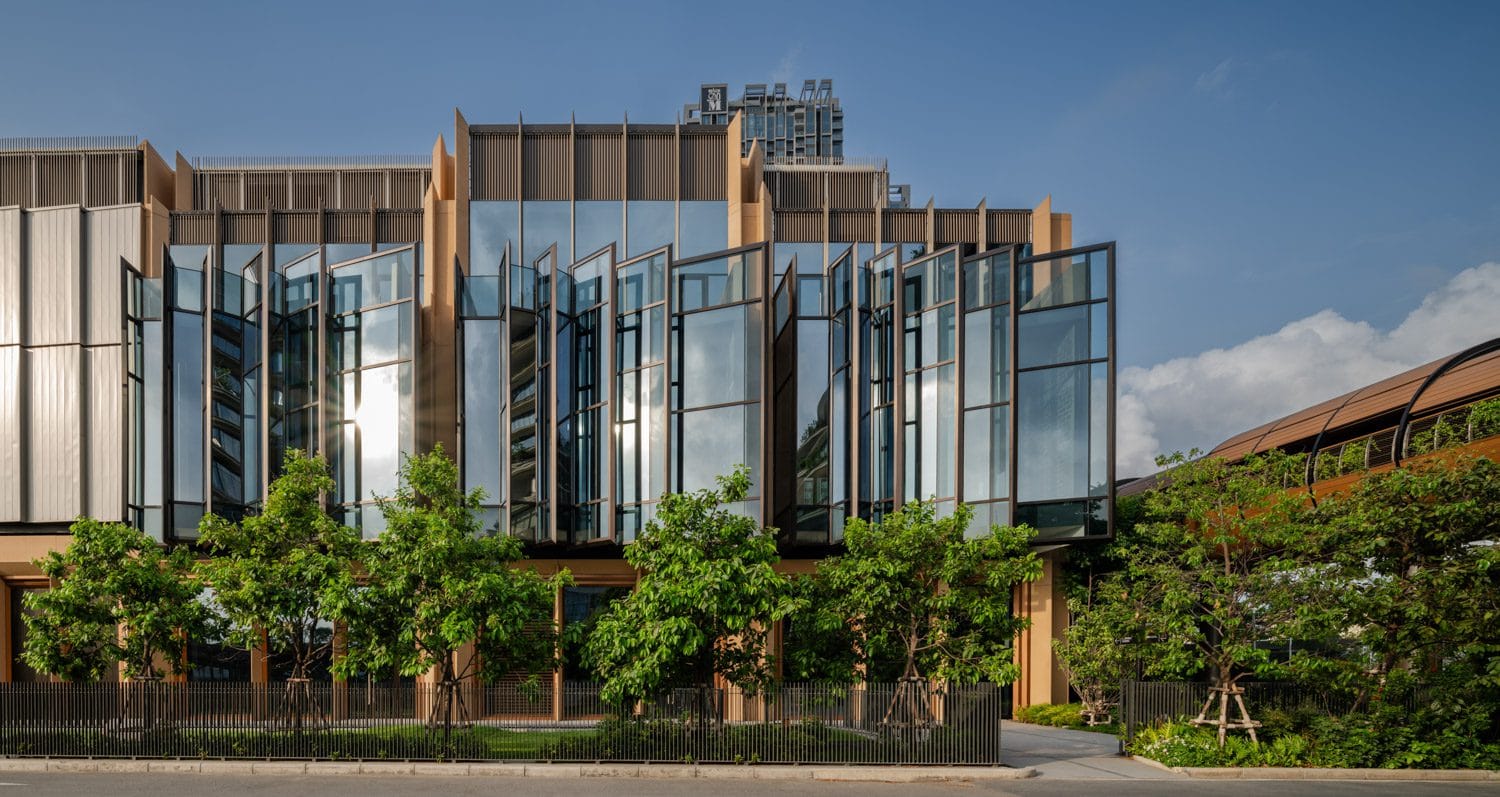
Festie Town Building
Architecture Shaped by Climate
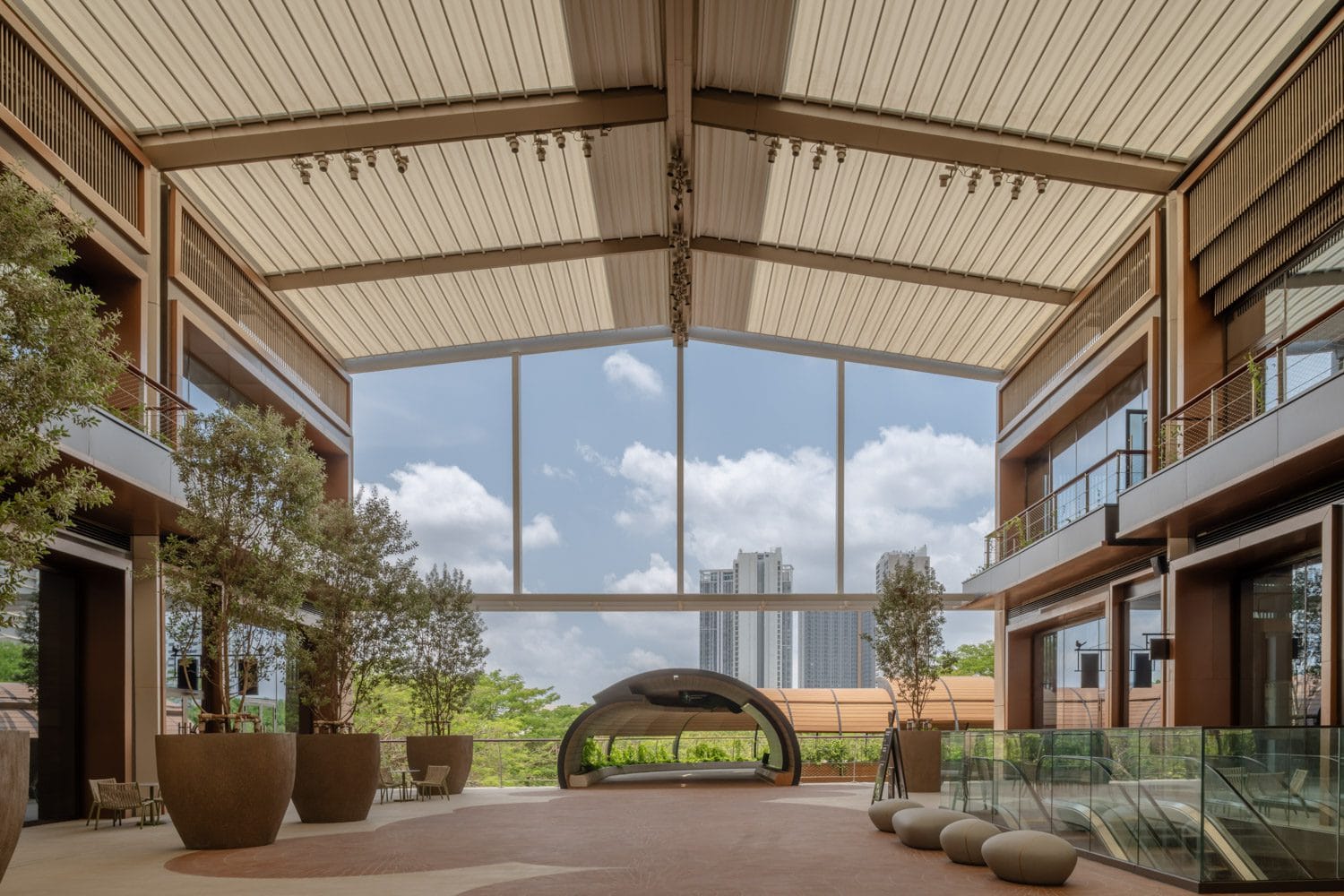
Beyond drawing inspiration from nature as a design model, another central concern is how the buildings can coexist seamlessly with the natural climate. In Thailand’s hot and humid conditions, the deep projecting balconies of Bloominas act as eaves, providing shade for the areas below and allowing people to sit and rest comfortably outdoors. Although Wonderwild is clad in transparent glass, the sun-shading panels and trees planted along the front elevation help effectively shield the building from heat. For Festie Town, which faces west and is exposed to the afternoon sun, the architects responded by creating a semi-outdoor arcade, an open space carved into the building volume that encourages natural ventilation and offers users a cooler, more comfortable environment.
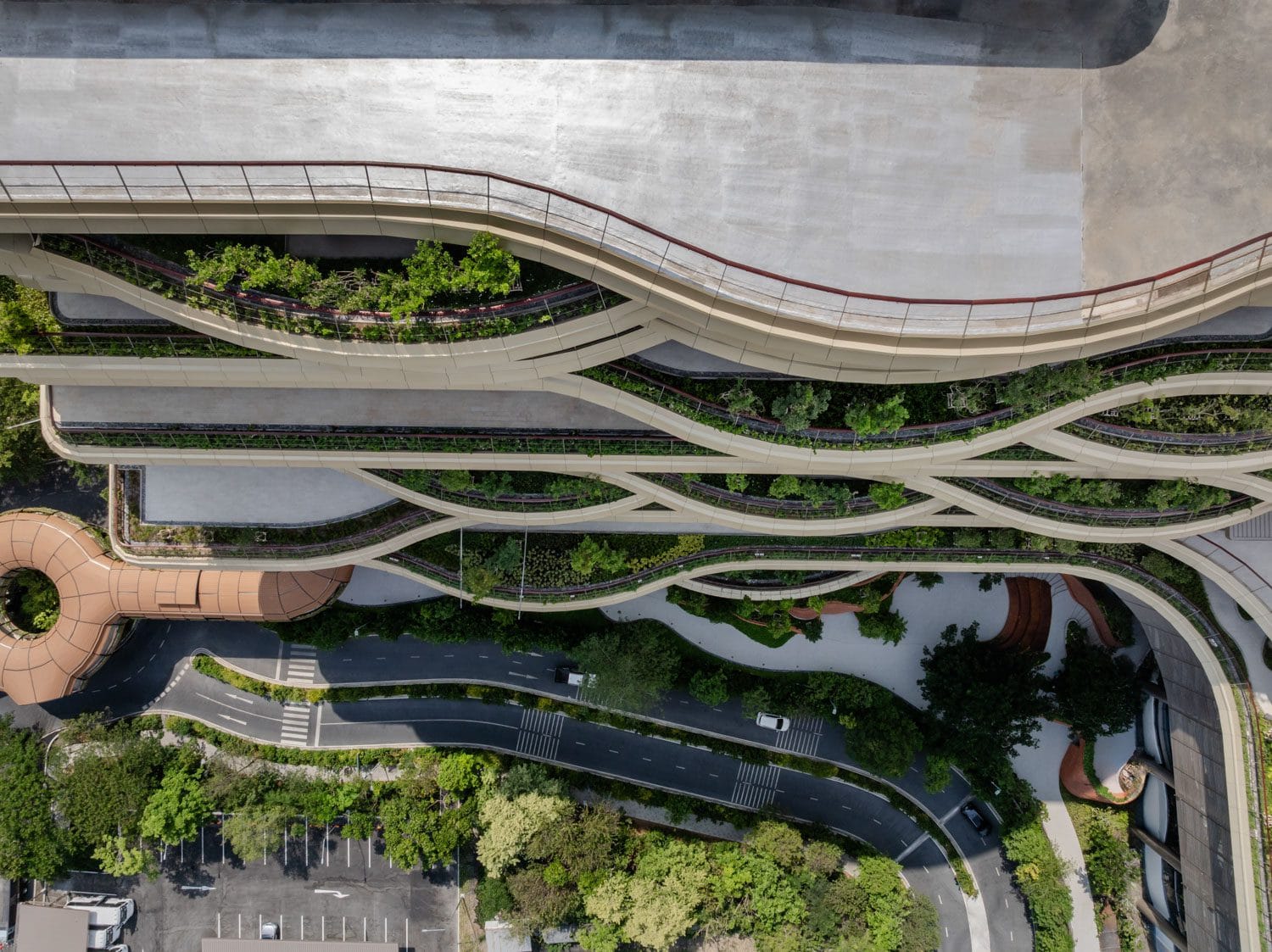
The balcony provides shade for the area underneath.
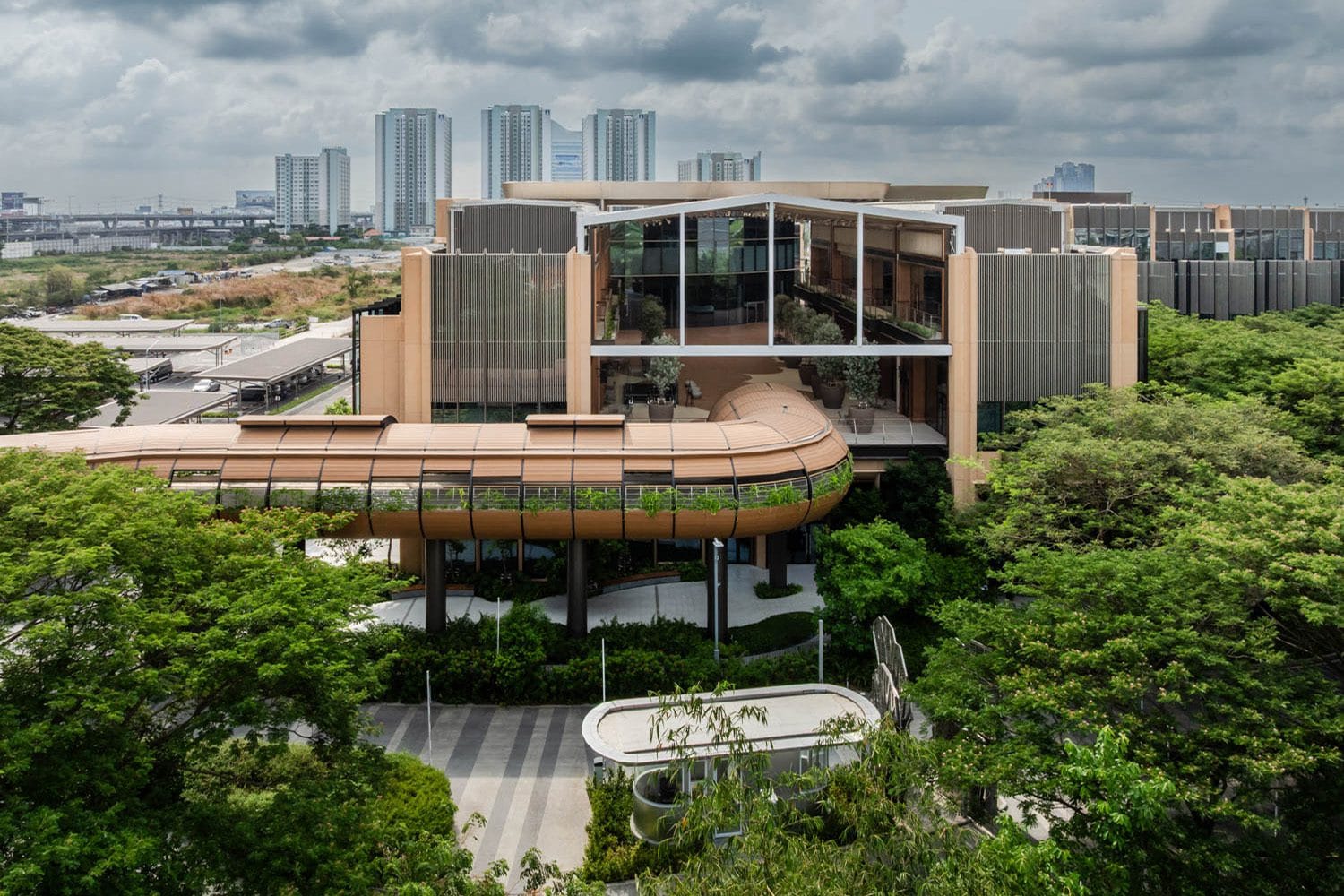 Festie Town Building with the semi-outdoor Arcade
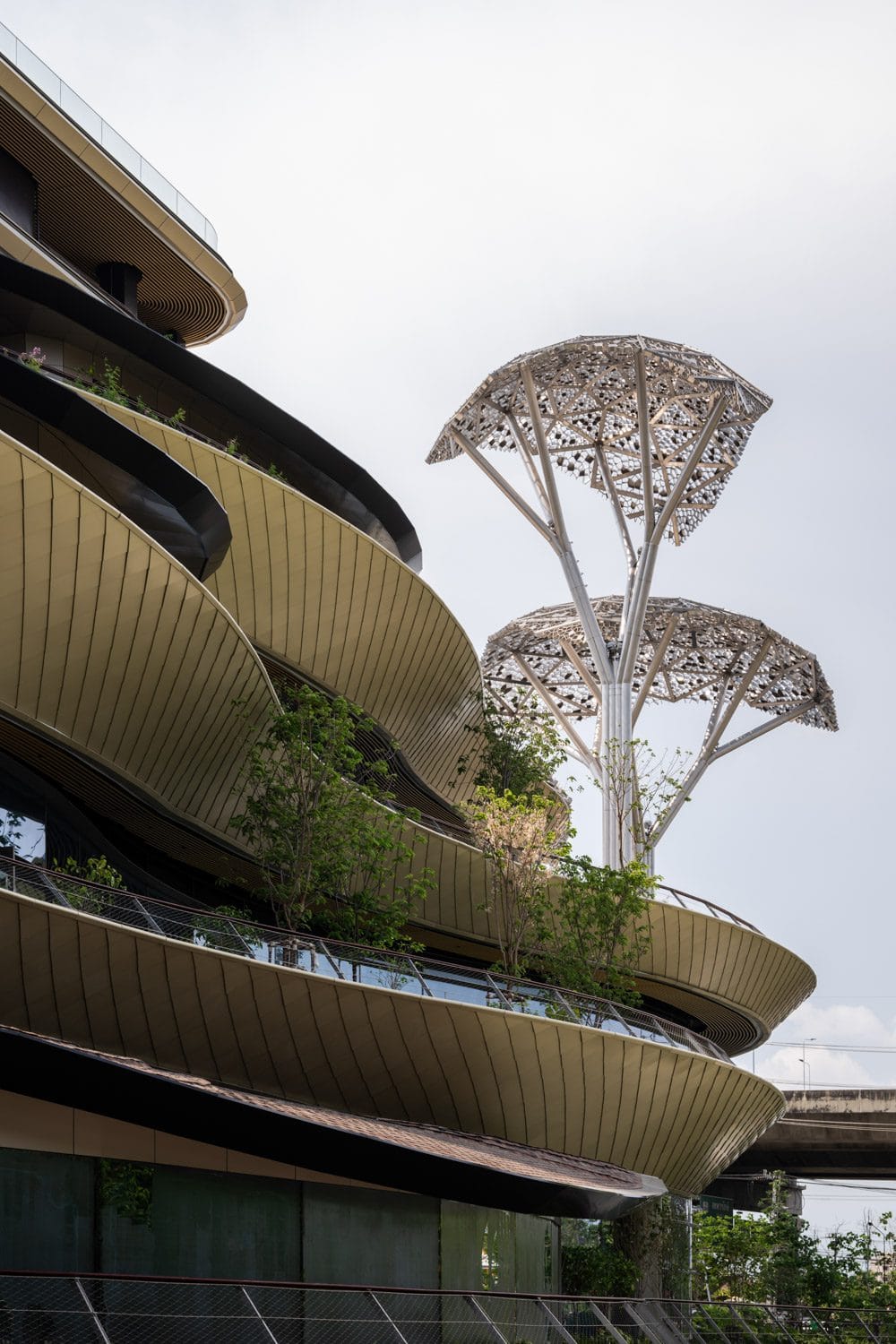
Each building blends harmoniously with nature through bronze and gold aluminum panels, which lend the architecture a refined and dignified character. At the same time, aluminum panels were chosen as the primary material for its long-term performance. They are easy to maintain, convenient to clean, and less prone to rapid deterioration under the country’s warm, moisture-laden climate.
“The value of design is not only about how beautiful a building looks on its first day, but also about considering its life cycle, how it will grow and be maintained so that its beauty can endure. The aim is for this work of architecture to remain a place of happiness for people for decades to come,” Sunphol adds.
A Project That Embraces Every Generation
It would be a missed opportunity if the project’s graceful integration of nature and architecture were not accessible to everyone. For this reason, Happitat incorporates the principles of Universal Design and Design for Multi-Generation into its blueprint.
Universal Design in architecture is not simply about adding a separate ramp for accessibility. Rather, it is about designing in a way that makes everyone feel equally considered, without creating a sense of separation. Instead of placing ramps in hidden corners, Happitat turns its main circulation routes into gently sloping pathways, so that no one is made to feel like an afterthought.
“Our principle is that there must be choices, and those choices must not be inferior to the main route. People with physical limitations do not want to be treated differently from others. They want to feel that they are part of the family and society, just like everyone else,” explains Sunphol.
To embrace people of all ages, the project creates a variety of ‘choices’ that respond to different tastes and needs. Younger generations who enjoy vibrancy and movement can spend time in the more active front area of the development. Older visitors, meanwhile, who may feel less connected to high-rise buildings and instead seek a closer relationship with nature, can retreat to the quieter inner zones, where mature trees provide generous shade. Whatever their needs may be, the diversity of spatial qualities allows each person to choose the experience that best suits them.
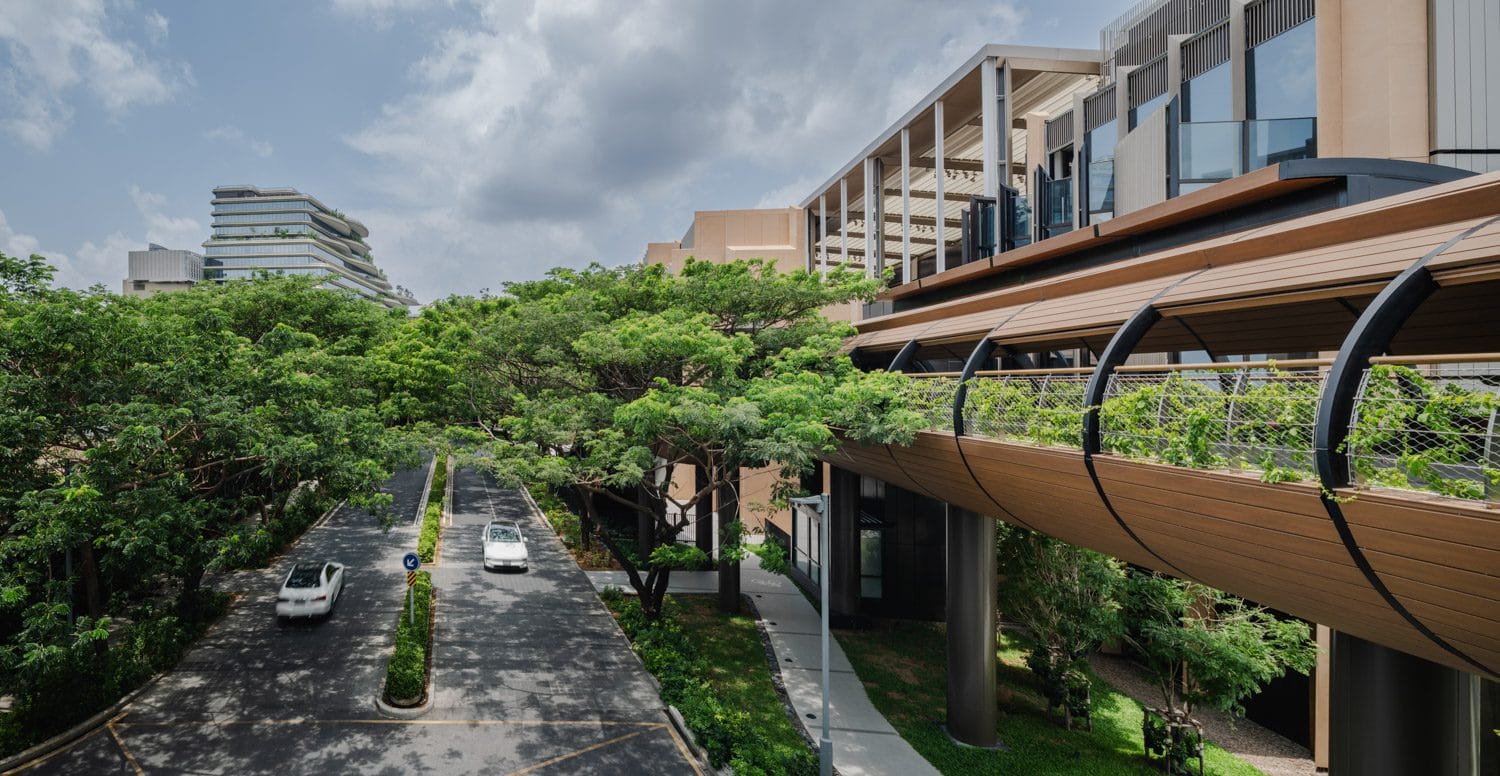
The result of placing nature at the heart of the design is more than a beautiful view. It is the creation of an environment that supports wellbeing, reconnects people with nature, and encourages human interaction, enhancing the quality of life for both ‘people’ and the ‘city’ in a sustainable way.
“We need to create what the city is missing: green spaces and open-air areas where people can sit, have a cup of coffee, and listen to birdsong, without having to hear the sound of traffic all the time,” Sunphol reflects.
“For us, this is a special project because when we first came here, it was just a field with some cows walking around, and today it’s a place where people are going to live, meet their friends, and build relationships. This is a community,” Toby Blunt concluded.