
A CONVERSATION REVEALING THE IDENTITY OF TUCK BANGKOK BY TUCK MUNTARBHORN, FROM THE CONCEPT OF ART SANCTUARY AND THE FUSION OF FAMILY HERITAGE IN MEDICINE AND FASHION, TO BUILDING A BRIDGE CONNECTING THAI ART TO THE INTERNATIONAL STAGE THROUGH ART ONO
TEXT & PHOTO: SARUNKORN ARTHAN
(For Thai, press here)
The essence of Zen is more than emptiness. It is the discovery of a center of stillness amid dynamic movement. Tuck Muntarbhorn recognizes this quality and brings this ancient philosophy into dialogue with the urban context of Phrom Phong, Bangkok’s fashion hub defined by speed, noise, and constant activity. The result is TUCK Bangkok, an art space conceived as an Art Sanctuary: a spiritual refuge that gently invites visitors to pause, return to themselves, and begin to heal.
At ART OnO, TUCK Bangkok, the festival’s sole Thai gallery, extends its reach onto an international stage. art4d speaks with Tuck Muntarbhorn about the process of bringing together the DNA of his family, from his grandfather’s practice as a cardiac surgeon to the haute couture textiles of his grandmother and mother, and transforming these inheritances into an artistic practice oriented toward spiritual restoration. The conversation also explores his curatorial collaboration with Austrian artist Wolfgang Walkensteiner, and their search for new ground in building ‘a bridge between Thailand and South Korea through art, philosophy, and the economy.’
art4d: What is TUCK Bangkok, what does it do, and what is its relationship to art?
Tuck Muntarbhorn: It begins with me, Tuck Muntarbhorn. My surname, Muntarbhorn, can be understood as ‘the blessing of a mantra,’ which relates to healing in many forms. This is what led TUCK Bangkok to become an Art Sanctuary centered on healing, the heart, and stillness. Located in Phrom Phong, at the heart of Bangkok’s fashion district, it offers people interested in art a place to restore themselves through quiet contemplation. It is also a space where masters of Asian art and Thai artists drawn to stillness can come together.
art4d: Beyond the term ‘Art Sanctuary,’ how else would you define TUCK Bangkok?
TM: ‘To greet Bangkok with spirit.’ TUCK is not only my name; in Thai, tuck also means ‘to greet.’ TUCK Bangkok is therefore a way of greeting Bangkok with spirit.
art4d: Where is the gallery located today, and why is this site important?
TM: TUCK Bangkok is located on Sukhumvit 47, also known as Soi Baan Don. My grandfather, Smarn Muntarbhorn, was not only Thailand’s first cardiac surgeon but was also originally from Baan Don, the historic and colloquial name for what is now Mueang Surat Thani District. When he moved into a house on this lane, he was among its earliest residents and gave it the name Soi Baan Don. TUCK Bangkok therefore brings together, in one place, the country’s first cardiac surgeon and its first fashion designer. I also draw on the knowledge of my grandmother, Yoswadee Boon-Long, Thailand’s first fashion designer, in shaping and running TUCK Bangkok. The space is open strictly by invitation only.
art4d: Given TUCK’s connection to spirituality and nature, how do you bring these beliefs into dialogue with art in a way that feels coherent?
TM: We believe that life is circular, just as nature and human existence are cyclical. The more deeply we encounter life’s negative aspects, the more strongly we come to feel its positive ones. We live by moving through time and learning to understand the environments around us. Our art therefore presents both the negative and the positive, placing two sides of the same reality within a single image to communicate the balance of life. No matter who the artist is, or where they come from, there is always some form of engagement with this circle.
art4d: Why did you choose ART OnO over other art festivals in Asia?
TM: We chose ART OnO because we were interested in an art fair led by fellow Asians and because we wanted to build an artistic bridge between Thailand and South Korea. This bridge is intended as an exchange on many levels: art, economics, and philosophy alike. We also hoped our booth would become a meeting point for friends and for the educational institutions we are involved with and know. The response has been just as we hoped. Usually, people travel to see us; this time around, we have travelled to meet them.
art4d: As TUCK Bangkok makes its appearance in Seoul, how would you like audiences to remember TUCK?
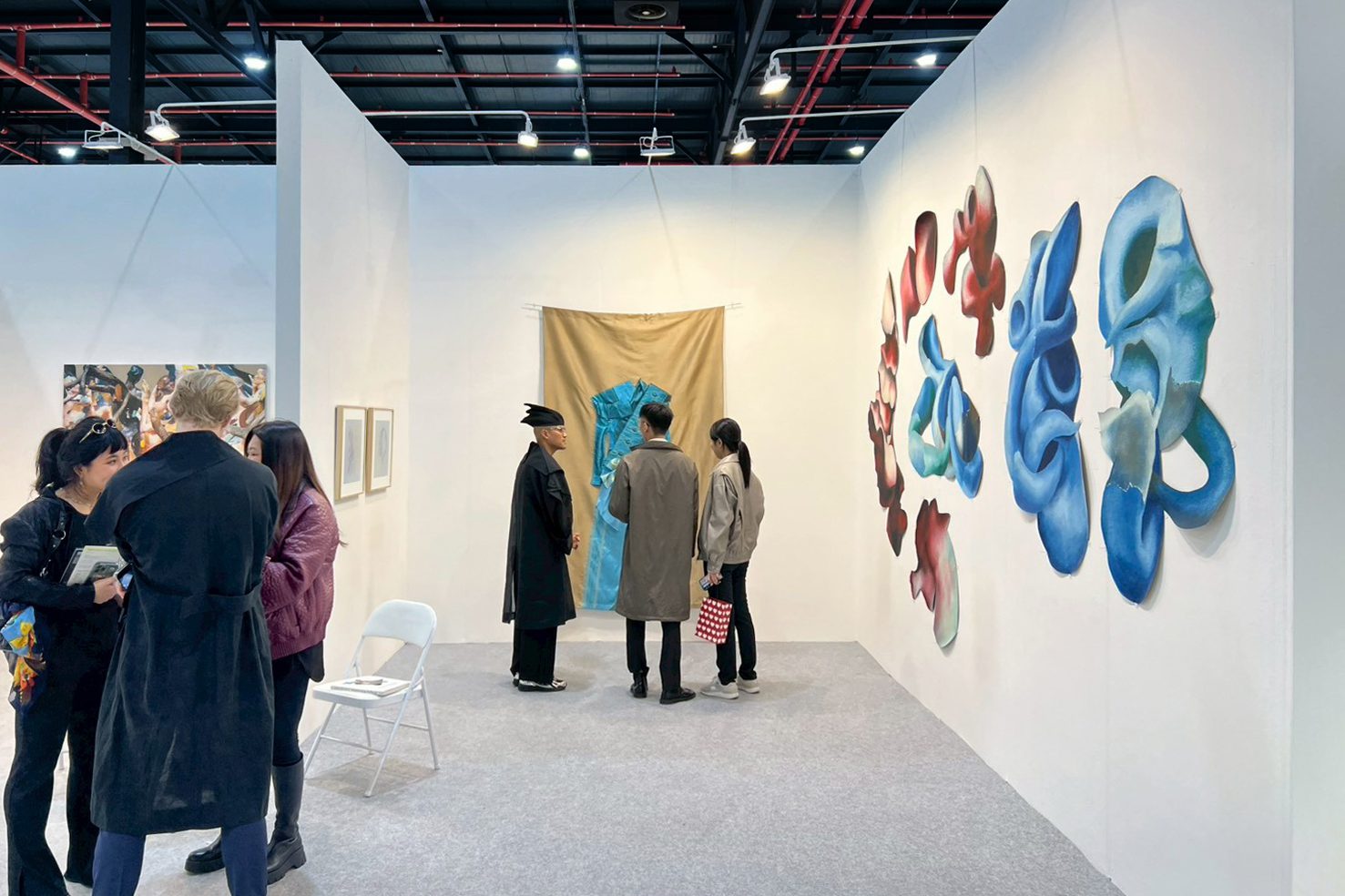
TM: This booth is a collaboration between Choi and Choi and TUCK Bangkok, marking our first participation in ART OnO. We are presenting works by two artists. The first body of work is my own: a series of surgical interventions in oil paint upon photographs of Ayutthaya. My process begins with photographs of ancient sites or Buddha images, through which I open a passage of light between what is visible to the eye and what remains unseen. I then use surgical instruments to apply oil paint made with lapis lazuli powder, a material often associated with healing practices.
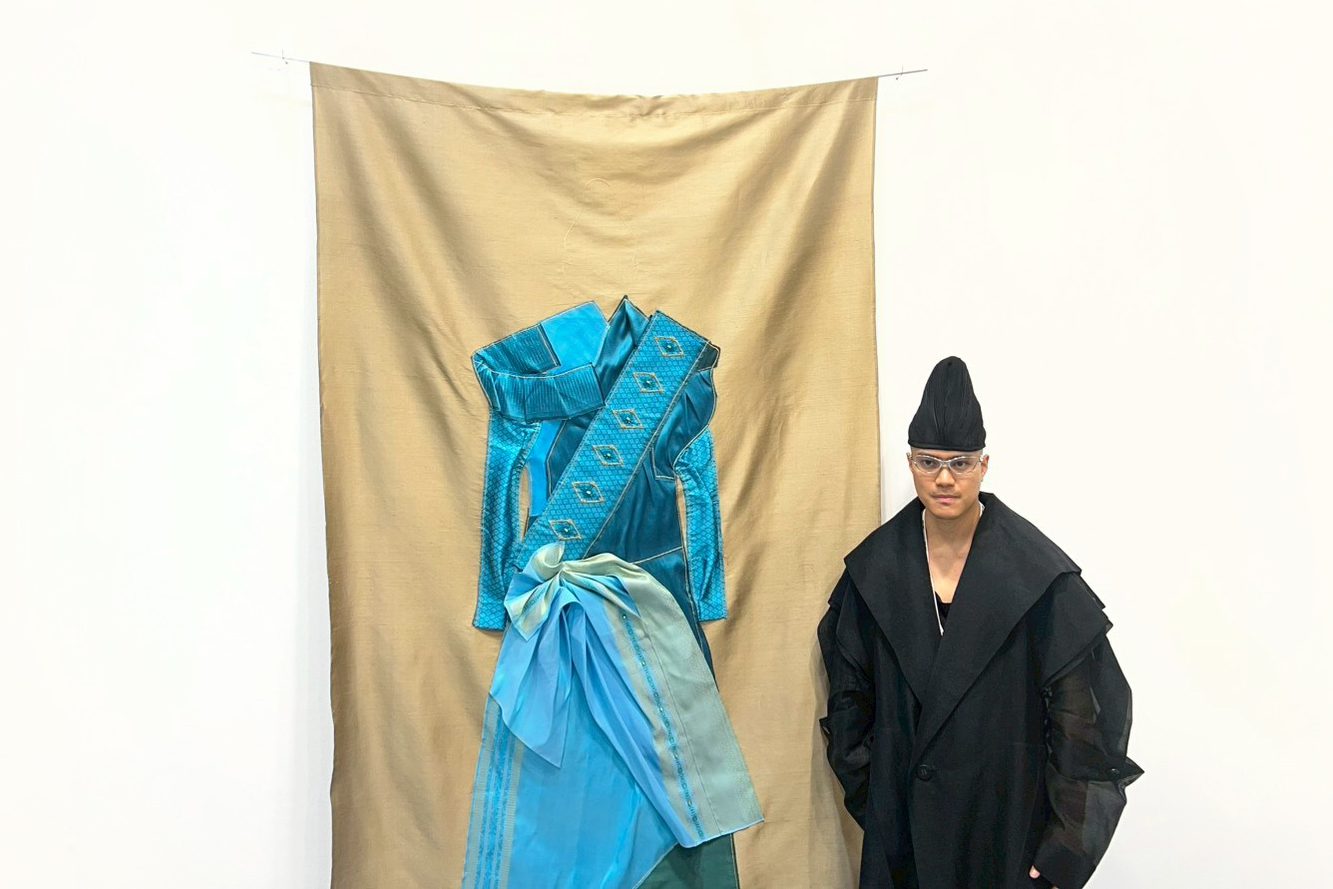
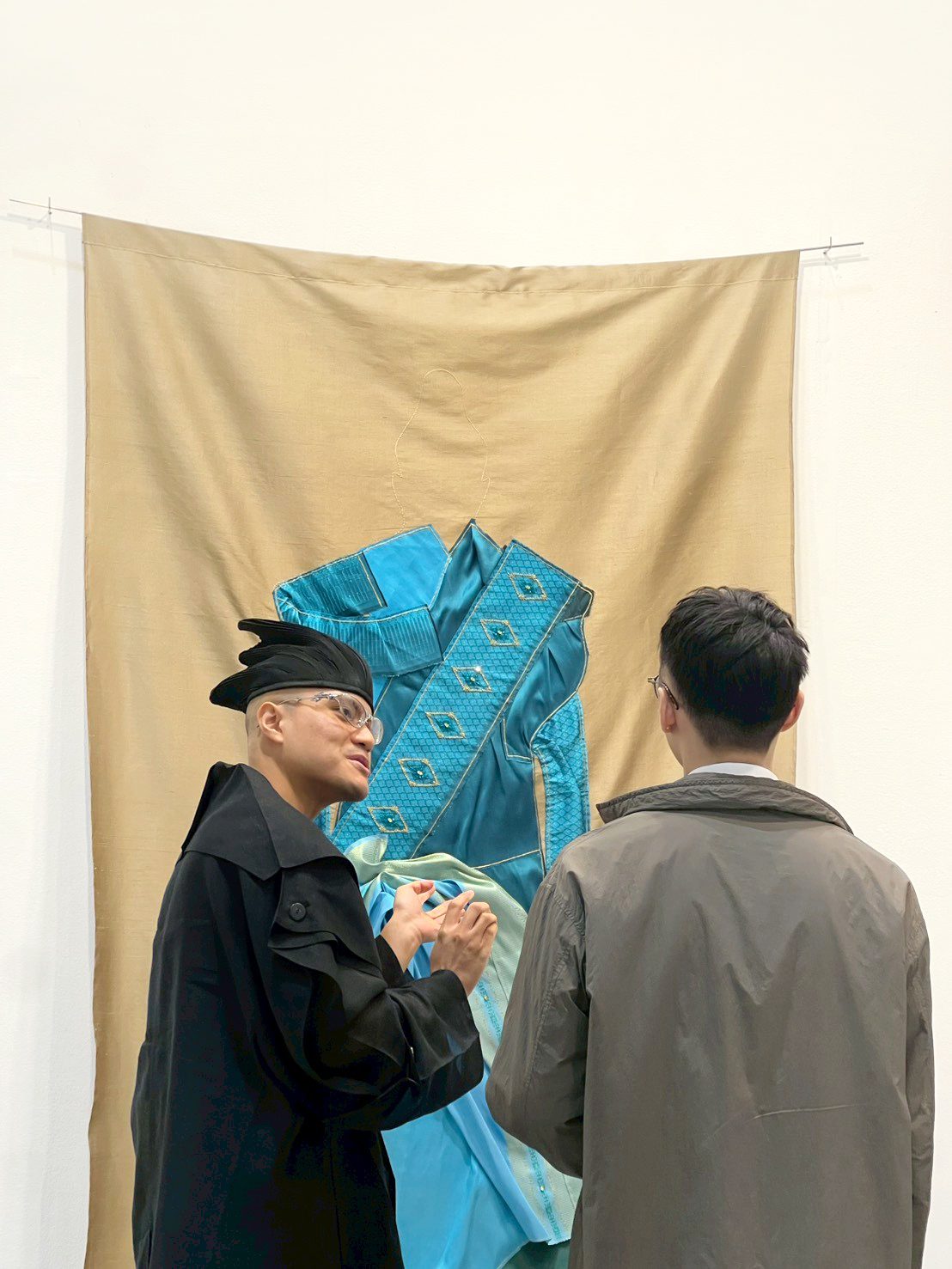
Another key work takes the silhouette of my own body as its starting point, bringing together the languages of surgery and dressmaking. On my father’s side, my grandfather was Thailand’s first cardiac surgeon. On my mother’s side, my grandmother, Yoswadee Boon-Long, was Thailand’s first fashion designer. I drape Thai silk from the atelier of my mother, Pusdee Muntarbhorn, over my body, then bring these elements together through the sewing traditions of my grandmother’s couture house, Yoswadee, and my mother’s brand, Busardi. Swarovski crystals from Austria are set around the work as embellishments.
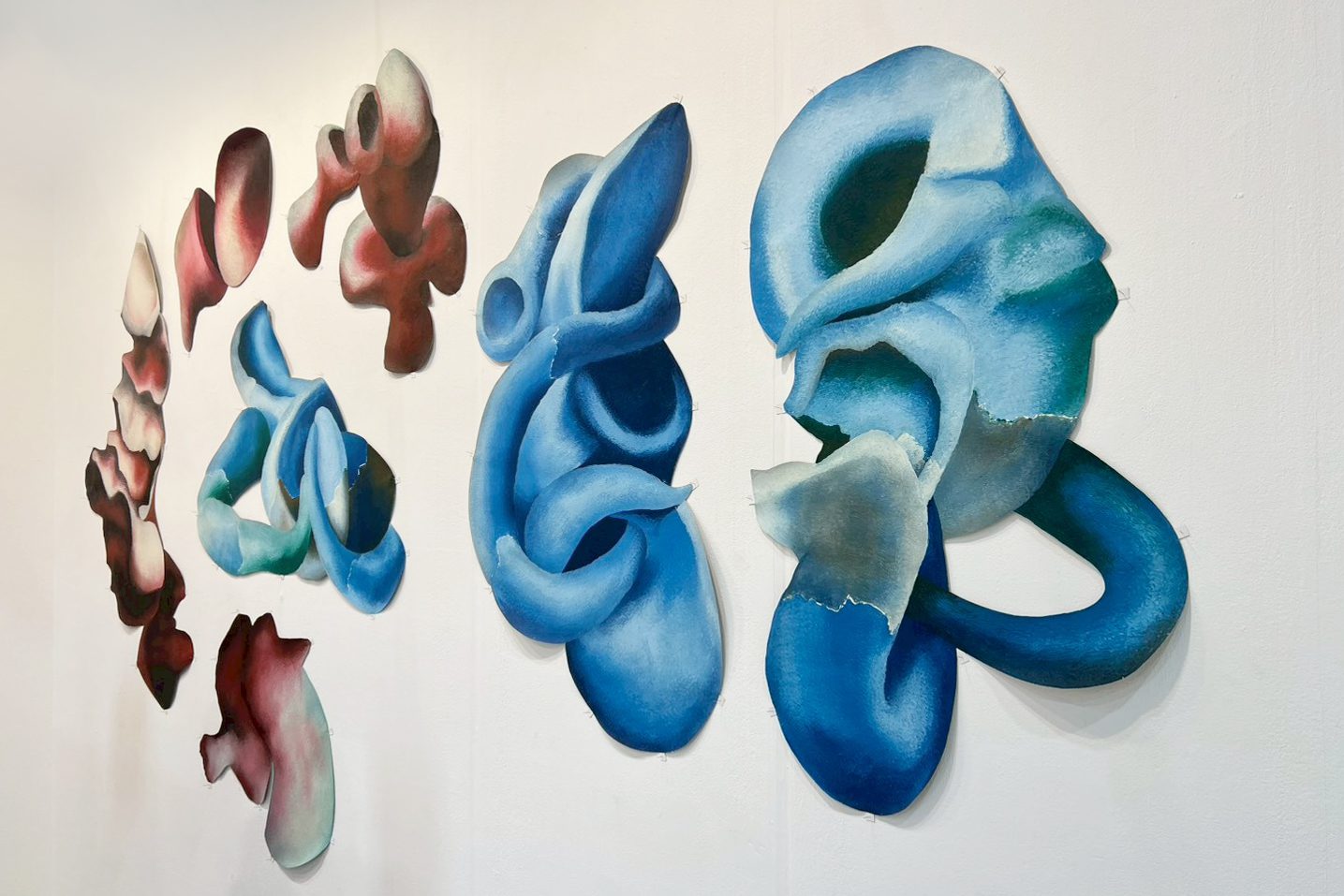
This connection to Austria leads us to the Austrian artist Wolfgang Walkensteiner, whom we represent in Thailand and across Asia. The works presented here were previously shown in Wolfgang’s museum exhibition in Austria, and we oversee the sale of his entire body of work. Throughout his practice, Wolfgang has been drawn to painting organs and forms from nature. Once a painting is complete, he cuts the image out of its original canvas and places it onto a new one, or directly onto a wall, allowing the wall to assume the same role as the canvas. This is how the works have come together here.
Wolfgang Walkensteiner is, in fact, a friend of the family, and his son is TUCK Bangkok’s Sales Director for Europe. We saw this as a valuable opportunity to present and offer Wolfgang’s works, which engage with body, nature and healing. ART OnO also marks Wolfgang’s first appearance in Asia.
art4d: How does ART OnO reflect a new direction for TUCK as it expands the reach of its artistic practice from Bangkok onto an international stage?
TM: I think that if an event of this kind, on a more intimate scale, were to take place in Thailand, it would create a meaningful cultural exchange and generate considerable value for art. It would be a very promising opportunity. At the same time, the bridge we are trying to build must also take into account the readiness of audiences and collectors. The fact that the fair is led by an Asian who understands Asian cultural contexts is particularly encouraging. It creates the possibility of a genuine partnership within Asia, because we would also like to connect the art-buying ecosystems of these two countries.