
Forest of Thoughts
‘THE ARCHITECTURE OF SOU FUJIMOTO: PRIMORDIAL FUTURE FOREST,’ A THIRTY YEARS OF DESIGN, AND THE IMAGINATION OF WHAT LIES AHEAD
TEXT: PRATCHAYAPOL LERTWICHA
PHOTO: YASHIRO TETSUYA, COURTESY OF MORI ART MUSEUM, TOKYO EXCEPT AS NOTED
(For Thai, press here)
“Rather than focusing on looking back at the past, this survey is firmly anchored in the present and looking toward the future,” remarks acclaimed Japanese architect Sou Fujimoto in reference to The Architecture of Sou Fujimoto: Primordial Future Forest, a major retrospective that brings together over three decades of his work at the Mori Art Museum in Tokyo, Japan.
Forest of Thoughts

A Forest / Many Forests
Born in 1971 in Higashikagura, a small town in Japan’s northern Hokkaido prefecture, Fujimoto grew up surrounded by abundant natural landscapes and verdant forests. He studied architecture at the University of Tokyo, and began to attract attention in 2000 when he was awarded second prize in the Aomori Museum of Art Design Competition Proposal. Since then, his career has continued to ascend, encompassing a wide range of projects across diverse typologies and regions. Among his most notable works are the Musashino Art University Museum & Library in Tokyo, the Serpentine Gallery Pavilion 2013 in London, and the House of Music Hungary in Budapest. His latest work, The Grand Ring for Expo 2025, has recently earned a Guinness World Record as the largest wooden structure ever built.
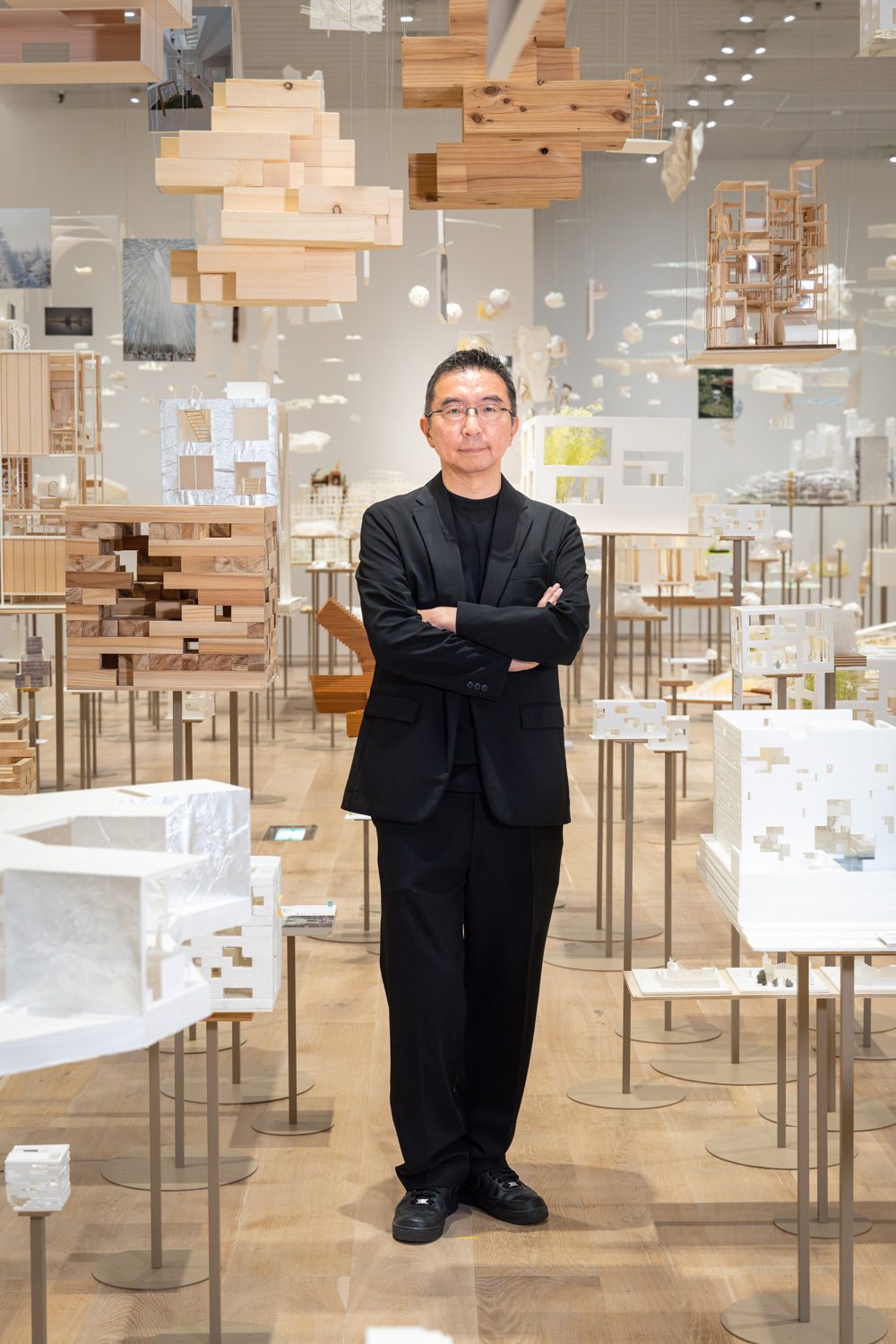
Sou Fujimoto | Photo: Tayama Tatsuyuki, courtesy of Mori Art Museum, Tokyo
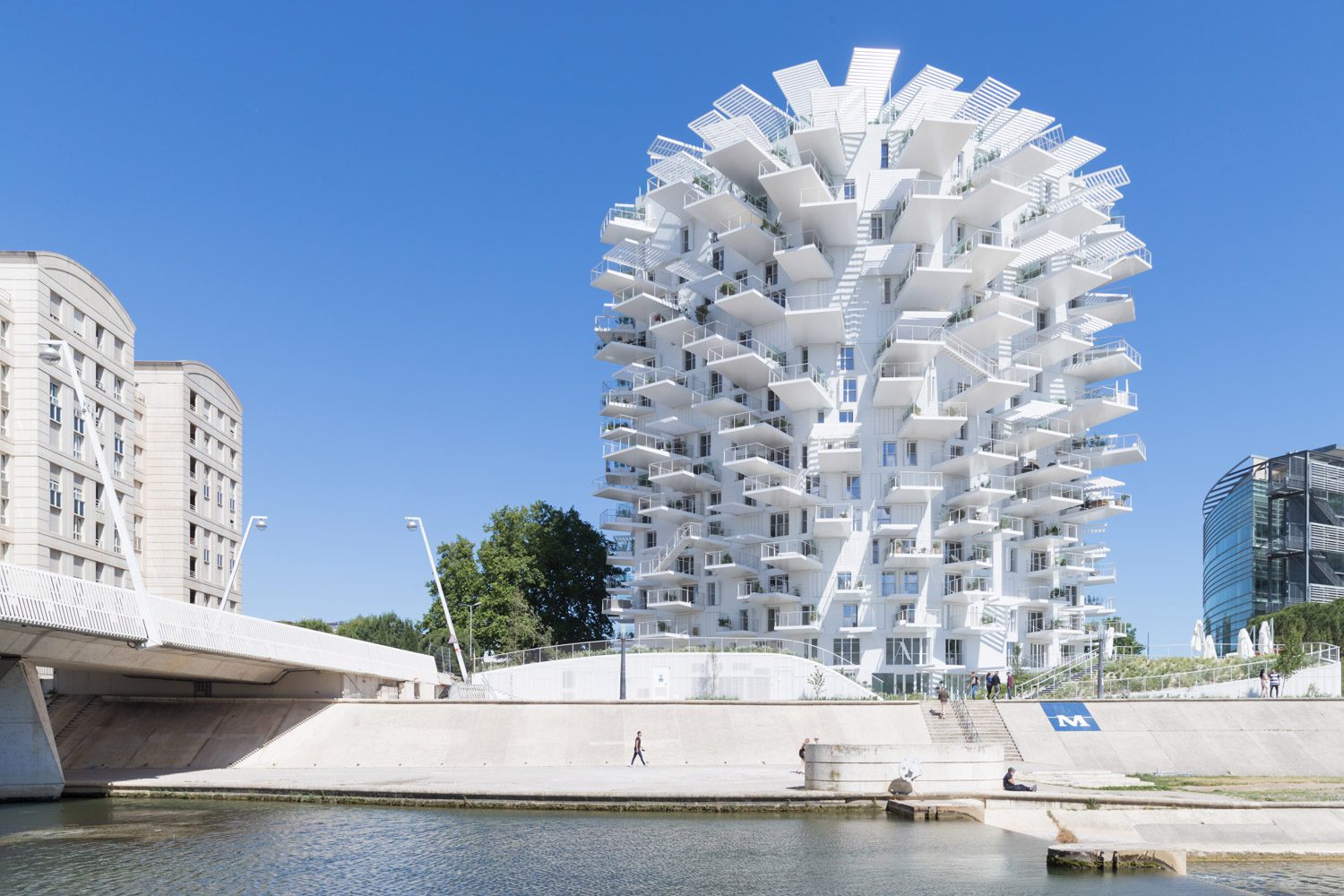
The image of the primordial forest; seemingly chaotic, yet subtly governed by an underlying order, has remained a persistent theme in Fujimoto’s thinking. It is a formative memory from his childhood, and a recurring conceptual thread in his design practice. The Musashino Art University Museum & Library, for instance, wraps its interior in a continuous layering of bookshelves, creating the sensation of wandering through a forest of knowledge. In L’Arbre Blanc, a residential tower in France, the balconies of each unit project outward freely, reminiscent of branches extending from a tree. For Fujimoto, the forest is not merely a metaphor. It offers a compelling model for reimagining the built environment, informing his vision of architecture and urbanism in the future. This belief underpins the title of the exhibition, ‘The Architecture of Sou Fujimoto: Primordial Future Forest.’
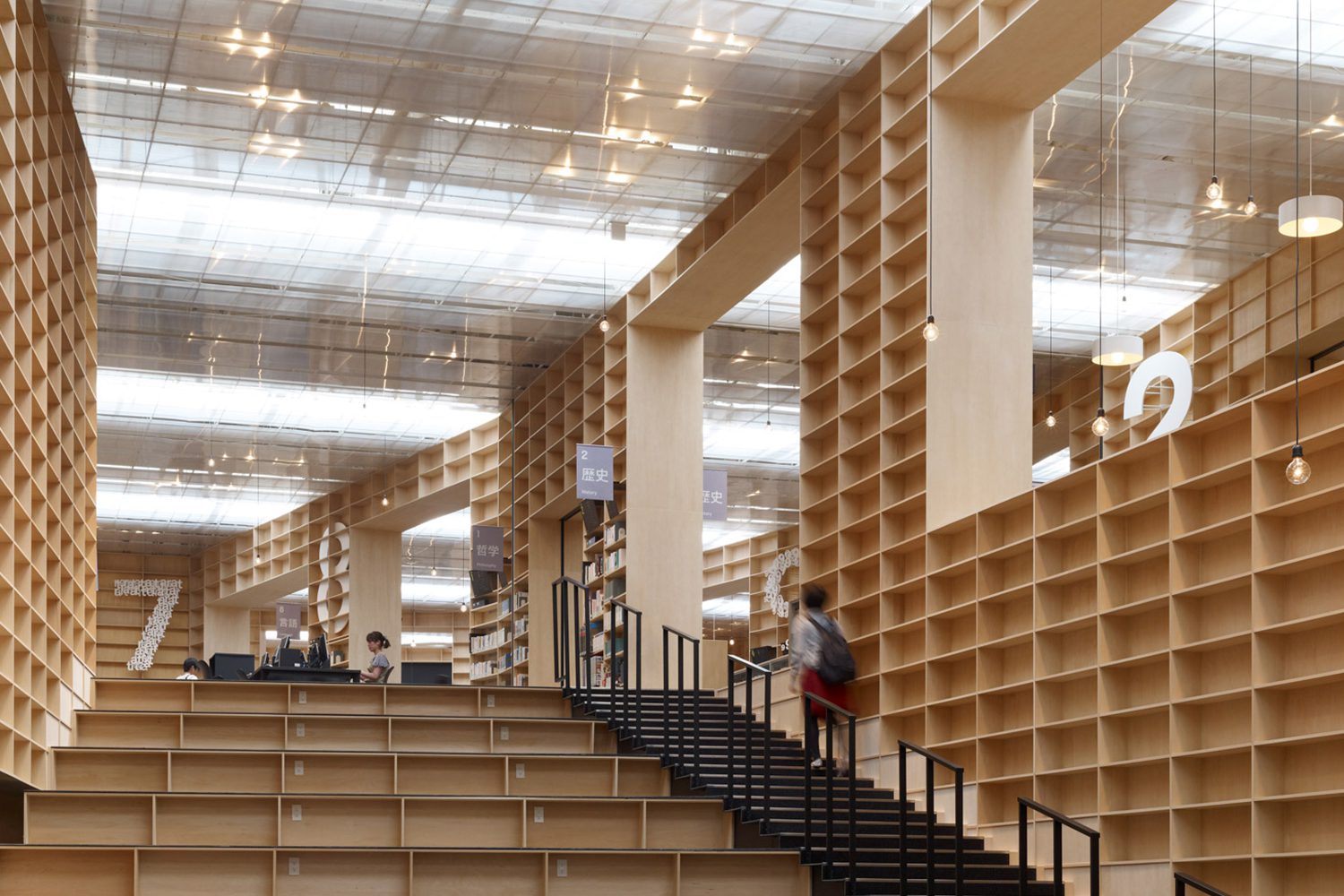 Musashino Art University Museum and Library | Photo: Daici Ano
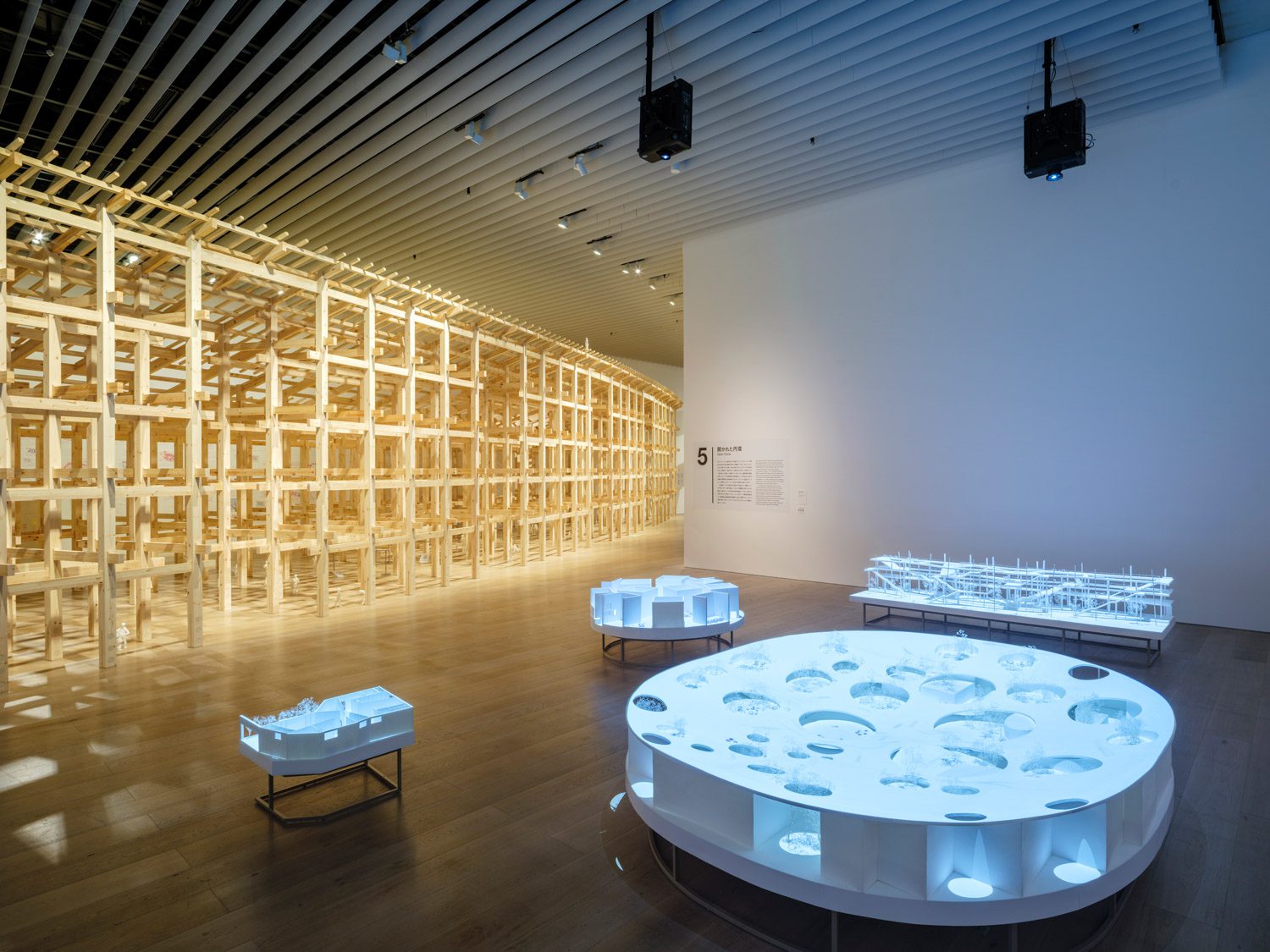
Spanning more than three decades of practice, from early experiments to projects currently in development, this retrospective marks the first major survey of Sou Fujimoto’s architectural œuvre. While the exhibition includes models, architectural drawings, and photographs mounted along the walls in keeping with conventions of architectural presentation, it also ventures into more immersive and experimental modes of display, offering visitors a visceral encounter with Fujimoto’s architectural imagination.
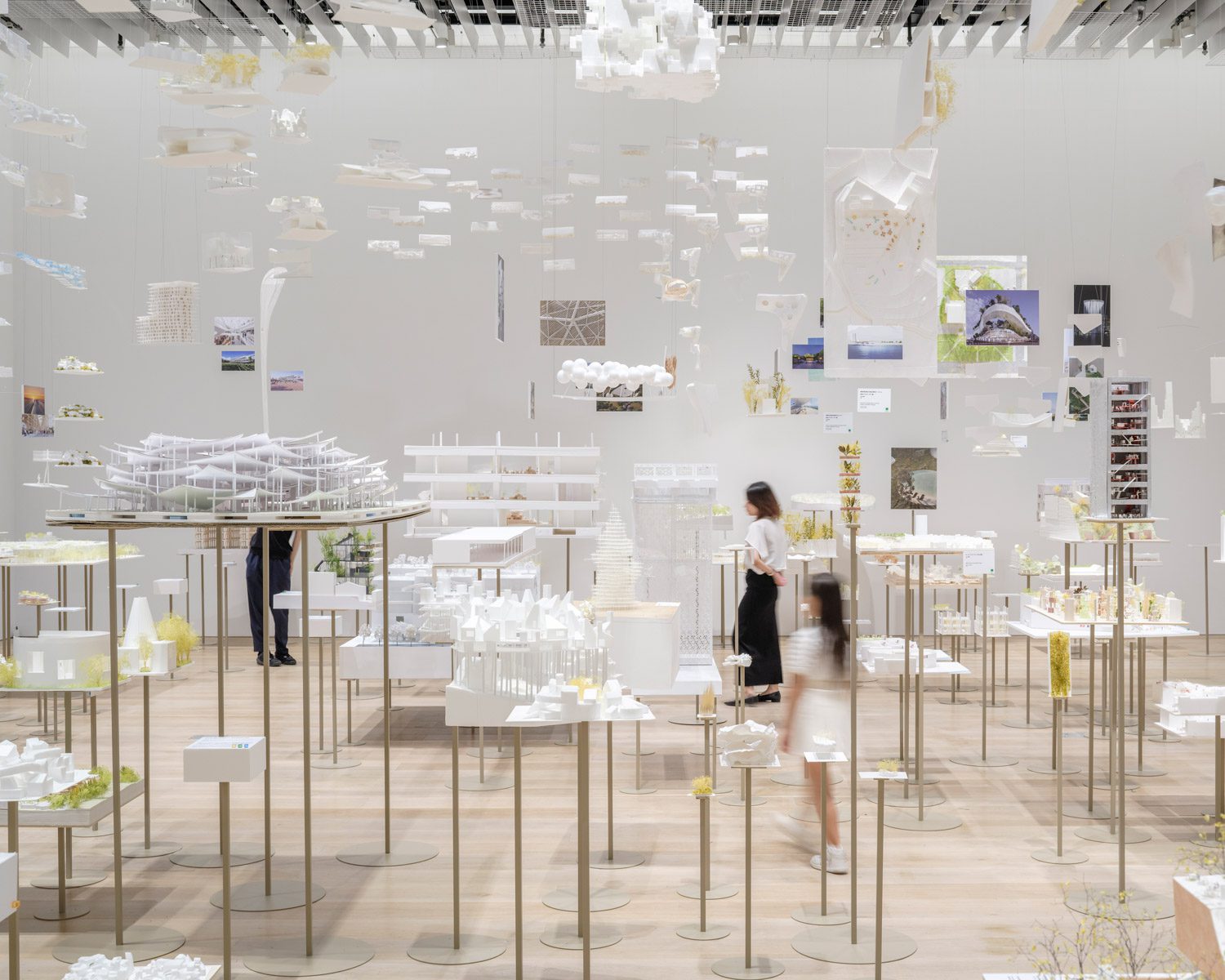
Forest of Thoughts
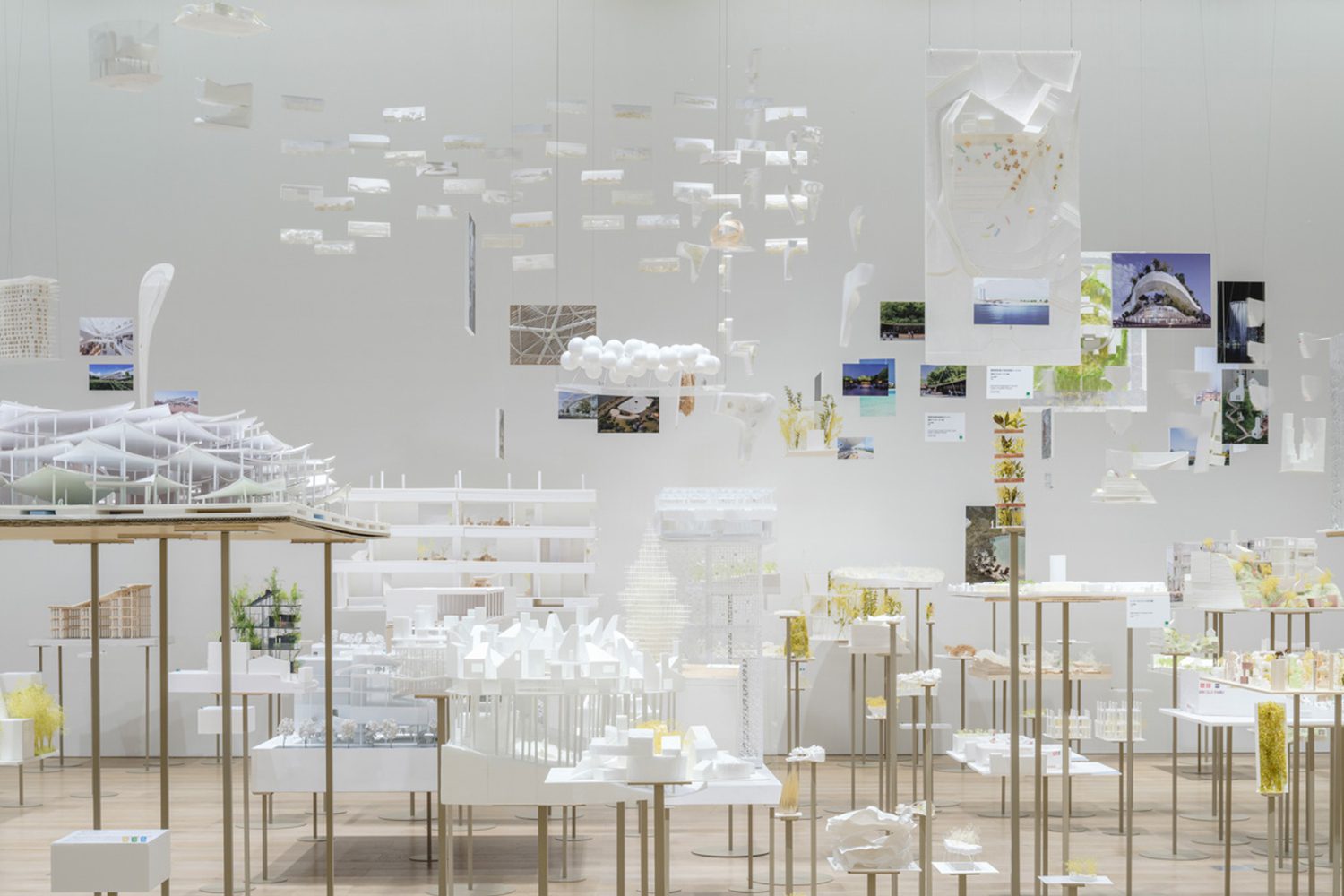
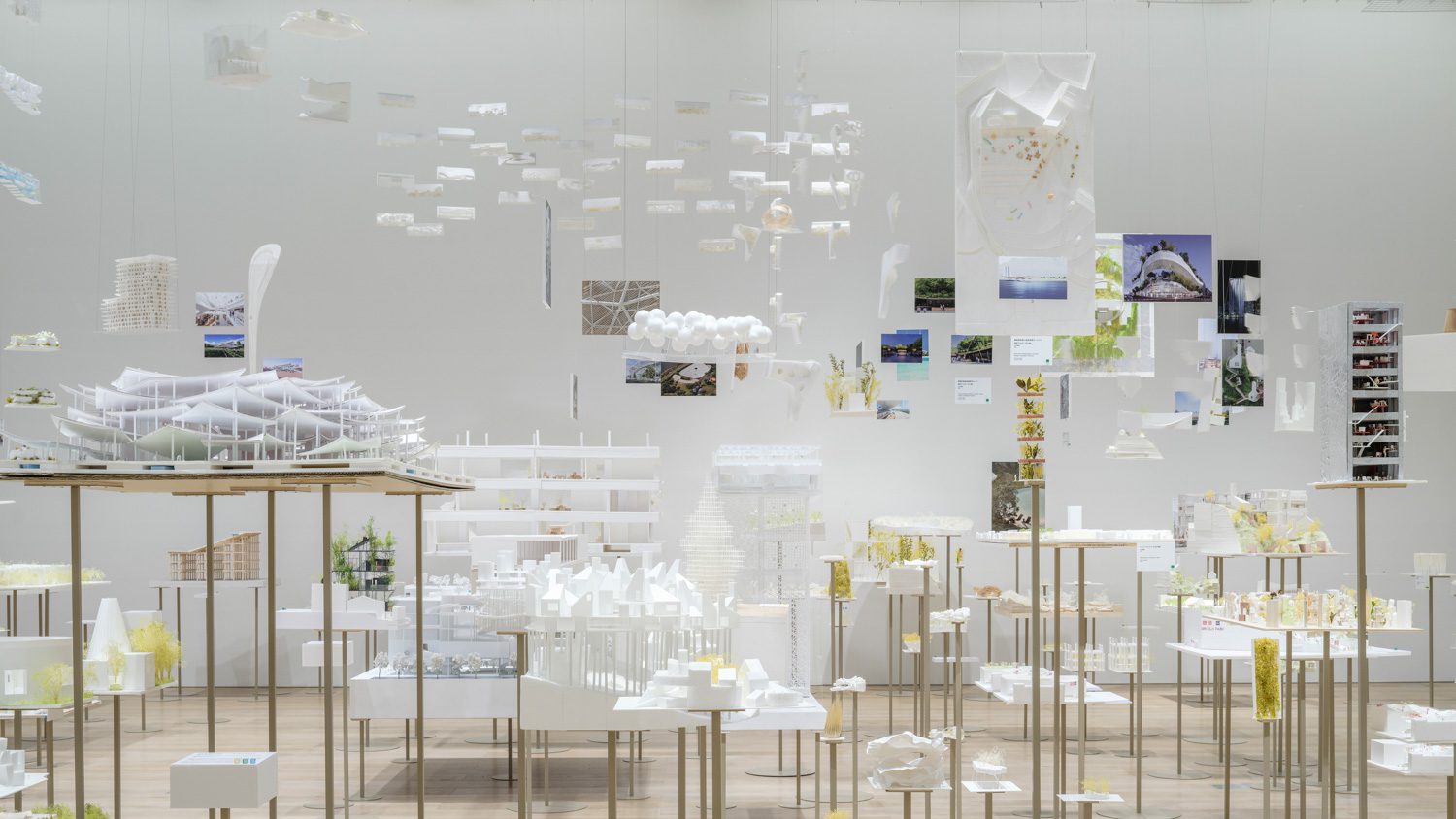
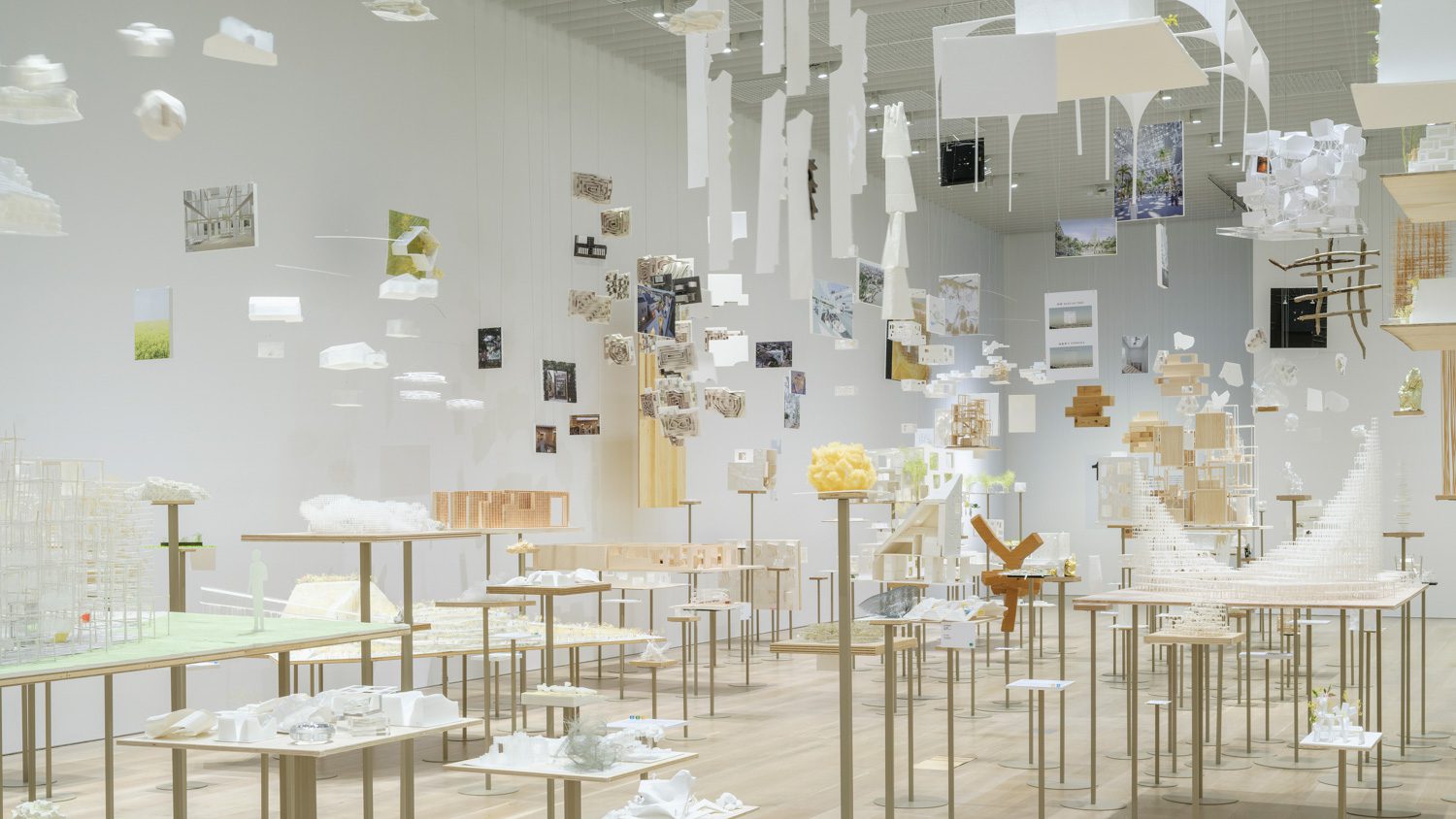
One such example is the ‘Forest of Thoughts,’ a space where models, sketches, and drawings from 100 different projects are arranged on tiered tables and suspended from the ceiling, transforming the 300-square-meter gallery into a miniature forest. In ‘The Animated Forest,’ human figures are projected in motion onto architectural models, animating the buildings with scenes of daily life and suggesting how people might inhabit these spaces. Perhaps the most endearing feature is ‘Stuffed Architecture Talks,’ where nine architectural projects have been whimsically transformed into plush dolls, each engaged in a playful conversation to express the context and personality of the respective designs.
The Animated Forest
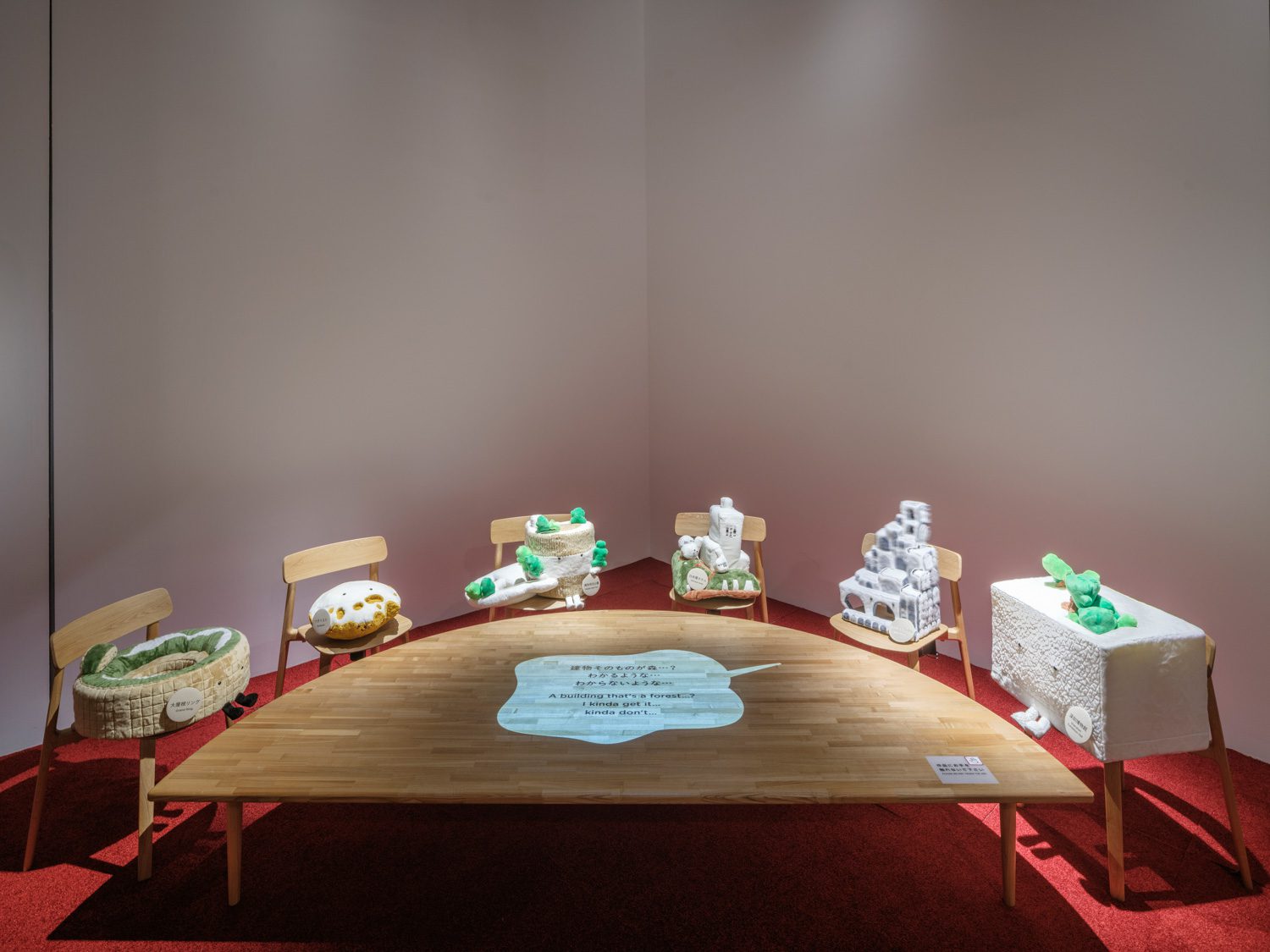
Stuffed Architecture Talks
Another highlight is the 1:5-scale model of The Grand Ring, Fujimoto’s contribution to Expo 2025 Osaka, Kansai. While transporting the full-scale structure into the gallery is of course impossible, this large-scale model, sized just enough for visitors to walk beneath, captures the monumentality and intricacy of its wooden structure.

The Grand Ring

The Grand Ring
In true form for a visionary architect with a long-standing fascination with the cities of the future, Fujimoto presents his own proposal in the section titled Forest of Future, Forest of Primordial – Resonant City 2025. Developed in collaboration with Miyata Hiroaki, a data scientist and professor at Keio University, the project envisions an urban landscape composed of overlapping circular forms of varying sizes. These clusters expand without a fixed center, echoing the organic, decentralized structure of natural forests.
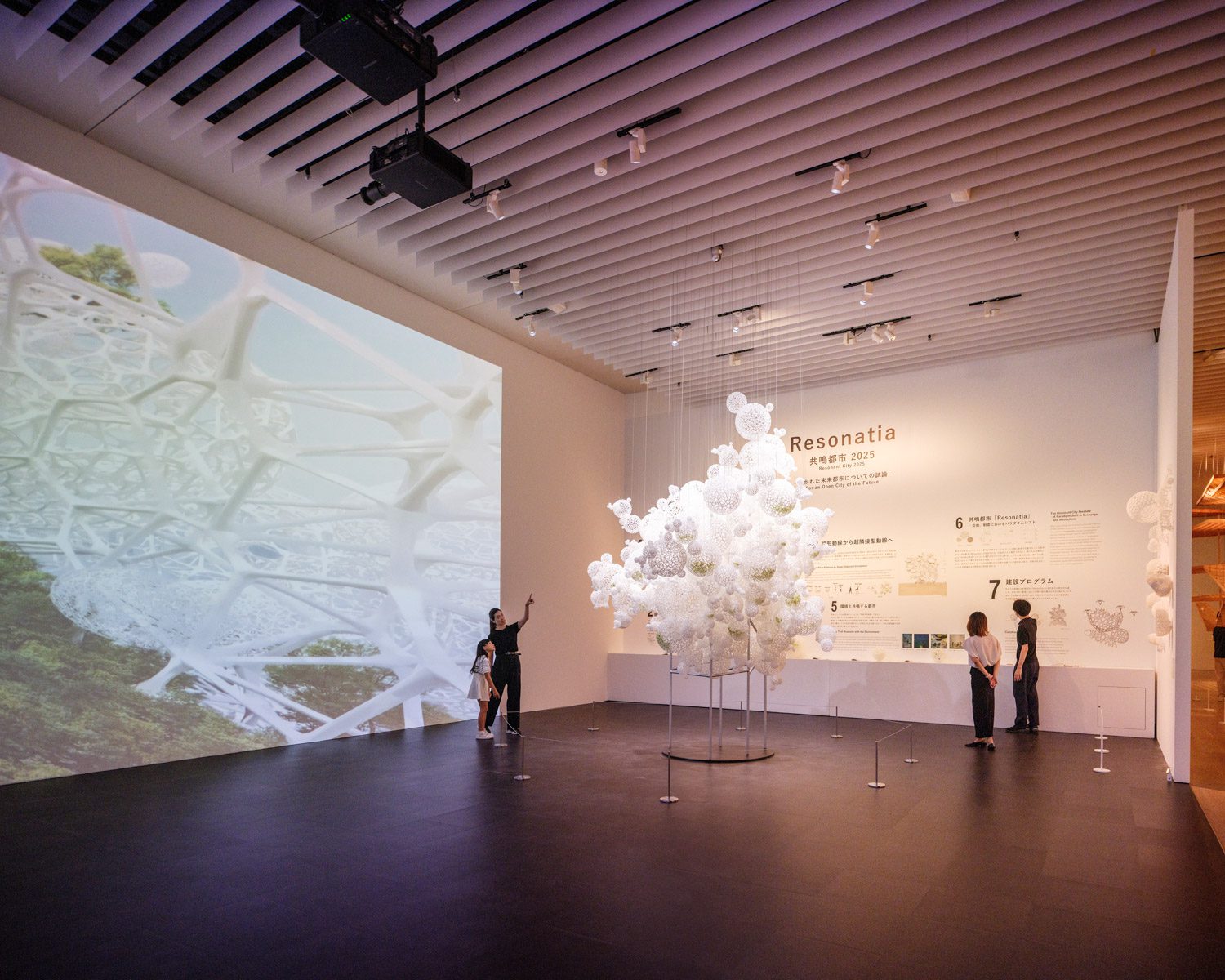
Forest of Future, Forest of Primordial – Resonant City 2025
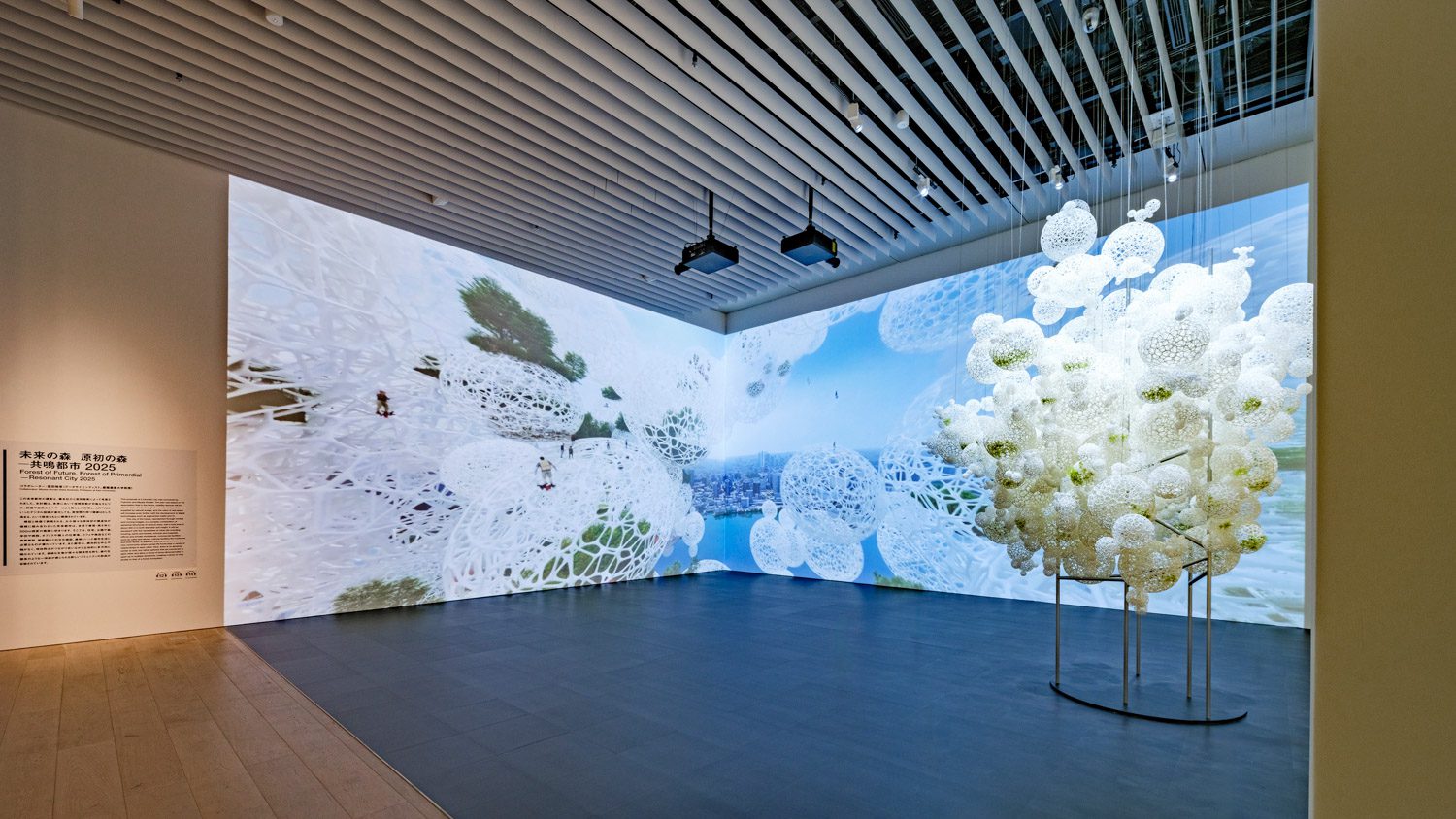
Forest of Future, Forest of Primordial – Resonant City 2025
While the exhibition content revisits Fujimoto’s past works, its fresh curatorial approach offers a rich, immersive architectural experience. It not only allows visitors to engage deeply with Fujimoto’s ideas but also invites reflection on a broader question: How should we shape architecture today and into the future?
The Architecture of Sou Fujimoto: Primordial Future Forest is on view at the Mori Art Museum from July 2 to November 9, 2025.