
 Photo: Kita Thapanaphannitikul
 EXPLORE THE FUTURE OF DESIGN THROUGH ‘DESIGN NEXT’, THE MAIN CONCEPT OF TAIWAN DESIGN WEEK 2025, WITH CURATOR PING HUNG CHUNG FROM ARCHICAKE
TEXT: KITA THAPANAPHANNITIKUL
PHOTO CREDIT AS NOTED
(For Thai, press here)
The year 2025 marks a moment when the global spotlight of design turned decisively toward Taiwan. In addition to the third consecutive edition of Taiwan Design Week (TDW), the island was also honored to host IASDR 2025 (International Association of Societies of Design Research), one of the world’s most influential academic conferences dedicated to design research. The convergence of these two major events generated a significant ripple across the design field, particularly through the shared provocation of their central theme, ‘Design Next,’ which calls for a reconsideration of the world’s possible futures.
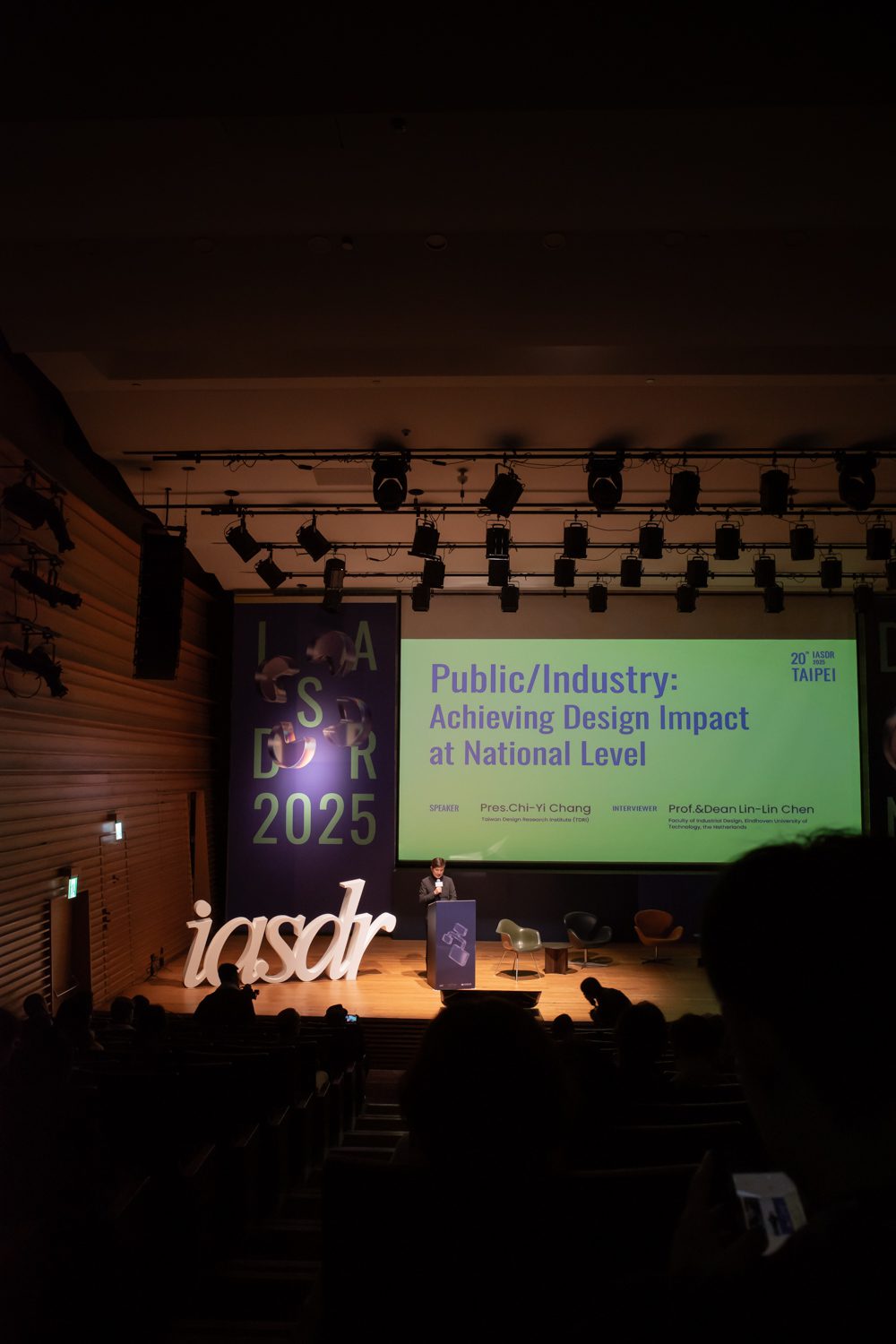
Photo: Kita Thapanaphannitikul
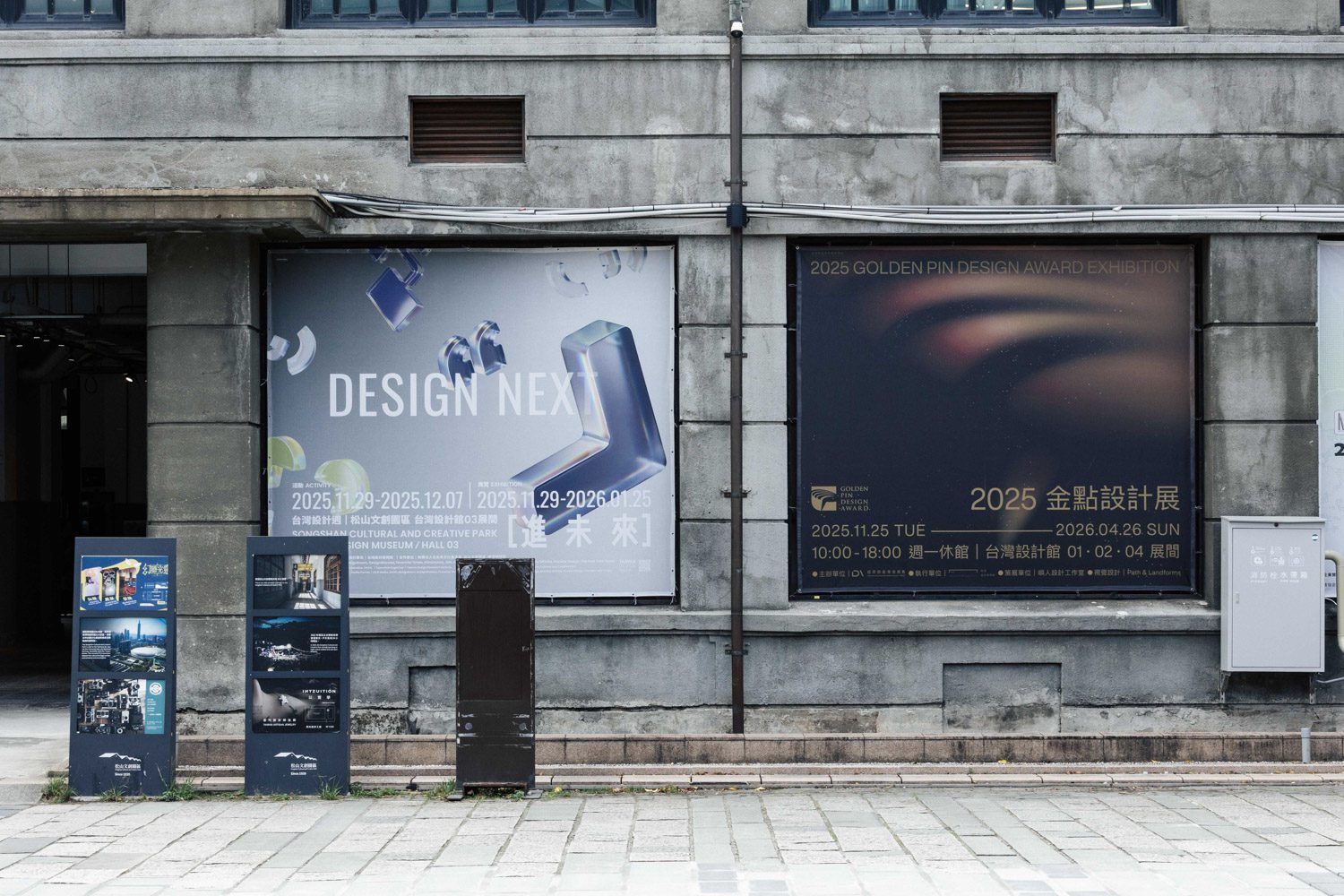
Photo courtesy of Taiwan Design Week 2025
In a design landscape that spins ever faster amid mounting uncertainties, the question ‘What will the future of design look like?’ surfaces repeatedly within increasingly compressed timeframes. The accelerating pace of social change no longer invites speculation about the future of design in terms of decades or even years. Instead, it may refer to tomorrow, when one wakes to find that the world has shifted so dramatically it almost feels unfamiliar.
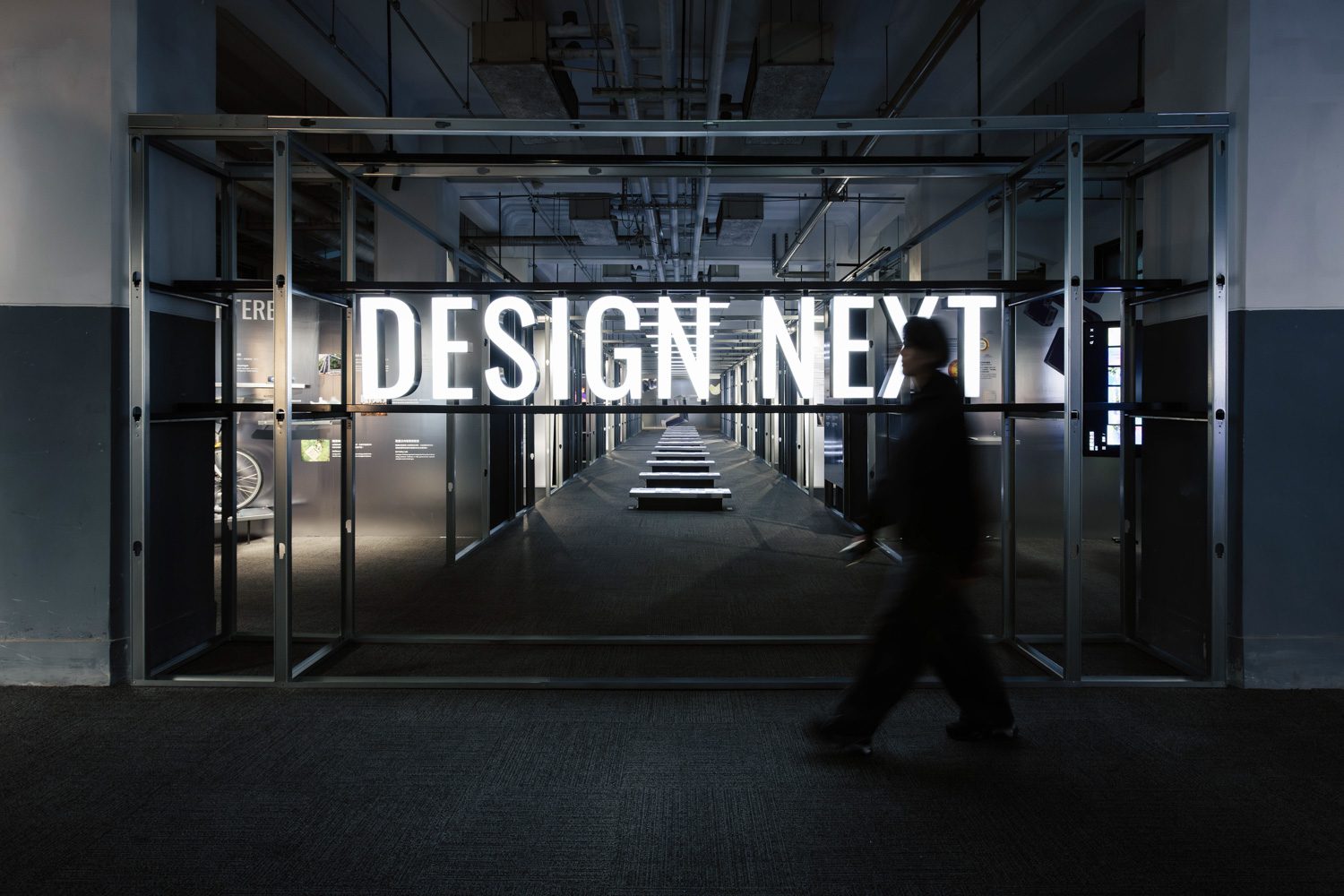 Photo courtesy of Taiwan Design Week 2025
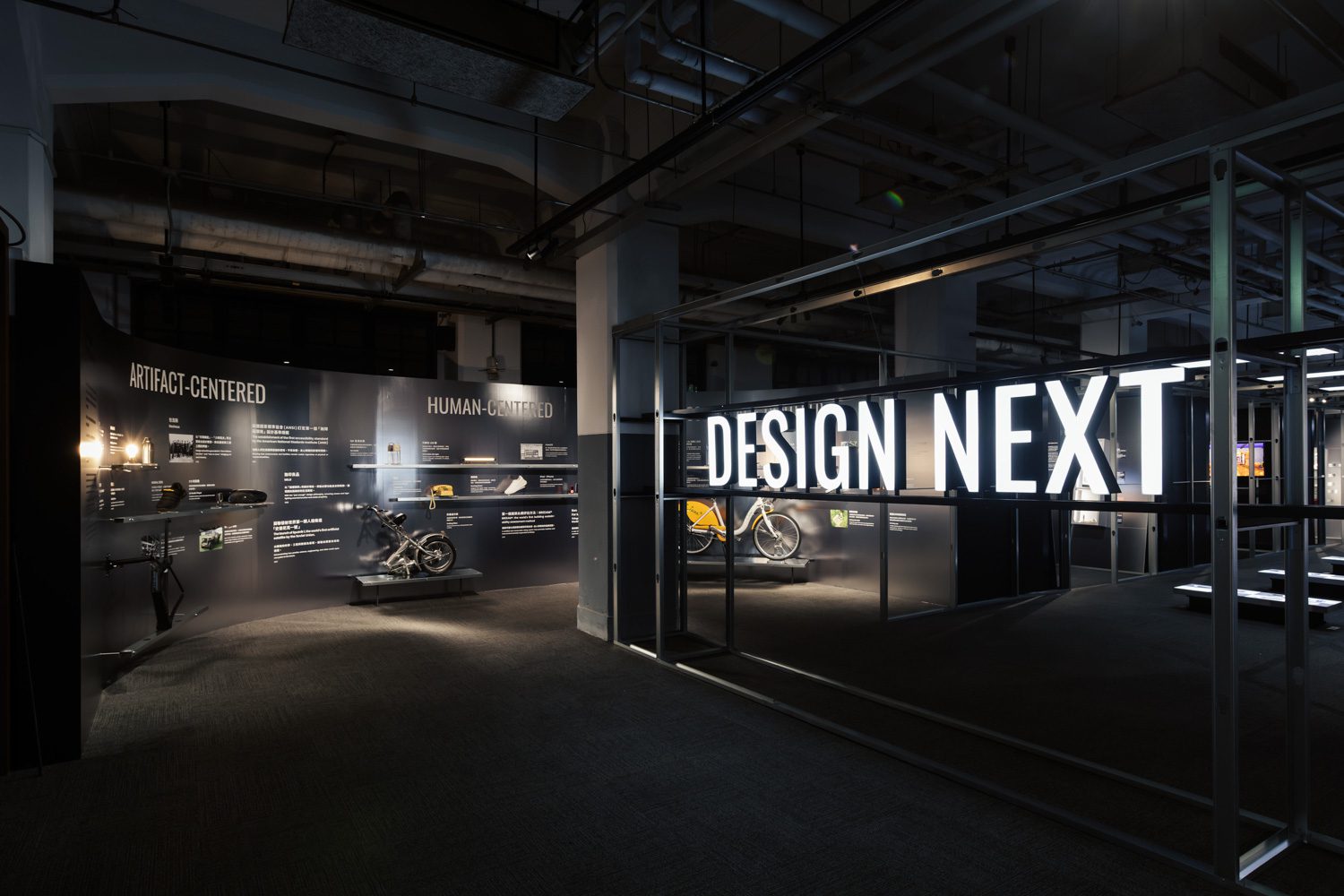
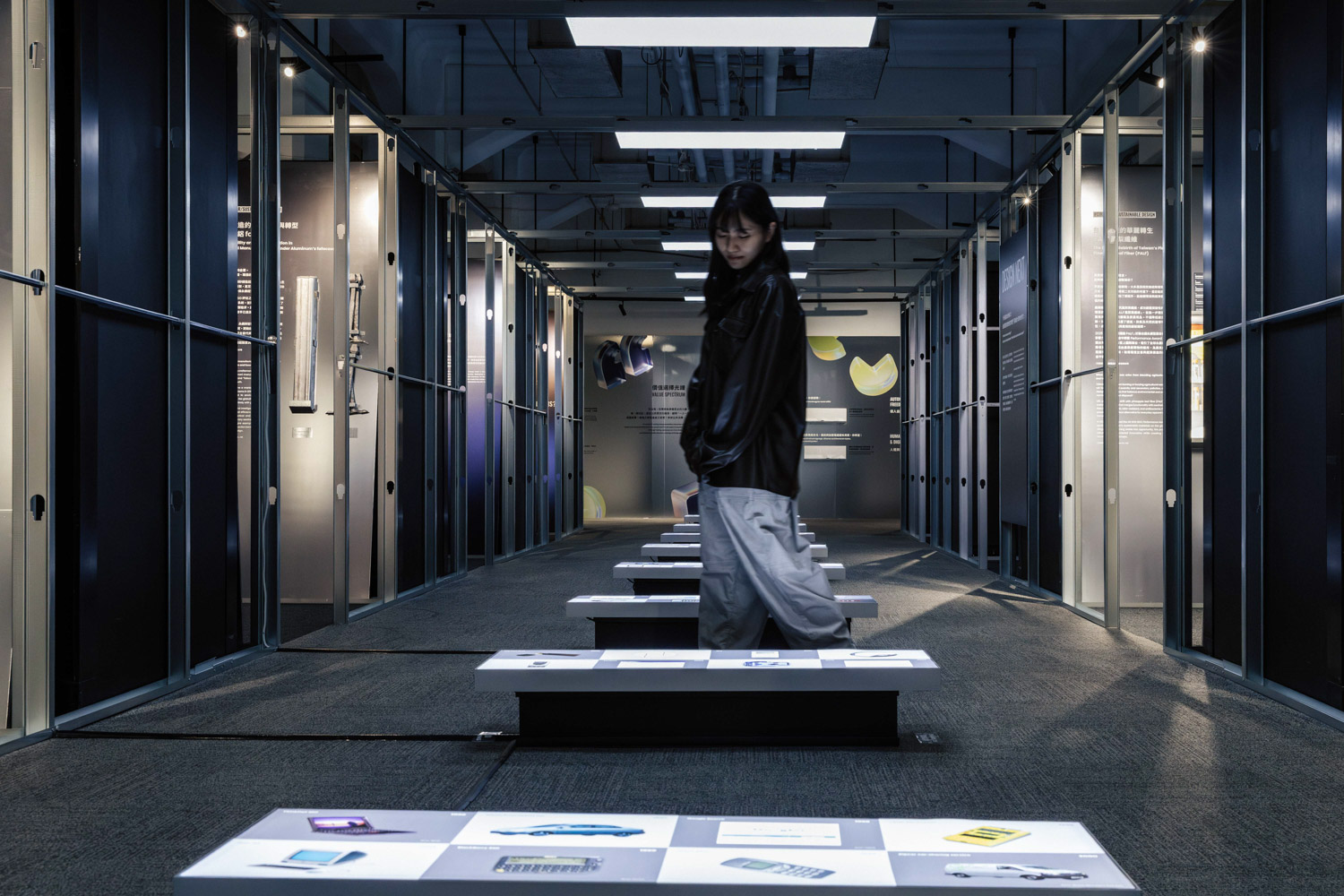
For Ping Hung Chung, the lead curator of Taiwan Design Week 2025, the answer to living within this ongoing paradigm shift may no longer lie in attempts to predict what will come next. It may not rest in cutting-edge technologies or the latest emerging trends. Rather, it begins with ‘choosing’ the values we decide to carry forward and pass on to society.
But what kinds of values should we offer to society? art4d explores this question through a conversation with Ping Hung Chung, founder of archicake, a multidisciplinary design studio from Taiwan, who served as the lead curator of Taiwan Design Week 2025. Framed by the theme ‘Design Next,’ the exhibition presents perspectives on paradigm shift, tracing the evolution of design from an artifact-centric era to a human-centric one, and toward the present moment in which complexity and disorder can no longer be addressed through fixed structures. Instead, they exist within a condition of ‘assemblage,’ a state of dynamic interrelations that bears direct implications for design practice. The conversation also reflects on the role design plays in society, leading to broader questions surrounding the politics of design, the notion of the public, and responsibility toward the environment. At its core lies a simple yet revealing fact: design is never neutral. It is always, in one way or another, in service of someone.
‘I think design has always been driven by one simple question: What kind of future do we want? We can’t fully predict what’s coming, but we can choose to think about it now-together with others in society.’
If Jean-Paul Sartre once remarked that ‘Man is condemned to be free,’ Ping Hung Chung’s reflection seems to extend a similar invitation to designers, who participate in shaping social values, to carefully reconsider the futures that emerge from their ‘choices.’ It suggests a framework in which creativity and freedom are inseparable from responsibility. And that responsibility, in turn, inevitably leads back to the shared will of society as a whole.
art4d: Could you introduce yourself to our readers? What does archicake do, and what is the studio’s ultimate goal?
Ping Hung Chung: We’re an interdisciplinary design team based in Taipei, Taiwan. We focus mainly on museum exhibitions and cultural curation, and we also take on selected architecture and spatial design projects.
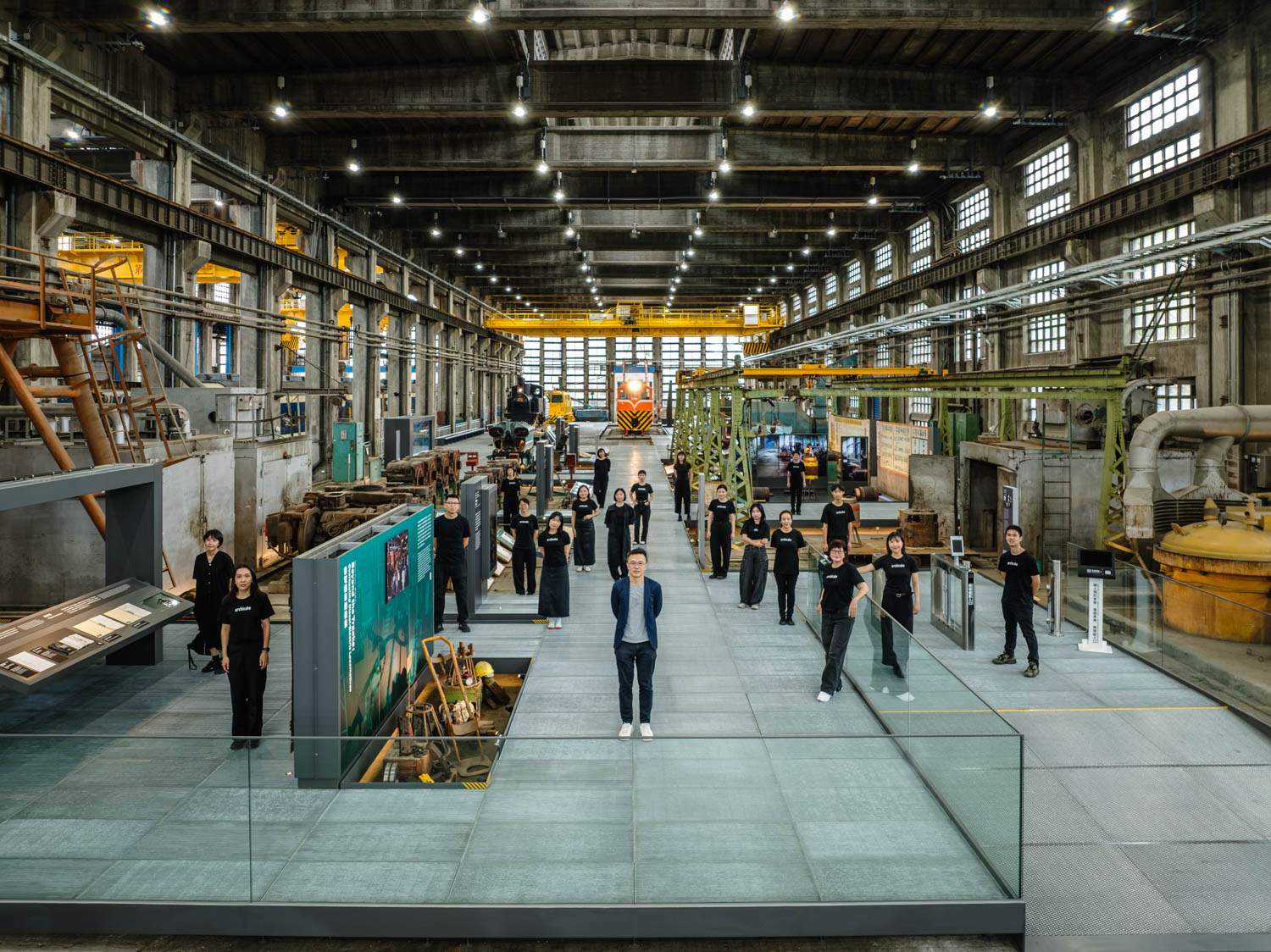
Photo courtesy of Taiwan Design Week 2025
Our name, ‘archicake,’ is a mix of ‘architecture’ and ‘cake’. It brings together the qualities of both-and that’s the kind of balance we aim for: solid yet gentle, rational yet emotional.
For us, curation is a way to speak to society-to share ideas and communicate values. Starting from our island, we hope to connect with the wider world and share the values we believe in.
art4d: Could you describe the concept of ‘Design Next’ as defined by IASDR? How do you interpret this concept, and why does it matter?
PHC: ‘Design Next’ is about the future. The ‘future’ discussed here is an accessible future. When facing the future, we have the power to choose. If we had no such power, the issue would fall under political democracy, which is not our focus here. Our discussion concerns a future in which, under the conditions of liberal democracy, we do possess the agency to choose.
In this world, resources, science, technology, and talent are shared across borders; within such a circulating environment, everything can be exchanged and co-created. Under these conditions, designers become integrators and agents who shape futures and enact values-using design to create better ways of living. Therefore, I believe ‘Design Next’ inherently is not about predicting the future, but about choosing the values we wish to realize.
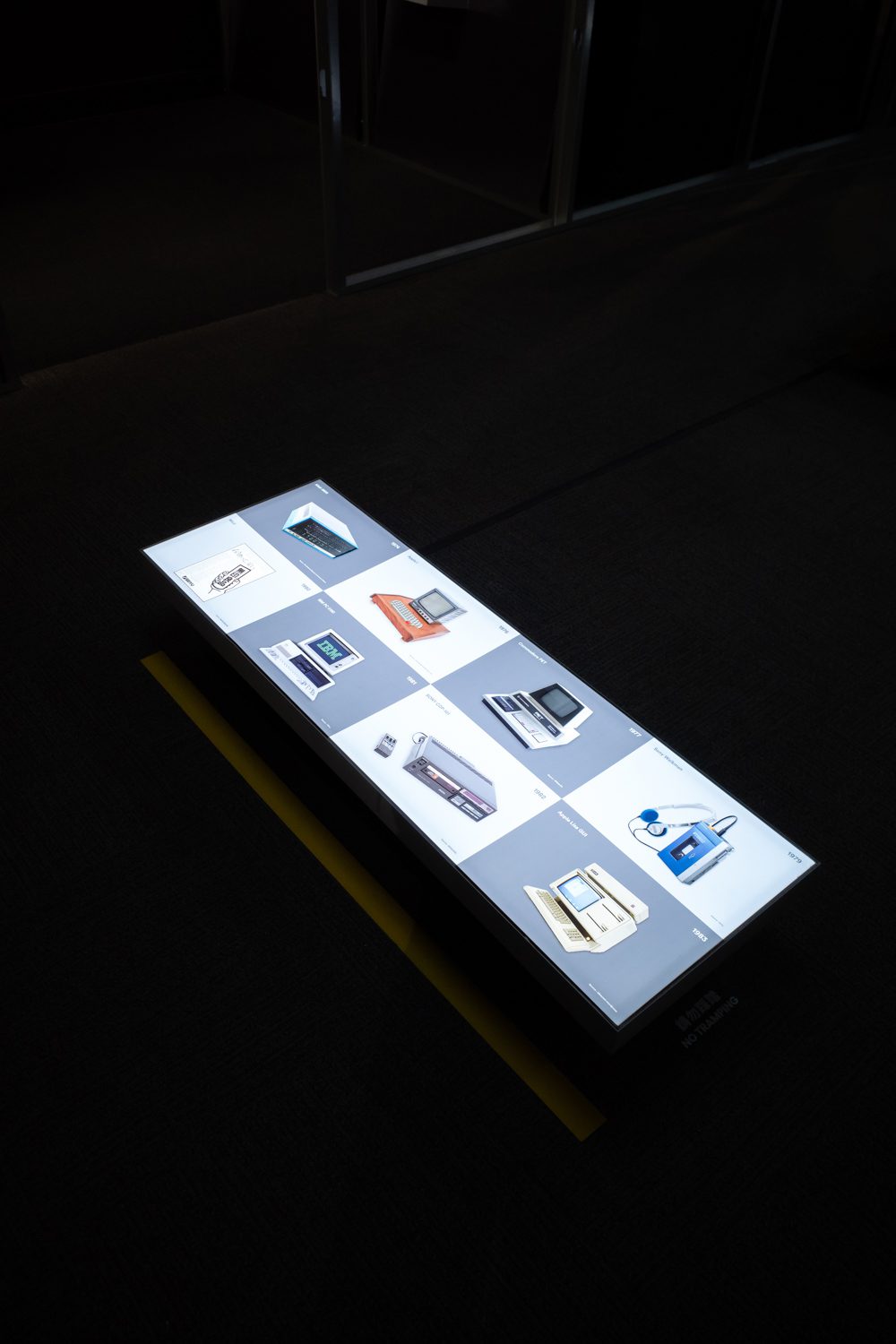
Photo: Kita Thapanaphannitikul
art4d: For Taiwan Design Week 2025, you invited visitors to explore the idea of a ‘paradigm shift’ through three stages of design development: artifact-centric, human-centric, and humanity-centric. How do you view the evolution from past design eras to the present, and where do you see the design world heading next?
PHC: Design has always been about meeting people’s needs. In the early, artifact-centered stage, because our technology and knowledge were still limited, we mostly cared about things like keeping quality consistent and making production more efficient. But as we moved into the next stage, we started paying real attention to how people and objects interact.
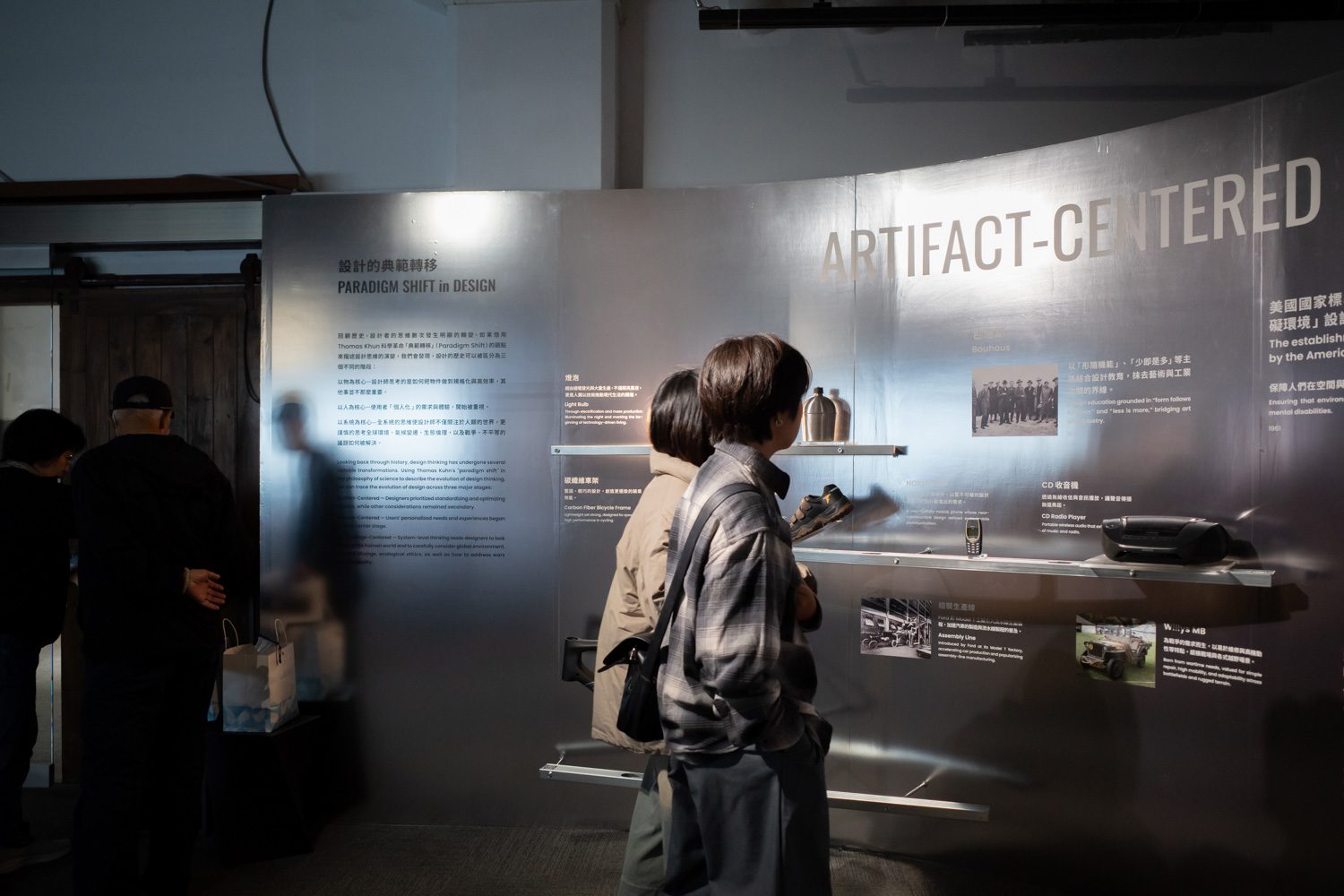
Photo: Kita Thapanaphannitikul
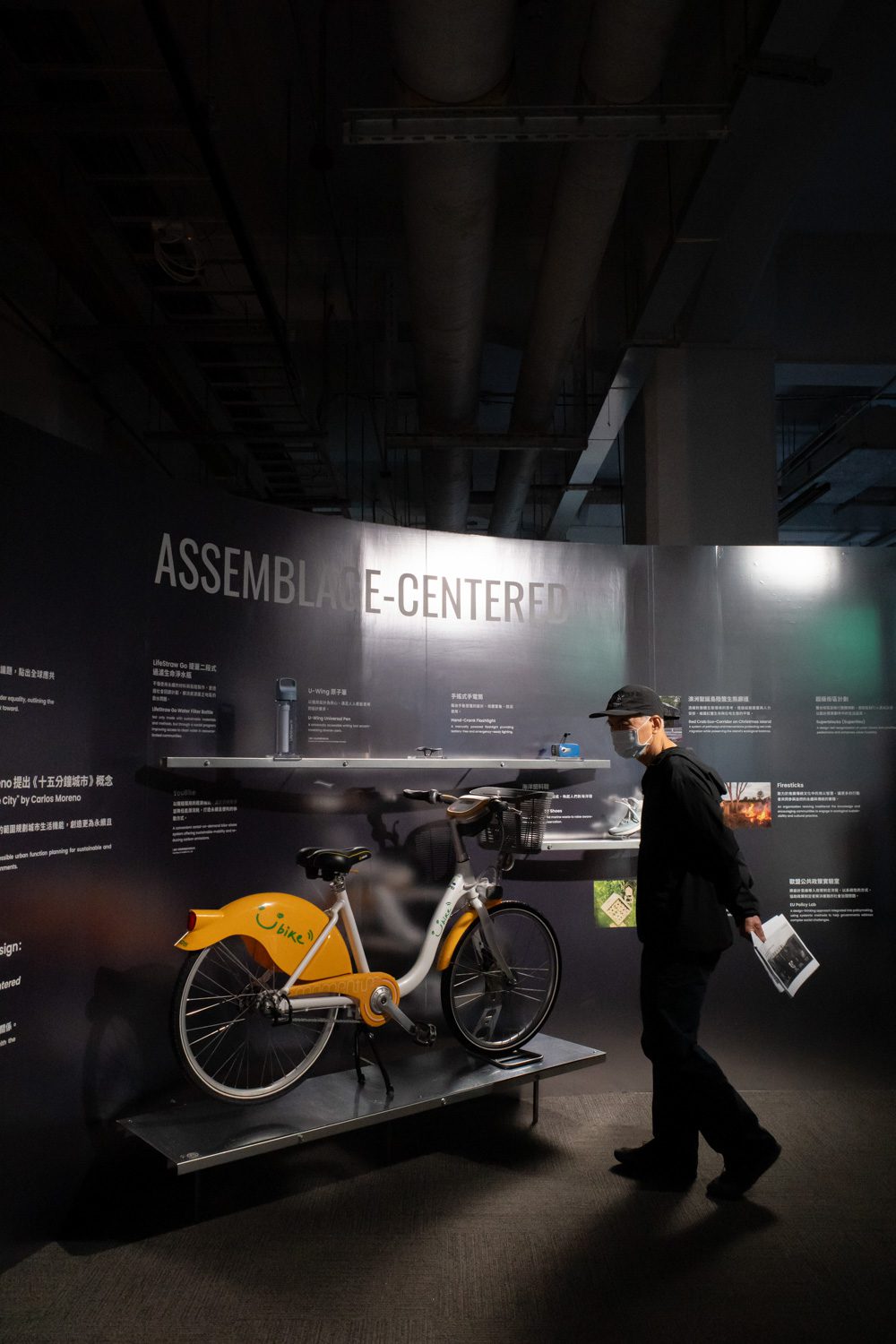
Over time, as we became more familiar with industrial production, gained more experience, and broadened our perspective, we realized something important: to deal with today’s challenges-globalization, modern life, and all the complex issues that come with them-we need to think in a more systematic way. We have to look at the bigger picture and work across different fields.
Even though this might sound like a natural ‘evolution’ of design, I think design has always been driven by one simple question: What kind of future do we want? We can’t fully predict what’s coming, but we can choose to think about it now-together with others in society-and talk about what kind of world we want to create. Once that picture becomes clear in our minds, design naturally starts to take shape.
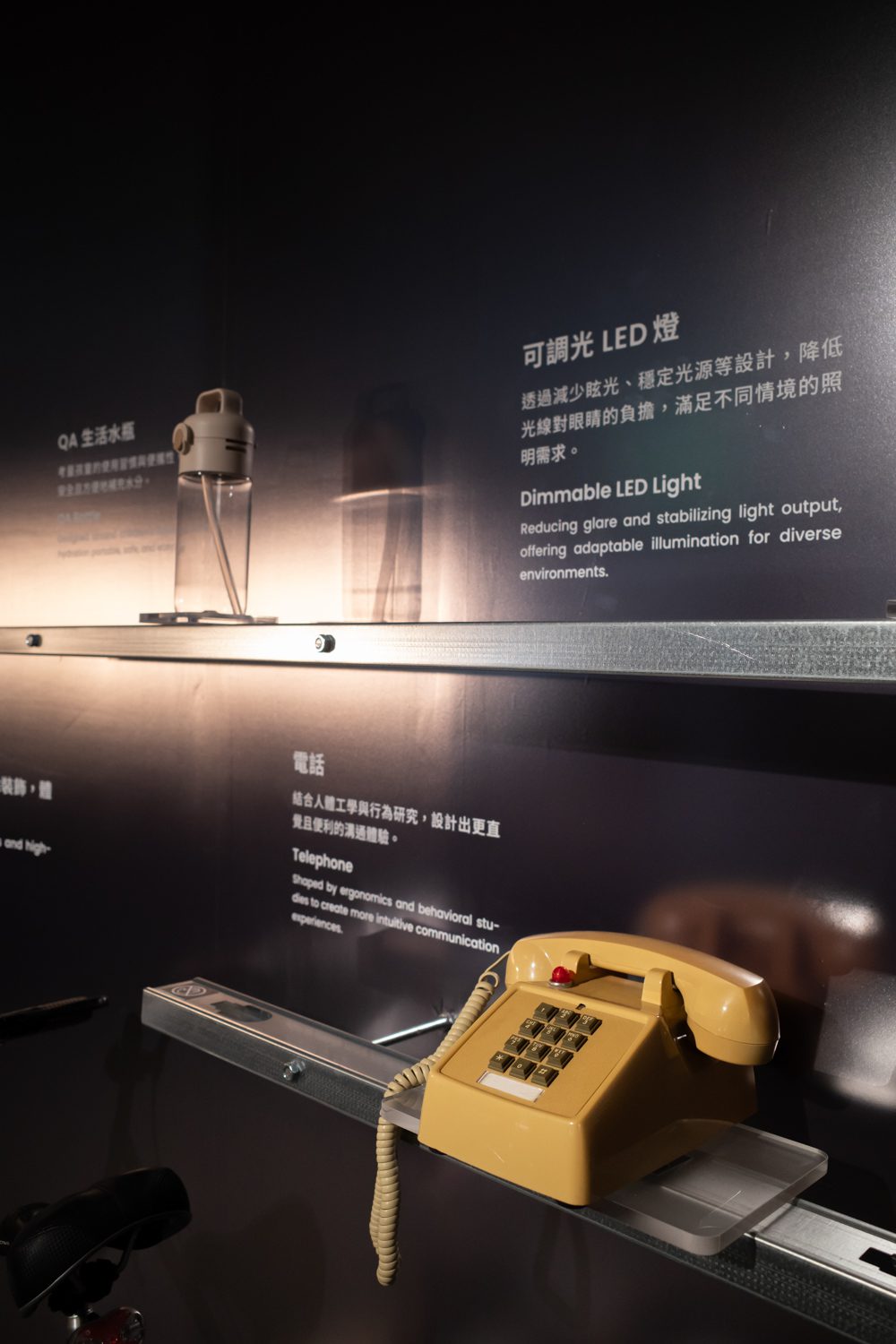 Photo: Kita Thapanaphannitikul
art4d: Could you elaborate on the curatorial process? How did you select the projects to represent the concept of this exhibition?
PHC: I am more concerned with whether design embodies publicness. Within the theoretical framework of the ‘paradigm shift in design’ introduced in this exhibition, I hope the selected works reflect thinking that spans artifact-centered, human-centered, and assemblage-centered approaches-while placing particular emphasis on the assemblage-centered perspective.
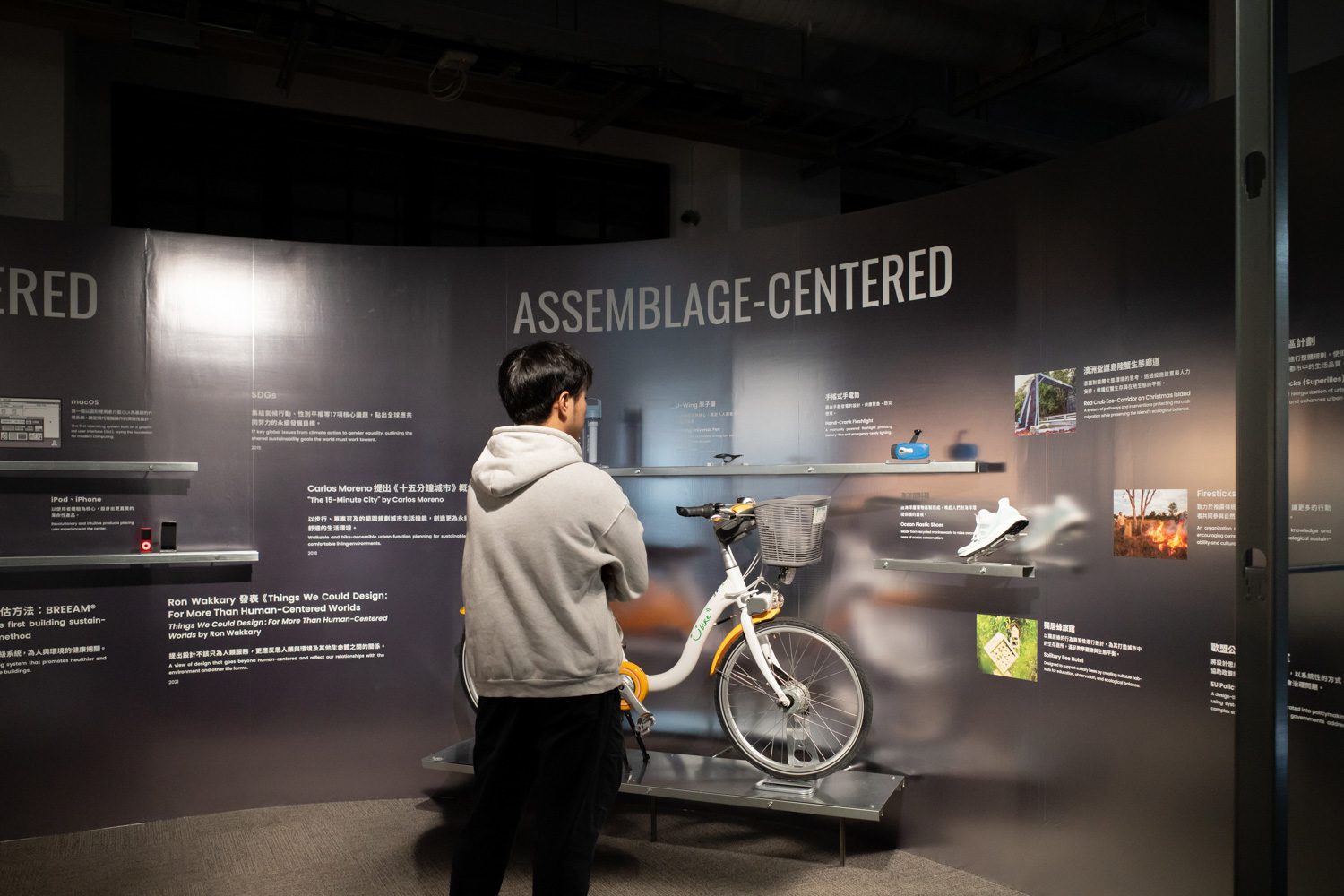
Photo: Kita Thapanaphannitikul
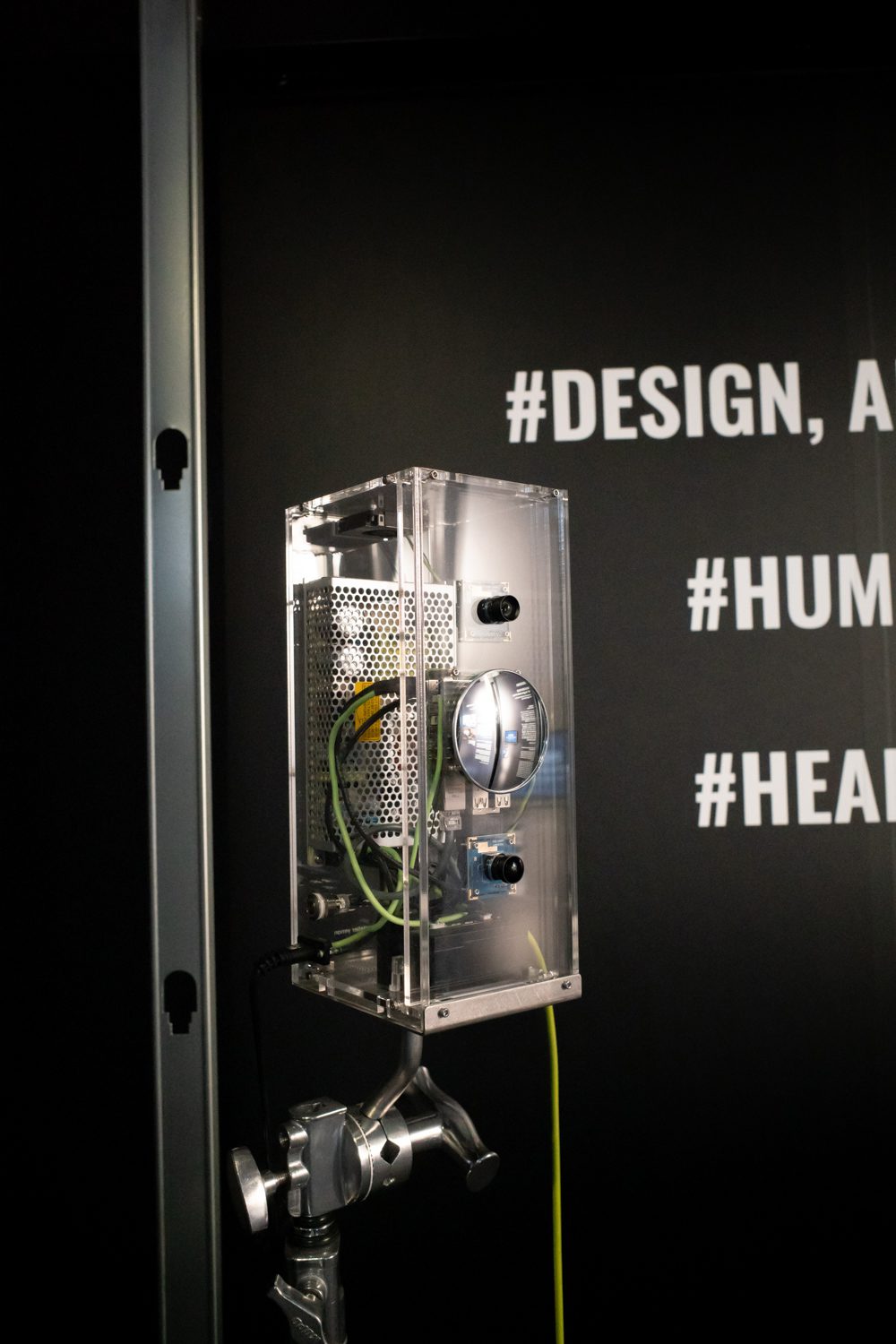 Photo: Kita Thapanaphannitikul
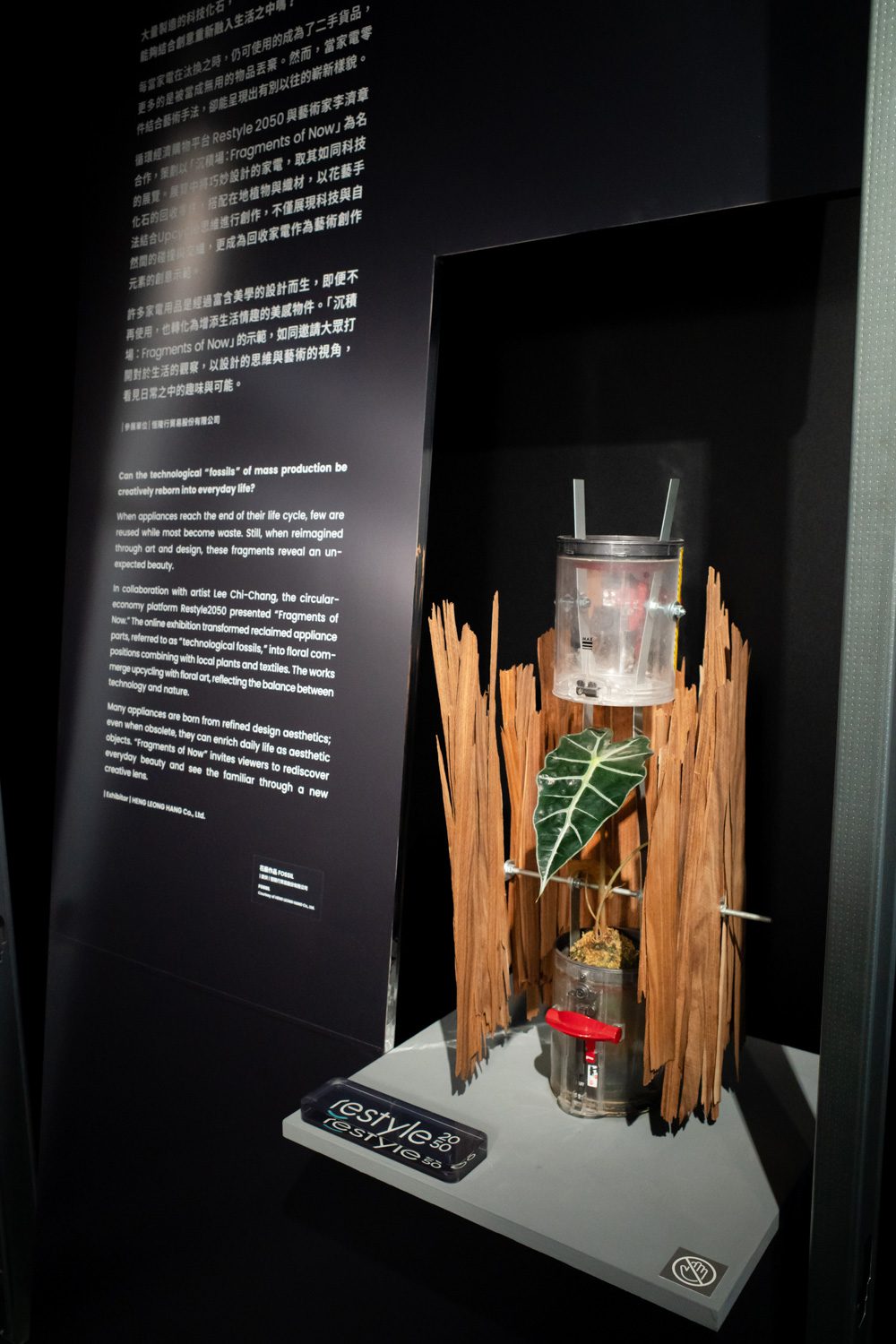
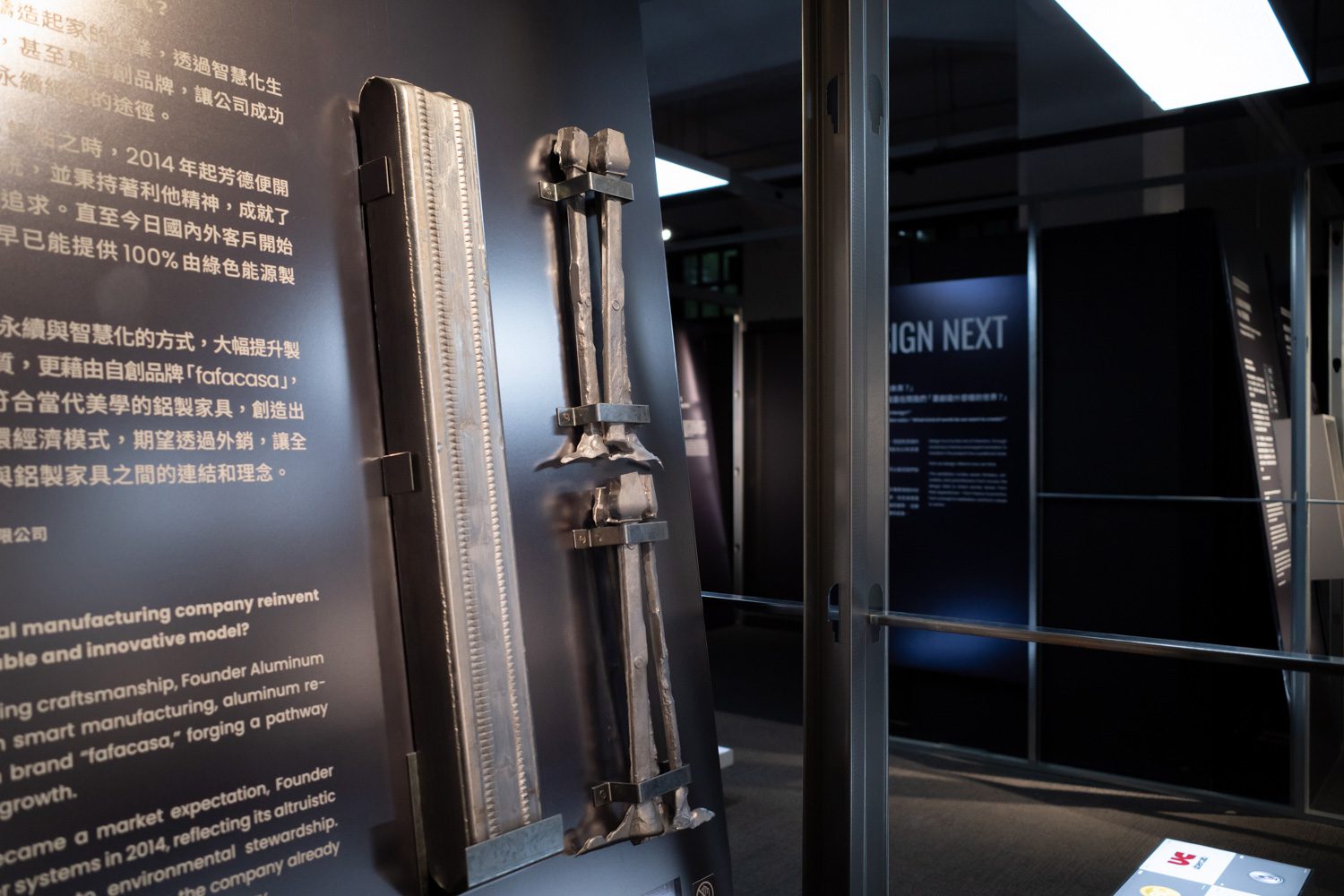
art4d: I noticed the use of industrial materials, such as aluminum framing, and the consecutive room-like planning. What was the core idea behind the design of the exhibition space?
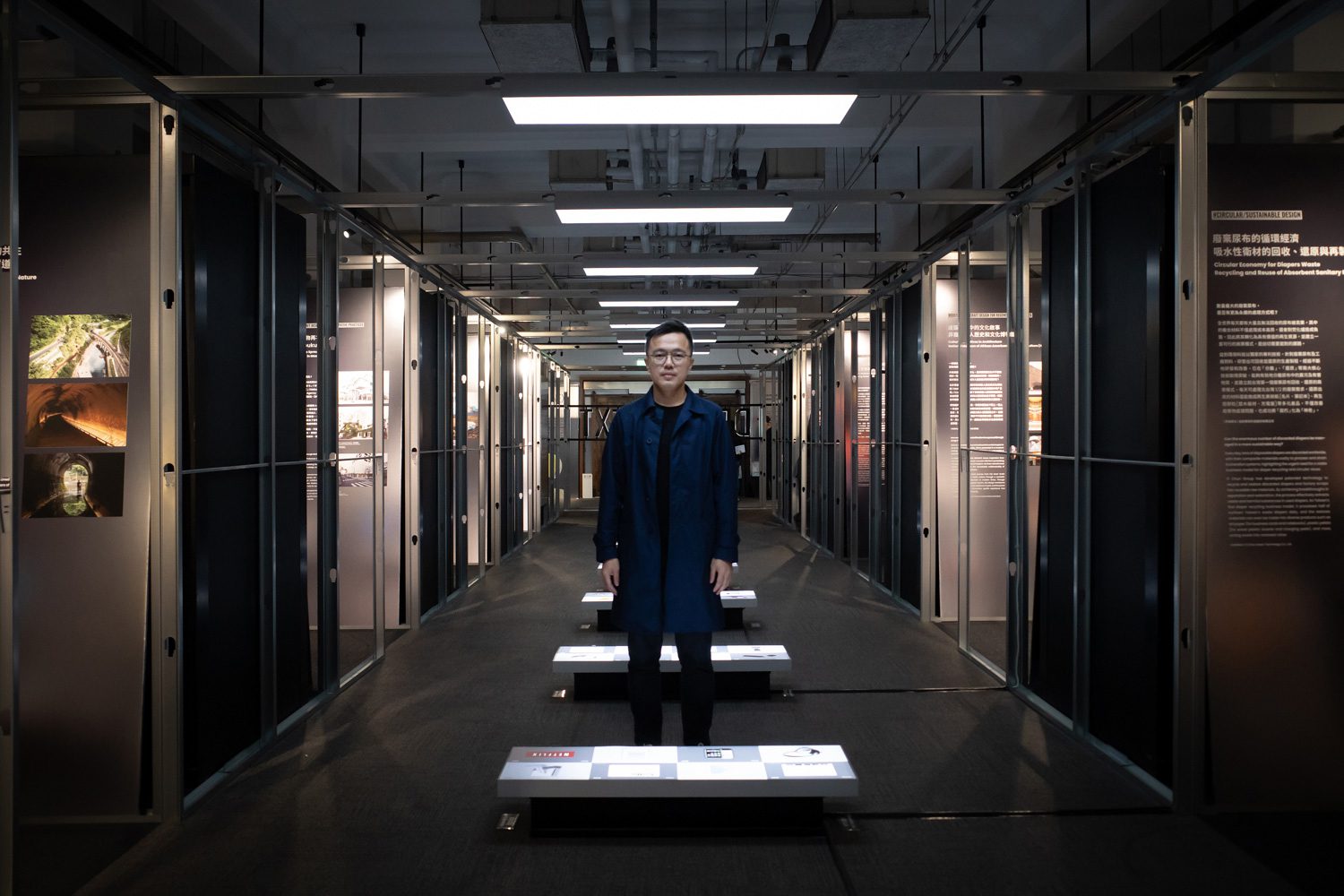
PHC: These aluminum frames are a common structural component used for interior partitions-pretty much every building has them. You usually don’t see them because they’re typically covered by panels on the outside. In this exhibition, the frames are only lightly fixed in place, so their strength and rigidity aren’t compromised. After the show, they can still be treated as building materials and reused-there’s no need to throw them away.
Exhibition materials often get criticized because they tend to be one-off: they’re used once and then discarded, which means a very short lifespan. But visiting exhibitions is also one of the most effective ways we communicate ideas in society today. We wouldn’t reject exhibitions just because they might create waste. With that in mind, I try to choose materials and methods that can last longer and be reused, so we can extend their life as much as possible.
 Photo courtesy of Taiwan Design Week 2025
art4d: At the end of the exhibition, there is a zone called ‘Value Spectrum’ where you invite visitors to vote on their stance and participate in public decision-making. Why did you decide to include this political dimension in the exhibition, and why should we consider this issue within the design landscape?
PHC: Design always has someone it’s meant to serve-sometimes it’s a small group in society, sometimes it’s the majority. And the outcome isn’t always positive. A design can also create exclusion, or push certain people out. Either way, once design involves other people, it becomes connected to politics.
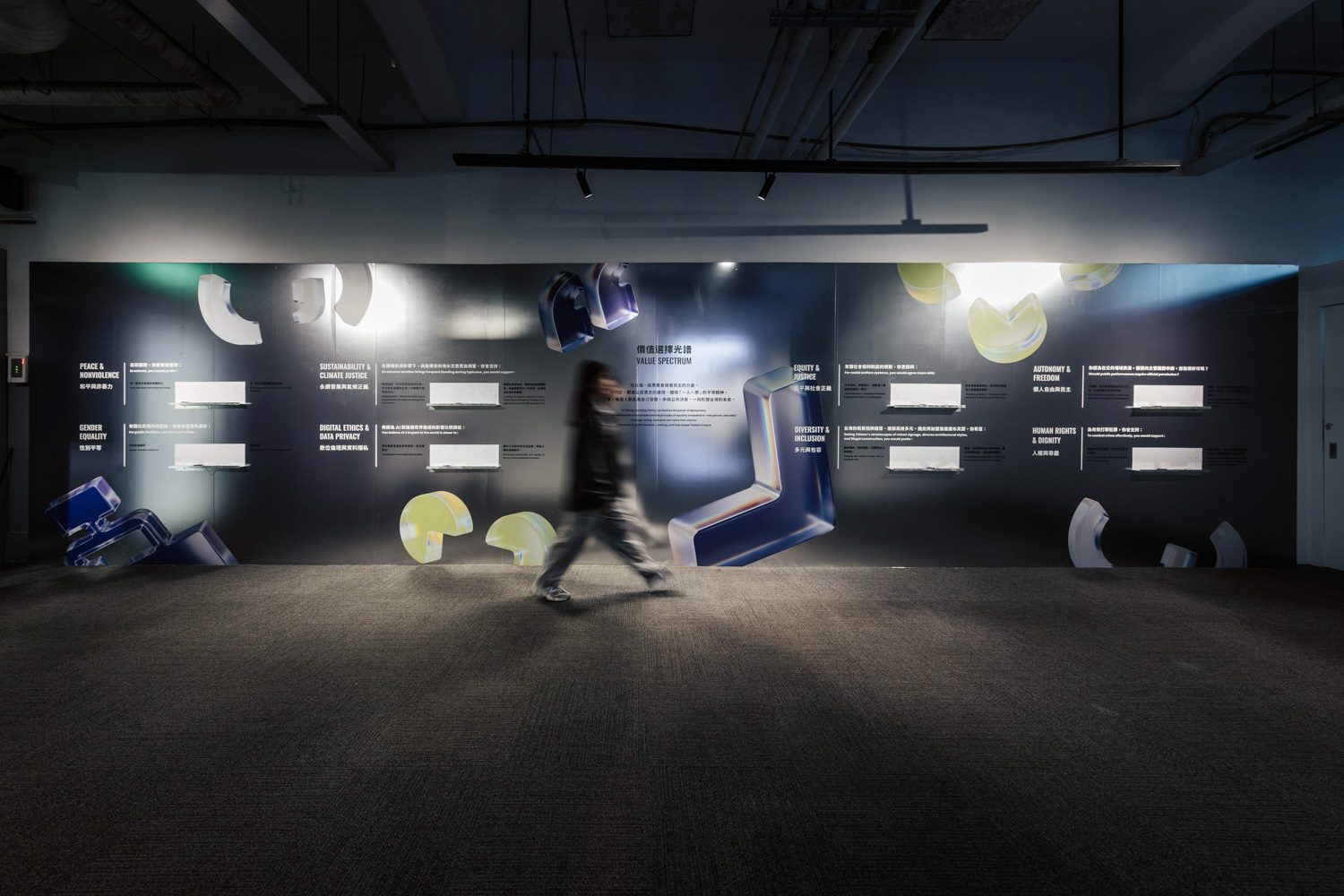
Photo courtesy of Taiwan Design Week 2025
Politics isn’t only about how we survive-it’s also about how we live. And isn’t ‘survival and living’ exactly what designers think about at the deepest level?
To do good design, one key starting point is understanding society-what people care about, and what’s missing. That’s why it’s only natural for designers to care about politics too.
Taiwan is a democratic country, and during elections, we use a pen-like voting stamp to mark the ballot and show each person’s choice. In this exhibition, we invited visitors to use the same kind of stamp to share their opinions-choosing which values they lean toward from questions we set up in advance. The ballot works like a spectrum of values: there are more left-leaning ideas and more right-leaning approaches. The fun part is that I wanted to use Taiwan’s voting stamp to let everyone experience a very ‘Taiwan-style’ kind of democracy.
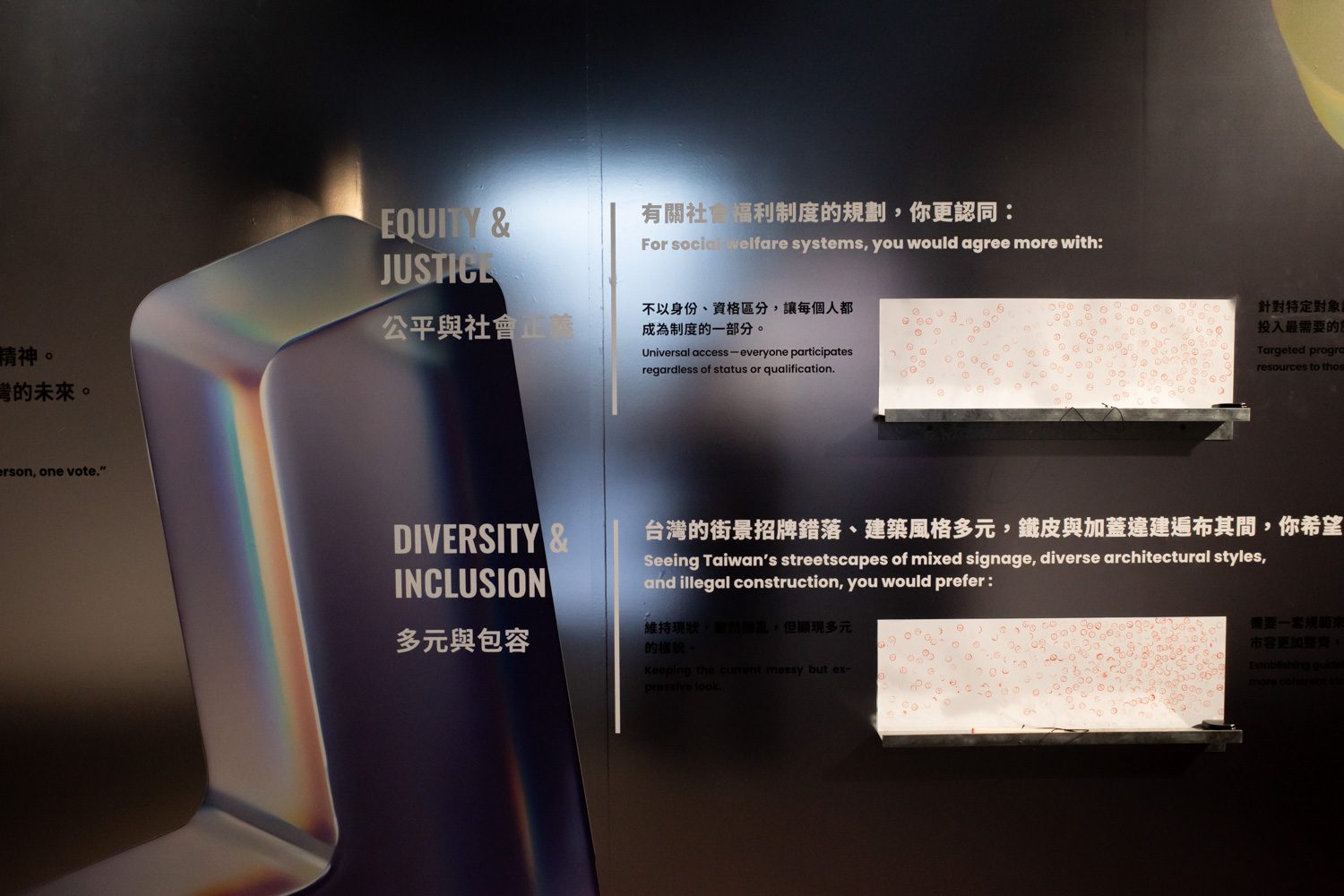
Photo: Kita Thapanaphannitikul
art4d: Among the 27 projects from 31 design teams, which one is your personal favorite, and why?
PHC: My favorite case is TDRI’s ‘Design Movement for Public’. I think it can raise the overall quality of society in so many ways-and that really matters for everyday citizens. The environment has a huge impact on people, and we shouldn’t underestimate it.
The way a space is designed-and the behaviors it encourages-can shape how we think through subtle ‘metaphors’ that get absorbed into our awareness. A good public space isn’t just about looking nice. It should also be a place where people can interact naturally, share, and connect. And beyond that, having positive experiences in well-designed public environments can strengthen our sense of community and collective awareness.
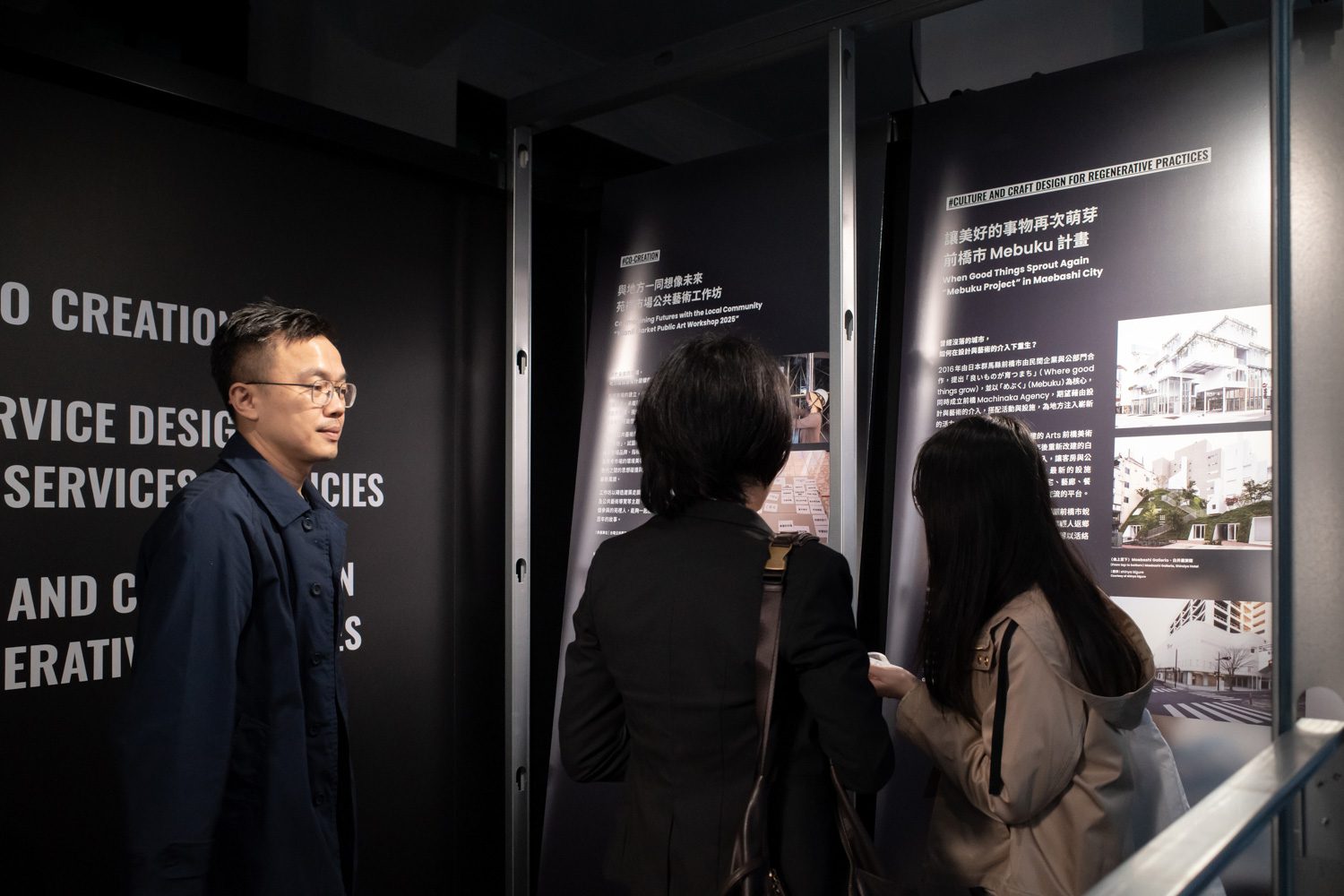
Photo: Kita Thapanaphannitikul
art4d: In a world facing such volatility from the rise of AI and political instability to conflicts erupting across regions. What do you see as the biggest challenges for designers today? And what are the core values we should hold onto most?
PHC: There are many kinds of design, and designers in different fields face very different realities. For example, a design that’s closer to everyday life can run into stronger cultural pushback, and it also tends to face more competition. Public-facing design, on the other hand-where value judgments are unavoidable-often requires a clearer stance, and the courage to have real dialogue.
It’s pretty clear that AI should be seen as a useful tool for design. If we treat it like an assistant, it can help us. If we treat it like an opponent, it can end up defeating us-mostly because we defeat ourselves. Either way, the best way to navigate change is to keep learning and improving, build our own adaptability, and stay open-minded and inclusive. The world will keep changing-that’s always been true throughout history-so flexibility is one of the best strengths we can have.
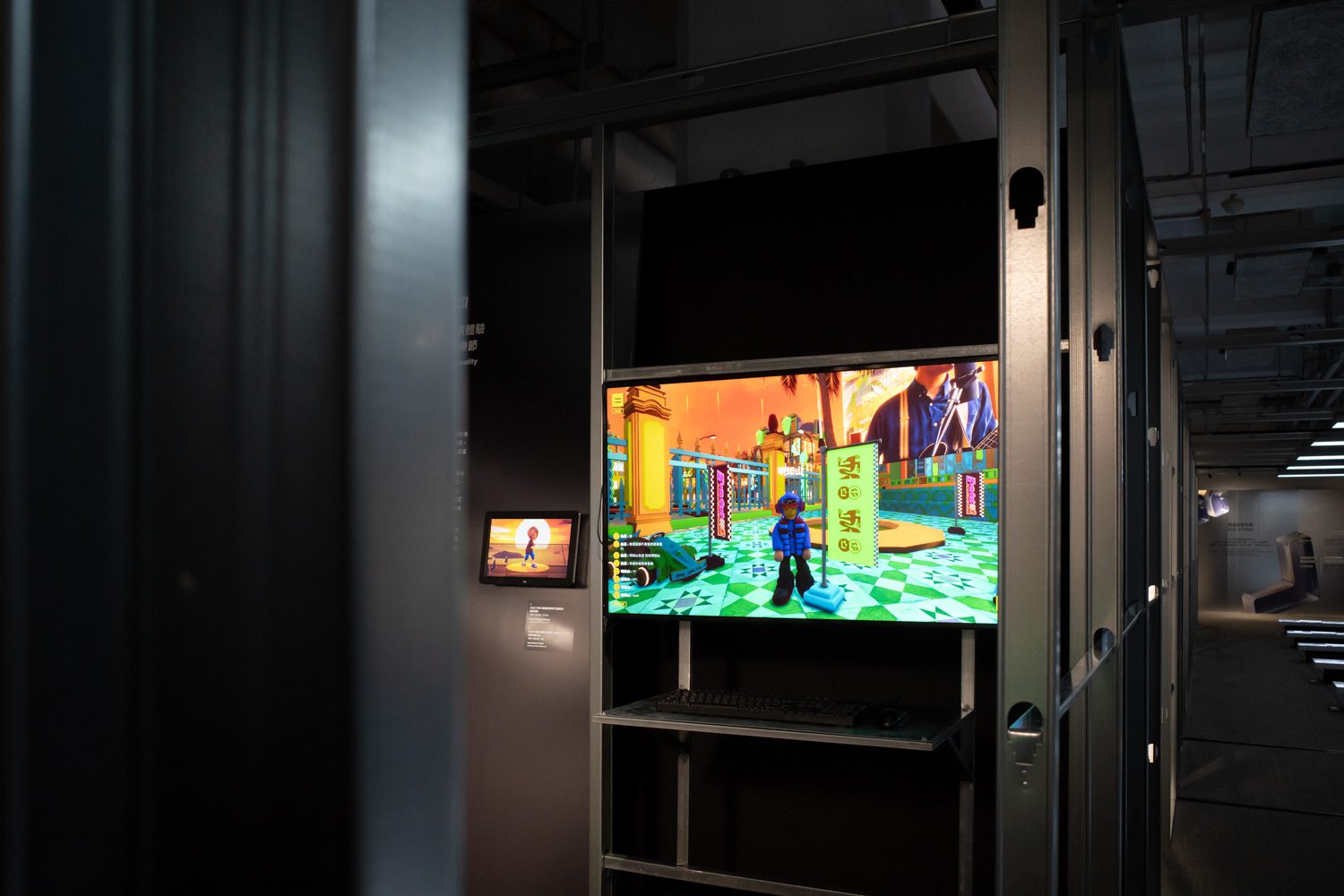
Photo: Kita Thapanaphannitikul
But when it comes to the public and society, I believe the values of freedom and democracy matter most. They create the most inclusive kind of fairness-so more people can benefit-and they help keep collective life open to communication and exchange. That’s what gives a society stronger resilience and the ability to adjust when things change.
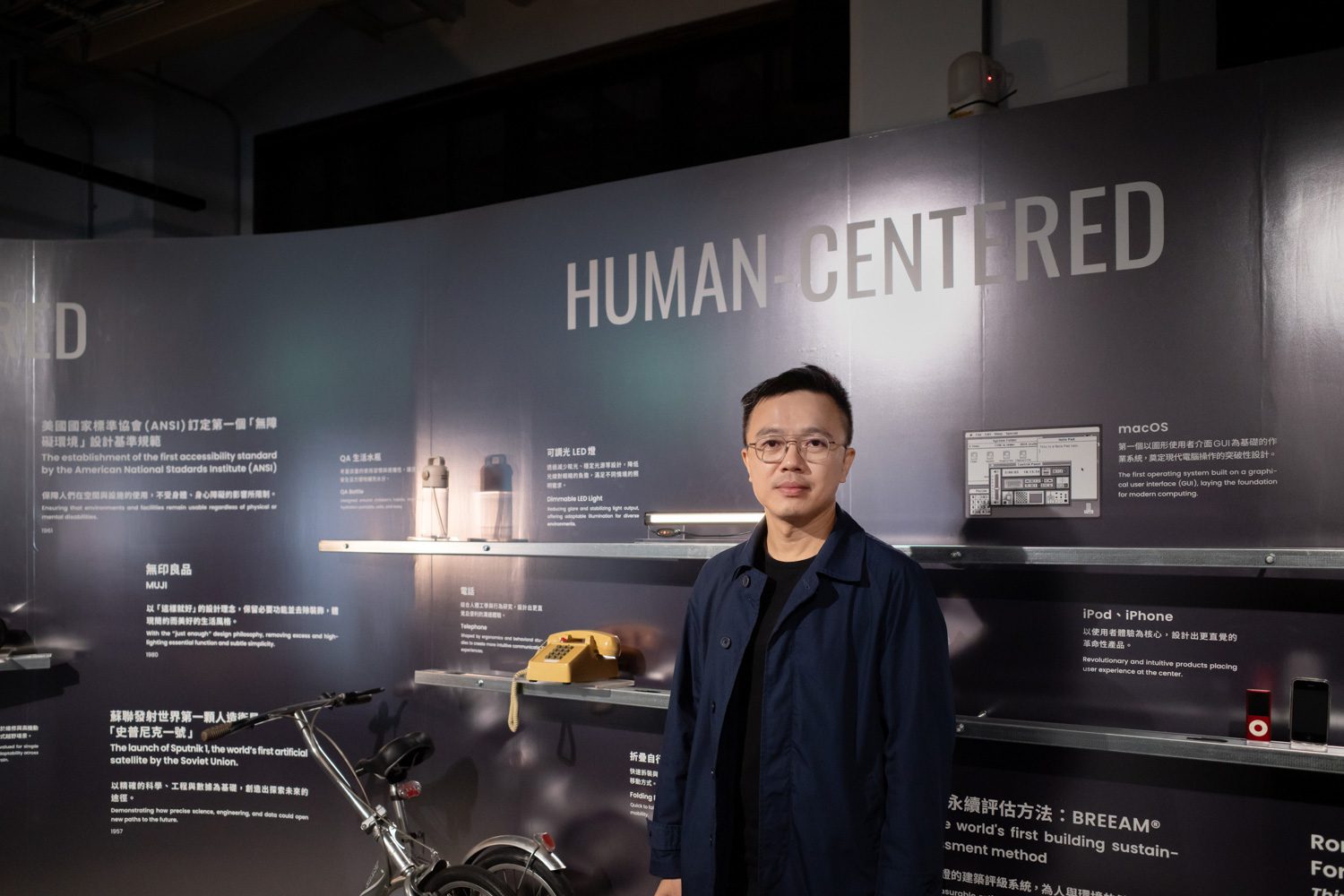
Photo: Kita Thapanaphannitikul