
‘LAB-SING’, AN EXHIBITION BY SWATCHROKORN WANNASORN, OPENS UP A SPACE FOR PERSONAL MEMORIES TO COLLIDE WITH HISTORY AND THE CHANGING LANDSCAPE
TEXT: SURAWIT BOONJOO
PHOTO: KETSIREE WONGWAN
(For Thai, press here)
“If our home is nightfall, then theirs must be Lab sing.”
(A descent into the realm of slumber shaped by nature, a departure from illumination and its narratives into darkness. A dual state that marks the origin of stories in their tumultuous beginnings.)
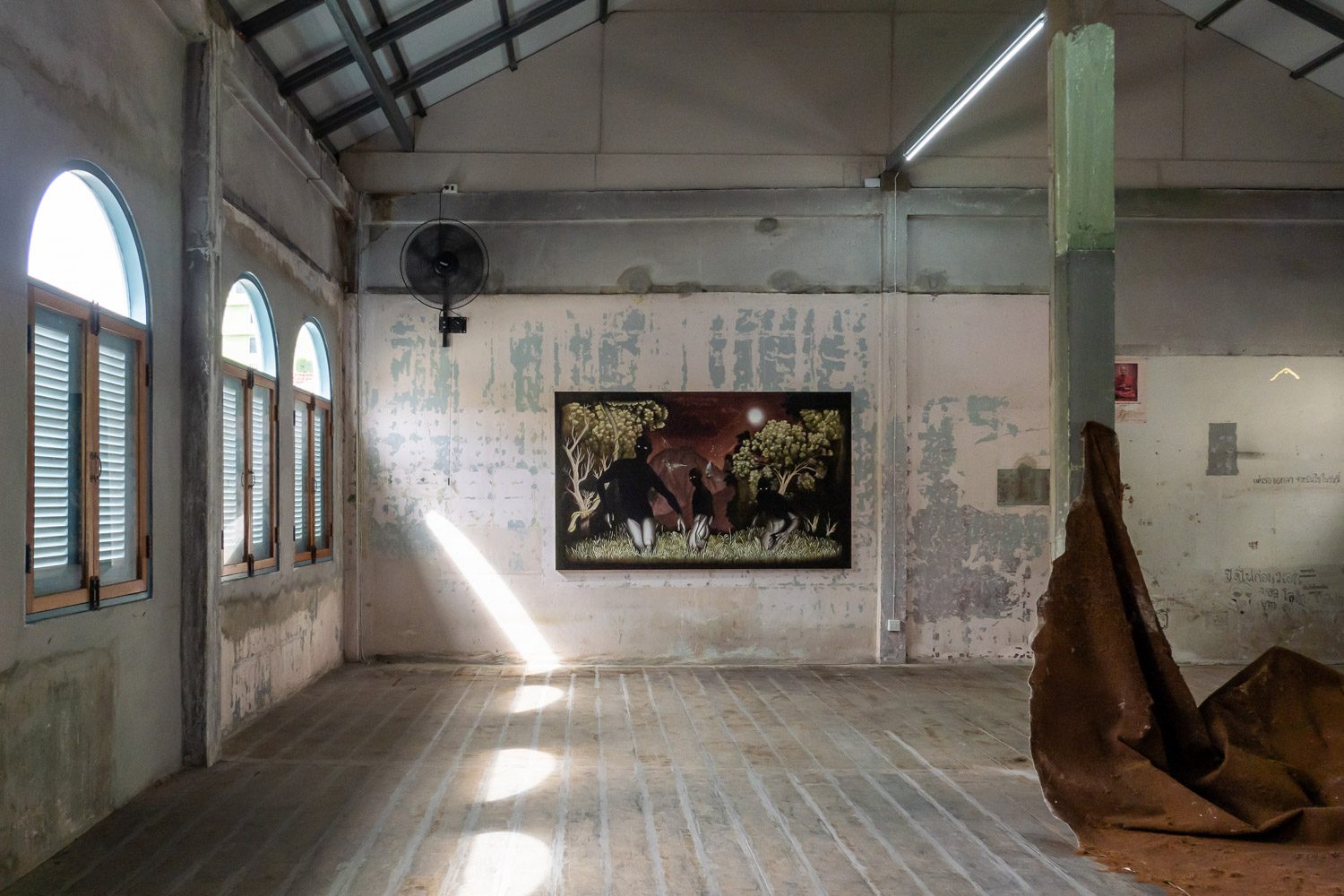
The solo exhibition ‘Lab sing’ by Swatchrokorn Wannasorn, a young contemporary artist of Tai Yai–Thai heritage, is on view at TARS Unlimited, a gallery located on Song Wat Road, Bangkok, from June 28 to August 10, 2025. The exhibition emerges as the artist’s act of historiographic writing, a personal codex where the artist reads and rewrites, overlaps and overlays narratives of displacement drawn from Ui Yod, his grandmother. In this work, intimate personal memories intersect with public history, circling back toward ancient remnants imbued with layered significance. The exhibition weaves together tales of fabrication, dissonance, and coexistence, where entities are connected yet discontinuous, alongside narratives dimming into obscurity within illuminated spaces, against a backdrop of myth and the histories of conflict, resistance, and migration.
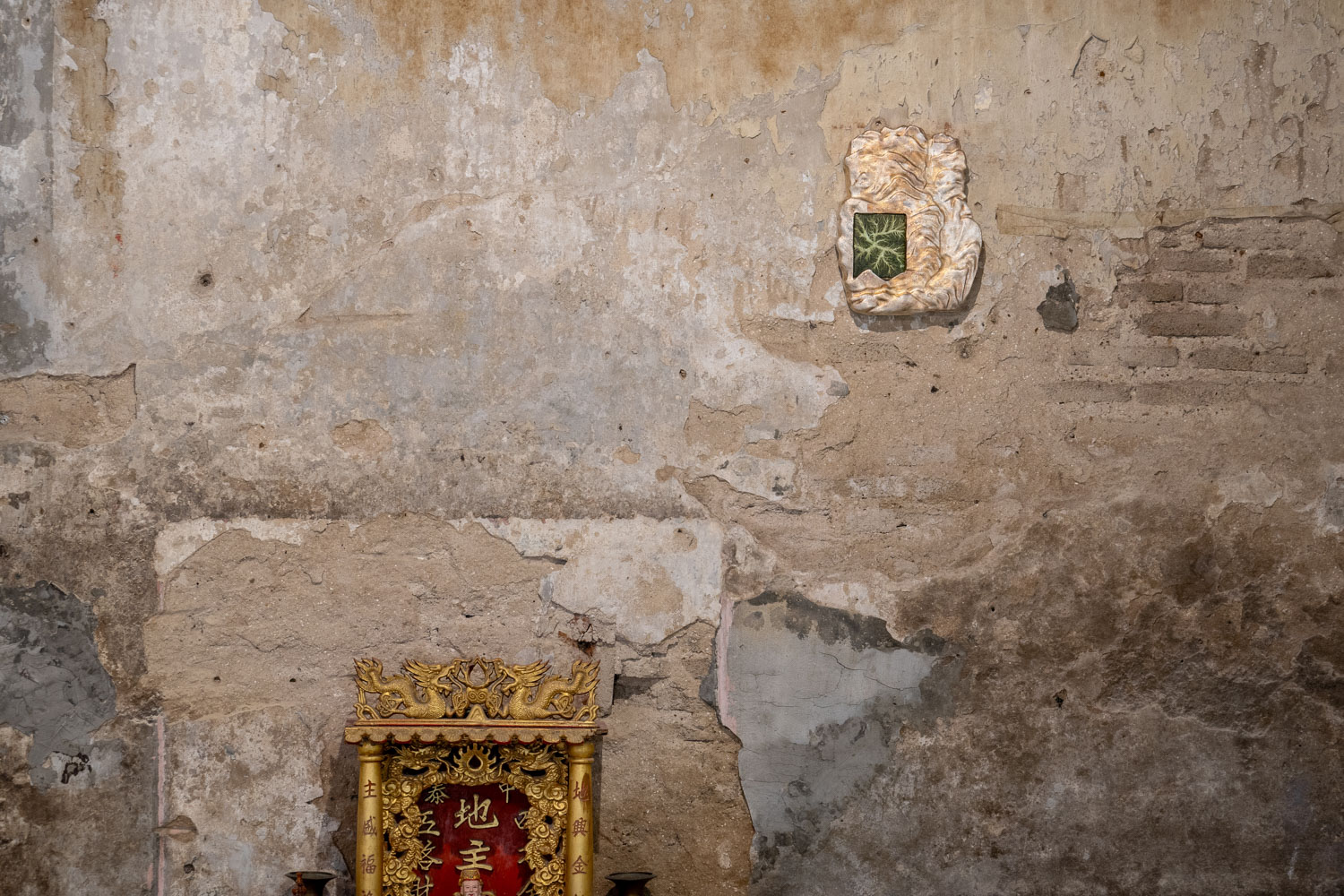

Corporeal landscapes of ‘kwan’—the vital essence—coil and overlap with the contour lines of a topographic map, depicted within a rectangular painting. Its ridges are misaligned and fractured, their disjointed seams echoing the fragmented territorial outlines of Mueang Pan. This cartographic image interlaces with figural paintings set against scenes of daily life: the contest for food resources, flight from danger, acts of encroachment, and parodic images modeled after Communist military posters. In these, a soldier reaches out as though to grasp a dying star, to seize it, press it down, and hide it away. It seems like an attempt to obscure and sever a fantastical tableau where human and non-human intertwine. Across these compositions, the terrain transforms into Somia, landscapes rendered from fabric flayed to expose front and back, inside and out. They are filled with voids, with a palpable absence, echoing the framework of windows and doors, the tools of construction, and the lingering question of who has disappeared from here, only to exist elsewhere…?
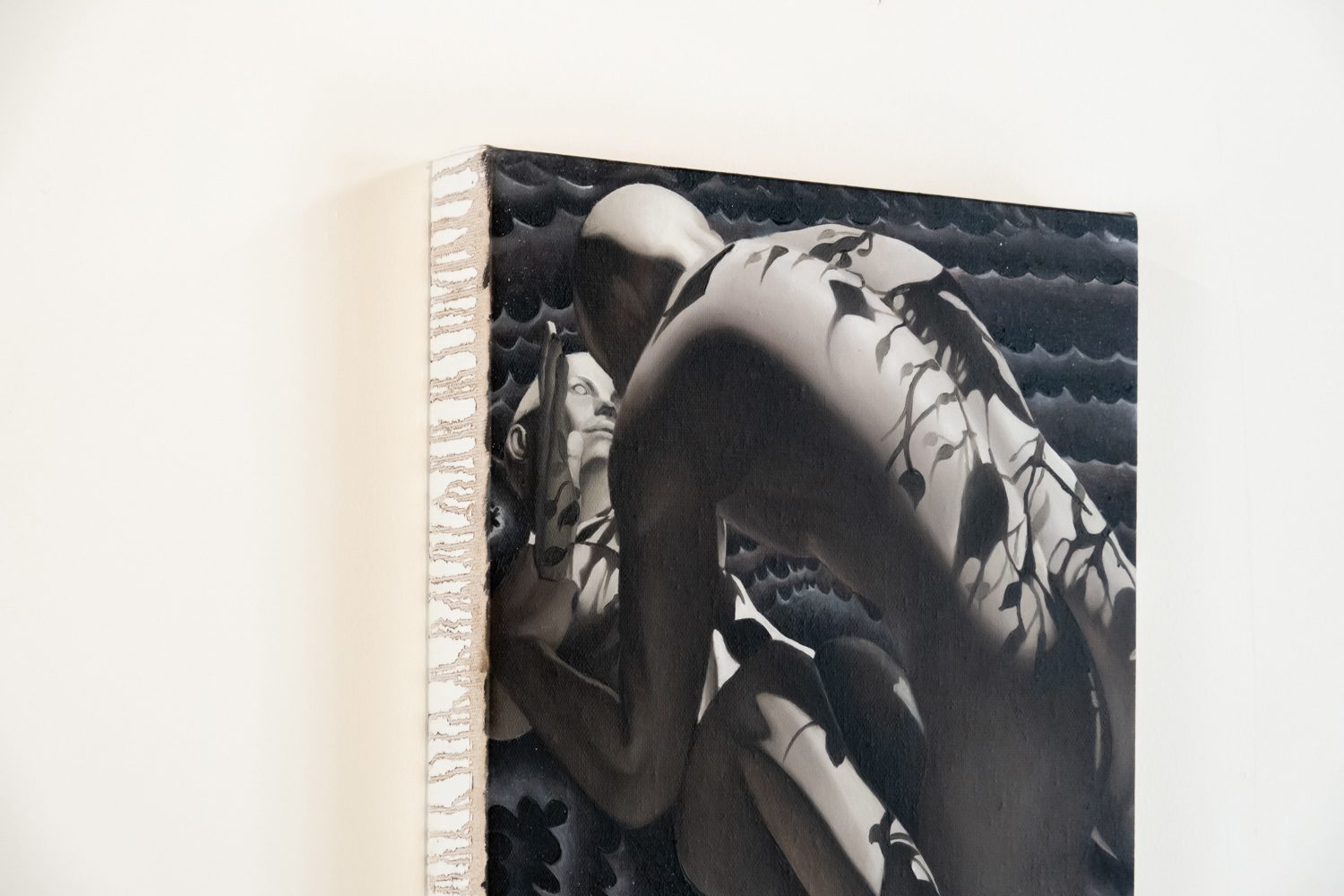
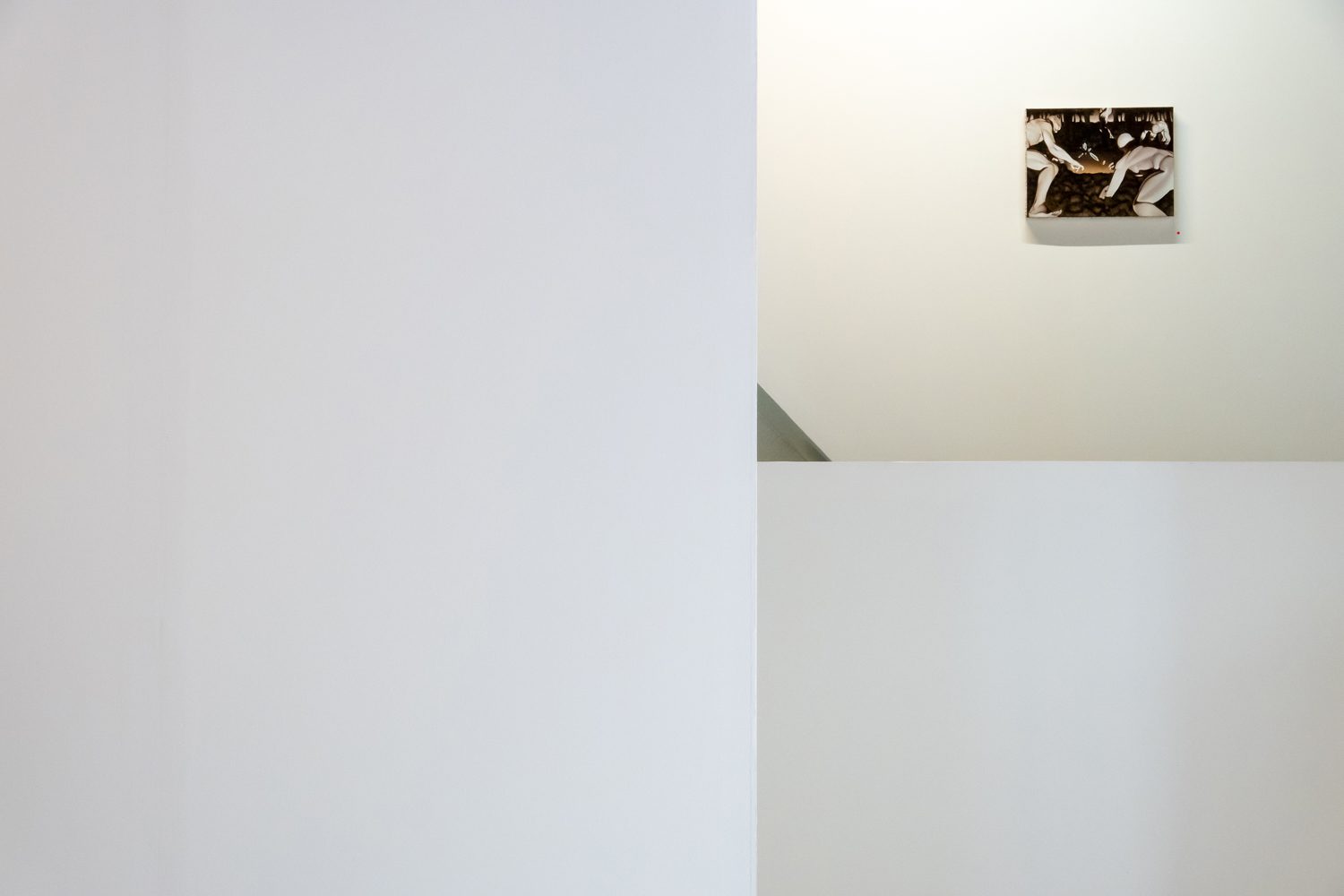
Swatchrokorn guides viewers through these currents, urging them to read the stories embedded within the images in tandem with the objects that guide us across and between them, threading these fragments onto the line of historical events. The works, taken together, tease and provoke through a sequencing that resists any single, immediate reading. Their narrative language seems to flow along the trajectories of unrest, incursion, and flight, moving seamlessly into the orbit of belief systems and the legendary tale of Phranang Yi Saeng Kor, which unfolds against the backdrop of Mueang Pan in Shan State, Myanmar, the land from which Ui Yod once departed. Here, personal narratives twist tightly against accounts of historical conflict, converging with the mythic landscapes of folktales. At the spiral’s center, the first knot of ‘kwan’ gathers these strands—two entwined narratives and a singular existence—turning them over, binding them together, and allowing them to merge, dissolve, and transform into one another.
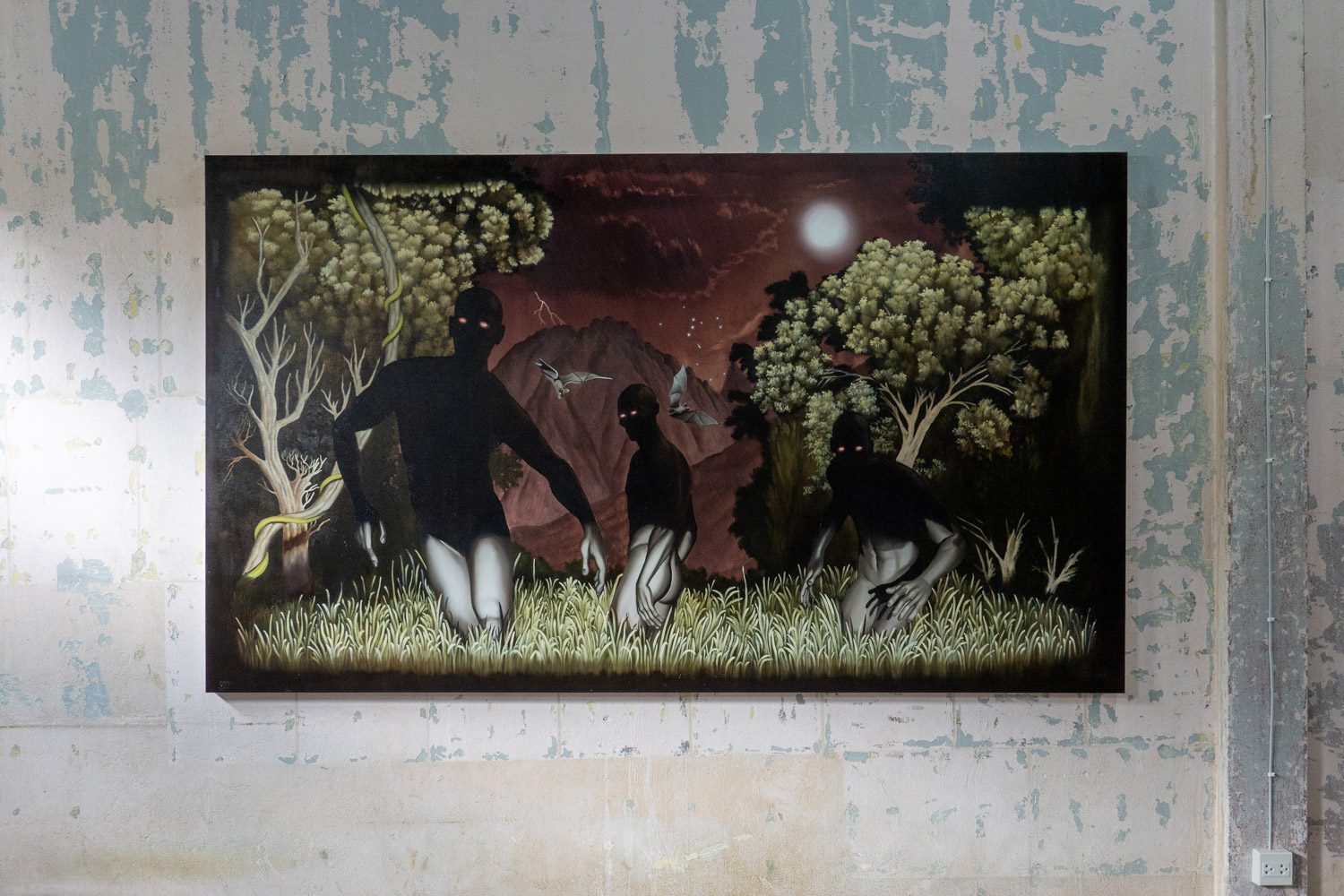
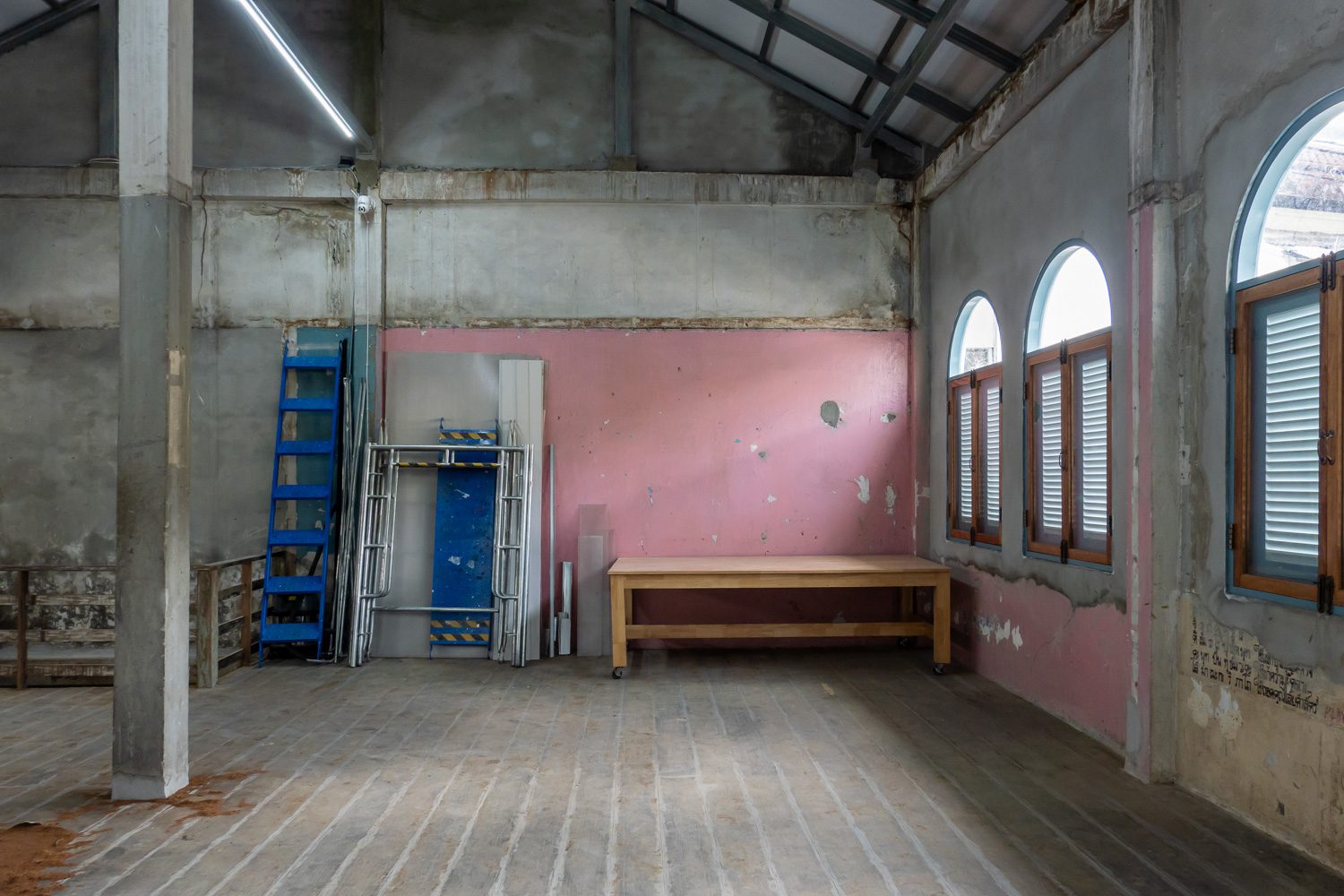
The sequencing of images is itself laden with the gravity of their narratives: retracing family histories, gathering ‘kwan,’ fleeing and migrating in the wake of military incursions that plunder resources, enduring oppression, and even playing out hide-and-seek—not as a childhood game, but as a desperate act of survival. This process of revisiting the past becomes akin to recovering objects or traces imprinted with one’s identity, allowing for a release from those stories, a severing from cycles of suffering, and the possibility of stepping toward a better future. Yet these remain layered and overlaid, insisting on certain presences; on unseen forces that participate as powerful agents. They press down through the strata of historical narratives and the records of present-day communal acts, inscribed across planes of stories that hover above.
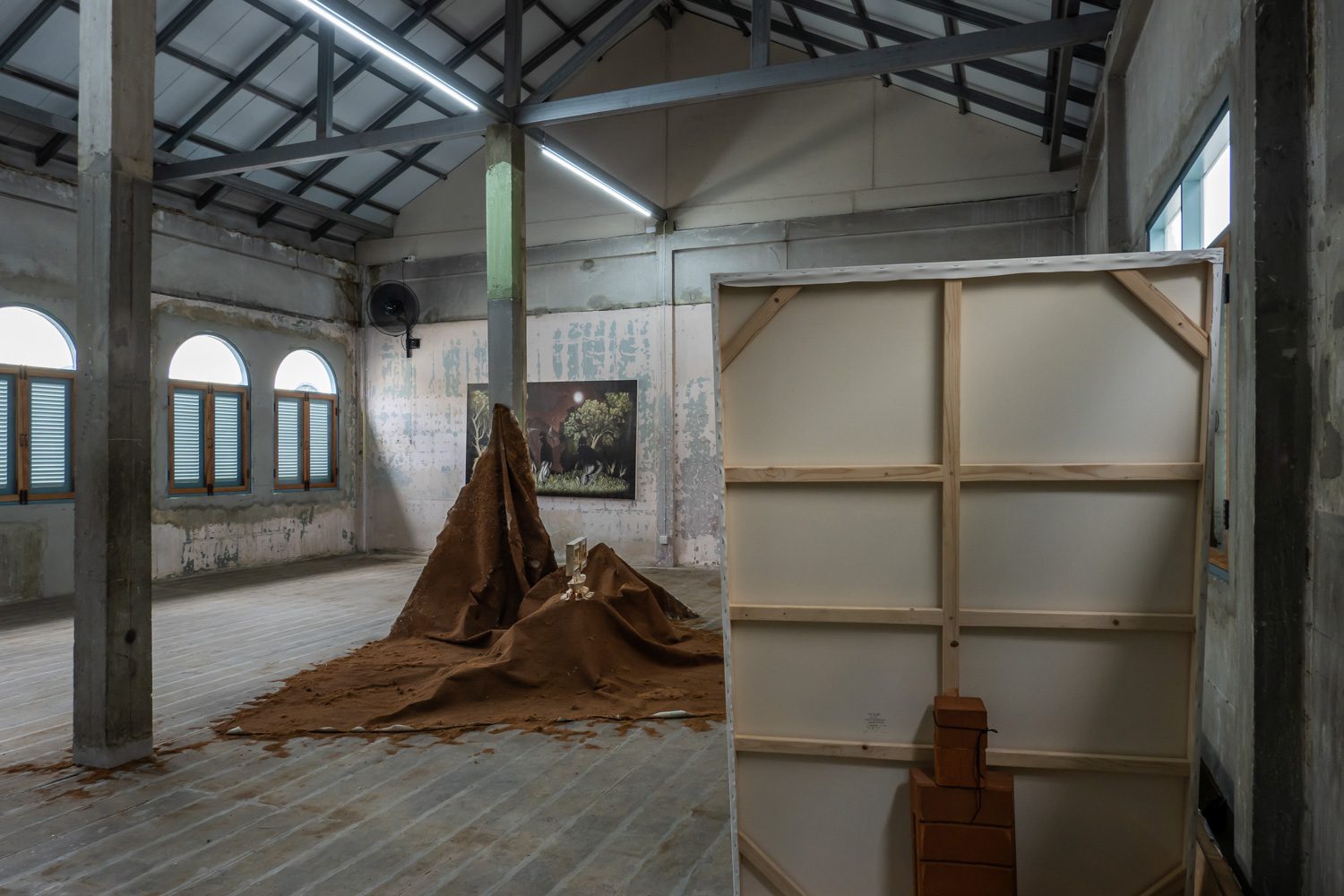

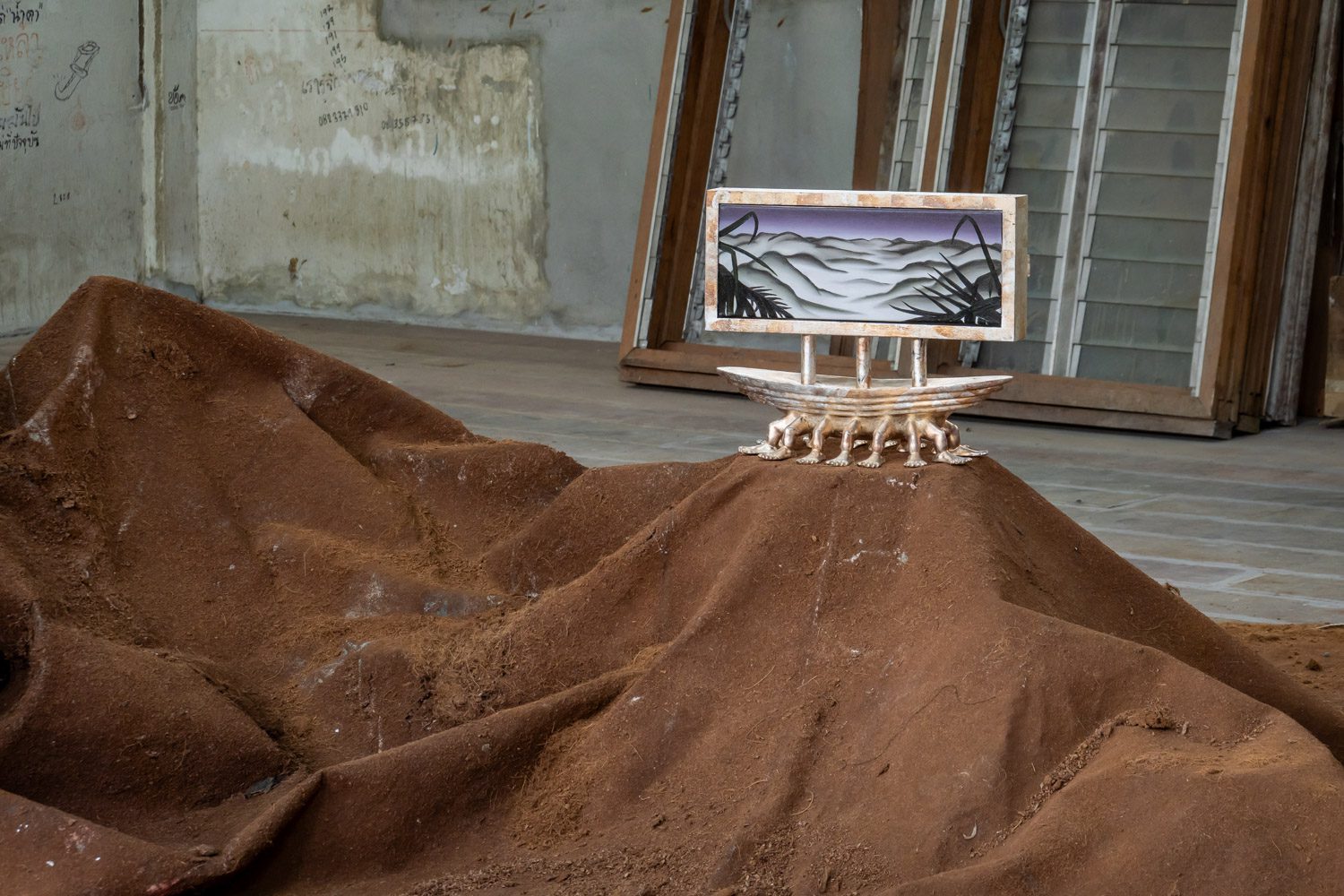
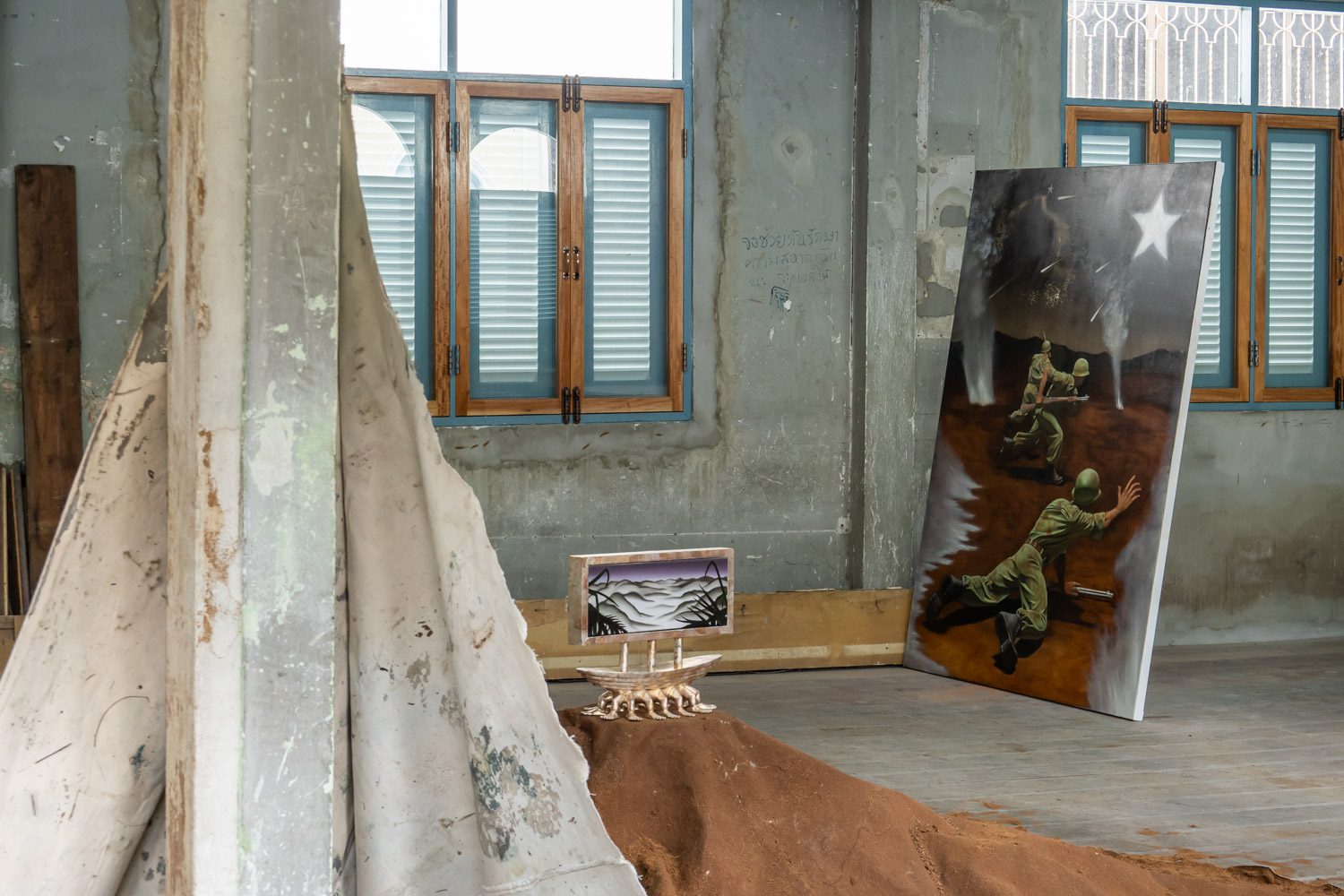
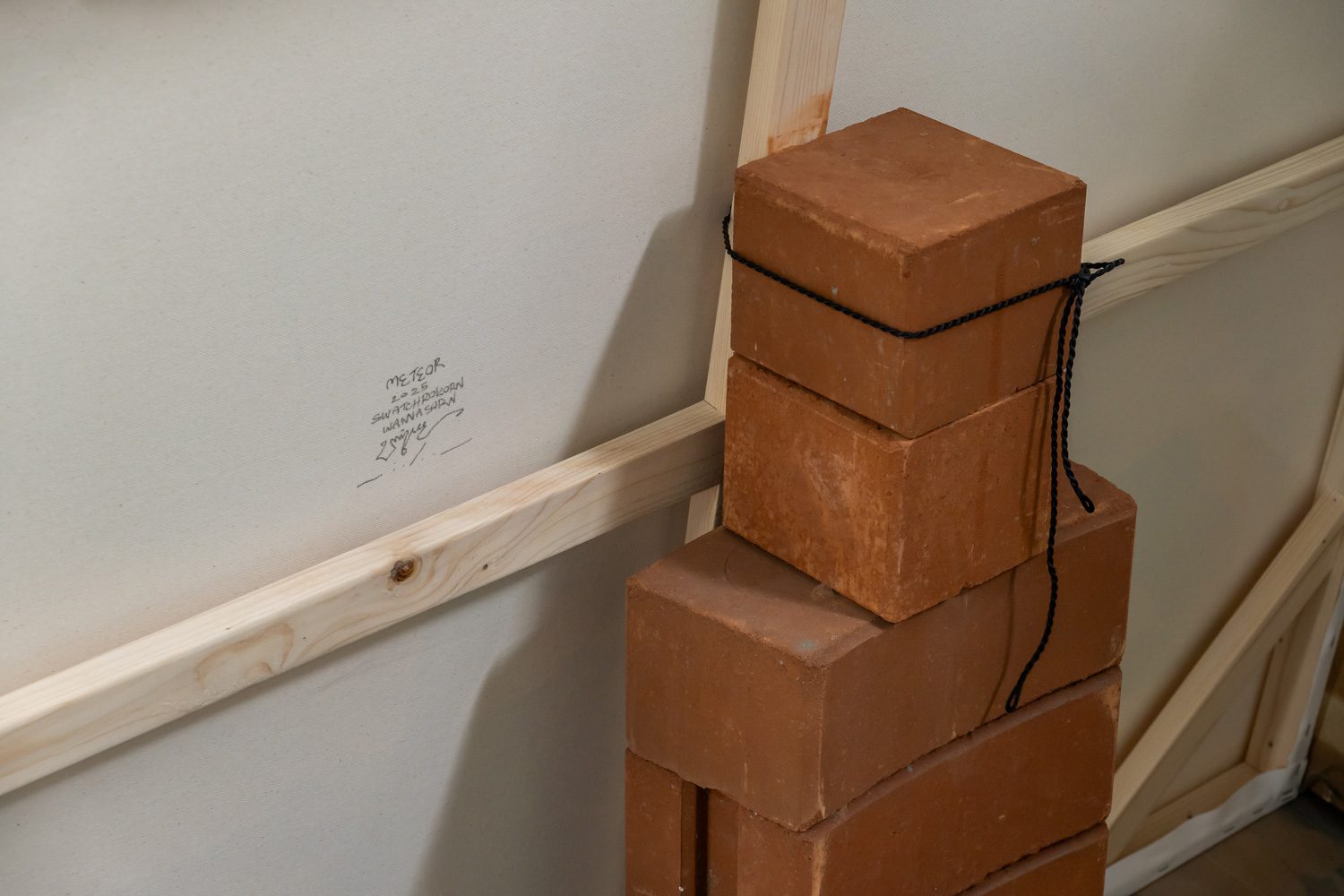
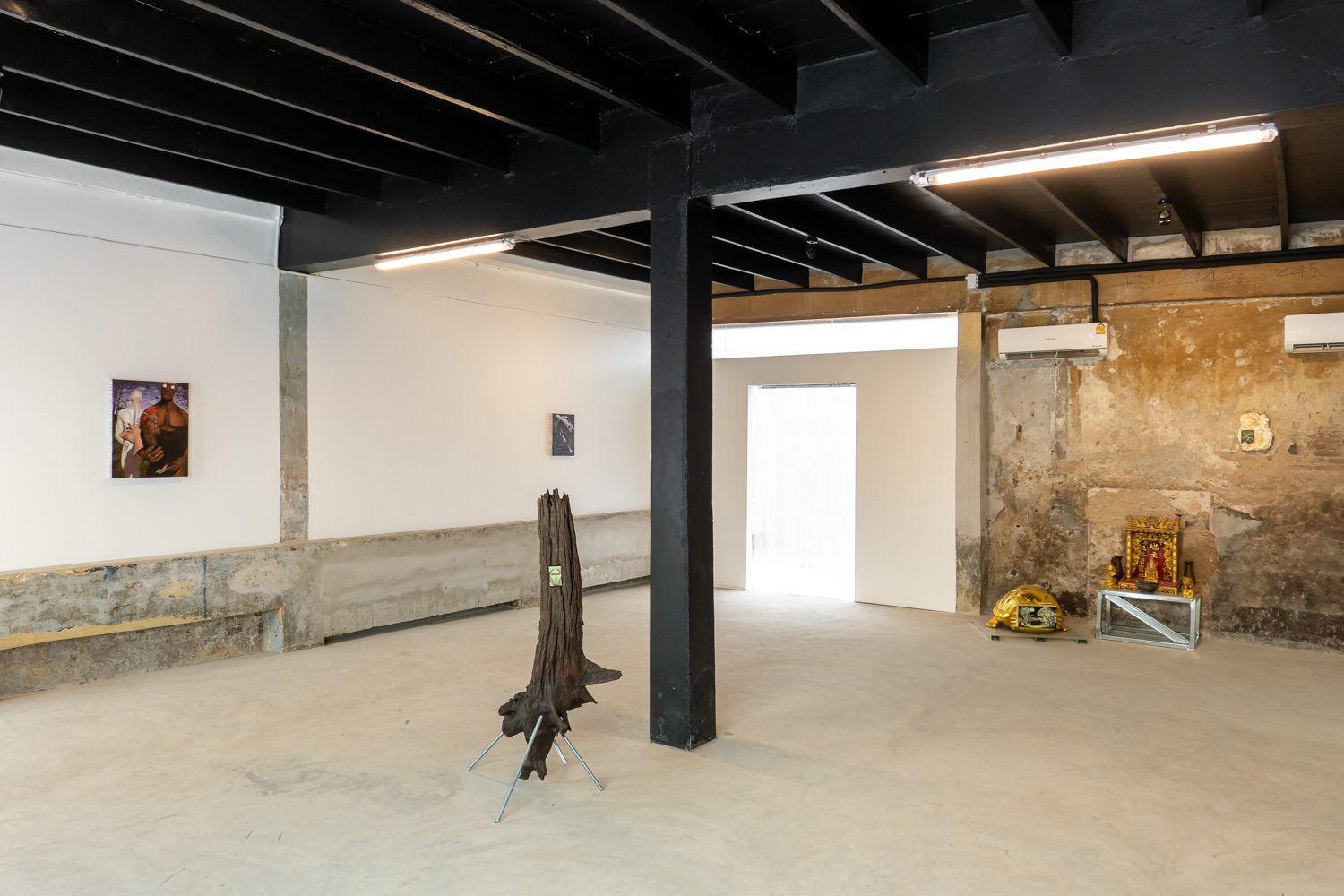
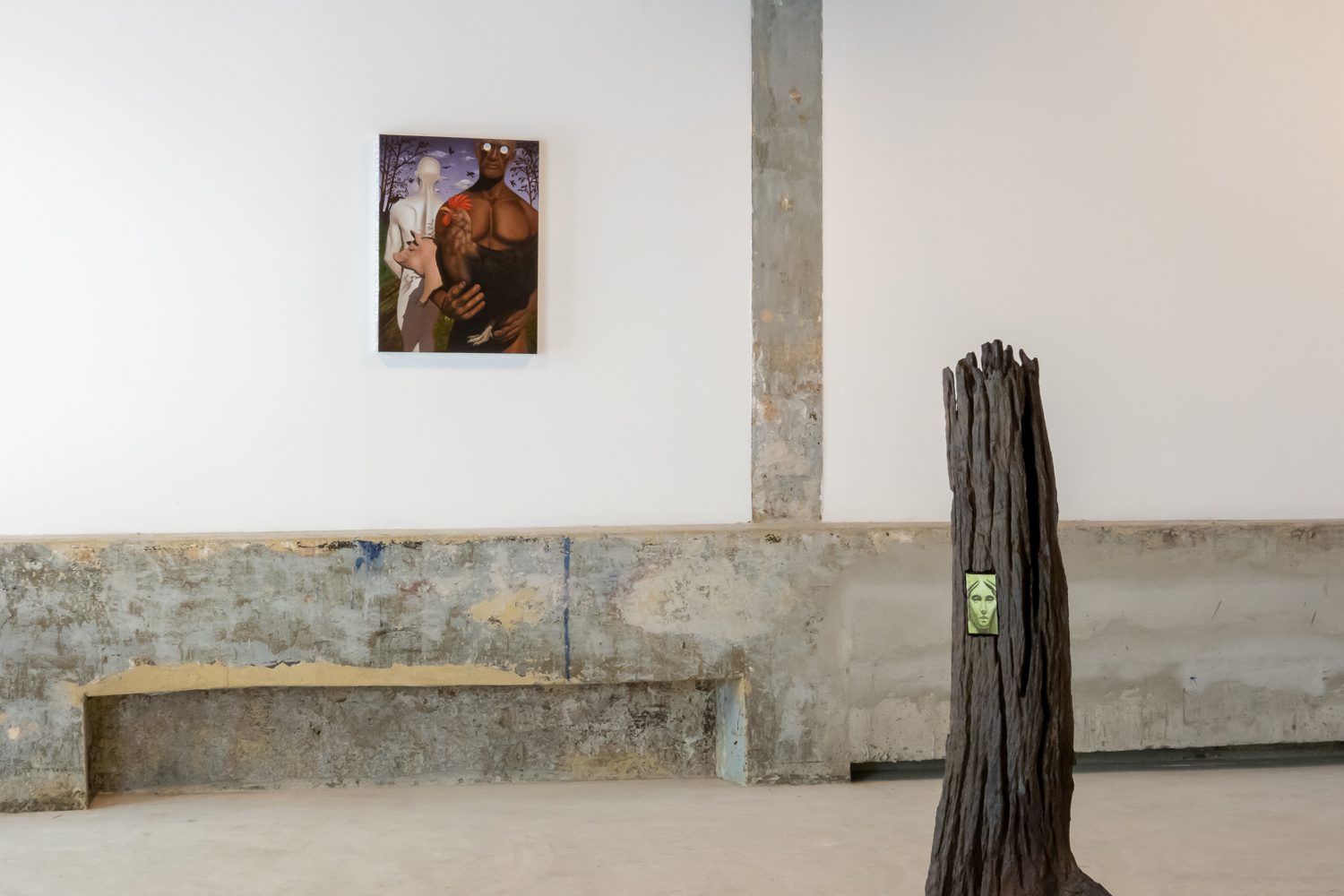
The artist structures the upper narrative as a head-meets-tail loop, anchoring it with a metaphor of clandestine border crossings, which mark the endpoint of this personal chronology. Into this, a procession of (non-)human figures advances, swaying and gliding through the darkness of dense forests, steering us toward an image that confronts both the origins and the closure of historical time: the collapse of the Communist Party of Burma, the encroaching darkness… Lab sing (slumber), and the looming arrival of an apocalypse. This ouroboros, an emblem of the serpent consuming its own tail, is bound firmly to a plinth of stacked bricks. The painting, purposefully left unmounted, leans freely in space, defying the conventions of wall display. It is mirrored in the headless golden turtle sculpture, its absent head replaced by a painted vista of Mueang Pan cradled in two hands. Alongside it stand a wooden sculpture embedding the image of a young woman, and a centipede-legged (?) or giant-legged boat, imagined as the vessel of life itself, drifting through the mist-laden landscapes of the Somia region.
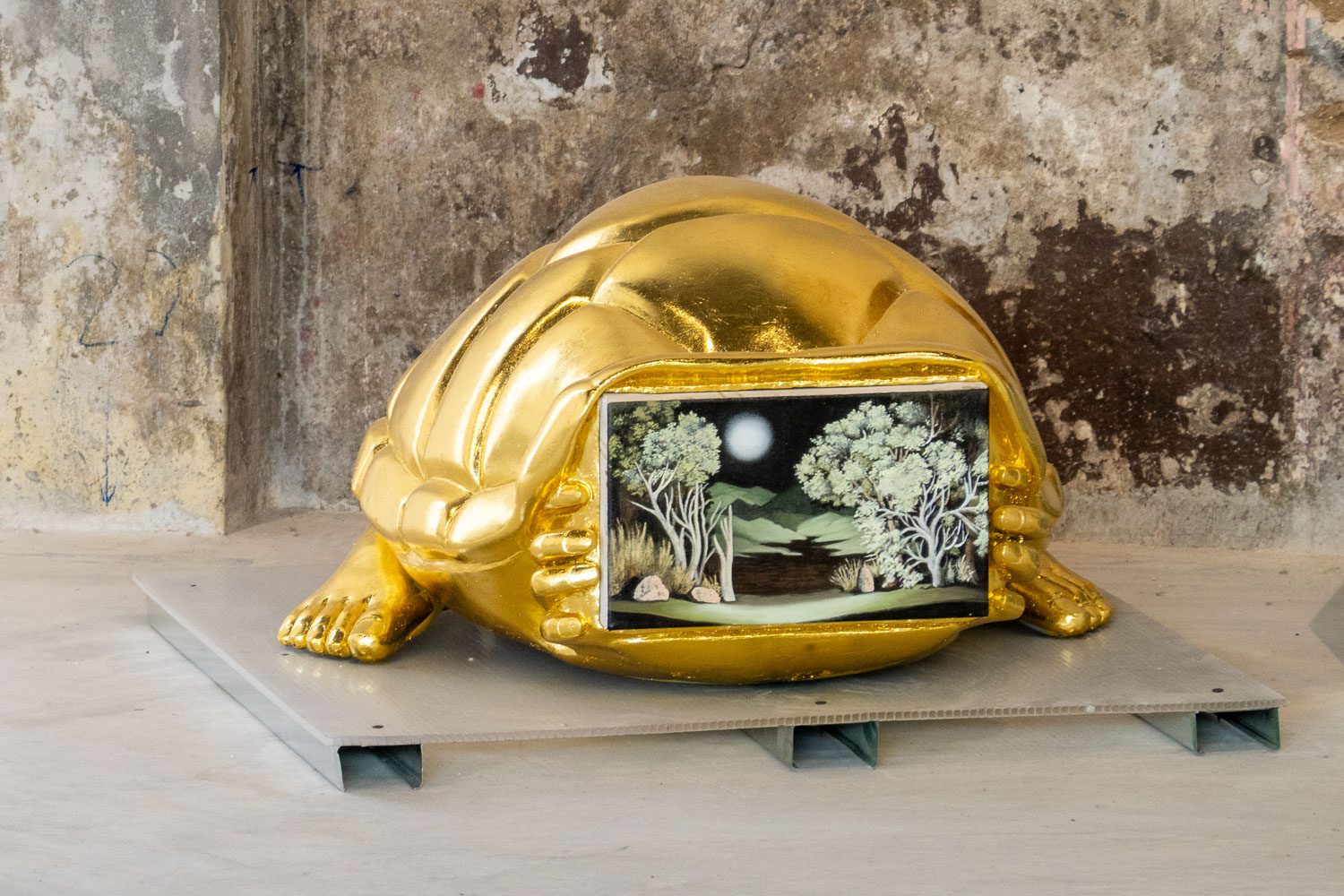
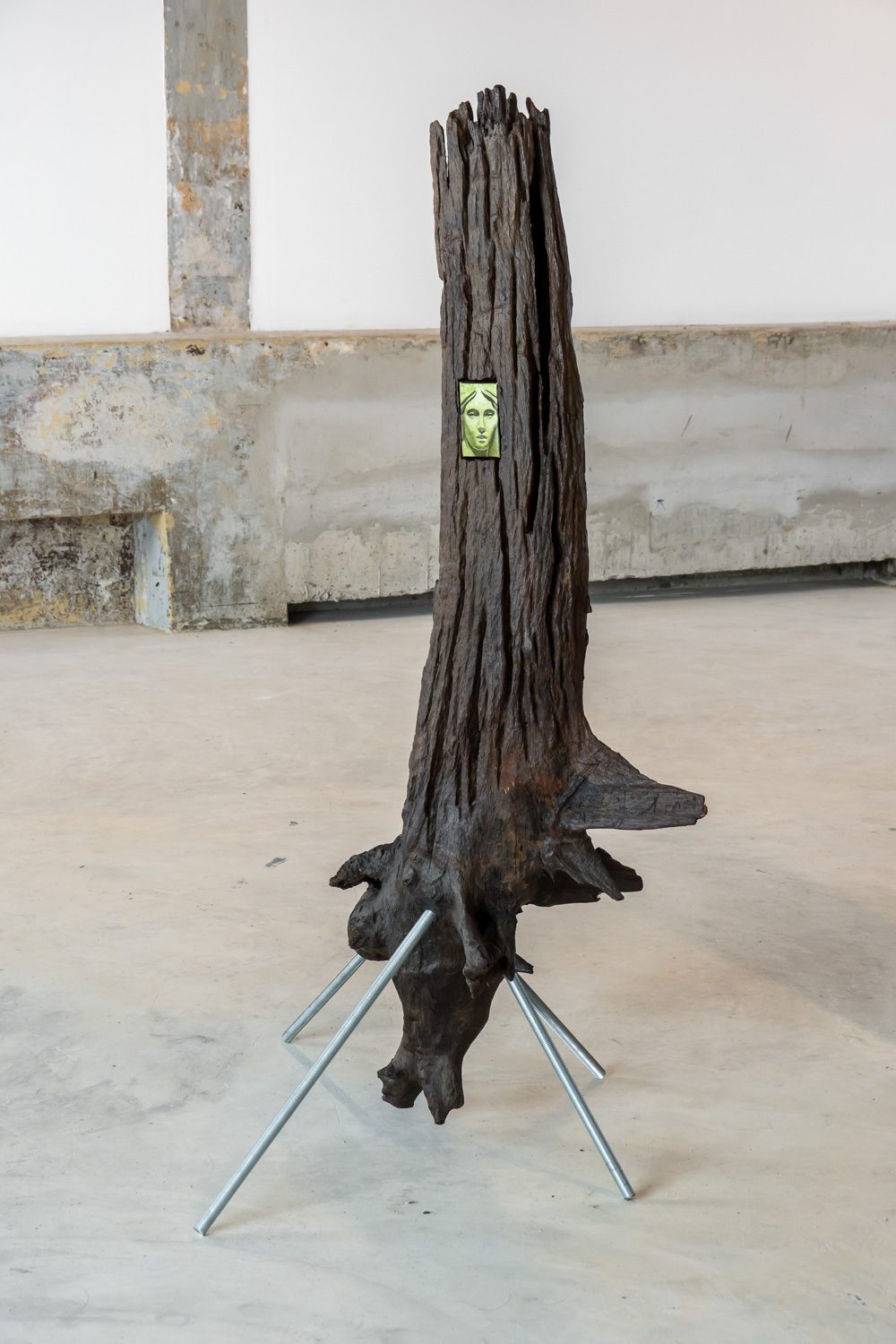
Moreover, the attempt to read and compose narratives in relation to Tai Yai yantra symbolism, an area of particular interest for the artist, employs a process of fusing the geometric forms of sacred diagrams with living beings. This approach opens up a reading of ‘sculptures-images’ that operate through shared signification, intertwining animals, nature, spirits, and ancient myths. Together, they evoke modes of life that stand in direct contrast to the human and reveal overlapping meanings that both intersect and contend with one another.
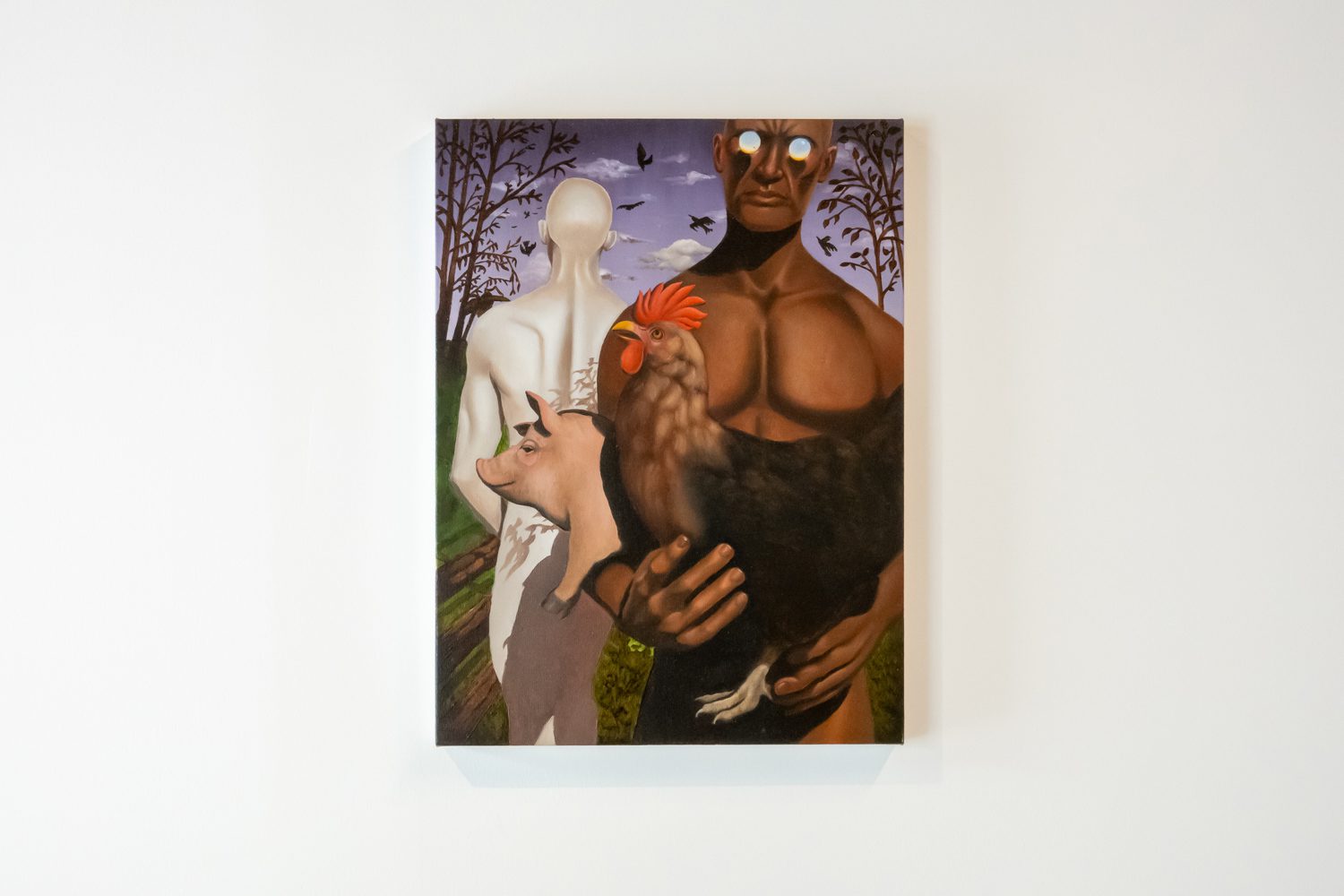
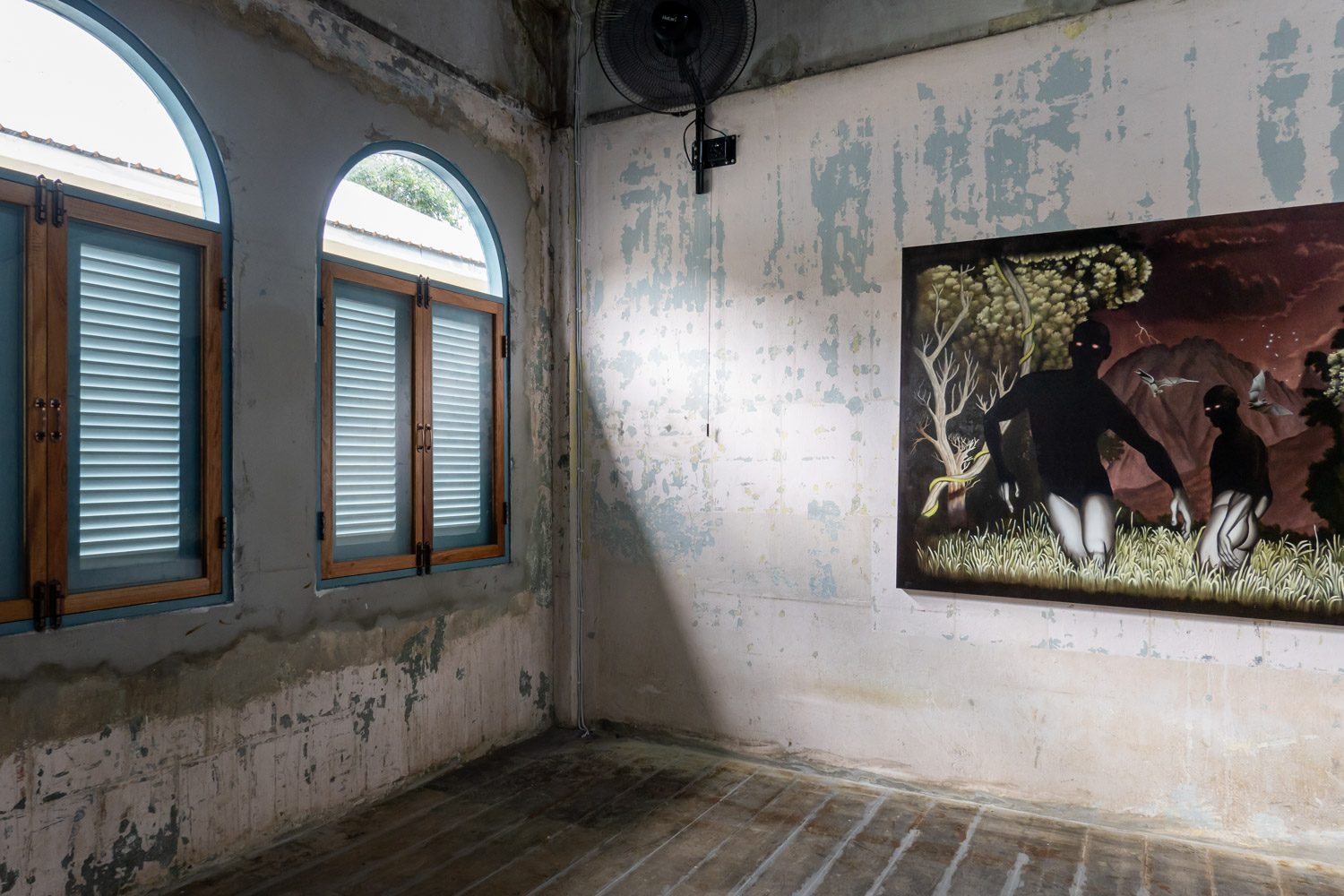
Within a paradigm skewed away from familiar planes of perception, the work overlays and disrupts its fantastical scenes through a dialogue with the once-lived realities of ethnic labor in the region—real and unreal entwined. The installation, staged in a manner the artist describes as ‘hua (ku) tua khrai’ (loosely translated as, ‘heads [mine], bodies [theirs]’), can also serve as a lens through which to view the other works. It invites an approach that demands estranged modes of reading (and at times, deliberate separation), attuned to the liminal, technically ambivalent status of visual language itself. This in turn echoes the unstable, indeterminate identities of displaced persons, where selfhood and embodiment blur, drifting further from what is conventionally deemed human. Portraits of ‘he’, ‘she’, and ‘they’ are rendered so starkly erased, stripped down to the point of near obliteration.
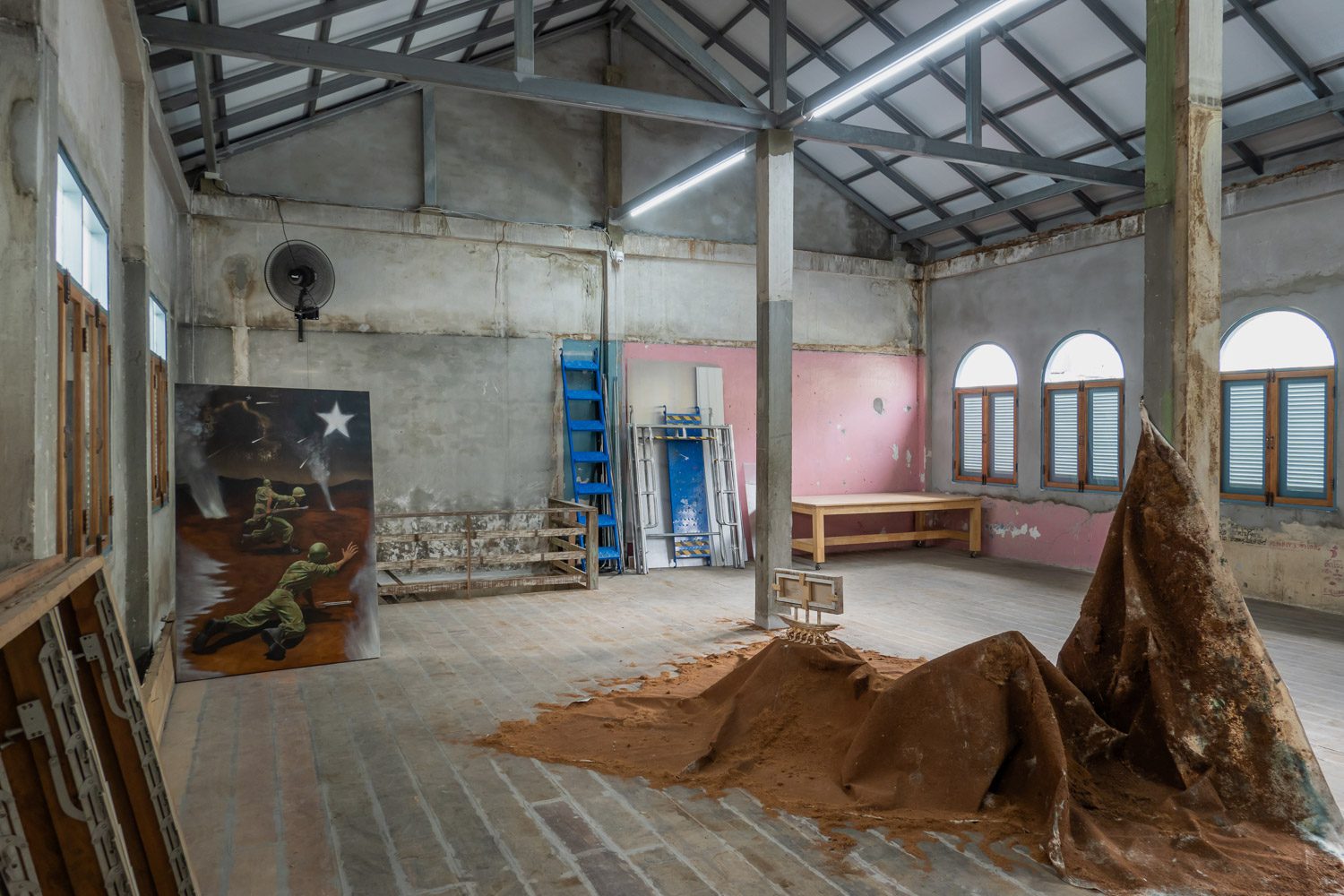
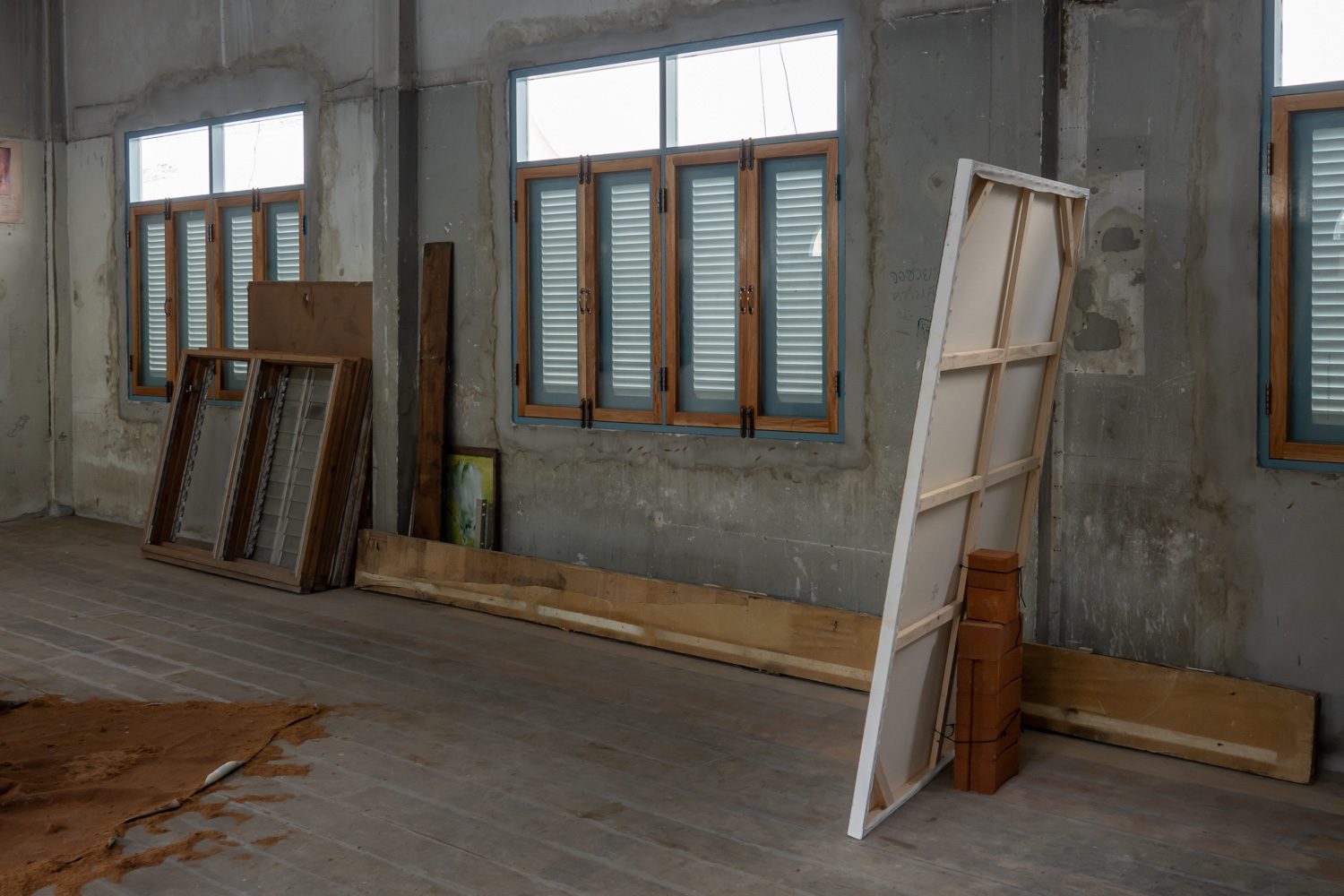
The act of rendering what is unseen conspicuously visible, coexisting in a way that feels estranged, serves to underscore its presence in ways that defy conventional art systems and distort the structures of narrative. This is a construction of a visual landscape of lives and labor that are absent here, veiled and dissolved, embedded beneath anchoring artifacts, words inscribed upon the walls, and traces of what was once a dwelling: Somia. A painted scene of distant mountains seems to extend outward, intertwining with a ‘range’ assembled from carpentry tools, window frames, and doors. These elements are deliberately positioned alongside the remnants; the lingering marks of what this scenic wall once was, composing a backdrop of geo (now forcibly torn apart from) graphy. Within this fractured vista begins the backward reading, the gathering and reclaiming of ‘kwan.’