WANDERING THROUGH MY FRONT YARD, WHERE ARCHITECTKIDD HAS REIMAGINED THE CONVENTIONAL SHOPPING MALL AS AN OUTDOOR LIVING SPACE FOR THE LOCAL COMMUNITY
TEXT: XAROJ PHRAWONG
PHOTO COURTESY OF ARCHITECTKIDD
(For Thai, press here)
Charles Areni, a professor of management, once observed that the goal of a shopping mall is to encourage people to buy what they had not planned to buy, prolong visits, and to redirect customers away from their original intentions. Viewed through this lens, both department stores and community malls are typically planned to maximize commercial exposure, whether by arranging circulation so that visitors encounter as many storefronts as possible upon entering, widening walkways, or placing anchor tenants deep inside the site.
My Front Yard, a community mall in Chalong, Phuket, designed by Architectkidd, takes a different position from the mainstream logic of commercial architecture. The project owner describes it as a ‘front yard,’ as the site sits directly in front of their own house. The design process began with a study of Phuket’s vernacular architecture, particularly the shophouse typology with its covered arcade known as Ngor Kah Kee, or the five-foot way, which provides all-day shade and responds well to the local climate. This informed the architects’ initial proposal, which arranged elongated building volumes diagonally across the site, like rows of shophouses laid out in parallel, allowing open courts to emerge between them. In the end, however, this first scheme was set aside with the arrival of feng shui considerations.

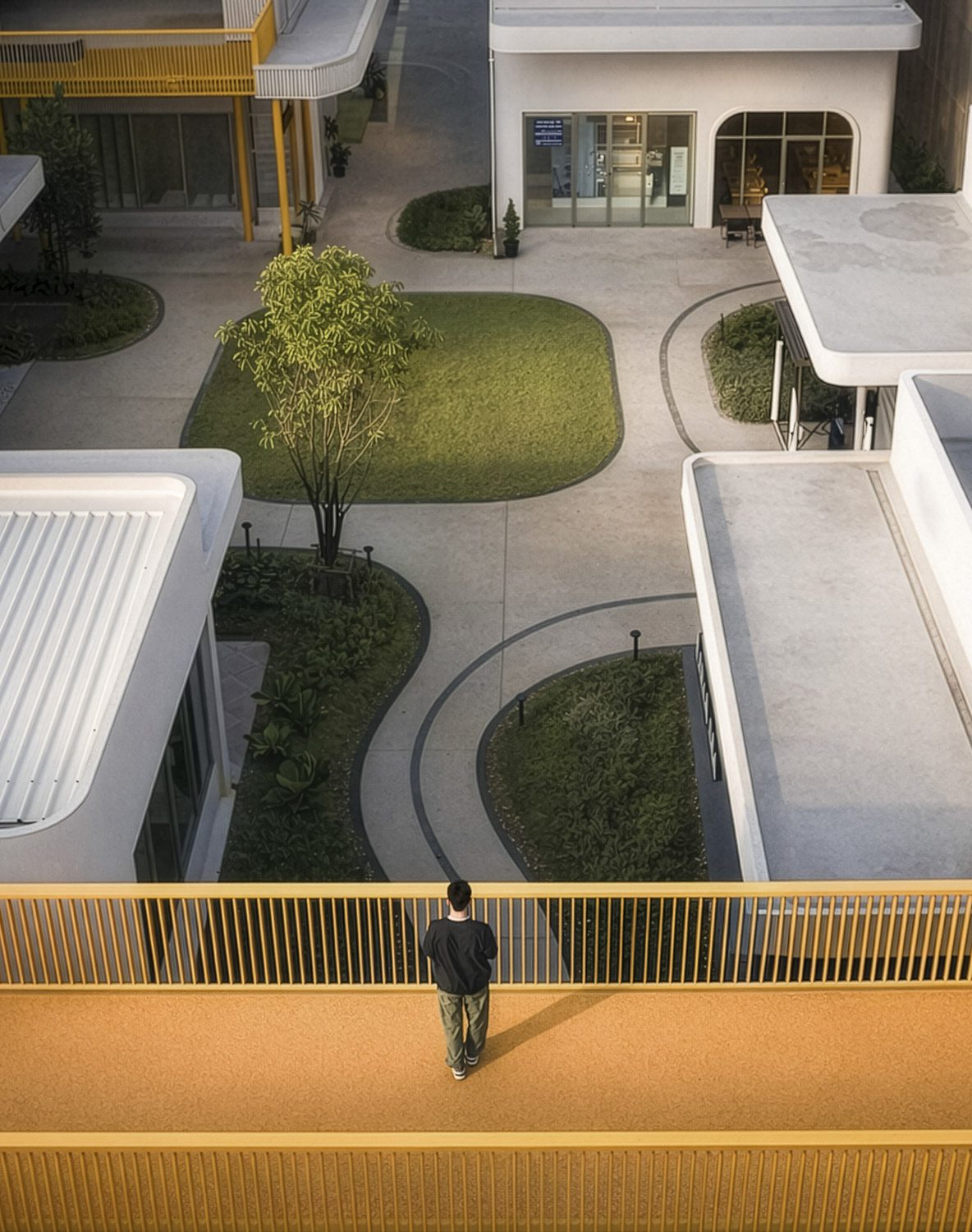
The second proposal, which was further developed and ultimately built, took shape through a negotiation between architectural design and feng shui. One of the project’s key conditions was that it had to be planned entirely within a grid system. Architectkidd responded by breaking the overall mass into smaller units of four types. Types A, B, and C offer leasable areas ranging from 60 to 250 square meters, while Type D, the largest, provides between 750 and 1,120 square meters. All four unit types are distributed across the site and connected by walkways scaled to feel proportionate and approachable, creating a gridded cluster of buildings reminiscent of the layout of a small village. Within this arrangement, the architects inserted small courtyards as pocket parks for the community. A landscaped garden to the south serves as a Morning Court, intended to accommodate early-day activities, while a central garden functions as a Night Court, supporting evening use within a setting softened by trees.
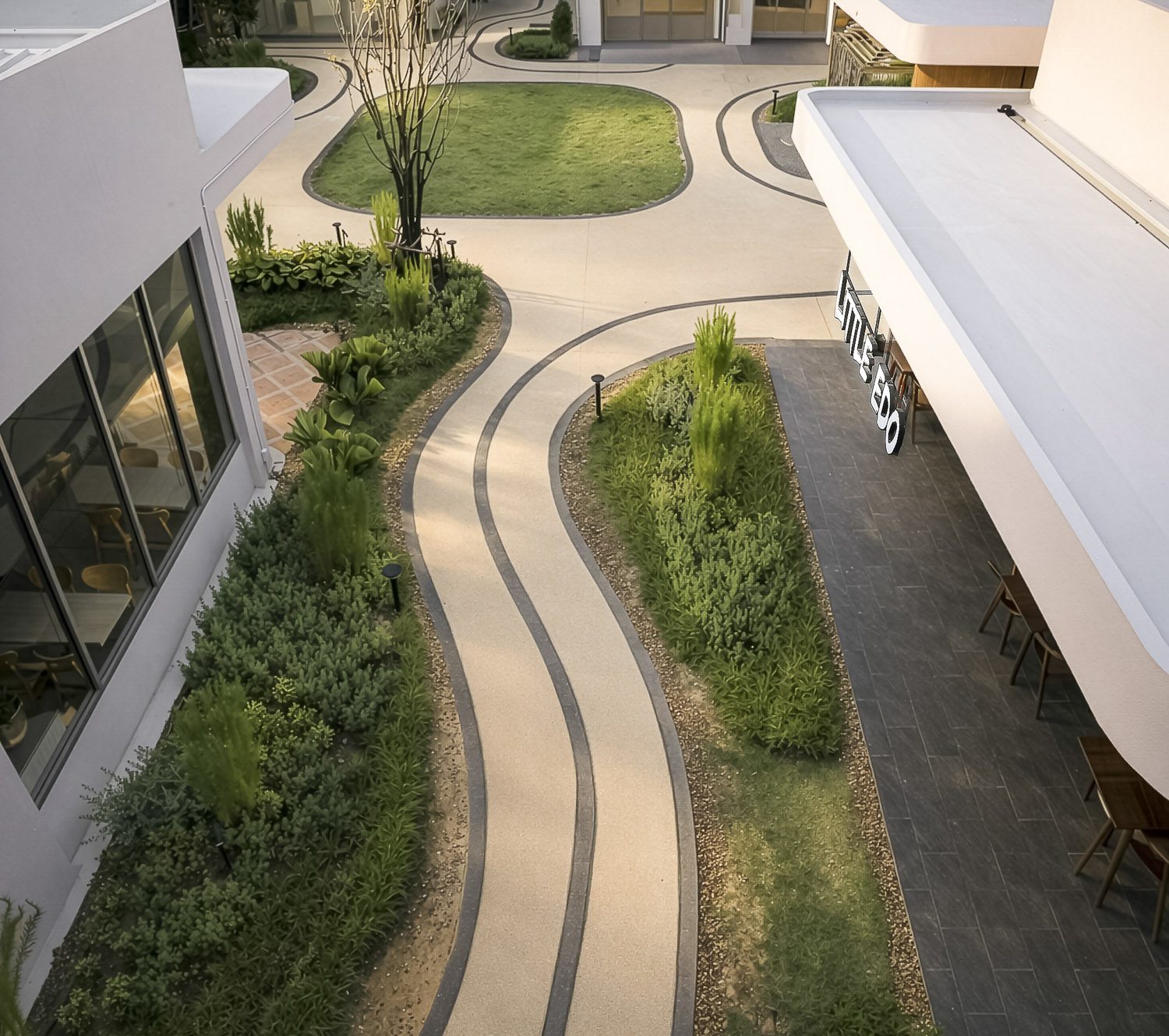
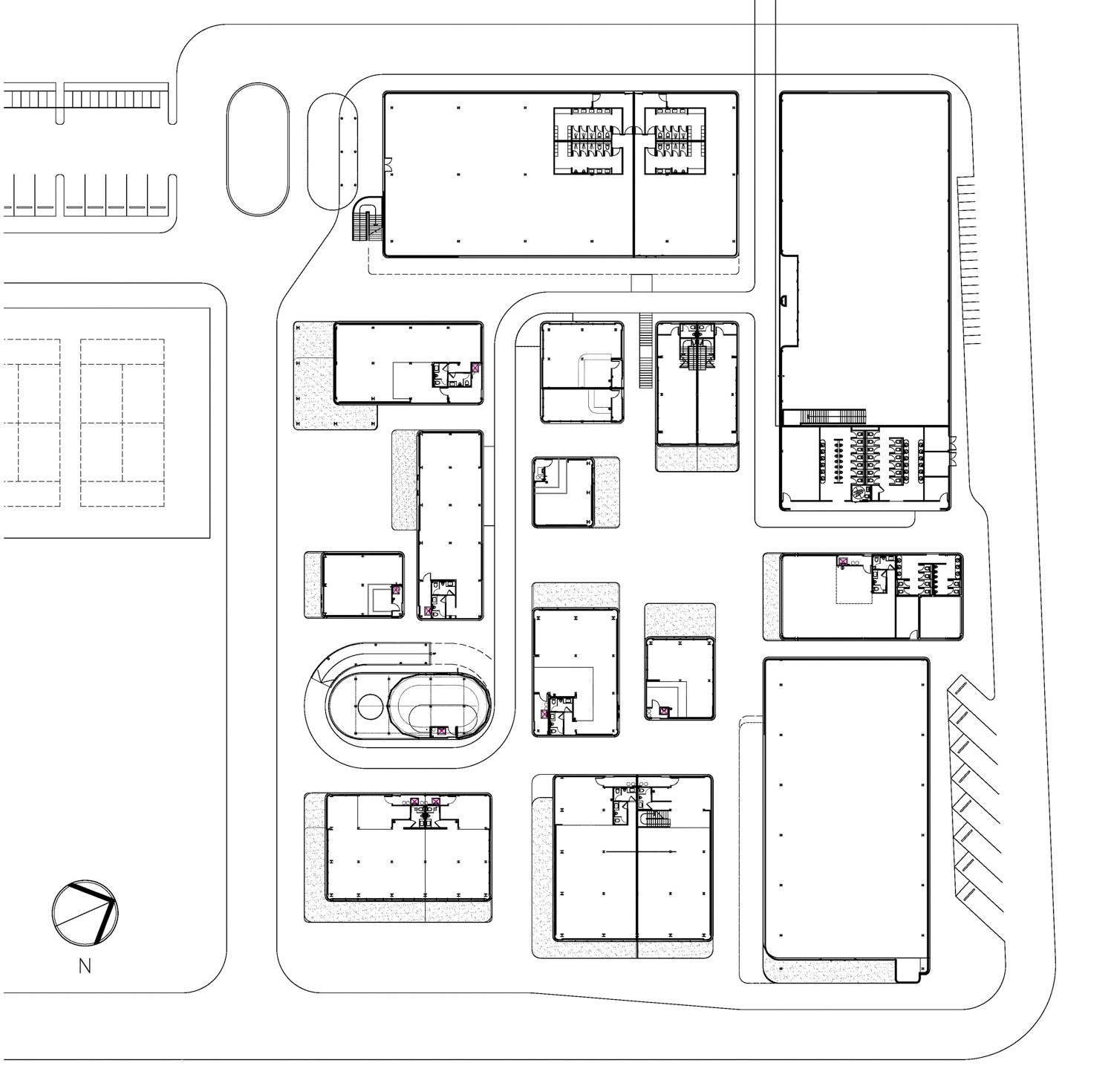
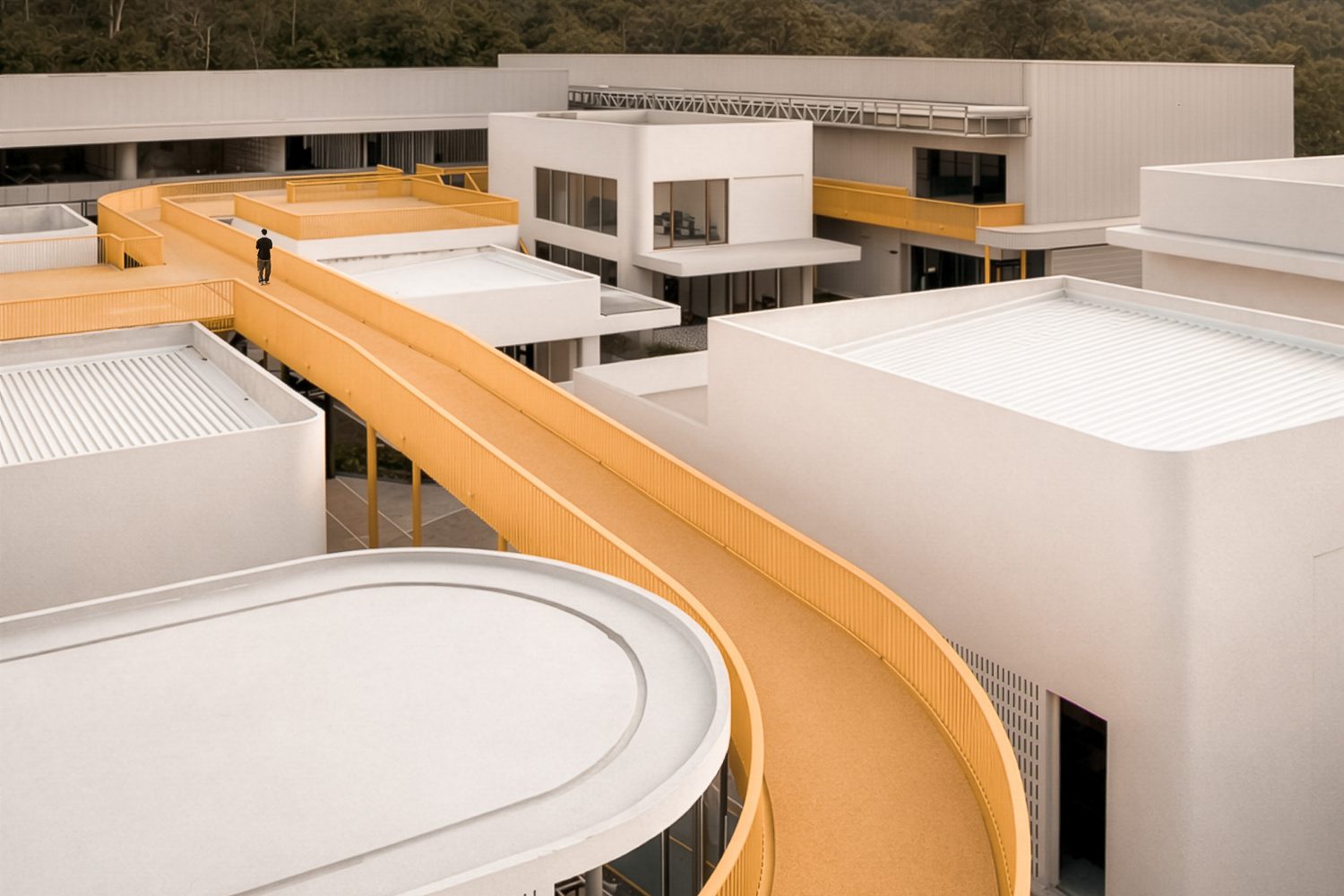
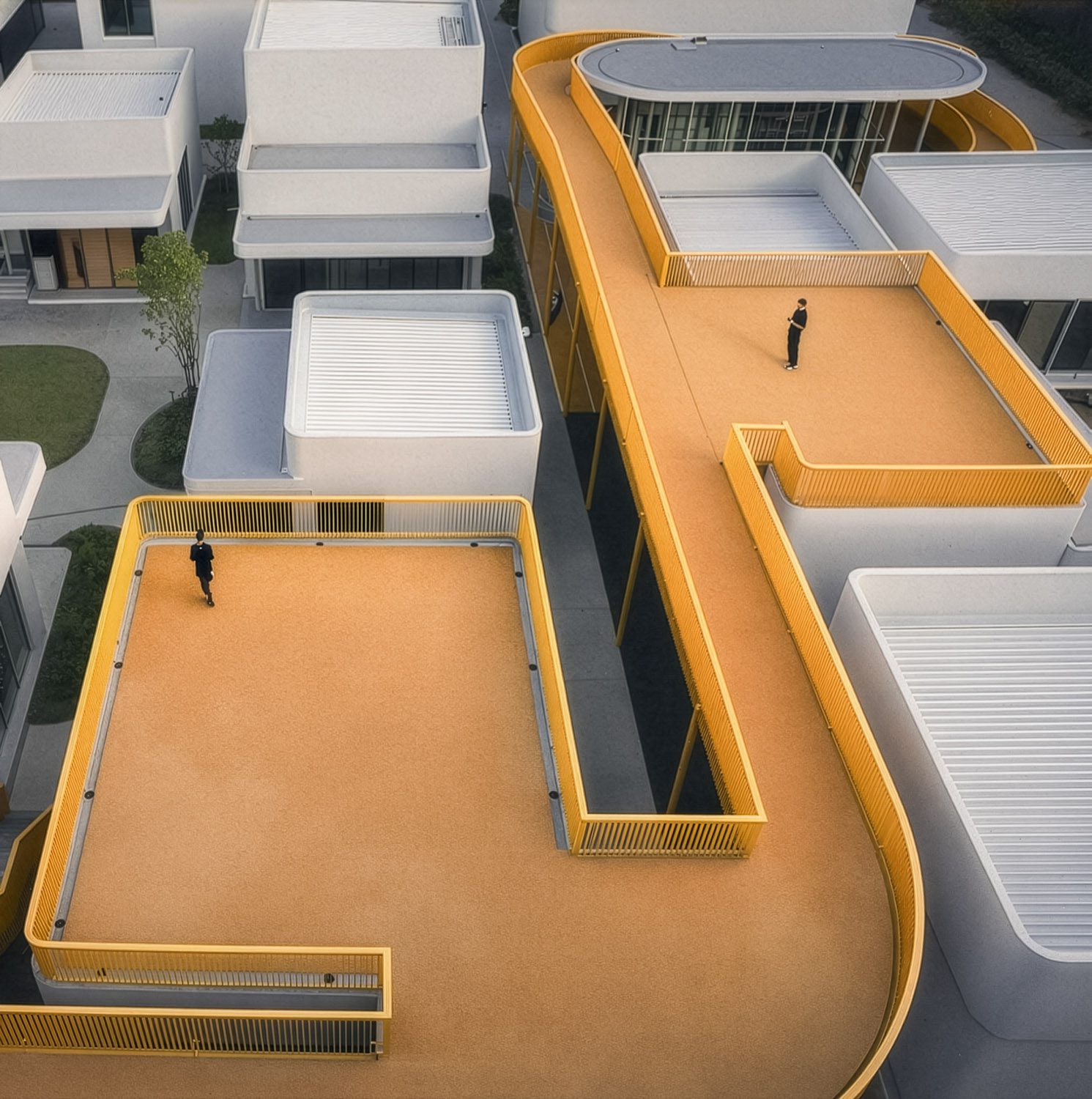
The project accommodates a range of commercial programs in the form of leasable units, including restaurants, a supermarket, cafés, beauty salons, and pet-related shops. Every unit is positioned within the grid and linked by walkways that stitch the different building types together. These connections operate on two levels, distinguished by color and circulation. At ground level, a blue jogging track loops continuously through the site, while yellow walkways connect the first floor to the second. These elevated paths function as bridges, linking the ground plane to the rooftops of two units with accessible terraces, and extending further to the second floor of the large units at the rear of the project.
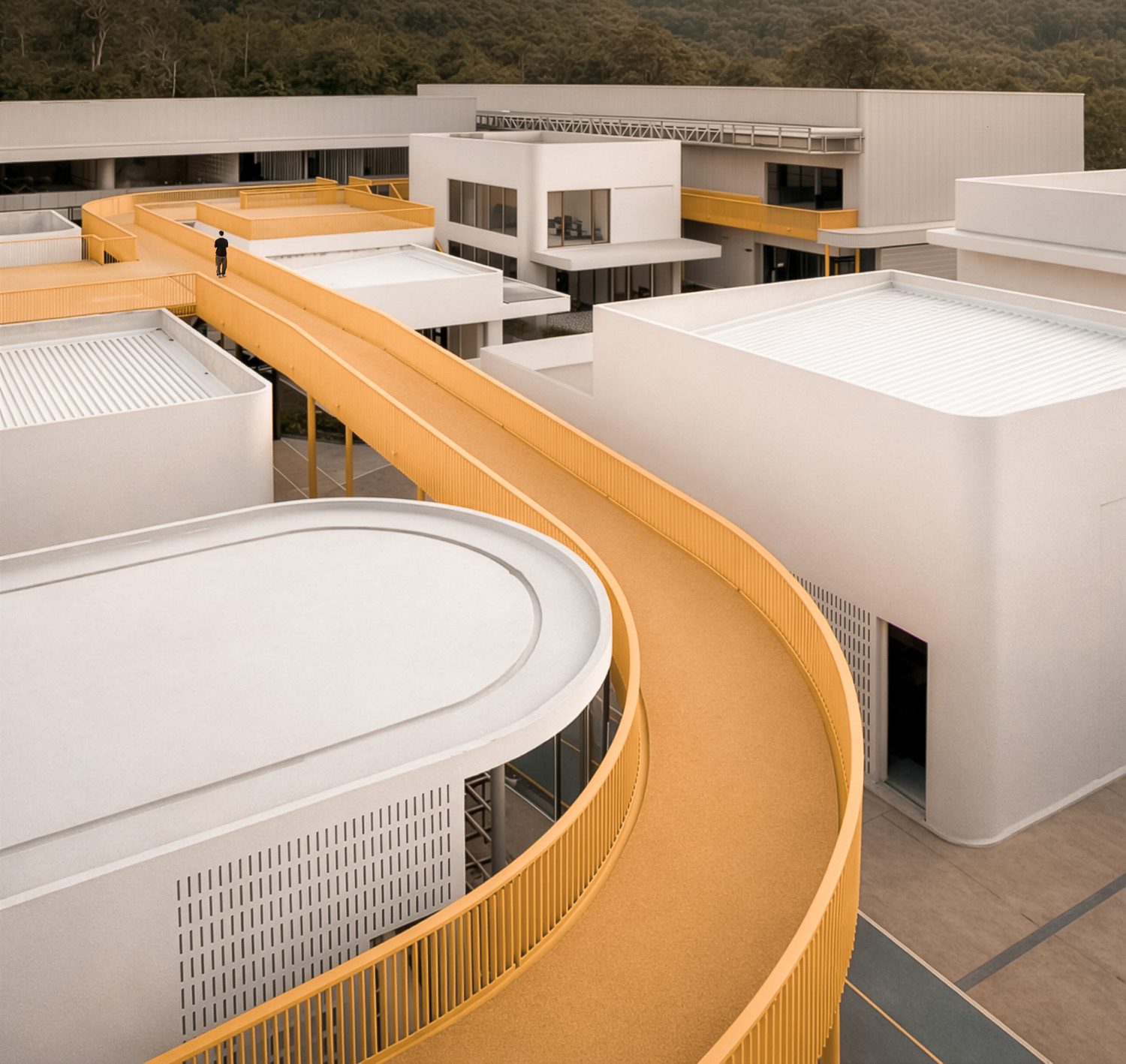
In response to feng shui requirements, the project’s massing steps down in a terraced formation from north to south. Seen as a whole, My Front Yard appears as an assembly of white boxes in varying sizes. Their rectilinear geometry is softened by chamfered corners throughout, allowing light and shadow to dissolve more gently across the edges of the buildings and tempering their otherwise rigid form.
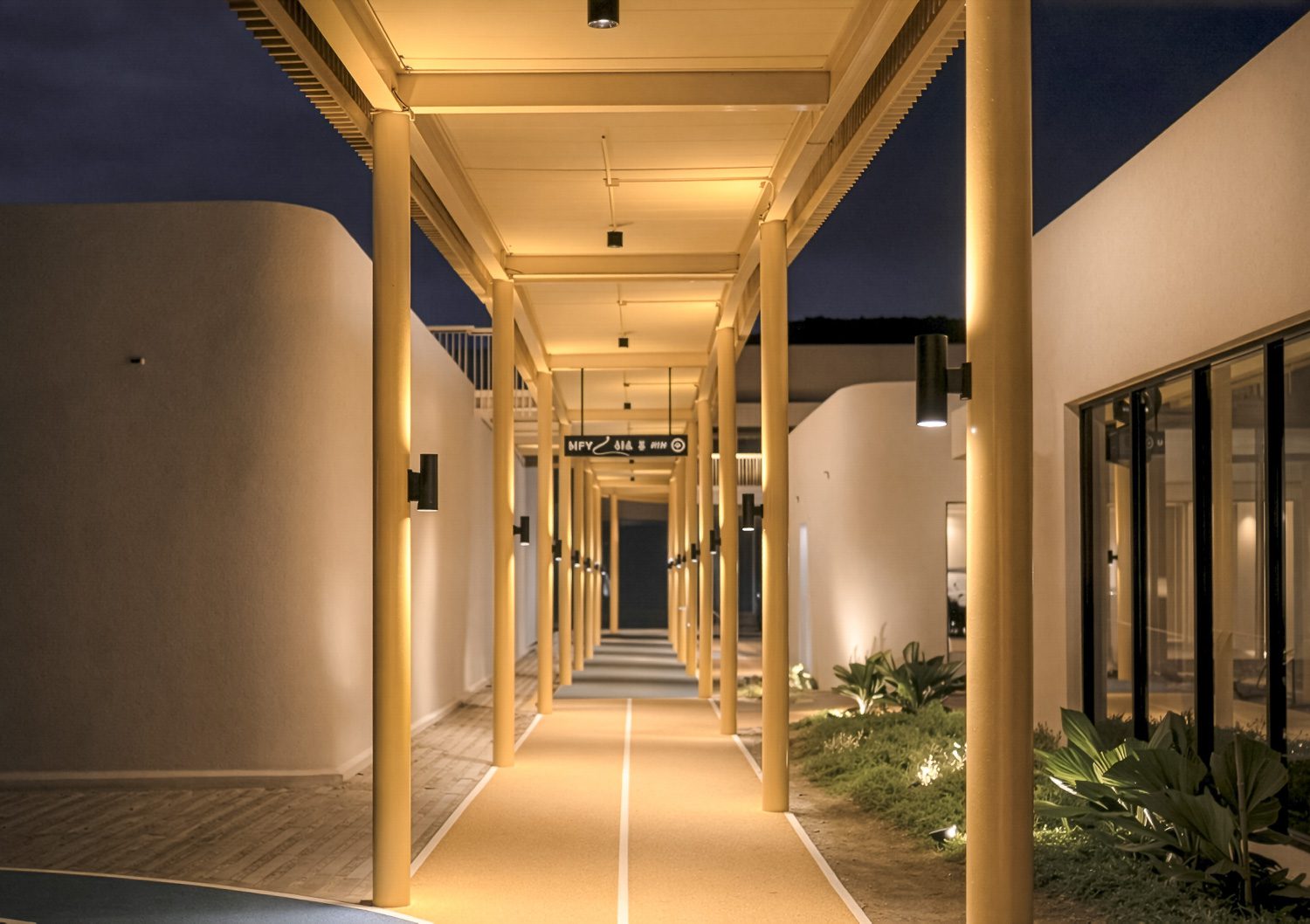
At a time when shopping malls increasingly aspire to become ‘temples of consumption,’ My Front Yard instead presents itself as an outdoor living room for the Chalong neighborhood. It is a living room composed of quiet white boxes, with no need to shout or compete for attention. The project invites us to reconsider familiar assumptions: commercial space does not always have to impose itself. Here, the program grows out of the owner’s way of life and is translated into a distinct form of commercial space. What sustains it is not the pressure to sell at all costs, but an ongoing dialogue between architect, owner, and feng shui.