
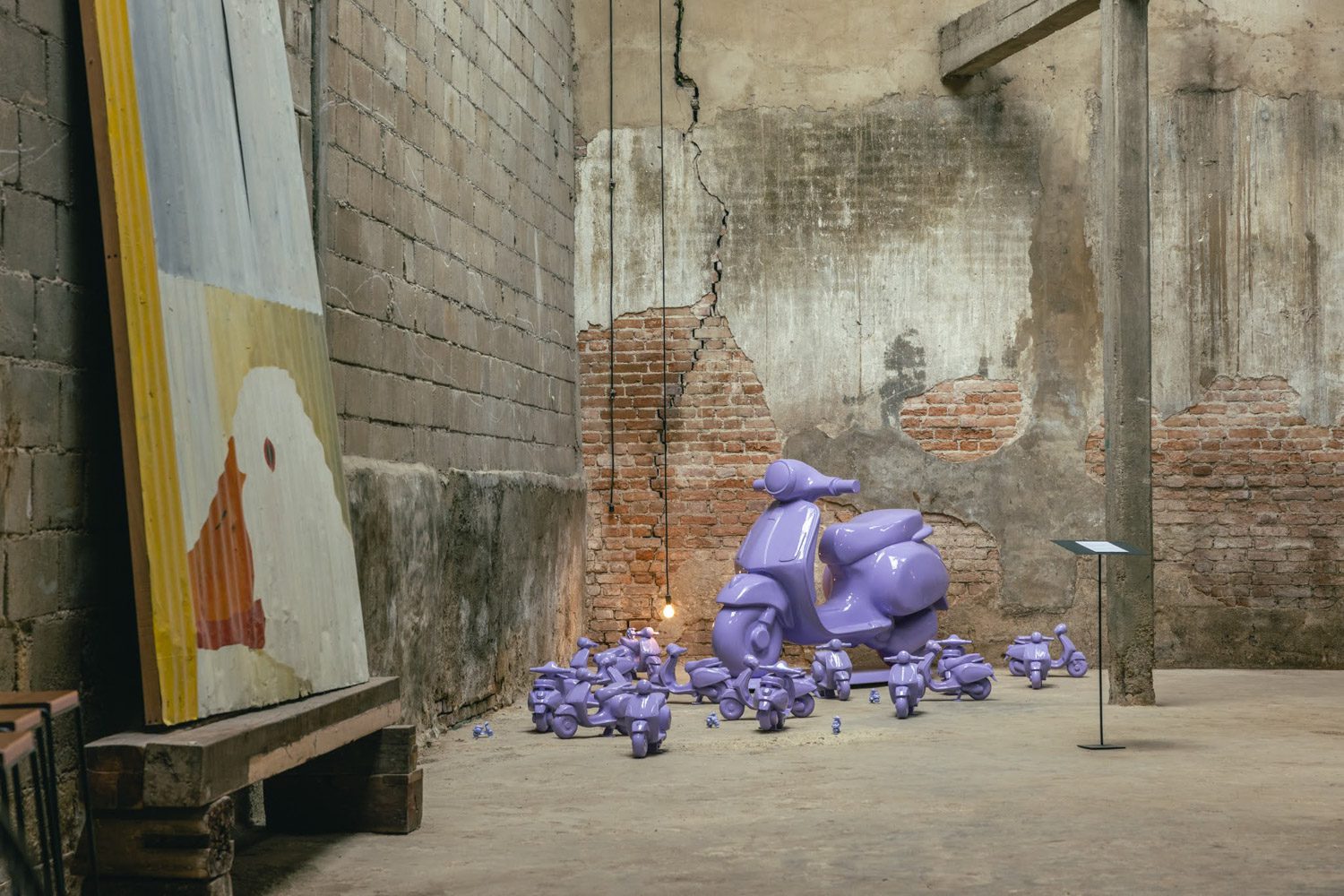
FROM A SYMBOL OF TRAVEL TO A MEDIUM FOR ARTISTIC DIALOGUE, VESPAPALA REINTERPRETS VESPA THROUGH THE WORKS OF 7 ARTISTS AT FLO COFFEE BREWERS AND HAAN STUDIO IN SAN PA KOI, CHIANG MAI
TEXT: SARUNKORN ARTHAN
PHOTO: AUTTAWIT KANTAKORN
(For Thai, press here)
Where does Vespa live in your memory?
For me, it begins with Roman Holiday (1953). I remember Audrey Hepburn as Princess Ann impulsively taking the handlebars of a Vespa 125 and careening through Rome with Gregory Peck’s Joe Bradley riding behind her. They squeeze past sidewalk café tables, collide with market stalls, and weave through the city’s narrow streets in a sequence that is as delightfully chaotic as it is unforgettable. That memory has turned the charming, now-classic scene into an enduring image that has resonated across generations.

Source: Wikimedia Commons
The sequence became a defining moment in Vespa’s history, establishing the scooter in the global imagination as a symbol of freedom. Breaking away from convention, seeing the world through one’s own eyes, and venturing beyond the familiar have long been inseparable from its identity. This same spirit of discovery lies at the heart of VESPAPALA, a campaign by Vespa Thailand that invites people today to leave well-worn routes behind and create new memories in places with a distinctive character of their own.
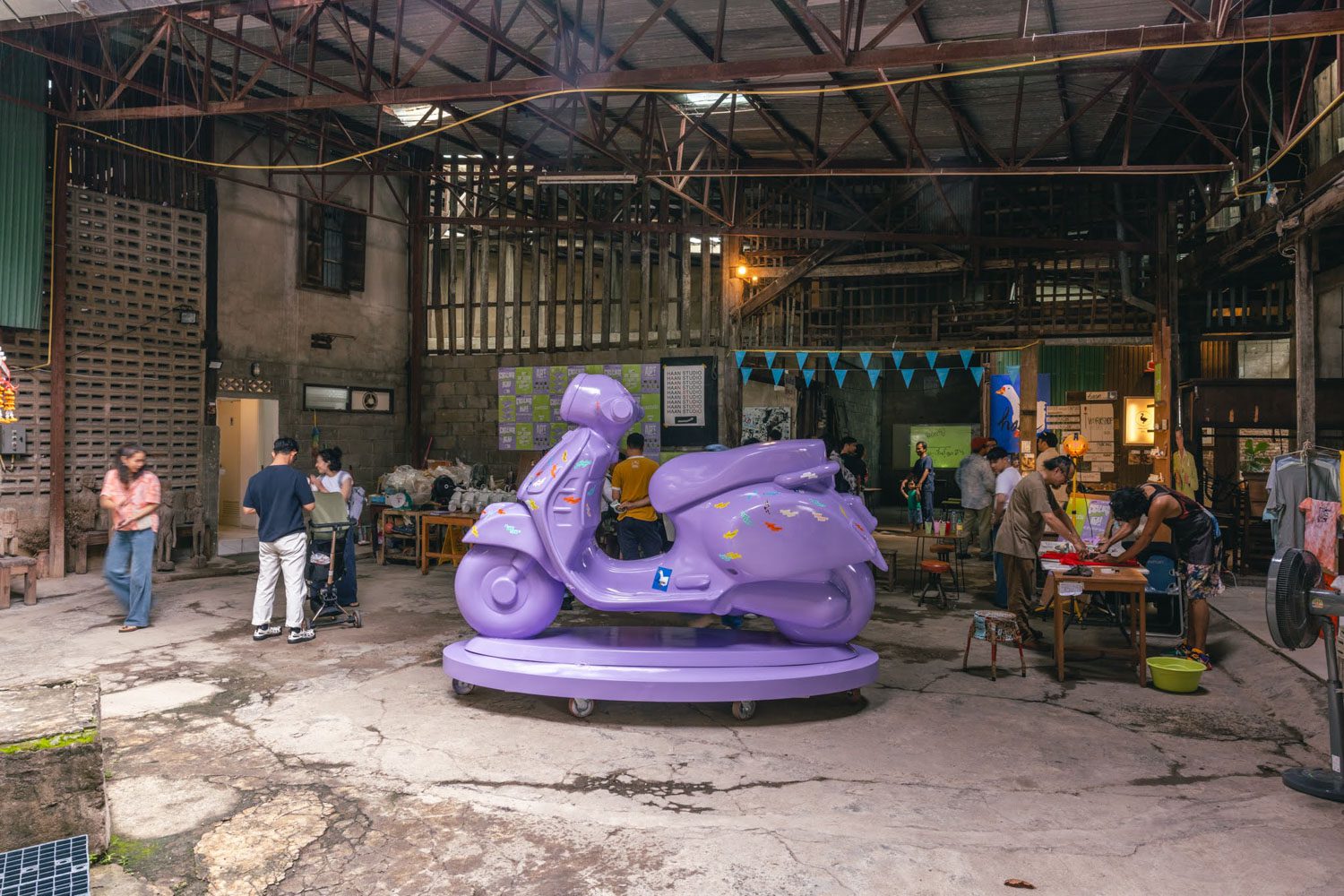
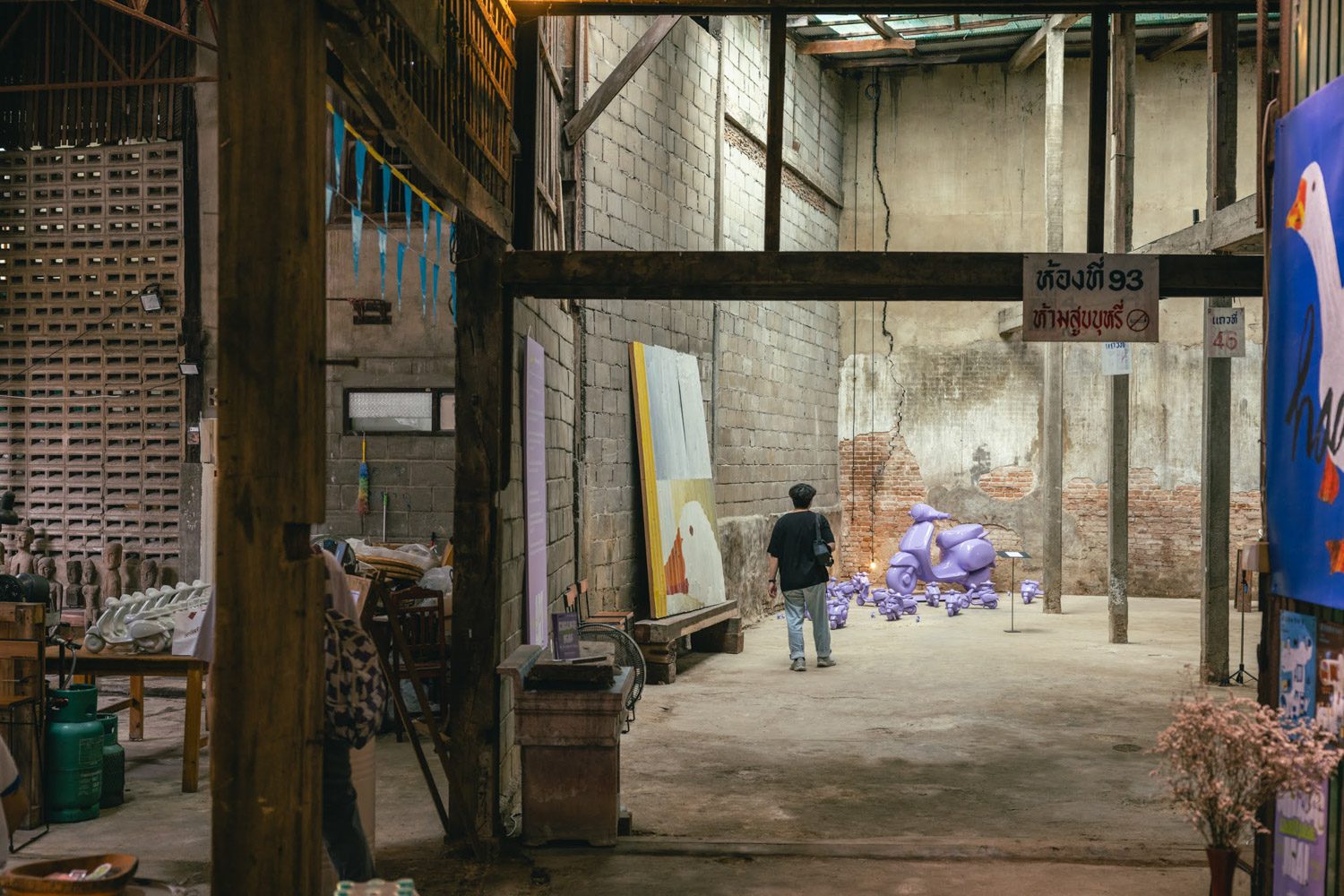
After traveling through several provinces in Northeast Thailand and bringing new energy to each destination in June, the campaign has now arrived in Chiang Mai. For an entire month, Vespa’s signature lilac has brought a fresh visual presence to the San Pa Koi neighborhood. The campaign is grounded in the belief that local businesses, whether cafés, ice cream parlors, regional restaurants, or street food stalls, are never merely places to pause along the way. They are part of the culture and everyday life that animate a city, inviting people to follow their footsteps and experience Chiang Mai from a different perspective.
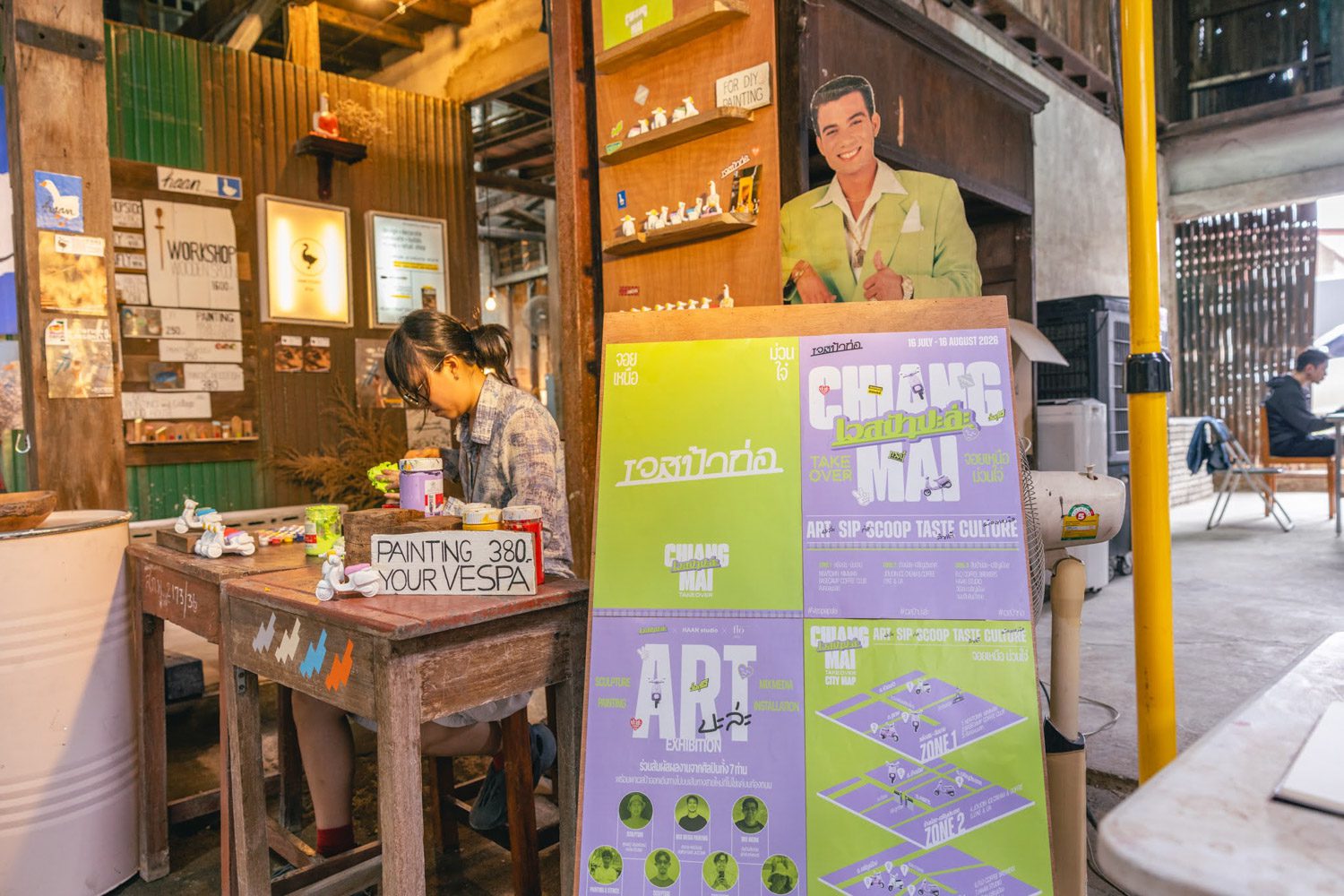
Along the route through the city, the most distinctive and compelling destination is undoubtedly the main site at FLO COFFEE BREWERS and HAAN STUDIO. Here, Vespa becomes a canvas for ideas, interpreted through the perspectives of seven local artists. art4d had the opportunity to speak with two of them, Pichai Boonkoomyou (KOBBY) and Karueporn Satrabhaya, about the origins of their works, the memories behind them, and what Vespa means to each artist.
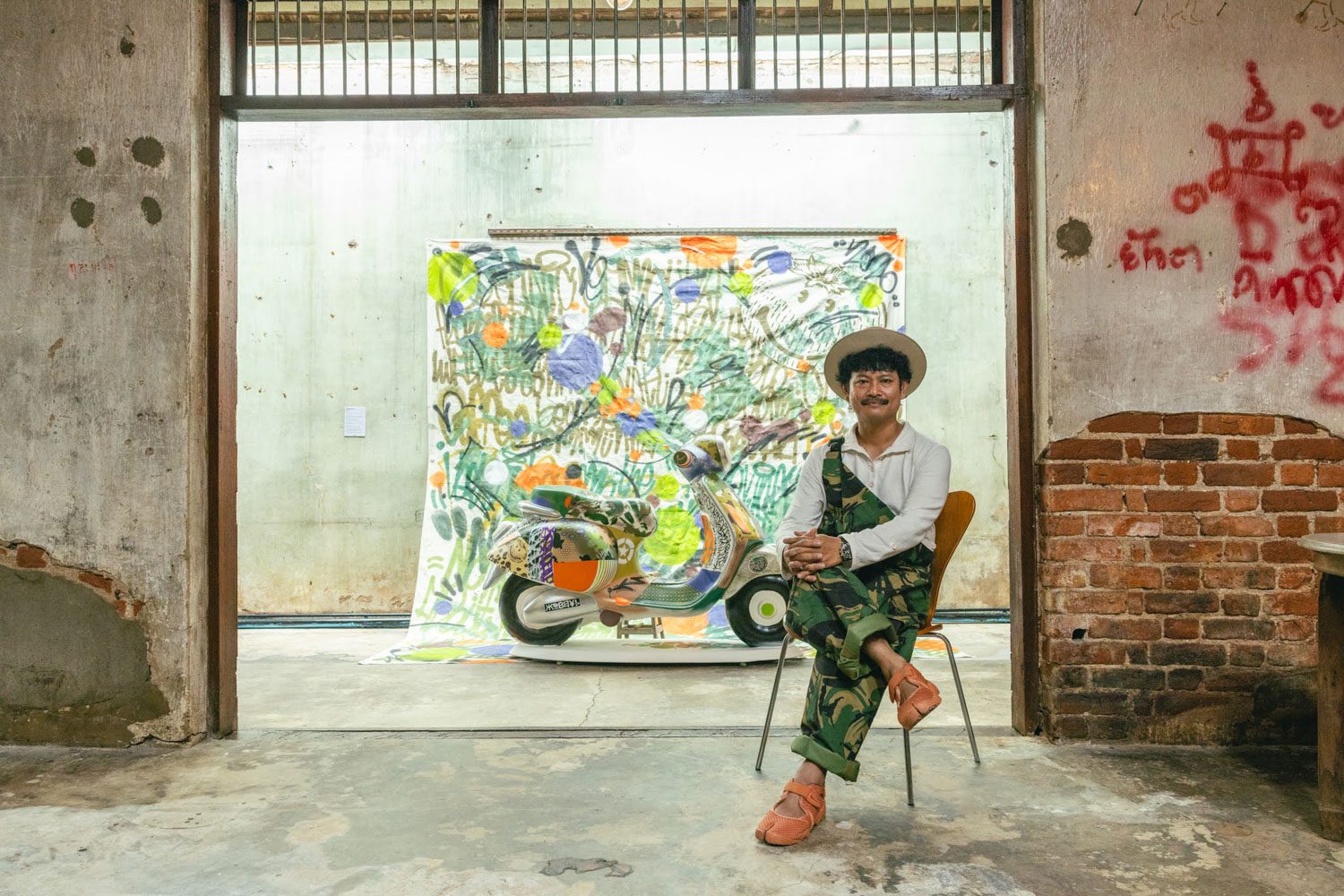
Kob—Pichai Boonkoomyou (KOBBY)
“Vespa and I have known each other since the day I was born. It was the first vehicle my father rode to bring my mother and me home from the hospital, and it has remained part of our family ever since. By now, that relationship has spanned nearly sixty years.”
Pichai recalls his earliest memory of Vespa, adding that his family still relies on it as their primary mode of transport. For him, Vespa possesses an enduring appeal. Its design possesses the qualities of a work of art, yet continues to feel unmistakably contemporary.
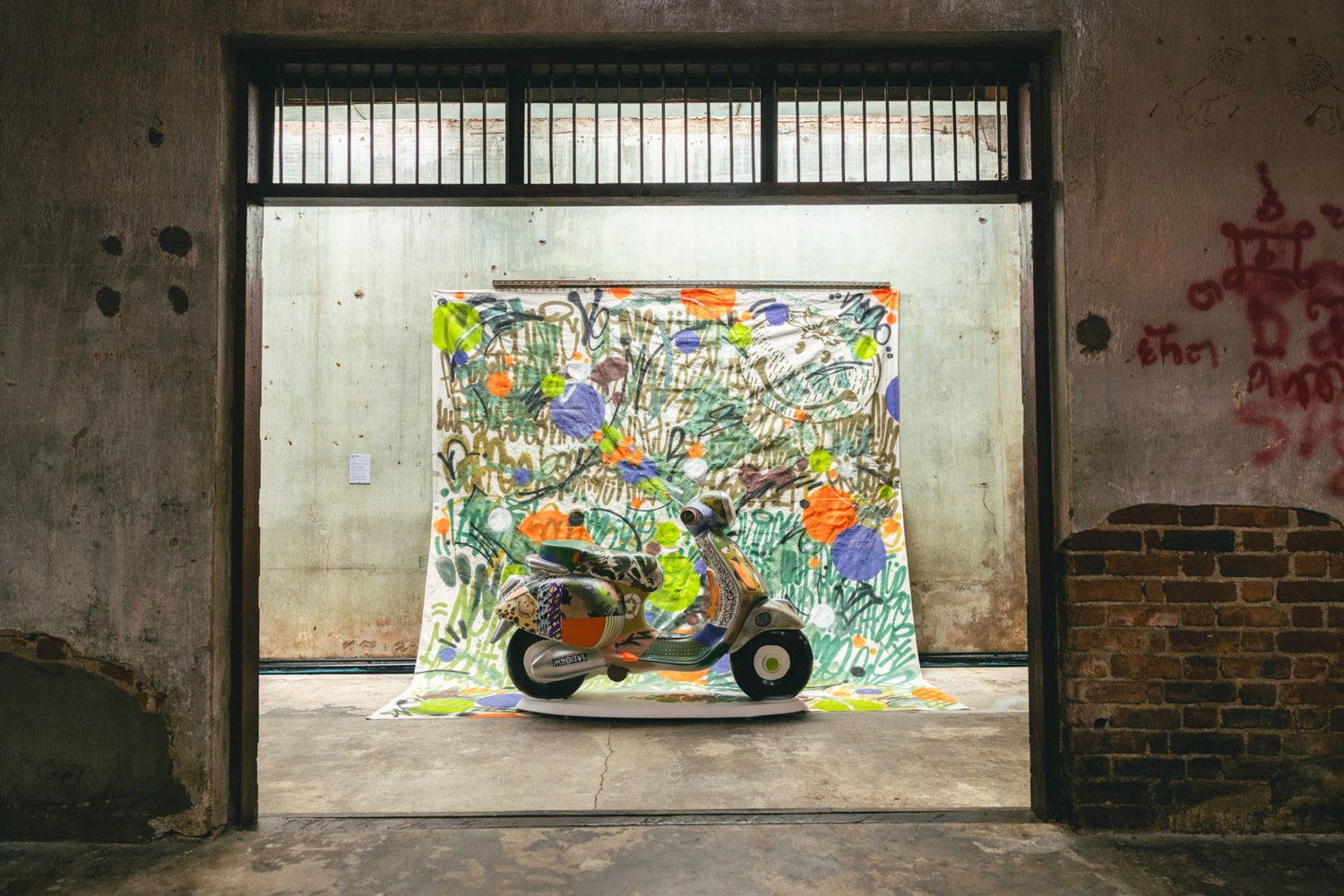
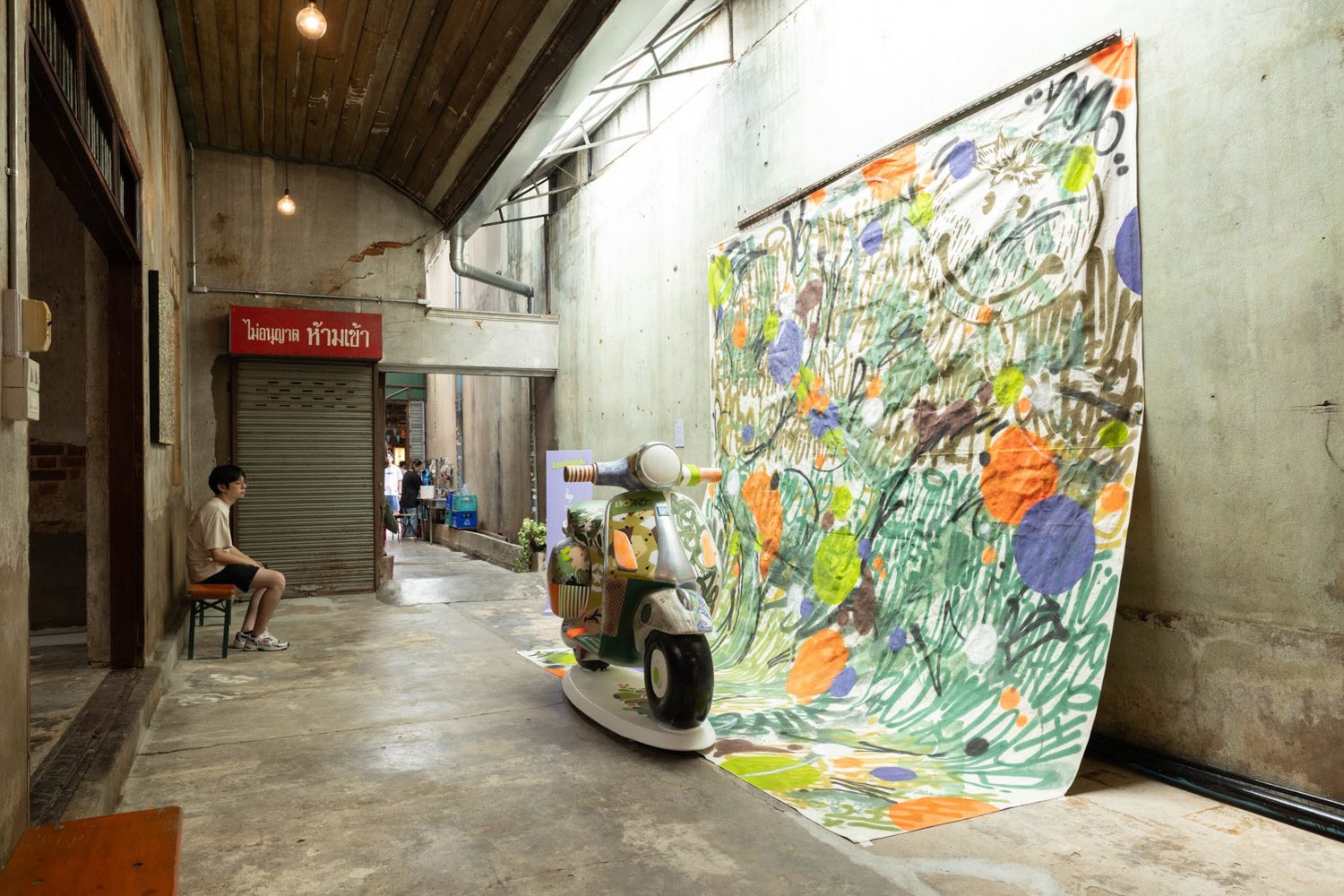
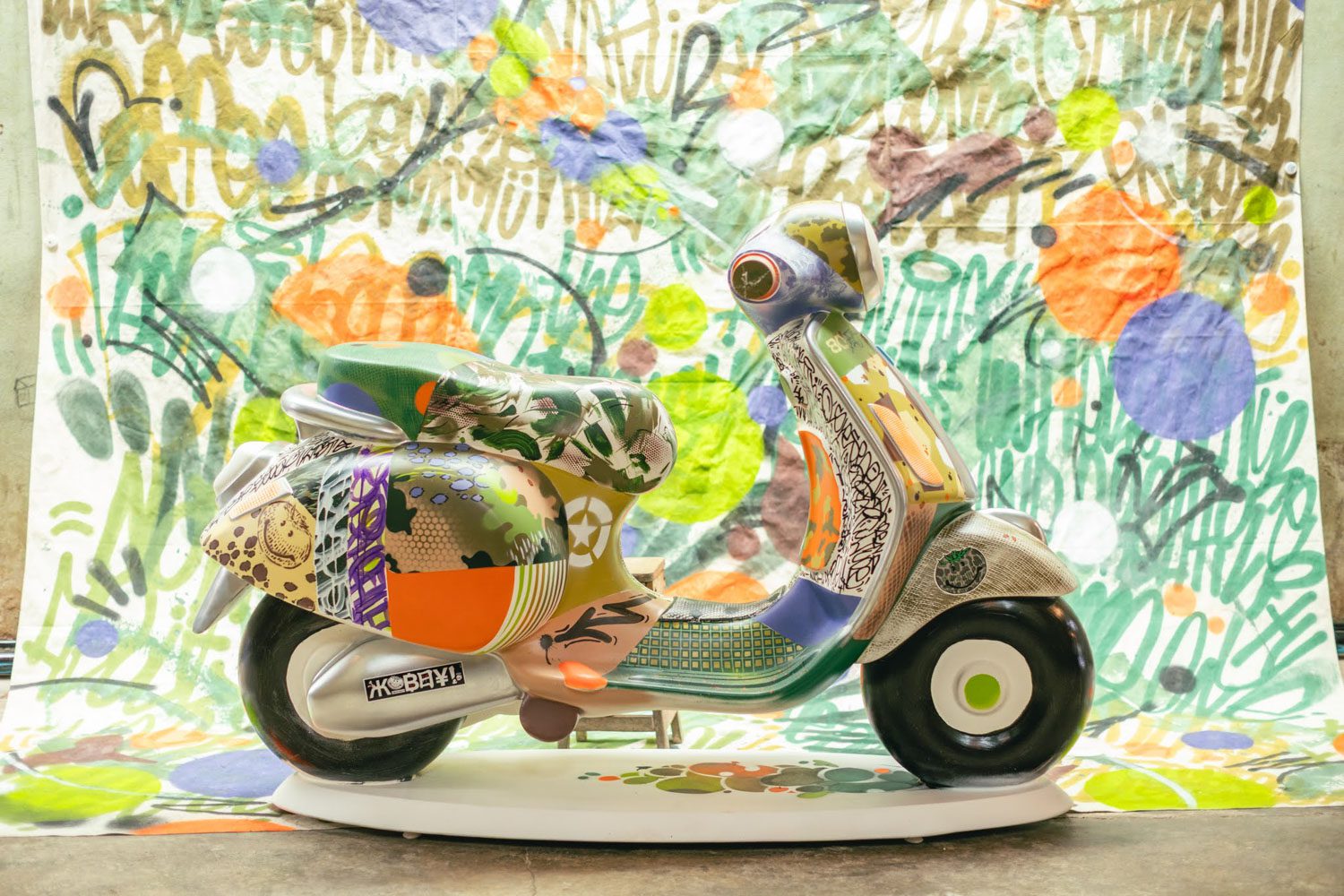
This perspective informed Organic Camouflage, a project developed in collaboration with FLO COFFEE BREWERS. The work experiments with the visual language of military camouflage, but reorients it toward the interplay of the forest, the urban community, and Vespa. The resulting pattern brings these elements together in a composition designed to merge with Chiang Mai’s urban landscape, not as a means of disappearing from sight or withdrawing from society, but as a way of belonging more closely to the environment.
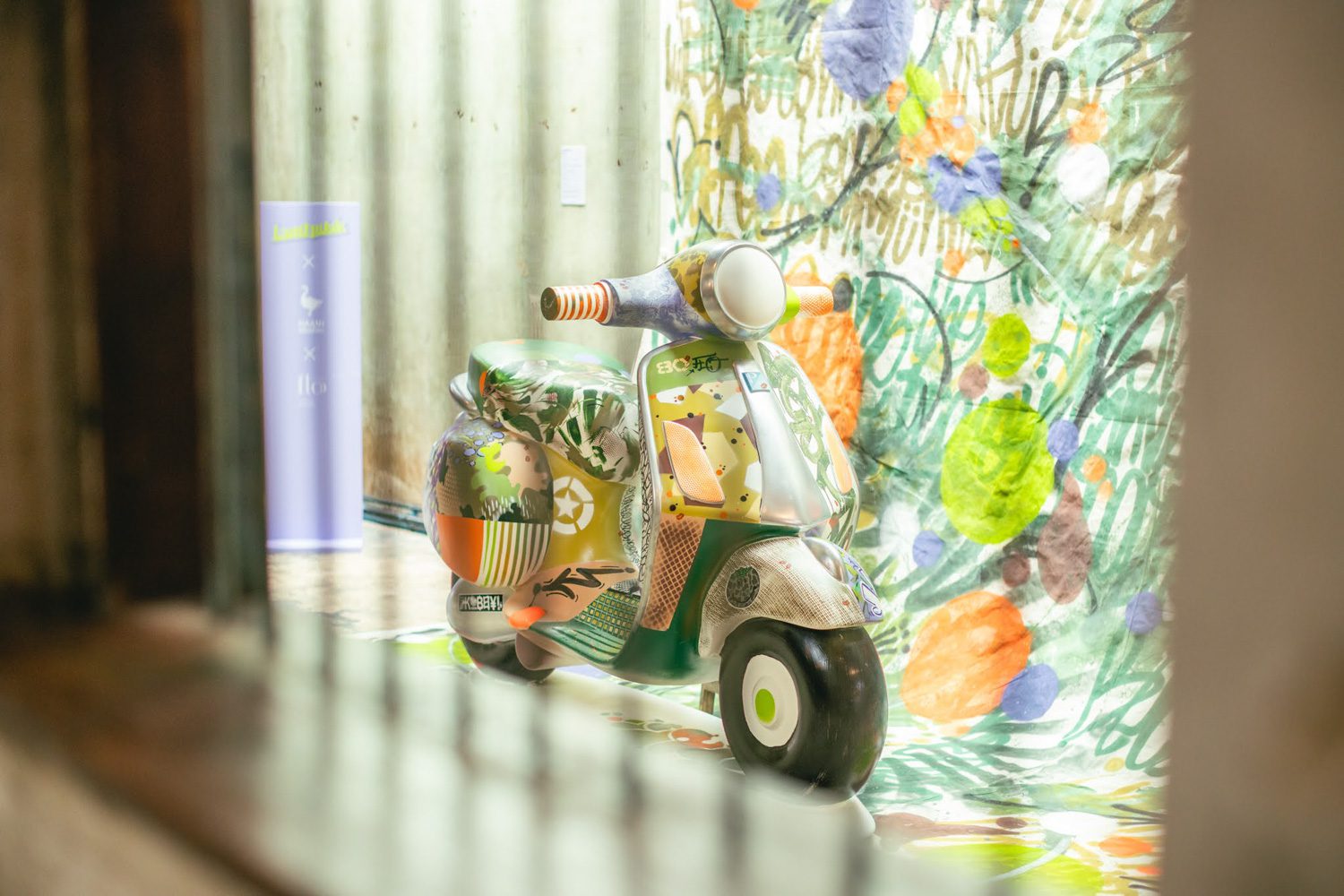
A closer look at this vividly colored work reveals a patchwork language influenced by Japanese boro, a tradition of assembling and mending cloth from disparate remnants. Coffee sacks, woven rattan patterns, and lace motifs are brought together, spray-painted to create new textures and transformed into stencils that evoke a sense of familiarity for local viewers. The work extends onto a four-by-four-meter graffiti canvas, suggesting camouflage, or art itself, seeping into the fabric of the city.
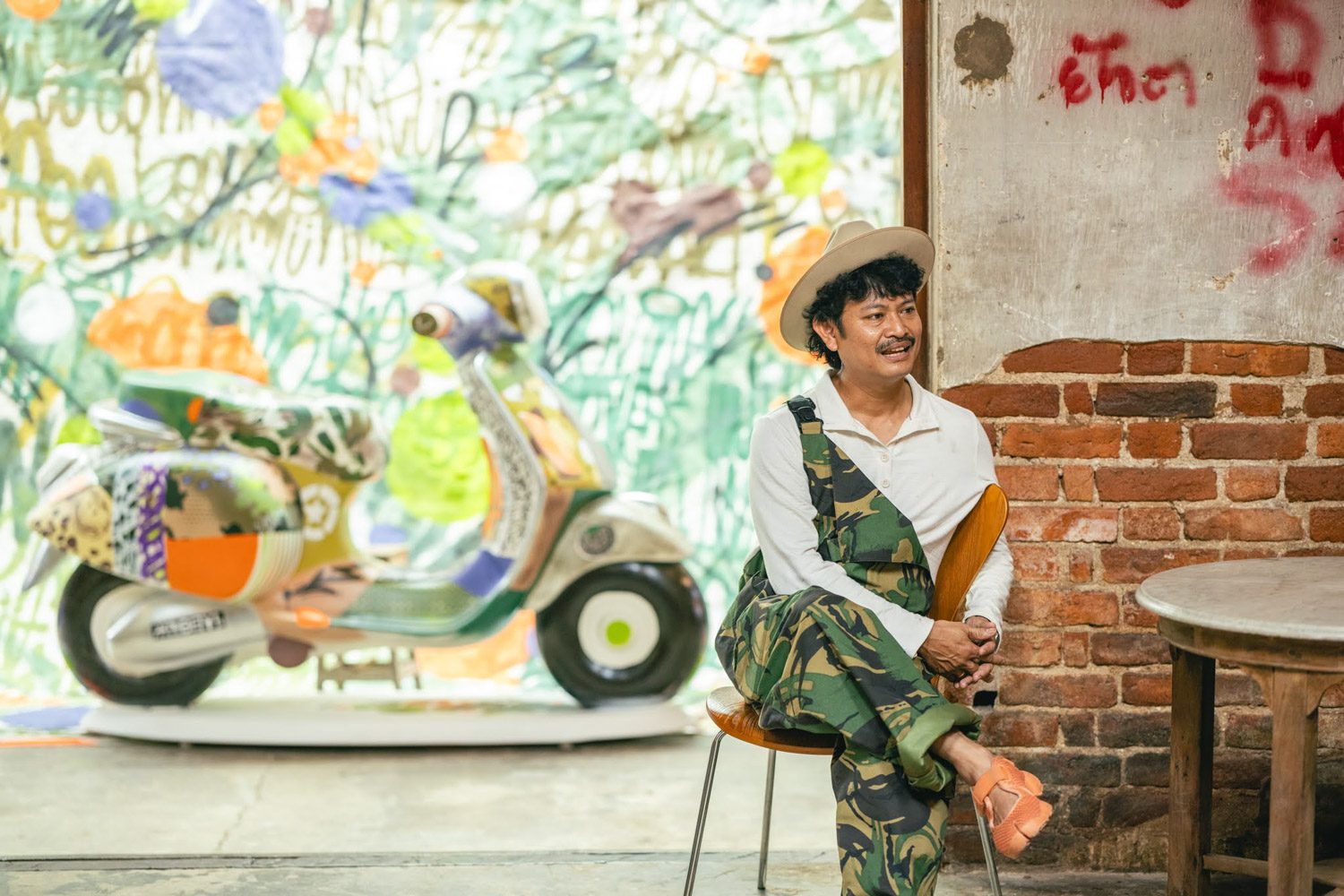
Pichai also tells me that he is pleased Vespa has created a platform for artists from different backgrounds to work together. He hopes that both art lovers and Vespa enthusiasts will come to experience the atmosphere and become part of the community naturally.
“When the character of the city and the character of Vespa meet the beauty of art, Chiang Mai is set in constant motion. It creates something distinctive, something that could only exist here and now.”
While Pichai’s work explores how objects can merge with the city and become part of the present moment, the work of Karueporn, an artist and founder of Graph Coffee Co., takes a different direction. It leads me back to questions about the fate of objects, tracing the memories, marks, and often elusive relationships that have formed between people and Vespa over time.
Tee—Karueporn Satrabhaya
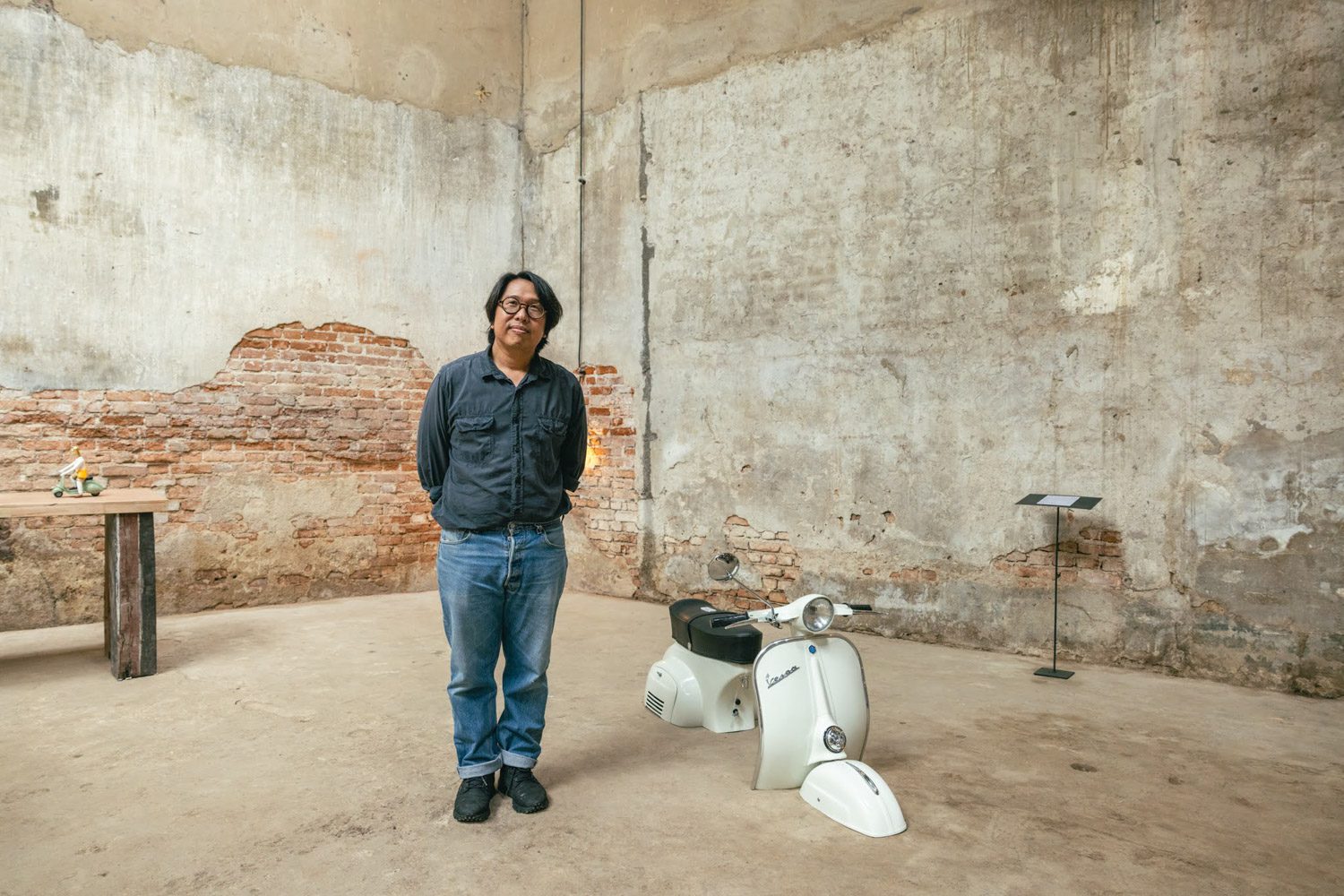
Karueporn Satrabhaya’s attachment to Vespa began during his university years with a Vespa Smallframe, the first motorized two-wheeler he owned after making the transition from a bicycle. Arriving at a pivotal stage in his life, the Smallframe became closely entwined with his experience of growing up. Although it has since passed into another owner’s hands, its distinctive design and enduring value remain imprinted on his memory as a ‘sculpture of thought,’ an object that never ceases to feel contemporary.
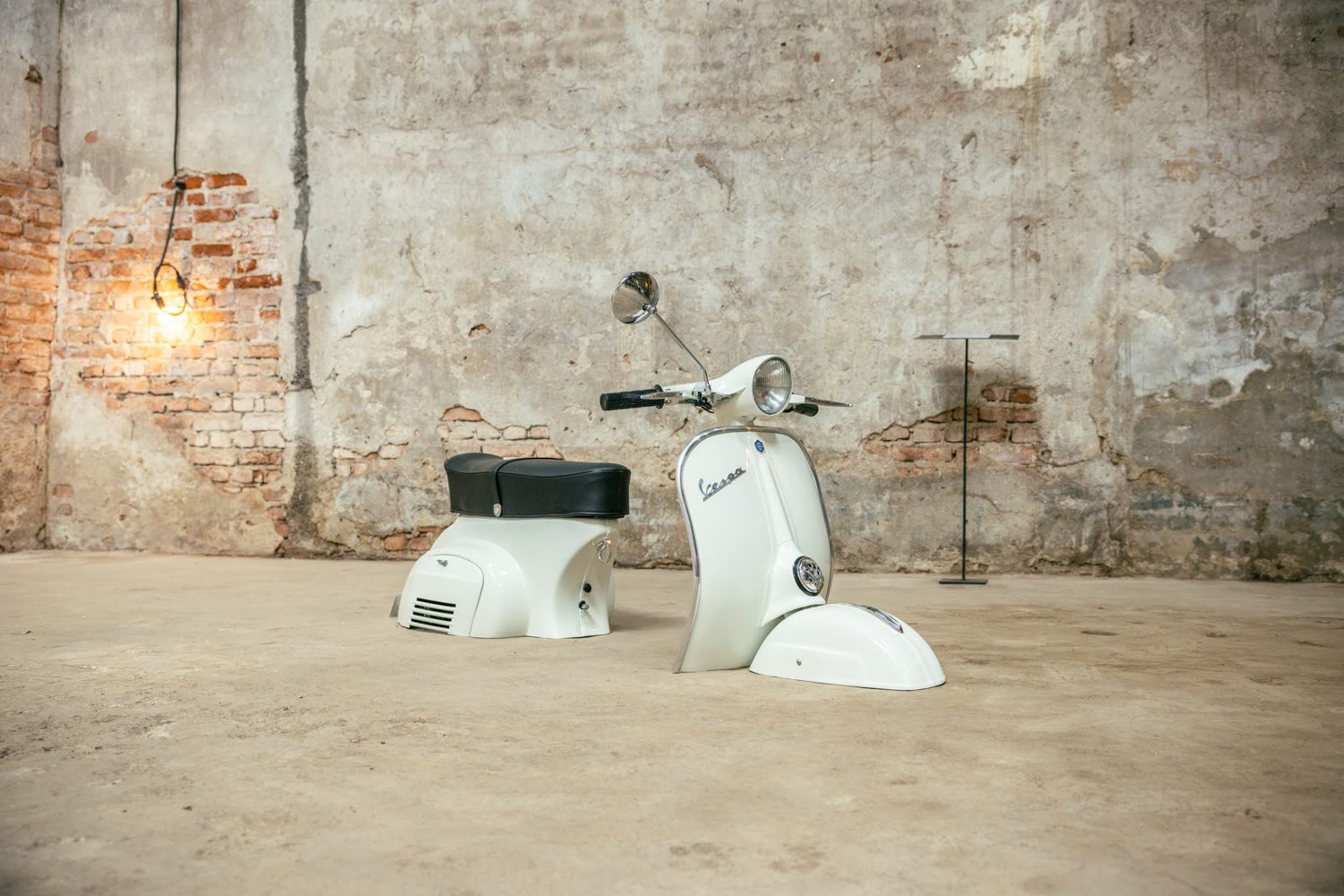
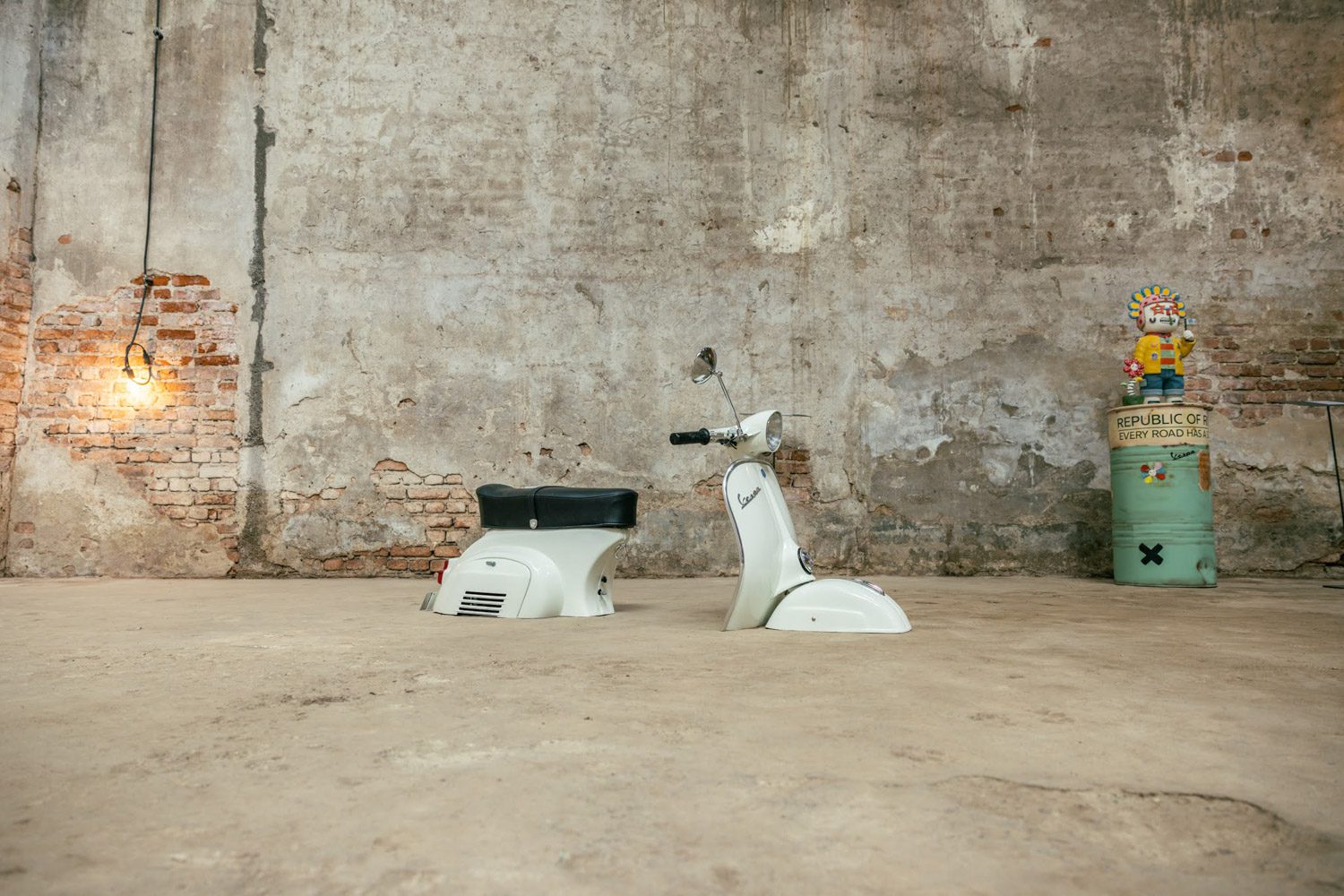
For this exhibition at HAAN STUDIO, Karueporn presents a sculptural work titled What Remains, which examines the collision between desire, memory, and the destruction of objects. The work begins with two news stories that he uses to reflect on broader social phenomena. The first concerns a young man who drove a car into a swimming pool to spite his family, leaving half of the vehicle submerged. The image suggests an emotional conflict concealed beneath the water’s surface. This is set against the story of Angkhana Neelapaijit, who donated her family’s long-used car to the Mirror Foundation so that it could continue serving a social purpose. Together, the two accounts reveal how the context and function of the same object can be transformed over time.
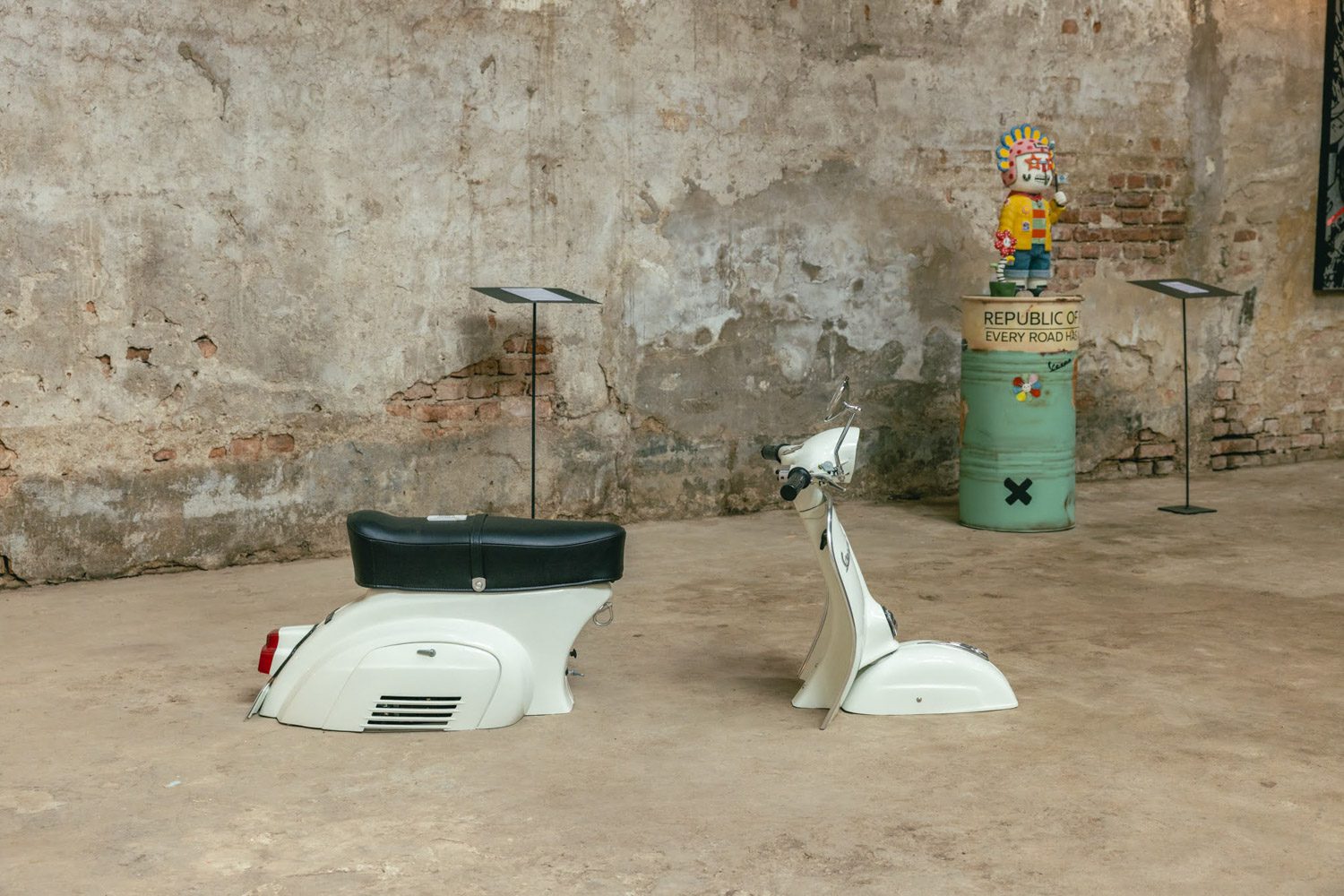
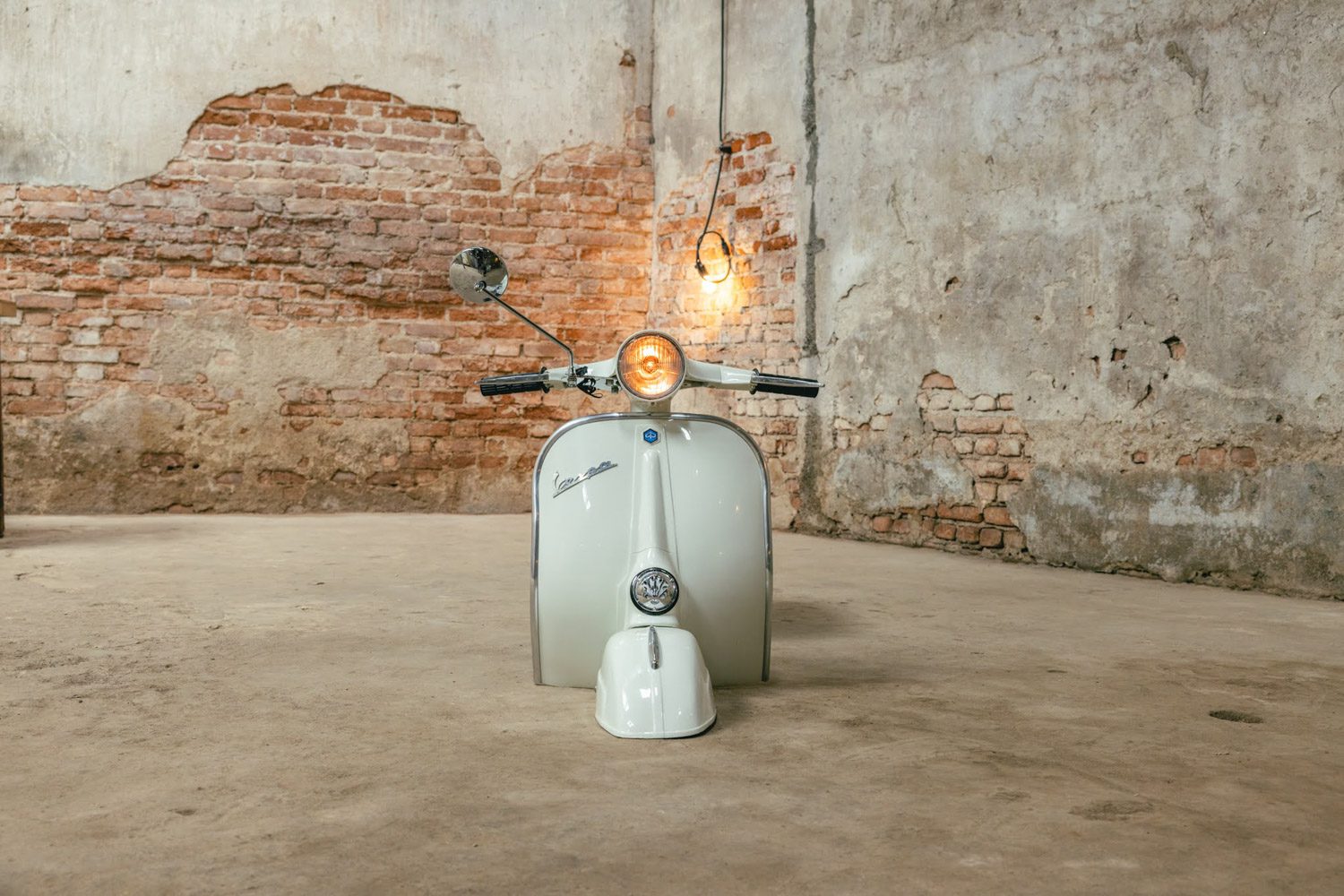
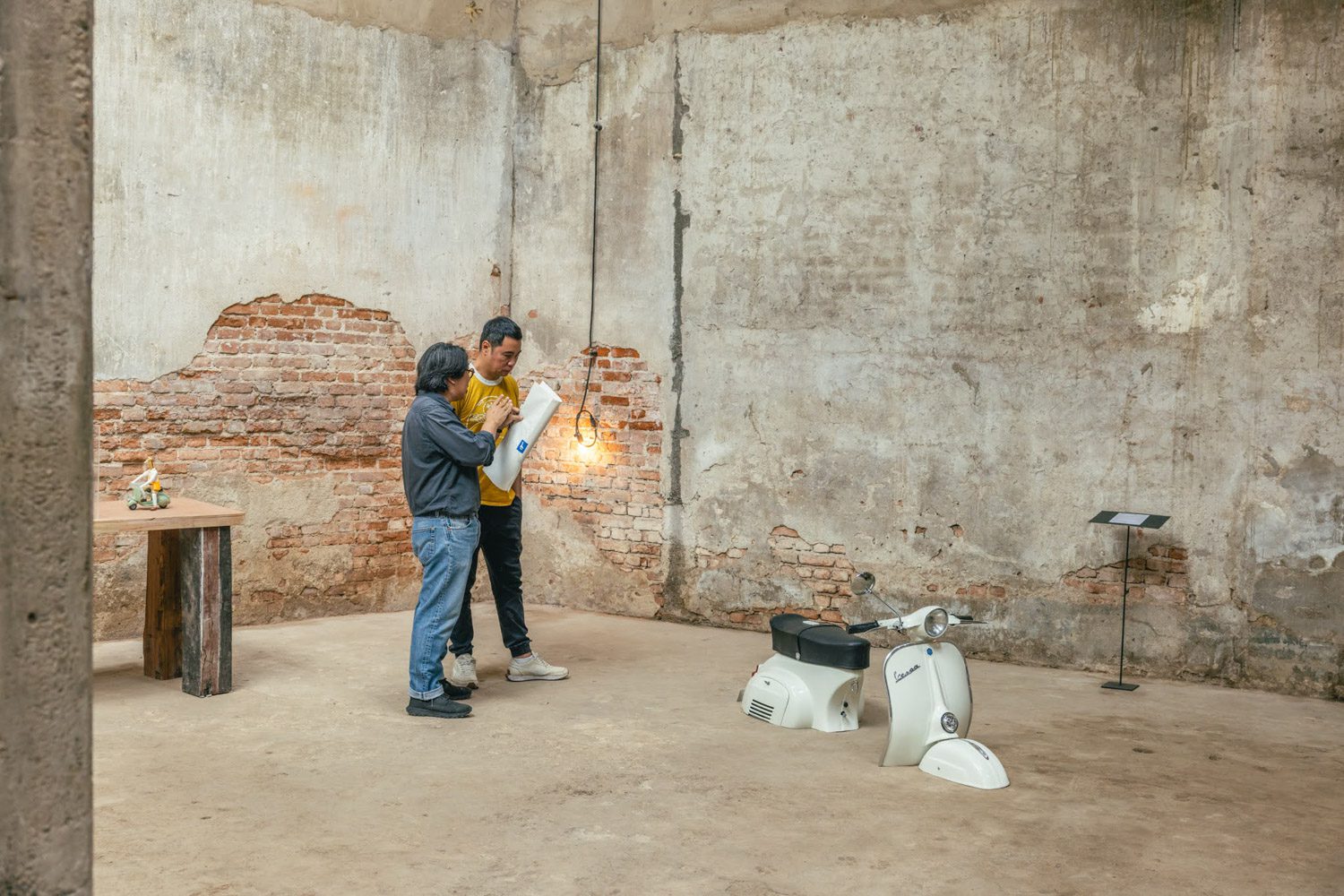
Karueporn synthesizes these contrasting incidents with his own memories of Vespa. Rather than presenting the classic scooter intact and motionless, as might ordinarily be expected, he subjects its structure to an act of ‘cutting away,’ reducing it to half its original form. The intervention introduces a rupture into something familiar, unsettling the image stored in the viewer’s memory.
“If we simply placed a classic scooter on display, it would carry little meaning. Cutting it in half allows us to suggest that the missing half still remains with the person who once used it, while the half before us represents a form of perfection that exists in the imagination. We wanted to convey that suspended, in-between quality of memory and feeling, poised somewhere between past and present.”
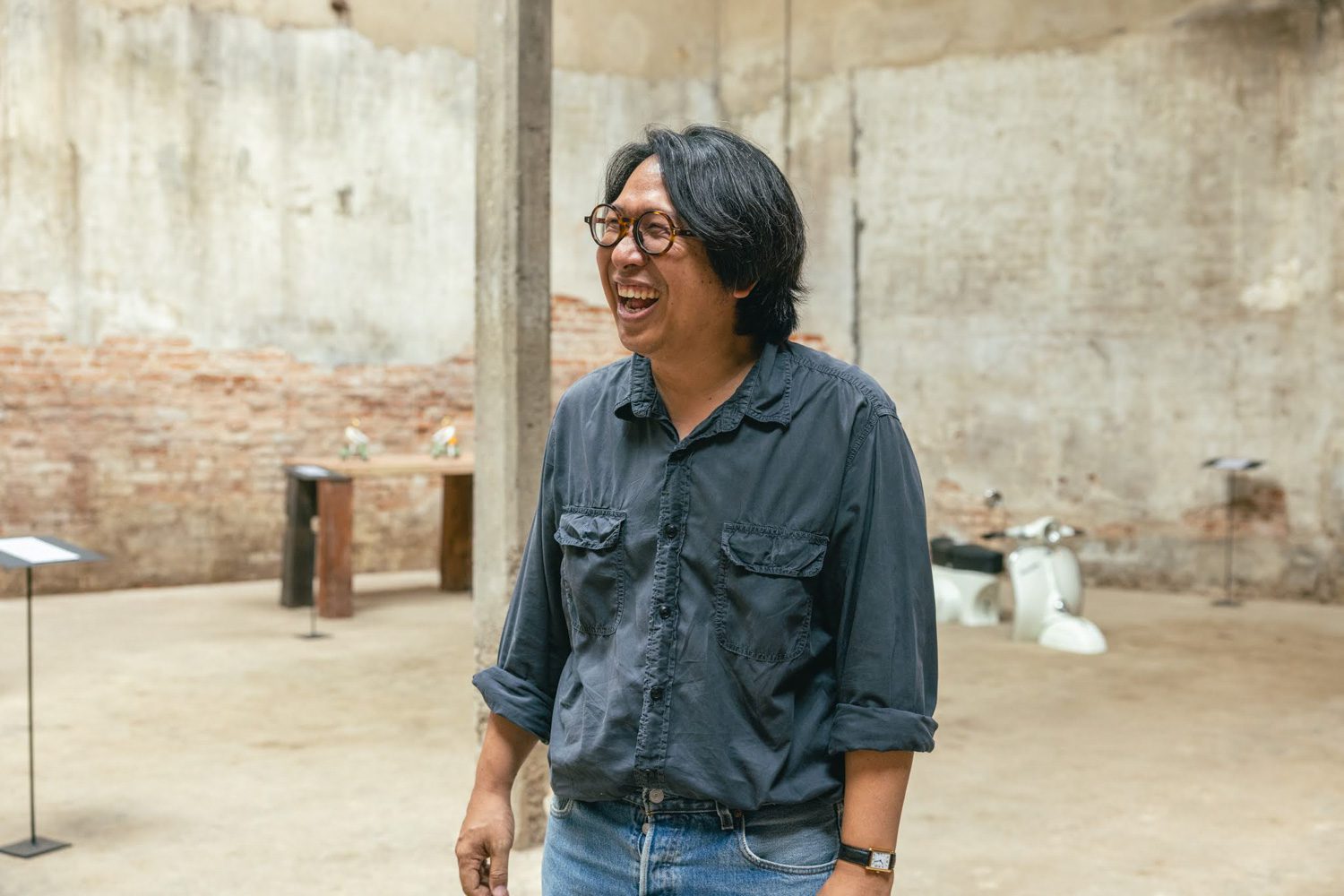
The work further expands the viewer’s experience through sensory elements. A sensor system activates lights and the sound of an engine as visitors approach, momentarily animating the truncated sculpture and bringing it back to life. Karueporn explains that the Vespa ultimately serves only as a symbolic object, inviting visitors to turn inward, reflect, and ask themselves questions.
“More than anything, I want the work to prompt viewers to question themselves. A vehicle may be only an object, but each of us has different things that carry value for us. The work therefore asks viewers to consider what remains within their own memories, and what continues to hold meaning in their lives.”
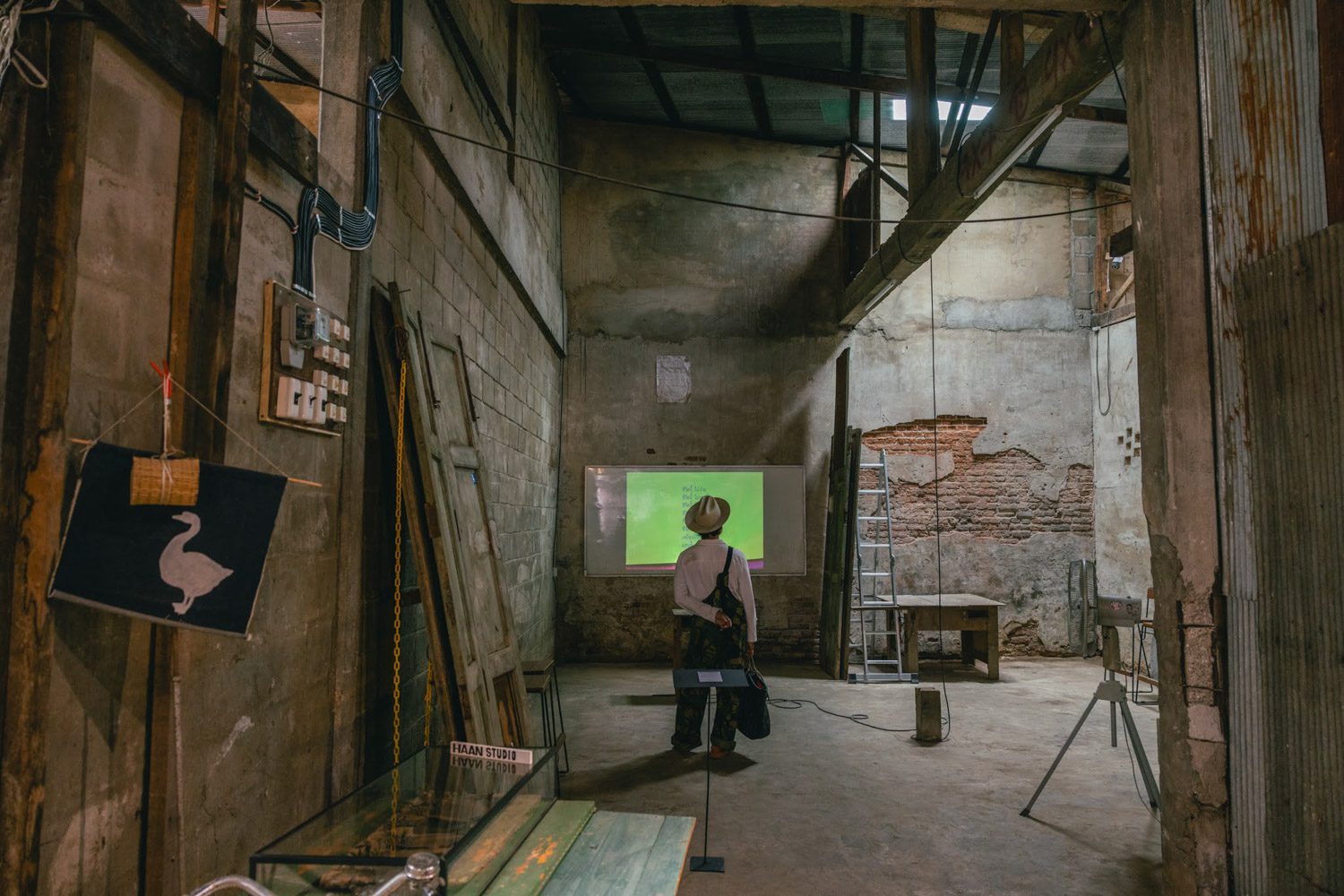 A short film by Santi Taepanich
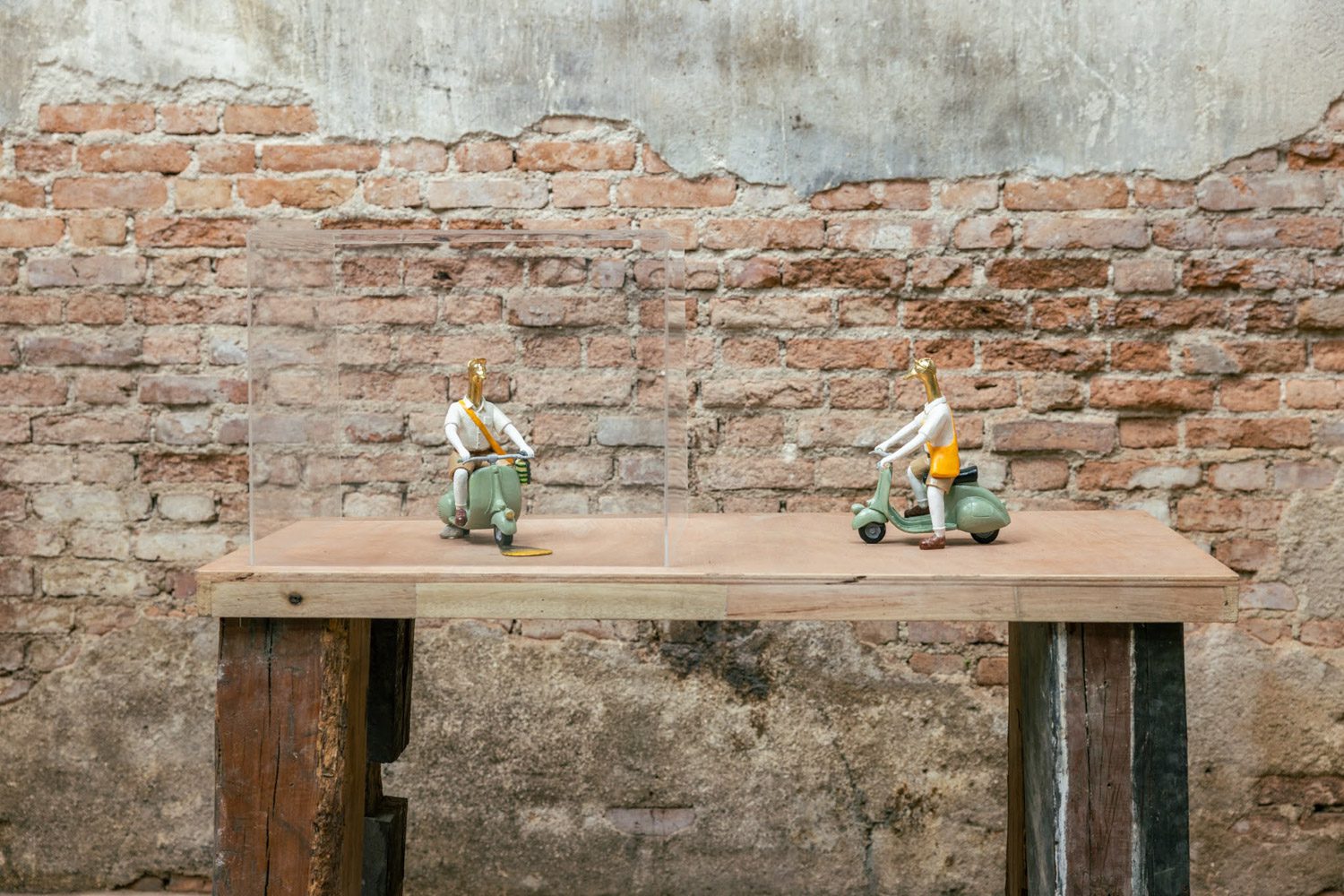
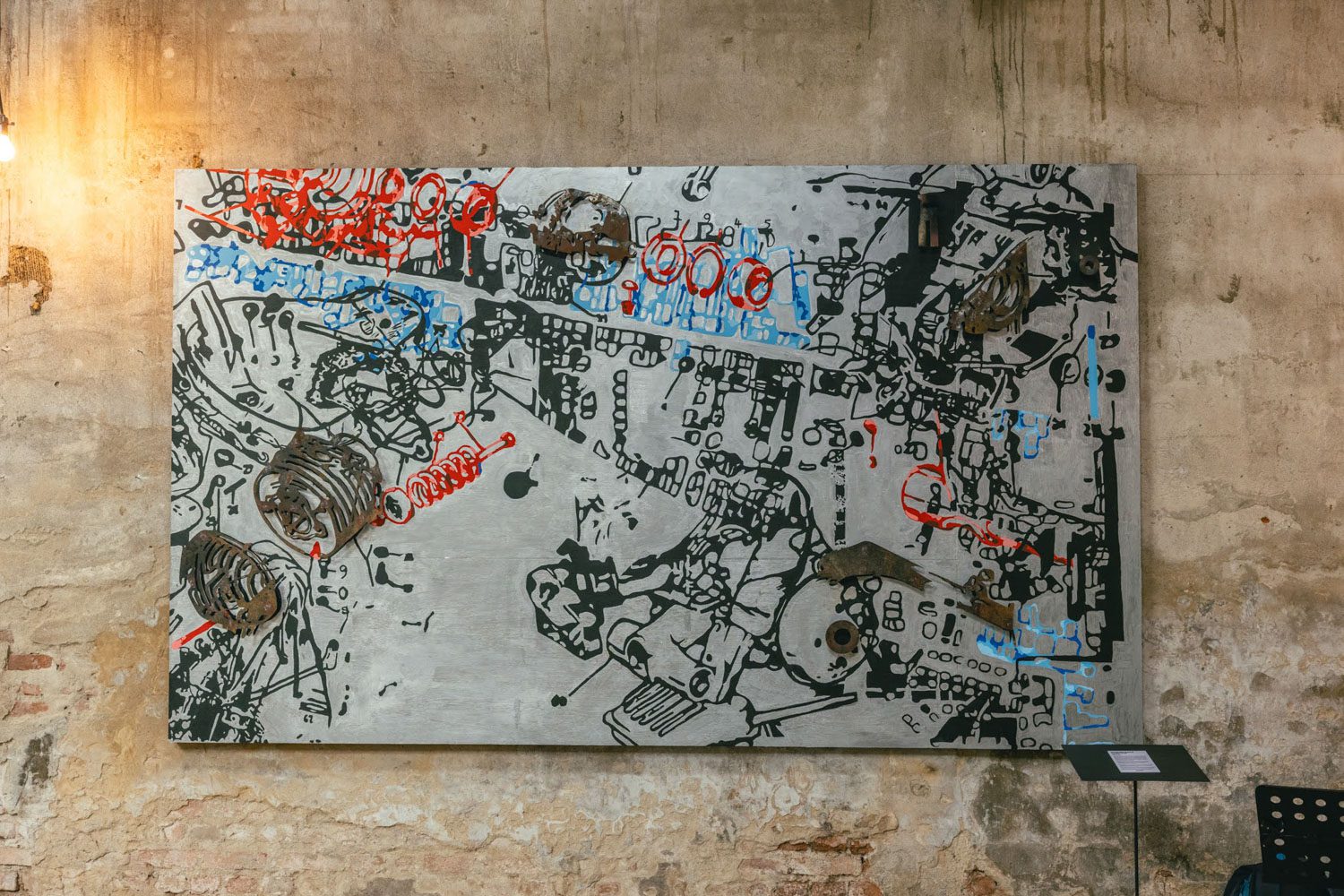
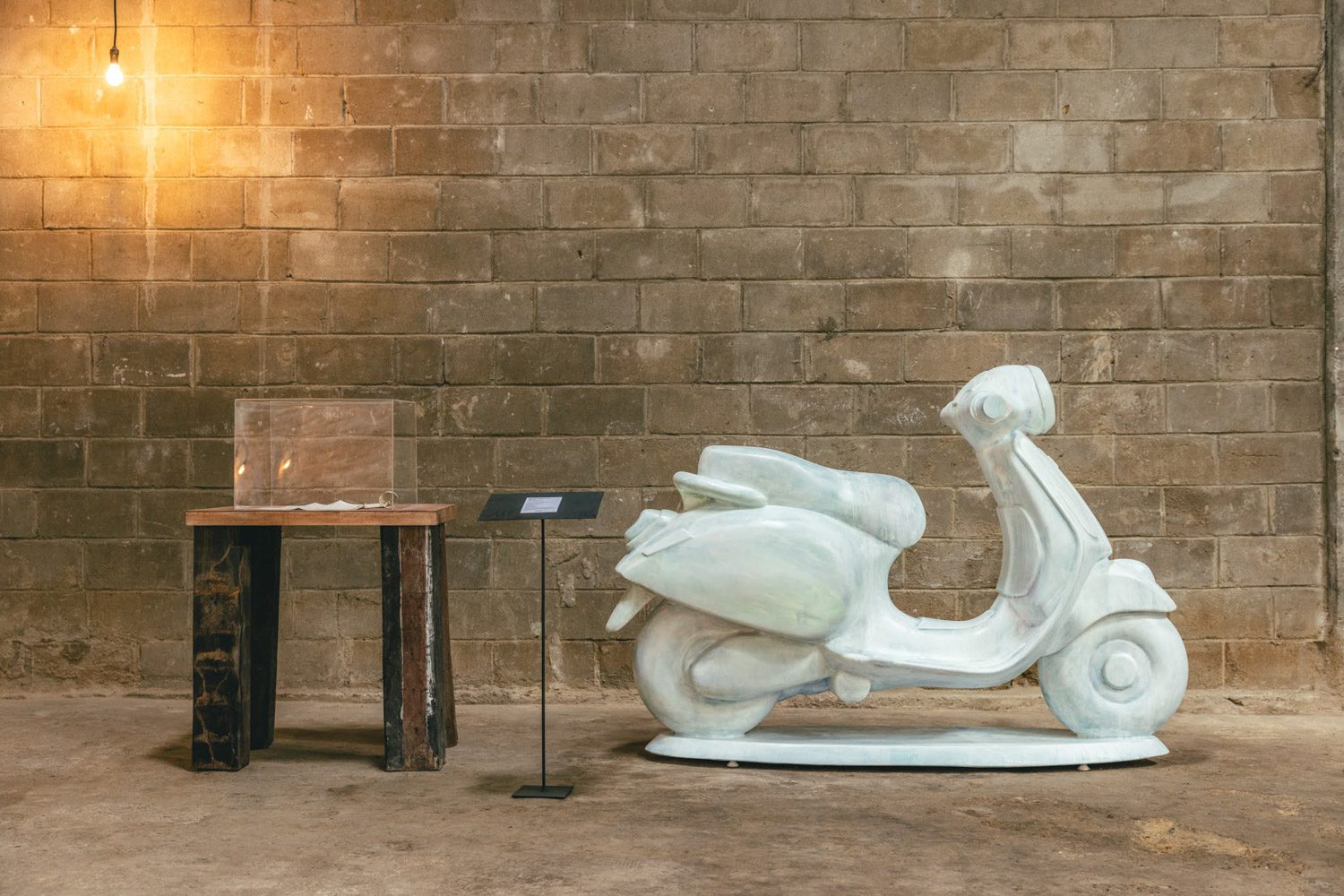
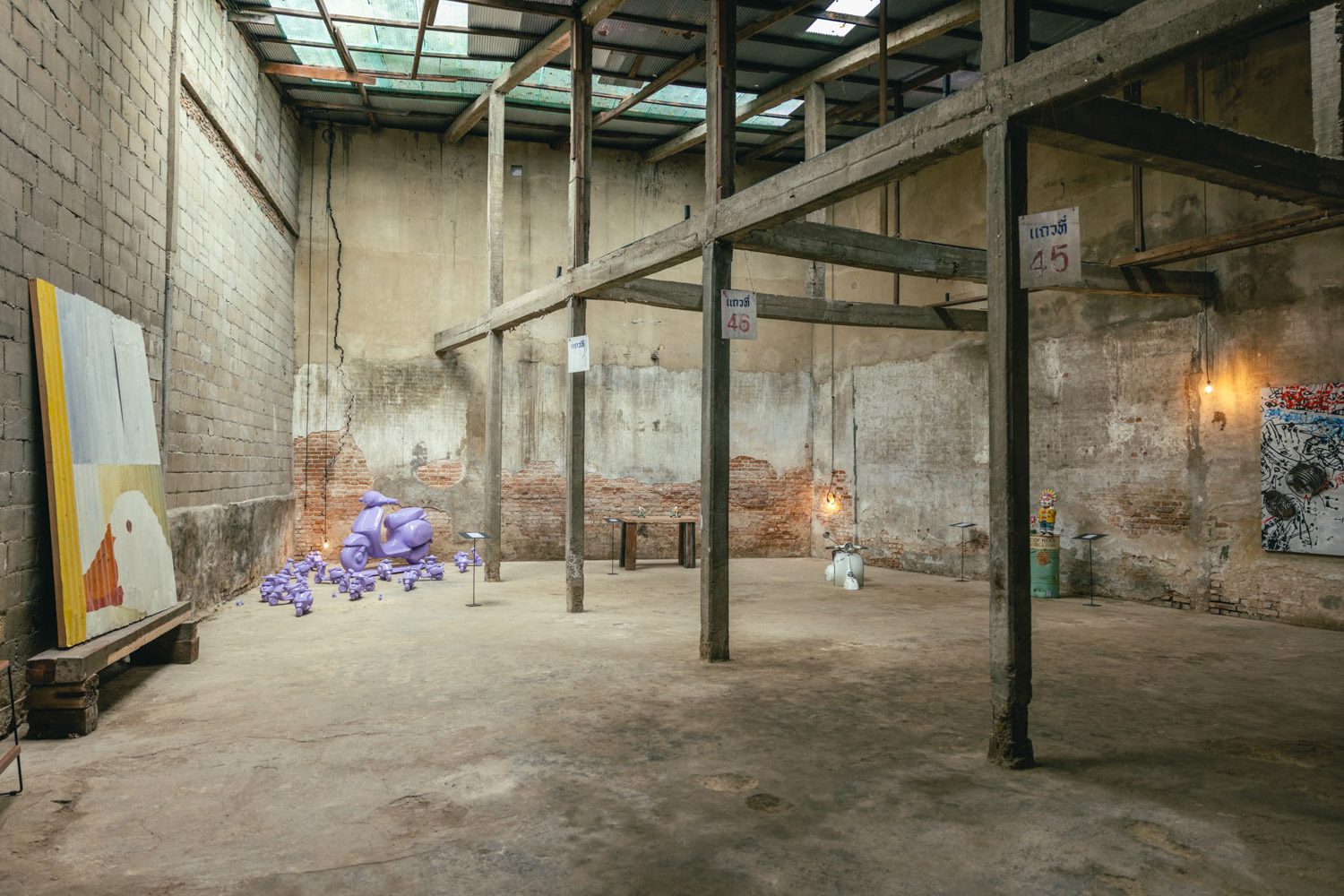
Beyond these two works, the exhibition extends throughout FLO COFFEE BREWERS, located within the Limsakdakul Building, and across the spaces of HAAN STUDIO. Set within a high-ceilinged interior with expansive floor plates, the works are given room to engage fully with the spatial dimensions around them. Visitors are invited to move through the venue and encounter additional interpretations of Vespa articulated through the distinct visual languages of five other local artists. These include a short film by Santi Taepanich; a sculpture by Surachet Sukumolnan, founder of HAAN STUDIO; a mixed-media work by Pharadon Phonamnuai inspired by the Vespa engine; a rider sculpture by Athit Mingchuea; and an installation by Japanese editor Tomomi Sato.
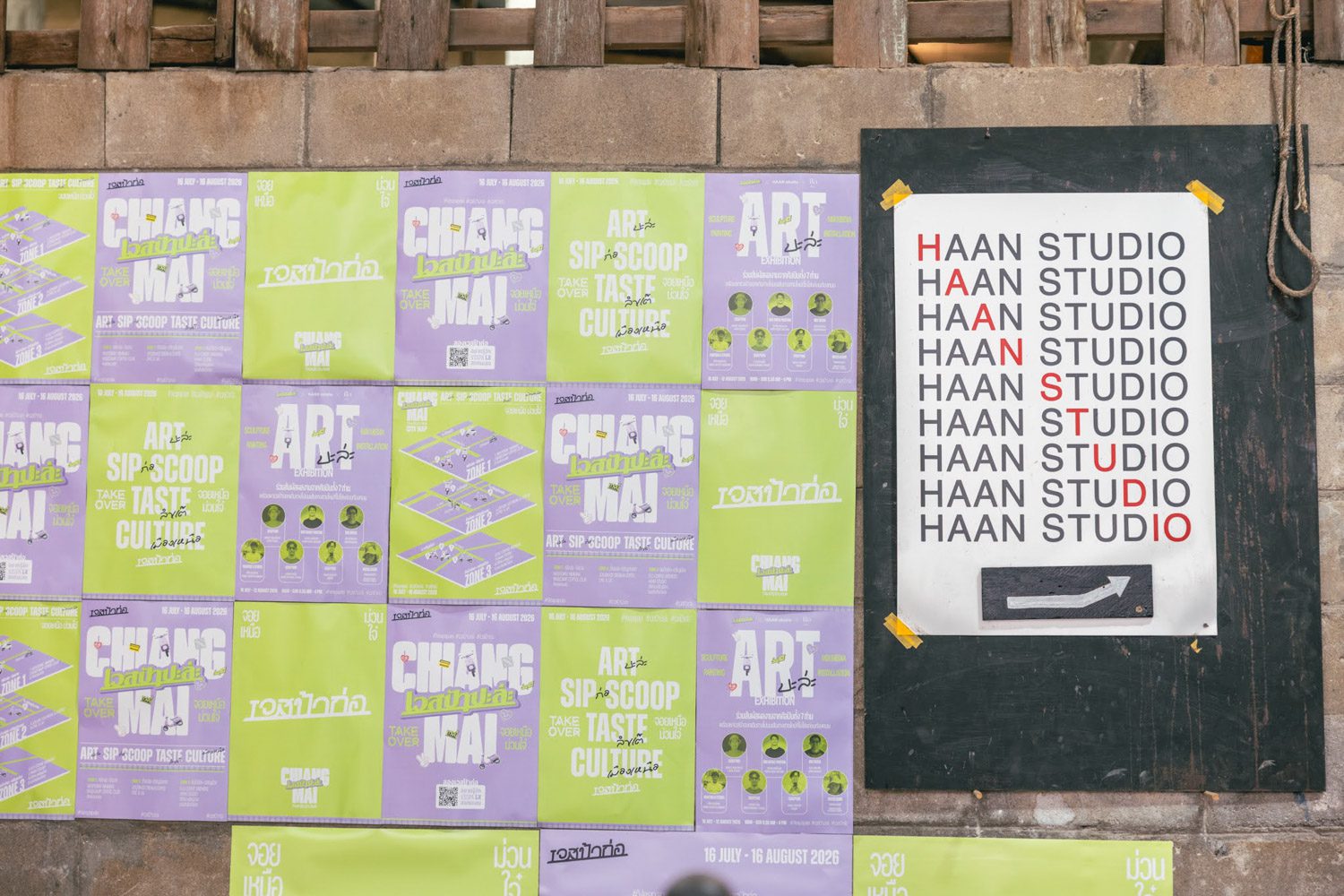
More than a collection of works shaped by personal memories of Vespa, the VESPAPALA campaign reaffirms the spirit that has connected the brand with people for decades. Vespa has long stood as a symbol of venturing out into the world and of daring to move beyond familiar routes. Here, that legacy opens up a new conversation between the brand, local culture, and contemporary art, suggesting that Vespa remains a cultural object capable of adapting, evolving, and continuing to create new memories with each generation.
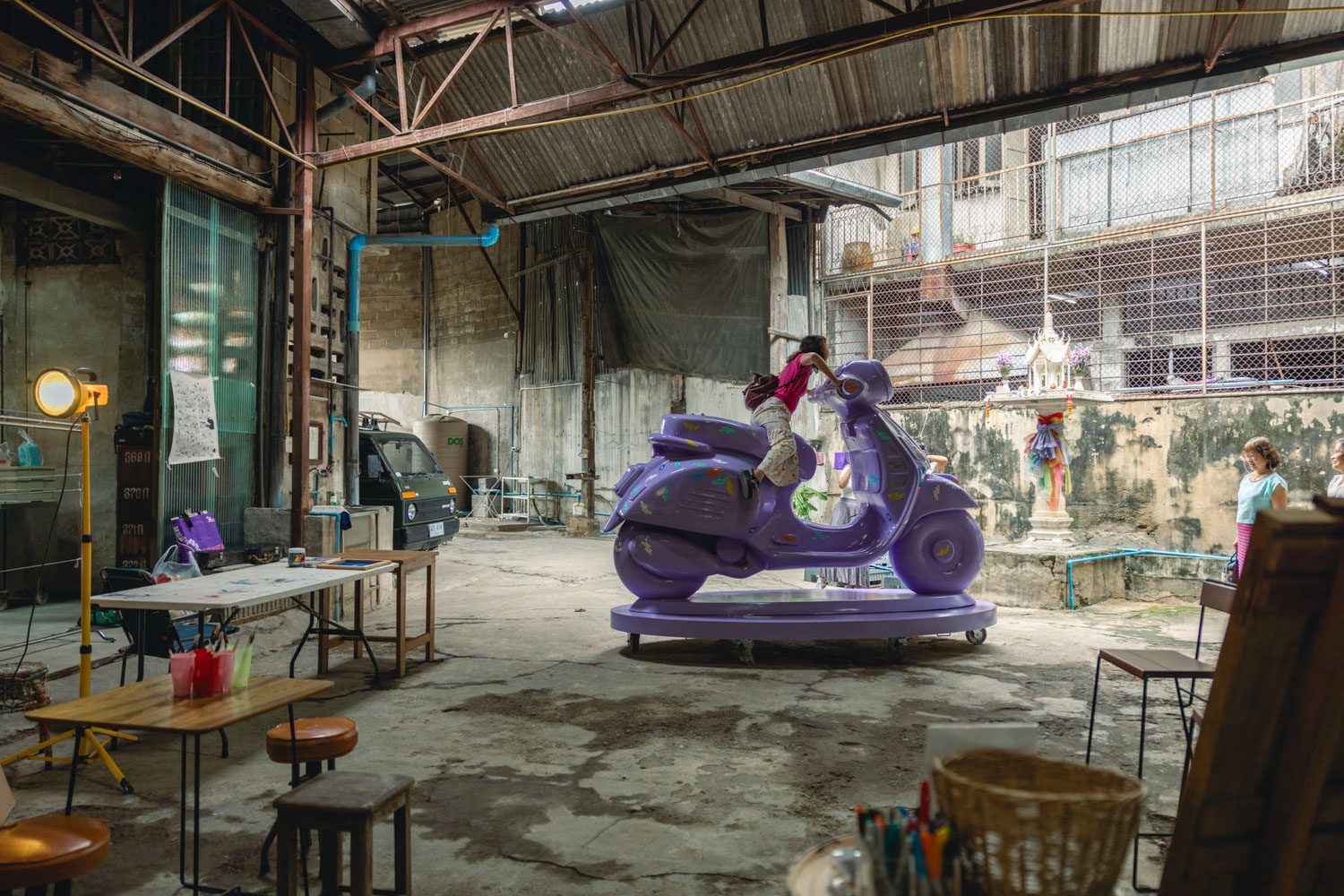
VESPAPALA is on view at FLO COFFEE BREWERS and HAAN STUDIO in the San Pa Khoi neighborhood of Chiang Mai from July 16 to August 12, 2026.