‘MOORING’ INVITES US TO DROP ANCHOR AT FOUR POINTS ALONG THE JOURNEY, WHERE MEMORY, CULTURE, HISTORY, AND DRIFTING COME TOGETHER
TEXT: PROMPOHN CHASRI
PHOTO: KETSIREE WONGWAN
(For Thai, press here)
Mooring explores points of anchorage between the ‘traces’ of memory, culture, and history and the ‘drifting’ condition of life through works by four emerging artists as a part of Open Ground.
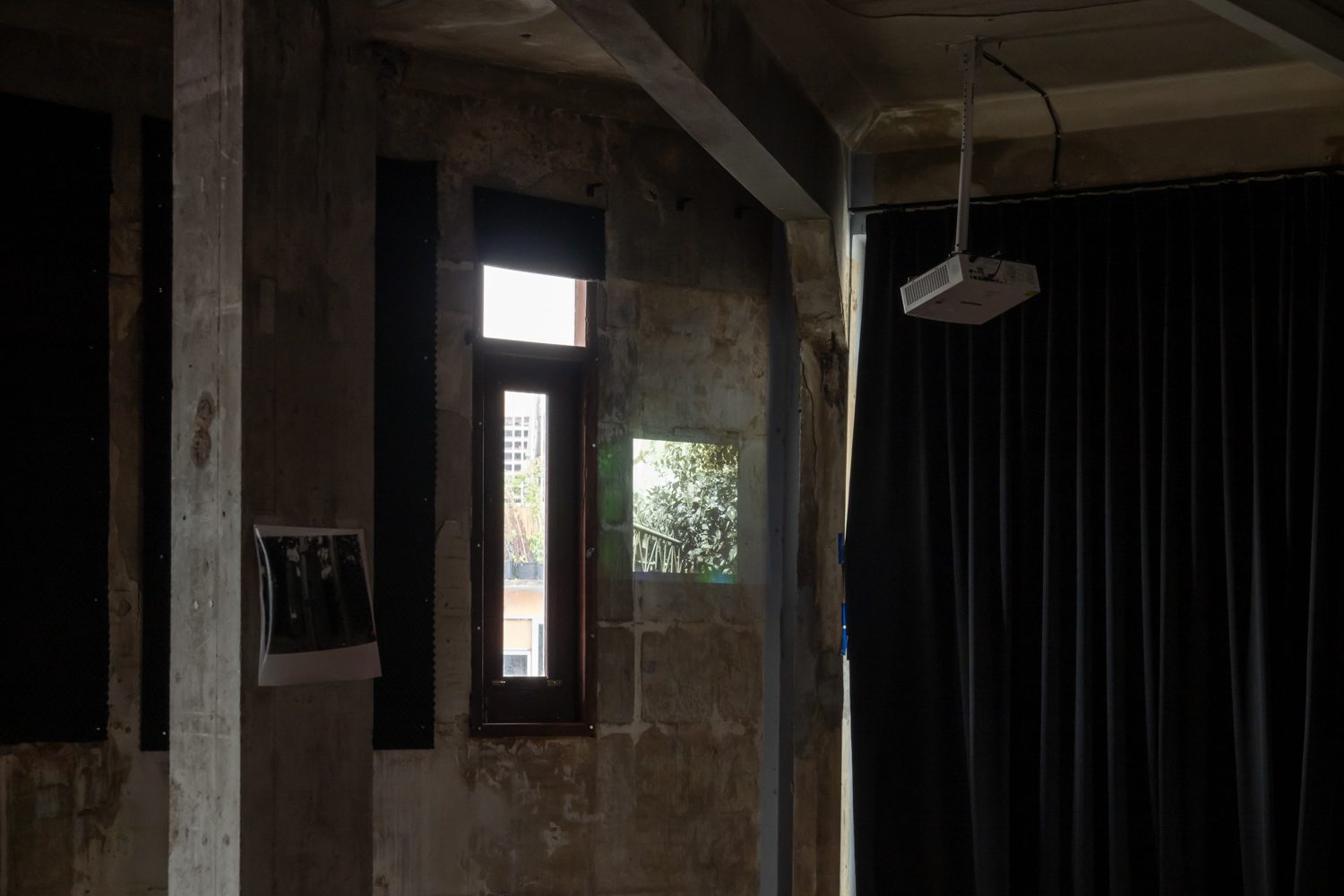
An unfamiliar new elevator carries the writer to the building’s third floor, where Mooring is on view. Before any artwork comes into sight, the first things to offer a greeting are the building’s physical traces, dust stains across the walls, and light filtering through clouded windows. The sense of discovery brings back memories of every previous visit to Bangkok Kunsthalle, where exhibitions had occupied only the first and second floors. Arriving on the third floor therefore feels almost like entering the building for the first time—a sense of wonder that only grows upon discovering that other exhibitions are also installed on the fourth and fifth floors.
Mooring is the inaugural exhibition of Open Ground, a creative support initiative established by Bangkok Kunsthalle. The program seeks to nurture artists and creative practitioners who bring forward compelling ideas, embrace experimentation, and push the boundaries of their practices. Curated by Thapong Srisai, the exhibition brings together works by four emerging artists: Arisa Purkpong, Kay Zhang, Tanat Teeradakorn, and Vanessa Bosch.
The exhibition weaves together narratives drawn from personal experience, memory, culture, and history. It uses the metaphor of dropping anchor—a temporary act of securing oneself—to represent the search for points of reference as stories are translated and transformed between people, places, and times. These stories take shape through individual acts of telling, listening, and interpretation. If the exhibition as a whole is imagined as a voyage, its four works might be seen as moorings scattered along the route. Each offers a temporary pause: a moment to sit, look, listen, and reflect before the anchor is lifted once again, allowing the vessel of our experience to drift onward.
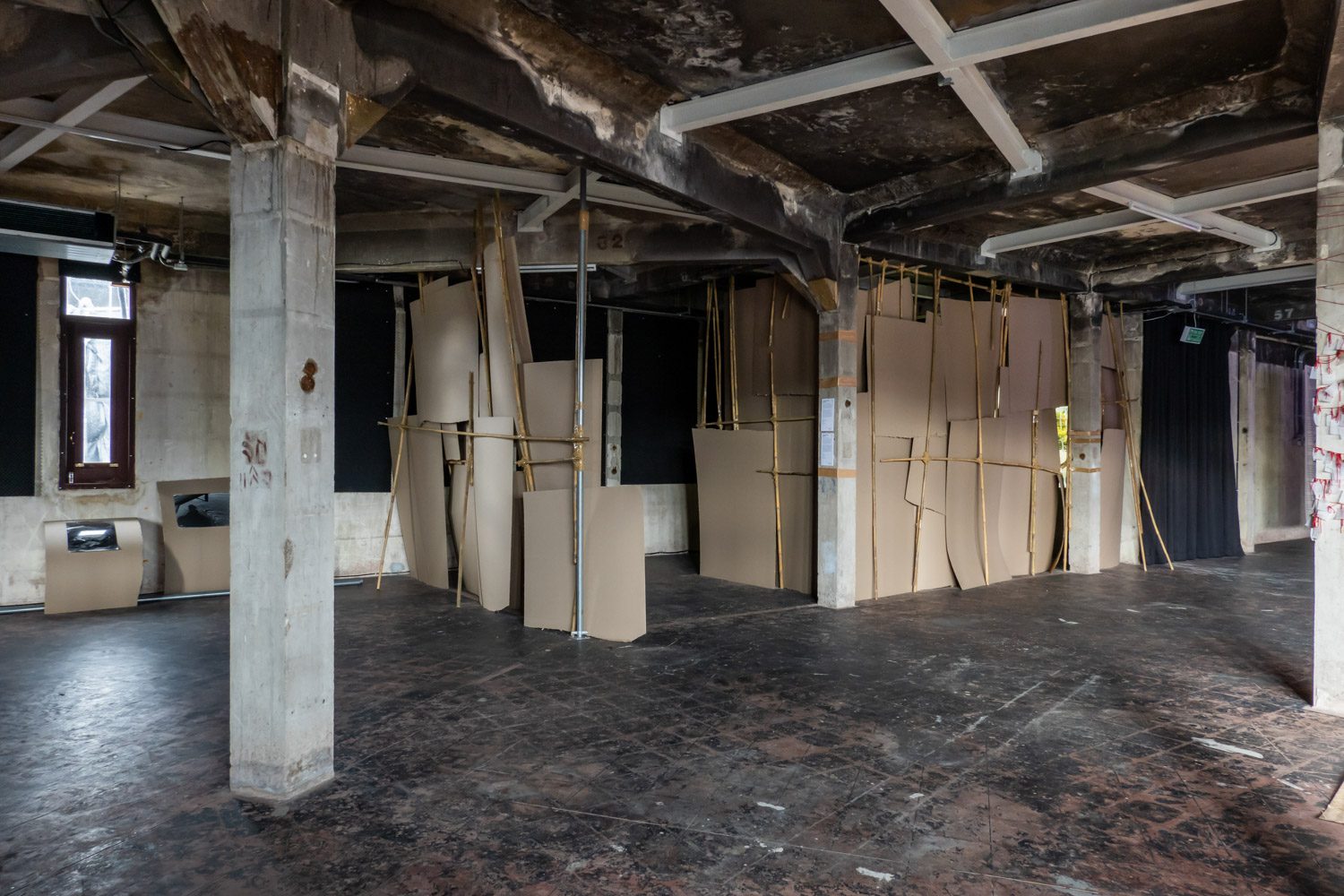
The first mooring appears inside a room enclosed by screens made from bamboo and pieces of cardboard assembled into temporary walls. Within, a large screen presents Arisa Purkpong’s Untitled, a 49-minute video documenting conversations between the artist and her father as they travel to different places across Thailand associated with his childhood memories. We share Arisa’s point of view, watching her father walk ahead of the camera. The images move from one location to another as though retracing scattered fragments of memory. They reveal his awkward gestures and body language as he approaches people in conversation, the emotions reflected in his eyes, and traces of landscapes transformed so extensively by time that little of their former appearance remains. Even he must continue piecing together his own story through the people encountered along the way.
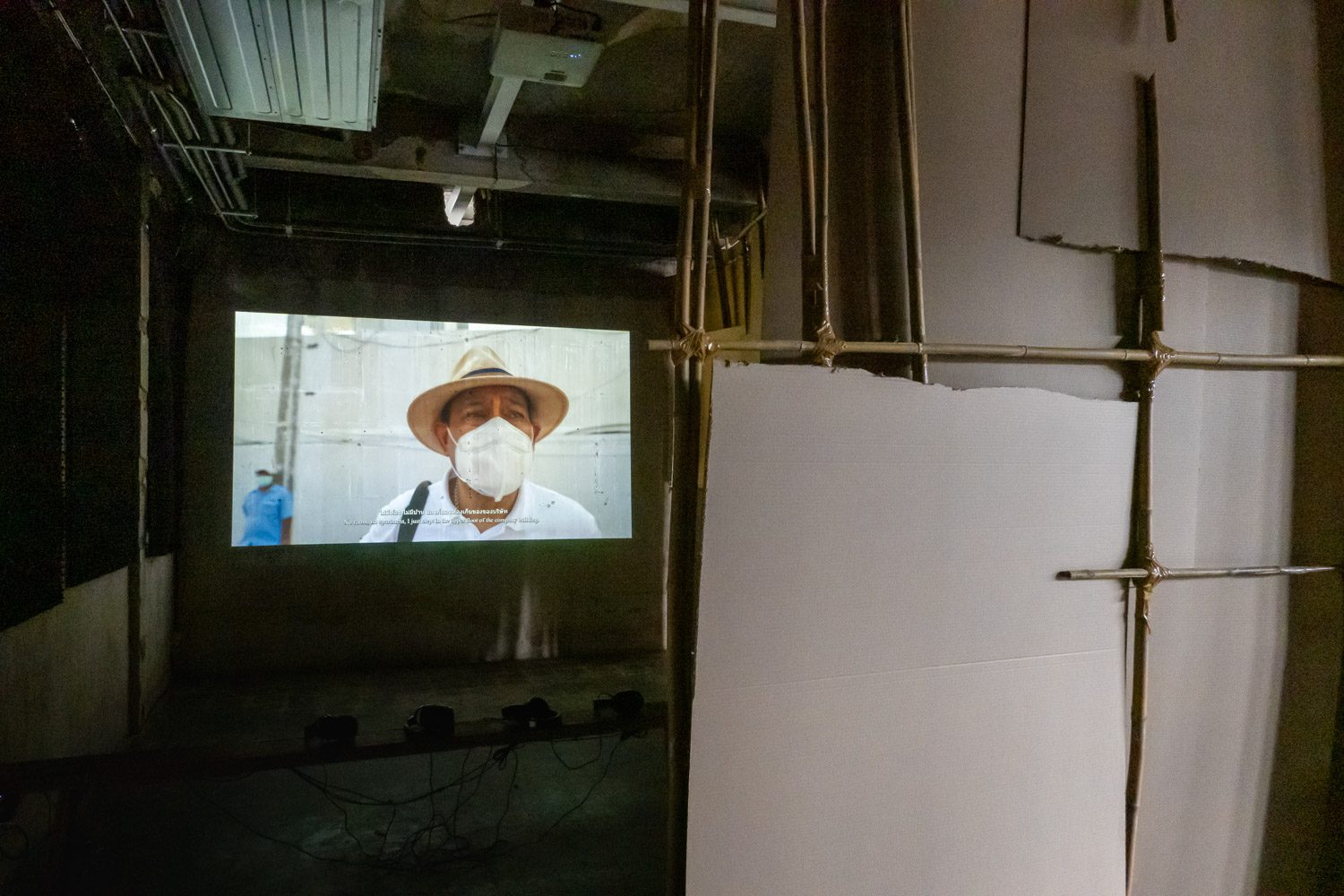
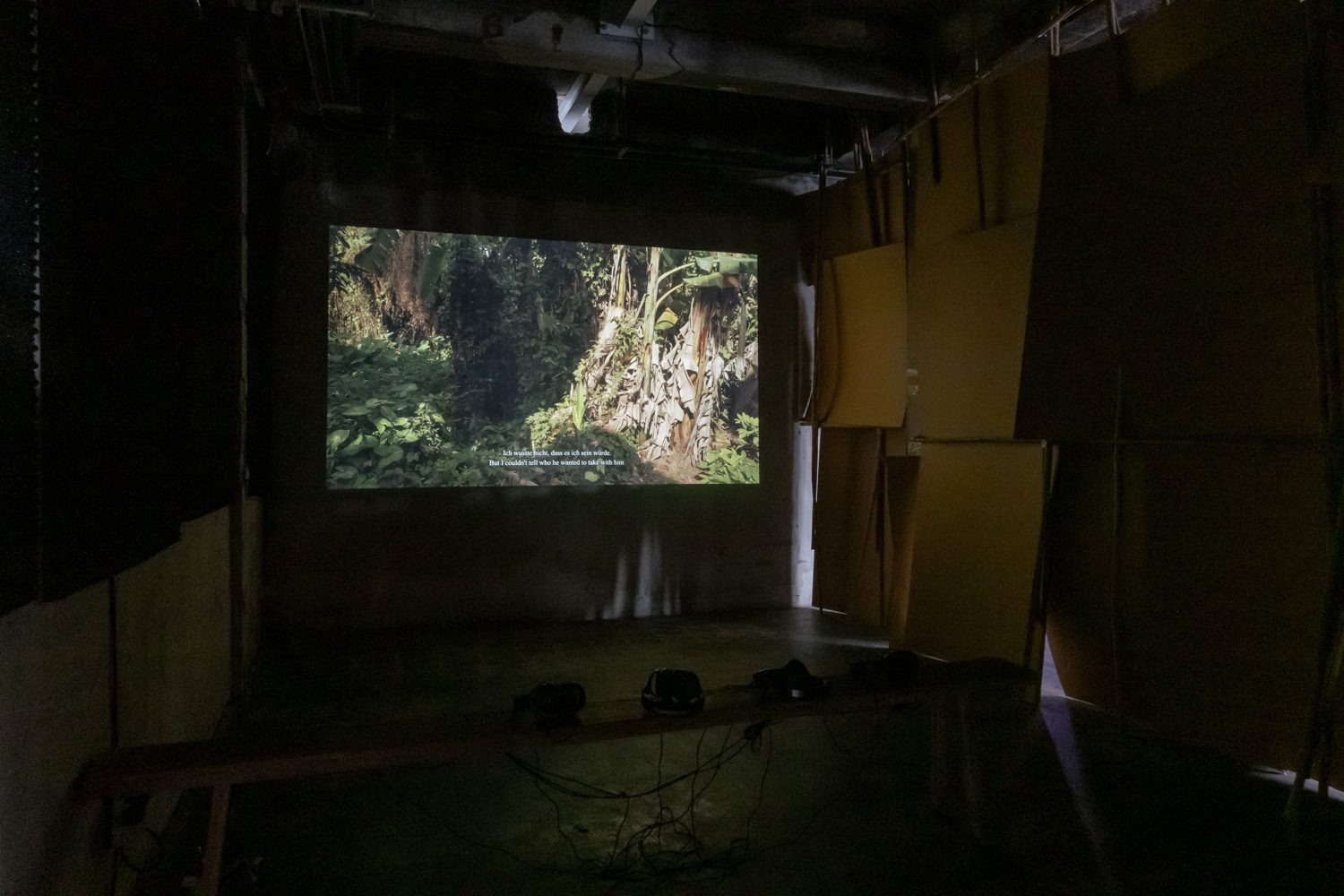
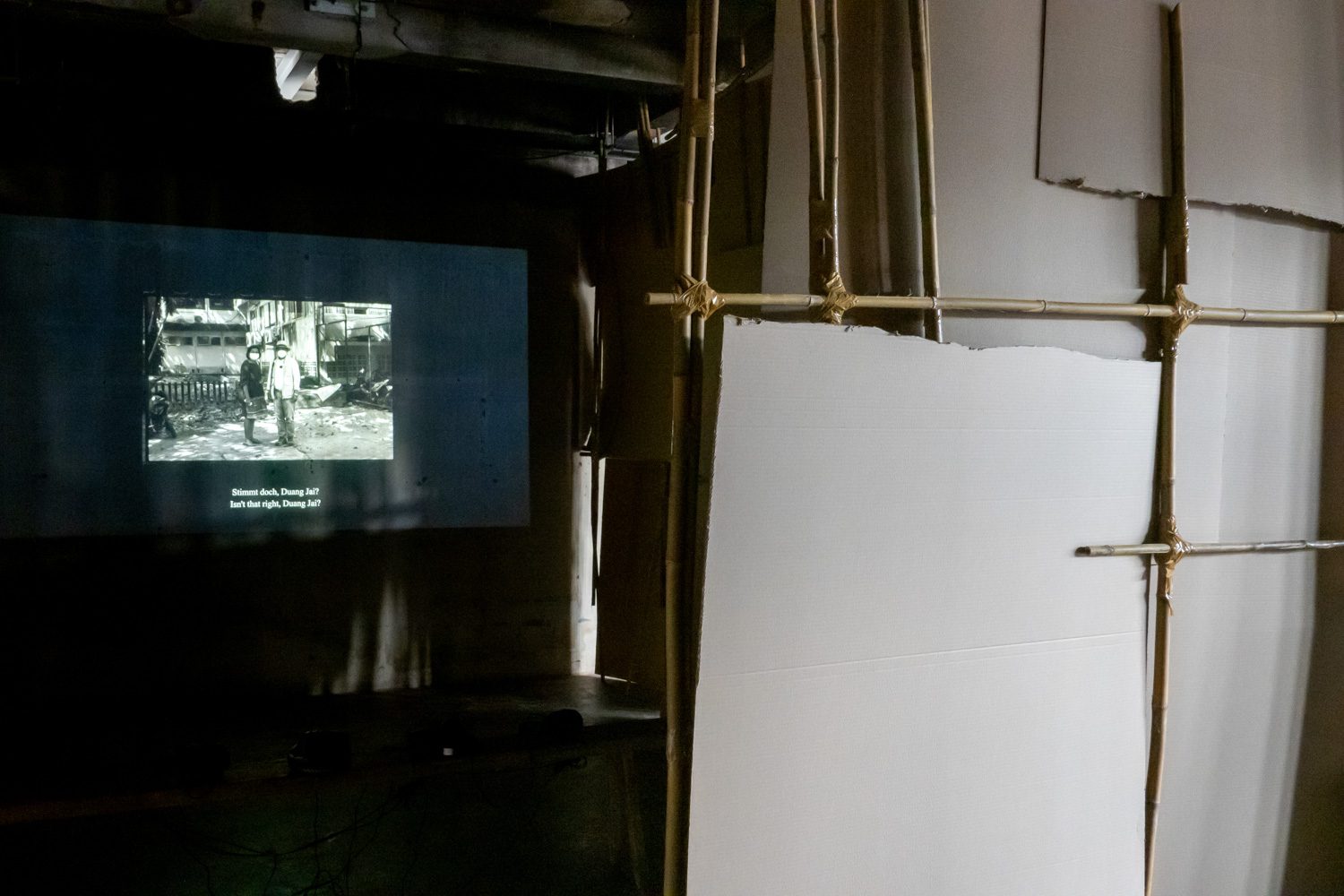
Over the course of these 49 minutes, the writer is reminded of a passage from Roland Barthes’s Camera Lucida: Reflections on Photography (La Chambre claire, translated into Thai by Sayan Daengklom). Looking at a childhood photograph of his late mother with grief and longing, Roland searches for the identity and essence of the person she had been before becoming his mother. Arisa’s journey similarly begins to strip away the role of ‘father,’ leaving behind an individual who longs for freedom and seeks to escape certain the constraints imposed on him by life. At the same time, Untitled reveals a new relationship emerging between Arisa and her father as they come to understand one another as two human beings sharing the same world. As identities from the past gradually unfold, the anchor of an old attachment is slowly raised, releasing those memories and meanings to drift along the current of time.
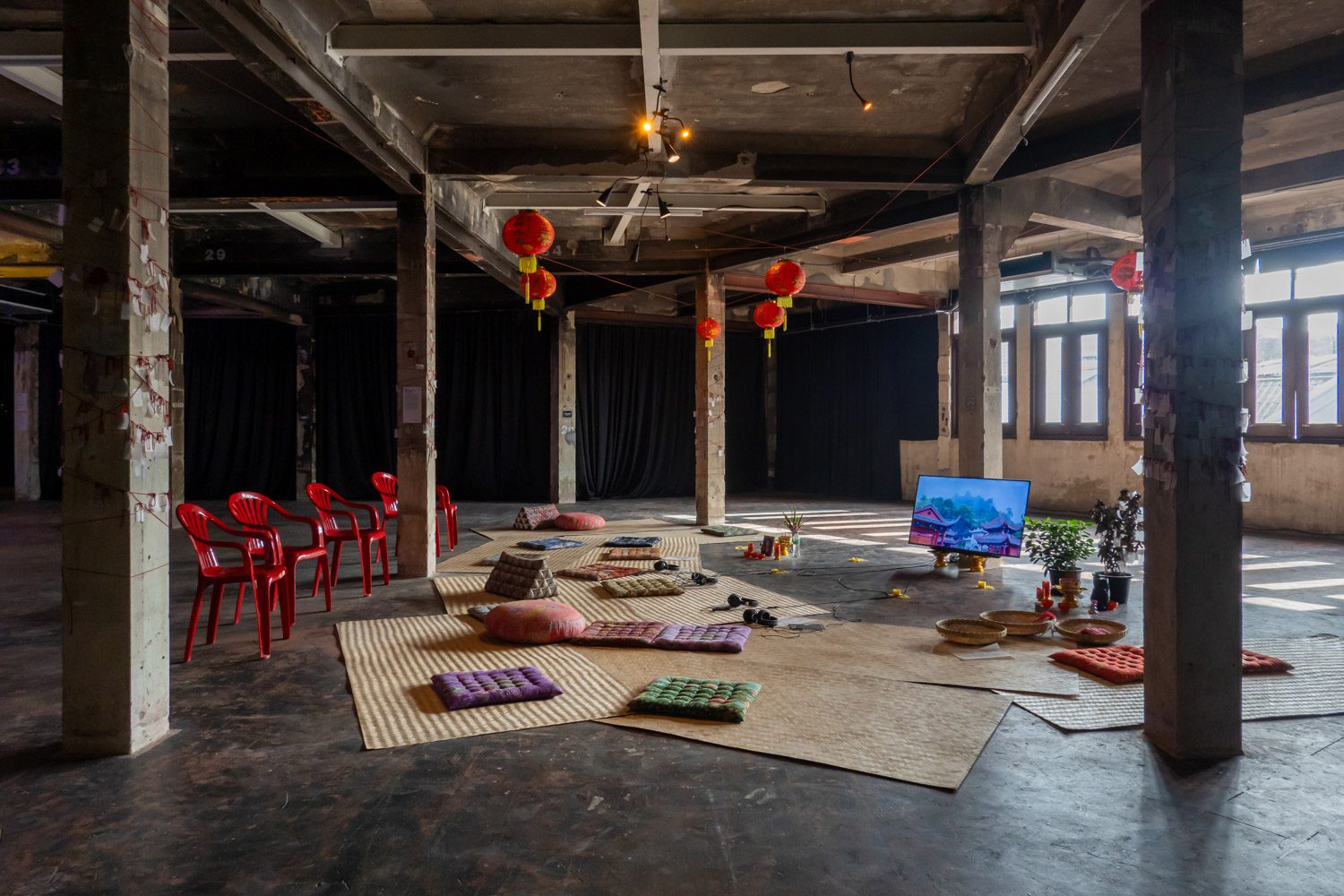
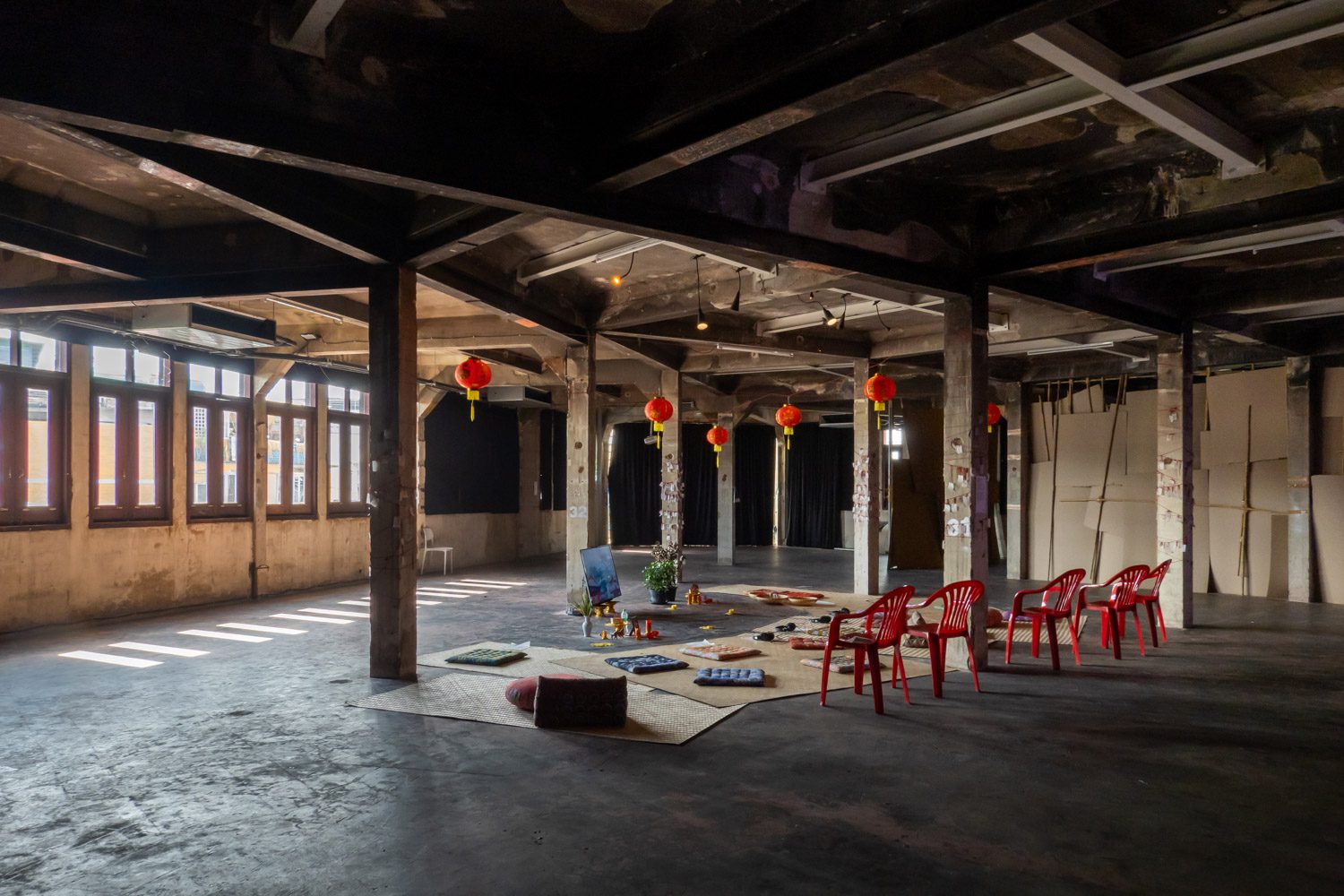
The next mooring carries viewers from individual memory toward a shared cultural experience. In Kay Zhang’s Piāo 飘 / Loy Krathong, mats, cushions, and chairs encircle the installation, directing the audience’s gaze toward the video screen ahead. Headphones placed beside the cushions gently invite visitors to remove their shoes, lower themselves to the floor, and enter a contemplative state. Red lanterns and an altar where visitors can light incense transform the surrounding atmosphere, as though a ritual from a Chinese shrine had been recreated inside this concrete room.
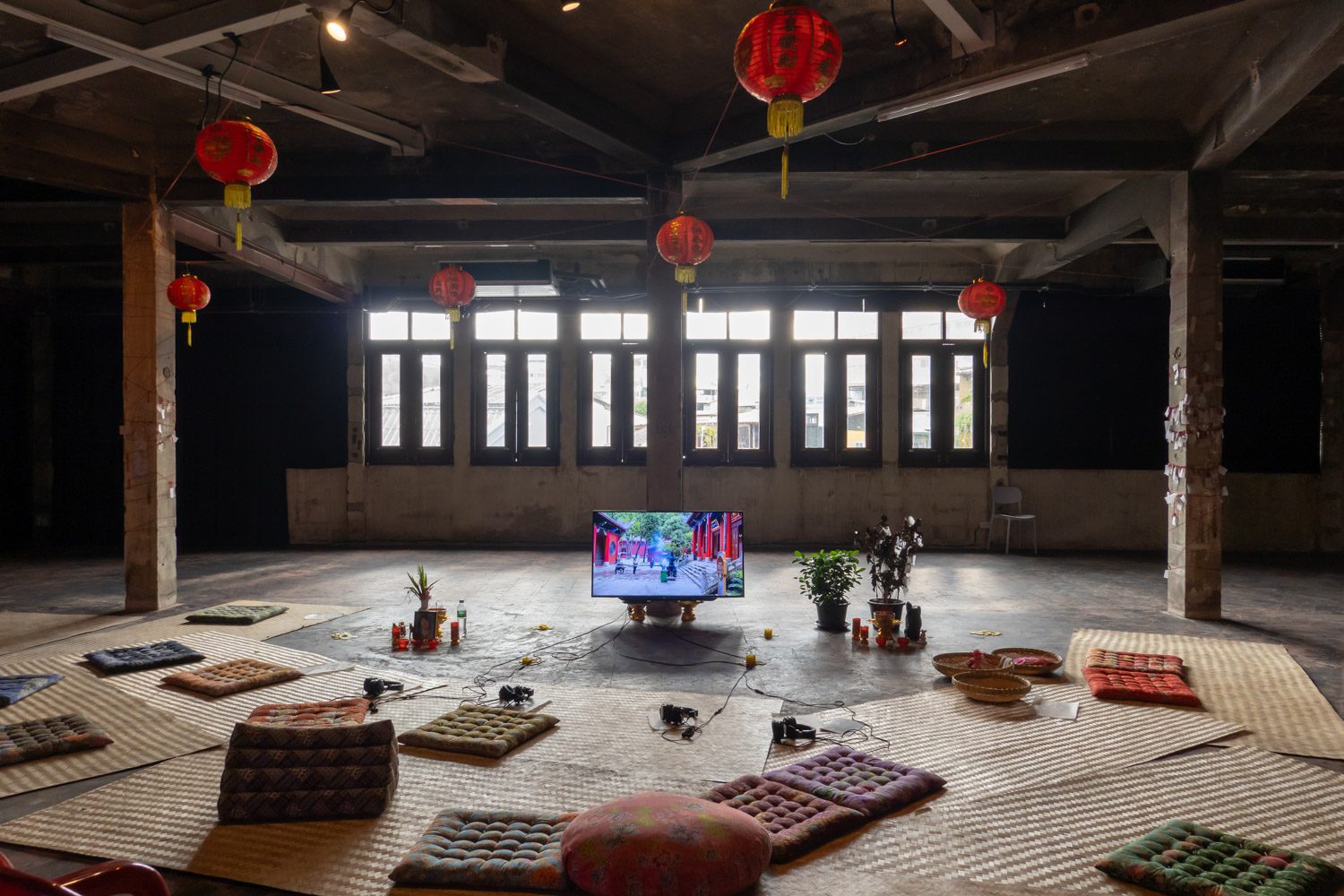
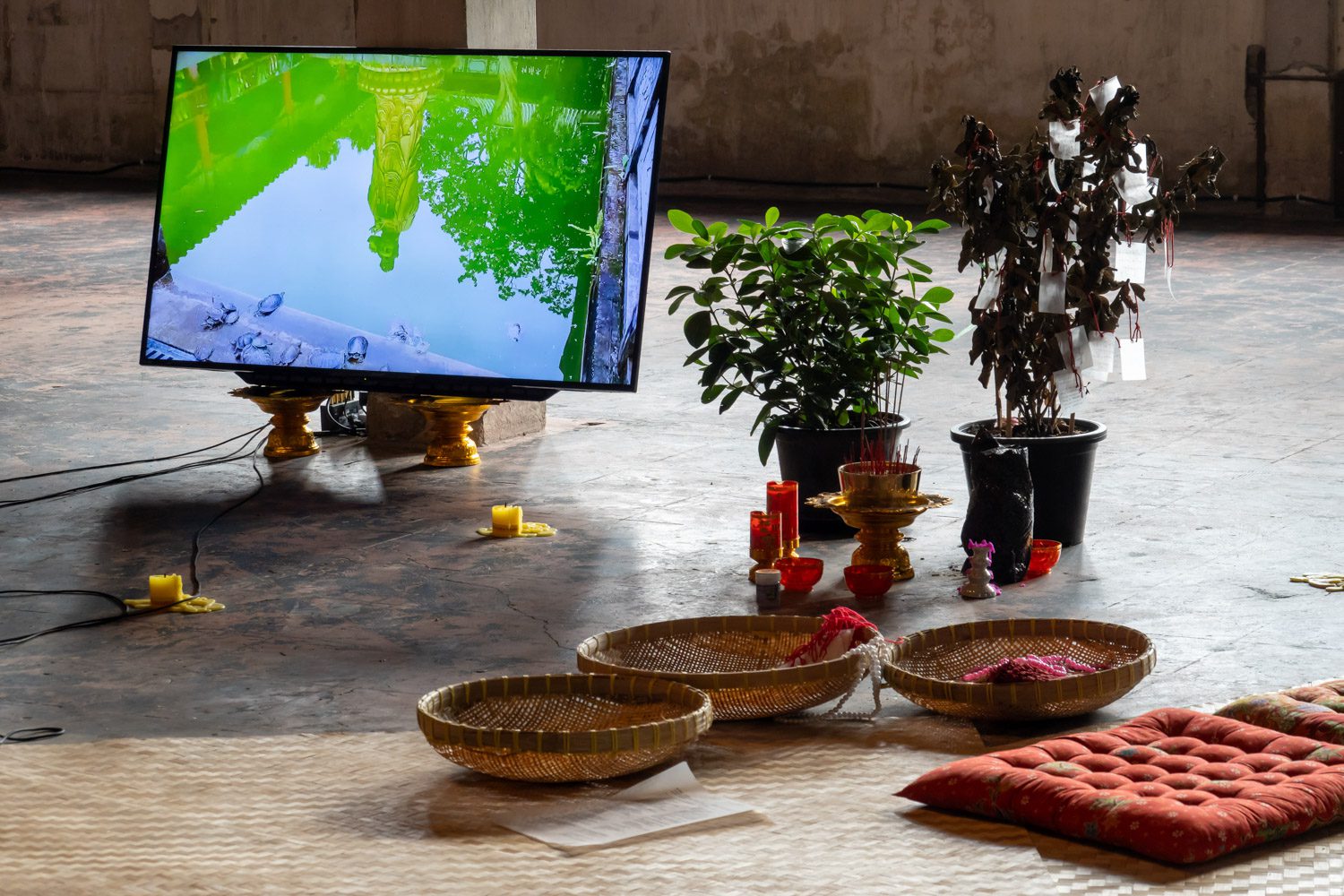
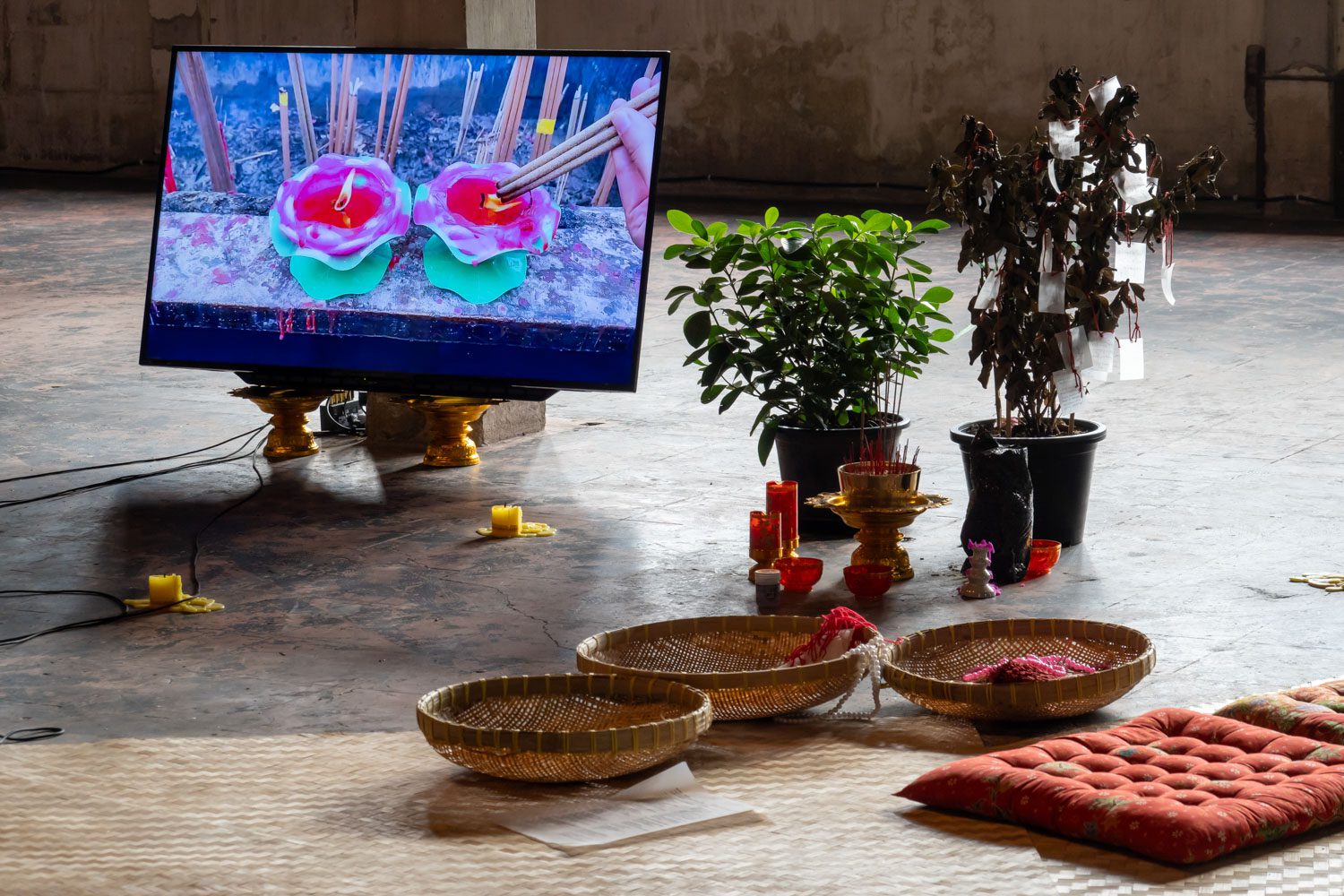
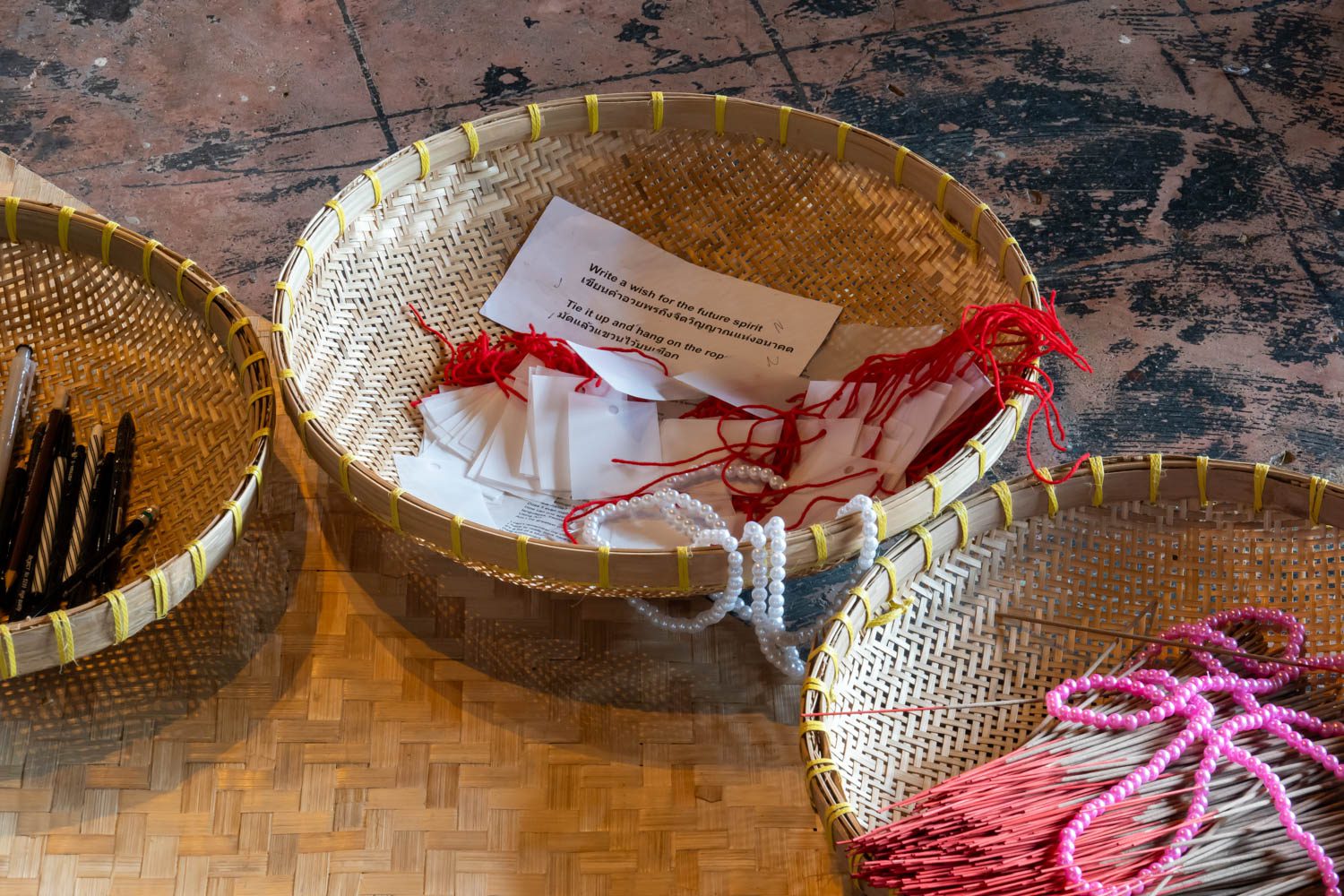
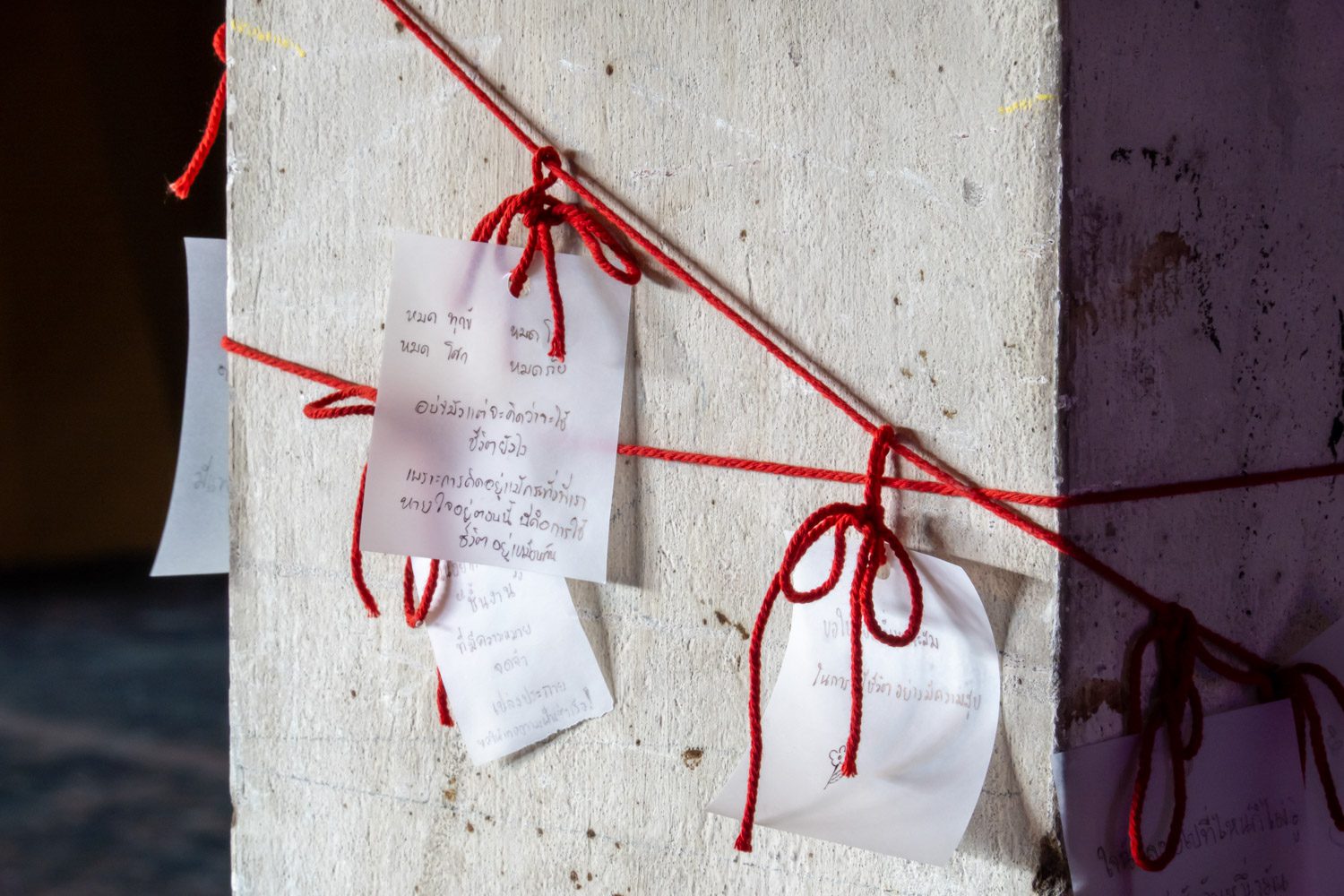
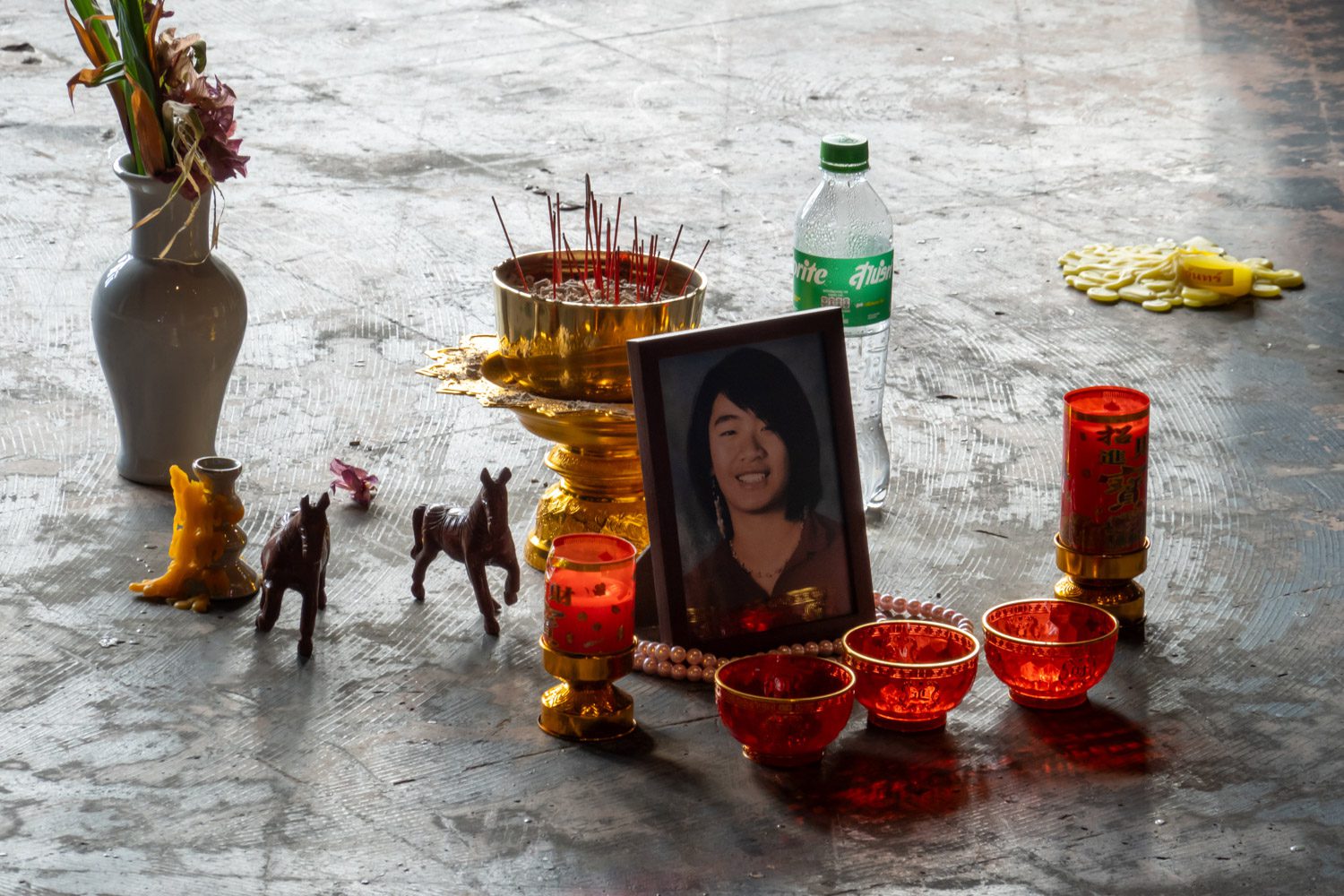
A state of in-betweenness emerges clearly as Kay brings images of traditional culture into dialogue with contemporary technology. While visitors light incense in the exhibition space, the video shows people visiting a shrine, burning incense, tossing divination coins, and praying to the bodhisattva Guanyin. This layering of spaces and moments suggests that no matter how far society may advance technologically, systems of belief and ritual are not necessarily erased. Instead, the two shift, flow, and coexist almost seamlessly. Kay’s interest in transition and in the relationships among people, place, culture, and belief is condensed into the Chinese word piāo (飘), meaning ‘to float’ or ‘to drift’—a condition of being unable to put down lasting roots in any one place.
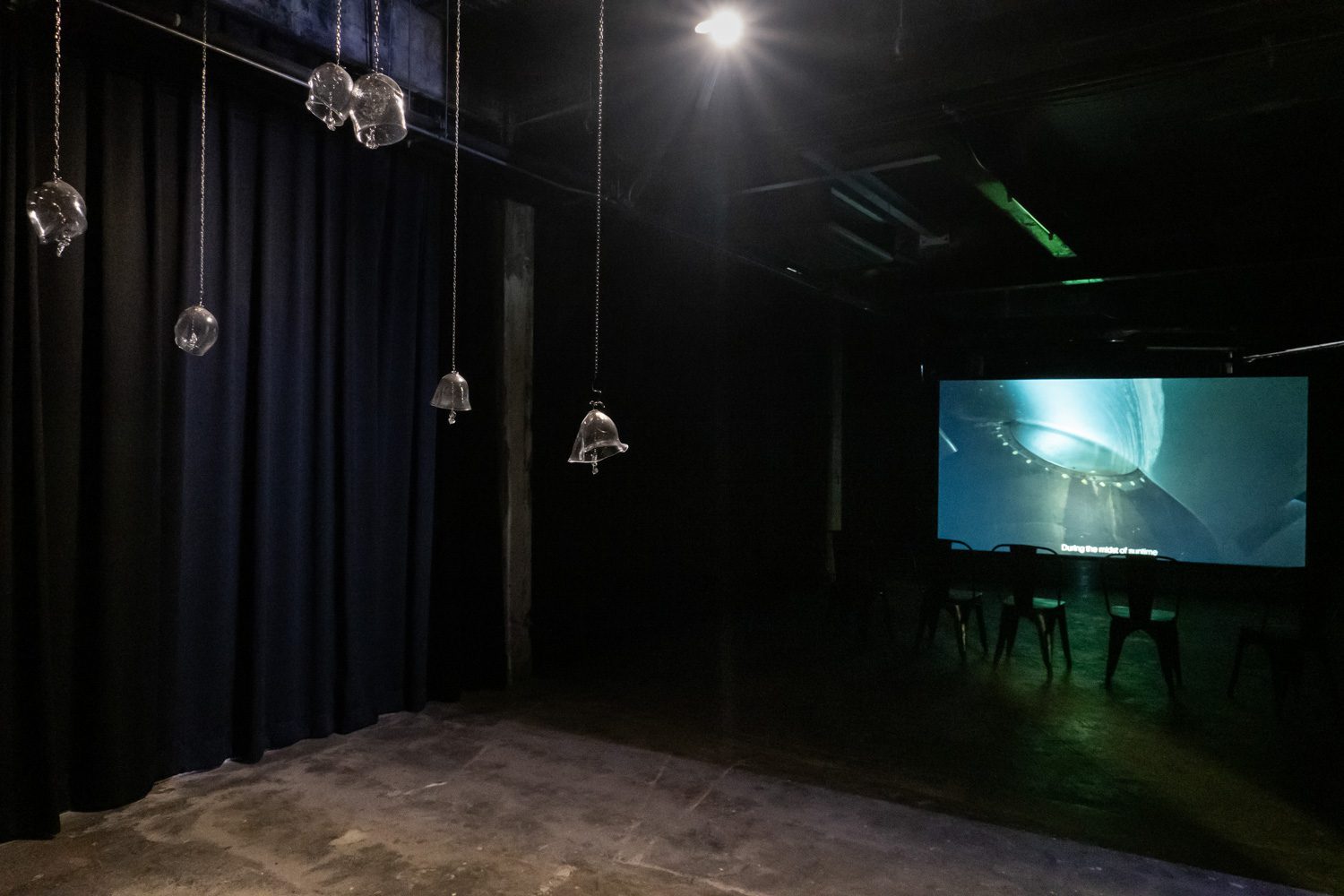
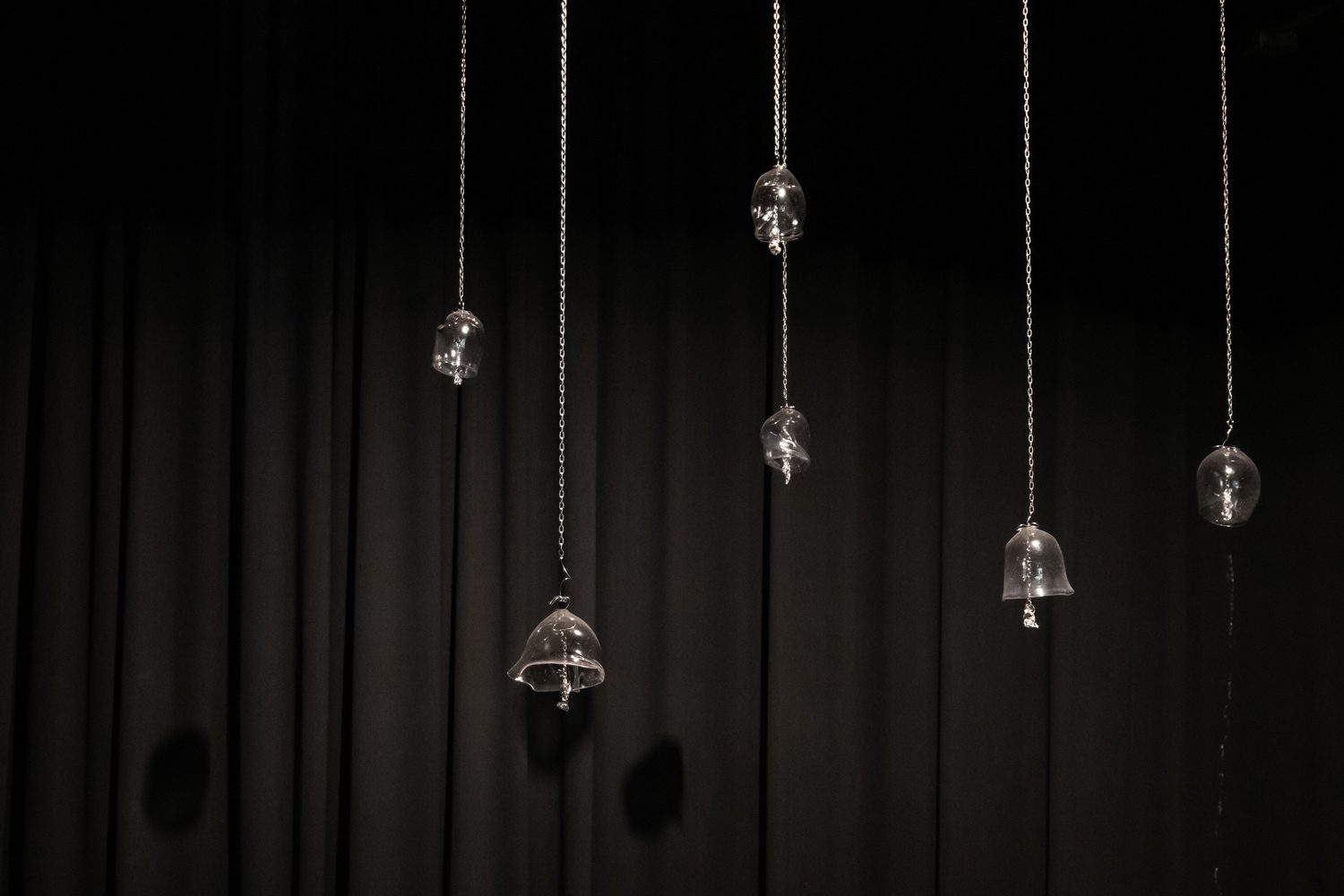
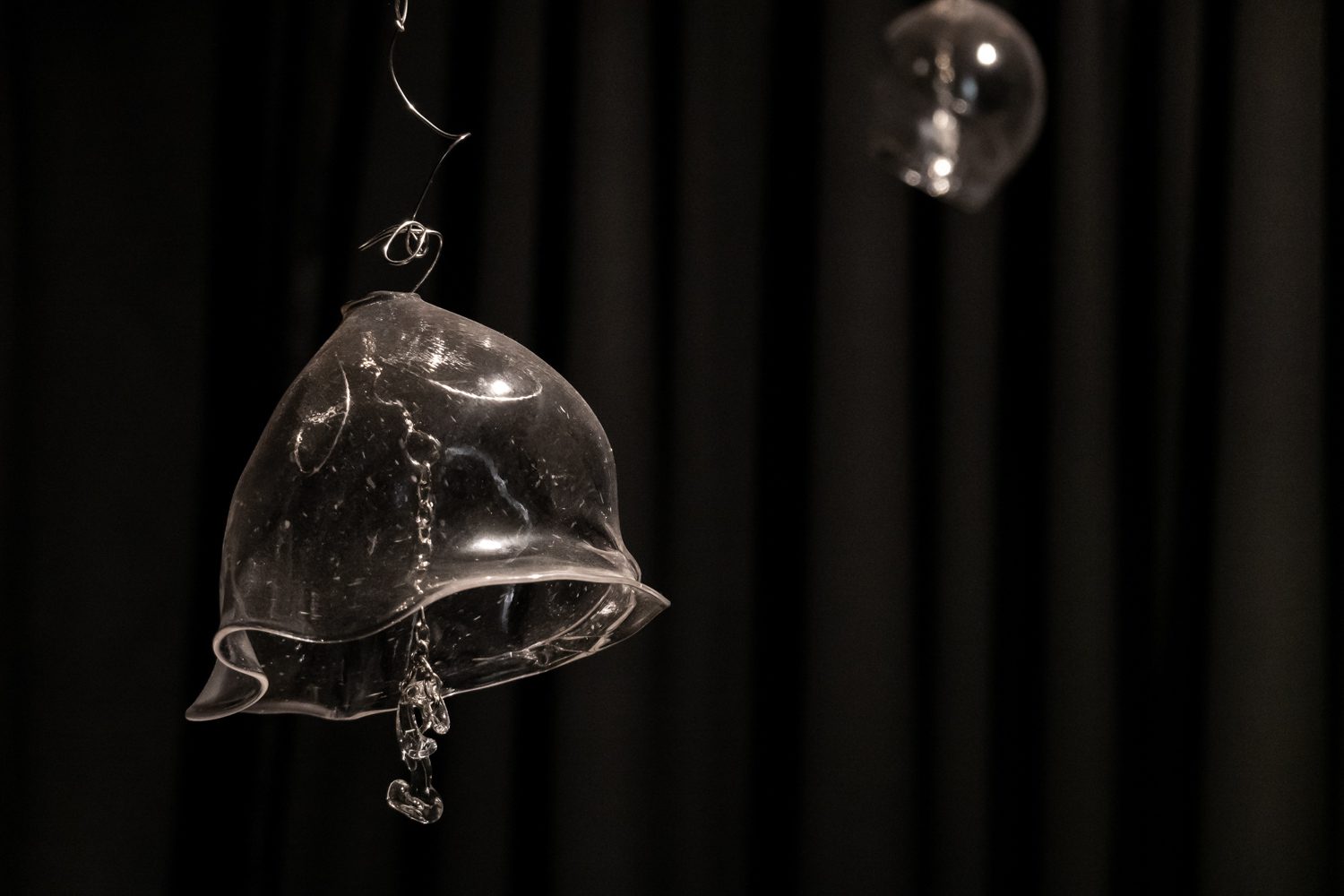
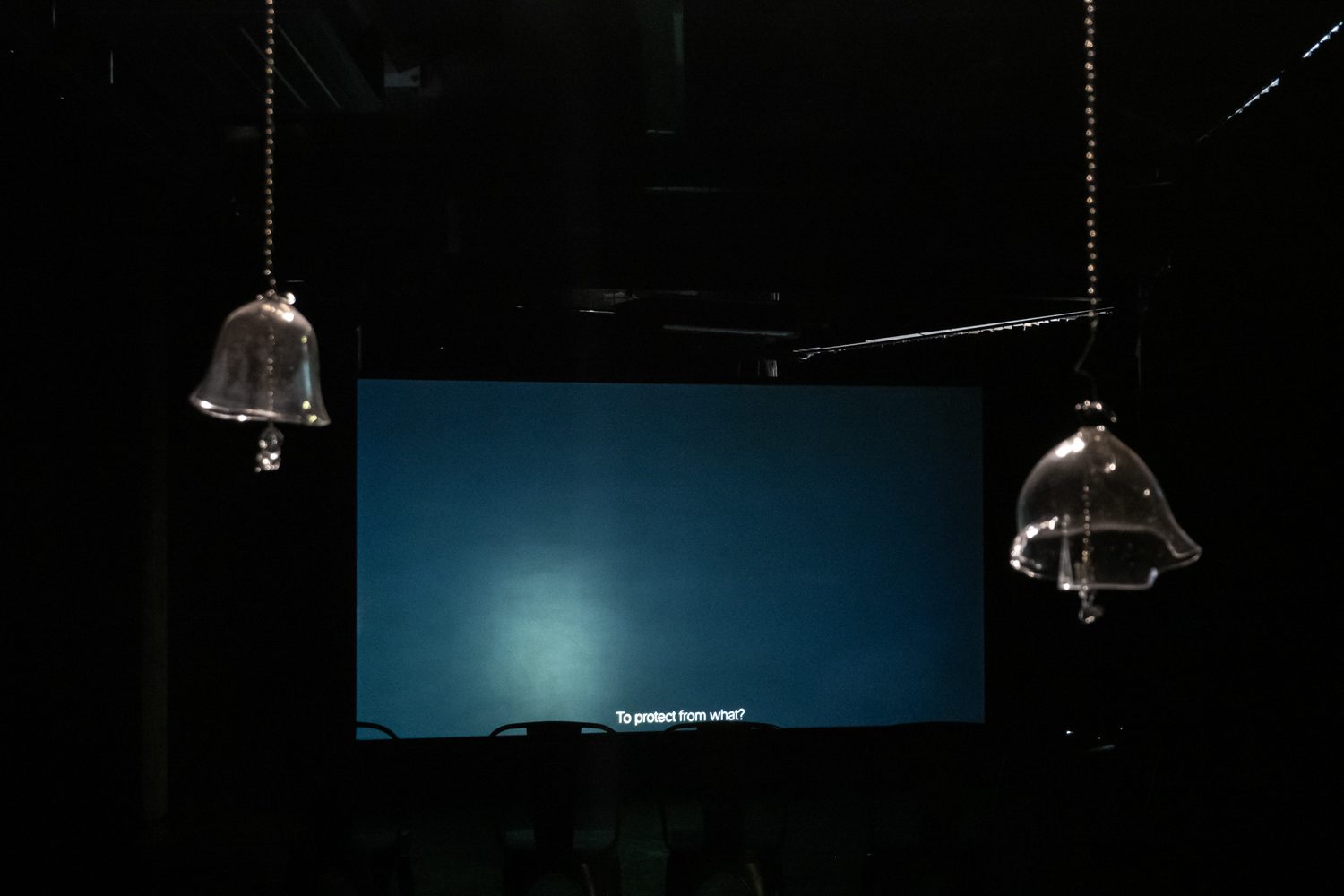
This sense of drifting continues in Vanessa Bosch’s My temple is a monstrous body. Through video and handblown glass sculptures, she poses ecological questions and investigates natural phenomena alongside human-made structures. A 12-minute narration spoken in the first person guides the audience through an act of listening and into a landscape that resists linear continuity. Sacred spaces and industrial structures, though seemingly worlds apart, are placed side by side as human constructions intended to contain and forge connections to the unseen—whether that unseen presence is called spirit, nature, or energy. Suspended from the ceiling, the handblown glass sculptures similarly stand in for sacred spaces existing somewhere between natural landscapes and human simulations of built environments. The glass’s translucency and fragility reflect the instability of our attempts to possess and control nature. At the same time, they recast the sacred space as a monstrous body: fluid, mutable, and free of fixed boundaries.
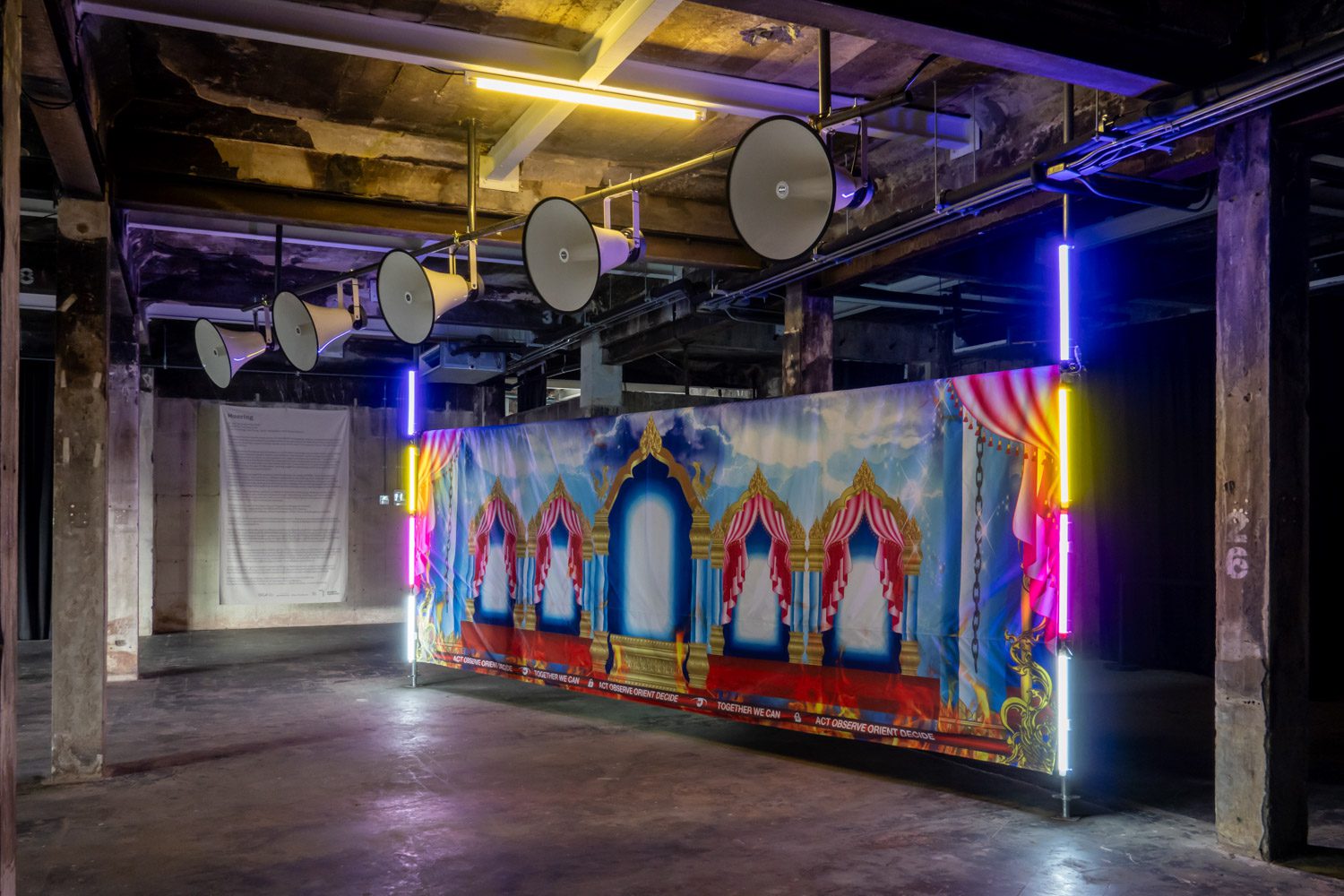
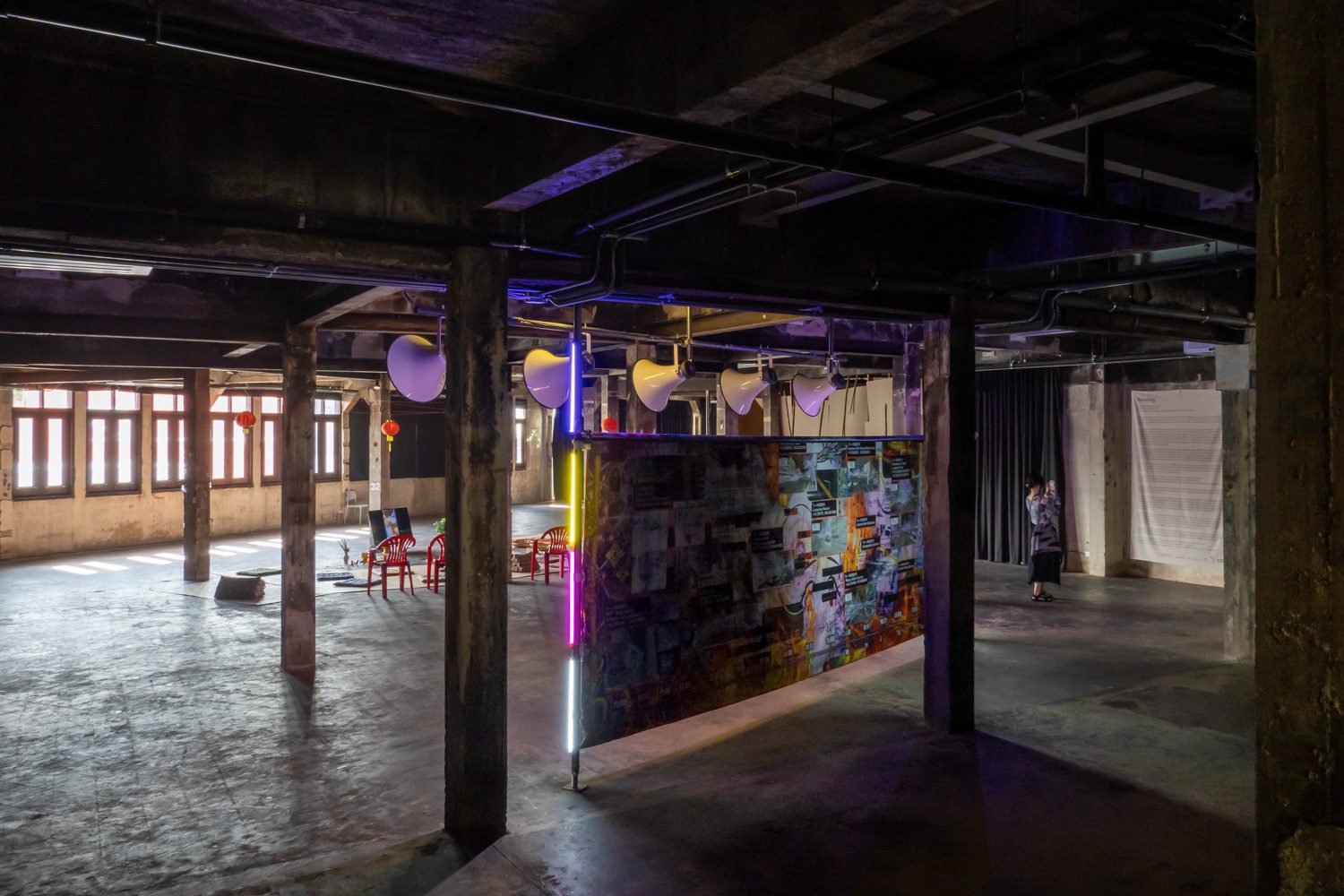
While the first three works draw us deep into memory, identity, and liminal states, Tanat Teeradakorn’s CAPITAL COMPLEX jolts us awake to confront structures of power. Tanat investigates the politics of sound through an installation comprising a looping 45–60-minute sound collage broadcast through horn speakers, set before a printed canvas resembling the painted backdrop of a likay theater stage and illuminated by neon light strips.
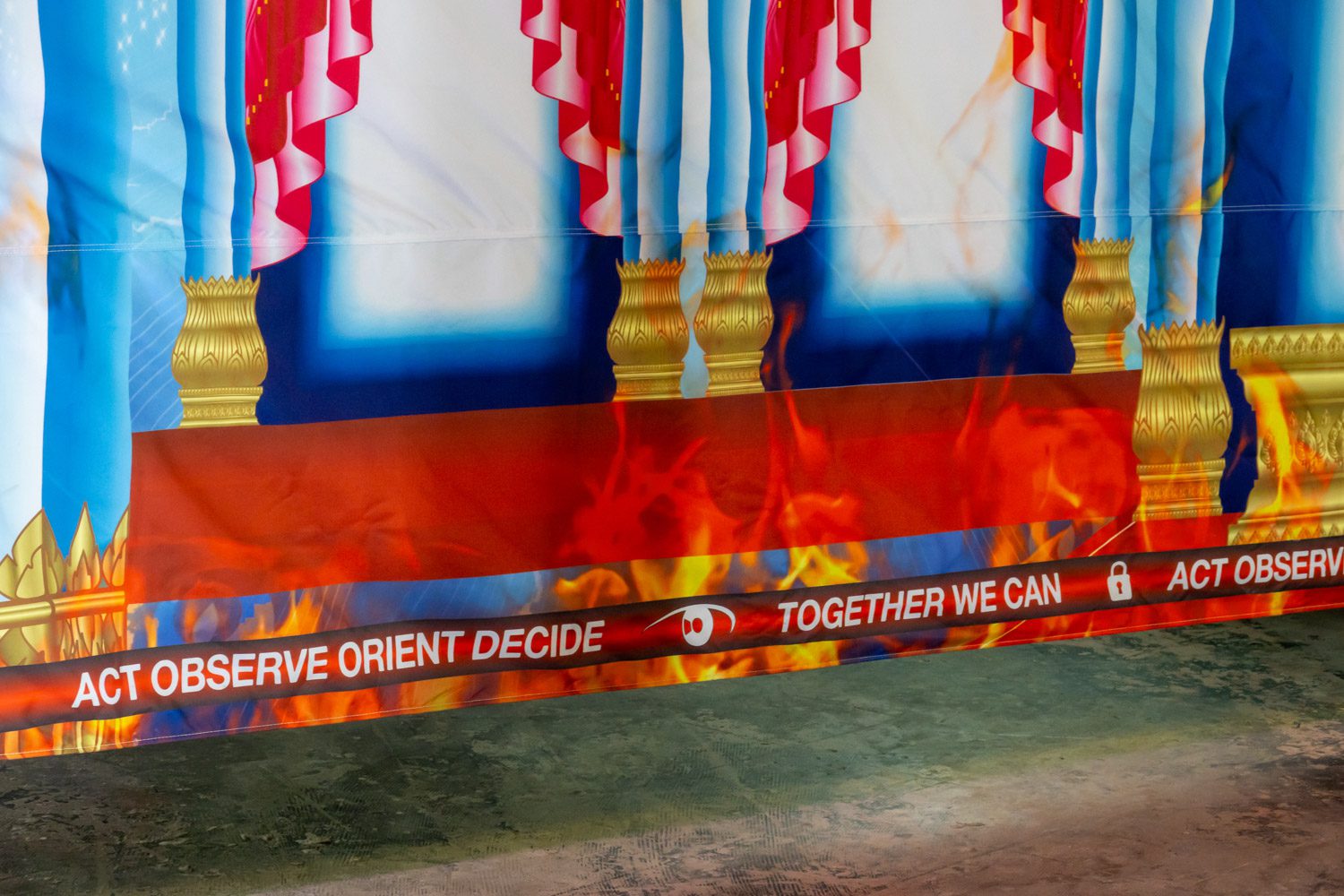
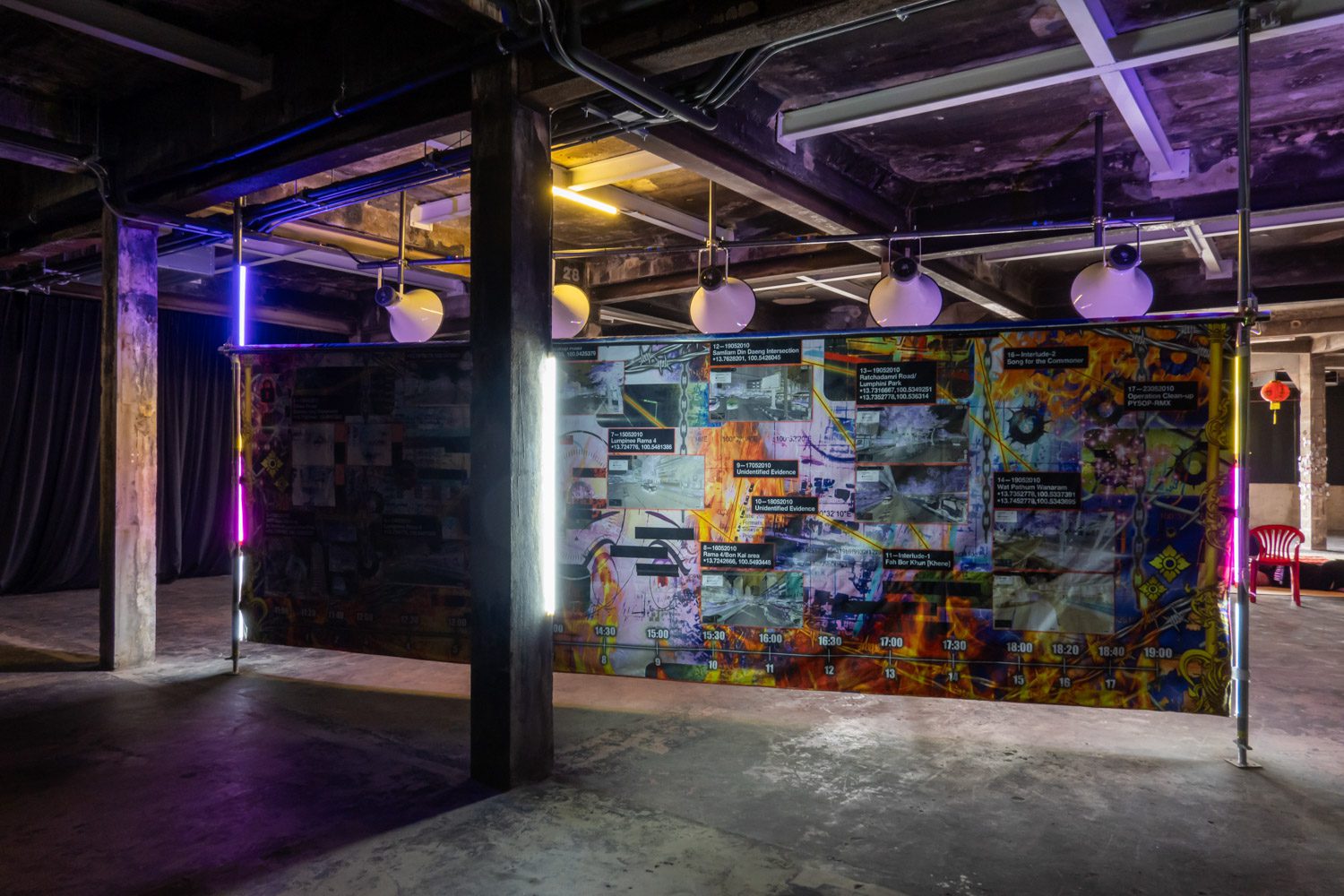
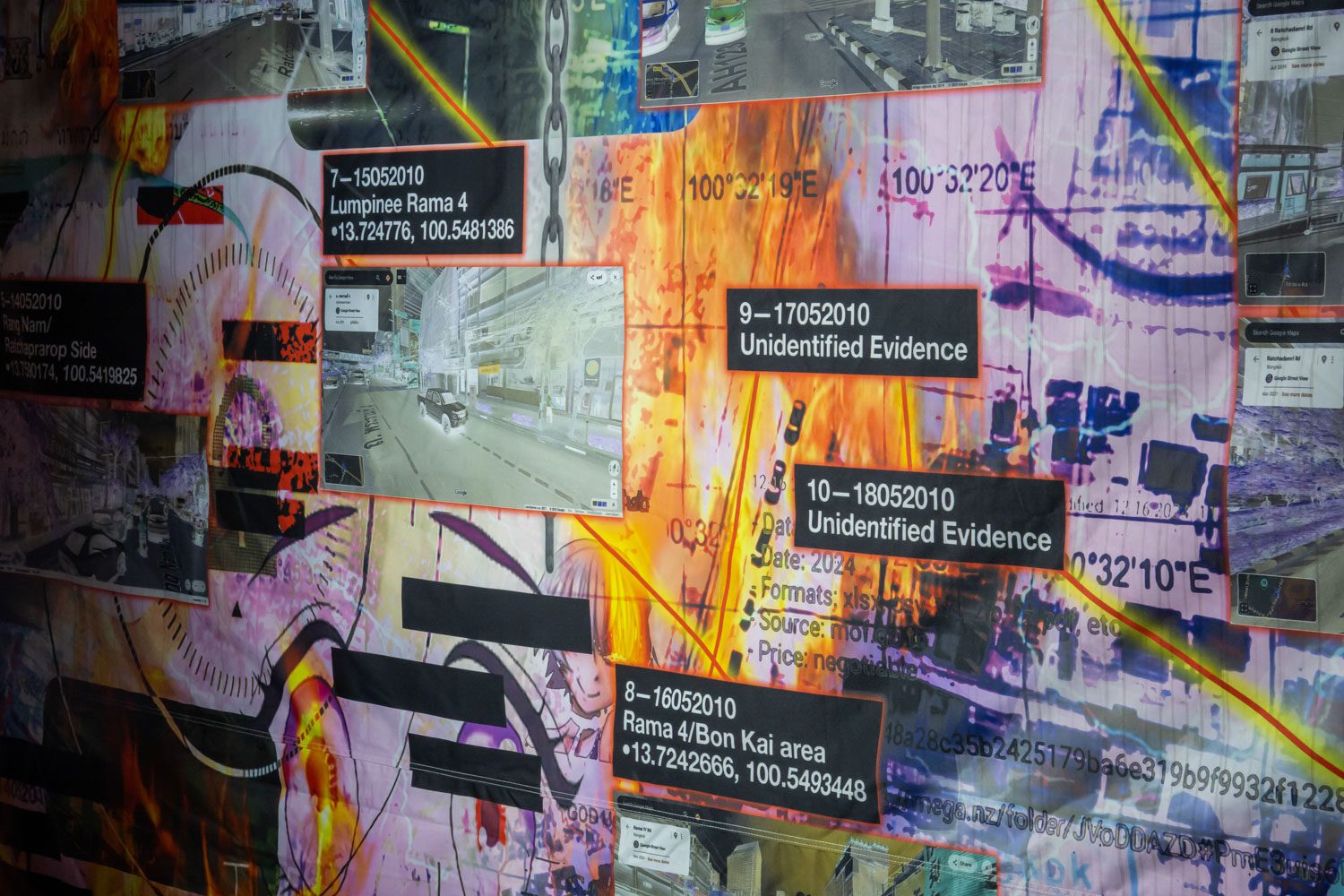
Tanat splices together everyday sounds, mor lam melodies, electronic music, and ambient recording from various locations in Bangkok associated with historical events. These sounds expose the subtle operations of power as they shift from social critique into entertainment—or are appropriated by structures of authority and transformed into instruments for broadcasting power. Overhead, the horn speakers disperse frequencies that were once concealed. Meanwhile, the likay backdrop and political slogans such as ‘ACT OBSERVE ORIENT DECIDE’ and ‘TOGETHER WE CAN’ underscore the collision between cultural narratives and strategies for seizing the initiative and controlling collective memory. By making room for echoes that have been obscured, erased, or silenced to circulate and resound once more, the work asks viewers to pause, listen, remember, and consider what truly remains beneath narratives that are endlessly reproduced and transformed.
Ultimately, Mooring is more than an exhibition that brings together memories, histories, and structures of power. It creates a state of temporary suspension in which we can reflect on the relationships among identity, place, and time. The four works become markers that invite us to pause and reconsider what remains before the anchor of experience is lifted once again, allowing the meanings discovered in this brief interval to drift onward into the world beyond.
Mooring is on view at Bangkok Kunsthalle from July 24 to September 27, 2026.