
TRANSPOSING ‘KOH YOR’ INTO A ROADSIDE PAUSE: INTHANIN 3H CAFÉ AS SCULPTURAL LANDSCAPE, A STARLIT INTERIOR, AND A CONCEALED RUBBER GROVE
TEXT: PHARIN OPASSEREPADUNG
PHOTO: SOOPAKORN SRISAKUL
(For Thai, press here)
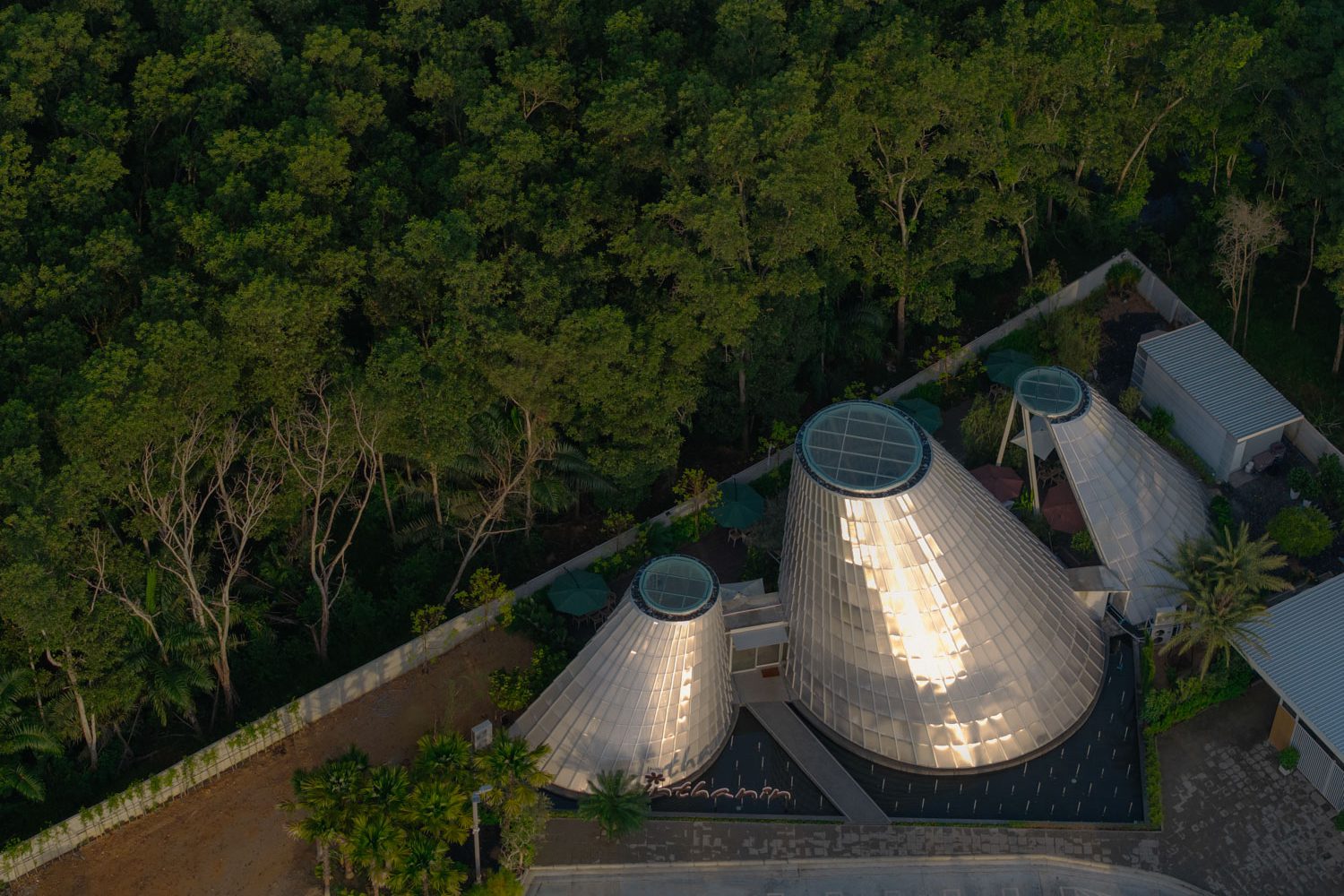
Along Lopburi Ramesuan Road in Hat Yai, Songkhla, one of southern Thailand’s principal urban centers, a new Inthanin café has taken shape within a Bangchak petrol station. Designed by I Like Design Studio (ILDS), Inthanin 3H announces its presence through a sculptural silhouette composed of three mountain-like forms that catch and refract sunlight throughout the day, subtly signaling travelers to slow down, turn in, and pause their journey. Visitors are invited to step into an architectural experience defined by a sense of discovery. Beyond its exterior presence lies a surprise in the form of a preserved pocket of rubber plantation, offering the atmosphere of rest and relaxation before continuing on toward Hat Yai’s old town.
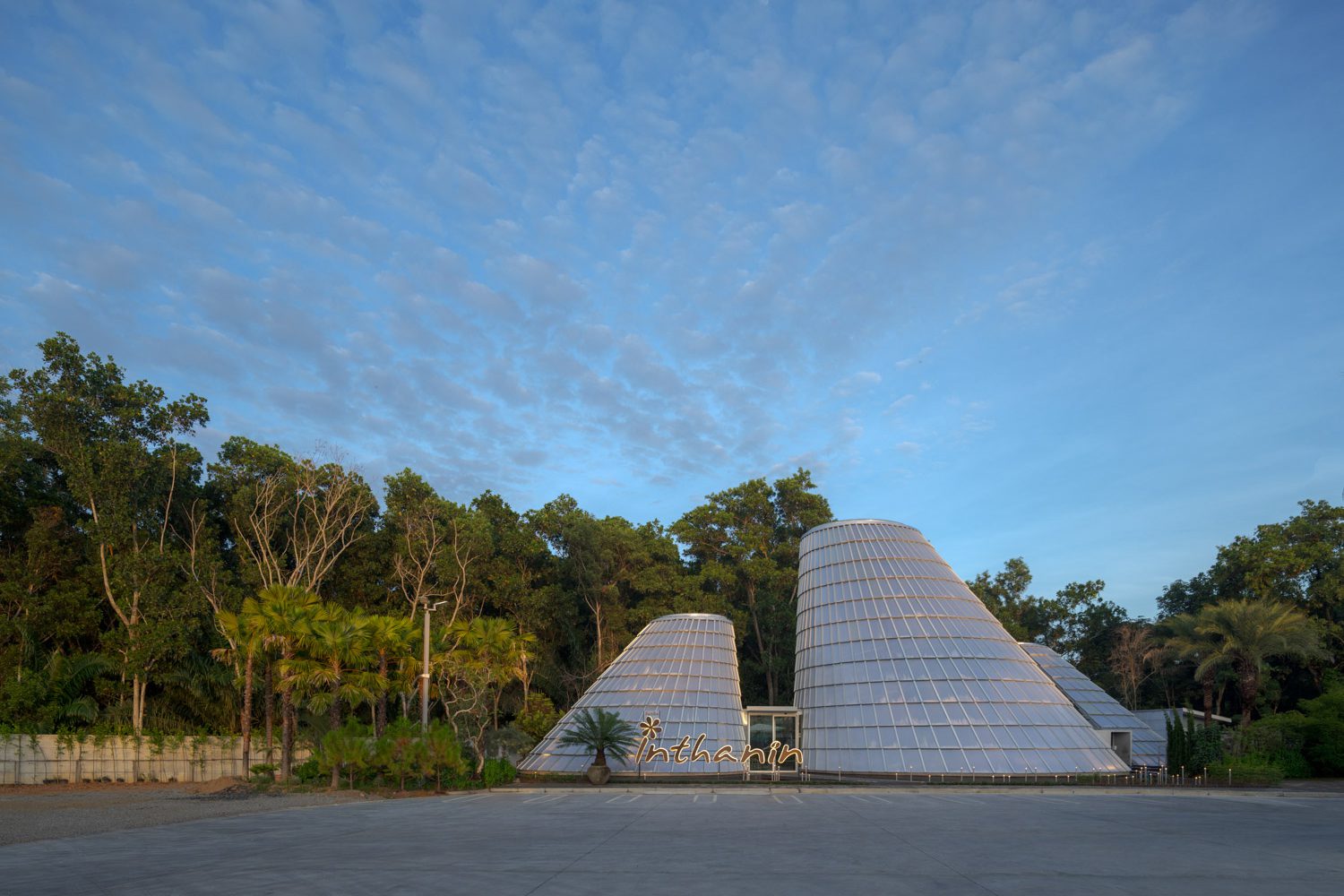
The site sits on Lopburi Ramesuan Road, a key arterial route linking the city to its historic core and stretching onward to Koh Yor, a long-established retreat for Hat Yai residents. Known for its lakeside scenery, everyday maritime rhythms, and local cuisine, Koh Yor embodies a slower, nature-oriented way of life. This relationship between road and destination forms the conceptual foundation of the design. Positioned as a threshold along the journey to the island, Inthanin 3H operates as a prelude, abstracting and re-articulating Koh Yor’s spatial and atmospheric qualities within the architecture of this contemporary café.
Mountains, water, and fishermen form three defining identities of Hat Yai and Koh Yor. The architects translate these elements into architecture and spatial experience throughout the project. First, the main building mass is conceived as a cluster of small mountain-like forms, referencing the silhouette of Koh Yor itself. The buildings are finished in white, using reflective materials that interact subtly with changing light conditions. Skylights are introduced at the top of each of the three ‘mountains,’ allowing natural daylight to penetrate deep into the interior spaces below.
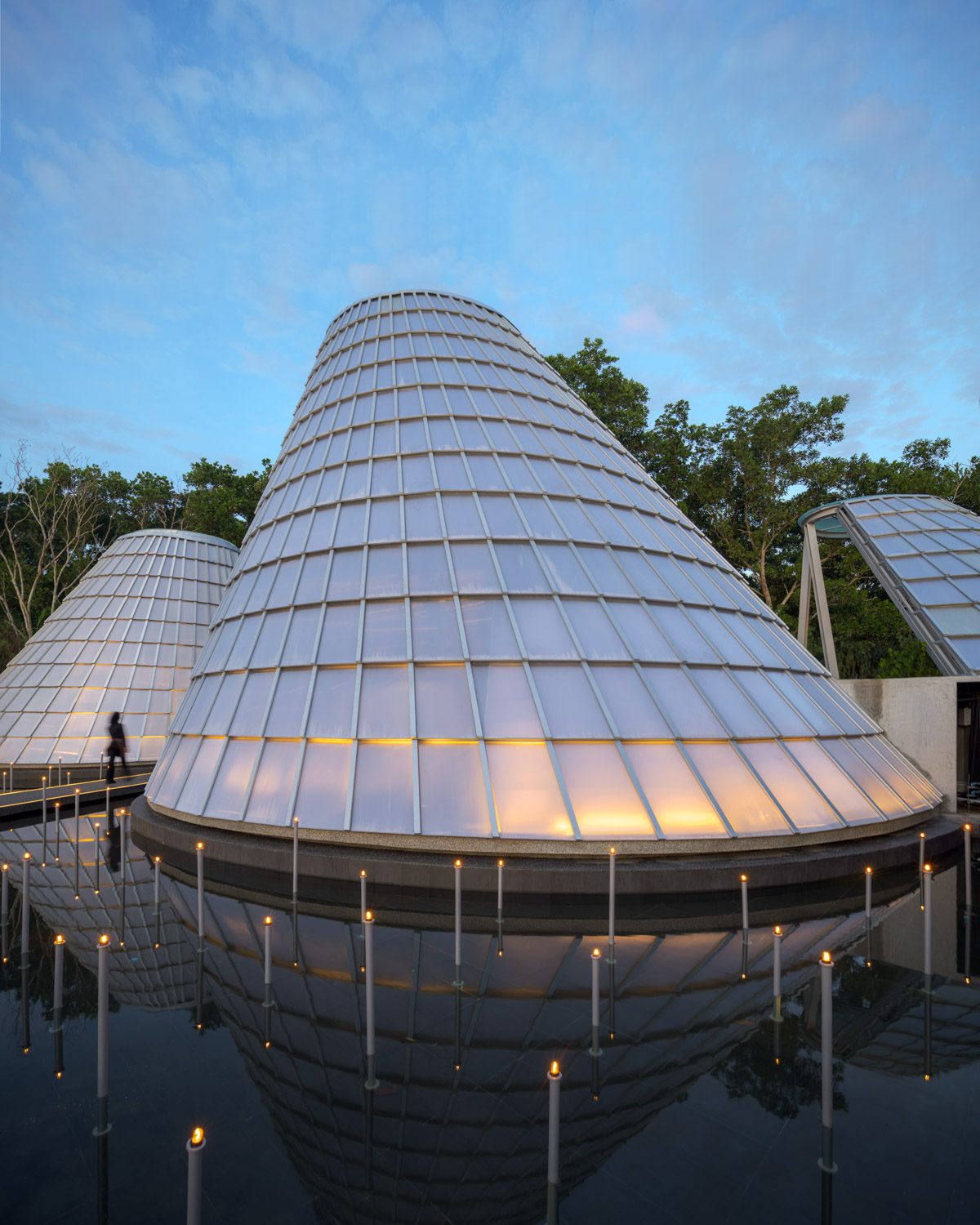
In front of the buildings lies a reflective pond that envelops the architectural cluster, evoking the water that surrounds Koh Yor. The pond is further animated by submerged spotlights, inspired by the glow of fishermen’s boats at night. These lights introduce an additional layer of luminosity, transforming the water surface into a ‘sea of stars’ that reflects both the sky above and the shimmering plane below. Finally, a pedestrian bridge leads visitors across this sea of stars into the café. This act of crossing recalls the everyday life of local fishermen, whose livelihood remains central to the community on Koh Yor.
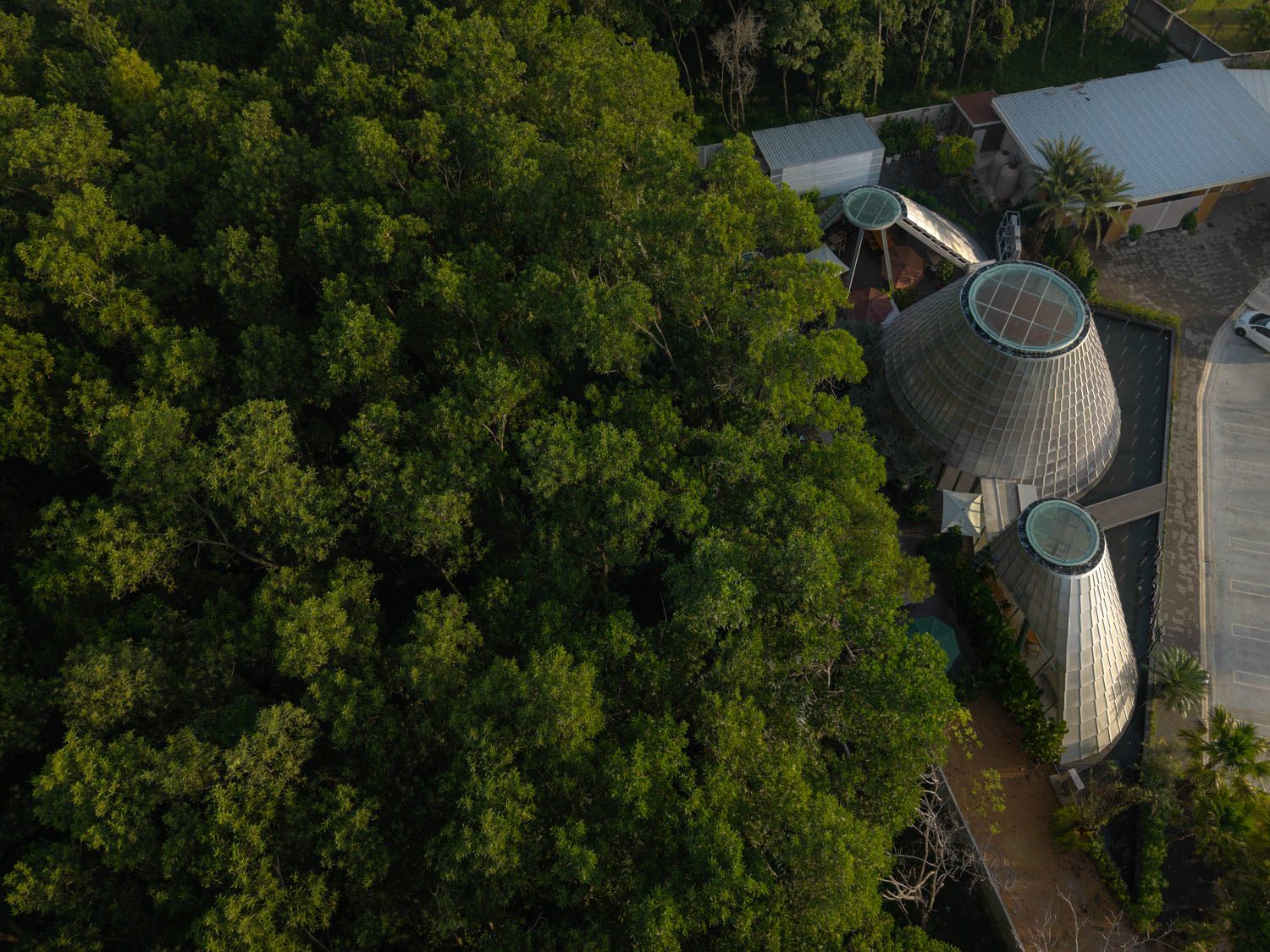
The three mountain-like volumes that form the project’s primary building cluster are deliberately designed to accommodate multiple functions, housing the service counter, areas for rest, and serving as the café’s most distinctive architectural feature. Their visual articulation derives from the subtle rotation of the skylight openings at the top of each volume. The left and right buildings are angled inward toward the central structure, creating, when viewed from a distance, a collective composition that recalls the triangular silhouette of mountains in the natural landscape.
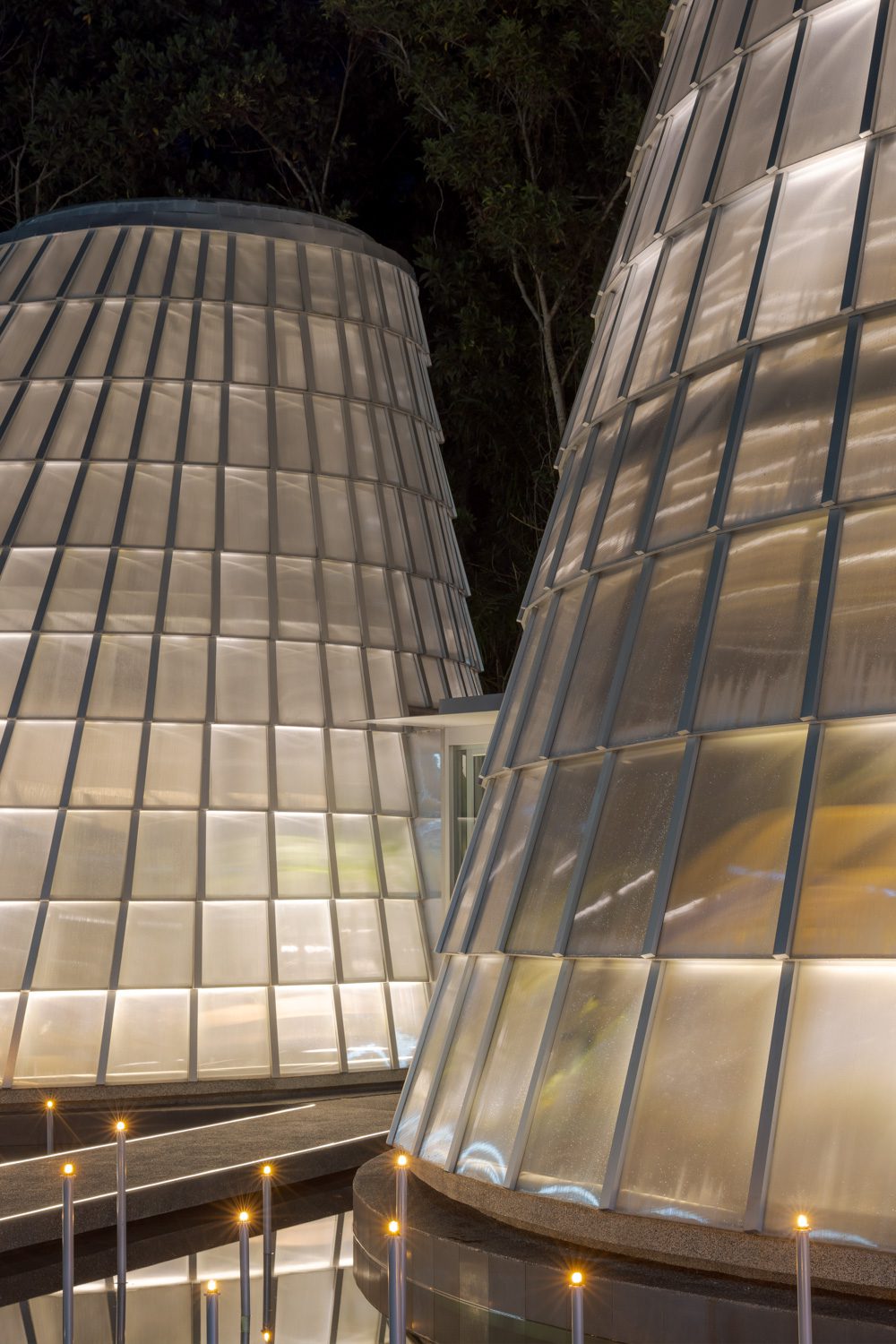
All three buildings are constructed from polycarbonate, selected for its reflective and light-diffusing qualities. This material choice allows light and atmosphere to shift throughout the day, while the skylights above further modulate the character of daylight entering the interior. As a result, the quality of light varies at different times, becoming a key spatial highlight and encouraging repeated visits, each offering a subtly distinct experience. The form and scale of the buildings, combined with the use of reflective materials, directly address the architect’s intention to capture attention. Situated at the edge of a petrol station, the café relies on the shimmer of its surfaces and its unconventional geometry to draw the gaze of passersby.
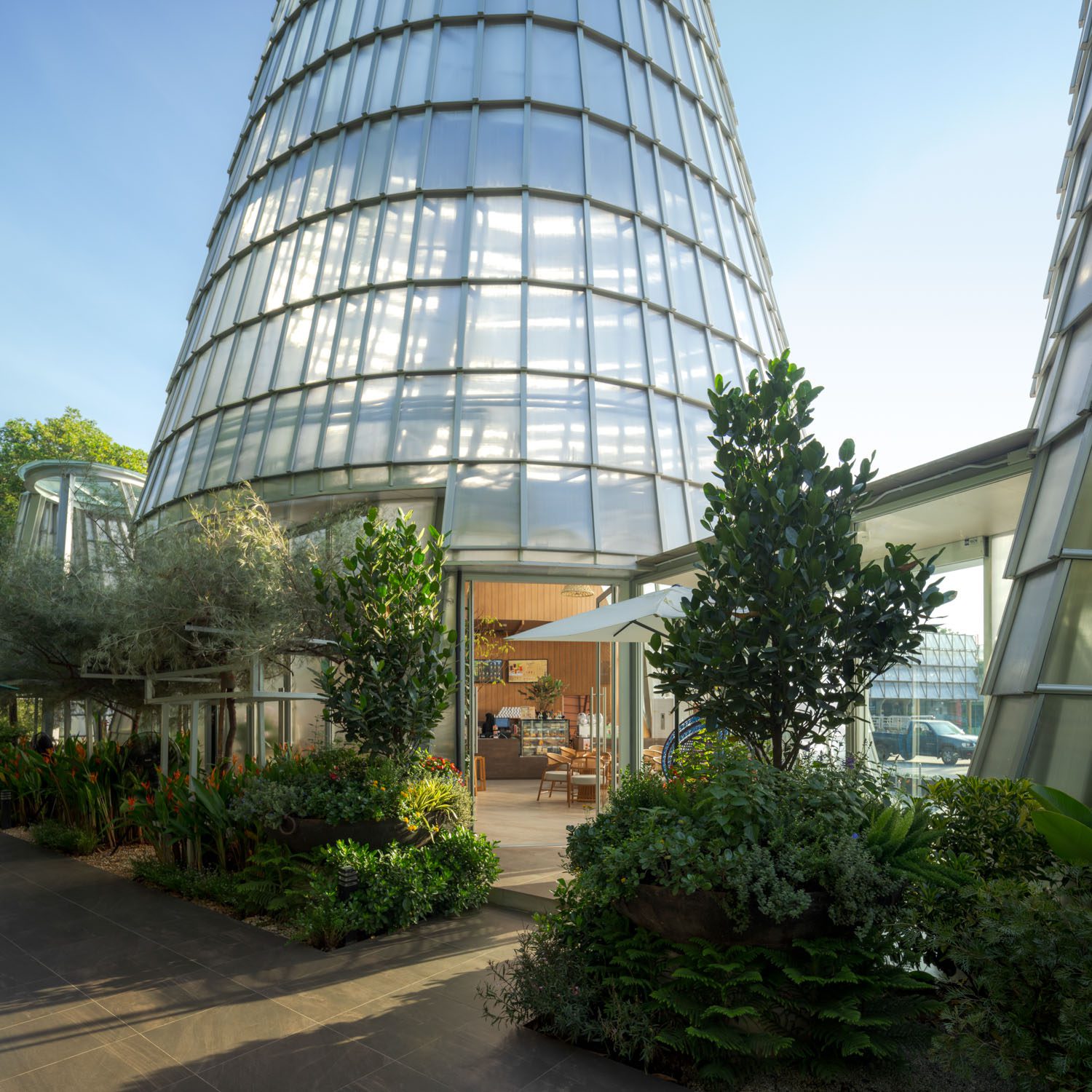
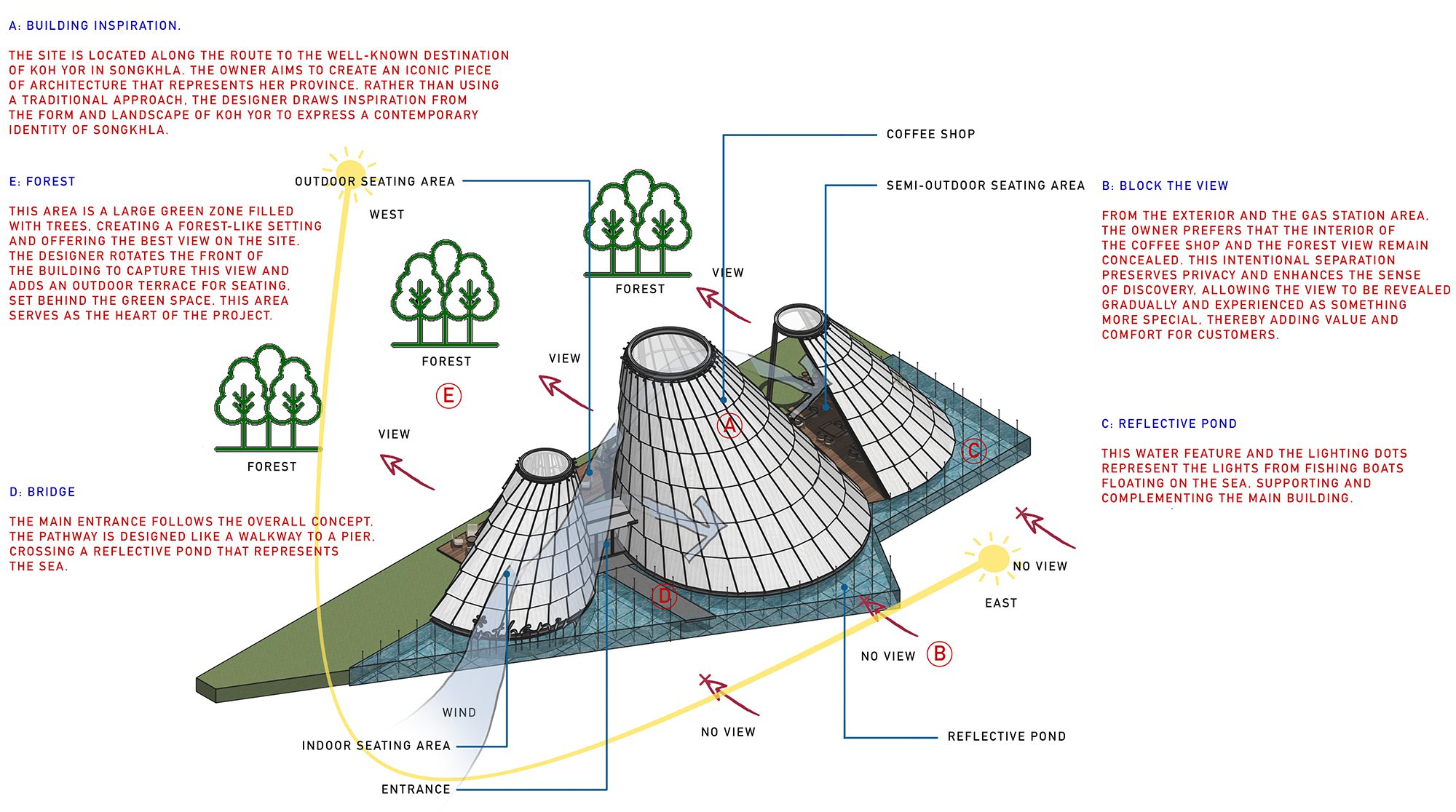
At the heart of the project lies a careful orchestration of vision and user experience. The architect designs the circulation as a gradual spatial unfolding: visitors approach by crossing the front bridge, catching glimpses of the lush rubber plantation that forms the backdrop yet remains deliberately out of reach. They then pass through the central building, where the service counter is located and drinks are selected, before choosing to settle in either the left or right volume according to individual preference.
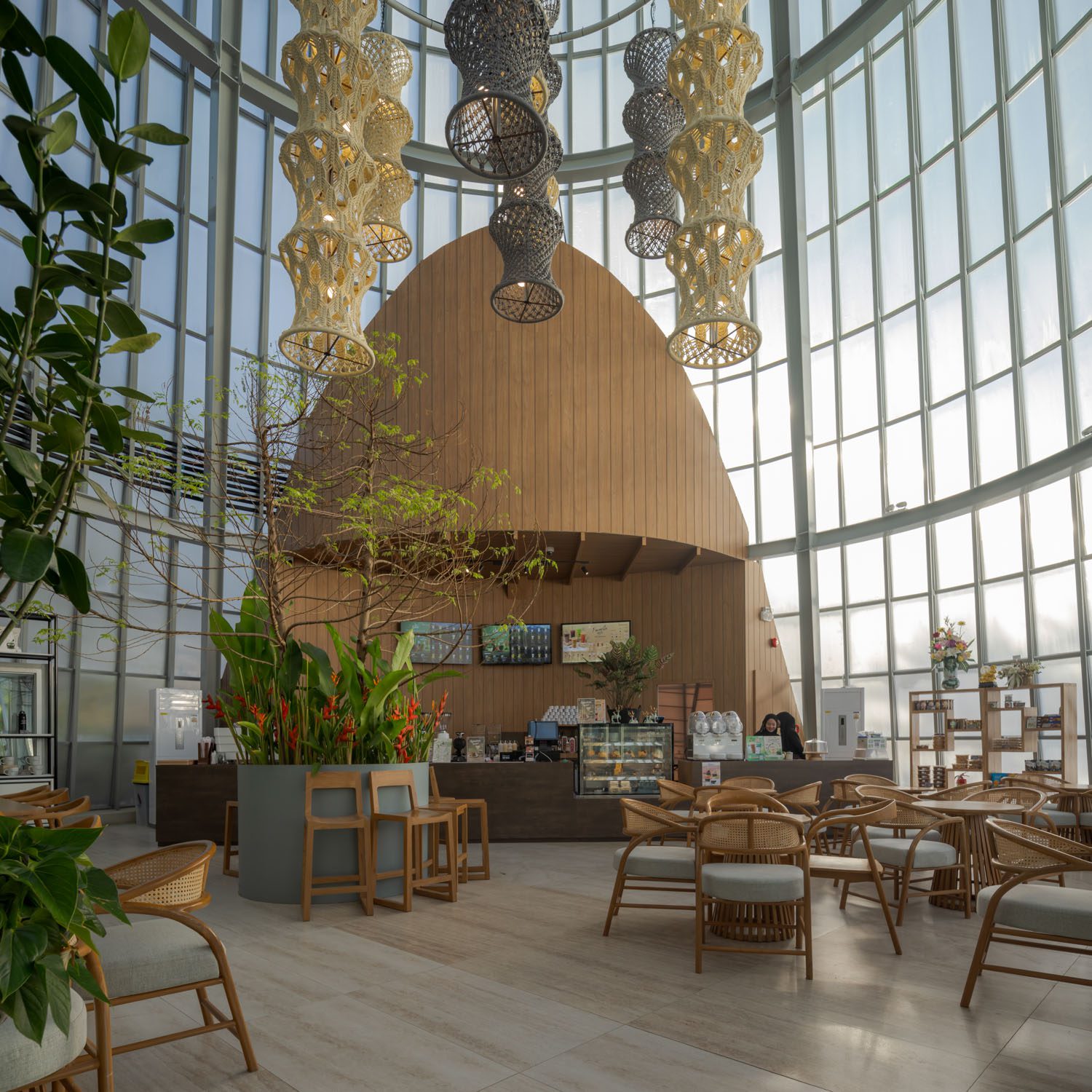
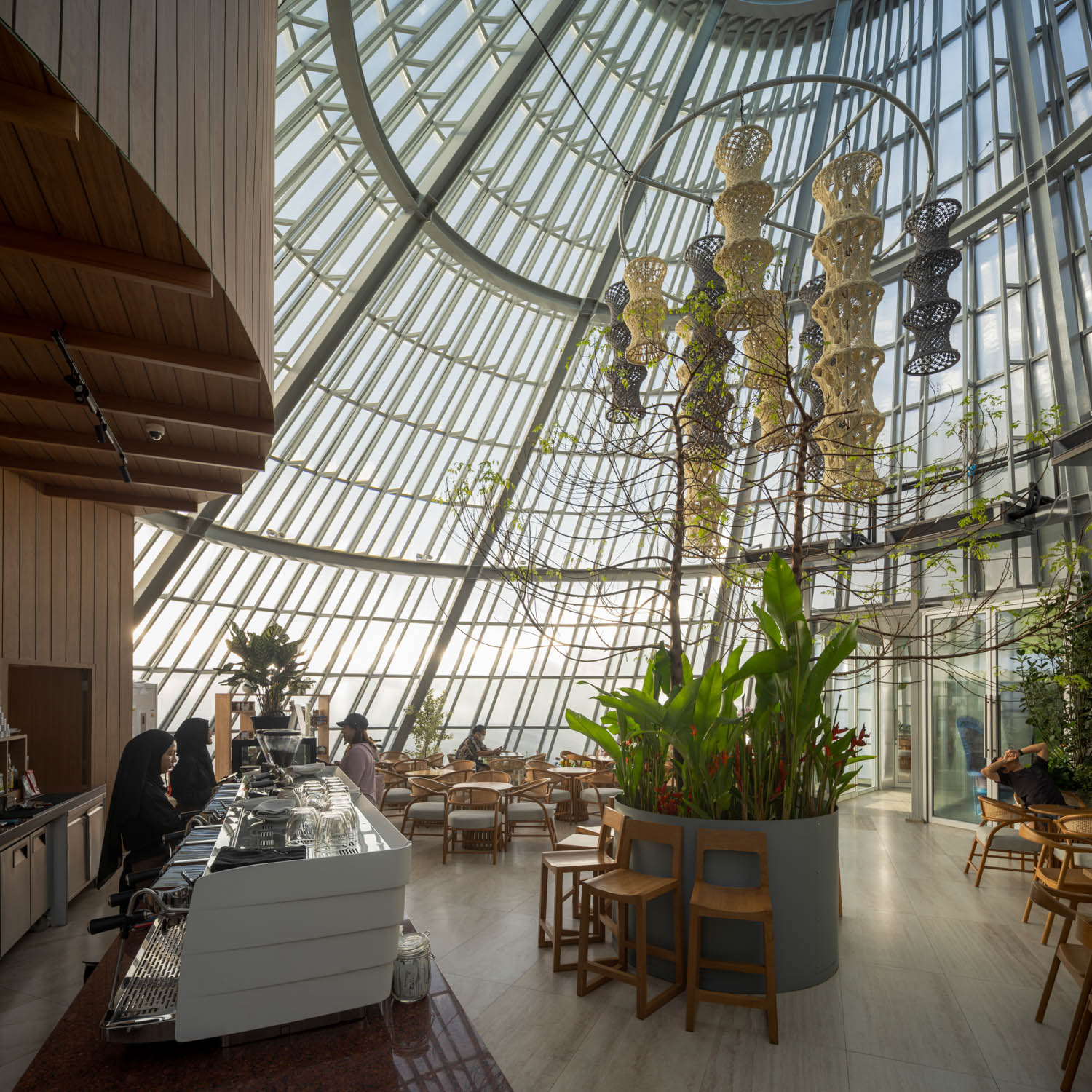
A key highlight is the building on the right, which differs from the other two as a semi-outdoor space open to natural light and ventilation. From here, the interior extends seamlessly toward an external walkway, allowing users to fully engage with the expansive view of the verdant rubber grove. This green landscape is intentionally concealed by the architects and revealed only to the café’s patrons.
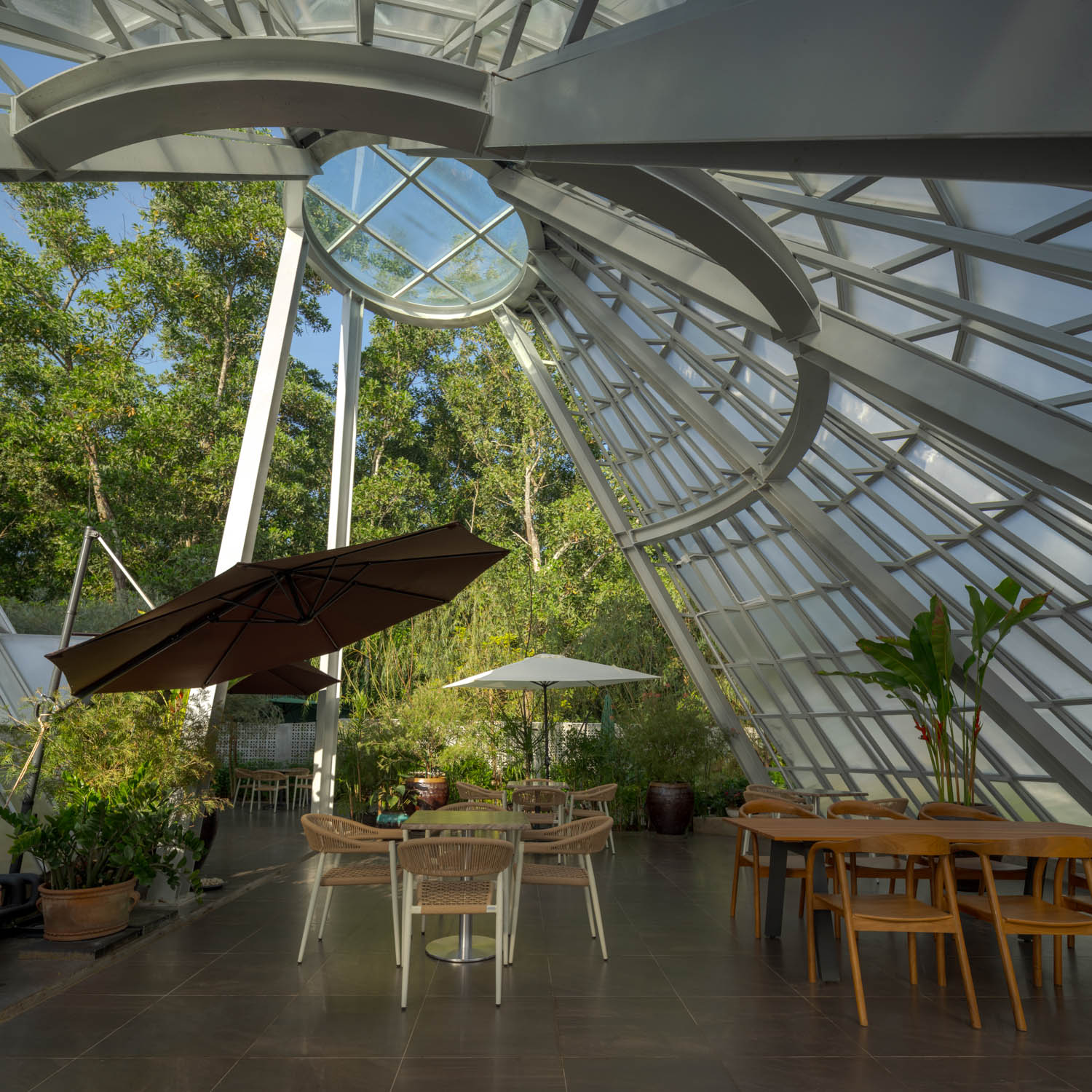
The decision to open the building on the right only partially is not driven by aesthetics alone, but also responds directly to the southern climate, often described by the local expression ‘eight months of rain, four months of sun.’ During the rainy season, users can remain comfortably inside while still enjoying the surrounding views, while in the hotter months the semi-outdoor space allows everyday activities to extend naturally toward the exterior. From here, visitors can easily step outside at their own pace to take in the atmosphere, fully taking in the atmosphere.
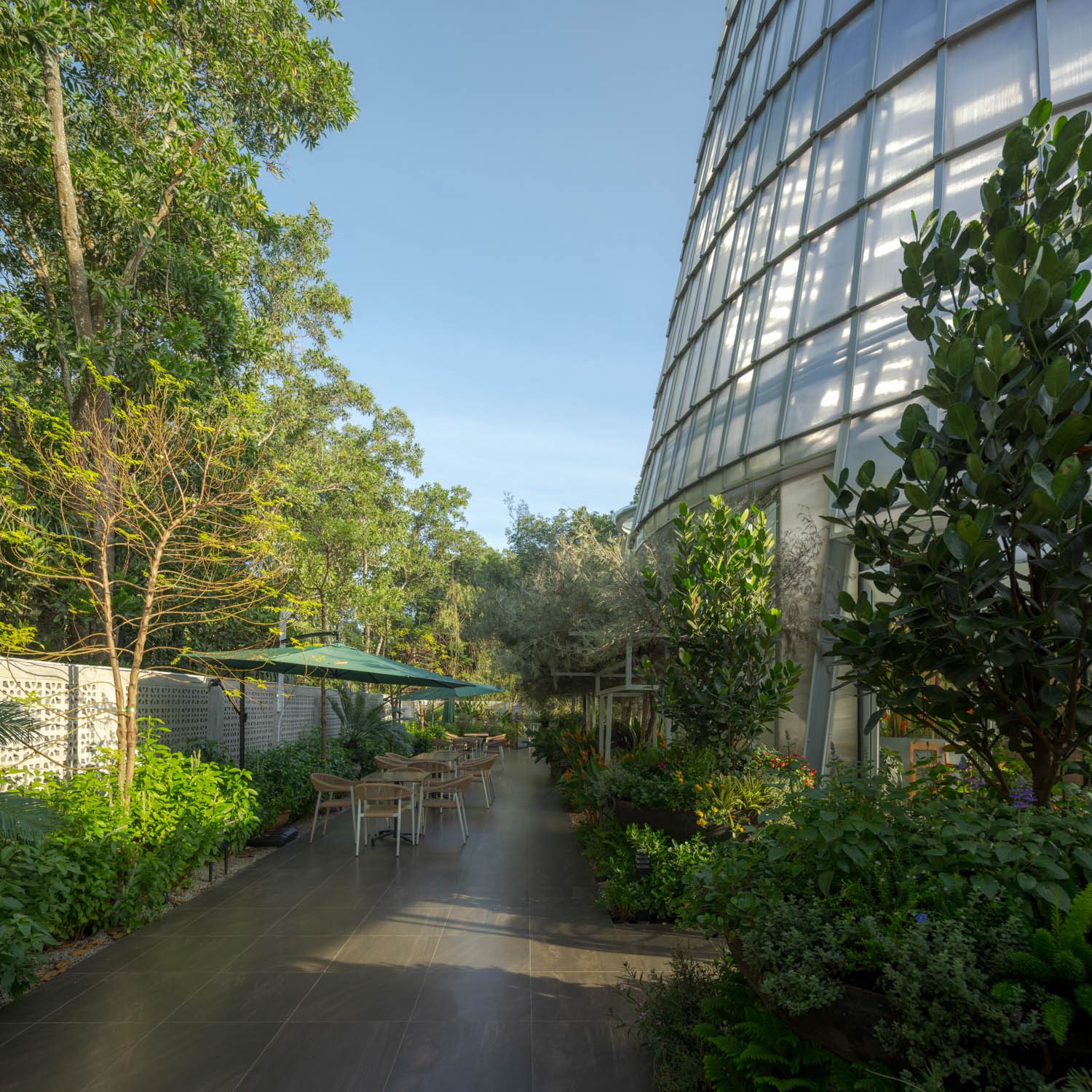
As Hat Yai district of Songkhla province continues to grow as a commercial city driven primarily by trade, the number of leisure and tourism spaces within the urban fabric remains limited. In this context, Inthanin 3H emerges as a new destination for the city. More than a café, it operates as a place of retreat and a contemporary landmark; one that reflects local identity while injecting a renewed sense of vitality into Hat Yai.