
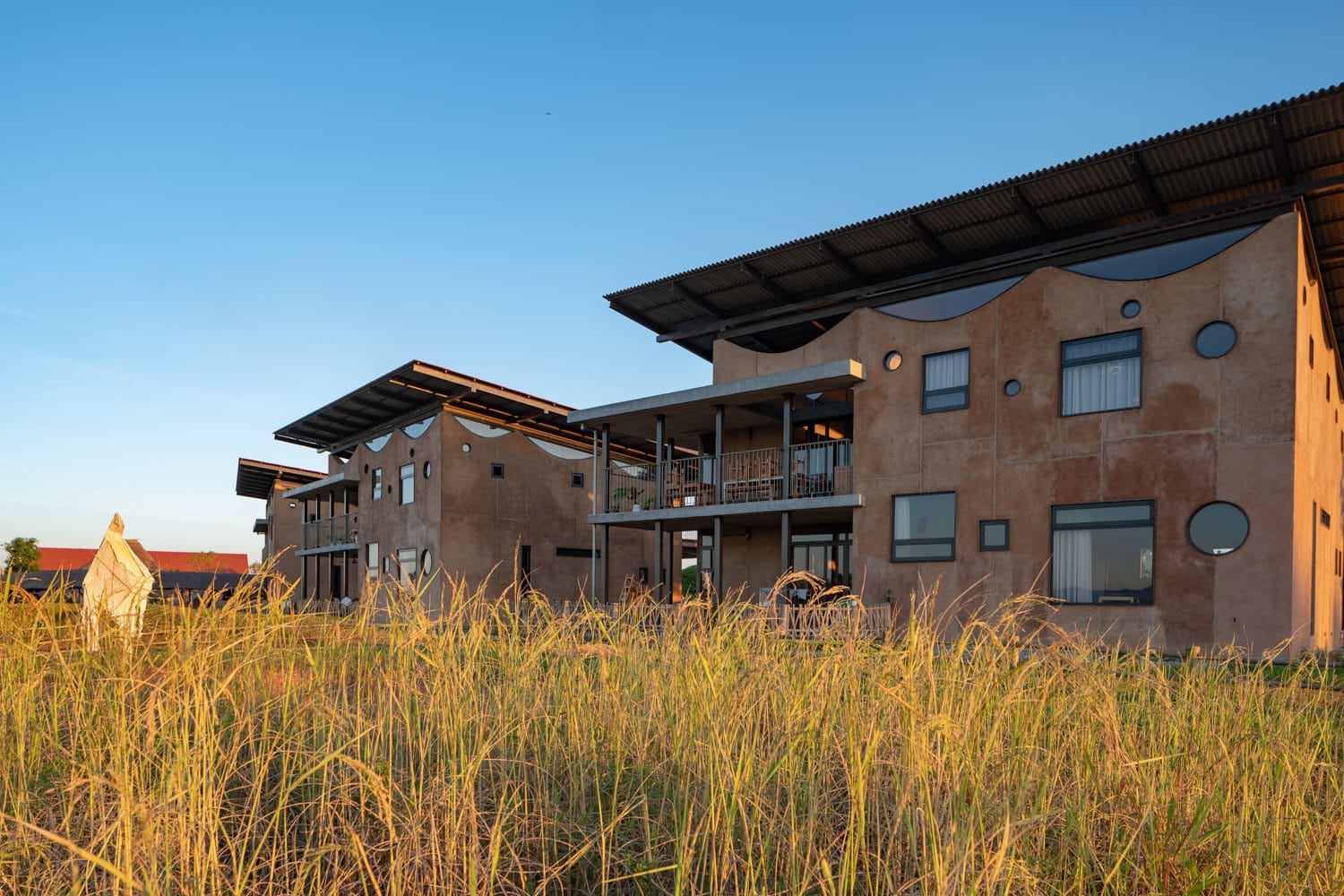
AT PITISUKSA SCHOOL CHIANG RAI (AIRPORT CAMPUS), 1922 ARCHITECTS UTILIZED A MODEST AND LEGIBLE DESIGN, ALLOWING FOR A DIALOGUE BETWEEN THE STUDENTS AND THE ECOLOGICAL CONTEXT
TEXT: MONTHON PAOAROON
PHOTO: SONGTAM SRINAKARIN EXCEPT AS NOTED
(For Thai, press here)
A School as an Ecosystem of Learning
‘Look, a kingfisher!’
The remark comes from Songtam Srinakarin, the architect standing beside us, as he points toward the school entrance ahead. This is his latest design project, and the place where we have come to meet him today. Following the direction of his finger, we narrow our eyes and spot the bird perched quietly on a branch rising above the pond, waiting in stillness for fish. It is a small but arresting moment, one in which nature seems to slip gently into the scene, suggesting at once that this visit, and the story behind it, may hold something special.
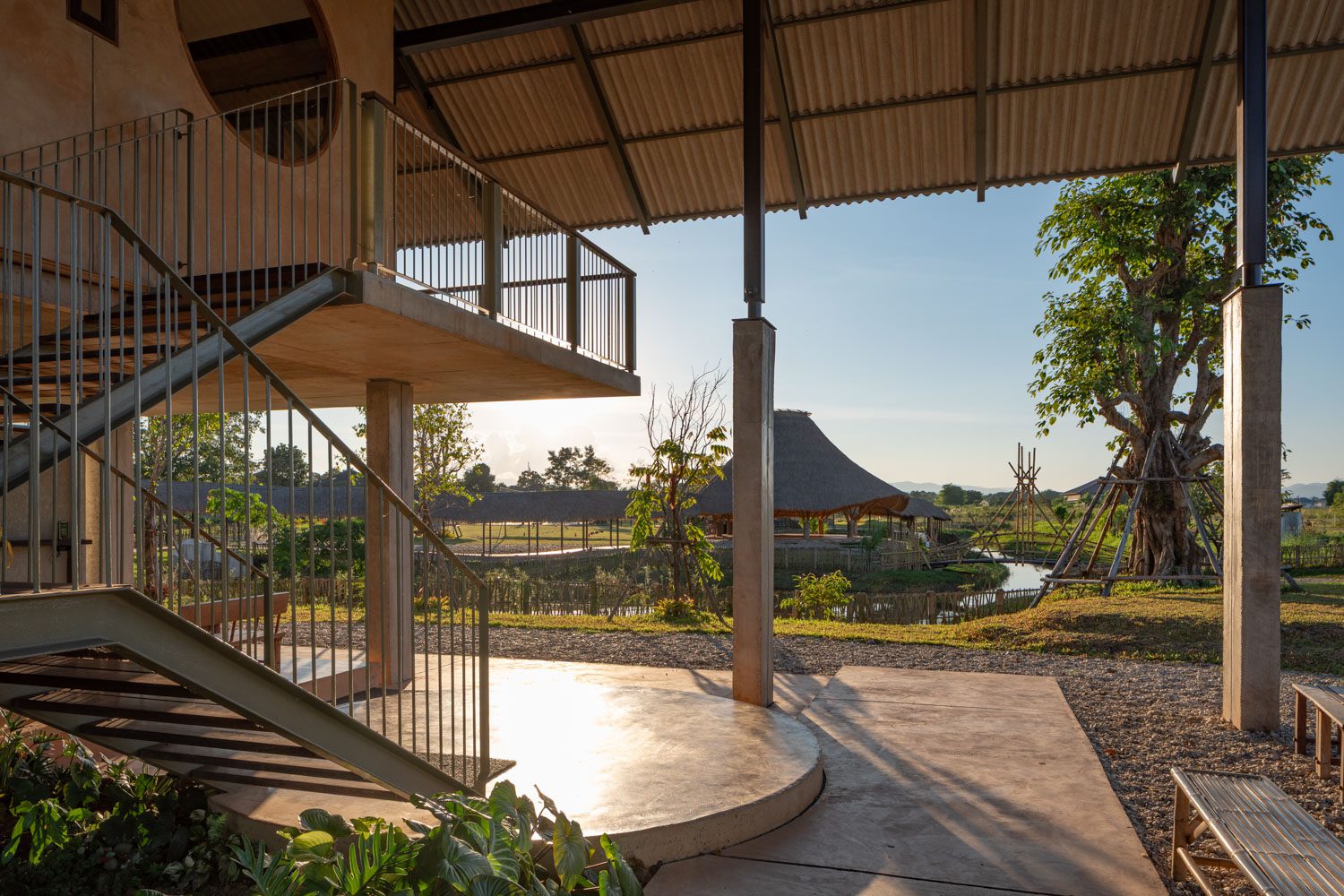
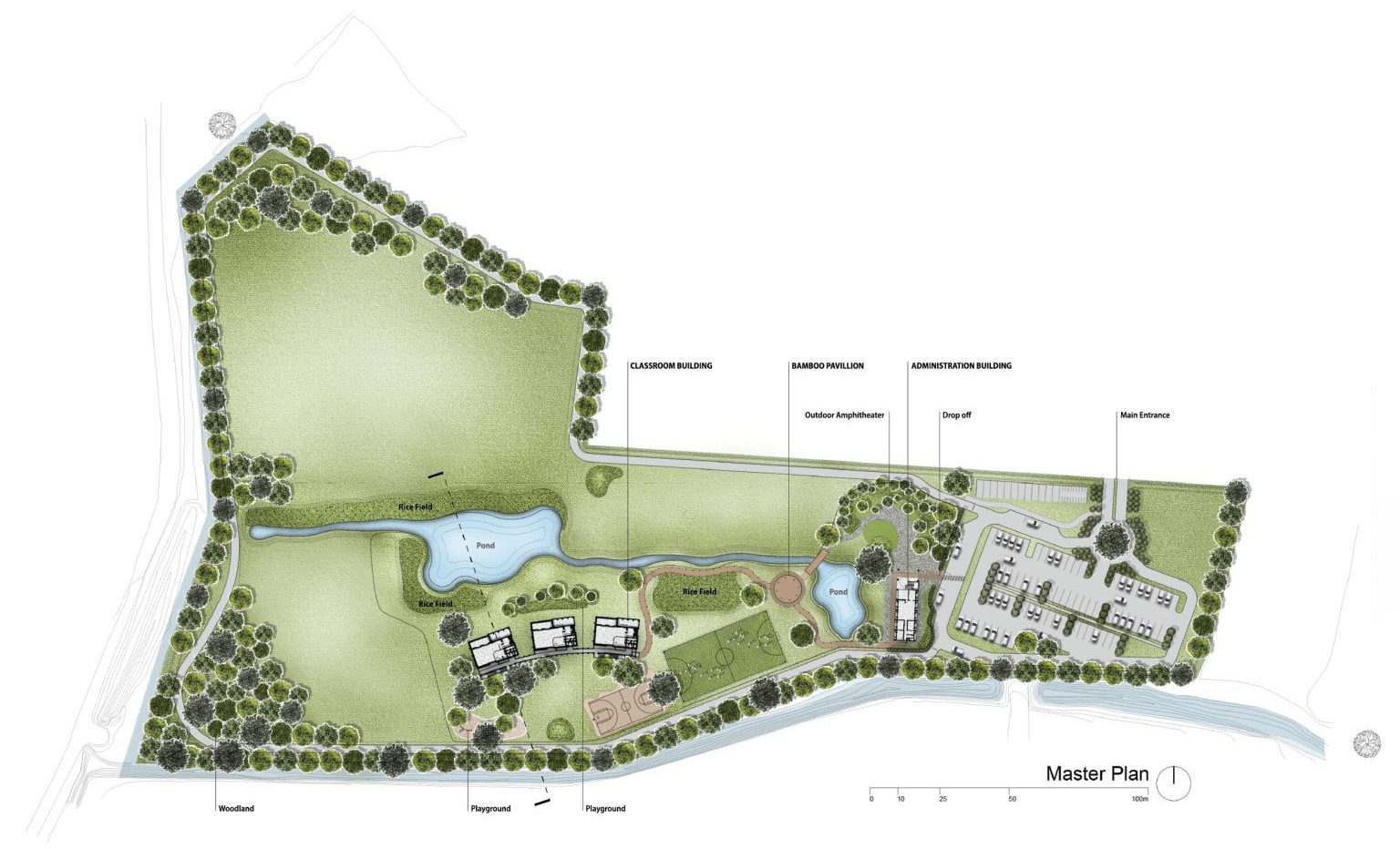
Today, we are meeting Songtam Srinakarin and Piangor Pattayakorn, the husband-and-wife architects behind 1922 Architects. They are both the designers and owners of Pitisuksa Chiang Rai School (Airport Campus), and have offered to show us around themselves. This campus is the school’s second branch. The first is located in central Chiang Rai, but as the original site was leased, flood-prone, and spatially constrained, the school began envisioning a new campus that could better accommodate its future growth. The entire project spans approximately 11 acres, with the first phase covering around 3.5 acres. It currently serves primary-level students, with plans to expand to secondary education in the future.
‘Our intention here was to create an ecosystem that works as one large classroom. For us, landscape, architecture, and interior design are all part of the same whole. The idea of a school, a classroom, or a learning space is that learning should be able to take place everywhere. That became our key concept: to create spaces that support learning in every dimension,’ the architects explain as we begin walking through the school grounds.
At first hearing, the idea of a ‘learning ecosystem’ is immediately compelling. But how does such a concept actually translate into physical form? As we move further through the campus, the architects gradually reveal how this vision has been shaped into architecture, with each part of the design carefully conceived to support children’s learning experiences.
Learning Through Landscape
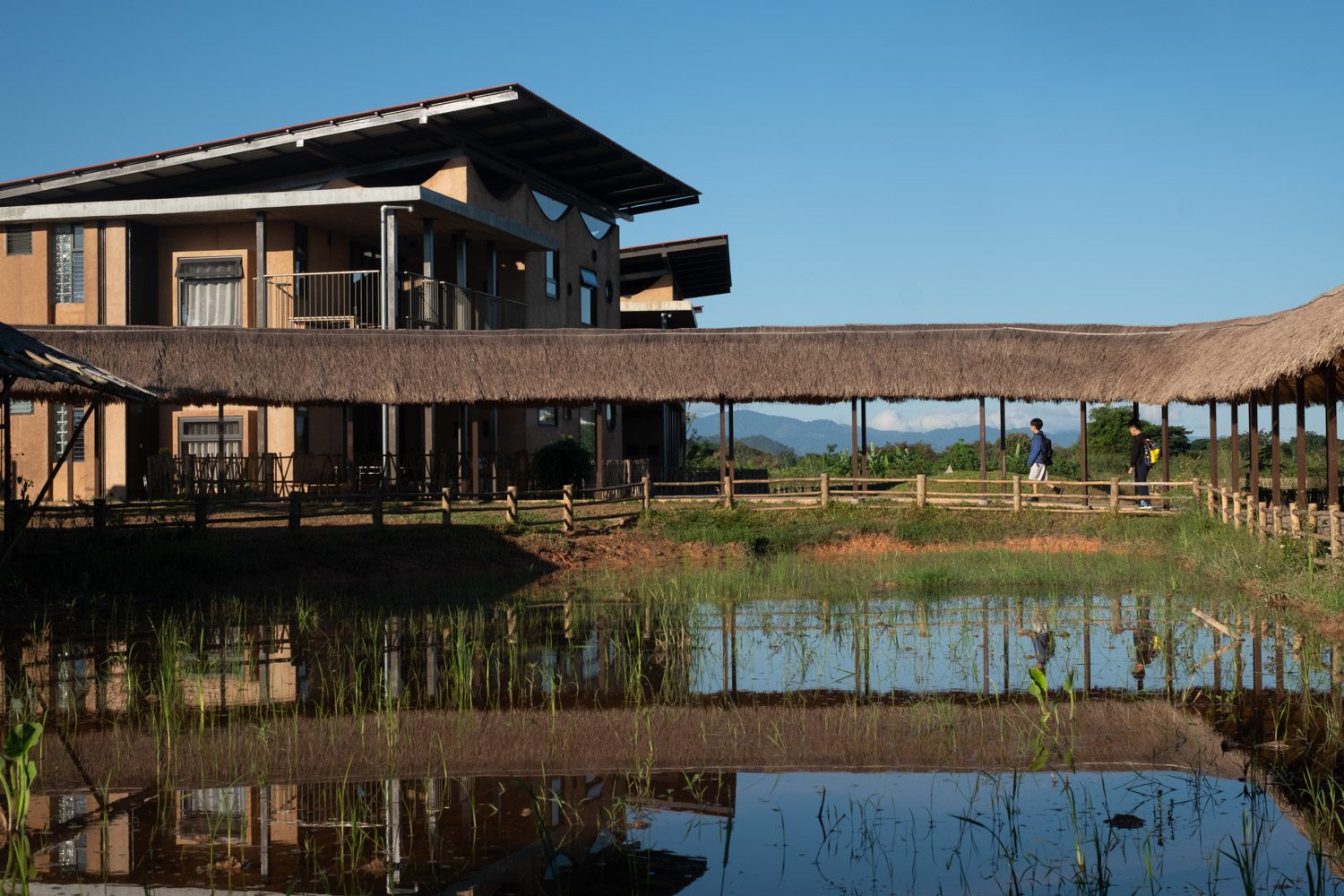
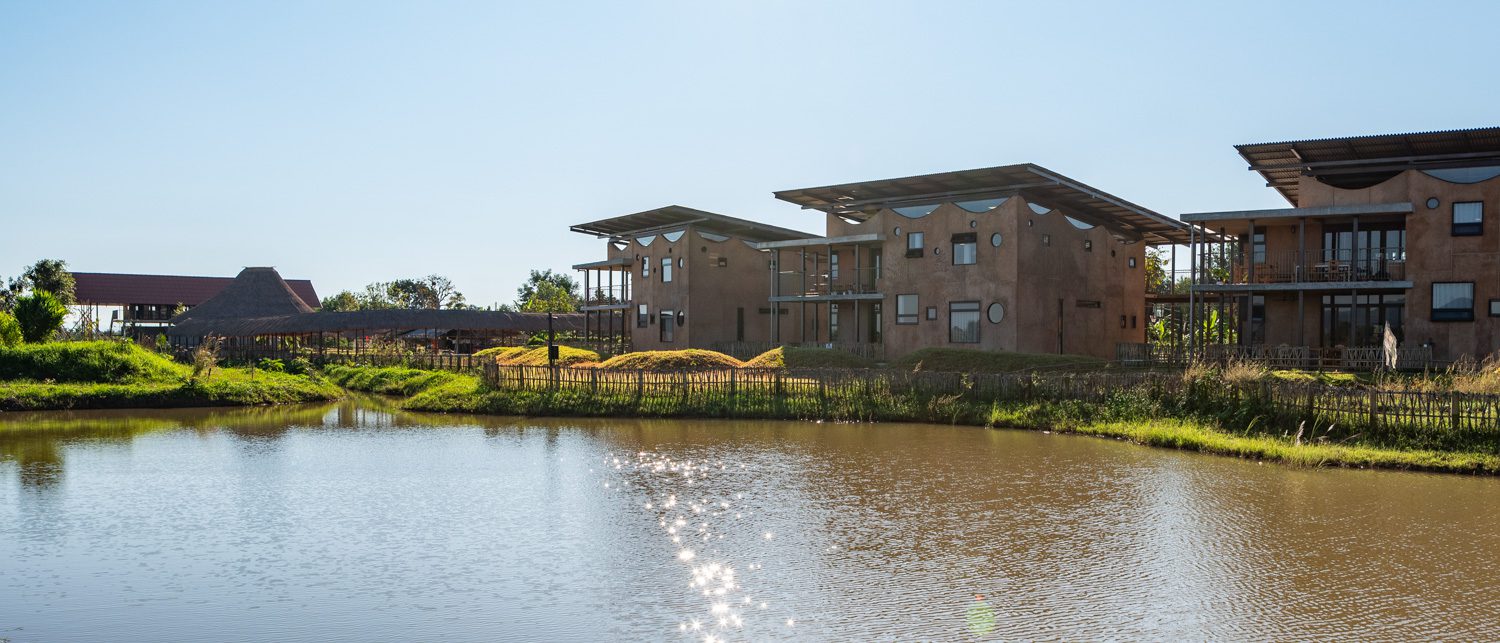
The landscape master plan for the project was developed by Chulaphon Nanthapanich of North Forest Studio, working in close coordination with the architectural team on the placement of the buildings. At the heart of the scheme are two ponds linked by a meandering canal that runs longitudinally through the site. These water bodies were excavated along the line of a former public irrigation channel that had long since run dry. The intention was to revive elements of the local irrigation system and transform them into a living source of learning.
The landscape design is deliberately restrained, with little in the way of embellishment or ornament. It was never intended to look pristine at all times. Instead, it is conceived as a place that changes with the seasons. Water levels in the ponds rise and fall. The rice plots beside the classroom buildings shift in character over the course of the year. Elsewhere, the project’s main circulation routes alternate between open-air paths and covered walkways. Elaborating on this aspect, the architects explain:
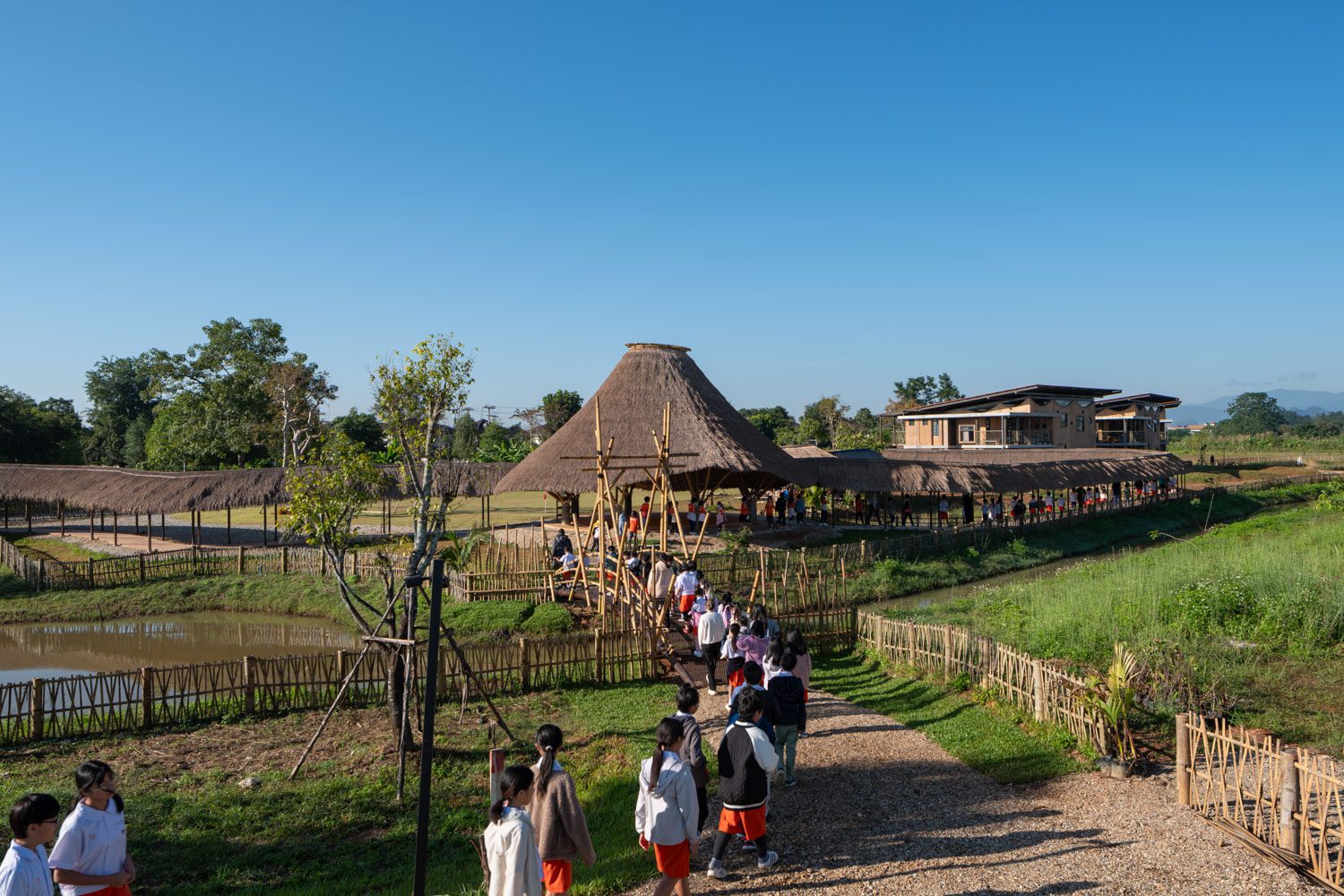
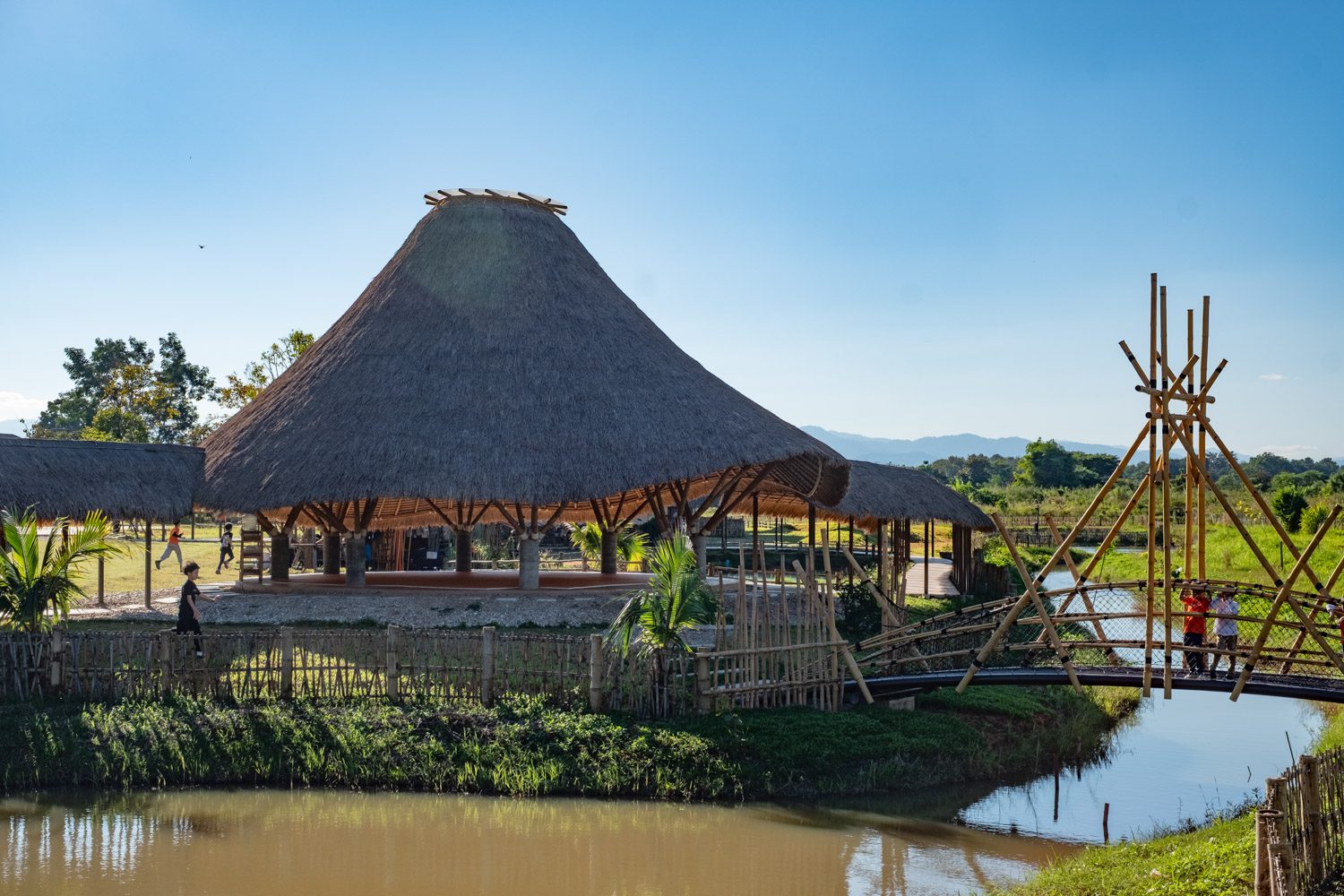
‘By positioning the first pond near the entrance, we wanted to give children a choice in how they arrive at school. They do not have to follow only the clearly prescribed route of concrete paving and covered walkways. On a bright day, they can take another path instead, one that allows them to look up at the sky, pause to observe plants, or notice the animals living nearby, before crossing a bamboo bridge and meeting their friends again at the pavilion. Even this short walk becomes part of the process of learning. It helps prepare the body and settle the mind before the next session in the classroom.’
Learning Through Architecture
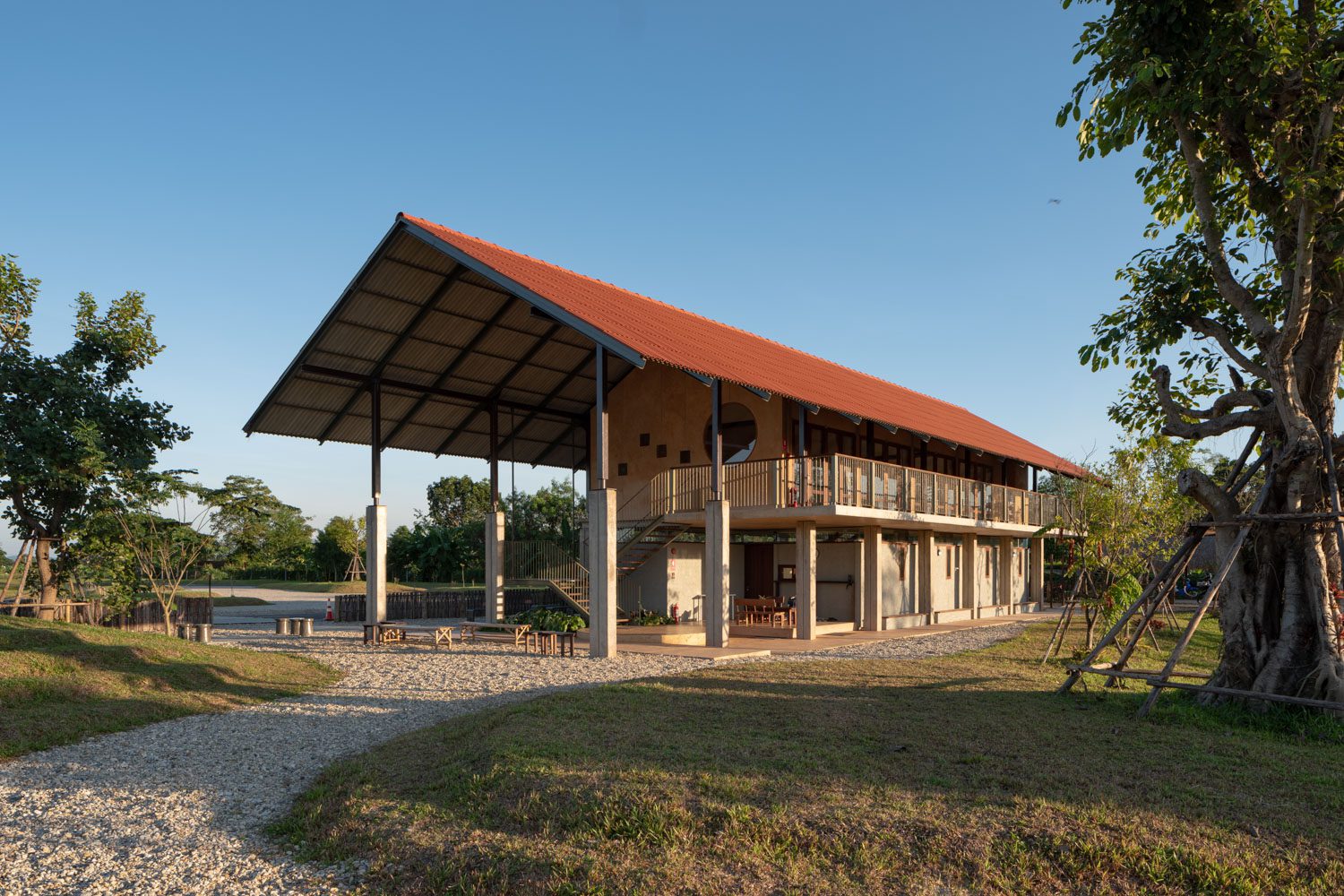
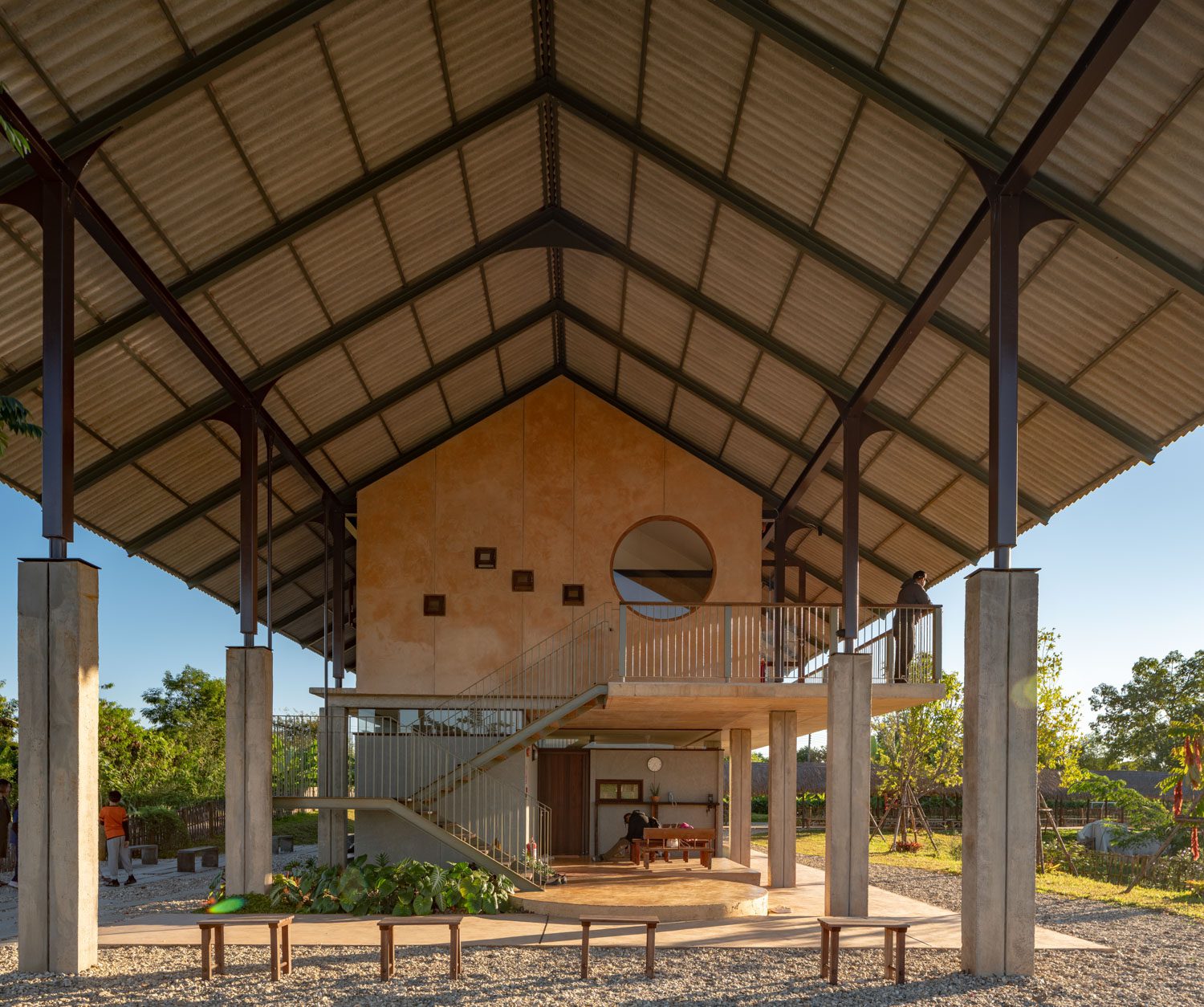
From the parking area, the first building to come into view is the administration building, which serves as the school’s drop-off and pick-up point in the morning and afternoon. Its entrance is marked by an elevated hall, framed almost like a picture, creating a welcoming threshold into the campus beyond. The building itself is oriented along an east-west axis, allowing it to receive light from both directions. In this way, children become aware of the passage of time through the changing character of sunlight, from the brightness of morning arrival to the softer light of afternoon dismissal, each entering the hall from a different angle. Heat gain is controlled through deep roof overhangs and balconies that shade the building’s doors and windows. In programmatic terms, the ground floor houses the school office, while the upper level contains a computer room, library, and meeting room.
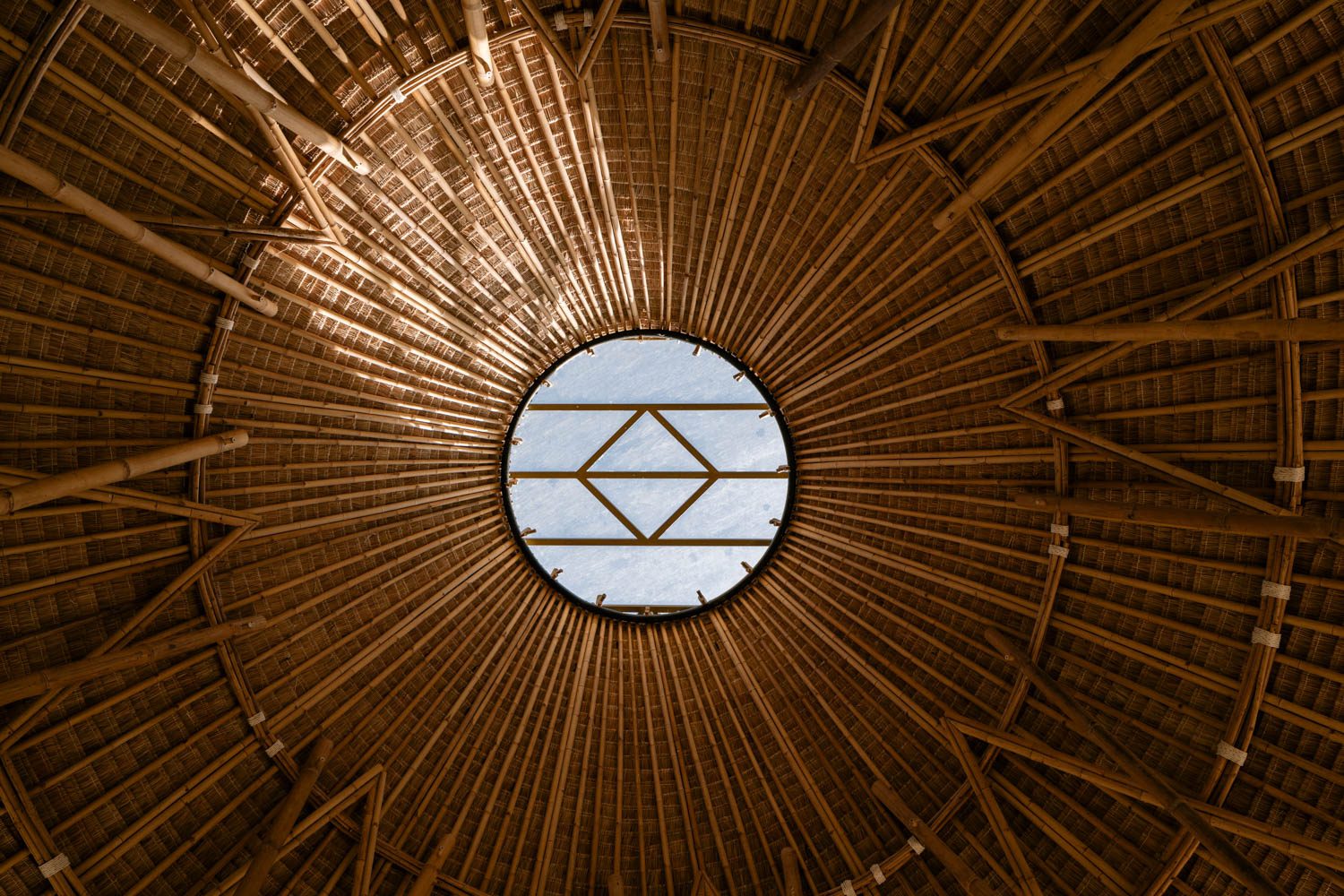
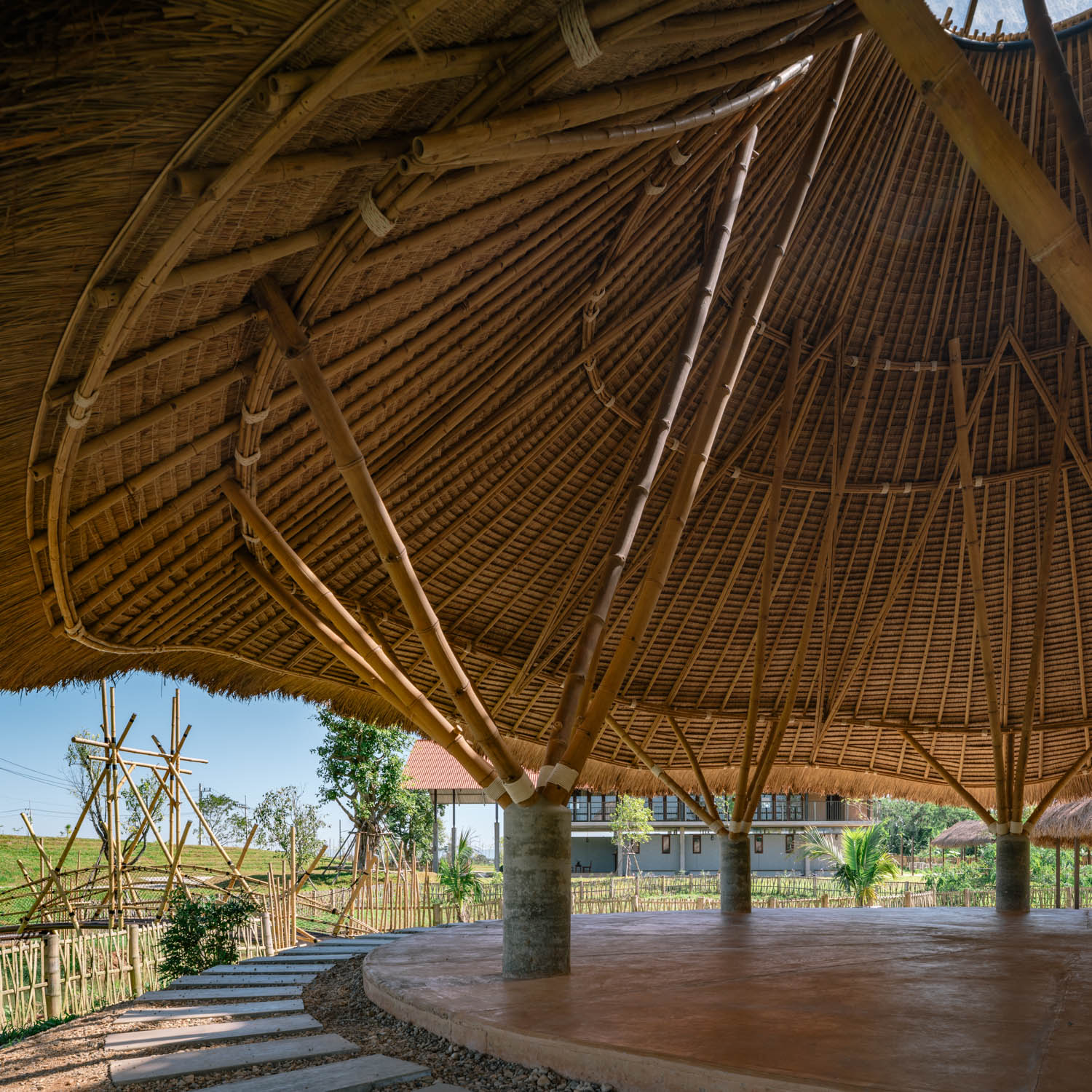
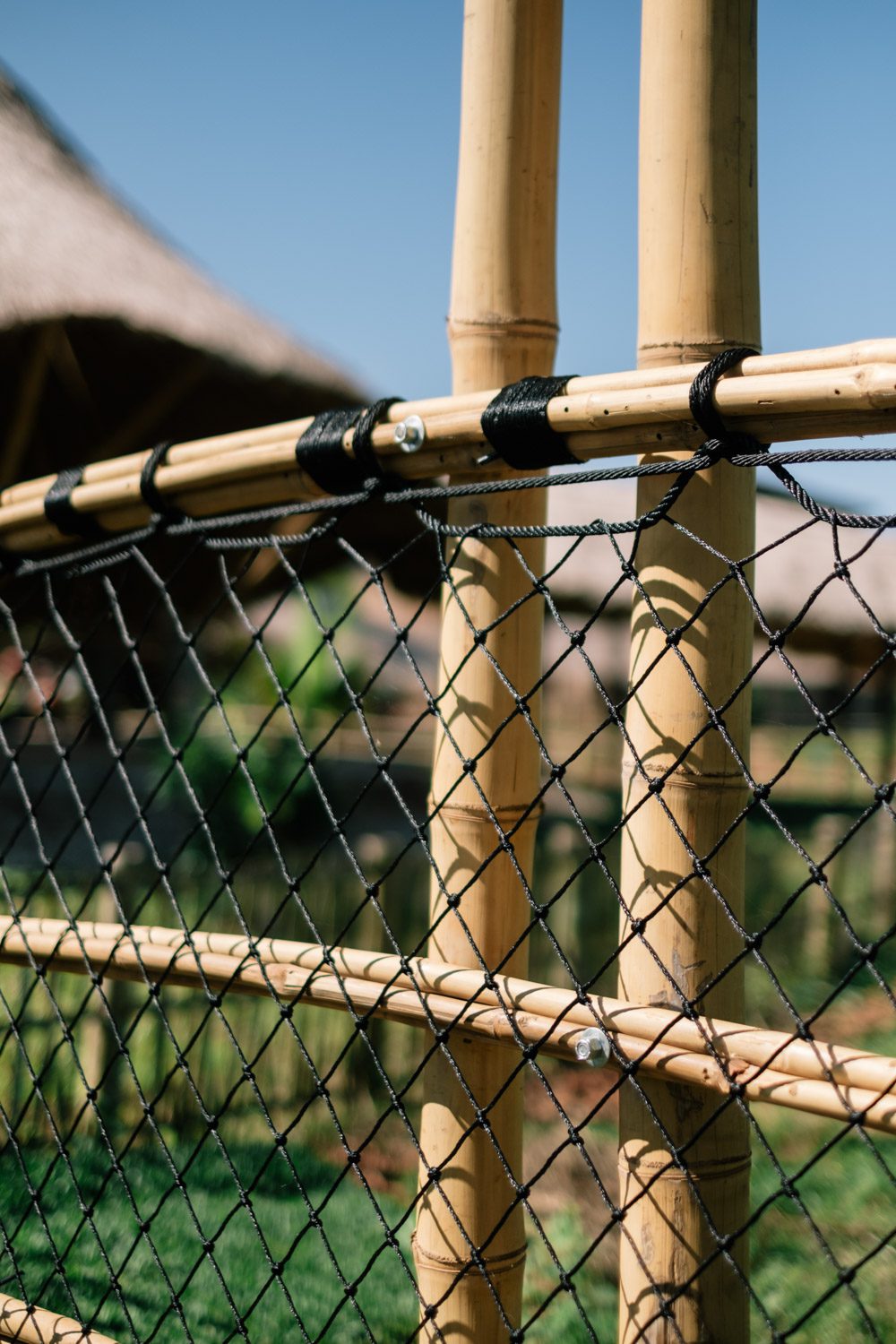
The second building is a multi-purpose pavilion, together with the walkways and bridges that extend from the administration building. Both its structure and materiality are made entirely of bamboo. This part of the project was developed in collaboration with Labo-Labare, specialists in bamboo construction, who worked alongside the architects to refine the design and bring the building to completion.
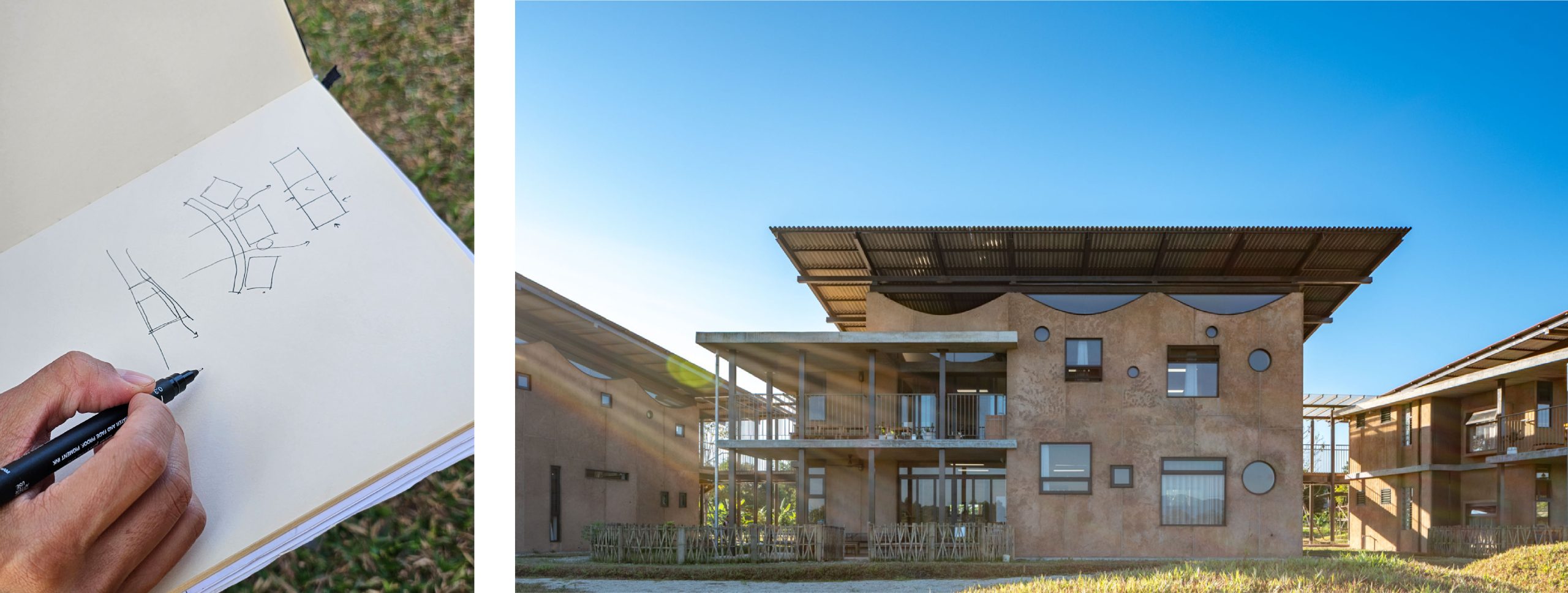
Photo: Monthon Paoaroon (Left)
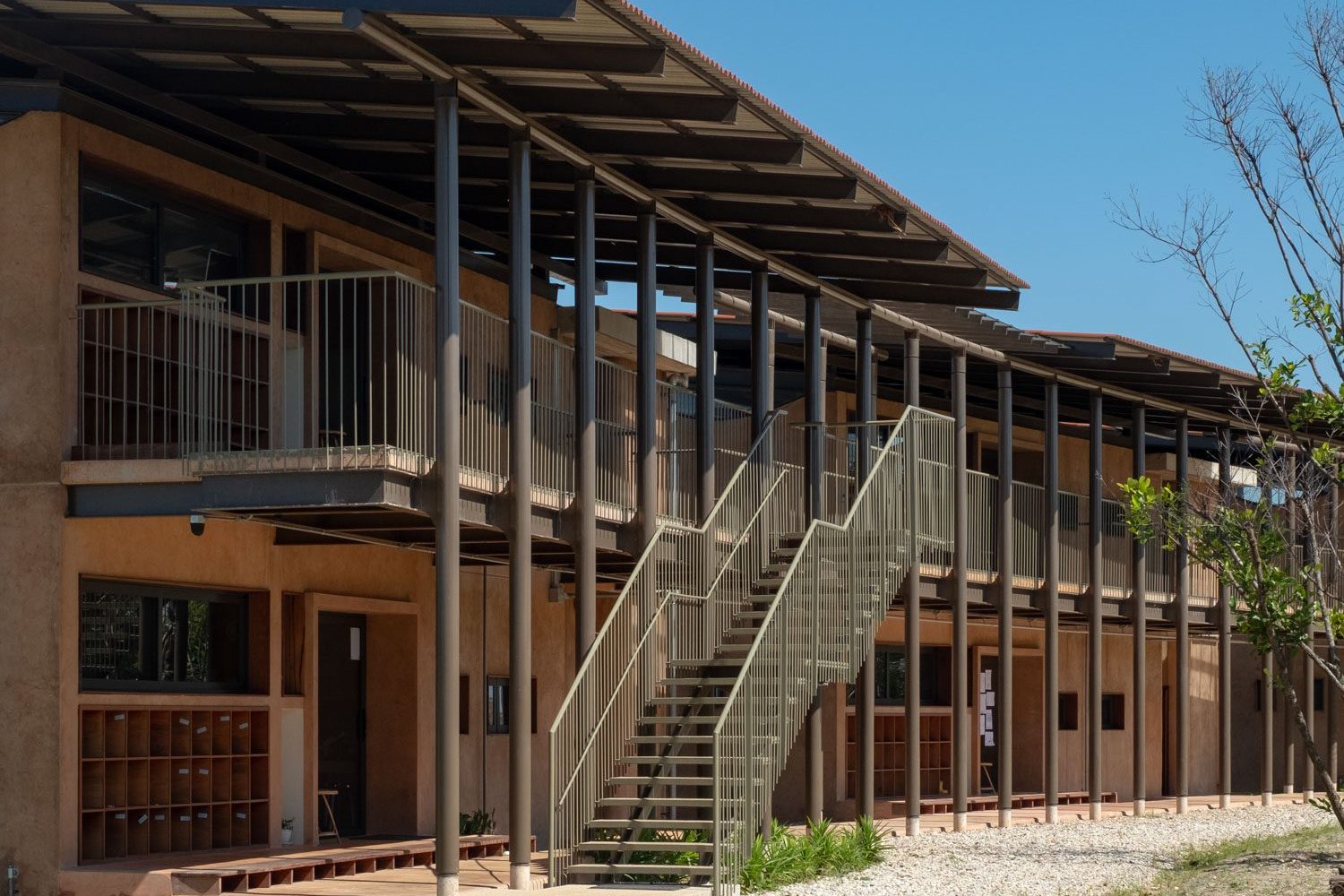
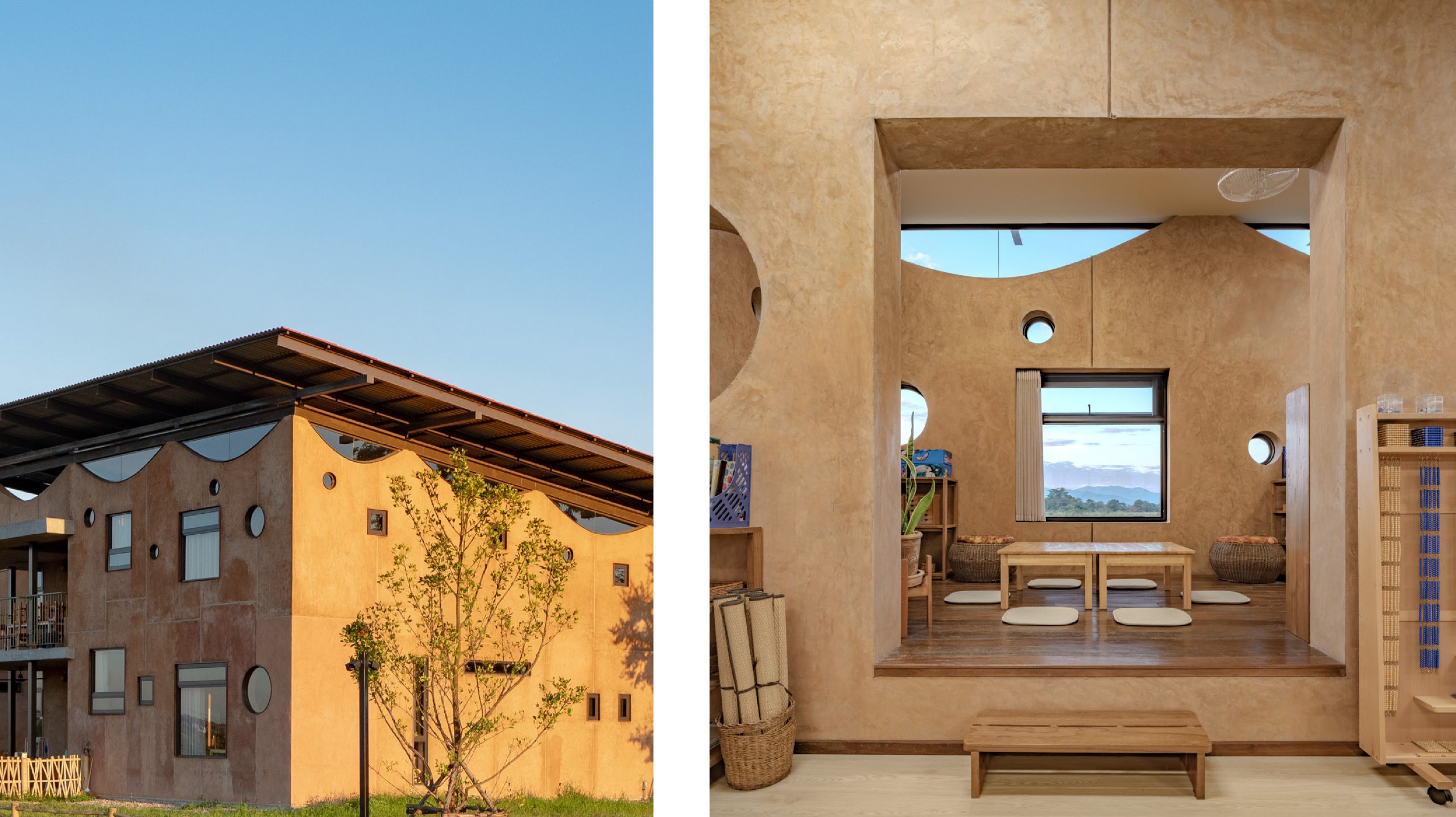
When it comes to the classroom building, Songtam takes out a sheet of paper and sketches as he explains that the design began, in fact, with a simple two-storey rectangular block containing six classrooms, three on each floor. But to ensure that every classroom would receive good natural light and ventilation, the building was broken into three separate volumes, linked by a south-facing corridor that runs alongside the main stair. This zone was intentionally conceived as a buffer, shielding the occupied spaces from direct sun. During the cooler season, the shadow cast to the north also creates a shaded outdoor classroom, allowing children to move naturally from the interior learning spaces into the area outside.
‘On the south side of the building, the windows are smaller and fewer in number because the prevailing winds during the main season come from the south. When the openings on the south are smaller and those on the north are larger, the airflow is drawn through more strongly, which is exactly when the building requires the most ventilation. In winter, however, we do not need as much wind, so sometimes the windows can simply be kept closed.’
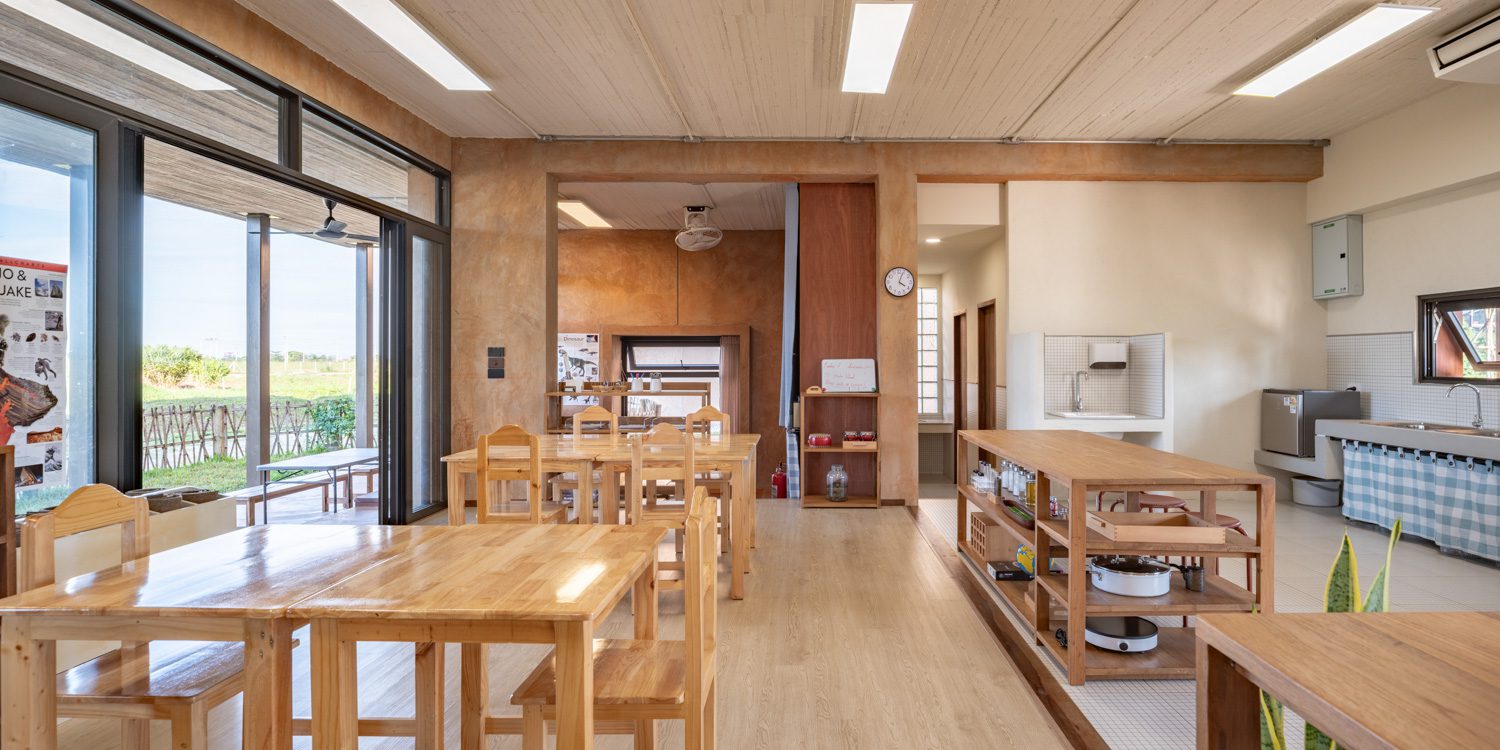
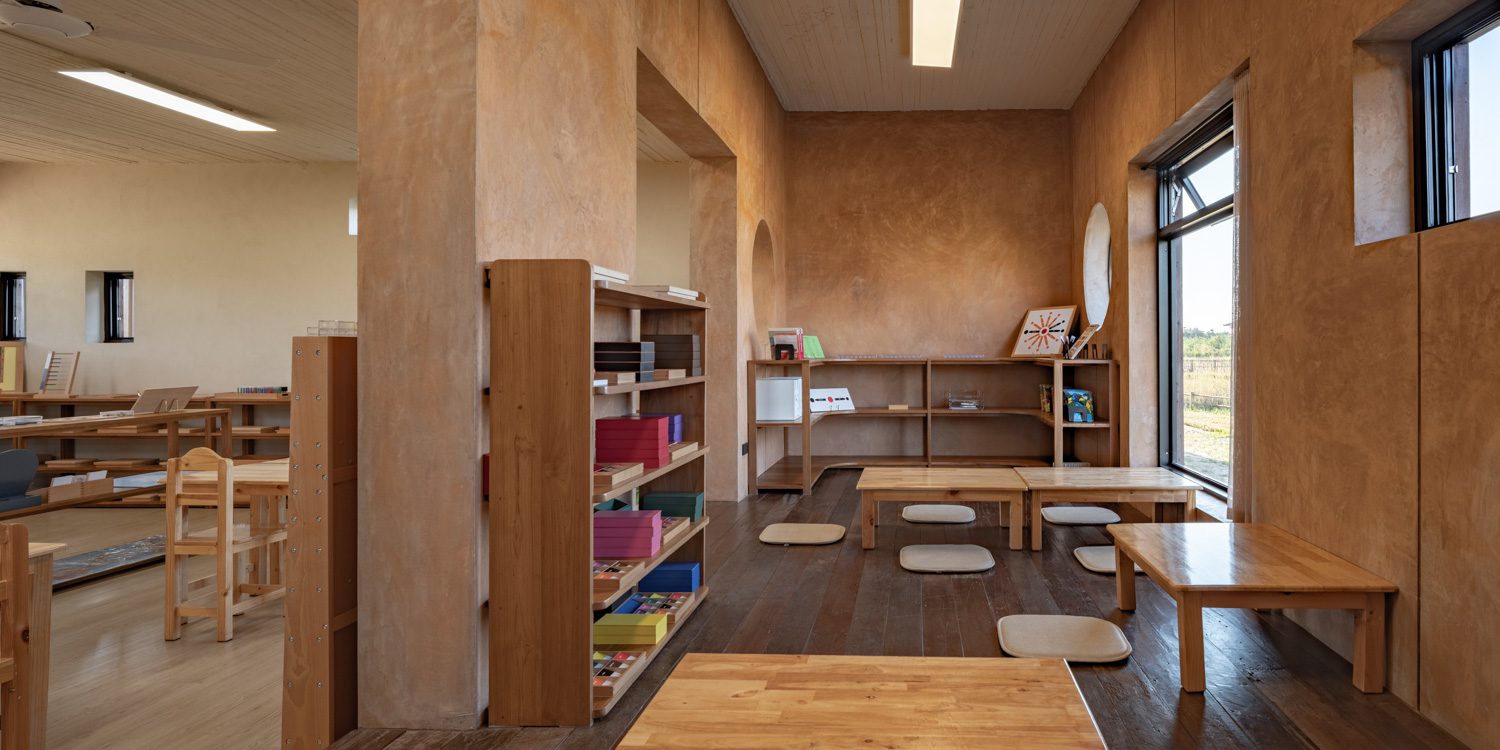
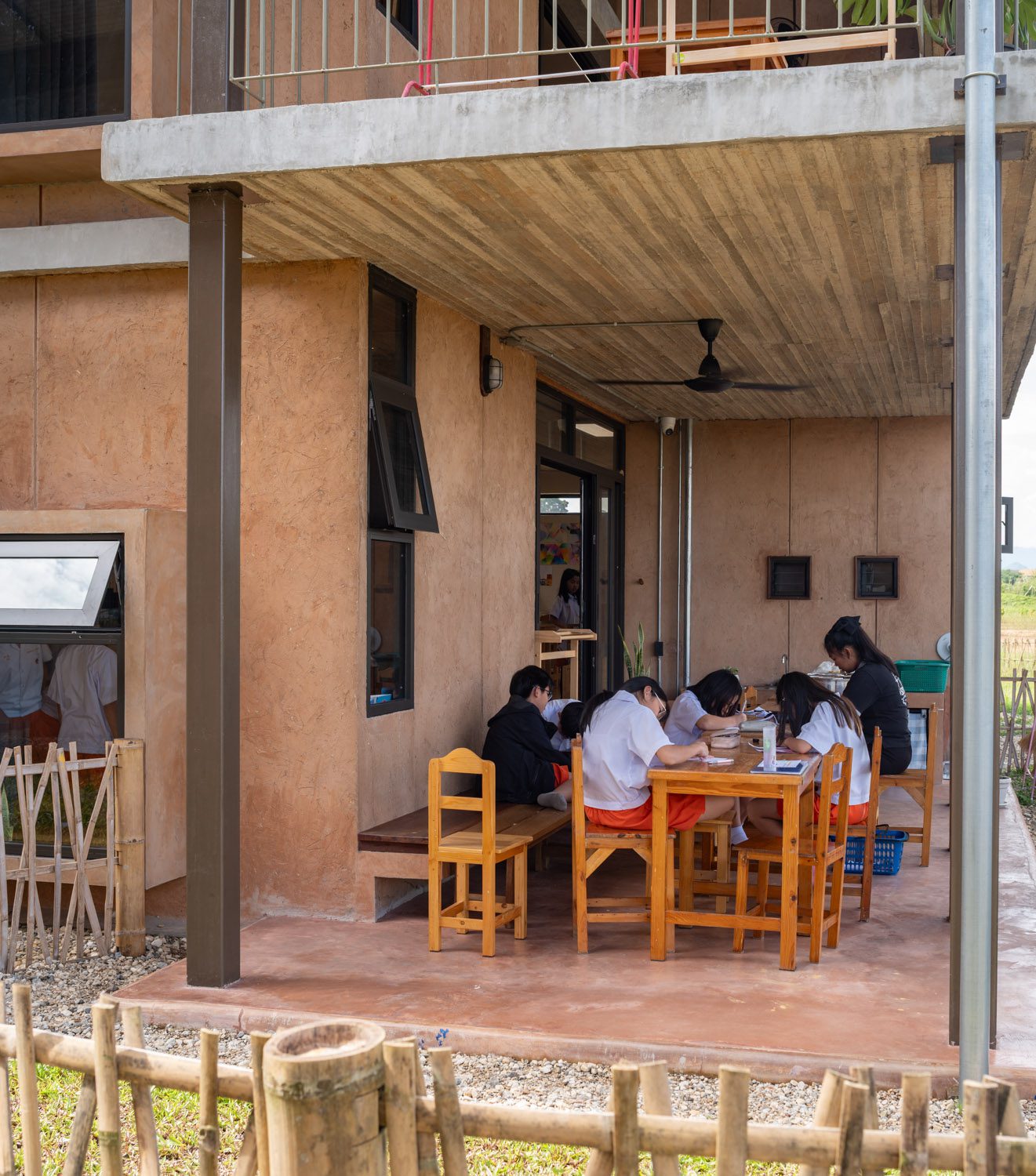
Photo: Peerapat Wimolrungkarat
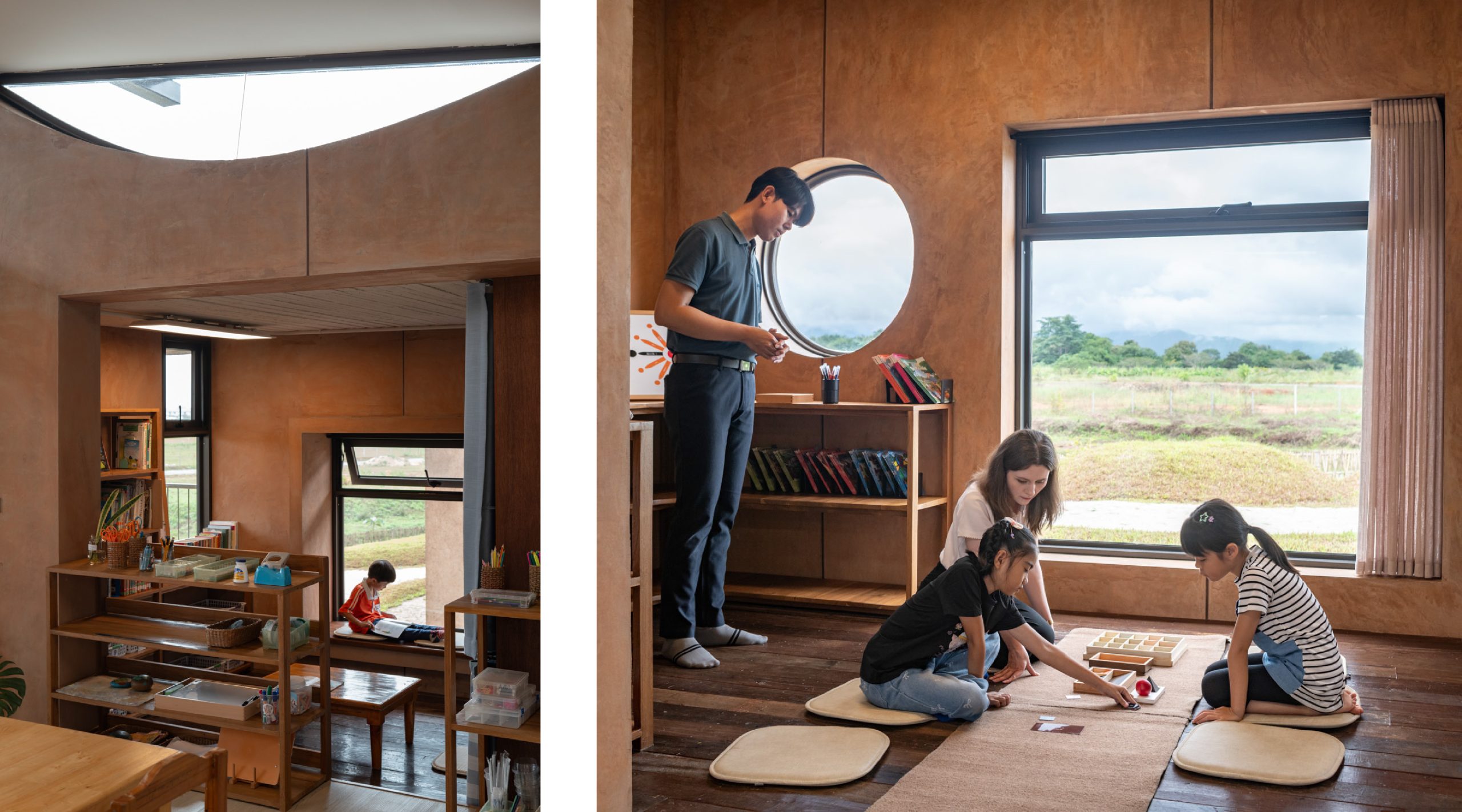
Photo: Peerapat Wimolrungkarat (RIght)
Classrooms as Layered Landscapes of Learning
The school has six classrooms in total: three for lower primary and three for upper primary. Within each room, however, students learn in mixed-age groups, with Years 1 to 3 sharing one classroom and Years 4 to 6 another. The arrangement encourages children to support one another, care for one another, and grow alongside one another.
‘The principle of Montessori is that the teacher’s role is to introduce the learning materials and explain how they are used. After that, the children choose for themselves what they want to work on. They organize their own schedules. At the beginning of the semester, the teacher outlines what needs to be covered and introduces all the materials available, but each child decides independently what to begin with and in what order, according to their own interests.’
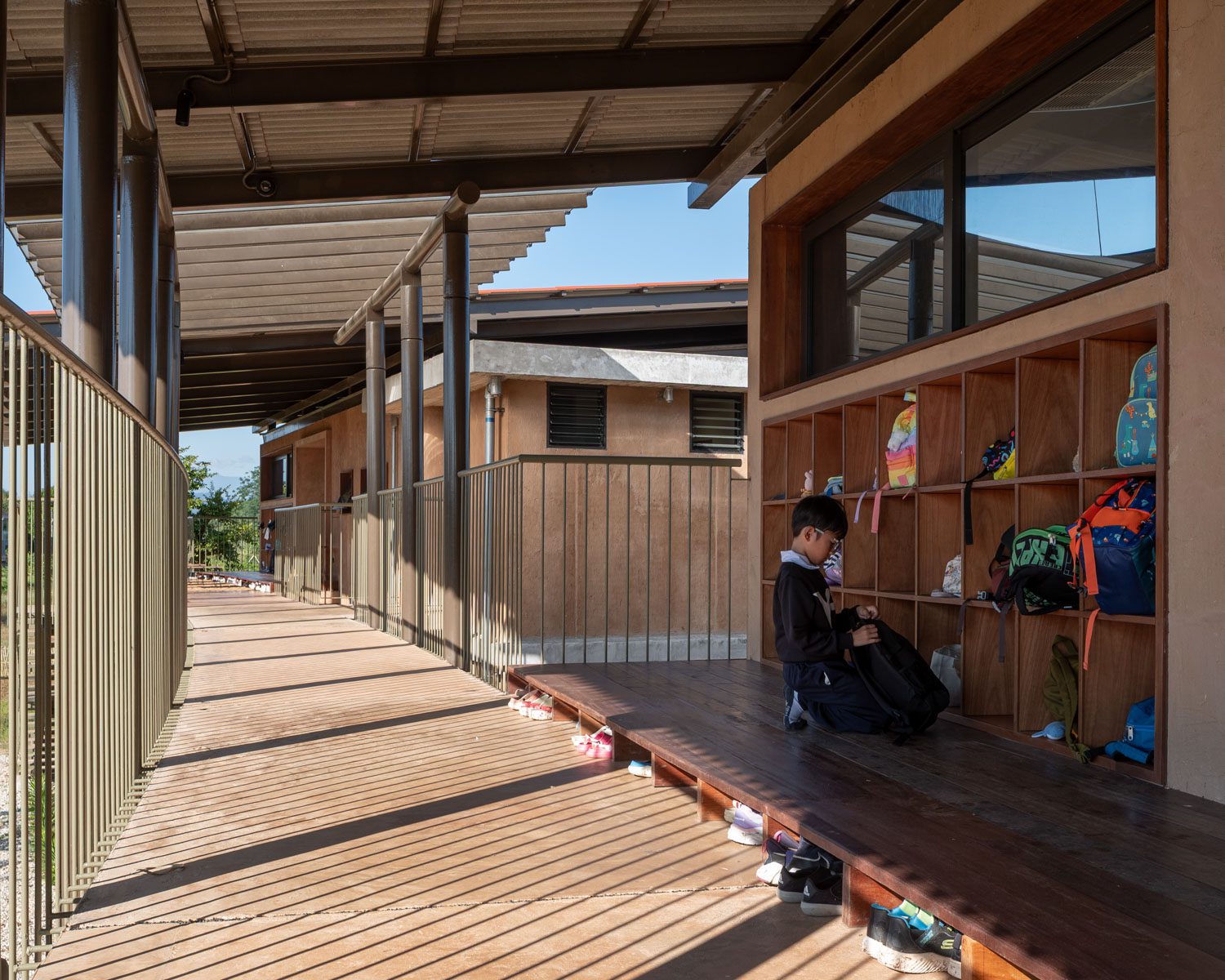
Photo: Peerapat Wimolrungkarat
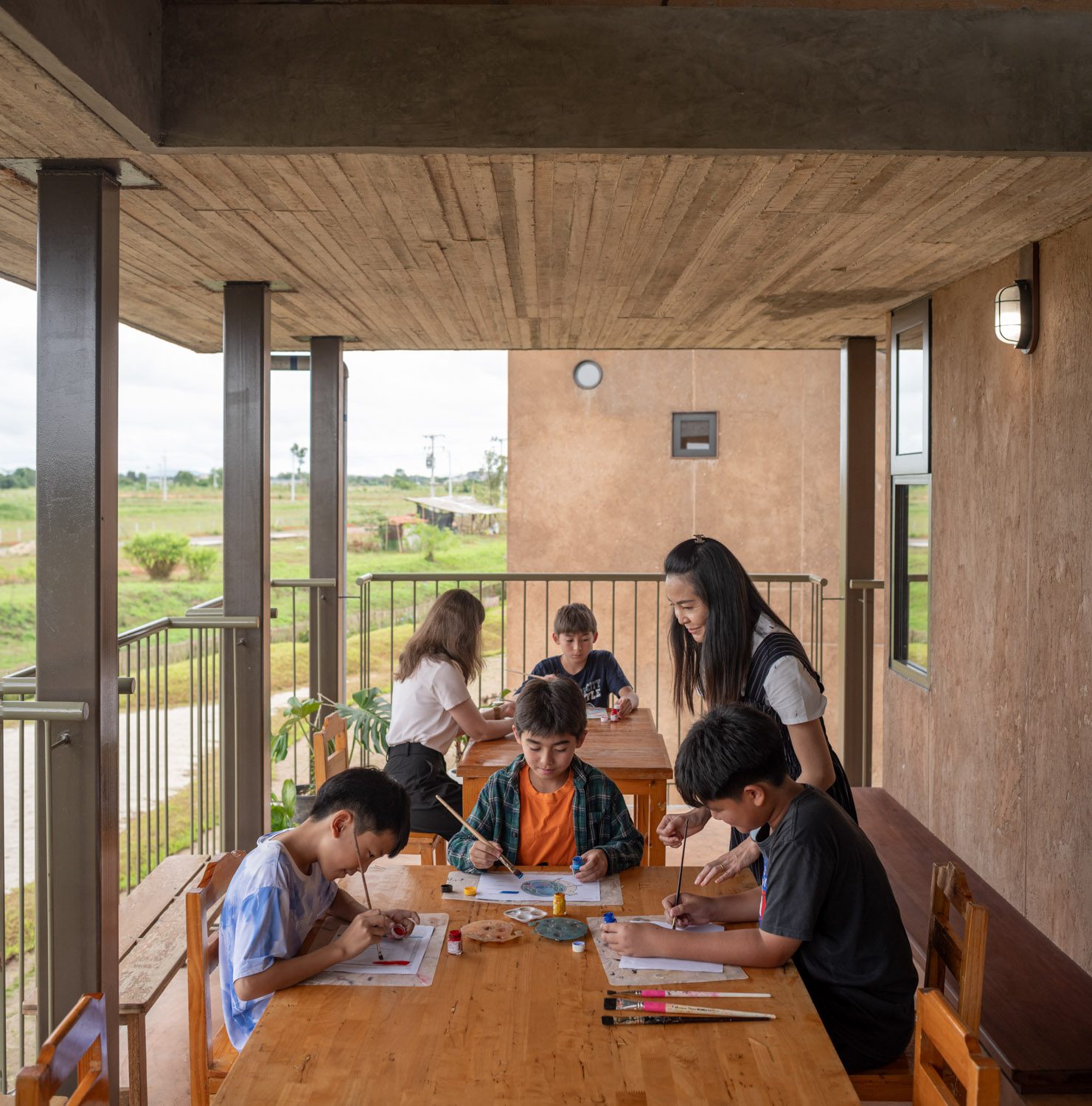
Photo: Peerapat Wimolrungkarat
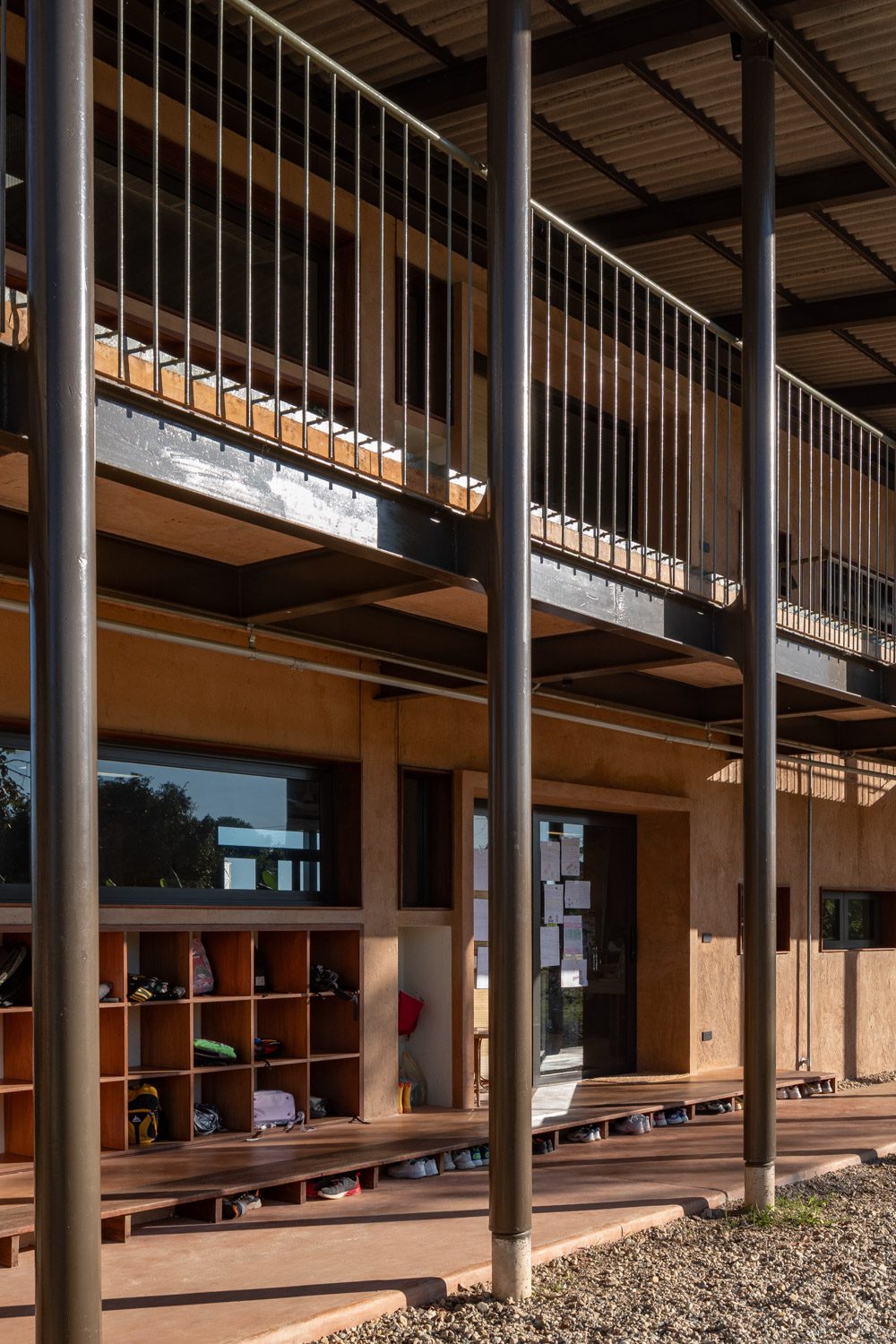
Each classroom begins with the corridor at its front, a raised timber veranda where children remove their shoes and put away their belongings before entering. Here, students are not expected to carry heavy schoolbags filled with books and notebooks. They arrive lightly, bringing only a change of clothes for the inevitable moments when play turns messy. Inside, the classroom is divided into zones through changes in material and level, creating a varied topography of space with sunken areas and raised platforms. Elaborating on this spatial arrangement, the architects explain:
‘At the front of the room is the zone for more active subjects such as mathematics and science. Further inside, behind the earthen wall, is the language corner, where children can concentrate more fully. The veranda extending outward is intended to support yet another learning atmosphere, while the lowered area is the reading corner, which brings together books across a wide range of subjects and offers the best place for a child to retreat quietly on their own.’
Learning Through Structure and Materials
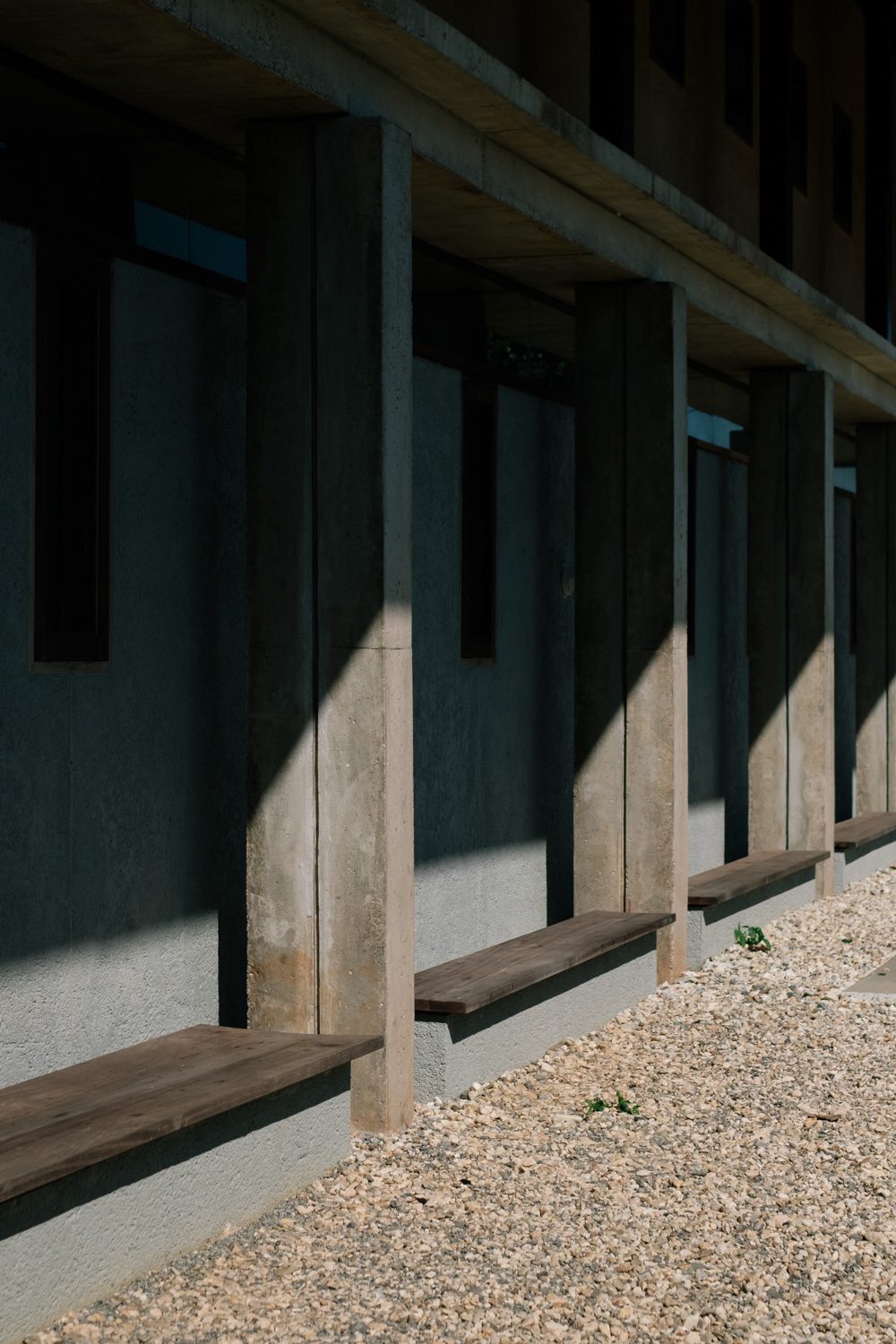
The architects were intent on making the structure as direct and legible as possible. In the administration building, for instance, they chose a flat slab system. Although more costly, it possesses a clarity and elegance of its own. The structure was carefully designed so that its lines, the rhythm of the architectural elements, and even the building services could all be resolved in a visually pleasing and coherent way, reducing the need for additional finishes and helping to keep the budget in check.
‘Because we use inexpensive materials, we have to make them feel meaningful, since everything is ultimately on display. It is also a matter of cost. For us, there are two key issues in the work: the environment and how to use as little material as possible. We would rather place greater value on labor, because that, in our view, is where the greatest value lies,’ the pair explains.
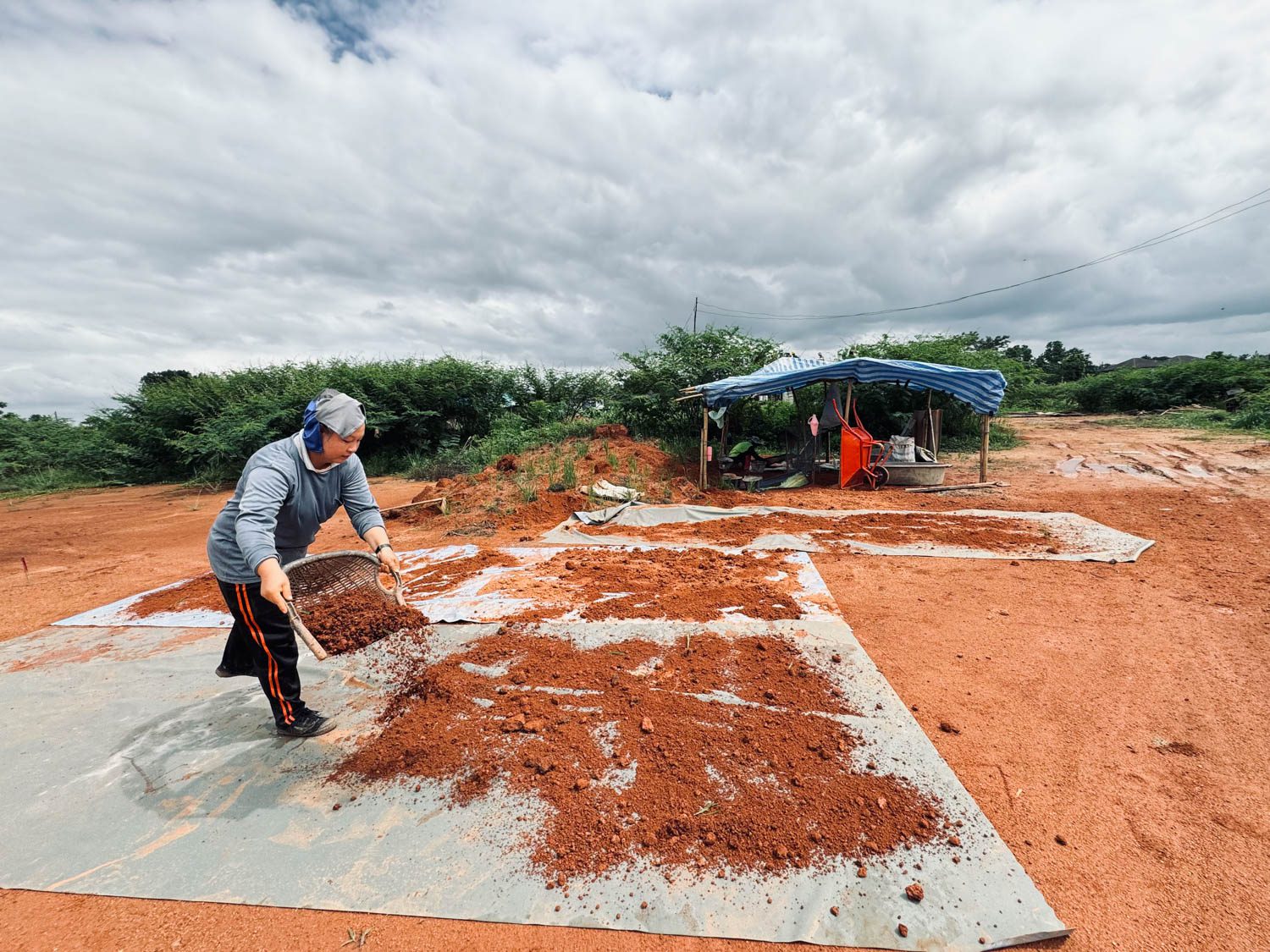
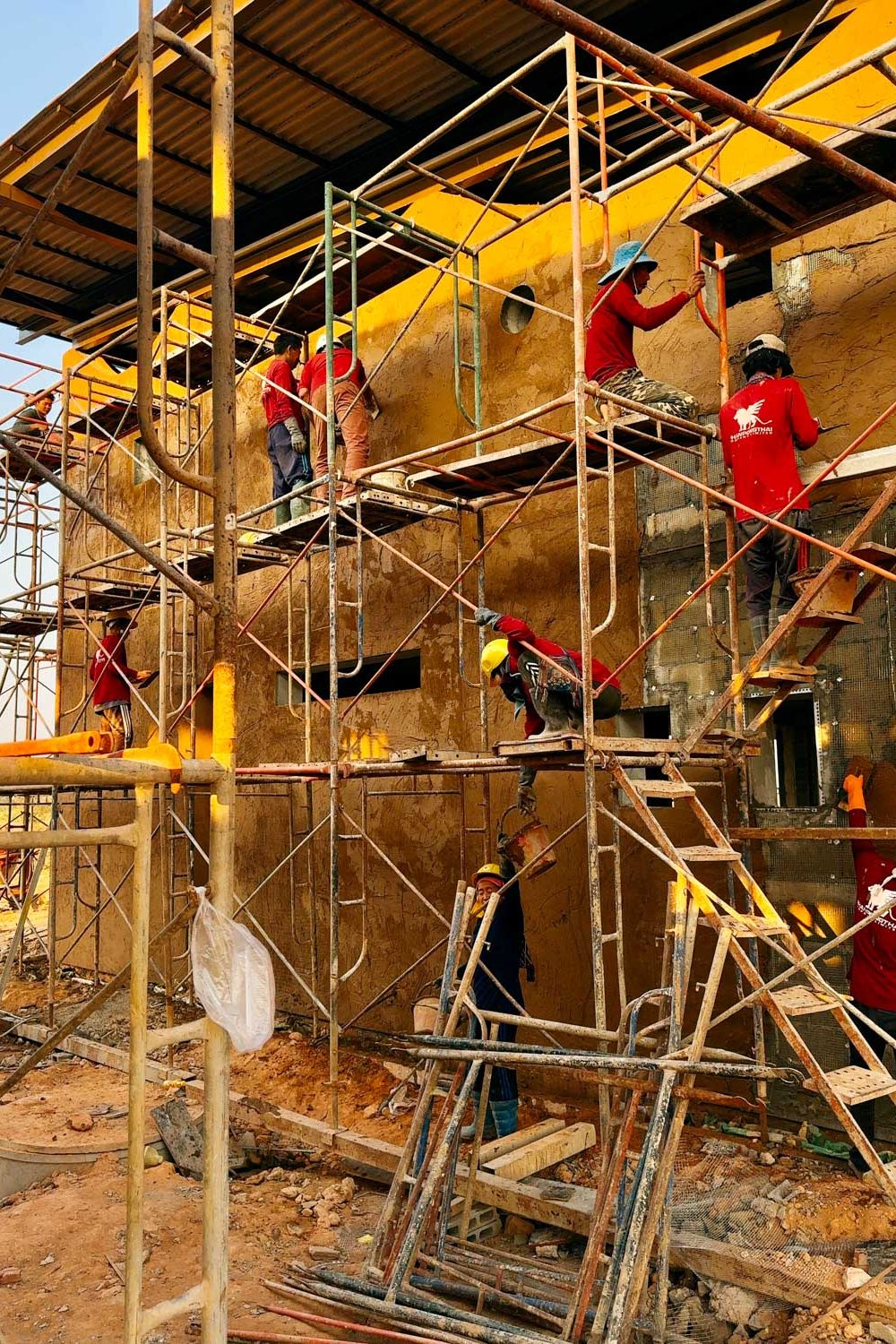
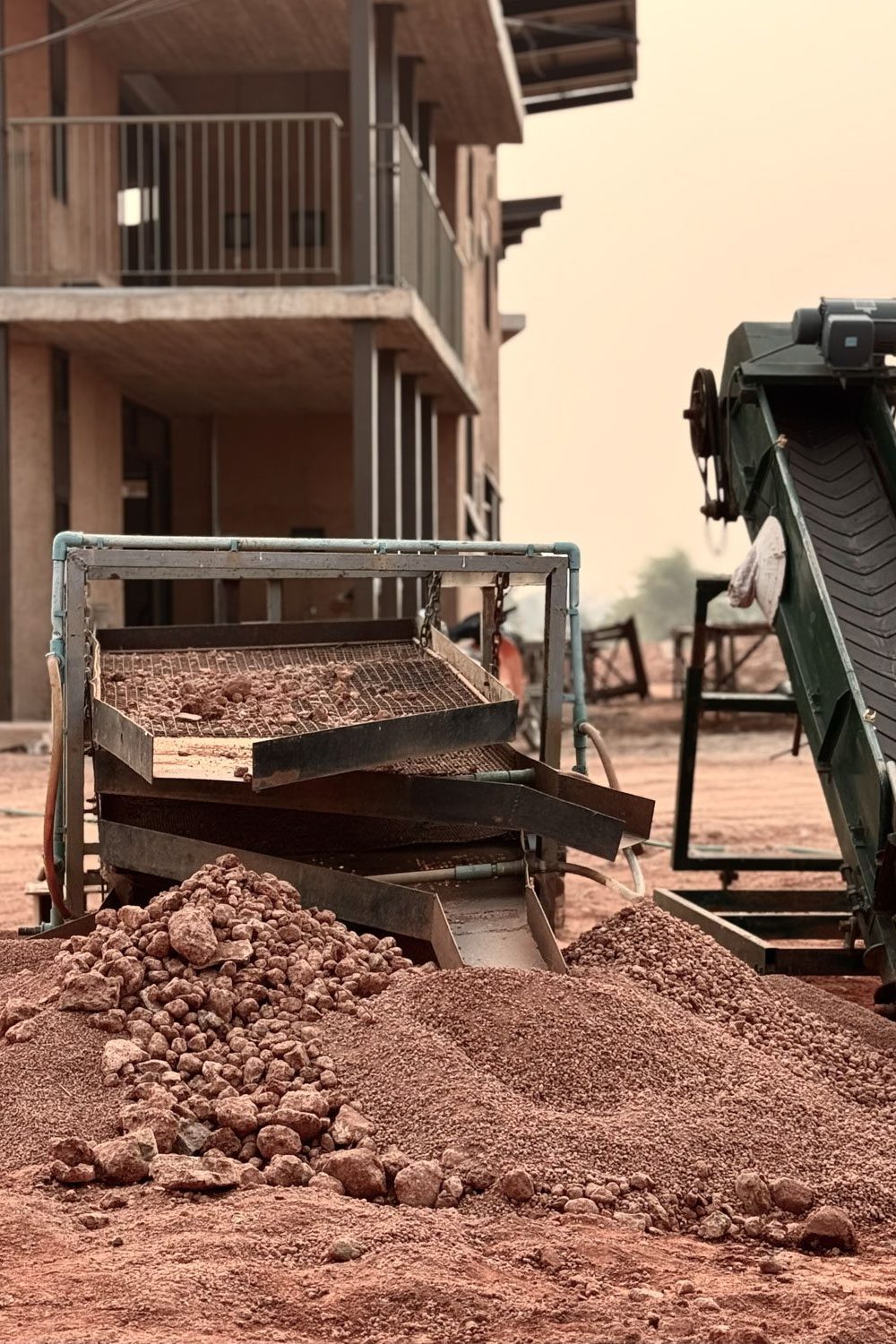
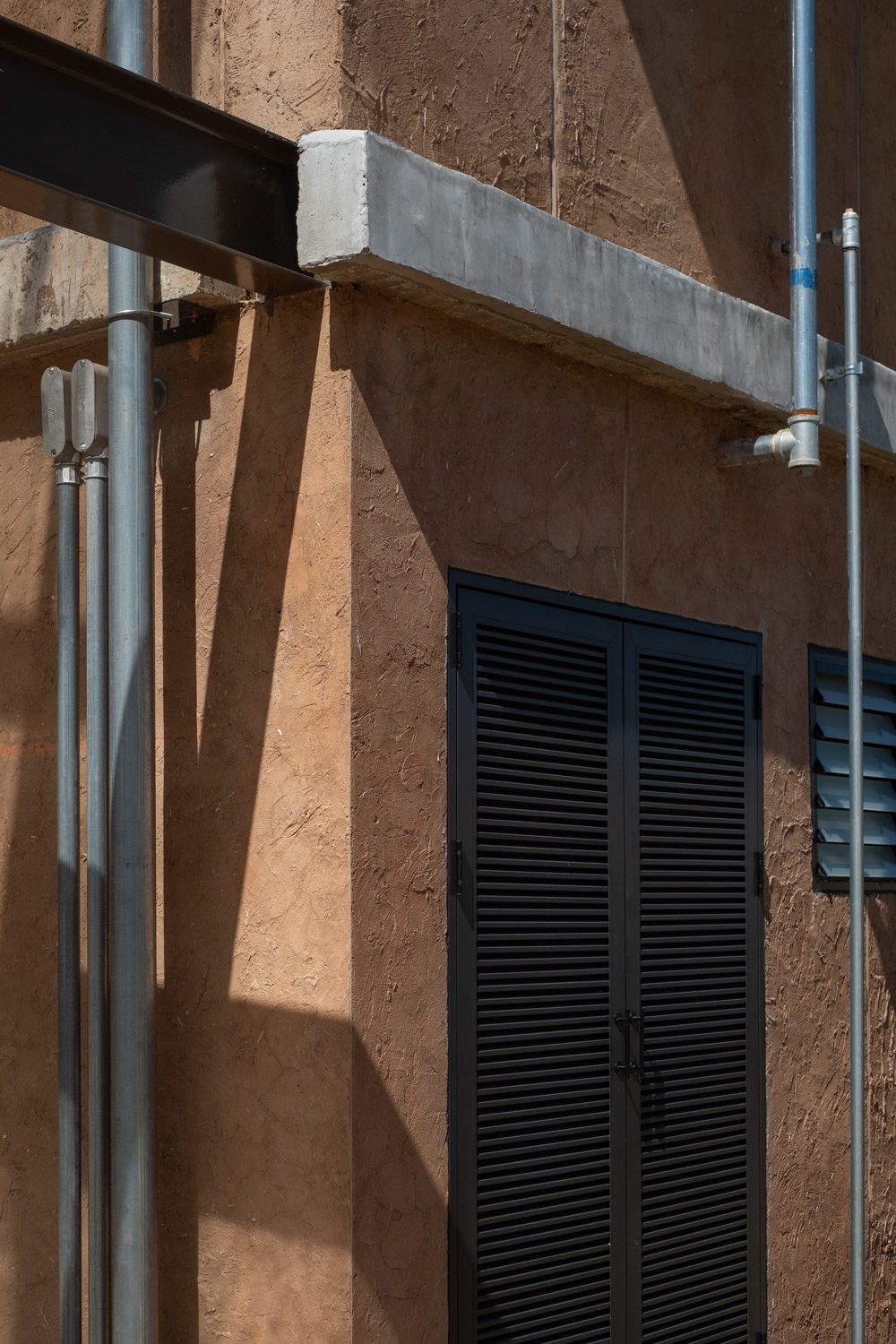
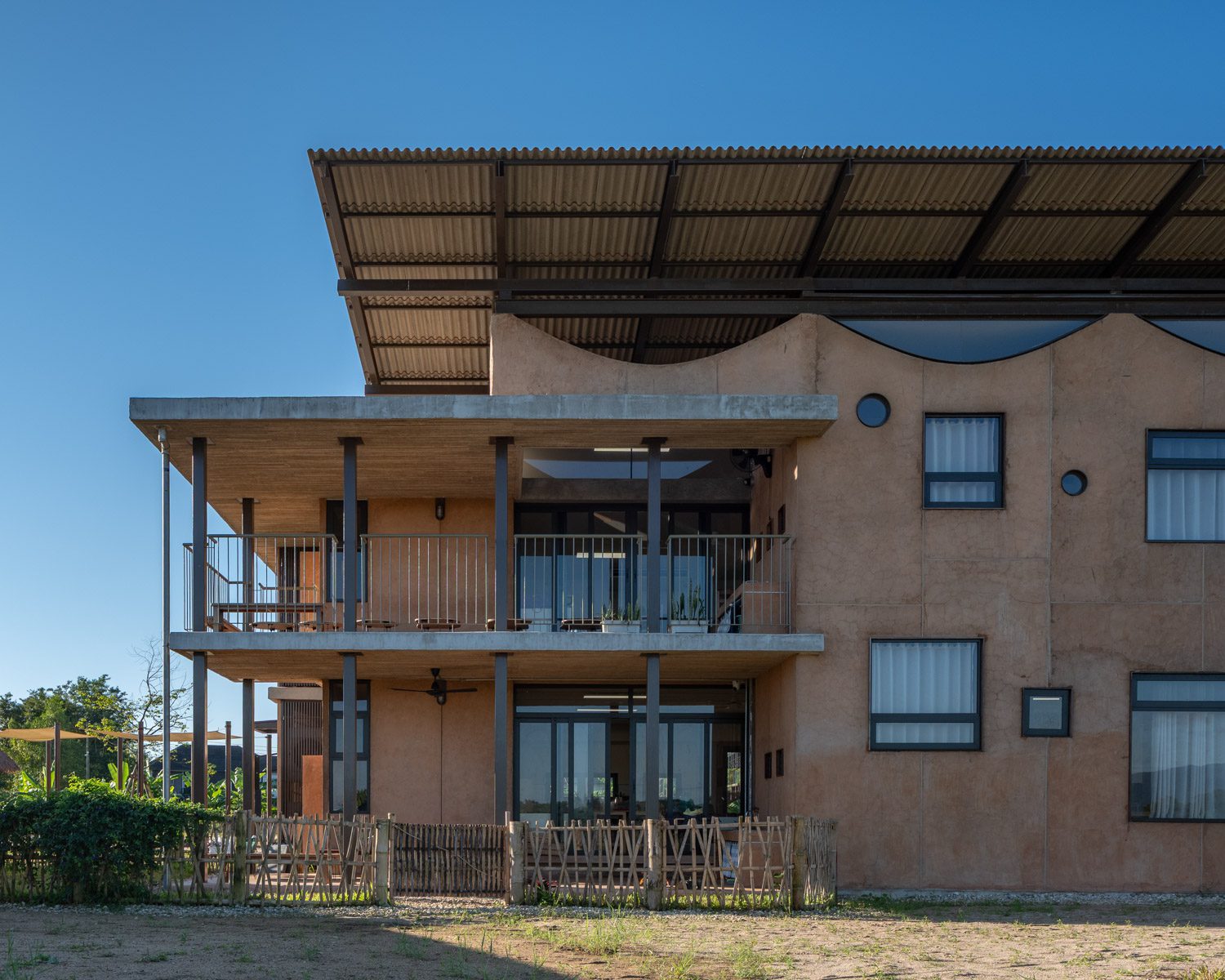
In the classroom buildings, the walls are finished in earthen plaster, a choice driven by the architects’ desire to reduce the use of cement and concrete for environmental reasons. Soil from the site was mixed into the plaster in a high proportion to compensate for the reduced amount of cement. The result is not only a material strategy with a lighter environmental footprint, but also a wall system that provides effective thermal insulation.
Learning Through Climate-Responsive Design
The pair gestures upward, inviting us to look at the roof of the classroom building, where a double-layered roof detail comes into view. A rather narrow ventilation gap is left between the two layers. The uppermost layer is made of affordable fiber-cement roofing, while the lower layer is metal sheeting, installed to prevent any leakage from penetrating the interior. No additional thermal insulation has been inserted. This double-roof detail was first tested in the architects’ own home. Once it proved effective in keeping the interior cool, they felt confident enough to adapt it in several subsequent projects.
‘Many people worry that birds or other animals might get in and build nests beneath the roof, but we have never encountered that problem,’ Piangor adds. ‘Perhaps because the cavity is quite narrow, and the heat radiating down from the upper roof, before being carried away by the airflow, makes it an inhospitable place for animals.’
‘Many people worry that birds or other animals might get in and build nests beneath the roof, but we have never encountered that problem,’ Piangor adds. ‘Perhaps because the cavity is quite narrow, and the heat radiating down from the upper roof, before being carried away by the airflow, makes it an inhospitable place for animals.’
All of this reflects the project’s broader commitment to economy and passive cooling. From the landscape strategy to the buildings themselves, where concrete is used only where necessary, every decision has been shaped by the aim of reducing heat gain through design and reducing the overall amount of heat-retaining surfaces. Openings are carefully positioned to promote ventilation, while solar protection measures are integrated with a carefully calibrated level of natural light. Only when truly needed does the school turn to active cooling, first through fans and then air-conditioning. Songtam notes that, as recently as last month, the school’s total electricity bill came to just over ten thousand baht.
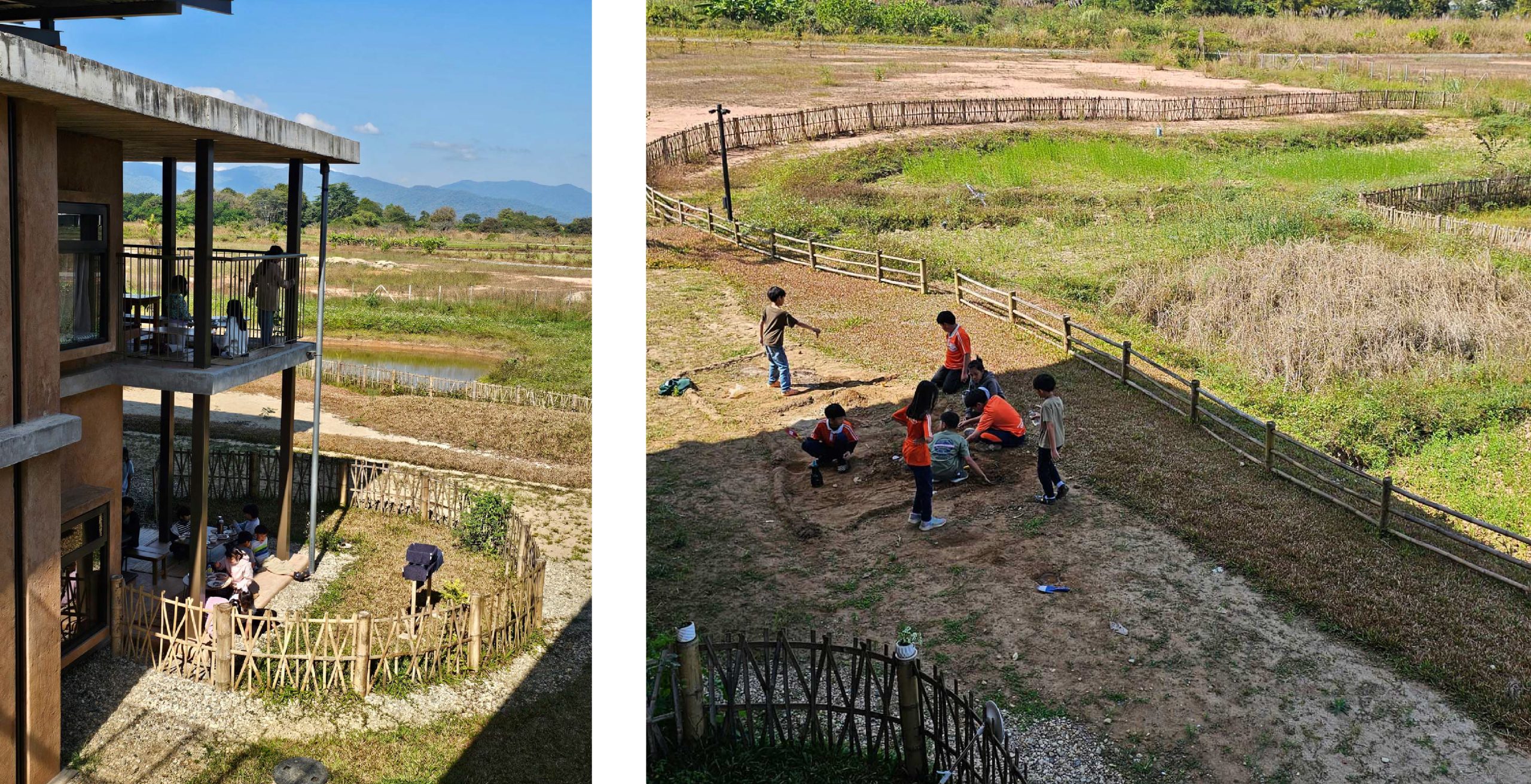
Photo: Monthon Paoaroon
Before we leave, we notice a group of children playing in the shade along the northern side of the classroom building, digging into the earth to build forts and moats. By now, this has become one of their favorite afternoon play areas. Watching their faces light up with the simple delight of water, soil, and the freedom to get dirty without hesitation, we cannot help but feel a flicker of envy for a school life like this.
At one point during the visit, Songtam and Piangor tell us that, in designing the school, they kept returning to a simple question from their own childhood: what kind of place would they have wanted to learn in? They tried, as much as possible, to make that place real. Even the architects themselves, it seems, cannot help but feel a little envious of the children who get to learn here.
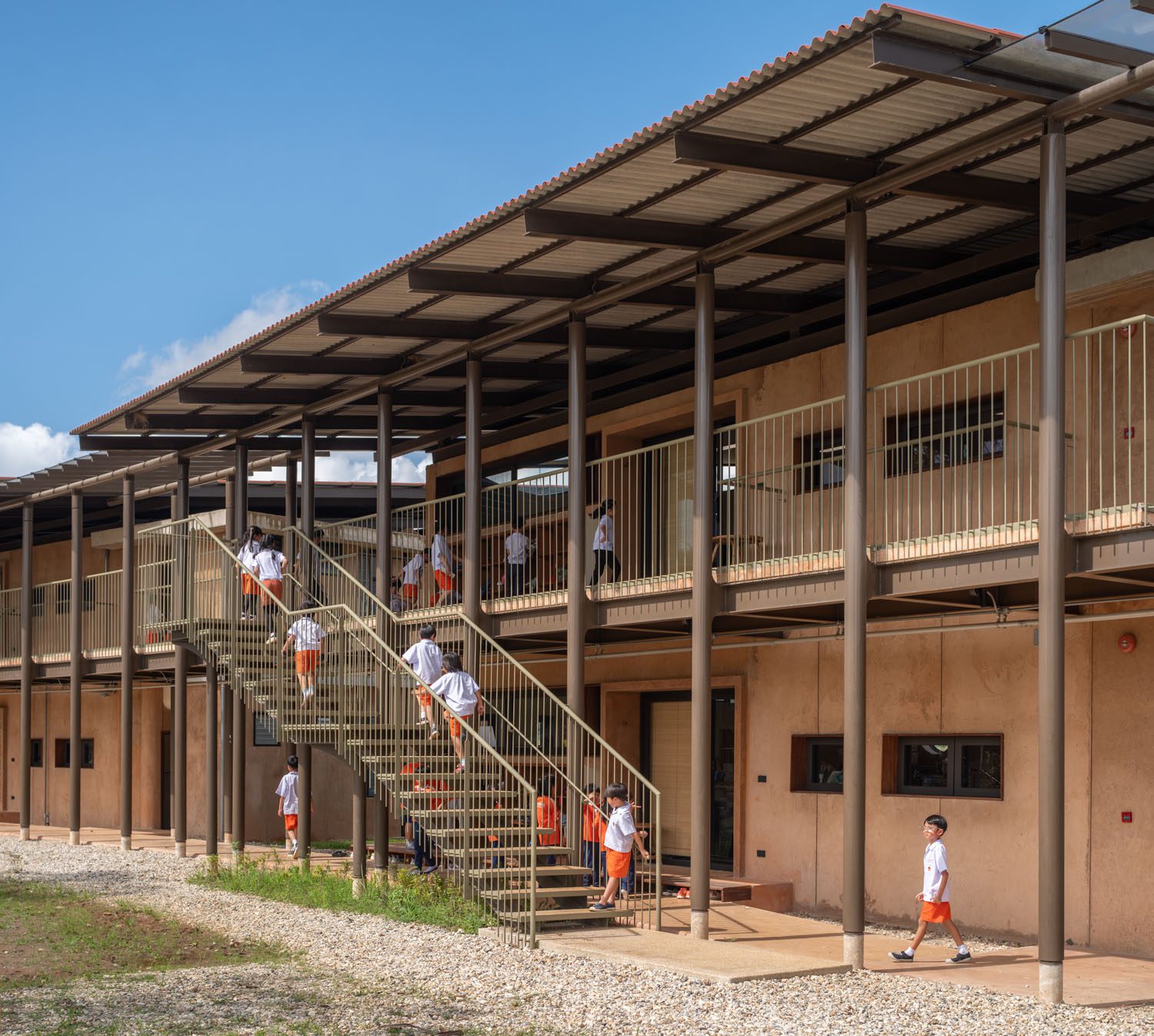
Photo: Peerapat Wimolrungkarat
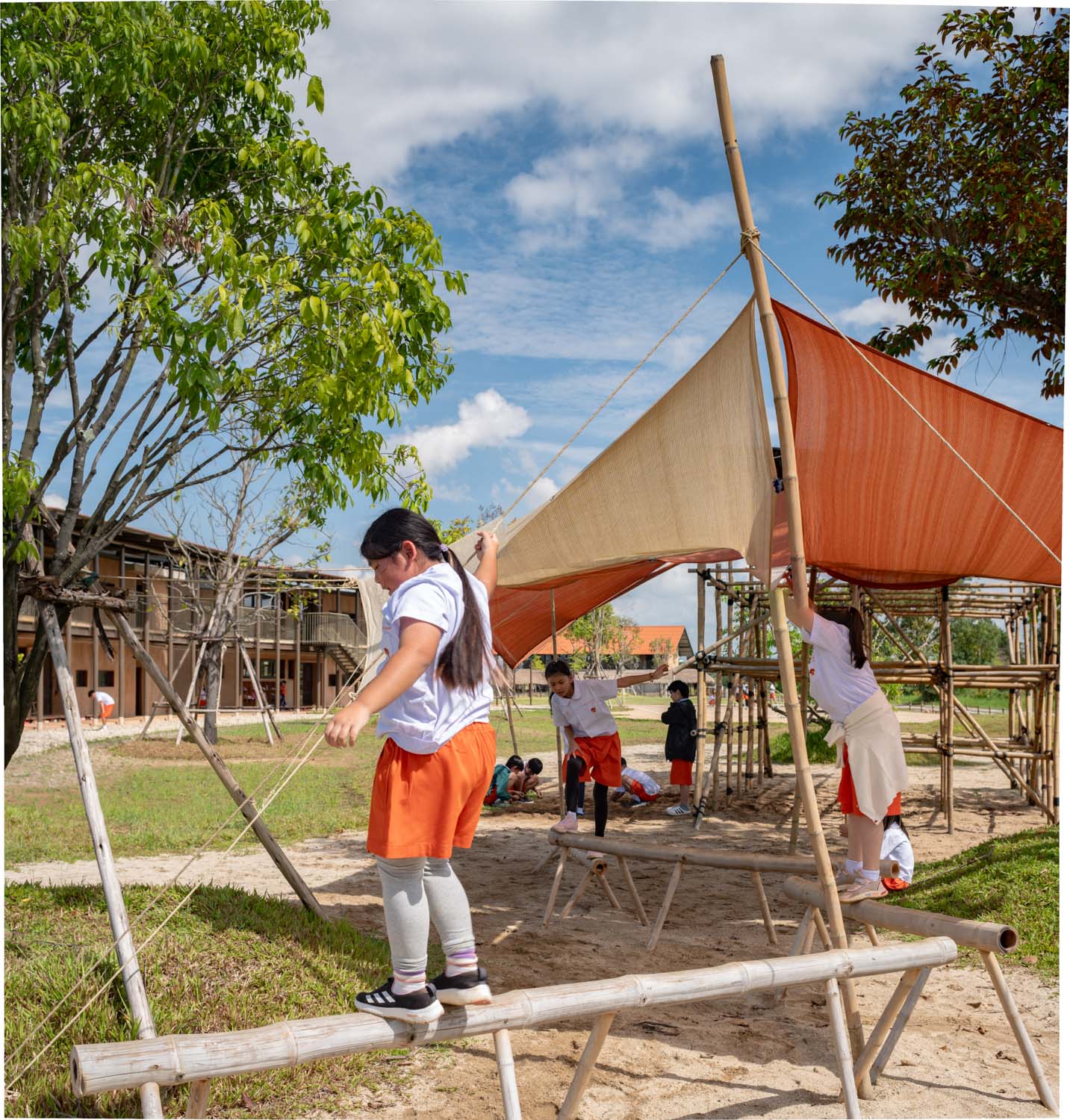
Photo: Peerapat Wimolrungkarat