
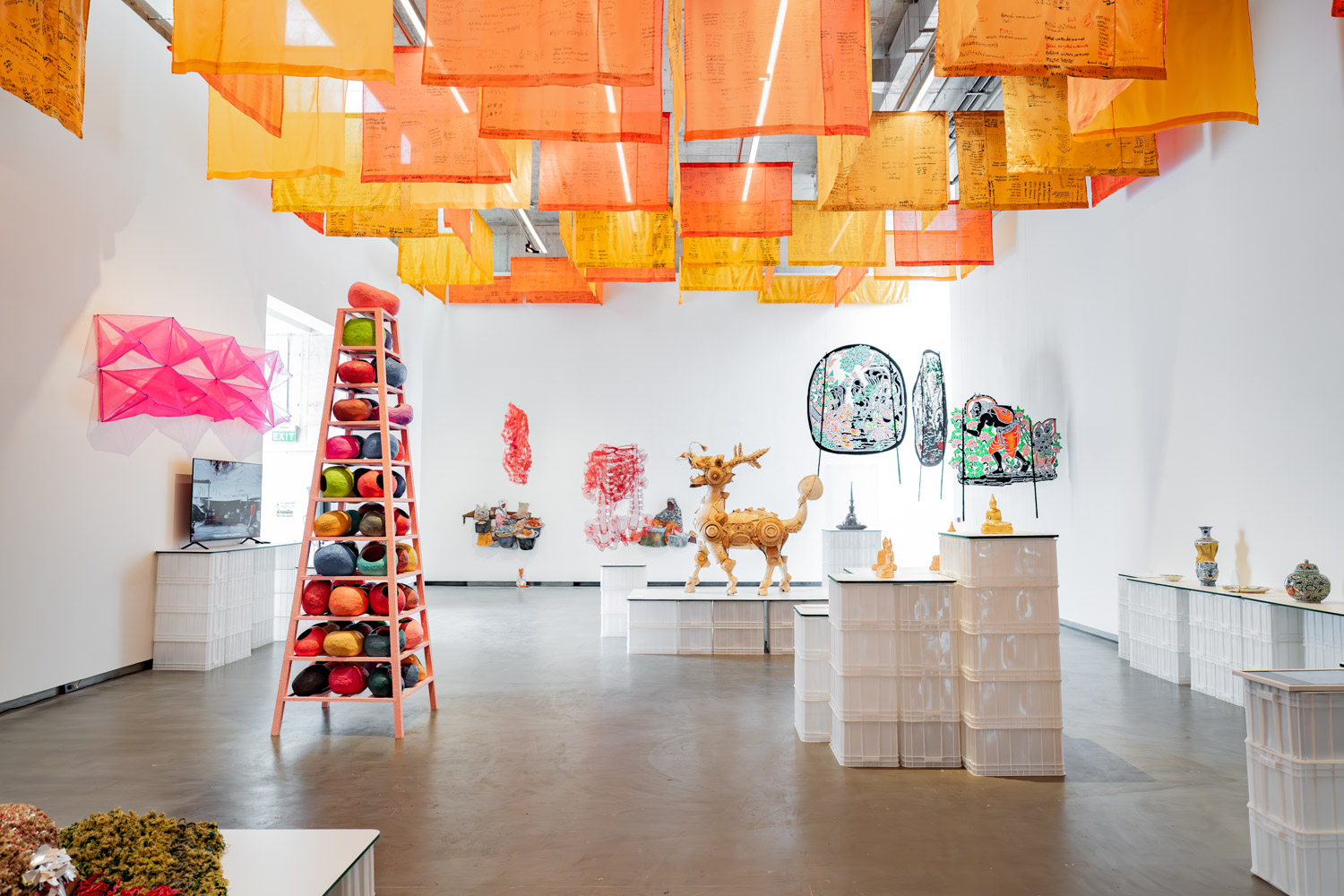
LIVING IN AN ELASTIC TIME IS AN EXHIBITION THAT INVITES YOU TO LOOK AT HANDICRAFTS THROUGH THE DIMENSIONS OF TIME, LABOR, AND MEMORY, CREATING A DIALOGUE BETWEEN TRADITIONAL CRAFTS, CONTEMPORARY ART, AND SPACE
TEXT: KANDECH DEELEE
PHOTO: MARISA SRIJUNPLEANG, COURTESY OF JIM THOMPSON ART CENTER EXCEPT AS NOTED
(For Thai, press here)
In the early twentieth century, the moving assembly line radically transformed the production of goods. Products were carried through a sequence of workstations, each performing a separate and isolated task. This model lowered costs, shortened production times, and vastly increased output.1 Yet goods awaiting assembly were not the only things moving along the line. The time and energy of workers were also drawn out and consumed to sustain the momentum of this massive machinery. Wages, labor, and time became variables to be consolidated, accelerated, and stretched into a single linear measure for assessing efficiency according to profitability. At the same time, the relationship between workers and the goods they produced was severed almost entirely. Laborers were ‘stripped of’ their status and significance as makers, reduced instead to little more than individual components within the process of assembly.
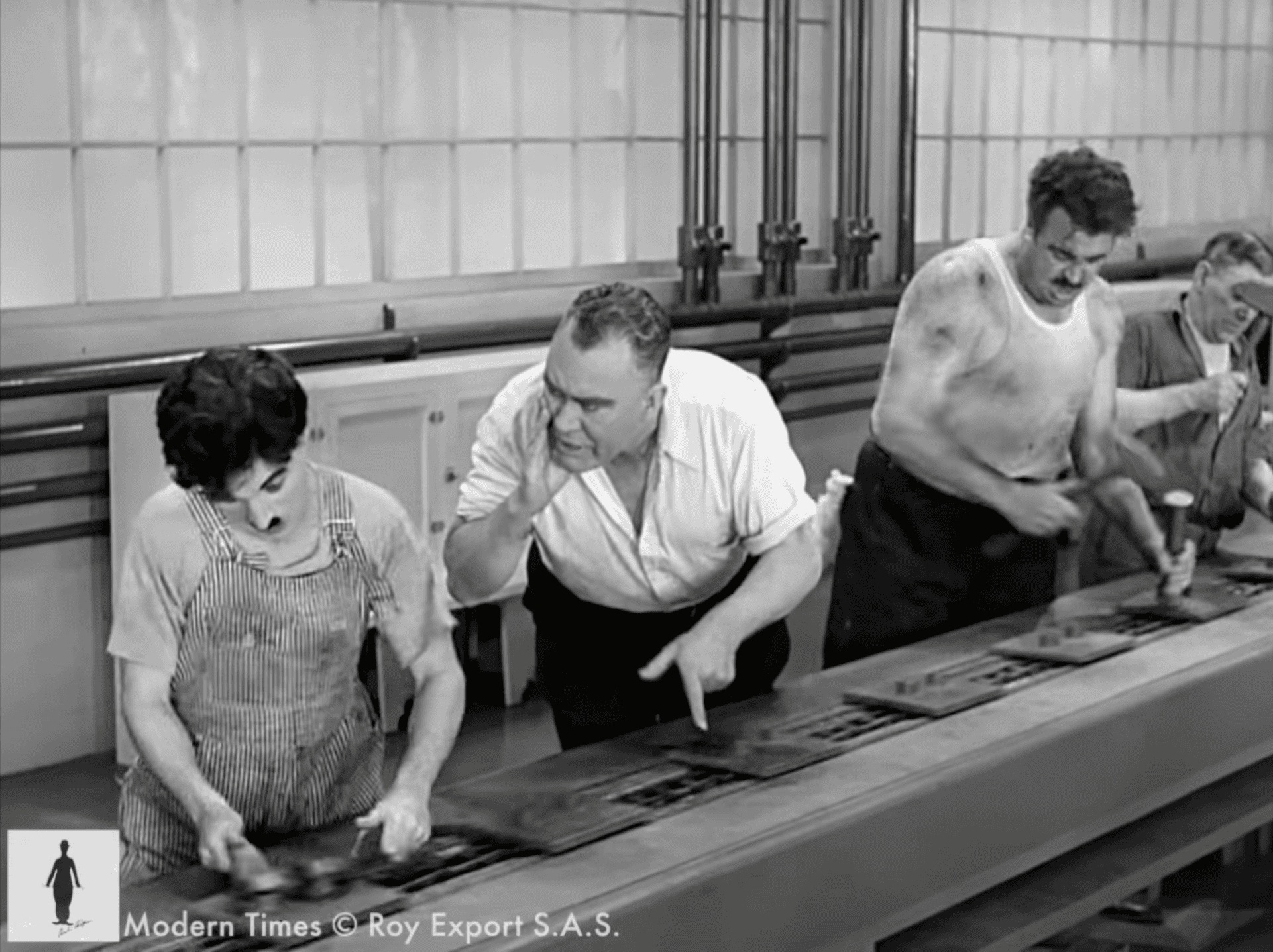 Charlie Chaplin. (2019, February 4). Charlie Chaplin – Factory Scene – Modern Times (1936) [Video]. YouTube. Source: https://www.youtube.com/watch?v=6n9ESFJTnHs
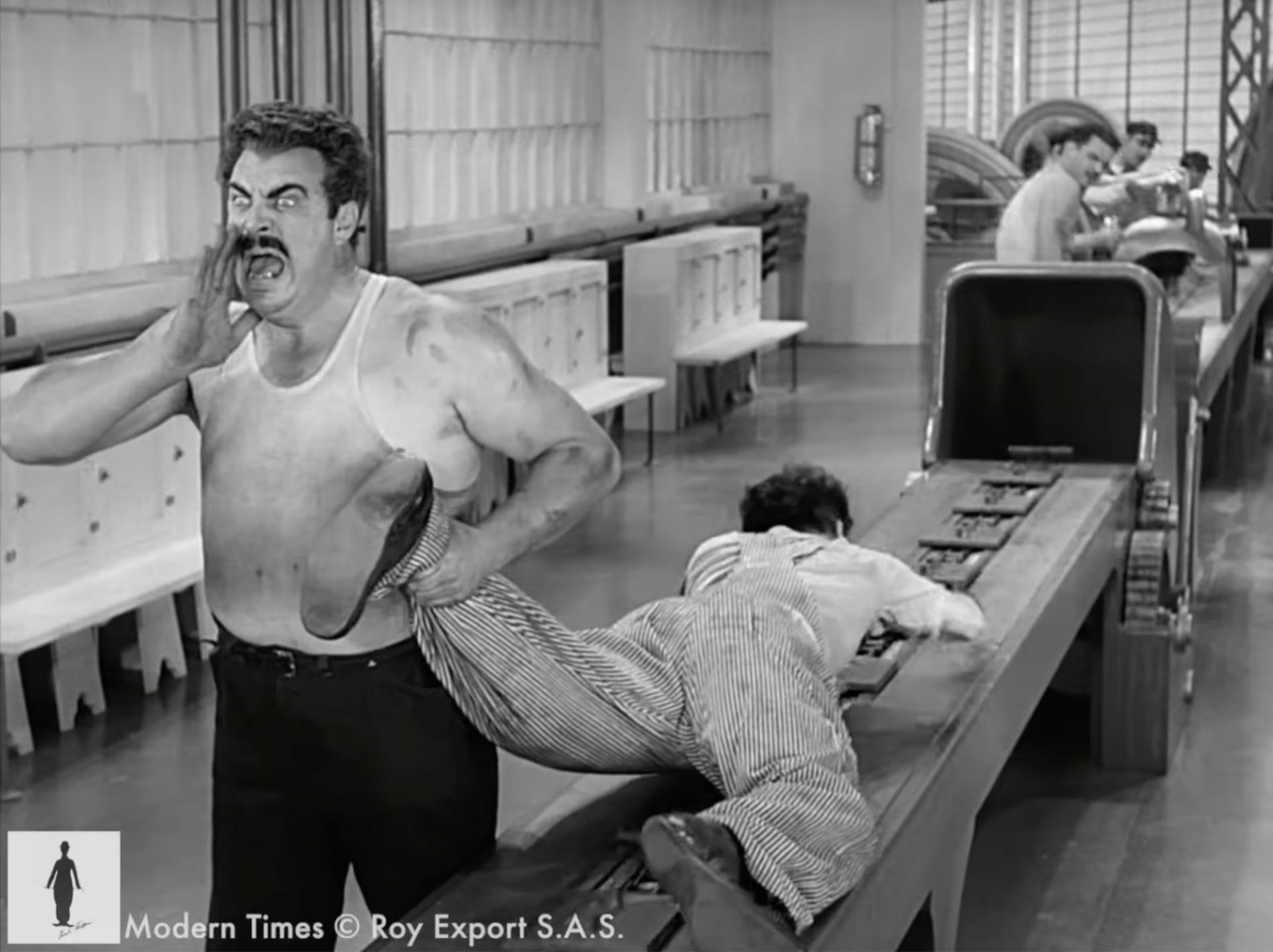
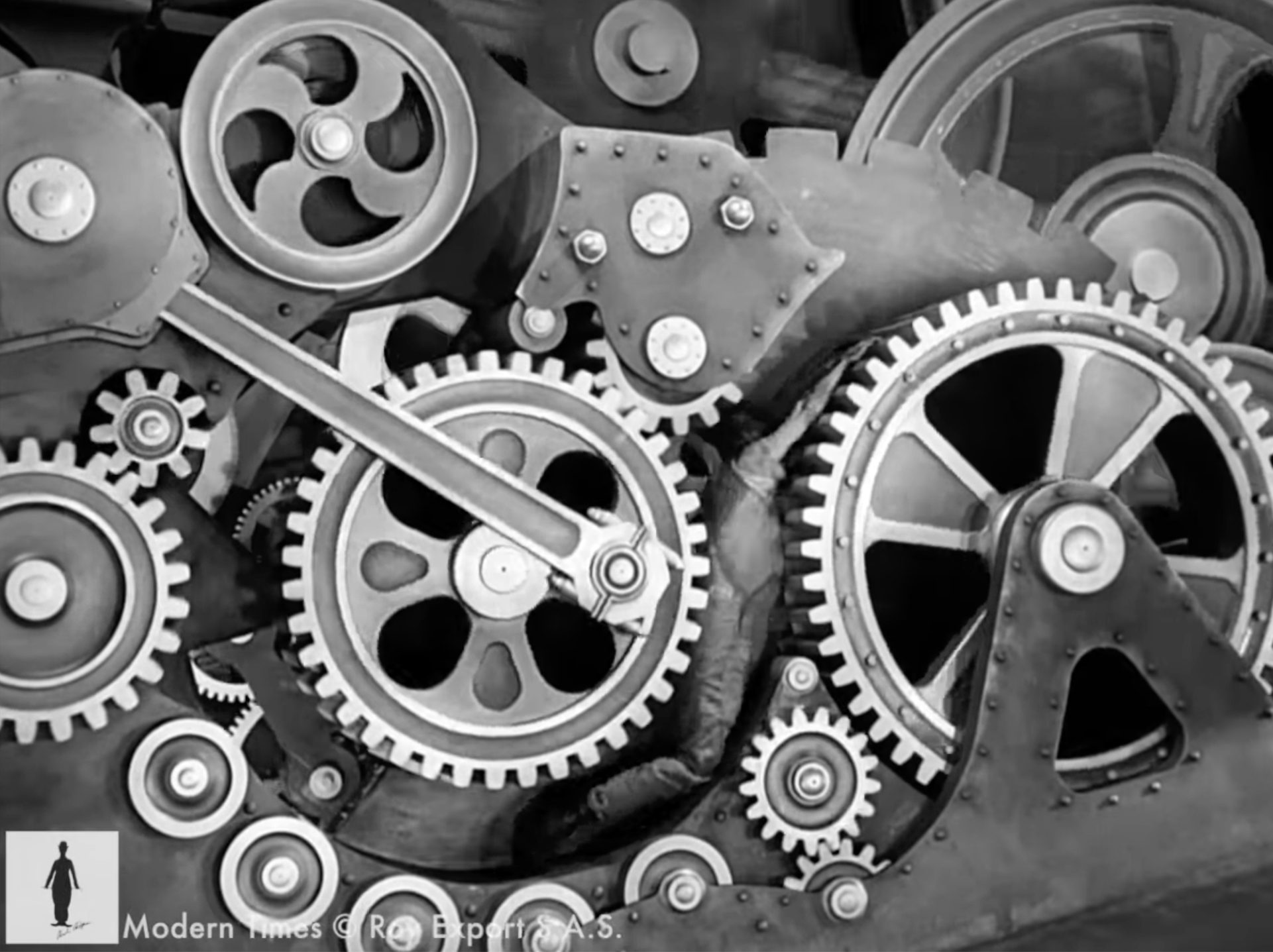
This alienation began to surface in the apparent flawlessness of the objects themselves. An object may be shaped not only by forms of capital that can be measured and calculated, but also by memories, stories, time, skill, and certain rituals that give it value and bring it to life. For this reason, the qualities of craft began to overlap with definitions of art, particularly in their shared emphasis on aesthetic experience. The Arts and Crafts Movement thus gained renewed significance, even as the sweeping transformations brought about by capitalism and industrialization were still relatively new.
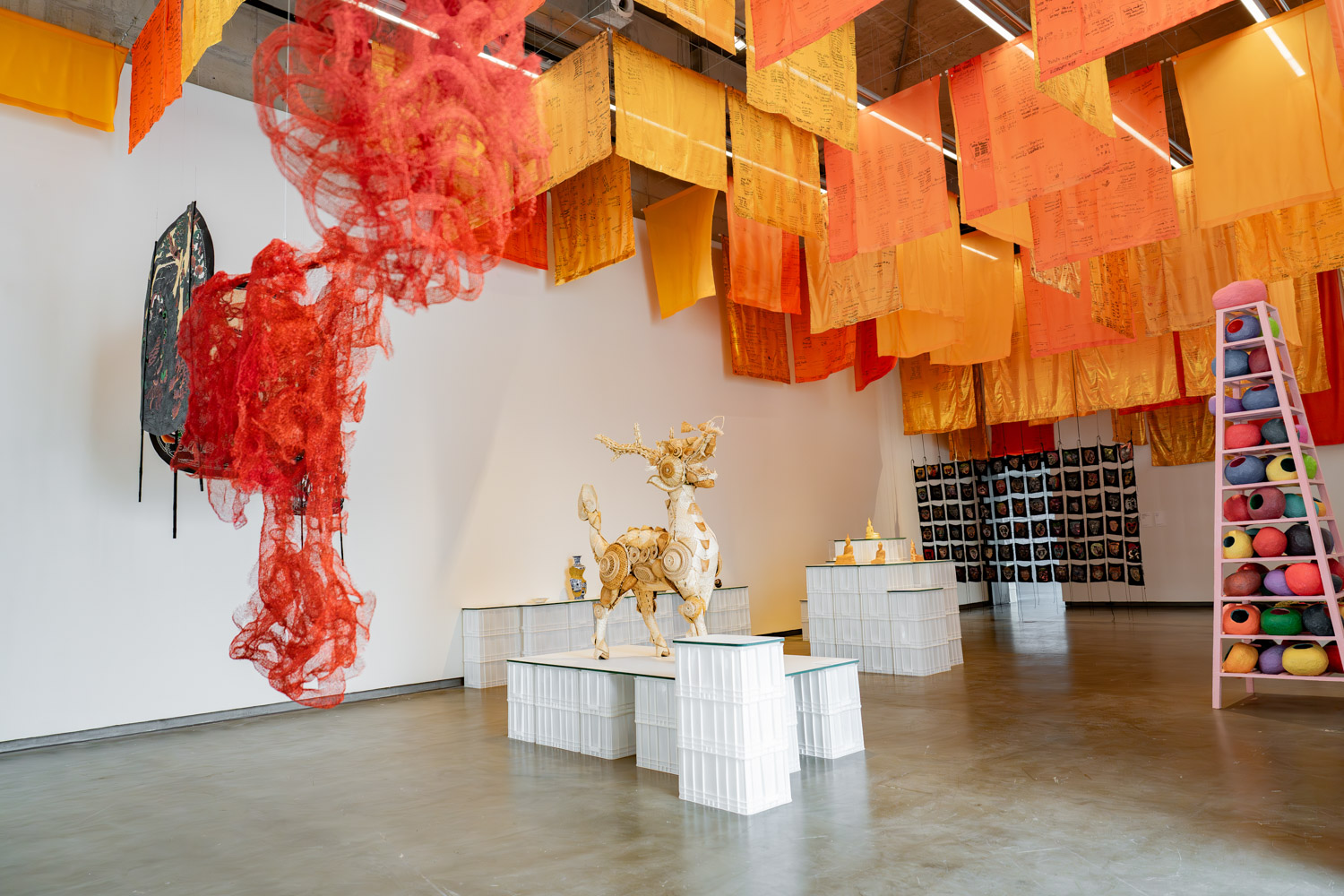
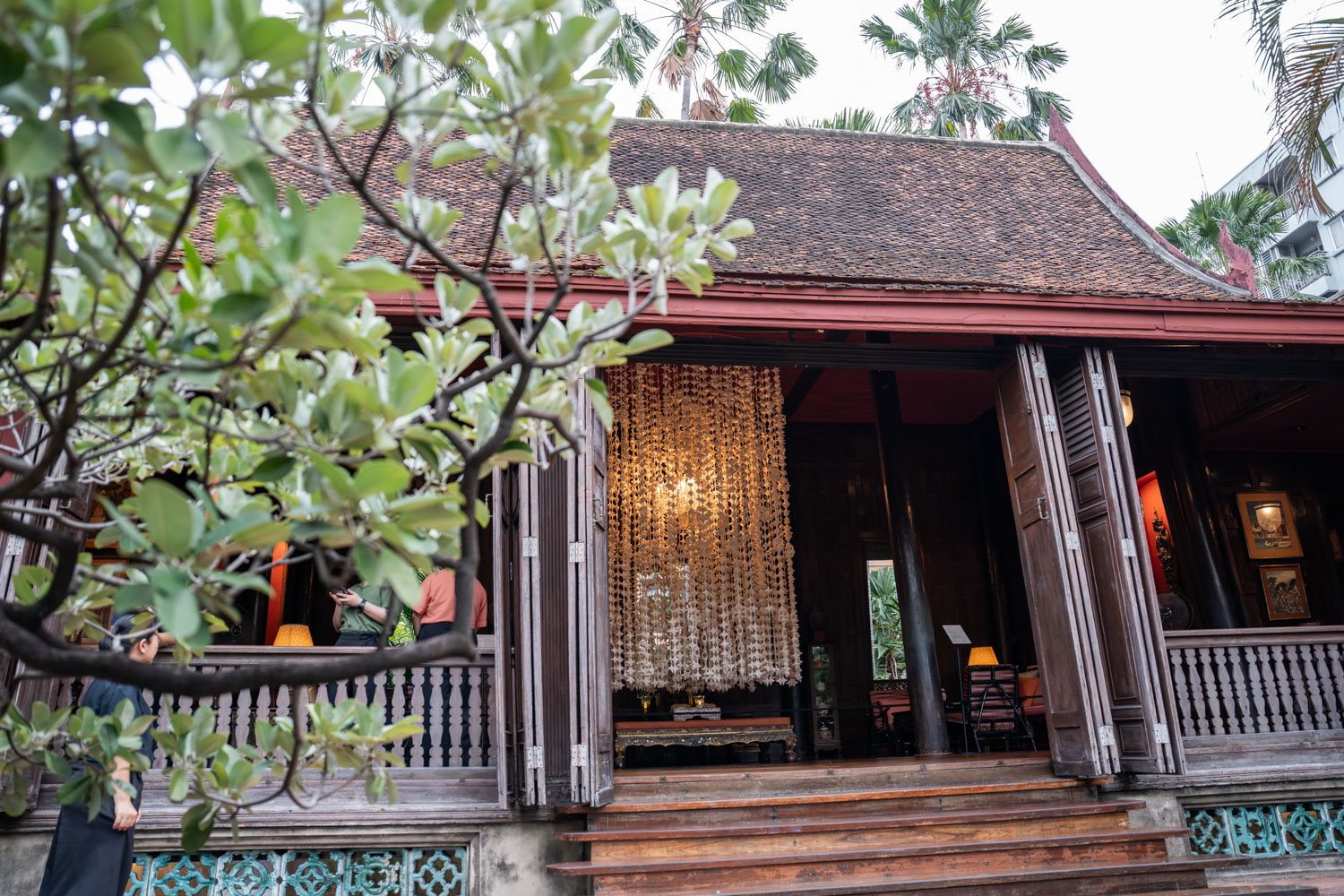
Living in an Elastic Time is an exhibition about vernacular craft and all the things that distinguish from industrially manufactured goods. These works are not standardized objects produced in large quantities, but artifacts embedded in complex relationships with community life, belief, tradition, ritual, and an experience of time that does not move in a straight line along the conveyor belt. The exhibition brings craft into dialogue with contemporary art, while also unfolding across two contrasting settings: the Jim Thompson Art Center, a gallery dedicated to contemporary art, and the Jim Thompson House Museum, a traditional Thai house displaying antiques and works of craft.
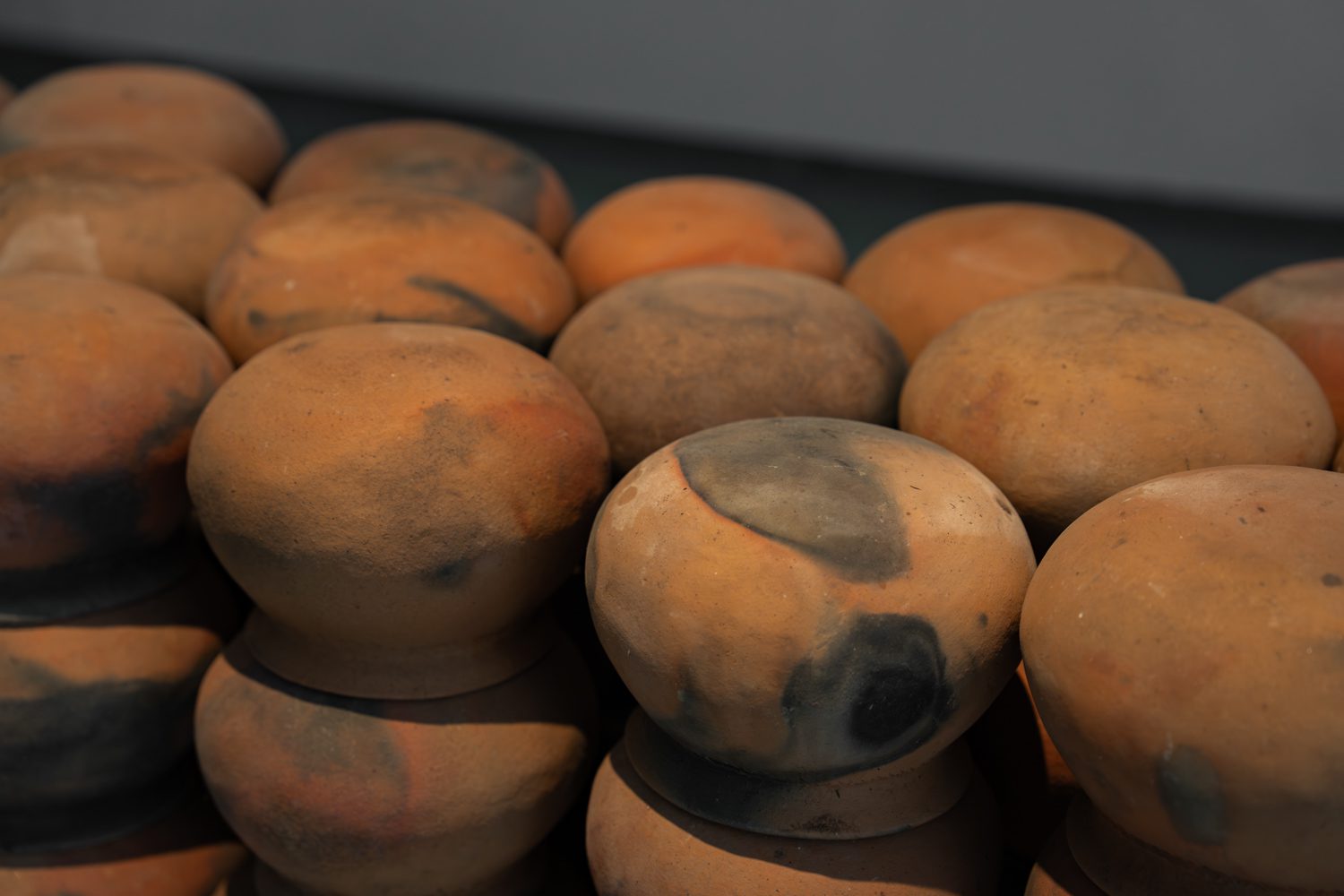
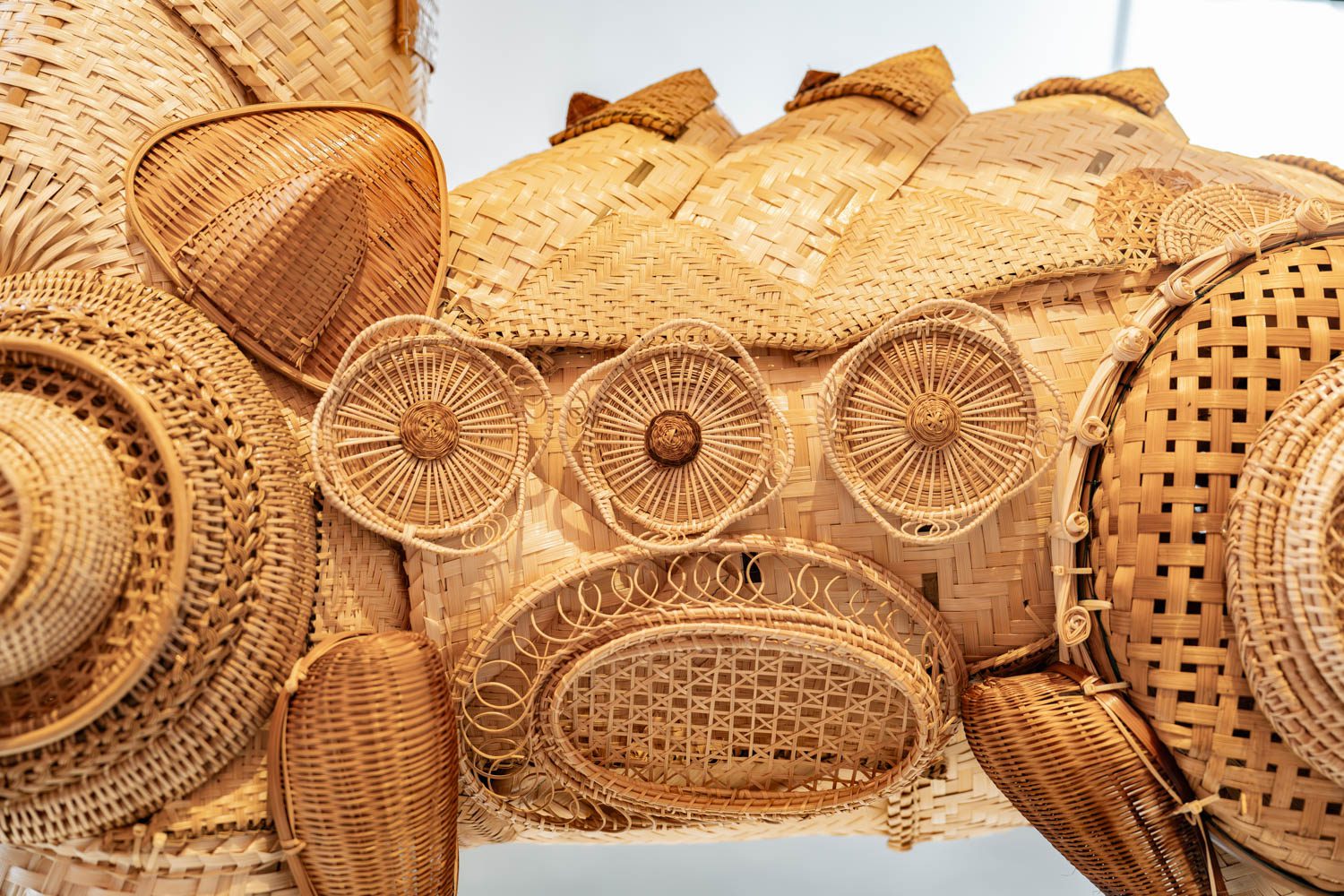
Across Southeast Asia, vernacular craft is deeply rooted in everyday life, belief, and communal traditions and rituals. Craft, then, is not simply something made by hand. It creates a bond from one body to another, with the hand serving as the medium that brings them together. The forms of woven and sculpted objects are grounded in life and nature, reflecting the forces that bind us to one another. This can be seen in secondary burial, a practice in which bones are placed inside a womb-like earthenware vessel to return the spirit to nature2. It can also be found in the structures of living organisms: muscles, wood fibers, and fungal filaments are all fibrous forms shaped through alignment, entwining, and interweaving, much like basketry and textiles.
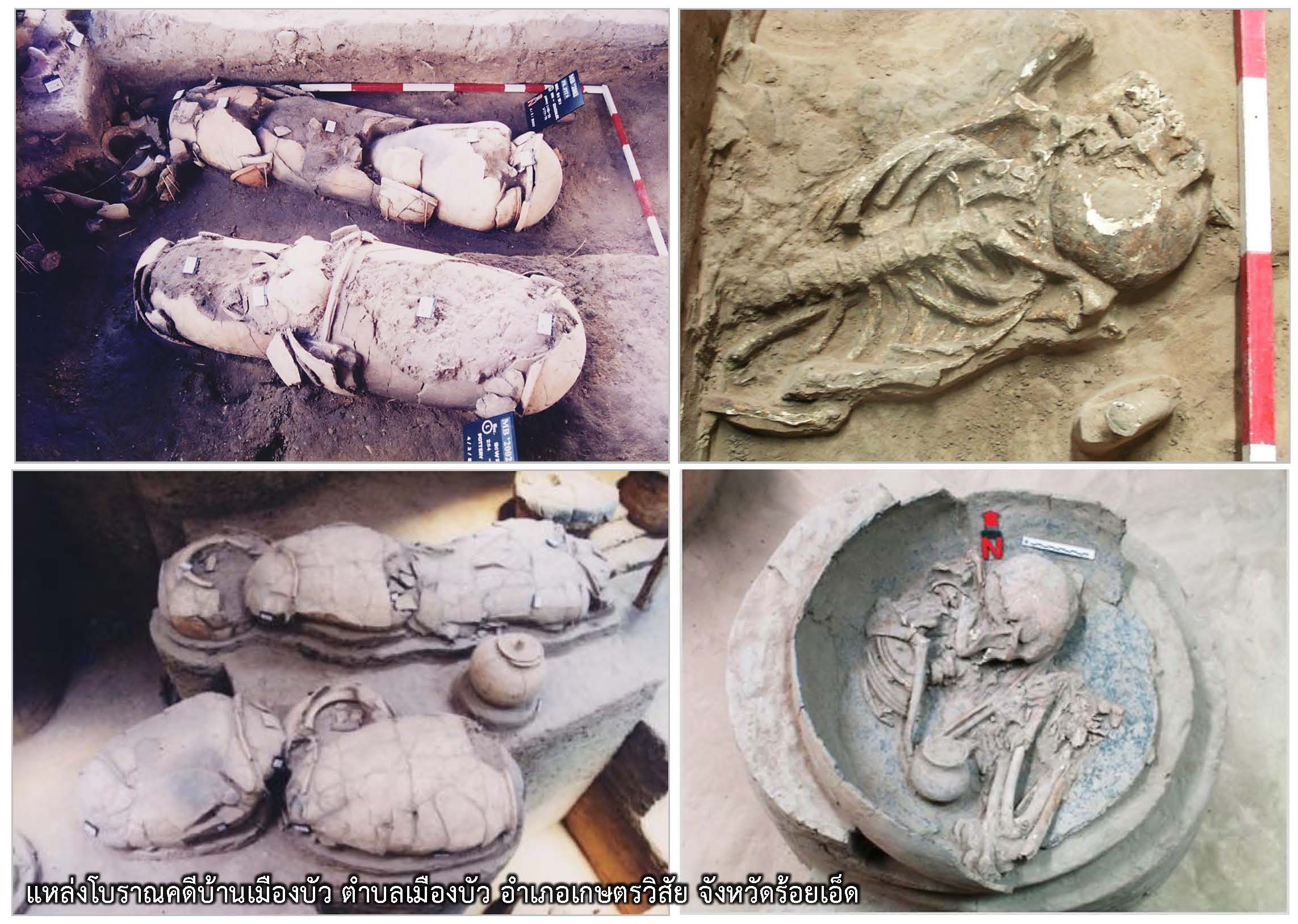
กรมศิลปากร. (2565). ทุ่งกุลาร้องไห้: จุดบรรจบของโลกหลังความตาย. Source: https://www.finearts.go.th/promotion/view/19055-ทุ่งกุลาร้องไห้-จุดบรรจบของโลกหลังความตาย
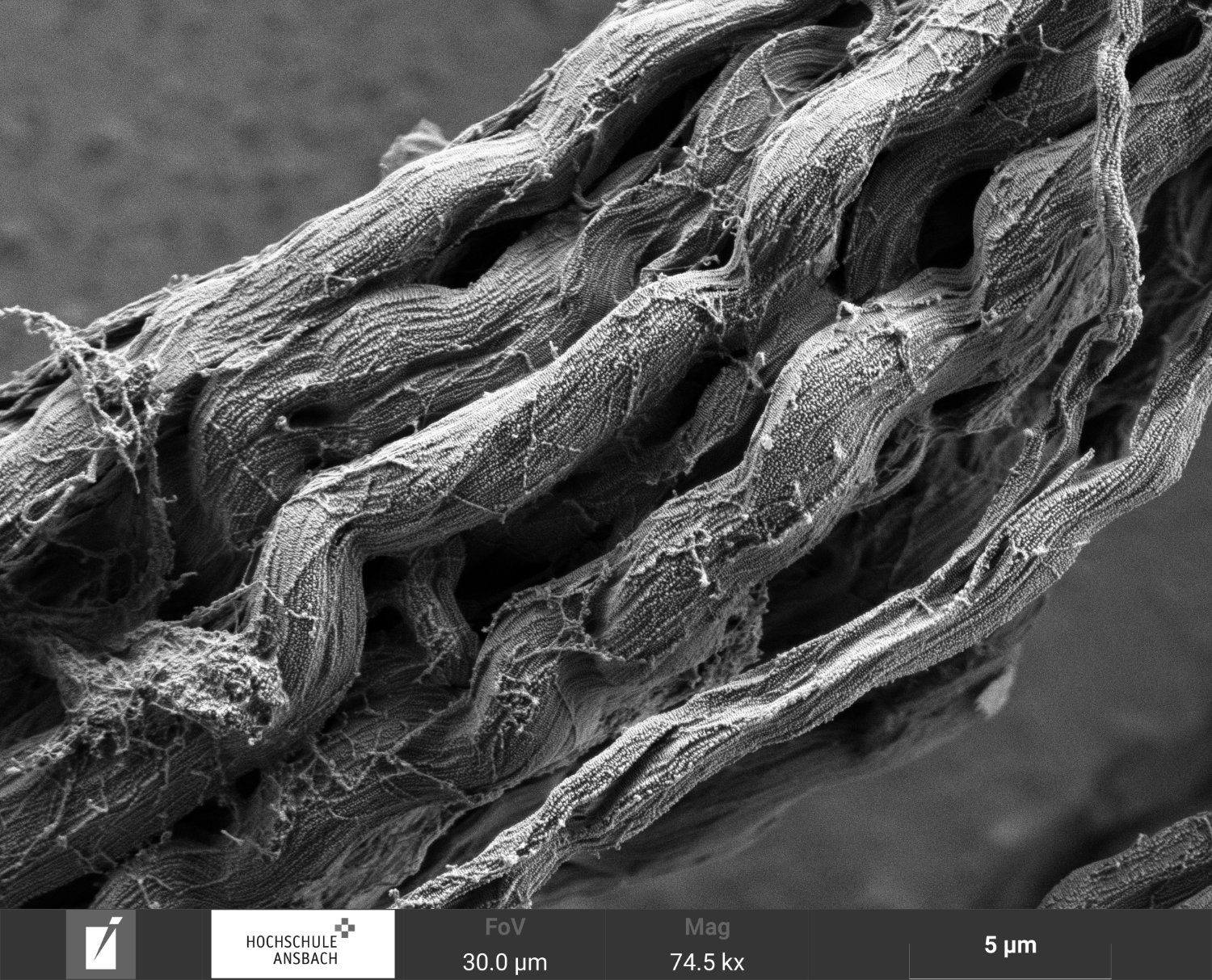
Häfner, P. (2022). Kollagen Faserbündel [Scanning electron micrograph]. Wikimedia Commons. Source: https://commons.wikimedia.org/wiki/File:Kollagen_Faserbündel.jpg
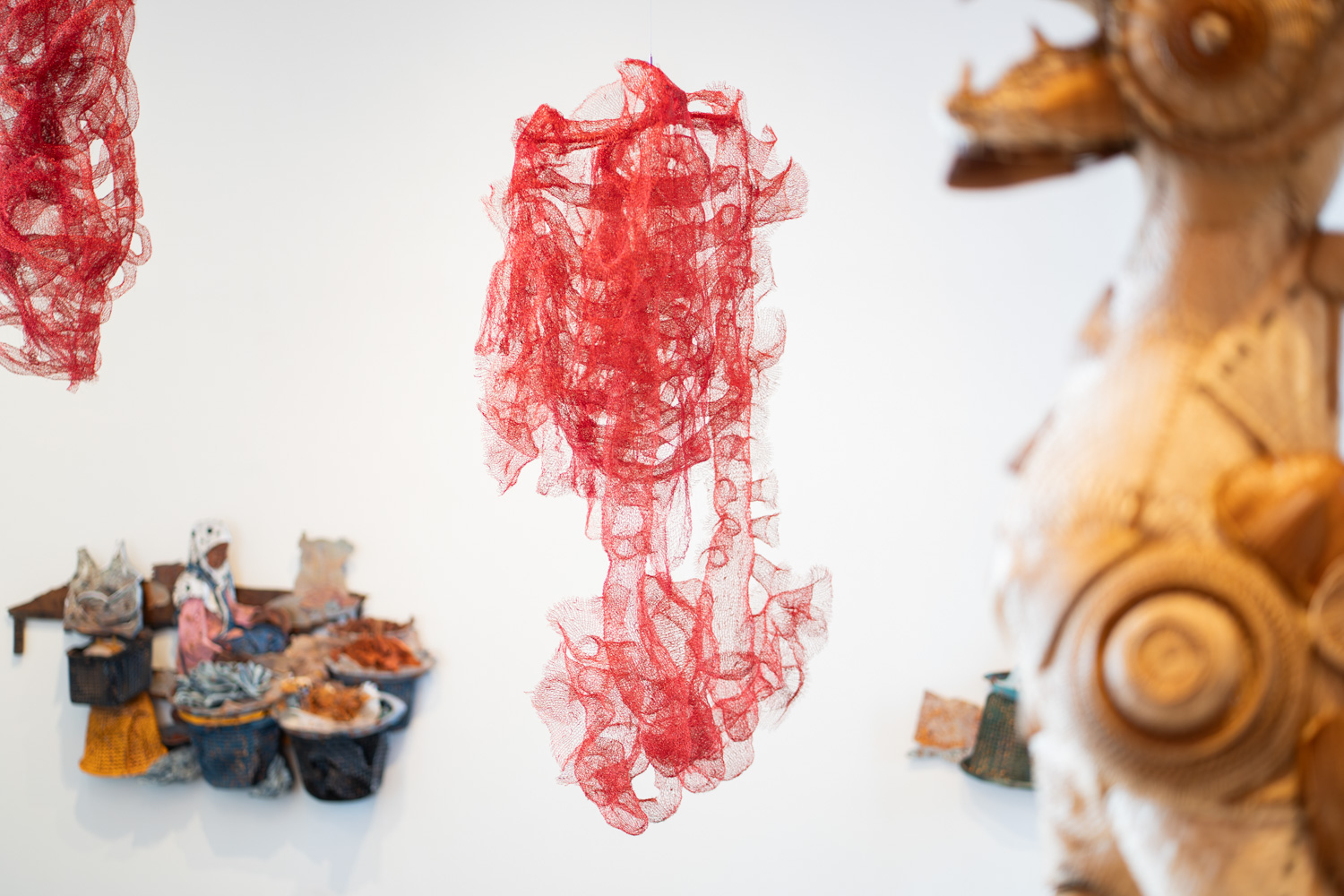
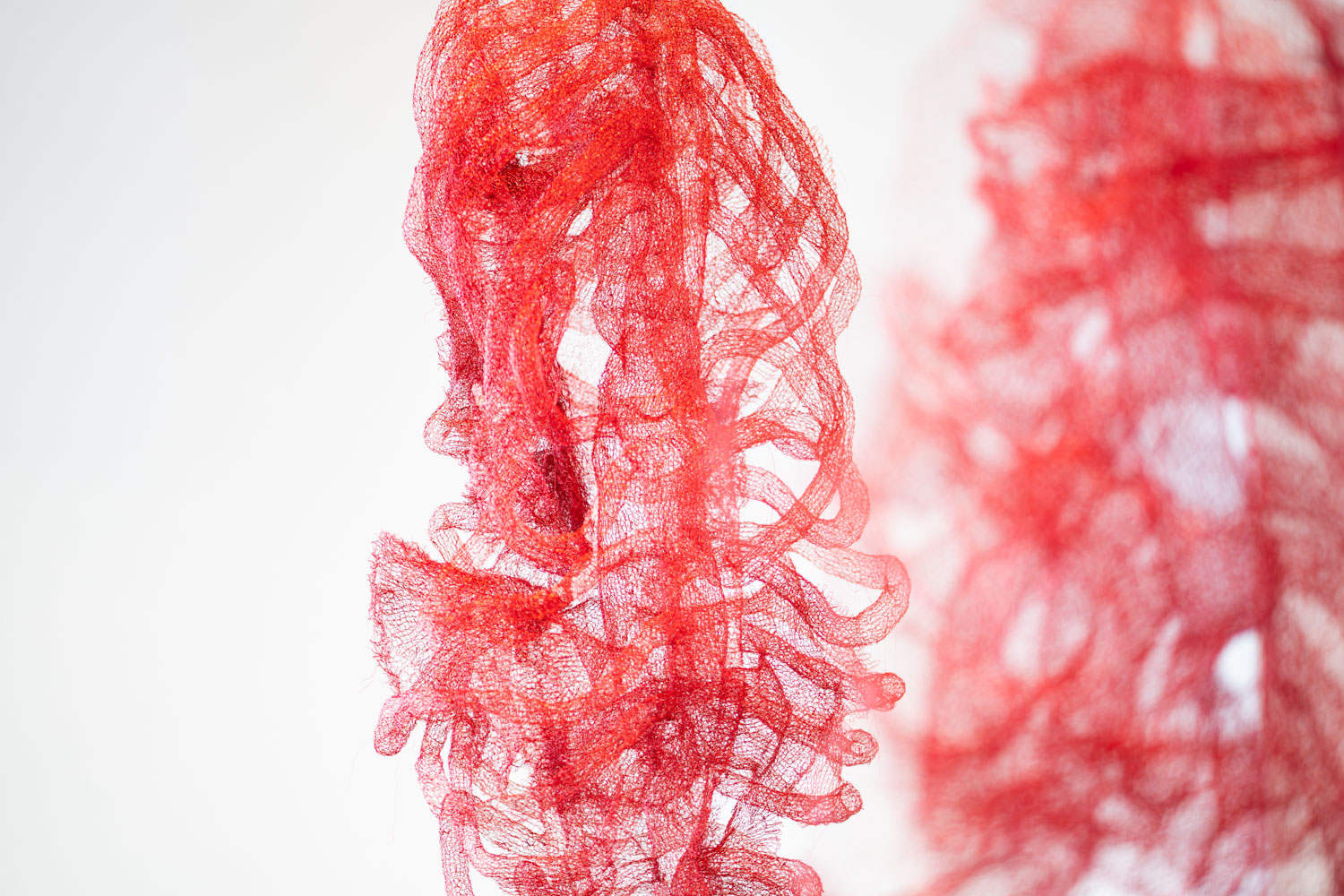
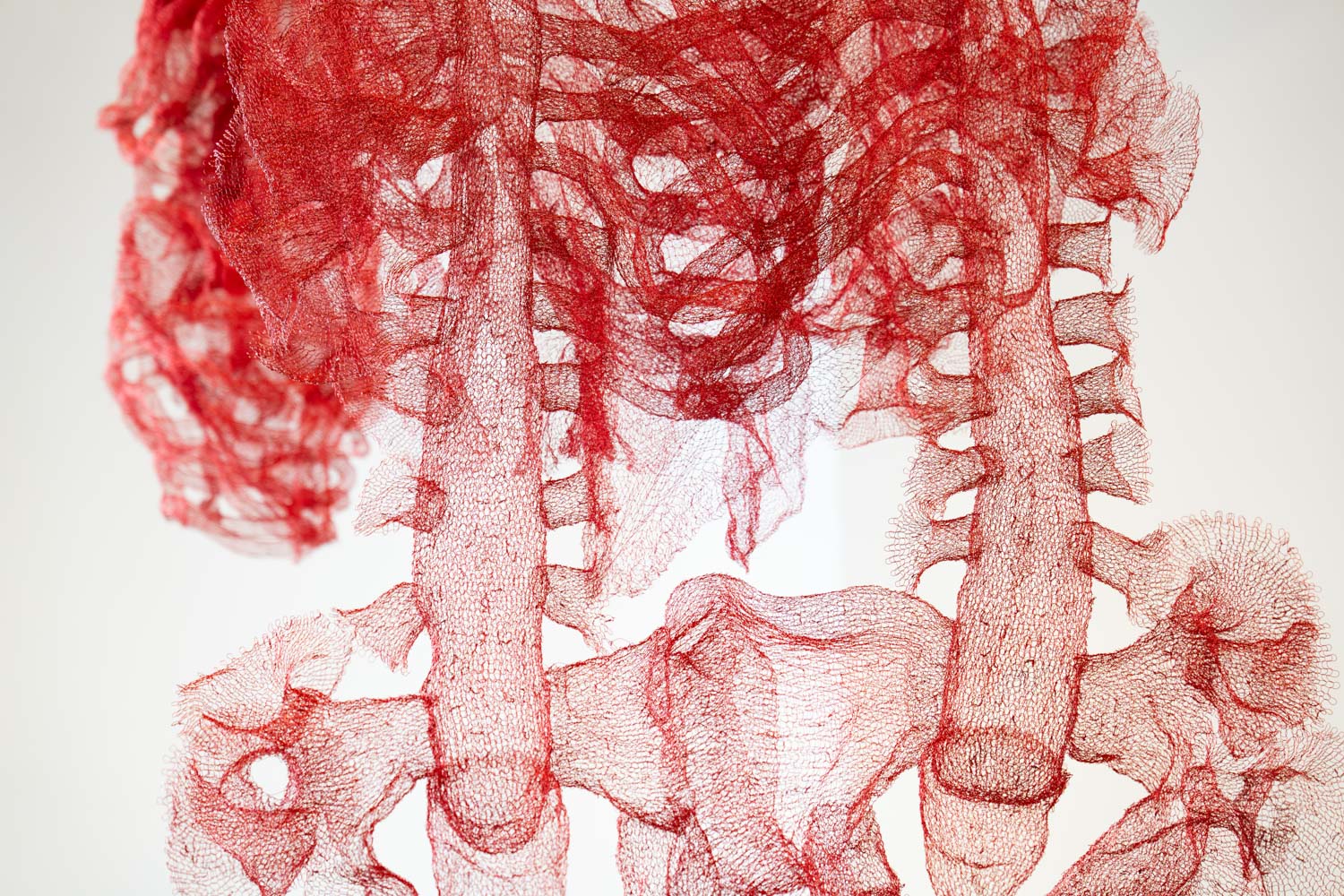
The work presents not one suspended skeleton but two skeletal forms intertwined at the ribs and pelvis, resembling conjoined twins who share certain organs. Craft, then, is not merely a practical tool for everyday life, but an object that reflects the interdependent networks of human society. What Sita has created is more than a reinterpretation of craft through the language of contemporary art. It brings the broader field of meaning embedded within craft into sharper focus.
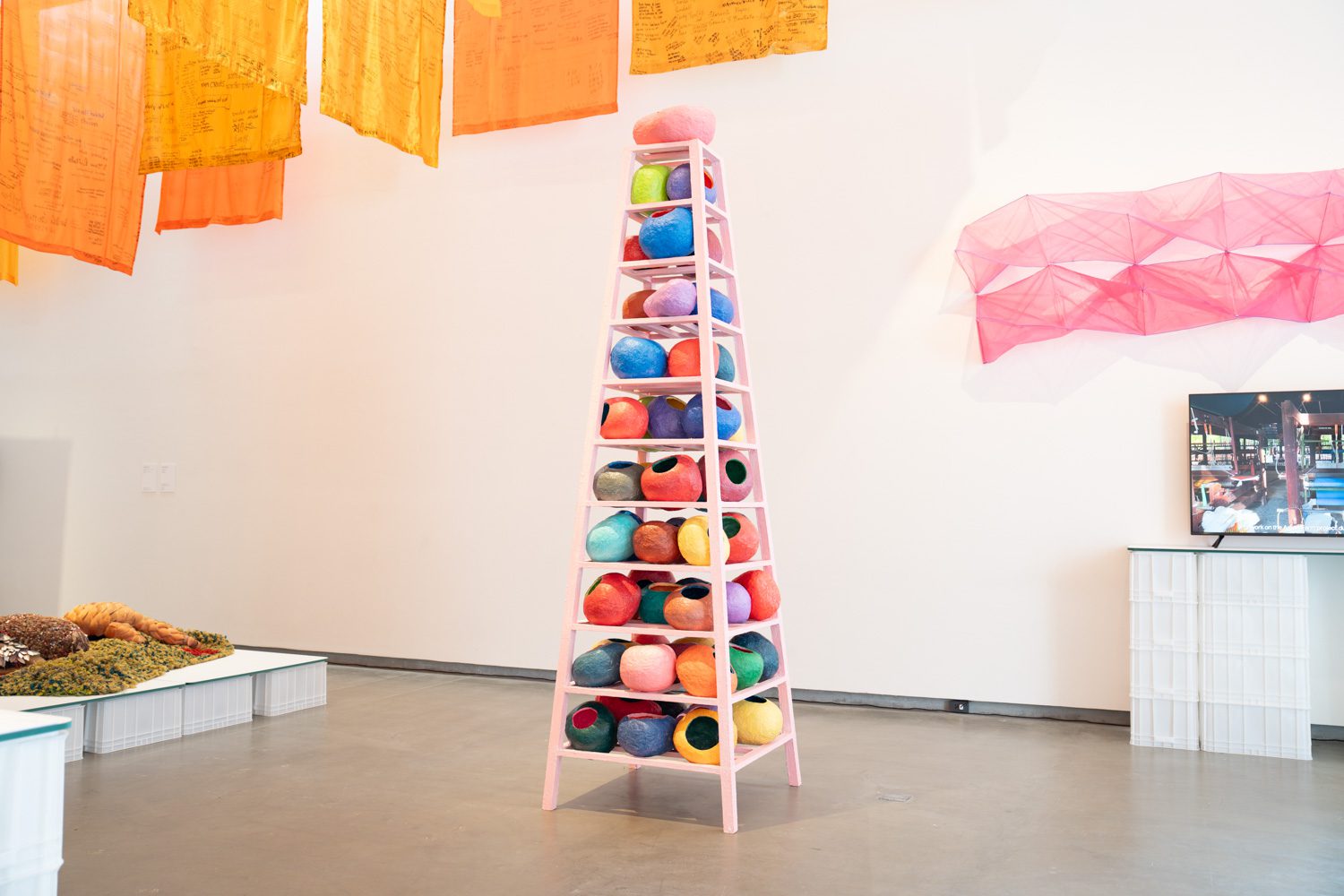
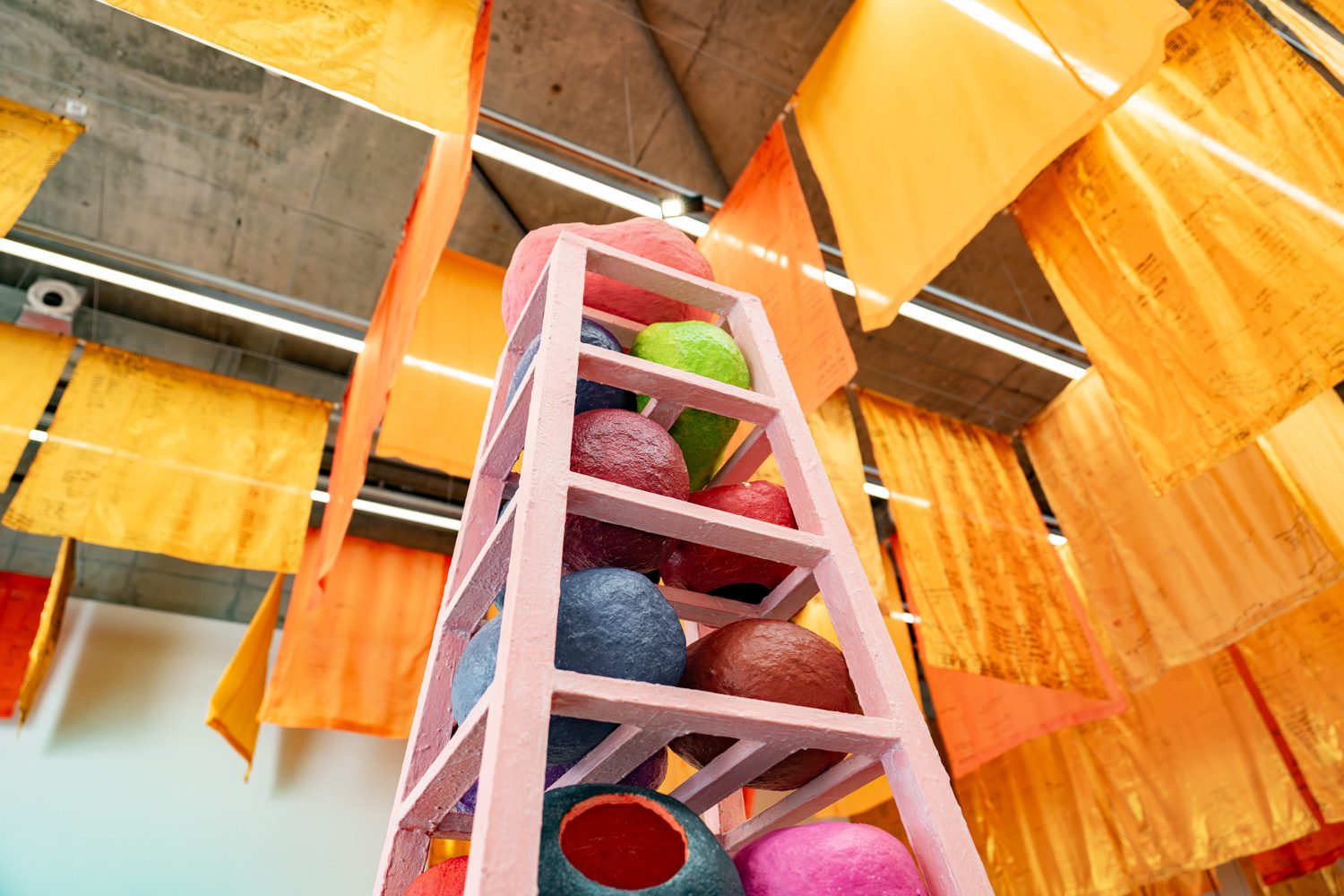
While Sita constructs the body through weaving, Mit Jai Inn’s Marking Basins (2026) embeds vital energy in the traces of the hand. Created in collaboration with women artisans from the local community, the work brings together layers of overlapping color whose density recalls the threads of locally dyed textiles. Its uneven surfaces reveal marks and grooves left by the pressure of the hand, bearing evidence of both force and time upon the work. Each vessel-like form is identical in size, yet distinguished by its vivid color. The impressions pressed into their surfaces thus come to hold the meanings of lives that are diverse but equal. These vessels, however, are not displayed as separate objects. Instead, they are arranged on a pyramid-shaped wooden structure, revealing a hierarchy in which height is inversely related to number: the higher the level, the fewer the vessels. Marking Basins therefore evokes a current of life in which every being emerges from a shared lineage. Yet these lives are also arranged into hierarchies of power, reaching above and pressing down upon one another. Mit expands craft beyond its familiar associations with an idealized rural life and the past, transforming it into something vividly colored that speaks, at the same time, of bitter political realities.
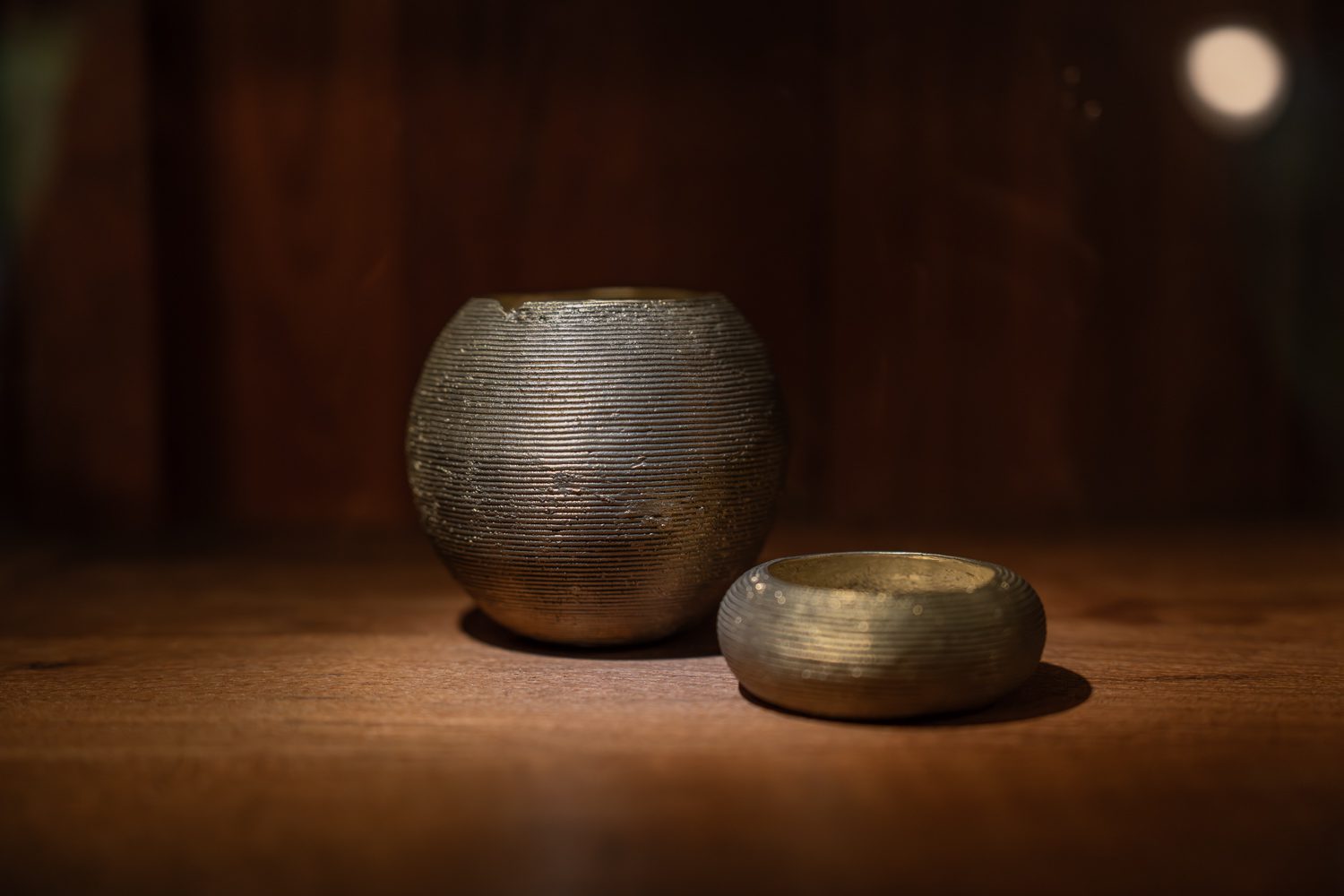
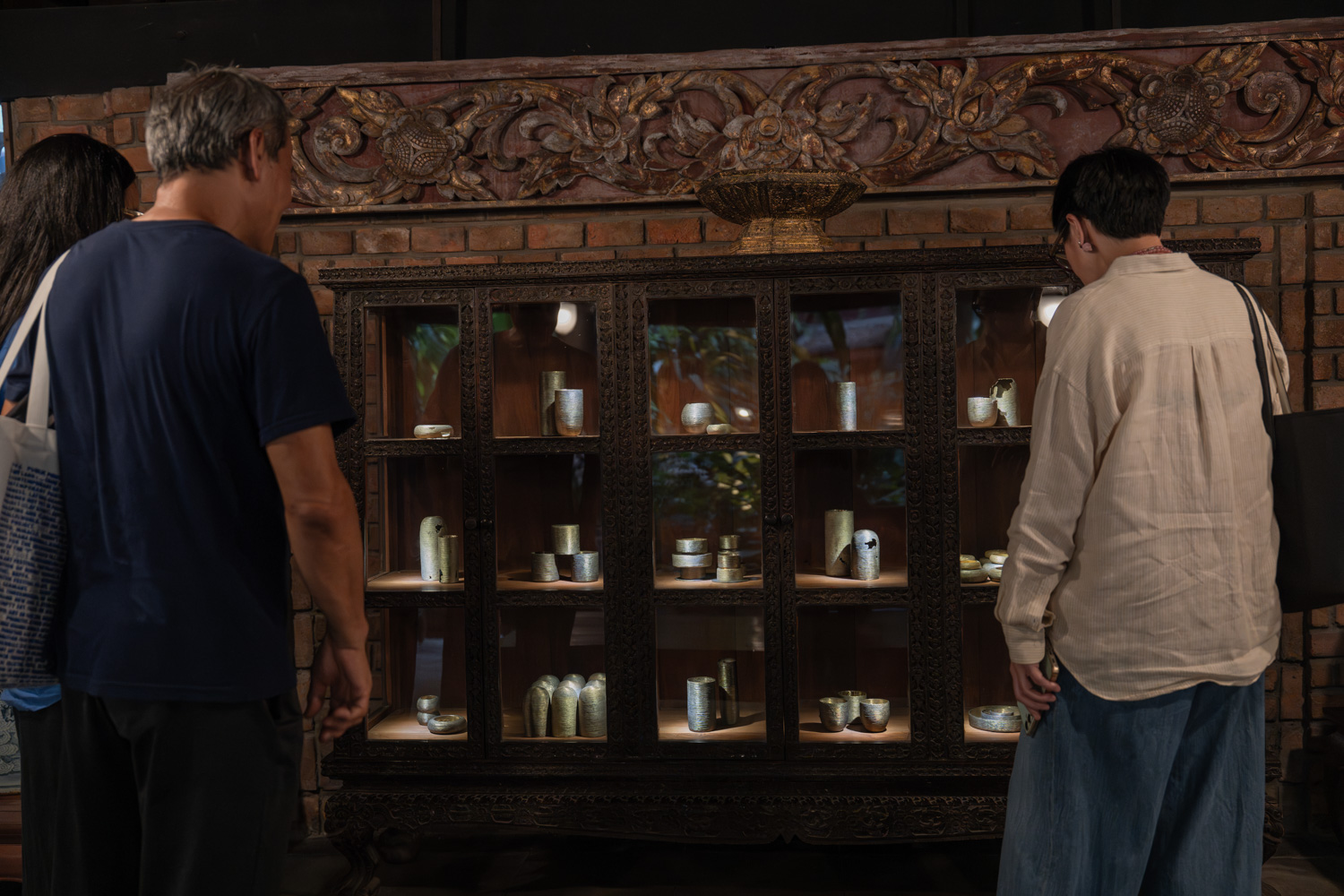
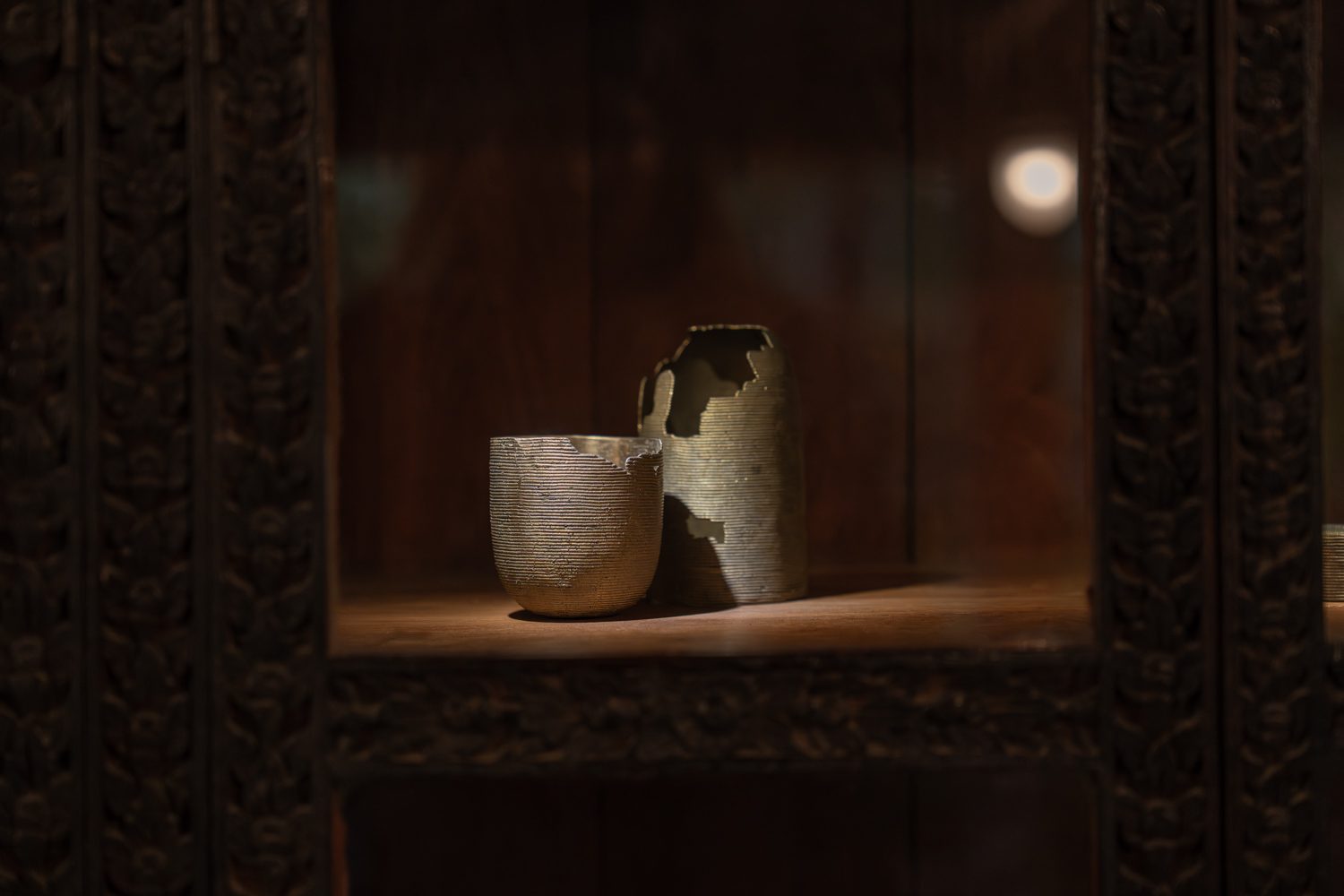
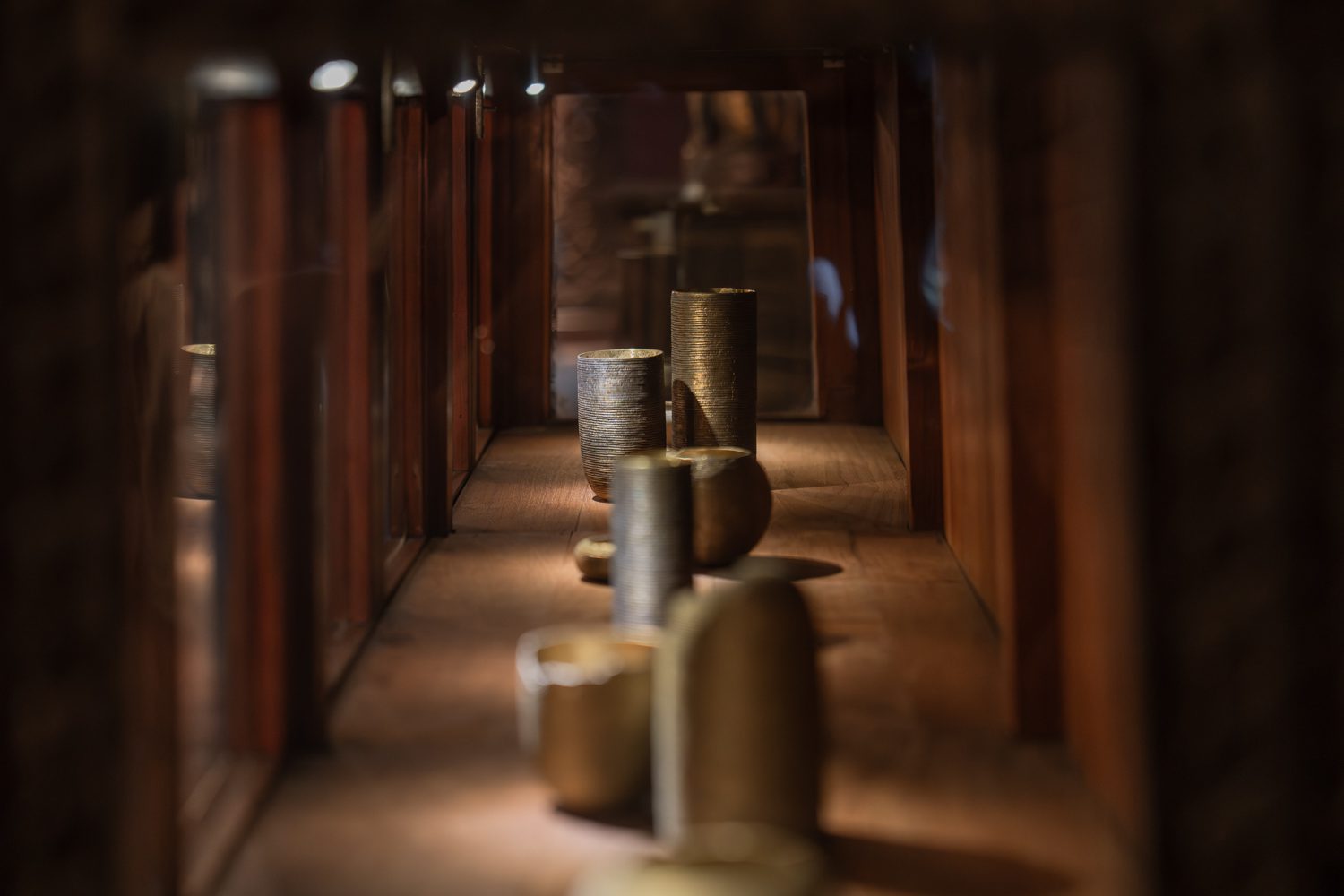
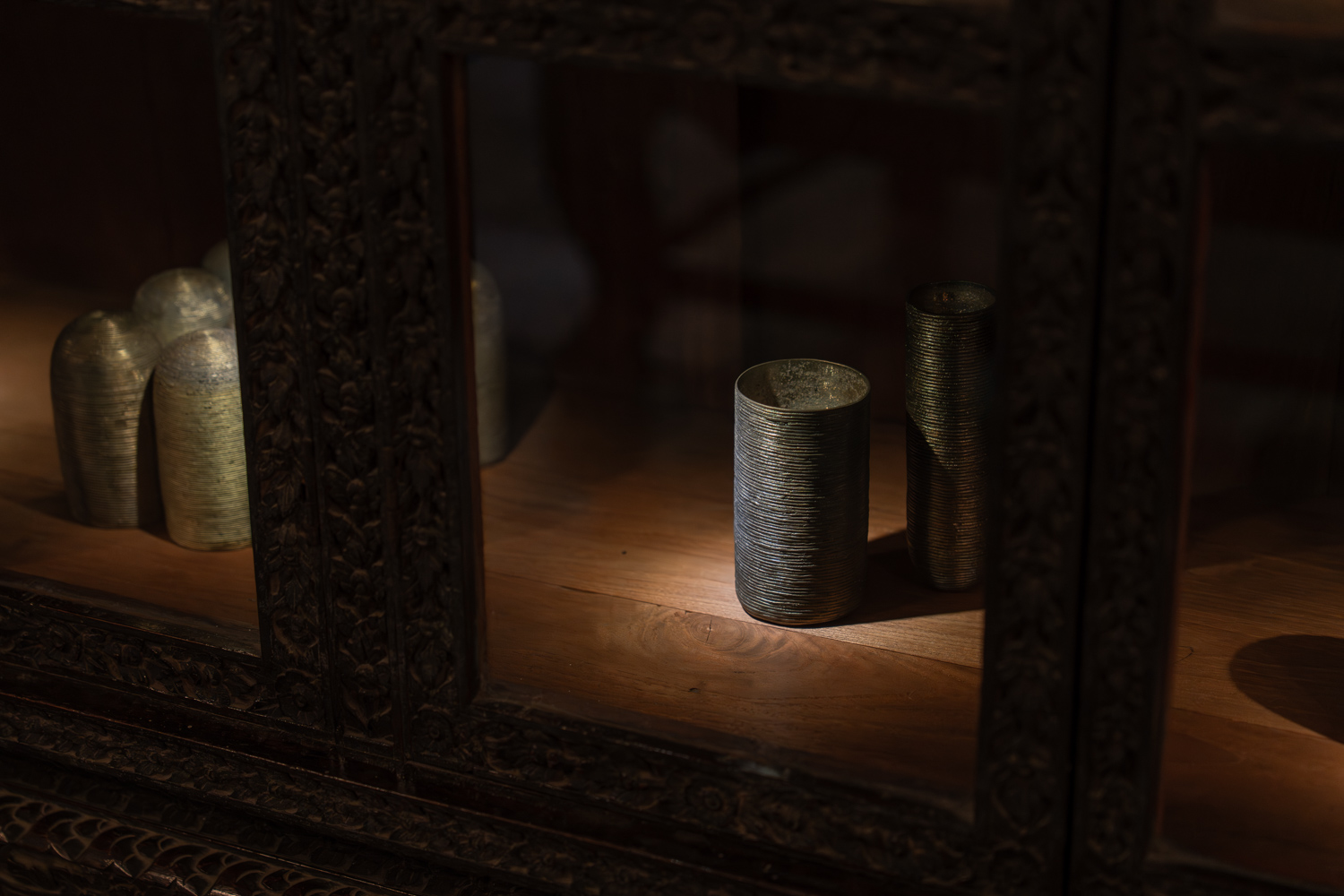
The exhibition then moves to Rudee Tancharoen’s Untitled (2021), cast using the lost-wax technique to resemble brass antiquities excavated from prehistoric archaeological sites. Although contemporary technology might have enabled her to restore these ancient objects to an imagined original wholeness, Rudee deliberately preserves their fragmentary state, retaining the cracks, damage, and deterioration left by time. She then presents them in display cases alongside other antiquities in the Jim Thompson House Museum. The series reveals the network of relationships that emerges as an object of craft travels through time and becomes an antiquity in the present. Its agents are no longer limited to the maker and user in any straightforward sense. Time, air, and nature also become crucial participants in this transformation. Traces of damage consequently become part of the antiquity’s aesthetic character. Within the display, the physical resemblance between Rudee’s works and the historical objects placed nearby raises questions about the temporal value assigned to antiquities. These extend to their value as museum displays and their monetary worth within the antiquities market. Capital, time, and labor are thus layered together, unsettled, destabilized, and brought into interference within the same space.
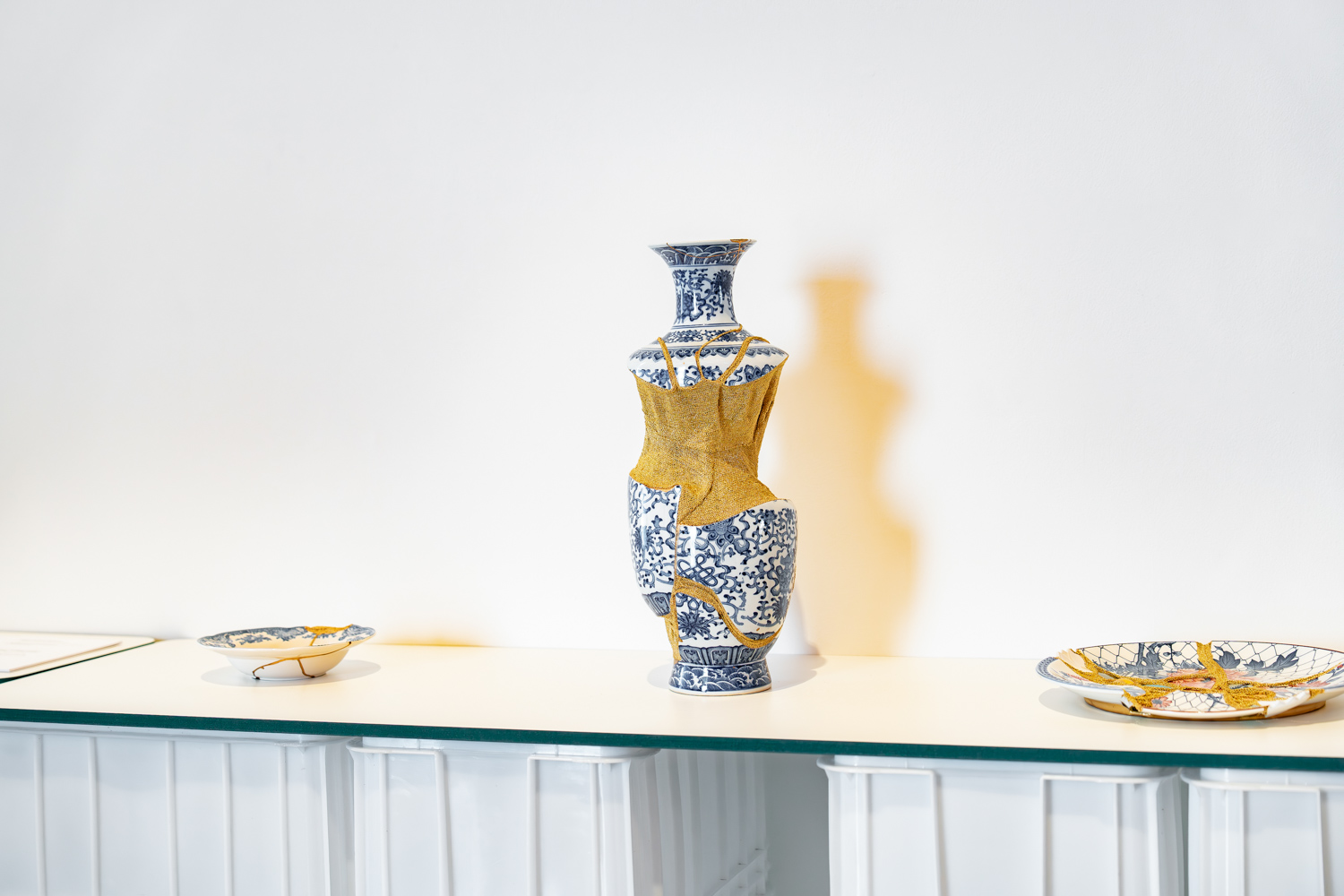
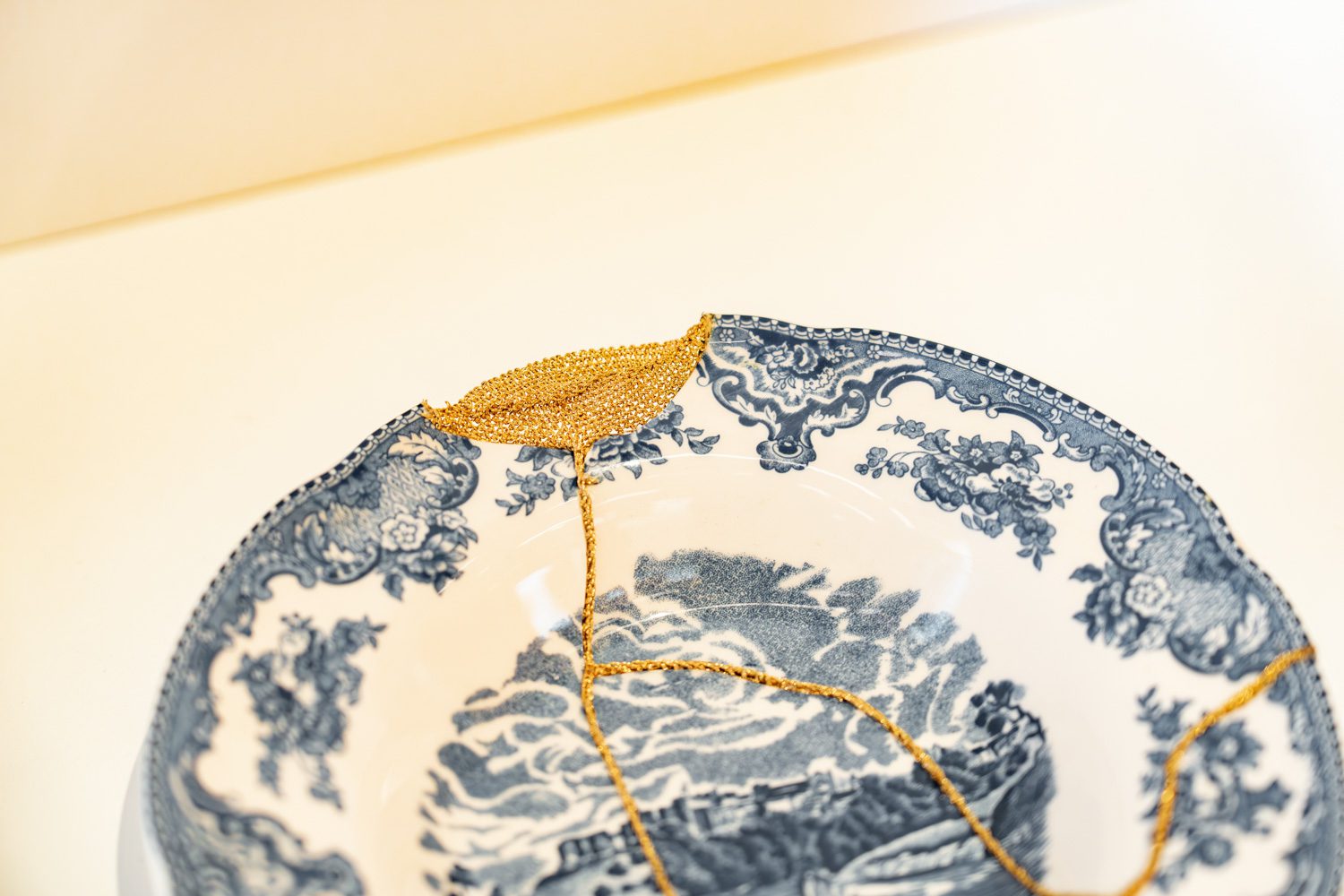
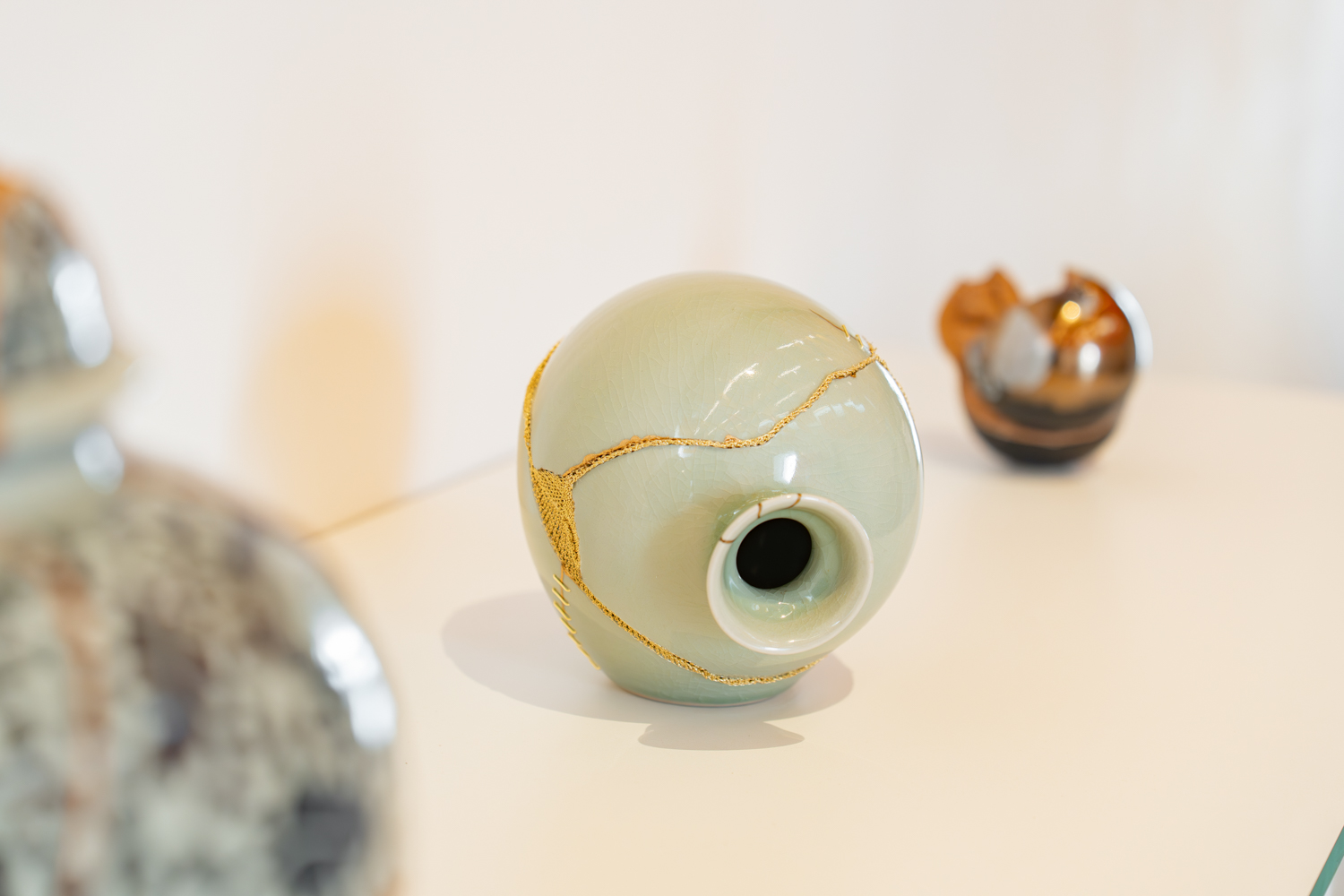
The way time intervenes in and connects through craft appears again in Thanistha Nunthapojn’s Lanna pottery: Celadon pottery, Sankamphaeng (1) (2025). The artist repairs a fractured ceramic jar by threading fine metal strands through its broken edges, joining the separated pieces together. If Rudee’s work preserves an object in its state of deterioration, Thanistha’s makes its damage even more visible. The material contrast between the ceramic surface and the metal threads means that her repair does not conceal the traces of past breakage. Instead, it incorporates the cracks and ‘connects’ the object to new meanings. This act of repair is not an attempt to turn back time, restore the vessel to its original condition, or deny its brokenness. Rather, it preserves different states of time, allowing the object’s past and present to coexist. Craft is thus transformed through the ‘work of the hand,’ enabling what was once discarded to return, at last, as part of the object’s meaning.
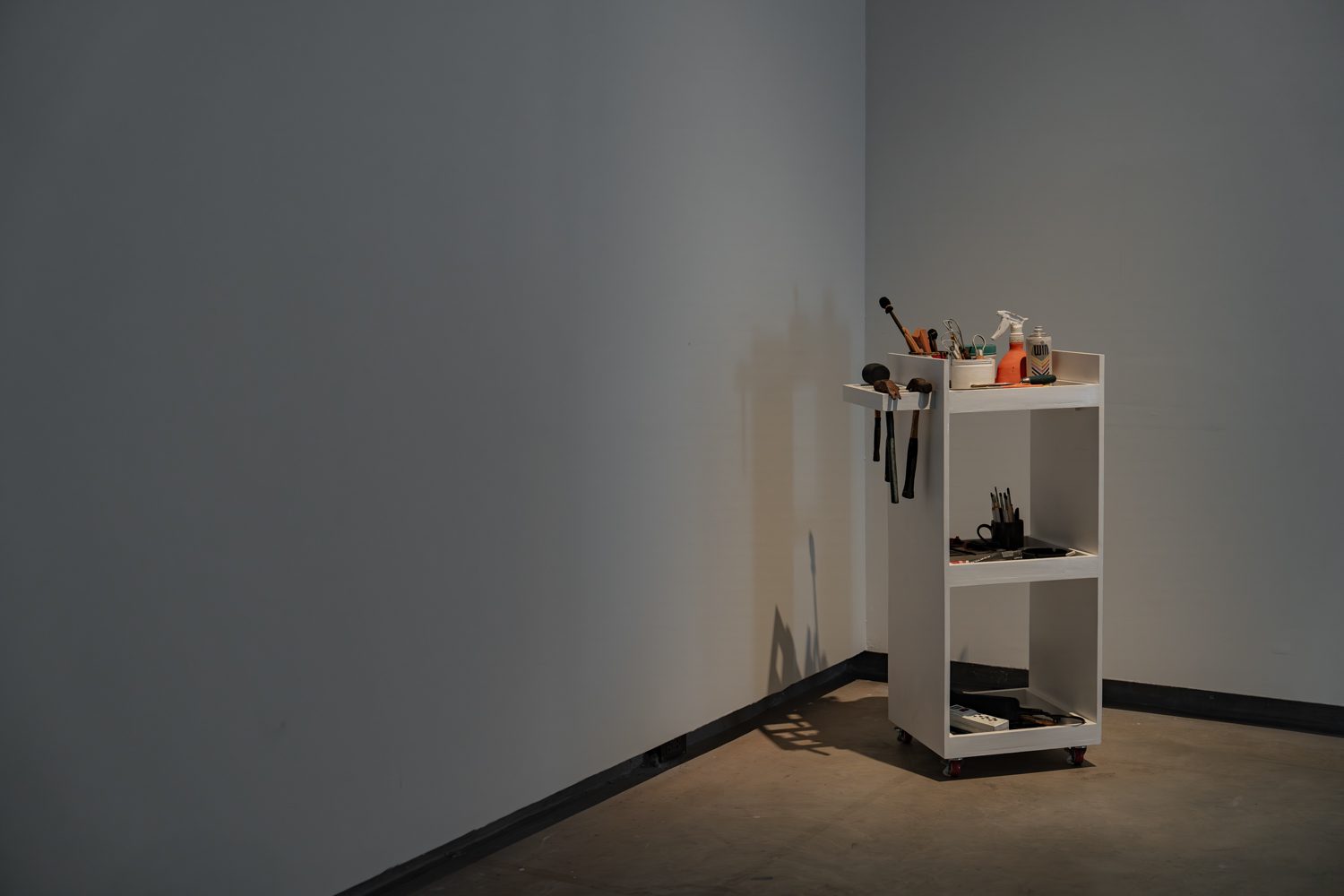
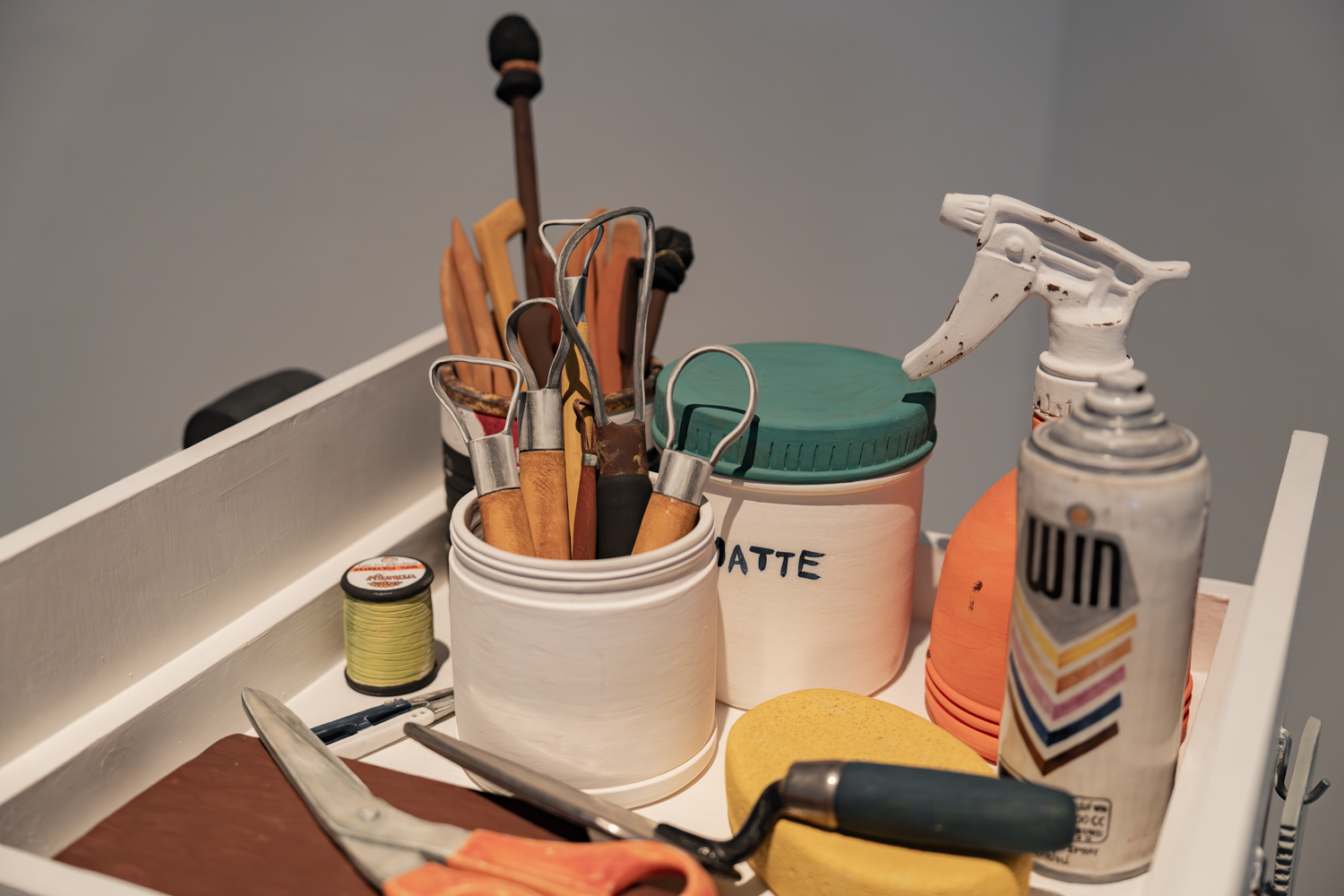
If Thanistha’s work preserves past and present, before and after damage, within the same object, Sirisak Saengow’s Tools(2025) turns back time to separate the elements of craft before force and time bind them together. The artist shapes, paints, glazes, and fires ceramic replicas of the tools and equipment used by potters, reversing the usual order by bringing the objects and materials normally kept behind the scenes into the foreground. Tools thus asks us to consider the costs, conditions, and driving forces behind the making of craft. Each piece is formed not only through material, labor, and time, but also through elements that remain invisible in the finished work. The cigarettes and lighter placed on the shelf are therefore no less important than the scraping tools and paintbrushes. Although the lighting panels illuminate only the objects themselves, Sirisak’s work reveals the lives that sustain and carry the practice of craft.
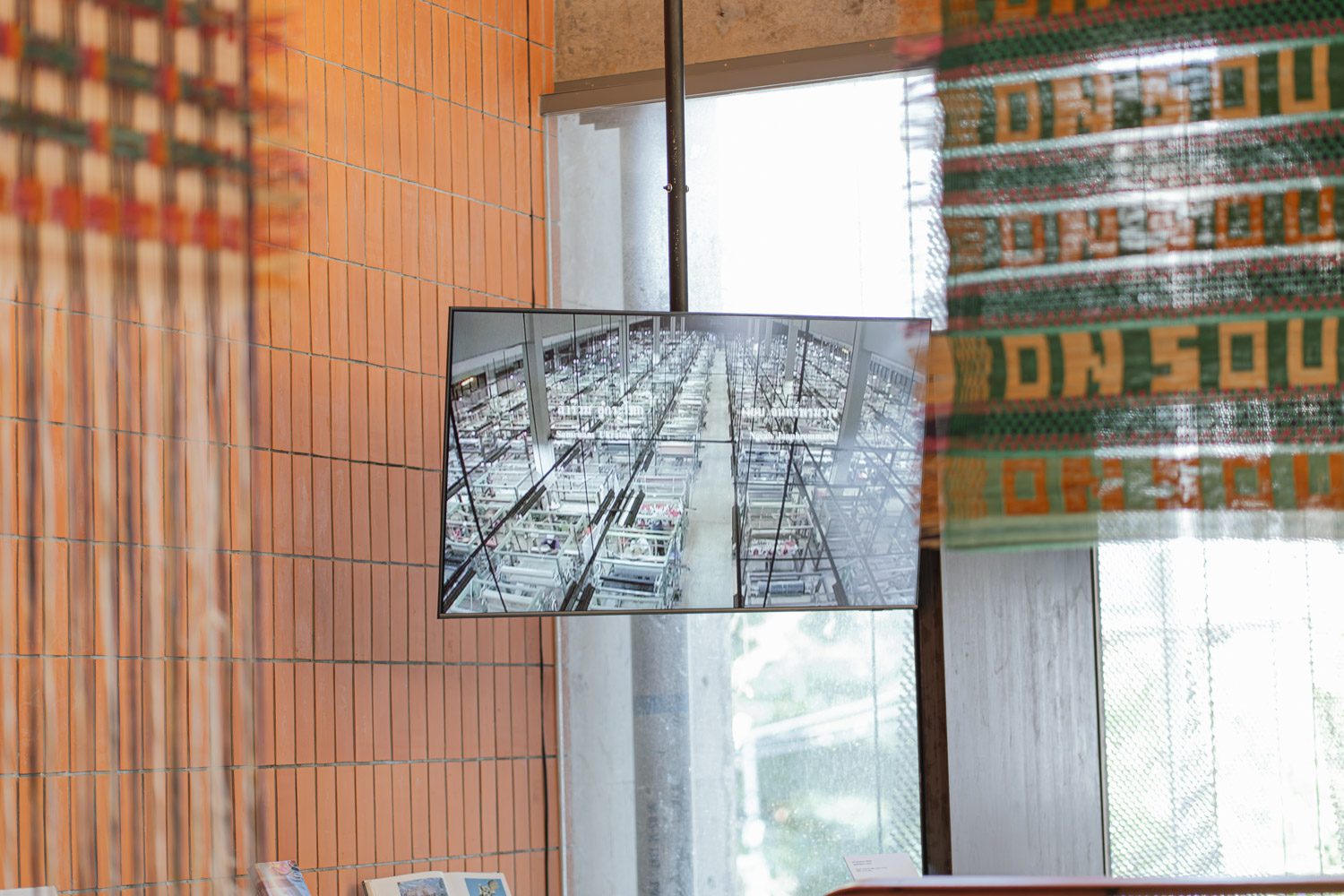
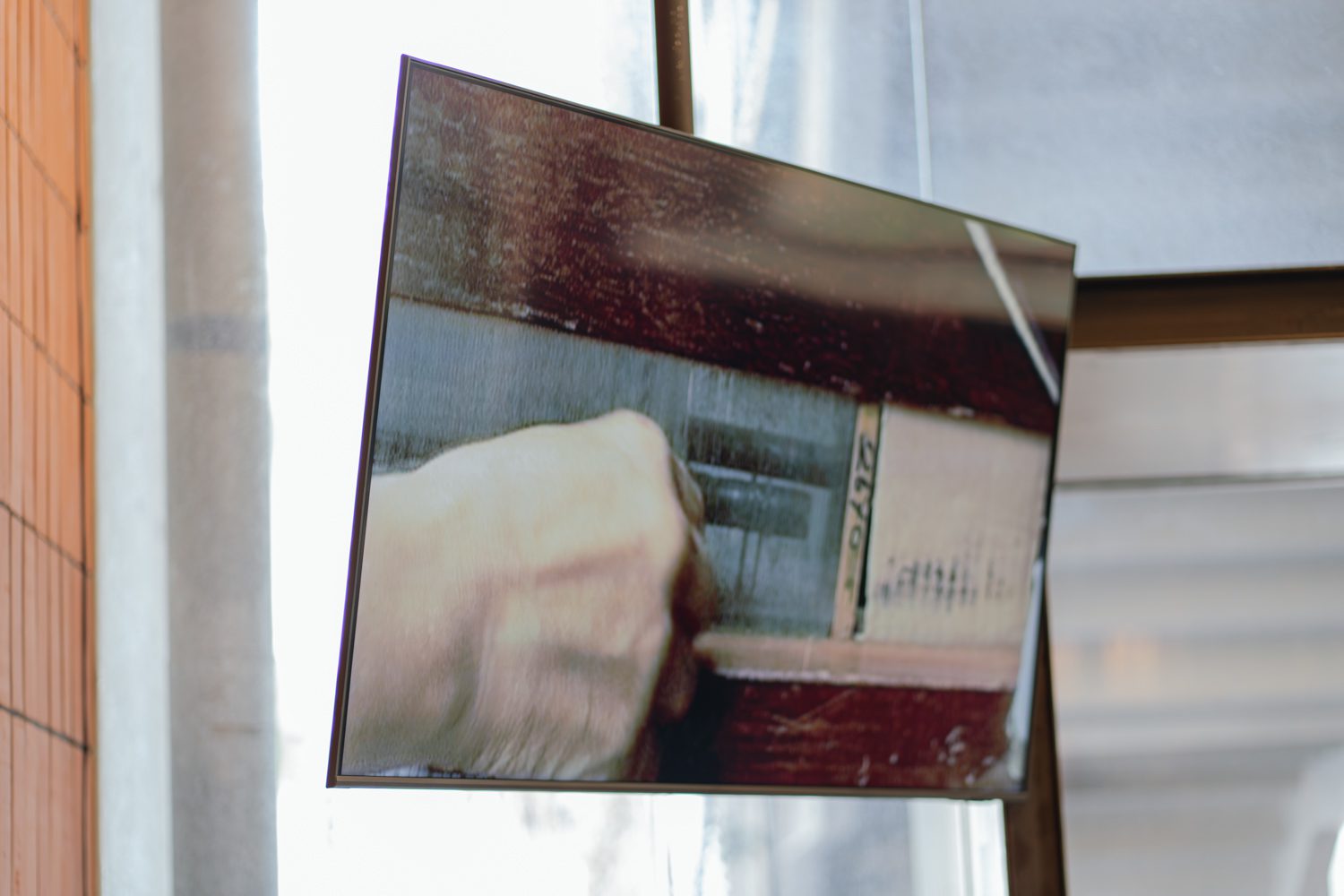
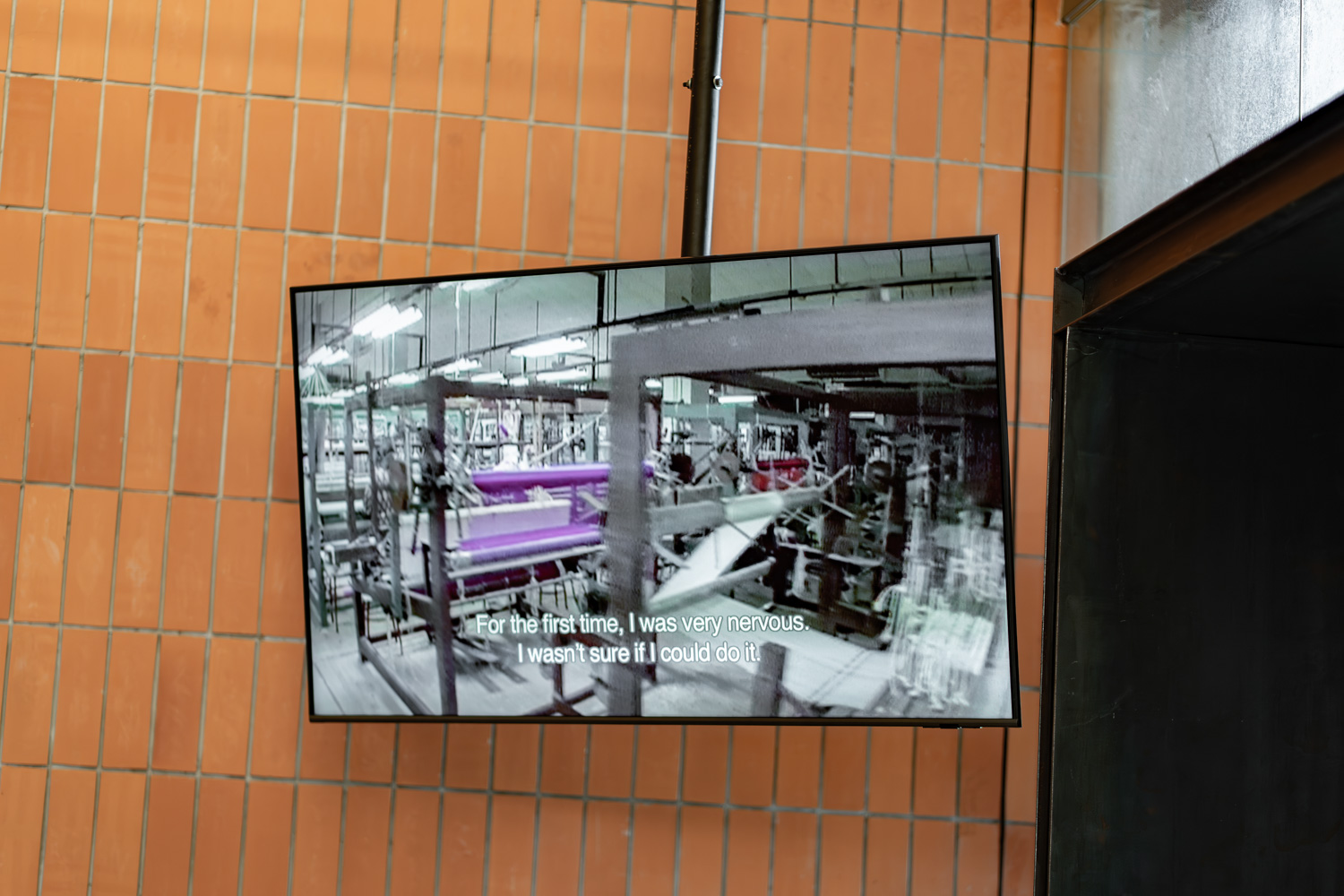
A similar perspective appears in Jakrawal Nilthamrong’s Orchestra (2008), a short documentary about elderly artisans from a handloom-weaving community in Thailand’s Nakhon Ratchasima province. Jakrawal shifts the focus away from a straightforward account of the relationship between the craftspeople and the objects they produce, turning to the lives behind their work: family relationships, after-work drinking gatherings, and childhood dreams that still linger unfulfilled. Together, these details reveal the less visible costs embedded within craft. Jakrawal shows that a piece of cloth is more than an arrangement of silk threads. It also carries the thoughts, lives, and dreams of those who make it. In much the same way, Sirisak’s ceramics recast the measurement of working time as the number of cigarette packs.
Living in an Elastic Time makes visible through craft what often remains unseen: time, the force of the hand, the body, beliefs, and dreams. The exhibition does not present craft simply as a collection of precious objects or as cultural heritage inherited from the past, a framing that can easily slip into Orientalist images of the East. Instead, it creates a dialogue between vernacular craft and contemporary art. Their point of intersection remains deliberately ambiguous: both may be forms of skilled making, yet they operate in different fields. Craft is translated and reinterpreted through the paradigms of contemporary art, while vernacular practices advance into and challenge the space of art. At the same time, art moves into the domestic settings long occupied by craft. Together, these encounters prompt us to reconsider how processes of production have changed, and to recognize the difference between time measured on the assembly line and time held in the palm of the hand. The craft objects we thought we knew begin to tell unfamiliar stories, speaking through the voice of a different age.
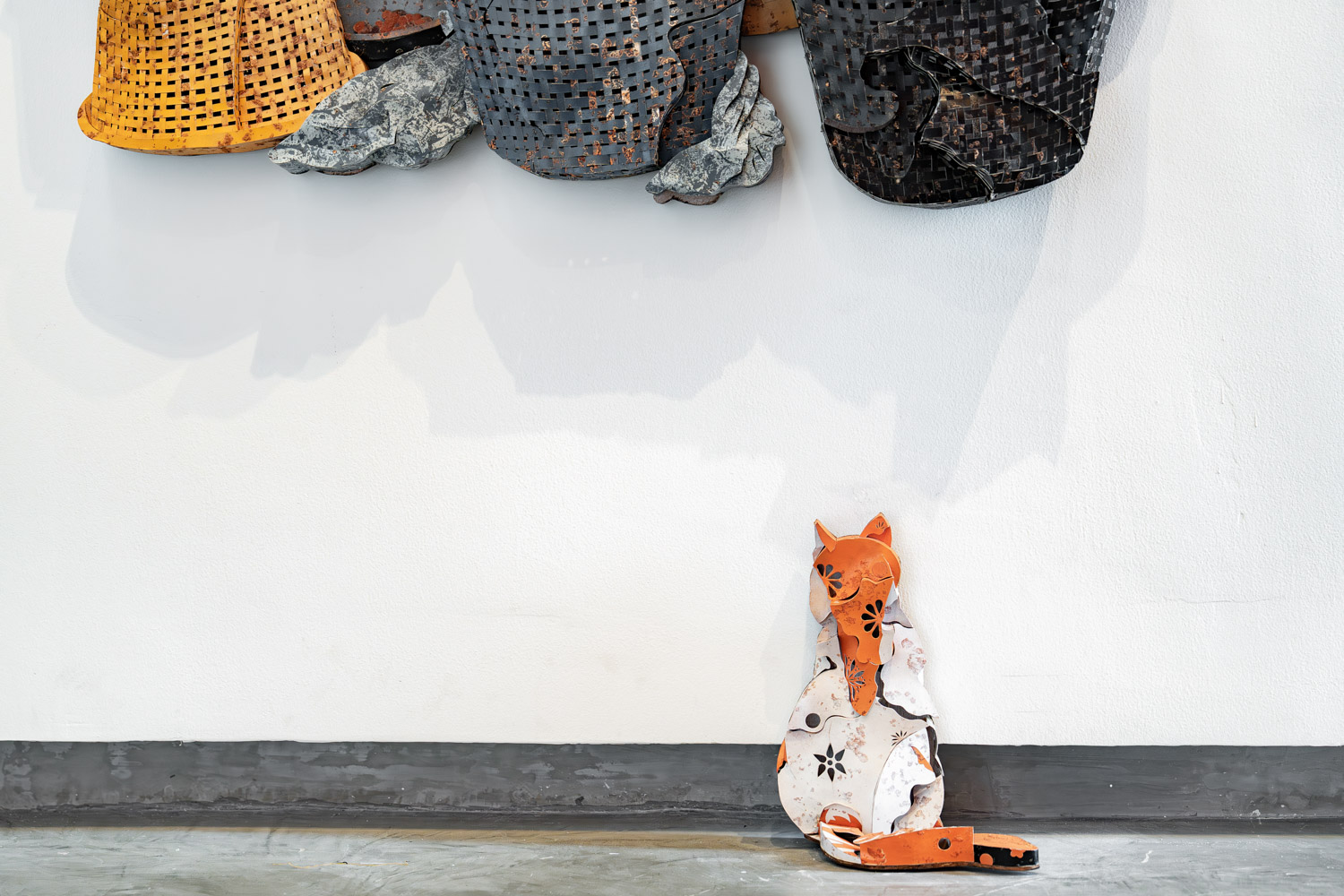
Living in an Elastic Time is on view from April 30 to August 16, 2026, at the Jim Thompson Art Center and the Jim Thompson House Museum.
_
1 The moving assembly line reduced the time required to assemble a Ford Model T from 12 hours per vehicle to just 93 minutes. See Dennis Abrams, The Inventions of the Moving Assembly Line: A Revolution in Manufacturing (Chelsea House, 2011), 68.
2 For more on Secondary Burial, see Fine Arts Department, ‘Burial Culture of Thung Kula Ronghai’ (2020), https://www.finearts.go.th/promotion/view/11362-วัฒนธรรมการฝังศพทุ่งกุลาร้องไห้.