
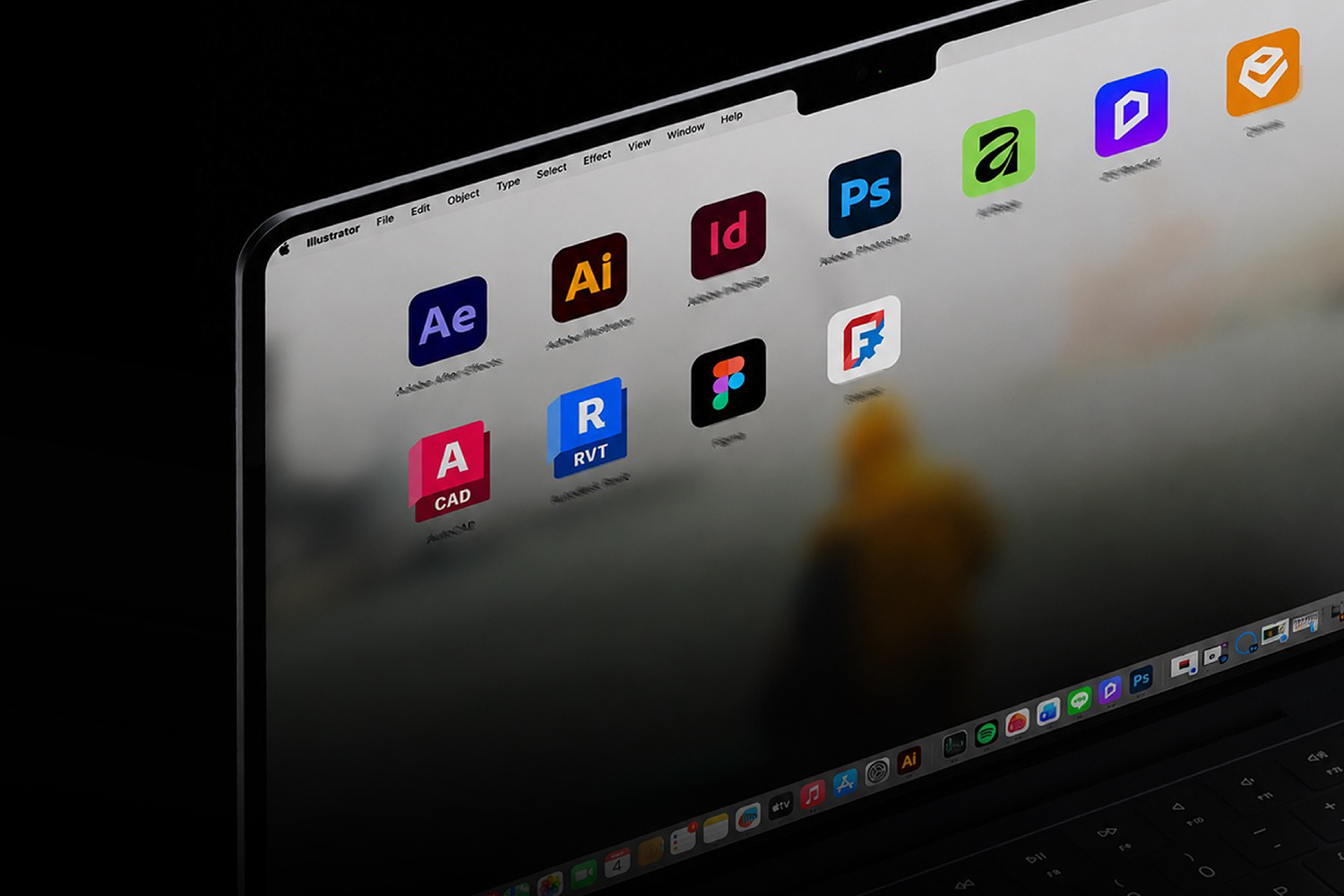
SUBSCRIPTIONS ARE NOW EVERYWHERE, WITH MONEY SCATTERING IN EVERY DIRECTION. TODAY, CREATIVE WORK NO LONGER BEGINS WITH DESIGN, IT BEGINS WITH PAYING FOR SOFTWARE
TEXT: PHARIN OPASSEREPADUNG
(For Thai, press here)
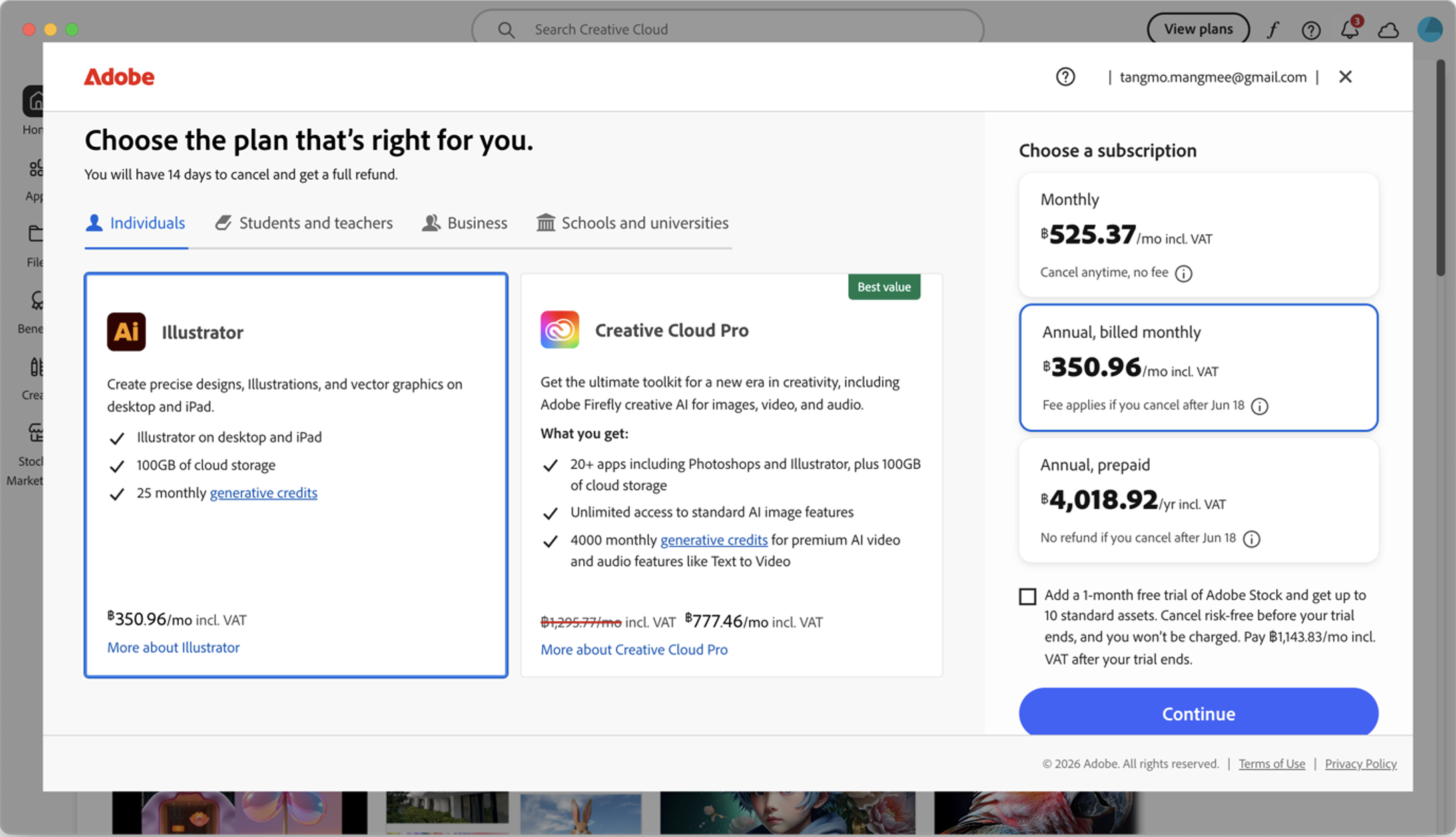
Earlier this year, a news story likely caught the attention of many in the architecture and design fields. Adobe was sued by the United States government over allegations that the company had harmed consumers by concealing excessive cancellation fees and making it unreasonably difficult for users to cancel their subscriptions.
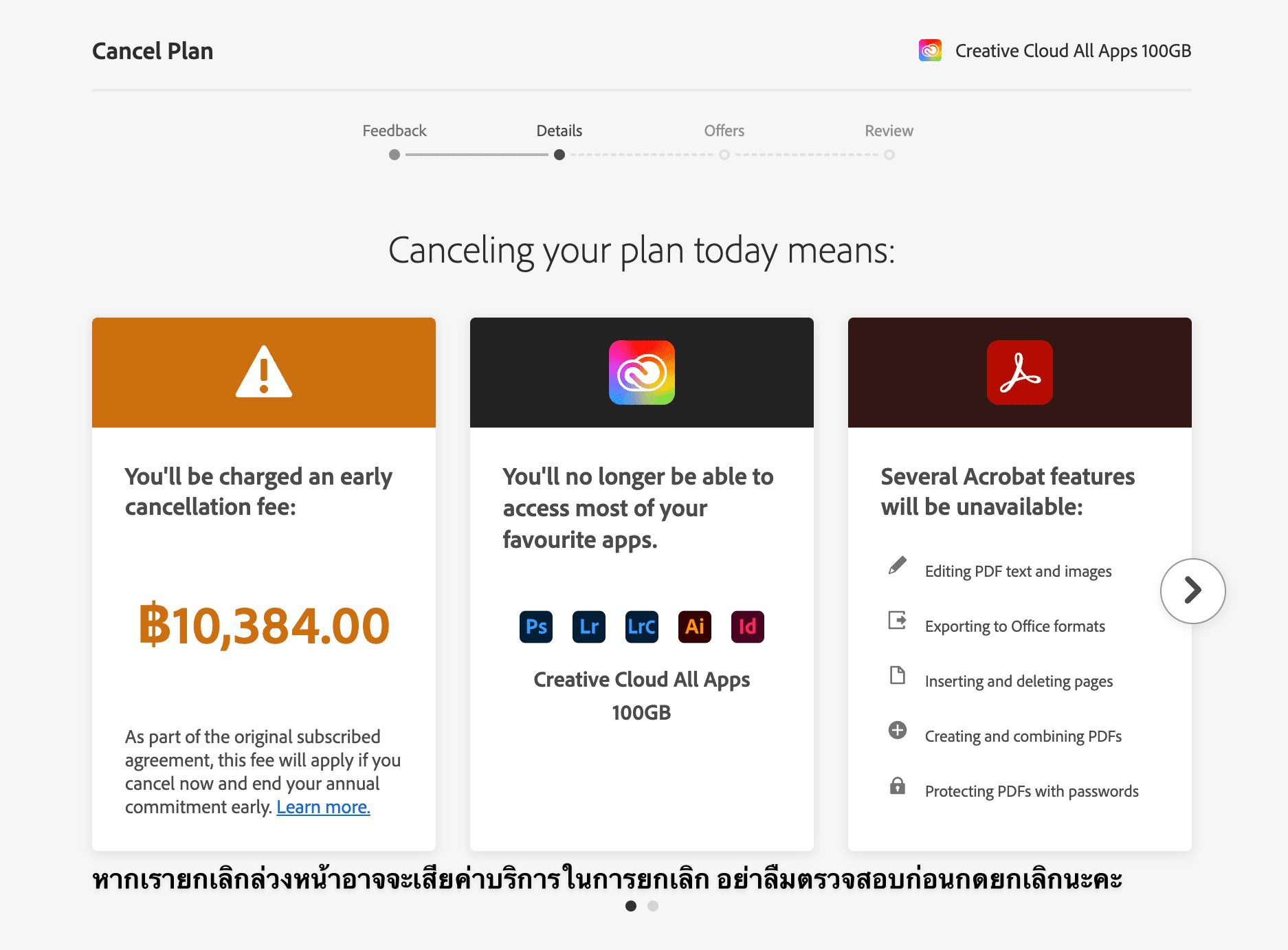
The case dates back to June 2024, when the U.S. Department of Justice and the Federal Trade Commission, or FTC, accused Adobe of hiding cancellation fees attached to its annual, paid-monthly subscription plan, the option chosen by most users. According to the complaint, information about these fees appeared only in small print near the bottom of the website, while the cancellation process itself placed an undue burden on subscribers. Users attempting to cancel online had to click through multiple pages before reaching the right place, while those who tried to contact customer service directly reportedly encountered delays and a cumbersome cancellation process.
As a result, Adobe was accused of violating the Restore Online Shoppers’ Confidence Act (ROSCA), a 2010 law that prohibits businesses from charging consumers, including through automatic subscription renewals, without clearly disclosing key terms and obtaining the customer’s consent. Under a proposed settlement, Adobe ultimately agreed to pay USD 75 million in civil penalties and provide USD 75 million worth of free services to customers, pending court approval.
Yet it is not only Adobe’s maze-like terms, hidden traps, or deliberately frustrating subscription and cancellation processes that complicate the way we work. The monthly burden of software subscriptions itself also warrants closer scrutiny. Are these costs truly worthwhile, and to what extent? It is, of course, undeniable that every form of work comes with a cost. But the more pressing question is how much that cost should reasonably be for the creation and production of a single creative work, whether by freelance designers or design studios of varying scales. At what point does a necessary professional expense become an obligation to pay for more than is actually needed?
The Subscription Model: From Ownership to Rental
Paying each month for access to software now feels increasingly like paying rent. We rent the right to access a program. We rent the ability to use it. We pay for everything, yet nothing ever quite belongs to us. More often than not, the terms remain in the hands of the company providing the service.
The subscription model has become increasingly prevalent since the 2010s, not only among professional tools used to make a living, but also across entertainment platforms and everyday digital services. Adobe began shifting toward this service-based rental model in 2011.
The main advantage of this model lies in predictability. Monthly costs can be calculated clearly and consistently, allowing businesses to plan expenses with relative ease. For medium-sized and large companies, it also offers a certain operational efficiency: an ecosystem in which teams can access the same data, work within the same system, and maintain consistency across creative output, brand materials, and corporate identity.
The drawback, however, is that these costs continue to accumulate over time. When used continuously over a long period, a subscription may ultimately become more expensive than purchasing a lifetime license, only the expense is spread out gradually enough that many users may not fully notice it. Some programs can also be costly for individual users, while companies or start-ups may have access to more affordable group plans. This creates a particular burden for freelancers and young practitioners at the beginning of their careers.
The rise of AI has further complicated this equation. It is not simply a matter of new programs entering the market, but of new tools emerging that may, in some cases, answer users’ needs more effectively. These AI platforms, too, are ready to charge their own monthly fees. As a result, service providers are being pushed to compete more aggressively, developing and designing new features to support users in more compelling ways, all in the hope of keeping their customer base subscribed from one month to the next.
Paying the Same for Access, Earning Vastly Different Incomes
For a commercial software company such as Adobe, which has long dominated the market for designers, a look at its current pricing plans reveals the scale of the expense involved. As of May 31 2026, the all-apps package costs approximately USD 70 per month, or around USD 840 per year. In Thai baht, that amounts to roughly THB 27,000 annually. A single-app subscription, meanwhile, costs around USD 20 to 30 per month, depending on the program, or approximately USD 240 to 360 per year. This translates to roughly THB 7,000 to 10,000 per year.
For many graphic designers, however, the cost does not end with Adobe. Other tools are often added to the stack, from Figma Professional and stock image platforms to various AI programs that are now used to make creative work more efficient, comprehensive, and competitive. Architects face a similar, if not heavier, burden, with programs such as Revit, AutoCAD, Enscape, Lumion, and many others. When graphic and presentation work is factored in, the total continues to climb.
The picture becomes clearer when these costs are compared against income. According to data from SalaryExpert, the average annual income of graphic designers varies considerably from one country to another. In Thailand, the figure is around THB 610,000 per year. In the United States, it rises to approximately THB 2.45 million per year, while Singapore stands at around THB 1.79 million. Malaysia and Vietnam sit closer to Thailand, with average annual incomes of approximately THB 647,000 and THB 482,000 respectively.
When expenditure is placed alongside income, a revealing disparity begins to emerge. Although Adobe charges users at relatively similar rates around the world, the burden borne by those users is far from equal. While designers in the United States or Singapore may spend only around 1 to 1.5 percent of their annual income to access industry-standard tools, their counterparts in another part of the world, particularly in Southeast Asia, carry a significantly heavier load. Designers in Thailand, Malaysia, or Vietnam may have to allocate around 4 to 6 percent of their average annual income simply to maintain access to the same suite of programs.
The situation is similar for architects. Here too, the income gap between developed and developing countries remains pronounced. In Thailand, the average annual income for architects is around THB 890,000. In the United States, it is approximately THB 3.56 million. Vietnam and Malaysia are relatively close to one another, at around THB 702,000 and THB 940,000 per year respectively, while Singapore stands considerably higher than many of its Asian neighbors, at approximately THB 2.61 million per year.
This makes the software burden in architecture even more uneven than in graphic design. While architects in the United States may spend only around 3 to 4 percent of their average annual income on basic professional software, architects in Thailand, Malaysia, and Vietnam may need to set aside more than 10 to 18 percent of their income for software alone.*
In reality, architecture firms do not subscribe only to Revit and Adobe. Their software ecosystem often includes additional tools for rendering, lighting simulation, BIM-based collaboration, and project management, among many others. Once all of these expenses are taken into account, the annual software cost per person can reach well into six figures in Thai baht.
From a business perspective, Adobe and other software providers may not necessarily be charging unreasonable prices. These programs are, after all, professional tools that many people rely on to earn a living. A single design commission or project may generate revenue many times greater than the cost of an annual subscription. Adobe, too, continues to invest in software development and has introduced AI-powered features over the past few years.
*These figures do not take into account tax deductions or country-specific tax obligations, and should be understood as broad estimates only.



Free Tools, Hidden Trade-Offs
Still, freelance graphic designers and architects are not always forced to rely on paid software. Today, there is a growing range of alternative tools that are either free or considerably more accessible, from Blender for 3D work and Affinity for graphic design to FreeCAD for drafting and modelling.
Many of these programs have been developed over the years, to the point where their capabilities now come close to those of commercial software in several areas. For beginners, or for those working on personal projects, they may meet many needs effectively without the burden of monthly or annual fees.
Yet on closer inspection, the cost of using free software does not necessarily disappear. It simply takes another form. The first limitation lies in workflow, particularly when working with others. Even if free programs can produce comparable results, industry-standard file formats are still largely defined by major software companies. A client may send a PSD file for revision. A company may use AI files as its working standard. An architectural team may be built around Revit’s RVT files. Using alternative software can therefore add extra steps, from file conversion and compatibility troubleshooting to the potential loss of data along the way. There is also the issue of free trials, which may later require payment in order to continue using the software or to access its full set of features.
The next limitation is the ecosystem of tools. Today, many designers do not work within a single program, but across a connected network of applications, moving between Photoshop, Illustrator, InDesign, After Effects, and Figma. Architects, similarly, rely on links between Revit, AutoCAD, Enscape, D5, and other rendering programs. Choosing a free program may help reduce expenses at one point in the process, but it can also make the wider workflow more complex.
For designers like us, then, the choice is not always simply a matter of paying or not paying. It also requires weighing other kinds of cost, value, and efficiency. At the same time, the strength of free tools, when they work well enough, is that they open up access. They allow younger generations and emerging designers who want to begin experimenting on their own to enter the field more easily.
Every Design Has a Cost. Let It Be a Fair One.
Whether in graphic design, architecture, interior design, landscape, or any other creative field, design is work shaped by intention, ideas, and the desire to bring the best possible outcome into being. Cost and financial burden are impossible to ignore. However much passion and intelligence one pours into the work, if the weight of expenses becomes too heavy to carry, there may be little energy left to enjoy the work itself.
Still, there is no single answer as to which path is best. For medium-sized and large companies, paying for software subscriptions is a very different decision from the one faced by freelancers or recent graduates building their portfolios. Perhaps the heart of the matter lies in two words: fairness and reasonableness.
Fair pricing should be something that makes sense for users working at different scales. This could mean more varied subscription plans, greater flexibility in choosing features and options, and clearer, more straightforward conditions around cancellation, account changes, and any other aspects of use. These processes should be simple and transparent for users to navigate. At the same time, software companies may also need to continue improving and developing products that feel more compelling, more valuable, and more worthy of the cost than ever before.
อ้างอิง
https://www.reuters.com/world/adobe-pay-75-million-resolve-us-lawsuit-over-fees-subscription-cancellations-2026-03-13/
https://www.justice.gov/opa/pr/adobe-agrees-150-million-settlement-and-injunction-resolve-alleged-violations-restore-online
https://www.techstackdaily.com/review/adobe-creative-cloud-review-2026/
https://deborah.ba/why-is-everything-becoming-a-subscription/
https://medium.datadriveninvestor.com/a-behind-the-scenes-look-at-adobes-journey-to-subscriptions-c720acac814e
https://markiserv.com/blogs/news/the-rise-of-graphic-design-monthly-subscriptions-transforming-creative-services
https://www.adobe.com/creativecloud/plans.html
https://www.salaryexpert.com/salary/browse/countries/graphic-designer