A CONVERSATION WITH SONG KUN FROM THE LEGEND OF ‘JIAOREN’ TO A FUTURISTIC HORIZON ON WEAVING MYTH WITH CONTEMPORARY EXPERIENCES AT BAB 2026
TEXT: SARUNKORN ARTHAN
PHOTO: KETSIREE WONGWAN
(For Thai, press here)
The mermaid—a half-human, half-fish mythical creature—resembles the human form above the waist, while its tail and glistening scales reveal its aquatic nature. Mermaids appear across many cultures: in European tradition, they could bring either good fortune or doom to mariners. In Thai culture, we know them from the famous literary epic ‘Phra Aphai Mani’, as well as their presence among the creatures of the Himmapan—a mythical forest in Thai cosmology. In Chinese culture, however, the mermaid, or Jiaoren (鲛人), is depicted as a peaceful and gentle ocean-dwelling entity that poses no harm to humans unless provoked. They are also known to bestow blessings: their tears turn into pearls, while their exceptional weaving skills craft exquisite fabrics exclusively for the emperor.
This representation of the mermaid in Chinese culture caught the attention of Chinese artist Song Kun. Rather than merely showcasing the identity and beauty of the mermaid, she seamlessly incorporates futuristic narratives into the motif. Her work is presented on the 2nd floor of The Storeys at One Bangkok as part of the Bangkok Art Biennale 2026 under the theme ‘Angels & Mara.’ On this occasion, art4d invites Song Kun to talk about her artistic journey and the interwoven narratives that inform this body of work.
art4d: Your artistic journey from your time at CAFA to the present has encompassed several milestones. What turning points shaped the development of your distinct figurative painting style?
Song Kun: My studies at the Central Academy of Fine Arts gave me a very solid foundation in painting. But for me, painting has never been only about technique. More importantly, it is a way of expressing my feelings and inner world through images that reflect the times we live in and the realities around us.
From 2005 to 2006, I worked on ‘This Is My Life ‘, a year-long daily painting project, creating one painting every day to document my observations, memories, and emotions. It made me realise that everyday life is full of moments worth capturing, and that painting can be a little like keeping a diary, a way of recording one’s state of mind.
Over time, my work gradually expanded beyond everyday experiences to explore the subconscious, the body, the desires, and the spiritual world. I have always been drawn to figurative painting because the human face and body offer such rich expressive possibilities. At the same time, I want my paintings to go beyond simply representing reality by incorporating elements of dreams, stream of consciousness and surrealism.
Over time, traditional Chinese culture, Buddhist philosophy and contemporary subcultures have also become increasingly important in my work. I enjoy bringing different cultural and visual experiences together and allowing them to form new connections. I don’t think an artist’s style is something that can be deliberately designed. Rather, it develops naturally through the process of living, observing and creating over time.
art4d: What inspired you to express your ideas and art through such a diverse range of media, spanning painting, music videos, and installation art?
SK: I’ve always felt that art doesn’t need to be confined to a single medium. Different ideas call for different forms of expression.
Painting remains the foundation of my practice, but some things are difficult to fully express through a single image. For example, time, sound, bodily movement and constantly shifting emotions can be further explored through video, music, lyrics, and dialogue.
To be honest, music, in particular, has had a profound influence on my work, which allows me to express my emotions directly. It also creates a very distinctive physical and sensory flow in the experience. In some projects, I bring together paintings, music videos, electronic music and installations, allowing them to form a whole immersive atmosphere that people can experience and engage with.
In series such as ‘A Thousand Kisses Deep’, ‘Pure Land’, ‘Animist’ and ‘INFINITY’, what I created was not simply a visual theme, but an entire artistic world with its own characters, atmosphere and internal logic.
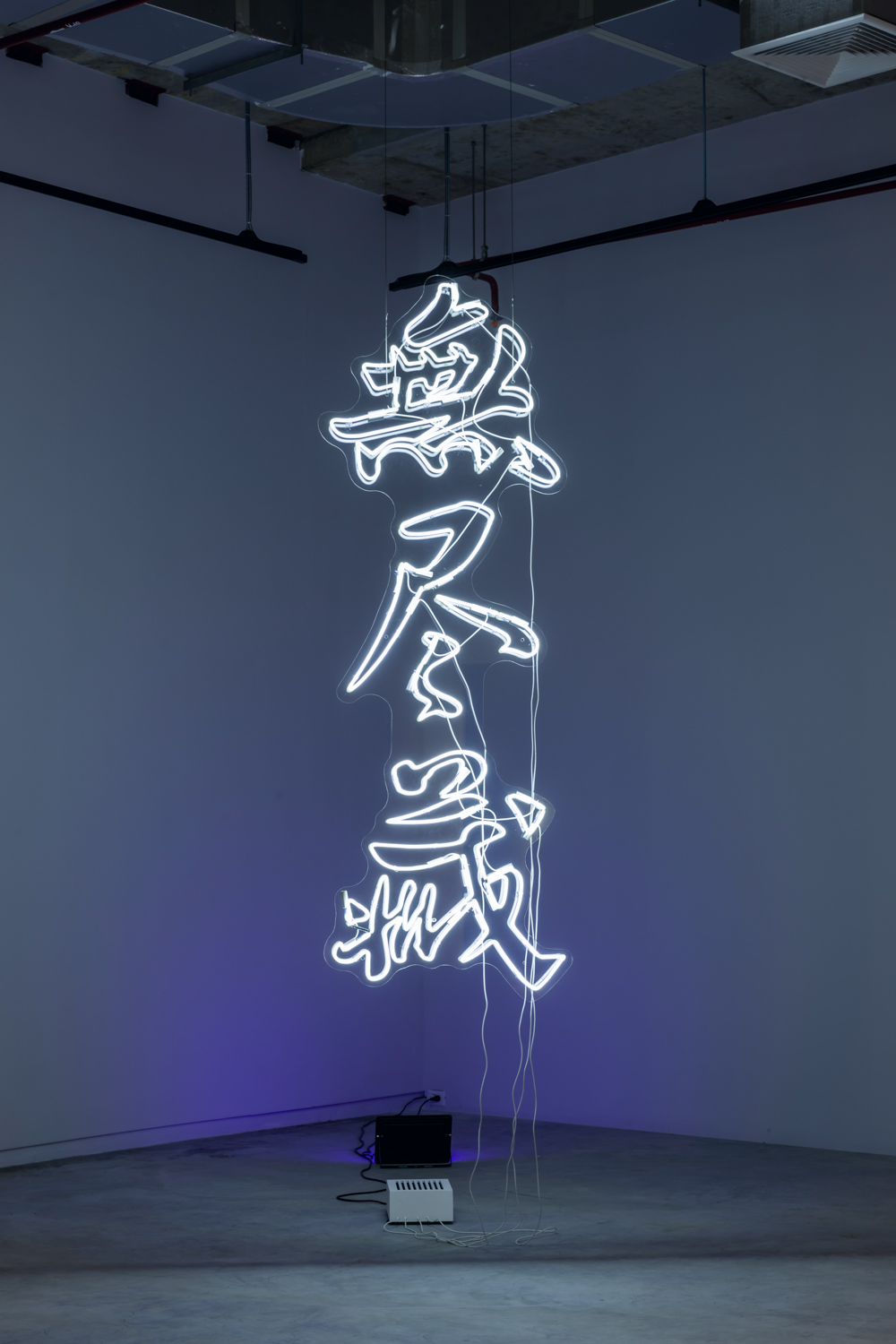
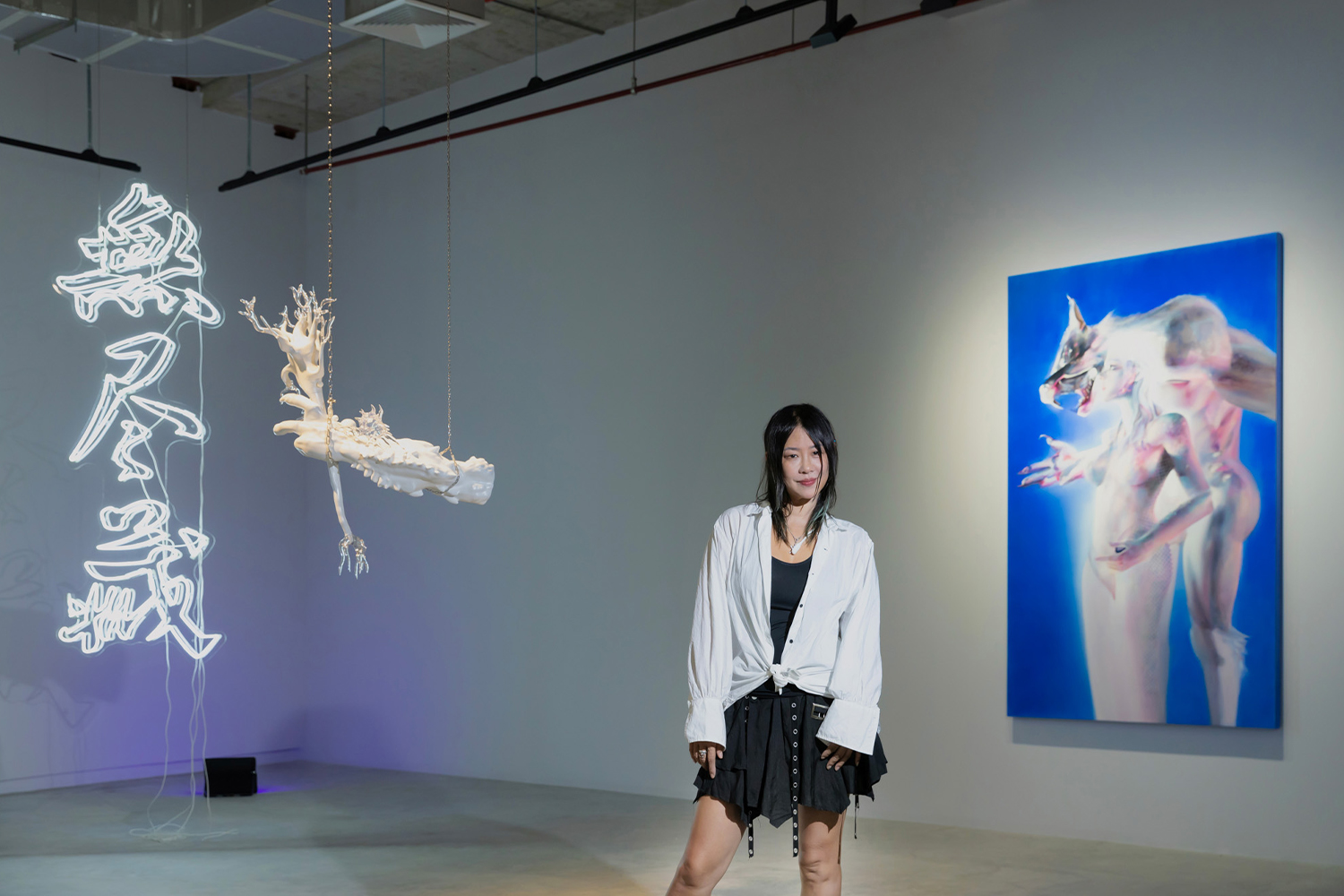
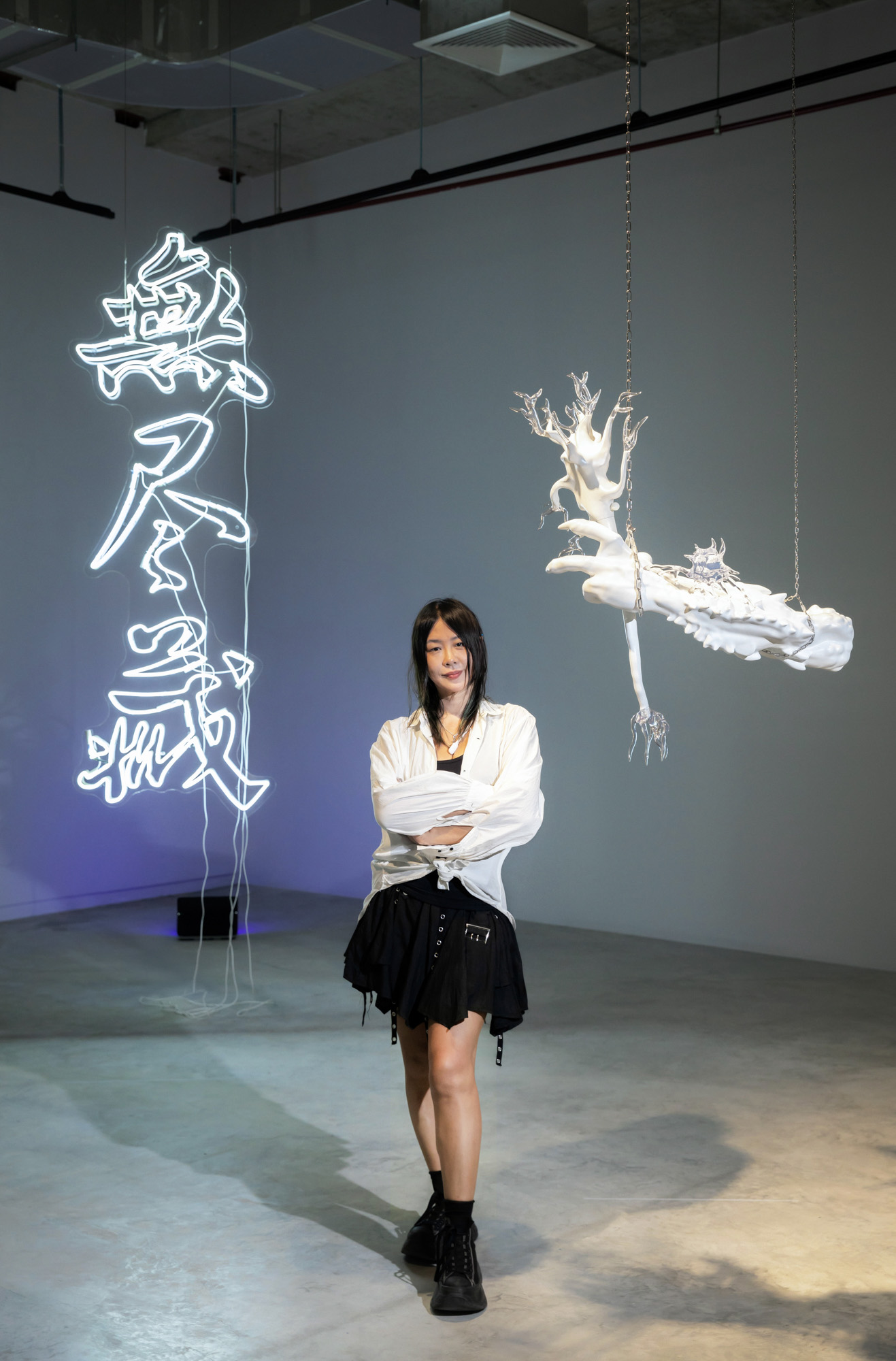
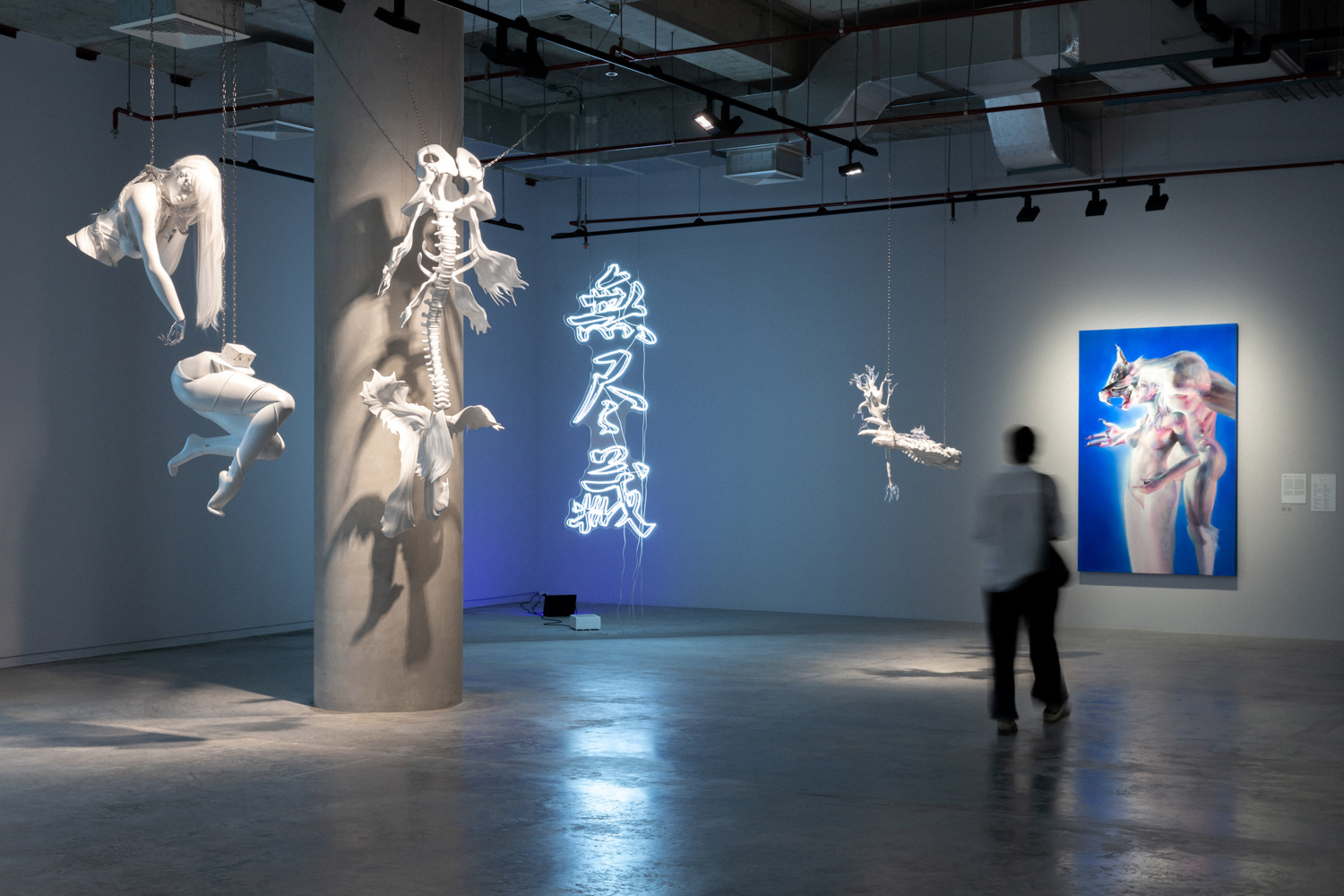
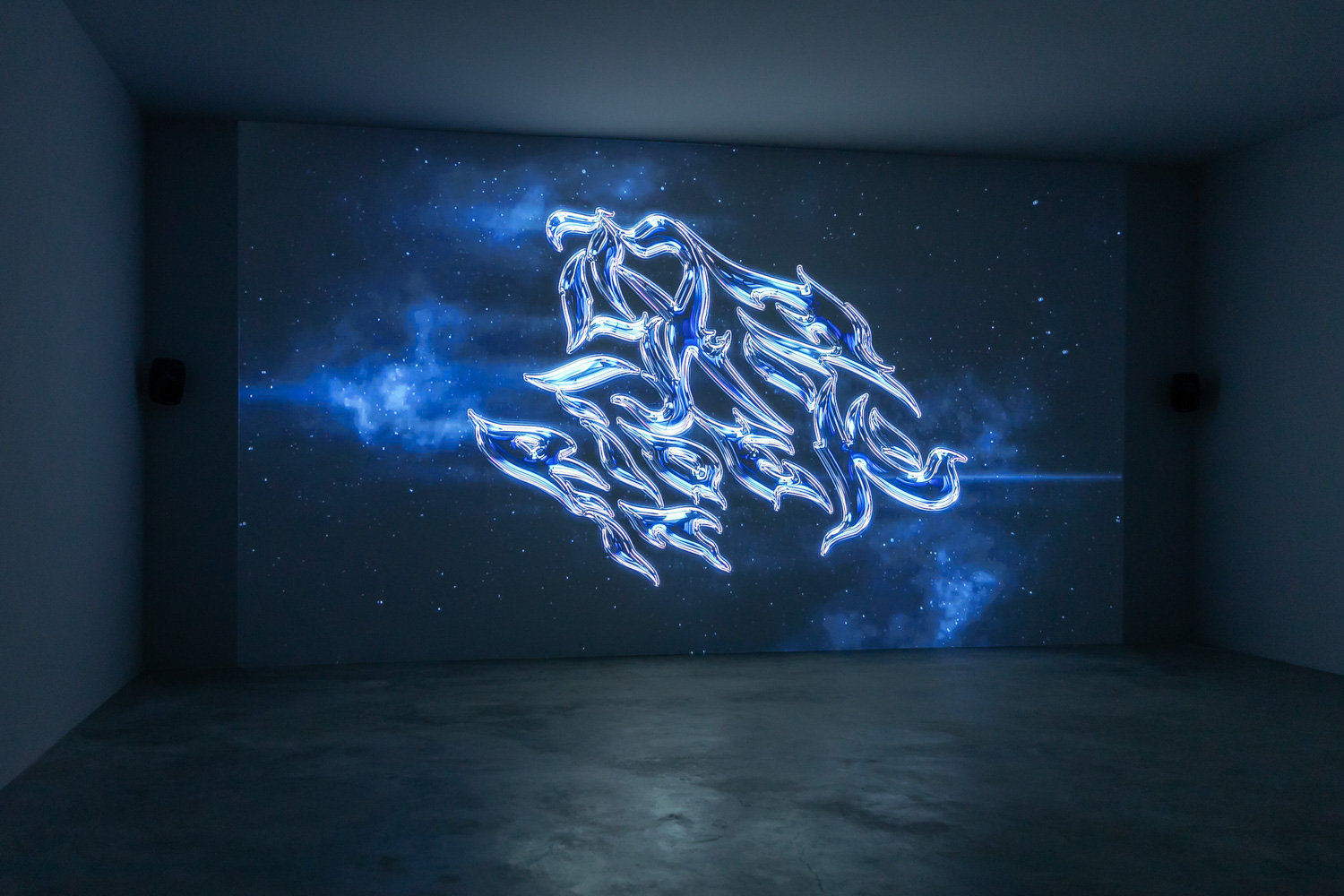
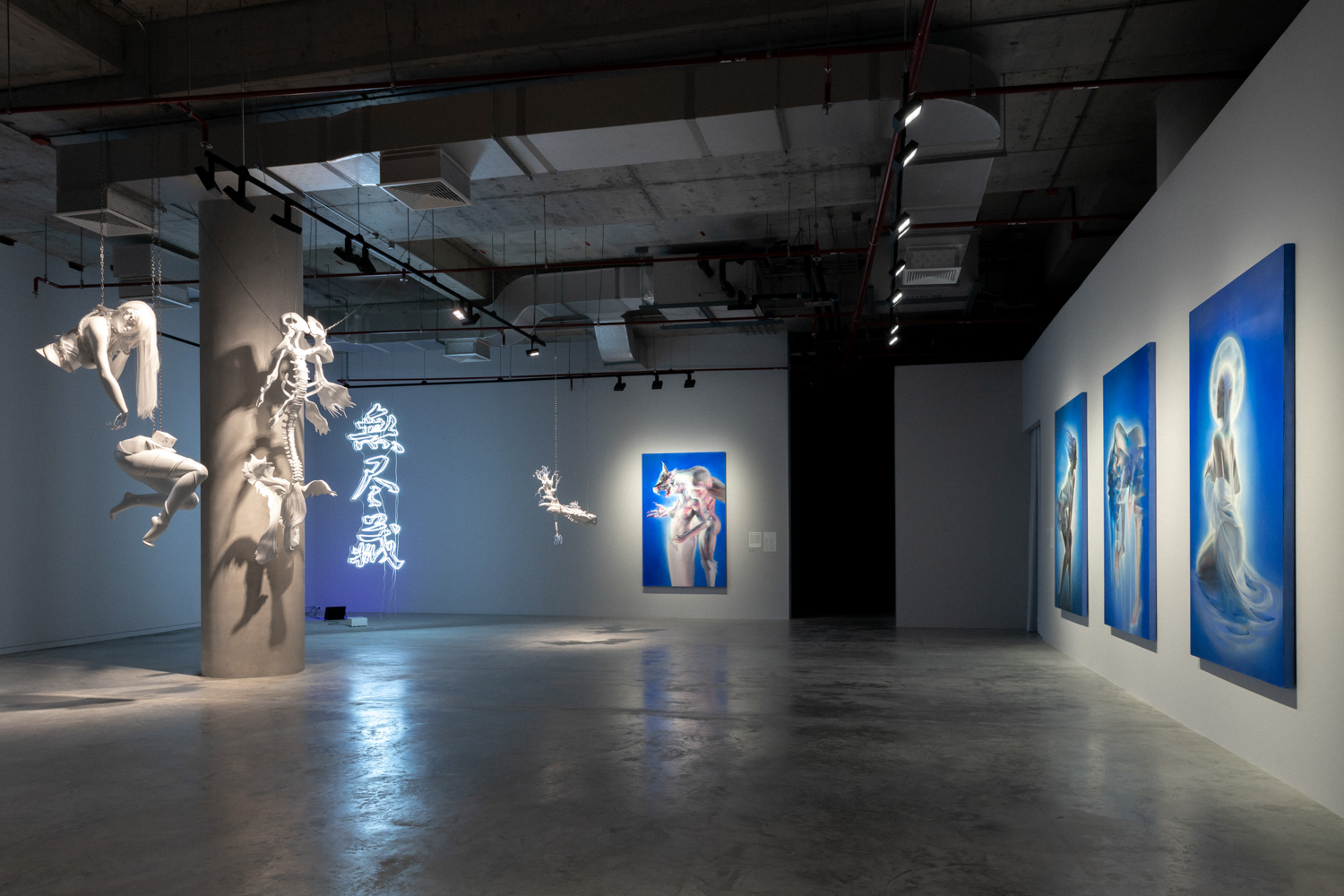
INFINITY (2026) LED installation 240 x 70 cm.
art4d: How do your interests in subcultures and your engagement with Buddhist beliefs and concepts influence your worldview and artistic practice?
SK: I enjoy bringing together traditional Chinese culture, Buddhist philosophy, and contemporary subcultures to form new relationships and visual experiences.
The series carries the overarching theme of Infinity. In Buddhist philosophy, infinity is like the ocean—boundless, capable of encompassing all differences, light and dark, beauty and terror, Angel and Mara. So, Buddhist wisdom teaches me not to judge things as simply right and wrong or good and bad. I want viewers to quietly observe and experience the work without hate or despair, much like surrendering to the natural rhythm and flow of ocean waves.
art4d: Why did you choose the myth of the ‘mermaid’ (Jiaoren) as the core of this series?
SK: I’ve always been fascinated by traditional Chinese mythology and religious culture, both of which are rich sources of imaginative inspiration. But I’m not interested in simply retelling traditional stories. What interests me more is imagining what might happen when these ancient figures and narratives enter the world we live in today.
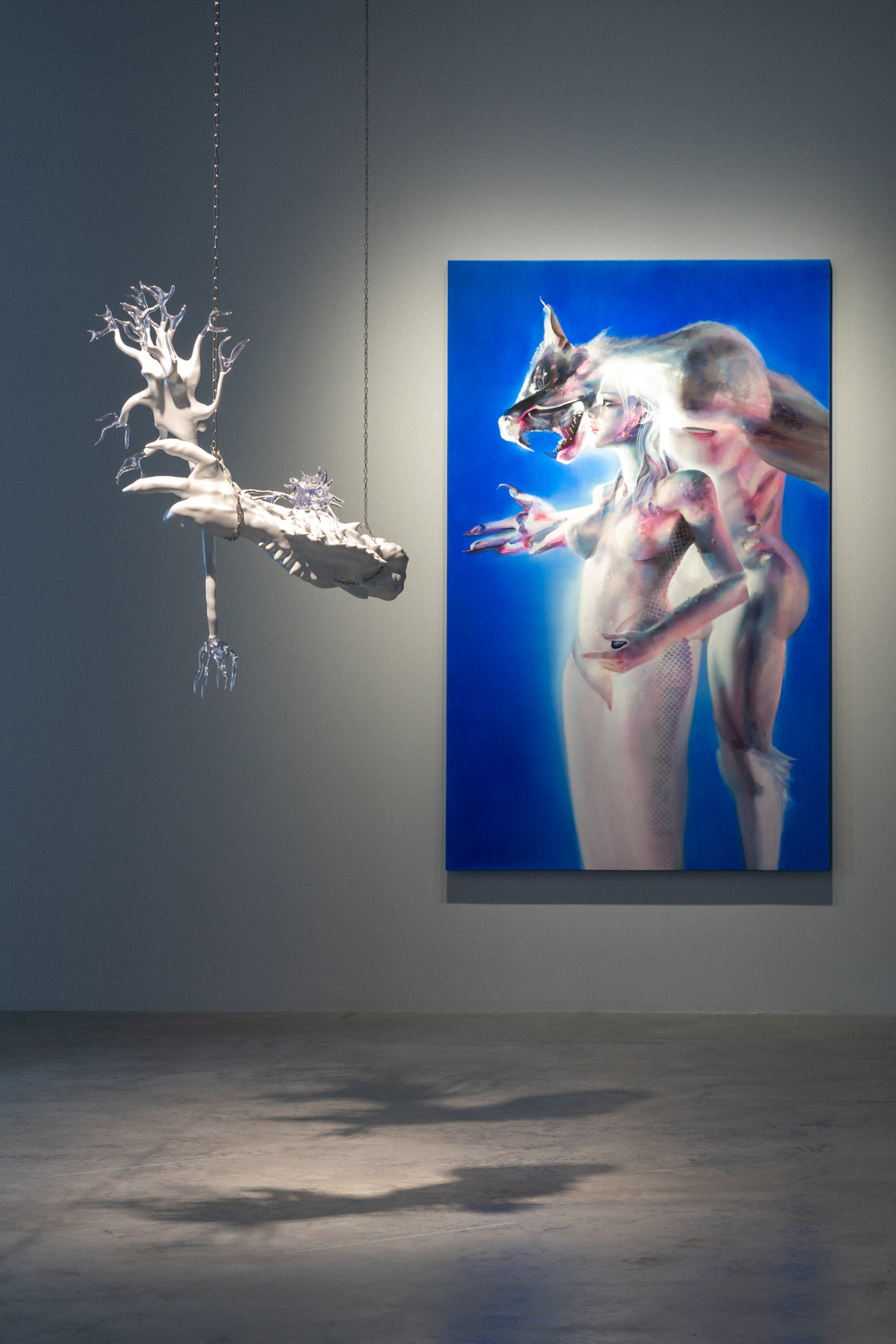
For example, in ‘Tears of Mermaid’ and some works from my ‘Pure Land’ series, I bring the mermaid from Chinese mythology into dialogue with cyborg imagery, futuristic technology and contemporary experiences of our bodies. To me, the mermaid is both an ancient mythical figure and a starting point for exploring the reality of social isolation and the sense of disconnection that defines contemporary existence.
I don’t see traditional culture as something confined to a distant past. It can be very much connected to our lives today. Ancient mythology can still have a surprisingly contemporary vitality.
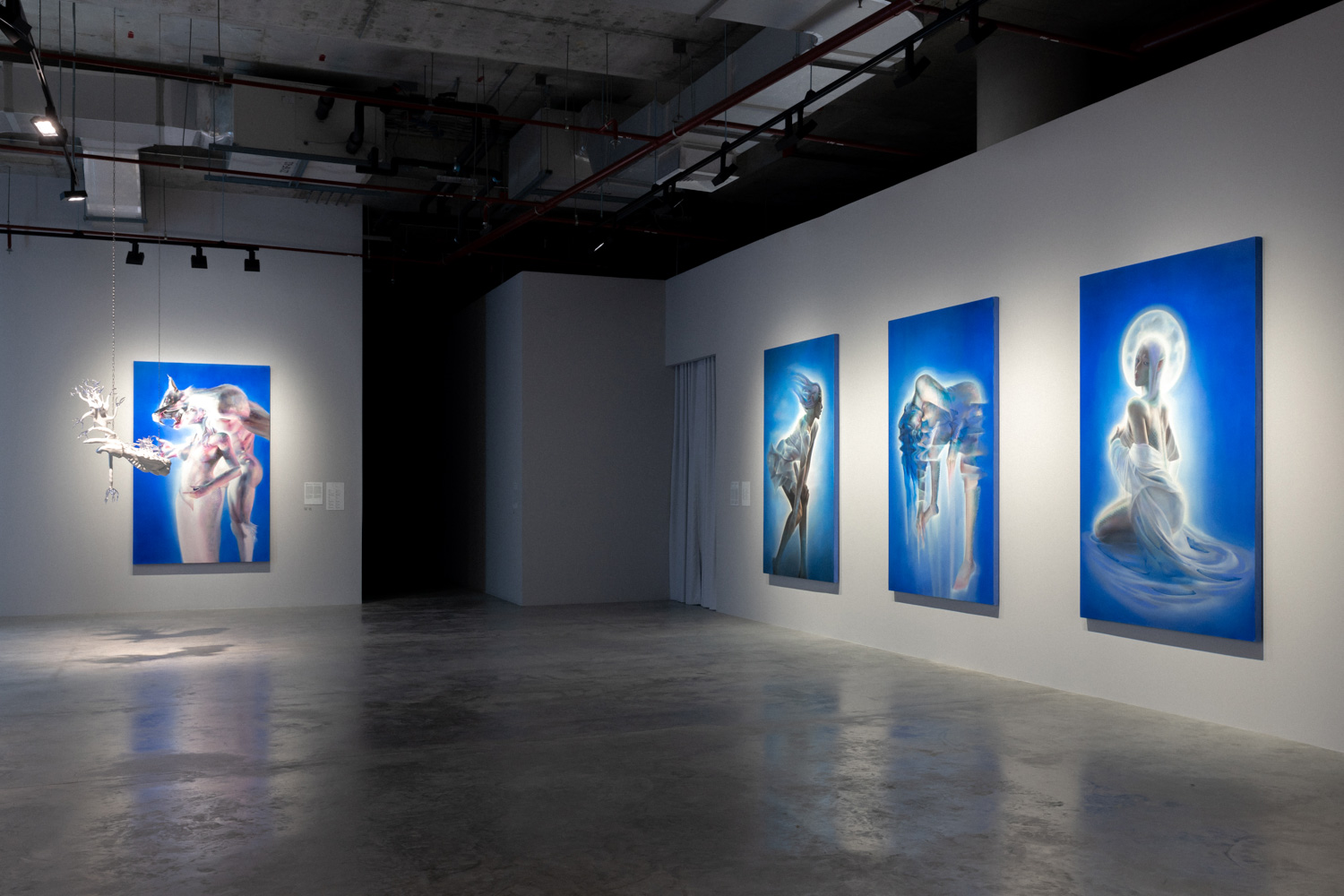
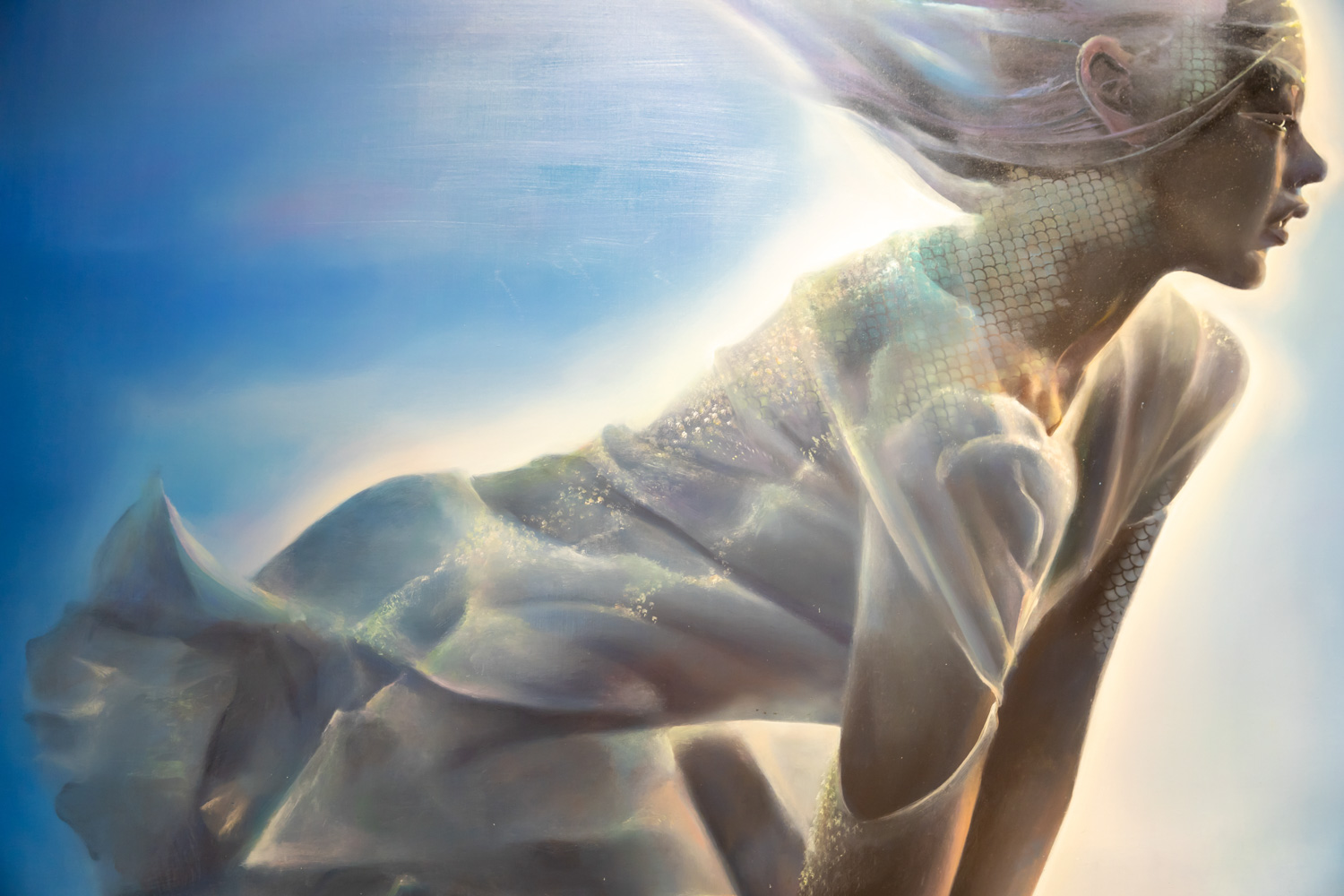 Tears of Mermaid No.1 (2026) Oil on Canvas 220 x 140 cm.
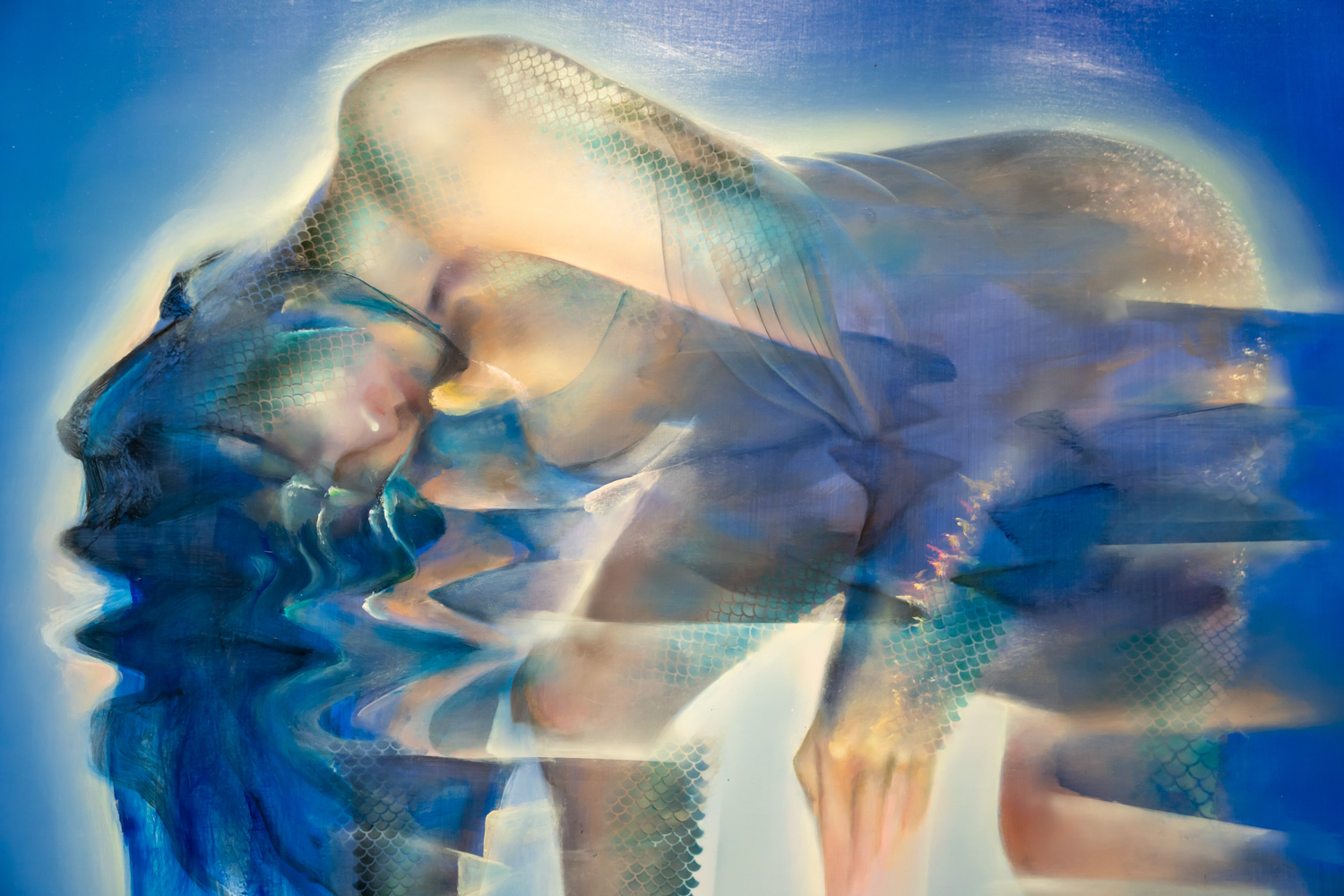
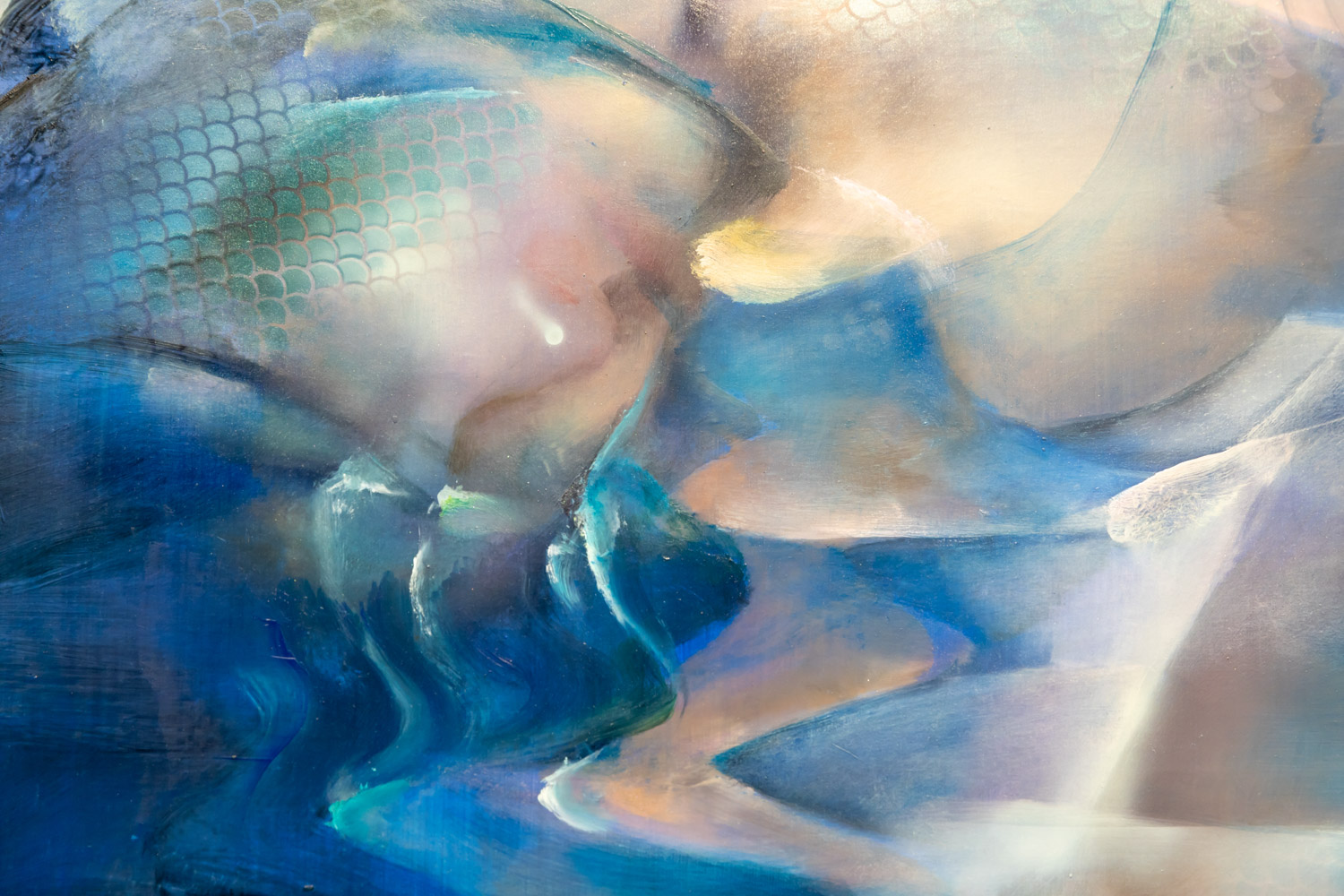
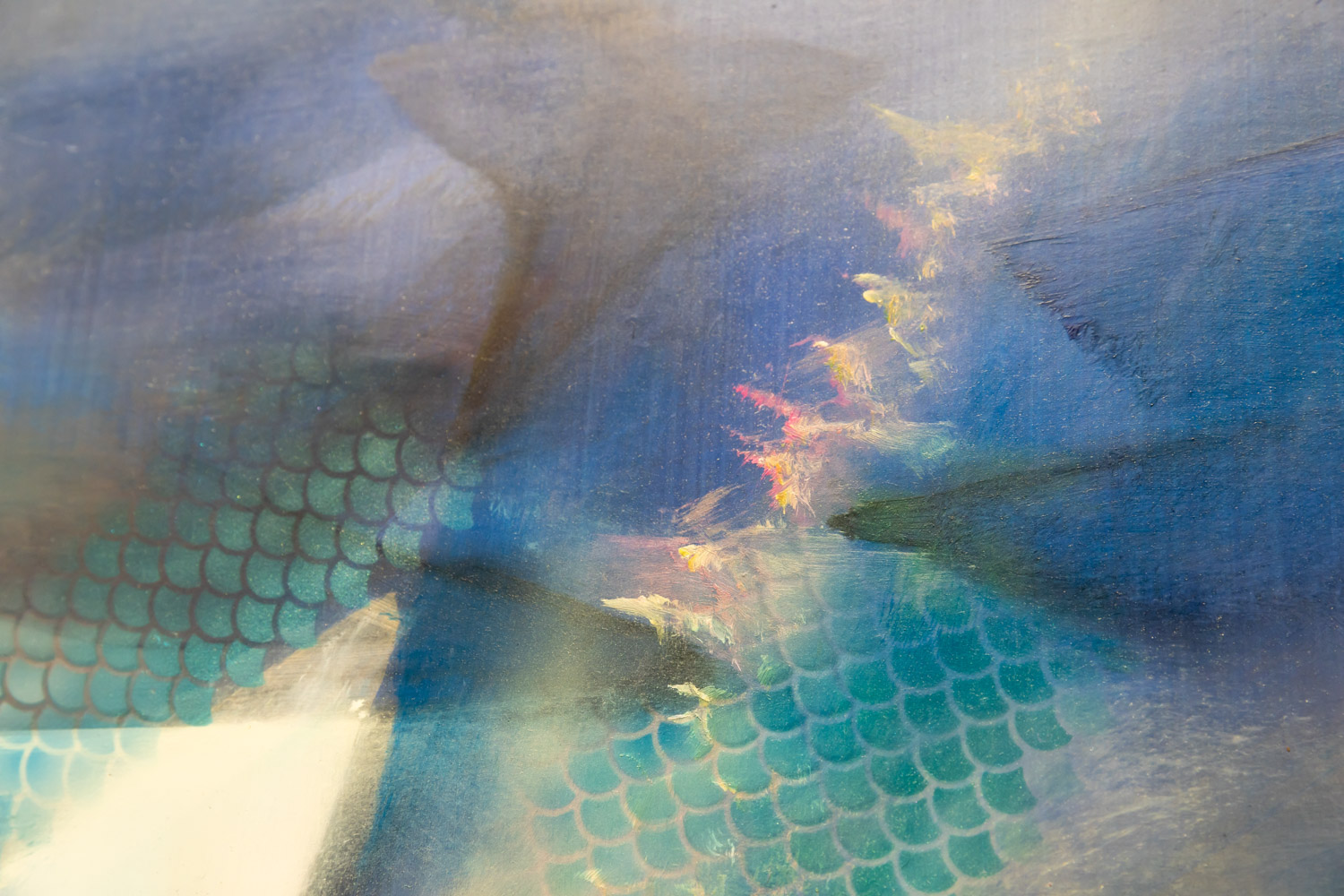
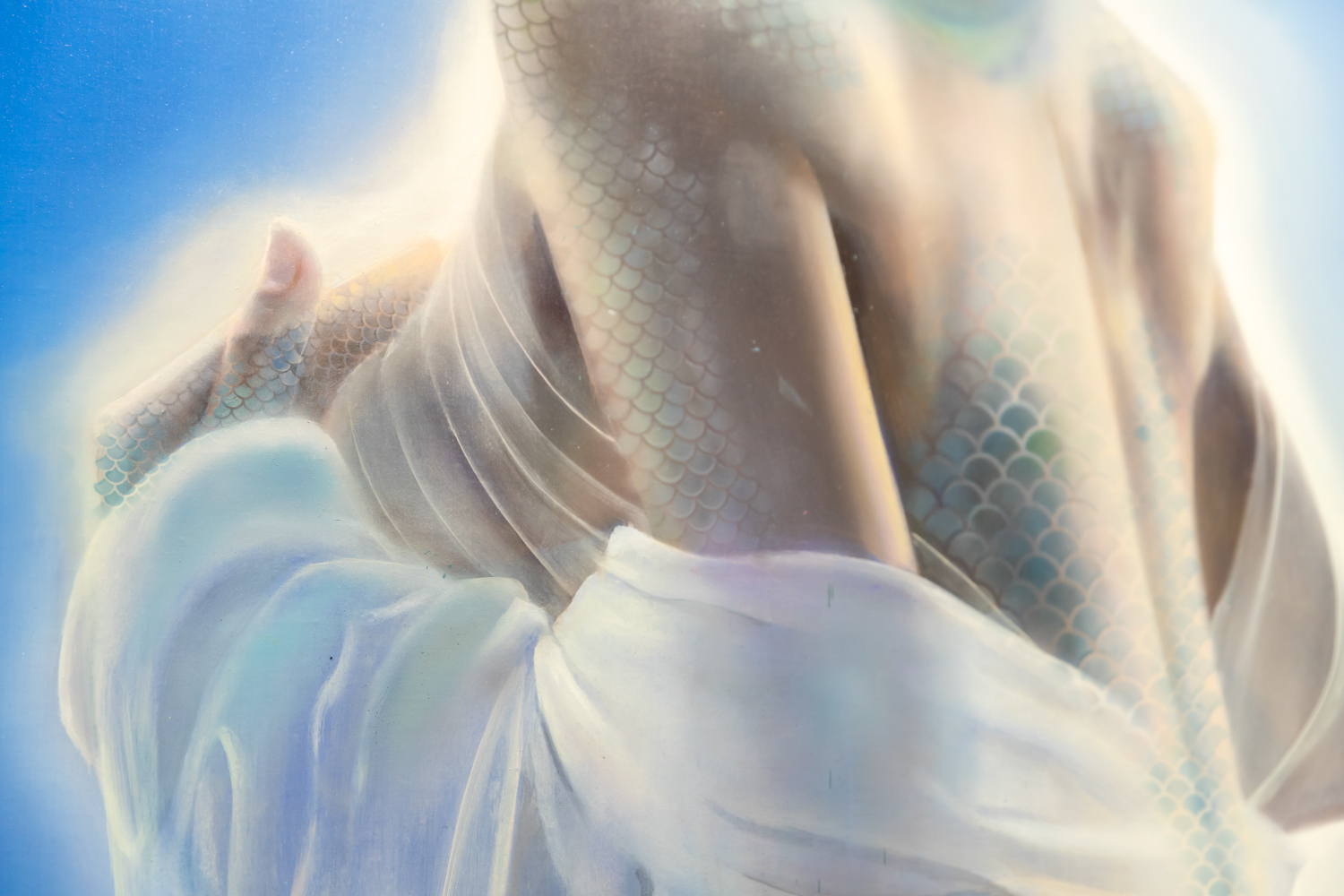
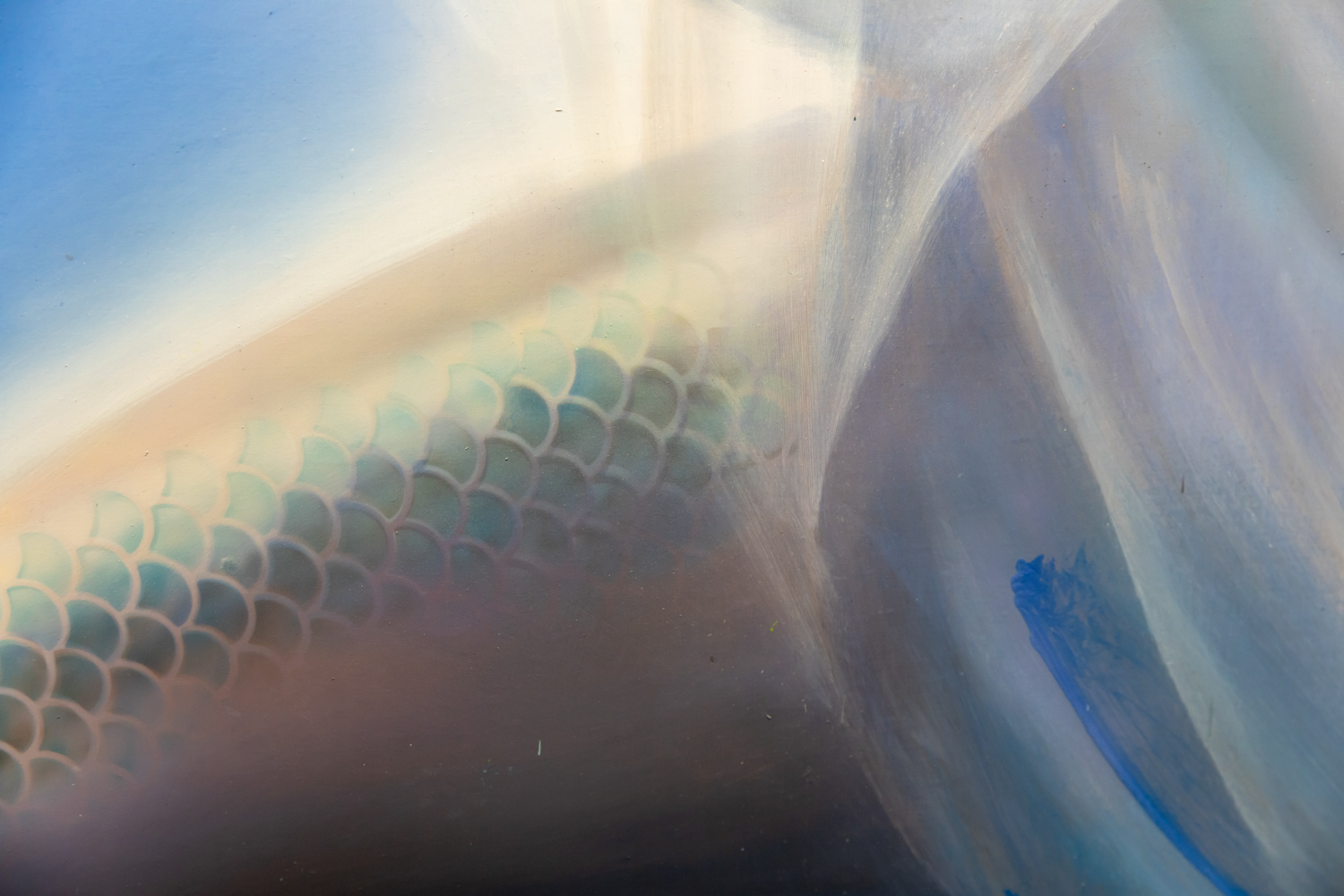
art4d: You mentioned the concept of ‘Eastern Feminism’ in relation to this series of paintings. What does it mean in this context, and how is it expressed through your work?
SK: In this context, Eastern Feminism is embodied by a figure who is independent and self-sustaining, and whose emotions and tears are given freely out of genuine love and connection.
I reinterpreted the traditional narrative: the mermaid can no longer cry. Her inability to weep reflects how money, capitalism, industrial systems, and high-speed societal pressures alter the human body and diminish emotional capacity. Unable to express innocent emotions, her body is severed and turned white and petrified—a reflection of emotional suppression in modern society.
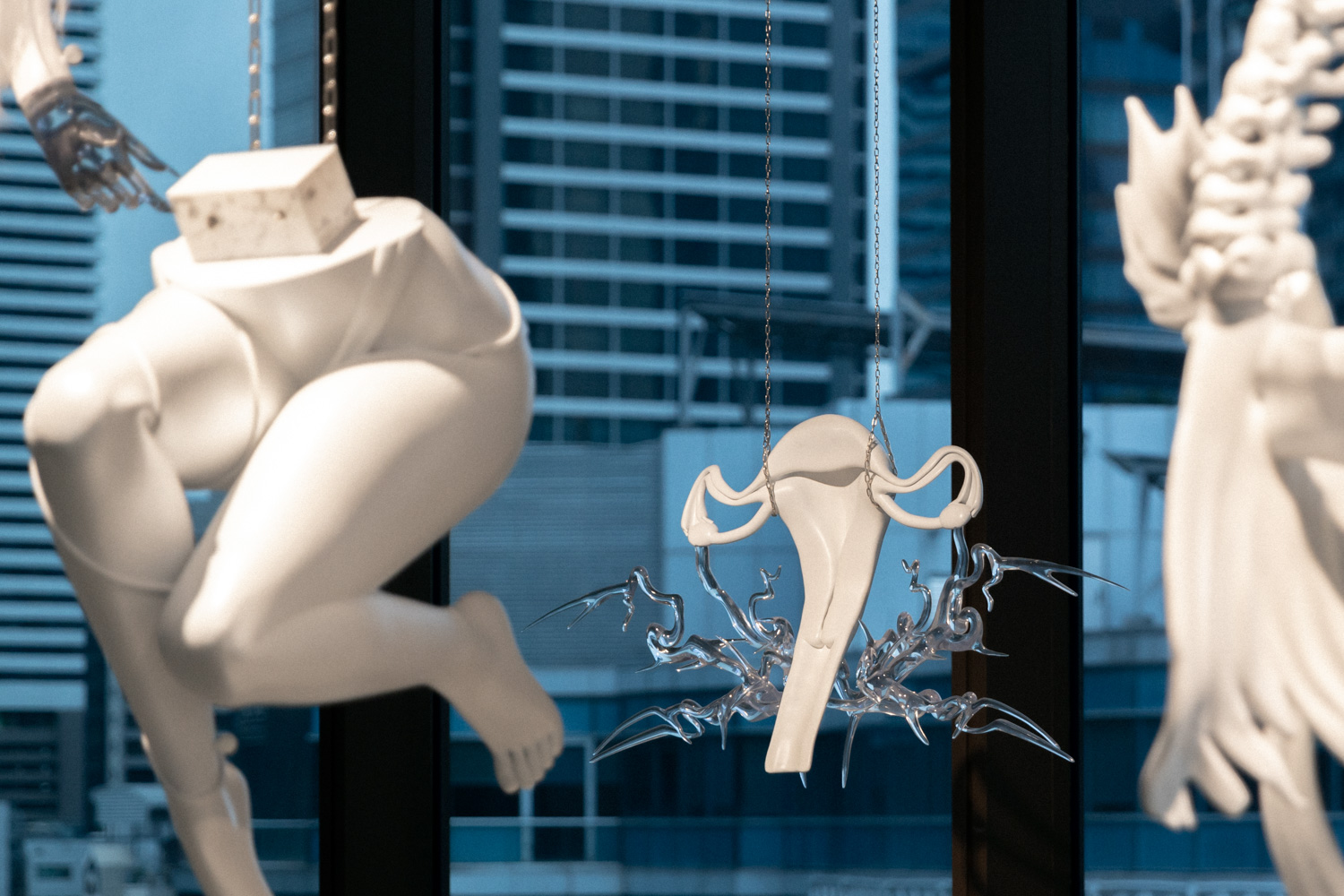
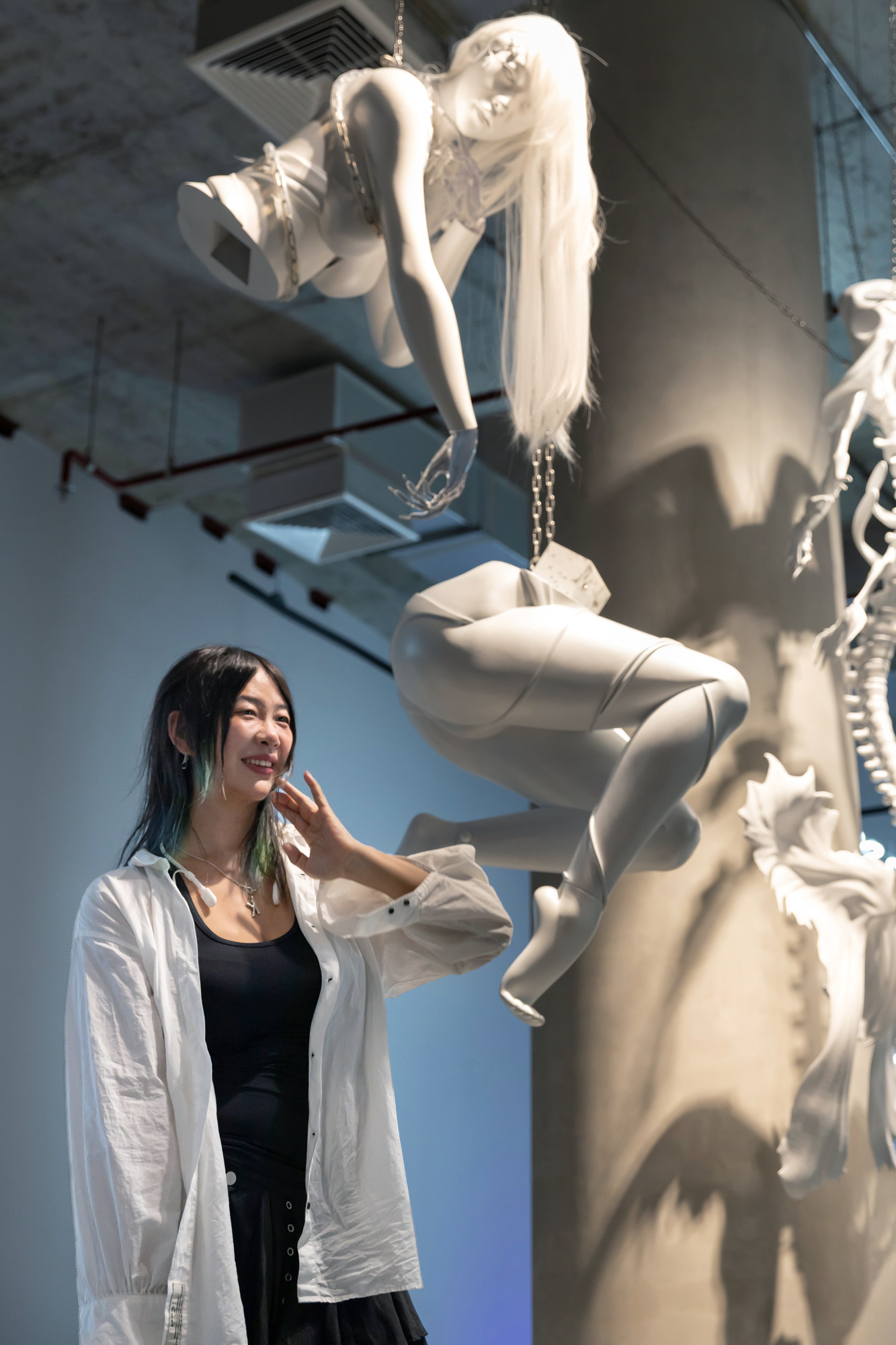
(In the Middle) Libido Fixation (2026) 3D resin printing, hand-painted 125 cm.
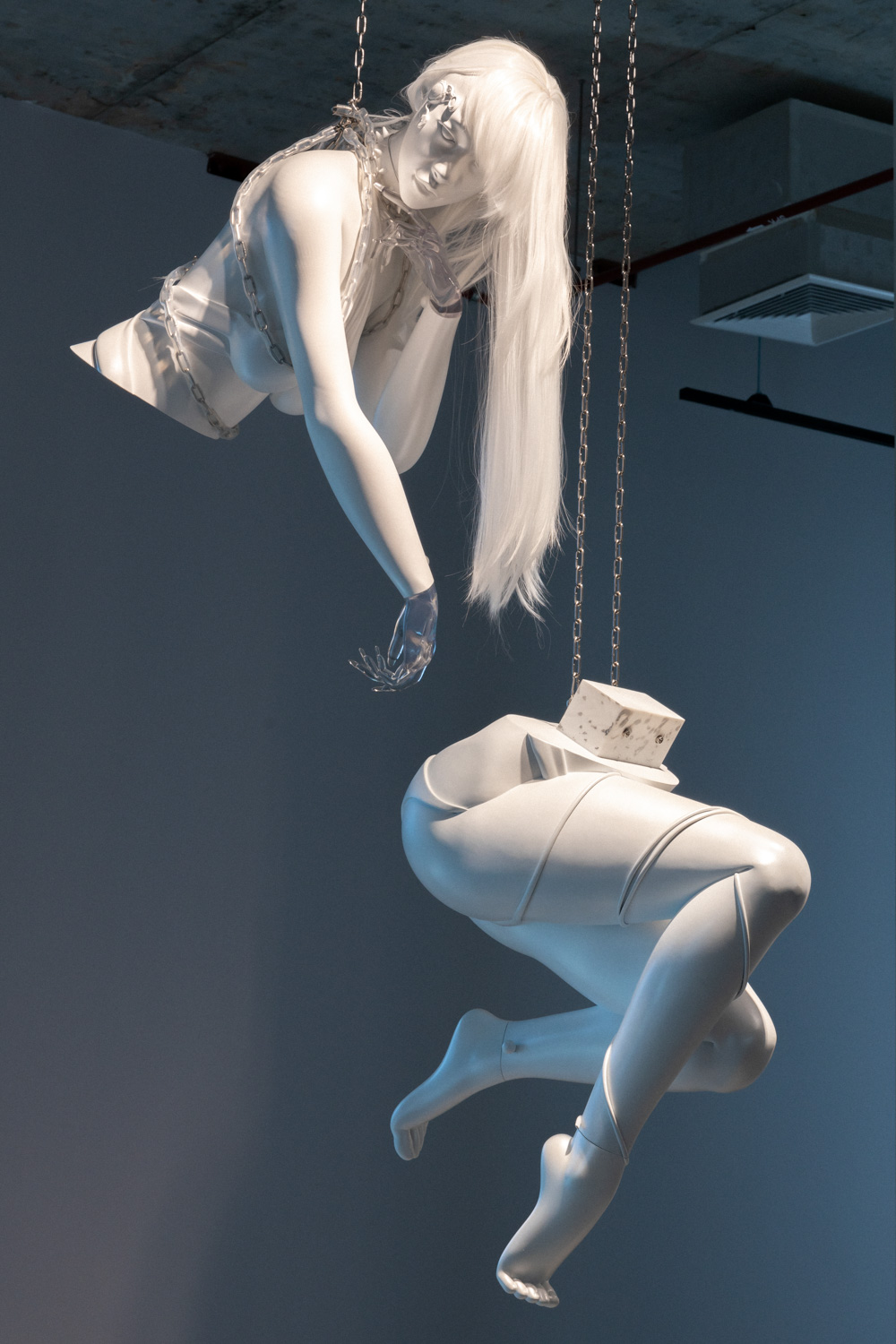 Tears of Mermaid (2026) 3D resin printing, hand-painted 135 cm.
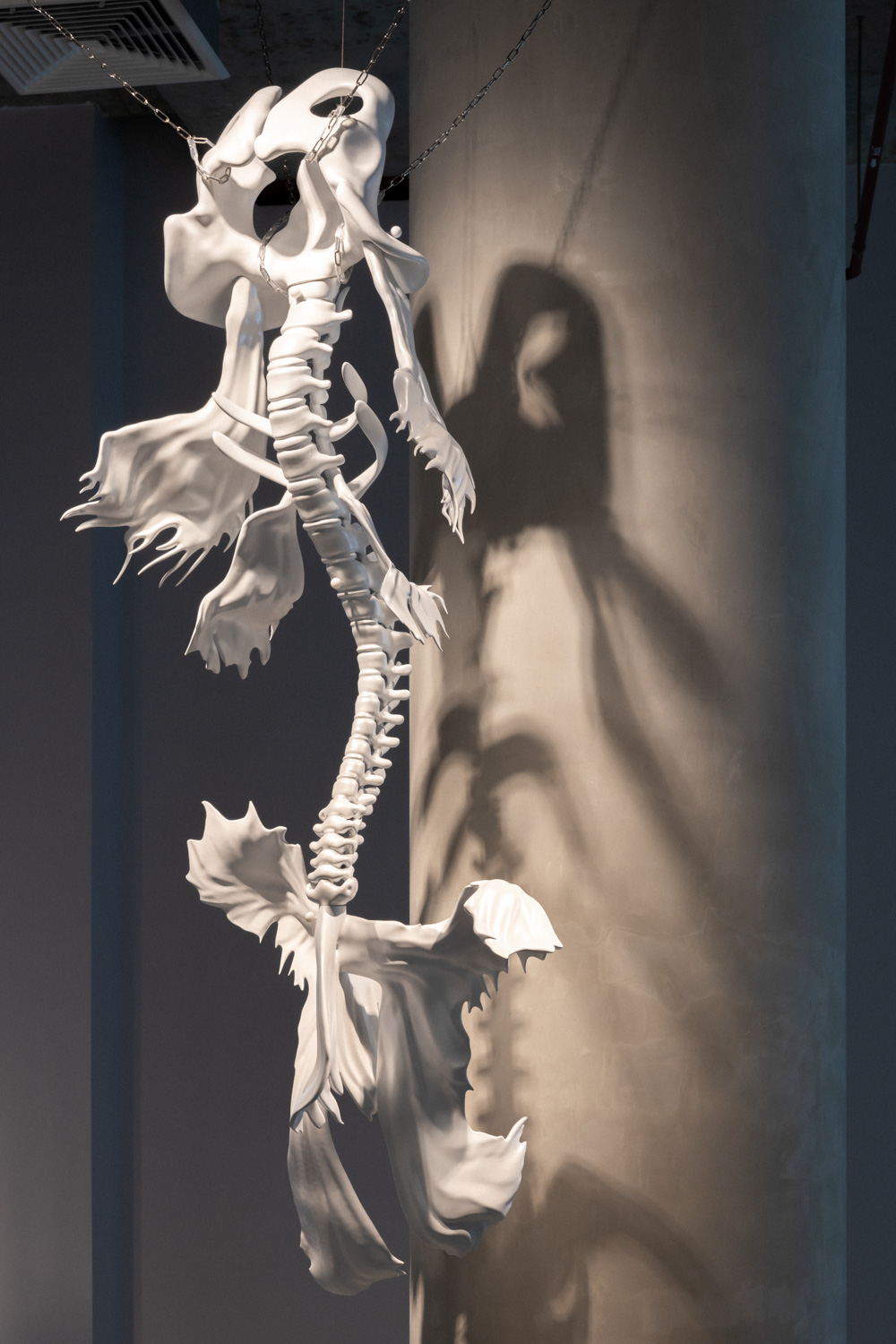
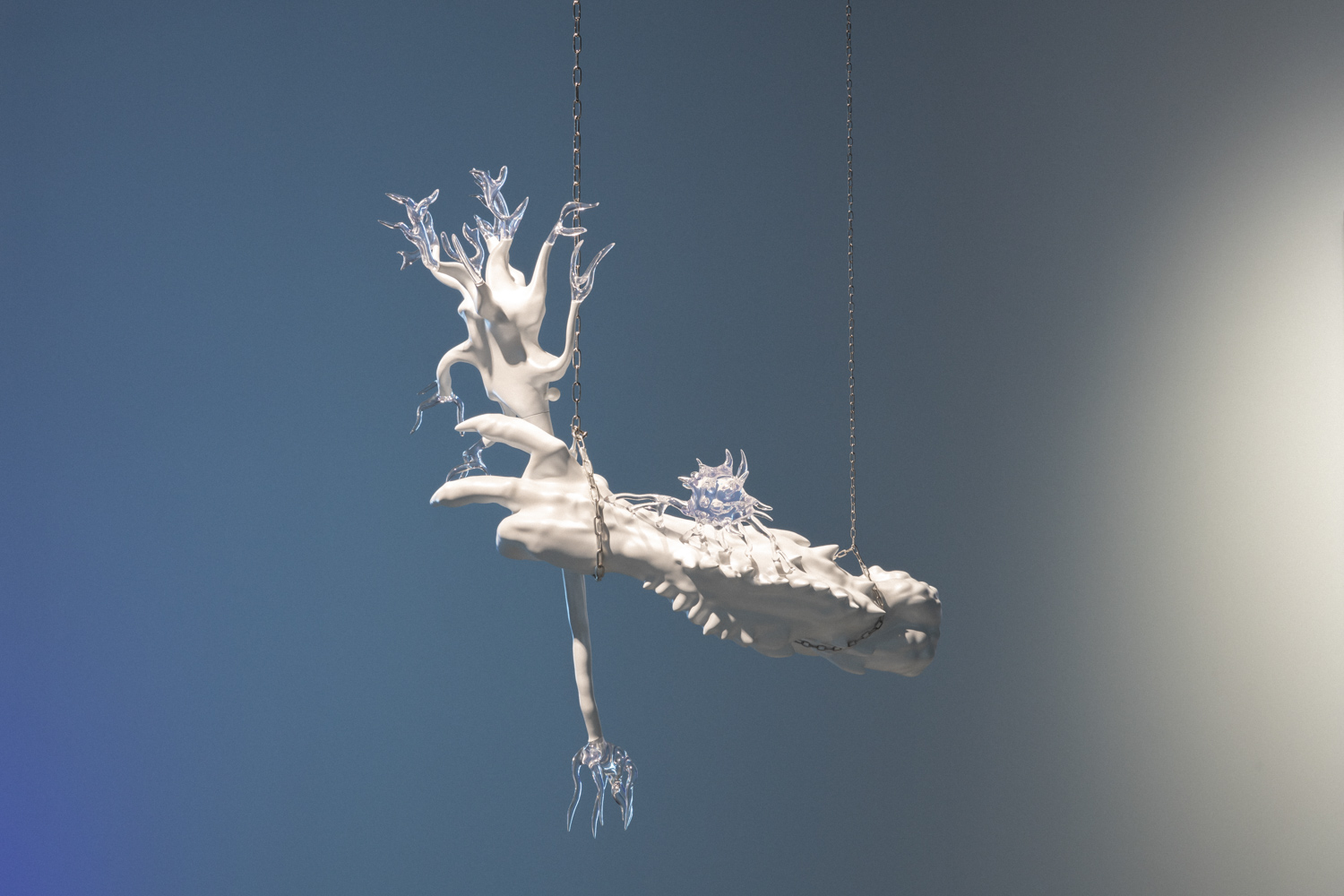
Tameless Nerve Bundles (2026) 3D resin printing, hand-painted 100 cm.
art4d: You refer to this work as a ‘future archaeological ruin.’ What does this concept actually mean, considering archaeology usually looks to the study of the past?
SK: The concept is intended to evoke the feeling of visiting a natural history or biology museum, viewing the preserved bones, fossilized remains, or ancient stone sculptures of long-extinct species.
By stripping the mermaid’s body of color and rendering it as a white, stone-like sculpture, I project a ‘future archaeological ruin’—an artifact from the future looking back at how human emotions and physical vitality were eroded by digital realities and technological control.
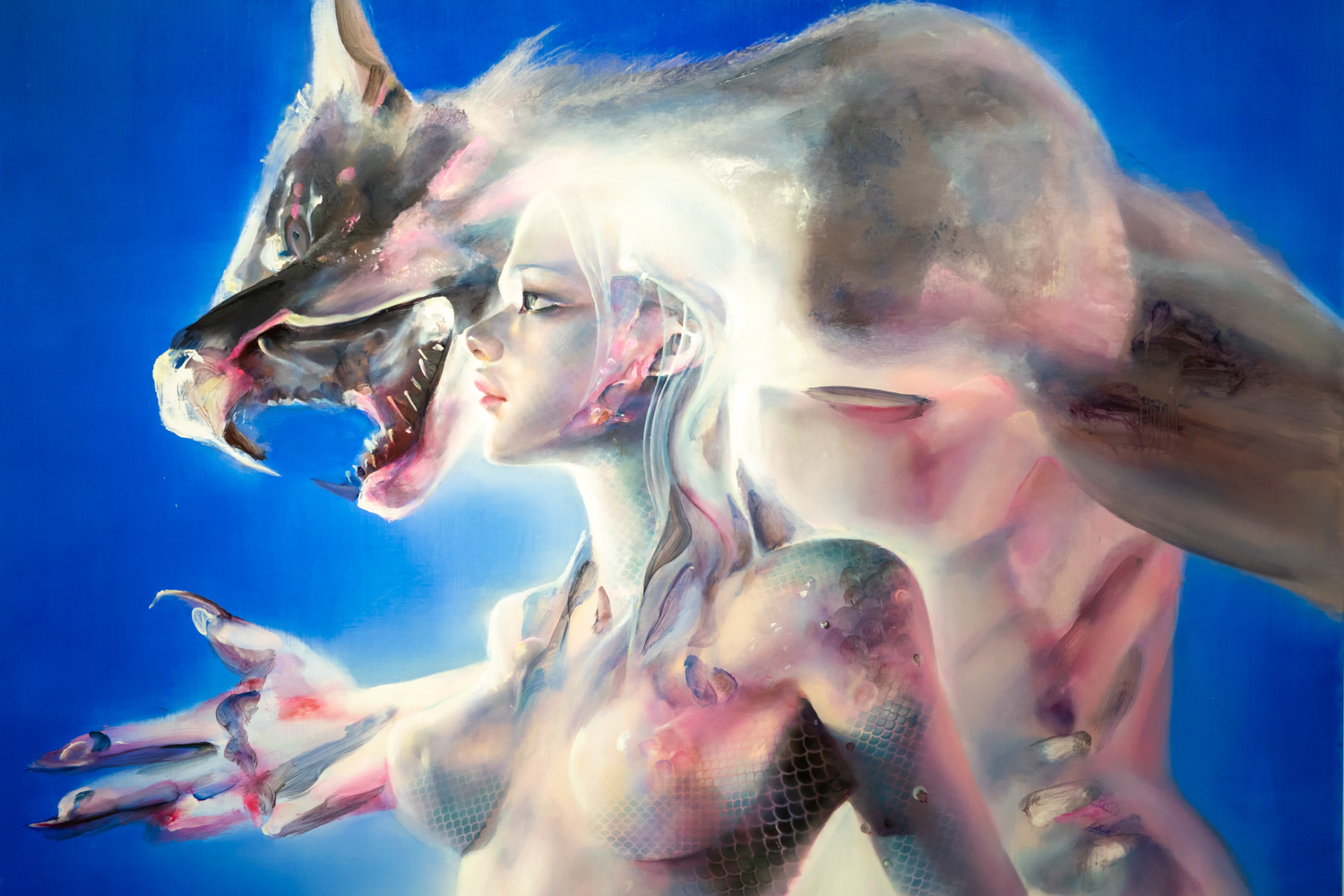
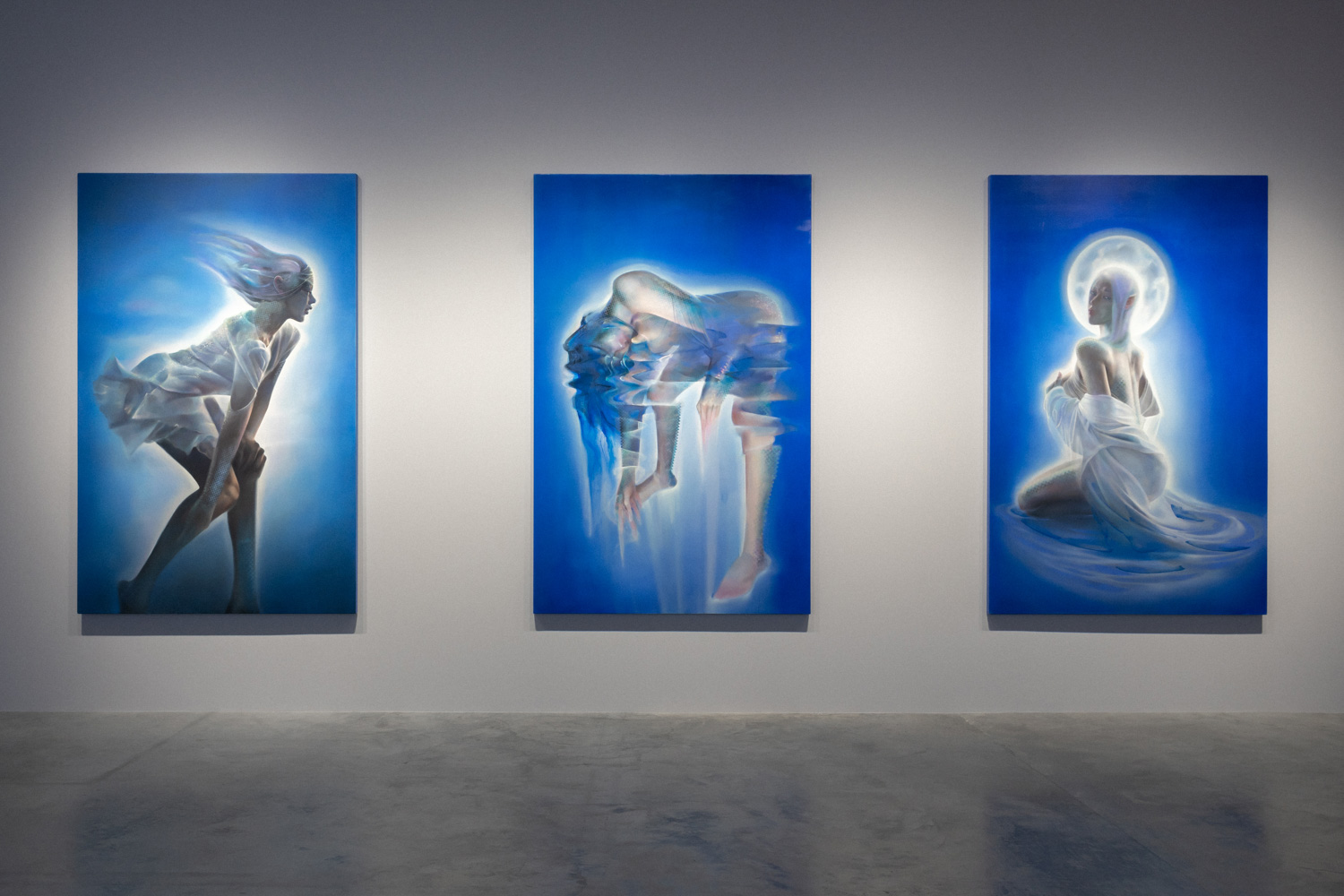
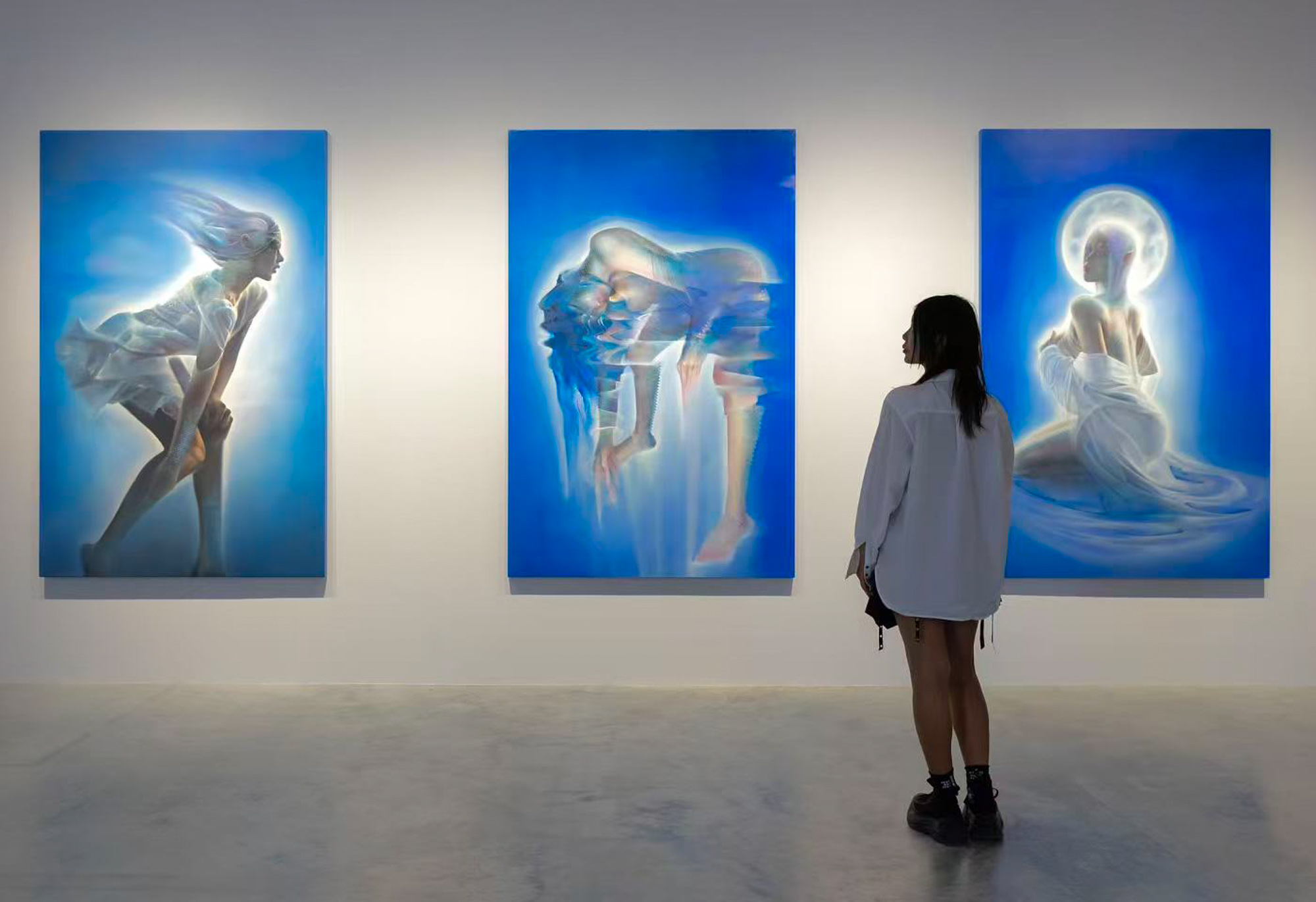
All my demons run so wild (2024) Oil on Canvas 220 x 140 cm.
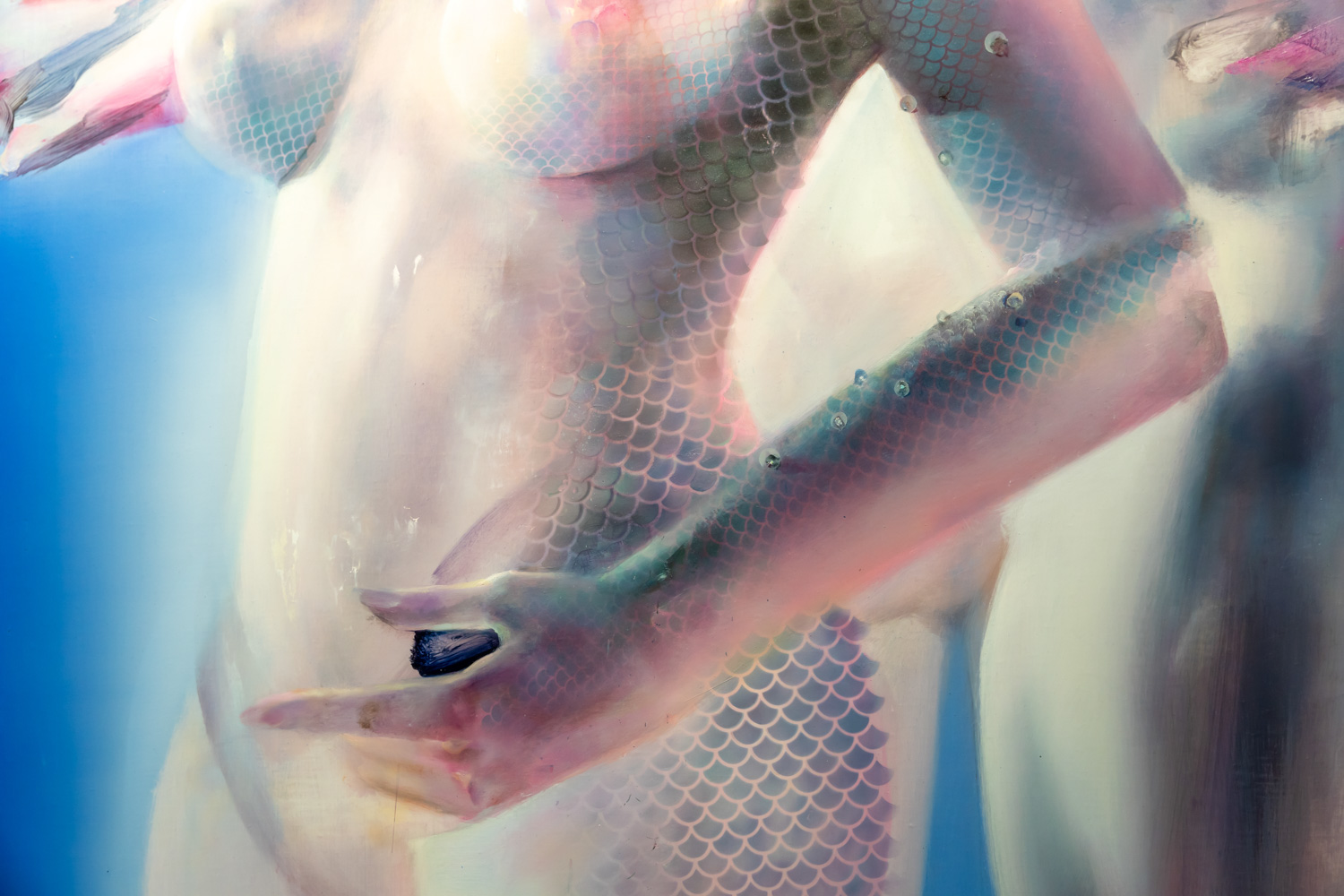
All my demons run so wild (2024) Oil on Canvas 220 x 140 cm.
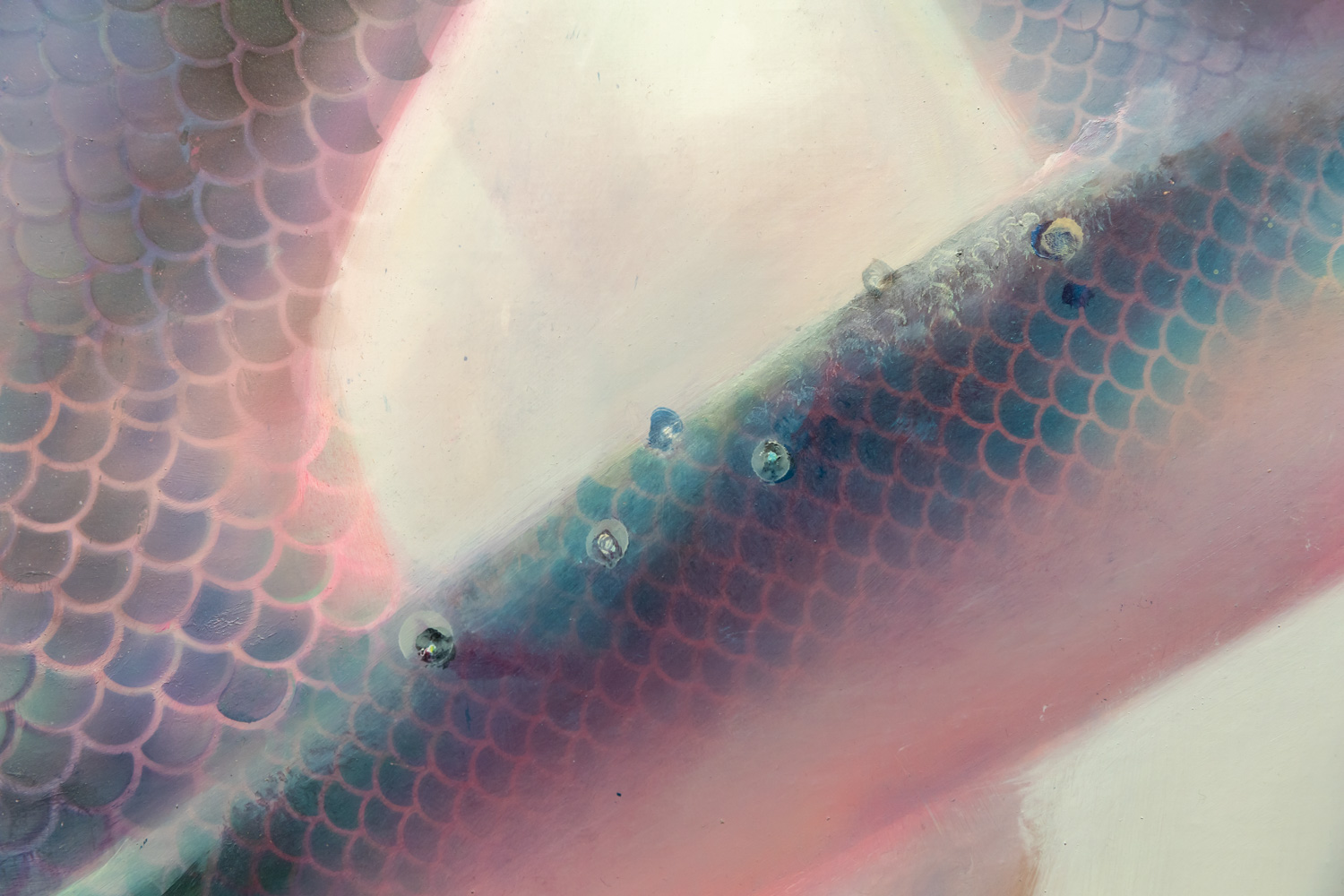
All my demons run so wild (2024) Oil on Canvas 220 x 140 cm.
art4d: How does your reinterpretation of traditional Chinese folklore for the contemporary era reflect the human condition in an age shaped by capitalism and technology?
SK: Rapid technological advances constantly alter our physical bodies, lifestyles, and interpersonal relationships. While modern technology makes virtual connection effortless, email, DMs, genuine emotional expression has become more difficult. People live with virtual-world loneliness, complex desires, and fragmented identities. Reinterpreting ancient mythology shows that traditional folklore still possesses contemporary vitality, serving as a mirror to examine how capitalism and technology continue to reshape human nature.
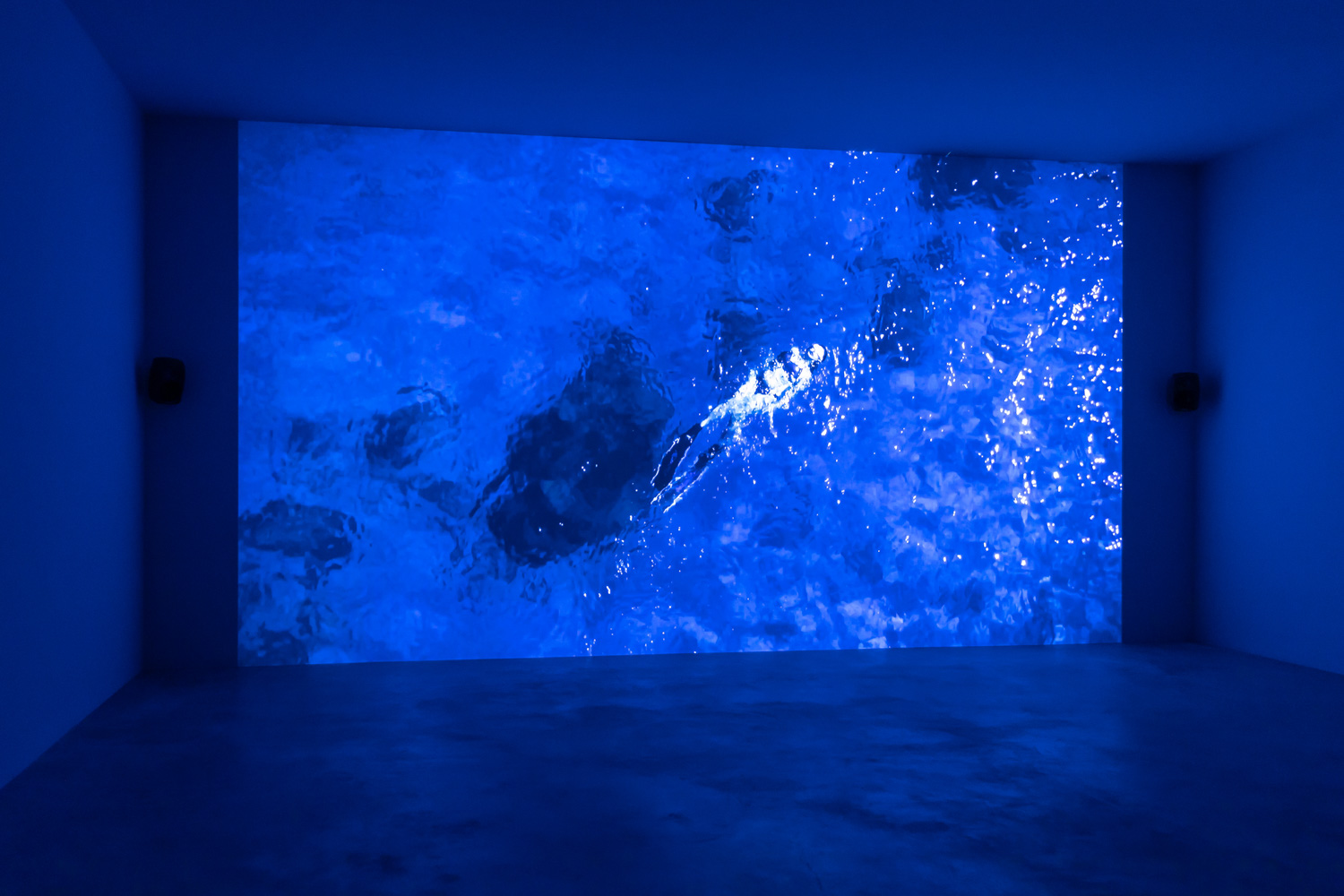 Ride-it (2026) Three-screen audio-visual projection 5 feet
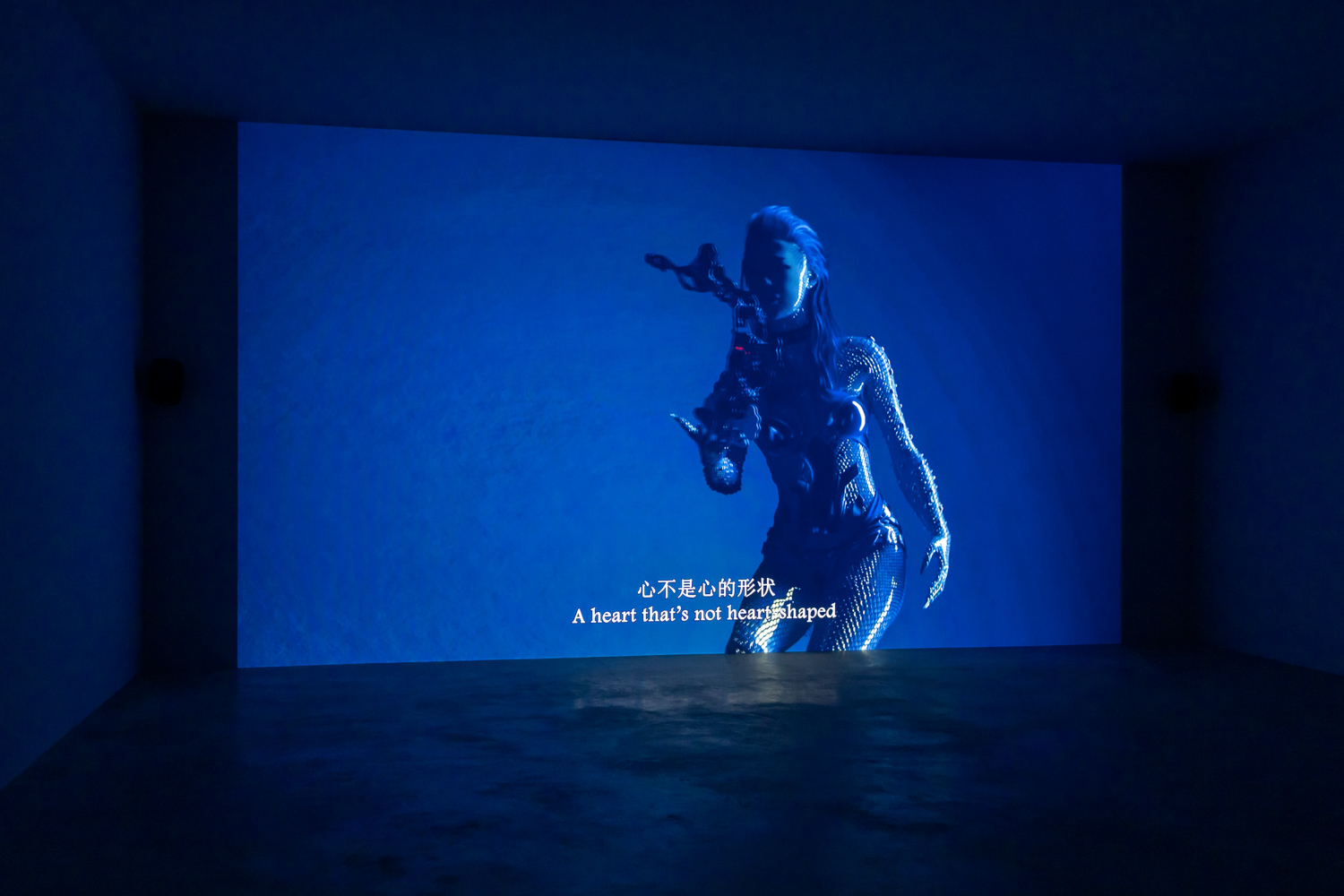
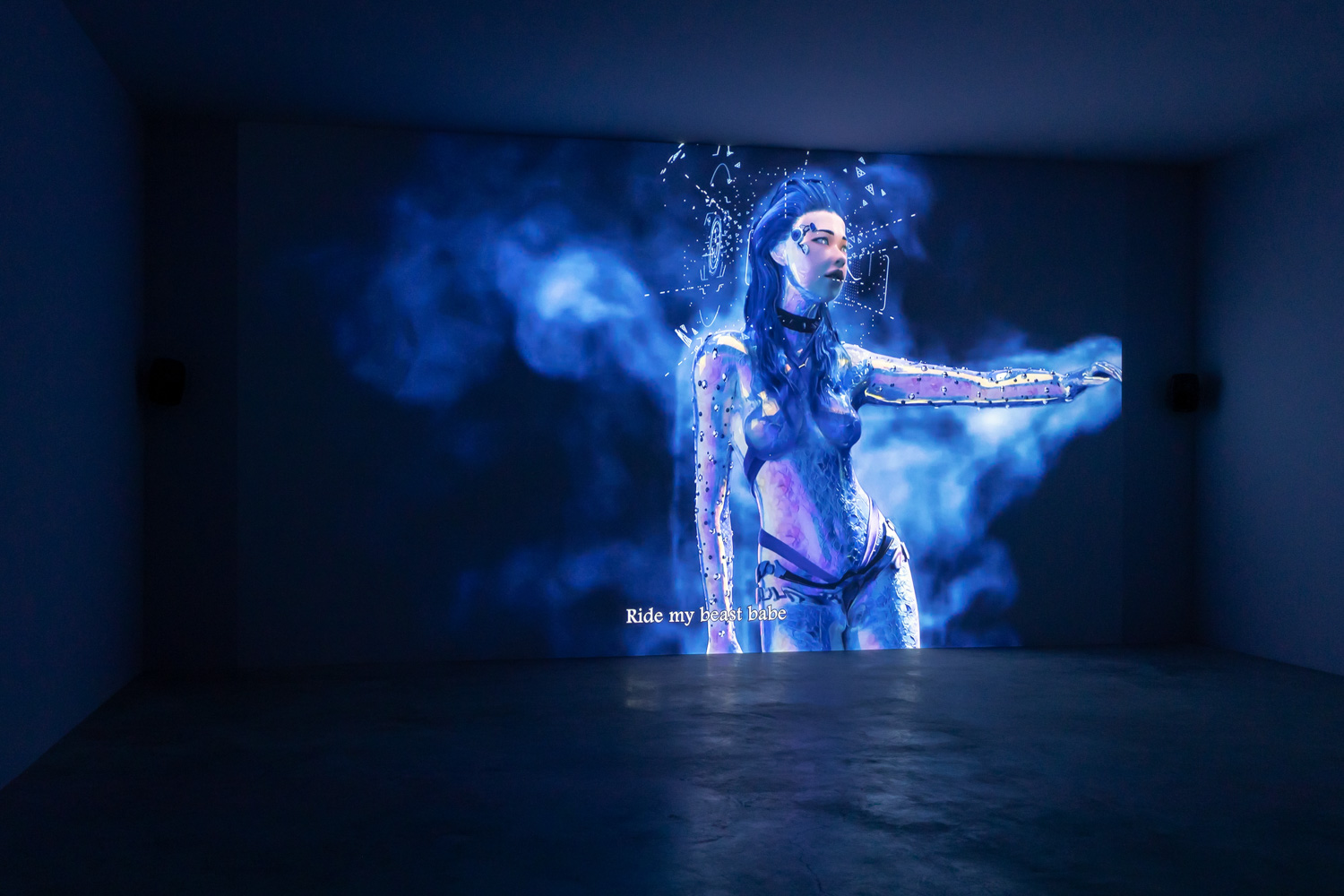
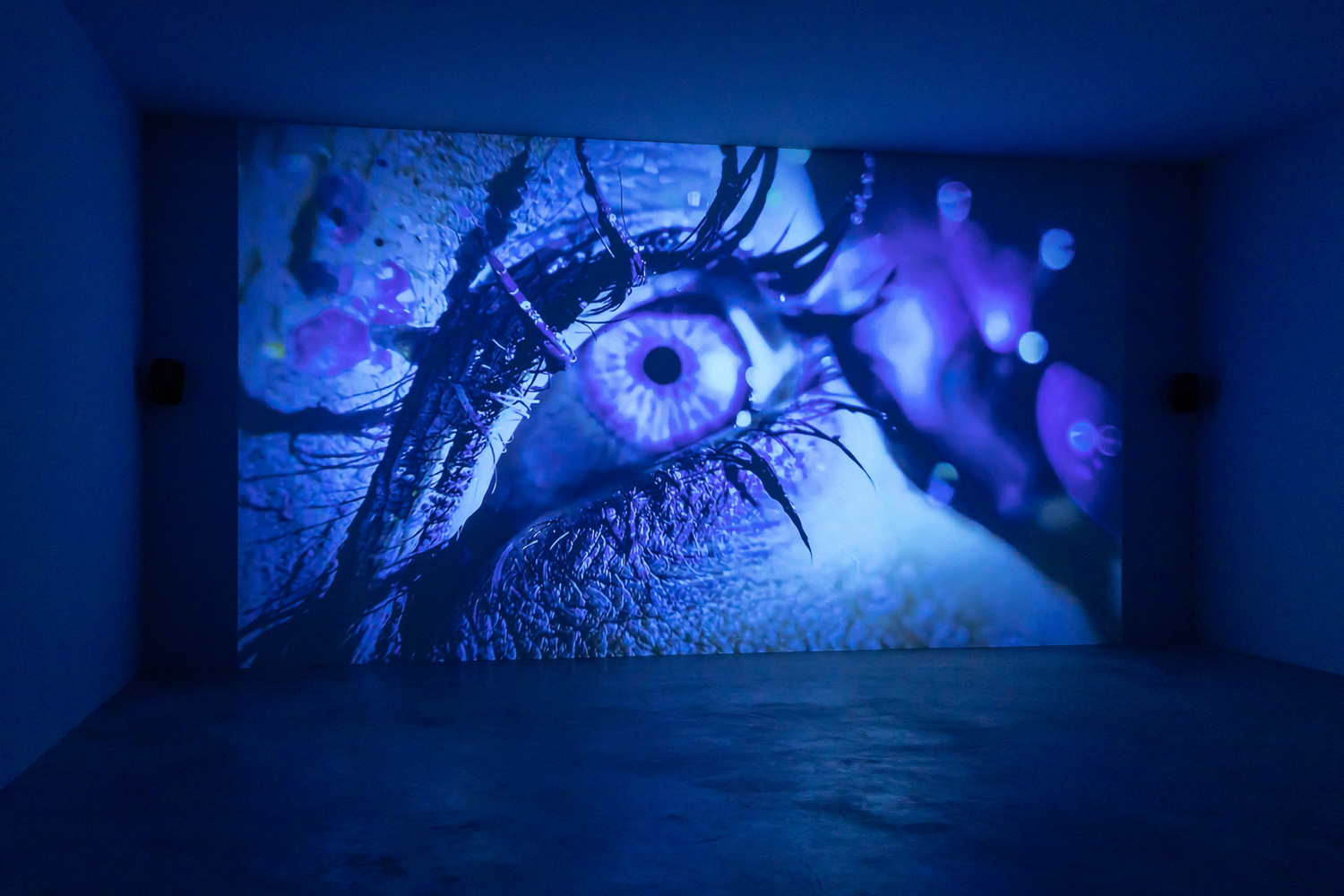
art4d: How do painting, sculpture, the INFINITY LED work, and the music video ‘Ride it’ work together to create a theater-like experience and emotional connection through sound?
SK: I like to think of an exhibition as an overall spatial experience. Sometimes it can feel like entering a theatre, or even stepping into a scene from a film.
Painting offers static visual images, while sculpture and installation allow these images to extend beyond the canvas. Together, these elements create a unified and deeply emotional atmosphere. Lyrics provide the conceptual references and the ‘Background Clues’ while conveying the flow of thoughts and emotions.
I hope that when audiences enter my exhibition, they can experience the visual, sonic, and spatial dimensions simultaneously. The experience does not necessarily need to follow a linear narrative. Everyone can interpret and respond to the work through their own experiences.
I really like this openness. Art does not always need to explain everything. Sometimes, leaving room for imagination makes the art much more interesting.
art4d: Following your 2014 exhibition in Bangkok, what does returning to the city mean to you, especially to a new landmark like One Bangkok for Bangkok Art Biennale 2026?
SK: My 2014 show at Chulalongkorn University was a group exhibition focused specifically on contemporary Chinese art.
Returning for BAB 2026 at One Bangkok is an exciting opportunity to participate in an international platform featuring over 70 artists worldwide. Thailand and China share deep Eastern cultural roots, yet BAB offers a distinct Asian and Thai perspective that differs from Western biennales by organically blending local philosophy, Buddhism, and contemporary art.
Although my work has a strong connection to Chinese culture and Eastern aesthetics, I’m equally interested in universal human experiences, such as the body, emotions, desires, freedom, and our relationships with nature, technology, and our reality of contemporary society.
art4d: As this exhibition offers a great opportunity to connect further with Thai audiences, which aspects of ‘Song Kun’, through this body of work, would you most like Thai viewers and collectors to experience and remember?
SK: I’m very much looking forward to engaging with audiences in Thailand through this exhibition. I also hope they will discover the different dimensions of my practice: from figurative paintings to music videos to lyrics and dialogue, and to installations; from traditional mythology to contemporary technology. Although these elements may seem quite different, they are all part of the artistic world I have been developing and exploring over the years.
For collectors in particular, I hope they can recognise the continuity and independence behind my works, rather than seeing it simply as a particular visual style. For me, artistic practice is an ongoing process of change and growth, and I hope to continue pushing the boundaries of my exploration.
Ultimately, I hope people remember me as an artist who remains curious about our world, continually reflects on its complexities and approaches it with a strong sense of imagination and a desire to keep creating. For me, one of the most wonderful things about art is that there are always opportunities to forge connections and deepen our mutual understanding.