
DILLER SCOFIDIO + RENFRO REDEFINES MUSEUMS WITH THE DESIGN OF THE V&A EAST STOREHOUSE AS AN OPEN AND ACCESSIBLE STORAGE ARCHITECTURE
TEXT: PARK LERTCHANYAKUL
PHOTO: HUFTON + CROW PHOTOGRAPHY EXCEPT AS NOTED
(For Thai, press here)
On May 31, 2025, the Victoria & Albert Museum (V&A) officially opened the doors of its newest addition, the V&A East Storehouse, inviting the public to explore the gallery for the very first time. Situated within the East Bank, an ambitious new cultural district championed by the Mayor of London, the Storehouse is located in Stratford’s Elizabeth Olympic Park, in the city’s East End. This striking new facility is one of two major V&A expansion projects in the area, the other being the V&A East Museum, which is set to launch in summer 2026.
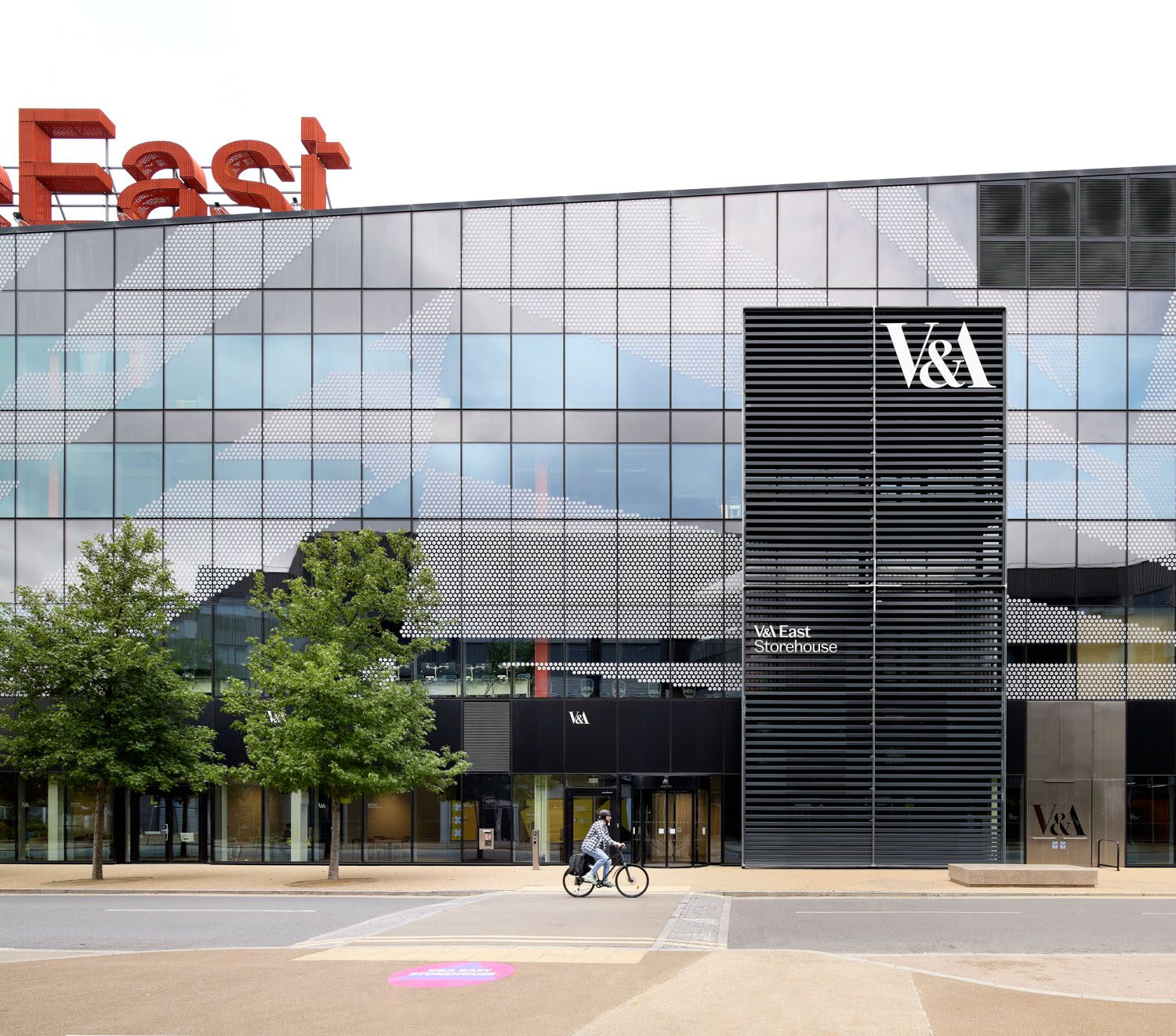
Entrance view of the V&A East Storehouse
Designed by the internationally acclaimed architectural firm Diller Scofidio + Renfro, the V&A East Storehouse occupies part of a repurposed structure that once served as the Olympic Broadcast Centre during the London 2012 Games. The majority of the building has since been transformed into Here East, one of London’s largest and most advanced hubs for innovation, technology, and learning.
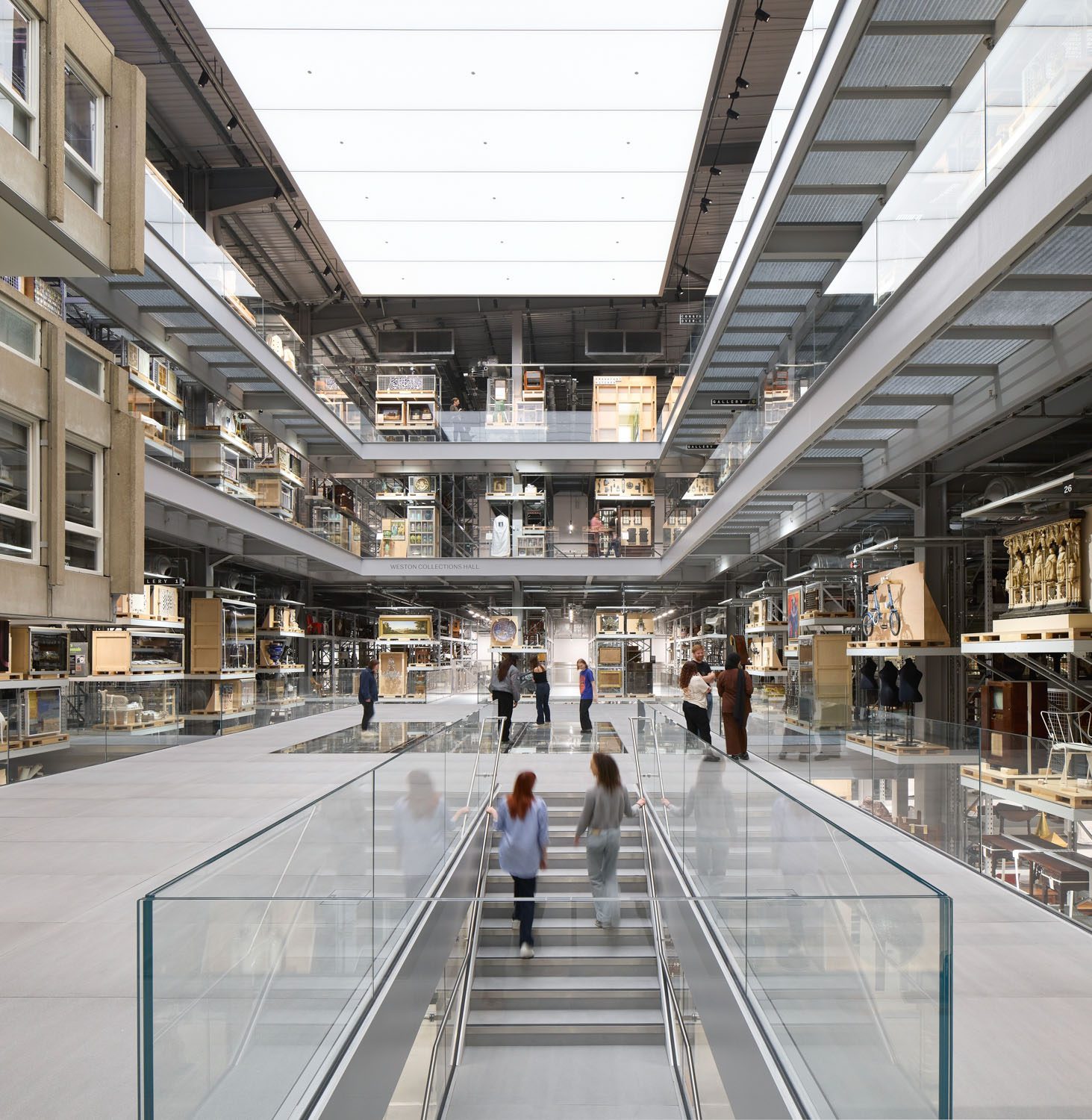
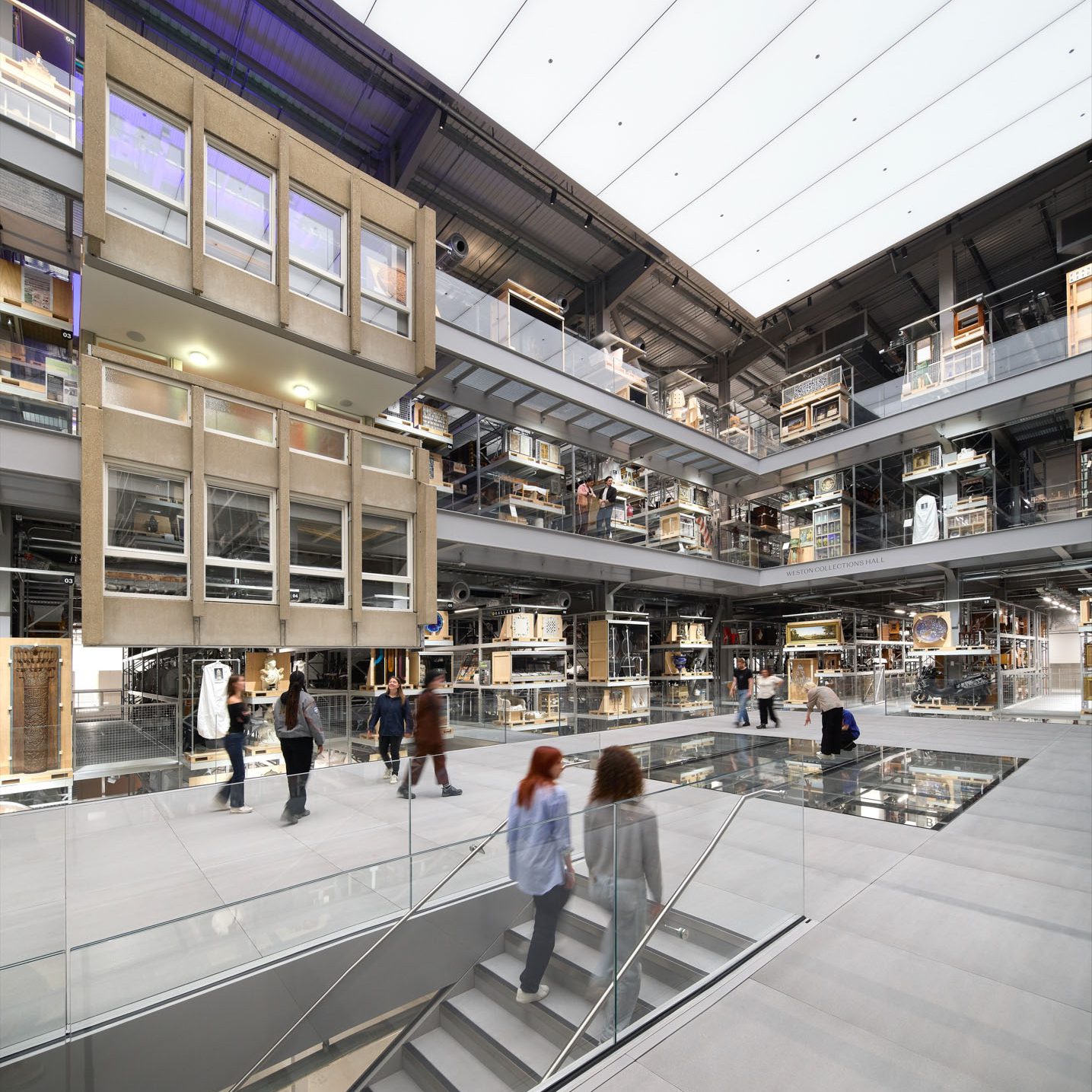
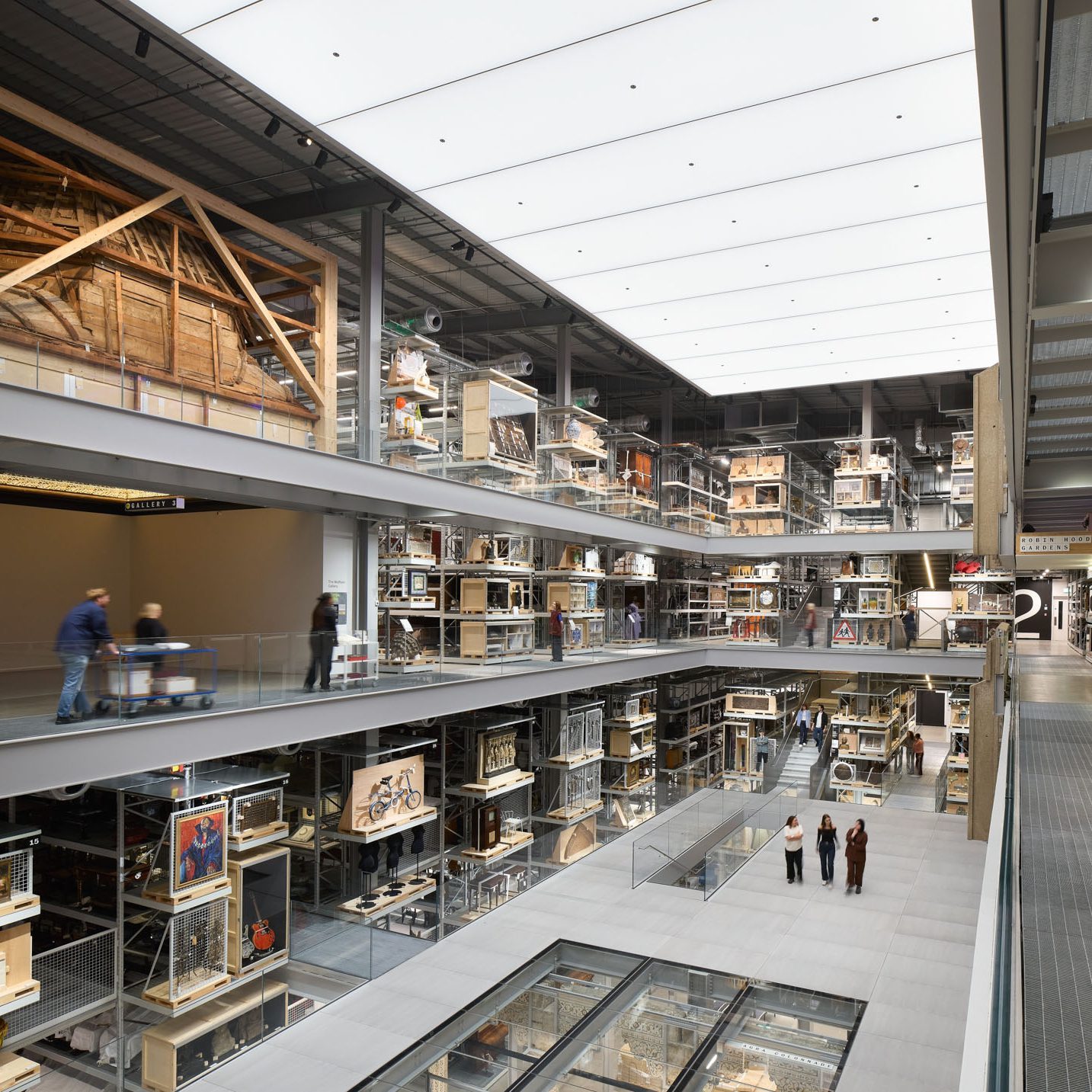
The first glimpse of the display area, as seen from the staircase leading up from the first floor—the sole point of entry and exit to this part of the Storehouse.
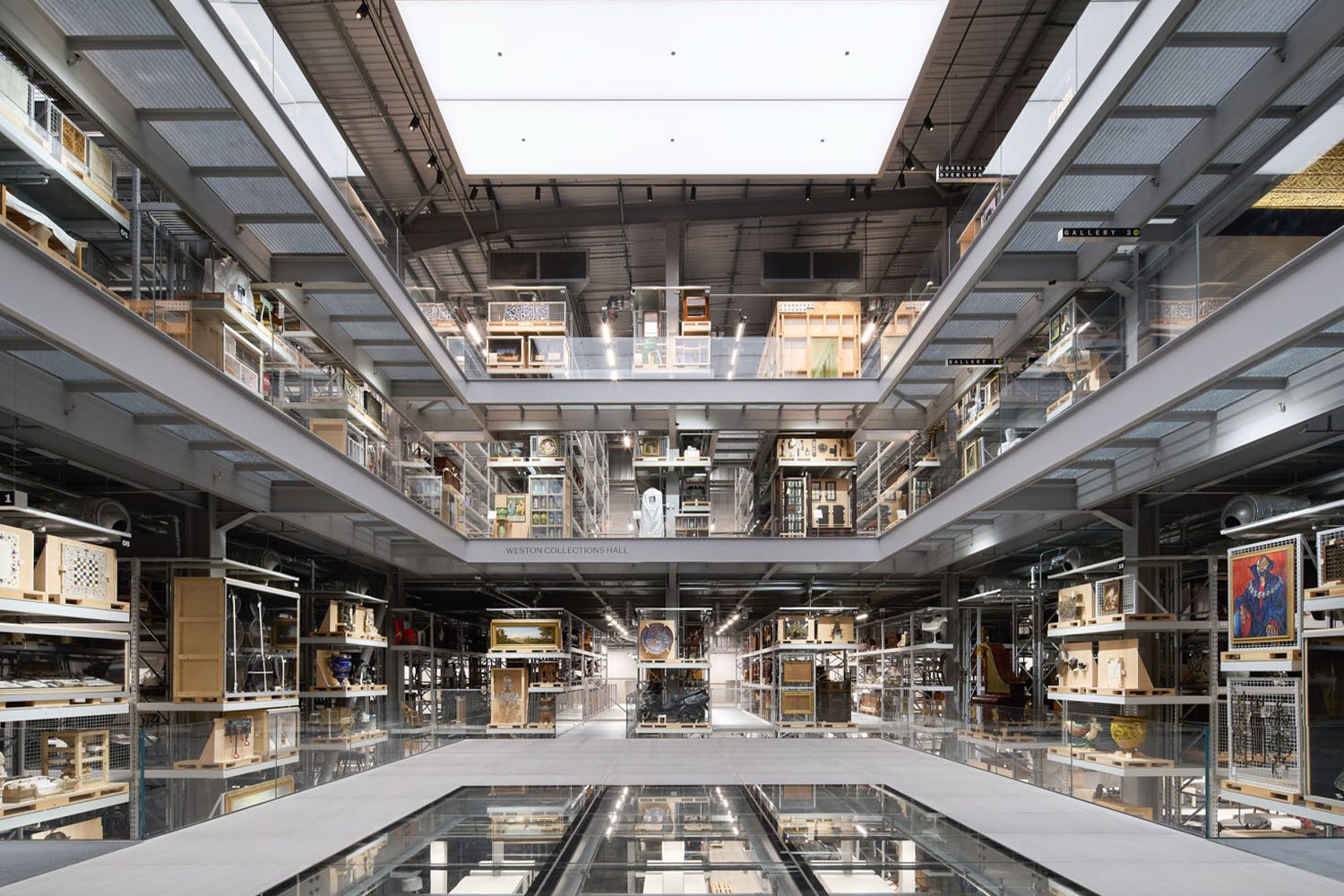
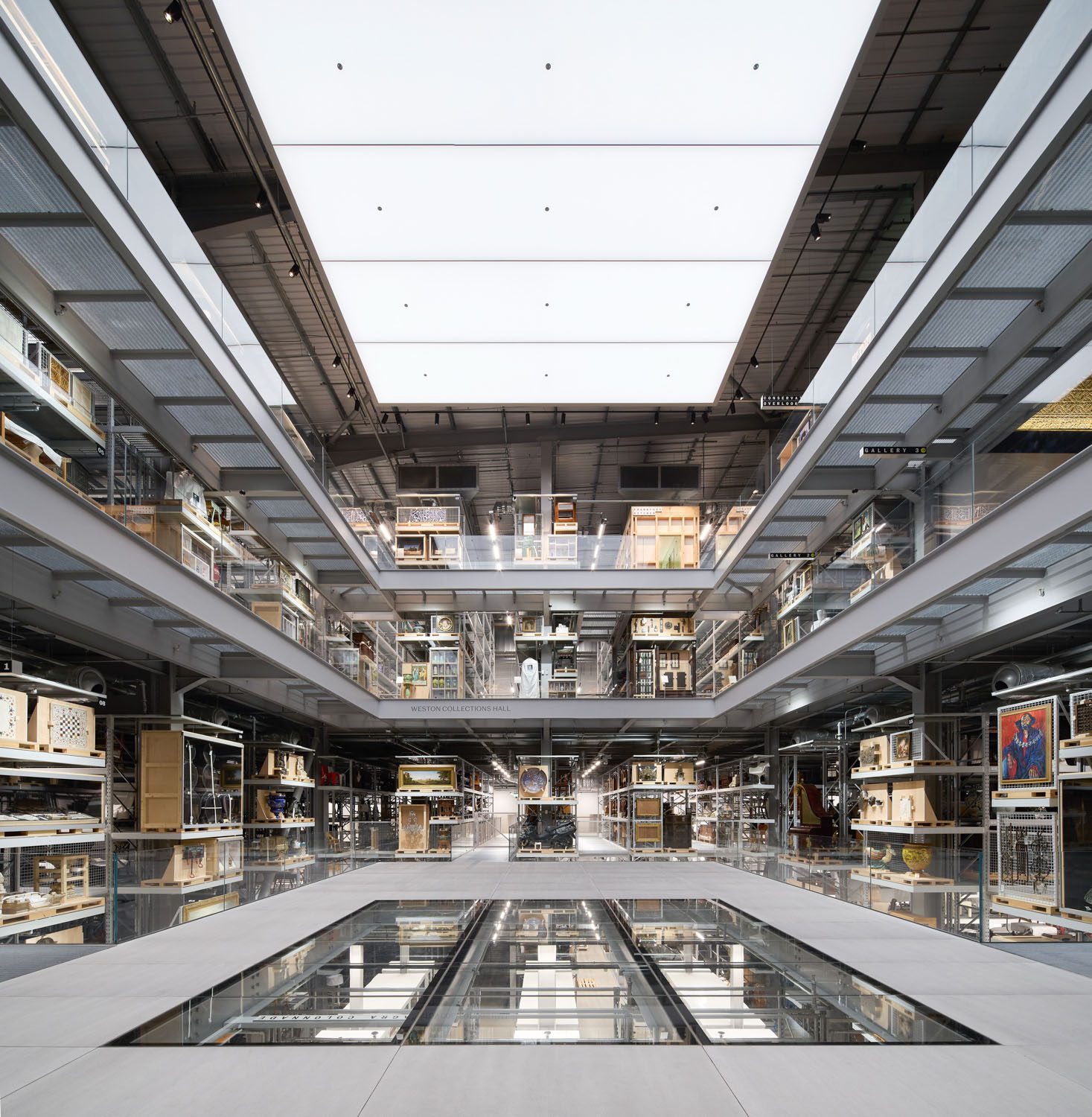
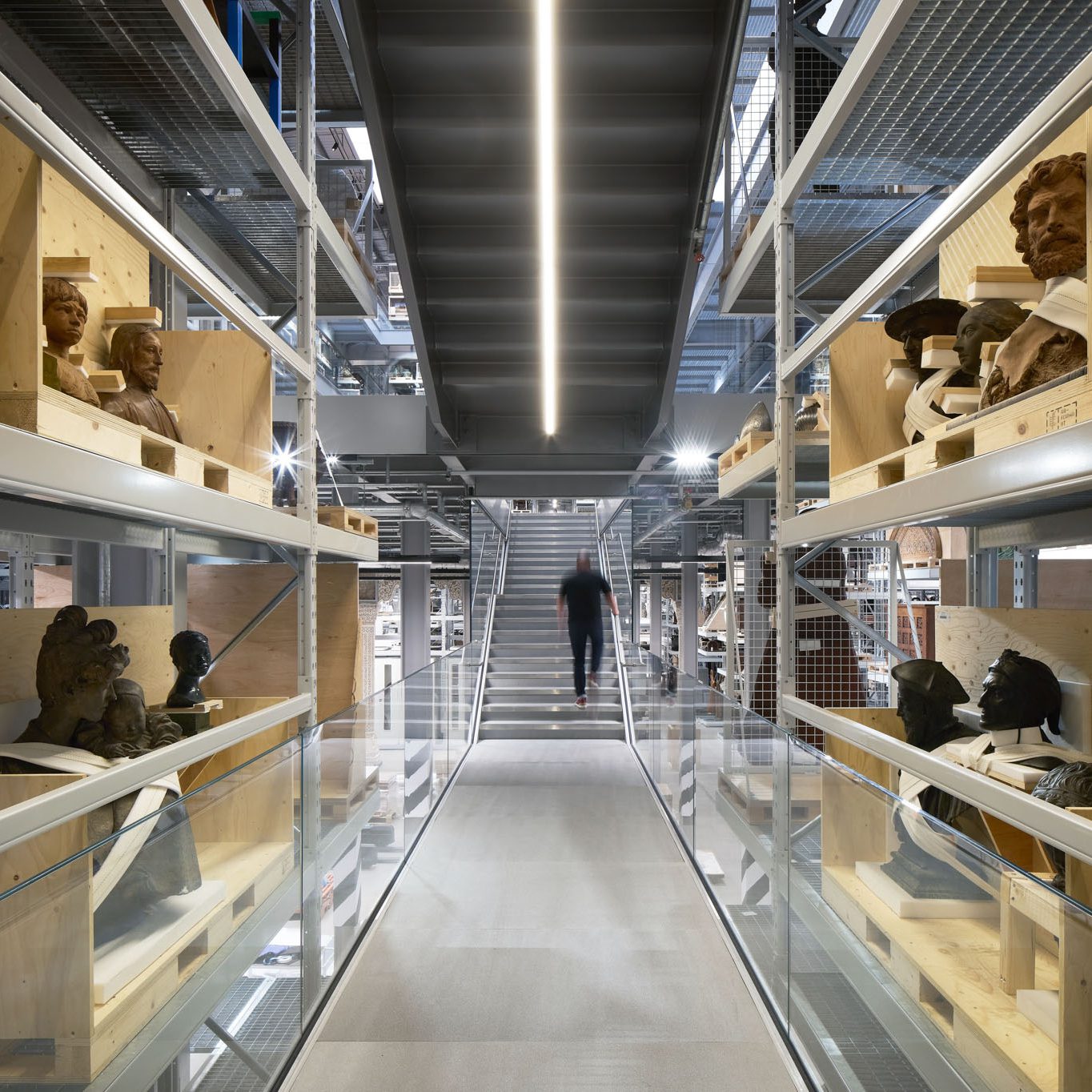
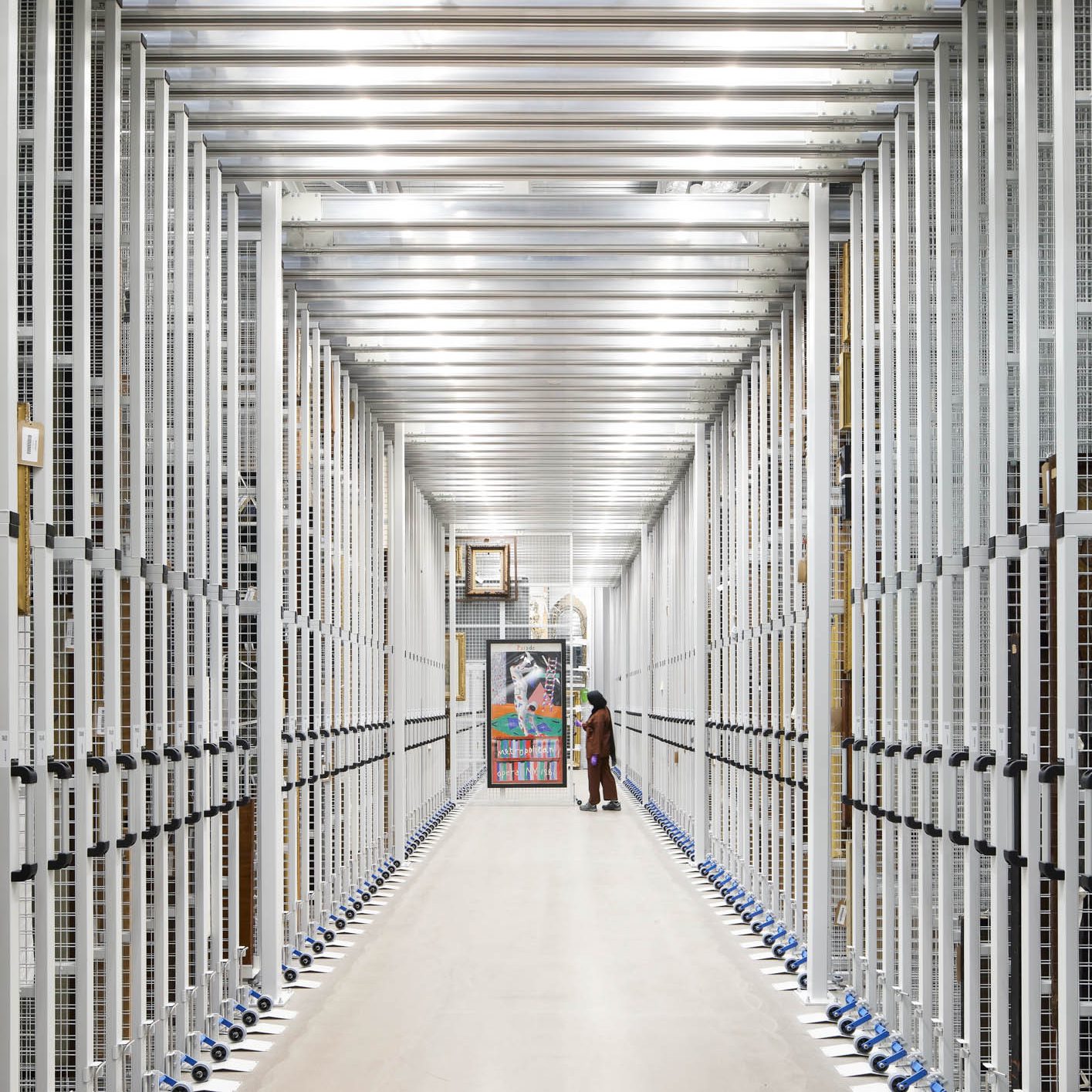
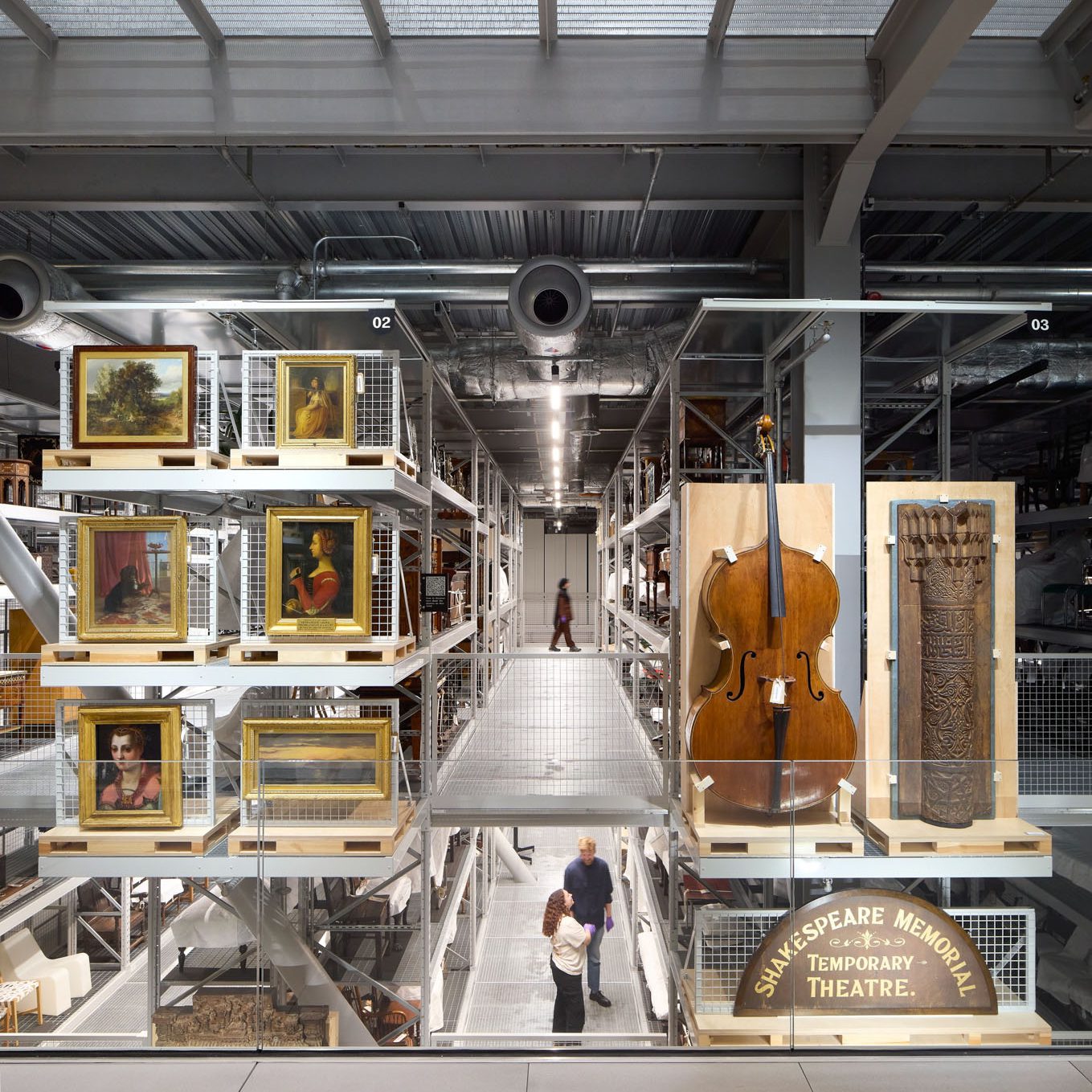
The building primarily functions as a storage facility for the V&A’s vast collection of works not currently on display at the main museum. It also serves as a site for conservation, restoration, and ongoing care to ensure each object remains in optimal condition and can be exhibited whenever needed. With more than 250,000 objects housed here, not including 350,000 books and 1,000 archival documents, the sheer volume of the collection has led both V&A staff and visitors to affectionately nickname the facility the ‘V&A IKEA.’ Inside, objects are densely arranged on open shelving systems that resemble warehouse racking, creating a visual experience akin to walking through the aisles of an IKEA store. Further enhancing the comparison is the self-guided format: visitors are free to explore the space at their own pace, with minimal supervision from staff. Much like IKEA’s self-serve philosophy, the layout encourages a choose-your-own-adventure approach, where one can wander in any direction and engage with the collection in whatever order they please.
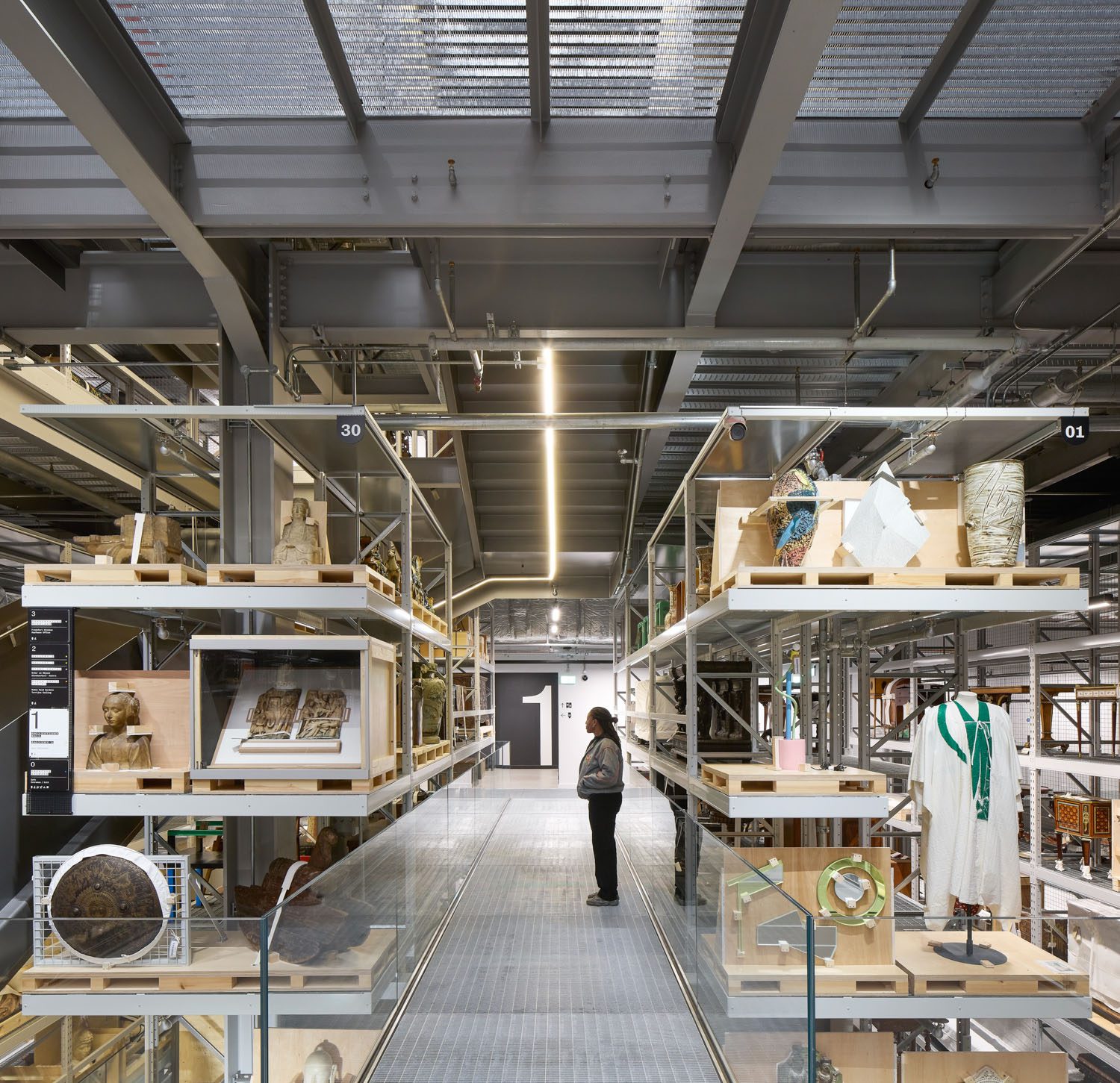
Most of the objects are displayed on open shelving without glass enclosures or railings. Each row is numbered according to the same system used in storage inventory.
Smaller objects are loosely grouped by category across open shelving units, allowing the museum flexibility to rearrange displays and adapt the narrative content over time. Some sections are organized thematically, reflecting particular stories or curatorial focuses the V&A wishes to highlight at any given moment. Notably, most objects are not accompanied by detailed wall texts; instead, large catalog-style books are placed at various points throughout the space. These volumes list all exhibited items in sequence according to their shelf numbers, enabling visitors to look up information as they explore.
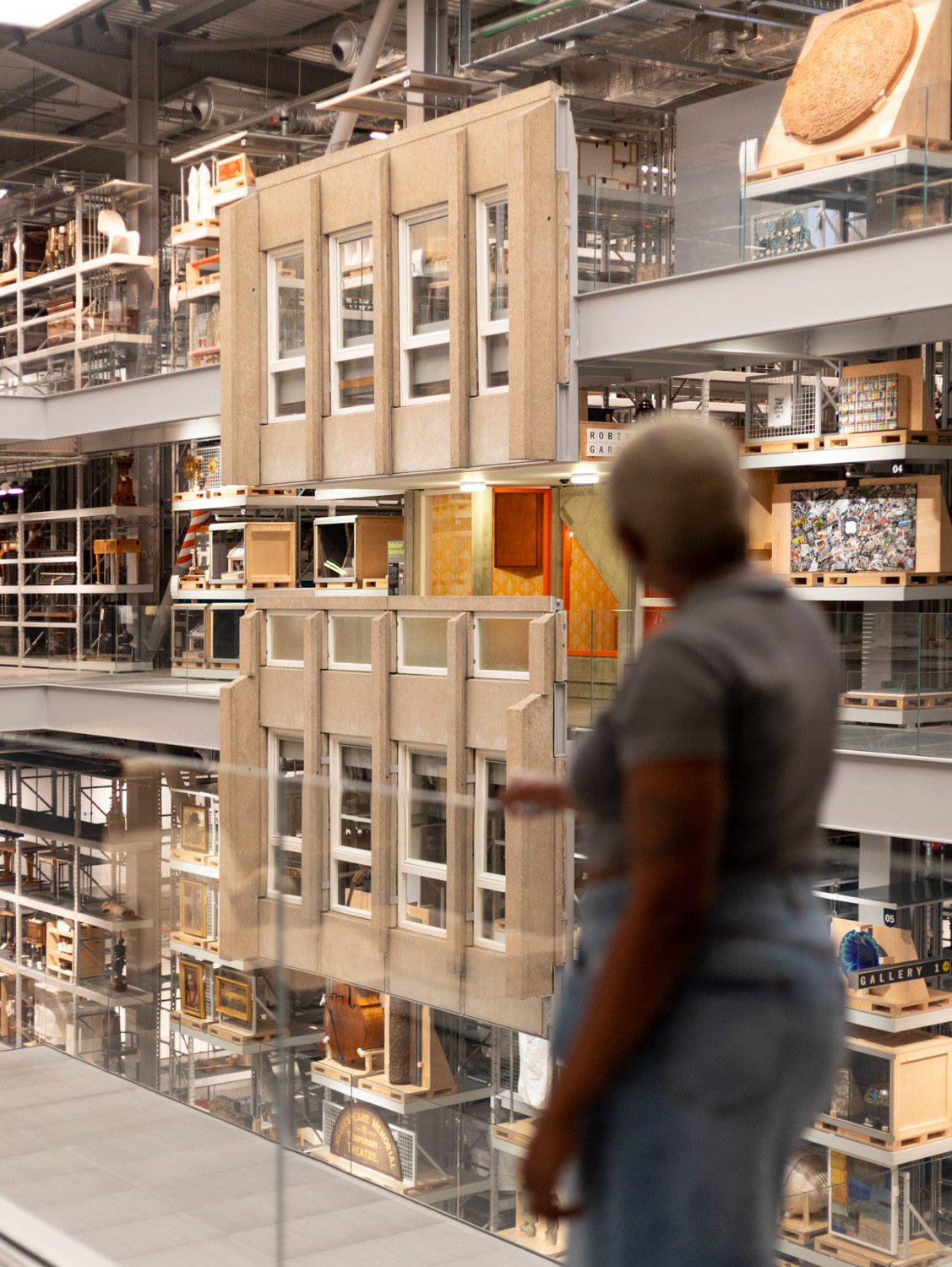
The wall and residential unit from Robin Hood Gardens are installed across the second to fourth floors and are immediately visible upon entering the display area. | Photo: Kemka Ajoku
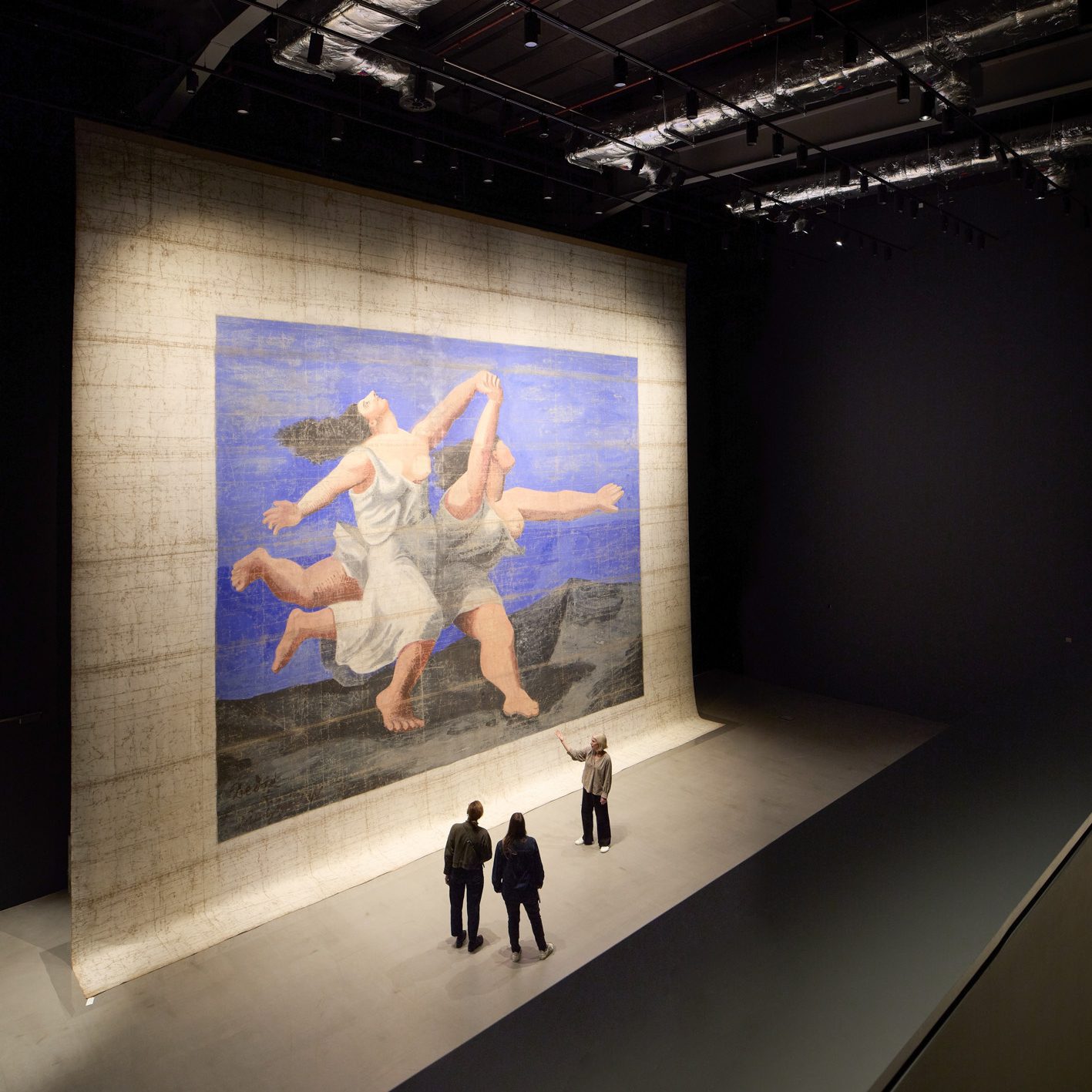
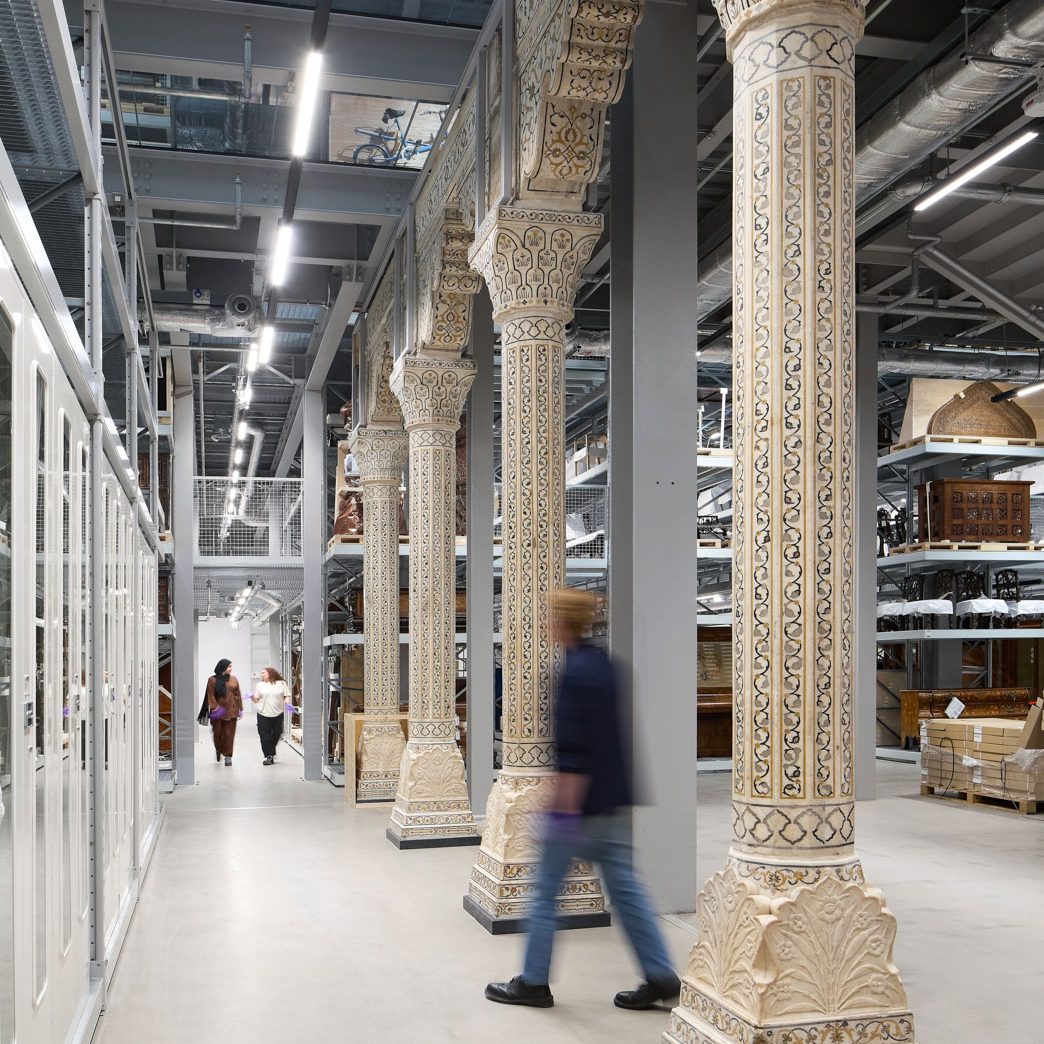
Scattered throughout the Storehouse are six monumental pieces, so large they had never been displayed before due to their scale. These works are now presented as permanent installations, immovable due to the custom structural supports required to exhibit them. Among these are a section of the Robin Hood Gardens housing estate, preserved before the building’s demolition; the Agra Colonnade, a 17th-century architectural fragment from a historic bathhouse in Agra, India; and a particularly striking piece for architecture enthusiasts: the 1937 office interior of Mr. Kaufman, designed by Frank Lloyd Wright. Originally located in Pittsburgh, Pennsylvania, this room now stands as the most complete Wright-designed interior outside the United States.
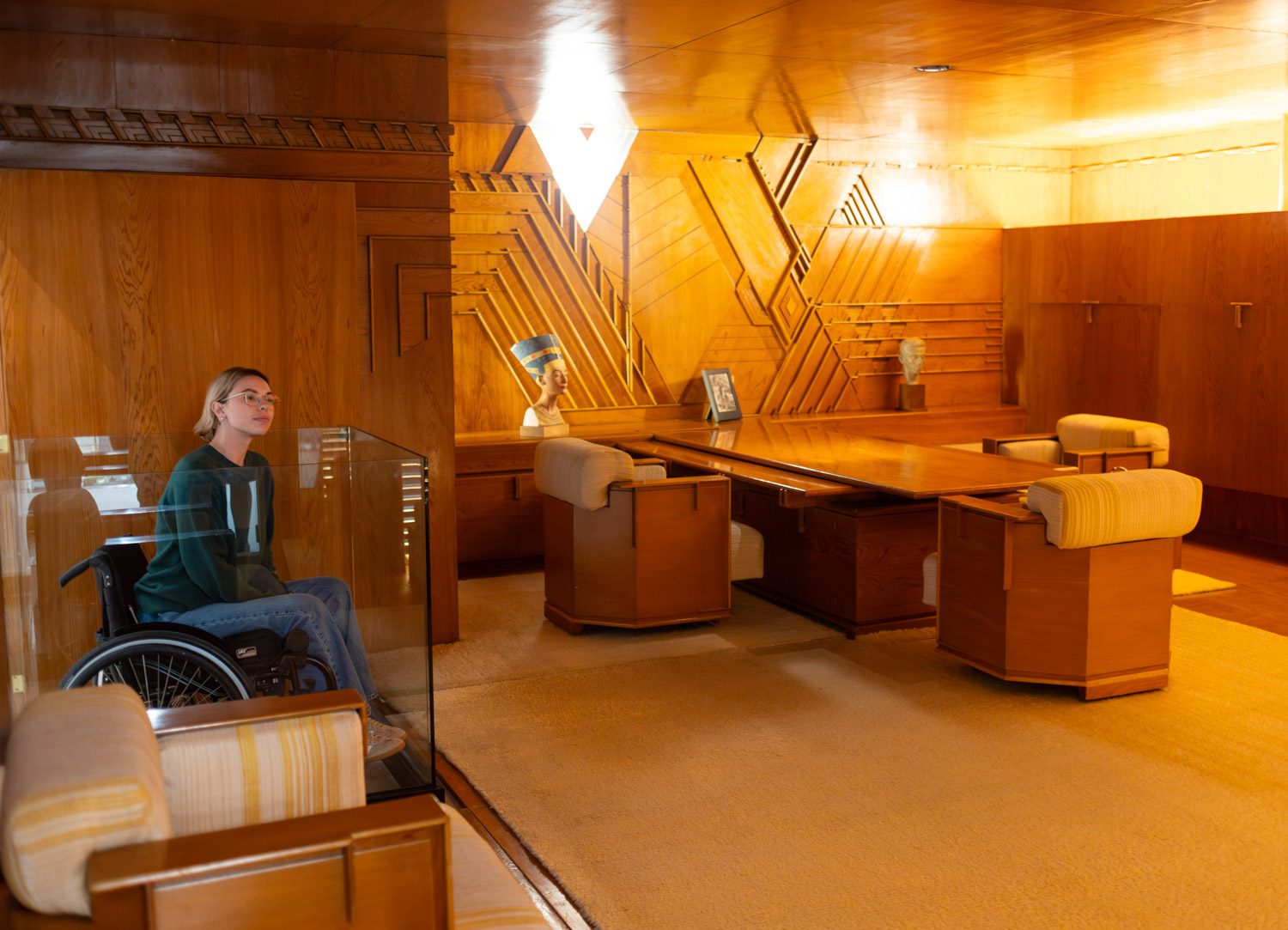
Mr. Kaufman’s office, a fully intact interior designed by Frank Lloyd Wright, has been relocated and reassembled in its entirety. | Photo: Kemka Ajoku
Another key feature of the V&A East Storehouse is its visible conservation studios, which offer visitors a rare behind-the-scenes look at the processes involved in preparing objects for exhibition. These spaces provide insight into the meticulous work of restoration and preservation, offering backstage access to museum practices that the public seldom gets to witness. Each studio is fitted with large glass viewing panels, allowing visitors to observe the conservators at work without disrupting the process.
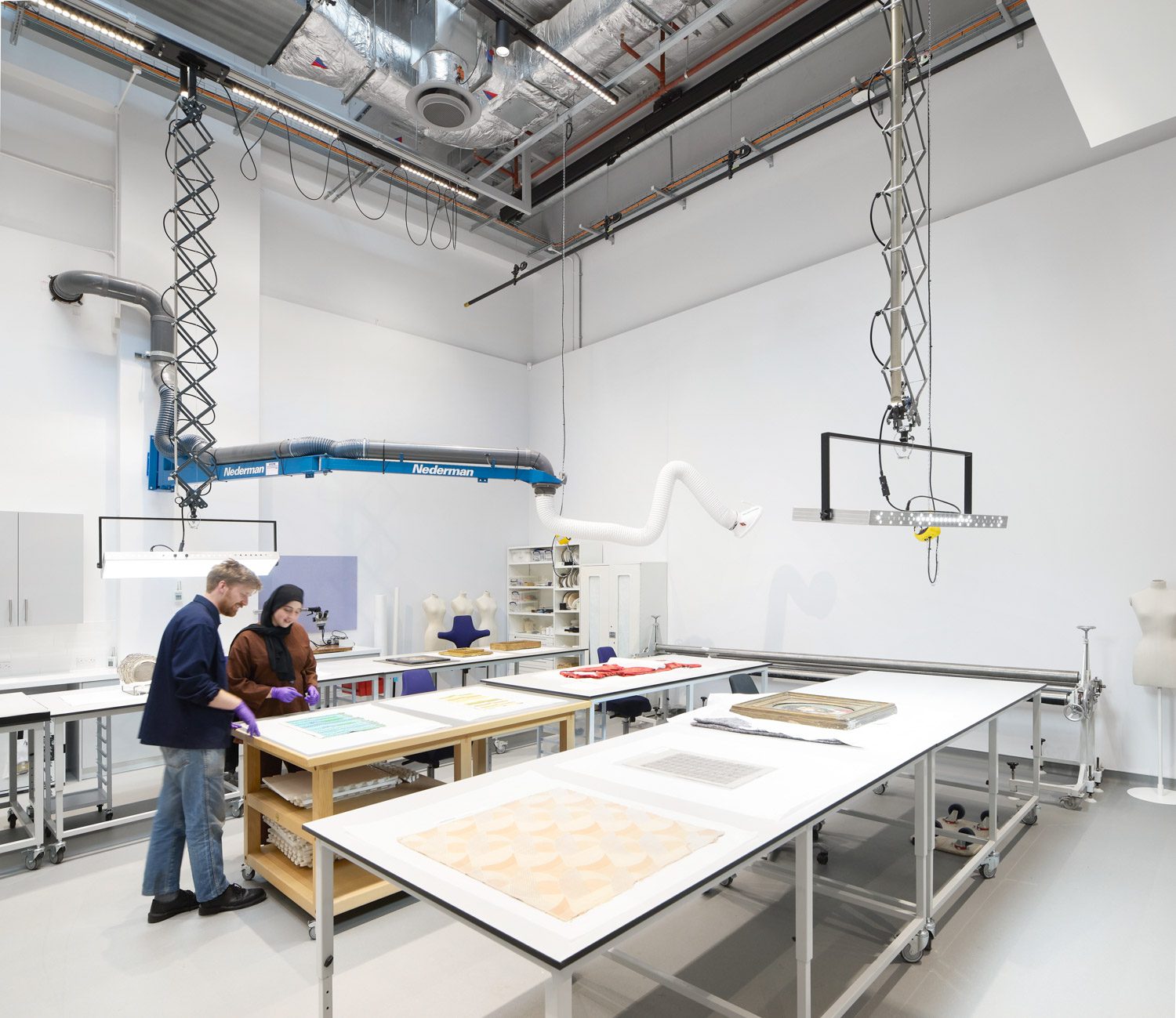
Interior view of one of the conservation studios where objects are restored and preserved before being displayed.
Coinciding with the Storehouse’s launch, the V&A has also introduced an unprecedented service: ‘Order an Object.’ For the first time, any member of the public can browse the V&A’s collection online, select an object of interest, and book an appointment in advance. On the scheduled date, the museum will prepare the requested item for viewing in a dedicated space designed specifically for this purpose. Visitors are invited not only to see the piece up close but also to photograph and handle the object directly.
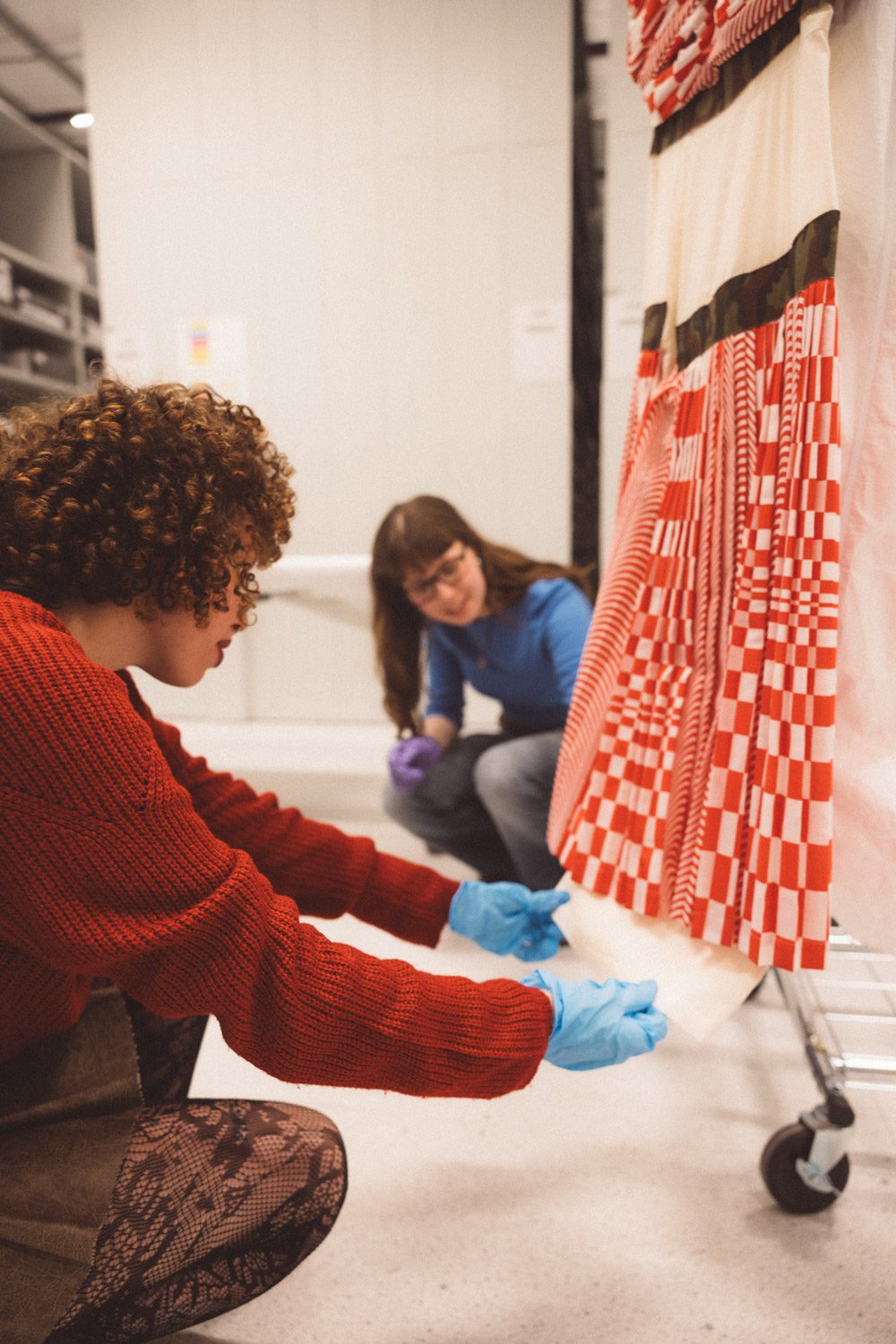
Order an Object appointment at V&A East Storehouse | Photo: Bet Bettencourt
The V&A East Storehouse has radically redefined how people experience and perceive the traditional museum. Here, a visit feels informal, unstructured, and refreshingly open-ended. Over half of the objects are simply placed on open shelving, unadorned, unguarded by glass or barriers, creating a disarmingly direct encounter with some of the world’s most valuable cultural artifacts. It’s a bold move by the V&A: to allow such close public access to irreplaceable cultural treasures from across time and geography, and in doing so, to make these objects feel like they truly belong to everyone. This openness has drawn large numbers of visitors each day, yet it also raises valid questions about preservation, especially for items that are over a century old. How can the museum ensure these pieces remain unharmed, especially in light of recent incidents reported at other institutions? It’s a challenge not just for the V&A, but for museums everywhere, as they evolve to remain relevant and accessible in a rapidly changing world.
Admission to the V&A East Storehouse is free of charge, and no advance booking is required for the main exhibition area. However, due to limited gallery space, the number of visitors is capped per entry slot. As a newly opened venue, the Storehouse currently sees long queues at the entrance, but the line moves quickly, thanks to efficient staff management. We recommend bringing a coffee to sip while you wait. You’ll likely be stepping inside just as you take your last sip.