CARRIERS EXHIBITION OFFERS US A SPACE OF REFLECTION ON HUMAN-ENVIRONMENT RELATIONSHIP THROUGH THREE ARTISTS’ MEMORIES AND OBSERVATIONS
TEXT: PIMAPAKPORN PORNPENG
PHOTO COURTESY OF ONE BANGKOK
(For Thai, press here)
As cities continue to expand and capital extends its reach into nearly every corner of contemporary life, questions about the quality of human existence surface with renewed urgency across economic, social, and cultural dimensions alike. At a moment when the terms of urban living seem to narrow by the day, offering fewer and fewer satisfying ways forward, the search for other forms of belonging between human life and its surroundings has become increasingly pressing. Within this long and unresolved conversation, the role of nature in the city, not as ornament but as an integral part of the ecosystem, remains central.
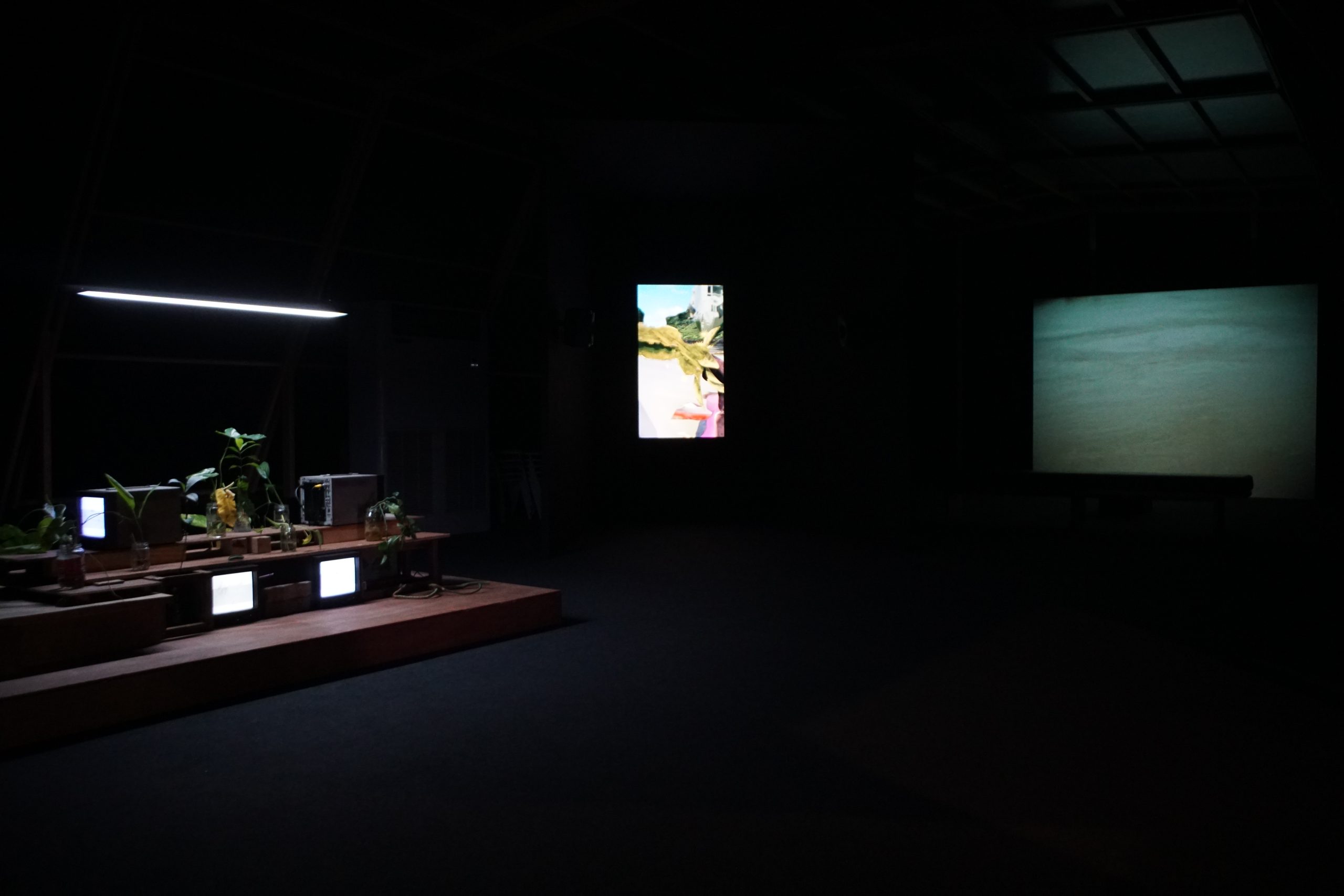
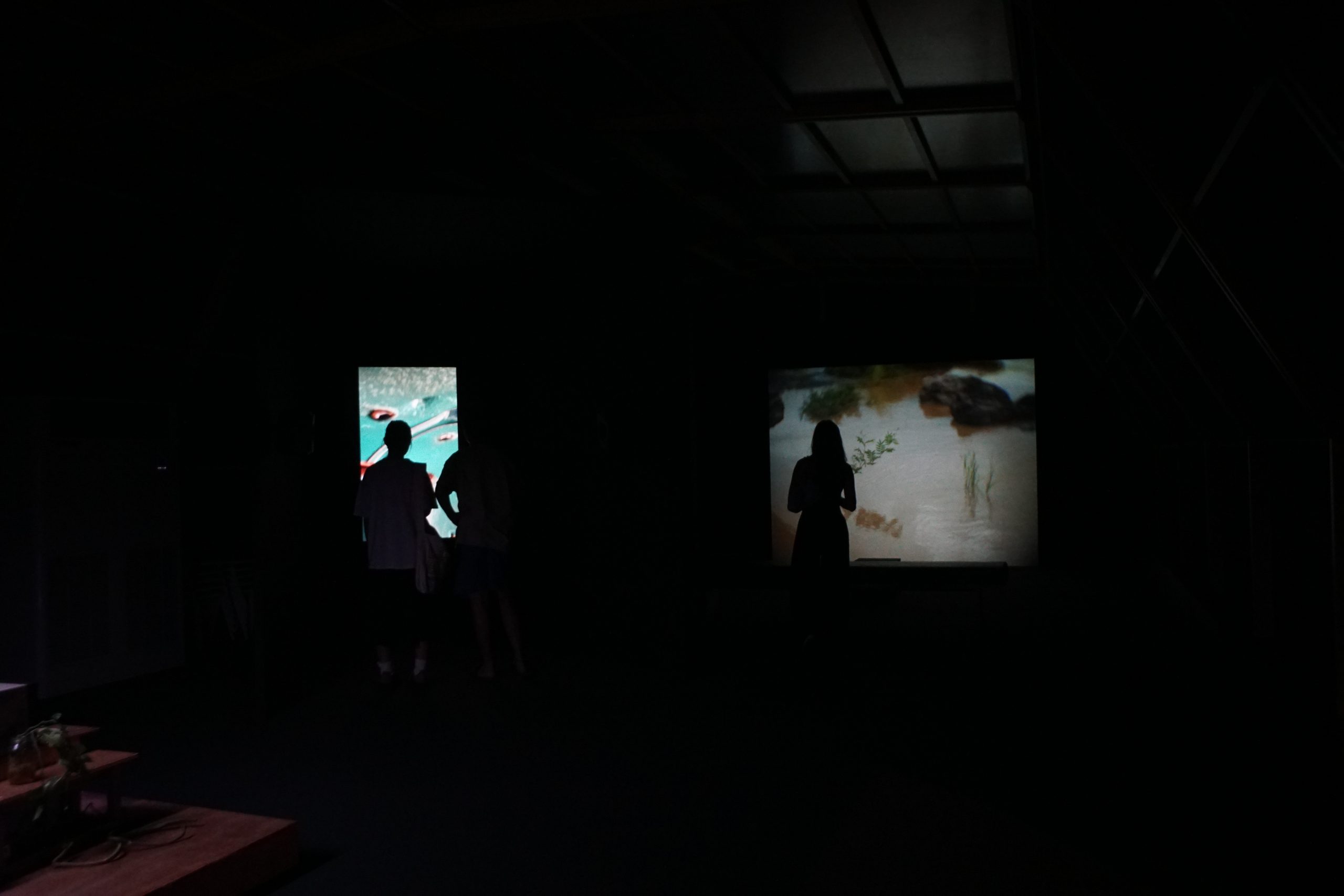
carriers was presented at the Urban Canvas Pavilion at One Bangkok, a foldable, movable, and expandable structure designed to respond to the conditions of each site. Installed in the Boulevard zone, a large semi-public area designed around the rhythms of urban life, the pavilion stands within a setting shaped by the desire for shared public space, a place to gather in the evenings after work or on weekends. For nine days, from 15 to 23 November 2025, a small corner of Boulevard Garden and the Urban Canvas Pavilion became the site of an exhibition featuring works by three artists: Tae Parvit, Waritsara Jirattitijaroen, and Jeanne Penjan Lassus. The exhibition was selected by guest curator Mary Pansanga. Through the intertwined presence of humans, plants, and animals, carriers reflects on the relationships and movements that unfold within an ecosystem. Each of the three artists approaches observation, recording, and transmission differently, tracing connections and memories through distinct ways of seeing. Every work begins from a small act of noticing, yet opens onto larger questions, questions that remain, for now, without clear answers.
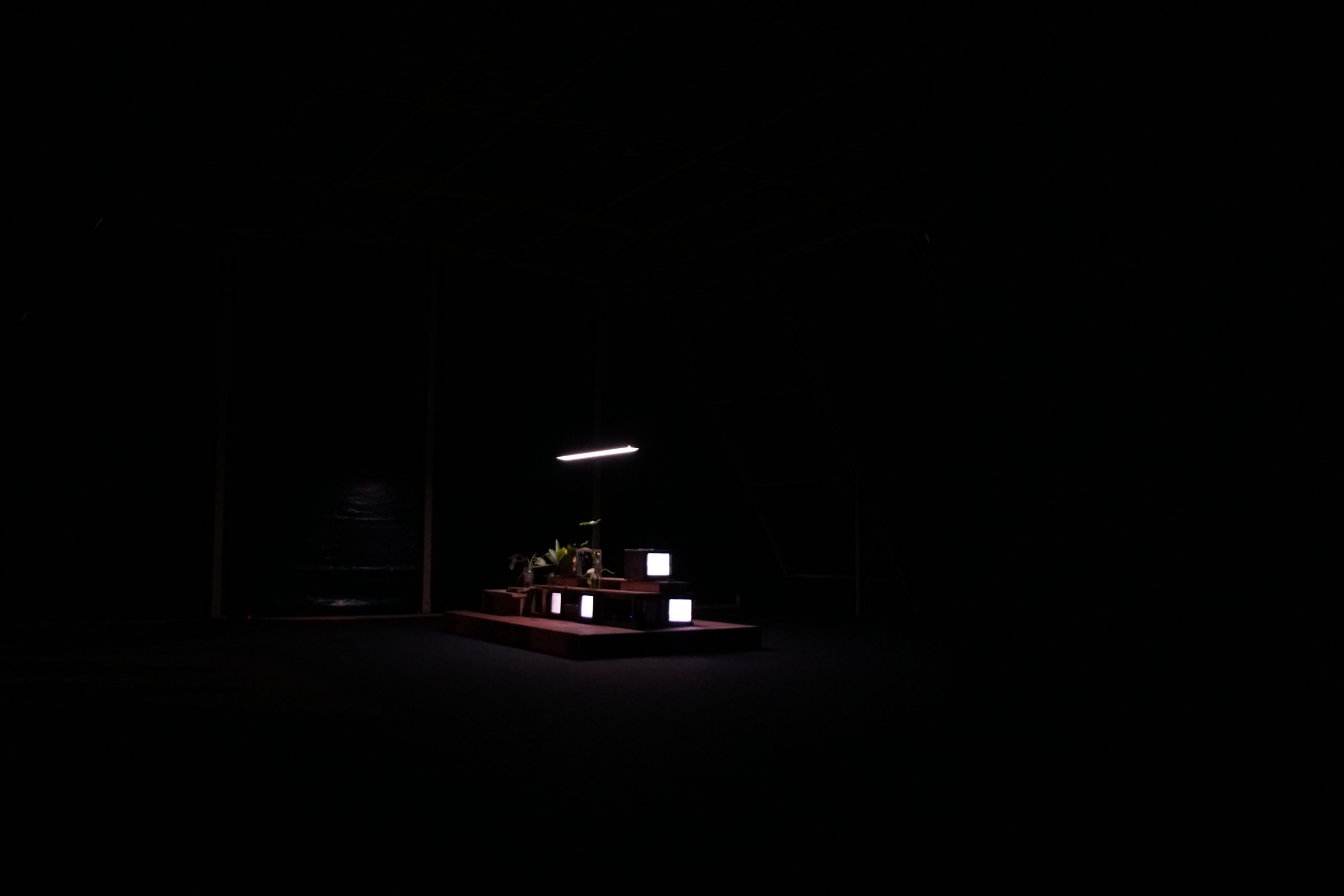
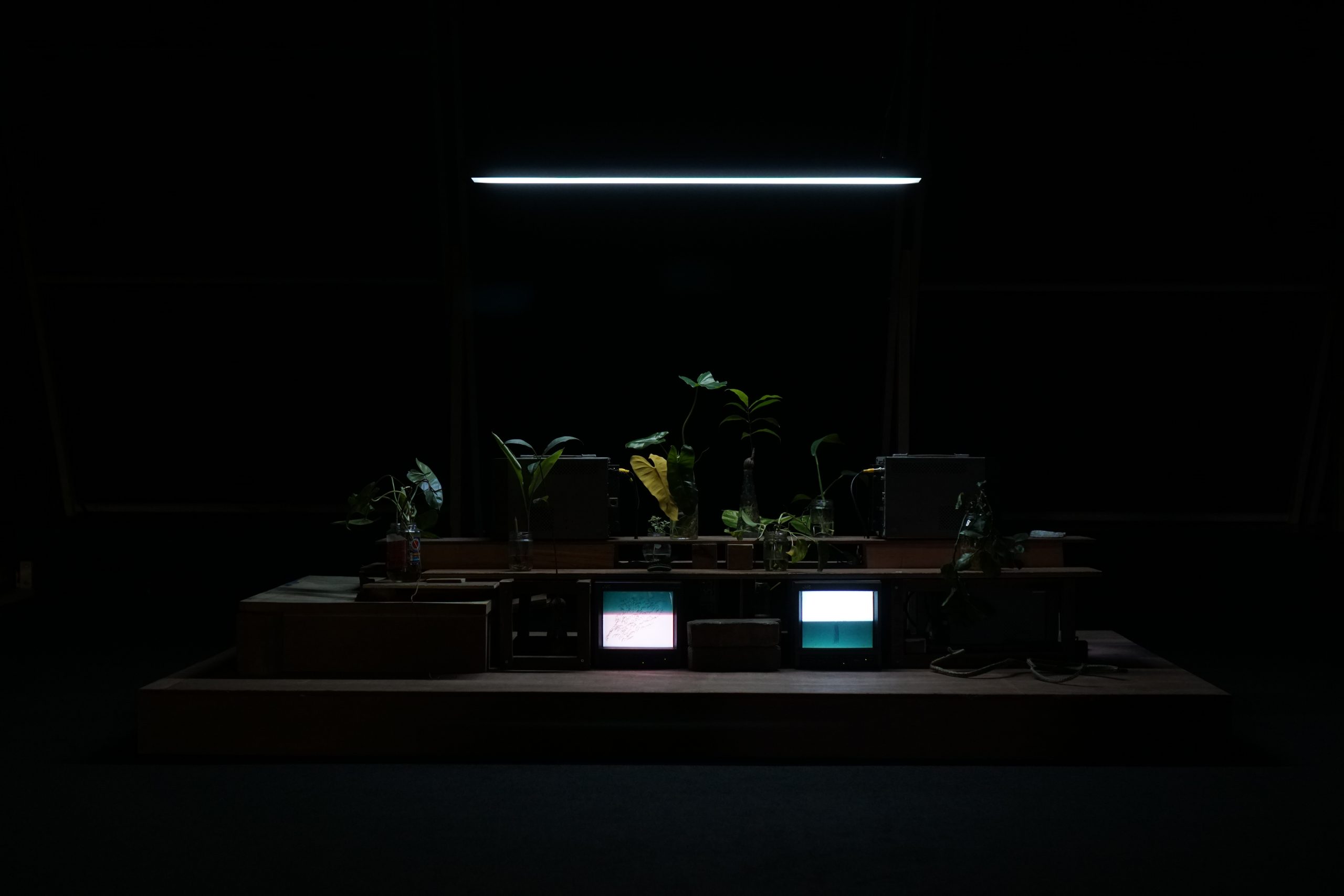
Tae Parvit’s animated installation Nursery (2025) is the first work to appear on entering the exhibition. Set within a structure designed to be moved, reconfigured, and adapted to changing uses, the work brings together small potted plants and six modest monitors. On screen are moving images drawn from the artist’s sketches, animations shaped by memory, his recollections of the environment around him, and the ways in which observation, imagination, and lived proximity come to form relations between himself and other living things. Here, animation and installation work together with personal memory, producing a quiet reflection on what it means to live alongside plants in a limited space. The scale of the images on screen echoes that of the pots and glass jars beside them, each portable, each easy to shift and rearrange.
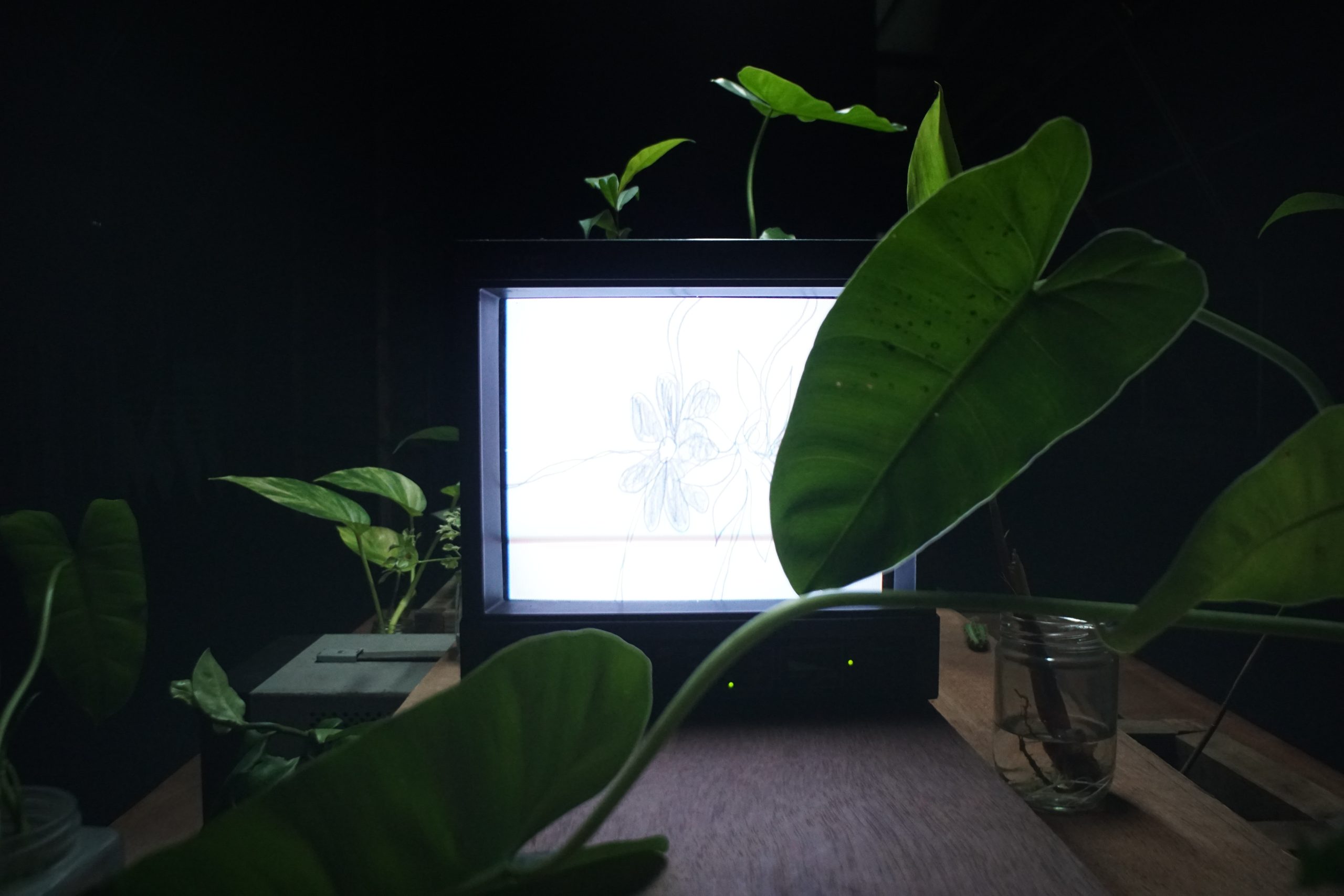
The artist describes the work as emerging from his relationship with the houseplants he keeps at home, in a compact area paved with interlocking bricks. This pocket of greenery allowed him to become more attentive to their presence, observing them closely and over time. The ornamental plants gathered here recall the wave of enthusiasm for easy-care houseplants such as pothos and philodendrons, which became especially widespread during the COVID-19 pandemic, when the longing for greenery intensified. In the constrained conditions of urban life, plants became a means of emotional repair within limited domestic space. Alongside ornamental species, Parvit also includes edible plants that can be propagated in water, such as galangal and avocado. Though these are usually grown in soil, they are now often started in water for a short period before a decision is made about what comes next, especially once they begin to require more room to grow. In Nursery, the artist’s memories of plants and his relationship with them unfold in parallel with the animation itself: compact, adaptive, and continuously reshaped by the conditions around it.
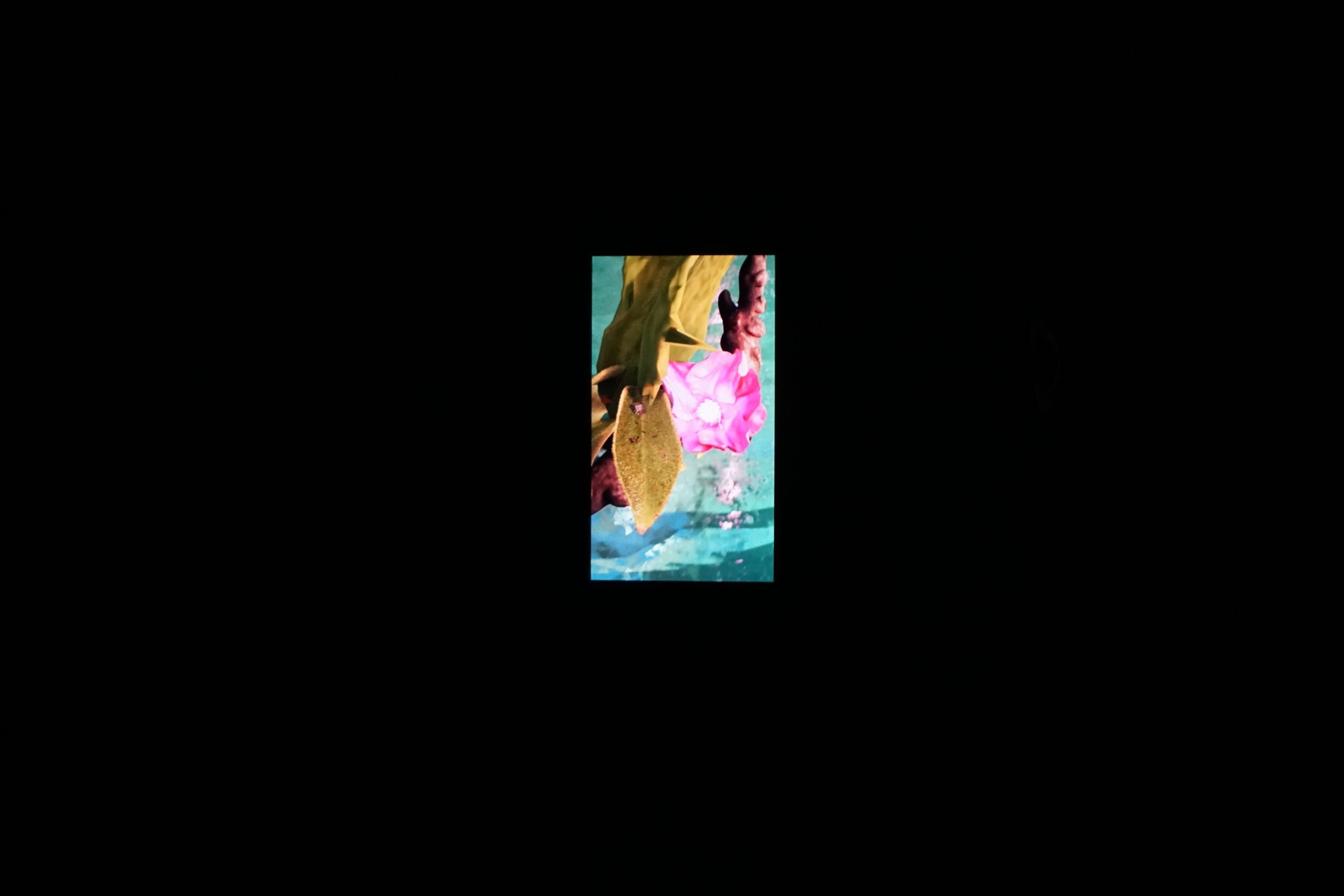
By contrast, Waritsara Jirattitijaroen turns to the agency and freedom of other life forms without placing the human viewpoint at the center. In Where the System Sees Nothing (2025), she allows herself to imagine modes of existence beyond the horizontal, human-centered perspective that continues to structure nearly every layer of urban society. Her anonymous protagonist moves freely through the ecosystem, borrowing the vision of a winged creature such as a bee, one that can drift above surfaces or come into intimate contact with them. The living beings that appear in the animation seem to belong to another world entirely, a realm populated by unfamiliar forms of life. At the same time, the work remains tied, however subtly, to human experience. Waritsara carries us upward into the air and downward beneath the water, into spaces defined not only by beauty but also by strange and unsettling objects. Their presence prompts questions about the ecosystem of the contemporary city, one marked by decay, decomposition, and disintegration, conditions that must also be understood as part of the environment we inhabit. The work constructs a speculative field of relations between living and nonliving things, imagining a new ecosystem through shifts in perspective and through questions grounded in multiple versions of reality, from what is known through information to what has been witnessed directly through the artist’s own experience.
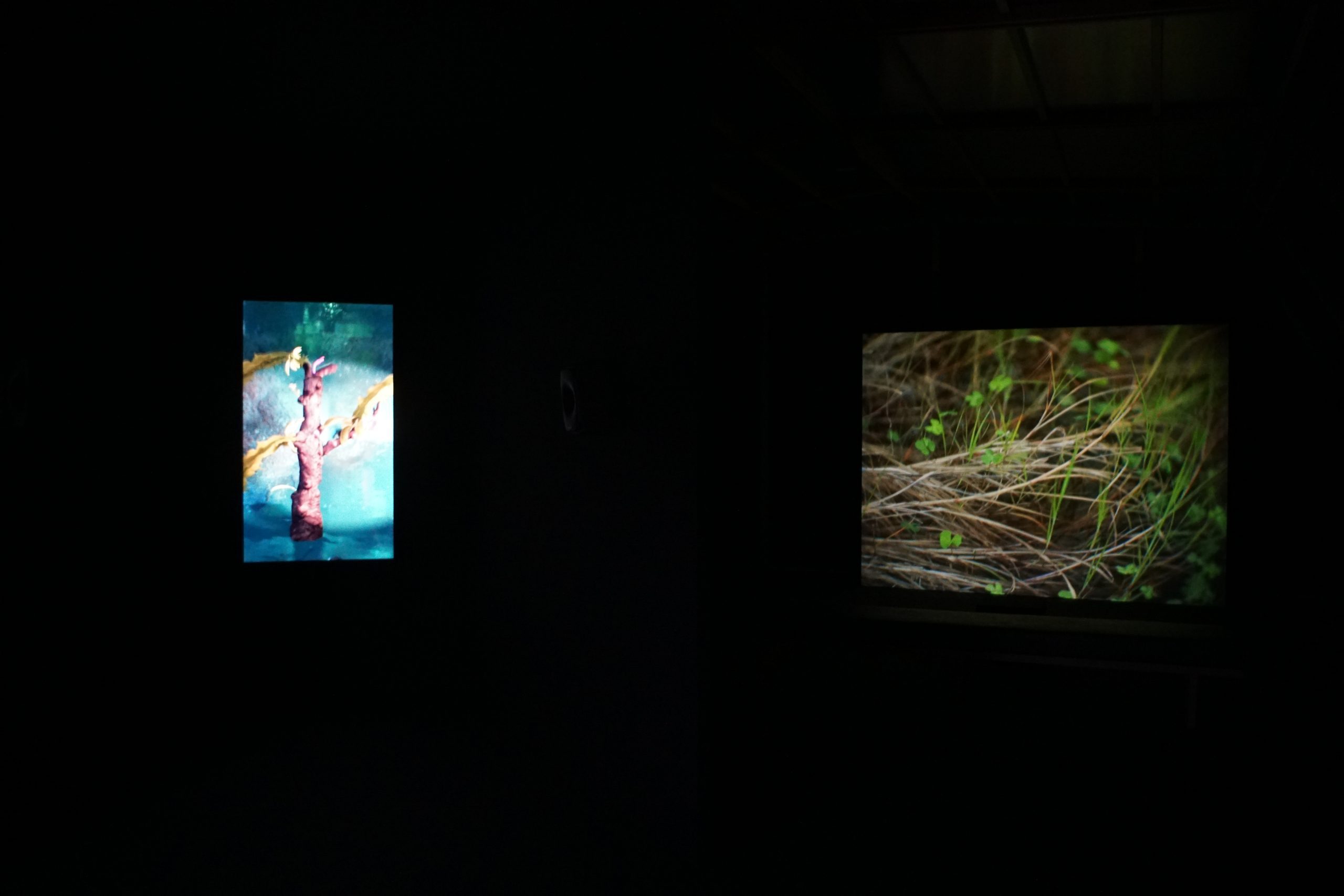
Further inside the pavilion, What sways (2024), an animated installation by Jeanne Penjan Lassus, invites a slower, more attentive contemplation of the unnaturally shifting currents along the Mekong’s edge at Sam Phan Bok in Ubon Ratchathani. This is a landscape once shaped directly by the river’s seasonal rise and fall, before the arrival of hydroelectric dams irreversibly altered the surrounding terrain and ecology. Lassus turns her attention to the presence of small life forms that have neither been cared for nor overtaken by human intervention, weeds, in particular, whose existence unfolds at the margins. She observes how these fragile organisms adjust to water levels that can no longer be anticipated. Their subtle movements shift in response to the force of the current, by day and by night, within a river whose flow is now governed by the controlled release of water from the dam. Before one fully notices, the pattern on the water’s surface, or the folding sleep of the sensitive plant, may already be trembling to a different rhythm.
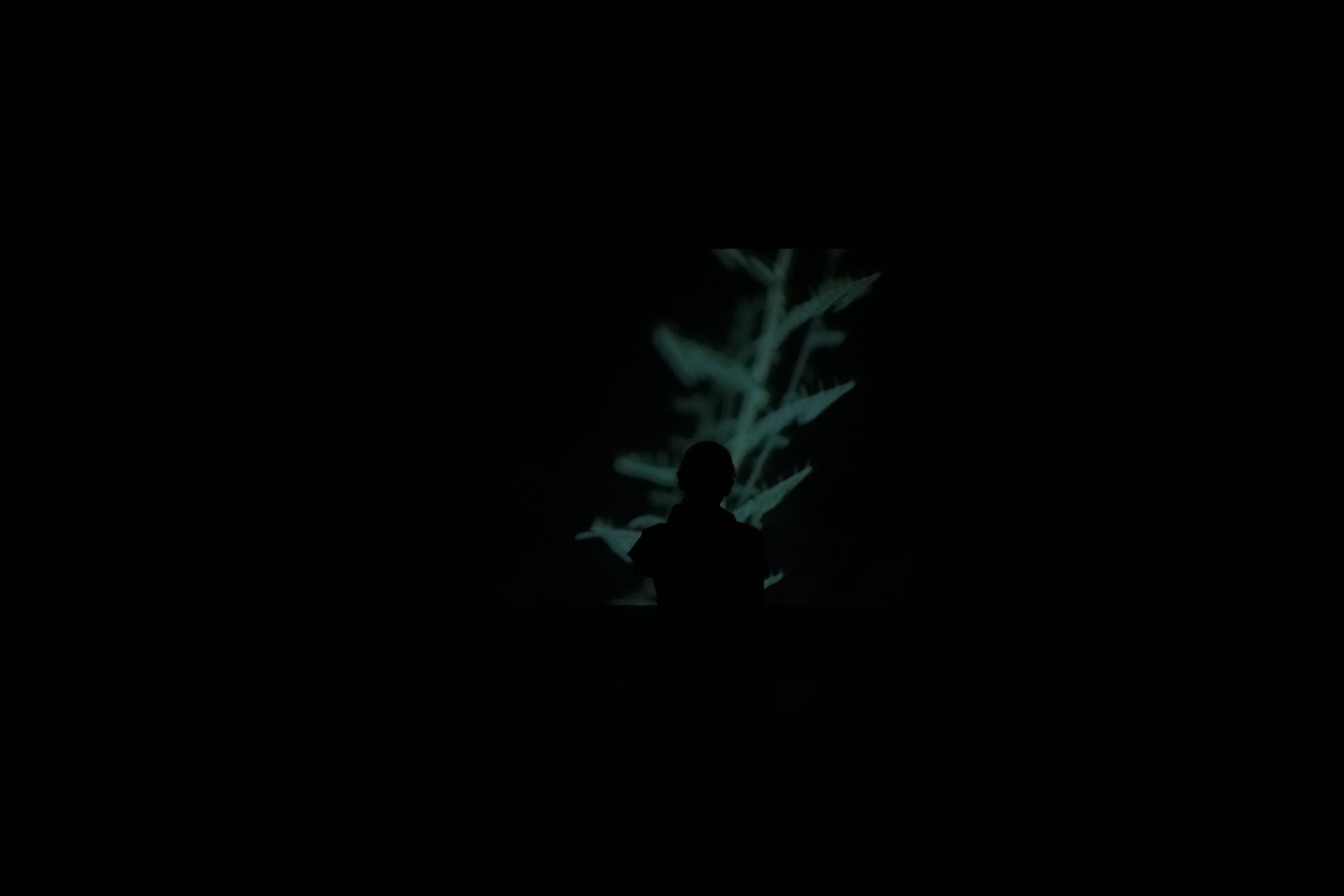
Lassus asks what it means to witness an ecosystem transformed beyond return. She follows the rock formations, each marked by its own tempo of change, much like the waterside weeds that are constantly adjusting, though rarely noticed, because these life forms move according to their own time. Their tremors are shaped both by internal conditions and by external forces managed through human intervention. Through the animated installation, the artist renders these delicate shifts with great sensitivity, drawing us into other temporalities that exceed an ecosystem organized around human control. At the same time, the irregularities on the water’s surface sharpen our awareness of the conditions that continue to govern us, often without our noticing.
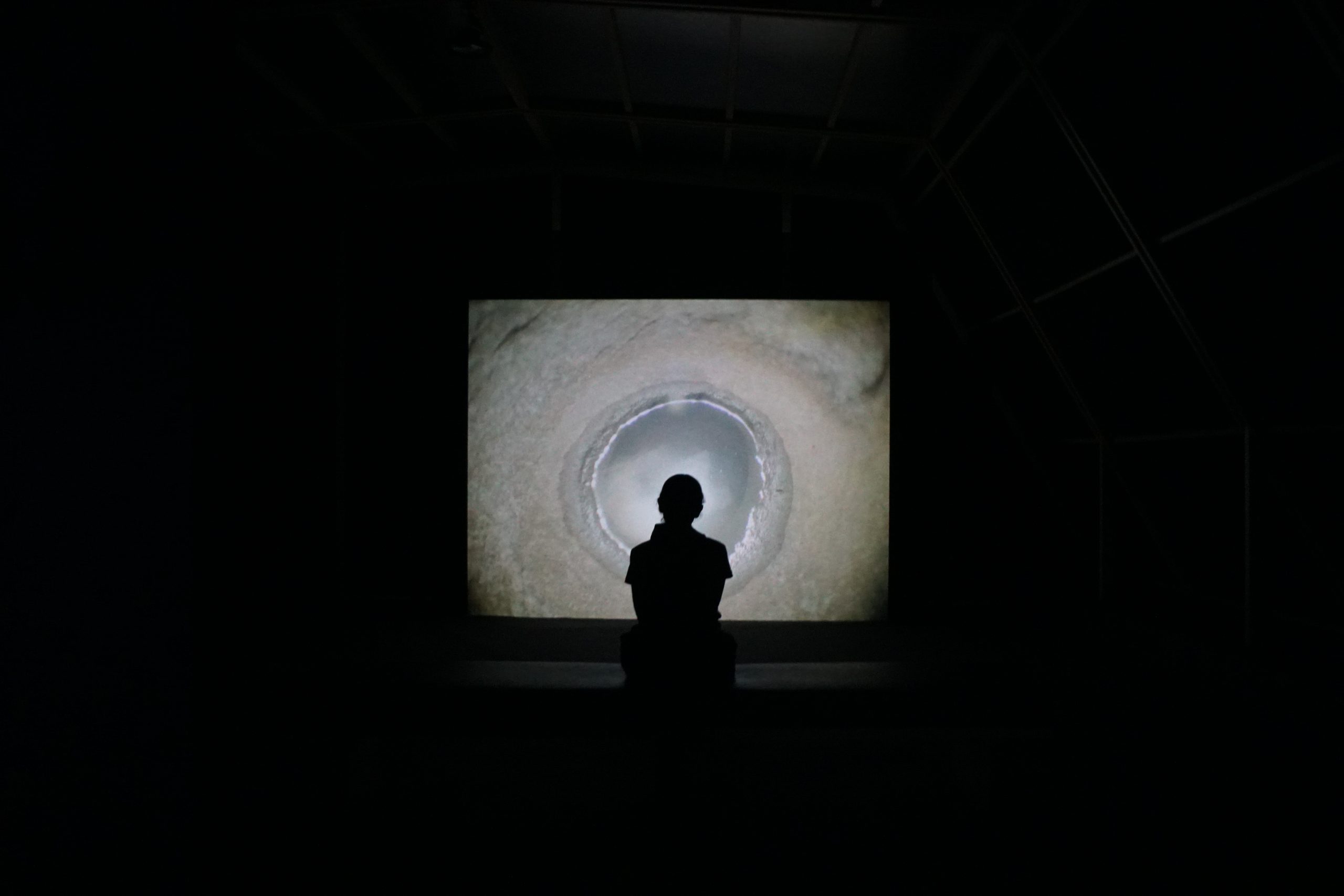
Taken together, the three works in the exhibition draw us away from the structures and systems of the city, which are largely designed to serve the needs of human life while quietly diminishing the relationships between humans and other living beings. The Urban Canvas Pavilion functions as a temporary site that opens up space, or in another sense, shields us from certain forms of surrounding noise, allowing us to return to memories of our entanglements with the life forms around us. From relations that move beyond the limits of the human, to questions of power and the long-term consequences of environmental change, the exhibition suggests how contemporary art, when grounded in close observation and sustained attention to one’s surroundings, can carry us beyond what is simply seen or remembered.