VETERINARY HOSPITAL TIRANA, AN ANIMAL HOSPITAL IN ALBANIA, DESIGNED BY DAVIDE MACULLO ARCHITECTS, FEATURES A SCULPTURAL, CURVED ARCHITECTURAL FORM AMIDST NATURE
TEXT: PIBHU DEVAKUL NA AYUDHYA
PHOTO: LEONIT IBRAHIMI
(For Thai, press here)
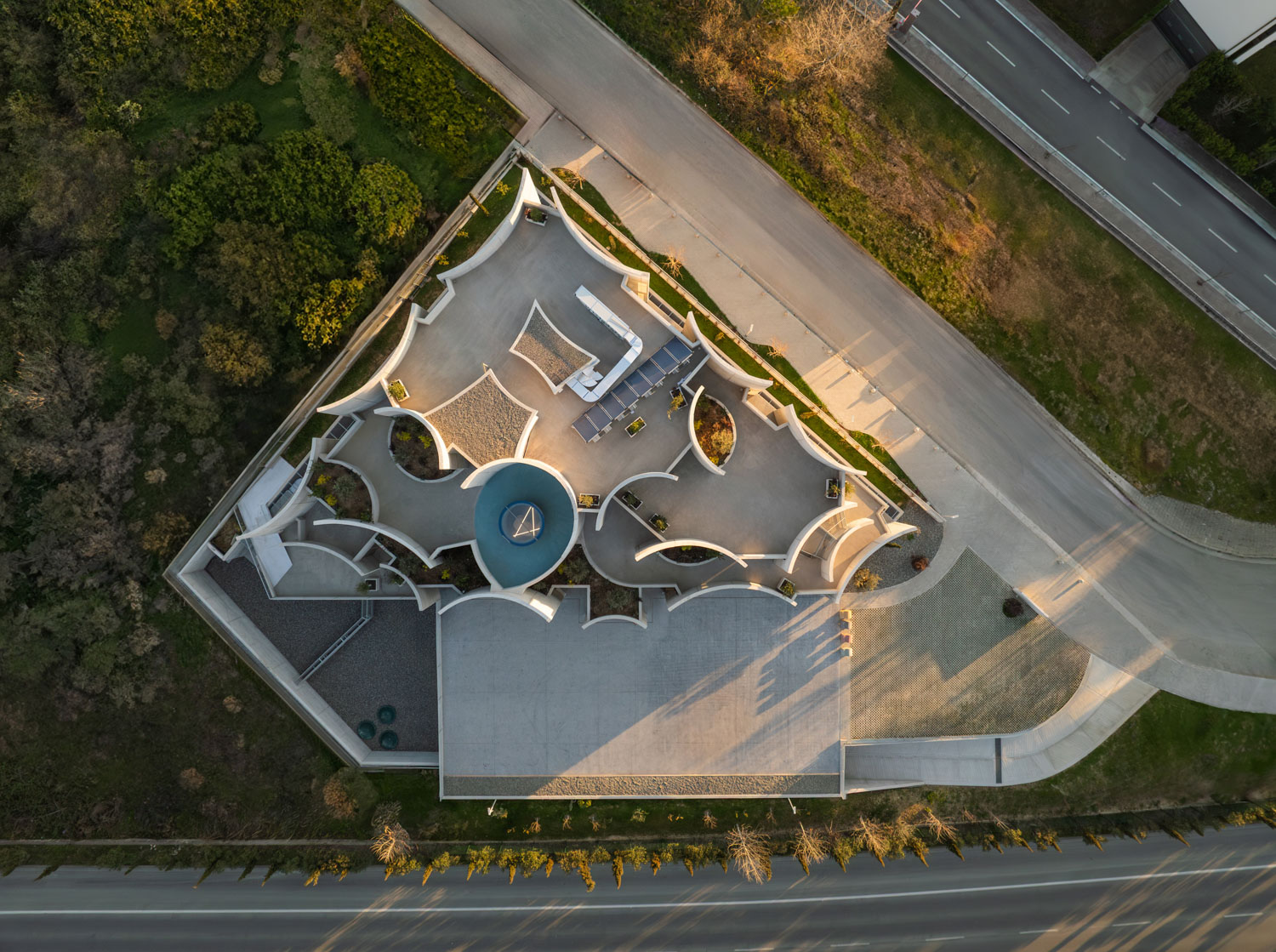
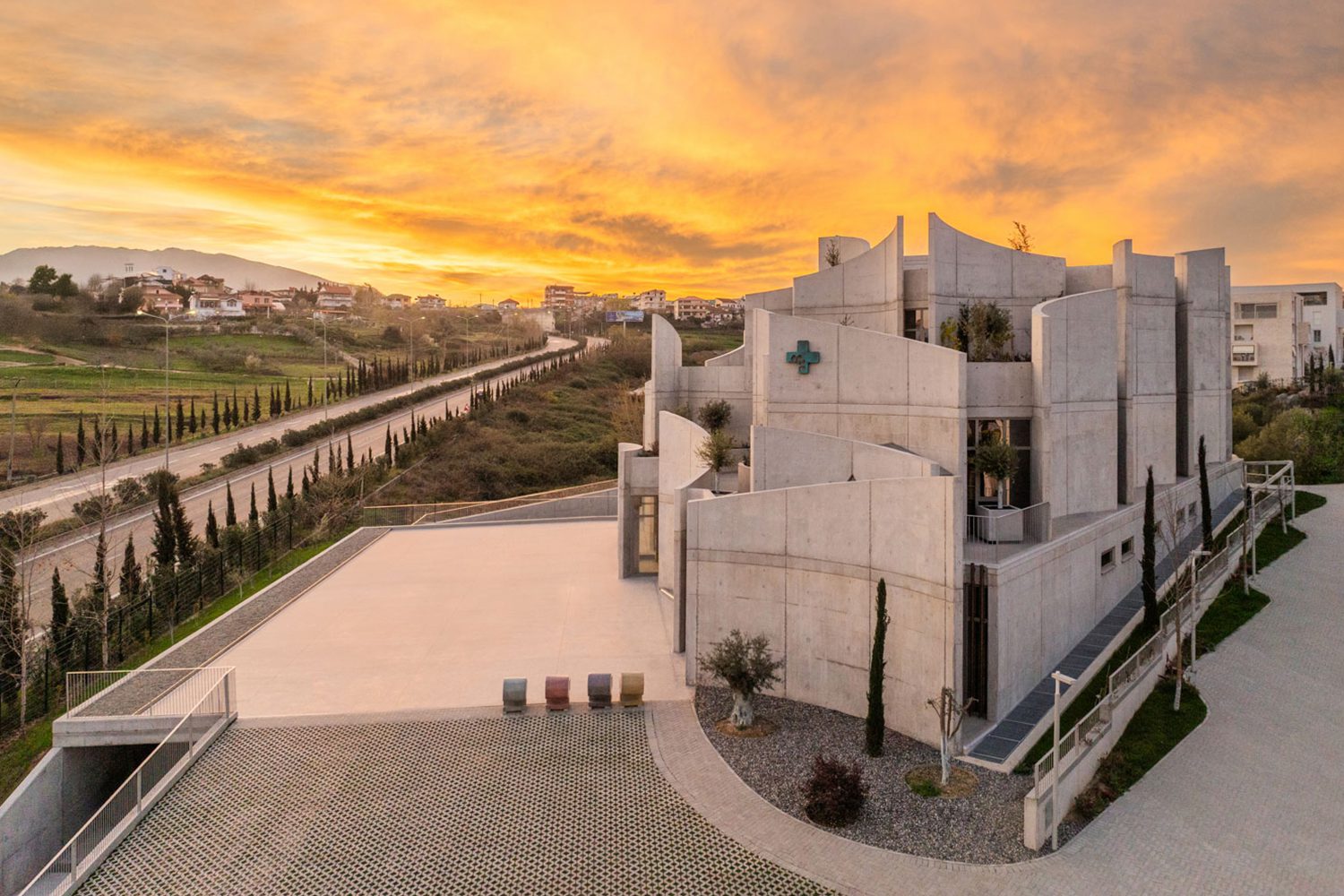
Veterinary Hospital Tirana is a newly built animal hospital in the city of Tirana, Republic of Albania, designed by the architectural team at Davide Macullo Architects, with EUROCOL as the general contractor. At first glance, it may resemble a monumental concrete sculpture. Its curving, undulating forms rise prominently against a backdrop of meadows and lush greenery. Yet, this imposing concrete mass is, in fact, an architectural structure shaped to resemble a form of artificial nature, conceived as a place dedicated to restoring the health of ailing animals, while also providing an environment that nurtures the emotional well-being of their human companions.
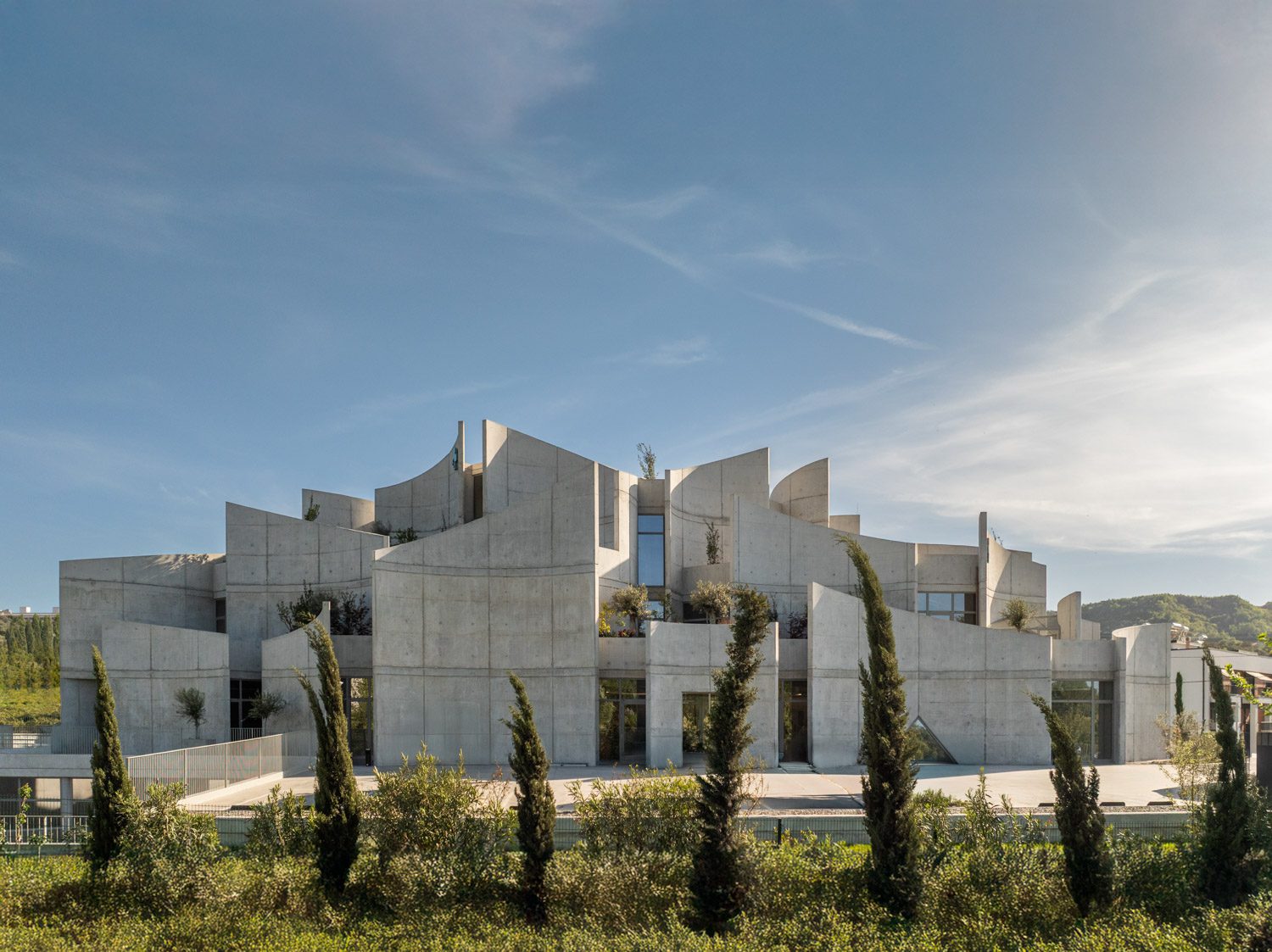
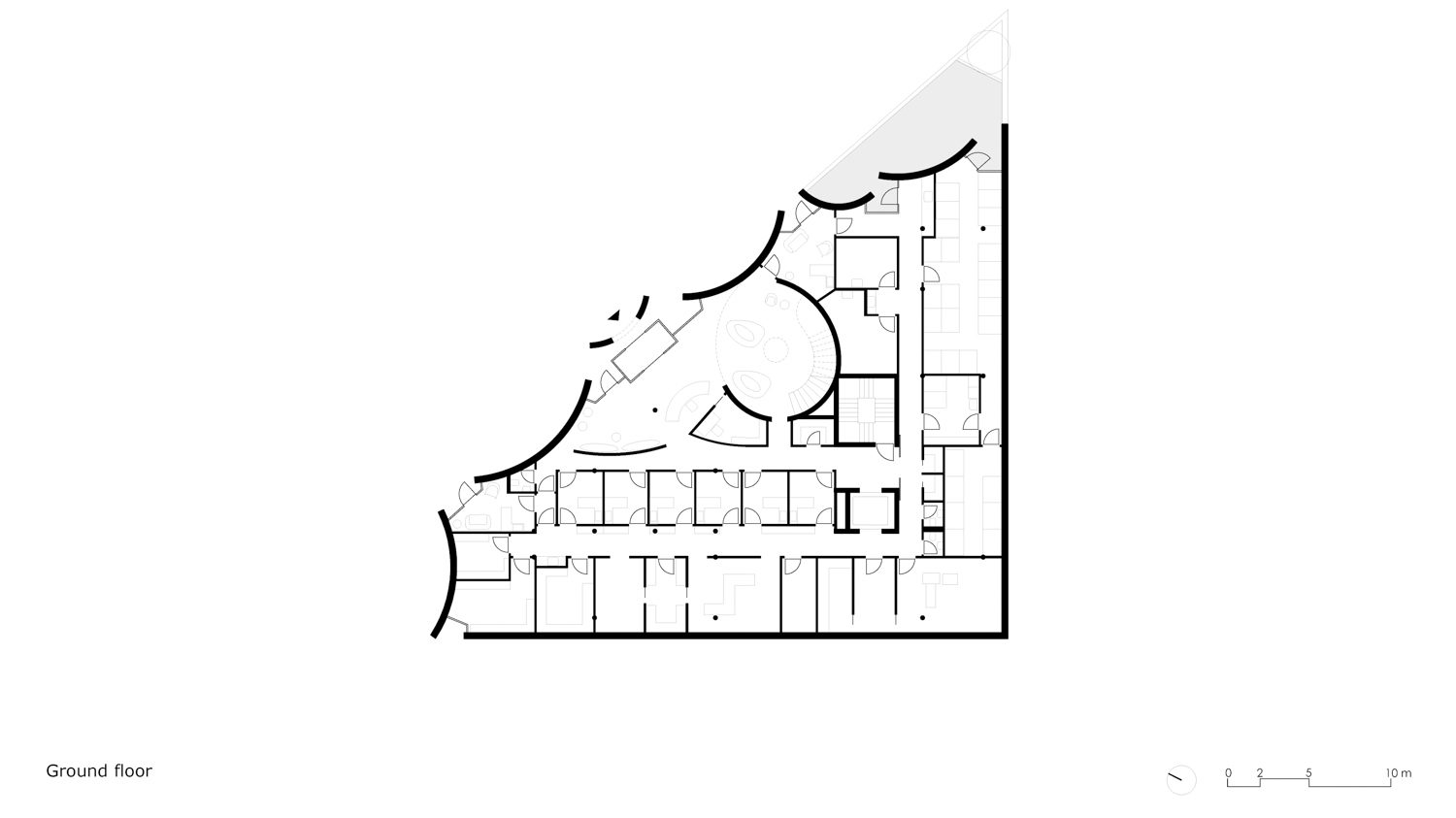
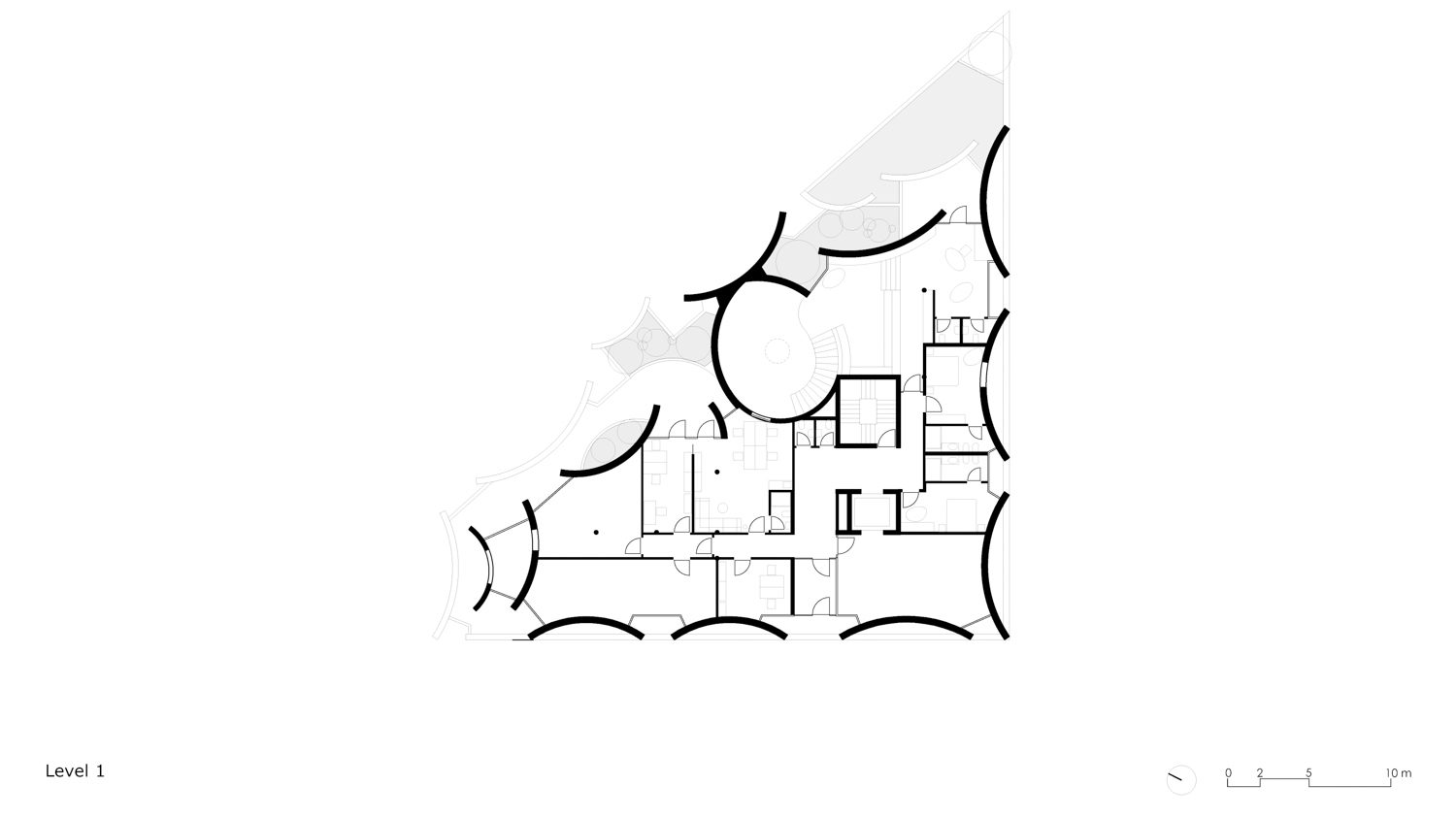
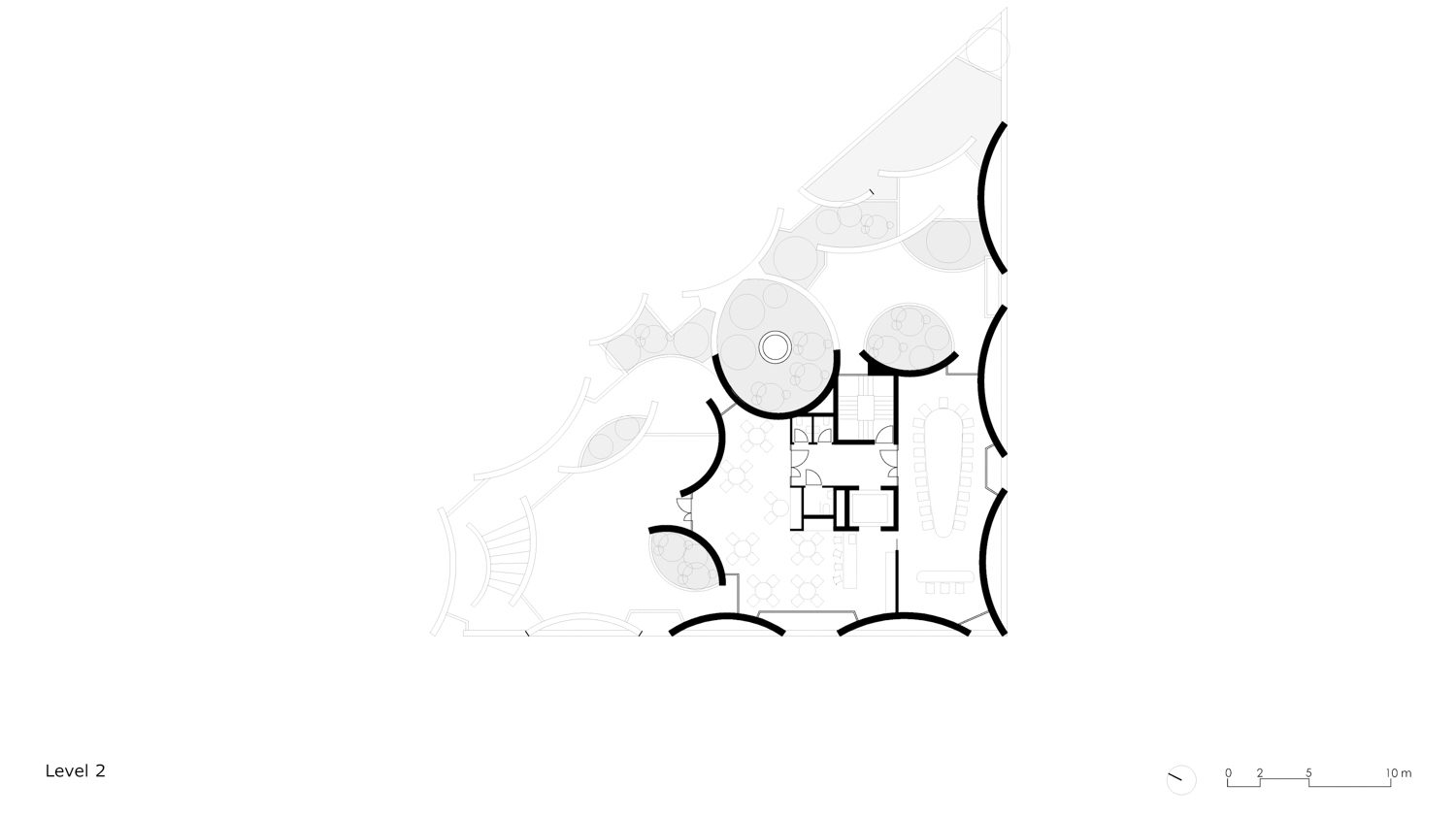
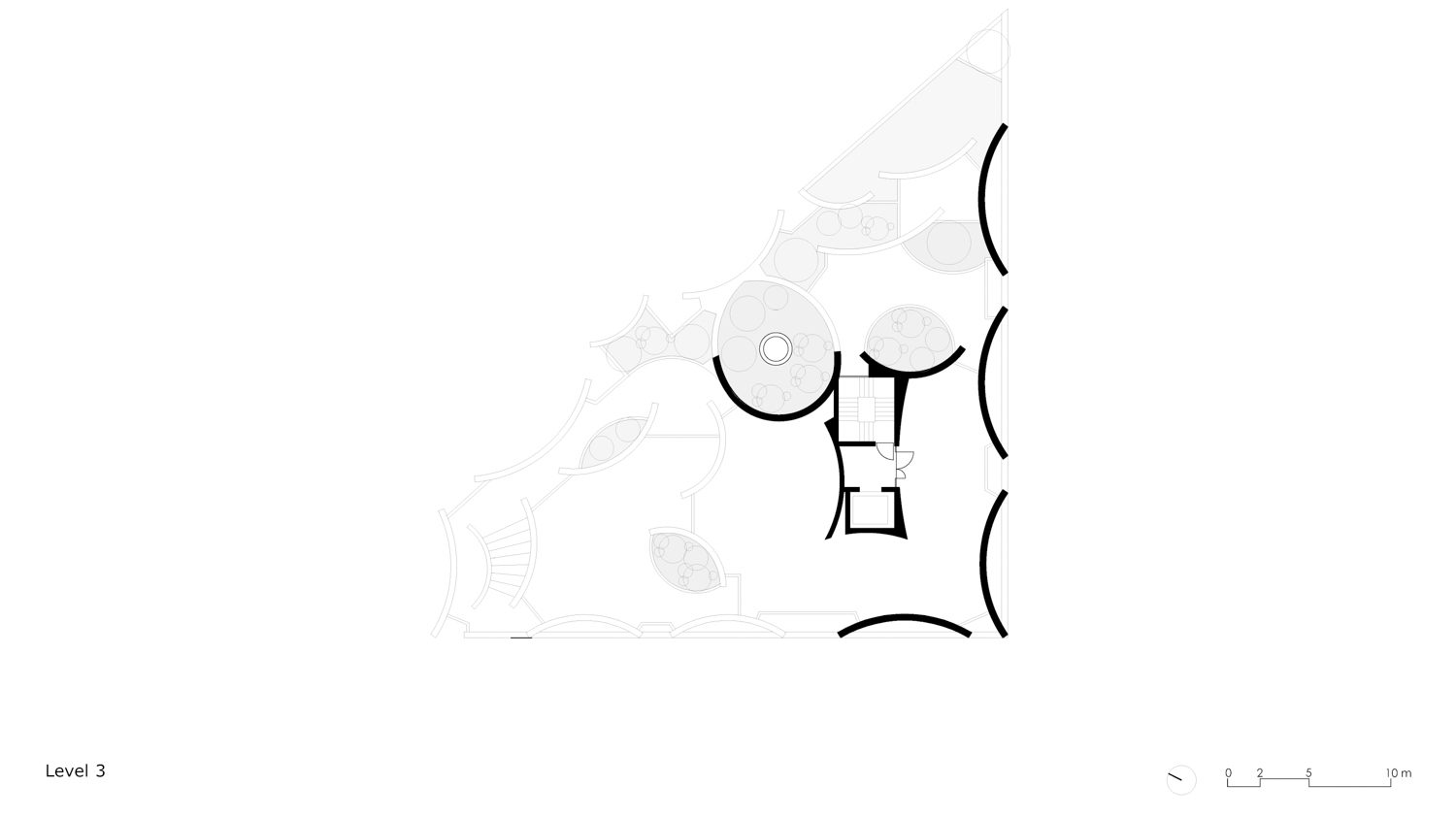
The layout of the hospital begins with a right-angled triangular plan, with the elevator and staircase placed at the building’s core. Around this central spine, the various functions unfold: a welcoming reception hall at the front, examination rooms and service areas arranged along the outer edge, forming an L-shaped configuration. Each floor is stacked above the other, but the floor plates gradually decrease in size as the building rises. The façades are composed of curved concrete surfaces of differing dimensions, wrapping each level and defining its boundaries. Because these façades interweave and overlap, the overall form of the building acquires depth and a layered visual richness, while simultaneously reducing the sense of heavy, monolithic mass.
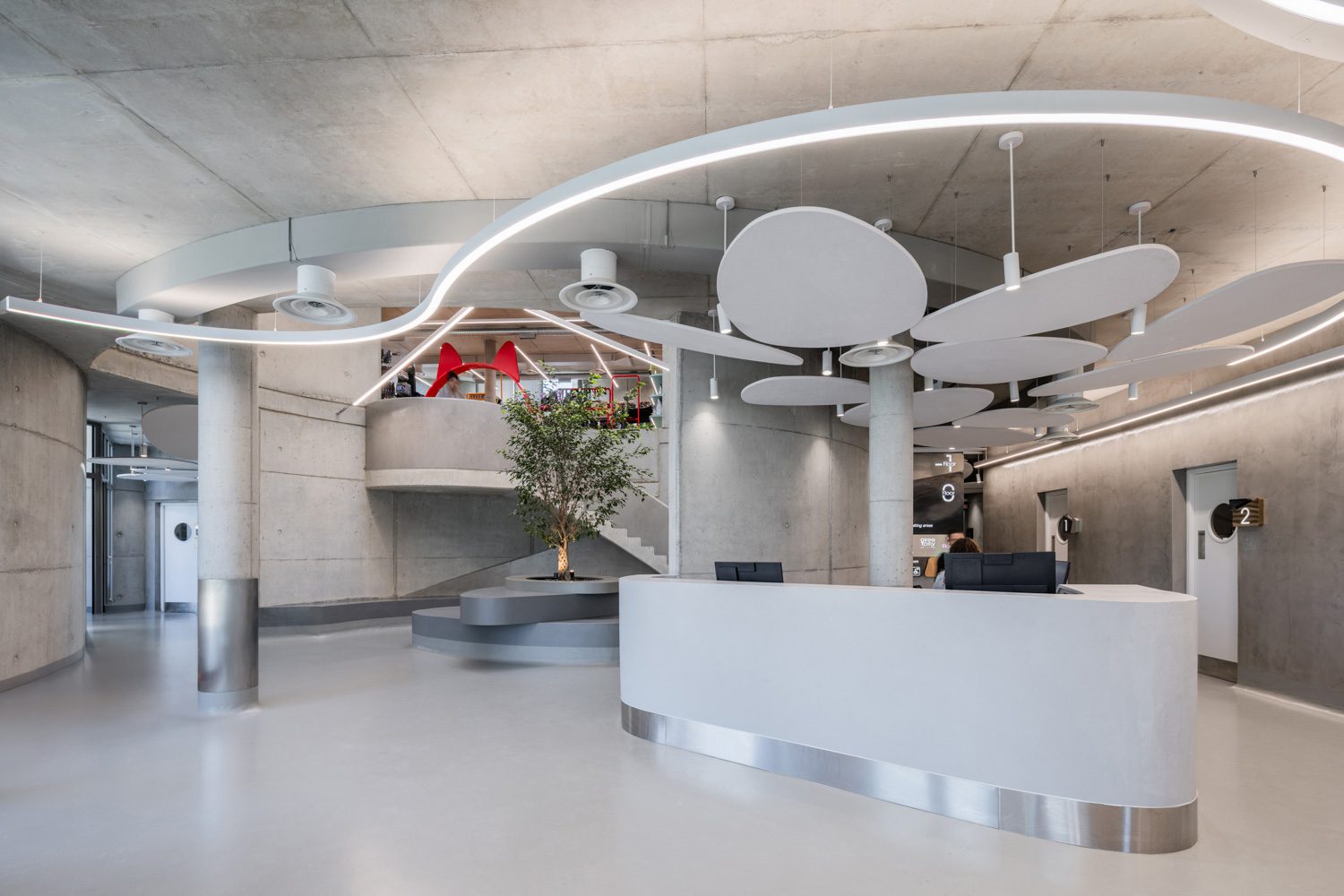
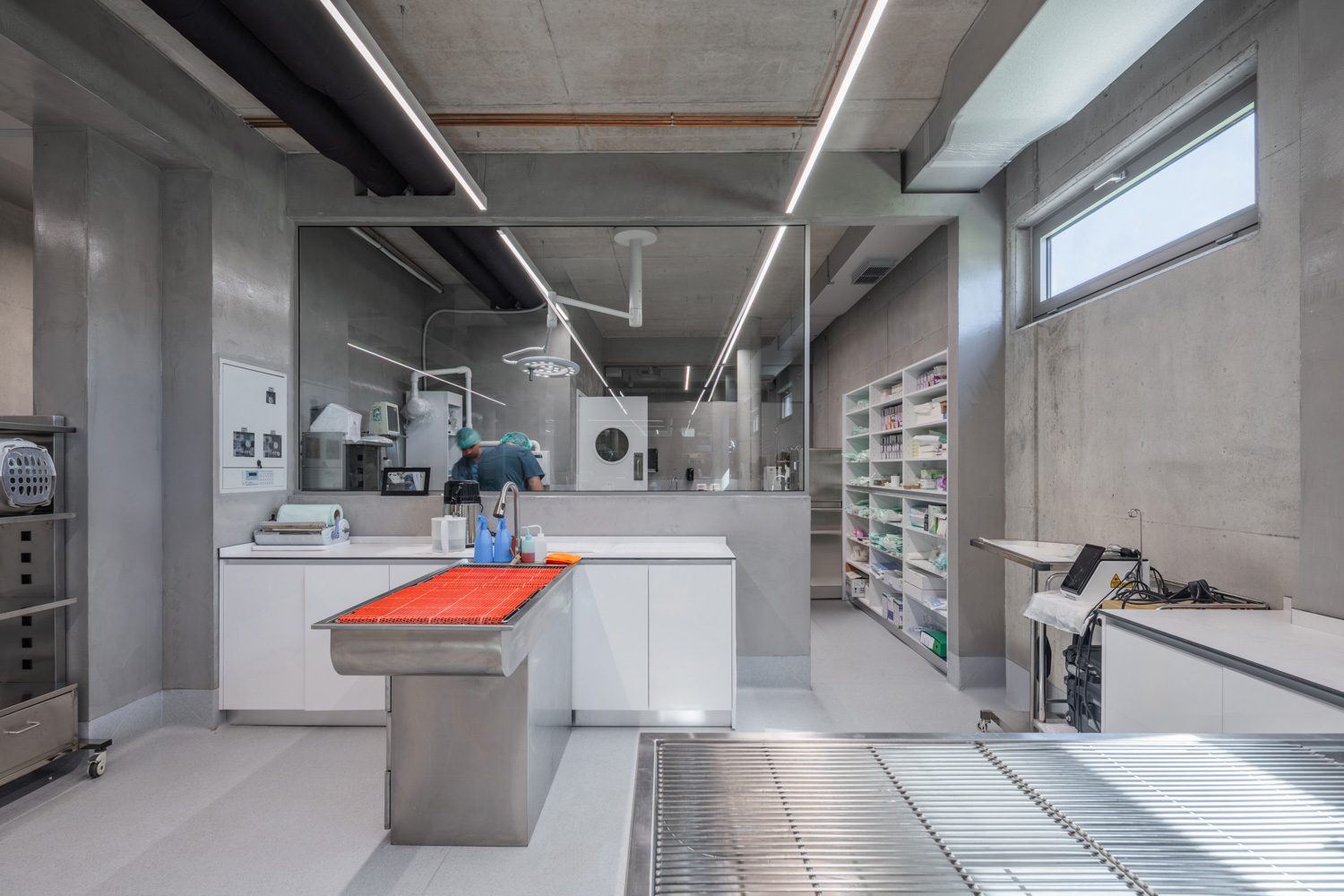
Circulation within the hospital does more than separate visitors from staff. It also organizes other essential divisions: clean and contaminated zones, and areas designated for animals with natural rivalries—dogs and cats, for instance. The guiding principle is simple yet profound: ensuring the comfort and safety of different species follows the same logic as designing for humans. First, create an environment of ease and well-being; second, provide separation whenever necessary.
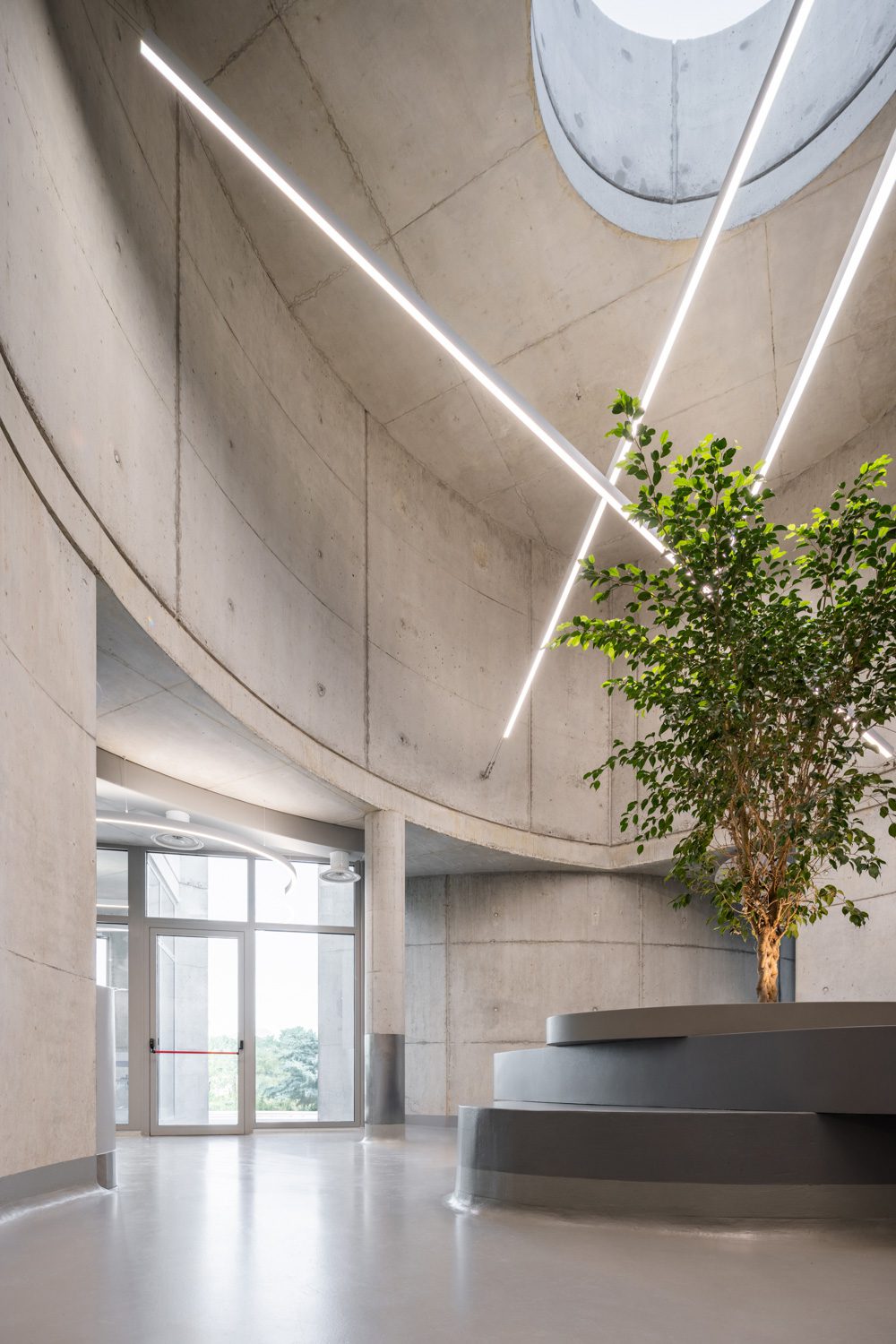
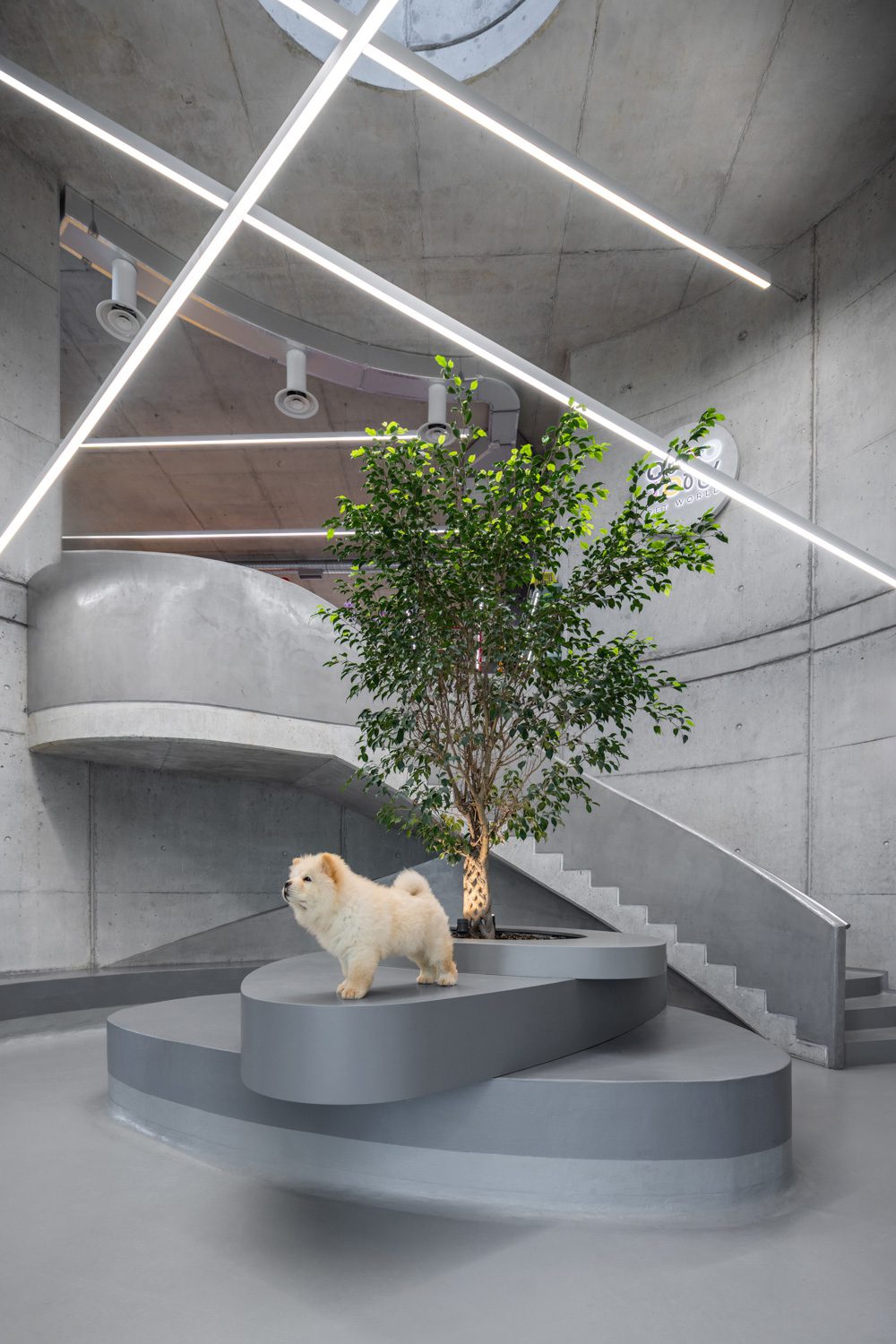
Beyond its medical program, the building places equal emphasis on nature. A garden above the waiting hall serves not merely as architectural ornament but as a therapeutic landscape for patients. Infusing the hospital with natural light, fresh air, and a palpable connection to the outdoors, it enriches the atmosphere and offers both animals and their caregivers a restorative experience that extends well beyond clinical treatment.
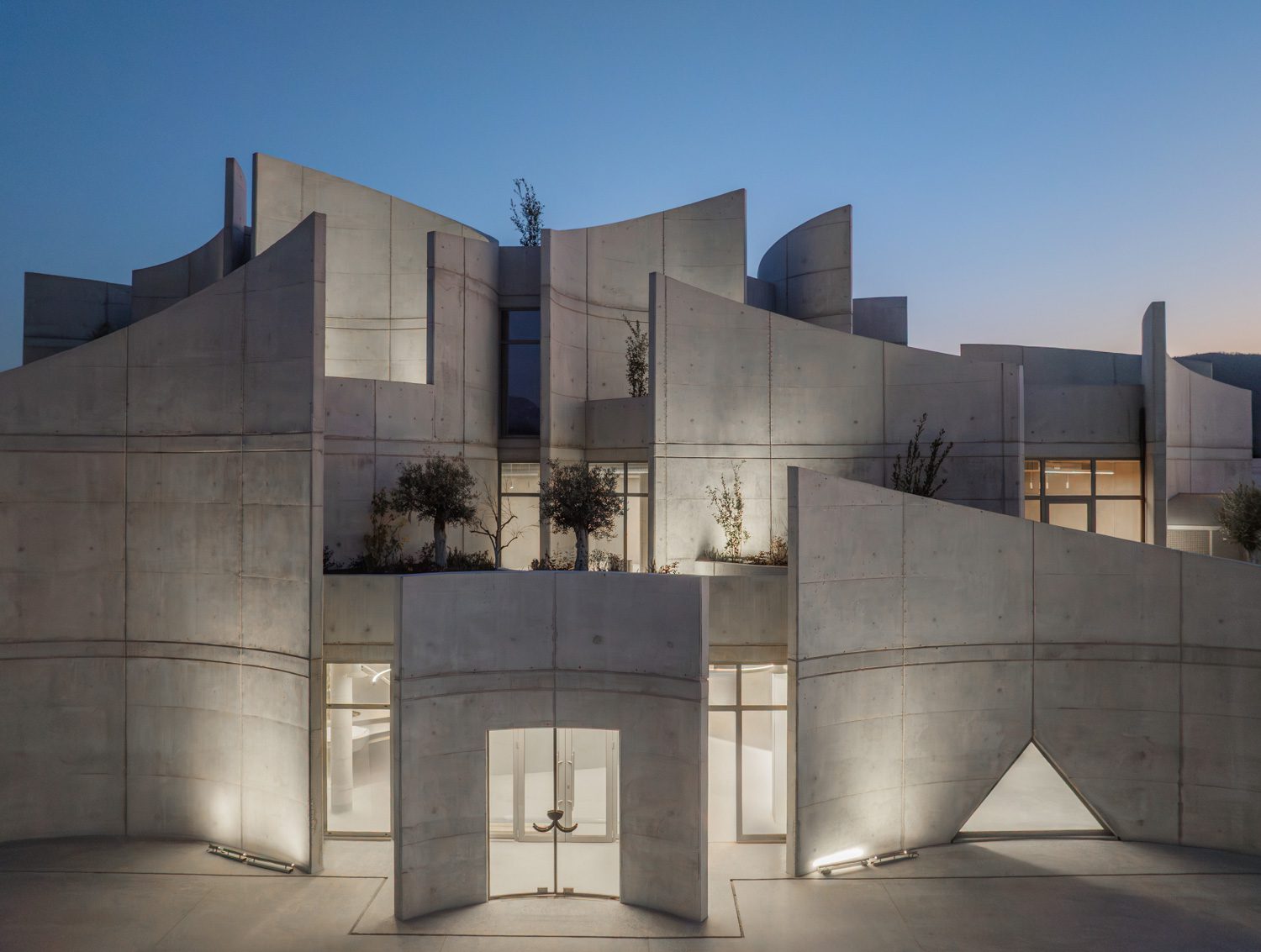
In terms of its outward expression, this raw concrete mass both blends into the mountainous backdrop and asserts its presence at the same time. Its form clearly proclaims its status as a constructed object. As Davide Macullo Architects, the design team, remarked: “Architecture often tries to rise above and dominate nature, forgetting that, in truth, we cannot separate nature from life.” The statement resonates with the project’s ethos, for illness itself, whether of humans or animals, is also a condition of nature.
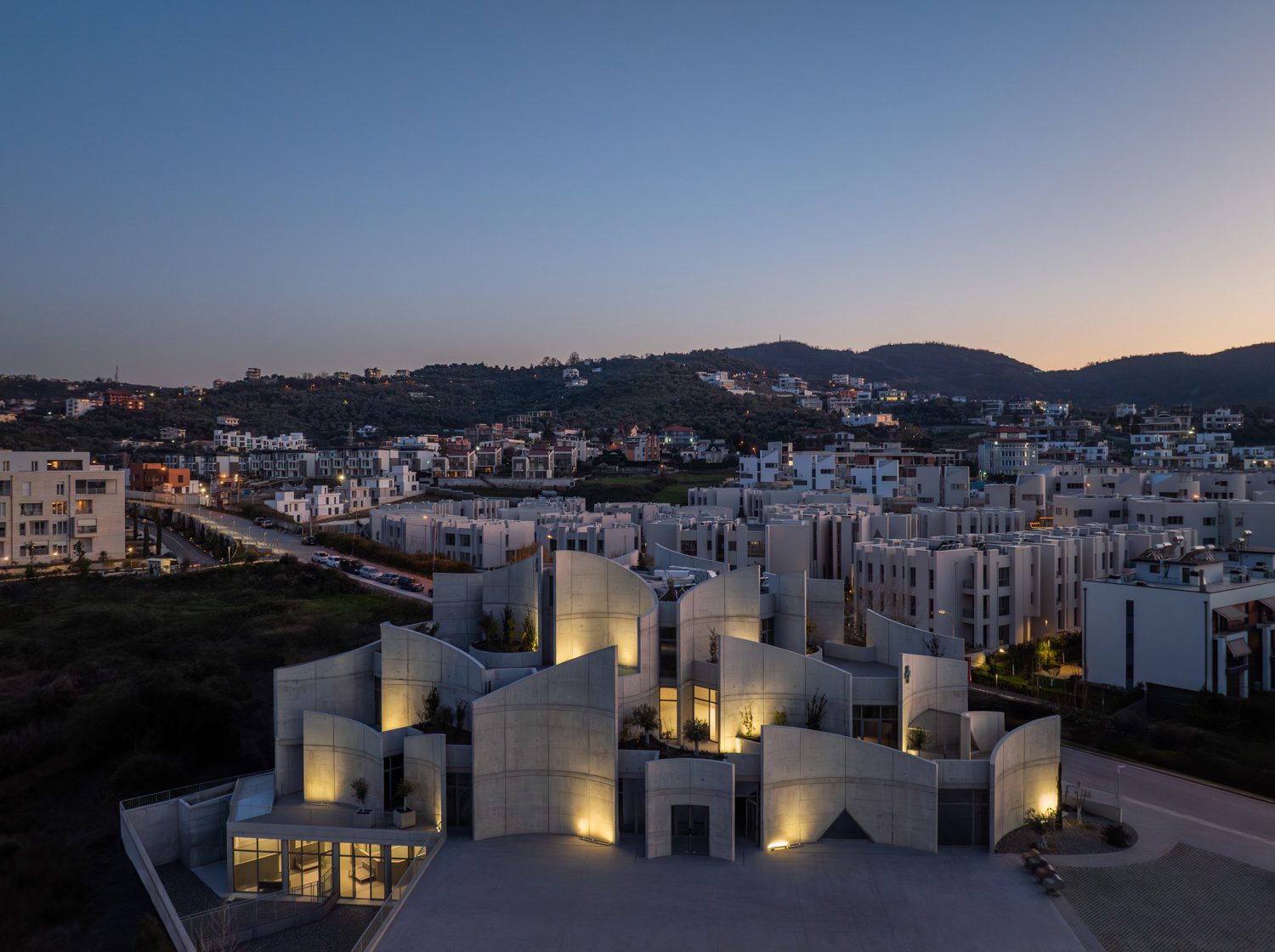
The monumental concrete façades serve more than a visual role of linking the building to its context. They function as structural load-bearing walls and as the very framework that determines the scale and proportion of the openings. A close look at the drawings reveals how every curved wall communicates seamlessly with the floor plan, while the apertures are carefully orchestrated to bring light into the interior with deliberate nuance. Architects and designers alike will recognize the challenge: when curved planes intersect with perpendicular walls, awkward residual corners often result. Yet Veterinary Hospital Tirana achieves these junctions with remarkable precision, allowing straight and curved lines to meet in harmony, without leaving behind any unusable or leftover spaces.
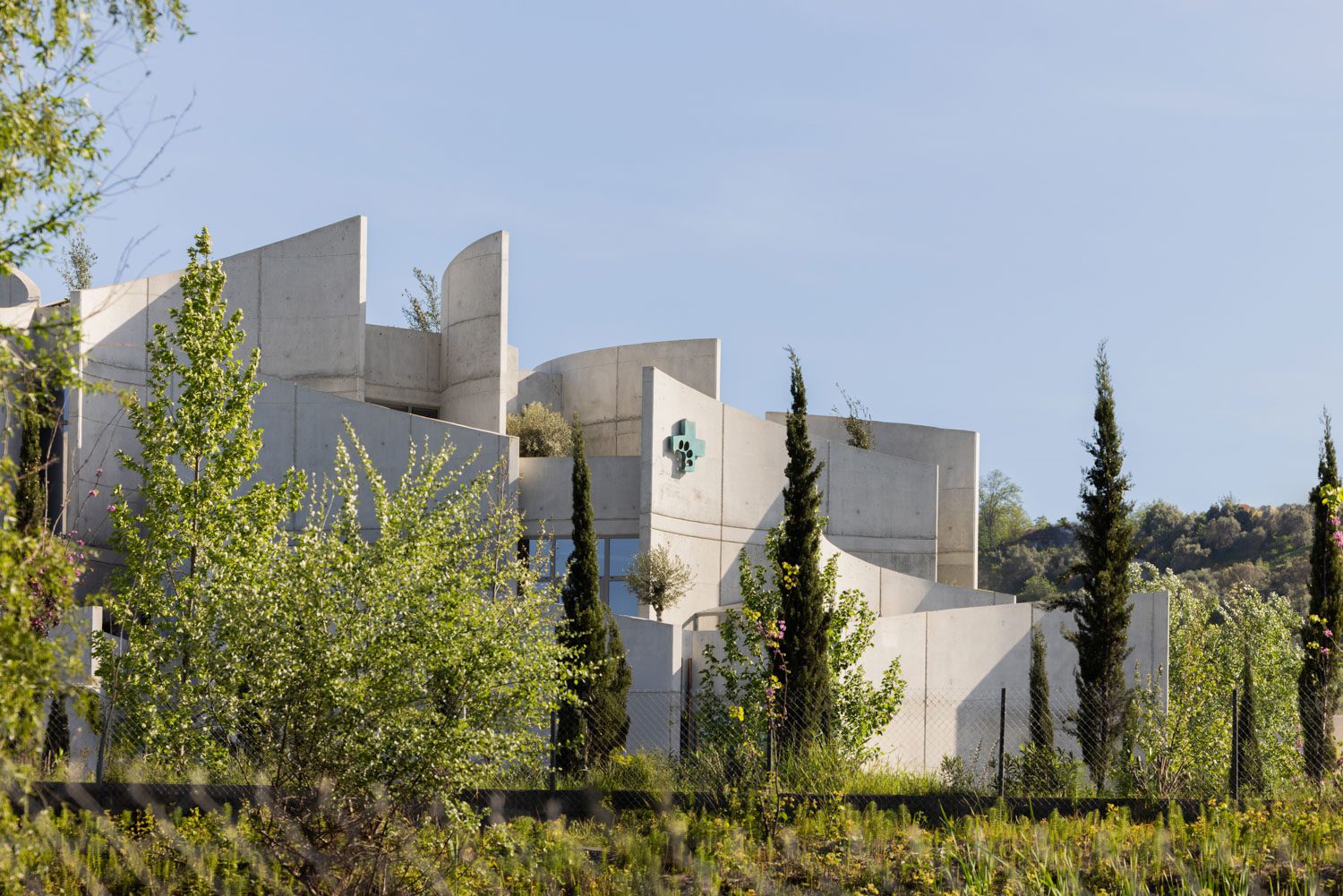
In the end, whether through its efficient plan, striking form, or the subtle ways it weaves architecture into nature, the essence of the project lies in the architects’ intention, which is to use architectural language as a means of softening the tension that is often associated with a hospital environment. These design choices may be consciously perceived and interpreted only by humans, yet companion animals, too, can sense joy and reassurance through their human counterparts. In this way, Veterinary Hospital Tirana proposes a hospital that is at once unconventional and compelling, wrapped within an architectural shell that lingers in memory.