
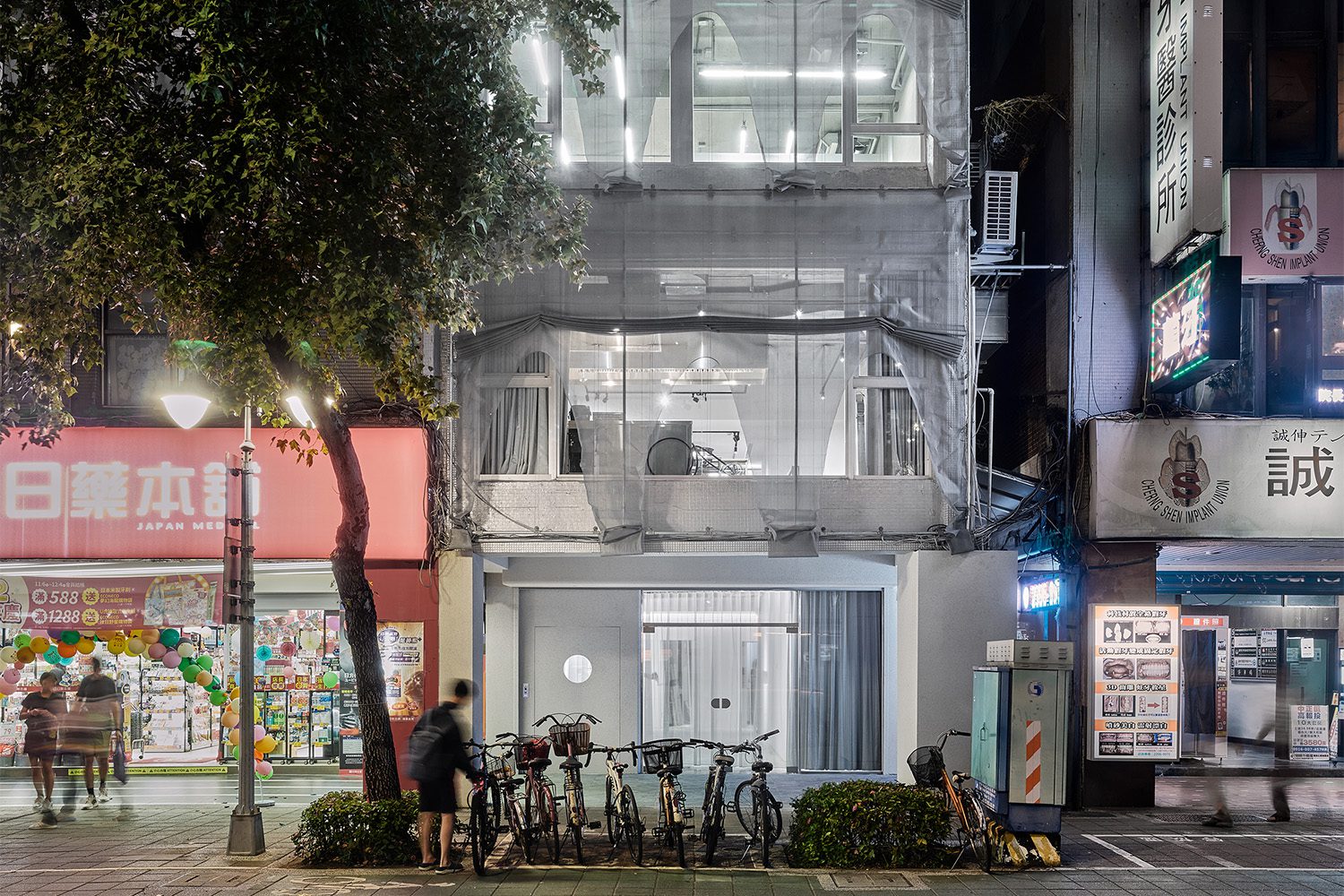
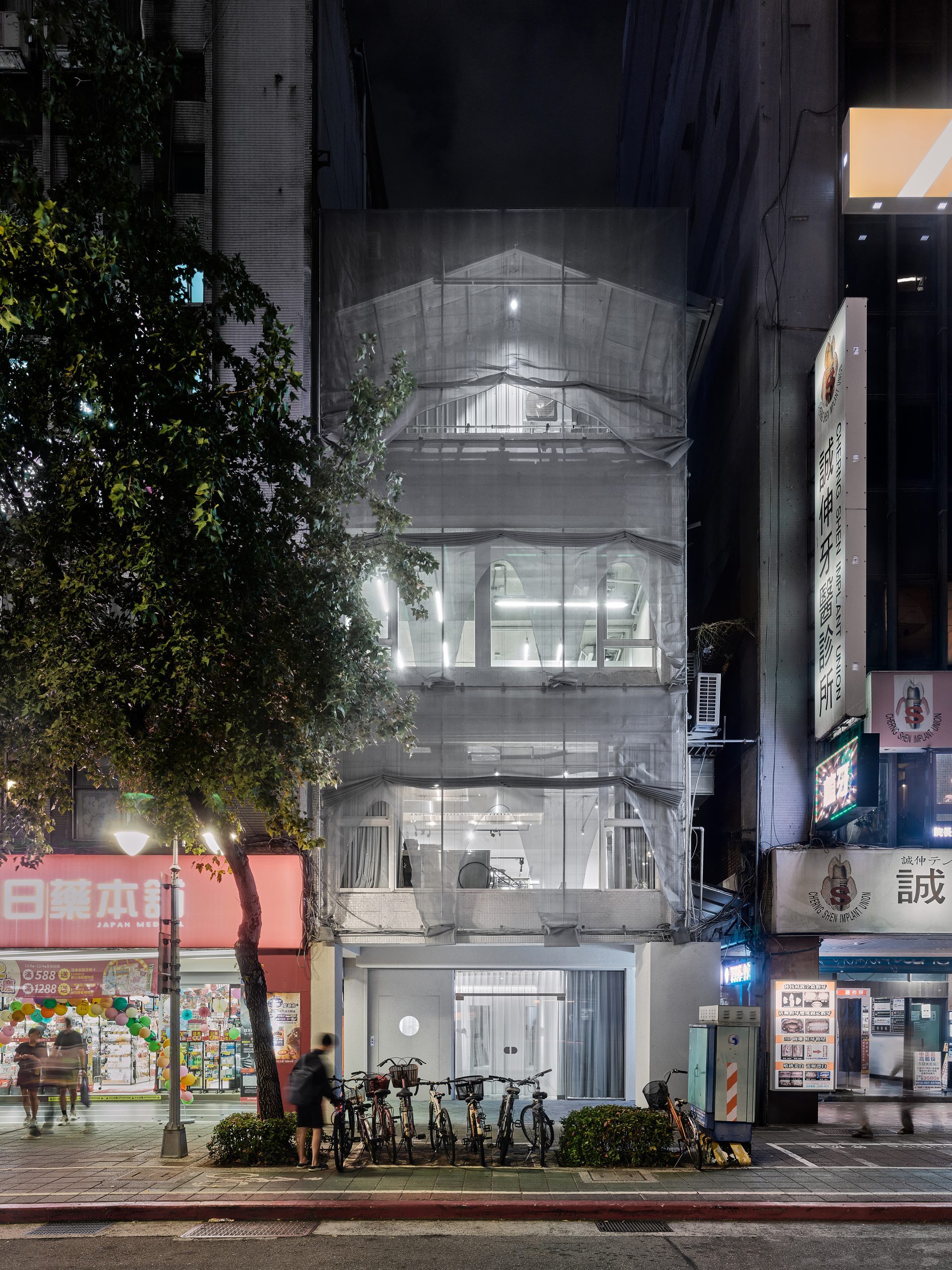
LOOKING THROUGH THE FAÇADE OF SHEN NONG SHI, A TECHNOLOGY R&D CENTER BY ÜROBORUS STUDIOLAB THAT HARMONIOUSLY ENGAGES WITH CENTRAL TAIPEI THROUGH EVERYDAY MATERIALS
TEXT: HSIEN TZU WANG
PHOTO COURTESY OF ÜROBORUS STUDIOLAB
(For Thai, press here)
Designing a technology-oriented building in central Taipei is never easy and straightforward. The urban fabric here is dense and finely grained: old houses stand alongside new developments, layers of colorful signage crowd the streets, and everyday life unfolds in a vivid, unfiltered manner. When a high-tech R&D base, dedicated to AI, robotics, and food technology, chooses to situate itself within such a neighborhood, the challenge lies in negotiating presence. How can it retain a forward-looking technological identity while still embedding itself within the existing streetscape?
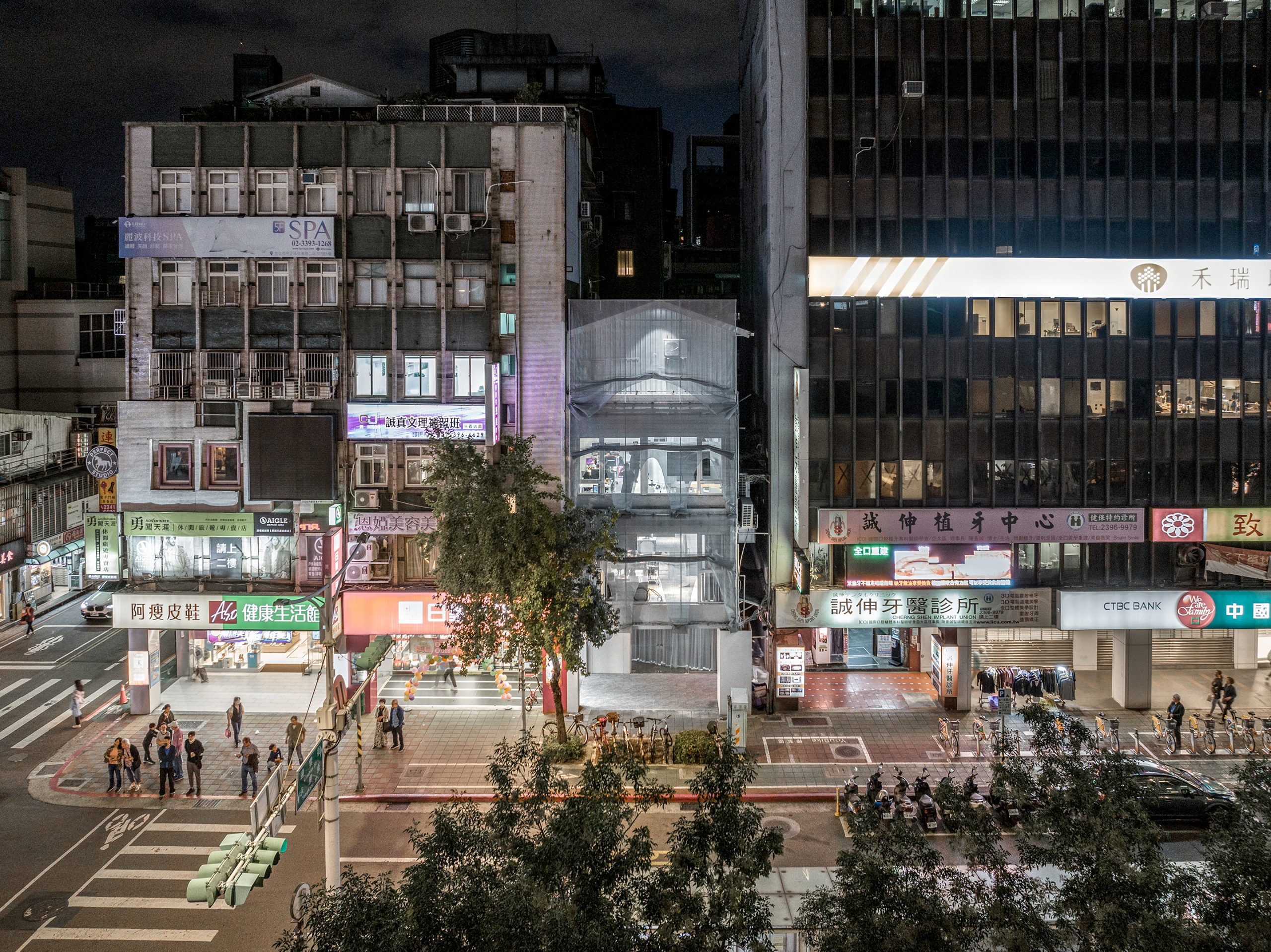
Shen Nong Shi embedded in Taipei’s street landscape
The Shen Nong Shi R&D Base emerged precisely from this tension. Located in one of Taipei’s well-known tourism and residential districts, the site is surrounded by homes, local cuisine restaurants, and the constant flow of pedestrians, an unmistakably lived-in urban environment. Conventionally, technology research facilities tend to retreat from city centers, establishing clear boundaries through gated campuses or monumental volumes. Shen Nong Shi, however, chose a different path. As a company rooted in food technology, it opted to remain within the city, coexisting with everyday urban culture, while still maintaining the high level of confidentiality required for research and development. Balancing openness and concealment thus became the building’s central architectural question.
To translate this paradox into spatial form, Shen Nong Shi collaborated with Üroborus Studiolab (共序工事), an architectural practice known for reinterpreting Taiwanese local materials into contemporary spatial languages. After multiple site visits and discussions, the architects defined the project’s core concept as a ‘training ground.’
‘Here, humans and machines focus together on refining culinary techniques. Robotic arms take on the role of apprentices, while chefs become masters. These two practitioners remain hidden within a mysterious space embedded in the bustling city, each honing their craft through constant repetition.’ While these processes are not meant to be directly observed, the architects hoped their presence could still be sensed. As a result, the building’s exterior became the primary narrative interface through which it engages with the city.
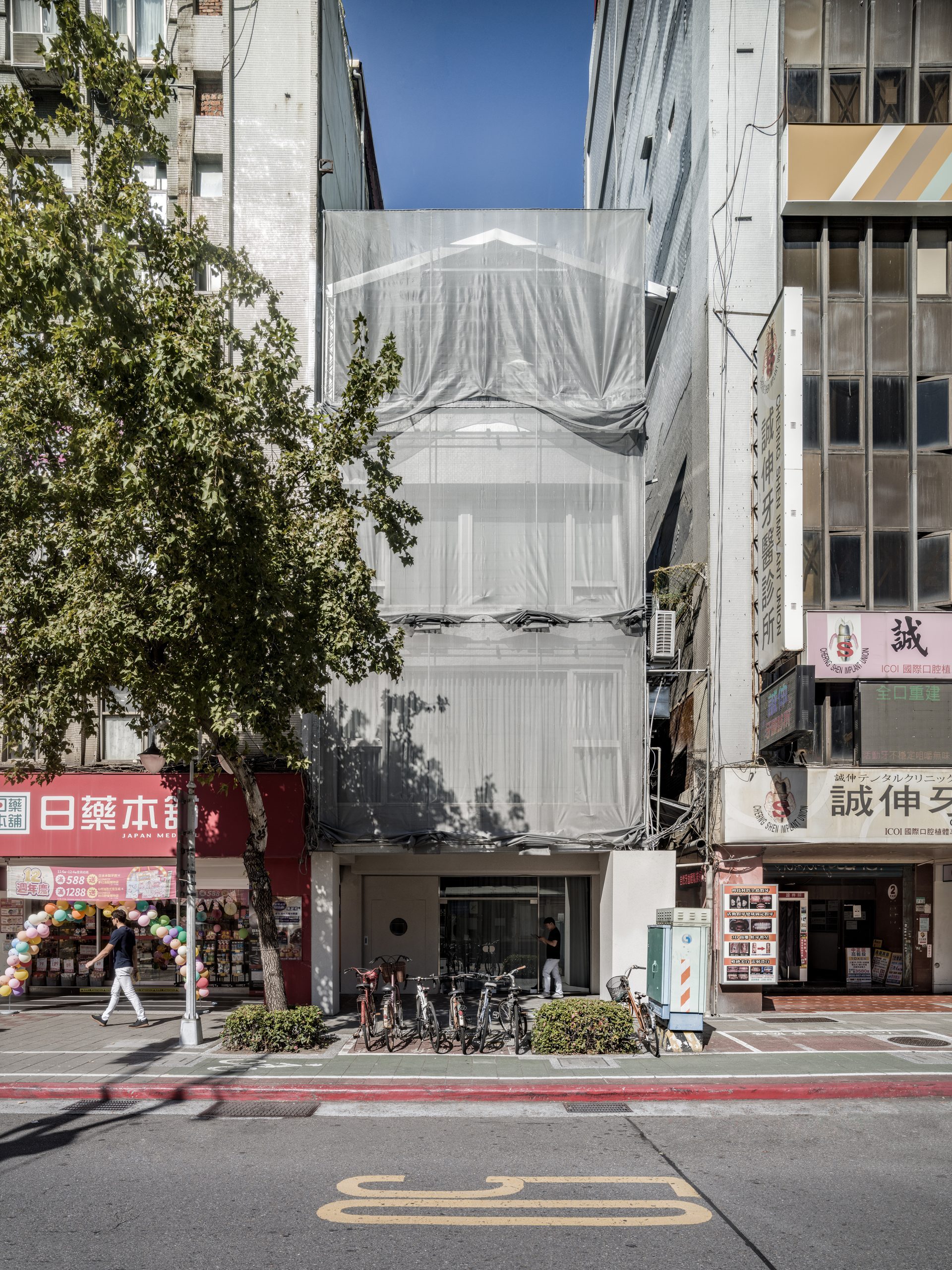 Curtain Movement
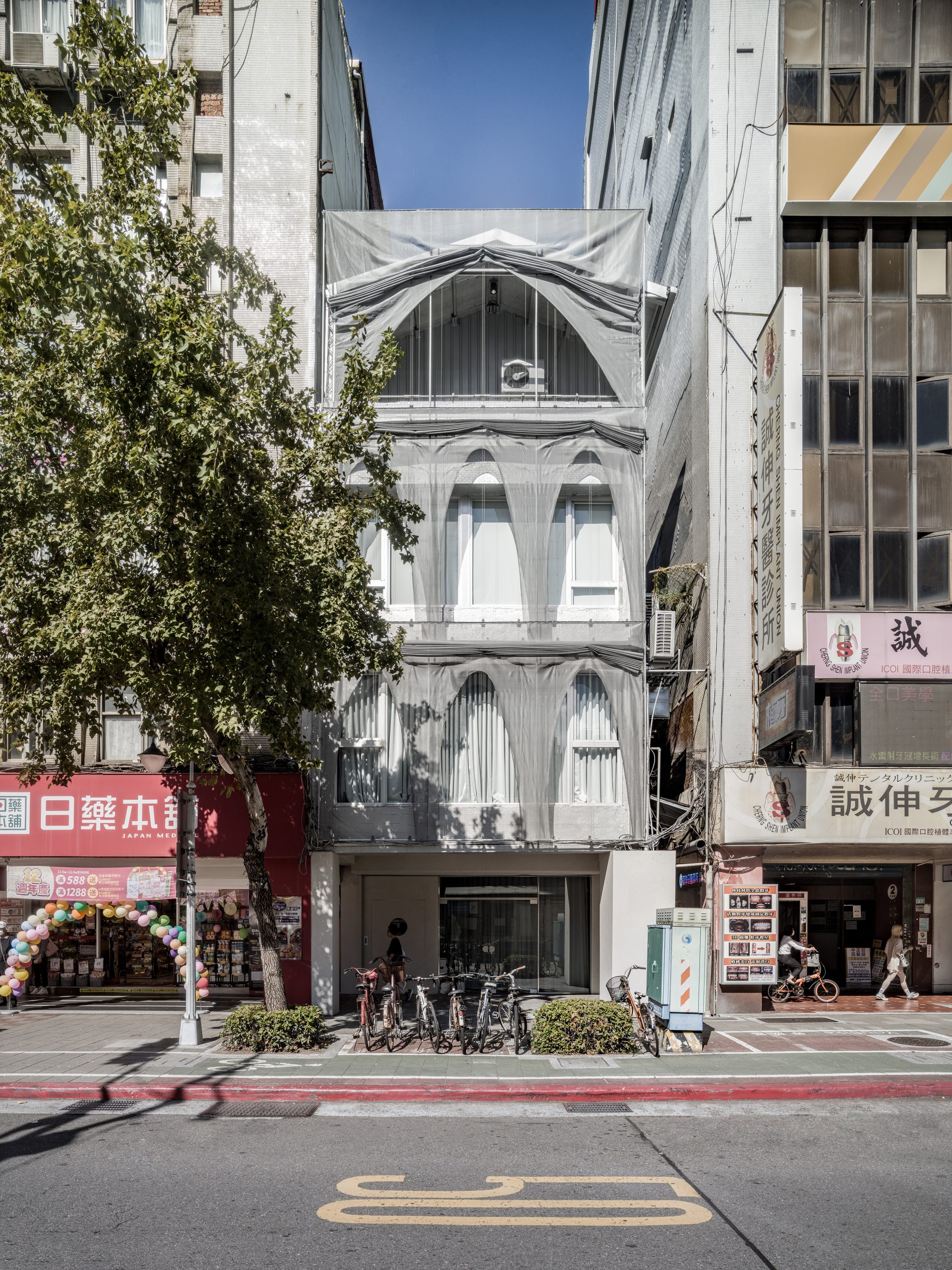
Facing the street, the façade is the only part of the building openly accessible to the public. Rather than employing the glass curtain walls or overtly high-tech skins often associated with technology architecture, Üroborus Studiolab selected a surprisingly ordinary material, one typically found in agricultural settings: orchid shade netting. This silver-grey mesh, commonly used to regulate sunlight and block dust, wraps the exterior of each floor like a breathable membrane.
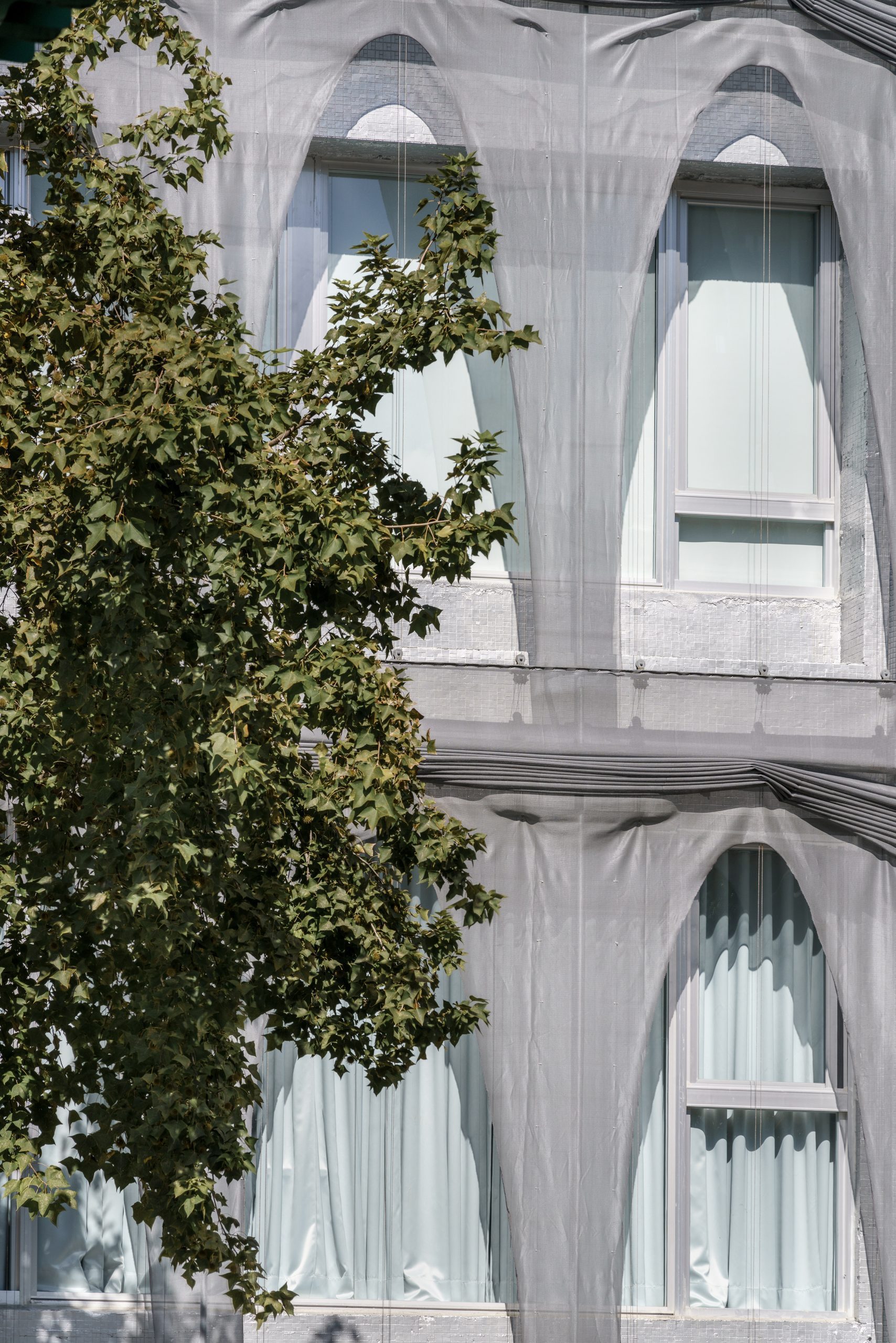
The façade system is equipped with automated controls, allowing the mesh on each level to open or retract independently in response to internal needs and external environmental conditions. When fully deployed, the building takes on a quiet, enigmatic presence, evoking the atmosphere of an experimental facility. When partially opened, it resembles a cave-like structure, offering fleeting glimpses of interior silhouettes. As the wind passes through, the mesh gently sways, introducing subtle shifts across the façade. These movements transform the building into an organic entity, one that responds to time, climate, and the rhythms of the city.
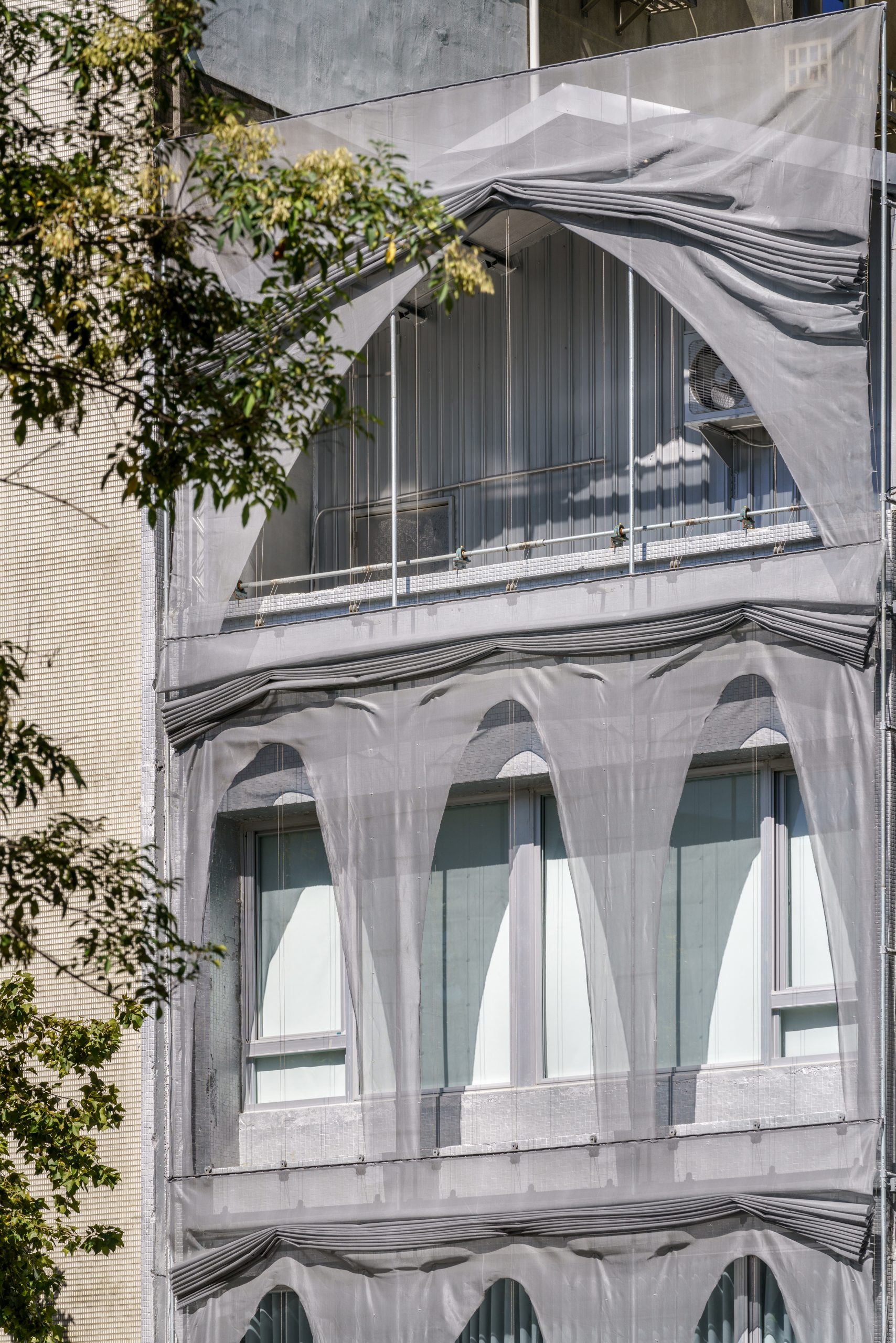
Curtain Movement
This permeable layer also addresses practical urban conditions. Large floor-to-ceiling windows facing a main road would typically intensify conflicts between privacy and daylight. Acting as a filter, the shade net mitigates harsh sunlight while allowing occupants to decide how much of the city they wish to see. The building retains flexibility in its interaction with the street, negotiating visibility rather than enforcing it.
 Façade interacting with the city
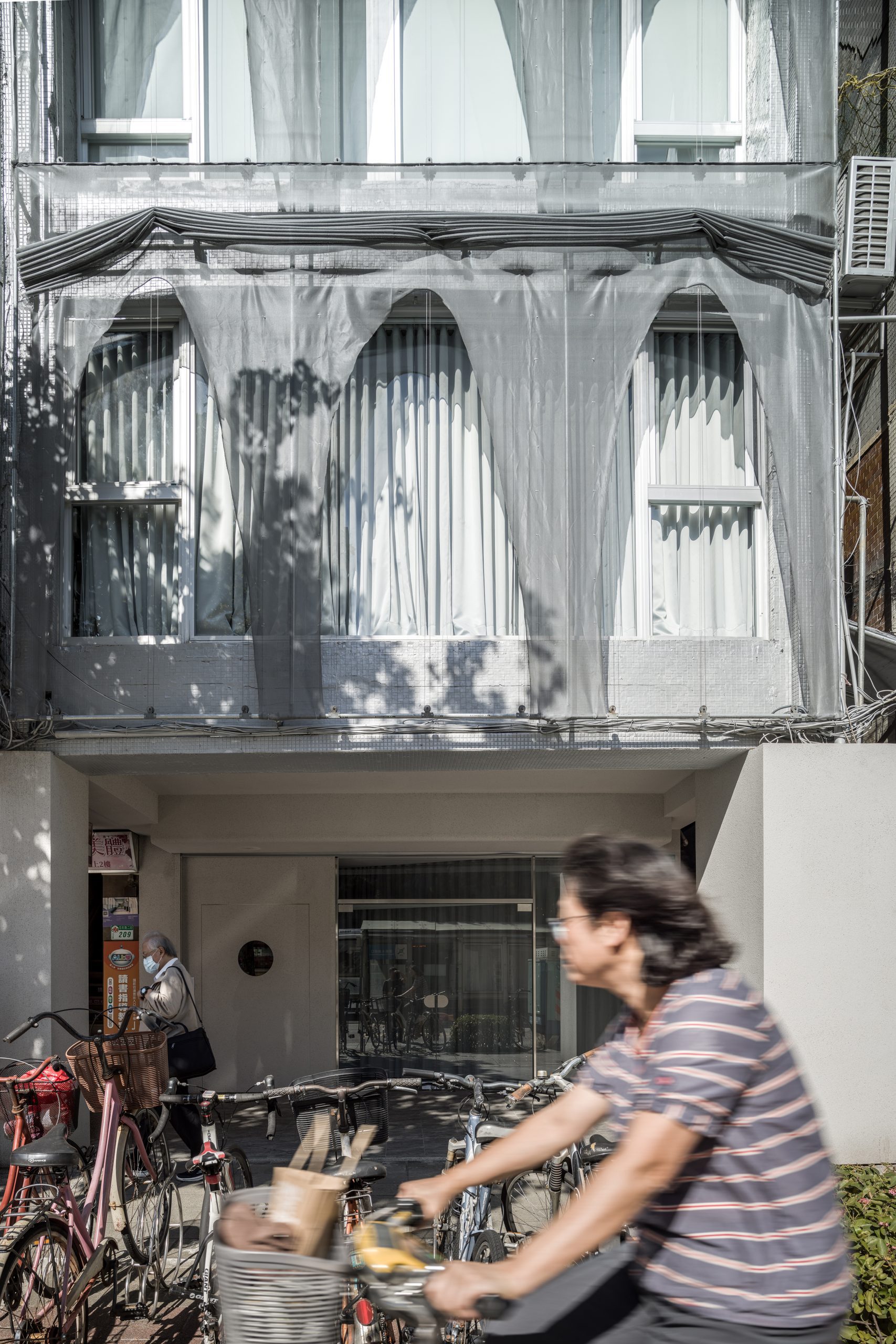
“Although it cannot be fully revealed, it still wants to be noticed,” the architects remarked when describing the building’s condition. Through its constantly shifting façade, the Shen Nong Shi R&D Base deliberately becomes a question within the streetscape, a slightly strange presence that draws curiosity without giving itself away. This ambiguity becomes a quiet form of dialogue between architecture and city.
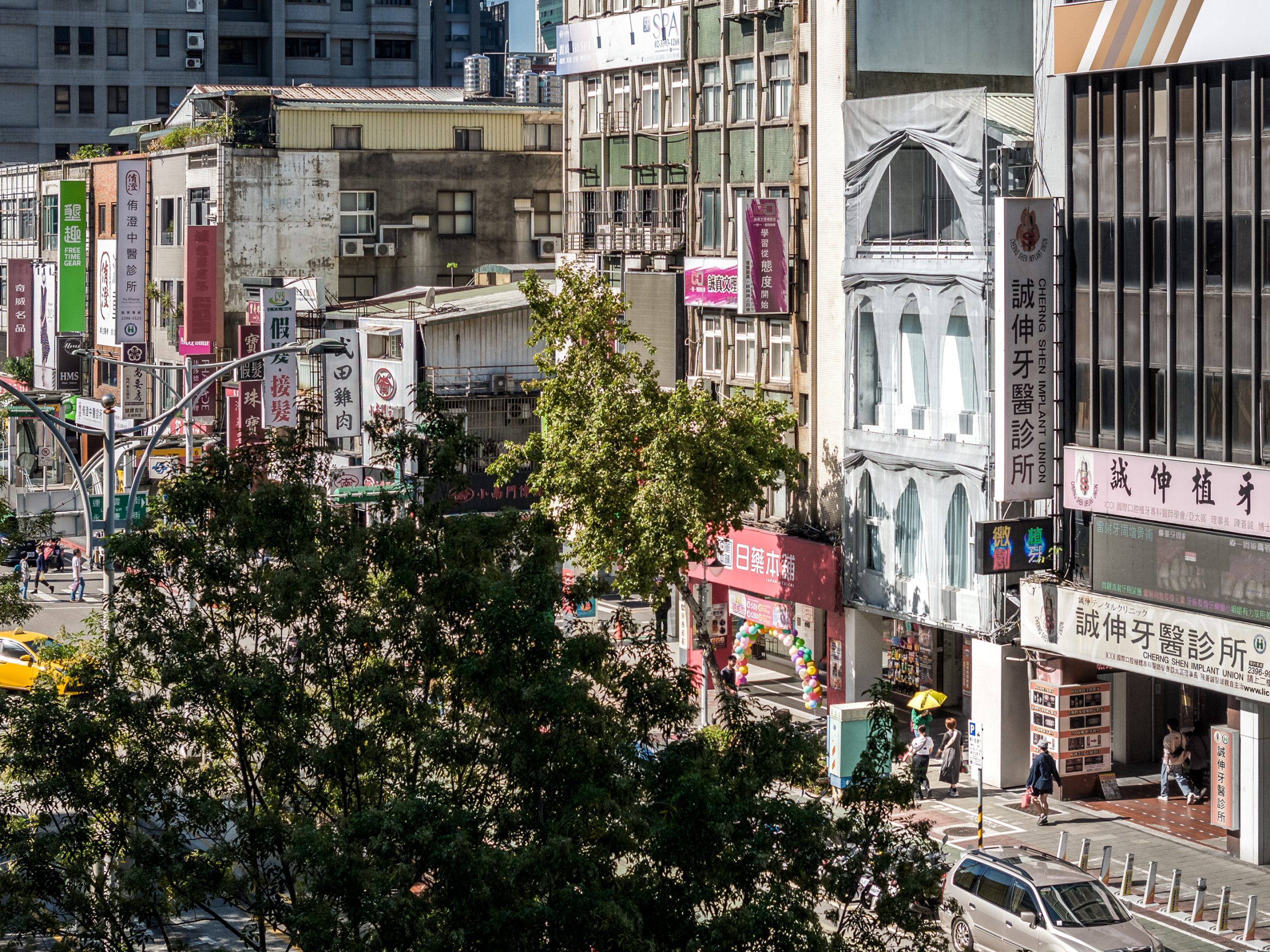
Façade interacting with the city
The interior, which remains closed to the public, presented an even greater design challenge. “Designing a space for humans and machines to work together was difficult to grasp at first, yet deeply intriguing,” the architects explain. “Most architectural spaces are still designed primarily for human use.” Anchored by the idea of the training ground, the interior employs rough concrete finishes to create an almost cave-like, raw atmosphere, an environment where advanced technologies emerge from an experimental, unpolished setting.
Spatial organization responds carefully to the workflows and interactions between people and machines. The first and second floors function as showrooms, the third floor houses offices and meeting spaces, while the fourth floor is reserved as a flexible venue for future exhibitions and talks. This arrangement allows the building’s program to remain adaptable as its modes of operation evolve.
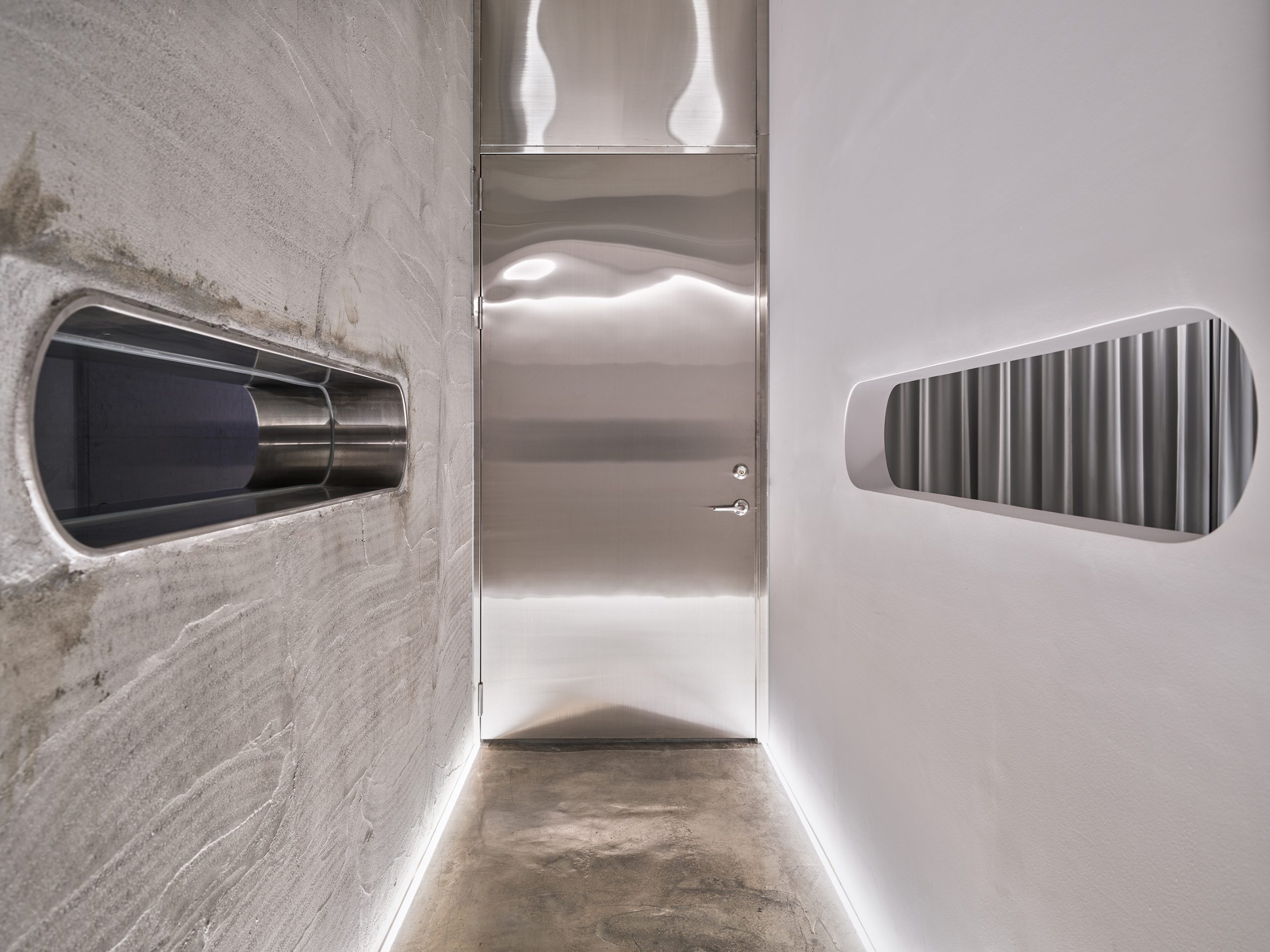
Entrance
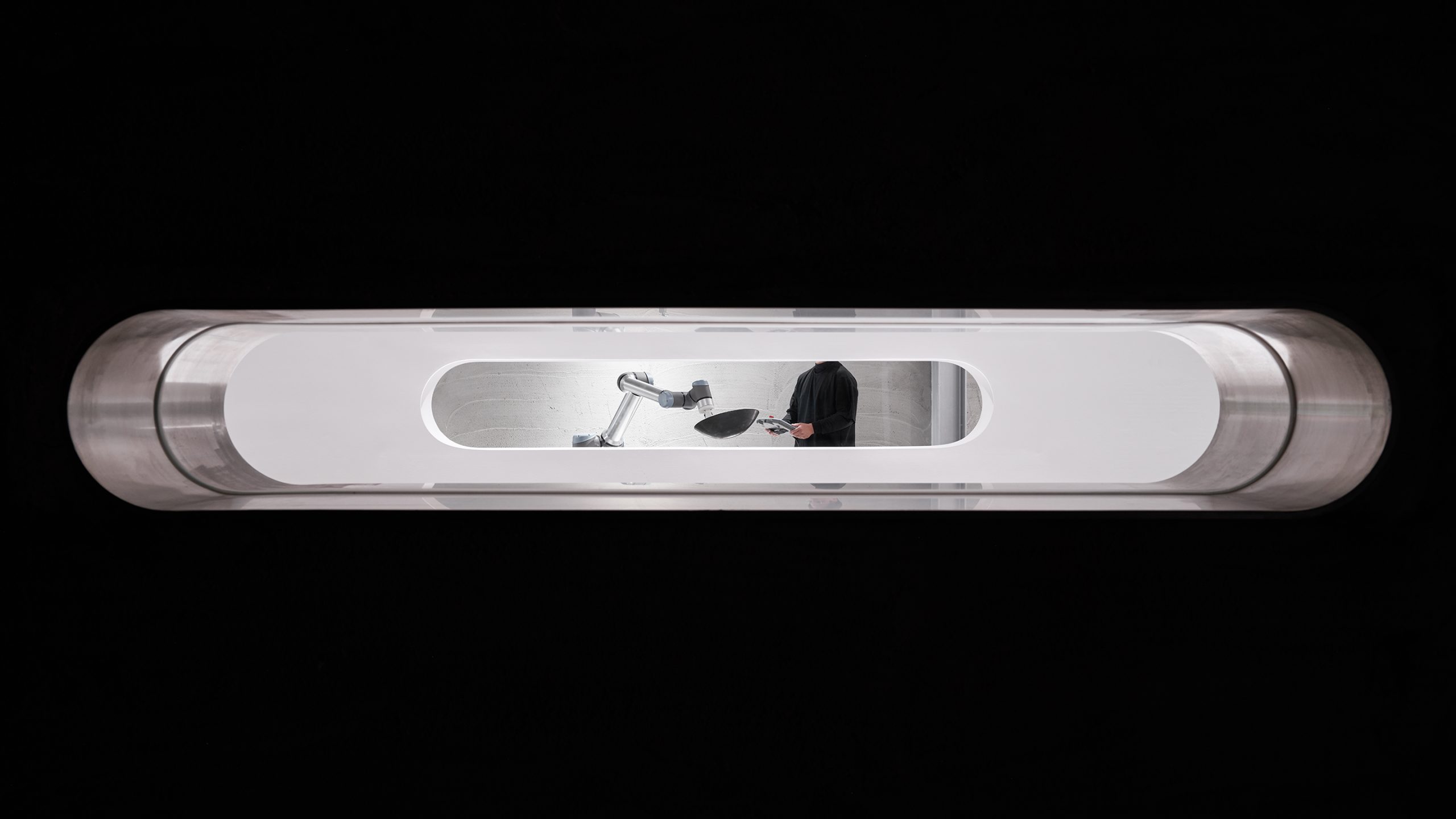
Peeking internal activities at the entrance
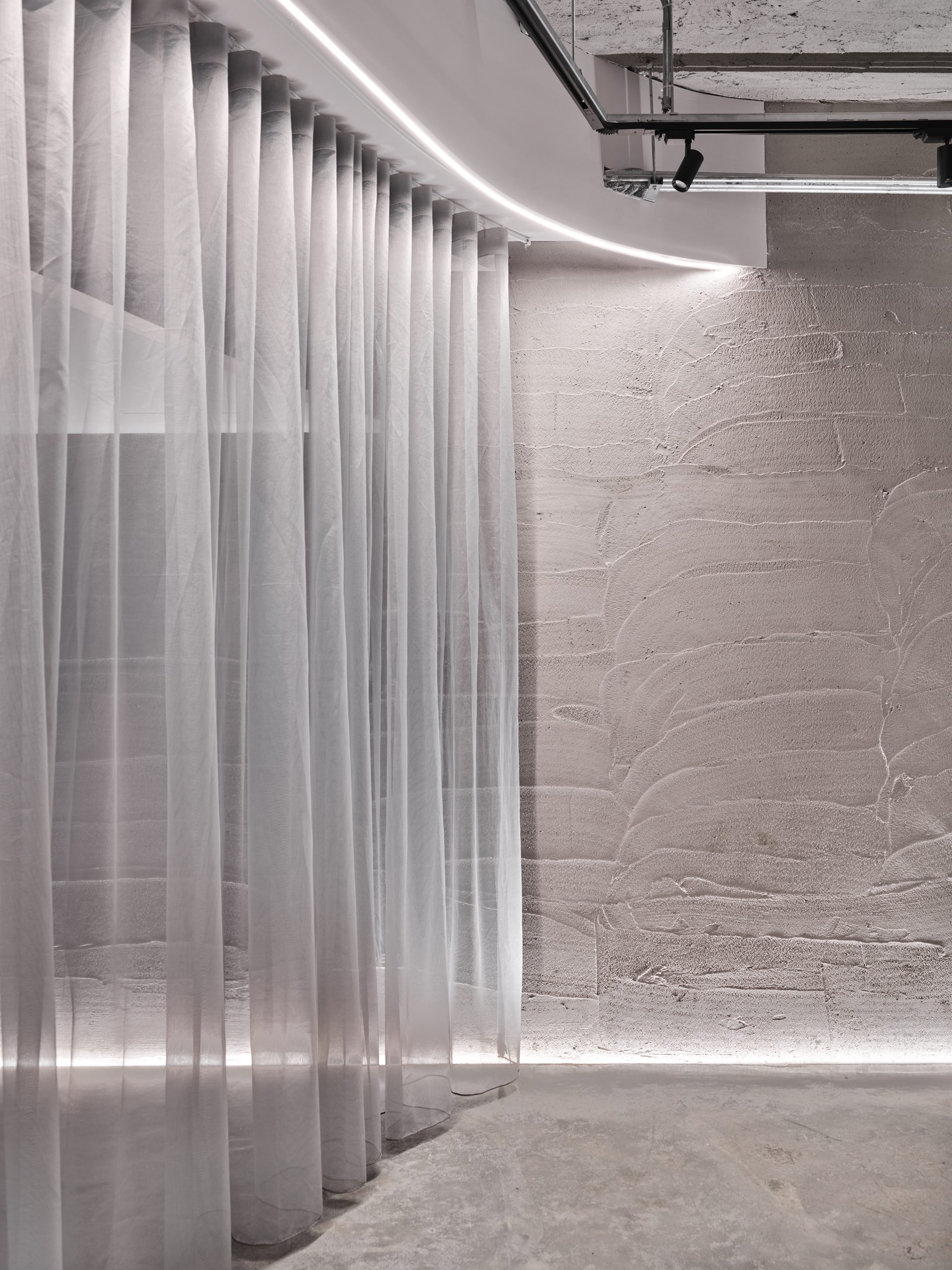
Interior design
The Shen Nong Shi R&D Base was awarded the Mark Winner of 2025 Golden Pin Design Award for Spatial Design and shortlisted for the 2025 Dezeen Awards, recognizing Taiwan’s ongoing architectural explorations within dense urban contexts where old and new coexist. The project reflects a broader effort to reconsider how technology, materiality, and the city can relate to one another.
Here, a high-tech brand is not translated into an assertive architectural statement. Instead, it recedes behind familiar, locally rooted materials, quietly inhabiting the city while still capturing the attention of passersby. Like a martial artist in continuous training, the building restrains its force, cultivating its inner strength while maintaining a subtle, enduring dialogue with its surroundings.
facebook.com/urobrous
instagram.com/uroborus_studiolab
_
About the Golden Pin Design Award
The Golden Pin Design Award is the most prestigious design competition in the Taiwan, China, Macao, and Hong Kong markets. Its mission is to provide opportunities and support for outstanding design across various categories – from products to diverse creative works – originating in countries throughout Asia.
For more information, please visit: https://www.goldenpin.org.tw/en/