
METAMORPHOSIS IN GOLD, THE LATEST EXHIBITION BY NAKROB MOONMANUS, OFFERS DIFFERENT FACETS OF GOLD IN THAI HISTORY, INTERNAL COLONIALISM, AND THE INVENTION OF THE ‘OTHER’
TEXT: SARUNKORN ARTHAN
PHOTO COURTESY OF WARIN LAB EXCEPT AS NOTED
(For Thai, press here)
Some readers may be familiar with Sang Thong, the classic work of Thai literature that tells the story of Phra Sang, who conceals ‘the golden form within’ beneath the guise of Ngo, a dark-skinned, curly-haired forest figure conventionally portrayed as unattractive, thereby hiding his true and beautiful identity. Yet another train of thought brings to mind Sangthong Seesai, the luk thung singer and film actor, whose career emerged from Thailand’s rural-rooted popular music tradition. He lived with ectodermal dysplasia, a rare genetic condition for which there is no cure, although its symptoms are relatively mild. Sangthong Seesai was stigmatized and described as ‘an angel with a ghost’s face.’ His younger brother, Suthep Seesai, who lived with the same condition, commonly known in Thailand as ‘Sang Thong disease,’ also worked in the entertainment industry and found his own features similarly branded as ugly and frightening. However gifted they were as performers, and however generous their hearts, like Phra Sang’s, they had no disguise they could simply cast off to reveal the beauty within.
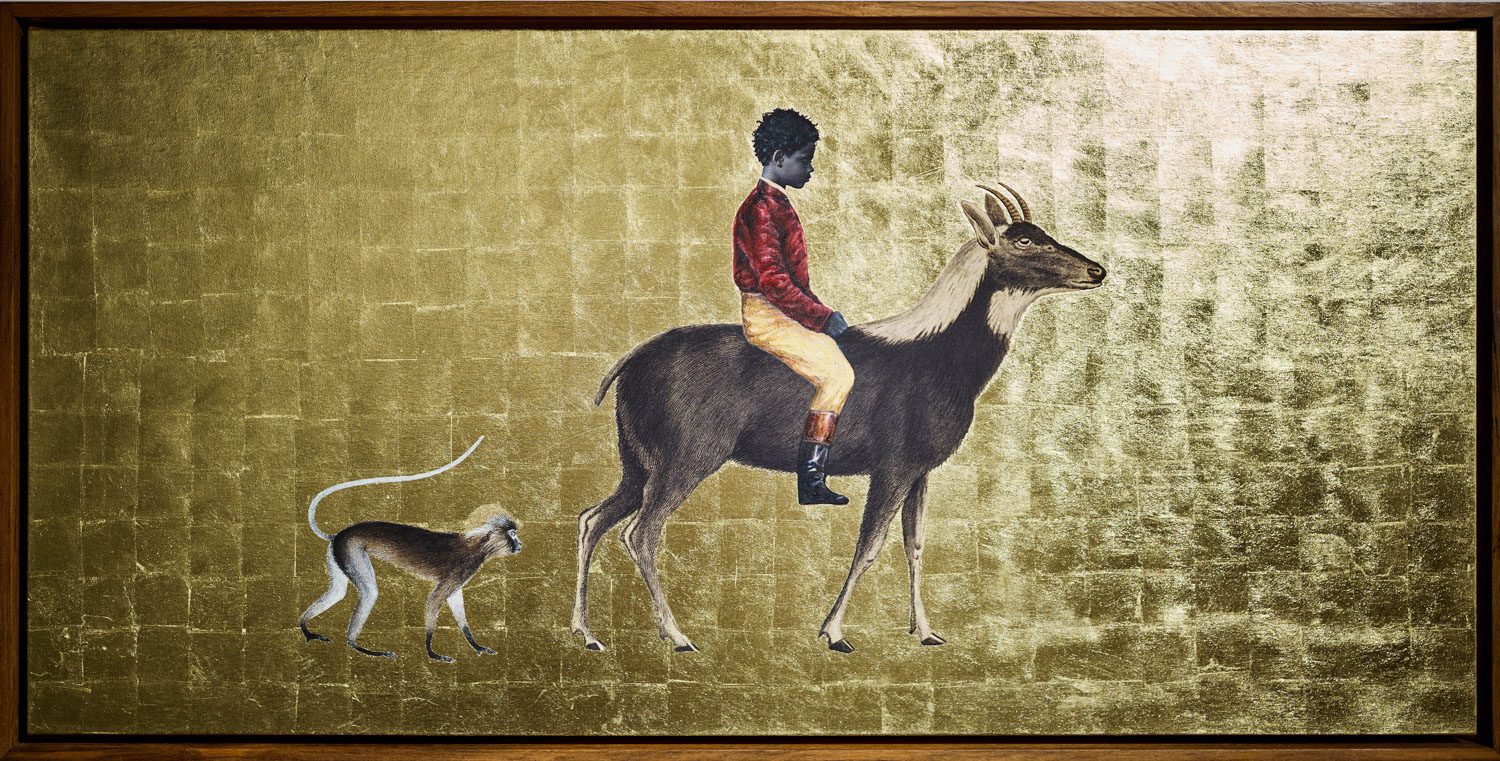
Kanang as the Little Prince
Such oppression, enacted through outward appearance, exposes the workings of a human gaze that assumes its own superiority, defining and branding ‘others’ as lesser in order to elevate itself at their expense. Beneath such scrutiny, suffering accumulates. It is no different from what befell Kanang, the Mani boy inscribed in the history of Siam. Kanang was not regarded as a human being of equal ‘flesh, blood, and dignity,’ but as ‘an endearing curiosity’ from the forests of Phatthalung. Once brought to Bangkok, he was dressed and positioned within the Siamese court in ways that projected an image of the elite’s benevolence and civility. In this sense, figures from two different historical moments become threaded together through the shared wound of being ‘human beings subjected to the gaze,’ their worth measured by outward appearance from one era to the next.
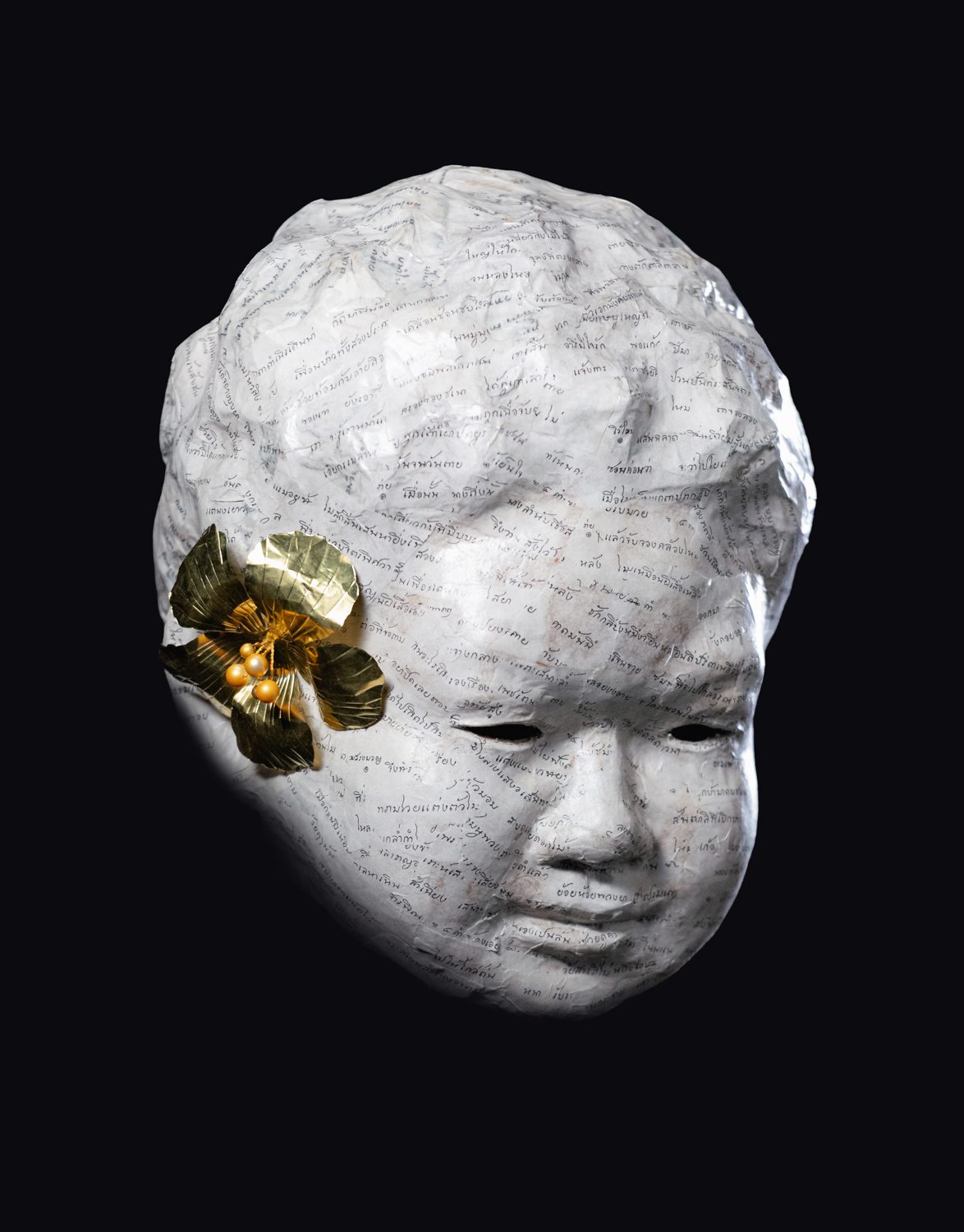
Kanang’s Paper Mask
Although Nakrob Moonmanus’s exhibition Metamorphosis in Gold centers on Kanang and interweaves his story onto two works of Thai literature, the first Sang Thong, and the second Ngo Pa, a verse play by King Rama V that draws on the lives and folklore of the Mani people of southern Thailand, the thread binding these elements together lies elsewhere. At its core, the exhibition lays bare the workings of power, which employs the ‘golden form,’ or civilization, as a covering that refashions flesh-and-blood human beings into cultural objects. Here, Kanang is not presented simply as a fortunate court favorite. Instead, his figure is reflected alongside Jao Ngo, Phra Sang in his dark-skinned forest disguise, and Sompla, the Mani protagonist of Ngo Pa, each cast as an embodiment of the ‘Other,’ dressed and adorned to satisfy the elite gaze. Nakrob thus dissects and reassembles fragments of historical record and literary worlds, revealing how imaginary characters and real people alike have endured the wound of being dispossessed of their identities, only to be coated in a radiant exterior prescribed by society.
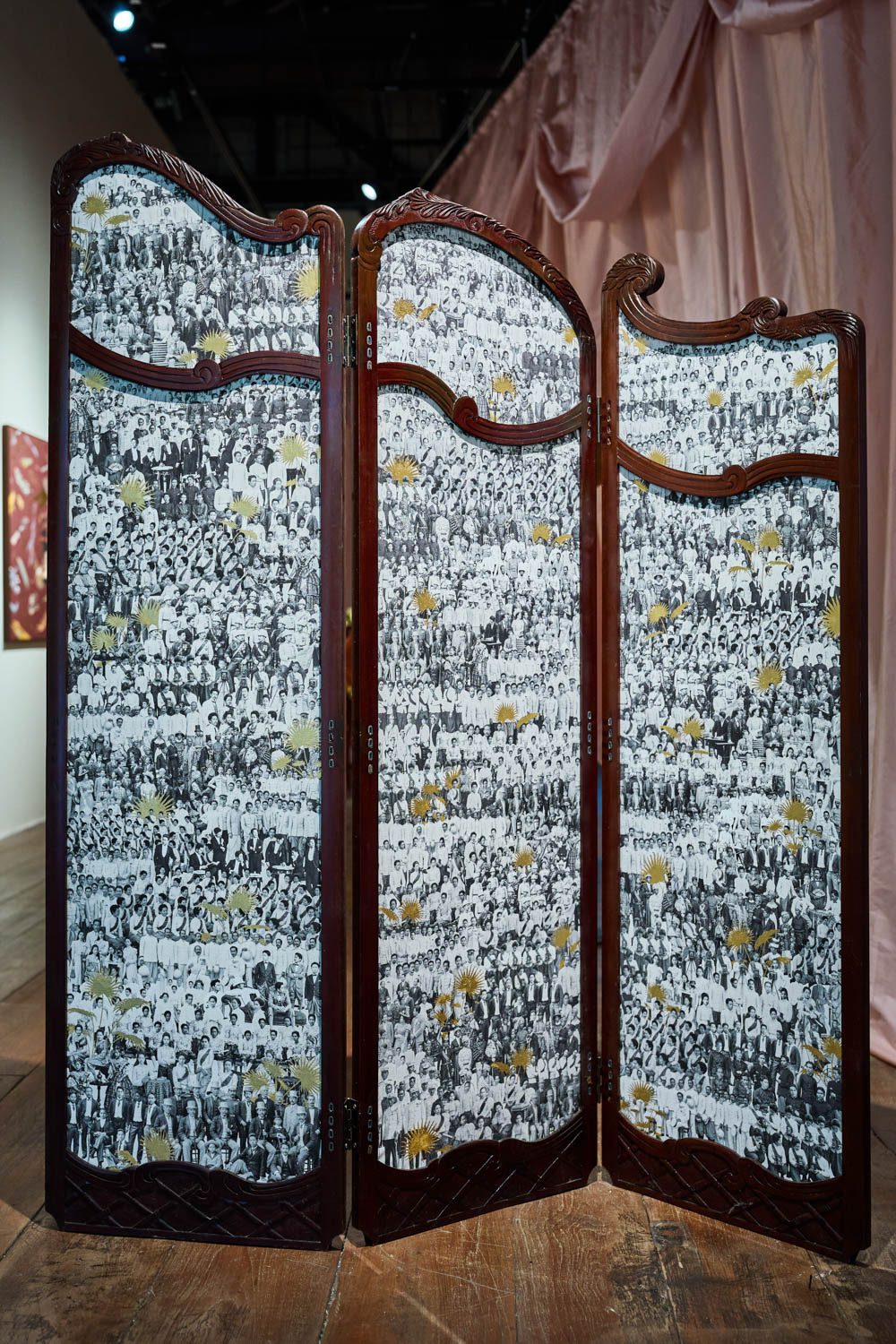
Scene from Sivilai Kingdom
In Metamorphosis in Gold, Warin Lab is transformed into a space resembling a museum display for cultural artifacts, with Kanang as its guiding presence. Upon entering, we encounter Scene of Sivilai Kingdom, a folding screen shimmering with figures and gold. Its front is populated by figures of rank and privilege, while the reverse reveals ordinary subjects from every corner of the kingdom, concealed ‘behind’ them. Much of the ground floor is divided by a soft pink curtain, separating the installation area from the exhibition’s central work: a film directed by Nakrob and projected across a broad wall. Cinema itself was among the inventions that emerged in the nineteenth century and became widely popular in Siam during the reign of King Rama V.
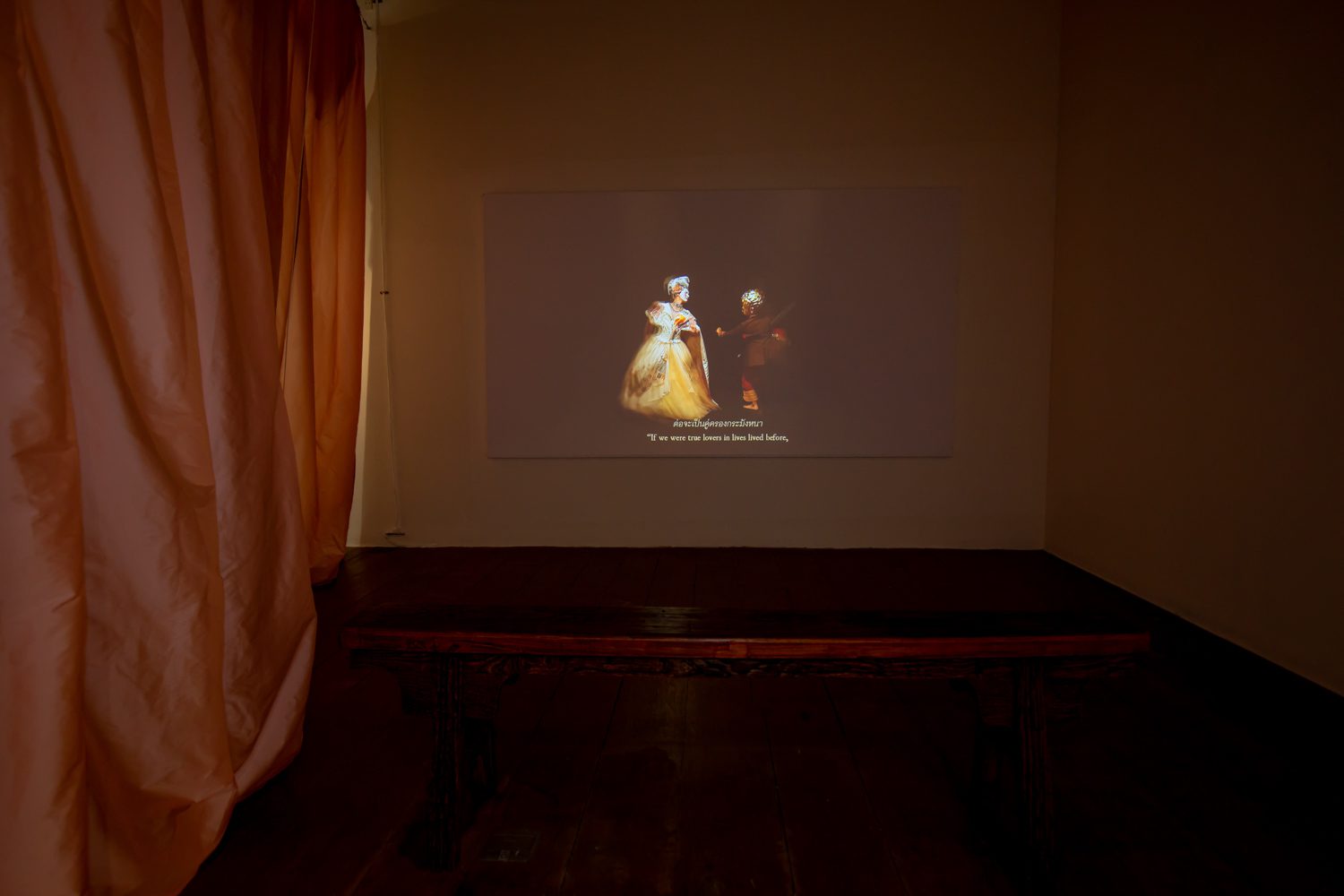
This ‘film’ does not depict the state of the country during the reign of King Rama V. Instead, it takes the form of lakorn nok, a folk-style Thai dance-drama traditionally performed outside the royal court, and reworks the Sang Thong episode Rojana Siang Phuang Malai (‘Princess Rojana Chooses a Husband’), using lines from the lakorn nok script composed by King Rama II. The passage centers on the bond between Princess Rojana and Phra Sang: if they had accumulated merit together in a former life, may she be granted the sight of his ‘golden form hidden within the Ngo body.’ The scene unfolds to the accompaniment of a folk instrument, its strings gently plucked in a steady rhythm.
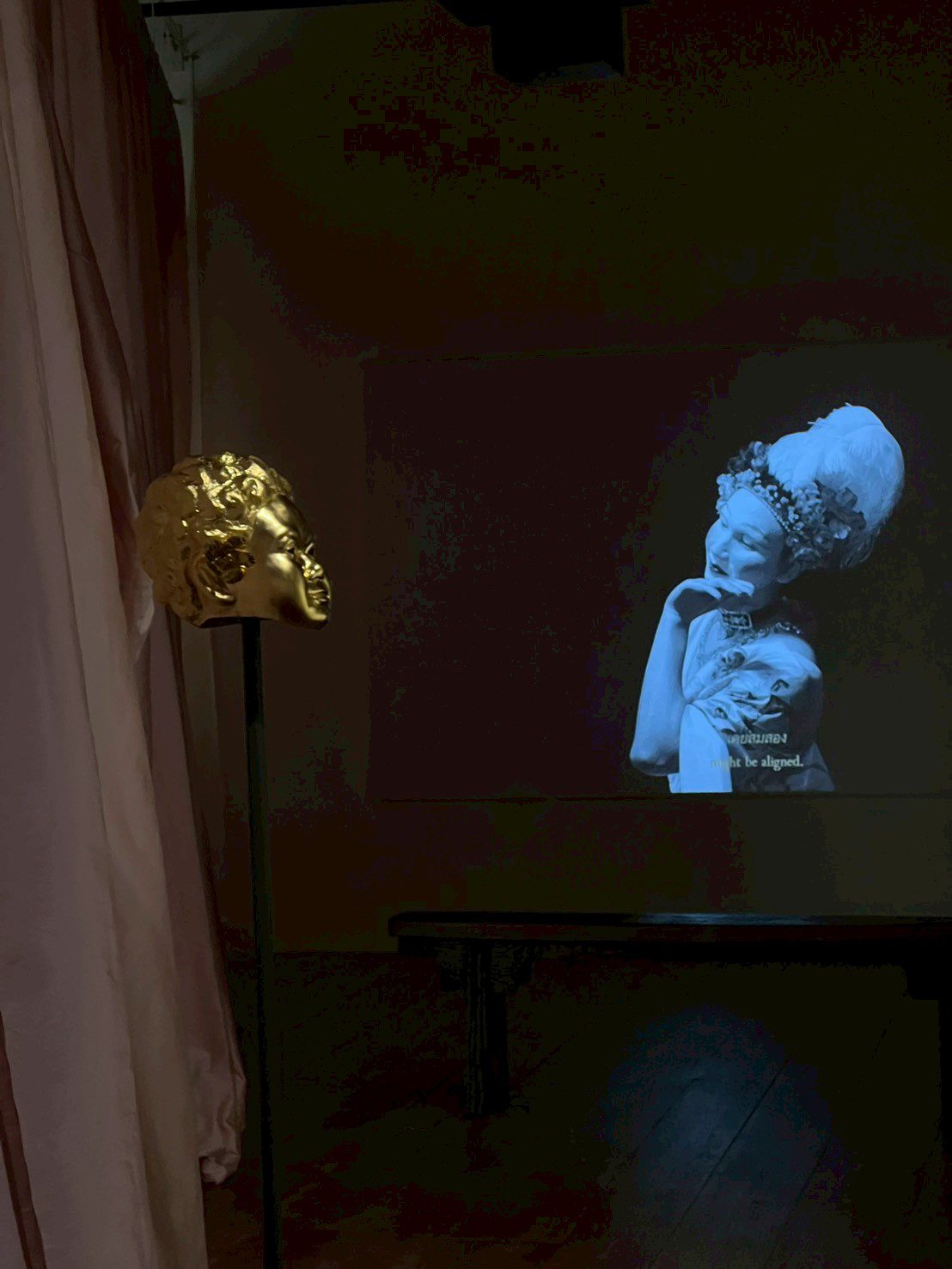
Photo: Sarunkorn Arthan
As the voices of the play begin to swell in a clamor, Rojana appears in elaborate dress, her face powdered white. Westernized and seemingly ‘civilized,’ she carries something of the air of an aristocratic Frenchwoman. She dances into view alongside Ngo1, who wears fisherman trousers and palm fronds bound close to his body, the same plant material used by the Mani to construct their thap, or forest shelters. In his hand is a long bamboo pole. This Ngo reaches for the princess’s garland and moves with an unstudied, instinctively human naturalness. The film then cuts to another incarnation, a ‘golden-bodied Ngo,’ resplendent as a prince. Dressed in Western fashion, he wears a five-button jacket together with sanap phlao, the calf-length trousers used in Thai classical performance, and carries a club lavishly ornamented with mirrored glass and gemstones. He does not simply dance. He performs ram, moving through the codified vocabulary of Thai classical dance: theatrical, stylized, and ‘ordered.’ He, too, reaches for Rojana’s garland. In the end, she places it upon the Ngo in his forest guise, who is transformed into the stately golden-bodied figure, and the two are united.
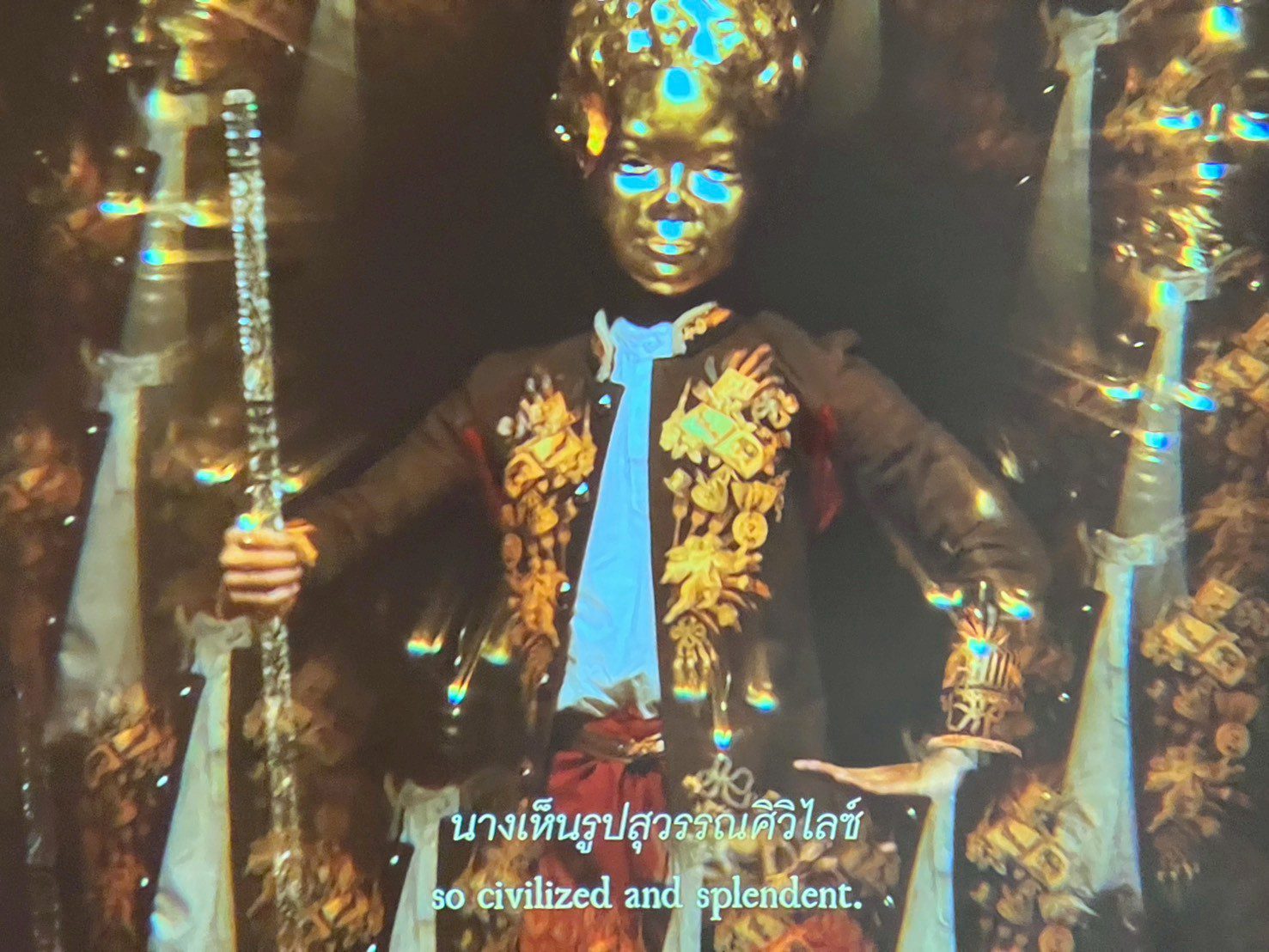
Photo: Sarunkorn Arthan
Nakrob’s central film can be understood as an allusion to ‘Kanang,’ who could never shed the face of Ngo, because the blood in his veins and the features he bore visibly marked him as Mani. In life, he was photographed and his image put ‘on sale’ at the winter fair at Wat Benchamabophit. Whether costumed as ‘Phra Sang in Ngo form’ and made to dance with disciplined decorum, or presented as a Mani figure in a traditional loincloth, his identity remained imprisoned within the downward gaze of the Siamese elite. Seen in this historical context, the prayer in the play for the golden form to be revealed takes on a deeply tragic irony. For the self-proclaimed ‘civilized’ society of the Siamese elite, Kanang’s true ‘golden form’ did not arise from the merit and virtue within him. It was instead fabricated through the mask and modern dress staged by an apparatus of power, then ‘plated’ in gold over his body. This radiant surface served to obscure and control the ‘savagery’ they did not understand, and perhaps feared, beneath the supposedly endearing figure of the ‘forest boy.’
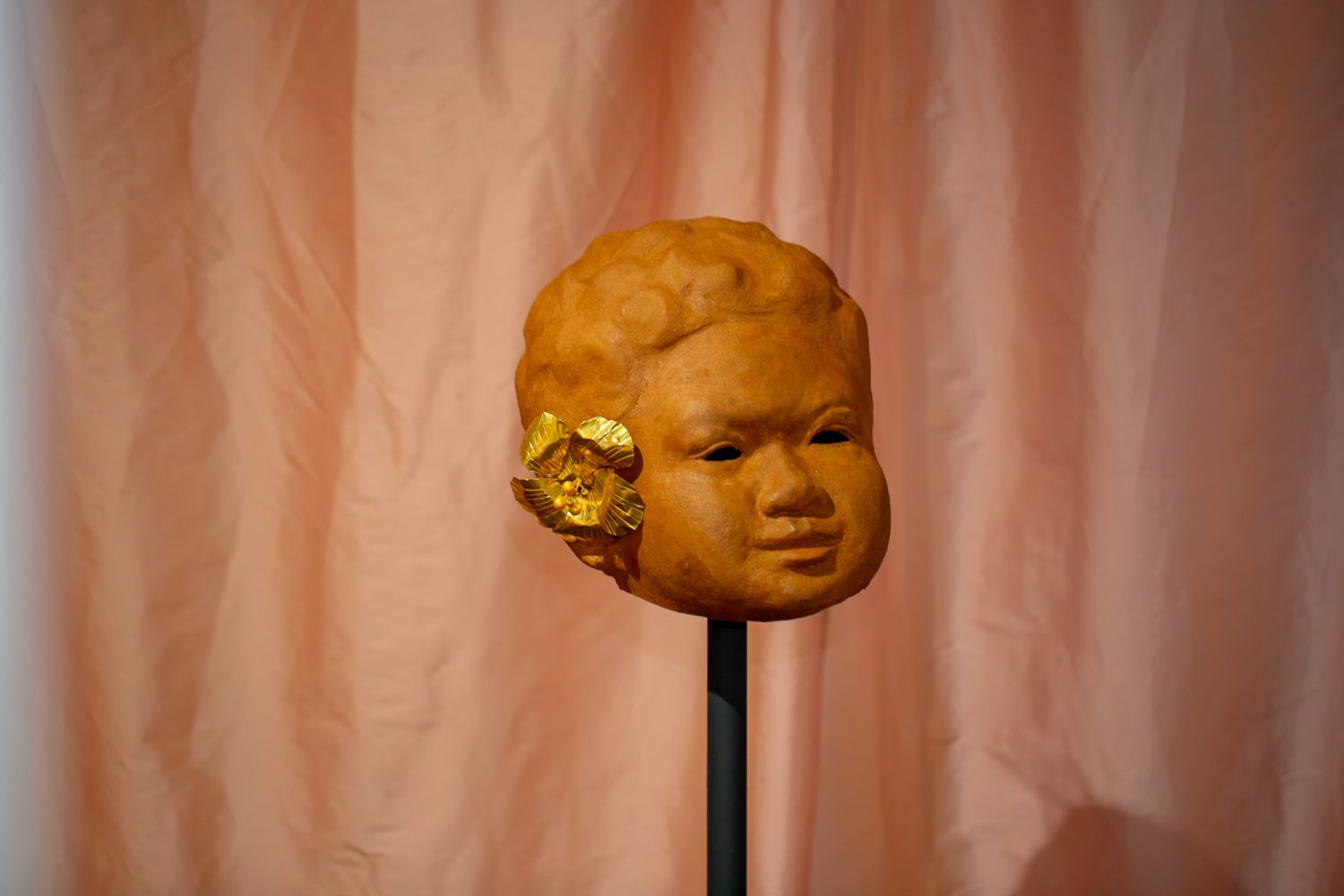
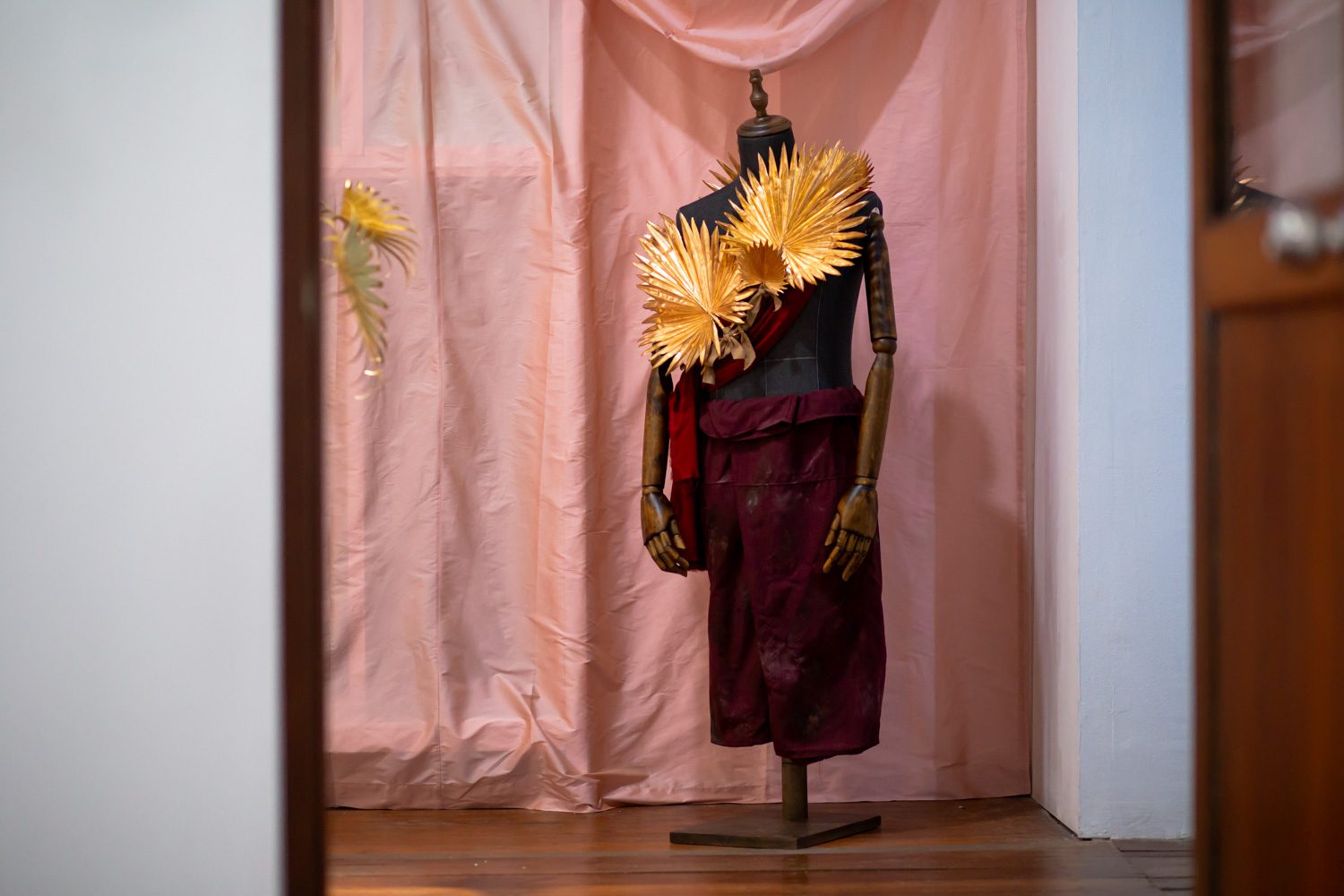
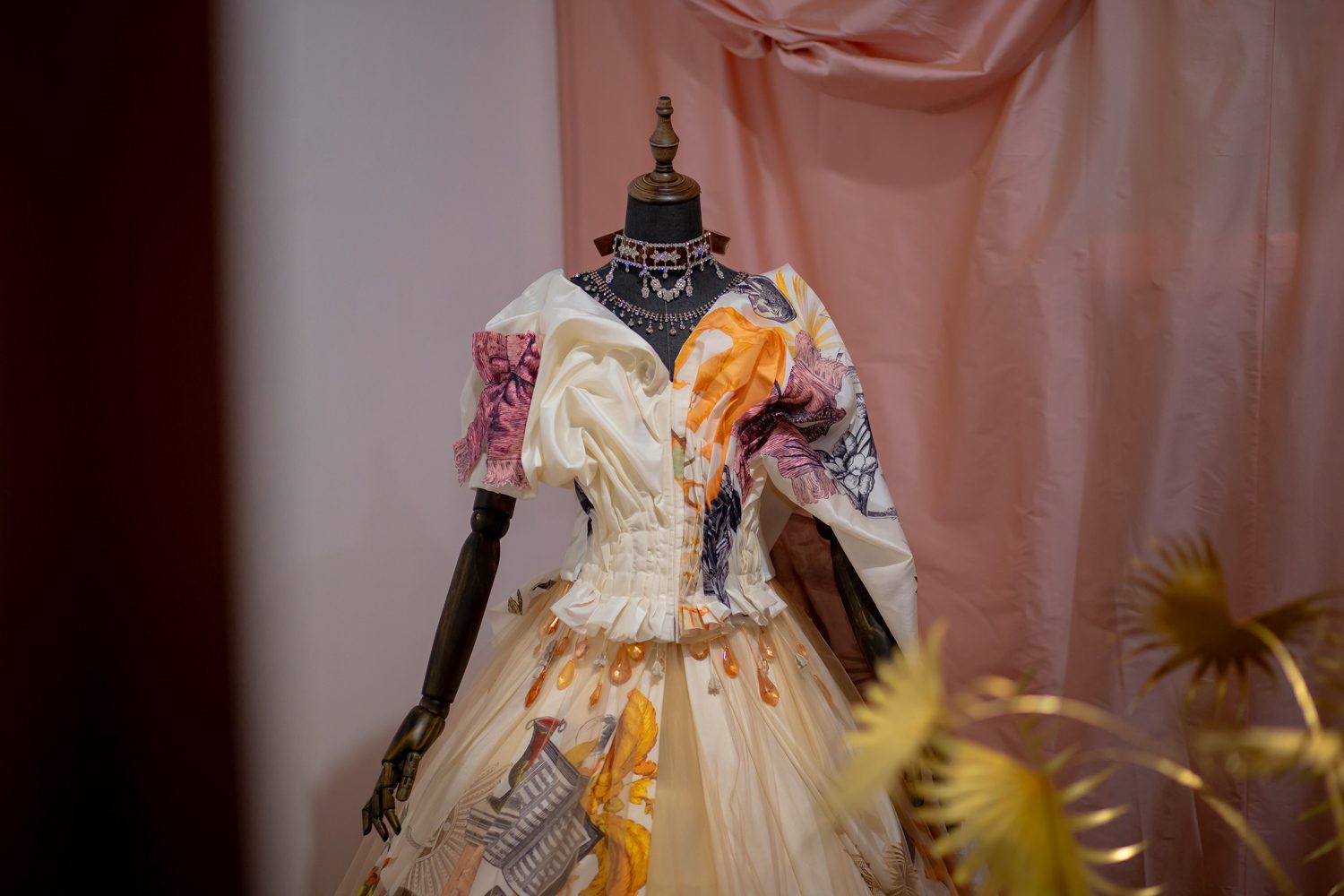
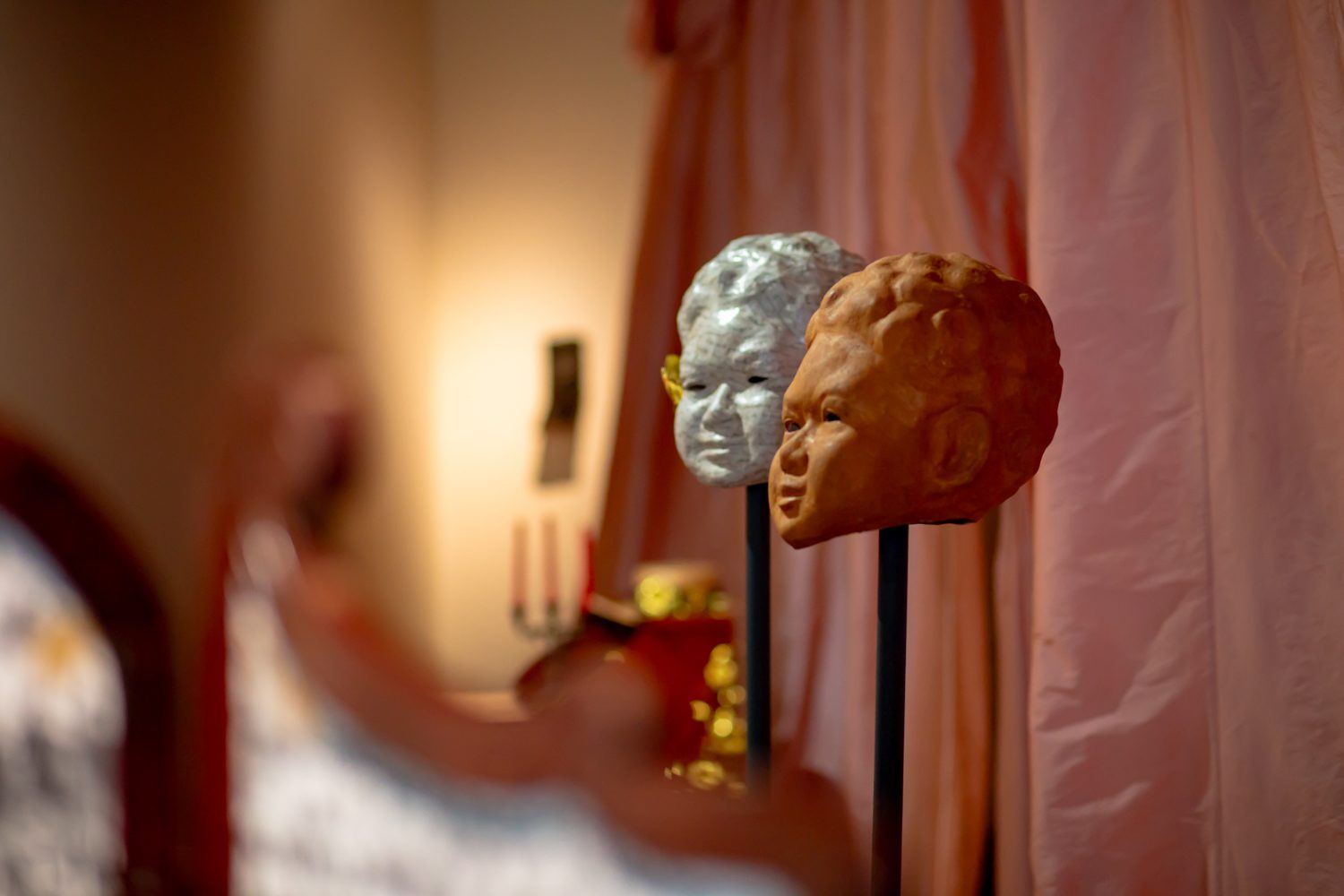
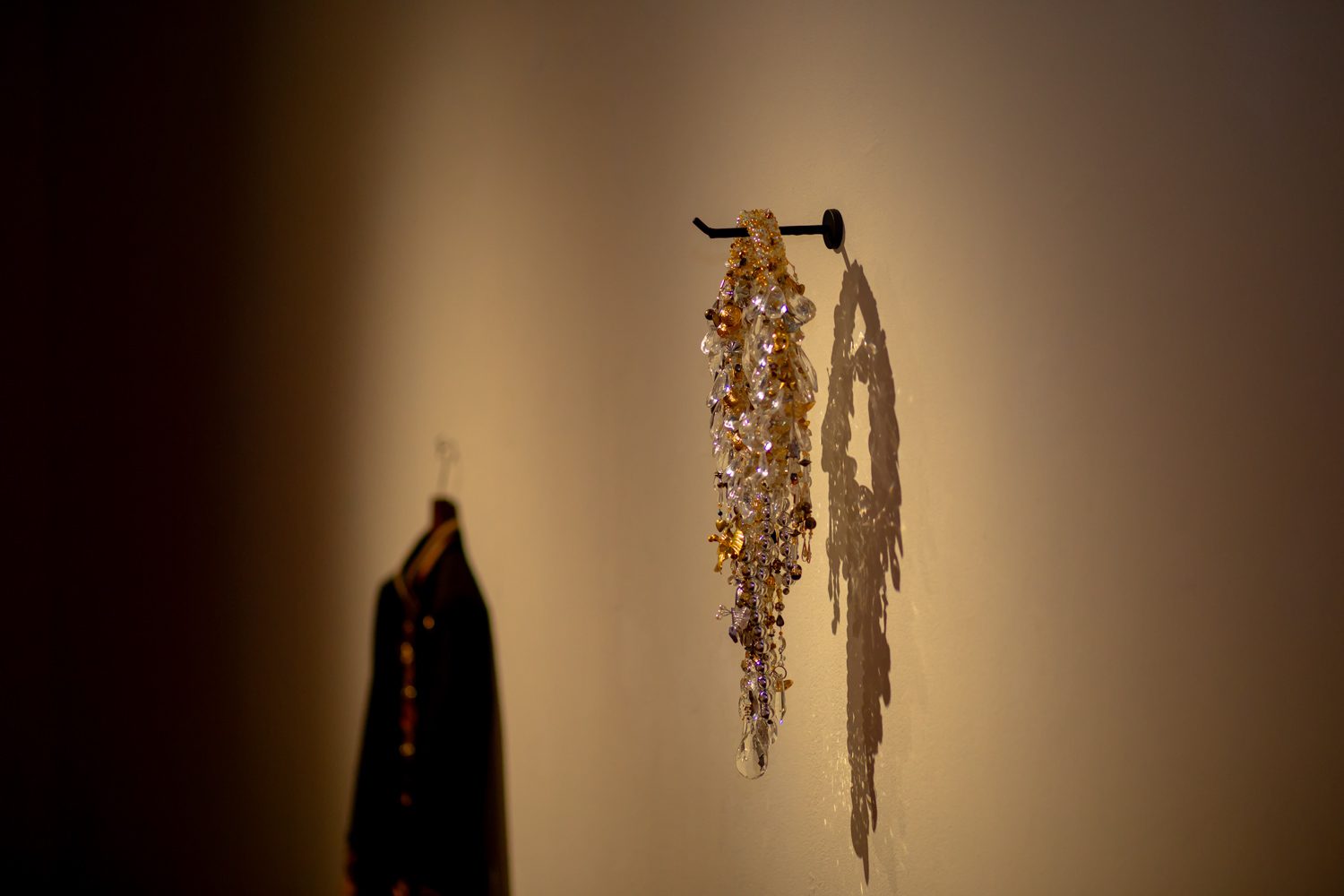
Metamorphosis in Gold also presents a range of objects associated with the performance. These include several variations of the Ngo mask, rendered in earth tones, gold, and white with lettering across its surface; the costumes worn by Phra Sang in both his forest Ngo and golden forms; Rojana’s costume; and a garland titled Garland of Sivilai. Encrusted with glittering gemstones and an assortment of small objects touched with gold, these works are dispersed throughout both floors of Warin Lab.
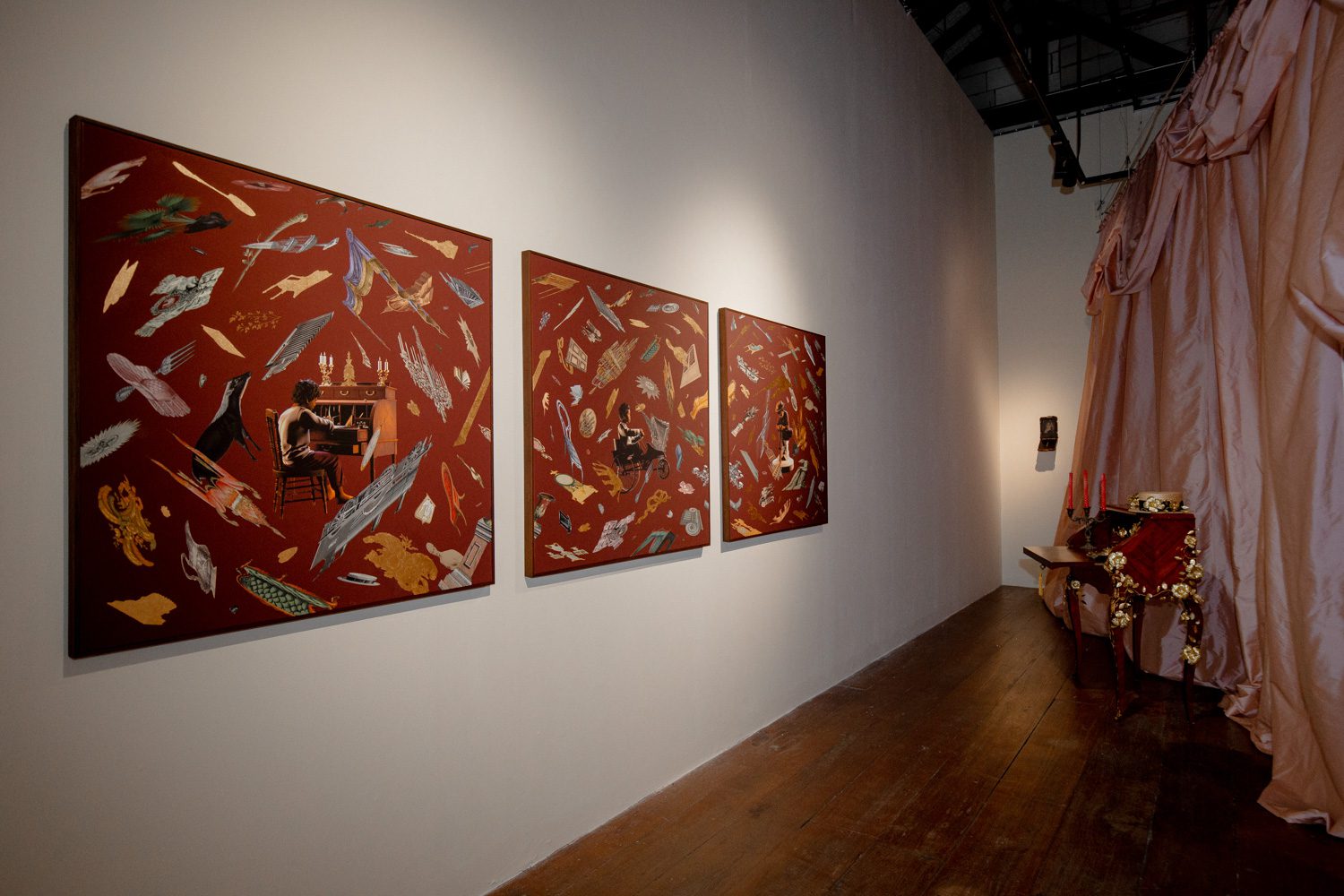
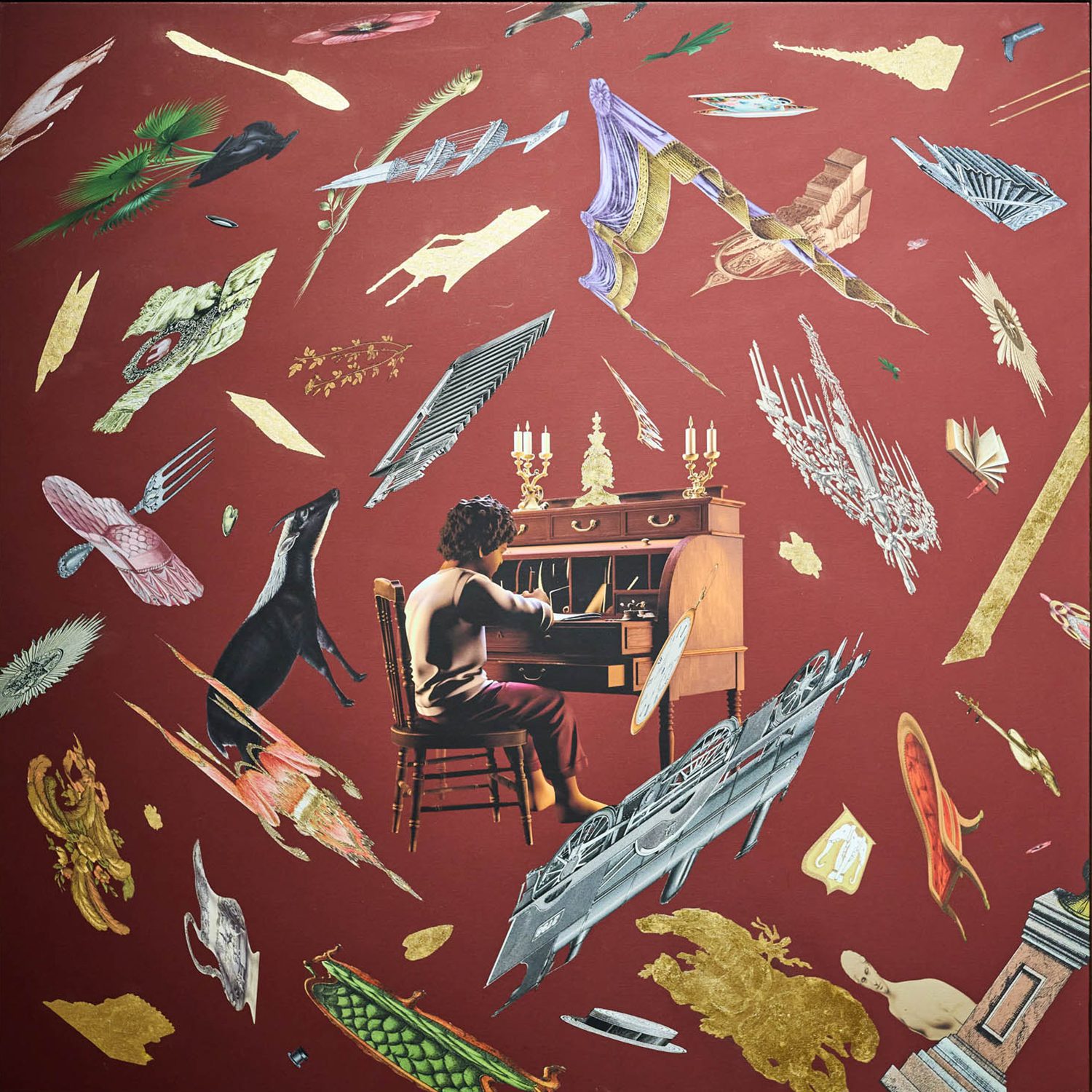 Kanang at Ambara Villa
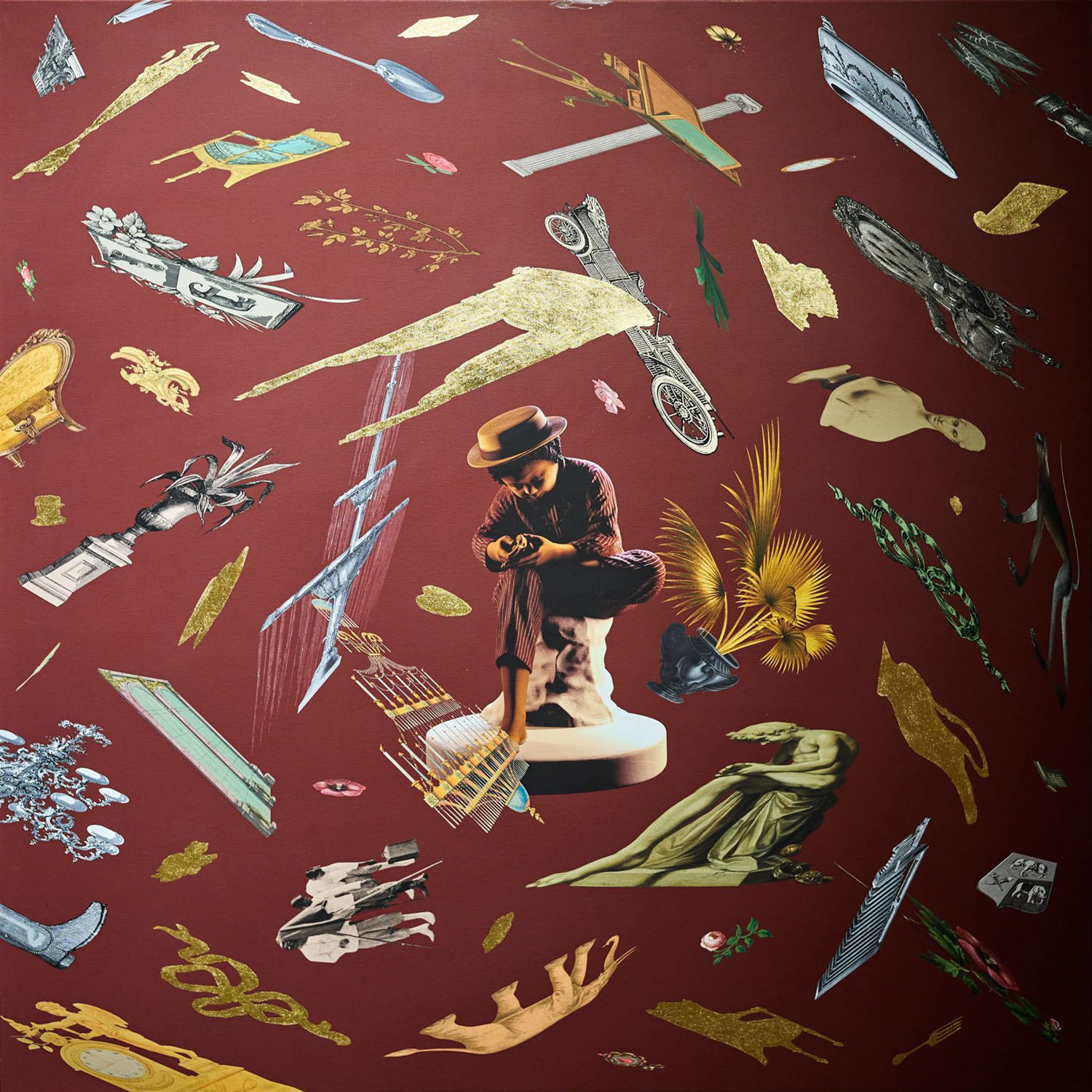
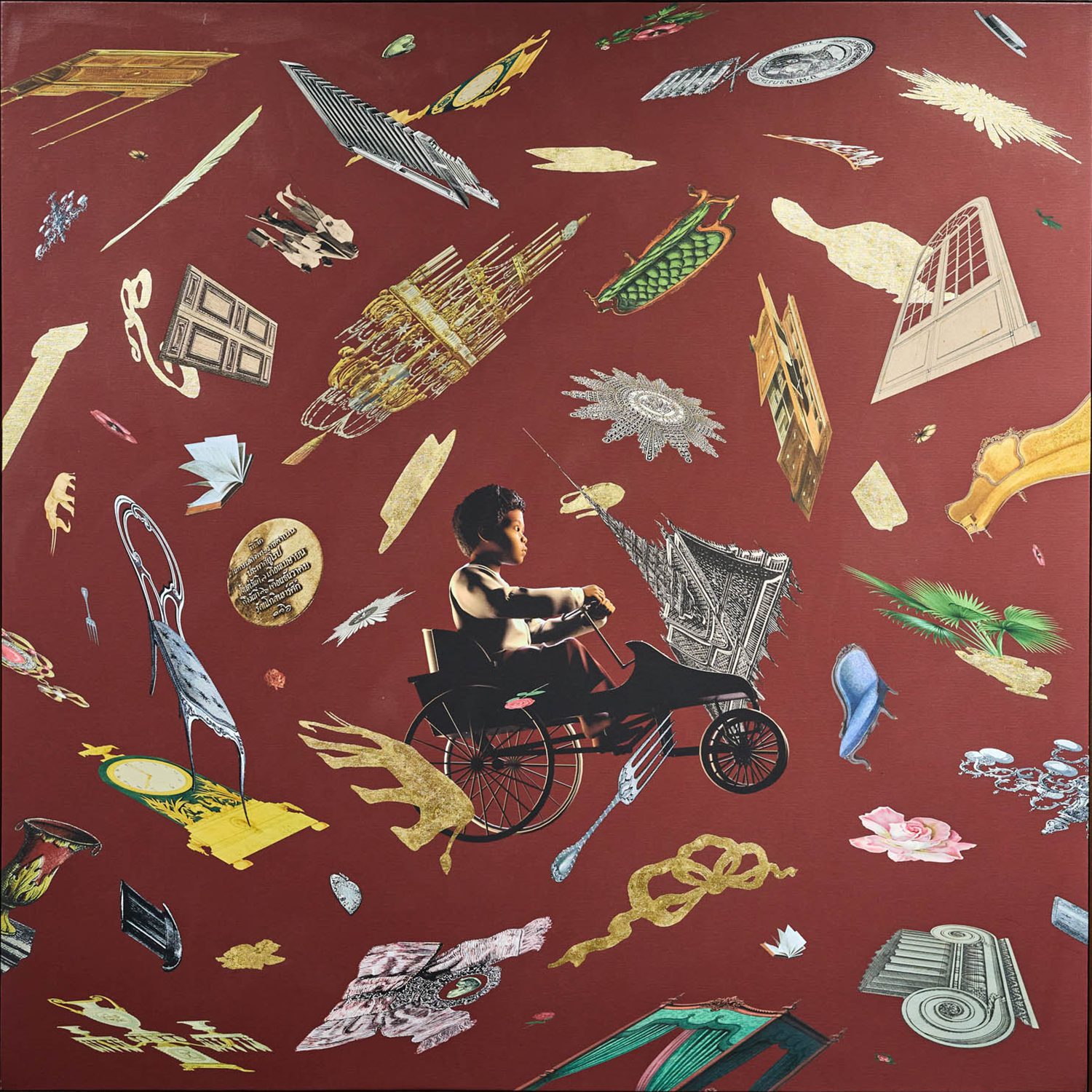
To examine Kanang’s life within the royal court, Nakrob studied historical photographs held in the National Archives and reworked them through his distinctive collage practice. Three such works, Kanang at Ambara Villa, Kanang at Chakri Maha Prasat Throne Hall, and Kanang in the Garden of Dusit Palace, depict him in different postures and settings, revealing how he was dressed and expected to conduct himself amid the trappings of ‘civilization.’ There is also a writing desk covered with scratched inscriptions and drawings, among them a drawing of King Chulalongkorn’s equestrian statue and messages addressed to ‘Ai Ta Kha Yip,’ or ‘the Winking-Eyed One,’ a nickname used for the then Crown Prince Vajiravudh, later King Rama VI. The desk appears in the work Kanang’s Sivilai Writing Desk. Elsewhere, glass-plate photographs, a celebrated innovation within the royal court at the time, depict Ngo, or perhaps Kanang himself, sometimes alone and sometimes beside Rojana. Together, these reconstructed objects and fragments of history form a vast reflective surface, reflecting with striking clarity the systems through which the ‘outsider,’ or the condition of ‘Otherness,’ was perceived, defined, and assigned its place during Siam’s pursuit of civilization.
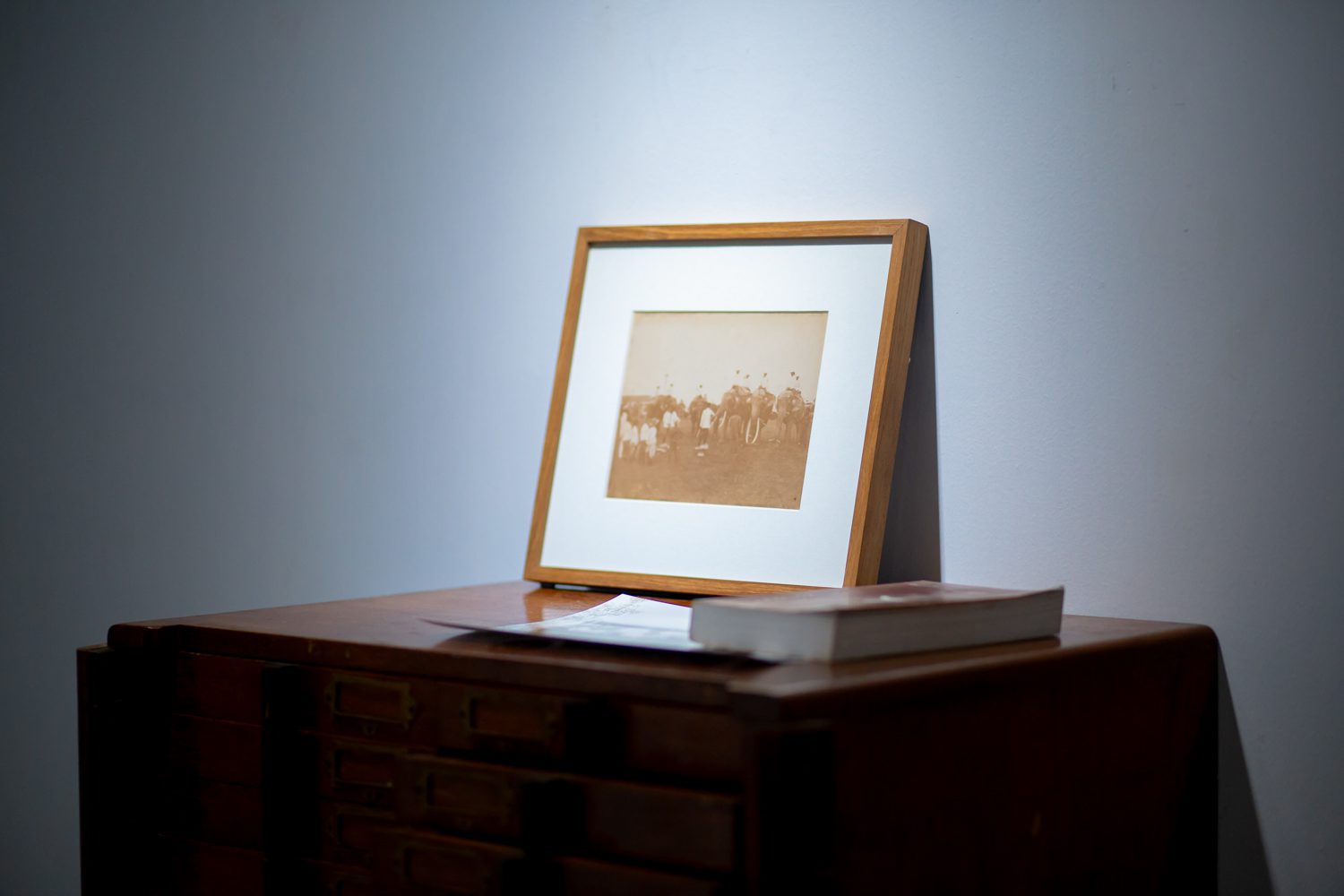
The exhibition’s depth also resides in its archival dimension, the culmination of years of research by Nakrob. It brings together primary-source documents from the National Archives; accounts of a particular historical period by Mom Chao Poon Pismai Diskul and Chao Chom M.R. Sadap, a royal consort of King Rama V; and a range of published texts, including King Rama II’s lakorn nok script, King Rama V’s play Ngo Pa, and contemporary books by Thongchai Winichakul. Together, these materials reveal that, even as the Siamese elite sought to fashion themselves as ‘civilized’ according to Western models, another process was unfolding in parallel: the internal exploration and colonization of the kingdom, through which those who were ‘inside’ the nation yet ‘outside’ Bangkok were made to understand exactly who ruled over them. Kanang’s identity, as it emerges from both the historical record and the exhibition, is therefore charged with profound dissonance, contradiction, and ambiguity.
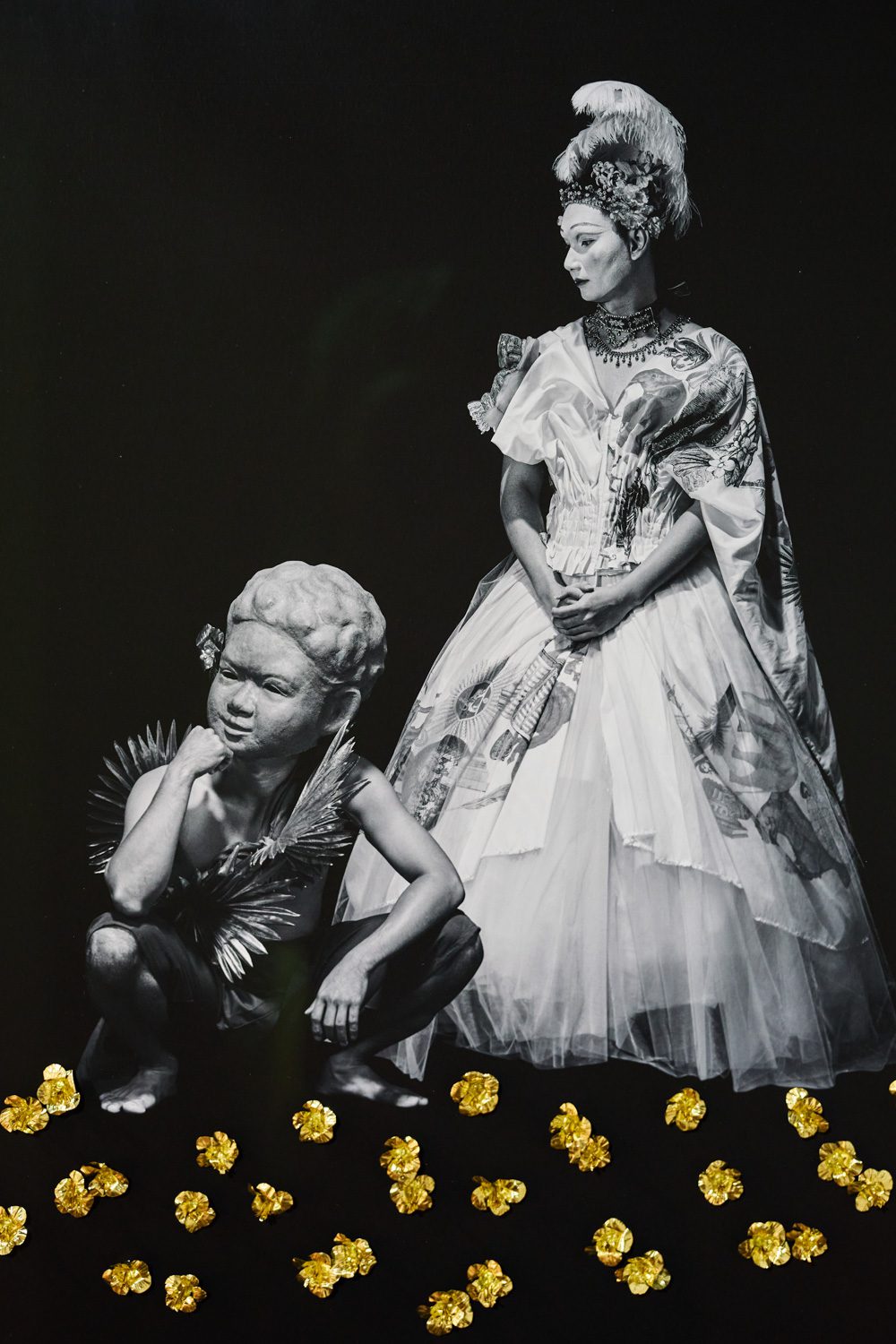
Portrait of Rochana and Chao Ngo
Yet no matter how much time passes, or how thoroughly the gaze of the center attempts to cloak Kanang’s identity in the appearance of a ‘civilized’ cultural object, one truth remains beyond history’s power to erase: he was human, of the same flesh and blood as the Mani people. The wound inflicted when his identity was seized and redefined at the will of those who held power has become an intergenerational legacy of pain, passed almost seamlessly down into the lives of Mani communities today. This continuity is made strikingly clear in a recent report by the Thai newspaper Matichon, which noted that Mani representatives in Songkhla, a province in southern Thailand, had submitted a petition to a member of the Thai parliament calling for an end to the use of the terms Ngo Pa and Sakai. Both are regarded as derogatory and demeaning, with Sakai, a Malay term historically associated with ‘slave,’ diminishing their human dignity and causing profound psychological harm to Mani communities in Thailand. This latest effort reveals what continues to linger in the gaze of some: an inability to understand human difference and diversity, together, perhaps, with an enduring tendency to regard ethnic groups unlike their own as ‘outsiders,’ as alien presences somehow beneath them. Such attitudes persist even in a world profoundly shaped by globalization.
‘Metamorphosis in Gold’ on view at Warin Lab Contemporary from May 23 – July 10, 2026
_
1 In this context, ‘Ngo’ refers only to Nang Rojana and Phra Sangkha in the form of a Ngo.