
EXPLORING OLD BUILDINGS, PERSONAL MEMORIES, AND THE STORIES OF SING BURI AND BANGKOK THROUGH THE EYES OF YONIAM
TEXT: PEERAWICH RUANGPENG
PHOTO COURTESY OF YONIAM
(For Thai, press here)
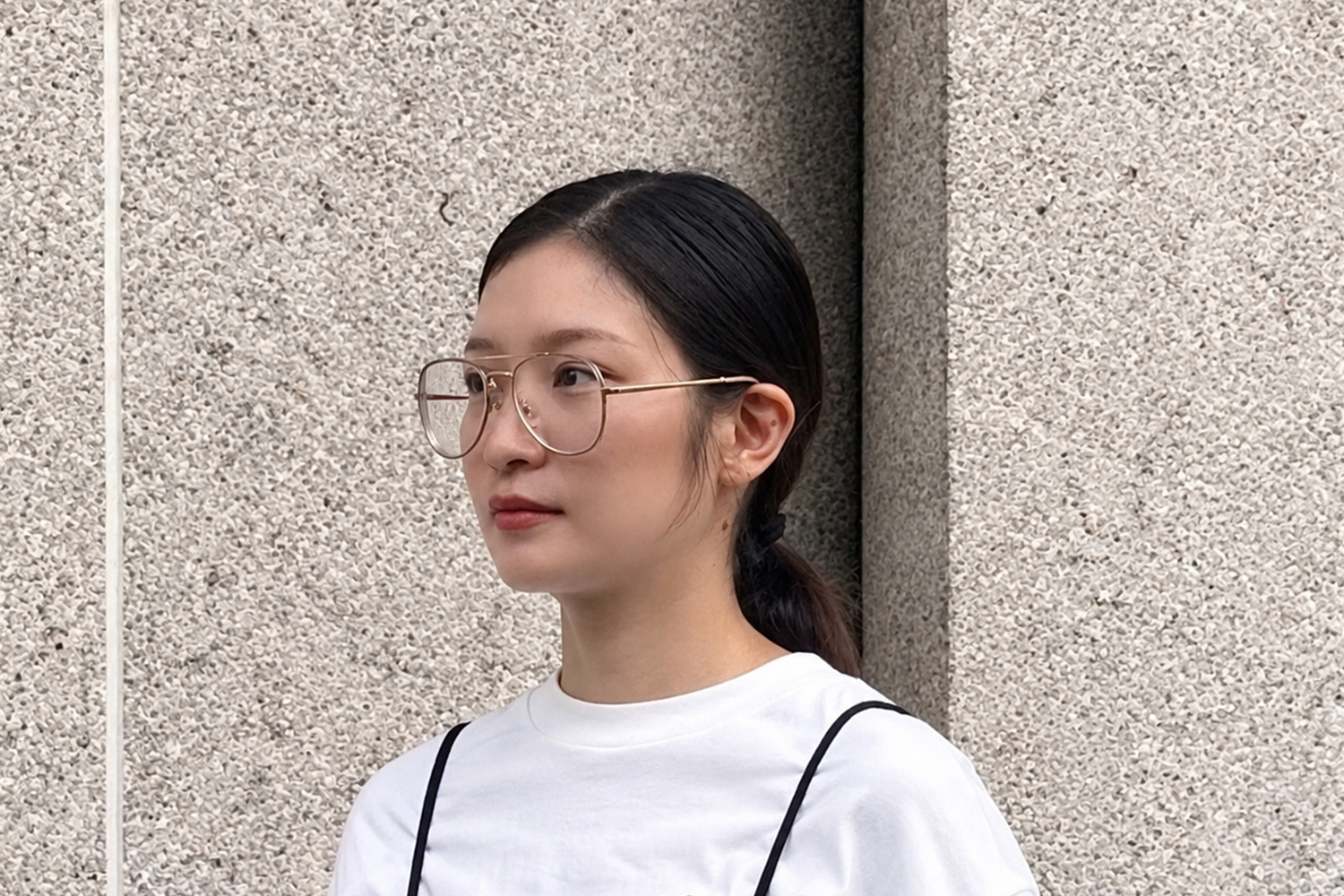
art4d speaks with Kanyarat Mainoy, better known as YONIAM, an artist who was born and raised in Singburi. Through compositions filled with distinctive colors and forms, she documents and reinterprets the memories held by the province’s old buildings, allowing them to remain in dialogue with the present. Her work is also a way of tracing the relationship between herself and her roots in the place where she grew up.
art4d: How did you come up with the name YONIAM?
YN: It comes from spelling my surname, ‘Mainoy,’ backward. The word itself doesn’t really mean anything. When I started university, I thought I would probably be drawing a lot, and Facebook pages were becoming popular at the time. I wanted a name that felt like me—one that I wouldn’t want to change later—so I settled on ‘YONIAM’ because it came from my own surname.
Once I started working full-time, YONIAM also became a kind of safe space where I could dive in and explore my ideas with complete freedom.
art4d: What was the turning point that led you from drawing portraits to drawing old buildings?
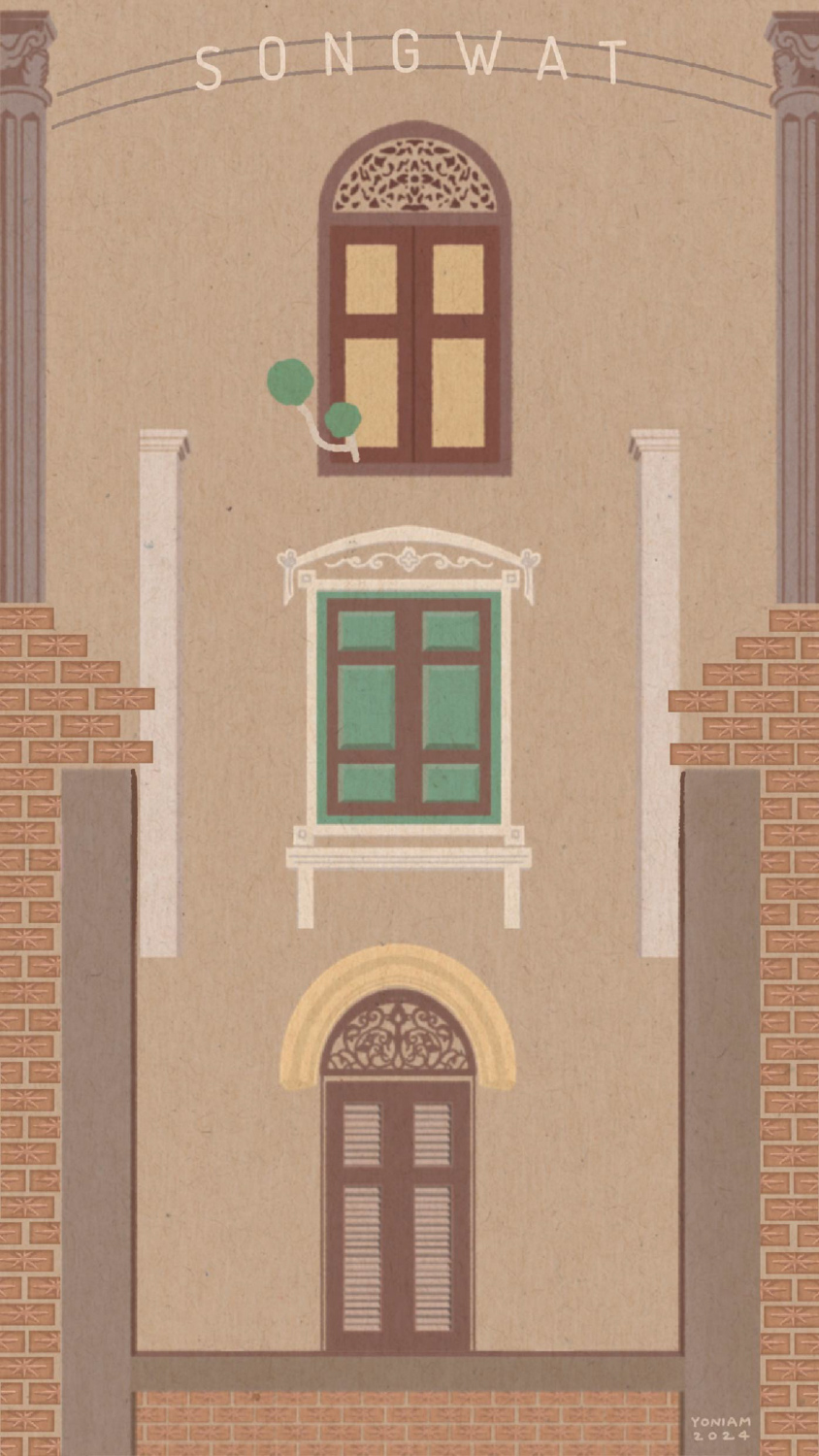
YN: I studied art education for five years, and I had always enjoyed drawing. Portraiture was one of the things I drew, although I wasn’t particularly good at it. What I was really comfortable with was drawing landscapes. Whenever I went somewhere, I would carry a sketchbook, pen, and pencil with me. I would look at the buildings around me and just keep drawing.
After graduation, I immediately started working full-time, so I didn’t have much time to pick up my sketchbook. I turned to something simpler, like quick portraits where I would identify the subject’s defining features and strip everything else away. Once drawing became fun again, I returned to landscapes. That was when I began drawing old buildings and neighborhoods.
art4d: How are the old neighborhoods of Bangkok similar to or different from those in your hometown of Singburi?
YN: To me, they aren’t all that different. I only came to Bangkok to study and work, so I’ve been here for a relatively short time. I got to know new places by repeatedly following the same routes until they became familiar.
I was born and raised in Singburi, so parts of it were familiar to me and existed in my memories. What I enjoy about both cities is walking through different neighborhoods and gradually noticing more details as my eyes become accustomed to them. When I sketch, I pay attention to the small things in each neighborhood. That habit has also made me more curious about the details I encounter, leading me to start asking questions about them wherever I go.
art4d: Do those similarities or differences affect how you think about and make your art?
YN: They don’t affect it that much, really. The main difference is that, in Bangkok, I’m looking in from an outsider’s perspective. With Singburi, the work draws more on my personal experiences and the familiarity I have with the place.
My Bangkok works present a broader view. They show the city from my perspective as someone who lives here, translating that experience into an image. They may be easier for people to relate to because viewers don’t need to know my personal history to understand them.
art4d: Some of your works involve conversations with local people. Why did you decide to speak with them, and what have those conversations brought to your practice?
YN: I feel that they are part of the place itself. My day job already involves working with people, and talking to them allows me to see the bonds connecting people, buildings, and time. Those conversations also make my images feel more vivid and clearly defined.
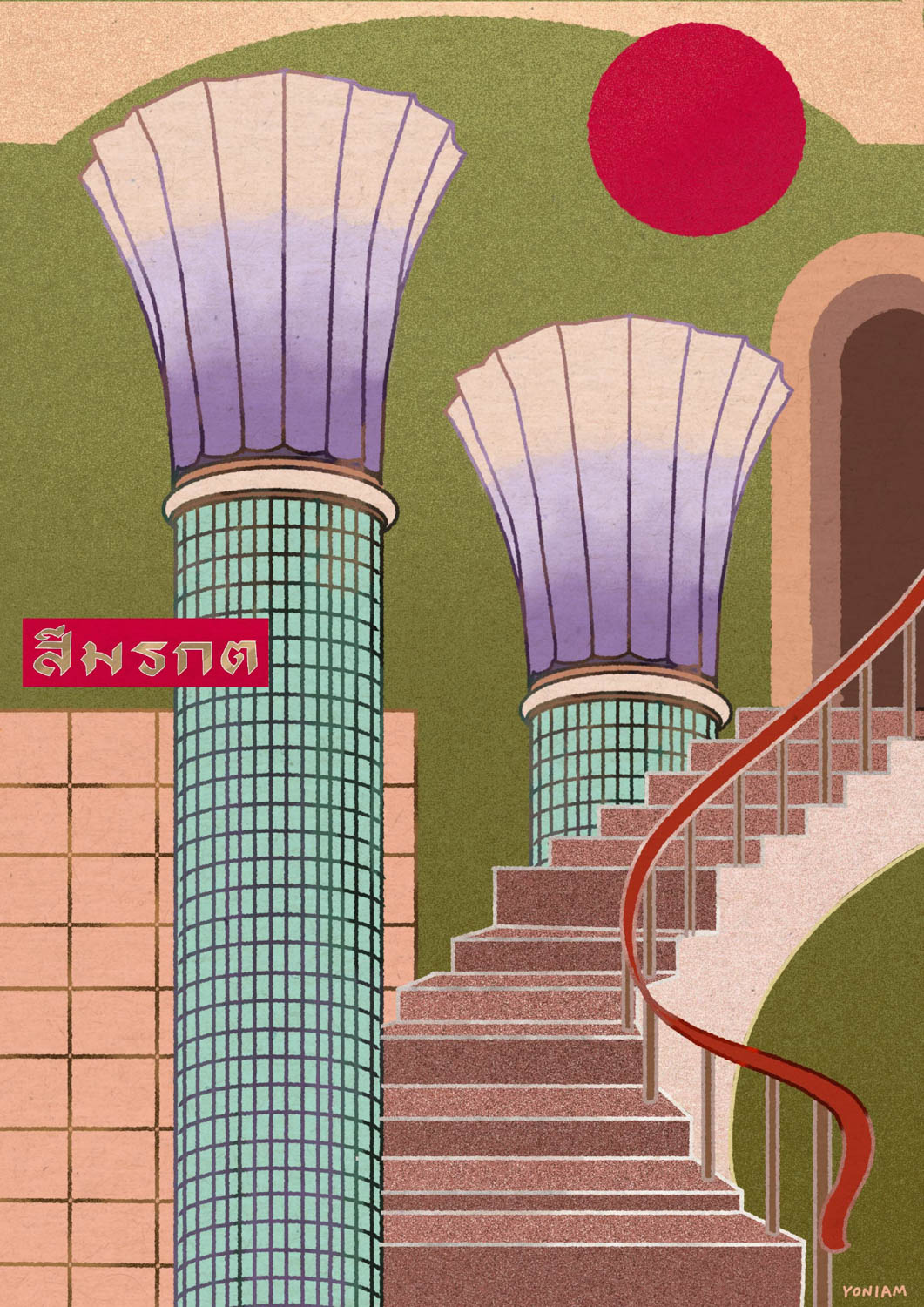
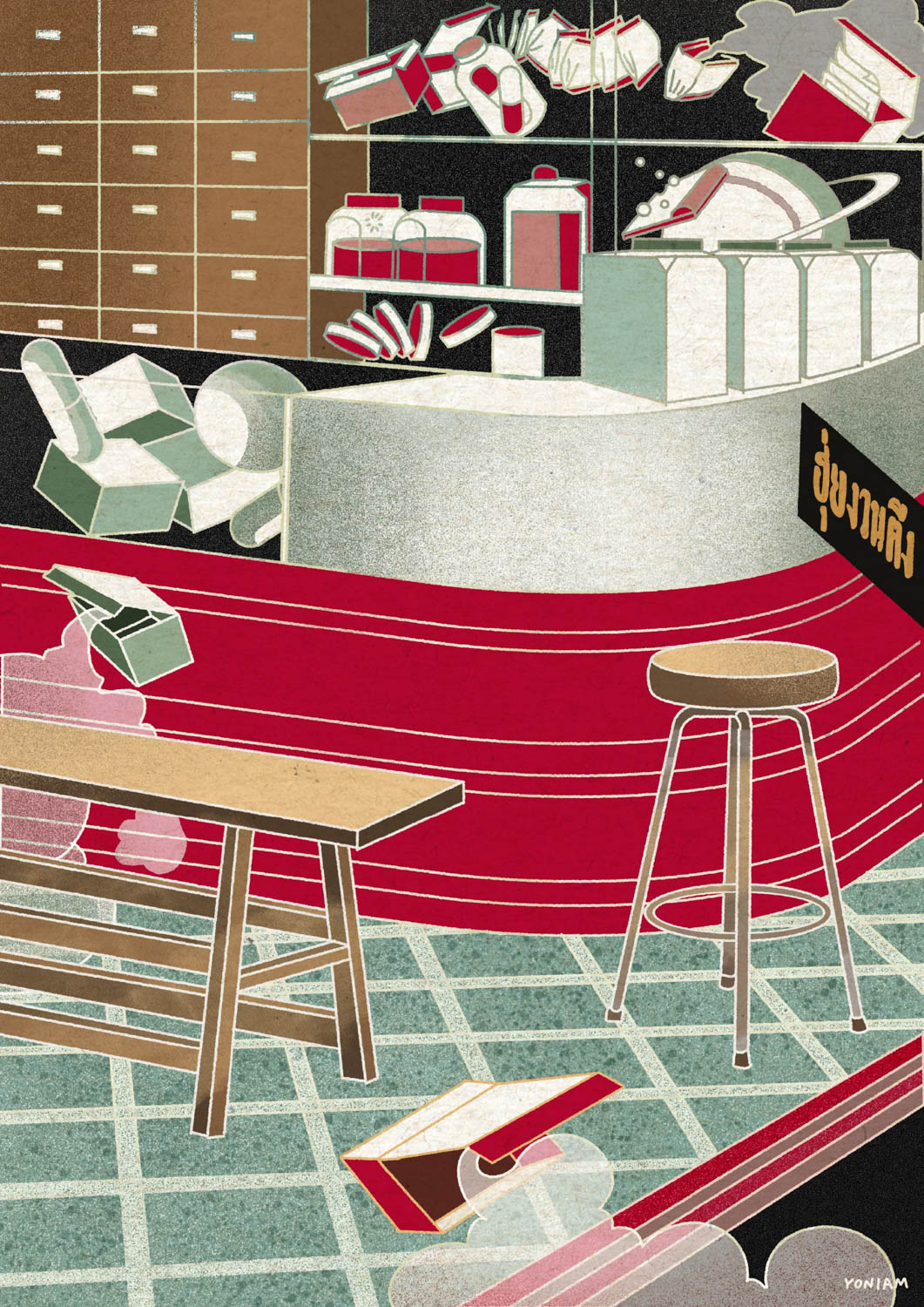
art4d: Many of your paintings seem to occupy a space somewhere between reality and fantasy, such as Kitti Osot Pharmacy Shop House and Si Morakot. Could you explain the ideas behind these works and how you composed the images?
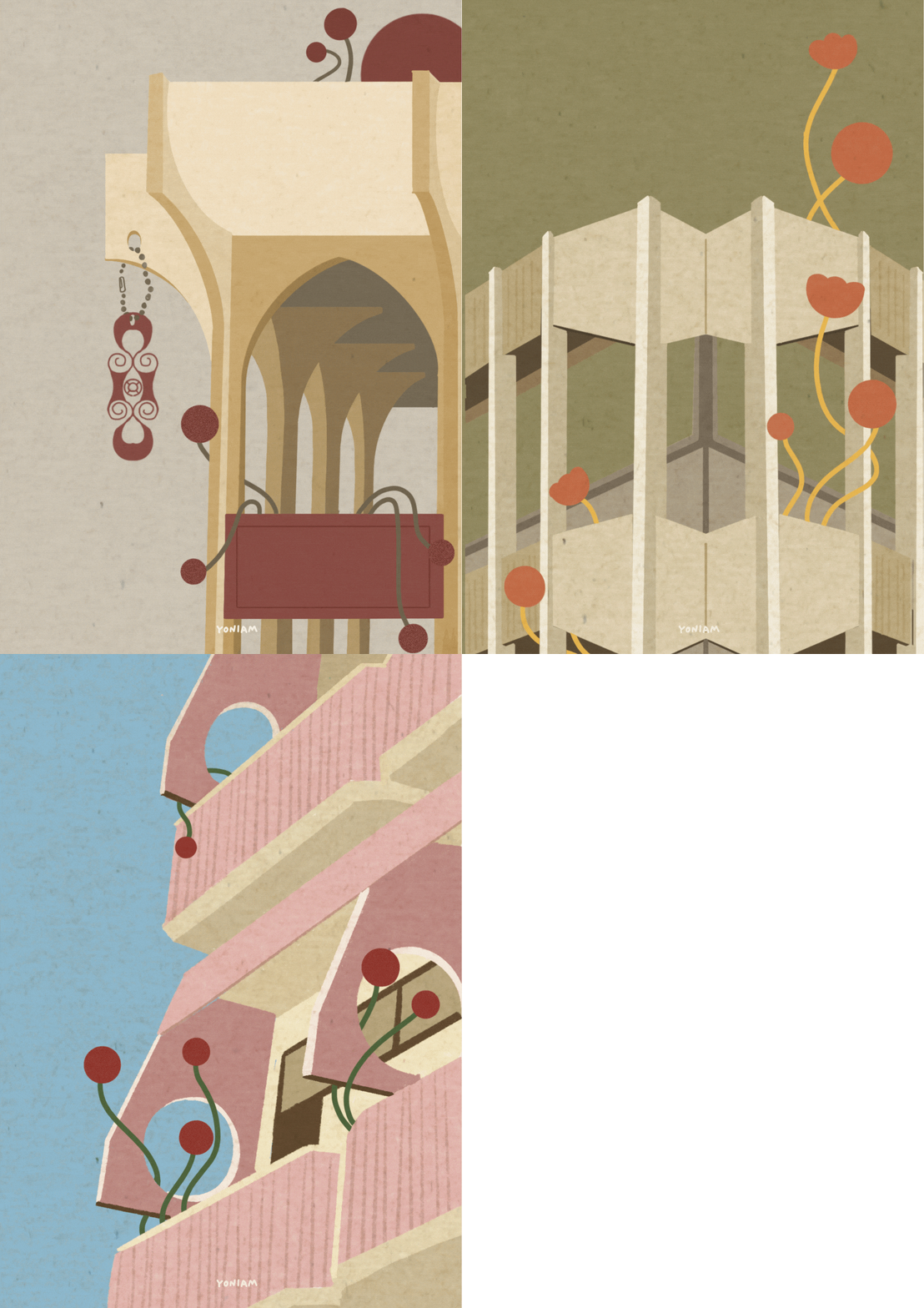
YN: I like imagining myself as a child again, when I used to walk past those buildings. I didn’t necessarily connect them with any particular memory at the time, but as I grew older, I began wondering whether a building might once have stood somewhere else.
As a child, I would look at birds and trees and let my imagination wander. I would wonder what it might be like if a particular building were somewhere else. So I brought those buildings back into my work and redrew them from my present-day perspective, paying attention to the small details I once overlooked.
Whether those details were there by chance or by design, I wanted to convey the small, distinctive qualities of each place through my own impressions. That is how the images in Kitti Osot Pharmacy Shop House and Si Morakot came together.
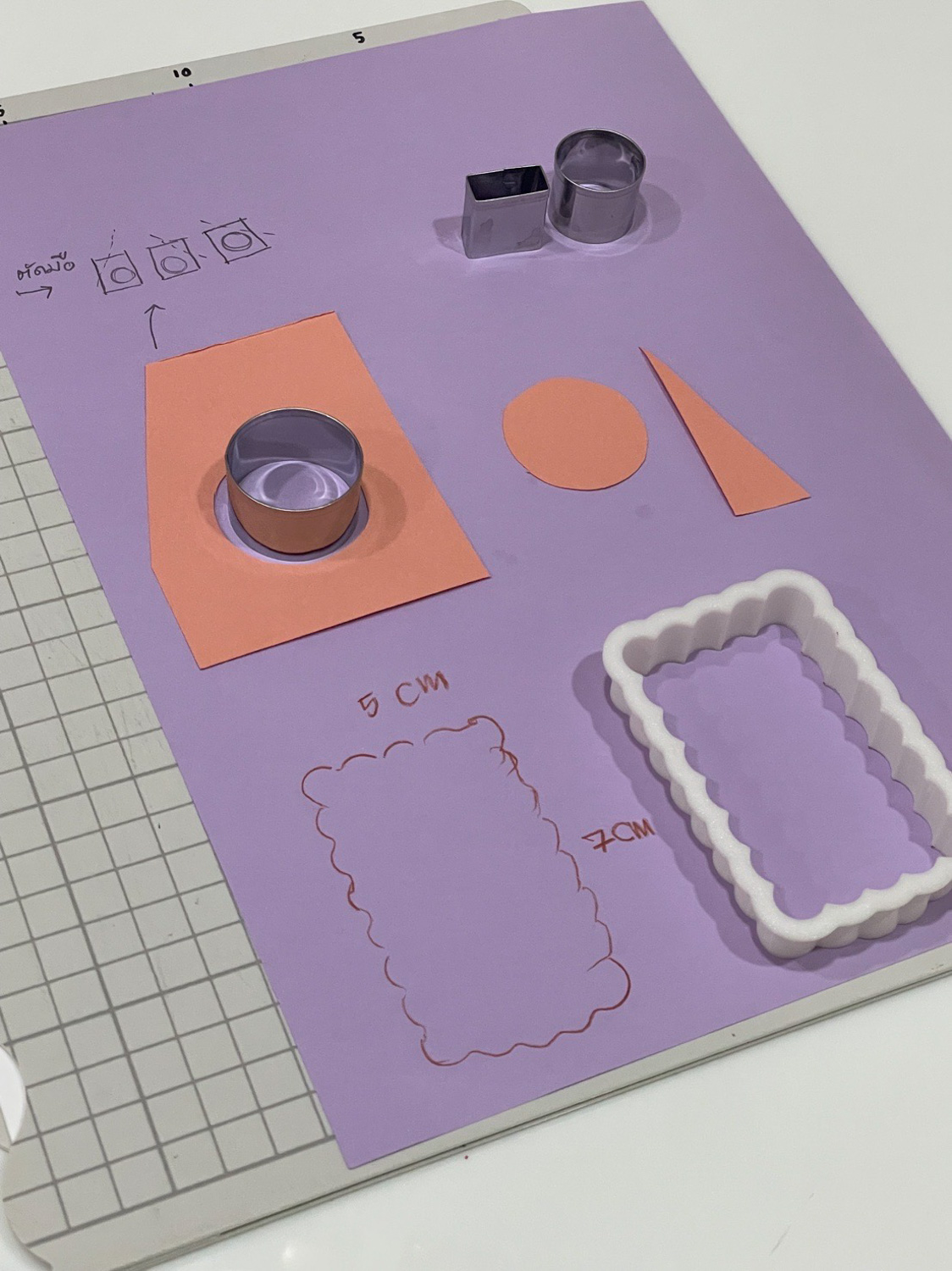
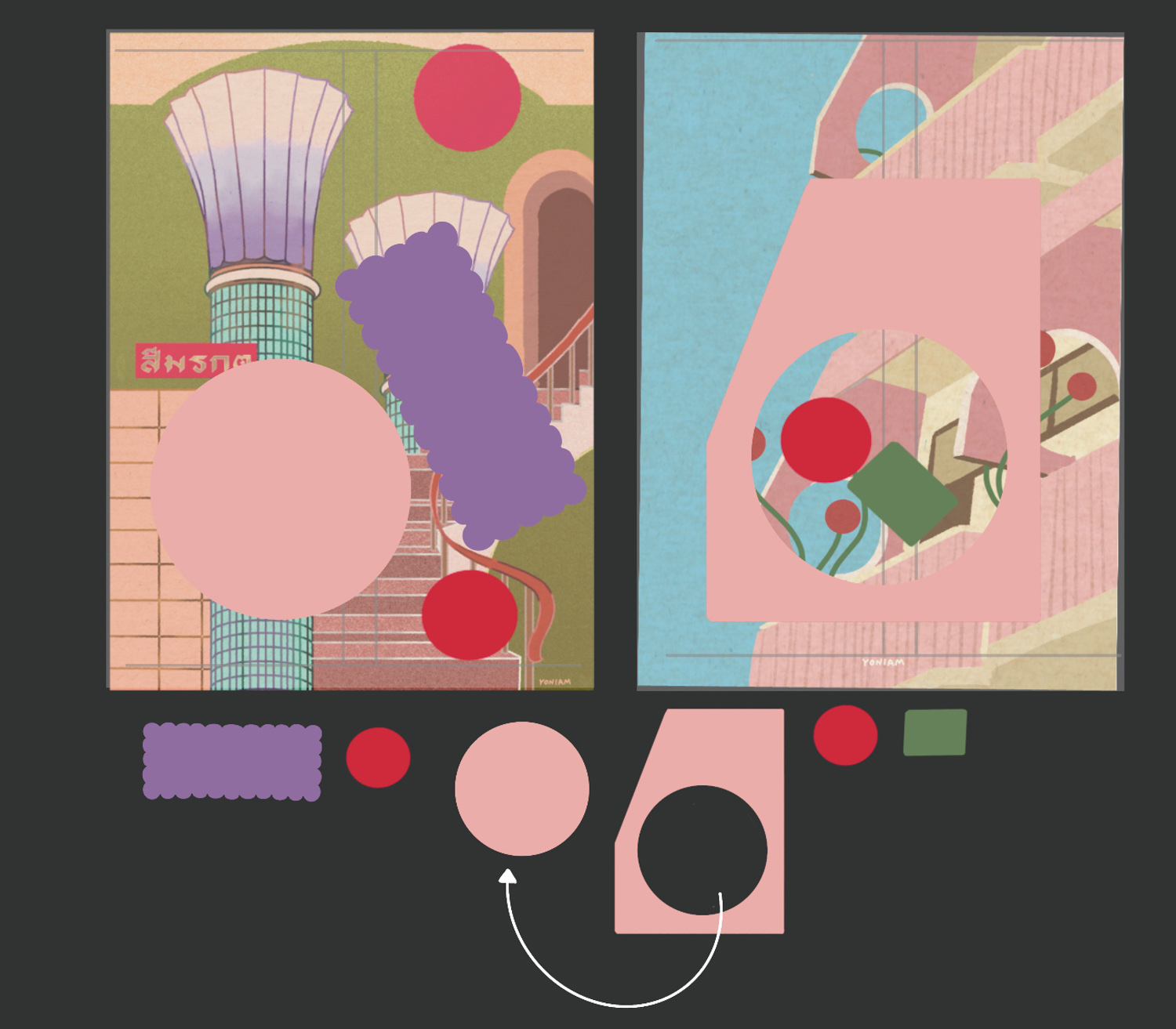
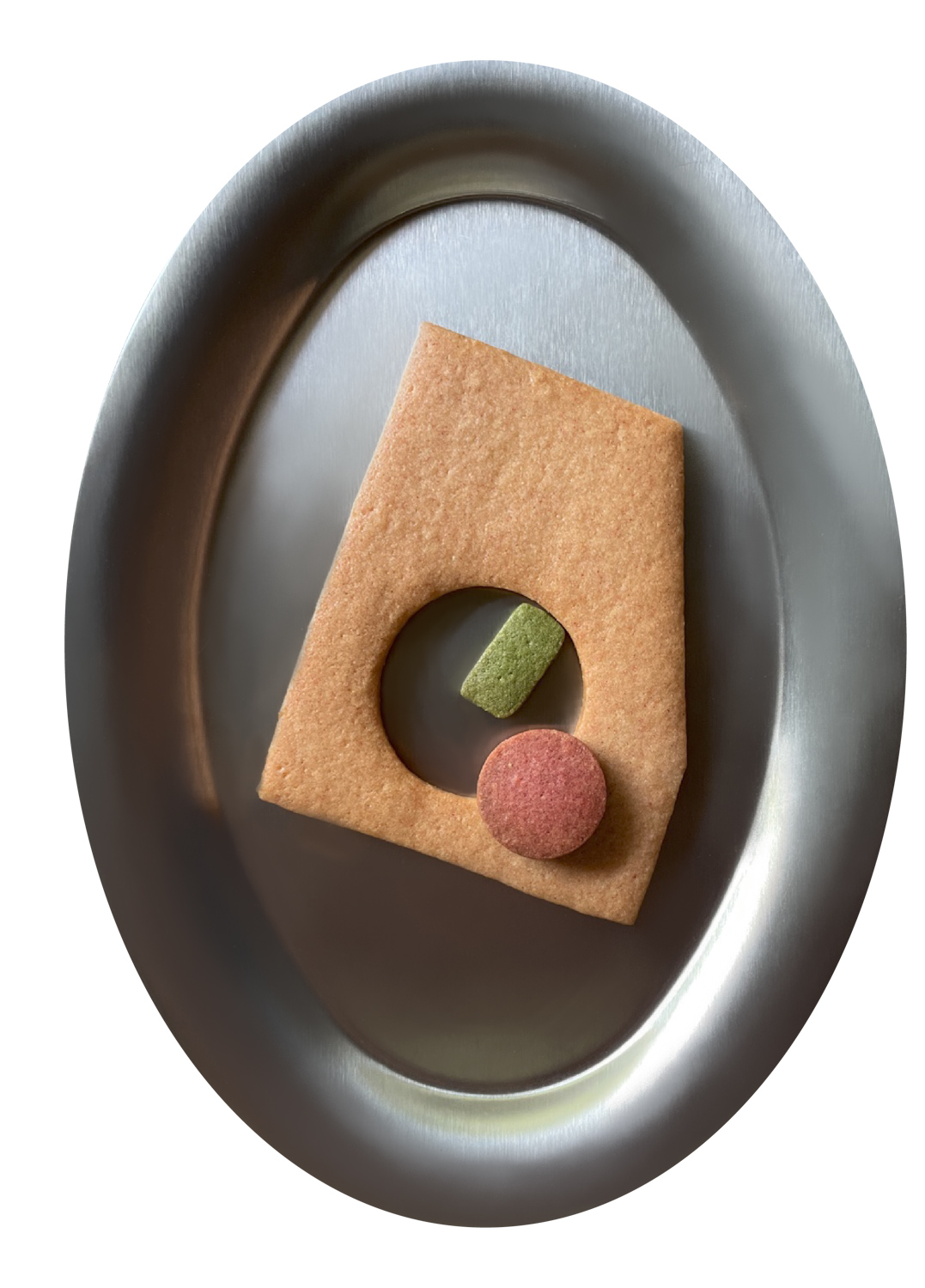
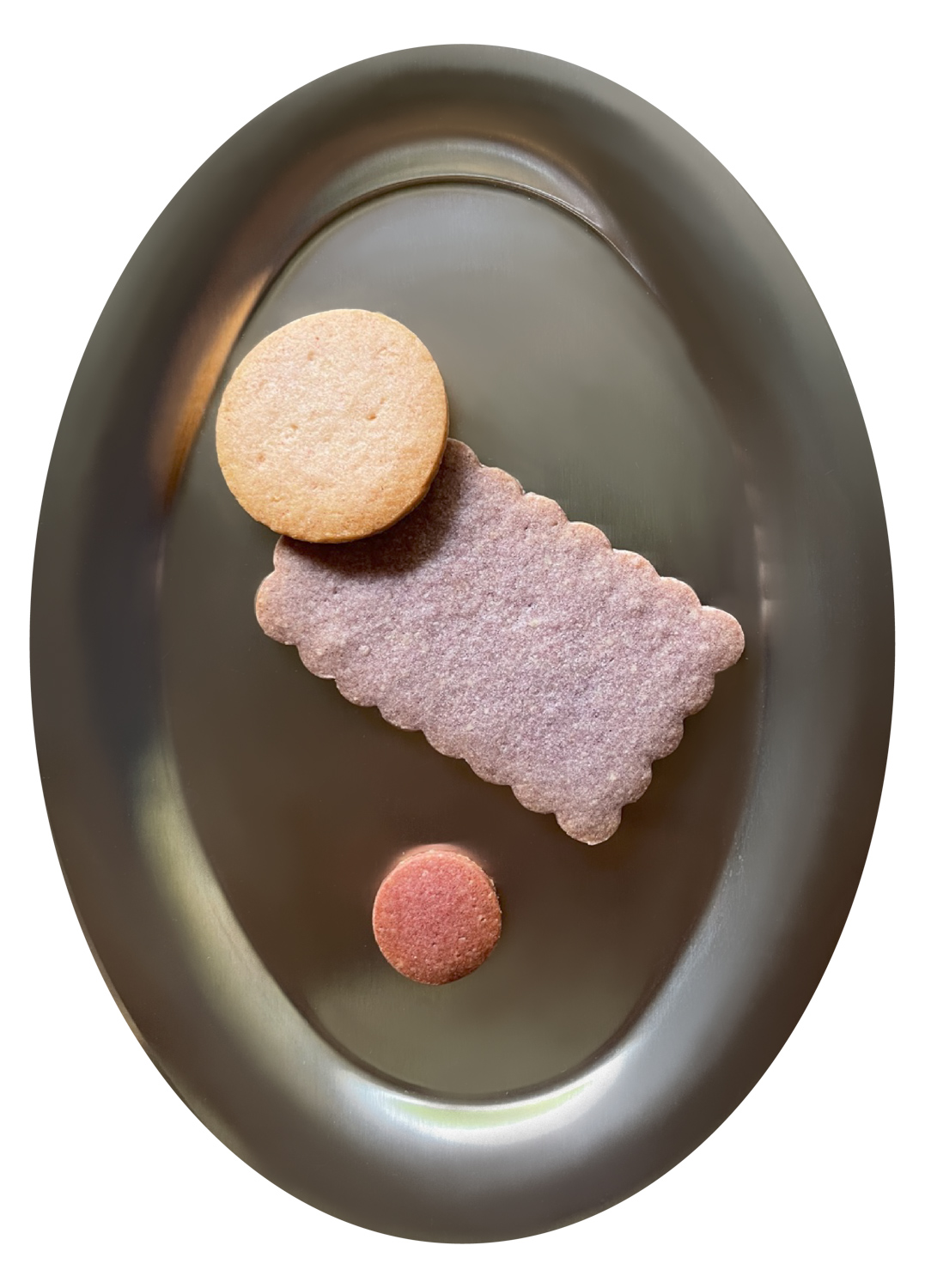
art4d: For BKKIF 2025, why did you turn architectural elements into cookies, and what did you gain from this experimental project?
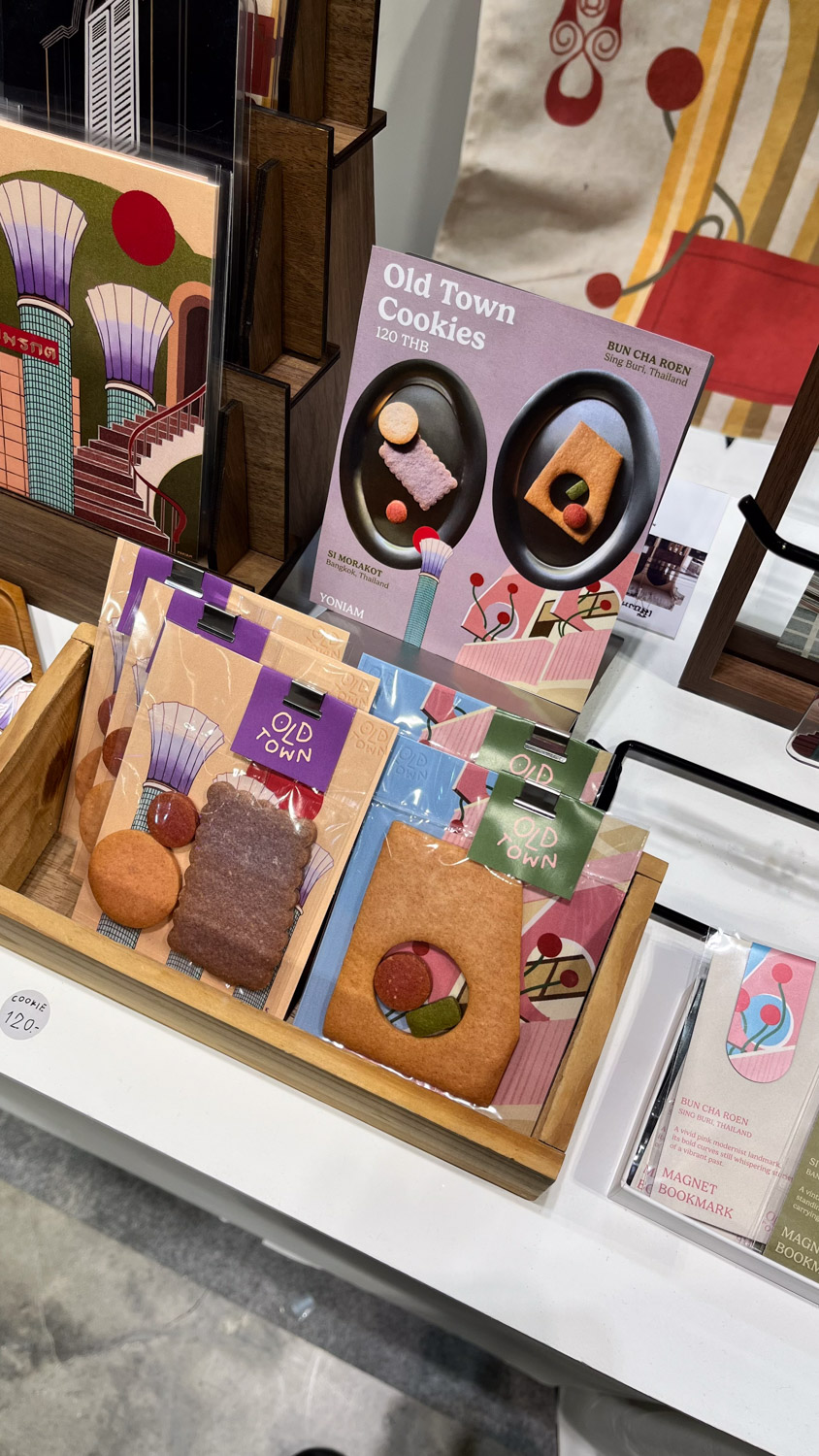
YN: BKKIF 2025 was the first time I had a booth of my own, so I set myself the challenge of transforming my drawings into another kind of physical experience.
I chose cookies because I knew a shop that made really good ones. I redesigned the architectural elements and pitched the idea to the shop. I had never done anything like that before, so the experiment was a lot of fun. We adjusted the cookie colors several times, and the shop and I worked together to redesign the molds and refine their dimensions until we could keep food waste to a minimum.
A lot of people came back to buy more and told me that the cookies tasted great with tea. I was really happy that they enjoyed what I had made.
art4d: What kind of response did you receive at BKKIF 2025?
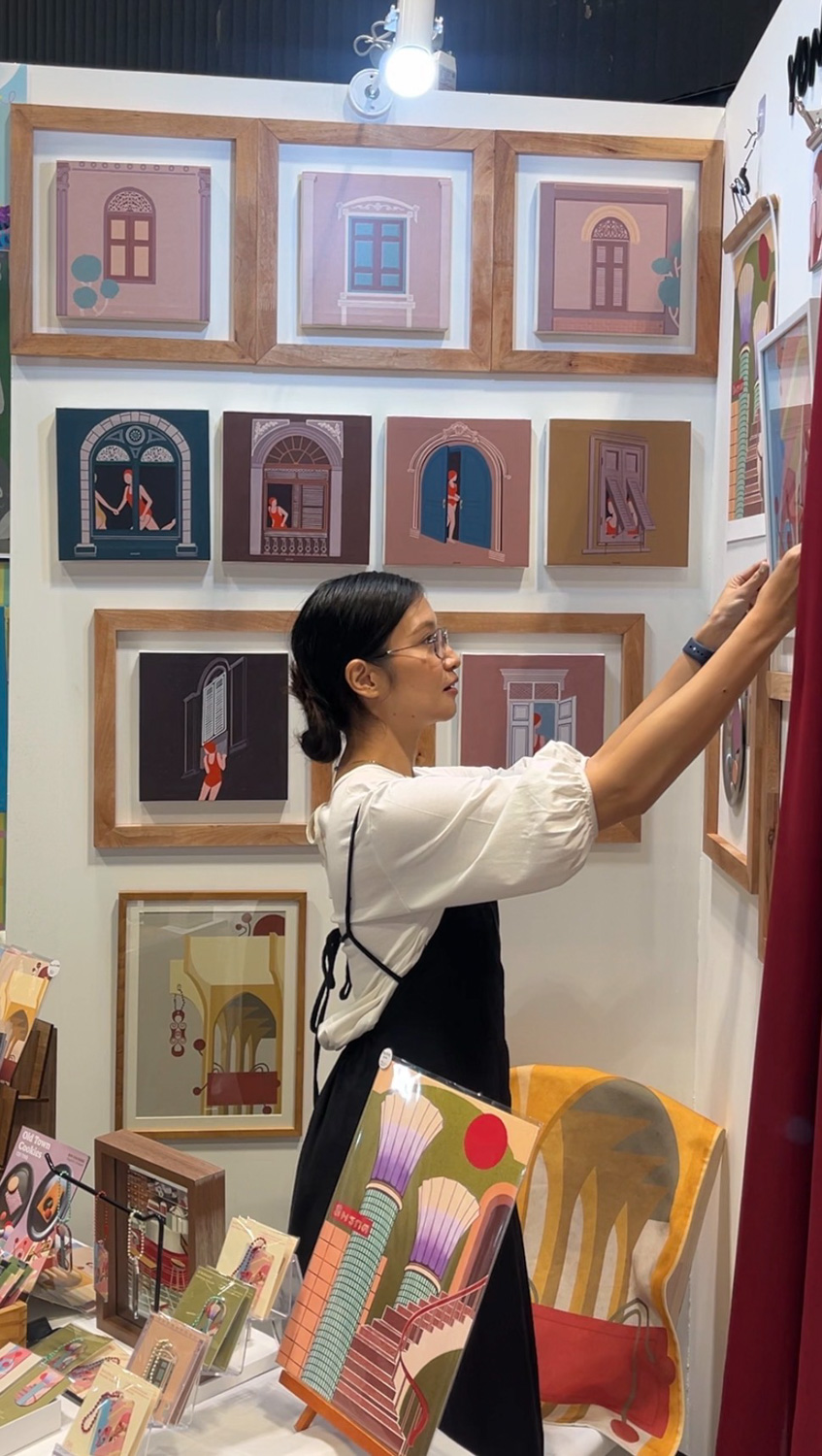
YN: It was a major exhibition for me in Thailand. I got to meet people who had been following my work on social media. I remember everyone, and I read every comment and message in my inbox.
A lot of people came over to say hello and talk, even though we had never met before. But I knew who they were—I would recognize them and think, “Oh, you’re that account!” It made me feel genuinely supported by my audience, which is very important to me.
When I make creative work, I don’t always know how people are responding or whether what I’m trying to communicate has reached anyone. Being able to talk to people face-to-face gave me the motivation to keep working.
art4d: Beyond works on paper and your experimental cookies, are there any other media, applied-art formats, or products through which you would like to explore your interest in old architecture?
YN: There is something I would like to do with Singburi. I want to encourage more people to get to know the province. It might take the form of a workshop or some kind of guide that encourages people to notice the stories hidden within small architectural details.
I also have a small project coming up soon that will involve people in Singburi. An organization has invited me to work on it, so it is definitely going ahead.
art4d: What projects, exhibitions, or new directions can we expect from YONIAM in the near future?
YN: I really want to return home and develop my work on Singburi further. I feel that there is still so much more I can express through my work. There are many places I don’t yet know, and I want to get to know them—to return and rediscover them again.
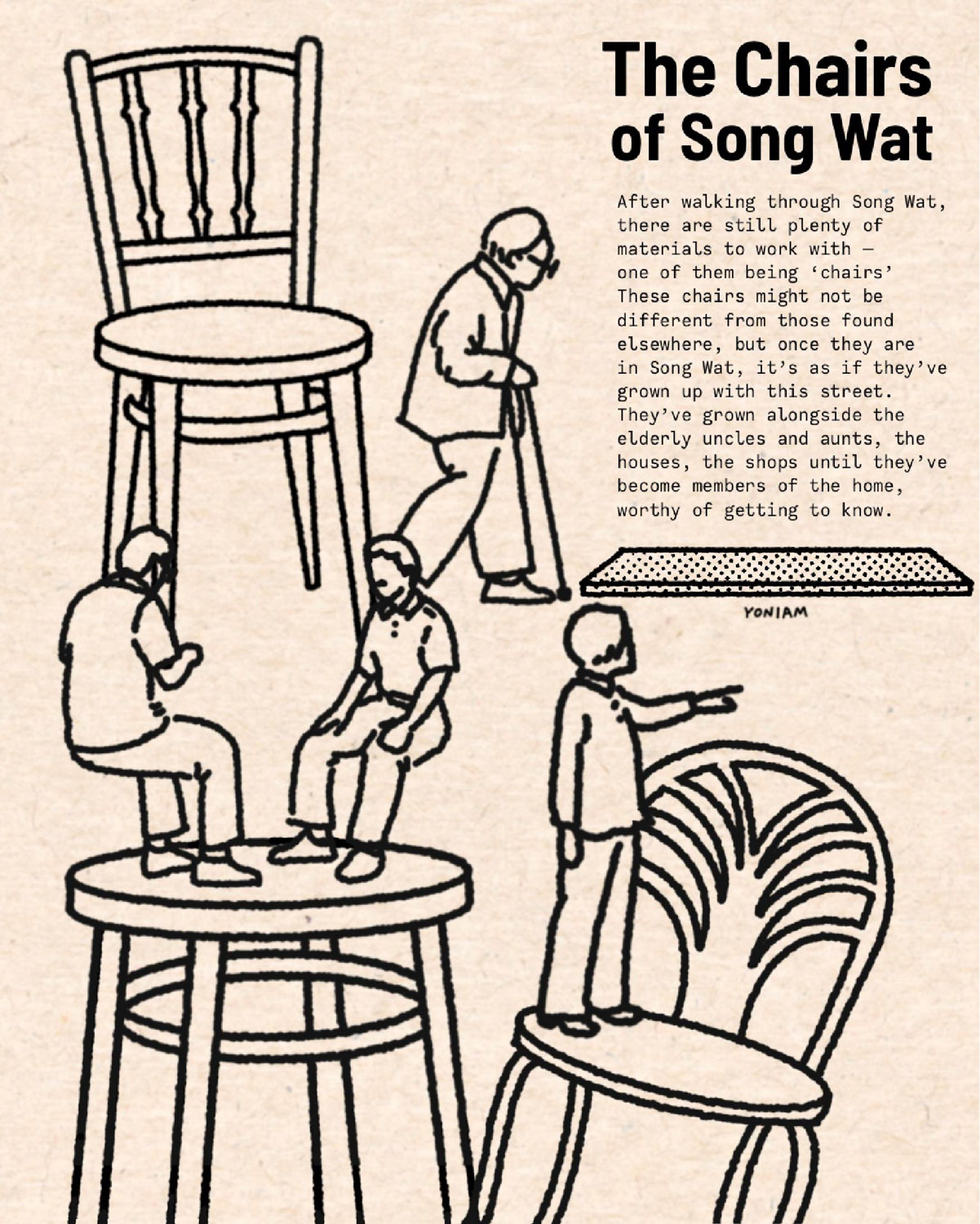
The same goes for neighborhoods in Bangkok. I have some new work coming soon. I recently visited Nang Loeng and found that the neighborhood has a fascinating character. Its buildings and people come together to form a distinctive place, and I’m trying to capture that quality into images as well.
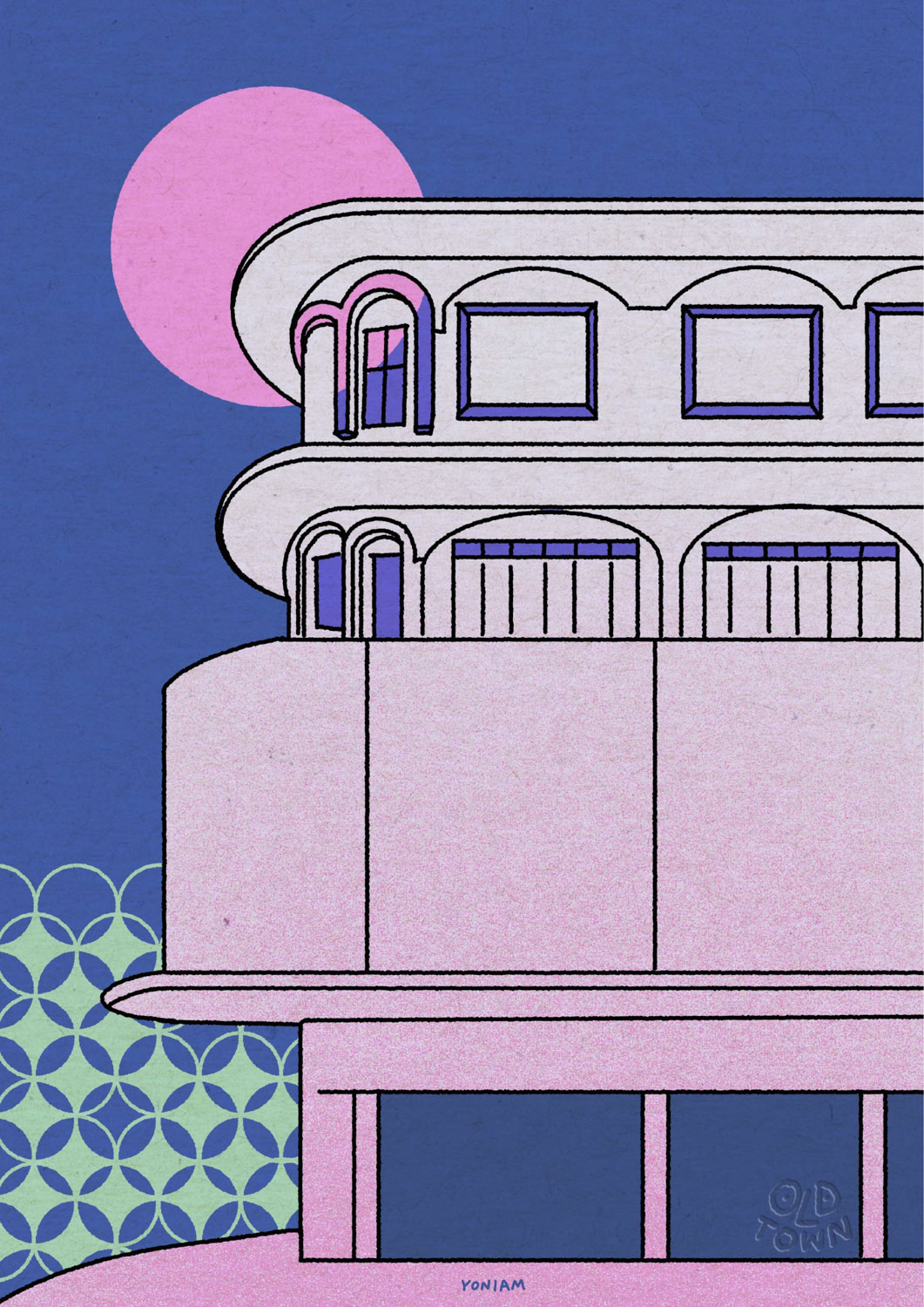
art4d: In the long term, what role would you like YONIAM’s records of old buildings to play in society? What kind of impact do you hope they might have on the preservation of local history?
YN: That’s a huge question. I see myself as just one small point, almost as though I’m storing the memories of each neighborhood in a drawer. Whenever I draw a neighborhood or a city, I place it in its own drawer.
I think that, before someone can recognize the value of a city, they first need to feel attached to it or want to get to know it. If my images can at least do that—encourage people to go out and look at the city more closely—then they have served a purpose.
A building might later be demolished, like Scala, which I once drew. My image may then serve as a small record, capturing a moment in time when that building was still standing. Looking back, I’m glad that I was at least able to preserve something of it.