
‘THE PRESERVATION OF FIRE,’ AN EXHIBITION BY BUSUI AJAW, PRESENTS AKHA CULTURE THROUGH WOVEN TEXTILES AND WOODEN HOUSES, WHILE INVITING REFLECTION ON HOW TO KEEP A CULTURE ALIVE AND VIBRANT IN THE PRESENT DAY
TEXT: KANDECH DEELEE
PHOTO: KETSIREE WONGWAN EXCEPT AS NOTED
(For Thai, press here)
“Tradition is not the worship of ashes, but the preservation of fire.” – Gustav Mahler
The ashes and fire in Mahler’s words, quoted in the exhibition text, evoke an ongoing debate surrounding how ethnic cultures are represented. They are often presented as historical evidence, placed within a sequence of development, or treated as curiosities to be examined for their unfamiliarity. Objects once handled in everyday life are enclosed beneath transparent acrylic covers to prevent visitors from touching them. Tools and implements once used for survival are suspended inside glass cases. Stories, legends, and folktales are dissected through contextualization, interpretation, and elaboration, making them more readily accessible to an audience largely composed of ‘people from the center.’1 Such presentations also reveal the distance between those to whom the stories belong and those who tell them—the latter having now become producers of knowledge, custodians of the material objects, and sovereigns of the exhibition hall’s microcosm.
It was later argued that this mode of presentation amounted to little more than bringing death to stories that remained very much alive. Beyond the exhibition space, people still live in those wooden houses, use those handicrafts, and pass down those oral traditions. To confine such lives inside glass cases is therefore akin to exhibiting ashes: remnants left behind by death rather than an attempt to preserve the fire and warmth promised by the institution’s stated mission at the entrance. Mahler’s words thus point toward the task of what is about to unfold: to reveal the fire of life and resist becoming the ashes of death.
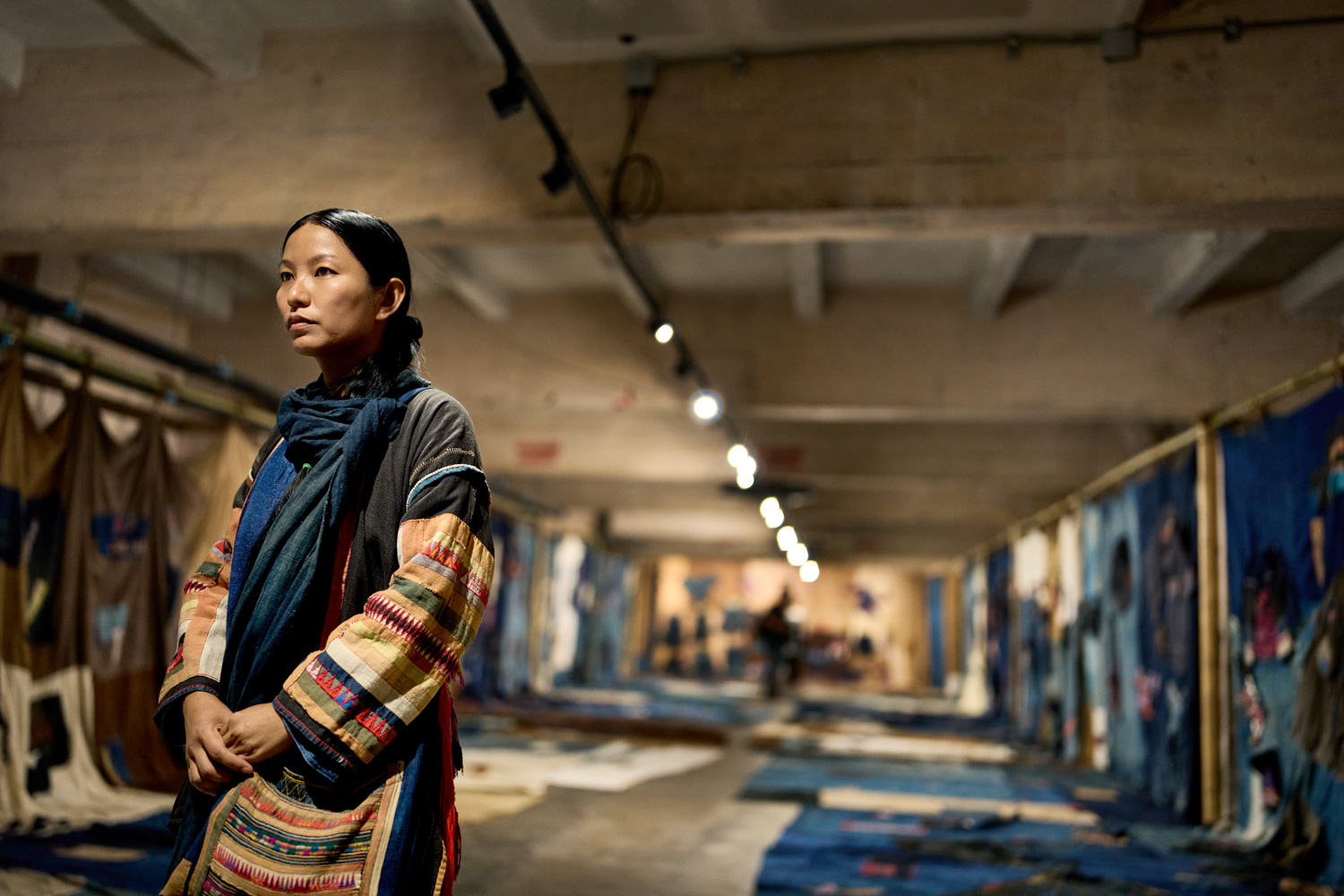
Busui Ajaw | Photo: Preecha Pattara, courtesy of the artist
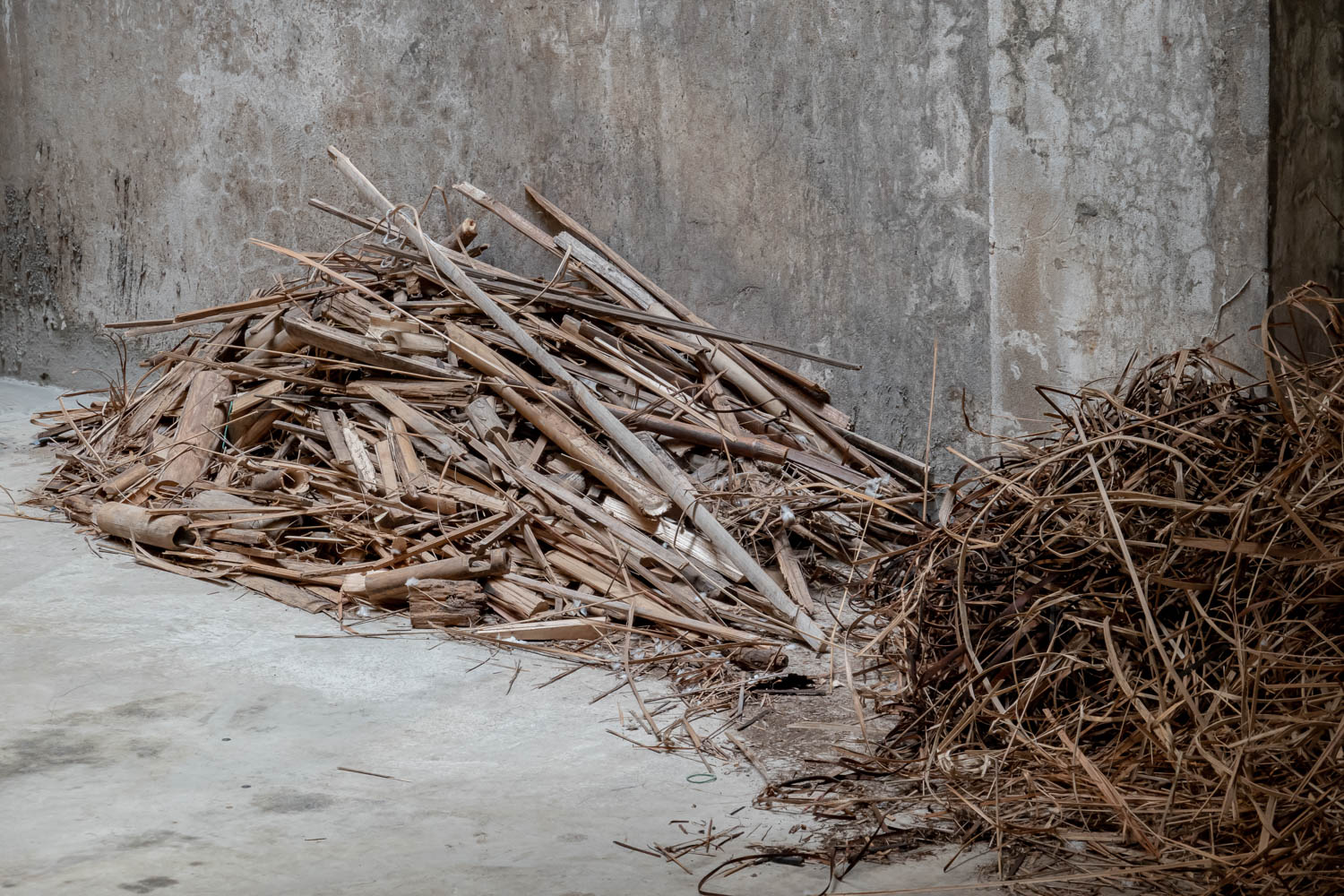
The Preservation of Fire is an exhibition by Busui Ajaw, an Akha artist, exploring the culture of Akha communities dispersed across northern Thailand, Laos, Myanmar, and southern China. The exhibition occupies two floors. The lower floor presents textiles produced in collaboration with Akha communities, while the upper floor houses an Akha wooden house dismantled from an actual dwelling in Chiang Rai and reassembled inside the exhibition space. At first glance, the exhibition may appear to tell an ethnic story much like those found in state museums, while similarly seeking to counter cultural forgetting. What sets it apart, however, is Busui’s overlapping position as both ‘artist’ and ‘Akha.’ The storyteller’s distinct position clearly shapes the direction of the narrative, the mode of display, and the feelings experienced by the audience.
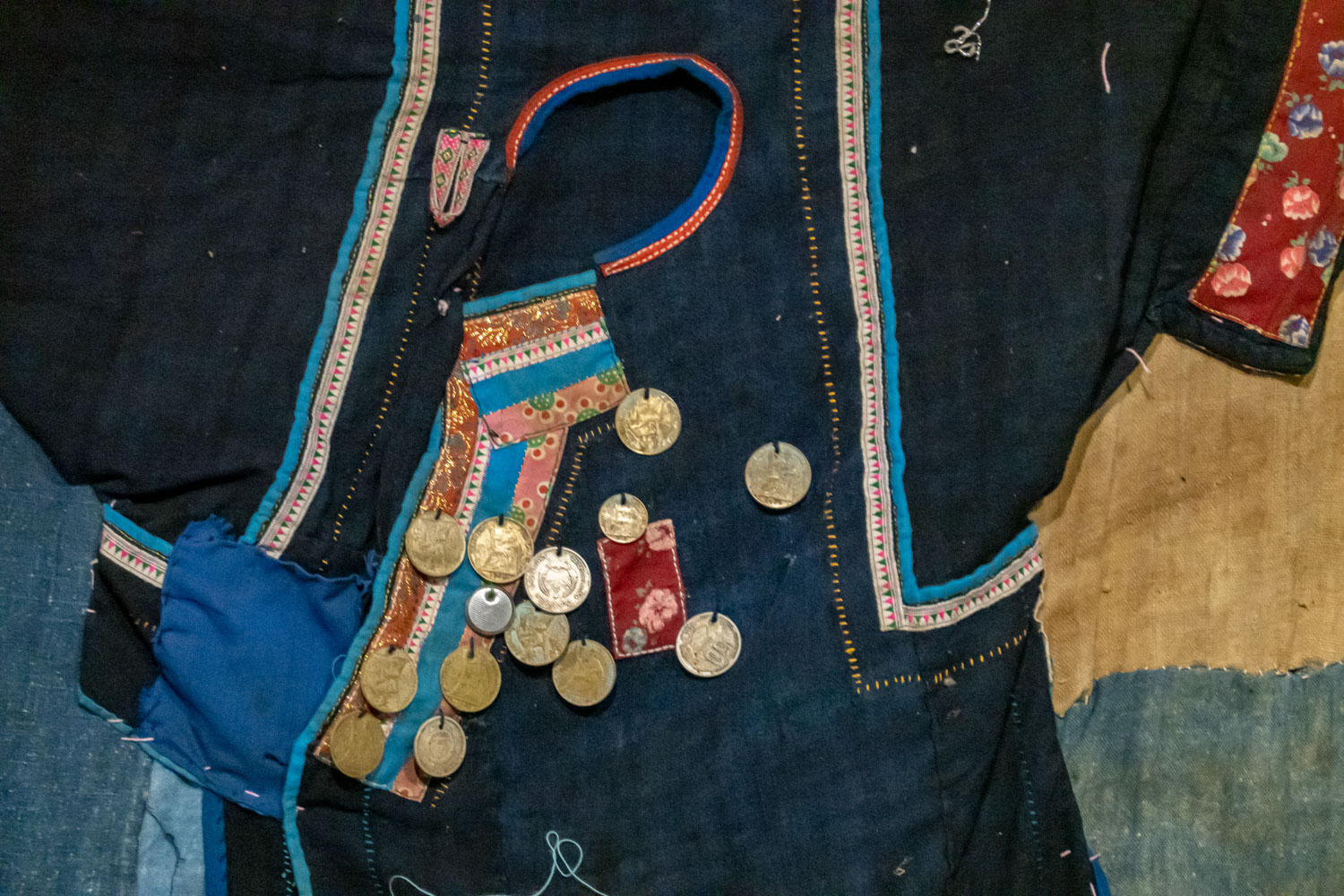
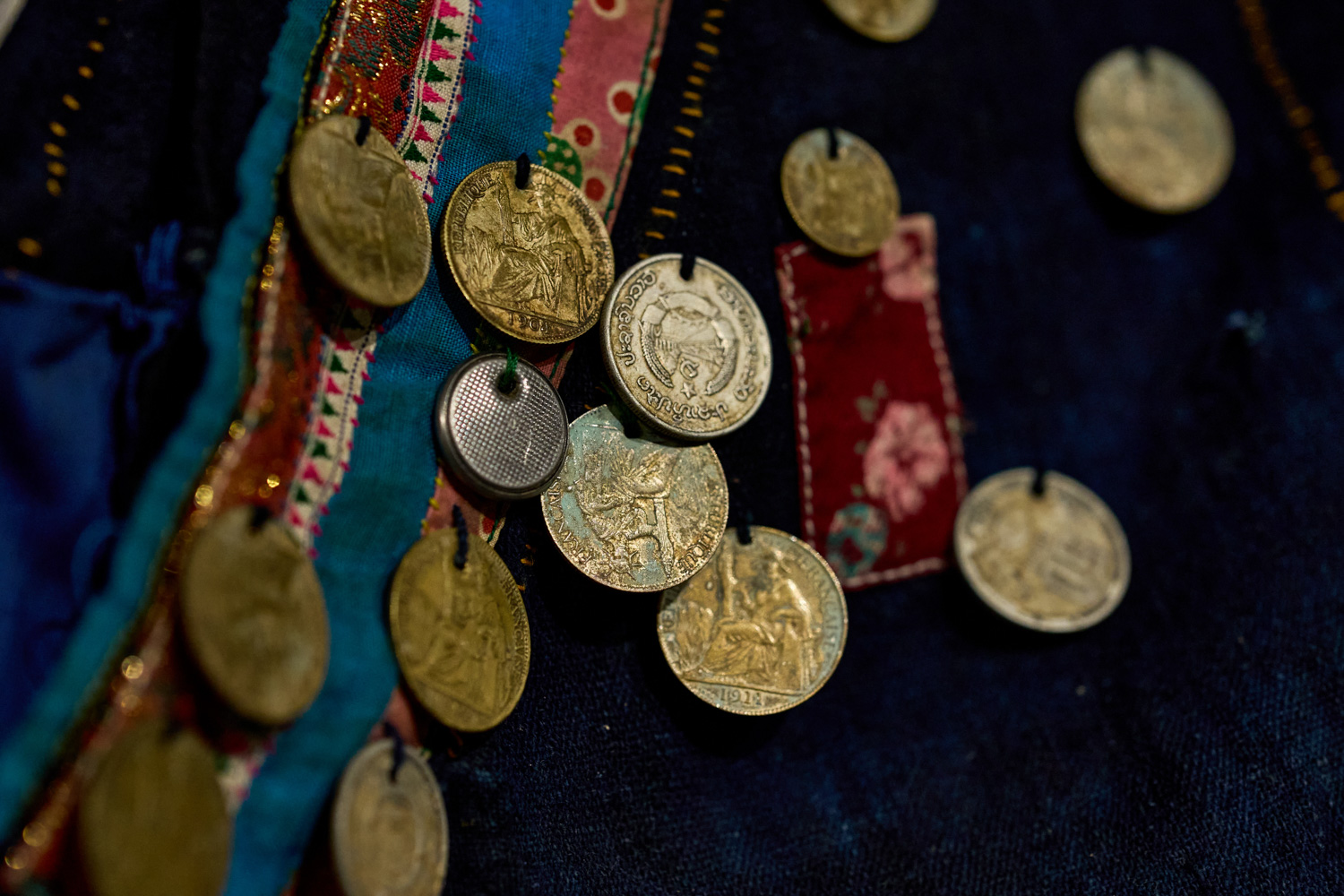
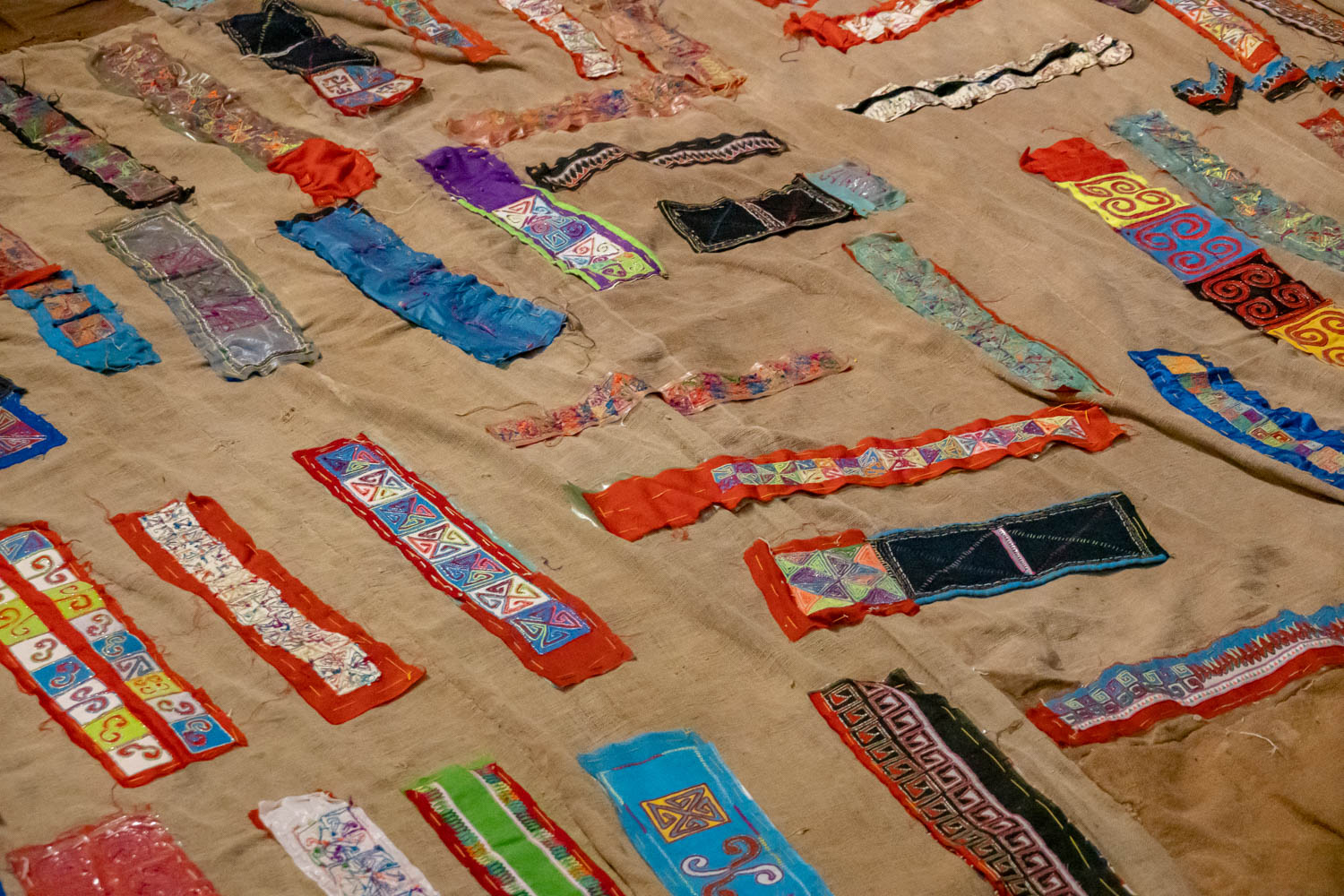
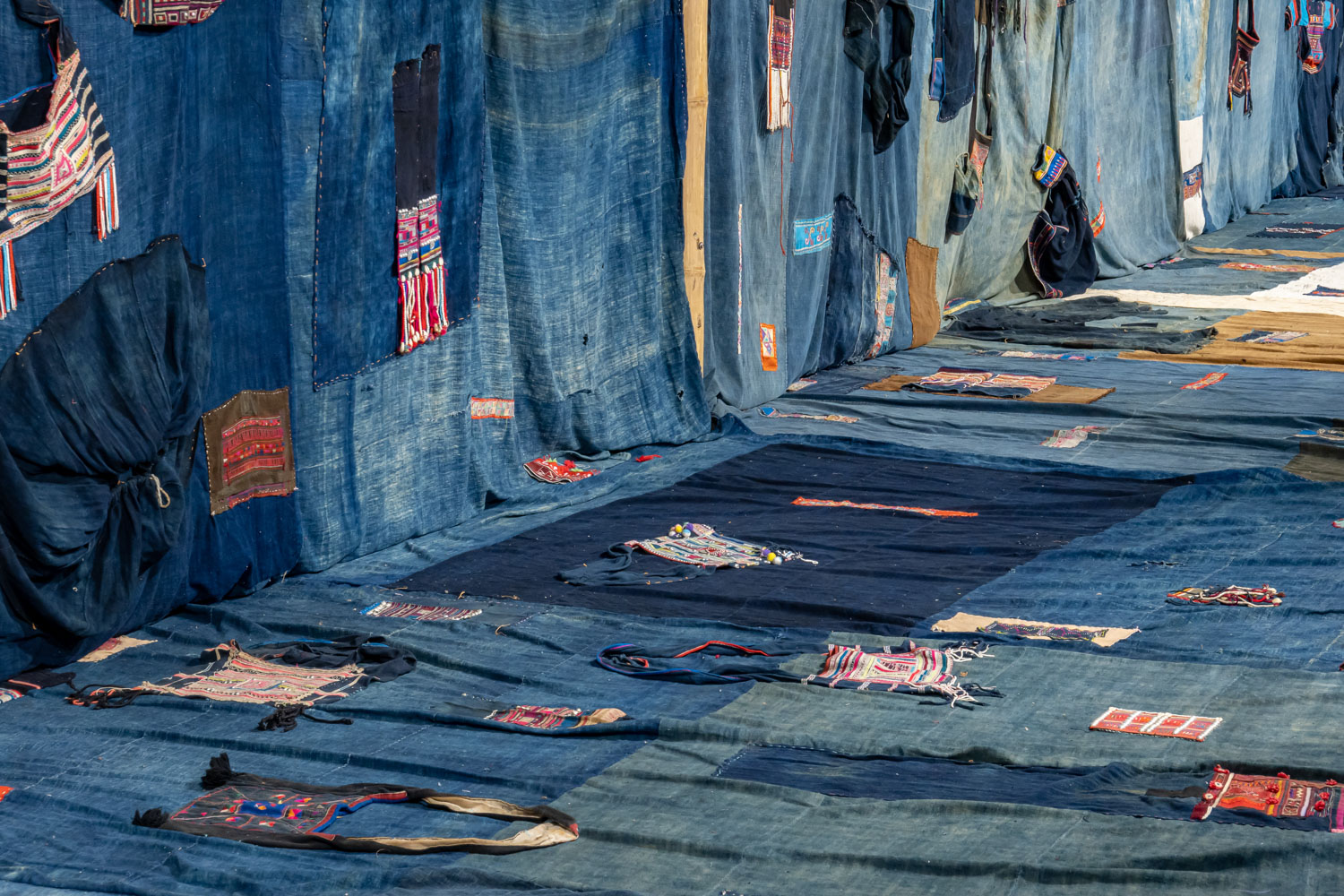
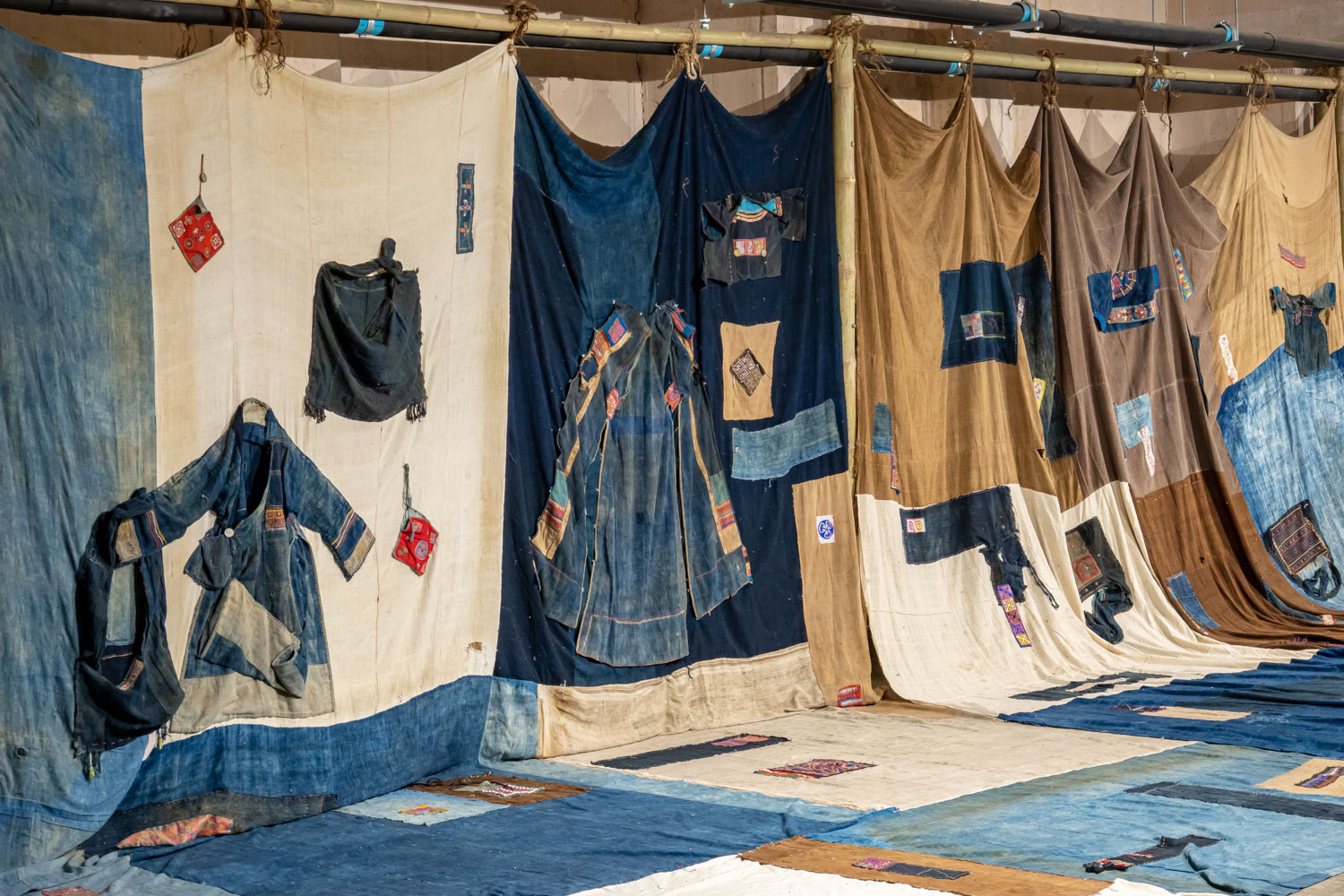
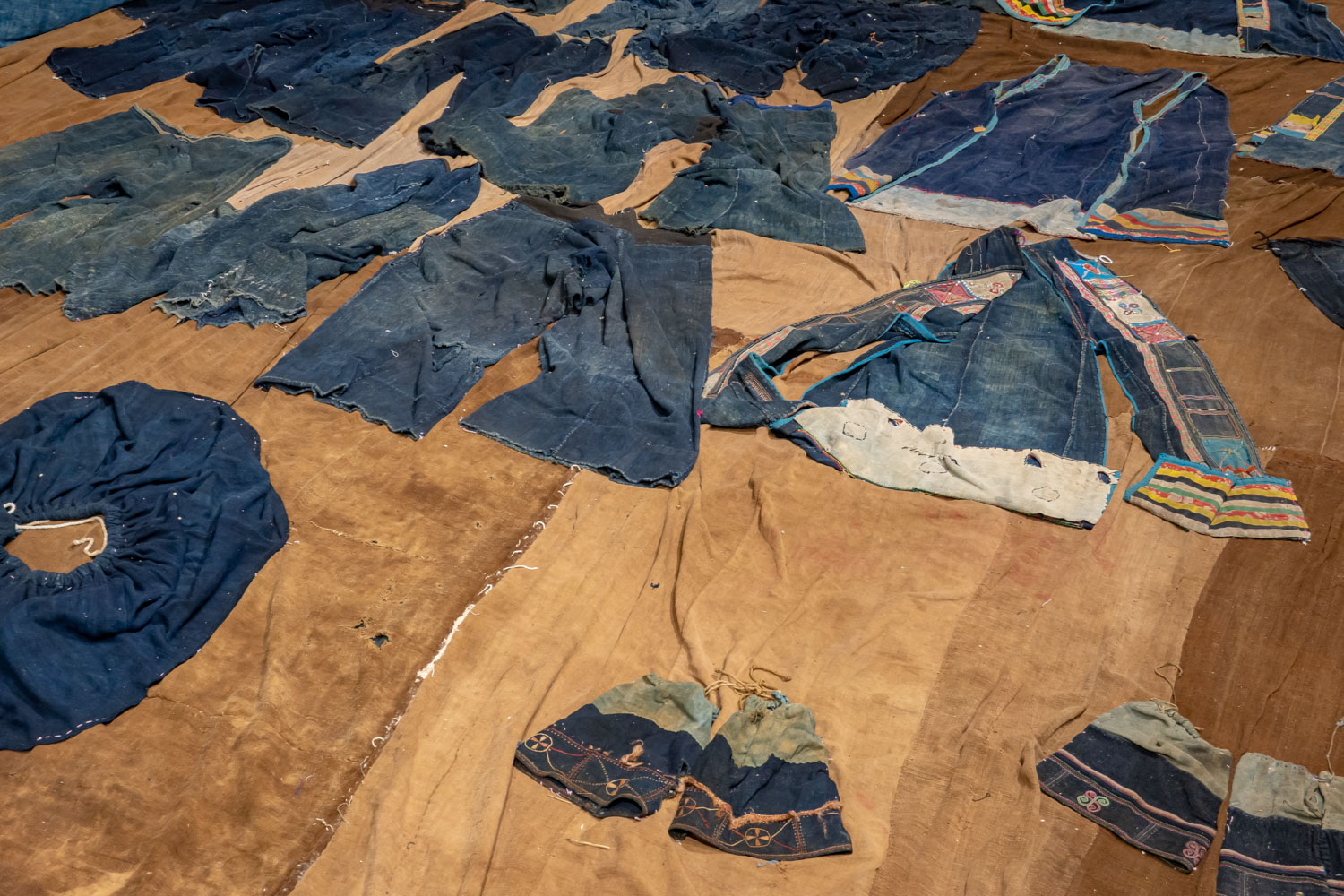
The exhibition begins on the lower floor, where Busui and members of her Akha community have woven and sewn together an immense expanse of fabric that envelops the entire gallery. Extending from the walls down onto the floor and along both sides of the room, the textile transforms the act of viewing into a passage into another realm. Busui’s fabric functions as an installation that plays with the transformation of the exhibition space, allowing the work and its surroundings to merge. Rather than viewing a collection of separate objects, visitors are spatially absorbed into the work itself.
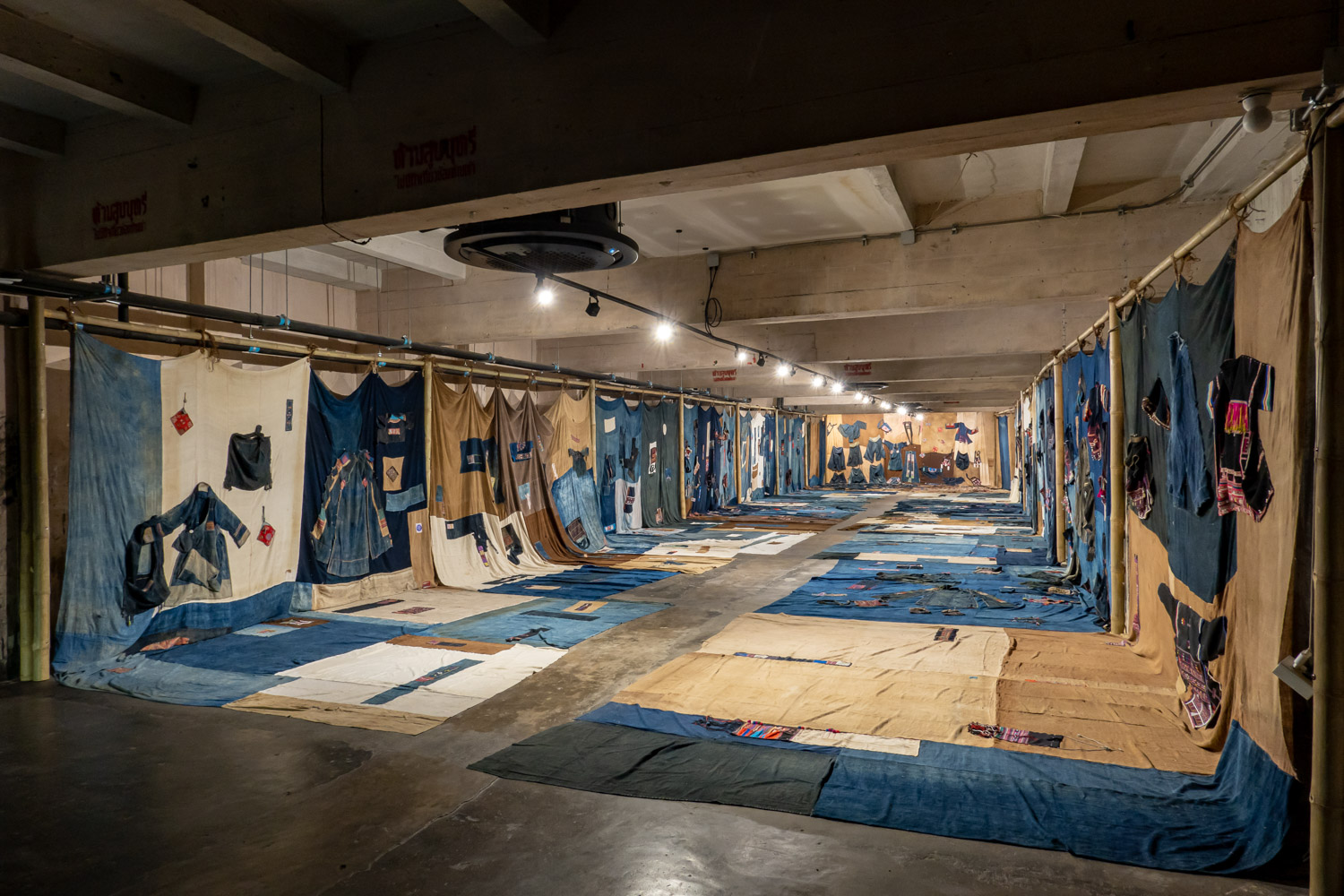
Across the length of the fabric, Busui has sewn garments, shoulder bags, hats, and other articles of Akha clothing and adornment, dispersing them throughout the room. With sleeves and trouser legs resembling human appendages, these garments line the narrowed passage created by the fabric on either side, making visitors feel surrounded by figures staring back at them. Busui’s work issues a challenge through reversal: what was once looked at becomes the observer, while visitors—who once possessed the power to look—find themselves subject to its gaze.
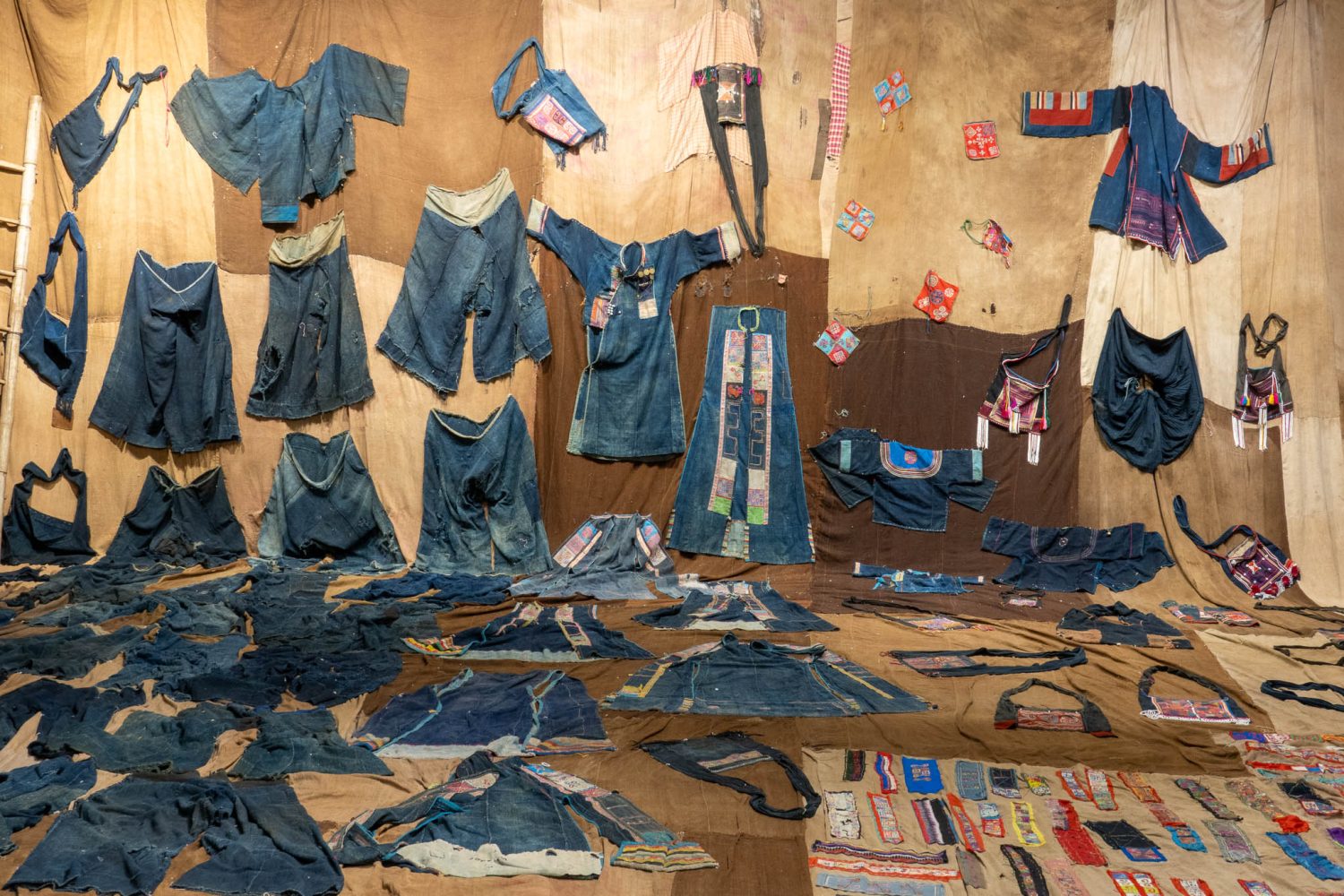
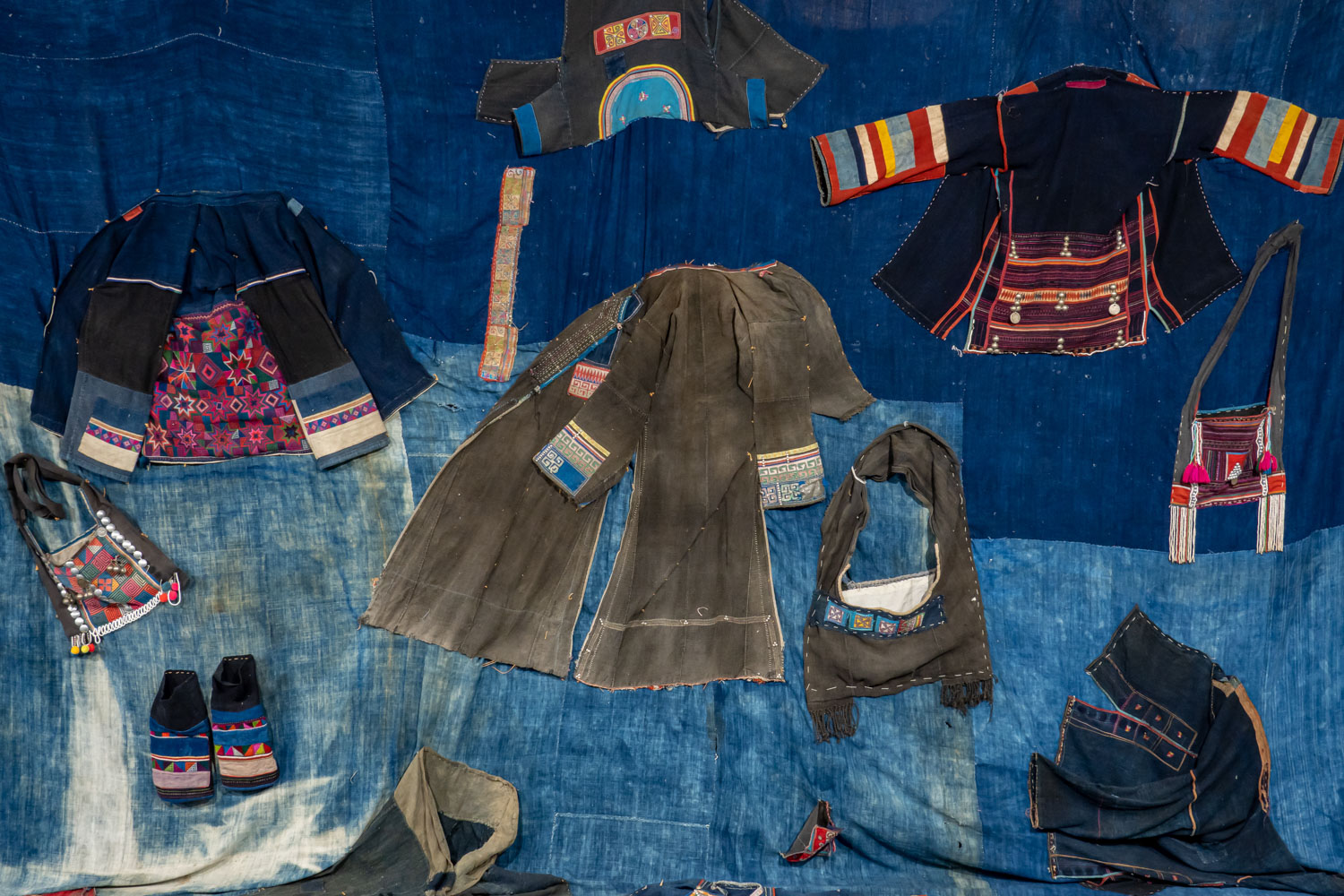
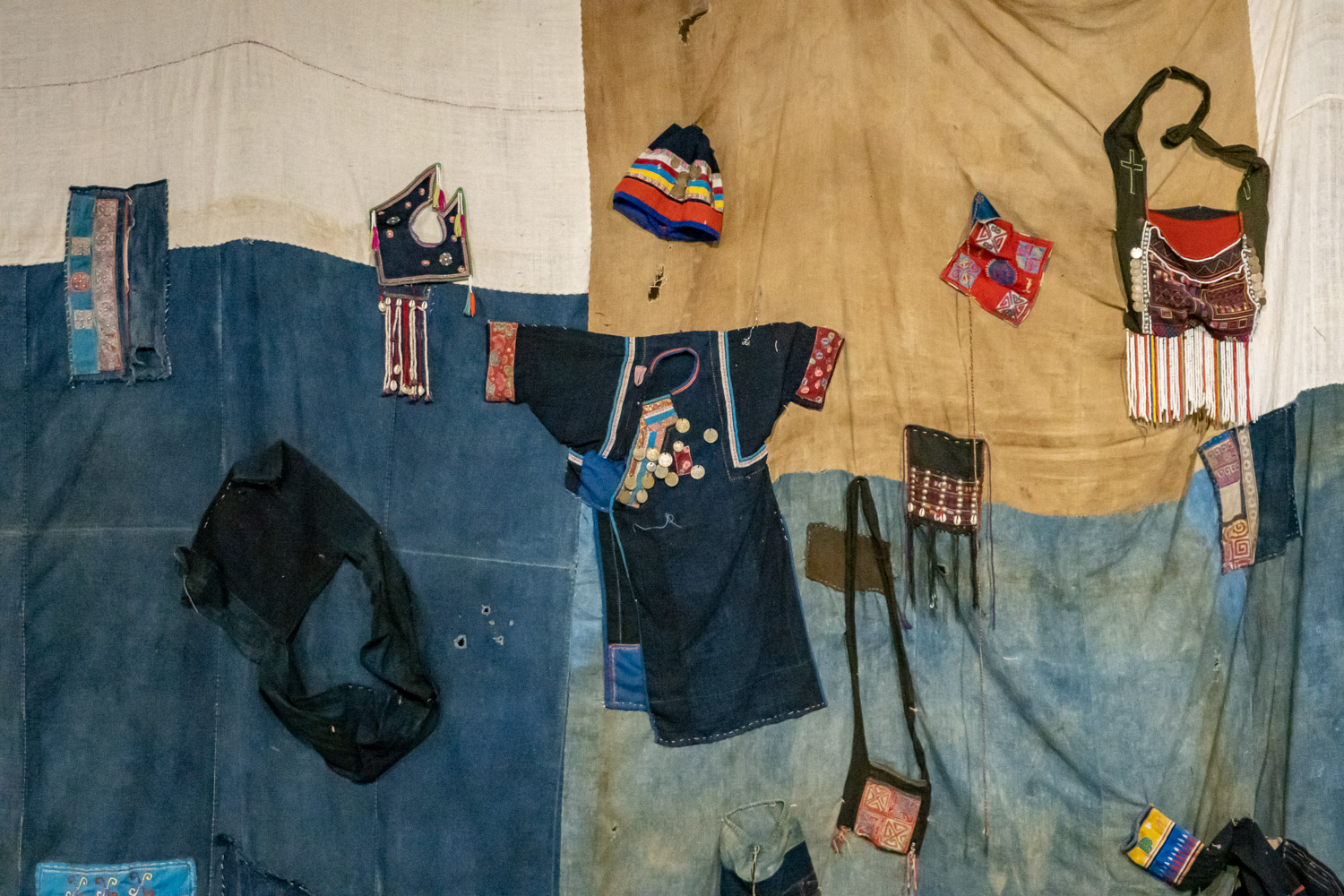
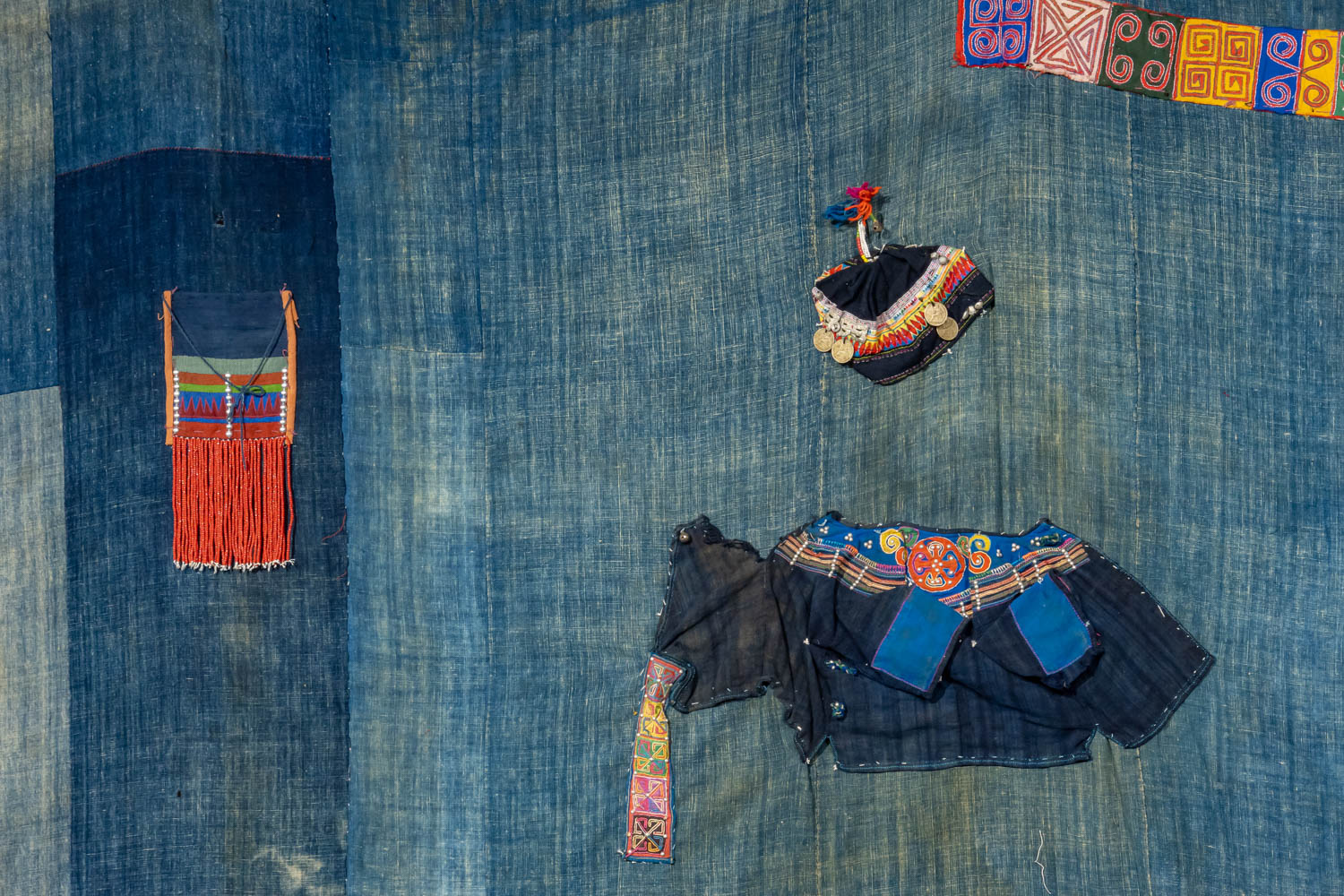
Being watched by this eyeless multitude feels cold and silent, echoing the exhibition text’s comparison of the lower floor to an underground burial ground—a realm of death, memory, and remembrance. The garments speak to cultural disappearance, as traditional Akha textiles can often be found only in graves, buried alongside their former owners. Walking through Busui’s textile tunnel therefore becomes an emotionally charged act of remembrance and an attempt to recover the body of memory. At the same time, it prompts us to reconsider the network of relationships between people and objects within a culture. This gaze, which seeks to reclaim significance, may not come from ‘people’ alone. It may also come from the ‘objects’ themselves as they resist being forgotten. Perhaps this is why the gaze has no eyes, yet can still be felt through sleeves and trouser legs.
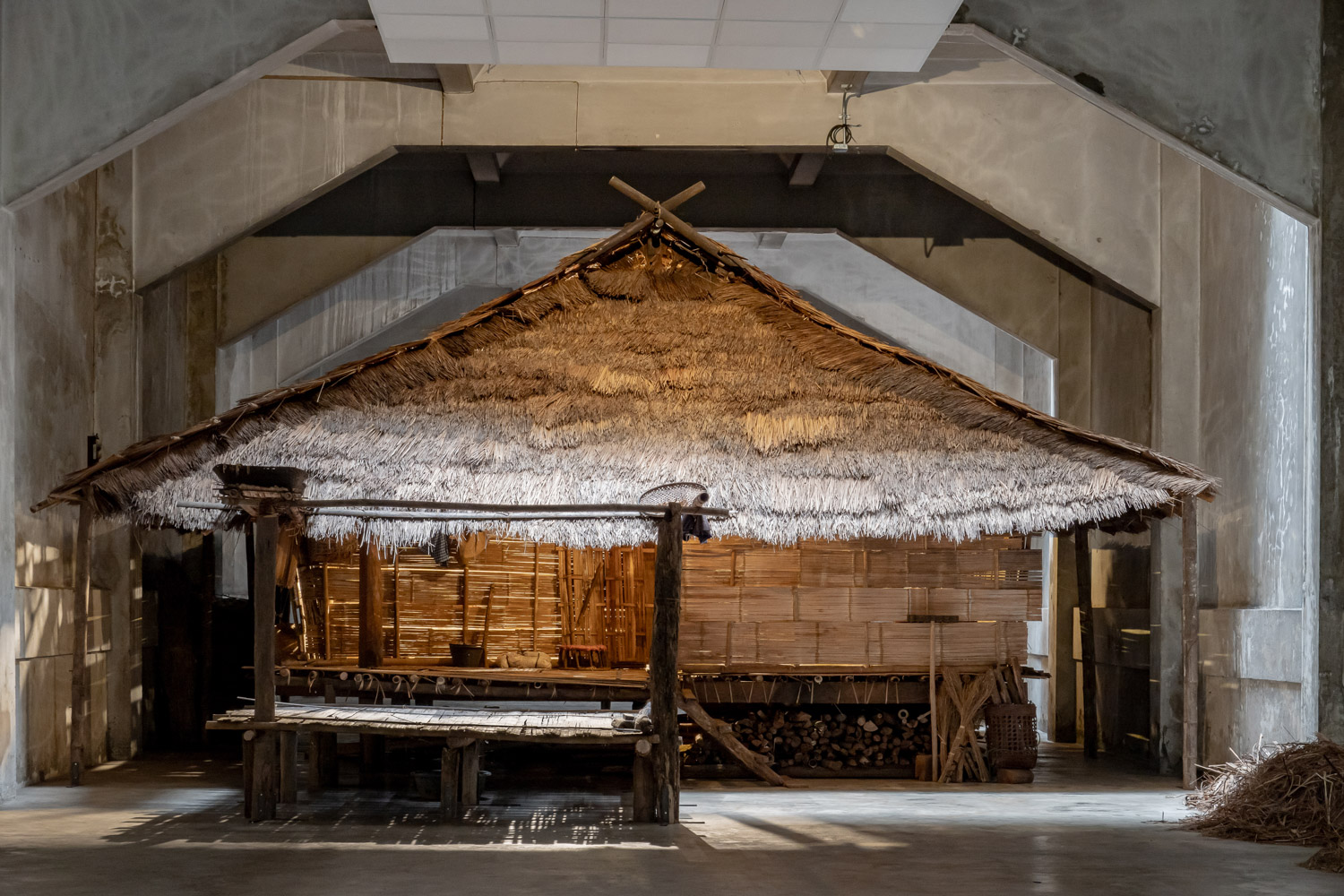
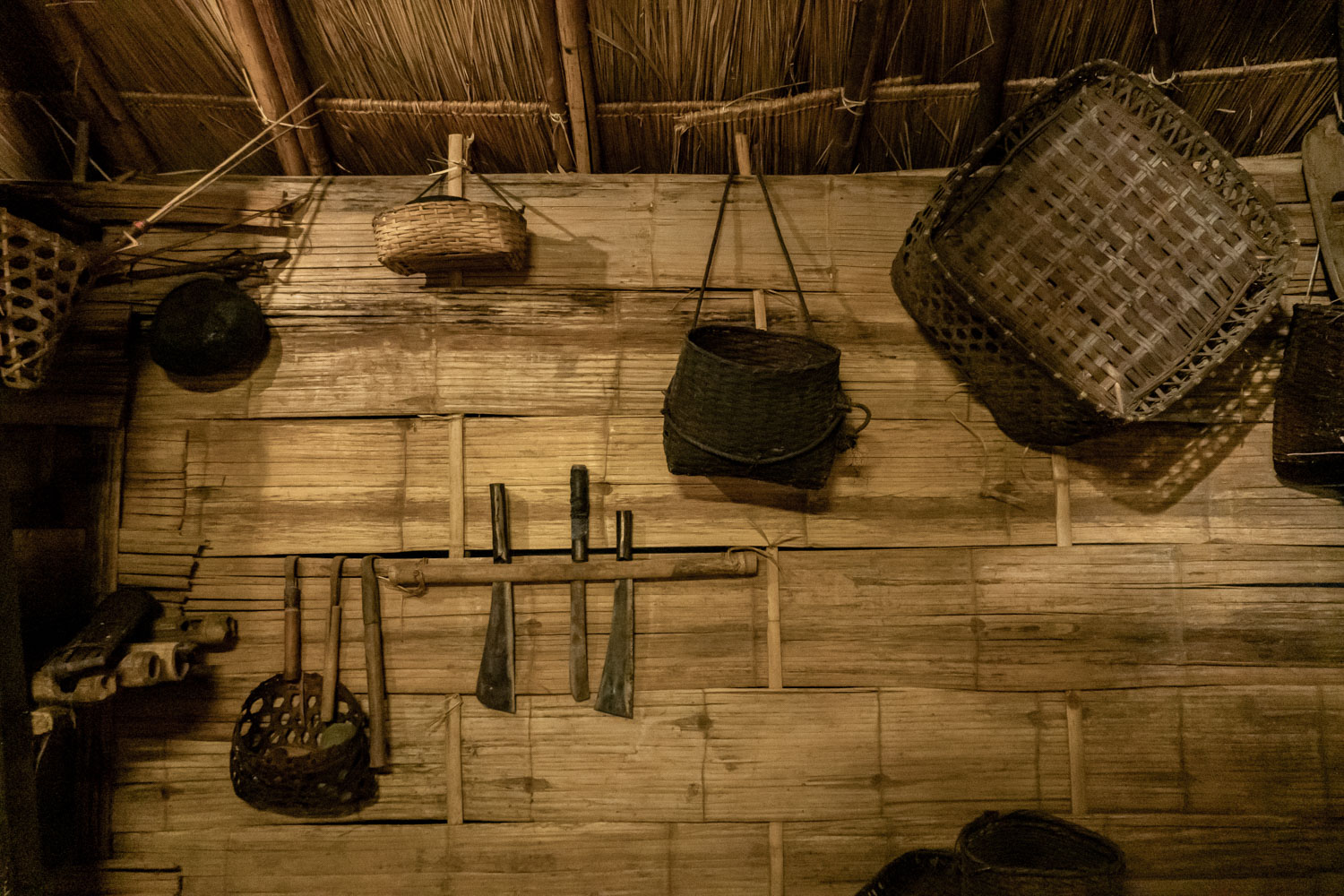
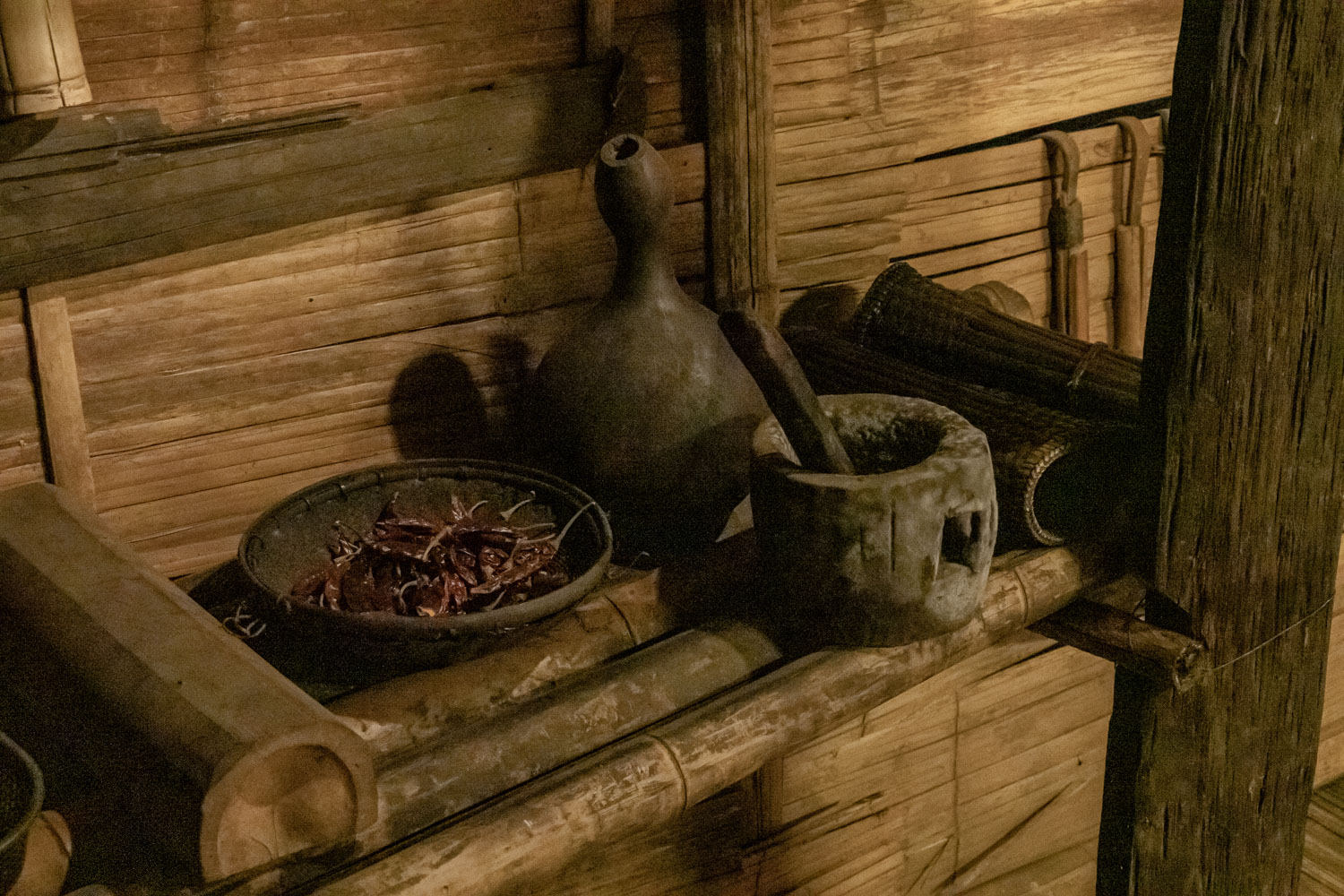
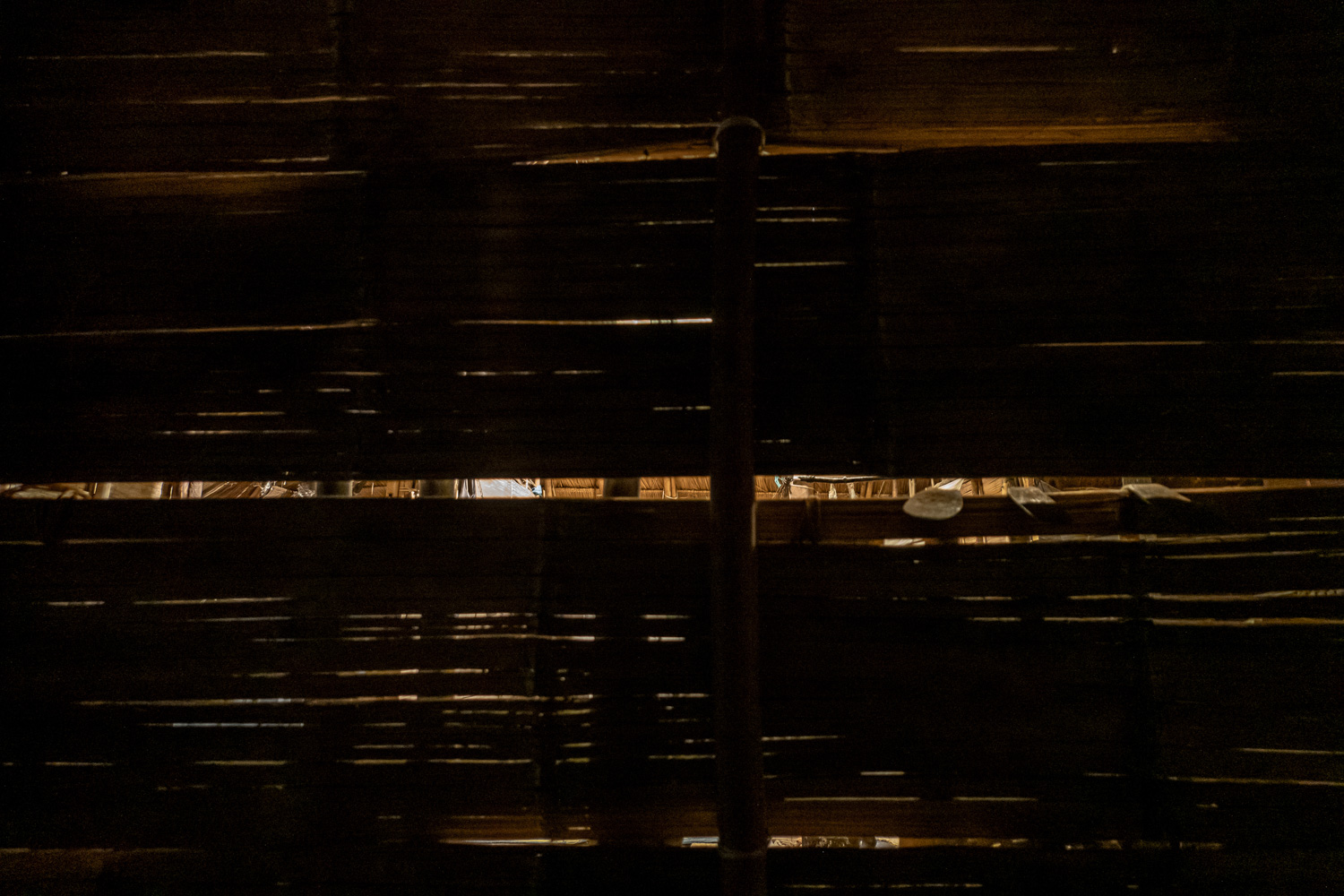
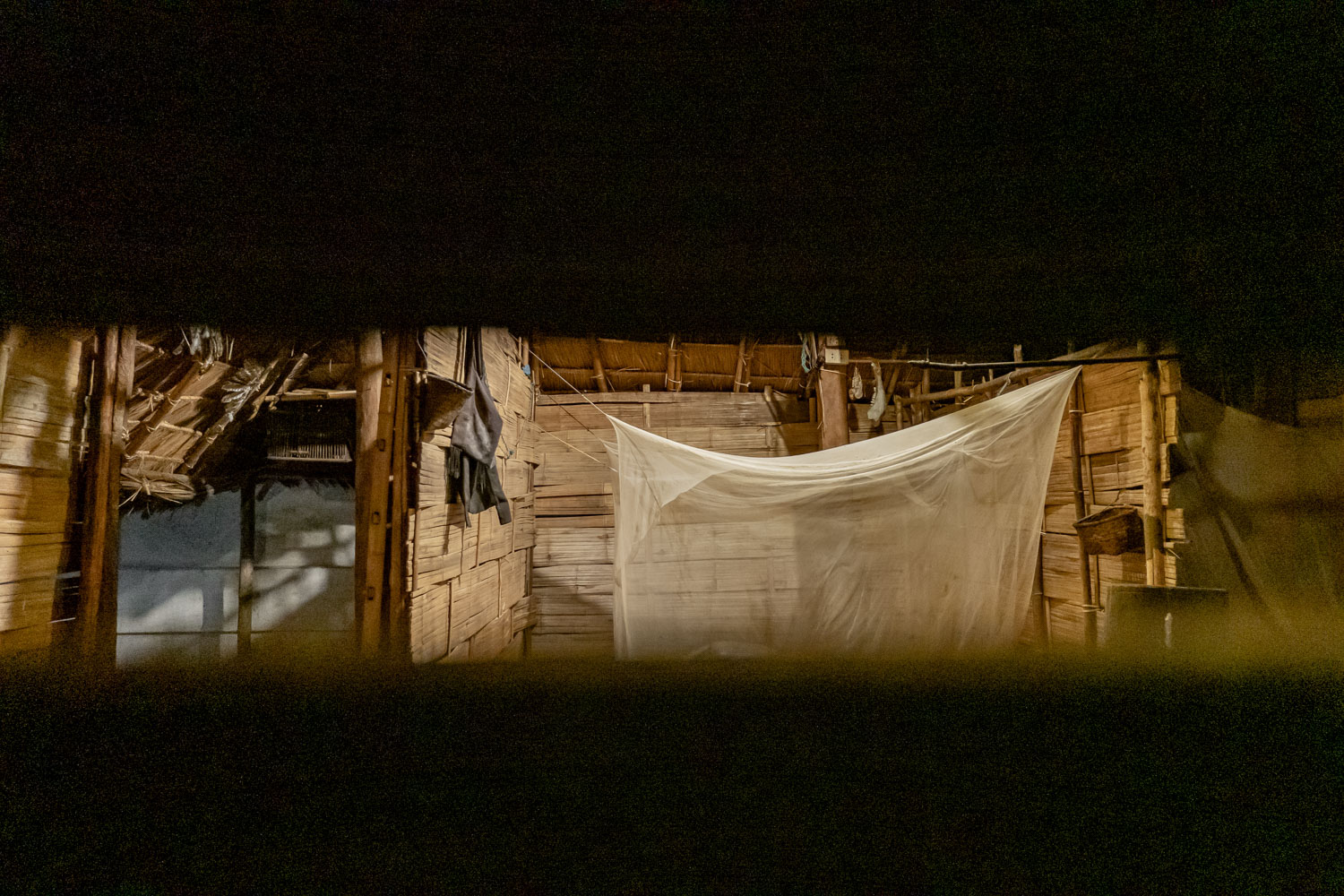
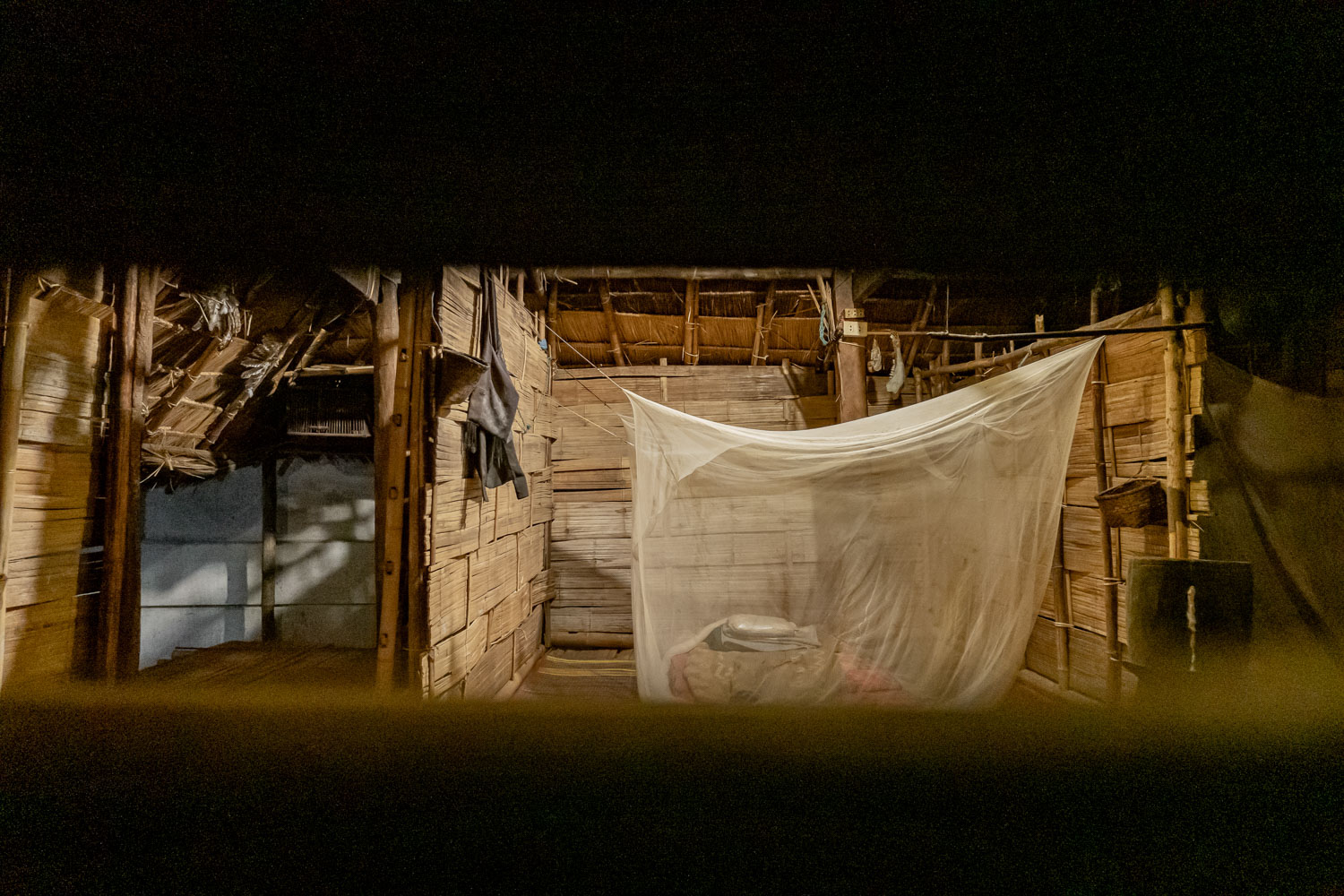
Upstairs, Busui has reconstructed a traditional Akha wooden house that was dismantled in Chiang Rai and reassembled here by Akha craftspeople. Notably, the house is not presented as an architectural model intended to convey technical information or knowledge. There are no labels or sets of technical terms identifying or explaining its individual components. Instead, the wooden house remains as though its occupants had stepped outside only moments ago. Everyday objects lie scattered throughout the interior, retaining visible traces of use. Each item has been left where it was, as if nothing had changed.
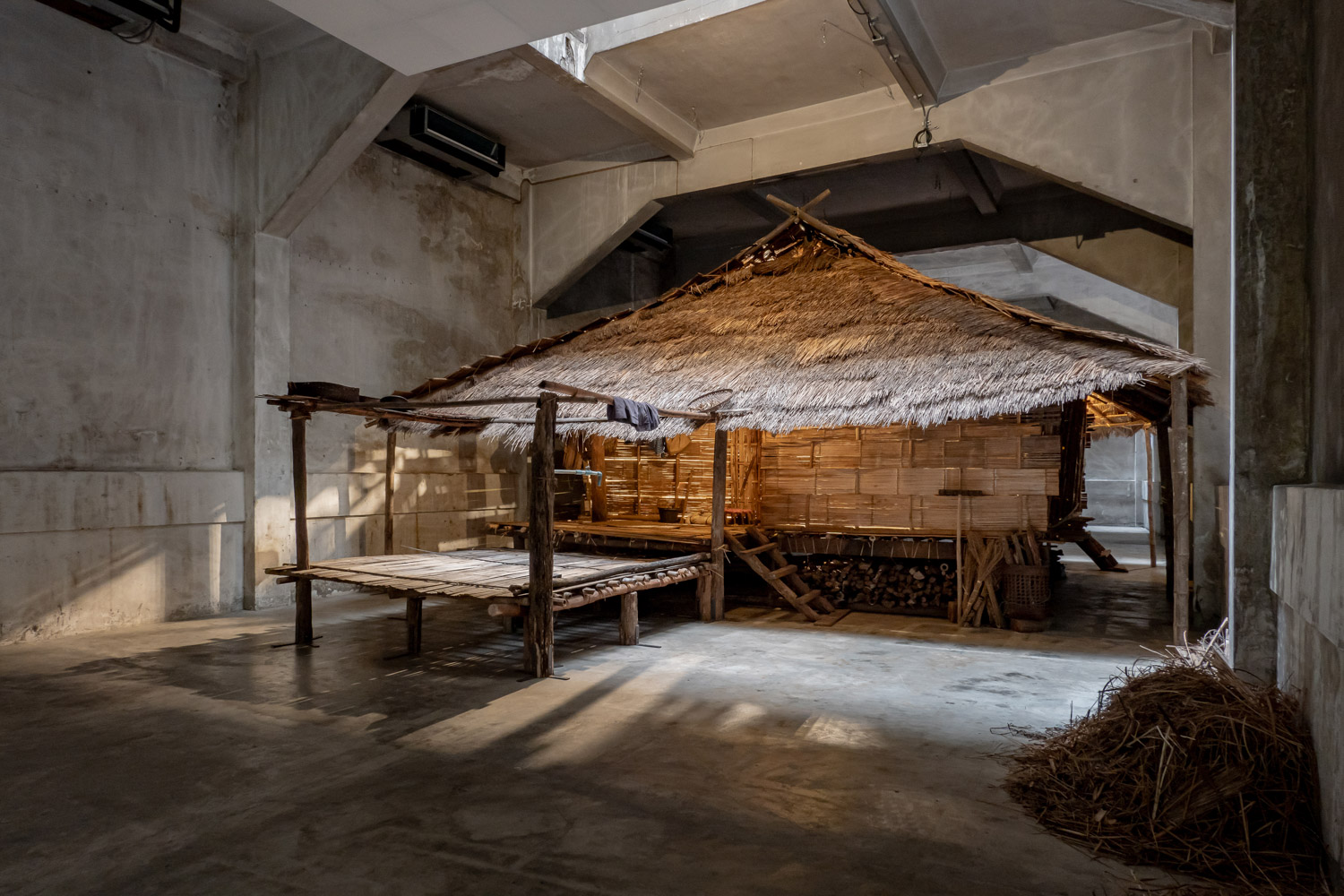
This mode of display seems to challenge conventional exhibition practices, in which handicrafts are removed from their original contexts, separated into individual objects, and labeled in ways intended to educate viewers and assign them value as the wisdom of distant peoples. Yet the more such displays attempt to bring these objects closer, the more distant they seem to become. The relationships among them are severed even when they occupy the same room. They become something else, assume another status and another meaning, and remain merely what they ‘once’ were.
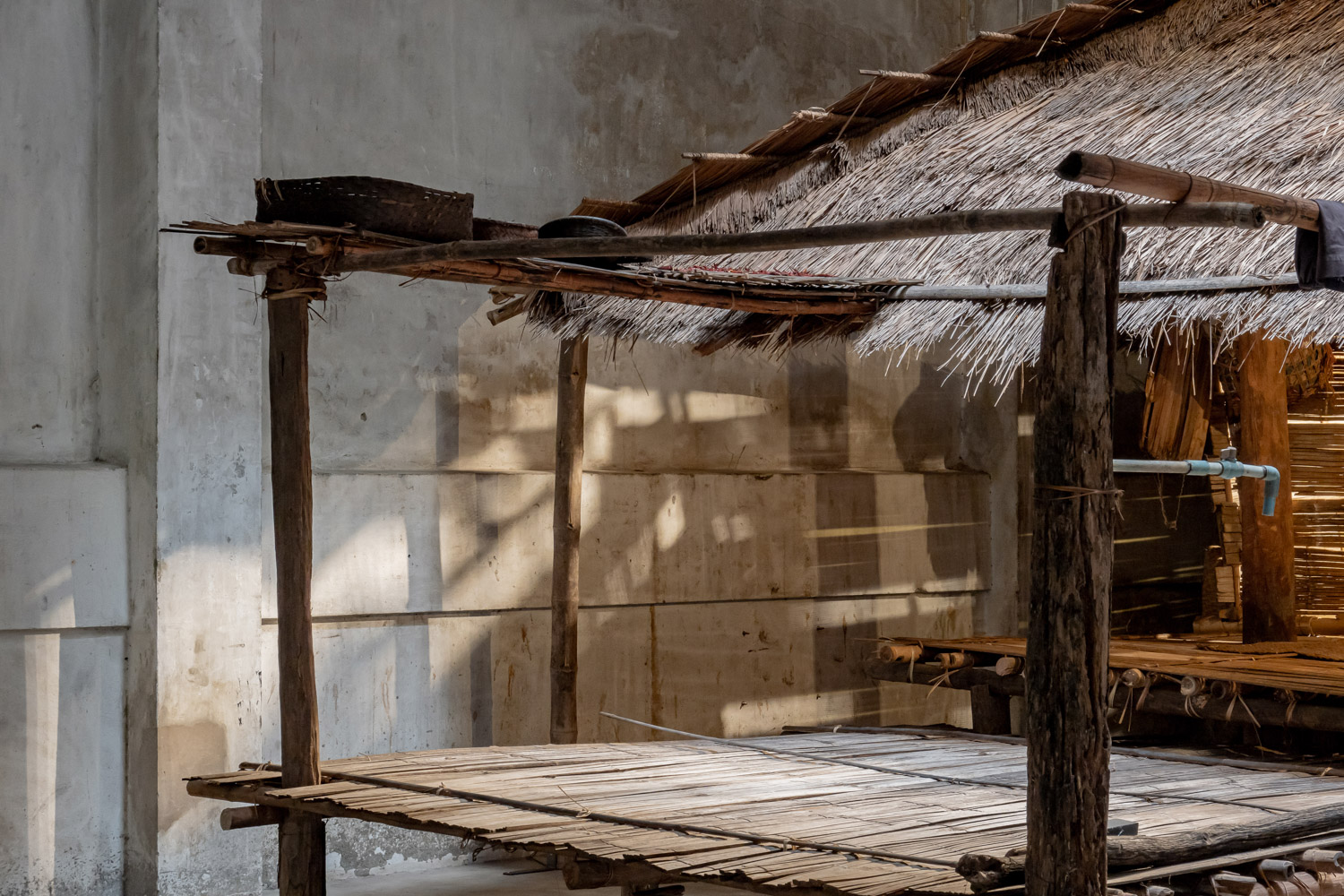

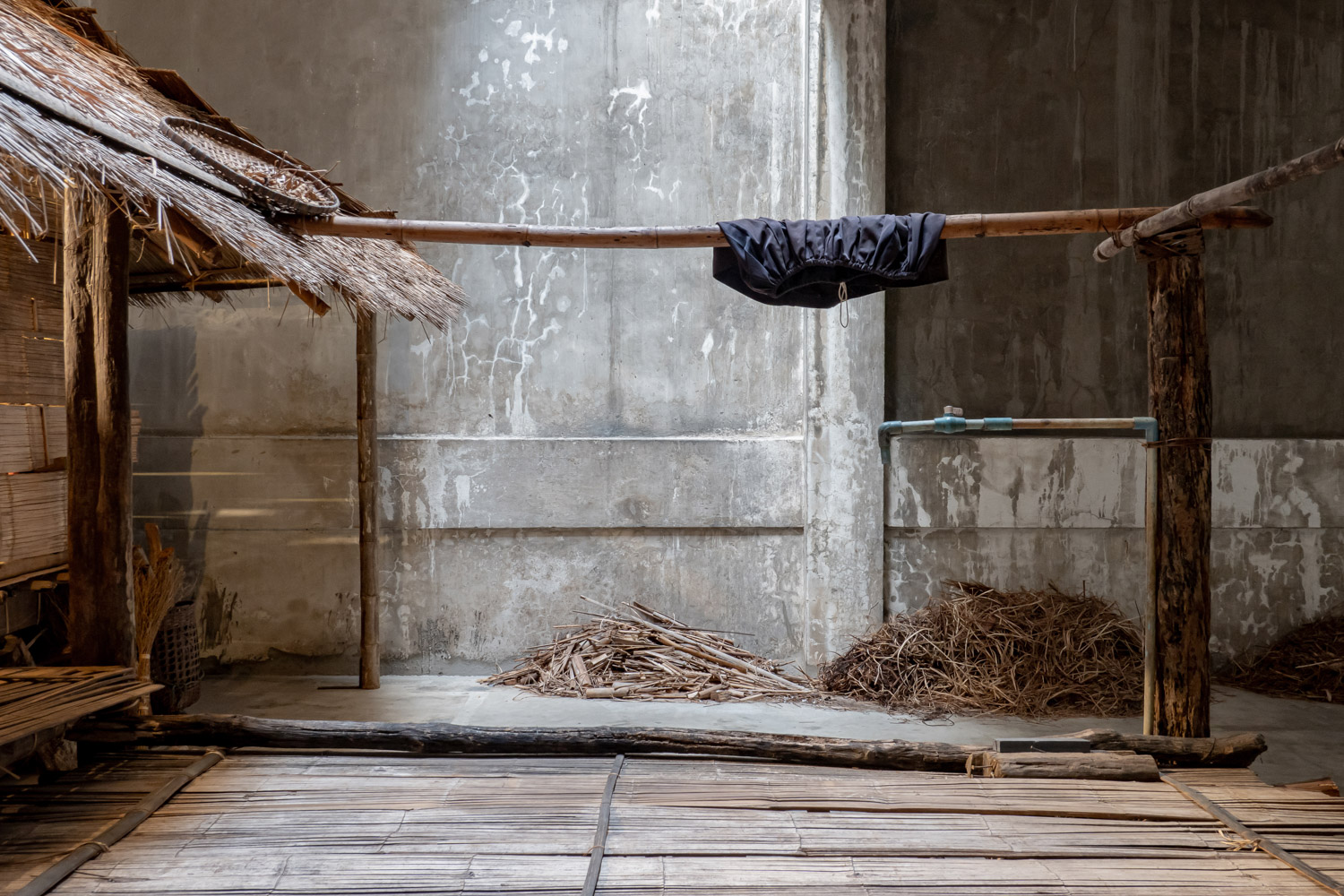
The sense of unease deepens upon stepping inside the house. Although no one lives there, the warmth of human bodies still lingers in the arrangement of the interior. Many of its objects bear traces of their occupants’ lives—both the beautiful and the unbeautiful, the clean and orderly as well as the cluttered, stained residue of habitation. It is precisely this ordinariness, which feels ‘too private,’ that produces a discomfort akin to that of being an ‘intruder.’ Busui’s wooden house does more than reveal how the Akha live. It also ‘intrudes’ upon our feelings and ‘provokes’ us to reconsider our own position as outsiders. This challenge invites us to locate the boundary between intruder and visitor, and between the pursuit of knowledge and the pursuit of understanding.
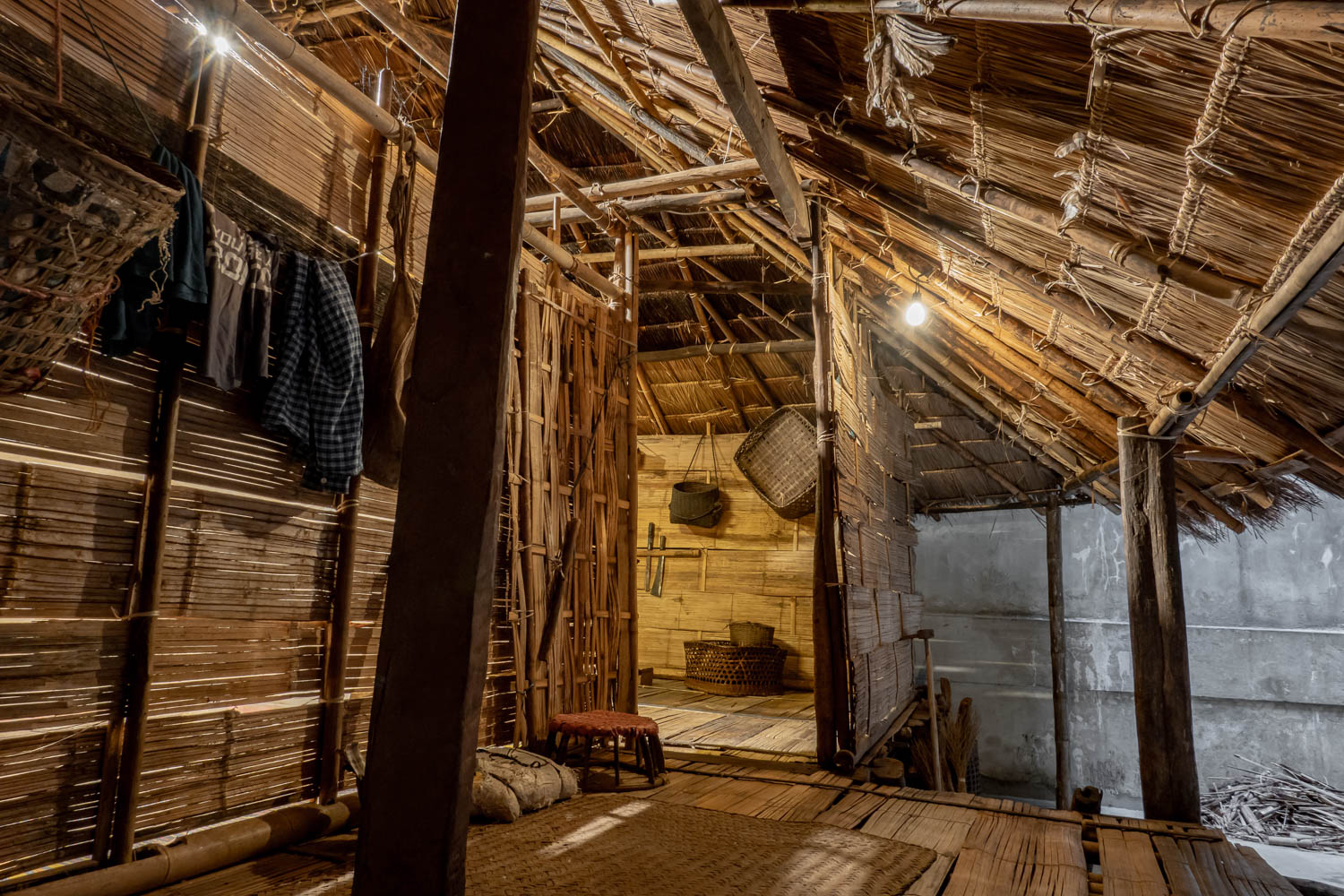
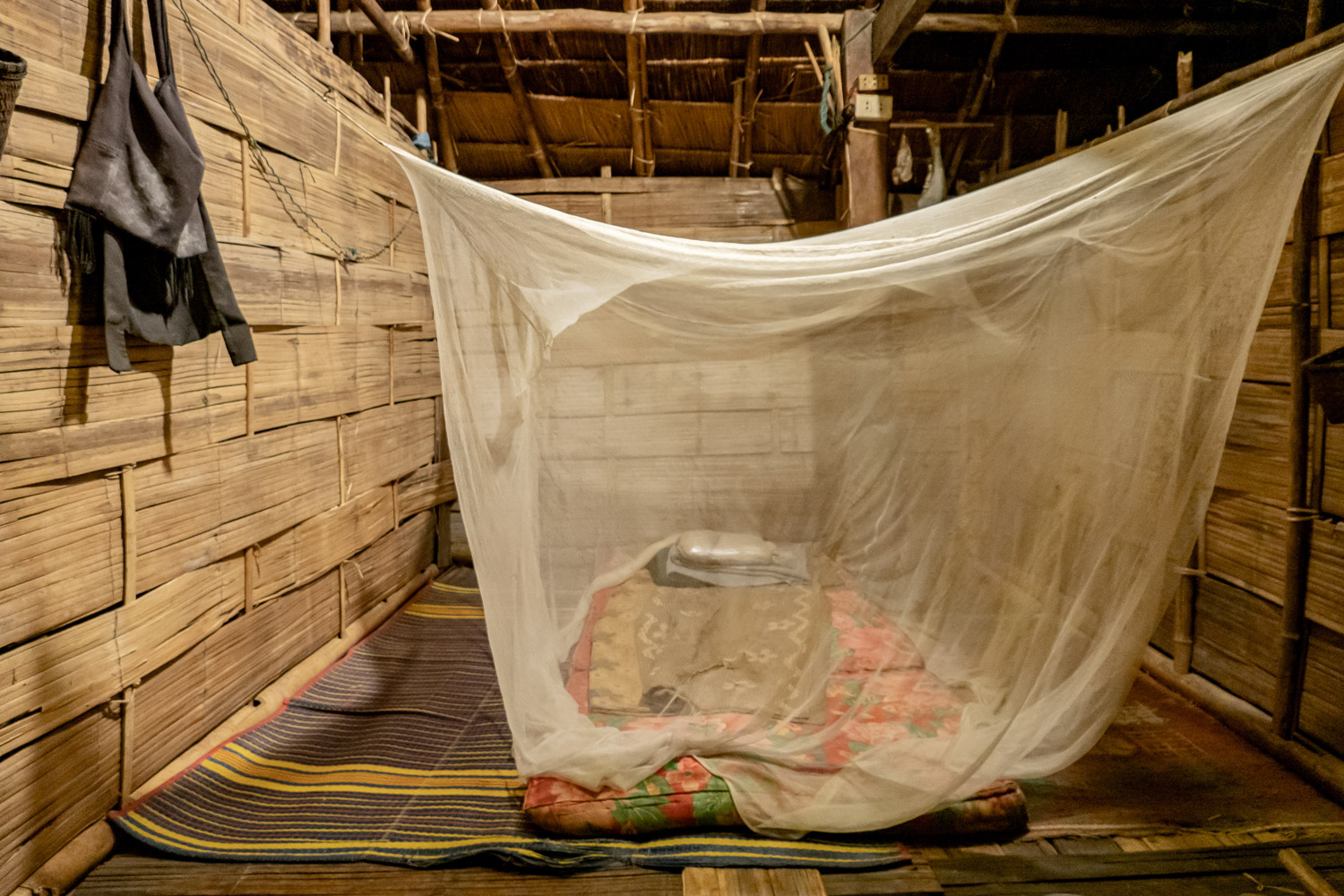
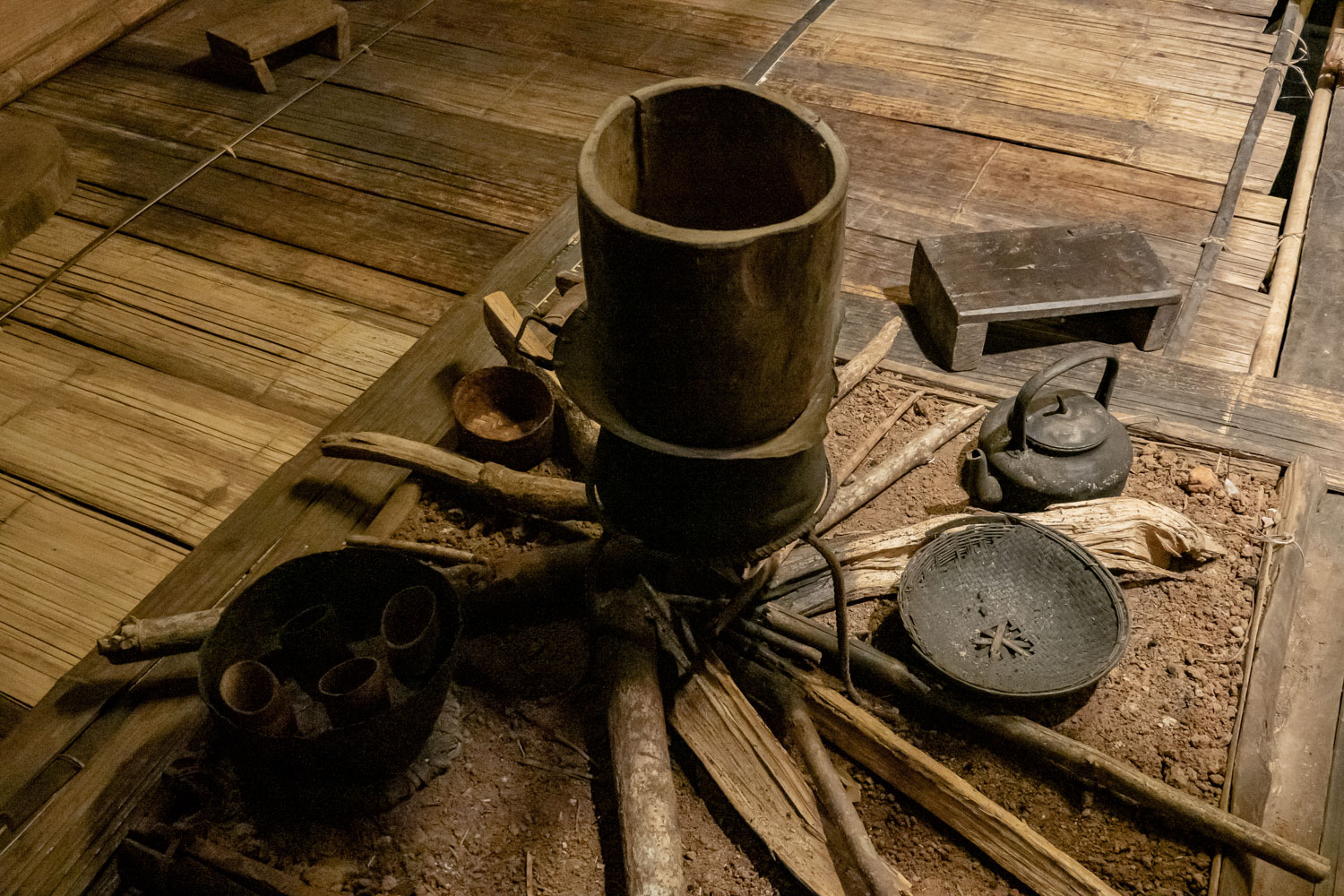
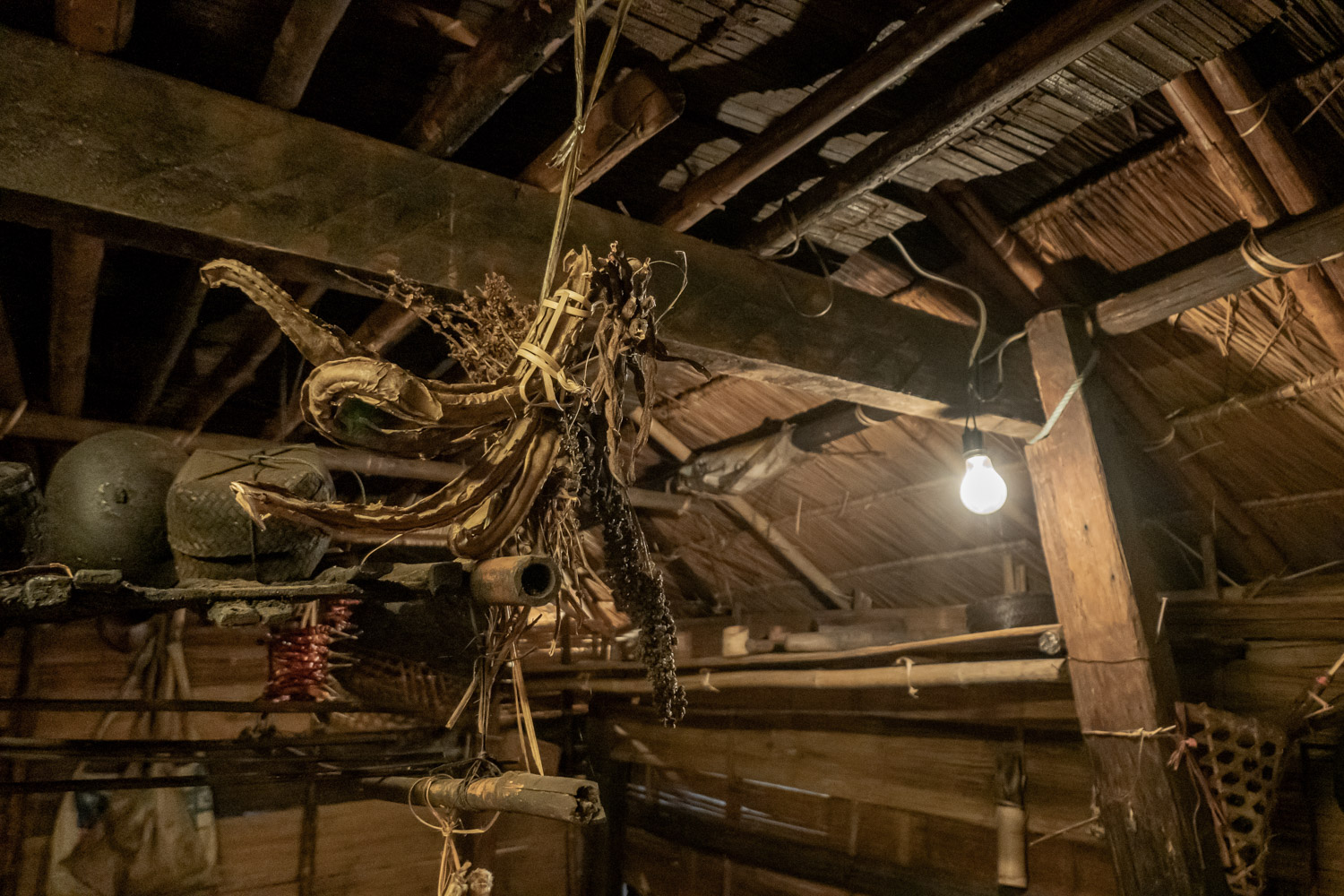
Yet no matter how strongly the wooden house conveys a sense of ‘reality,’ stepping back to view it as a whole reveals that it does not stand outdoors but within the shelter of an exhibition building. Sunlight may filter through openings above, but masonry still separates the house’s roof from the sky. Busui’s wooden house therefore occupies an ambiguous position between being sheltered by and intervening within an art space. In the first sense, the stories of the Akha community can attain visibility in this exhibition through the agency of art. They have neither appeared independently nor emerged through the authority of a museum or a body of knowledge governed by the centralized state. In the second sense, however, Bangkok Kunsthalle is itself an art institution—one with its own frameworks of meaning and its own capacity to exercise power. The Akha community’s resistance to cultural forgetting thus emerges amid overlapping networks of meaning, capital, and power, prompting us to question not only what stands before us but also what lies beyond it.
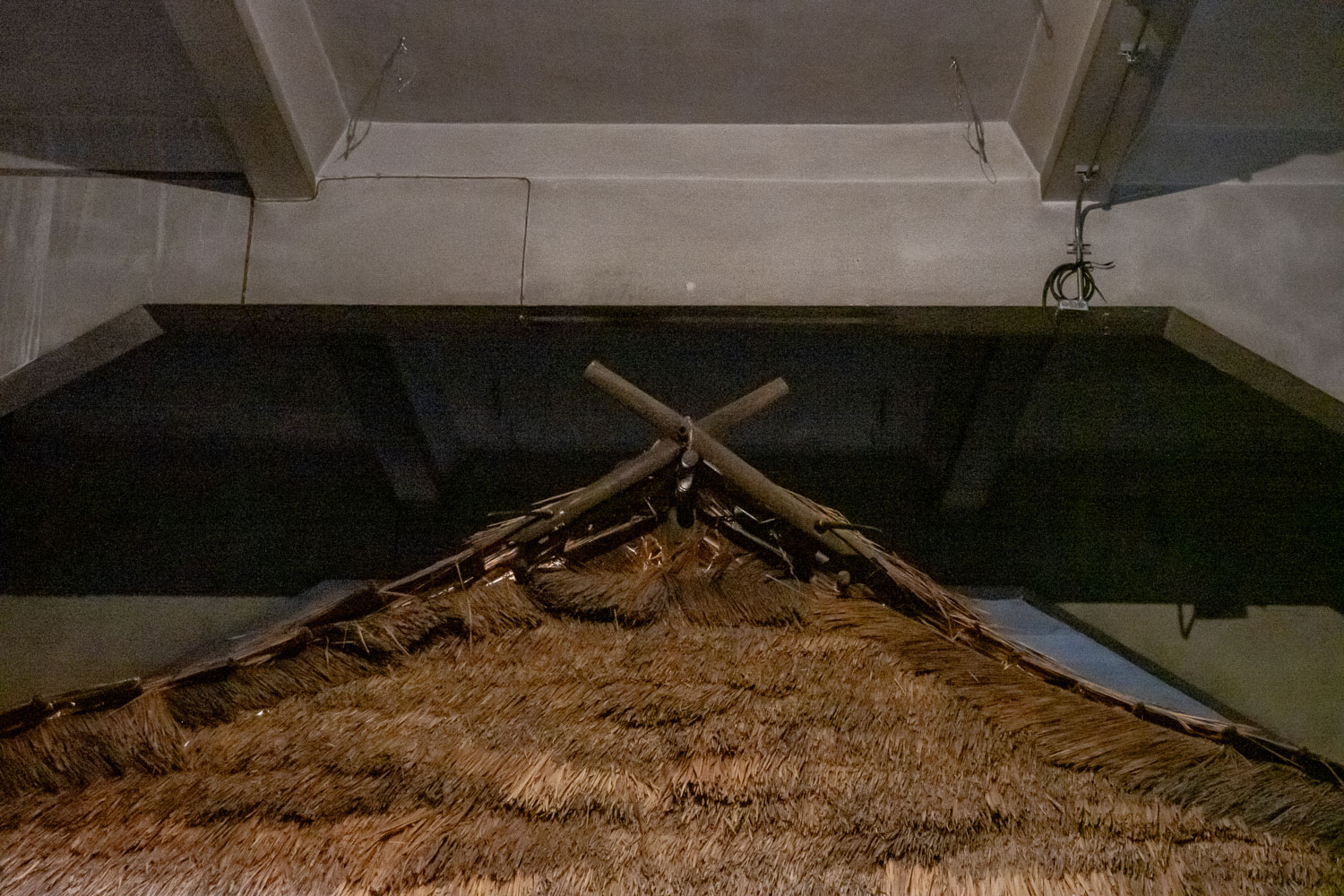
Moreover, with the lower floor configured as an underground burial ground and the upper floor as a wooden house standing on the earth’s surface, the exhibition resembles a soil profile exposed in an archaeological excavation. Its layers reveal how all things accumulate under the conditions of time. Life and death thus make the force of time visible. On one level, this configuration corresponds with the exhibition text’s reference to the Akha belief that the living and the dead dwell alongside one another. On another, however, the ceiling of the first floor and the floor of the second separate the two realms. They mark the presence of a timeline that continues without pause. The textiles in the burial ground are therefore objects that have fallen out of the realm of the living, left the house, and descended into the earth—to be buried, layered, and decomposed in the realm of death. In much the same way, ethnic cultures with less capital, fewer resources, and less power are swallowed and dissolved by time, becoming merely another stratum of soil awaiting excavation in the future. Even when they are excavated, restored, and reconstructed, the process remains accompanied by temporal and cultural distance.
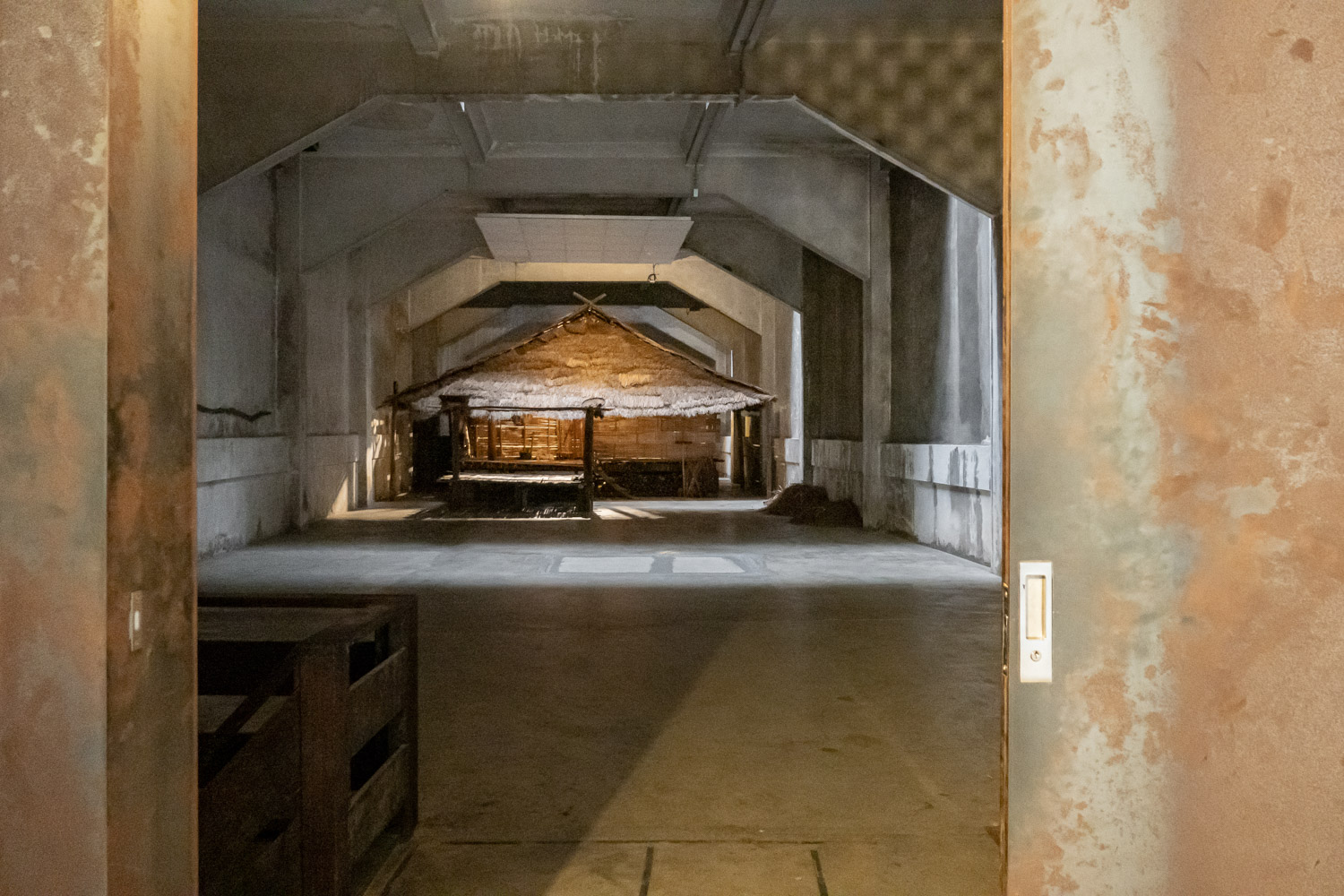
Returning to Mahler’s words, Busui’s work preserves the flame through collaboration with the community. It enables members of the Akha community to become makers of art, while bringing long-standing traditions of handicraft and local craftsmanship into a contemporary exhibition space. More intriguingly, however, Busui’s work does not merely refuse to become ashes; it turns the ashes back into fuel for the fire. Both the expanse of fabric and the wooden house reveal gaps and distances within things we once considered familiar—gaps that often deliver a jolt, compelling us to reconsider our own position as viewers.
The Preservation of Fire is on view at Bangkok Kunsthalle from May 15 to November 1, 2026.
_
1 ‘People from the center’ refers here to the target audience—or implied audience—of state museums. They are generally people who have passed through the state’s standardized education system and been socialized by the institutions of the modern state. A clear distance therefore exists between the museum’s ideal audience and the people to whom the ethnic culture belongs. One evident example is that the explanatory texts displayed in museums are written entirely in Standard Thai. ‘The audience to whom the museum speaks’ must therefore consist of people educated according to state standards and accustomed to using Thai in the form prescribed by the state. The people to whom the culture belongs, meanwhile, may have entirely different means of communication, ways of transmitting knowledge, or conventions for explaining the world around them.