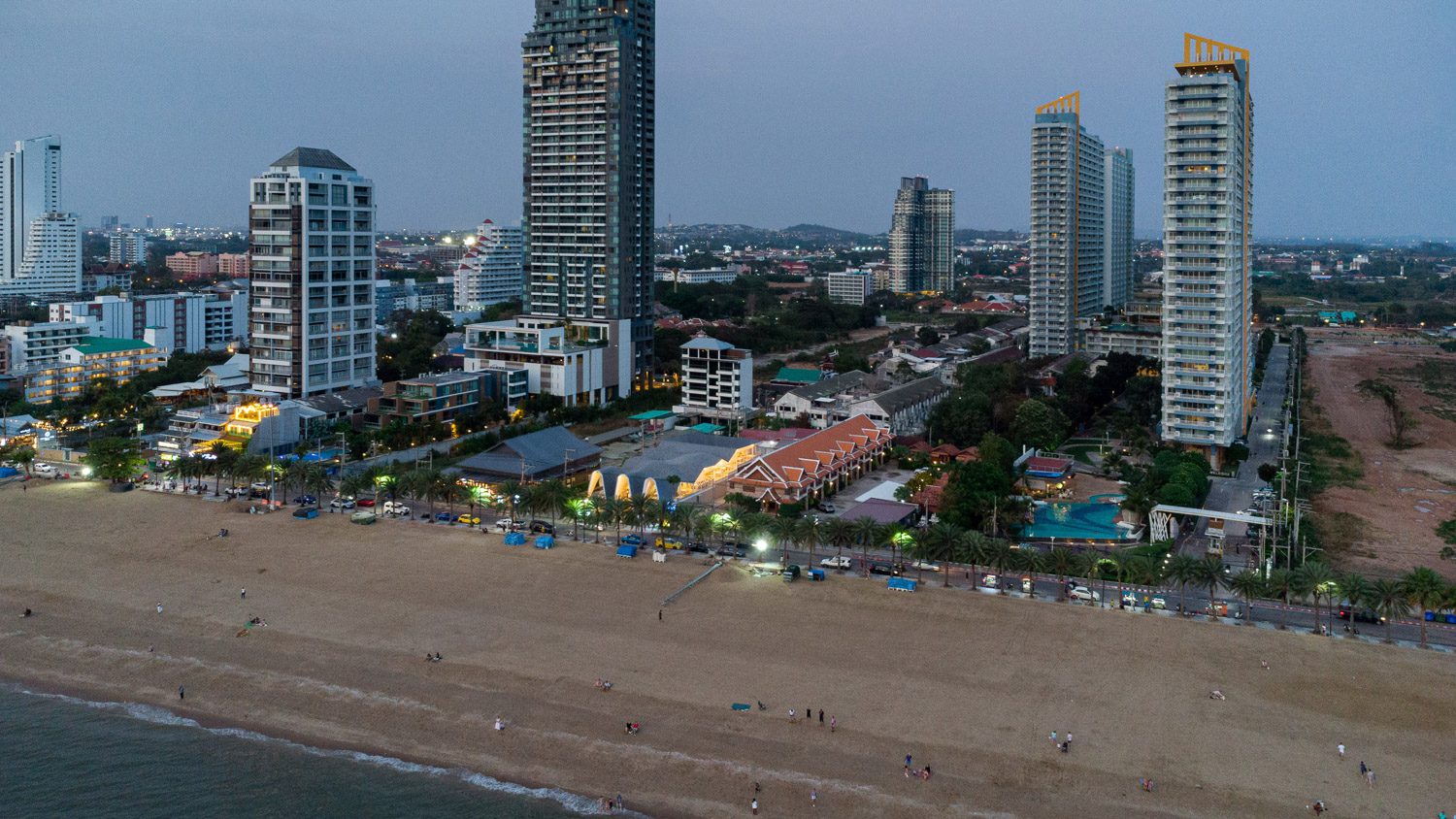
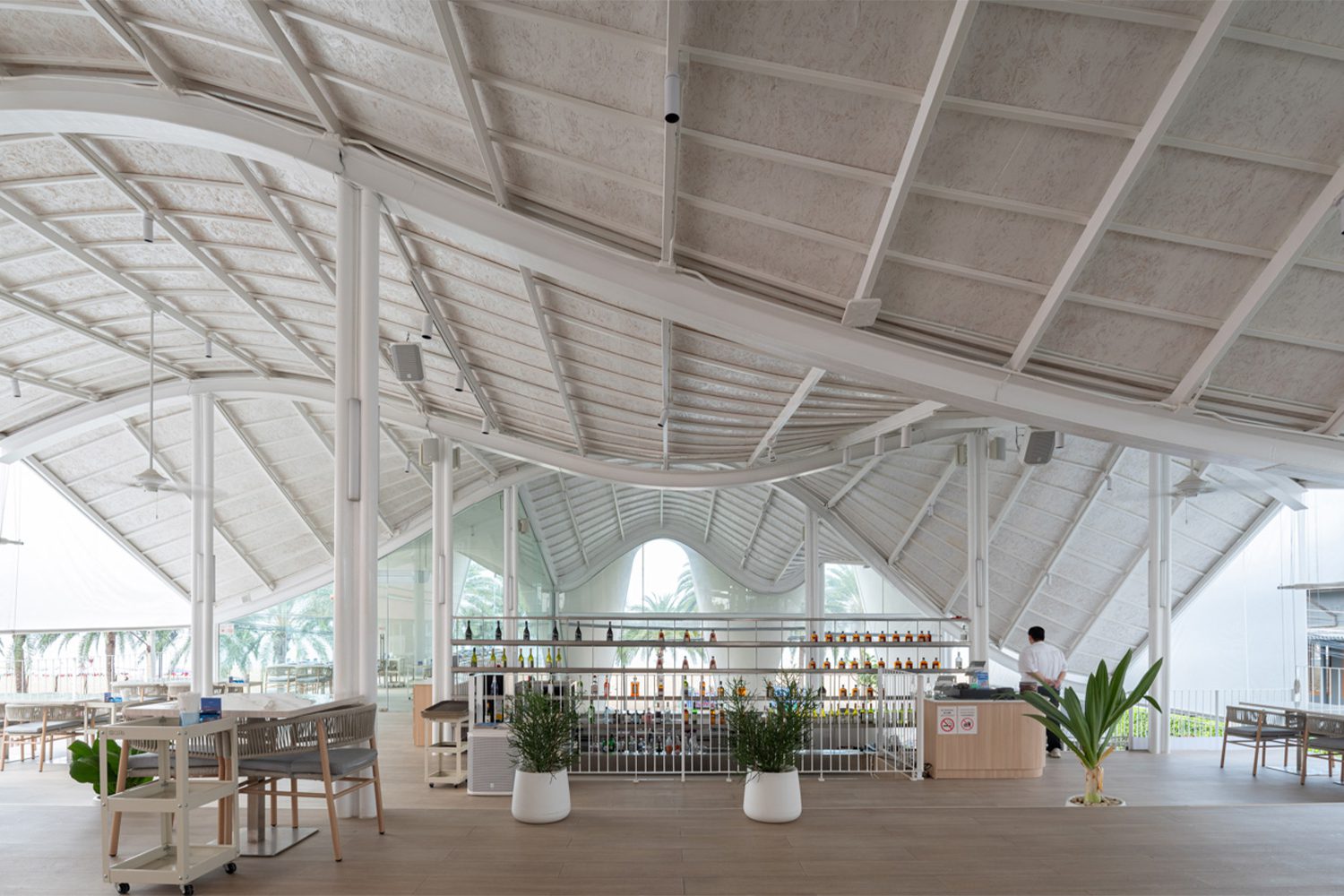

POAR CONVEYS A SEASIDE ATMOSPHERE THROUGH ANYA PATTAYA WITH A LARGE, SEAMLESS CURVED ROOF STRUCTURE THAT BLENDS IN WITH THE NATURAL CONTEXT
TEXT: NATHATAI TANGCHADAKORN
PHOTO: KUKKONG THIRATHOMRONGKIAT
(For Thai, press here)
A seaside retreat continues to hold a timeless allure for urban dwellers and Thai travelers in search of rest. Unlike the crisp air of the mountains, the coast offers a distinct sensory experience. Despite the lingering stickiness of the sea breeze, there remains an irresistible pull to step outside and immerse oneself in an atmosphere that simply doesn’t exist in the city. This intangible blend of air, light, and setting is as much a part of architectural context as physical site conditions or cultural narratives.
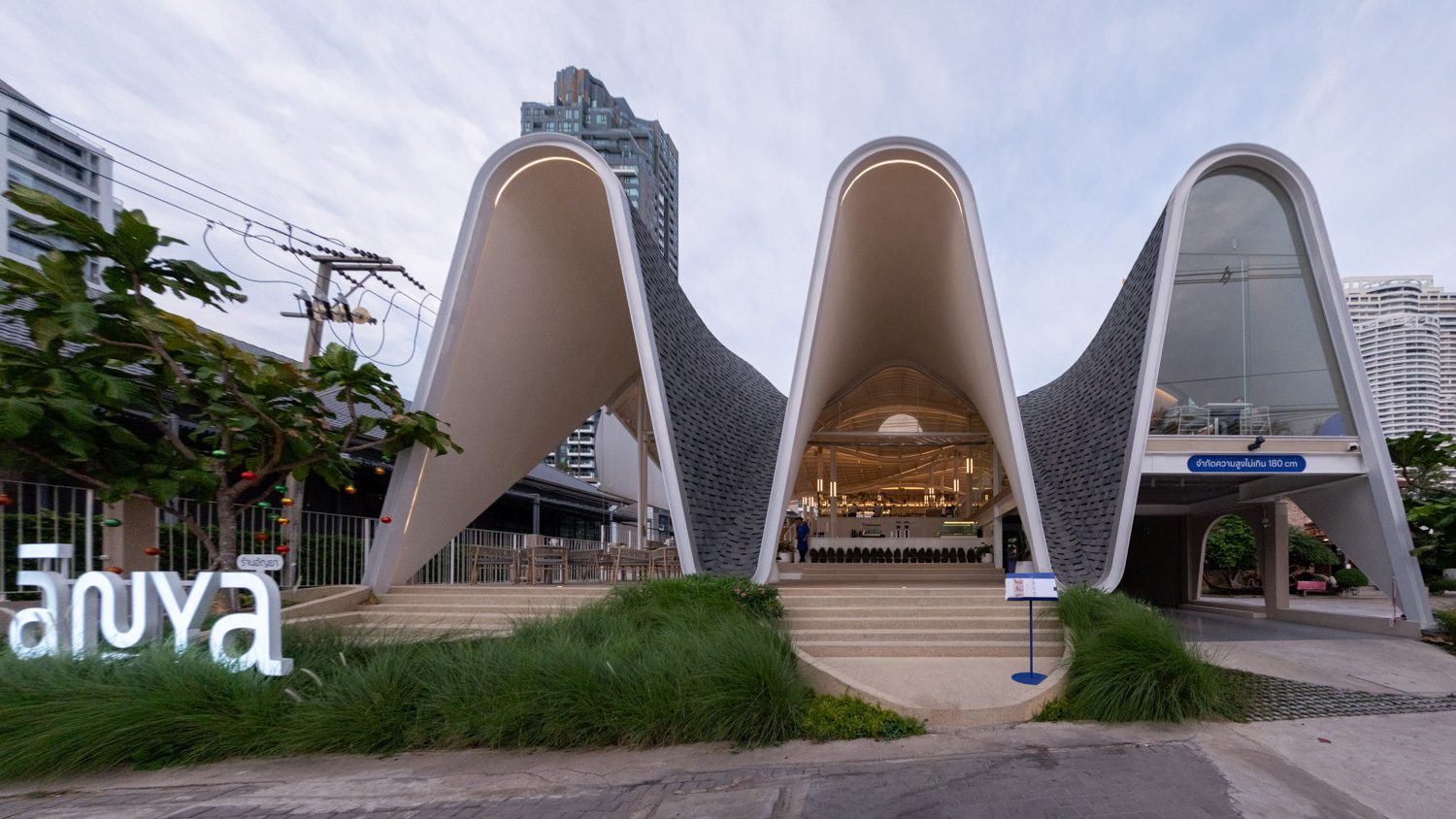
Pattaya, a long-standing pillar of Thai tourism, is often associated with dazzling lights, eclectic architecture, and a mix of sensory overload and seaside ease. Buildings of all kinds line its coastal road, vying for attention in a visual contest. Among them stands Anya Pattaya, a restaurant designed by POAR, which makes a quieter but more resonant gesture. Rather than leaning into spectacle, the design turns its focus to the essence of coastal atmosphere, expressed through a sweeping roofline that curves downward to meet the ground, creating a quietly compelling entrance that draws visitors in.
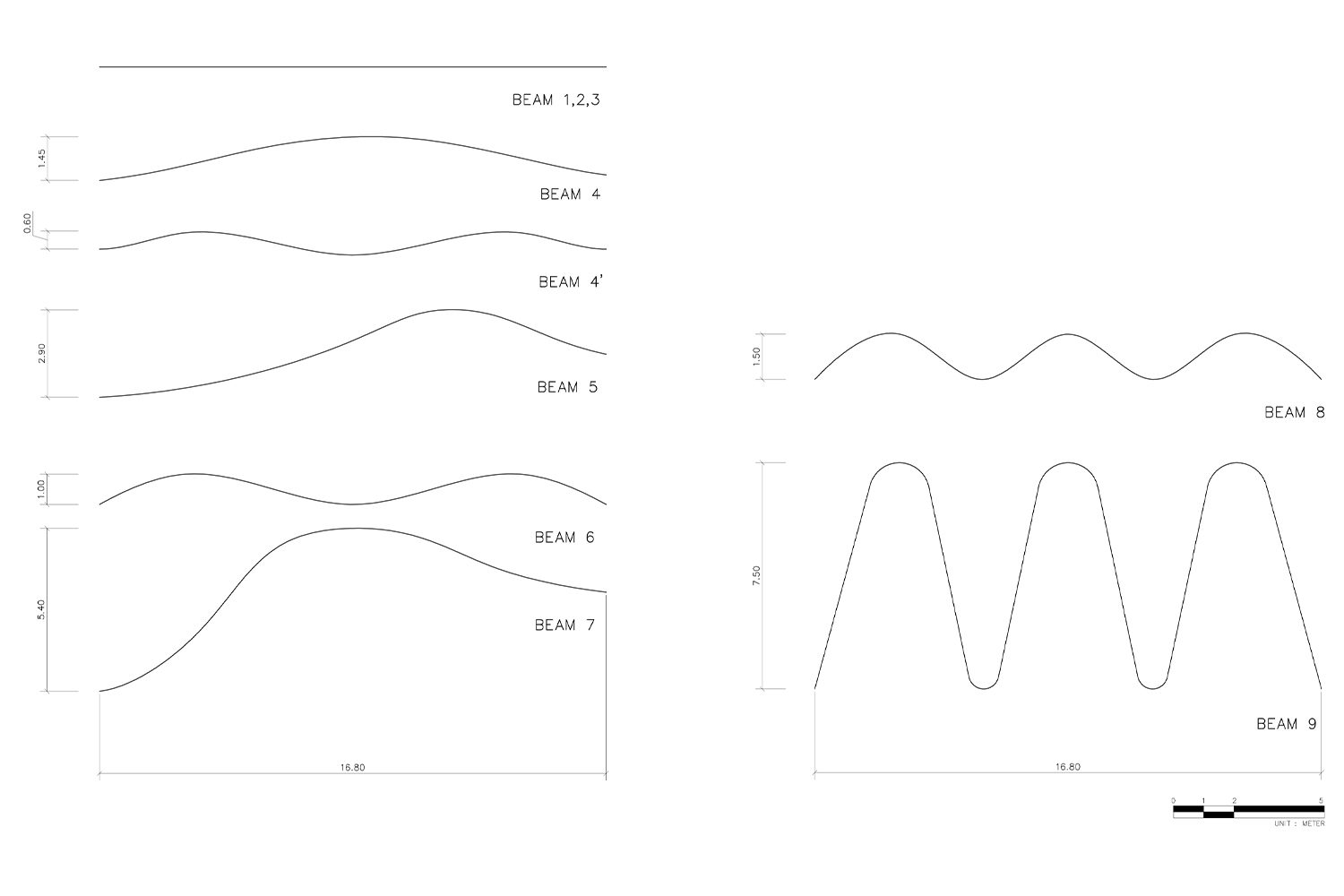
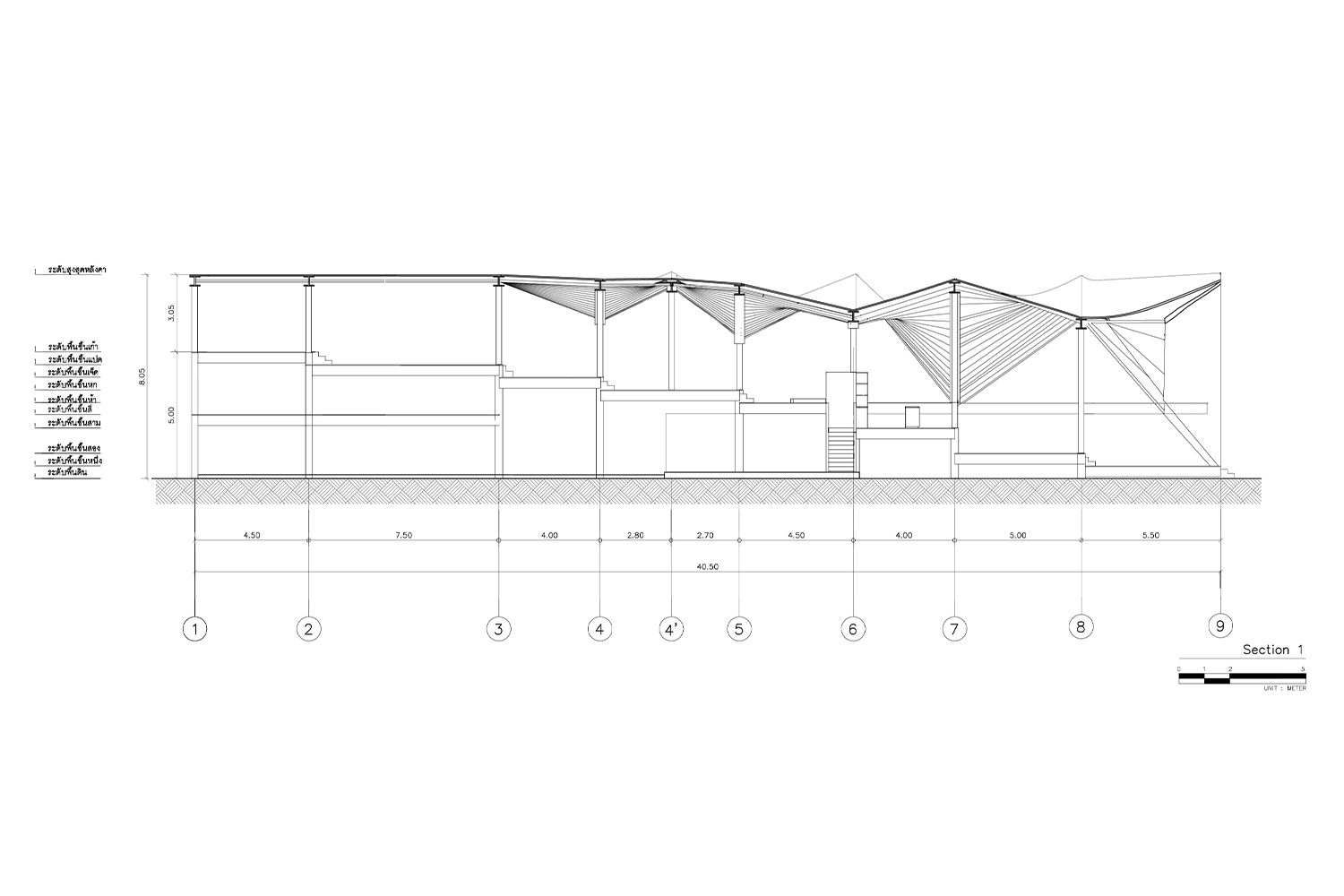
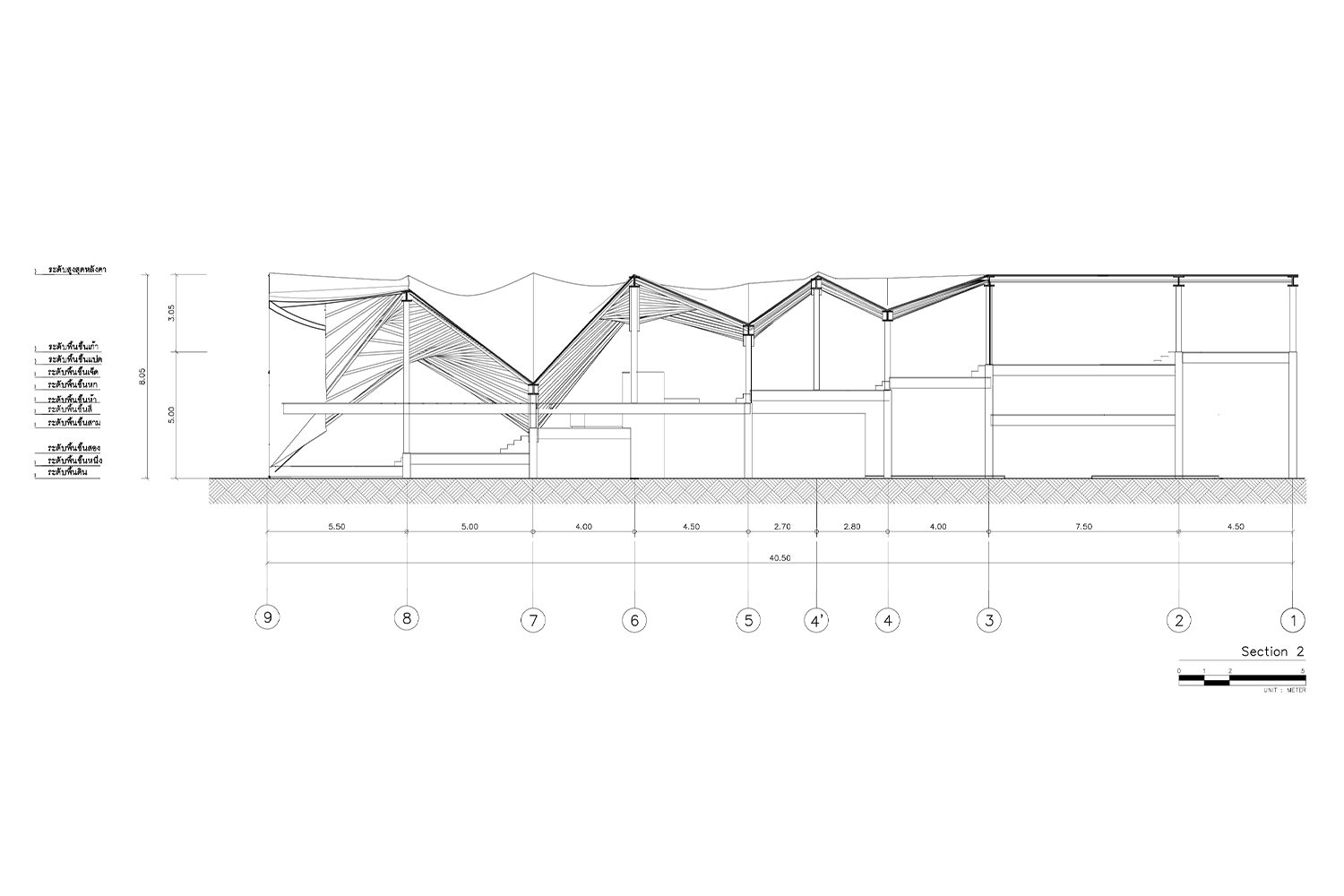
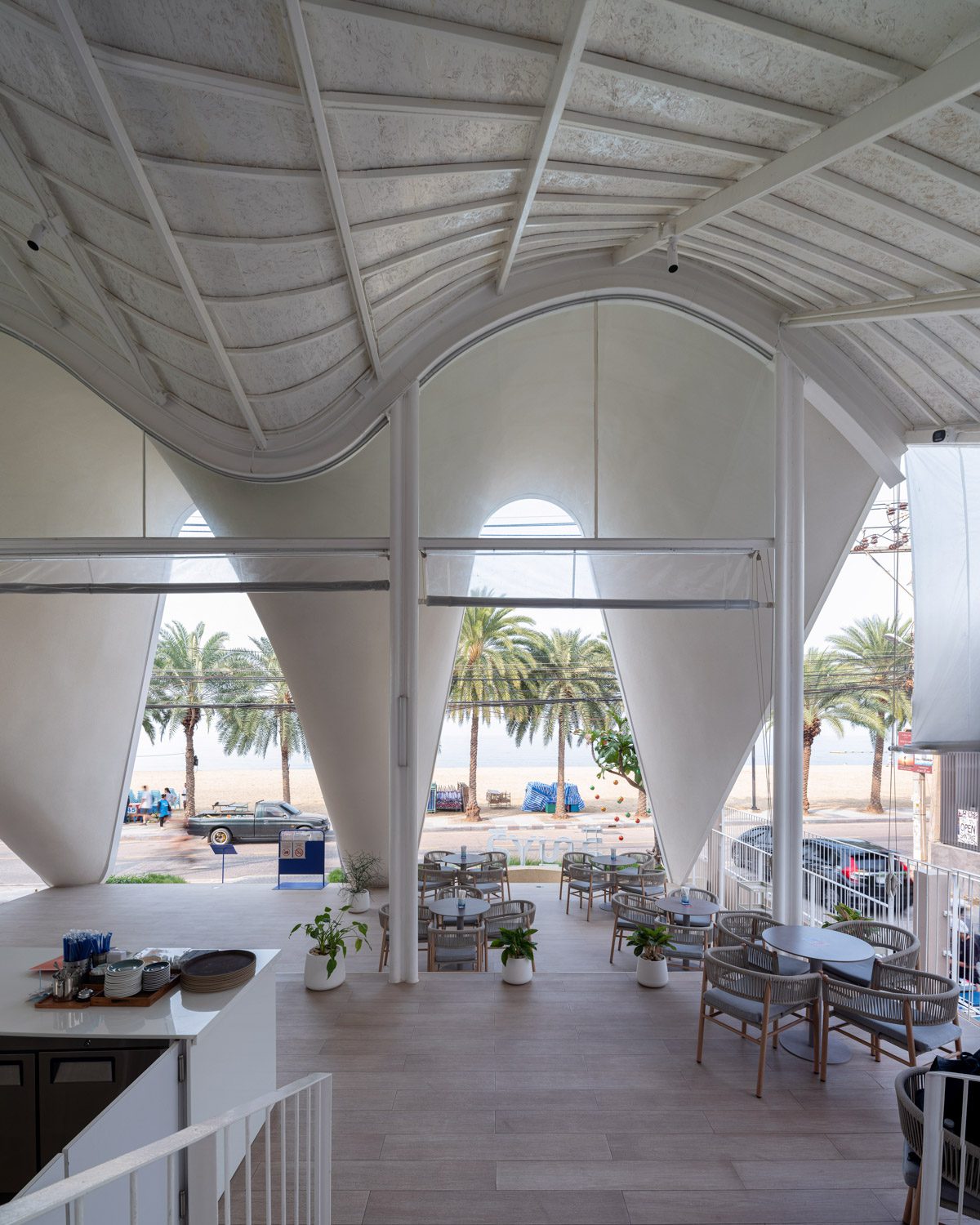
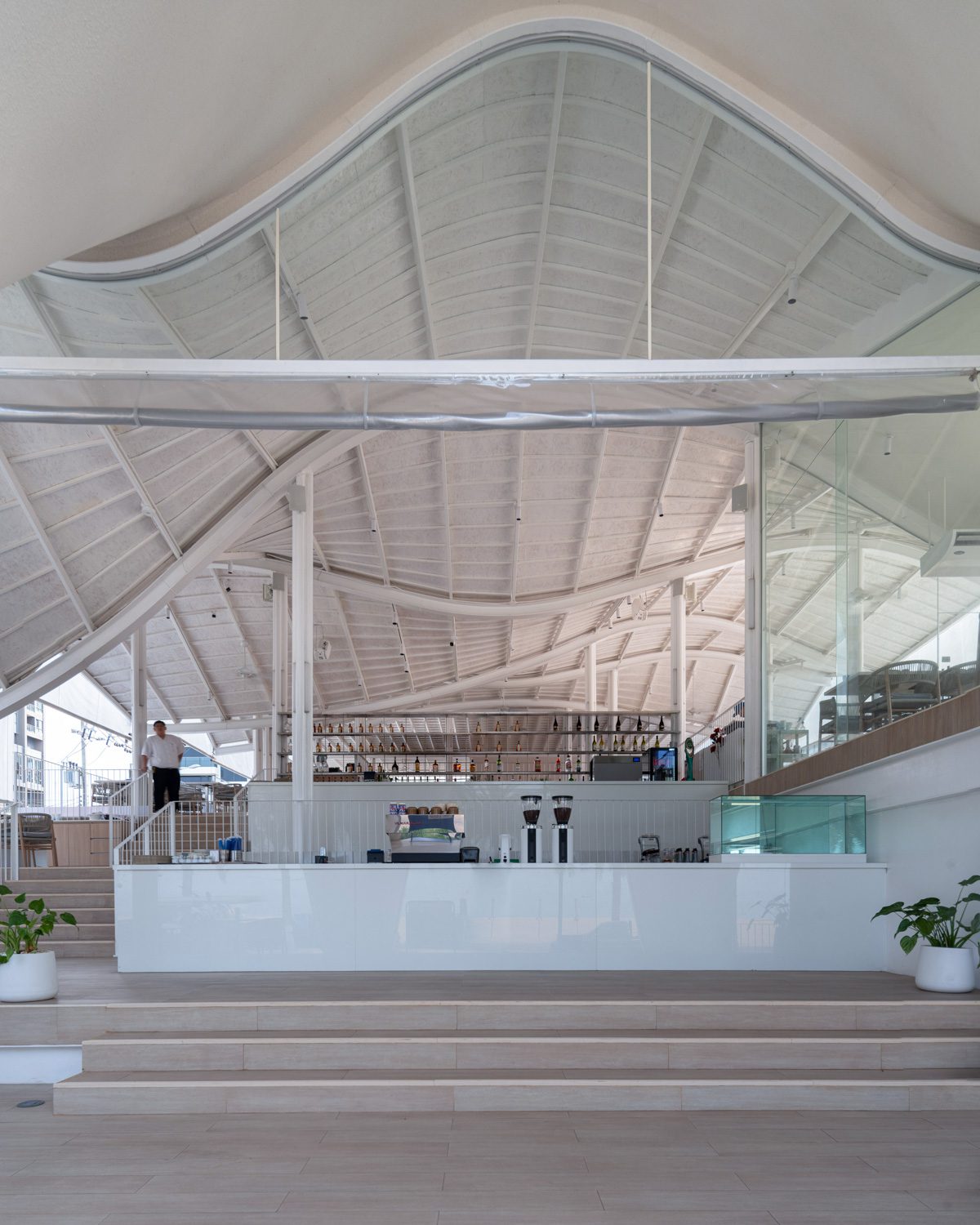
Composed of nine primary beams, the expansive roof shelters the entirety of the restaurant beneath it. Inside, POAR’s signature restraint takes form in spatial clarity that foregrounds openness and breeze. The long, rectangular interior plan gently steps upward in tiers. Seating is arranged along each level, ensuring that even the rearmost tables retain an unobstructed view of the sea.
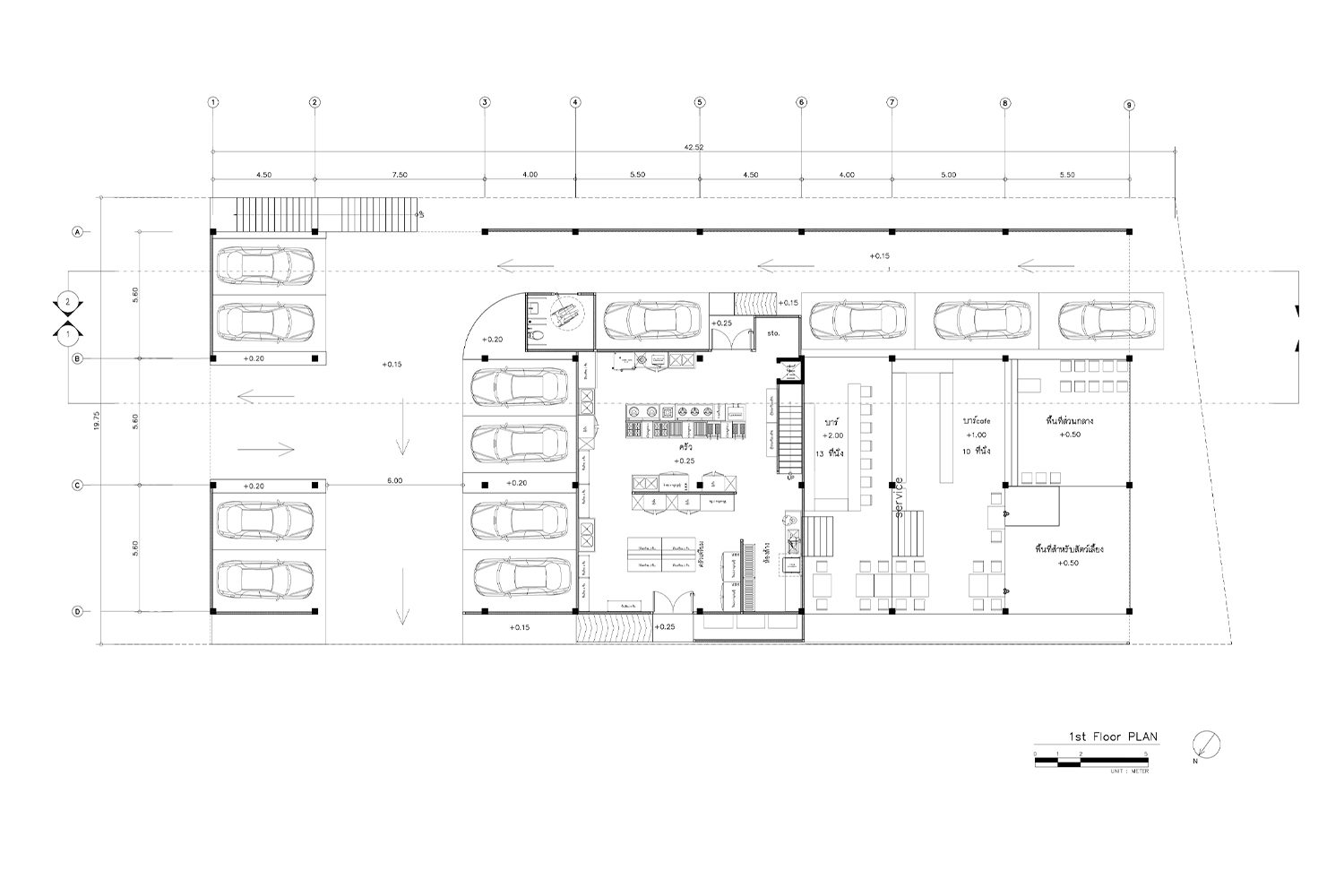
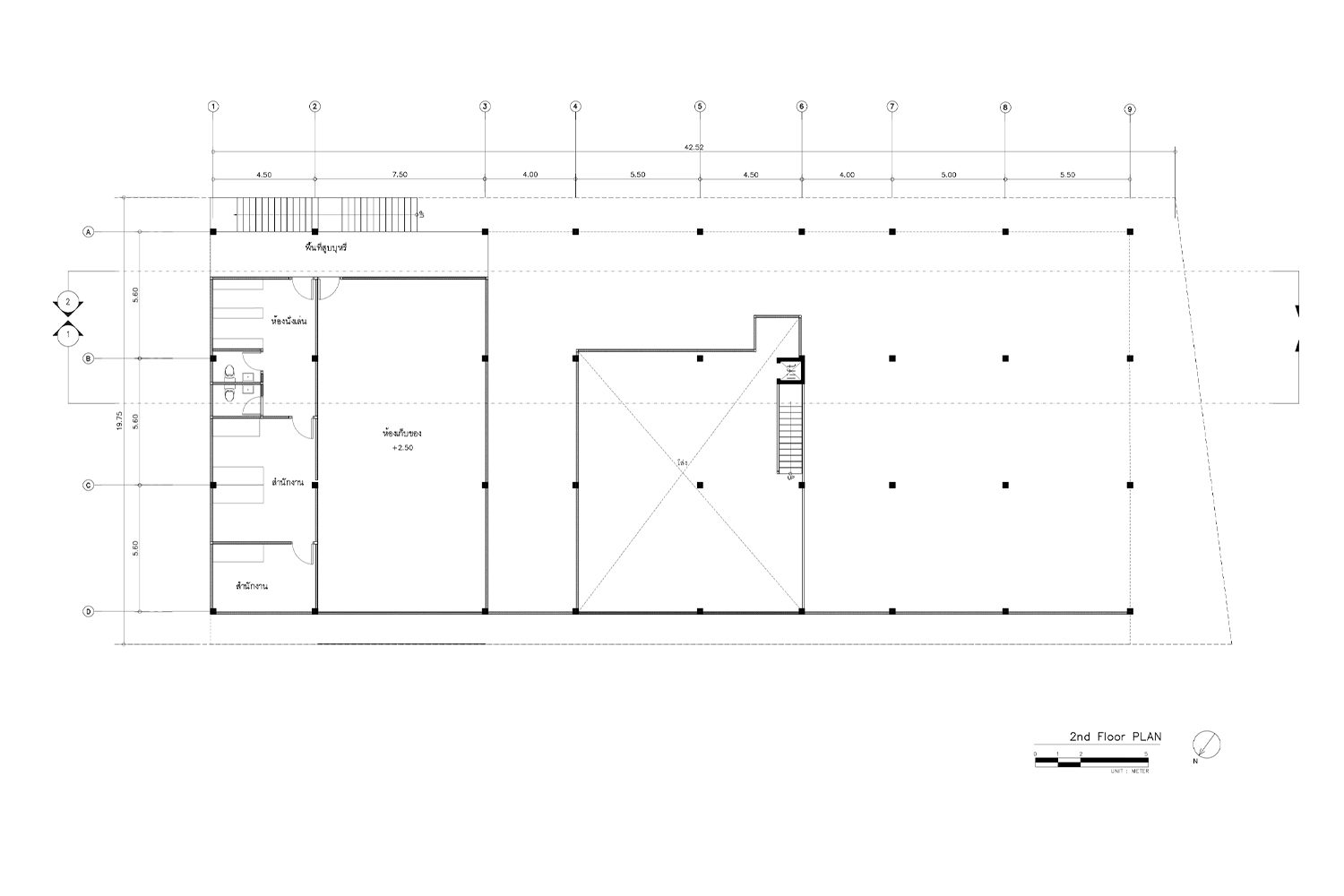
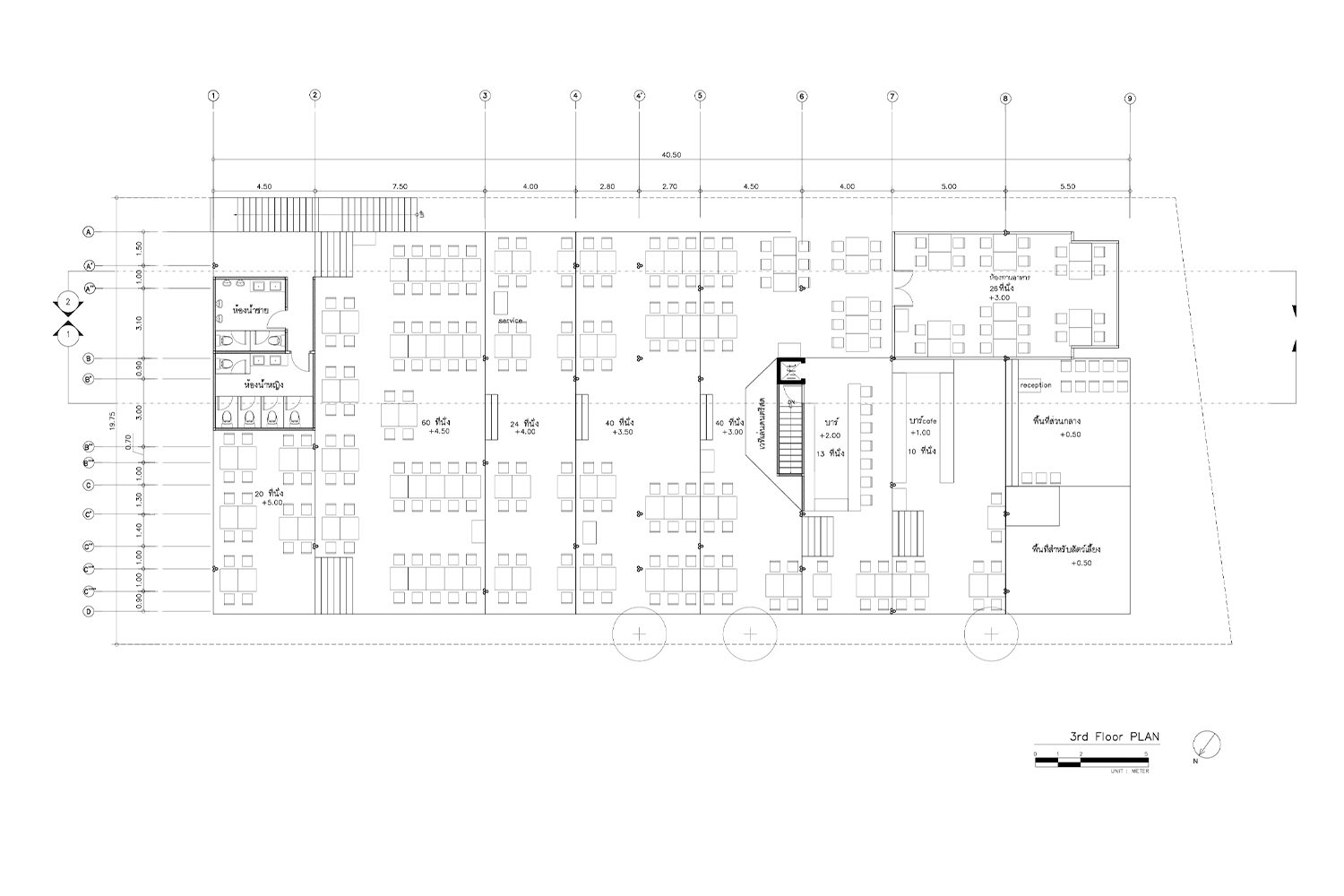
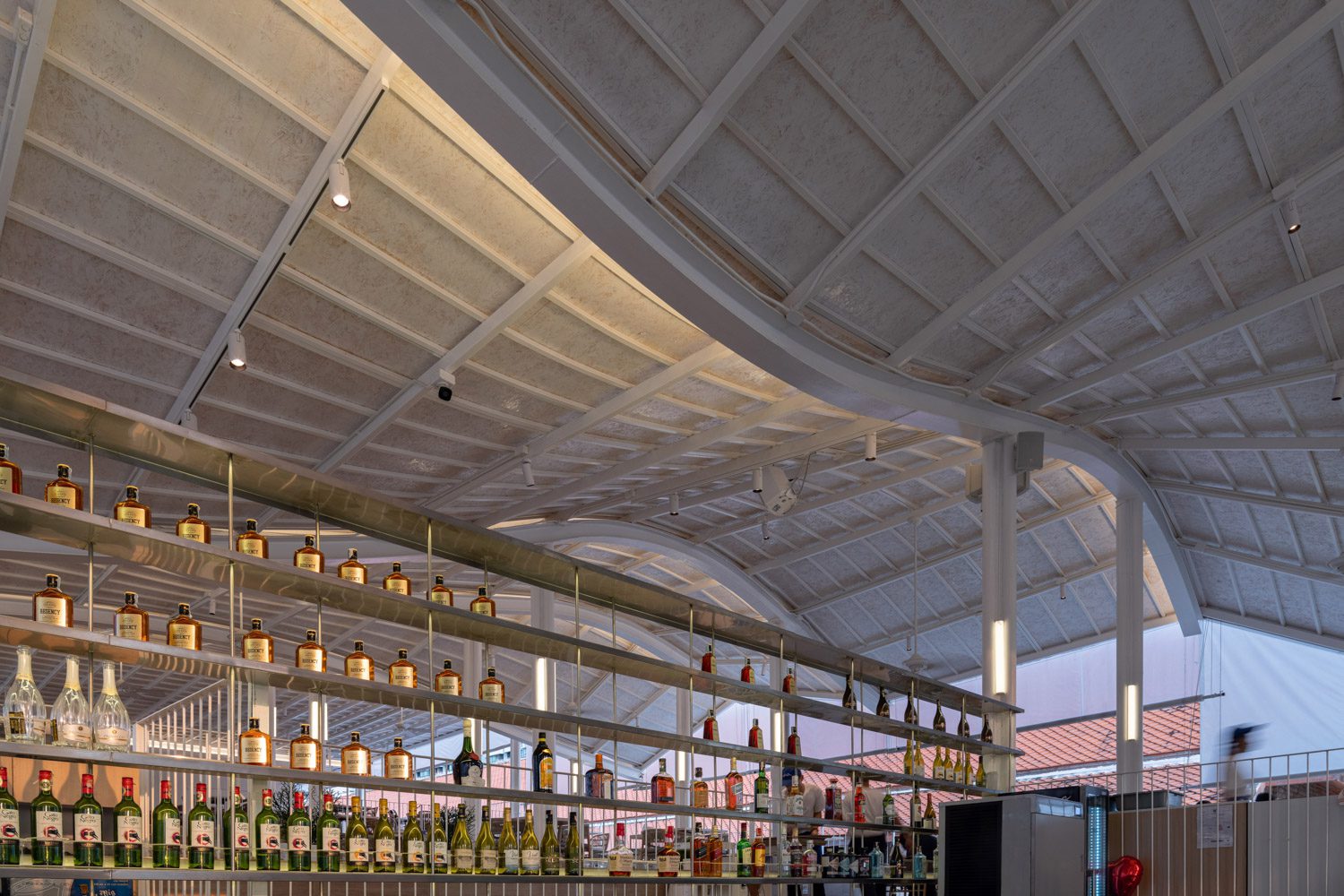
Approached from the street-facing front, visitors to Anya Pattaya first encounter a welcoming reception hall before gradually ascending to the beverage bar and, eventually, the main dining area. The kitchen, discreetly tucked beneath this stepped layout, connects seamlessly to a rear parking lot, enabling efficient service circulation. A secondary staircase, subtly integrated between the bar and the performance stage, facilitates discreet food delivery from the kitchen below. For those arriving by car, a dedicated rear entrance offers direct access via a shaded walkway along the building’s side, eliminating the need to walk around to the front to access the second flight of stairs from street level.
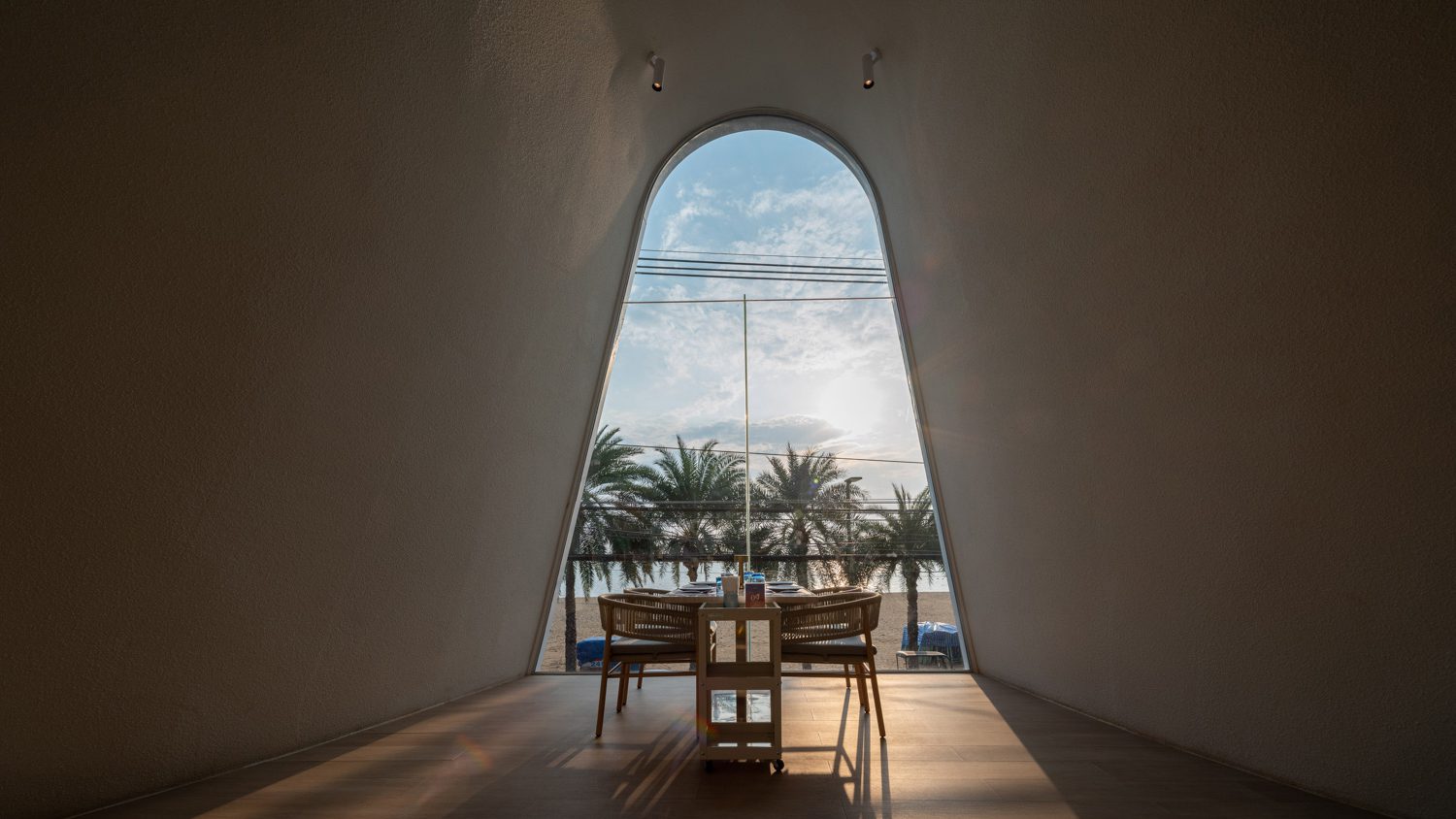
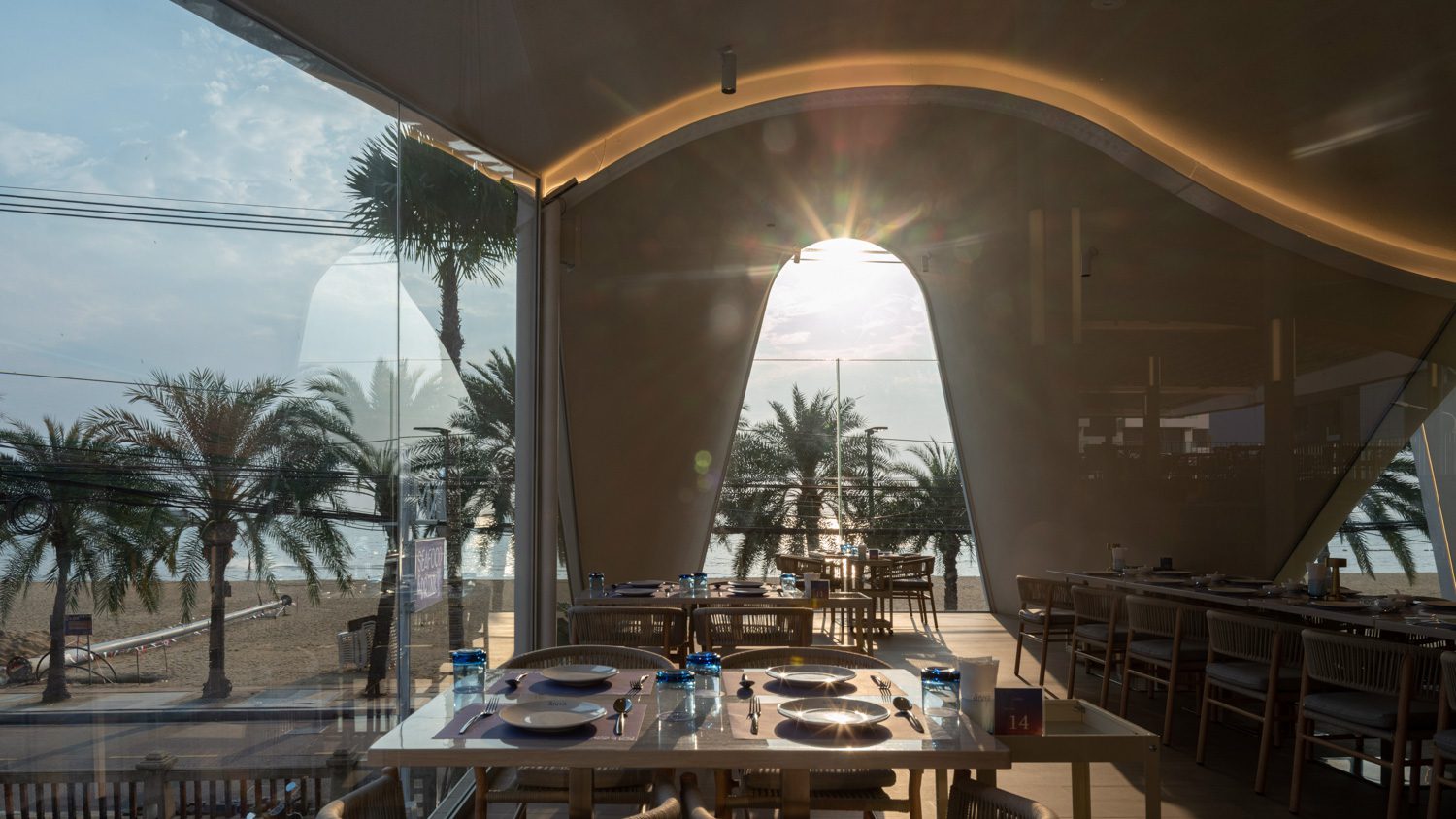
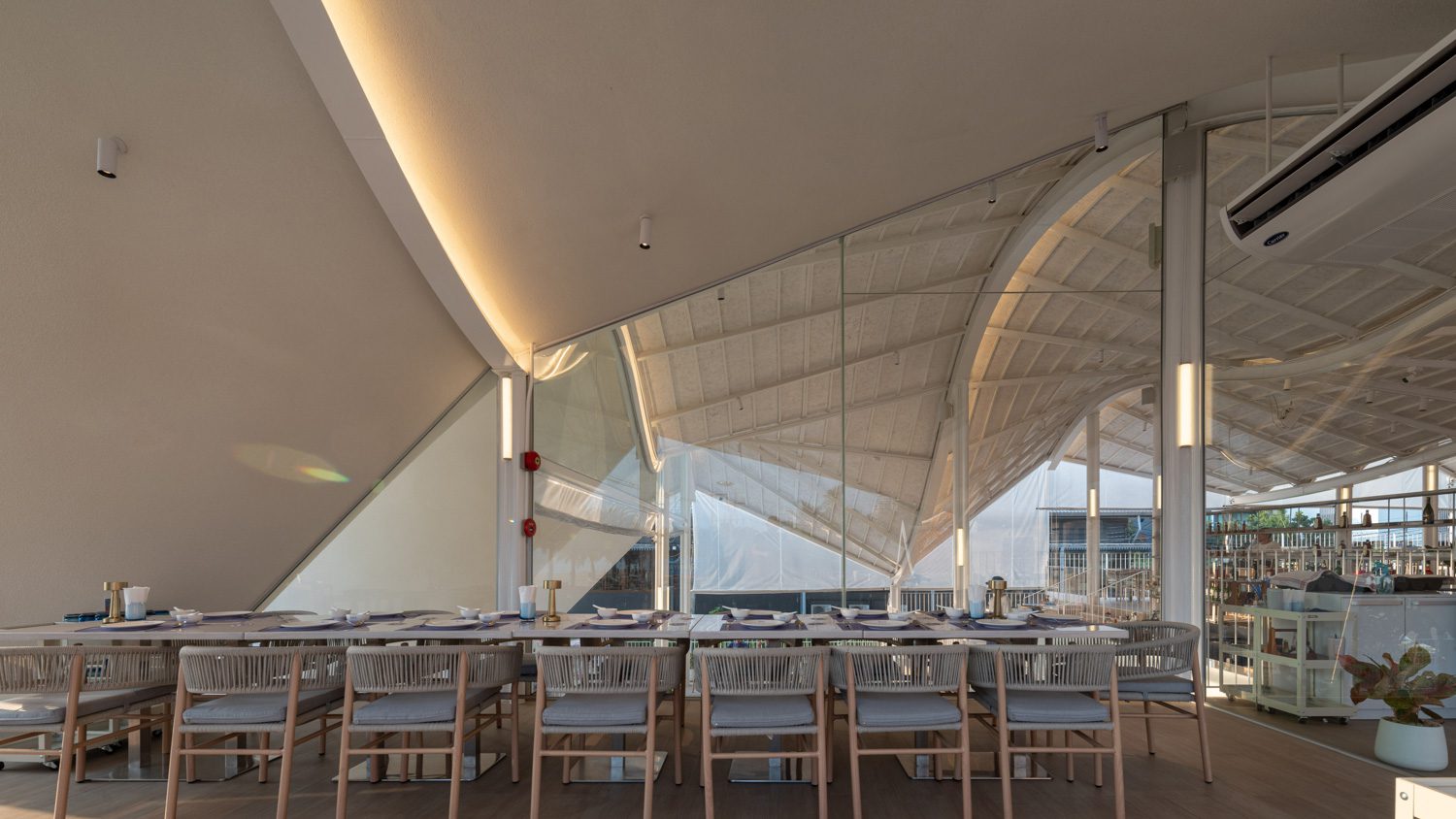
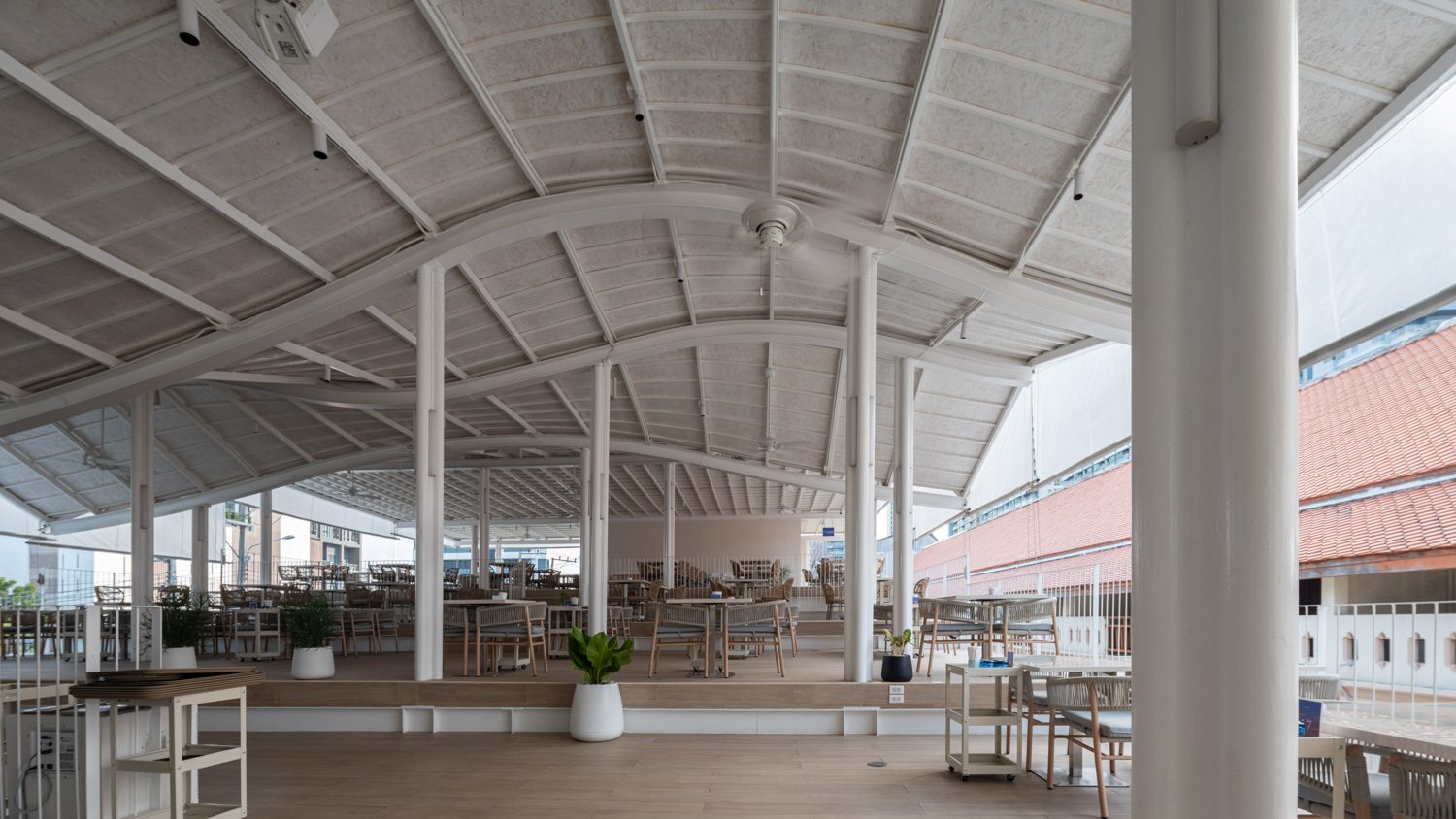
While the project is conceived with a deep sensitivity to the seaside setting, Anya Pattaya is equally attuned to the comfort of its guests. In addition to its breezy semi-outdoor spaces, the restaurant also features an air-conditioned dining room, elevated just above the entrance to the front parking area. Framed entirely in glass on all four sides, this floating volume maintains a visual connection with its surroundings, while its light wood interior palette echoes the tones of the outdoor areas. At a glance, the two zones, open-air and indoor, appear almost seamless, unified by the expressive roof structure overhead, whose exposed framework ripples like waves, subtly reinforcing the cohesion of the architectural language.
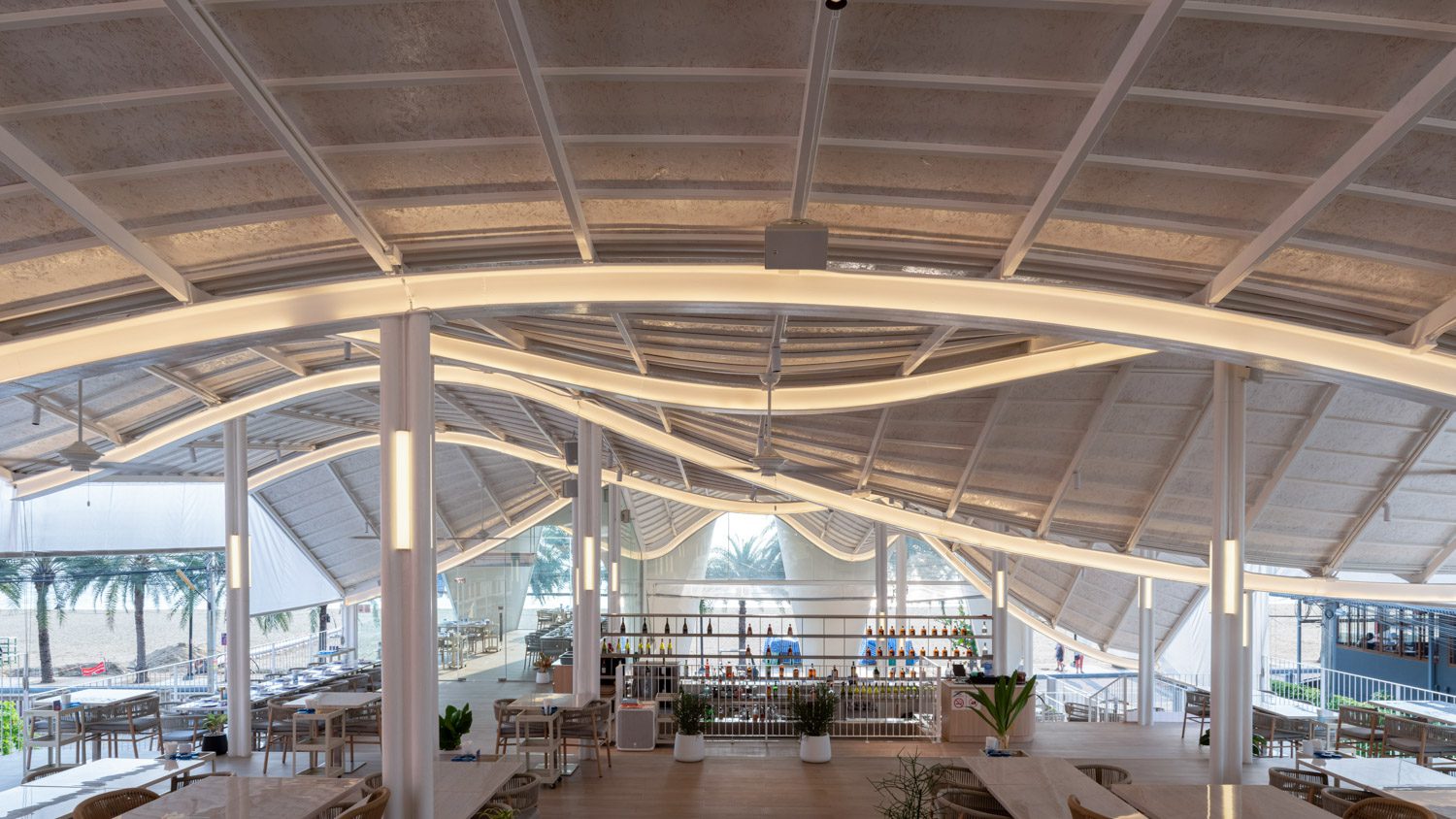
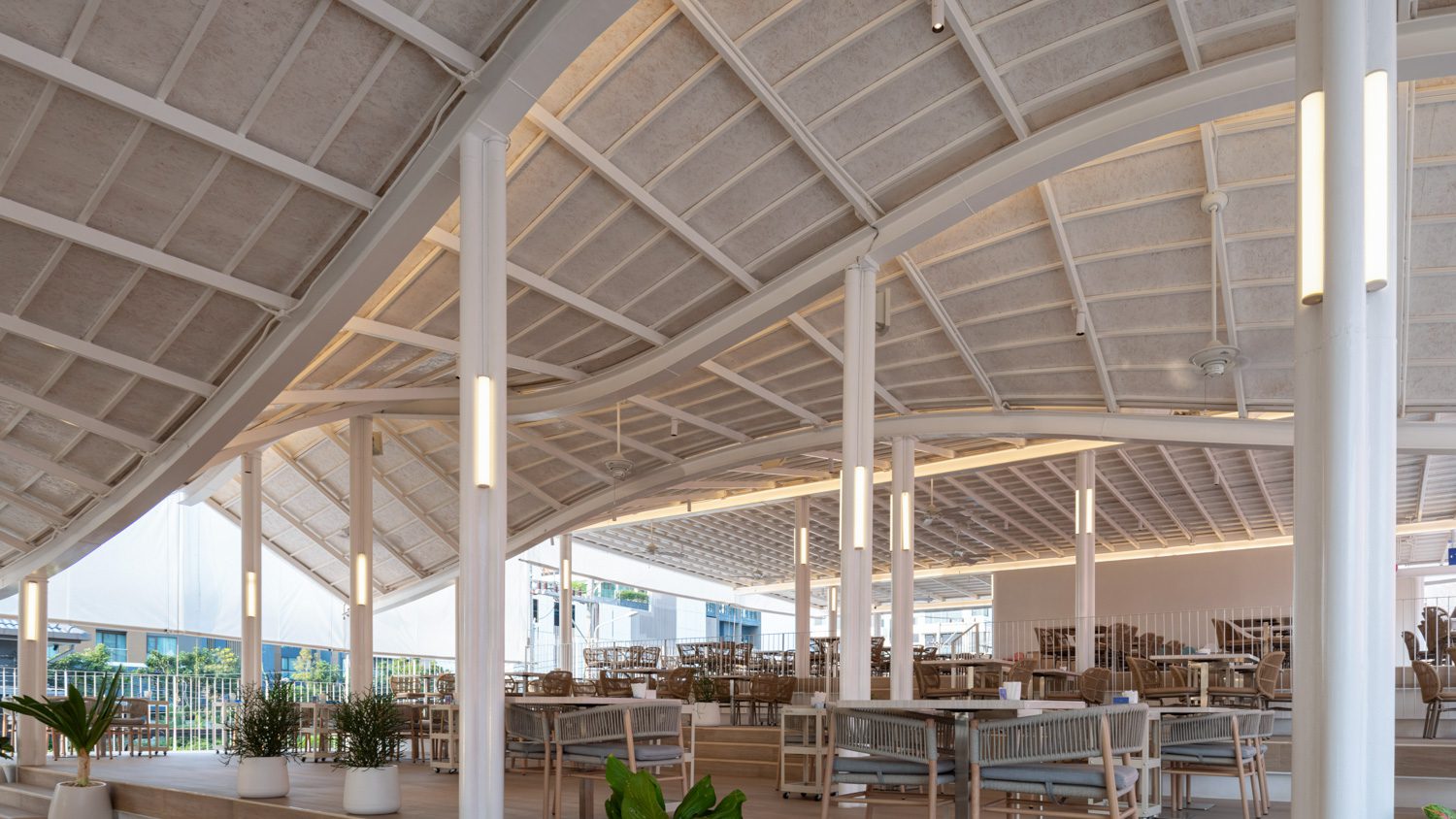
POAR designed the roof as a single, seamless surface to eliminate the risk of leaks. Spanning nearly 800 square meters, such an expansive roof naturally raises questions about long-term maintenance. Yet instead of devising solutions for potential issues, the architects chose a strategy that proactively minimized the likelihood of problems from the outset. The transverse H-beams, or structural members, were pre-curved at the factory, allowing the purlins to be anchored in precise positions, which streamlined both alignment and construction. Remarkably, the project also forgoes a conventional gutter system. The continuous, curved roof appears almost free-form, with no joints or points of water accumulation. Instead, a carefully calculated slope directs rainwater along planned paths, where simple chain downspouts gently guide it to the ground.
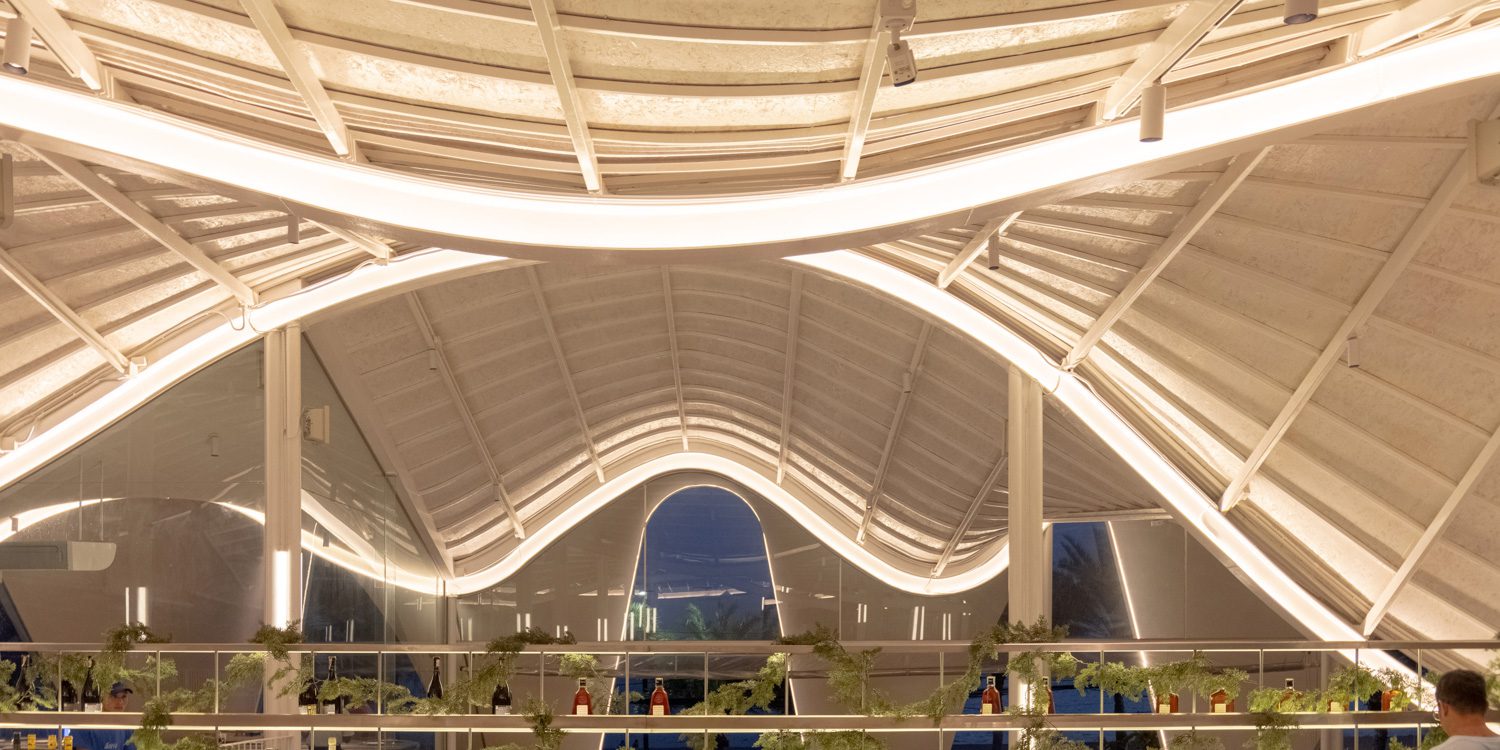
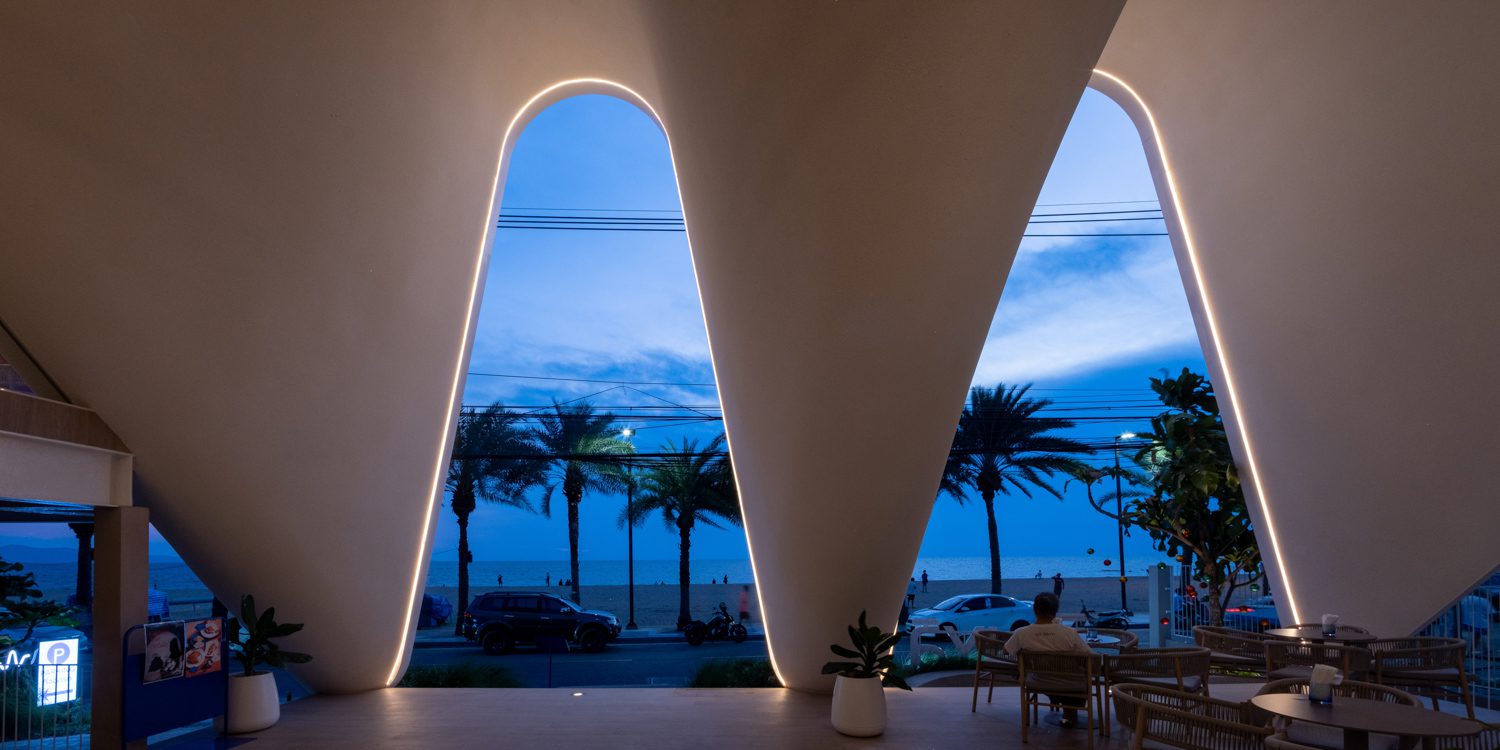
Anya Pattaya’s design brief was deceptively simple: to create a restaurant that would catch the eye and attract visitors. But as with any seemingly straightforward challenge, the outcome depends entirely on the designer’s interpretation. In this case, the roof became the defining element. POAR designed it not only as a visual statement, but as a multi-functional feature that shapes the building’s exterior identity, enhances the dining experience, and resolves potential maintenance issues—all at once.