
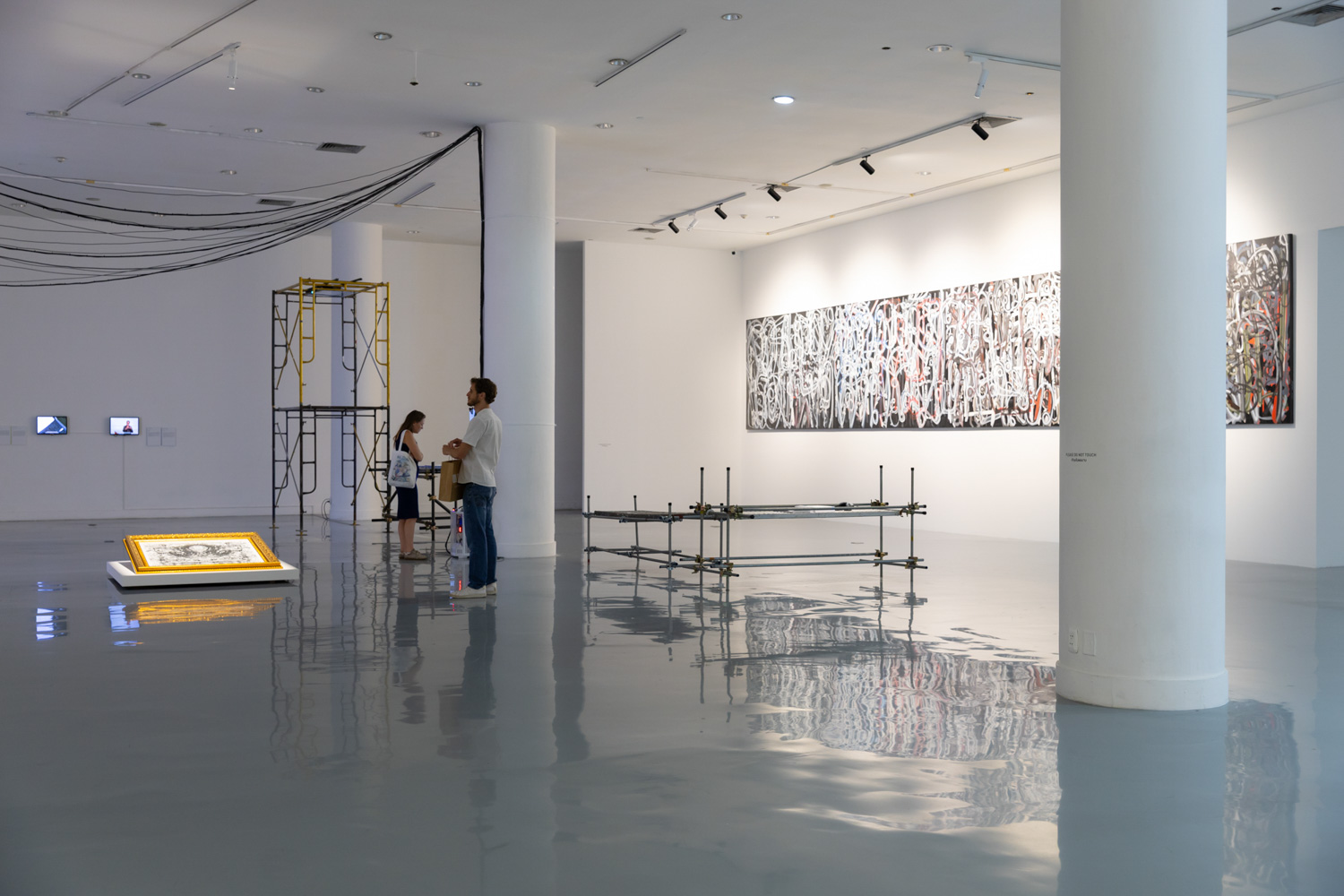
EARLY YEARS PROJECT #9: ACTIONS SPEAK LOUDER? INVITES YOU TO EXPLORE THE RELATIONSHIPS BETWEEN ‘SPACE,’ ‘SOUND,’ AND ‘POWER STRUCTURES’ THROUGH THE WORKS OF EMERGING ARTISTS WHO QUESTION THE BOUNDARIES AND CONVENTIONS OF CONTEMPORARY SOCIETY
TEXT: SARUNKORN ARTHAN
PHOTO COURTESY OF BANGKOK ART AND CULTURE CENTRE
(For Thai, press here)
Beyond offering emerging artists a space to unleash their creative energy and demonstrate their abilities, the ninth edition of the Early Years Project presents them with the challenging theme ‘Actions Speak Louder?’ It questions the weight carried by actions and voices projected into contemporary society, revealing a confrontation between individual agency and the imposing structures that govern social life.
Amid the profusion of works filling the white space of the Main Exhibition Gallery on the seventh floor of the Bangkok Art and Culture Centre, art4d finds that, despite the artists’ diverse media and approaches, their works share a sharply focused concern: decoding the ‘spaces’ and ‘power structures’ that define, regulate, and draw boundaries around our lives. Their explorations move across scales, from national borders and urban environments to the human body and natural ecosystems beyond the human realm. Space, after all, is never merely space. Nothing is created from a vacuum; every ‘space’ is laden with memories, mechanisms of order, and ongoing struggles over meaning.
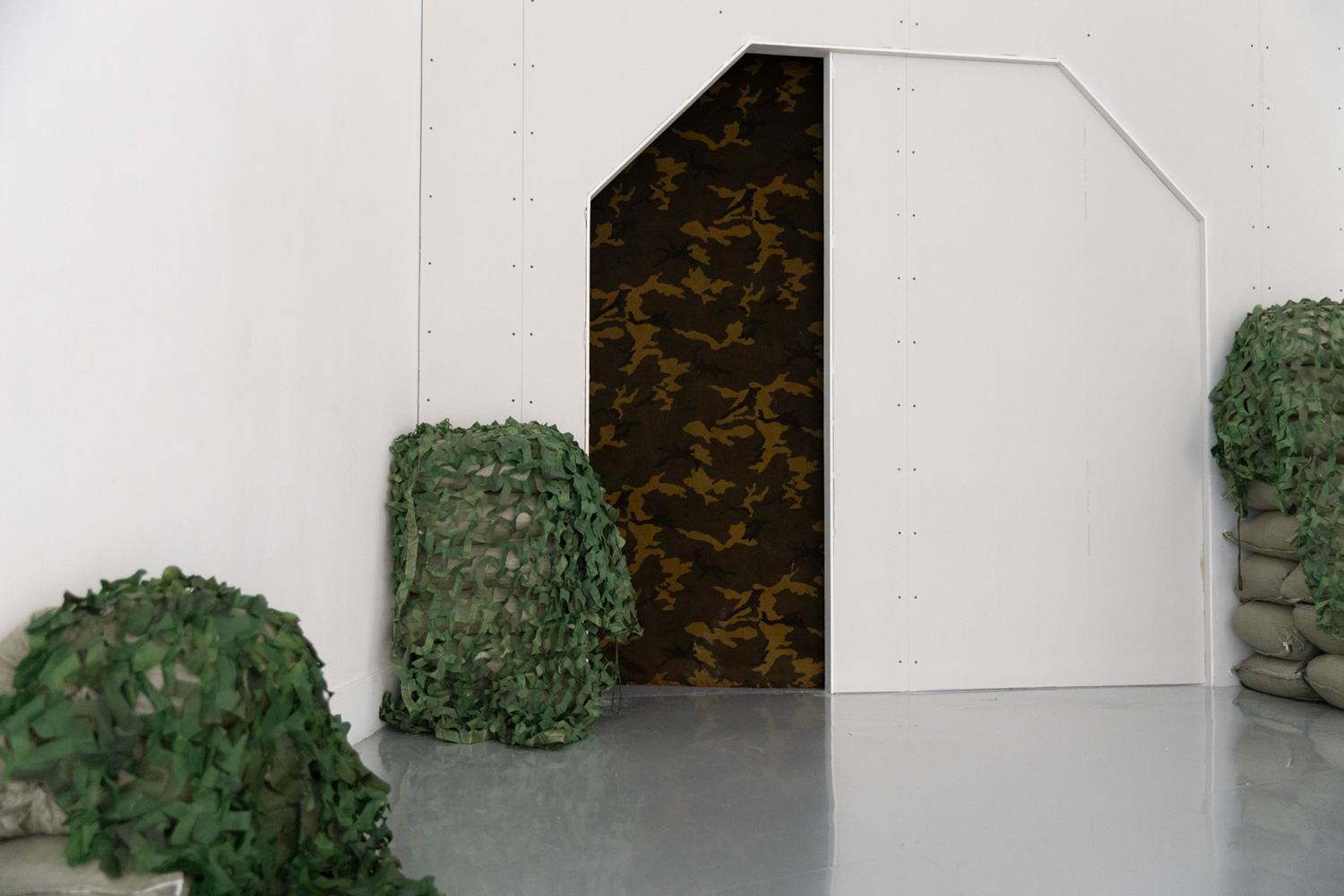
The Thai-Cambodian border is one such geopolitical ‘space,’ where competing claims and assertions of legitimacy are continually played out. Meanwhile, Thai citizens who consider themselves ‘patriots to the death’ stand ever ready to defend Thai identity with their fingers on keyboards and phone screens. Over the past year, our feeds have been crowded with hundreds, if not thousands, of self-styled heroes fighting to claim territory from one another. Yet few have experienced the proximity of war as intimately as those who actually live along the border. This is the point of departure for Sonic Border by Sutiphong Sudsang. Before constructed borders and gunfire began to permeate Sutiphong’s home province of Si Sa Ket, it was a quiet place where everyday life unfolded through the relationship between nature and communities along the frontier. The nation-state and escalating political tensions, however, transformed ‘home’ into a ‘strategic military zone.’
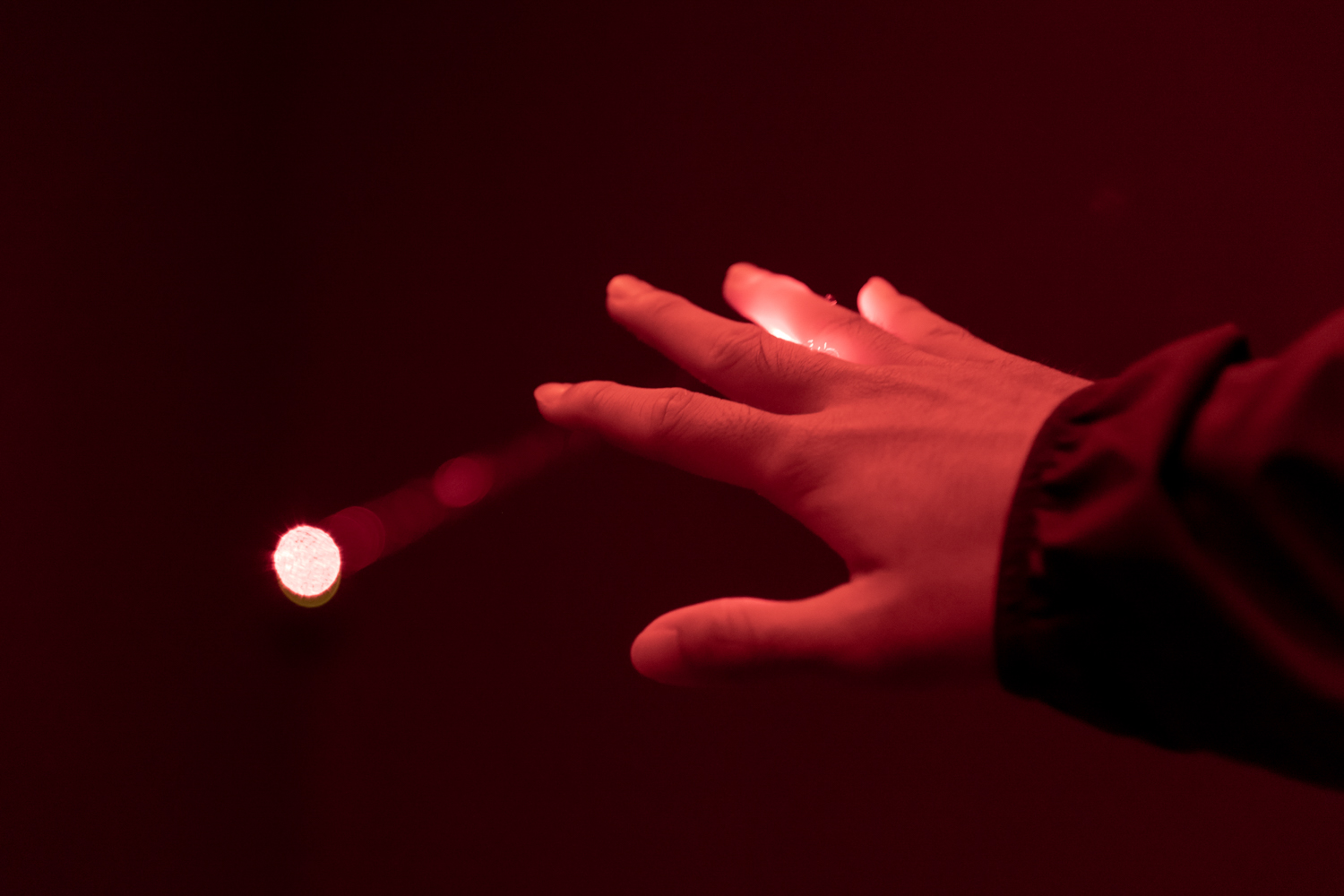
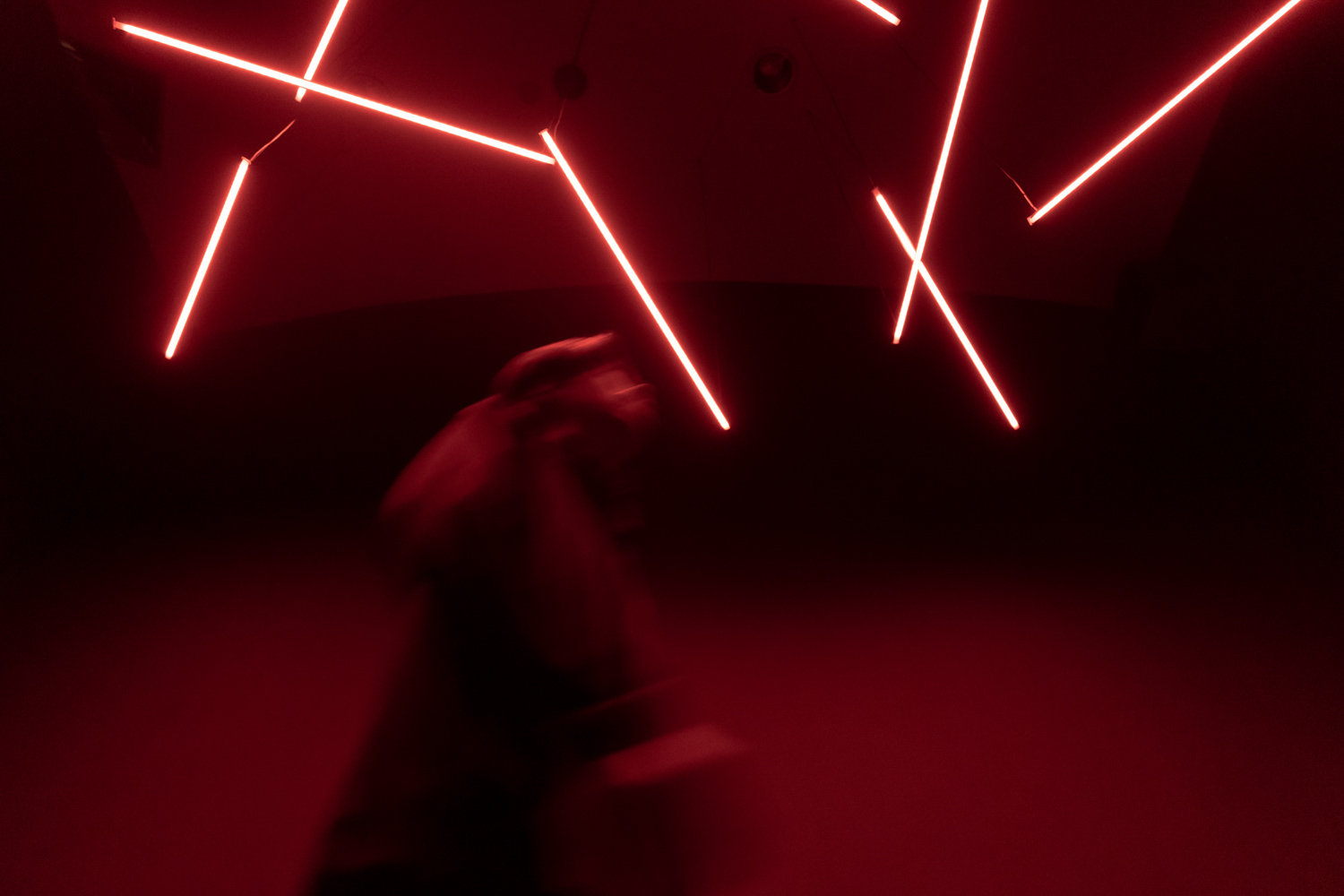
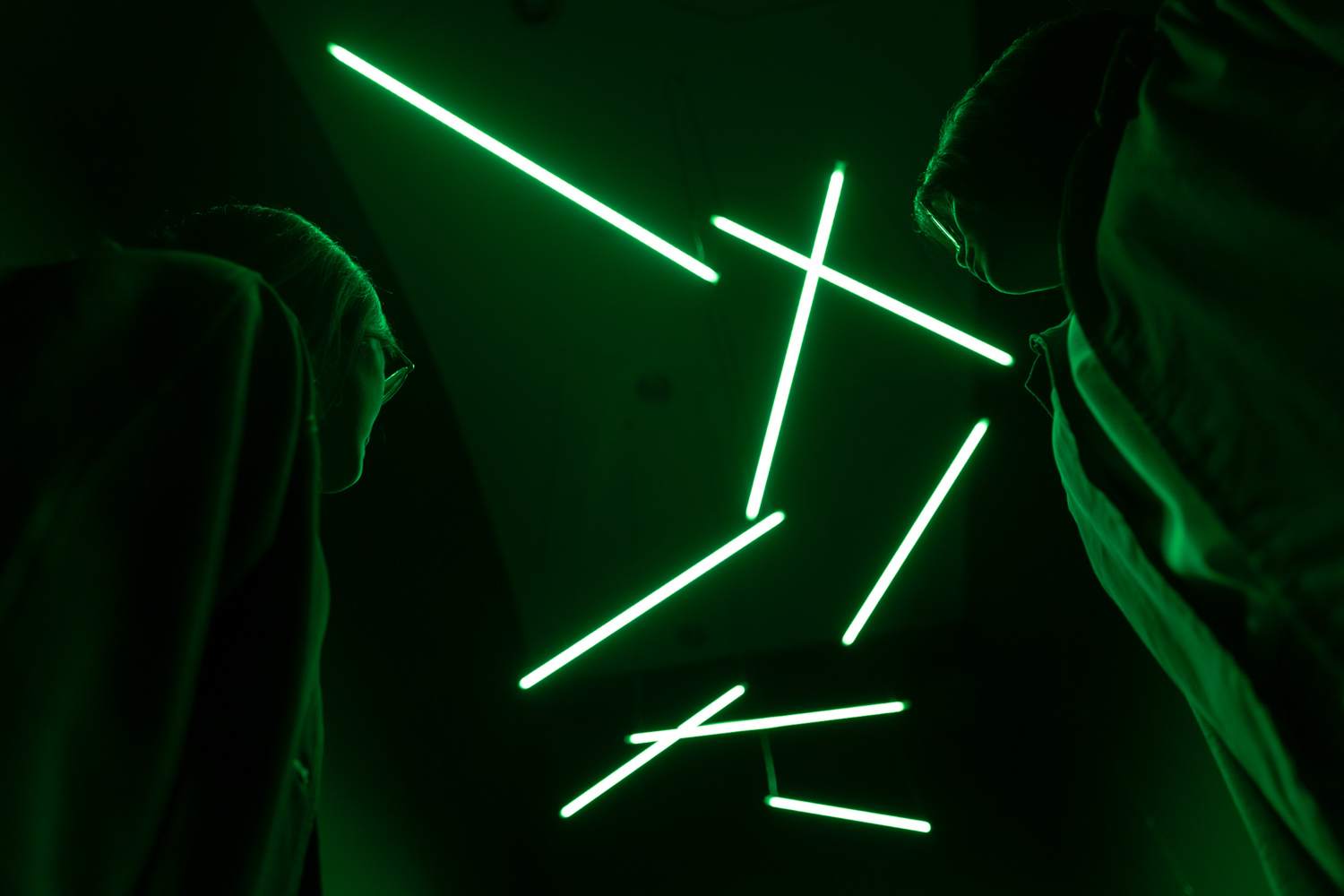
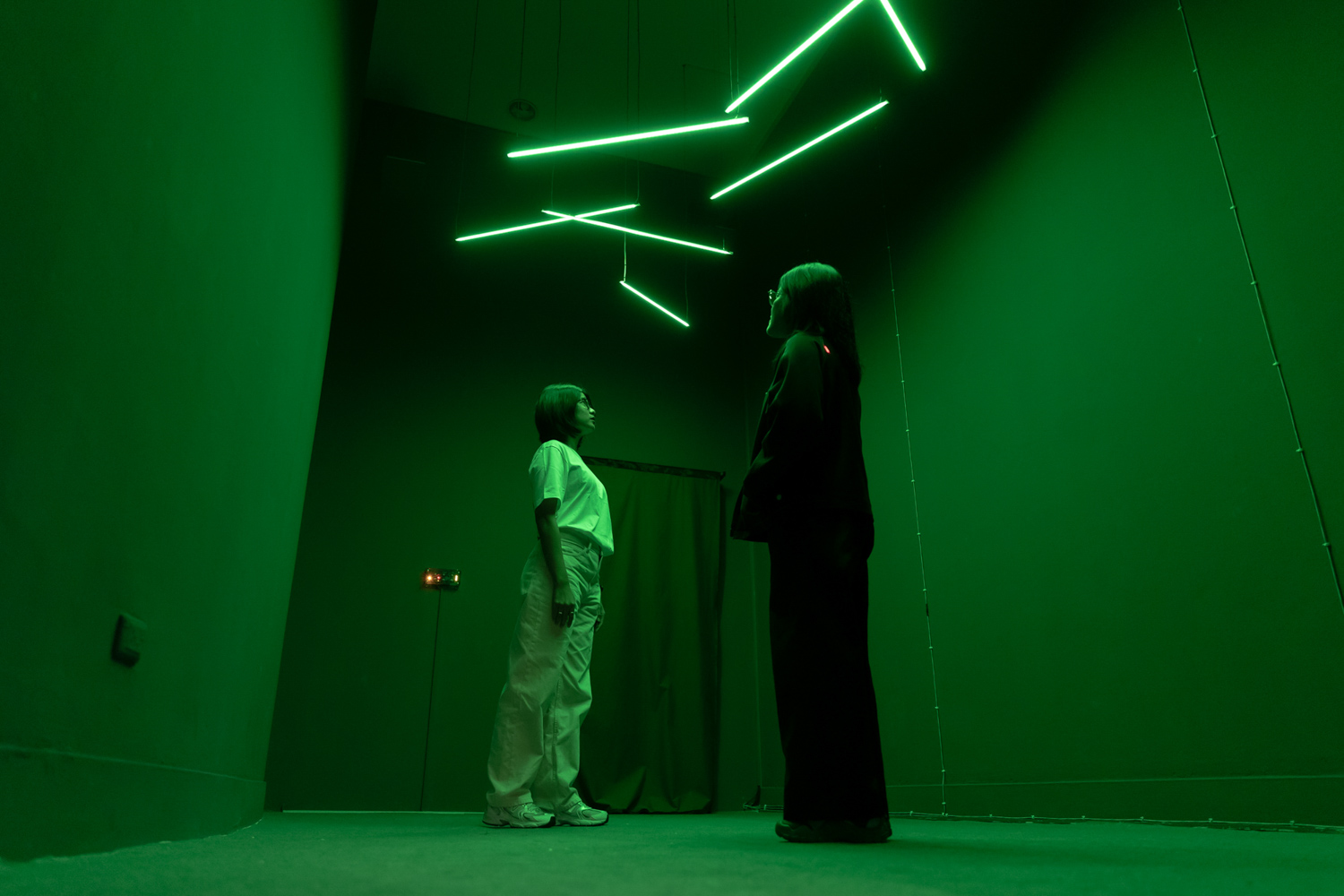
Drawing on elements from the battle royale genre—or shooting games, as most of us know them—Sutiphong constructs a room-like environment within the exhibition. Once inside, visitors may be able to see one another, or they may find the darkness so deep that moving through the space becomes difficult. The sound shifts unpredictably between silence and sudden bursts of volume. It is not background music, but the sound of military hardware and weapons of war. The experience may offer visitors some connection to the realities of such places, even if they approach it as an enjoyable experiment—or perhaps not. More importantly, the work raises a troubling question: does the power to issue commands from afar reduce the wounds, displacement, and losses endured by people on the ground to nothing more than data, figures, or impersonal buttons on a screen?
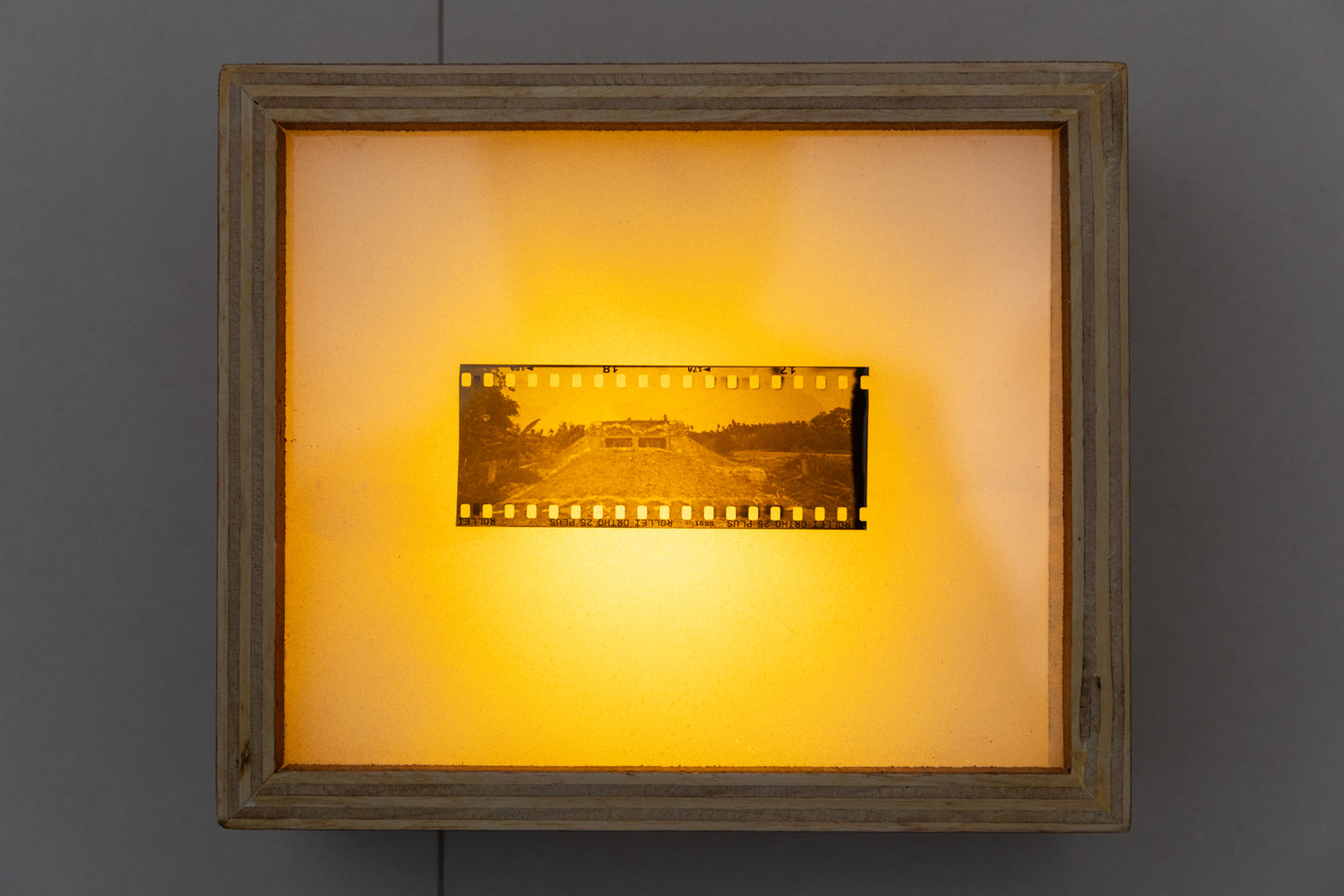
Within the same region, in Thailand’s Northeast or Isan, the ‘space’ across the Mekong Basin has likewise been marked, contested, and reshaped by external ideological influences throughout history. This was particularly evident in the late nineteenth century, when Western powers sought to employ religious institutions, symbols, and architecture as politico-cultural instruments through which to infiltrate local communities and inscribe new meanings onto their traditional ways of life—a strategy subtler and seemingly more graceful than military force. This history led Padungsub Prachanan to retrace the journey of the Missions Étrangères de Paris (M.E.P.), a French Catholic missionary organization that began its evangelizing activities in the Mekong region in Ubon Ratchathani before expanding throughout upper Isan and establishing a sizable Catholic community in Tha Rae District, Sakon Nakhon Province.
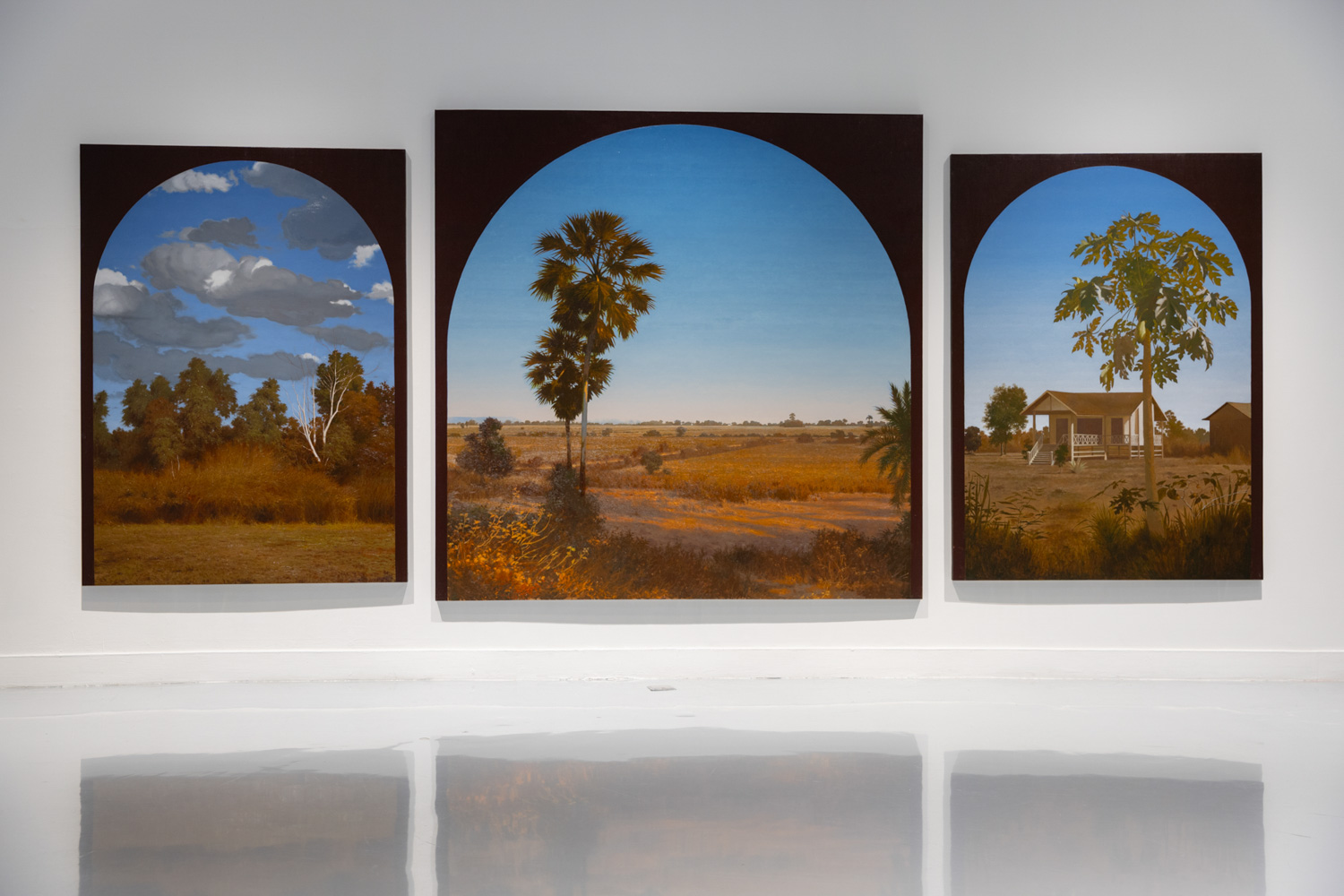
Another Field in the Same Place
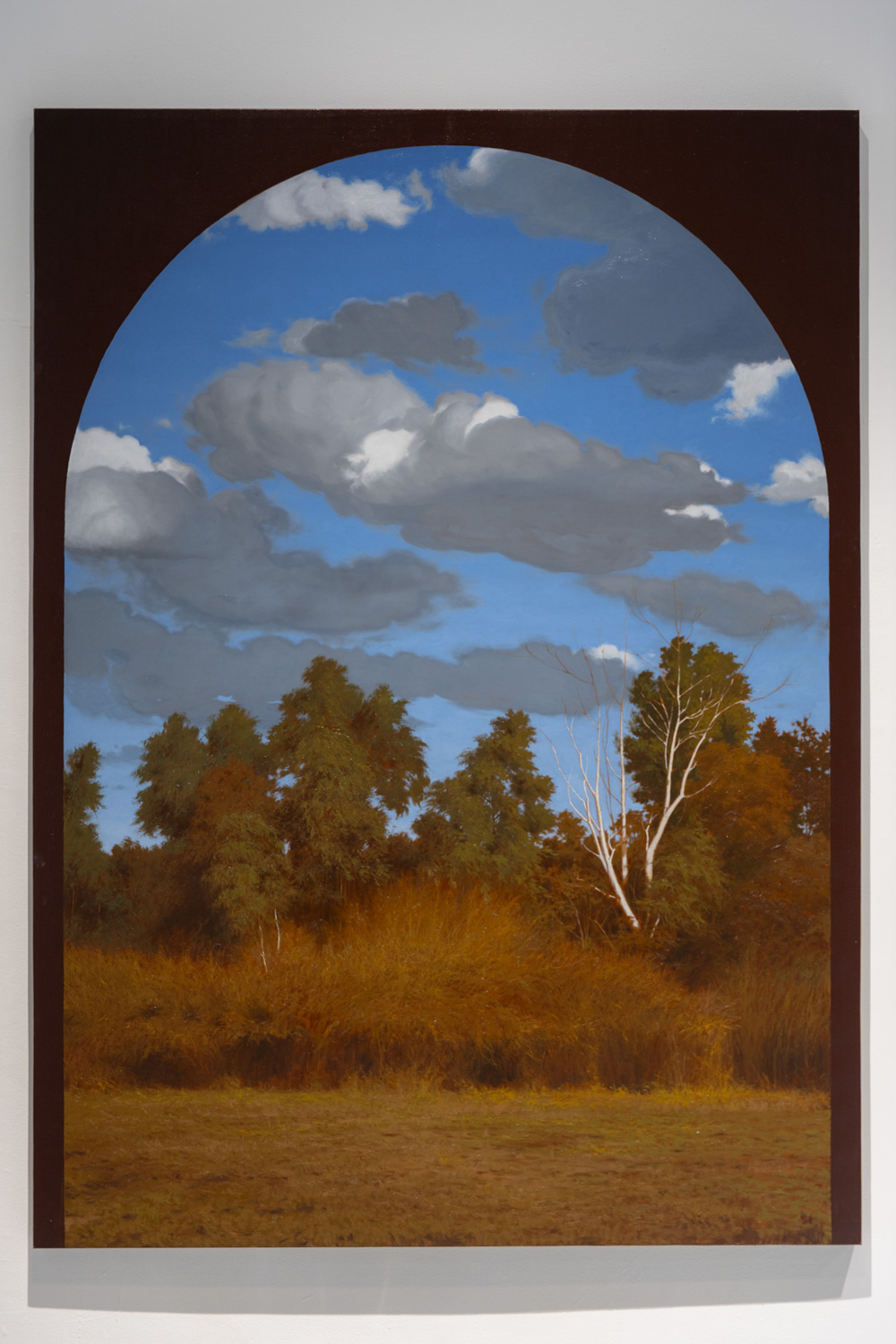 Another Field in the Same Place
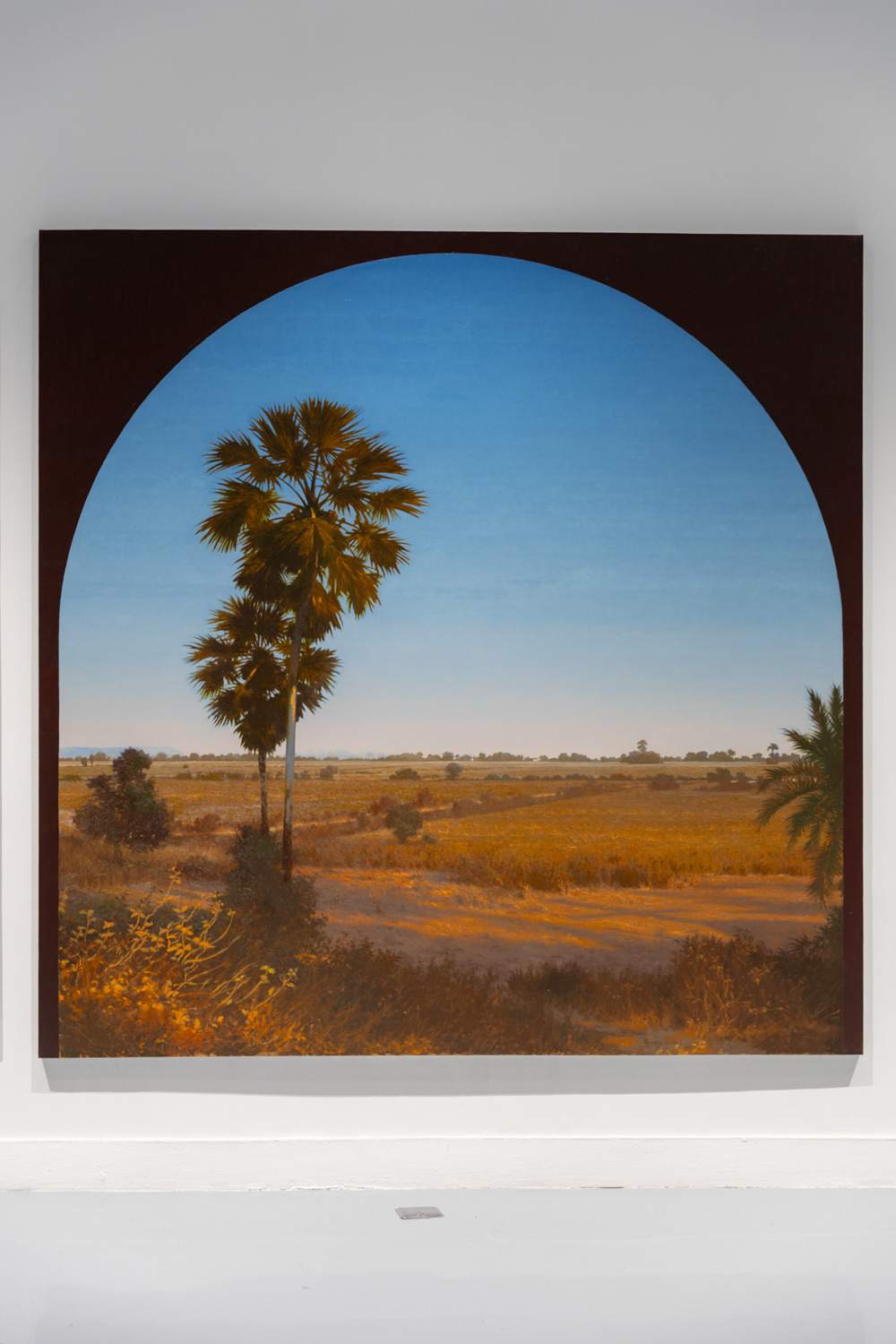
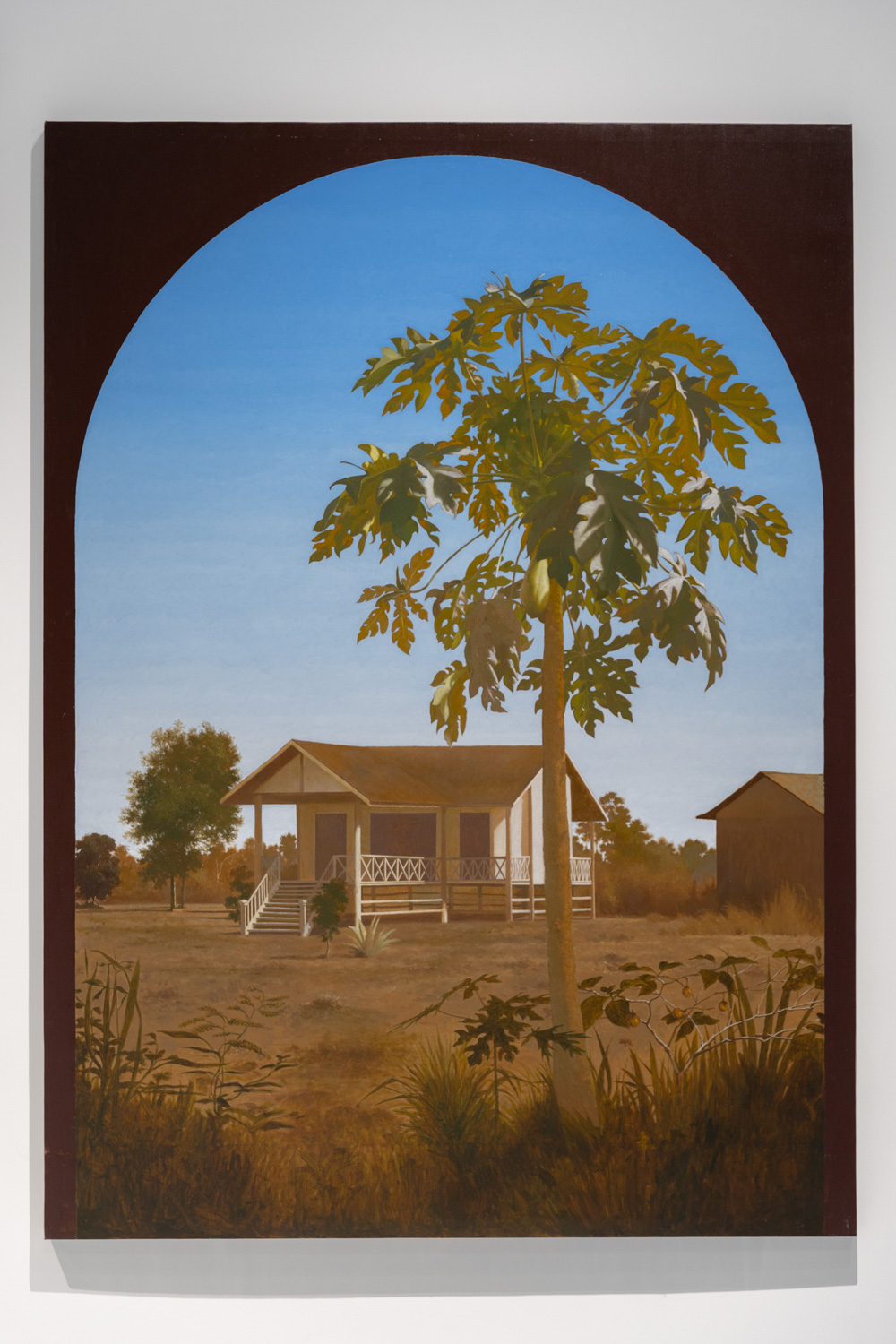
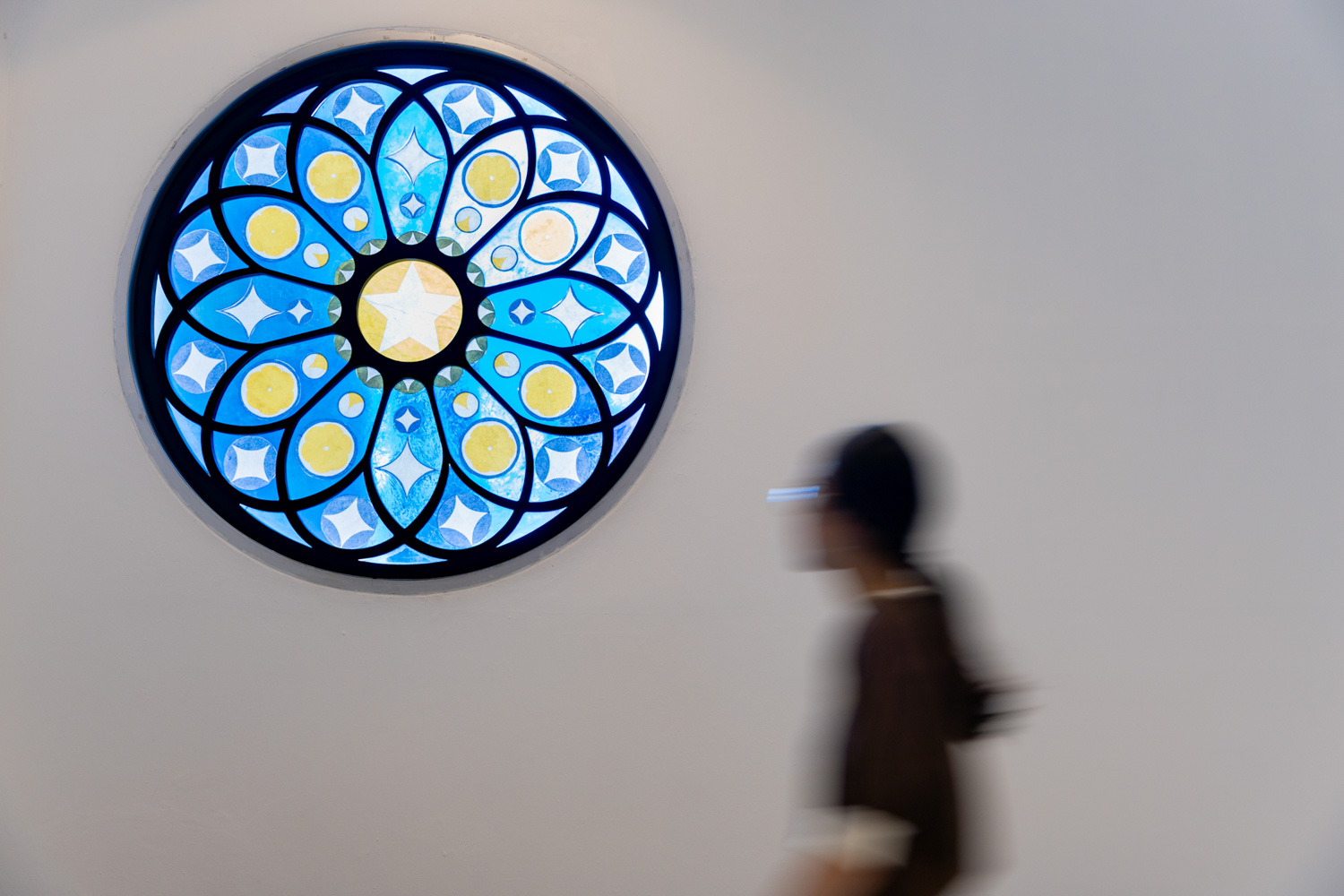
The Rose Window
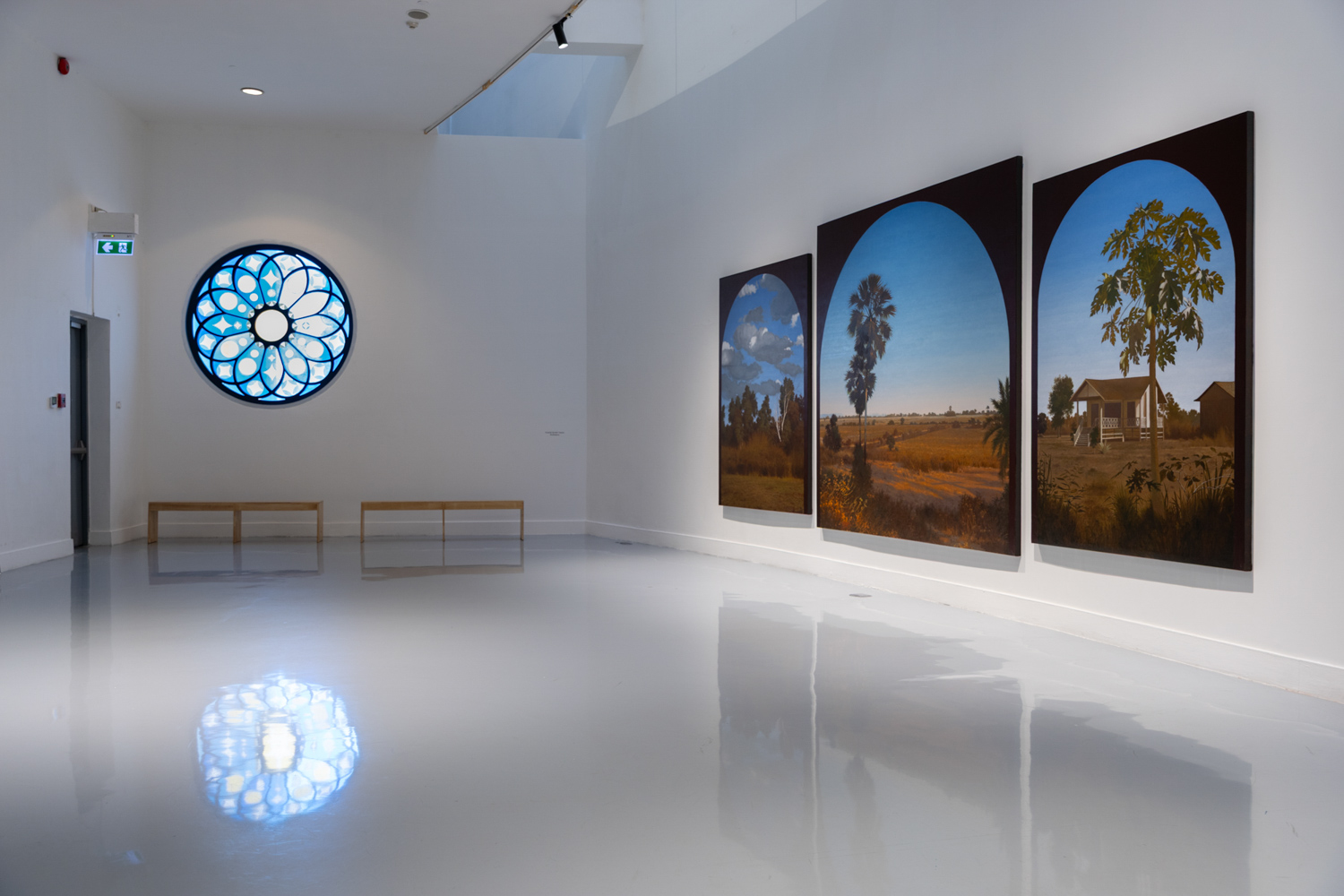
Another Field in the Same Place presents a landscape painting composed of three panels, recalling the triptych format of Christian art. Although the depicted scenery may initially resemble a European landscape painting, yet something makes it clear that this is not a vision of Western beauty. Unfamiliar elements from Southeast Asia have unexpectedly entered the composition and become interwoven with it: papaya trees, sugar palms, and parched rice fields stretching across the landscape. Padungsub also presents The Rose Window, which reinterprets the rose window, a defining feature of Christian churches traditionally positioned on the front façade. Here, instead of colored glass held together by metal tracery, the window is rendered through applied stickers. Its imagery brings Southeast Asian lunar narratives together with the sunlight that traditionally enters Western buildings to illuminate and warm their interiors.
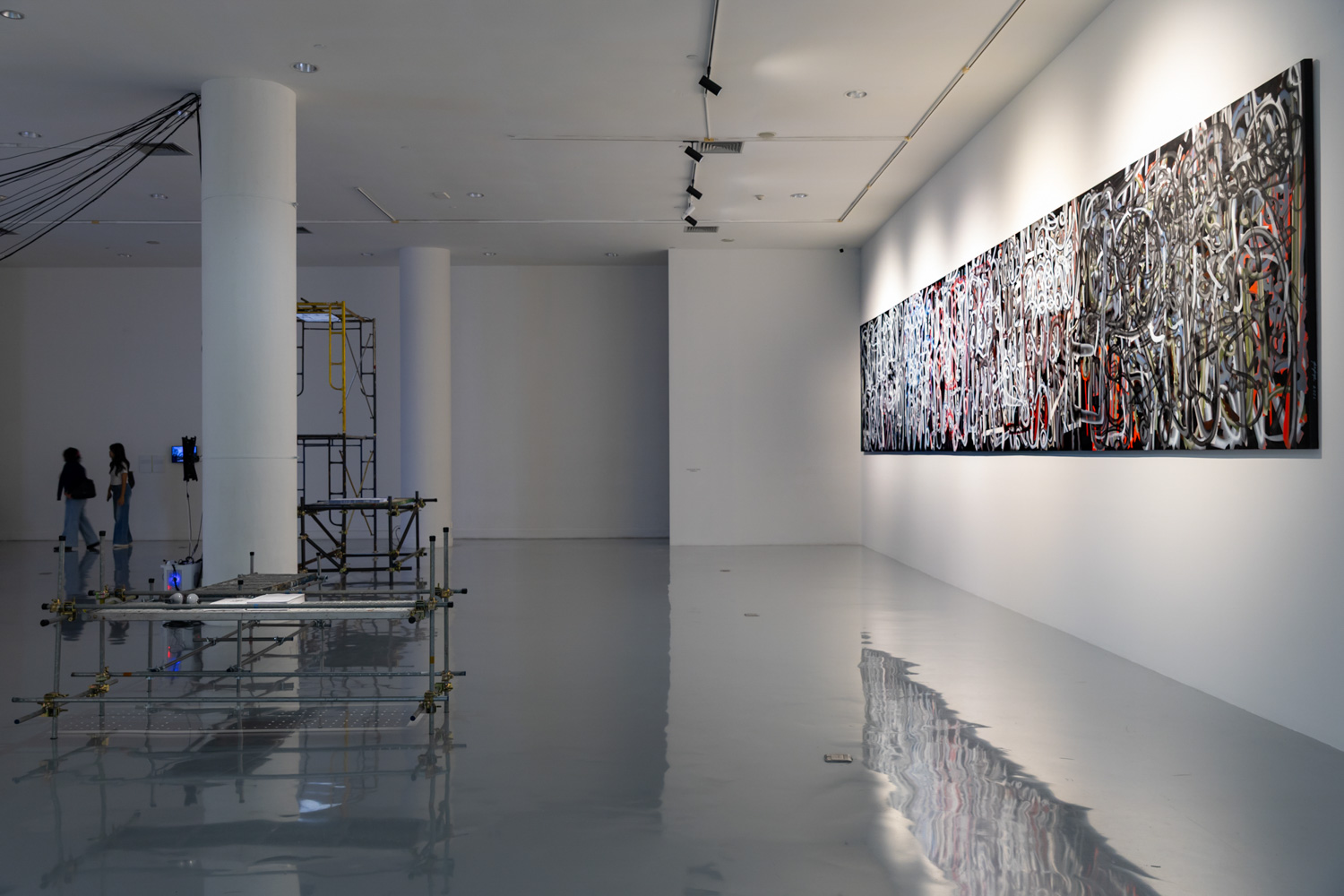
Shifting the scale inward to Bangkok’s urban fabric and public spaces, the ‘wall’ takes shape not only as a physical structure dividing one area from another, but also as an arena of ideological confrontation—a small yet persistent battleground where people use spray-painted lettering to assert their presence and voice dissent. At the same time, the state continues to monitor these surfaces and exercise its power to erase these traces in the name of maintaining ‘public order.’ This tension became the focus of Wanapol Saenkham’s Residual Confession: Temporary Book — Doc Street Text, a work assembled from his exploration, documentation, and collection of material from this urban battleground.
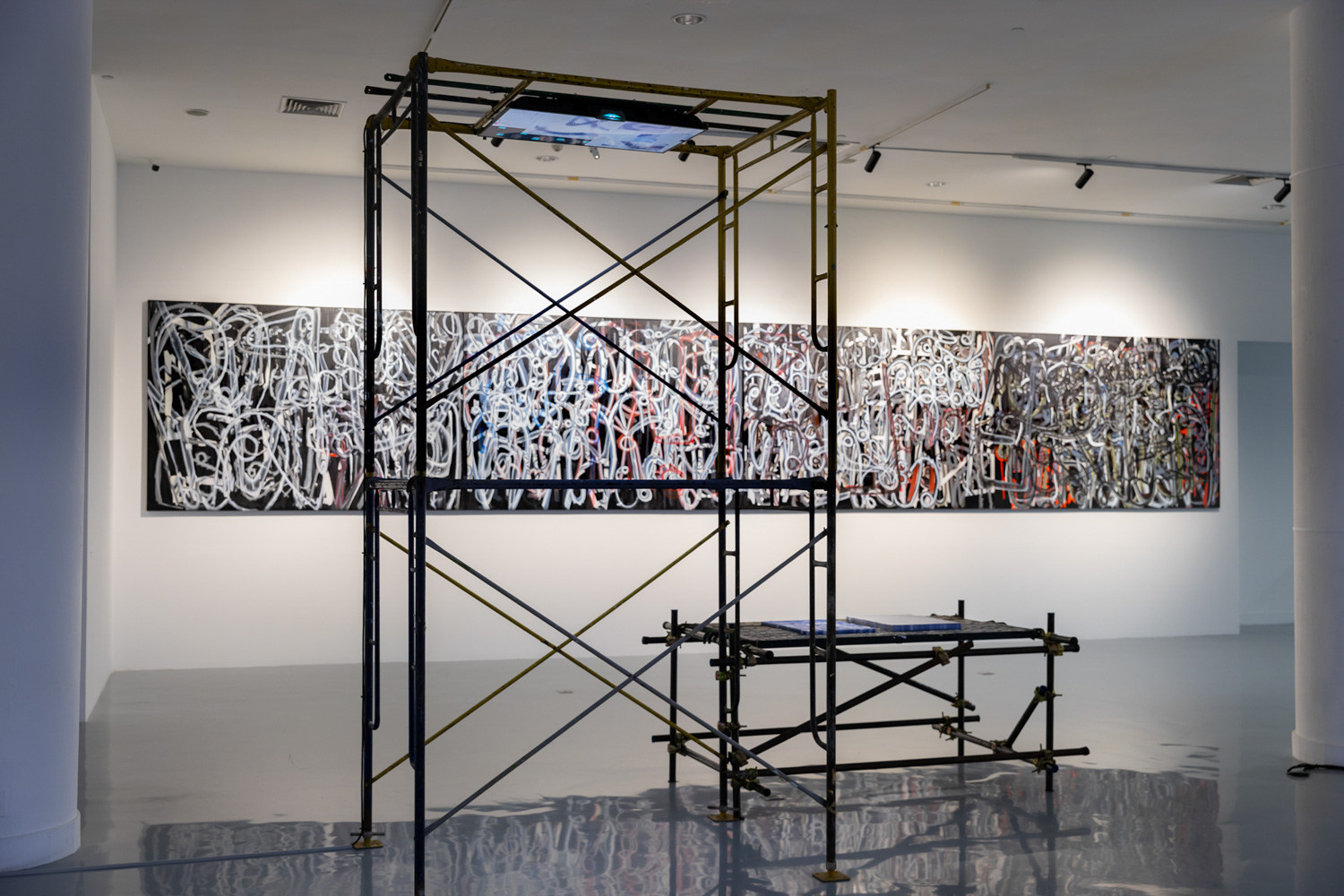
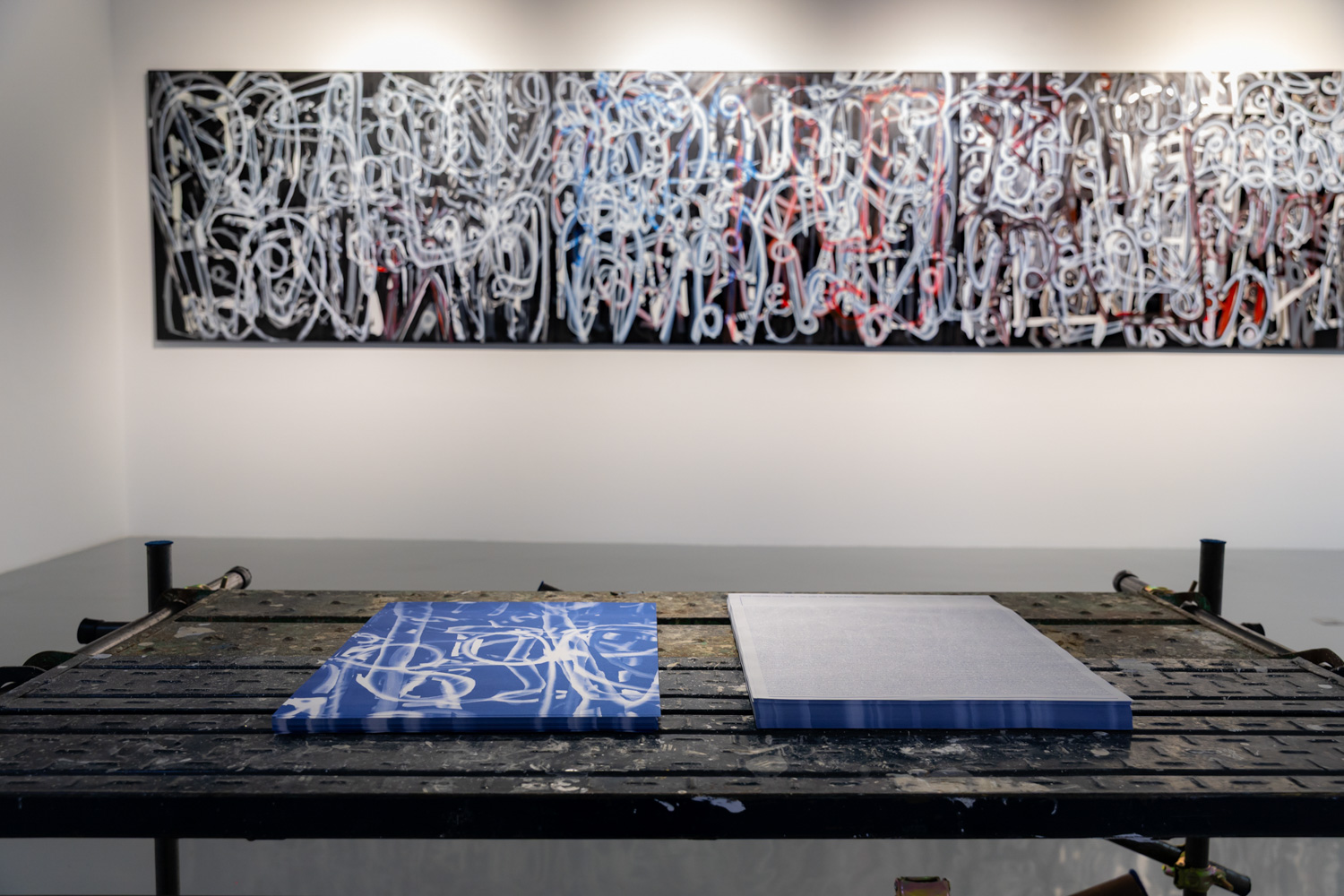
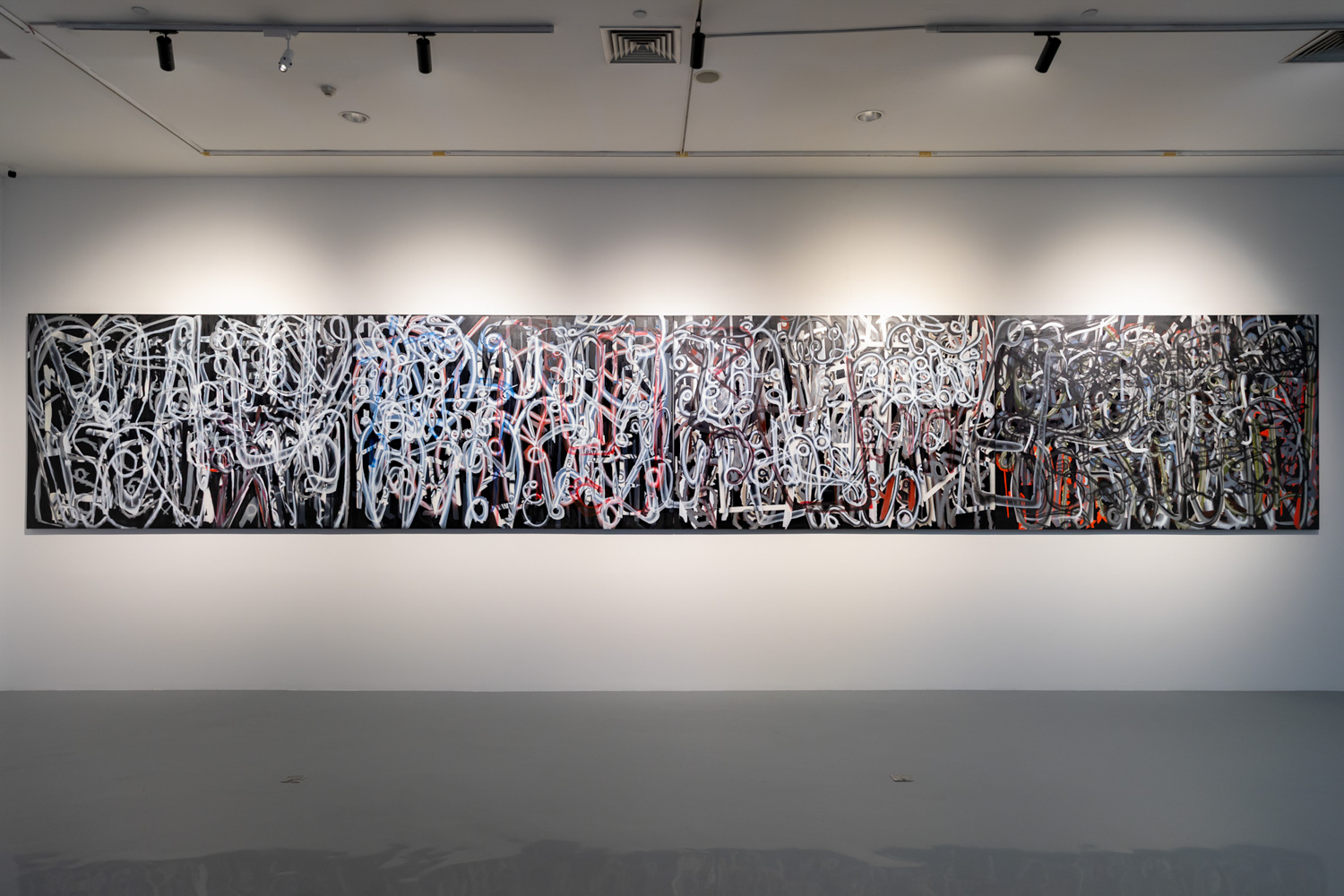
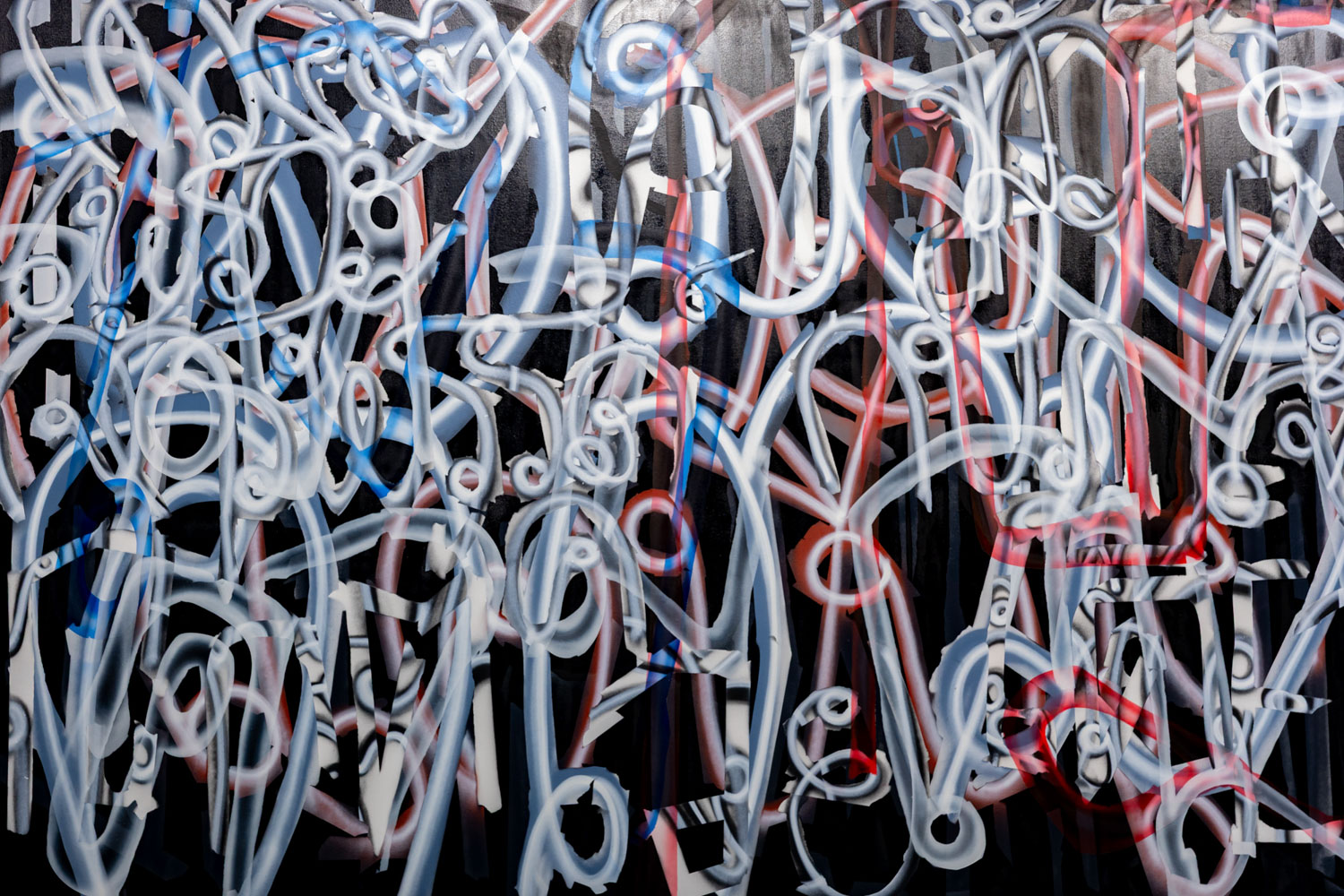
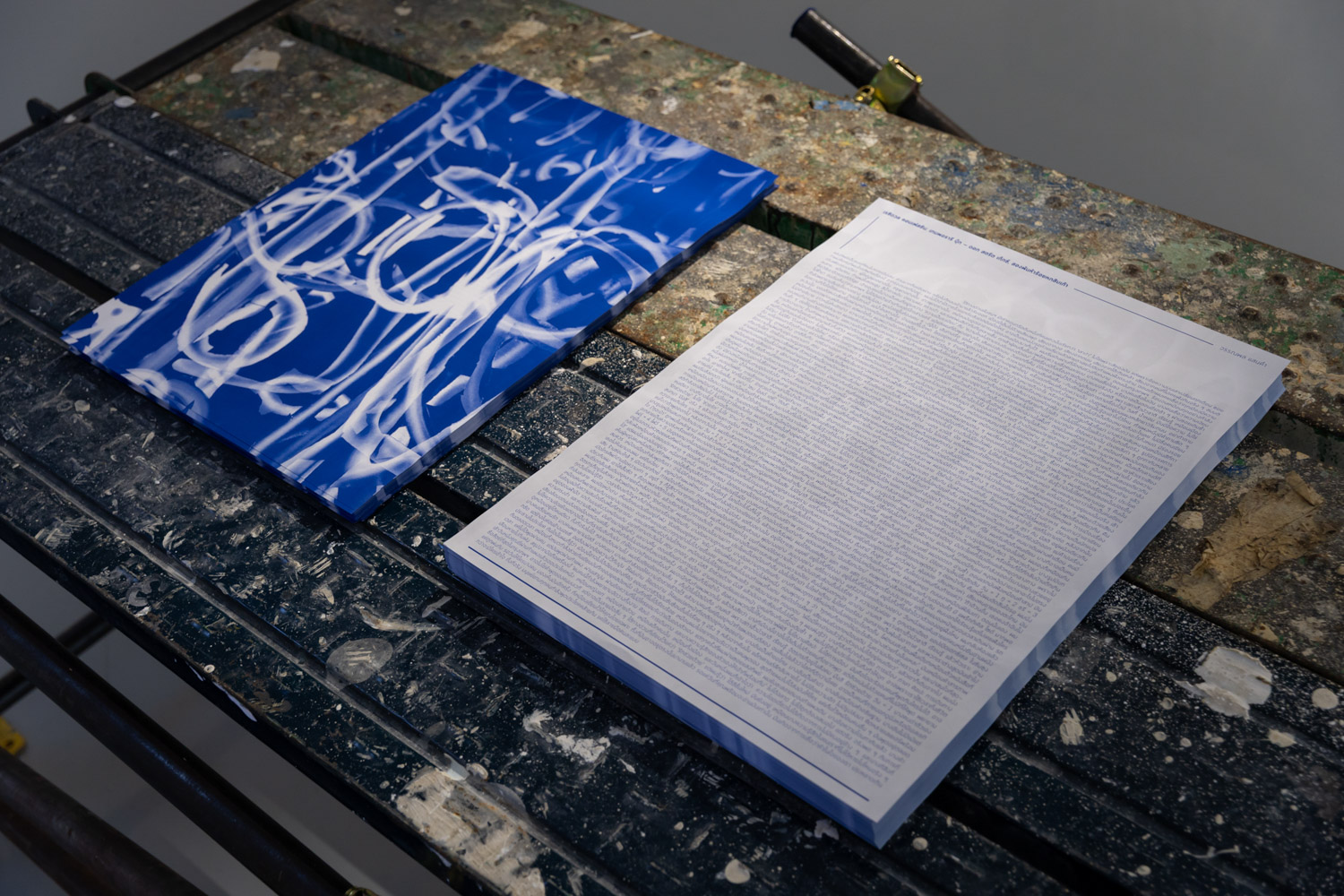
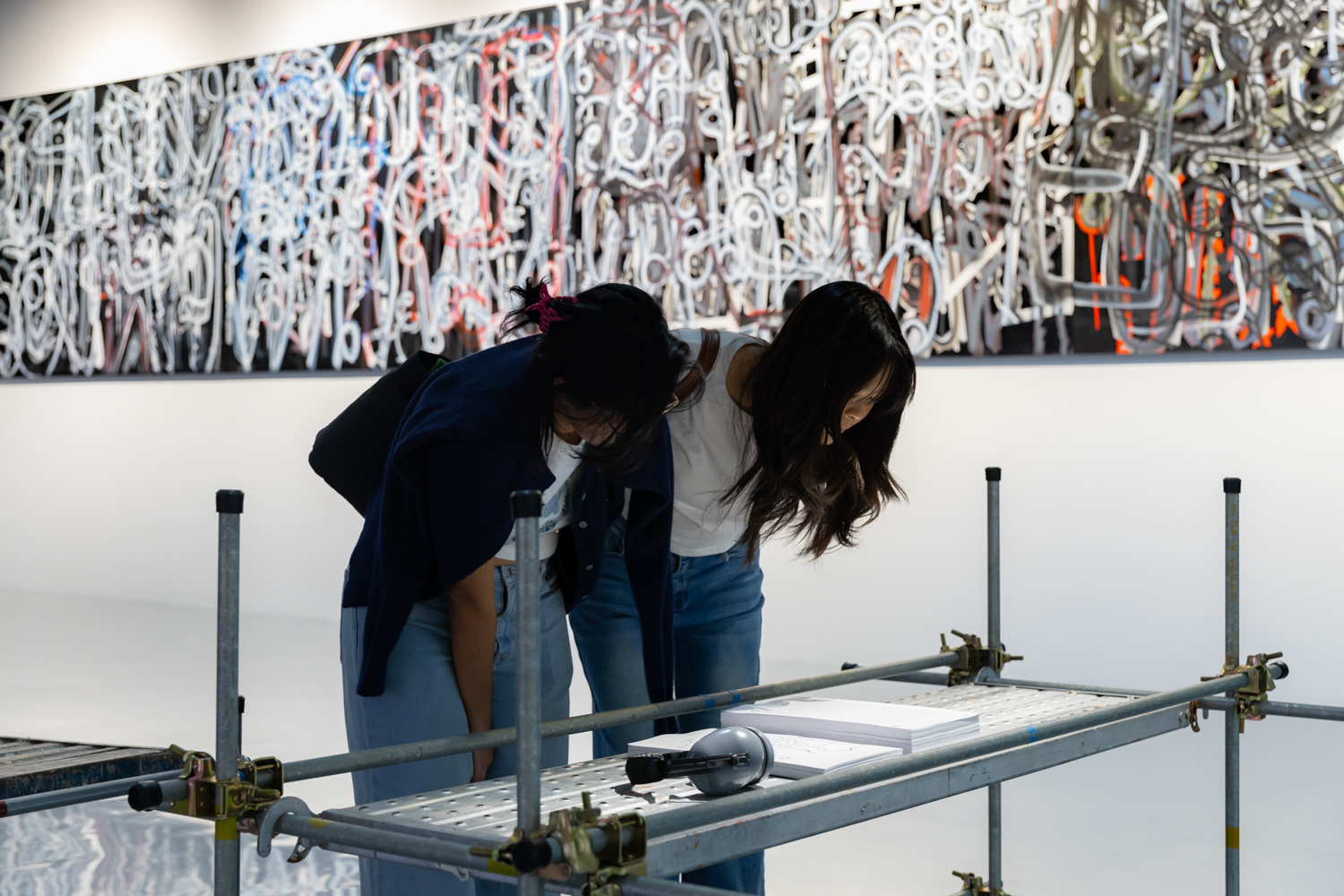
Wanapol acts as an unofficial historian of the city, decoding scrawled marks, political messages, confessions, and the recurring cycles of ‘drawing, painting over, erasing, and writing again’ that unfold across urban walls. The accumulated layers of paint and text expose negotiations over who has the right to occupy and use public space. They suggest that no matter how forcefully the state attempts to silence its people, traces of graphic resistance and the determination of ordinary citizens to make themselves heard continue to leave scars and fragments of history on the city’s surfaces. The work also reflects on the expressive rights of ordinary people: ‘Because it is a commoner’s voice, it is deemed worthless.’
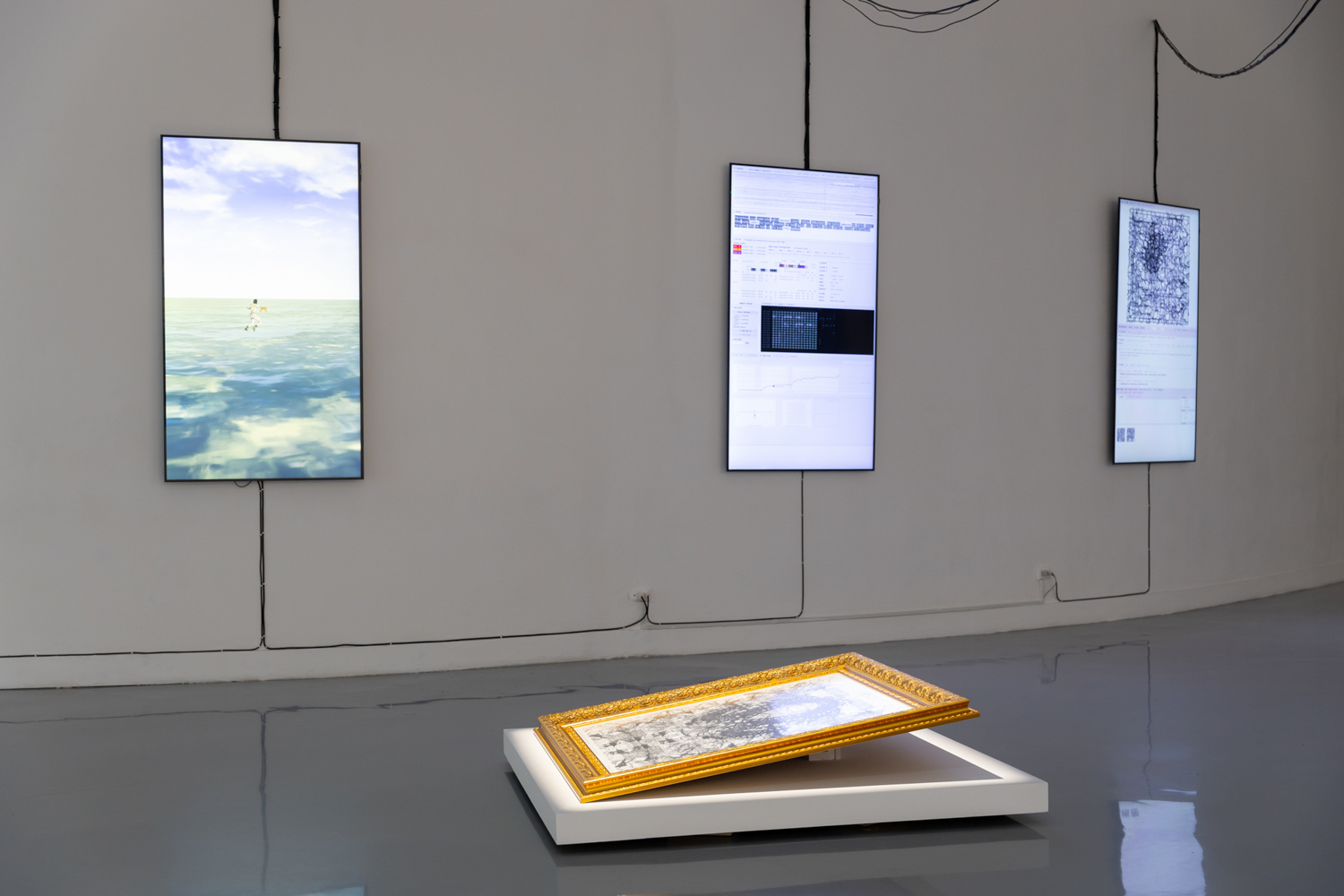
As concrete walls in the physical world are repeatedly painted over and erased, the power to draw boundaries does not disappear altogether. Instead, it changes hands and reemerges as an ‘invisible wall’ in the digital realm. Virtual worlds and video games are not simply unrestricted spaces of entertainment; they are constructed through power structures, boundaries, and rules that follow a logic much like that of the nation-state. Through computer code, game developers assume the roles of lawmakers and border makers, erecting ‘invisible walls’ that dictate where players may go and where entry is forbidden, regulating their behavior within predetermined limits.
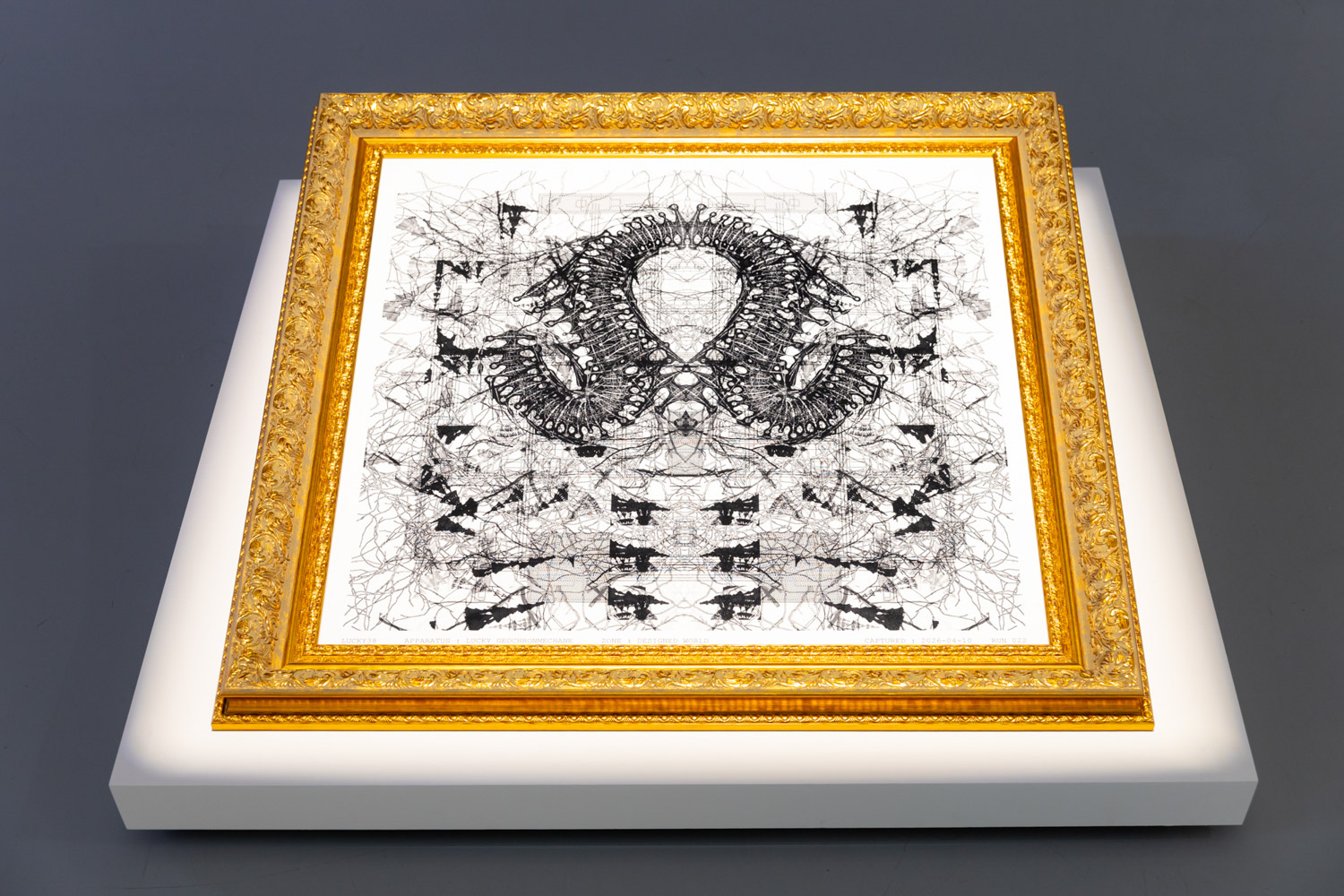
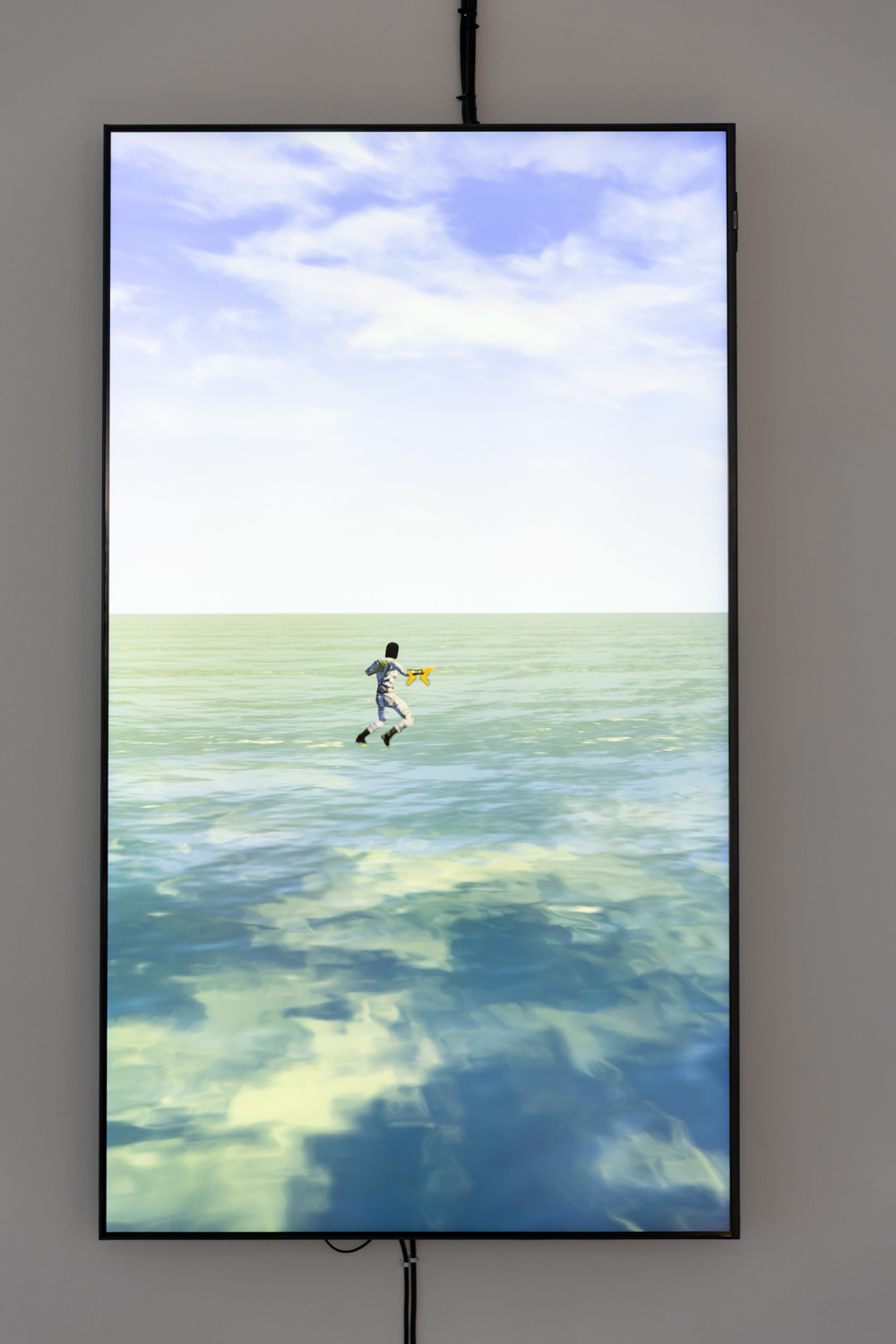
In LUCKY 39, Sahapon Chootinan assumes the role of a ‘digital archaeologist,’ venturing into unintended spaces and voids that have slipped beyond the control of video games. He leads us toward ‘invisible walls,’ vast and seemingly endless bodies of digital water, and software glitches that expose the games’ internal structures. Penetrating spaces never intended to be seen becomes an act of resistance against the rules imposed by those who wield authority in the virtual world. The work demonstrates that no matter how tightly a system is designed, simulated environments invariably produce unclaimed ‘voids’ where people can ask questions and establish new forms of presence.
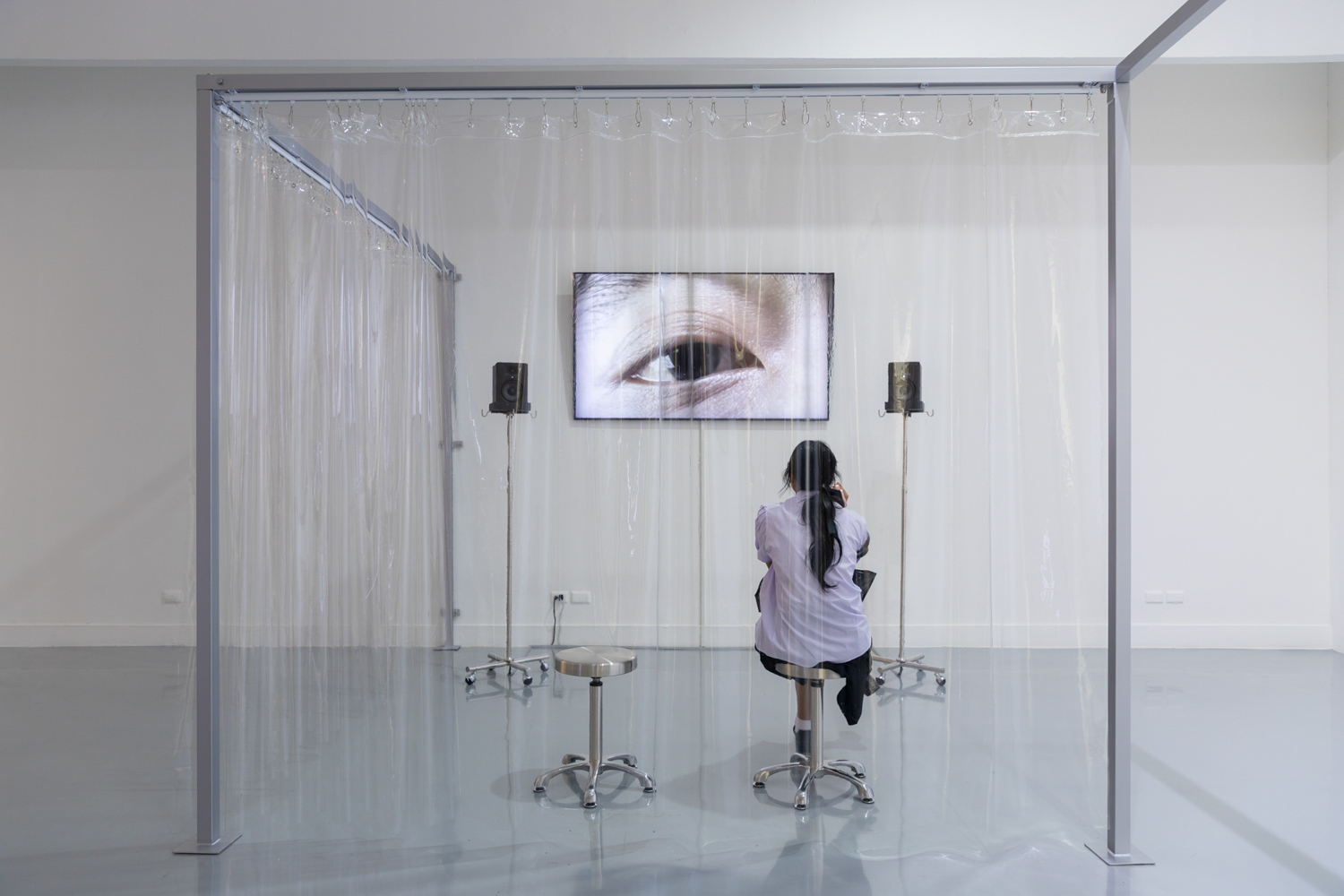
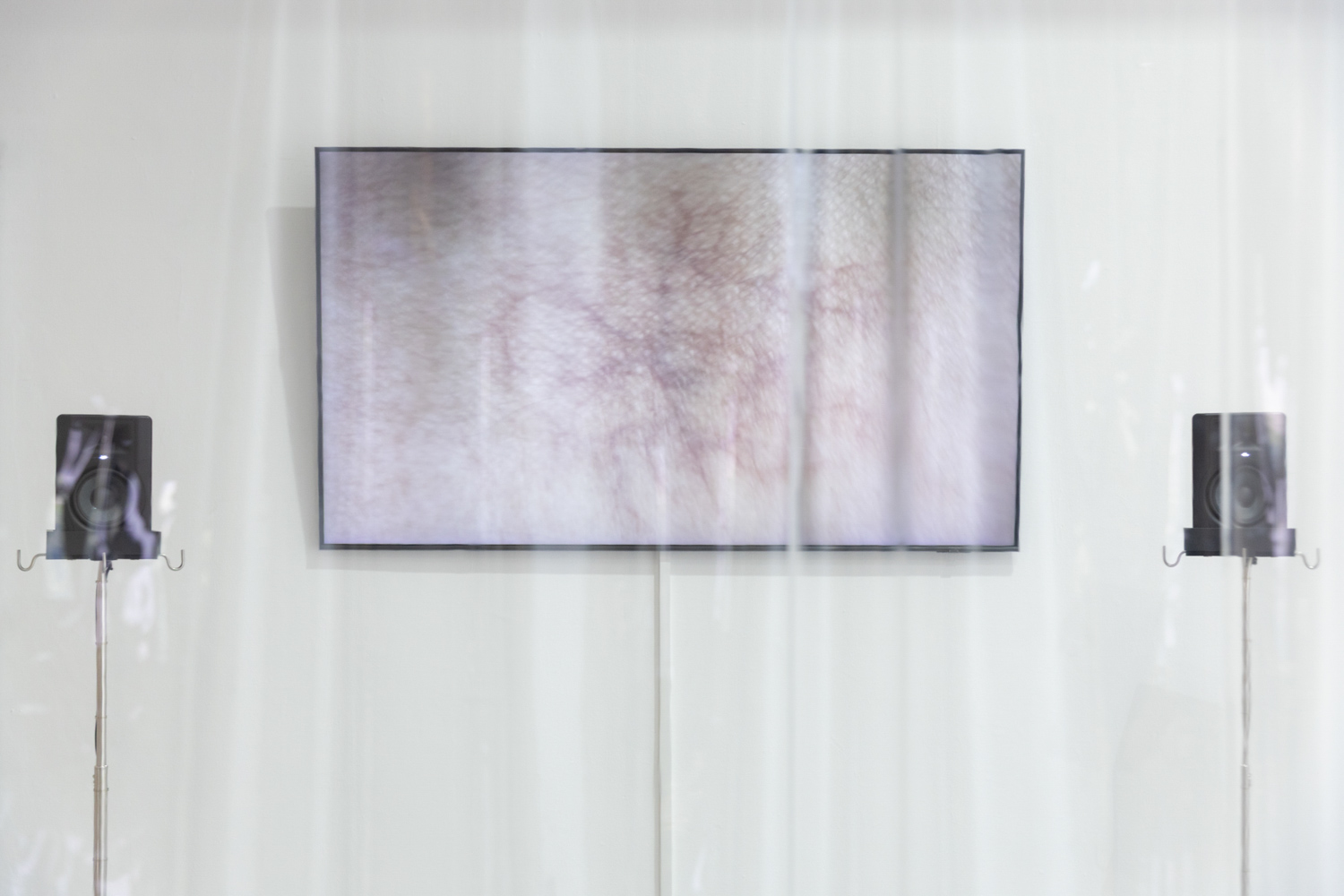
If Sahapon’s invisible walls draw lines of control through the virtual air, the most subtly regulated space—and the one closest to us—is none other than the human ‘body.’ Viewed through the framework of biopolitics, our bodies and flesh are not purely private spaces. Rather, they form a primary site of confrontation where the mechanisms of state power, medical institutions, and discourses of social normativity continually intervene to define, organize, and monitor which bodies are considered ‘normal’ and which are rendered other.
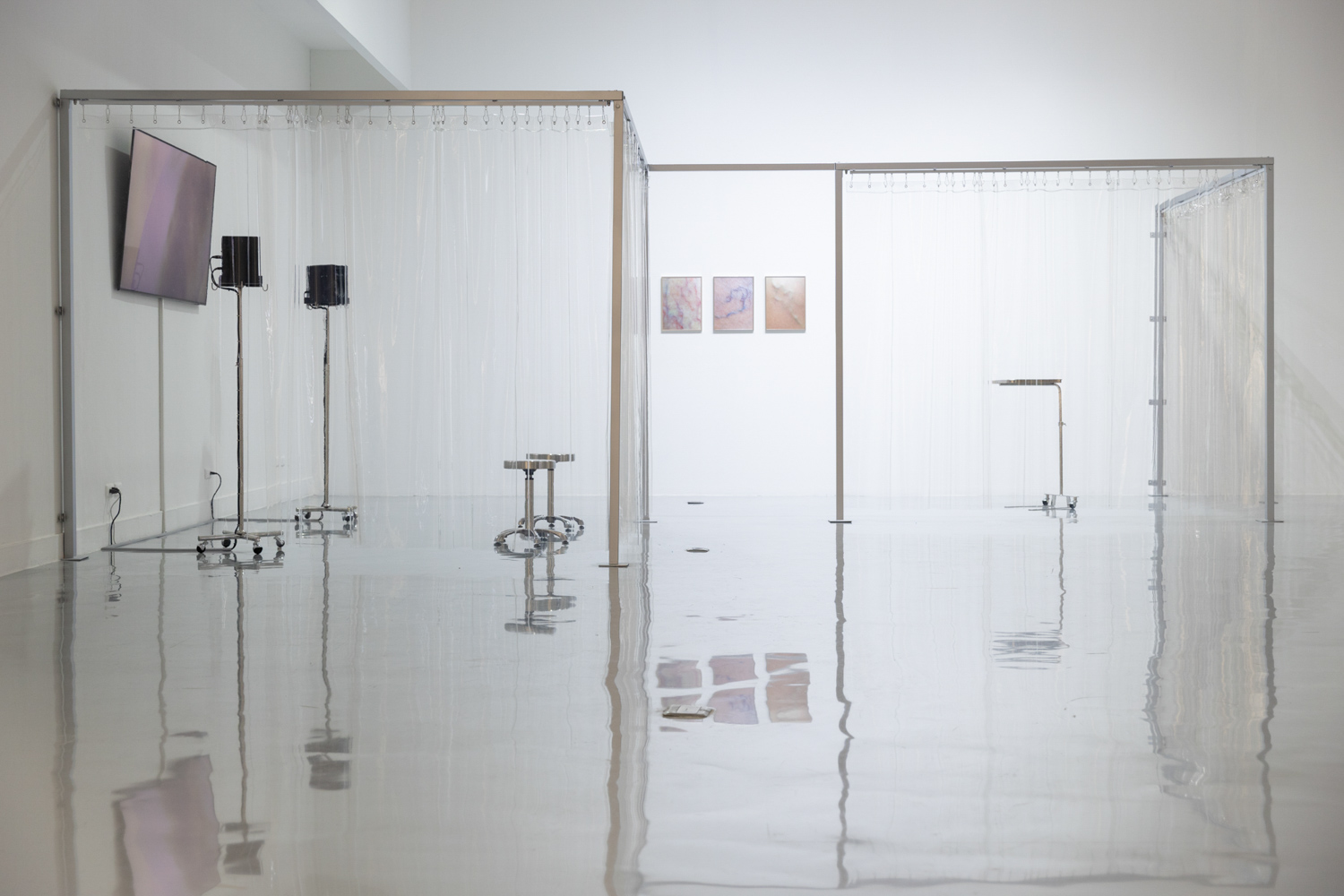
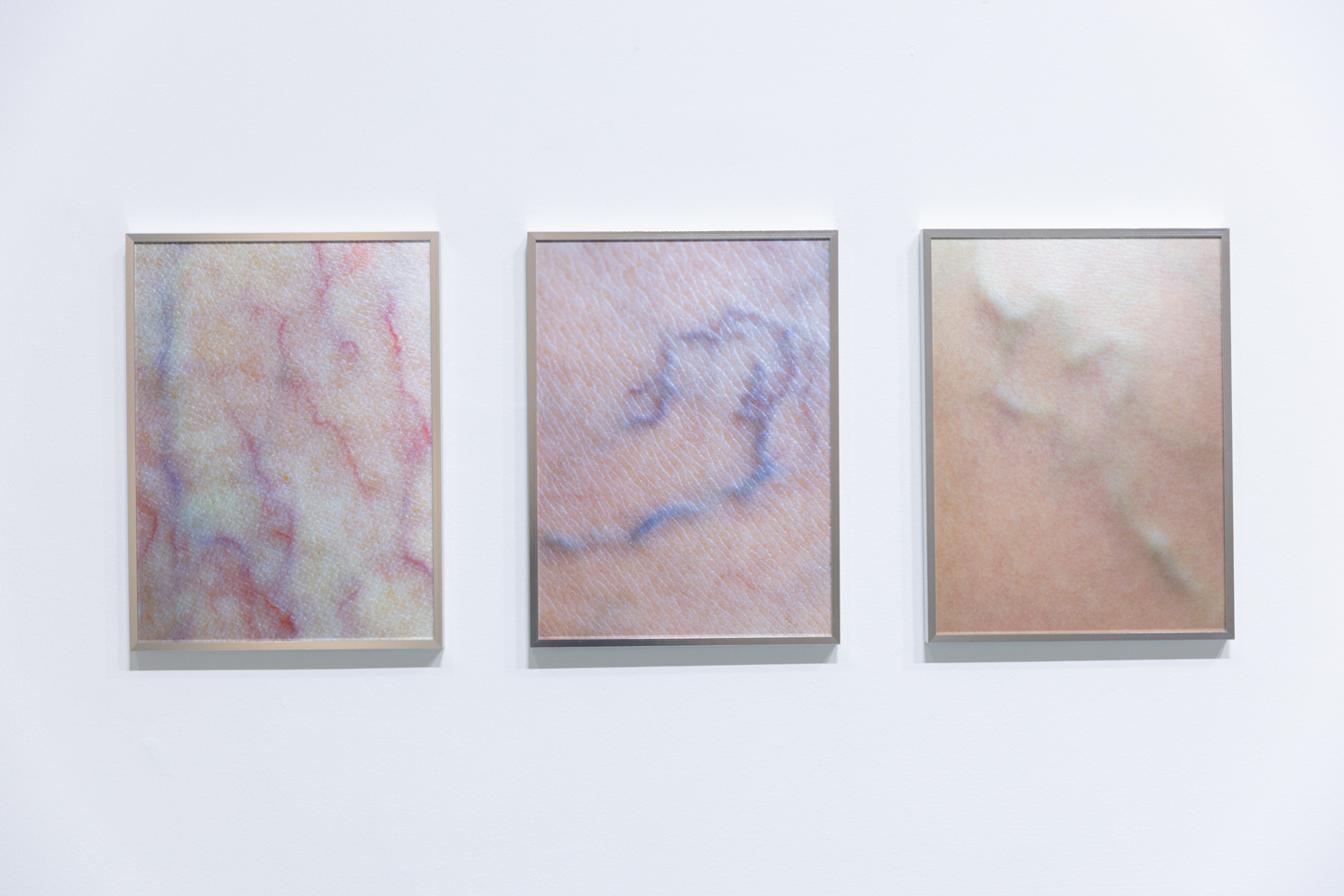
In Bodies of Memo, Phakpoom Natpapatsorn translates his personal experience of living with a venous malformation in his calf into an installation connecting the body, treatment history, and medical records. Phakpoom takes us beyond a purely biological reading of the wound to directly question the medical establishment and health insurance system, which present themselves as authorities that label, evaluate, and classify human bodies through numbers and words. By transforming a private state of illness into an exhibition space resembling a medical examination room—once opaque, but now transparent and brightly illuminated—the work exposes how citizens’ rights can be quietly restricted by structures of institutional power without their knowledge.
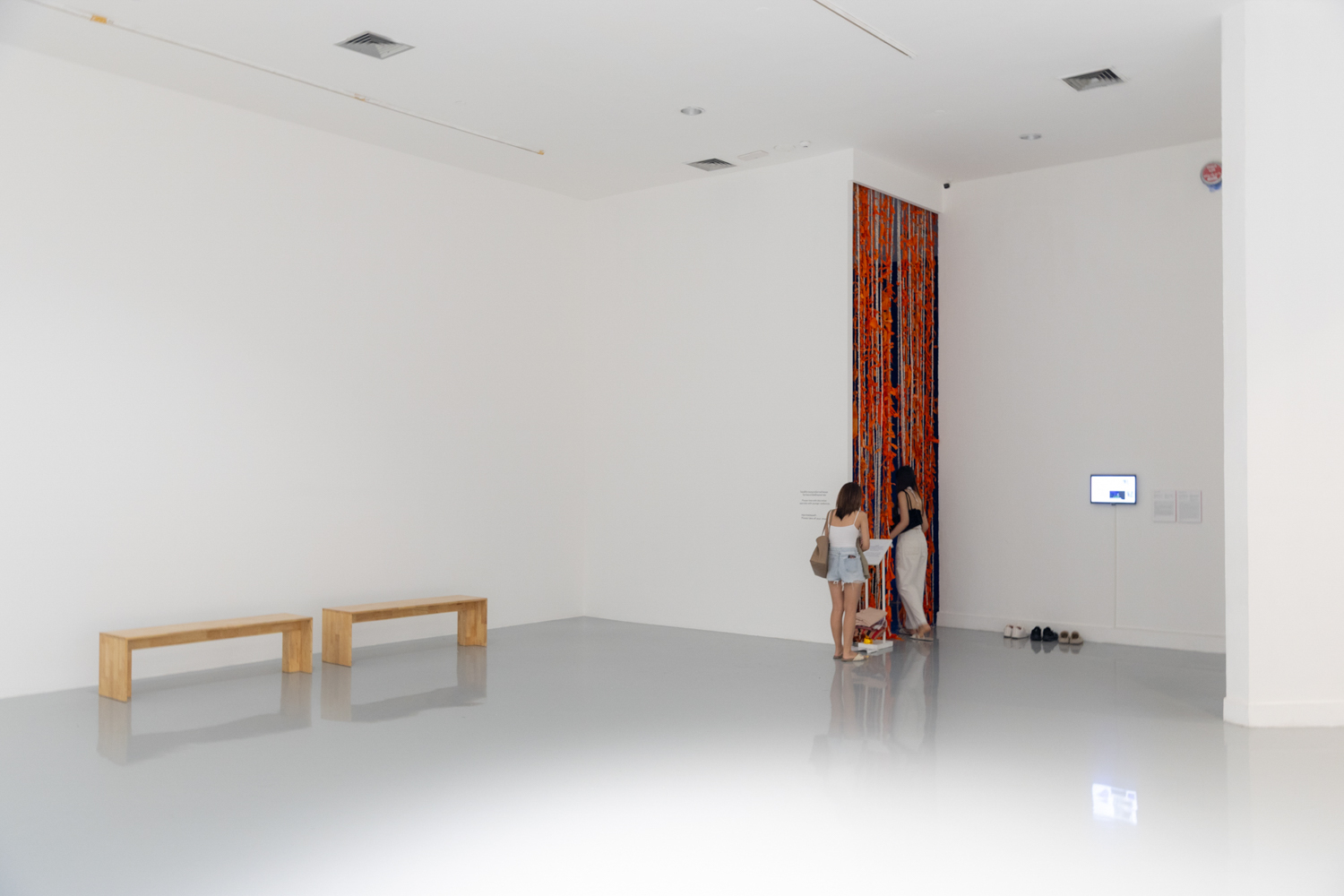
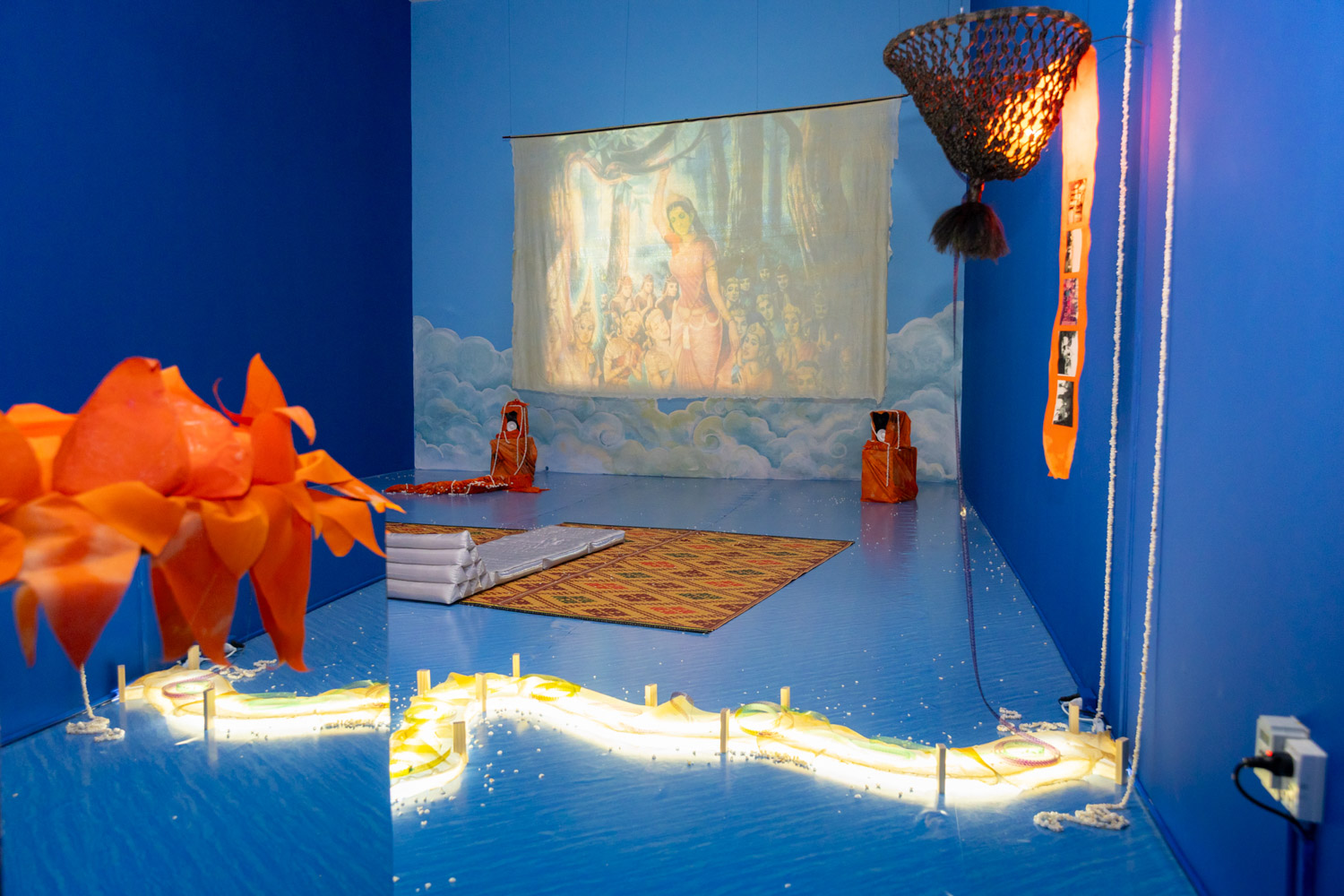
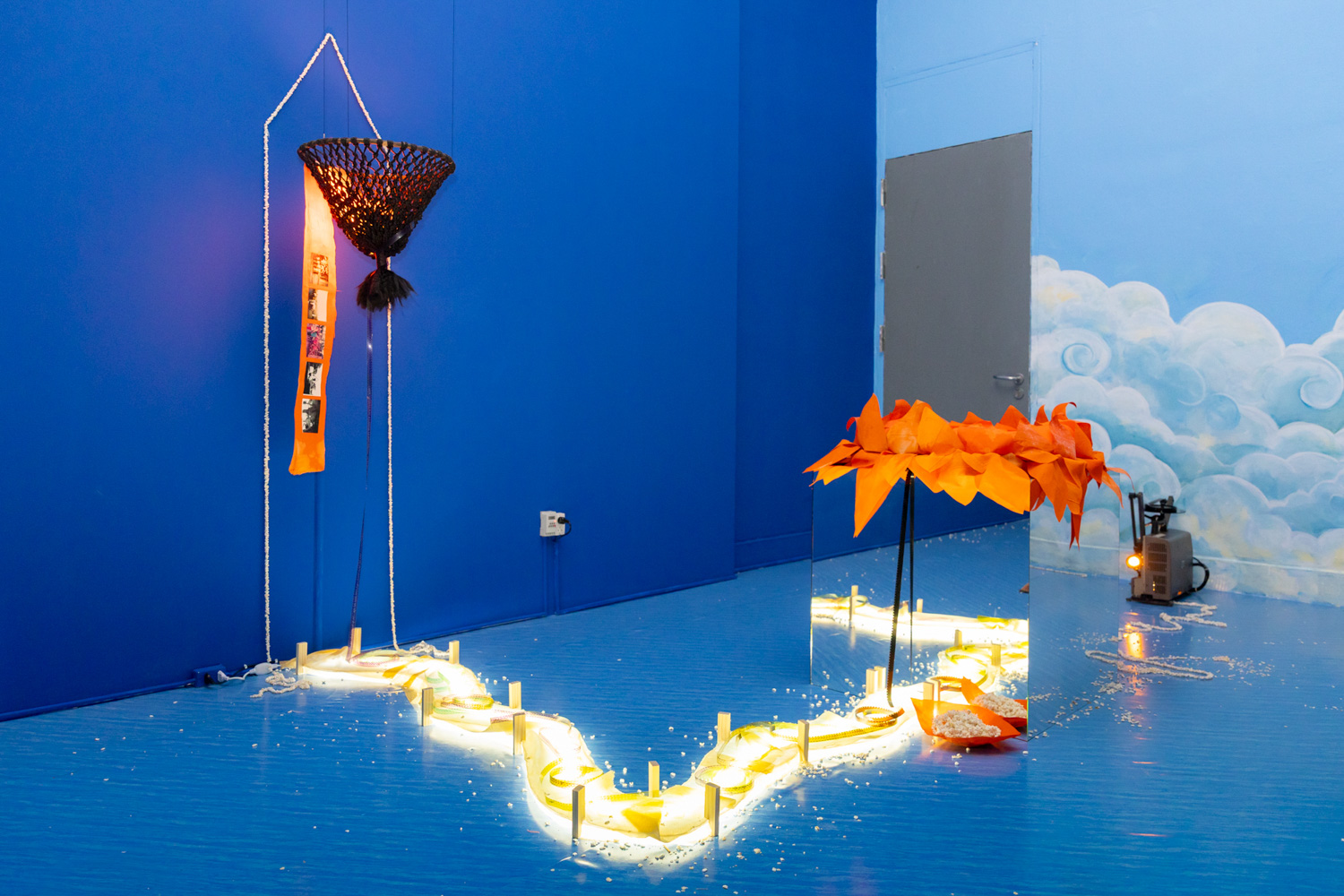
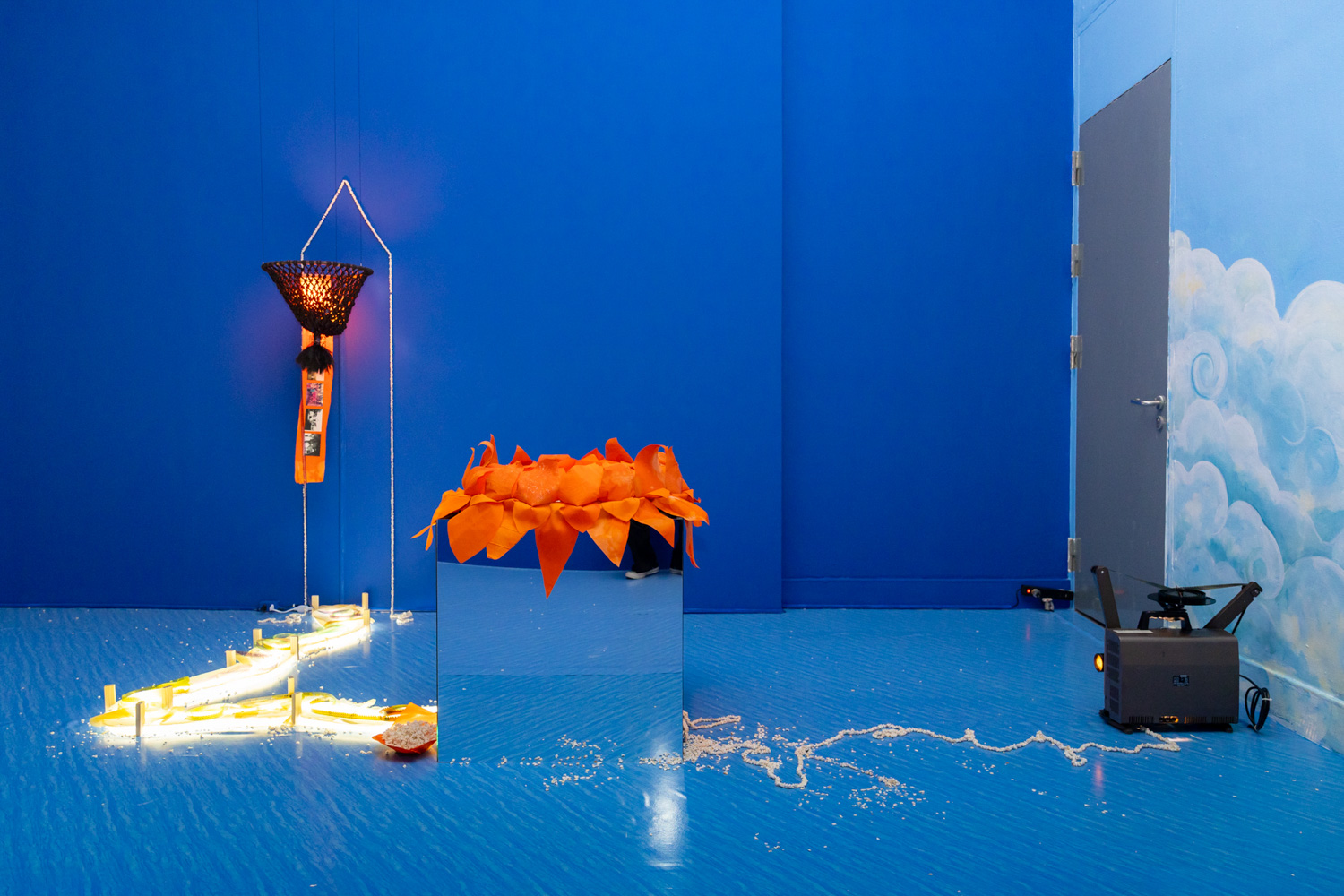
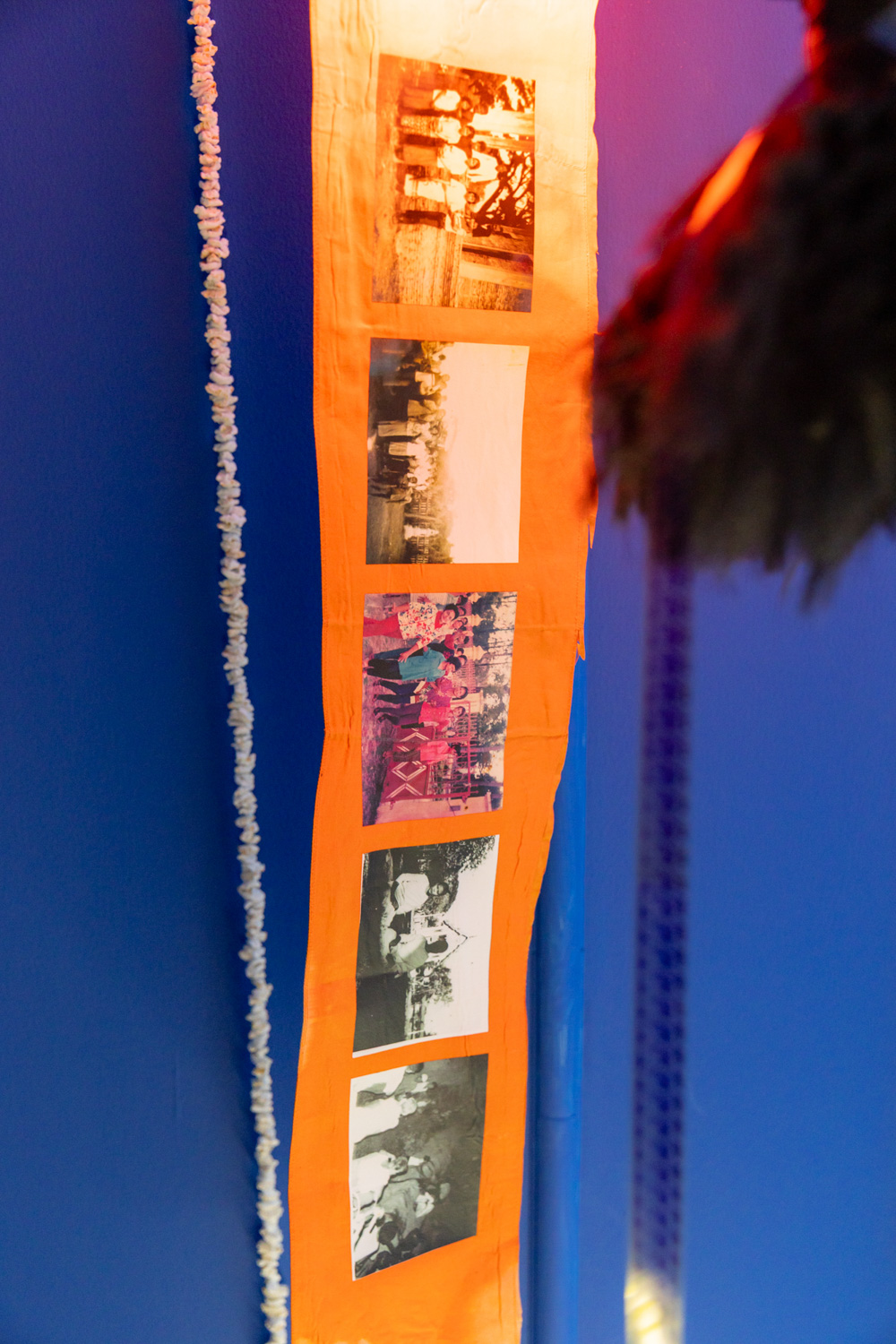
Jessada Chan-yaem, meanwhile, confronts biopolitical mechanisms through the distinct dimensions of religion and culture. Their film Manussosi (How Rivers Become Clouds) revisits, through a queer lens, the story from the Buddhist scriptures of a naga who disguises themselves as a human in an attempt to enter the monkhood, only to be rejected. The work reveals how Thai Theravada Buddhism draws sacred boundaries that push women and people of other genders outside religious space. Under these norms, only adult men who conform to prescribed standards may be ordained and recognized as fully ‘human,’ while those whose bodies, minds, or gender identities fall outside them are denied recognition. They are permitted only to facilitate or receive merit generated by others, rather than to create merit themselves through ordination. Jessada further challenges the sensibilities of these ‘cisgender men’ by making them wear a pha sin, or traditional tube skirt, to enter their exhibition space. The requirement tends to produce one of two responses: some agree to wear it so that they can follow another person inside, while others charge straight in, disregarding the prohibition and its conditions altogether.
The dismantling of borders in Early Years Project #9 does not end with human experience. It moves beyond anthropocentrism toward a posthuman ecological perspective, in which relationships among living beings, plants, soil, and cosmology establish shared spaces of existence while challenging humanity’s impulse to order the world and extract its resources.
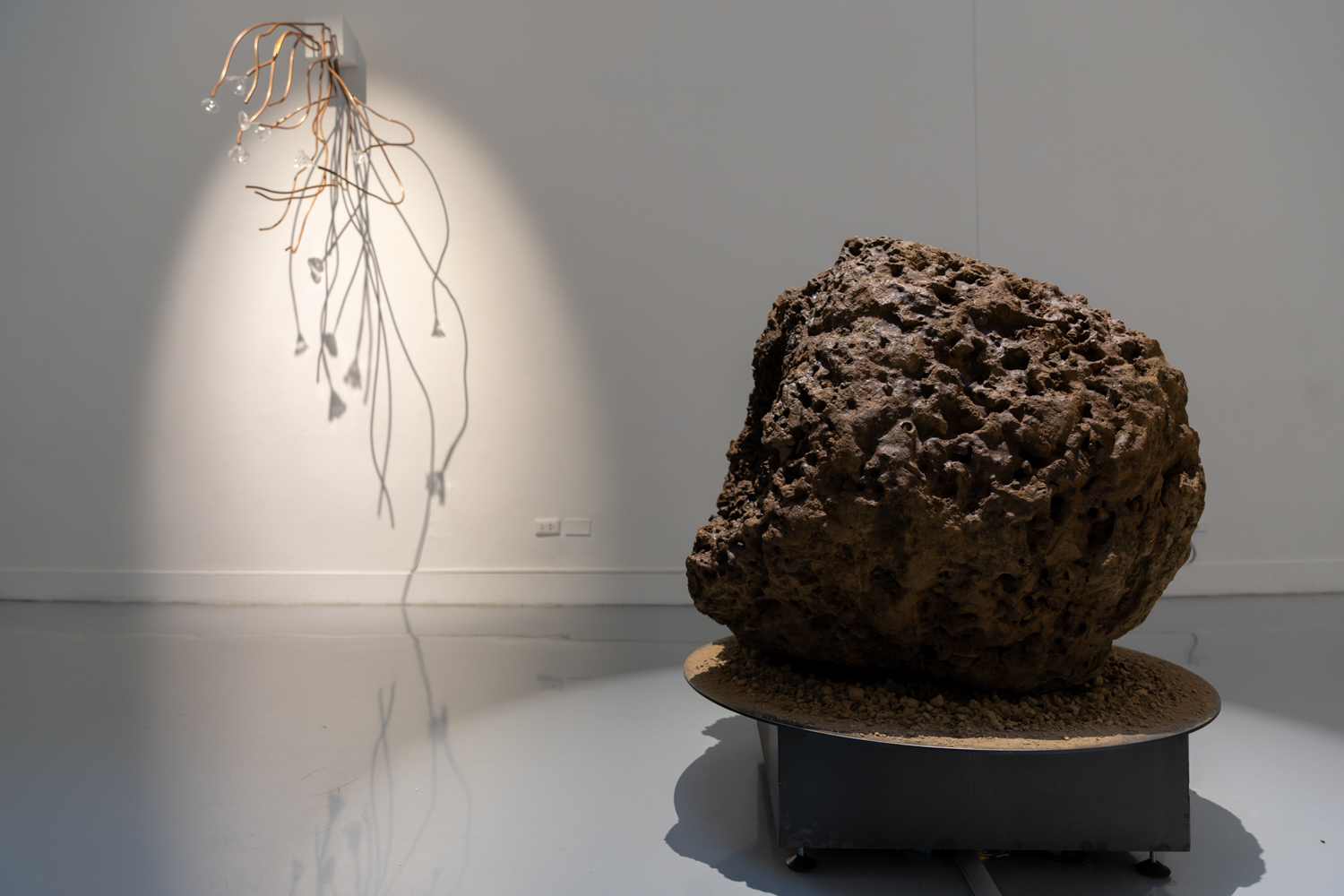
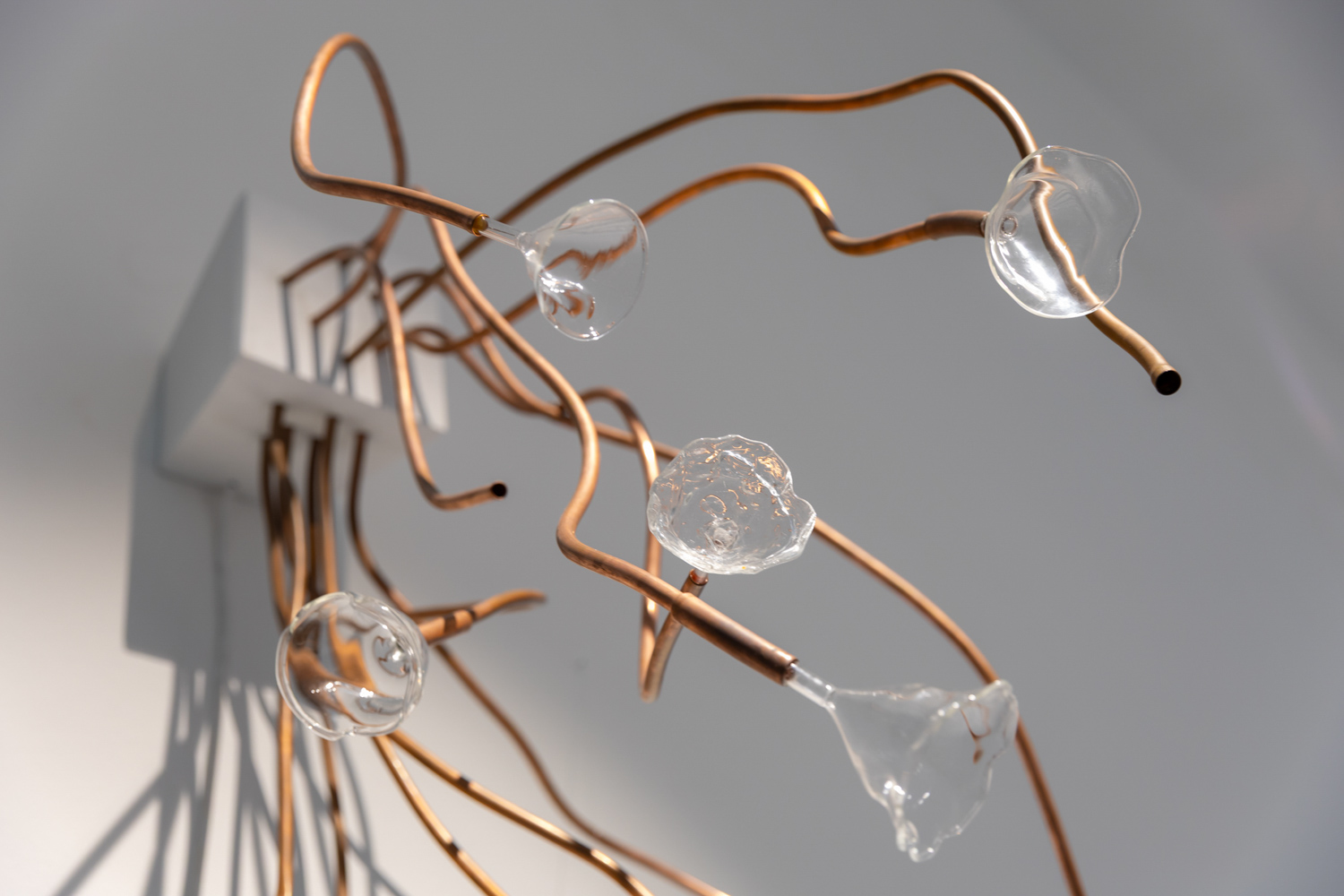
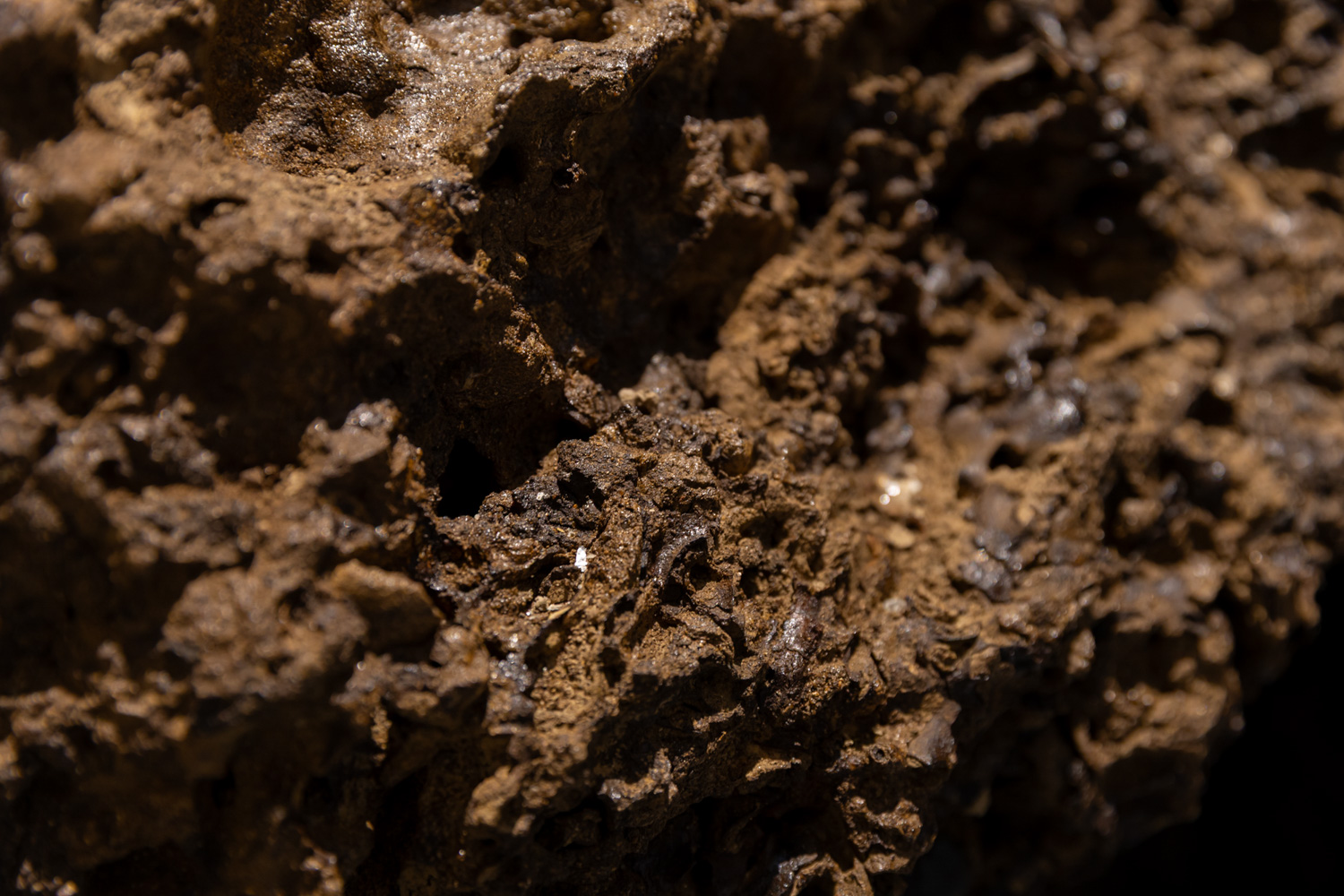
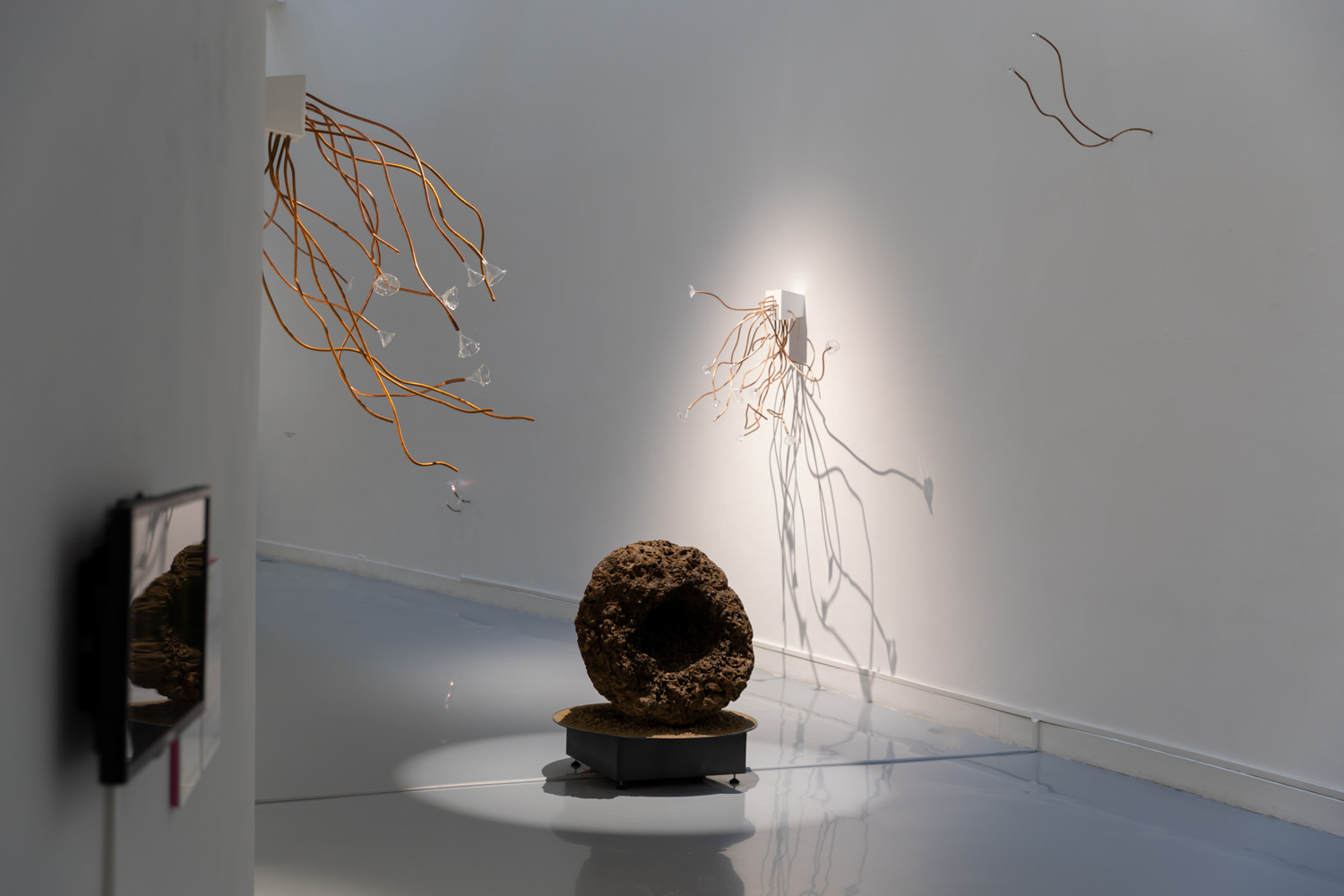
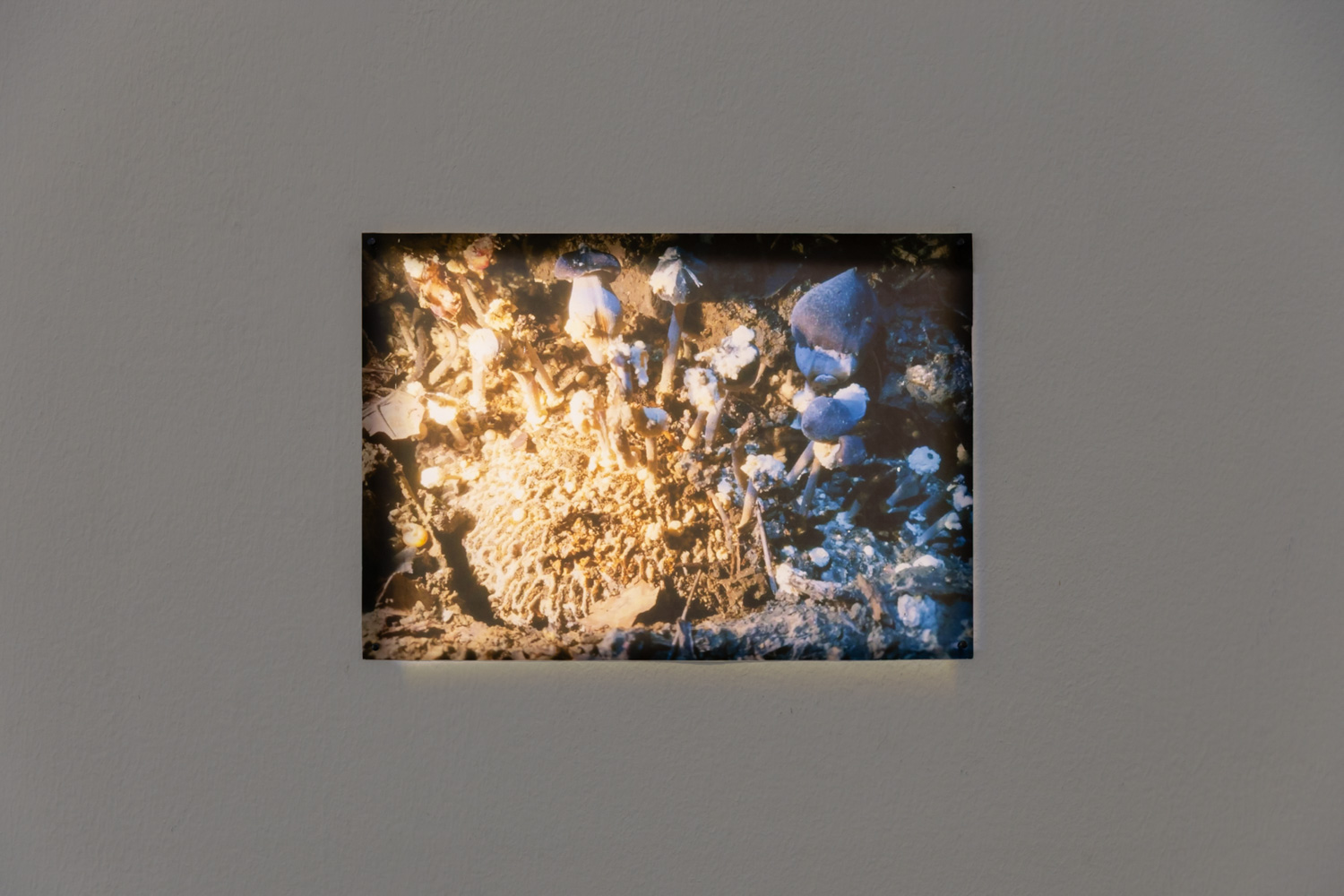
In Lha (we are reincarnating through each other), Parichat Tanapiwattanakul takes us back to Khao Krachom in the Tenasserim Hills, a landscape once subjected to capitalist tin-mining concessions and subsequently abandoned as ruins. Parichat brings fragments of a derelict building into the gallery and combines them with termites, termite mushroom spores, moisture, field recordings, and oral narratives. Together, these elements gradually stir, bloom, and transform with the seasons. The work is interwoven with the Pwo (Karen) cosmology of ‘Lha,’ in which all things are considered alive. When something dies, its ‘Lha,’ or life force, does not disappear. It simply departs its former body and drifts through the void, awaiting the moment when natural conditions become complete enough for it to be reincarnated. The architectural remains and the exhibition space are thus reclaimed from their status as lifeless debris left behind by human extraction. They become a space through which life force and the cycles of existence permeate, interweave, and endlessly reanimate one another.
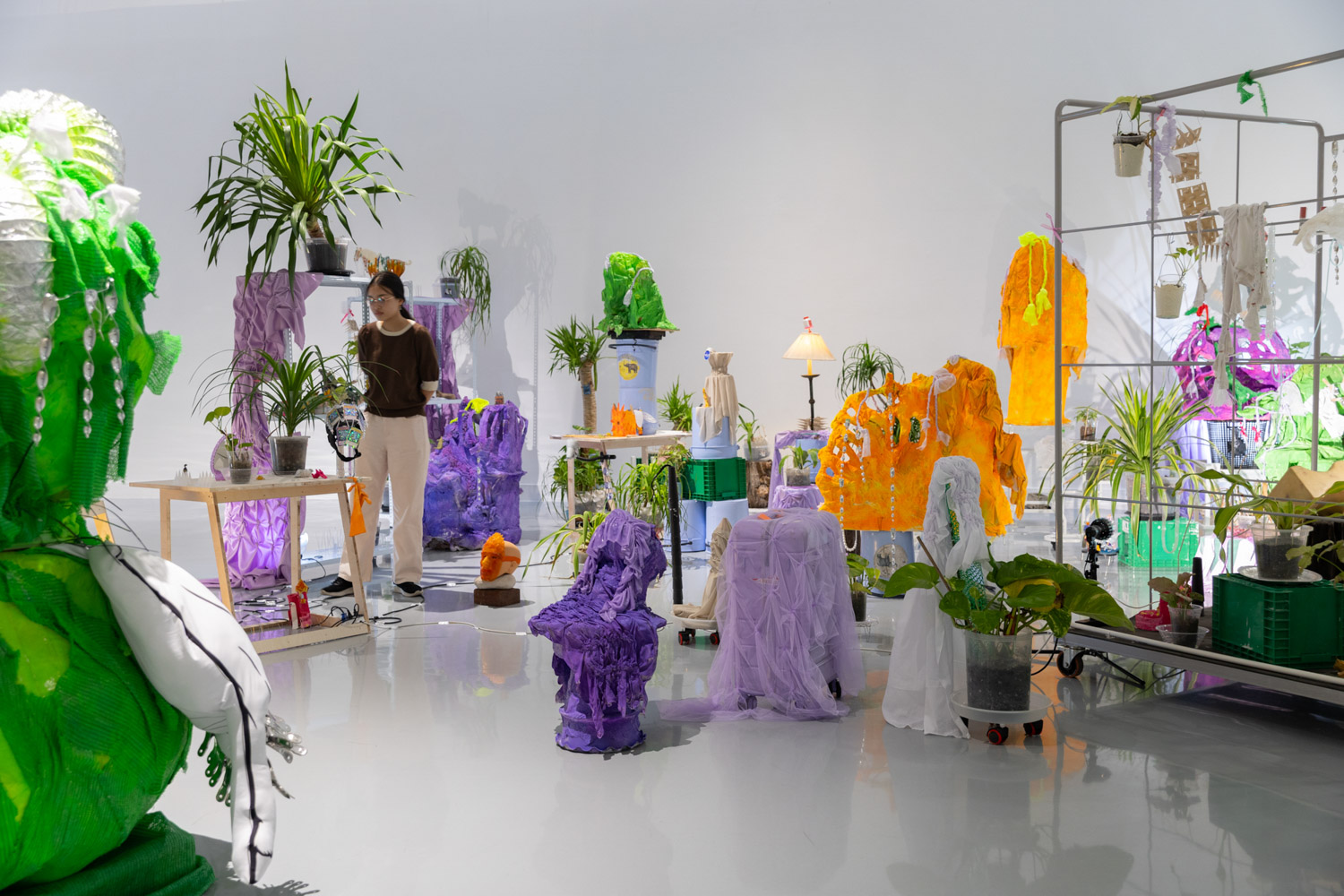
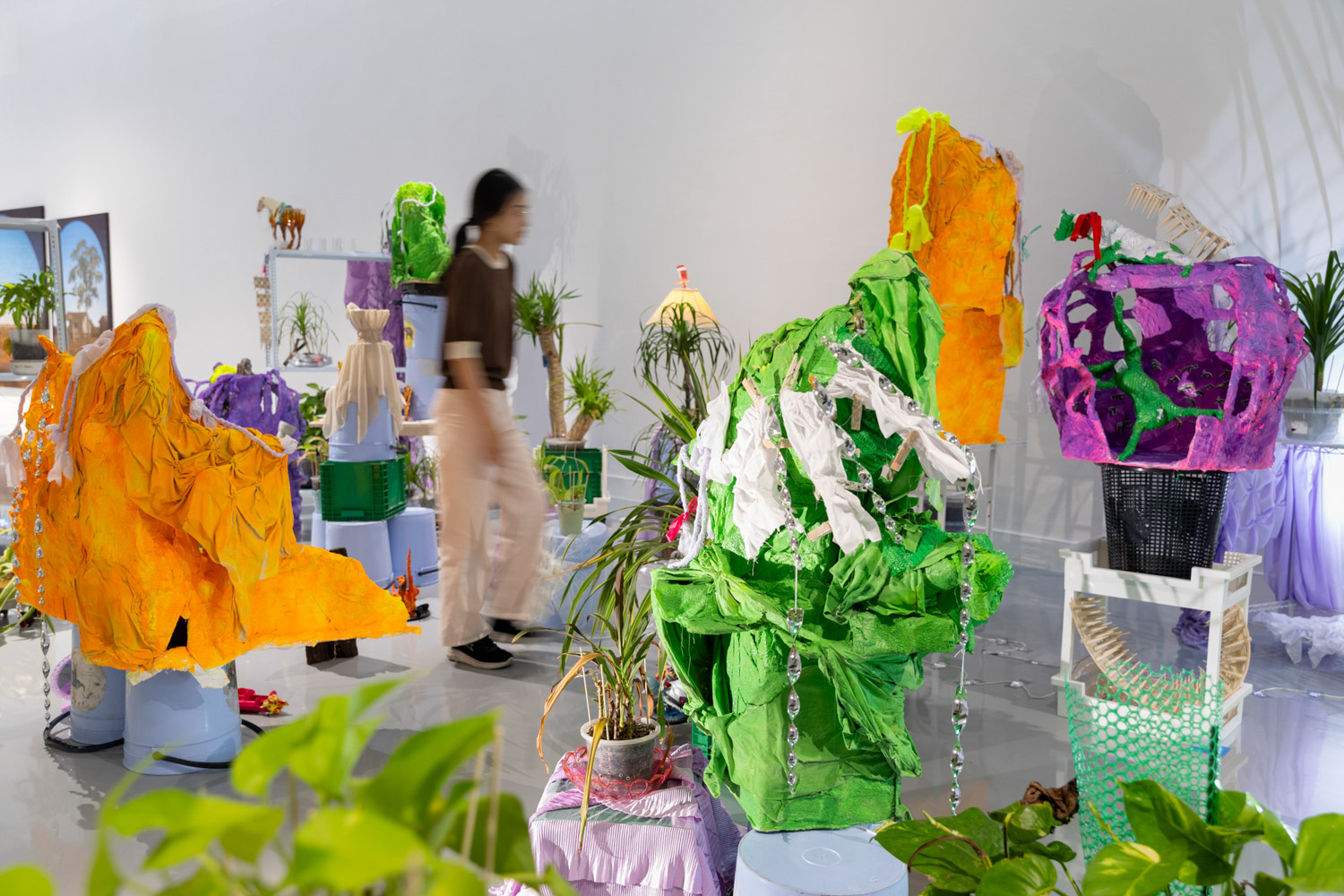
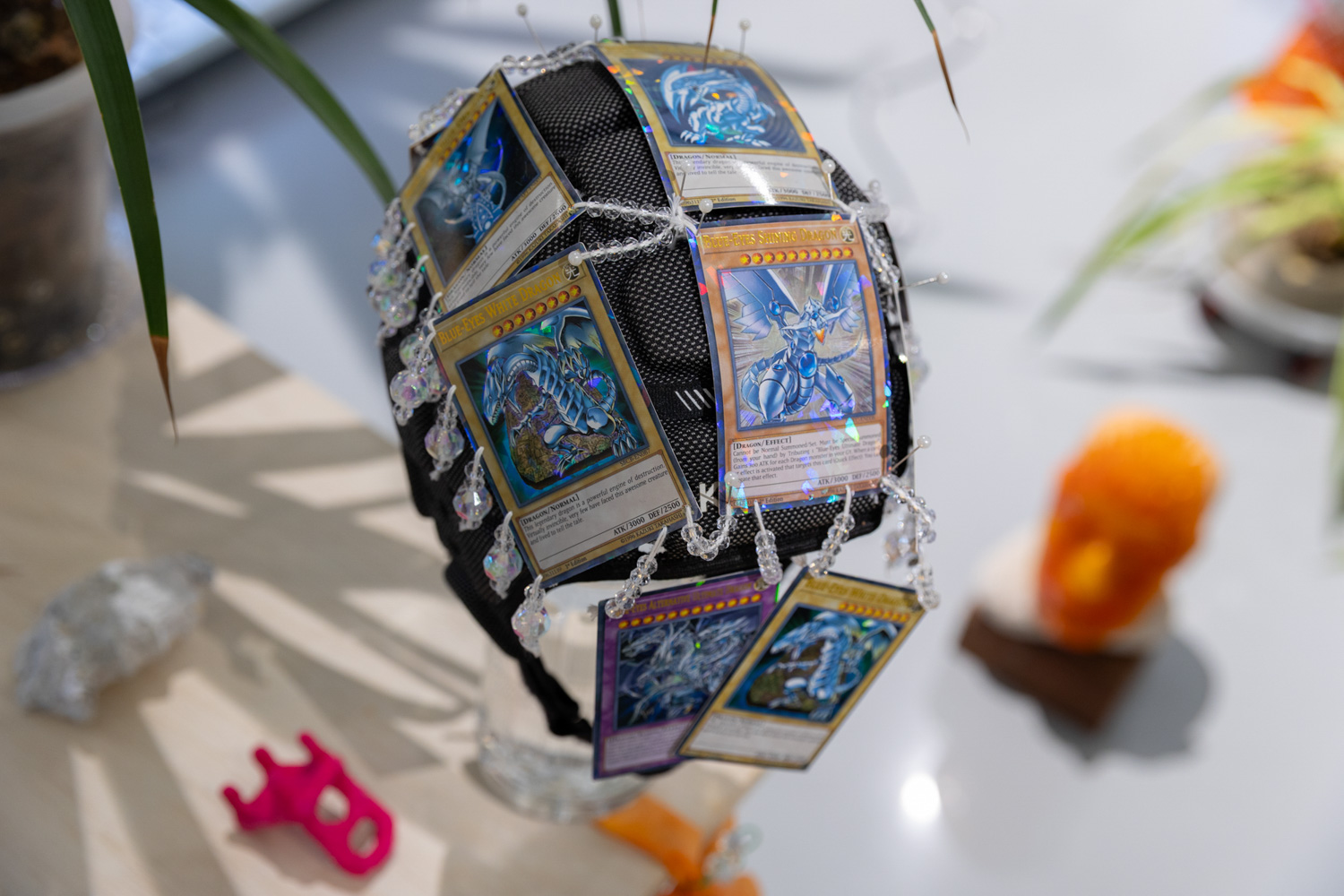
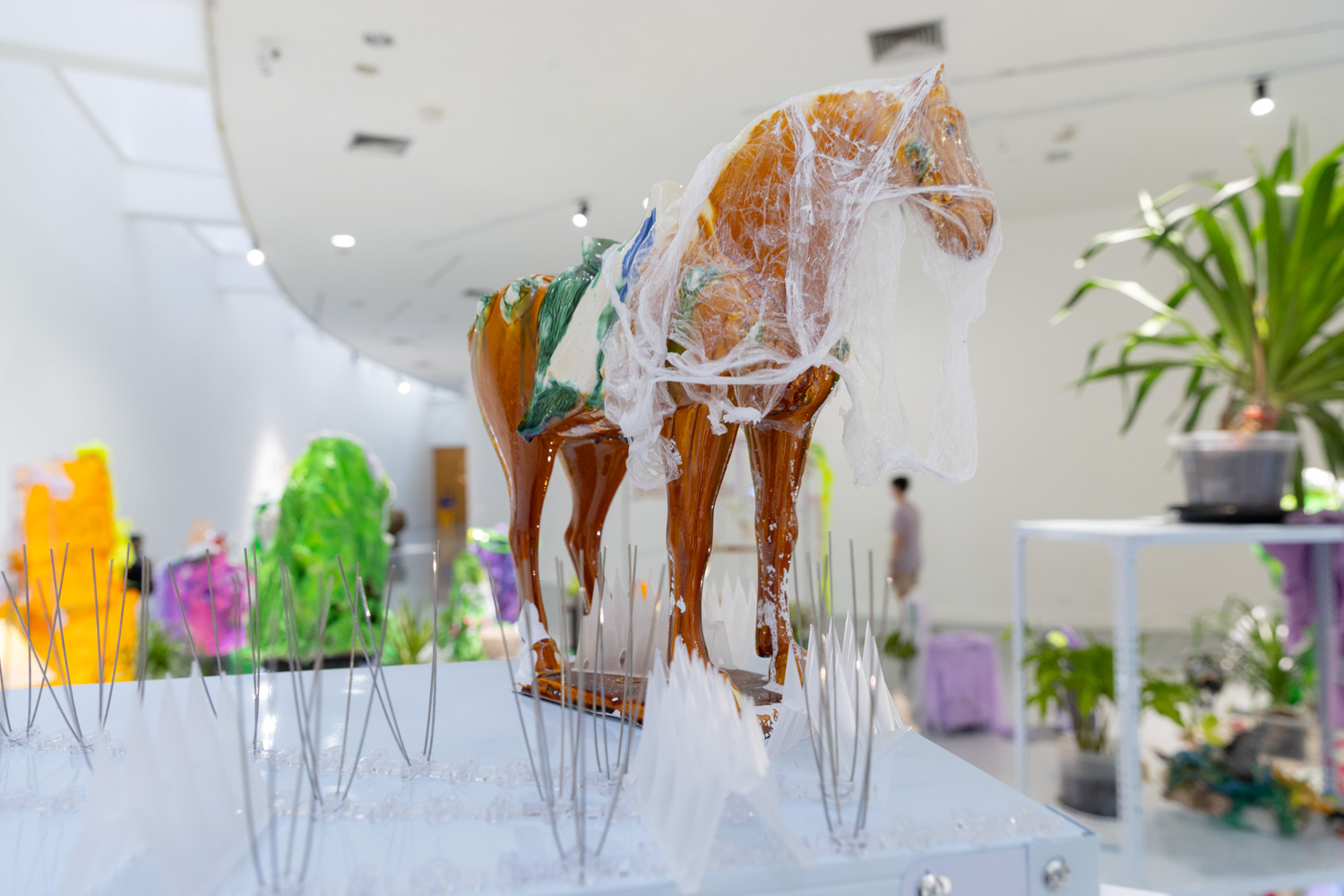
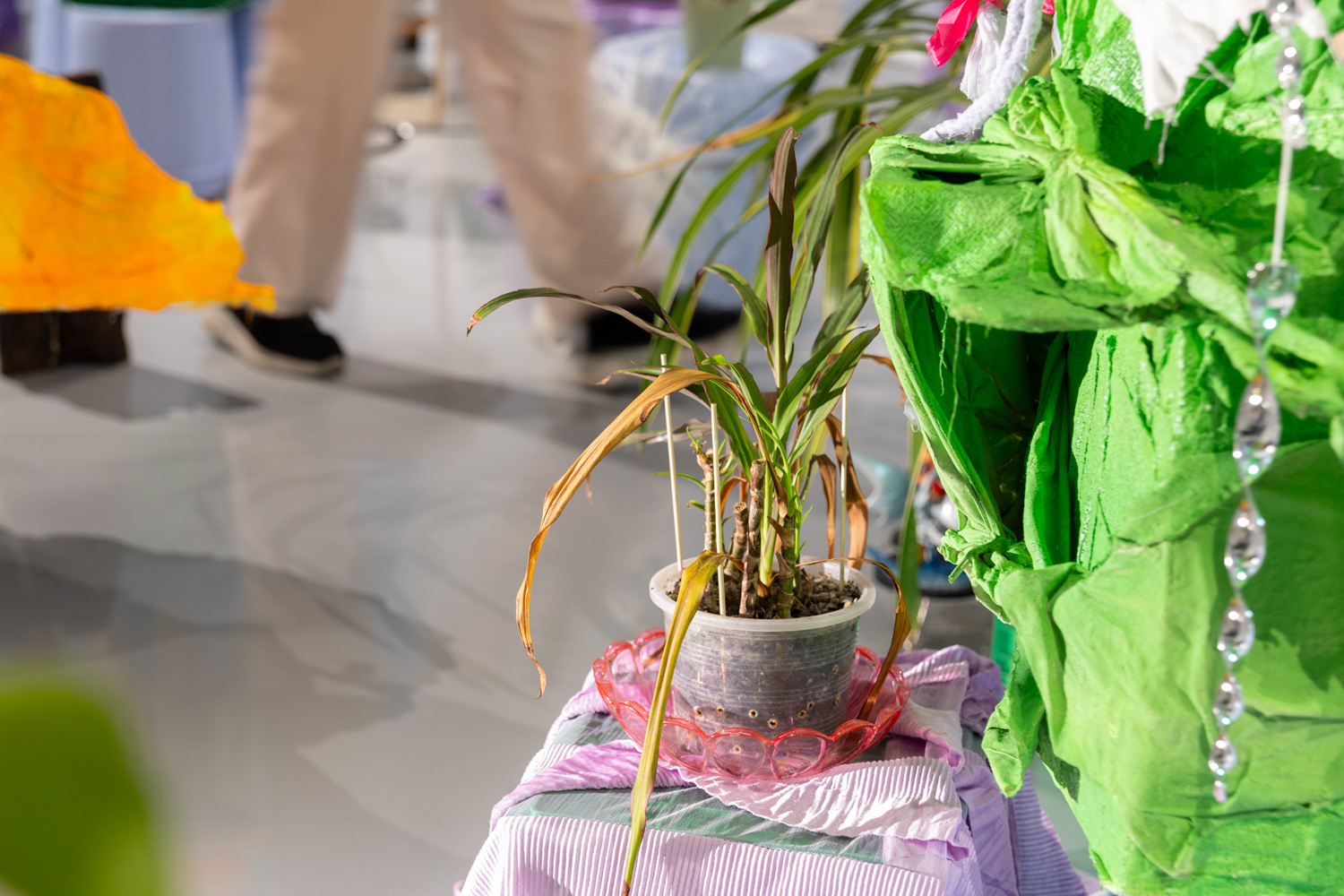
Porramet Jittaksa, meanwhile, turns to the organization of biological space within the intimate territory of the ‘home.’ In Stella Nova, he assumes the role of a gardener, gathering soil and plants from along their family’s migration routes and bringing them together to grow and interact. They places ‘golden pothos’ (Epipremnum aureum)—an introduced, invasive plant often classified as a threat—alongside ‘chan pha’ (Dracaena cochinchinensis), a popular native species, opening a conversation around the politics of plant life. Within the installation, the plants’ growth, infiltration, and disruption dismantle established norms, family narratives, and conventional boundaries of domestic orderliness. The work demonstrates that even the most private human space is not a territory over which humans can exert complete control. Nor can it escape encounters with other species or their role in defining the space.
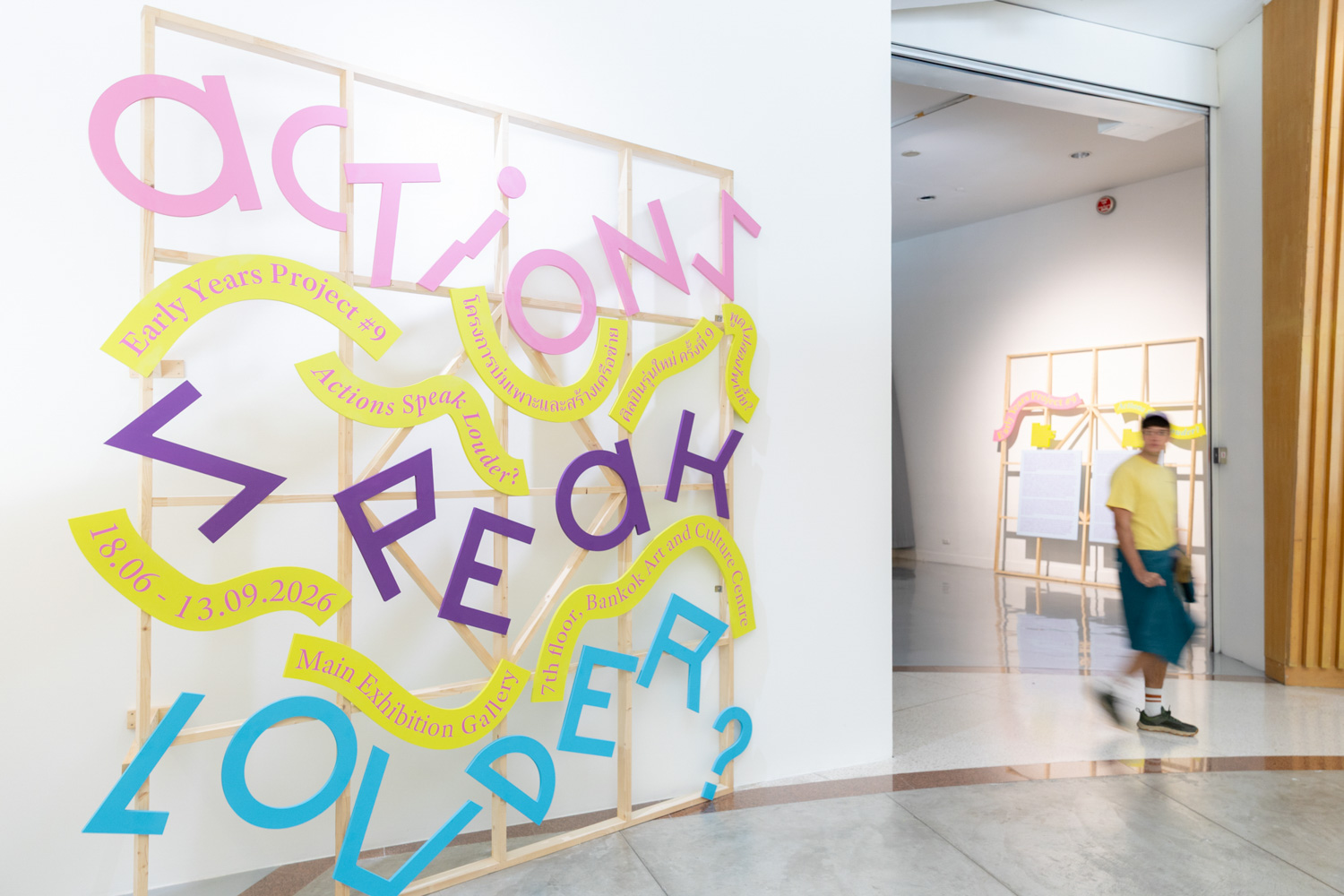
The journey through four scales of space—the global, the urban, the human, and the more-than-human—in Early Years Project #9 reaffirms that ‘actions do speak louder.’ Taken as a whole, the exhibition can be understood as an exercise in mapping: one that demonstrates how every border in the world has been drawn into existence, and how humans and living beings of every species retain the right to challenge, disrupt, and continually reconstitute the meaning of space.
Early Years Project #9: Actions Speak Louder? is on view at the Main Exhibition Gallery on the seventh floor of the Bangkok Art and Culture Centre (BACC) from June 18 to September 13, 2026.