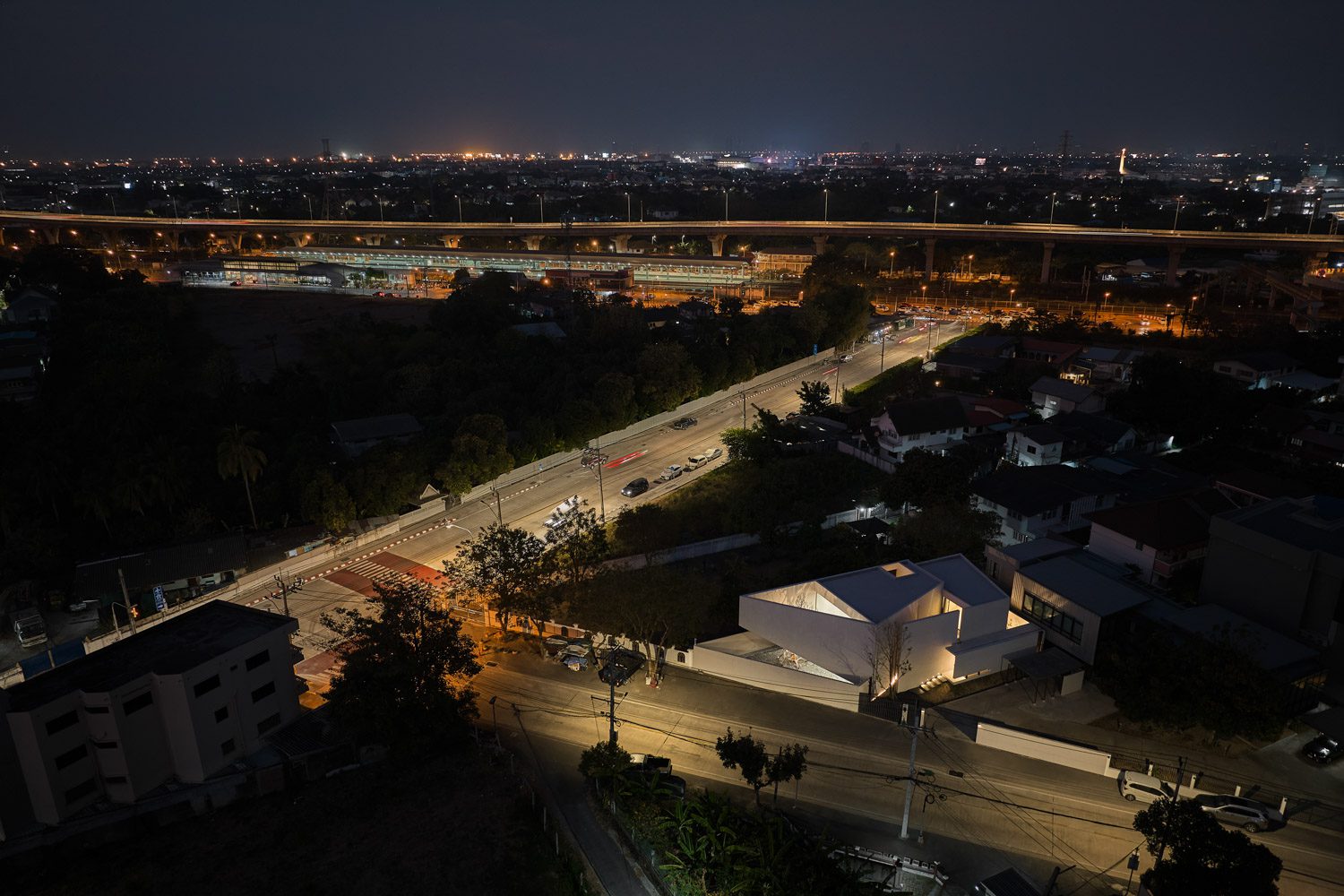
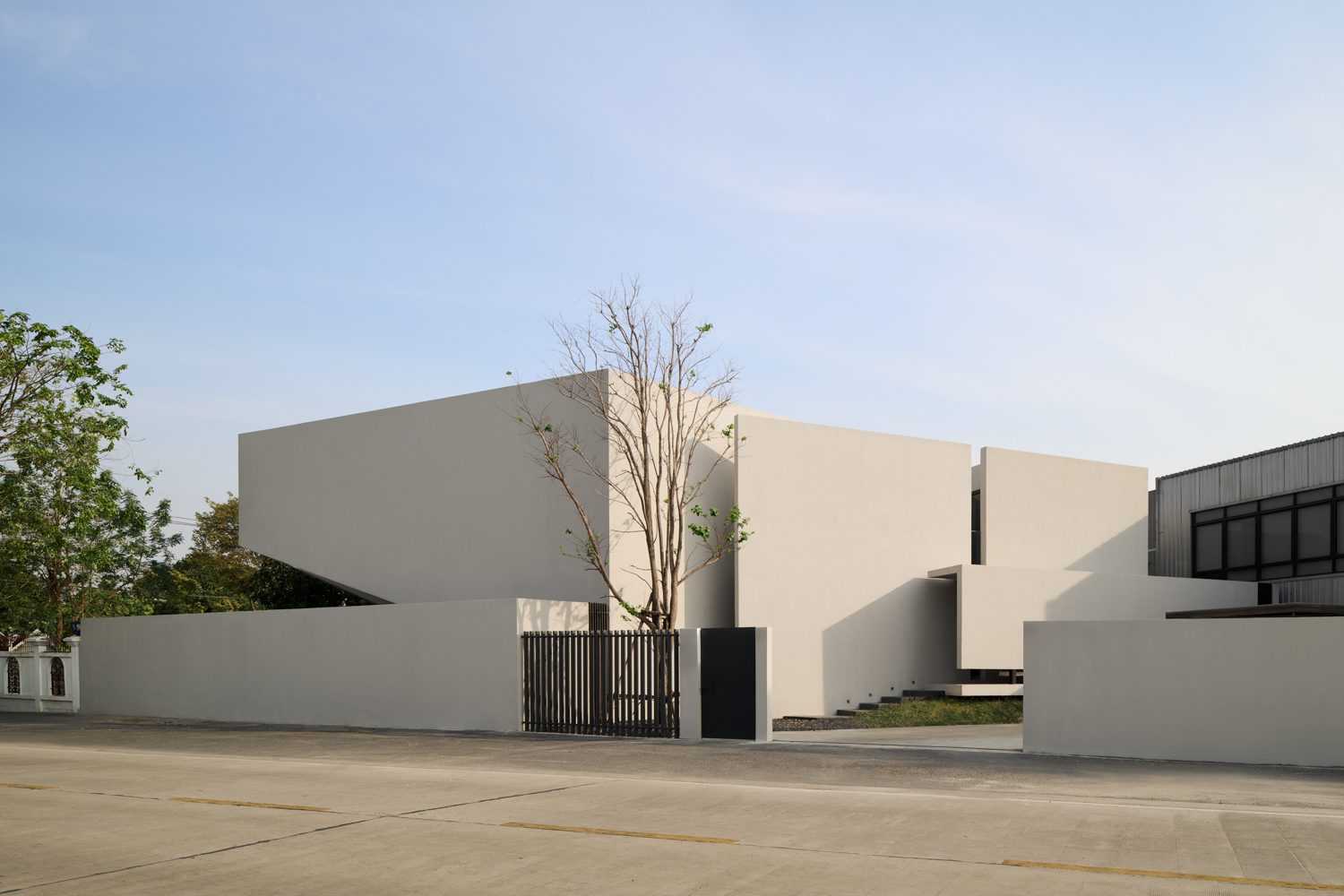
CASA T, AN ARCHITECTURE THAT SYSTEMATICALLY INTEGRATES THE FUNCTIONS OF RESIDENCE AND TATTOO STUDIO THROUGH THE ARRANGEMENT OF SPACES AND SHARP YET BALANCED FORMS FOR LIVING, BY SSAA
TEXT: PIBHU DEVAKUL NA AYUDHYA
PHOTO: CHAKKRAPHOB SERMPHASIT
(For Thai, press here)
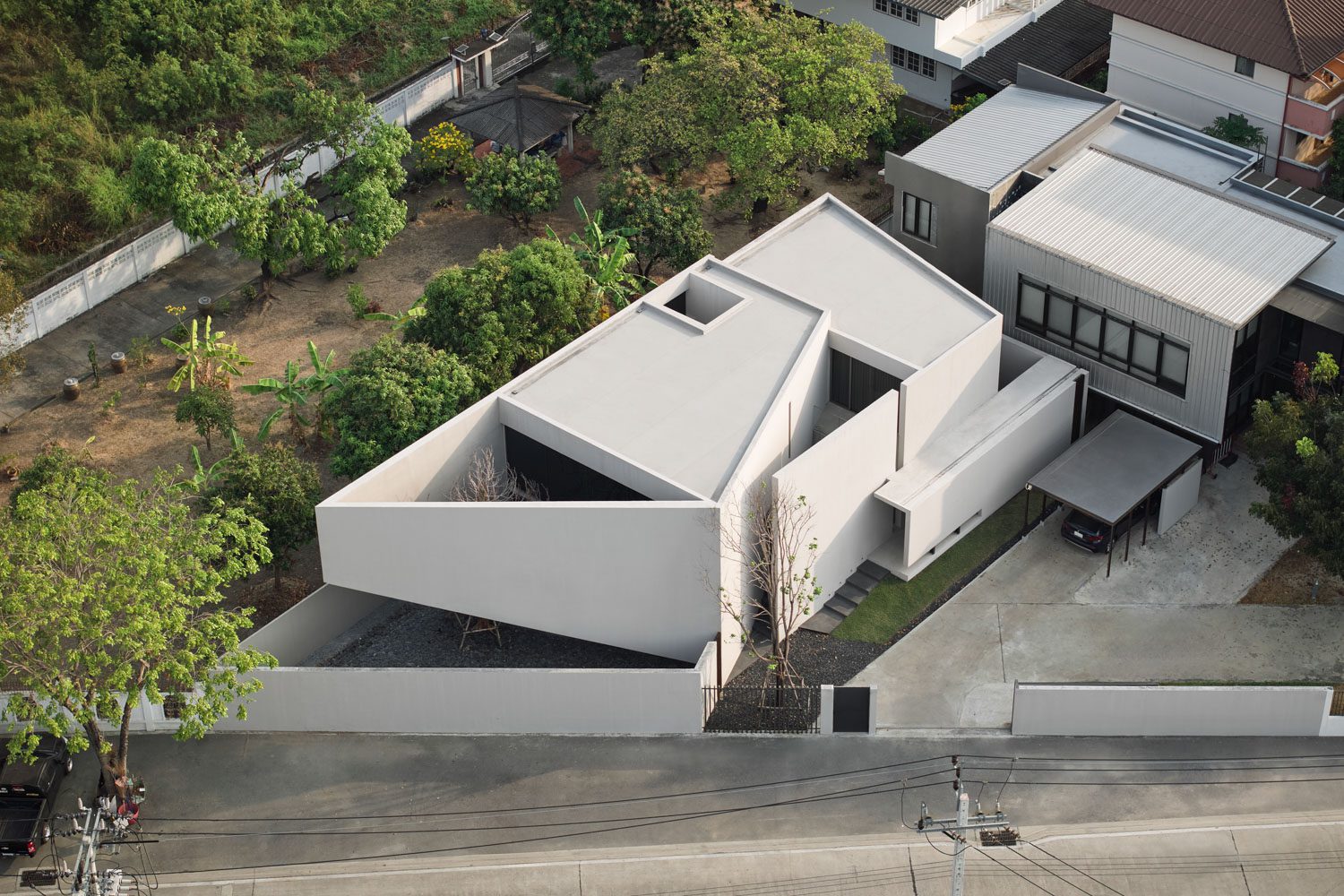
Casa T is a residence conceived by the architectural studio SSAA for a tattoo artist, his wife, and their newly welcomed child. The brief centered on achieving a delicate balance between work and domestic life beneath a single roof. The architecture speaks in a language refined in its simplicity, calm and unadorned, yet punctuated with spaces and details that reflect the artistic temperament of its owner. The design began with a careful reading of the site’s geometry and a conceptual exploration of the tattooing craft. From these studies emerged a building form that, from the street, presents itself as a monolithic block of concrete. Inside, volumes have been carved, cut, and meticulously organized, allowing pockets of greenery to slip into the voids and soften the composition.
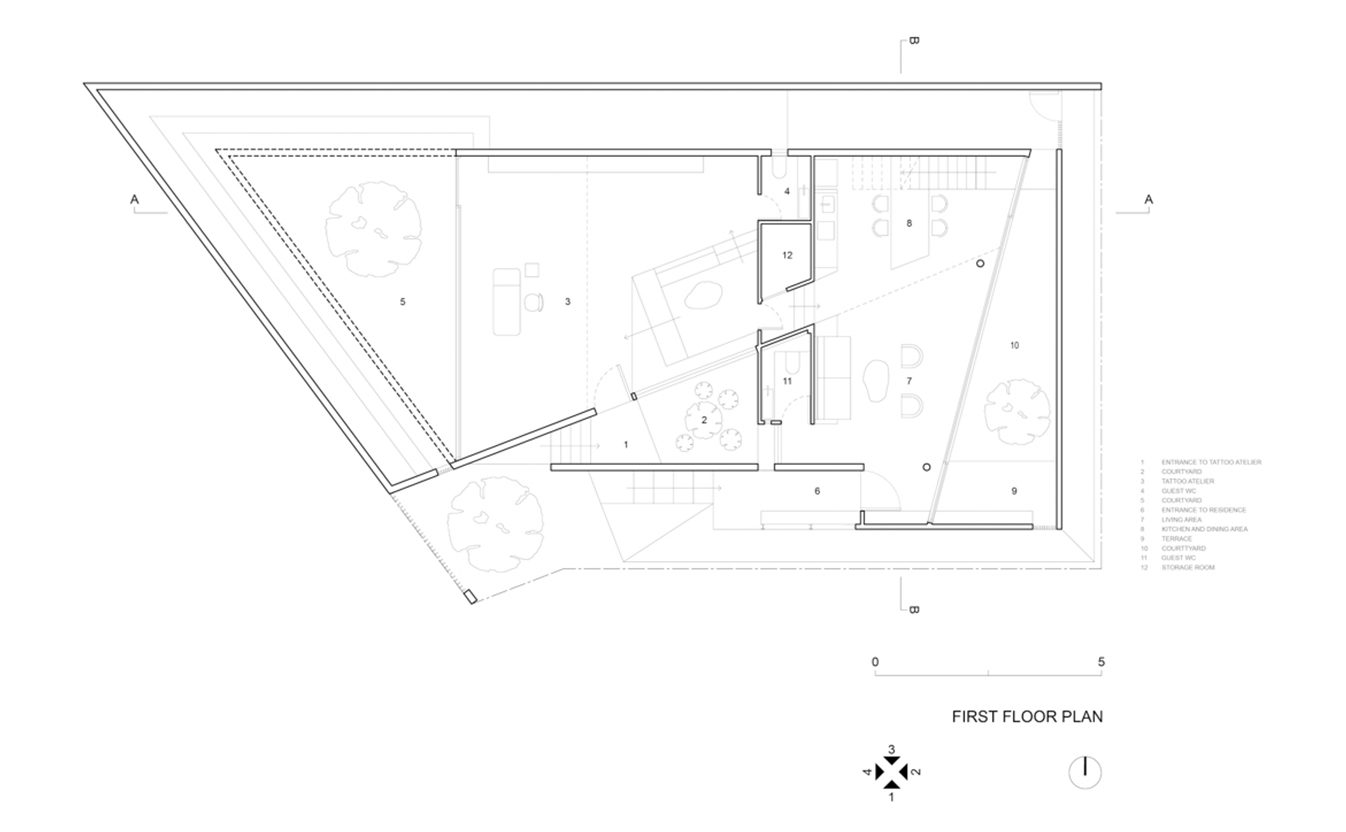
The project’s spatial strategy hinged on dividing the program into two distinct realms: a work zone, the tattoo studio, and a private family home. SSAA separated these functions through both the floor plan and the circulation sequence. The studio occupies the street-facing edge of the property, offering direct access for clients and insulating the domestic quarters from outside activity. Behind it, set deeper into the plot to buffer noise, lies the residential area. Between the two sits a service core containing bathrooms and storage rooms.
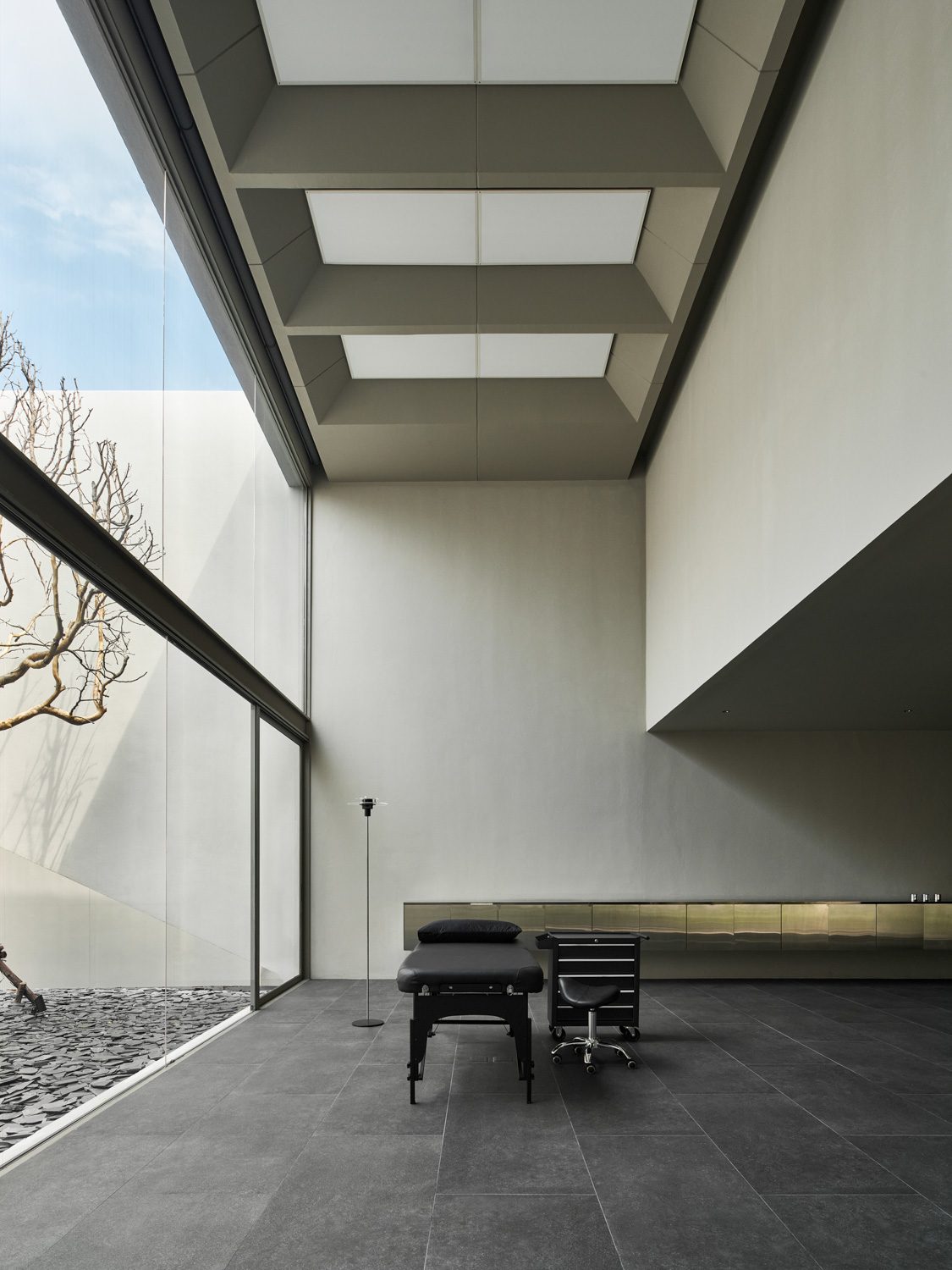
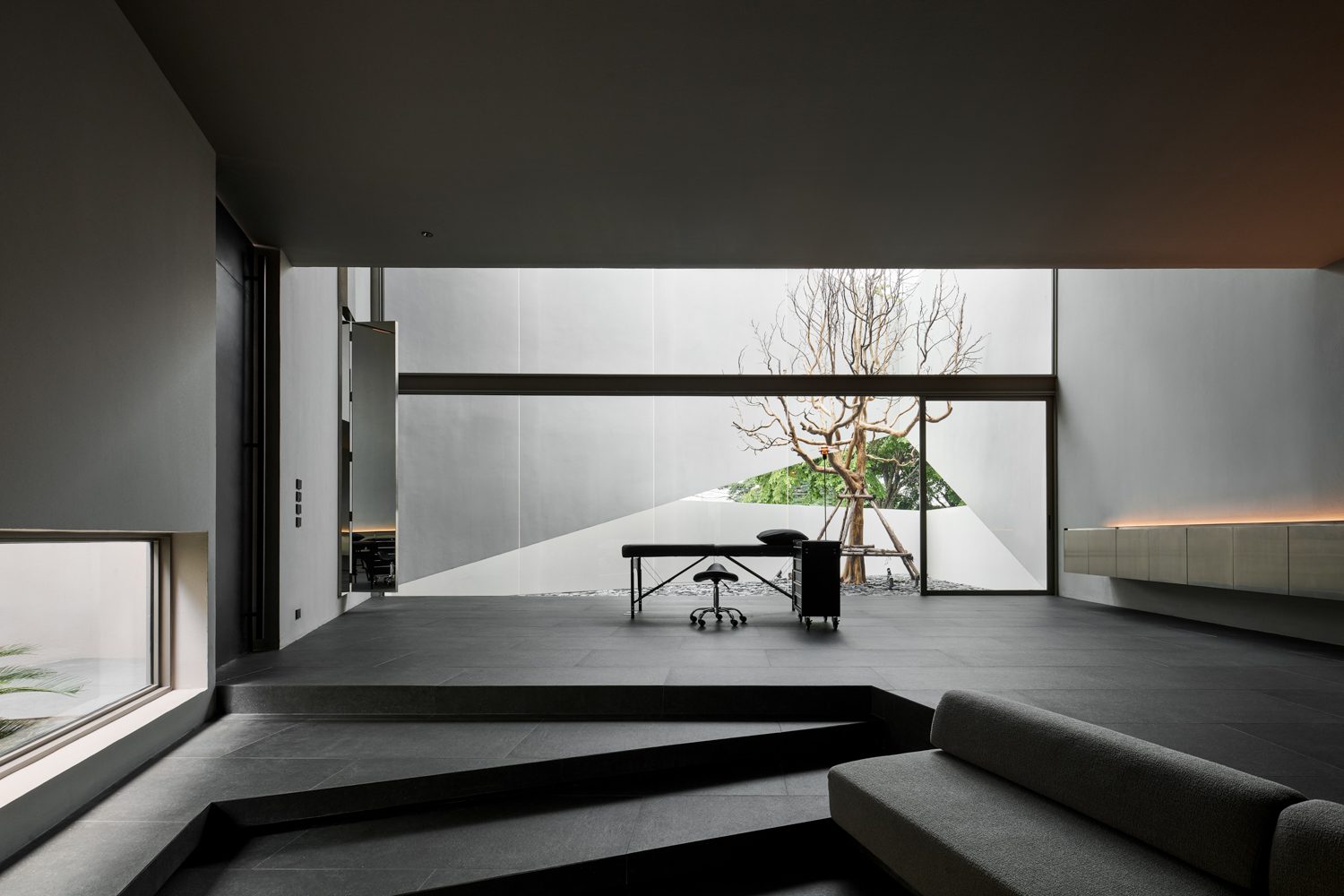
SSAA, responsible for all three disciplines of Casa T—the architecture, interior, and landscape—has created a seamless experience that responds thoughtfully to the spaces as they unfold across the site. The tattoo studio opens onto views of trees and a front rock garden through full-height glass walls, framed by an extended structural element that both defines the façade and shields the interior from excessive sunlight. The spatial richness of this area emerges from subtle manipulations of volume: certain portions of the ceiling are pushed upward while parts of the floor are gently lowered. The layered treatment of the ceiling draws the eye upward, accentuating the vertical dimension. Positioned at the very center of this void, the tattoo bed transforms the room into what feels like a sacred place; a resonance with the deeper cultural purpose of tattooing across many traditions. This sense of ritual is reinforced by the presence of black, a direct reference to tattoo ink, translated here into the material palette that composes the space.
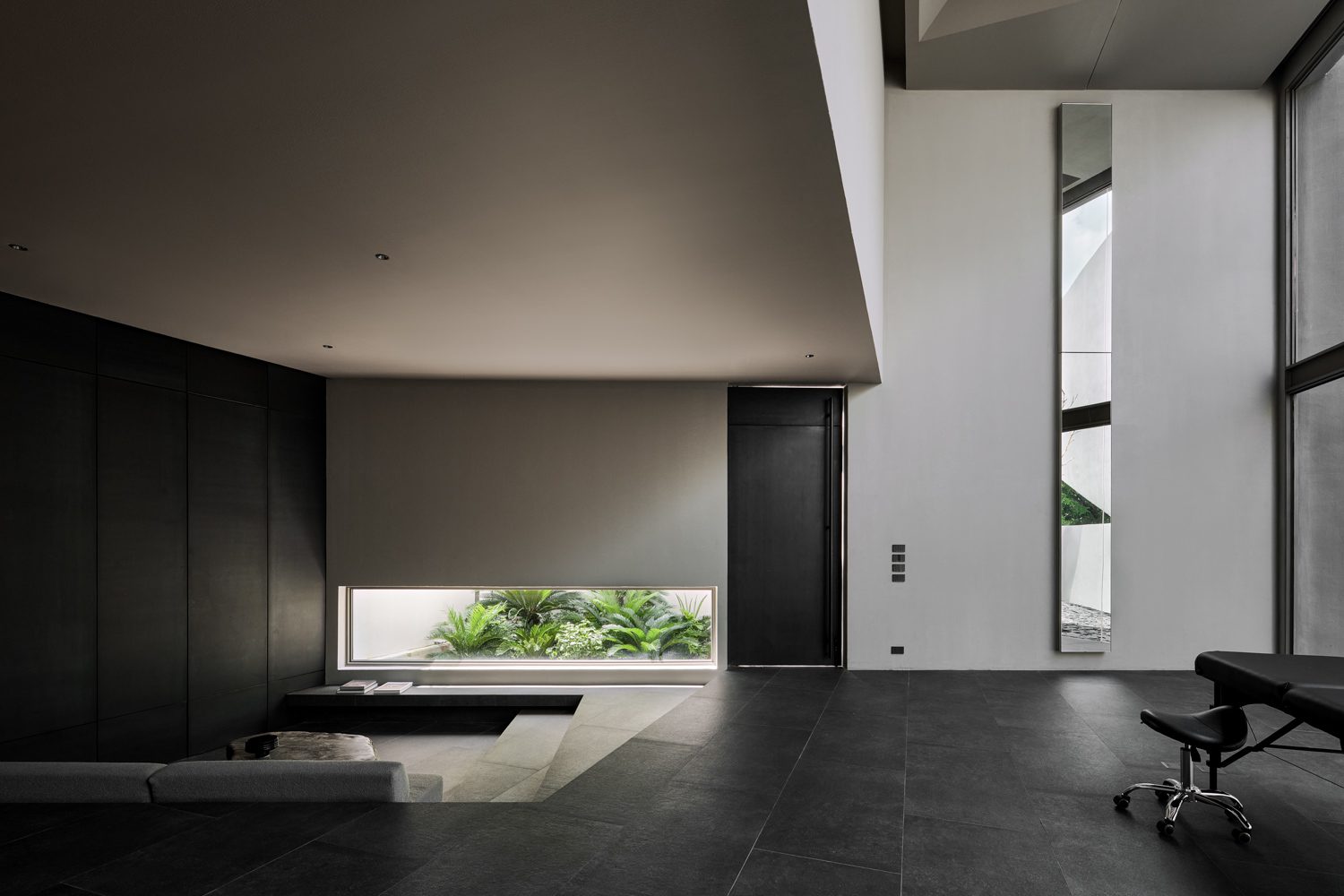
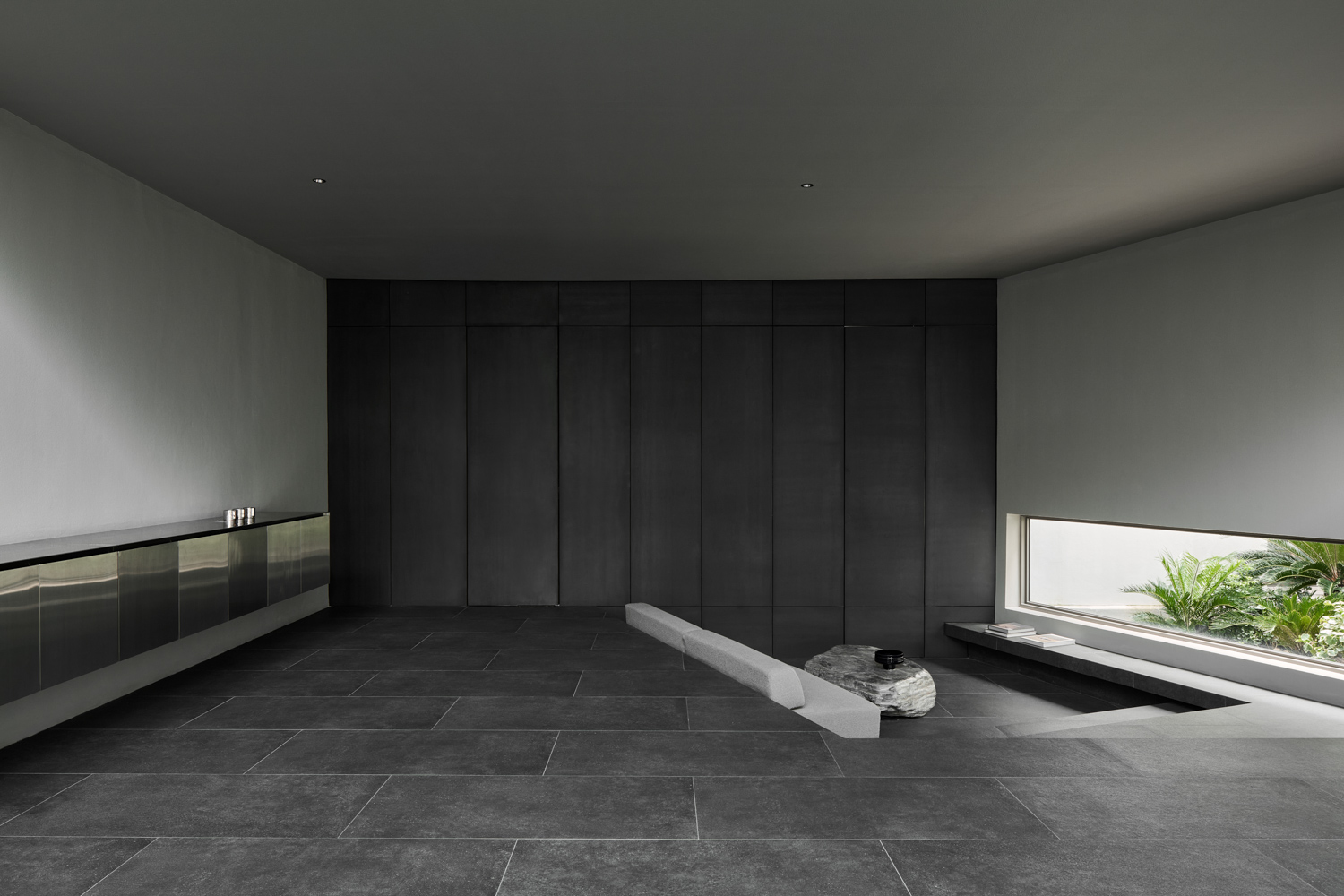
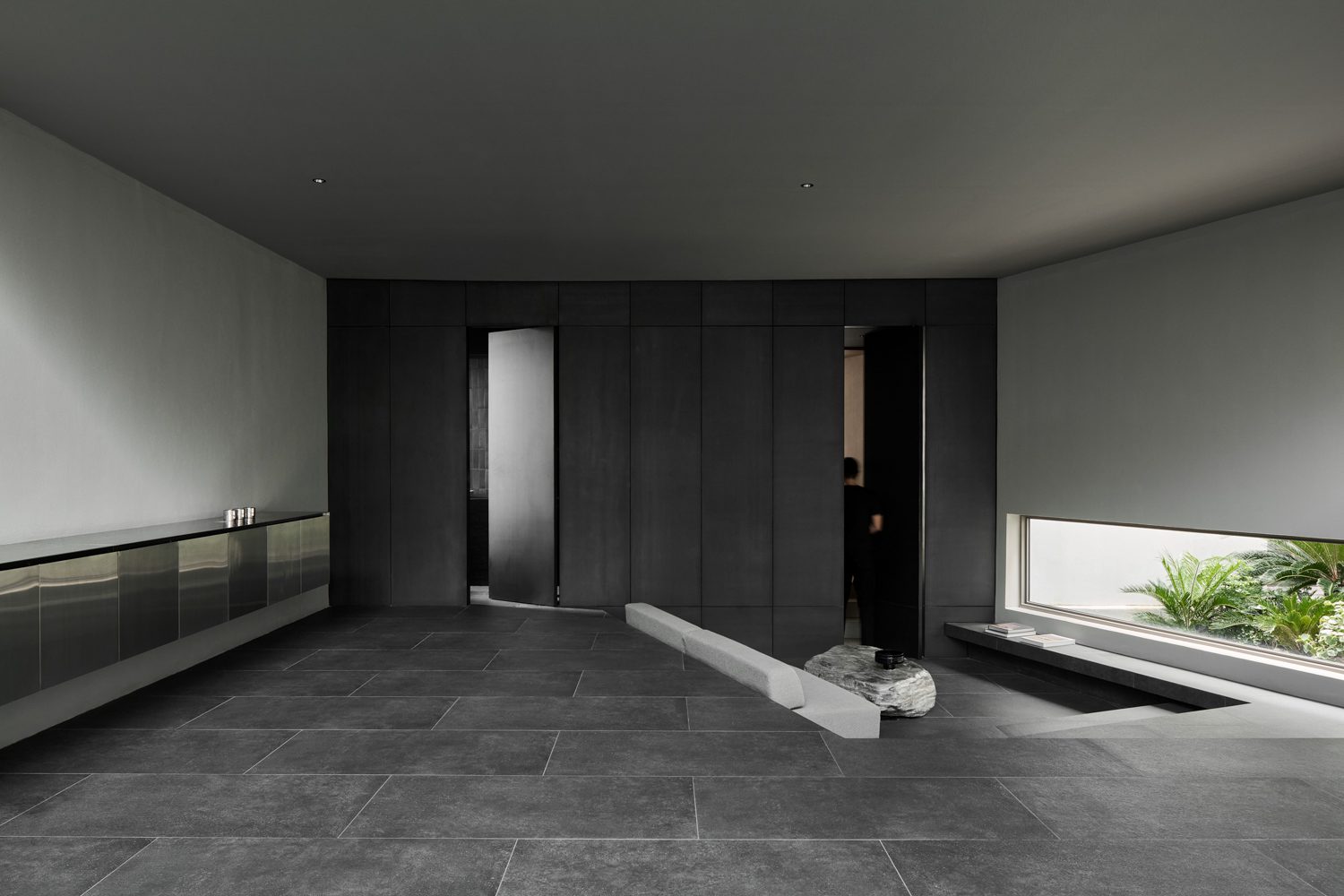
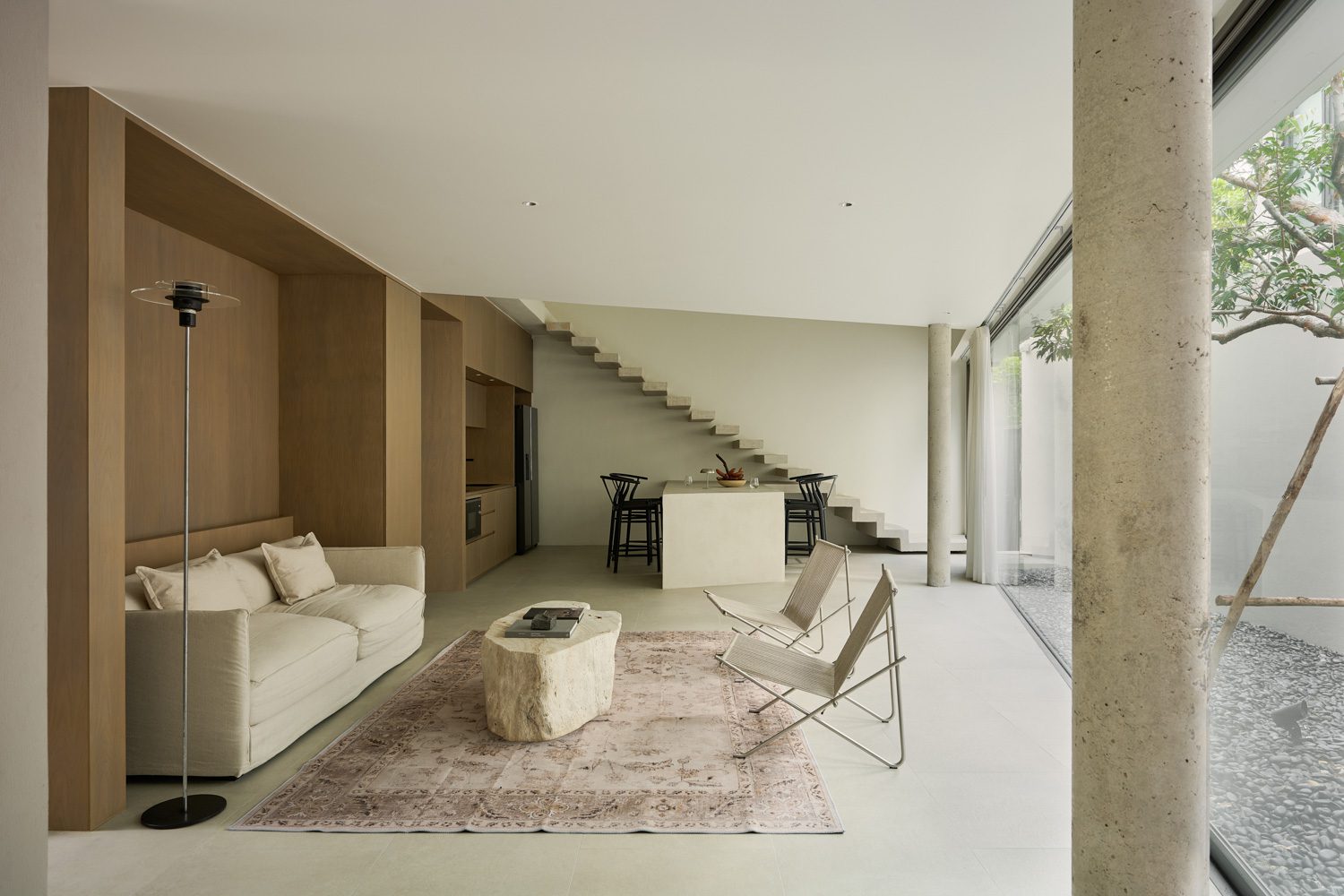
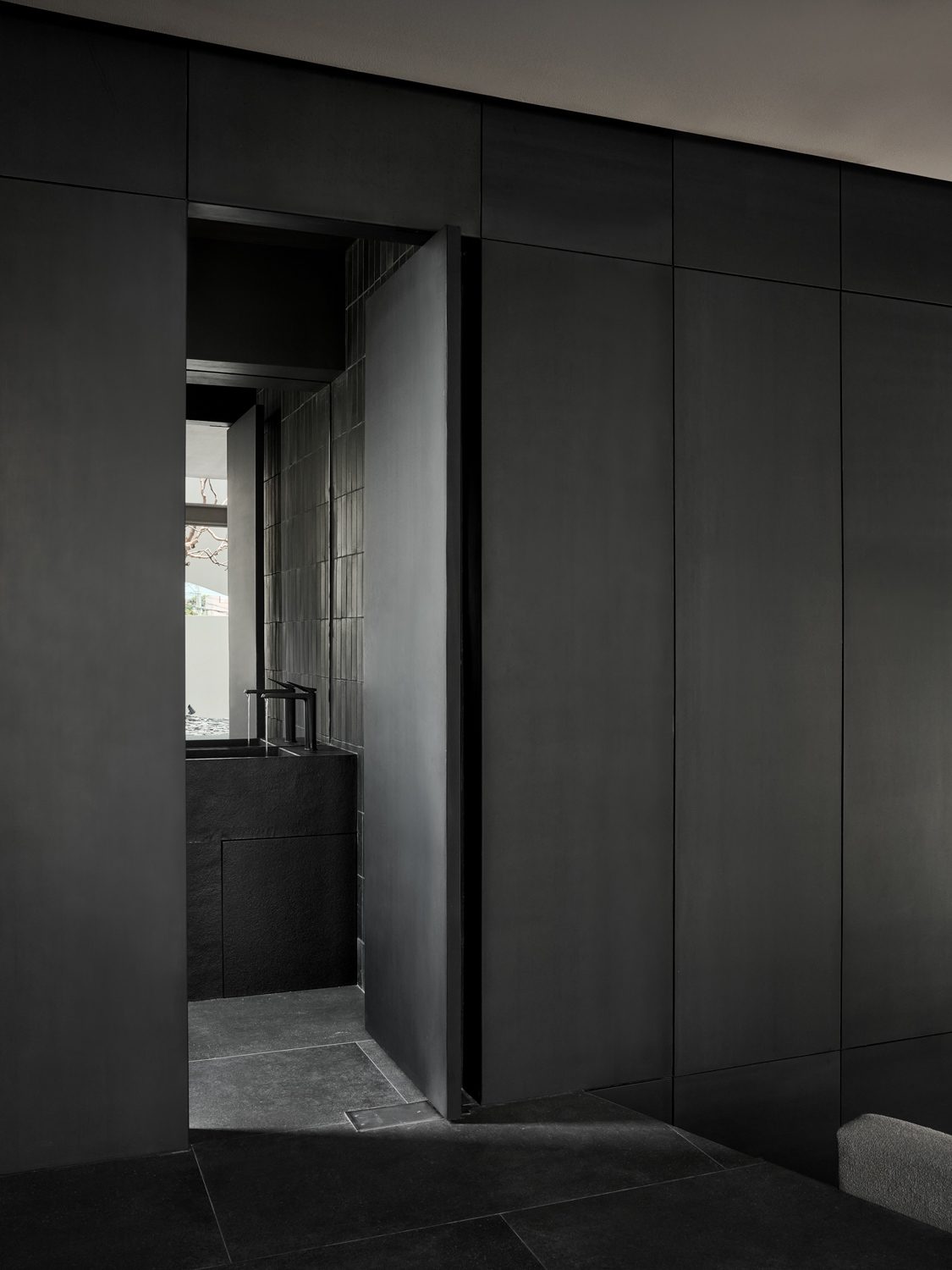
Beyond the front courtyard already mentioned, the house incorporates two additional courtyards that enrich the interiors with atmosphere and natural light. One of these sits between the two main functions of the building and can be seen from the sunken seating area designed to welcome tattoo clients and from the home’s interior corridor. These two zones are connected by a hidden door disguised as part of the wall itself. Passing through it reveals the final courtyard, which introduces a gentle, natural light into the private living spaces. The ground floor is arranged as an open plan, merging the living area, kitchen, and dining space into a single continuous room that maximizes views of the surrounding garden. The dining table is cast in concrete and designed as an extension of the cantilevered staircase that rises toward the upper floor.
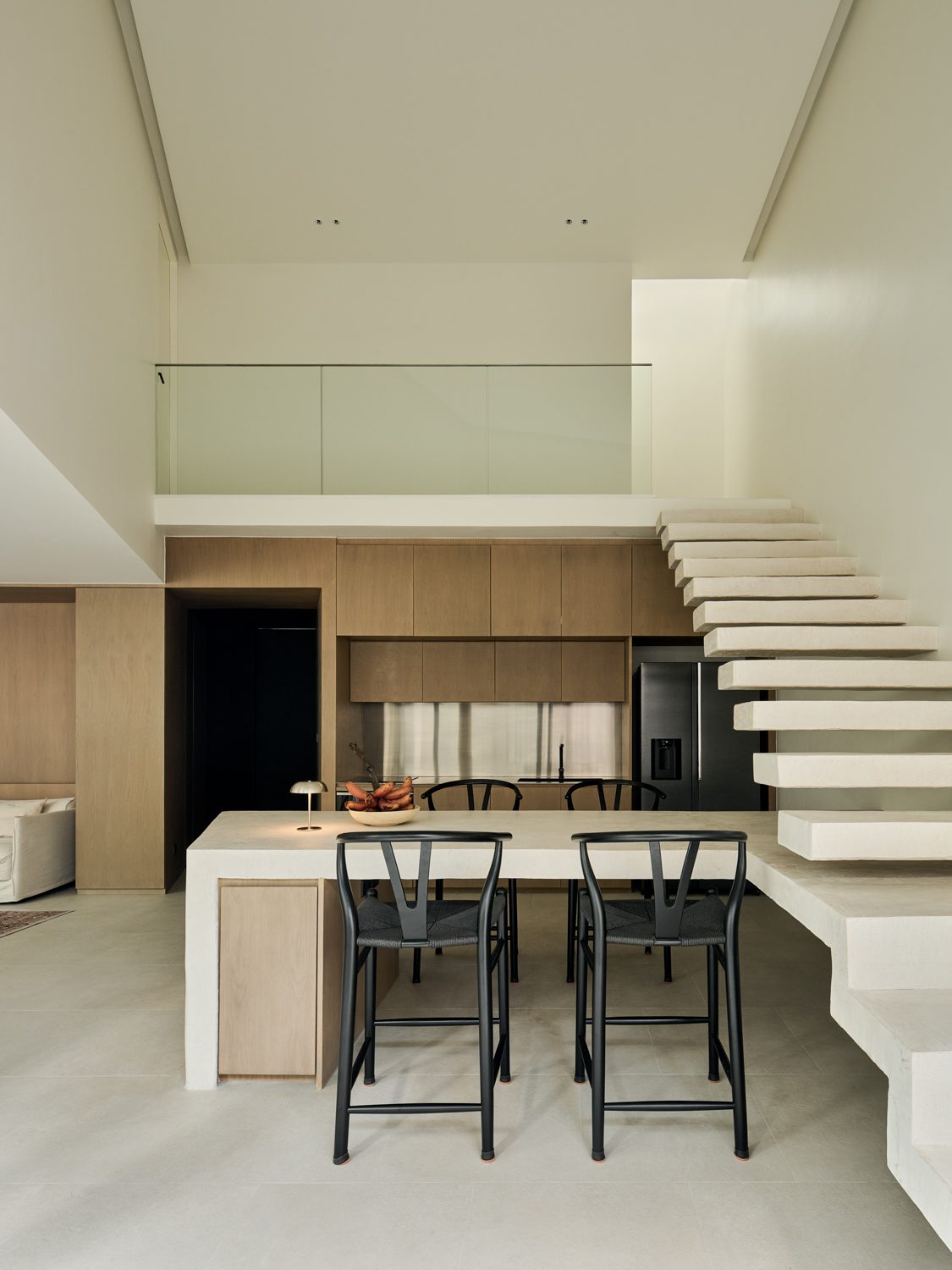
Upstairs are the bedroom and the wife’s office. These two rooms occupy only the central portion of the building, leaving vertical space above the tattoo studio and dining area to enhance their sense of volume and openness. Yet the bedrooms are neither dim nor disconnected from the outdoors, for the carefully carved voids in the building mass admit ample daylight.
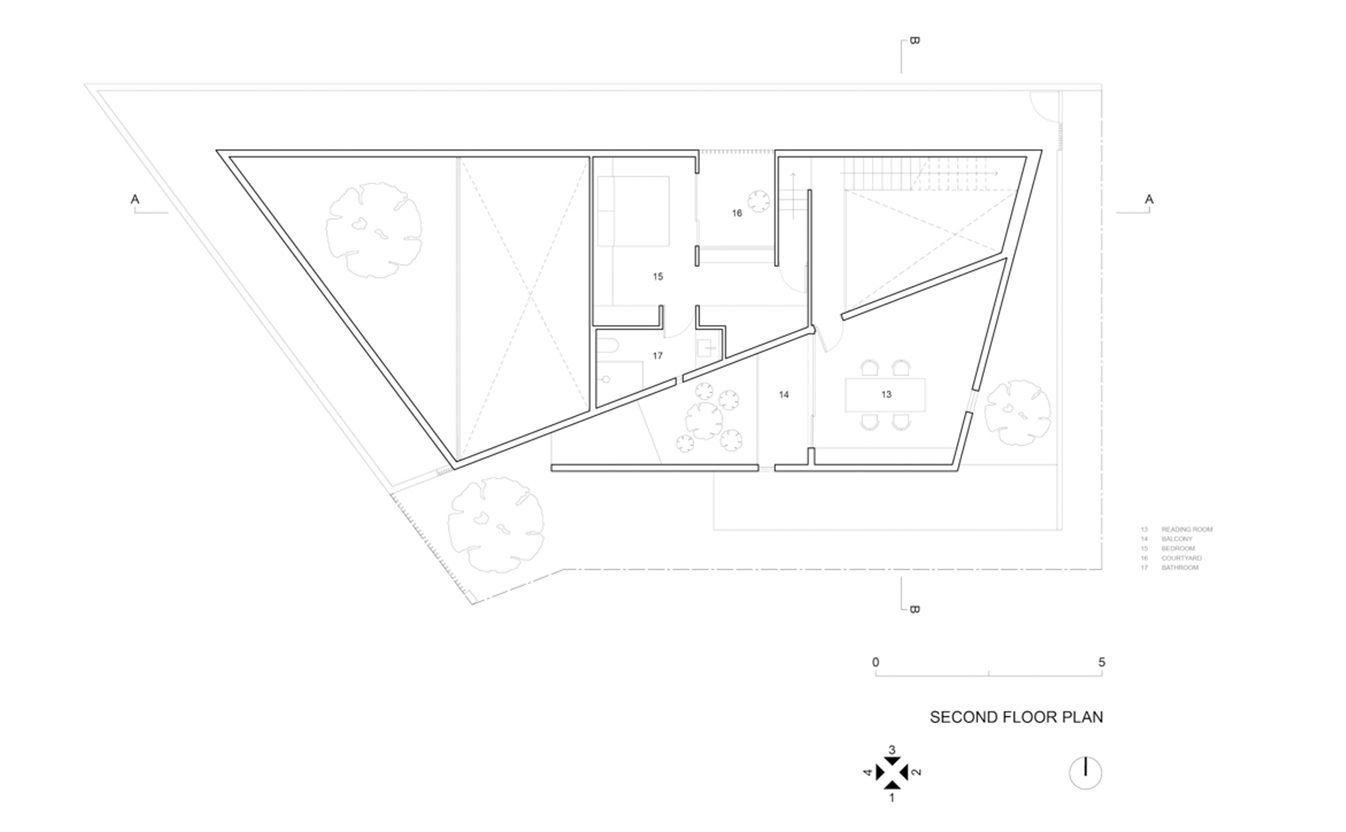
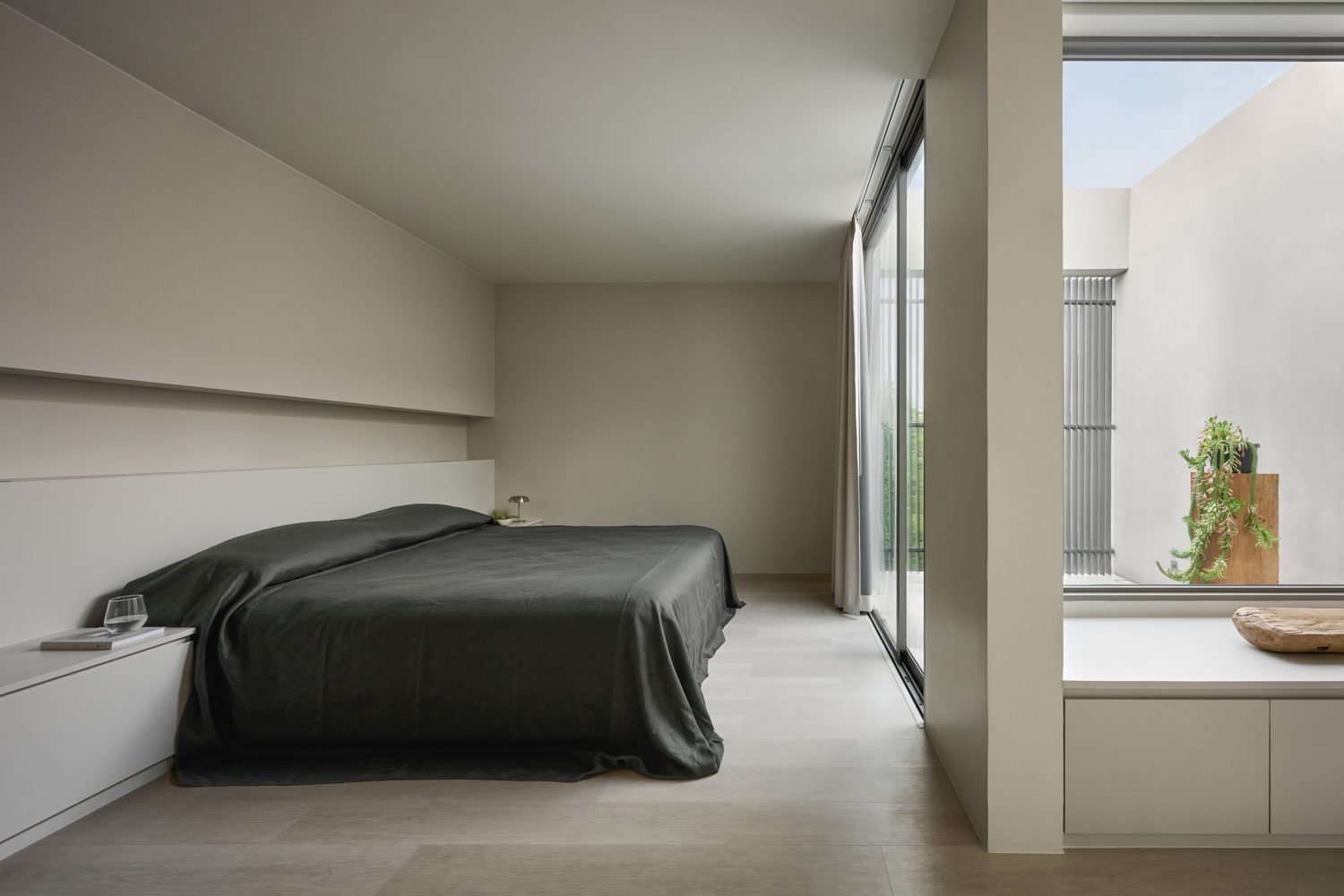
Casa T was designed as a cohesive whole, with every element, from the floor plan to the building mass, considered in tandem from the outset. The design team noted that from the first sketches to the completed work, the concept remained almost unchanged. From the beginning, they pursued a clear direction: to develop sharp angles as both a distinctive feature of the site and a reference to the pointed precision of a tattoo needle. The result is a building mass defined by crisp, angular edges that appear in multiple contexts. Even the negative spaces, such as the courtyards, reflect this language. Viewed in plan, they too reveal themselves as acute-angled triangles.
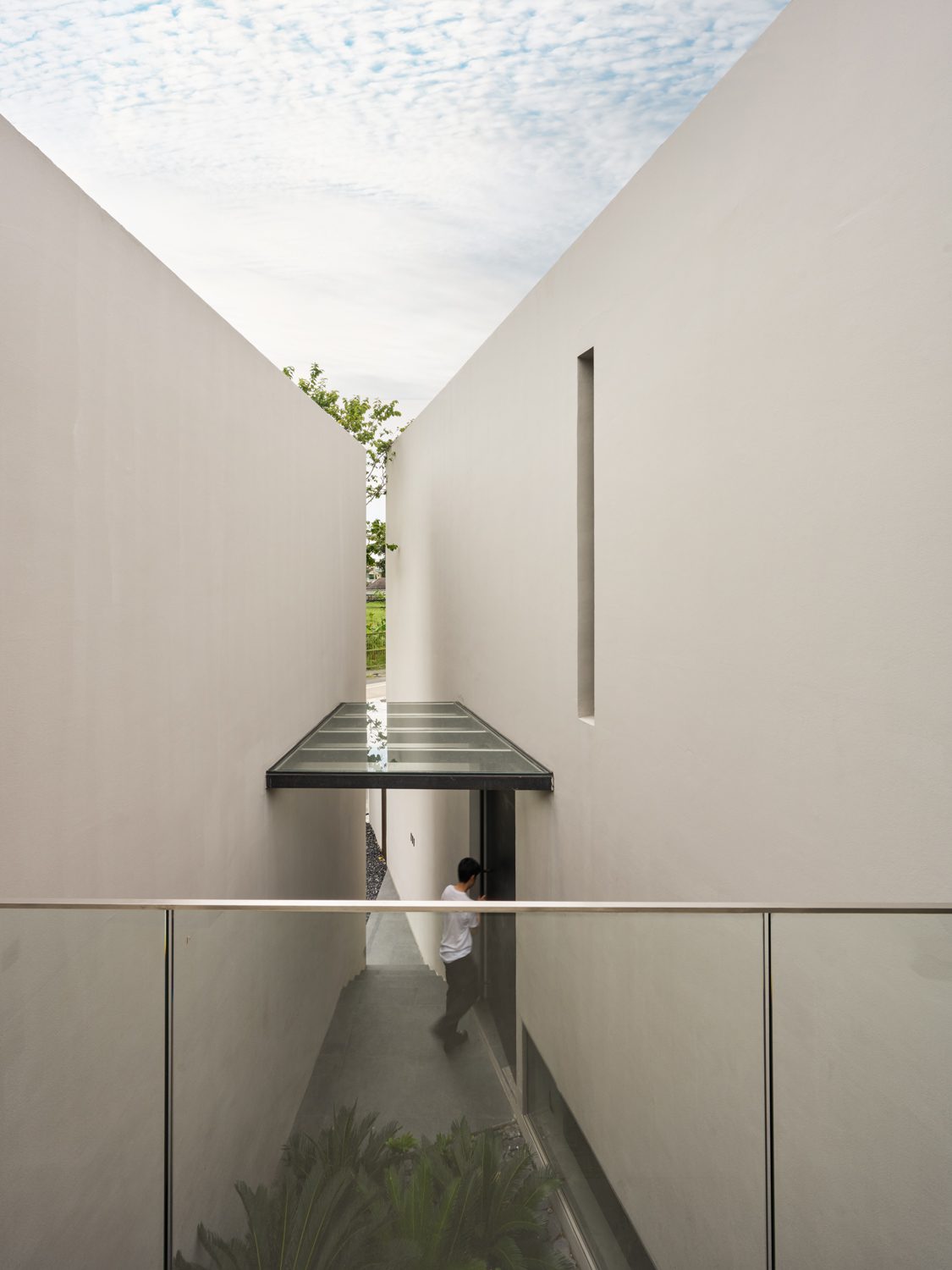
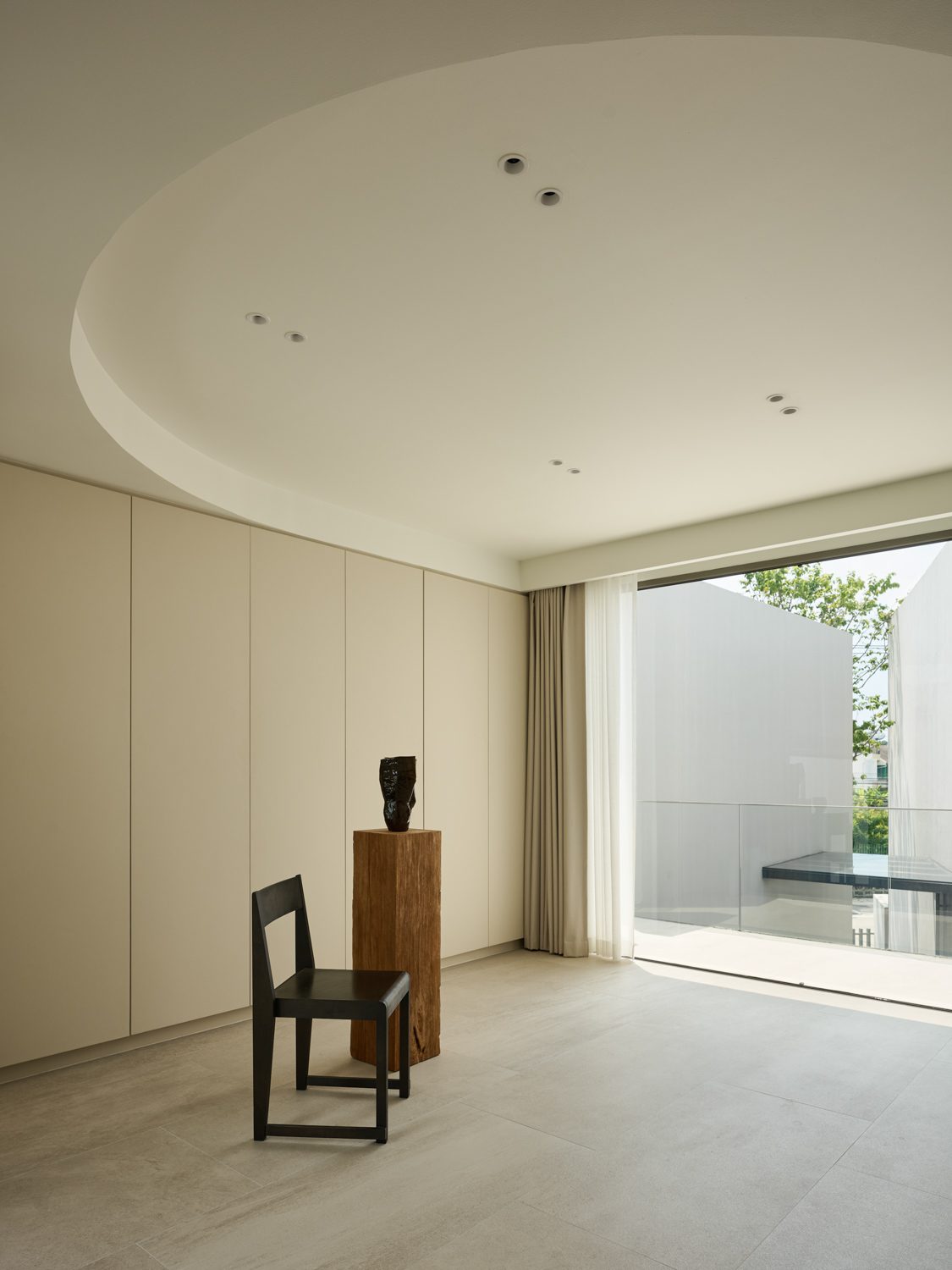
Beyond the tattoo-needle metaphor, the house carries a deliberate commitment to brutalist architecture for two key reasons. The first is an honesty toward materials, visible in the raw cement surfaces of the exterior and in the interior finishes that reveal each material’s inherent character. The second is a disciplined restraint in architectural elements, where a minimal vocabulary is purposefully composed to create spatial complexity rather than relying on decorative detail.
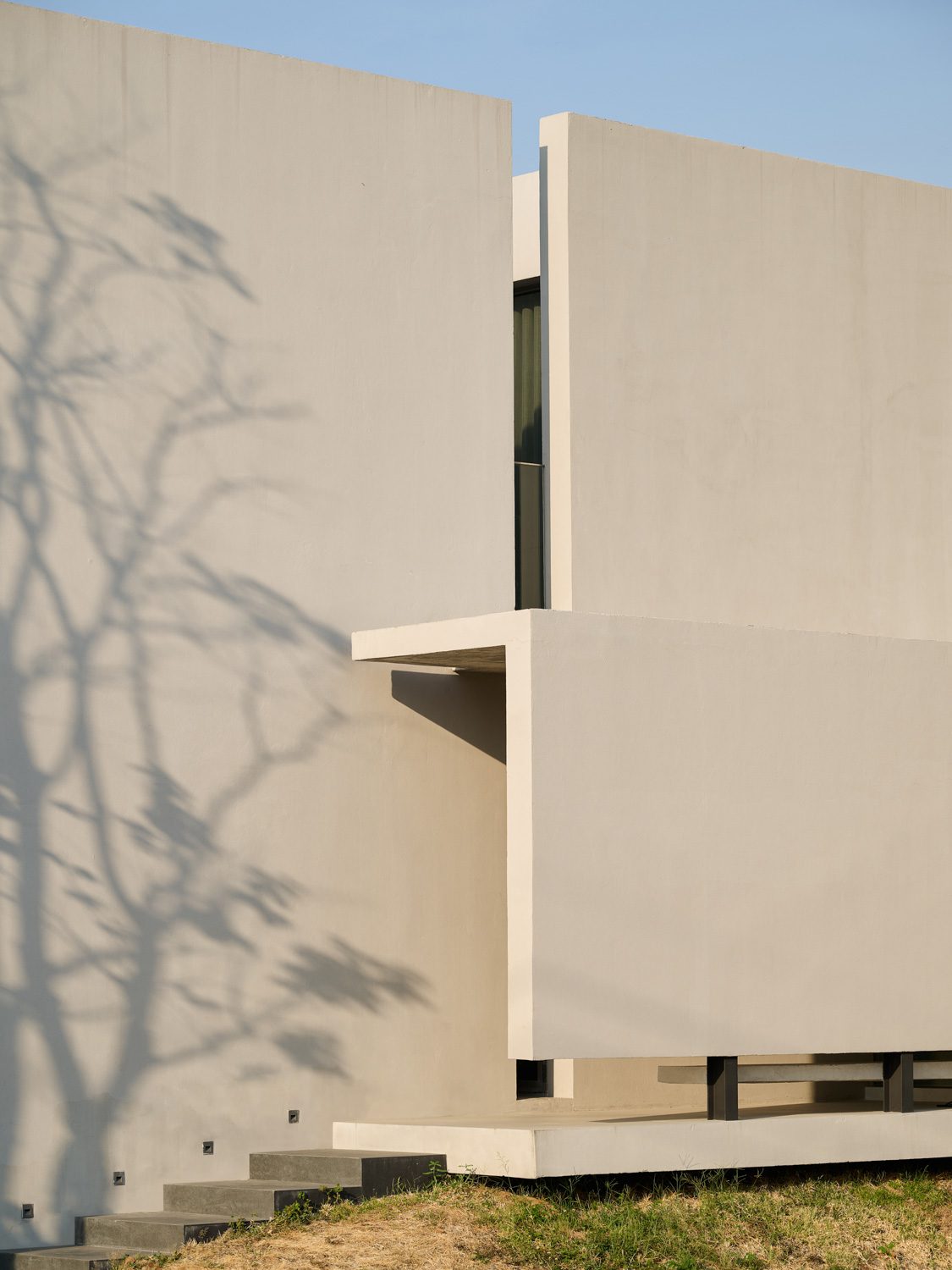
Although Casa T appears calm and understated, it is imbued with layered details and conceptual complexity. From the initial design vision to the floor plan and material selection, every element has been carefully shaped to create architecture with a distinctly individual language. This makes the project more than simply the home of a tattoo artist; it becomes, in itself, a tattoo etched beautifully into the fabric of its surrounding context.