
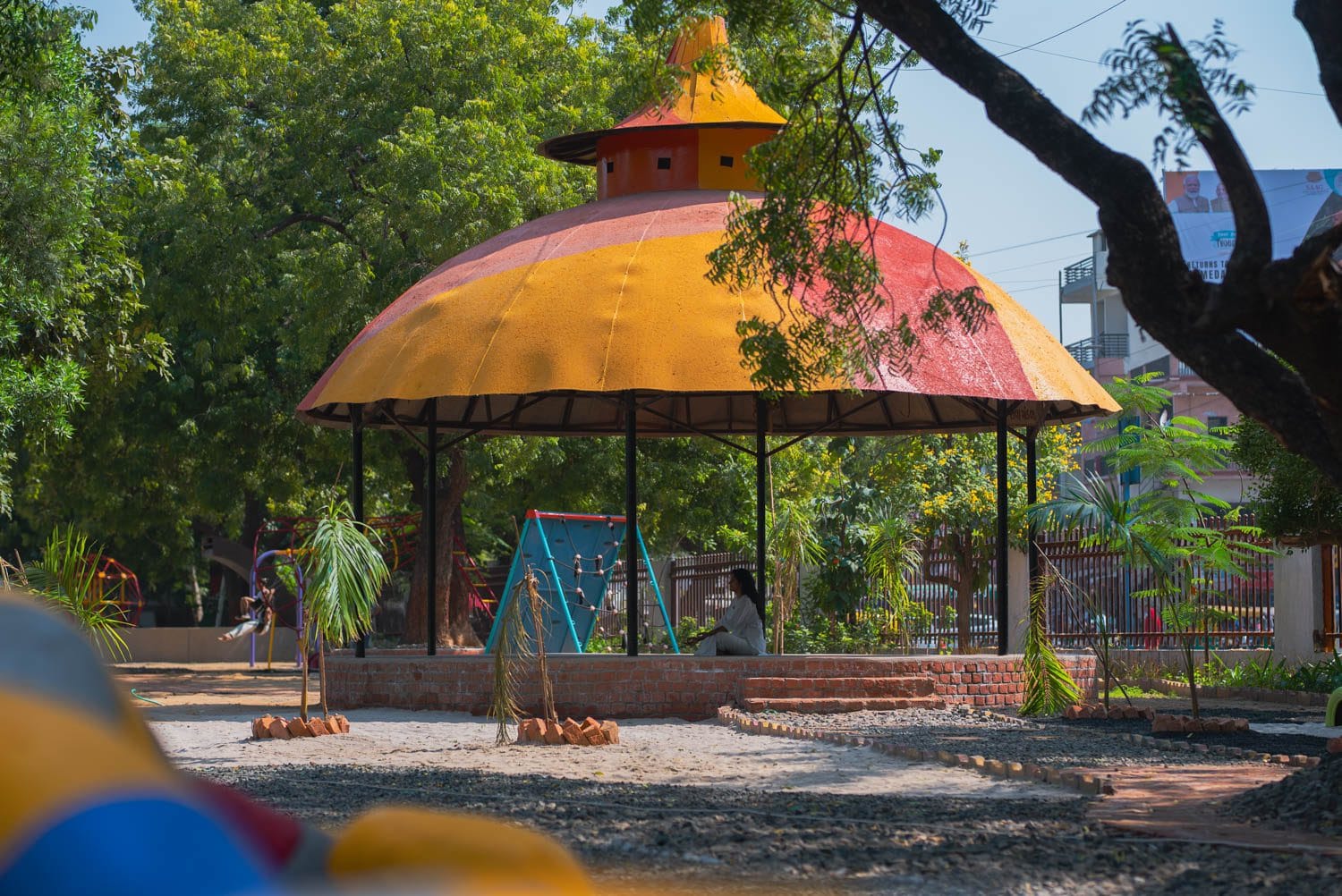
CHAKRAJEEVAN UDYAAN – A PUBLIC PARK FROM THE LOCAL COMMUNITY FOR WELLBEING AND SUSTAINABILITY BY HSC DESIGNS.
TEXT: NATHANICH CHAIDEE
PHOTO: NOTEBOOK PRODUCTIONS SARTHAK
(For Thai, press here)
A space that welcomes everyone to access and share freely is what most people instinctively understand as a public space. Yet, when we look more closely at the conditions that prevent ‘the public’ from truly coming into being, safety emerges as one of the most critical factors. This question lies at the heart of Chakrajeevan Udyaan, or the Circle of Life Park, in Ahmedabad, India, where the project began not with form, but with listening to the voices of the local community to ensure that groups such as women, children, and the elderly could utilize the space with a genuine sense of security.
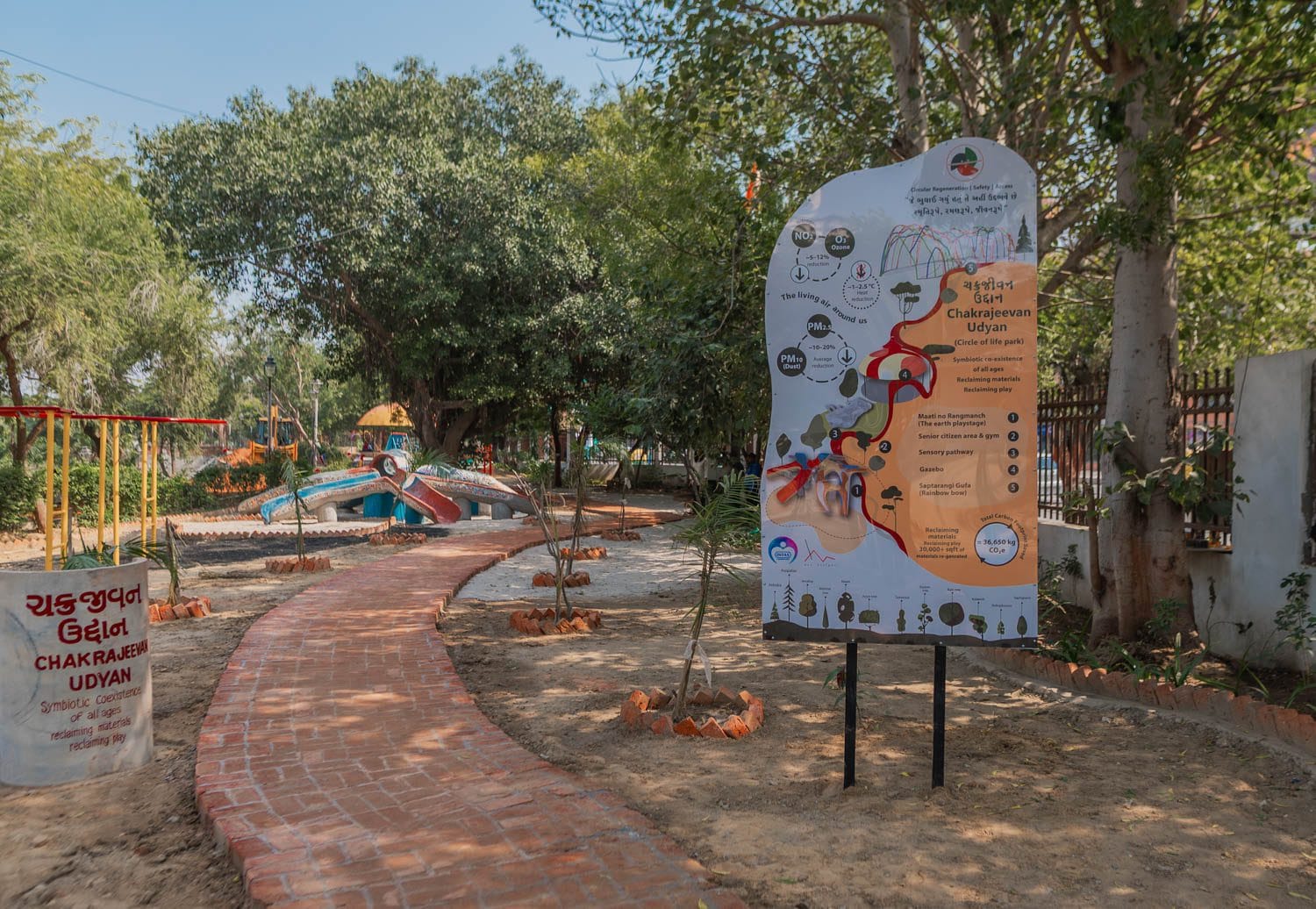
For Hsc Designs, listening to the site meant understanding both its physical conditions, such as climate, sunlight, and wind patterns, and its human dimension, including patterns of use and emotional responses to the space. Through this process, the designers identified a fundamental issue: many women, children, and senior citizens felt unsafe using the park. What began as limiting the duration of visits often led to avoiding the space altogether. In response, the project set out with a clear objective to reimagine the landscape as a welcoming and inclusive environment for people of all ages.
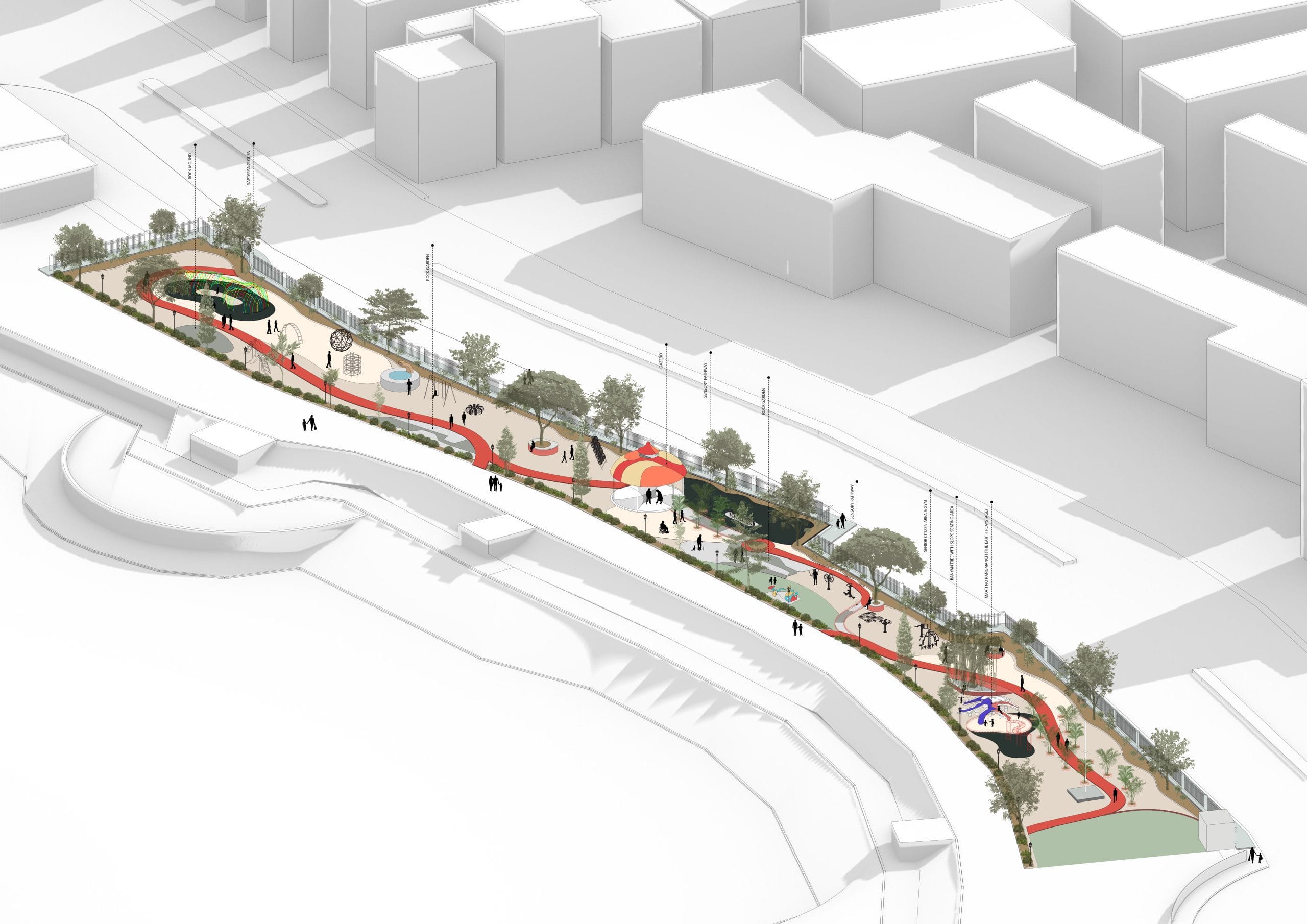
‘Safety, spatial legibility, and ease of access’ became the guiding keywords of the design process. These principles informed decisions at every scale, from the circulation system that establishes a primary core distributing movement across activity zones, to the visual continuity that connects different areas of use. Programmes are carefully arranged to support intergenerational interaction, with children’s play areas deliberately placed adjacent to zones for senior citizens. Seatings are distributed throughout the park, maintaining open sightlines that allow users to see one another easily and move through the space without anxiety.
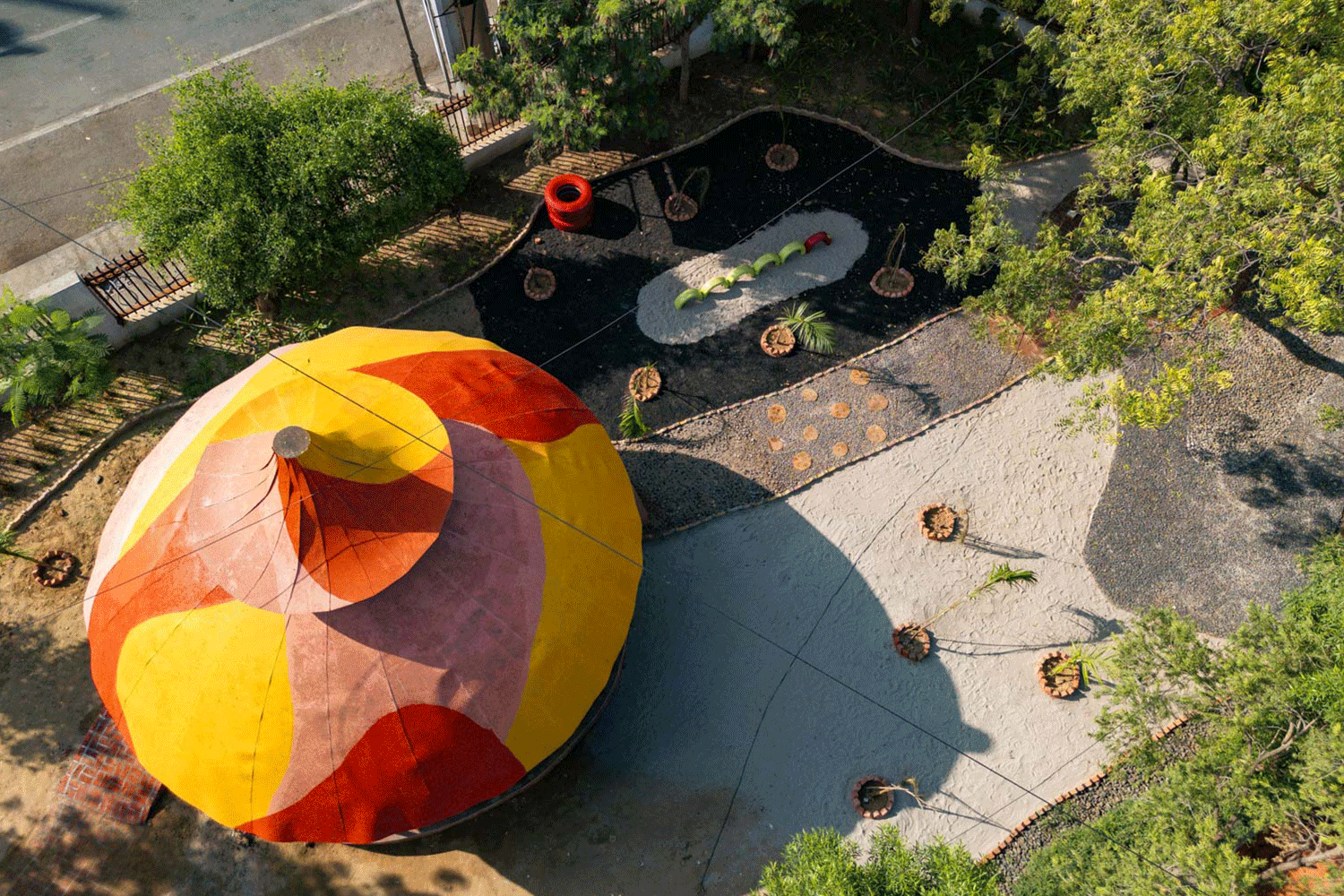
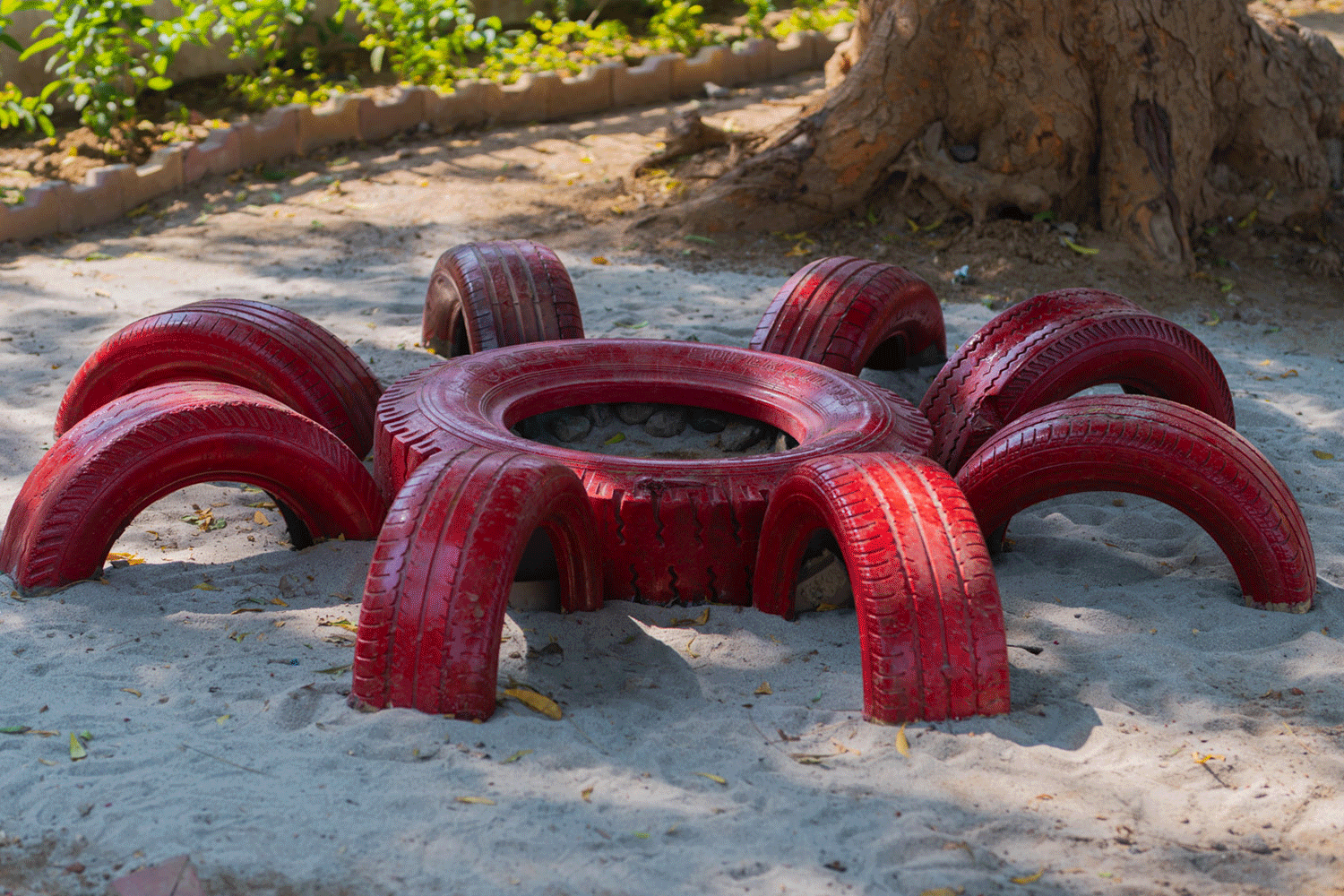
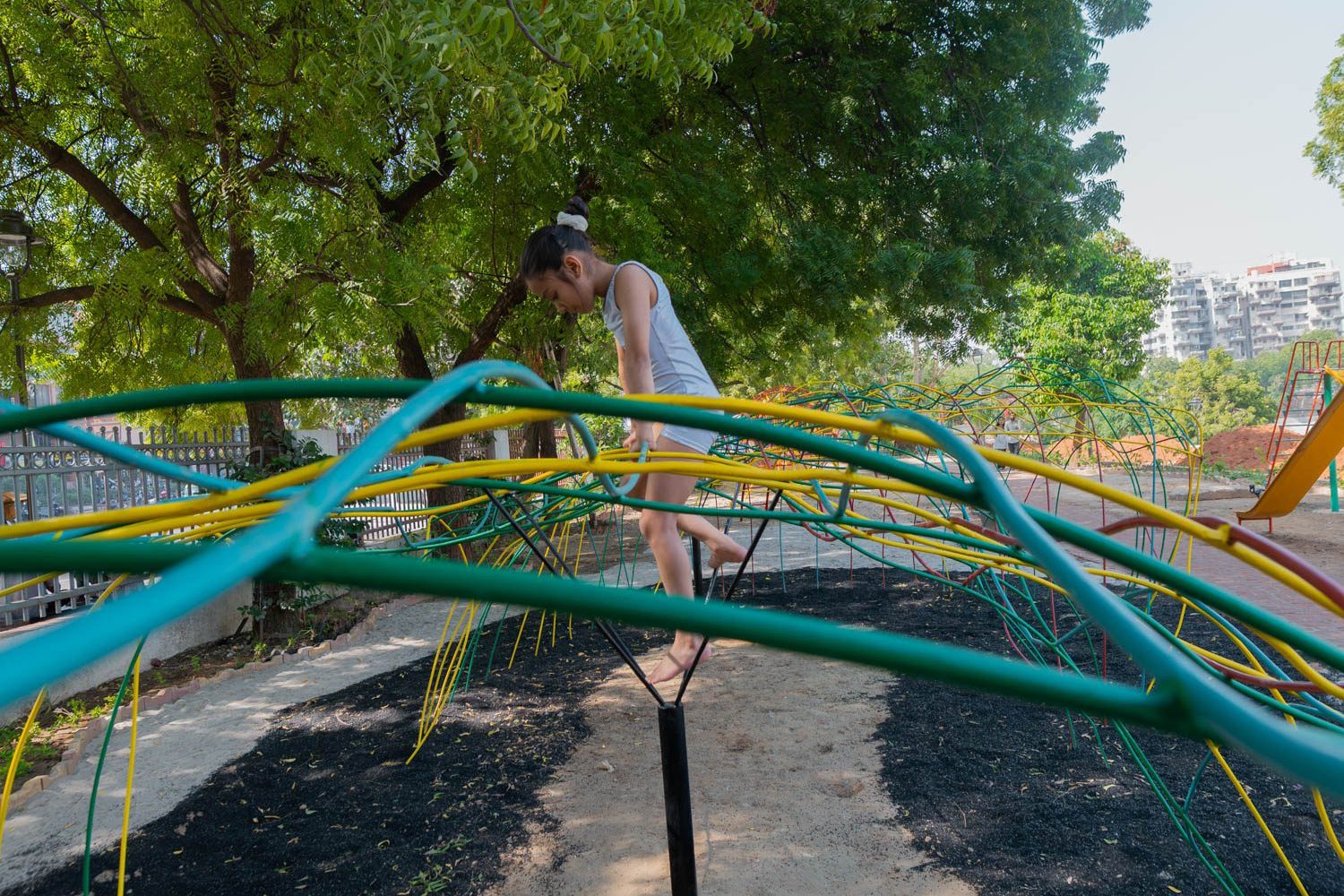
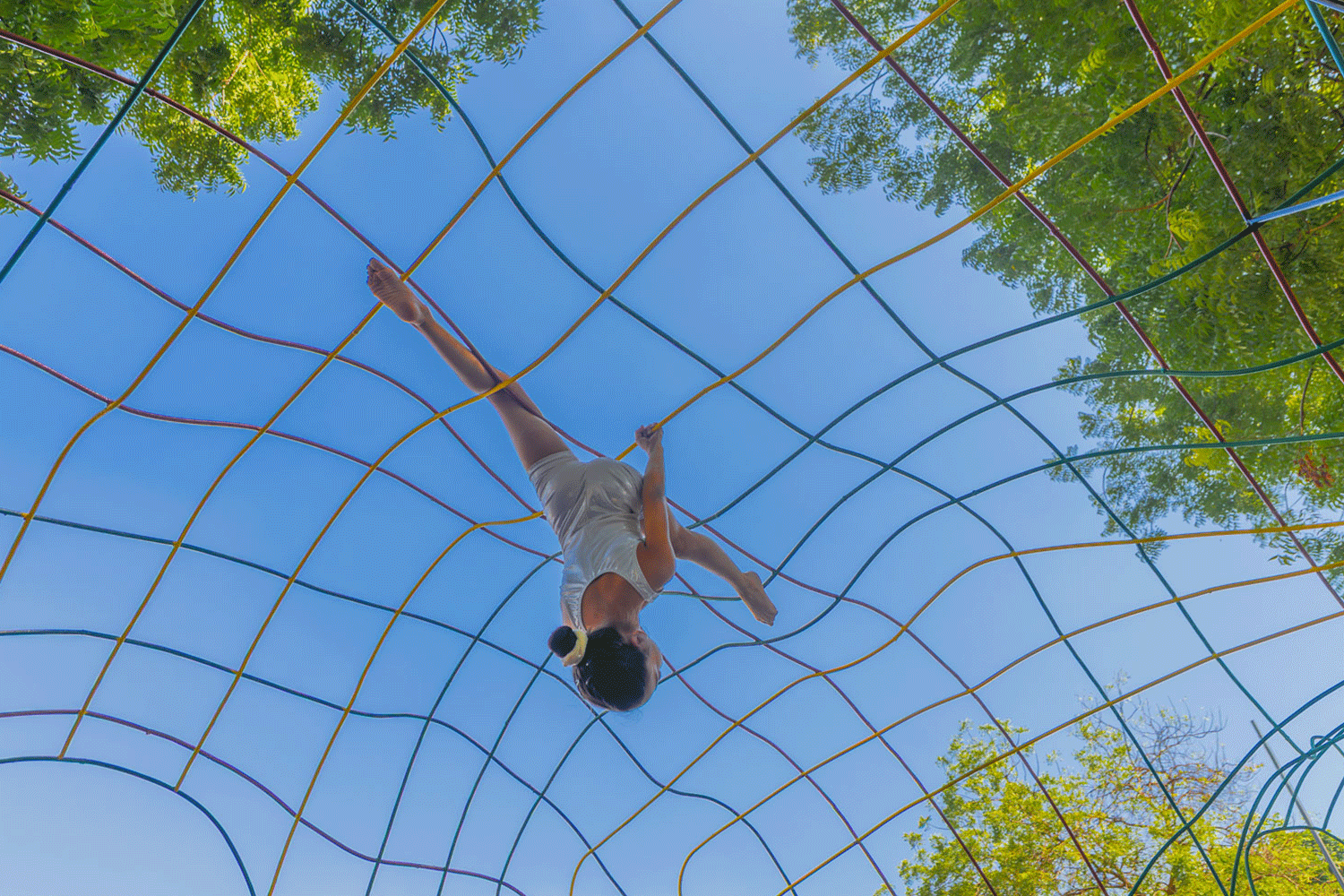
Sustainability is one of the defining concerns of our time and of contemporary design practice and is seamlessly integrated into the project. Material selection and construction systems form the structure of this approach. Locally sourced and recycled materials are reused and reinterpreted with intention, for example, concrete pipes become climbing elements, steel rods are welded as a frame to support vegetation and provide shade, reclaimed tiles are laid as pathways, while discarded tires and timber are transformed into seating. By making the origins of these materials visible, the park itself becomes a living lesson in circular resource use for everyone who enters the space.
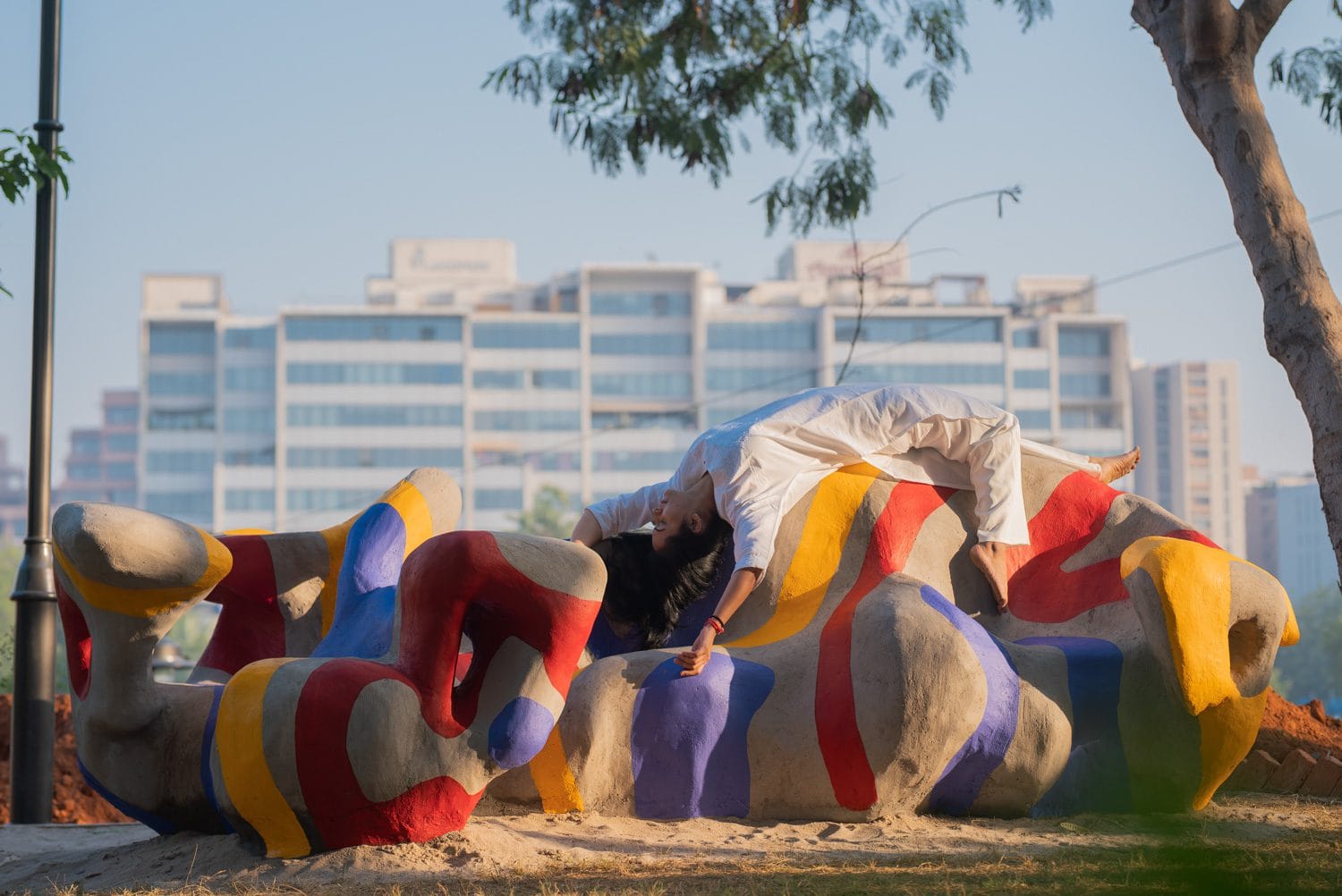
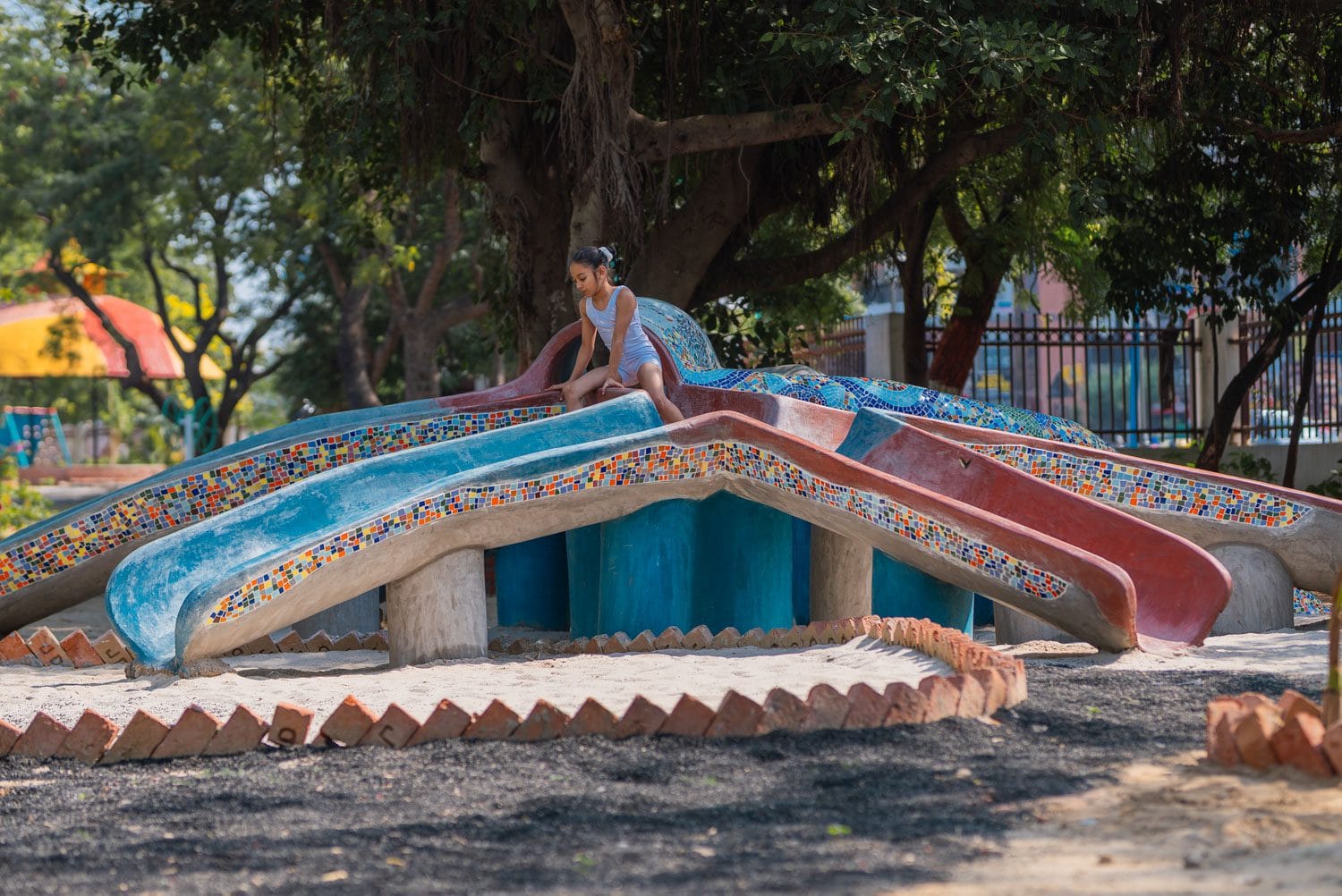
Beyond the broader strategies of circulation and familiar material language, the designers paid close attention to the tactile, human-scale details experienced through daily use. The proportions of elements are derived from the anthropometrics of users across generations, such as heights, reaches, footholds, and grasp points, which are calibrated to support children’s movement, while seating for seniors includes backrests and armrests to assist with standing and sitting. Generous pathways accommodate strollers and wheelchairs with ease, finished with non-slip surfaces that ensure safety. Shade is carefully positioned according to the sun’s path, contributing to a sense of wellbeing that embraces the diverse needs of all users.
As a public space, the park inevitably faces challenges beyond full control, including vandalism and misuse. Here, design plays an active role in shaping positive behaviour. Open, visually connected spaces eliminate blind corners, while robust, well-crafted elements communicate care and permanence. Together, these features create a subtle yet powerful psychological signal that this is a place that is valued, maintained, and genuinely used by the community.
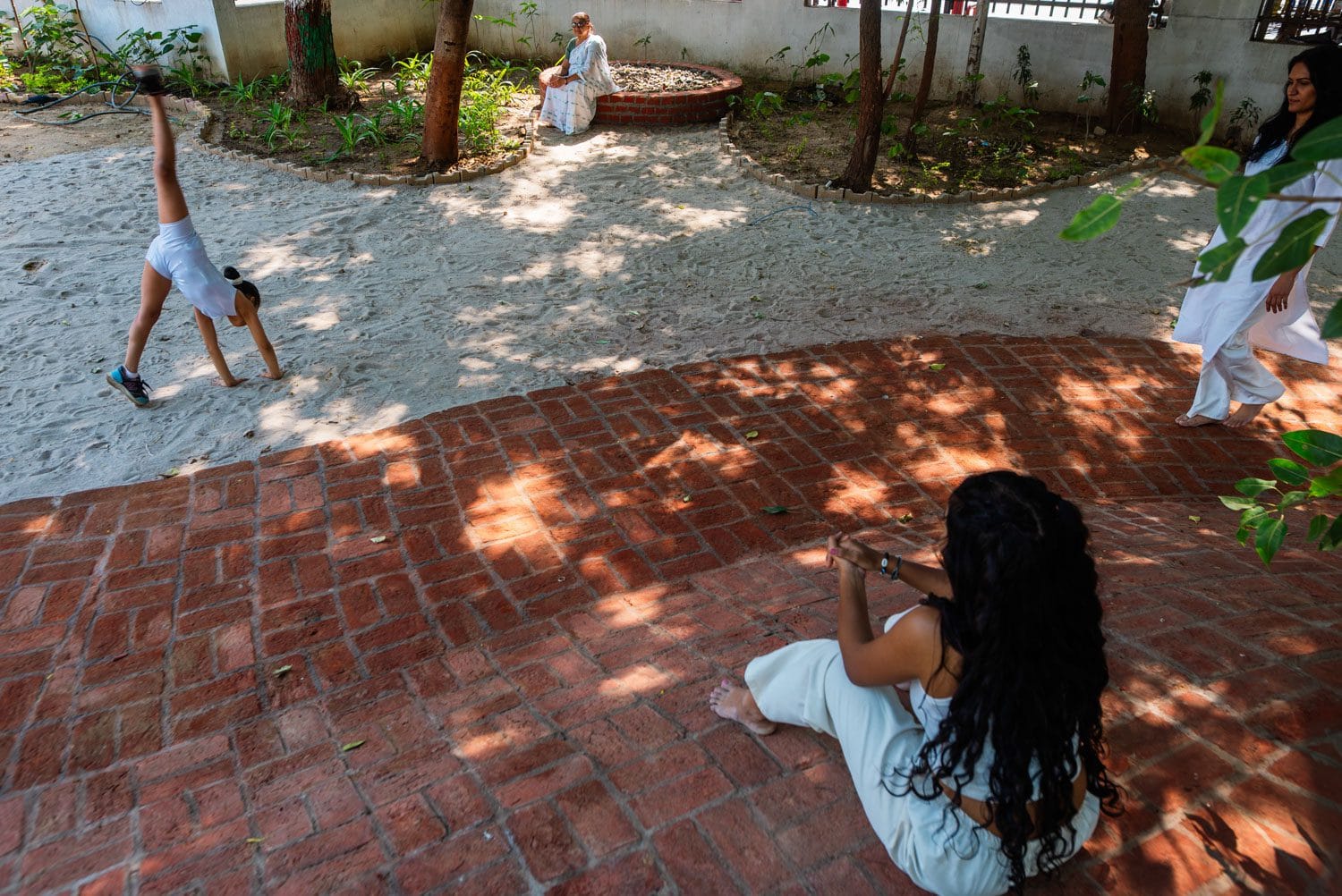
For its users, Chakrajeevan Udyaan functions as a shared living space. It is not merely a space for collective use, but a setting for exchange across generations, gradually forming part of the city’s cultural fabric. At the same time, the park demonstrates lessons of safety and sustainability in practice with values that can be seen, felt, and shared through thoughtful landscape design and a design process that places care for people at the center of an inclusive public space.