
AIRFRAME IS AN INFLATABLE PAVILION DESIGNED BY INDA ARCHITECTURE STUDENTS UNDER THE SUPERVISION OF PAUL CETNARSKI FROM LANDWORKS, CREATING A TEMPORARY CLEAN AIR ENVIRONMENT AMIDST BANGKOK’S POLLUTION CRISIS
TEXT: KITA THAPANAPHANNITIKUL
PHOTO: PUNPANIT KONKEE
(For Thai, press here)
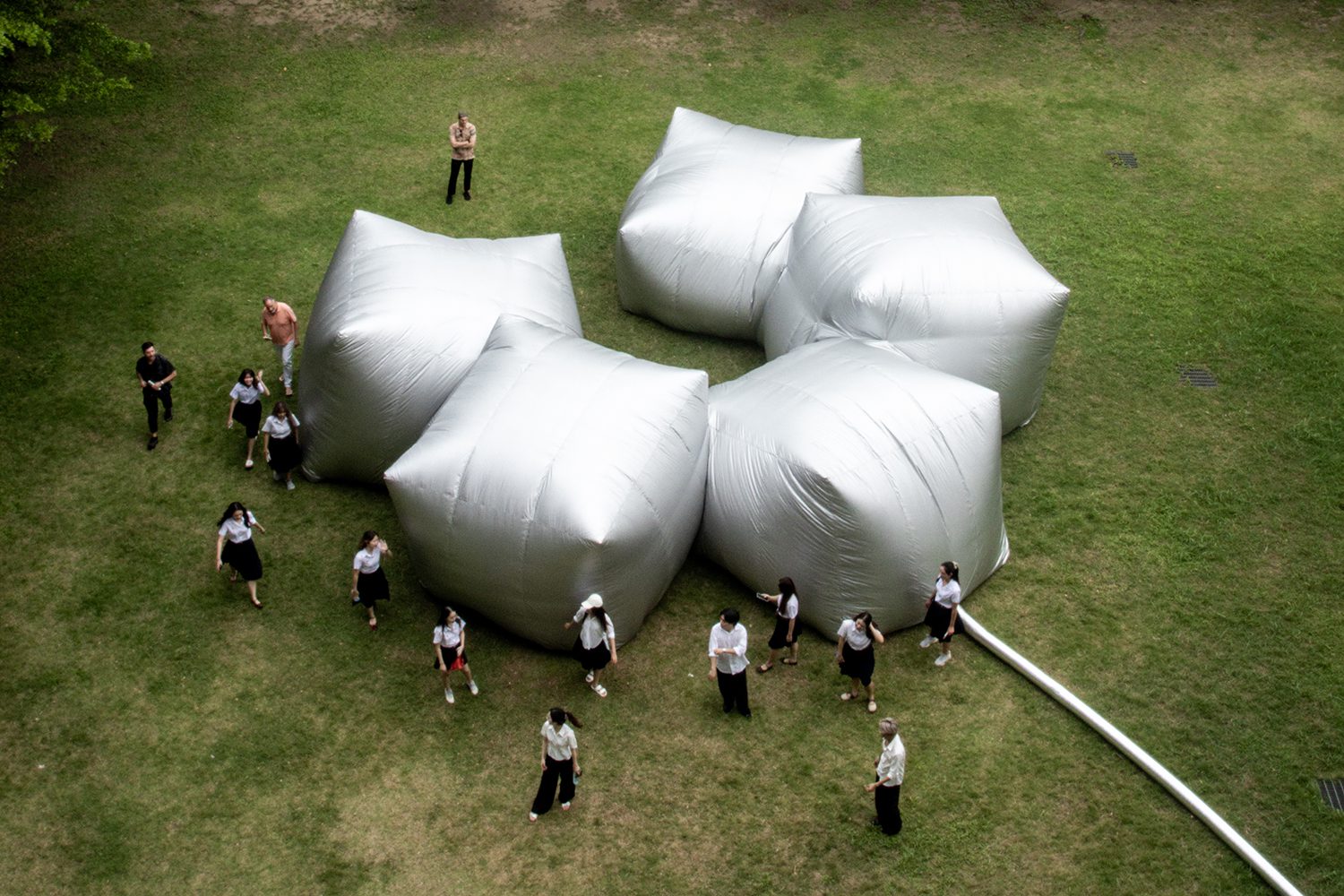
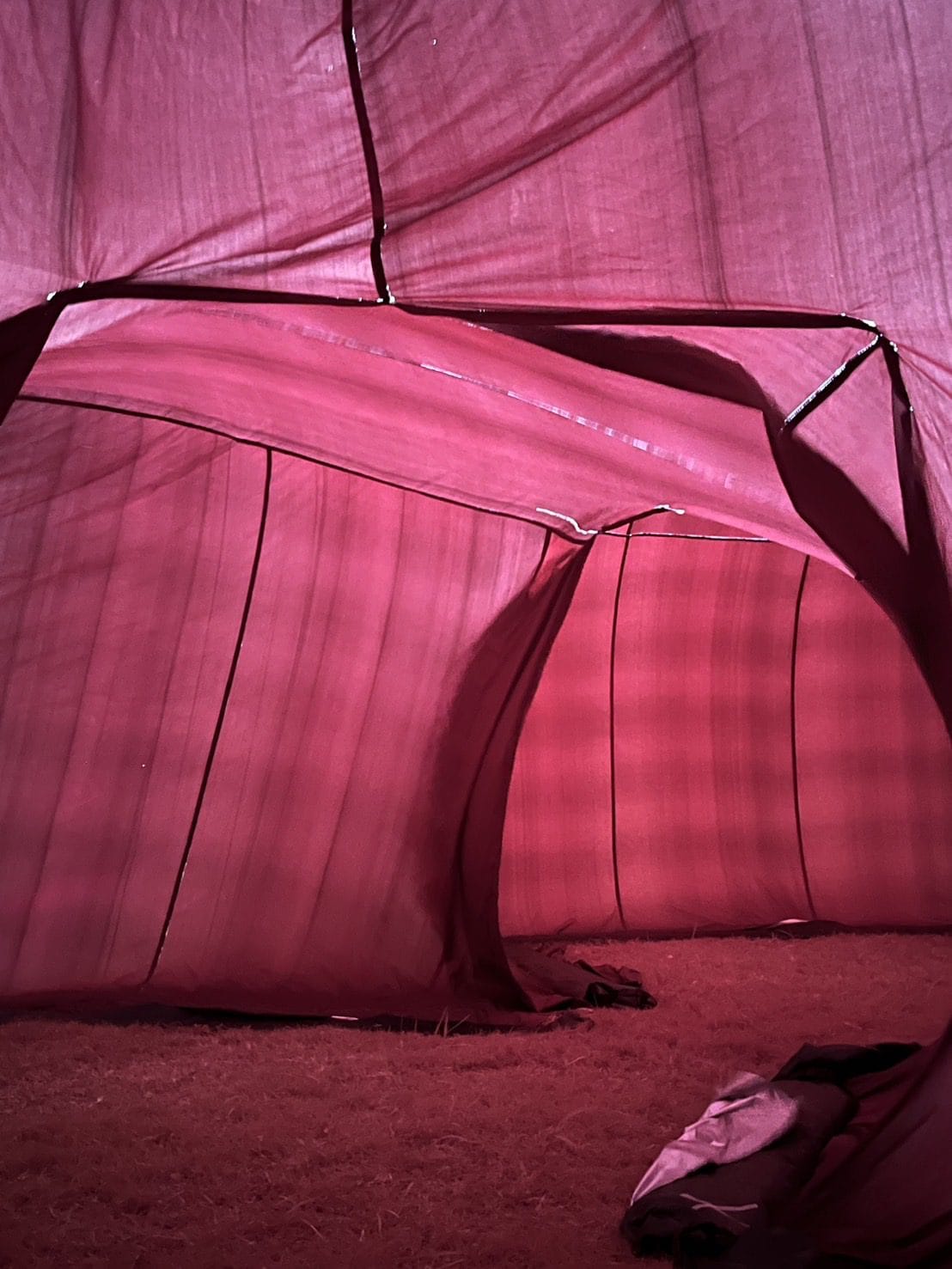
AIRFRAME is a project developed by architecture students from the International Program in Design and Architecture (INDA) as part of the ‘Design & Build’ studio, led by advisor Paul Cetnarski of LANDWORKS. Conceived in response to Bangkok’s recurring haze and air pollution crisis, AIRFRAME proposes an inflatable pavilion that delivers filtered, breathable air to its occupants. The structure is designed as a pressurized, air-supported enclosure that allows people to step inside and momentarily inhabit a cleaner microclimate. Intended for rest and informal public activities, the pavilion offers a temporary refuge during periods of poor air quality.
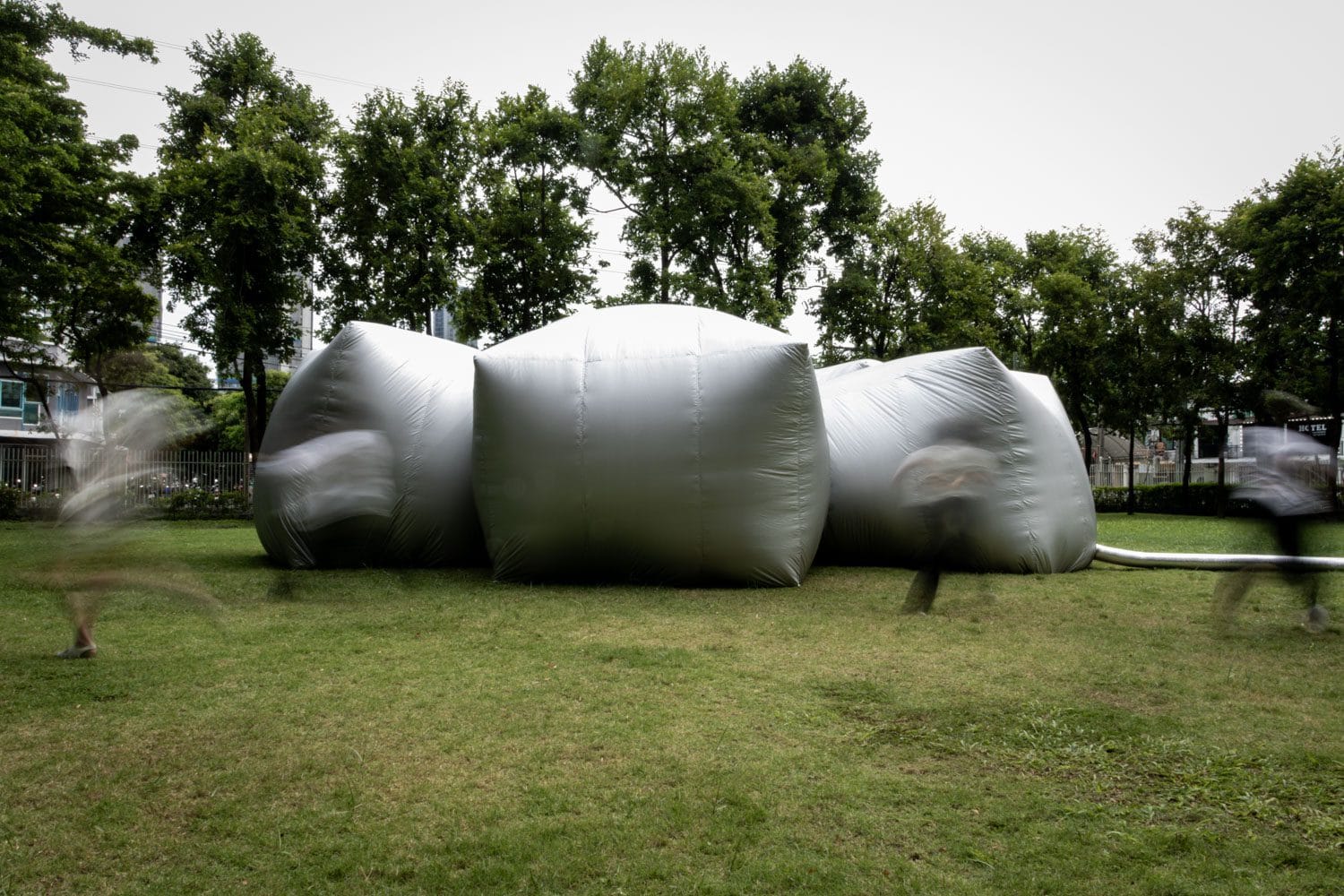
Weighing just under 40 kilograms in total yet expanding to cover up to 60 square meters when fully deployed, AIRFRAME is constructed from ultra-lightweight nylon fabric stitched into shape. Inside, an integrated air-compression system produces nearly 200 cubic meters of filtered, clean air. This purified air not only supplies a breathable interior environment but also generates the internal pressure required to inflate and stabilize the structure. The silver nylon membrane further enhances performance by reflecting sunlight and reducing heat gain within the enclosure.
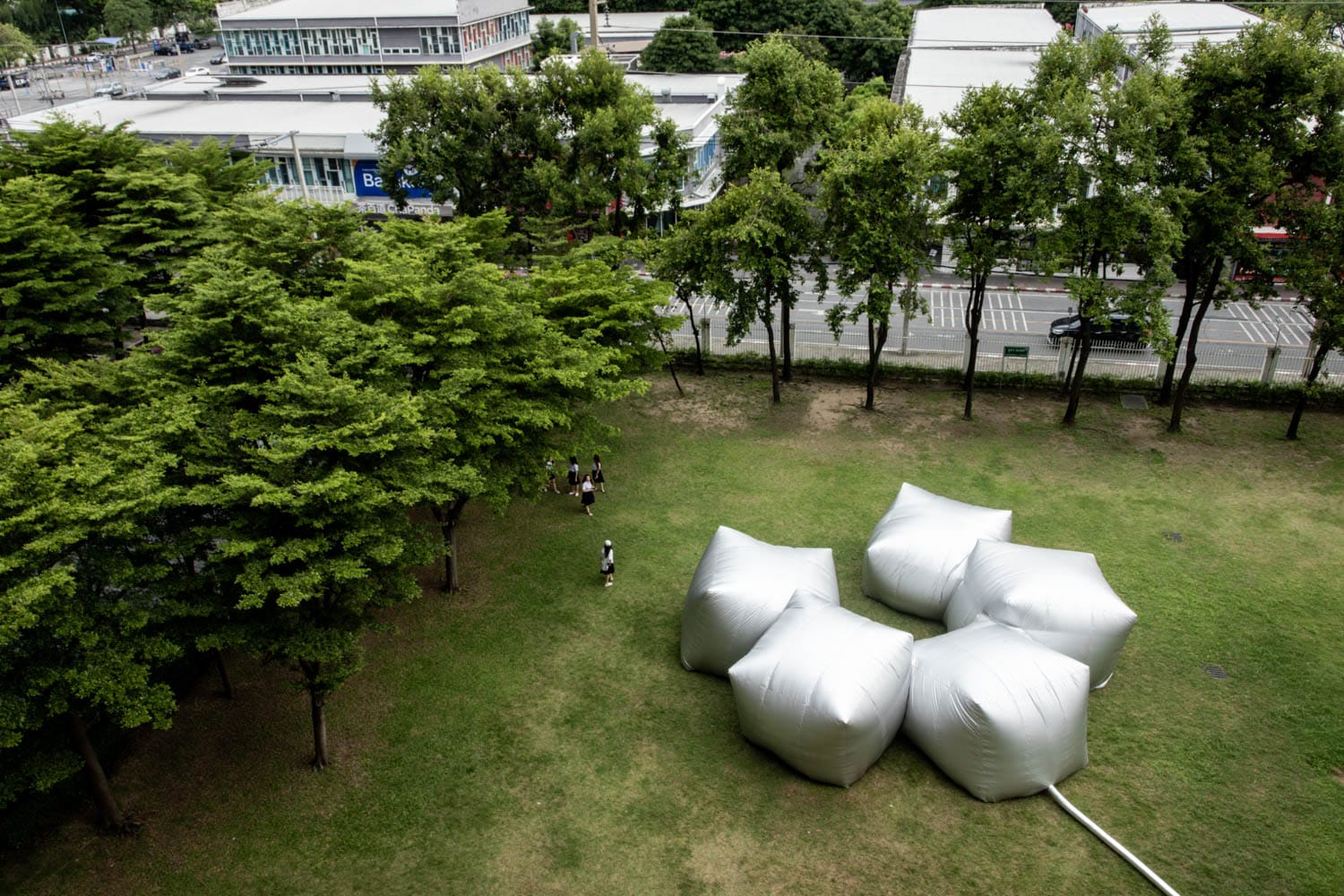
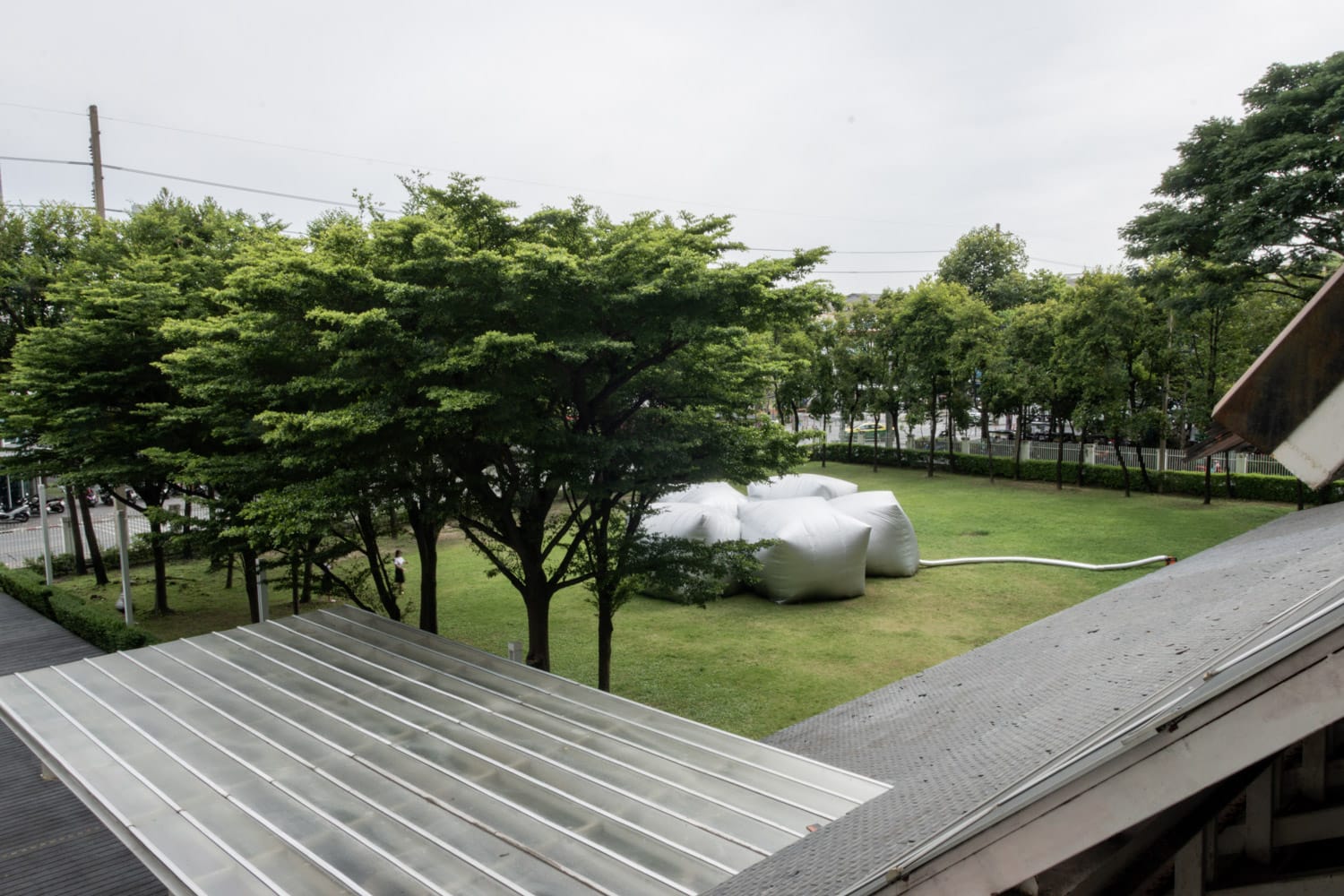
The pavilion is composed of five interconnected modules, forming a sequence of chamber-like interior spaces arranged in a linear progression. With a single entry point and a single exit at the far end, the geometric configuration allows the structure to adapt flexibly to its surroundings. AIRFRAME can be positioned prominently on open public grounds or installed in ways that embrace existing trees, incorporating them into its spatial experience.
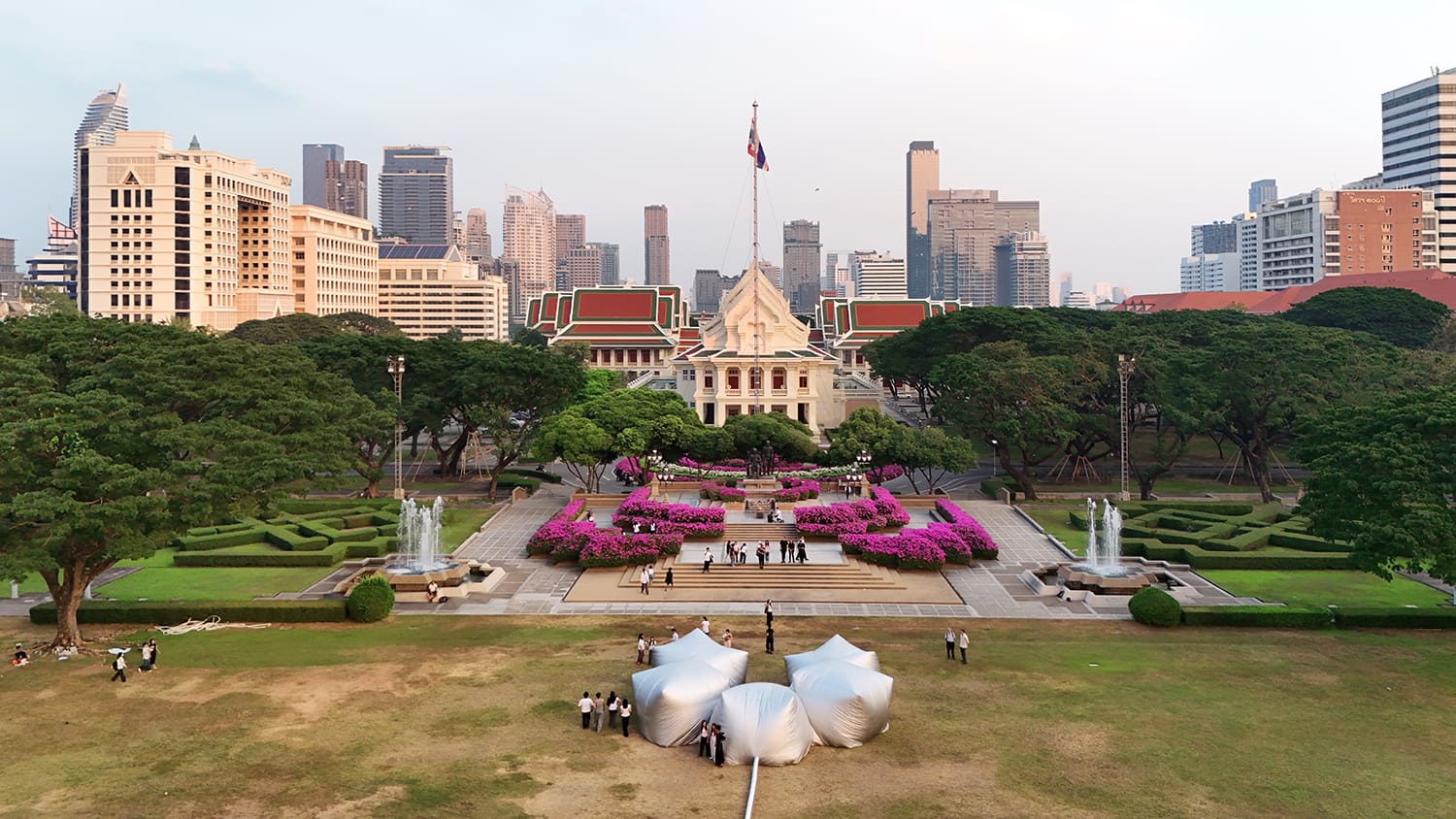
A water-ballast system anchors the pavilion, eliminating the need for an internal floor and enabling rapid assembly and dismantling in under one hour. The prototype has already undergone testing, and the design team intends to deploy AIRFRAME across multiple sites in Bangkok as a pop-up pavilion in the near future.
While AIRFRAME presents a speculative solution to an immediate urban problem, temporarily separating a controlled interior environment from an uncontrollable exterior, its very temporality serves as a reminder that the pollution outside has not disappeared. Instead, the pavilion prompts a more urgent conversation: if environmental degradation continues unchecked, there may come a day when inhabiting such simulated environments is no longer temporary, but permanent.