
EXPLORING ABSTRACT, LOVE, AND MACHINE IN SUMET JUMSAI’S PAINTINGS IN FLAT PLANES, MACHINES, AND MEMORY: PAINTING AS A PARALLEL PRACTICE IN THE WORK OF SUMET JUMSAI
TEXT: WICHIT HORYINGSAWAD
PHOTO: KETSIREE WONGWAN EXCEPT AS NOTED
(For Thai, press here)
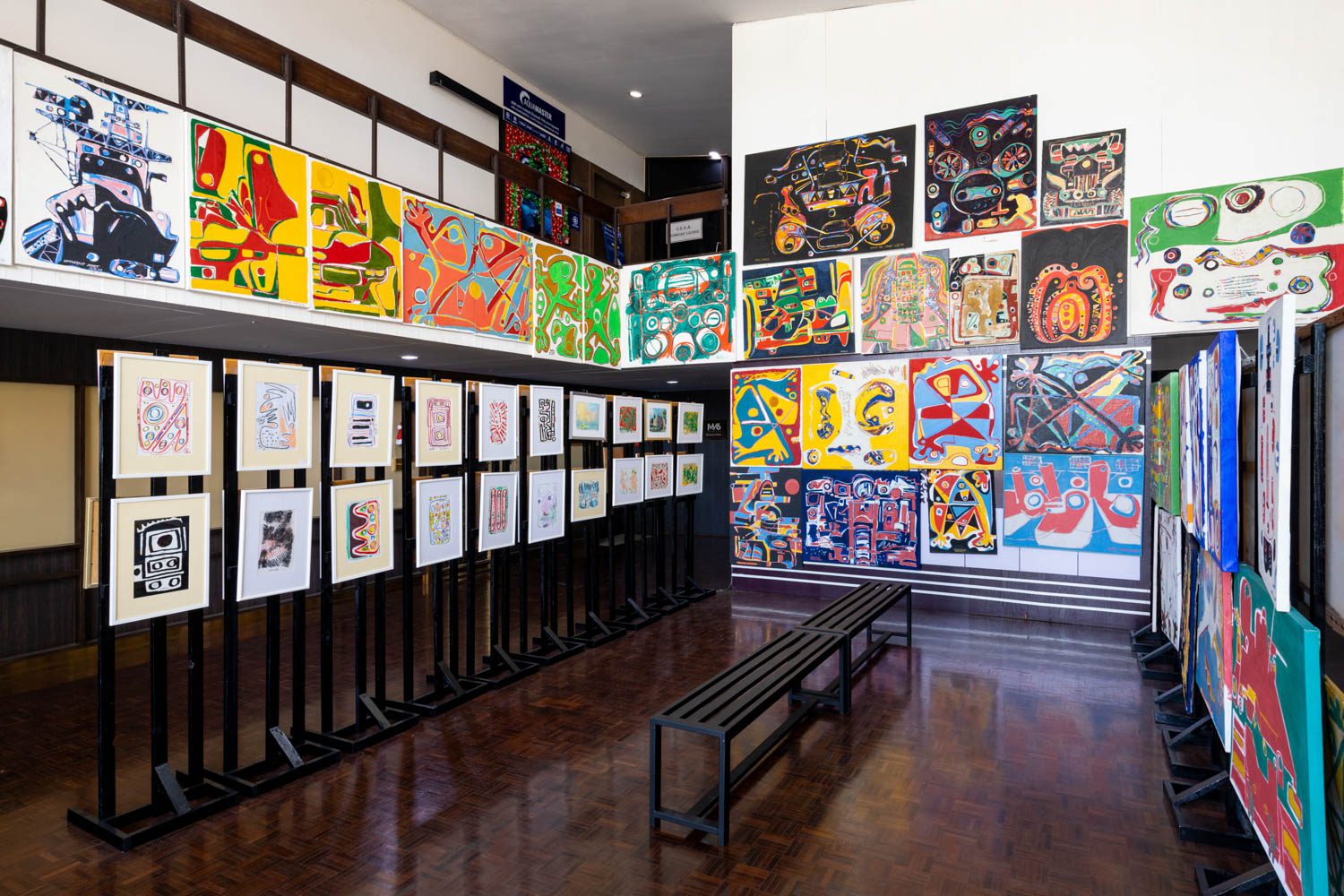
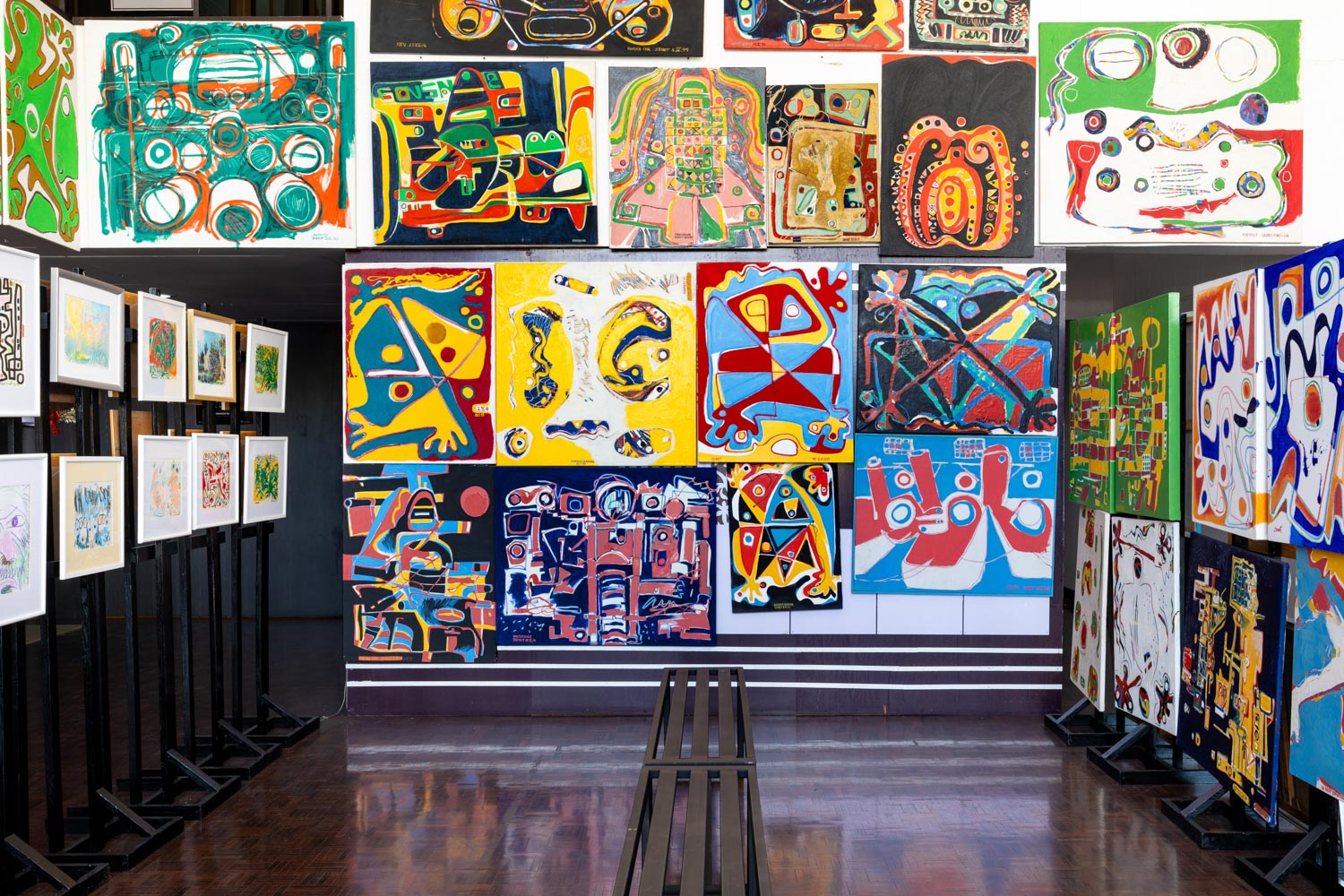
More than 86 paintings by Sumet Jumsai na Ayudhya are densely installed throughout the relatively modest entrance hall of The Old England Students Association Under Royal Patronage, filling the space with large-scale canvases and vivid, saturated colors. The character of these paintings was perceptively described by Brian Brace Taylor in his essay ‘The Architecture and Painting of Sumet Jumsai,’ published in the book Sumet Jumsai (1996). Taylor observes that Sumet’s painting is strongly influenced by Synthetic Cubism, in which pictorial composition emerges from the dynamic relationships between bold colors, flattened planes, and collage techniques. These methods play simultaneously with recognizable, concrete forms and abstract geometric shapes.
This approach can be traced back to Sumet’s interest in the relationship between Cubist painting and modern architecture, particularly through the ideas of Colin Rowe, who taught Sumet during his studies at the University of Cambridge in the 1960s. Together with Robert Slutzky, Rowe authored the seminal essay ‘Transparency: Literal and Phenomenal’ (1963), a text that redefined ways of reading modern architecture. Cubism thus becomes a key conceptual thread linking Sumet’s architectural thinking to his early explorations in painting, serving as a vehicle for his emotional expression. Over time, this pictorial language gradually unfolds and transforms, shaped by Sumet’s accumulated experiences and the shifting emotional landscapes of different periods in his life.
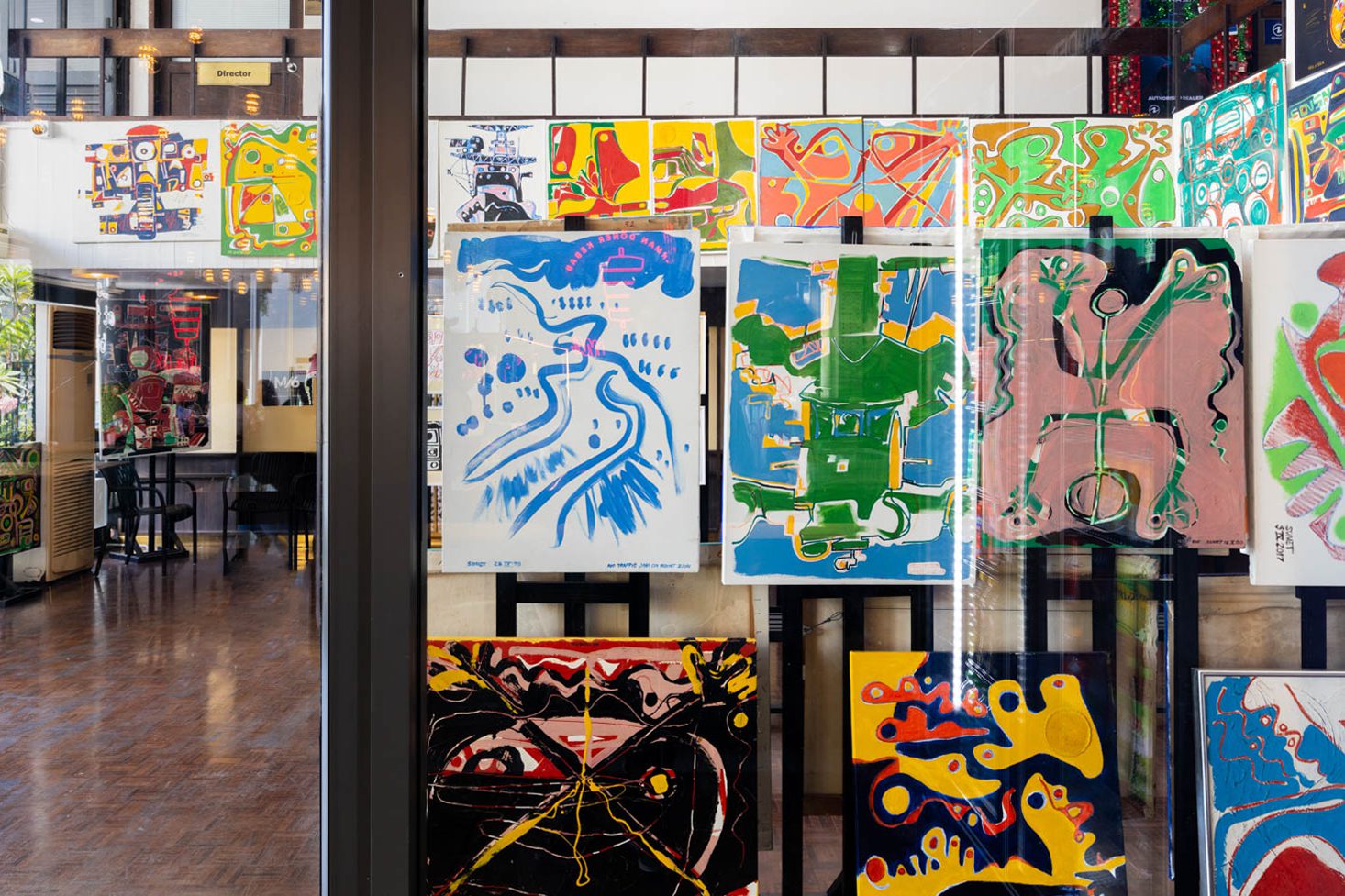
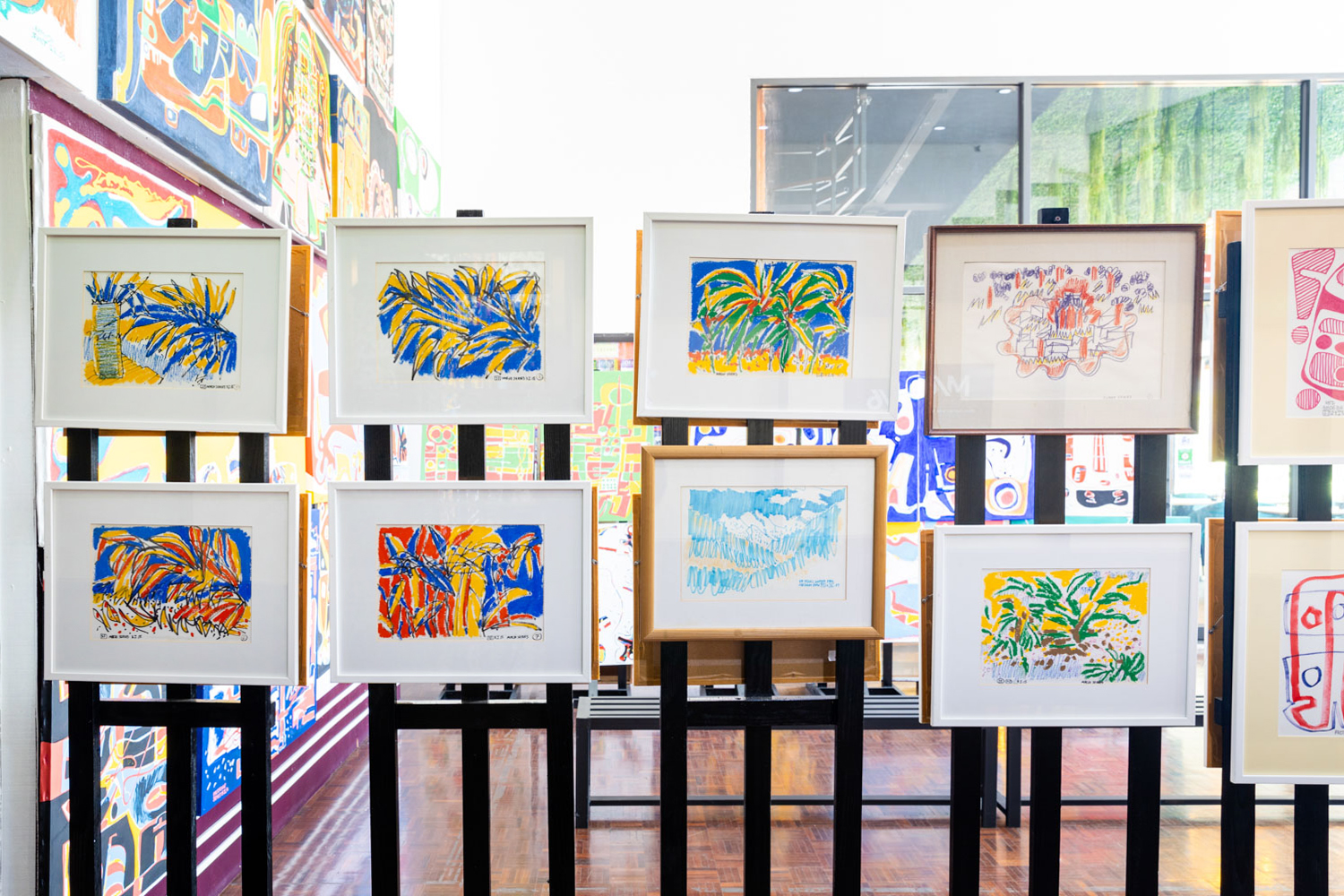
In the book Sumet Jumsai (1996), as previously mentioned, the section devoted to Sumet’s painting organizes his works into four broad categories: Architecture, Persona, The Machine, and Interalia. The same framework can be applied to the works presented in this exhibition, which may likewise be grouped along these thematic lines. The architectural works include drawings of the Robot Building, executed in marker pen on paper in 2018. The Persona category is represented by a self-portrait that unfolds into a markedly abstract image, conveying a distilled emotional state rather than a literal likeness. Sumet titled this work ME, alongside other marker-pen and chalk drawings such as SJ. The Machine paintings continue a sustained body of work in which mechanical forms hover between the figurative and the abstract, animated by a sense of playfulness and exuberance.
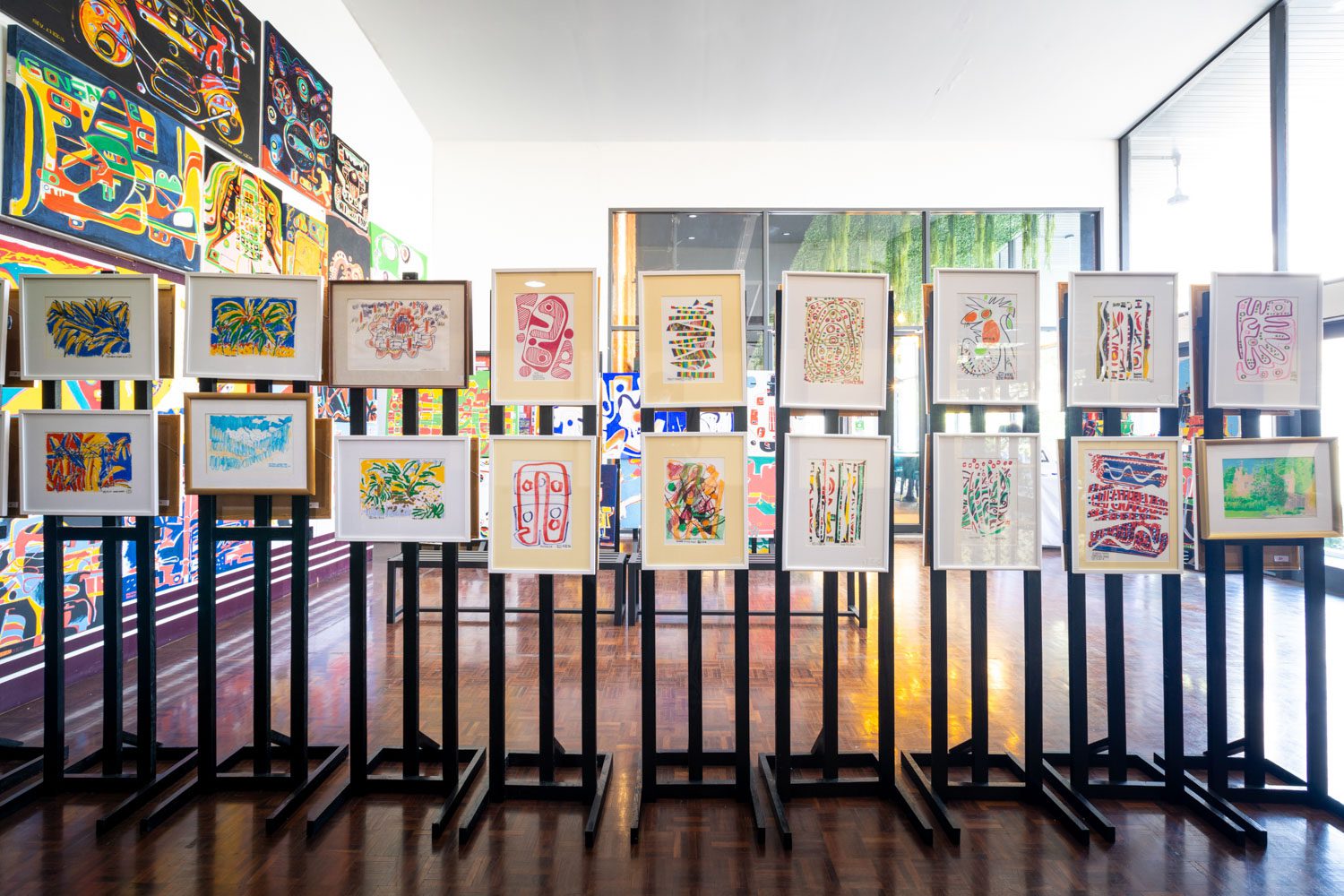 Marker and chalk drawings on paper from the later periods are exhibited together with the Maejo series (2015).
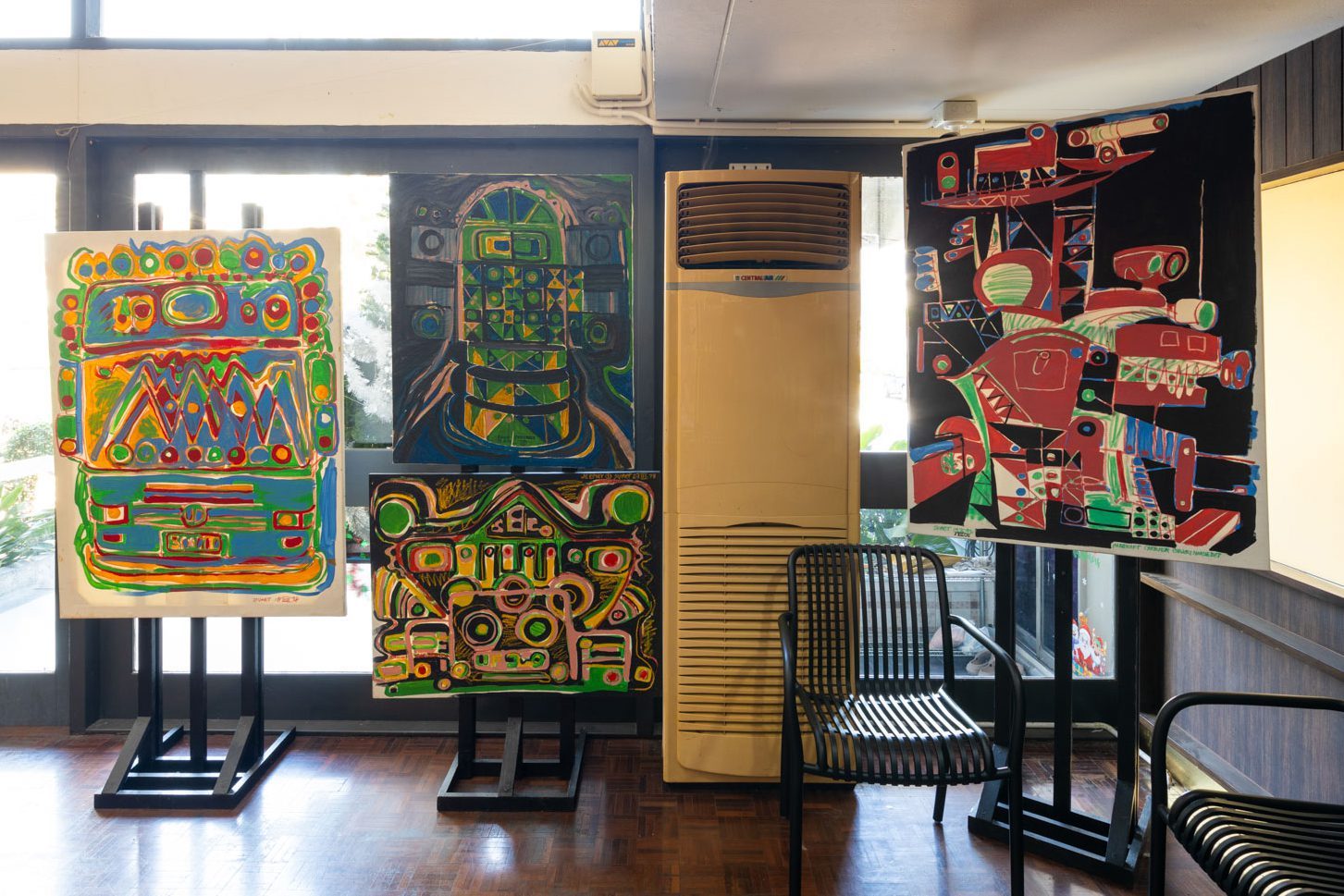
These include works Sumet has revisited over time, such as Jeepney (1999), Racing Car (2015), and Electric Car (2015), as well as earlier paintings from the 1990s, including Challenger (10). Finally, Interalia brings together paintings that function as visual records of lived moments and places. These include works produced during Sumet’s stay in Chiang Mai, notably the Maejo Series, as well as Francis Cripps House, a group of atmospheric paintings capturing his time in Cambridge during the 1980s.
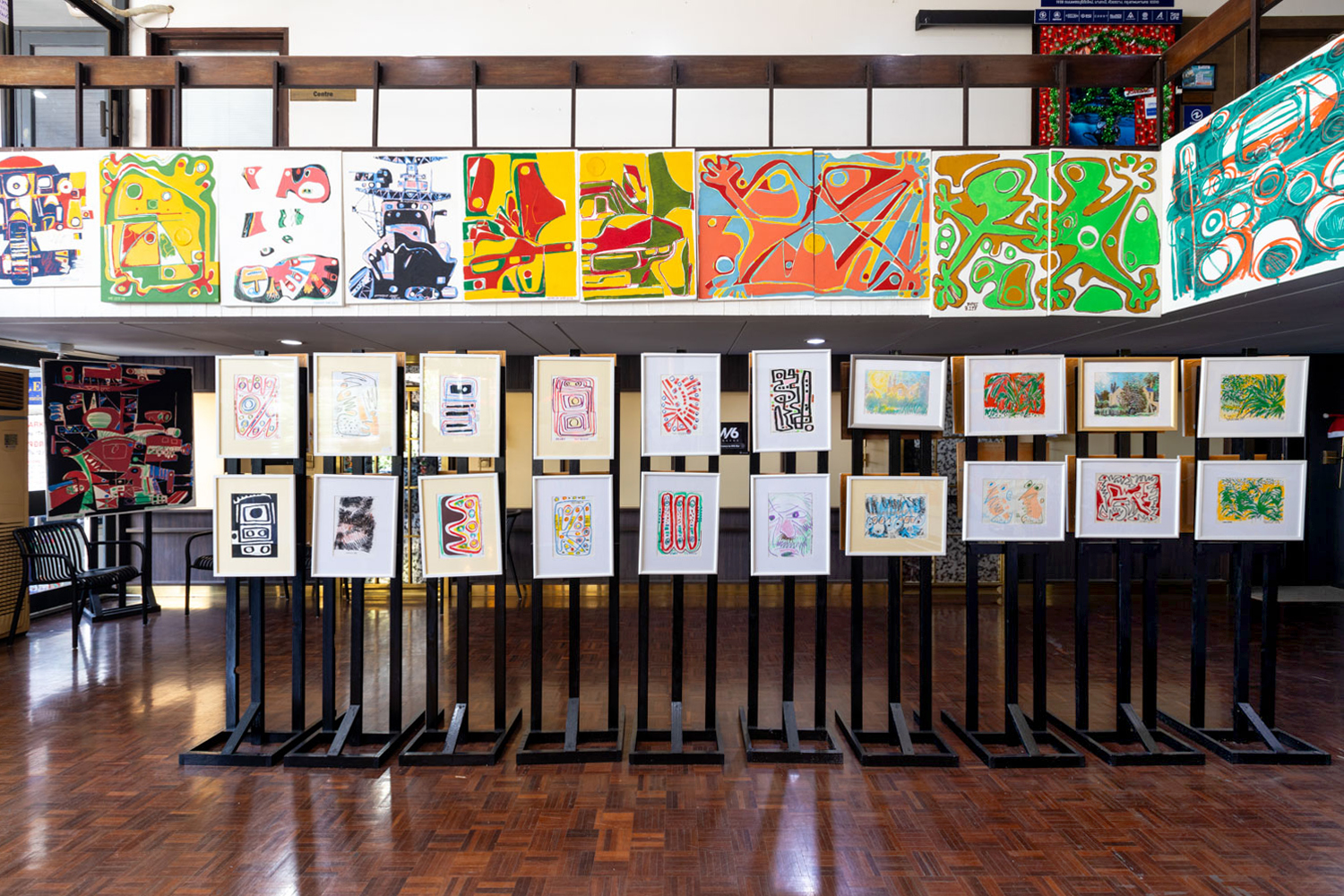
Some of the marker and chalk drawings previously shown in the exhibition ‘4am: Sumet Jumsai.’
Installed in a densely packed, salon-style arrangement throughout the exhibition hall, the presentation brings together works from different periods of Sumet’s practice. At times, paintings from disparate eras are placed side by side rather than in strict chronological order. Even so, the exhibition maintains a loose thematic structure. It has been seven years since 4am: Sumet Jumsai, the exhibition held at Cassia Gallery in 2018, which focused on a series of small-scale paintings created in the early hours of the morning, shortly after the artist awoke, as part of his daily routine. In the present exhibition, a number of works from that period reappear, woven into the broader constellation of paintings on view.
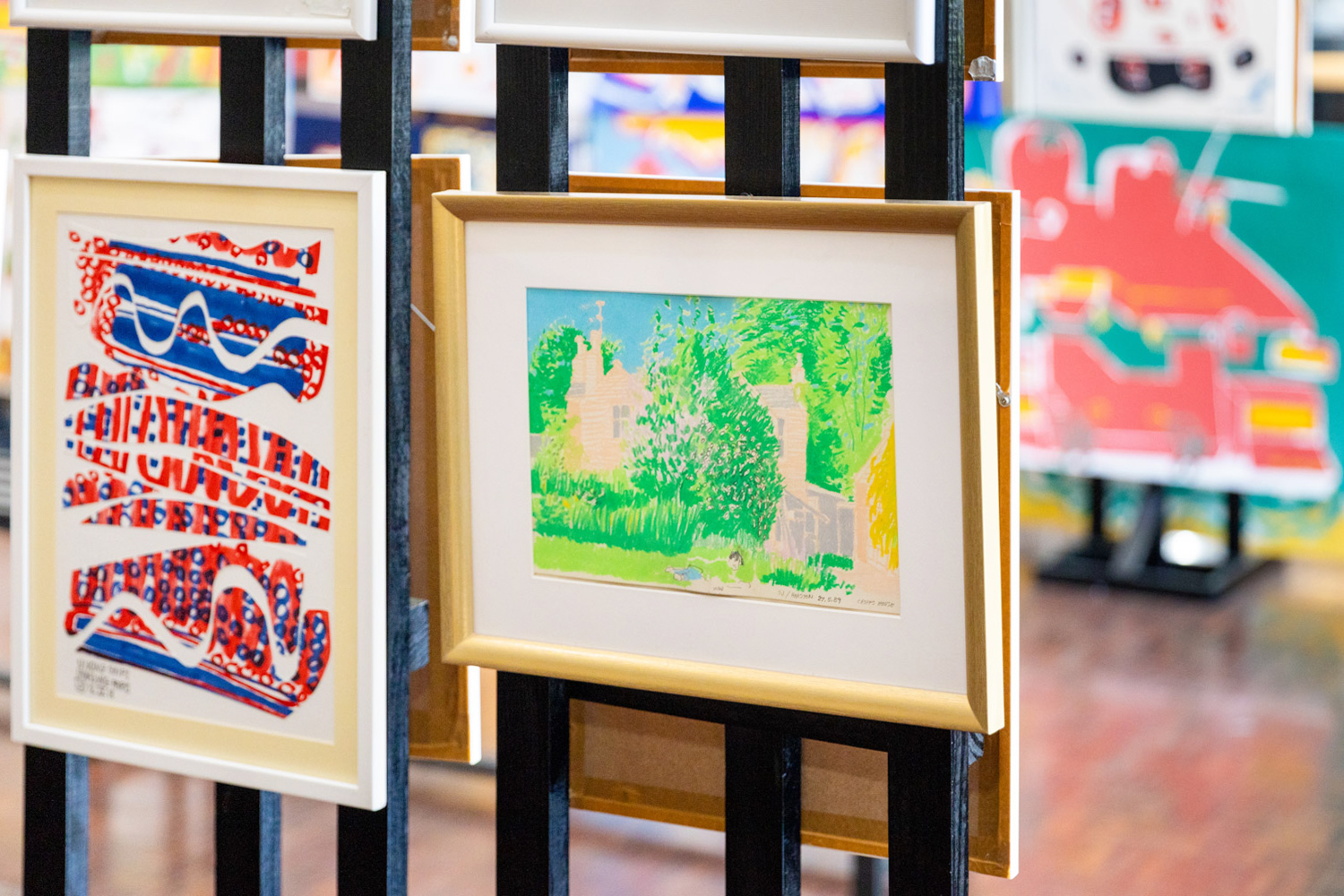
Francis Cripps House — a painting capturing the atmosphere during his stay in Cambridge in the 1980s
Drawing and making art have long been central to Sumet’s life, pursuits he has loved and wished to pursue since childhood. During his years as a practicing architect, he consistently devoted his weekends to artistic work, whether in studios in Cambridge, France, Sriracha, or, more recently, Chiang Mai. Over the past three years, however, health-related constraints have prevented him from continuing to paint. This exhibition therefore functions as a comprehensive gathering of the works that remain in his possession, alongside selections from earlier series, brought together for public viewing once more. It offers friends and interested viewers a rare opportunity to see the full range of paintings he has preserved over the years. Proceeds from the sale of all exhibited works will be donated to the Chalermkwan Jumsai Na Ayudhya Foundation, to support activities that contribute to the public good.
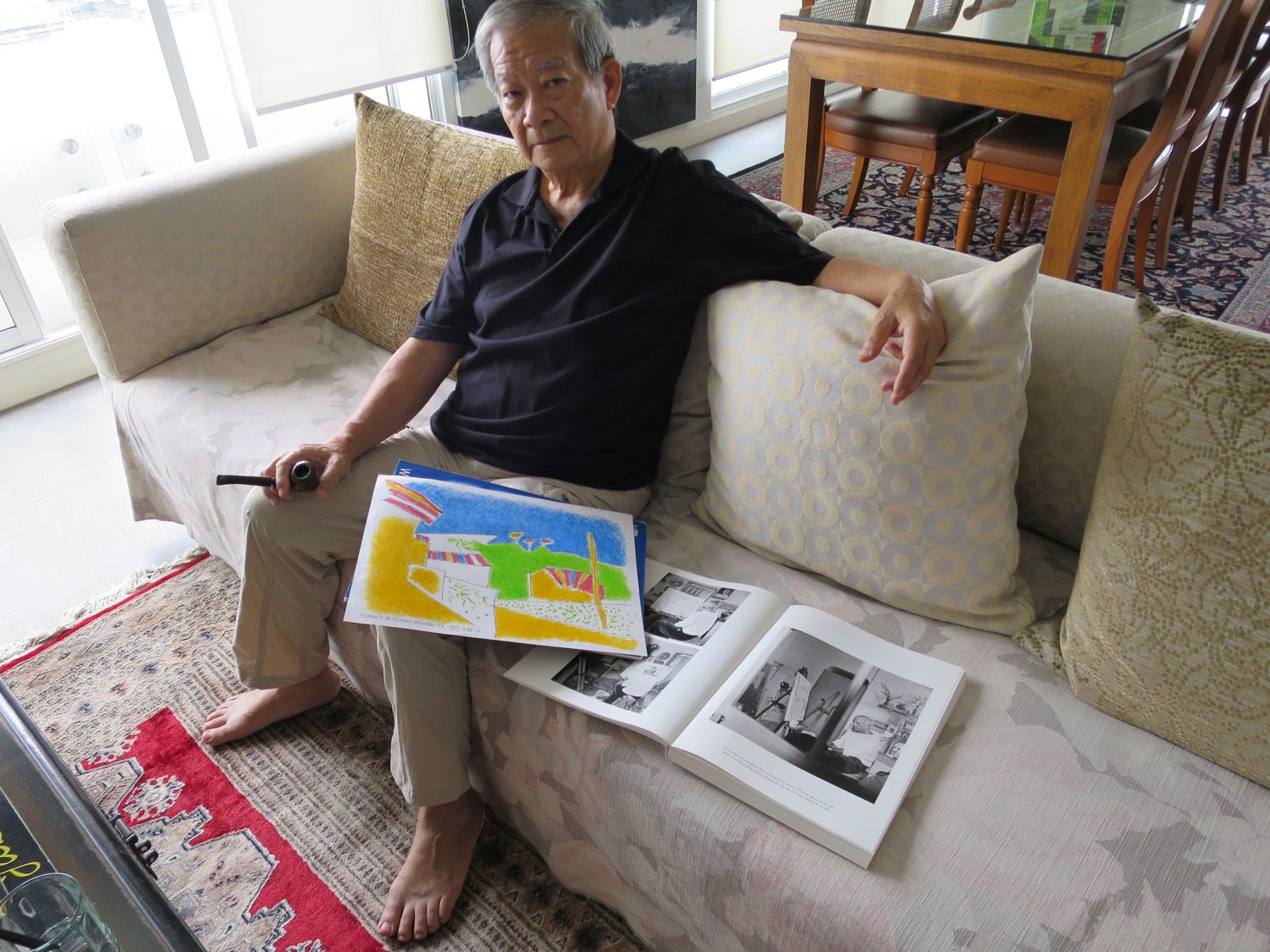
Photo courtesy of Suthinee Jumsai na Ayudhya
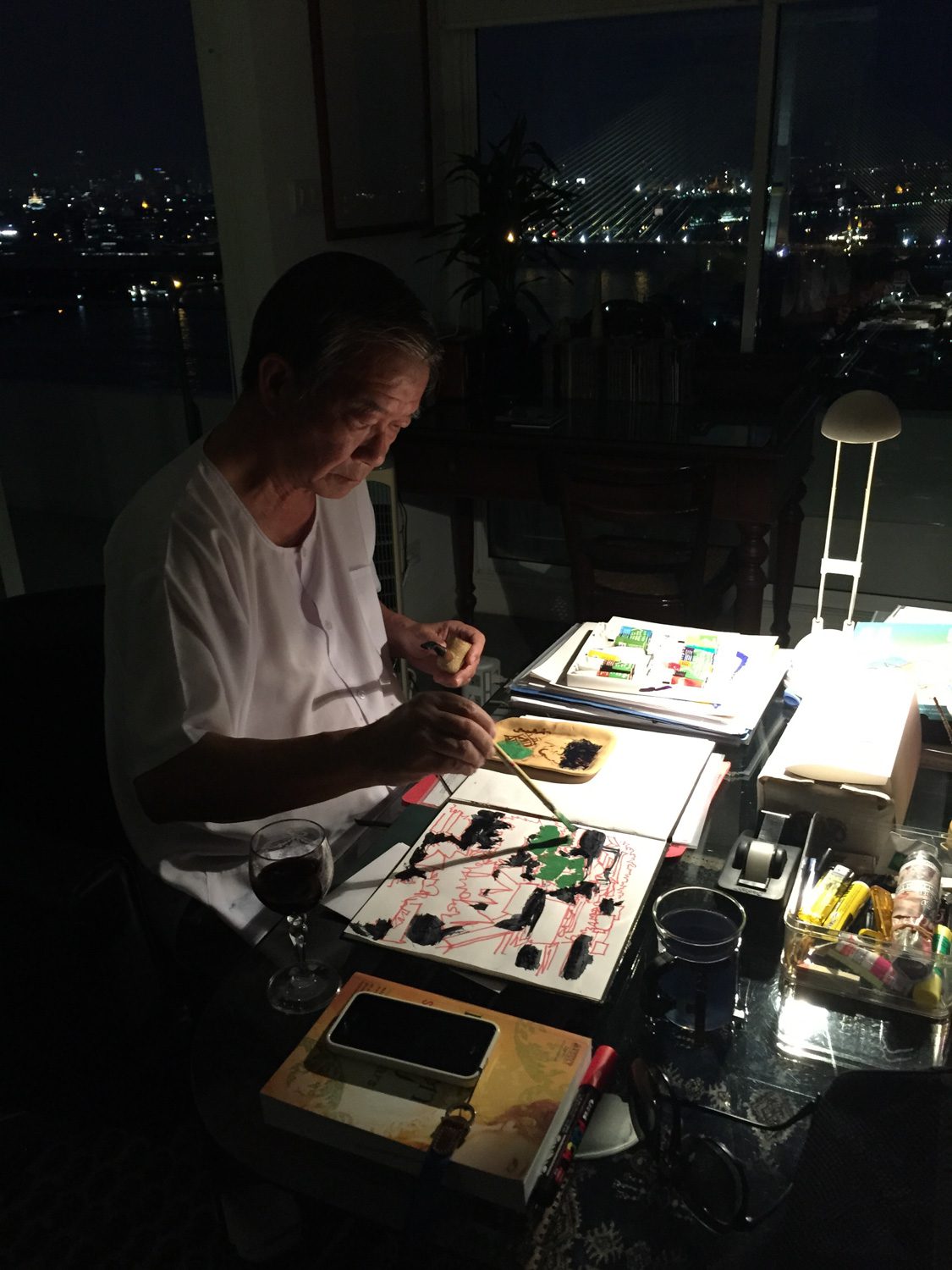
Sumet Jumsai na Ayudhya at work | Photo courtesy of Suthinee Jumsai na Ayudhya
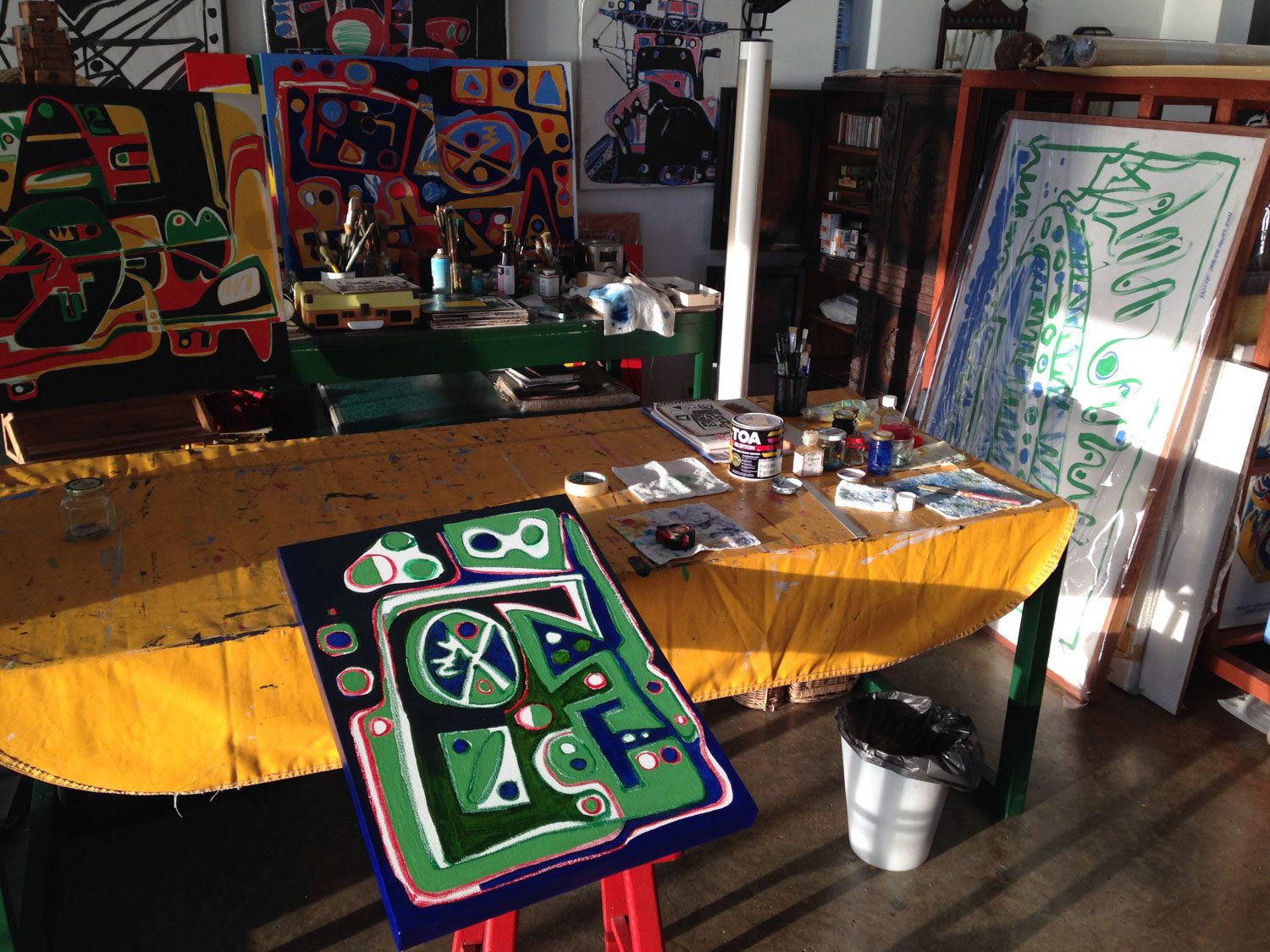
Inside the studio of Sumet Jumsai na Ayudhya in Sriracha | Photo courtesy of Suthinee Jumsai na Ayudhya
The Art Exhibition by Dr. Sumet Jumsai na Ayudhaya is open to the public at The Old England Students Association Under Royal Patronage from 28 November to 28 December 2025, from 9:00 am to 9:00 pm.