
STEAM STREAM IS AN EXHIBITION BORN FROM THE COLLABORATION OF CREATORS FROM DIVERSE FIELDS, INITIATED BY BENJARAT AIEMRAT, TO INTERPRET ‘WATER’ AND ‘RICE’ THROUGH INSTALLATIONS, OBJECTS, SOUNDS, PHOTOGRAPHS, AND NARRATIVES THAT CONNECT PEOPLE TO MEMORIES AND CULTURAL ROOTS
TEXT: SARUNKORN ARTHAN
PHOTO: PEERAPAT WIMOLRUNGKARAT EXCEPT AS NOTED
(For Thai, press here)
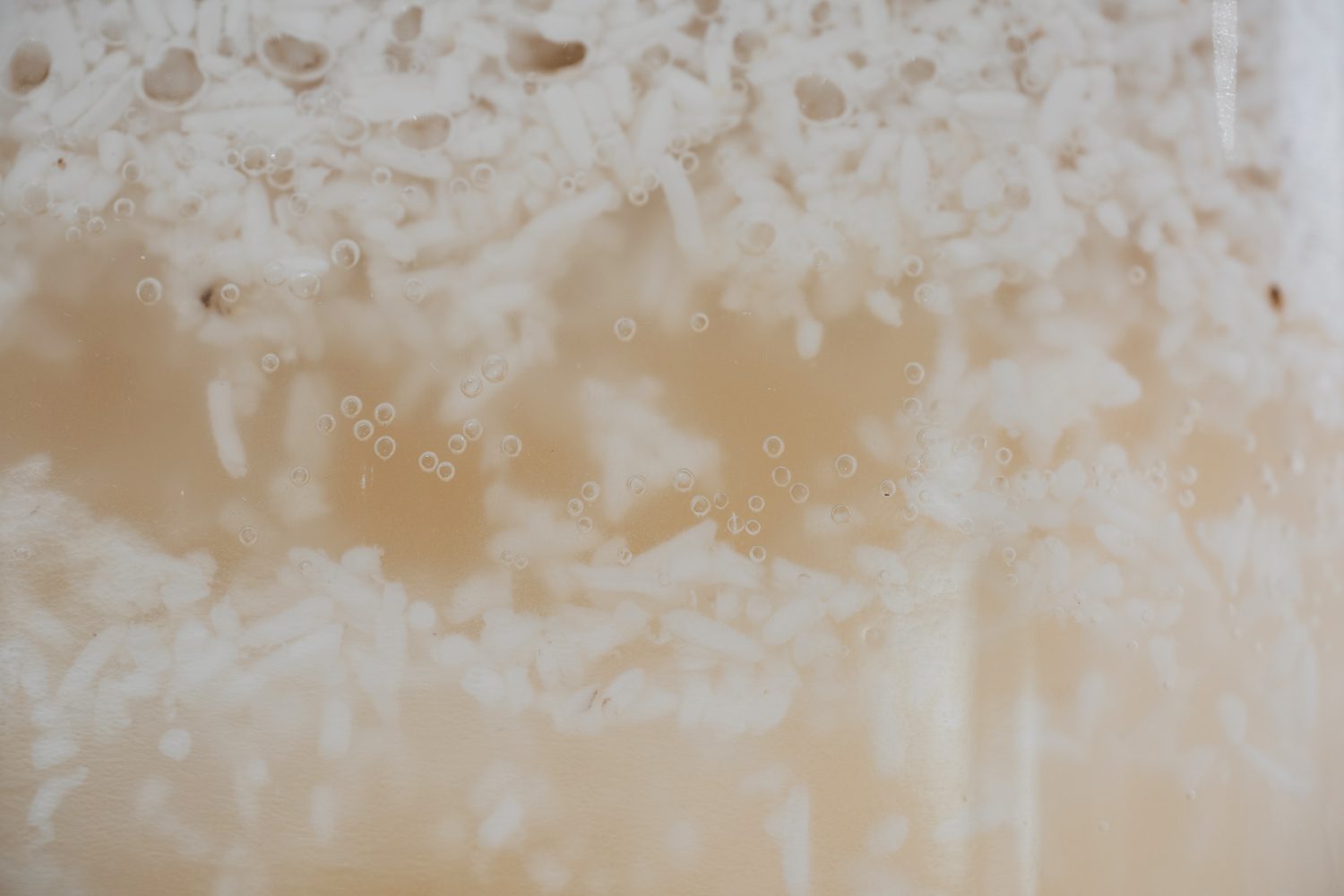
Human beings have always accorded water a certain primacy. We store it, circulate it, alter its state, and attempt to keep it with us for as long as we can. We see this impulse in dams, weirs, rice-field embankments, and orchard ditches, all devised for dwelling, cultivation, and survival. We consume rice in its many water-borne forms: boiled, steamed, and cooked; alongside pickles, candied fruits, clear broths, and thick soups, each shaped by local geographies and ways of eating. In Thailand, the South has paeng daeng, a pinkish-red fermented fish preserved with cooked rice and red yeast rice; Isan has pla daek, fermented fish with a deep, pungent salinity; the North has thua nao, fermented soybeans used as a seasoning; while the Central region turns to shrimp paste and fish sauce. These are placed in bowls, jars, and earthen containers, preserved for months or even years, before being eaten, drunk, and used up, only to return once more to the cycle of ‘water.’
Water also arrives through the names we give to its many conditions: steam, rainfall, running streams, tsunamis. It exists, too, in the state of language itself. In Thai and other Tai-Kadai languages, nam, or water, flows through words such as nam mue or ‘the hand behind an action,’ nam na or ‘one’s face and reputation,’ nam jai or ‘kindness,’ nam ta or ‘tears,’ and nam kham or ‘words.’ Through language itself, ‘water’ becomes a measure for both the visible and the abstract, the material and the emotional. It is, in this sense, the ‘center of life.’
For Benjarat Aiemrat, water is not only a substance that sustains life, nor merely a raw material for the making of edible art. A designer by training, she is drawn to water in its many forms of beauty, as matter, as culture, and as spirit. More importantly, the ‘way of water’ is also reflected in the way she works with others. This current has gradually branched into NAM-SAI, a long-term project conceived as a space for studying, sharing, and transmitting stories of water across multiple dimensions. At its heart is an invitation: for people to interpret nam sai, or clear water, with sincerity and openness.
The exhibition Steam Stream forms both a part and an extension of the NAM-SAI project, now expanding its inquiry to include rice and its many stories. Benjarat and co-curator Pearamon Tulavardhana assume a role somewhat similar to a mass of ‘vapor,’ receptive to every possibility. Together, they assemble a conversation between wandering thought and sudden intuition, between ideas that drift, flare, and disperse, yet remain delicate in their movement. Along the way, they gather fragments of inspiration, memory, and inherited knowledge surrounding water and rice, before passing these nutrients of thought on to a group of creators, who are invited to ‘condense’ them into sharply crystallized droplets of ideas. These, in turn, become energy and moisture, ready to branch out, propel, and flow into new currents of creativity through an intriguing exploration of the relational proportion between water and rice.
This mode of thinking and working is, in many ways, rooted in Benjarat’s own practice as a designer. It is also why she does not define herself as an ‘artist’ working from a blank slate, but rather as a kind of initiating circumstance, a catalytic condition that sparks ideas and opens up a space for people from different fields to flow into collaboration. These include farmers, facilitators, inventors, artisans, and even walkers and tea specialists.
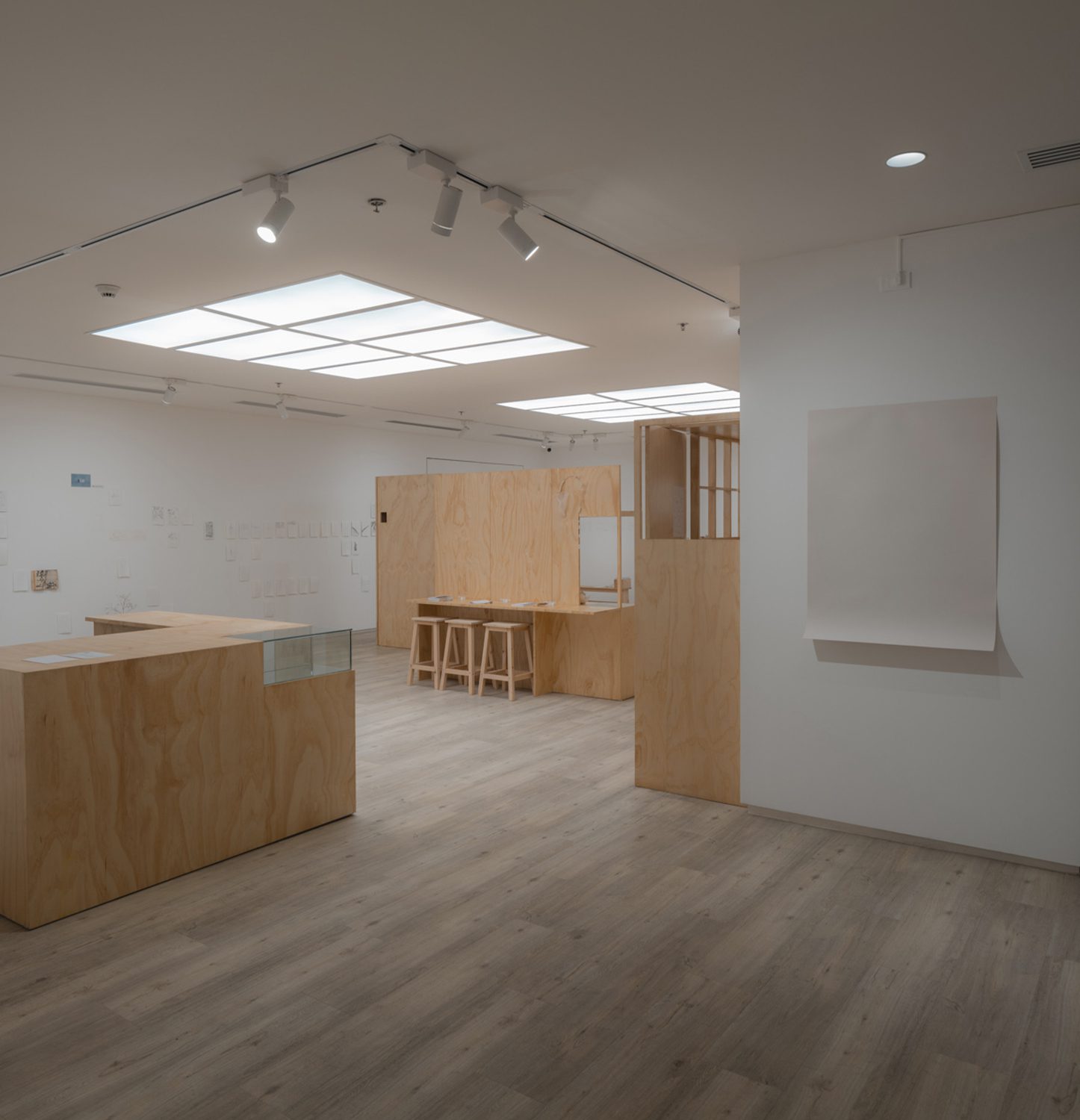
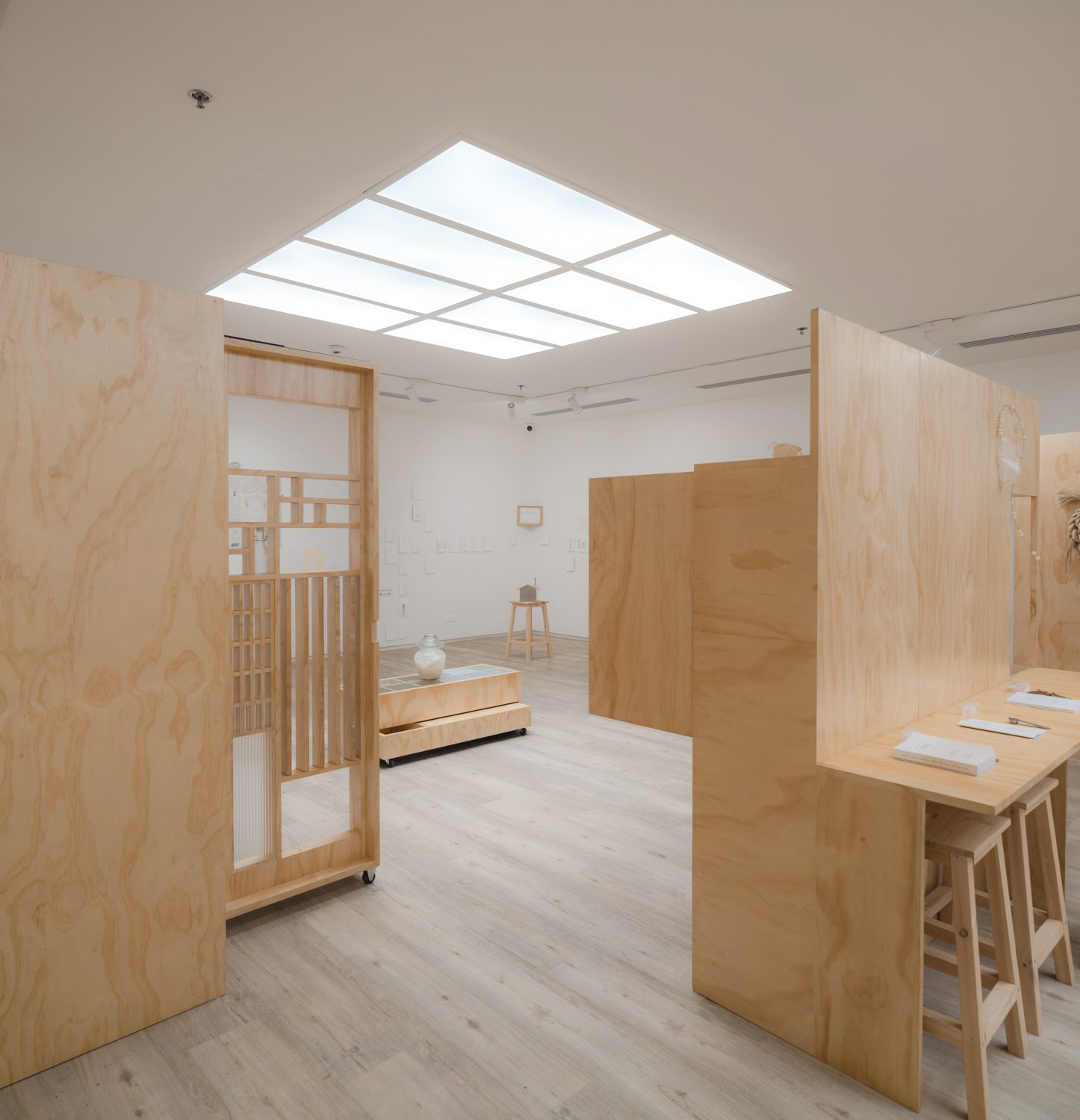
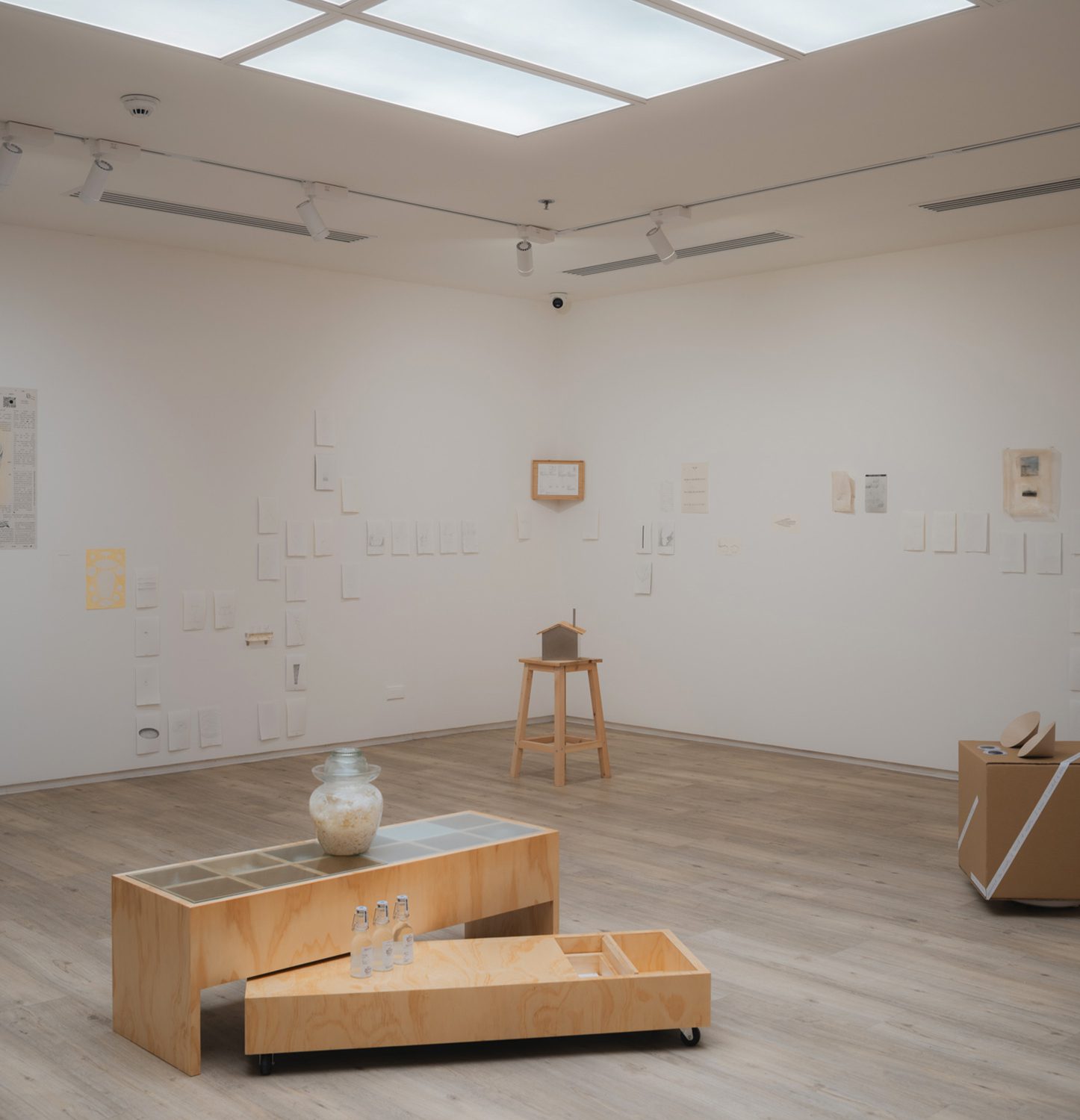
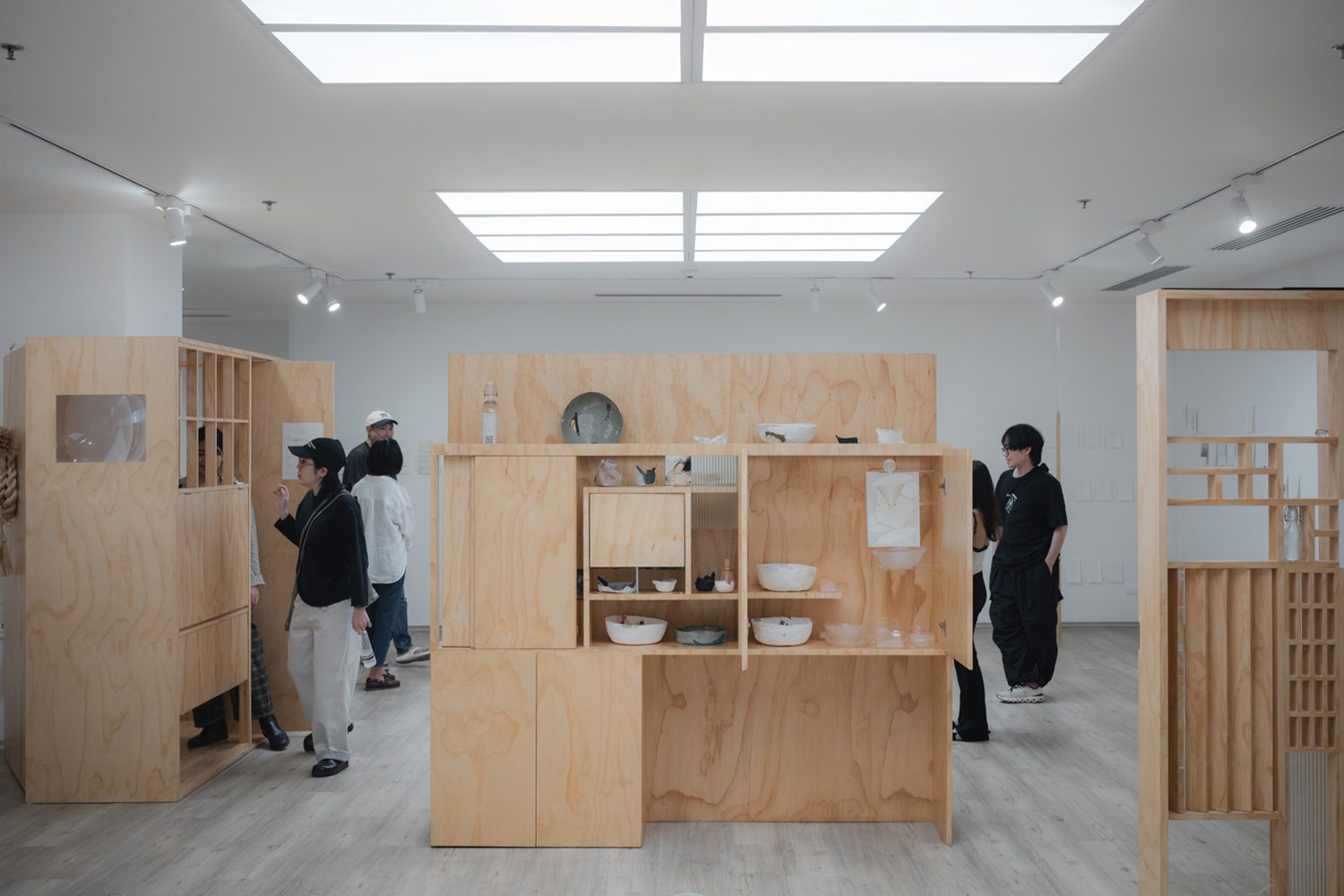
As thought begins to gather and creativity takes form inside Room 4 of MMAD Munmun Art Destination, we encounter works arranged in a way that places us within an atmosphere faintly reminiscent of a home. Its meaning may be difficult to grasp at first, yet this ambiguity becomes part of the experience, drawing us into an act of looking, wandering, and attending to the things around us.
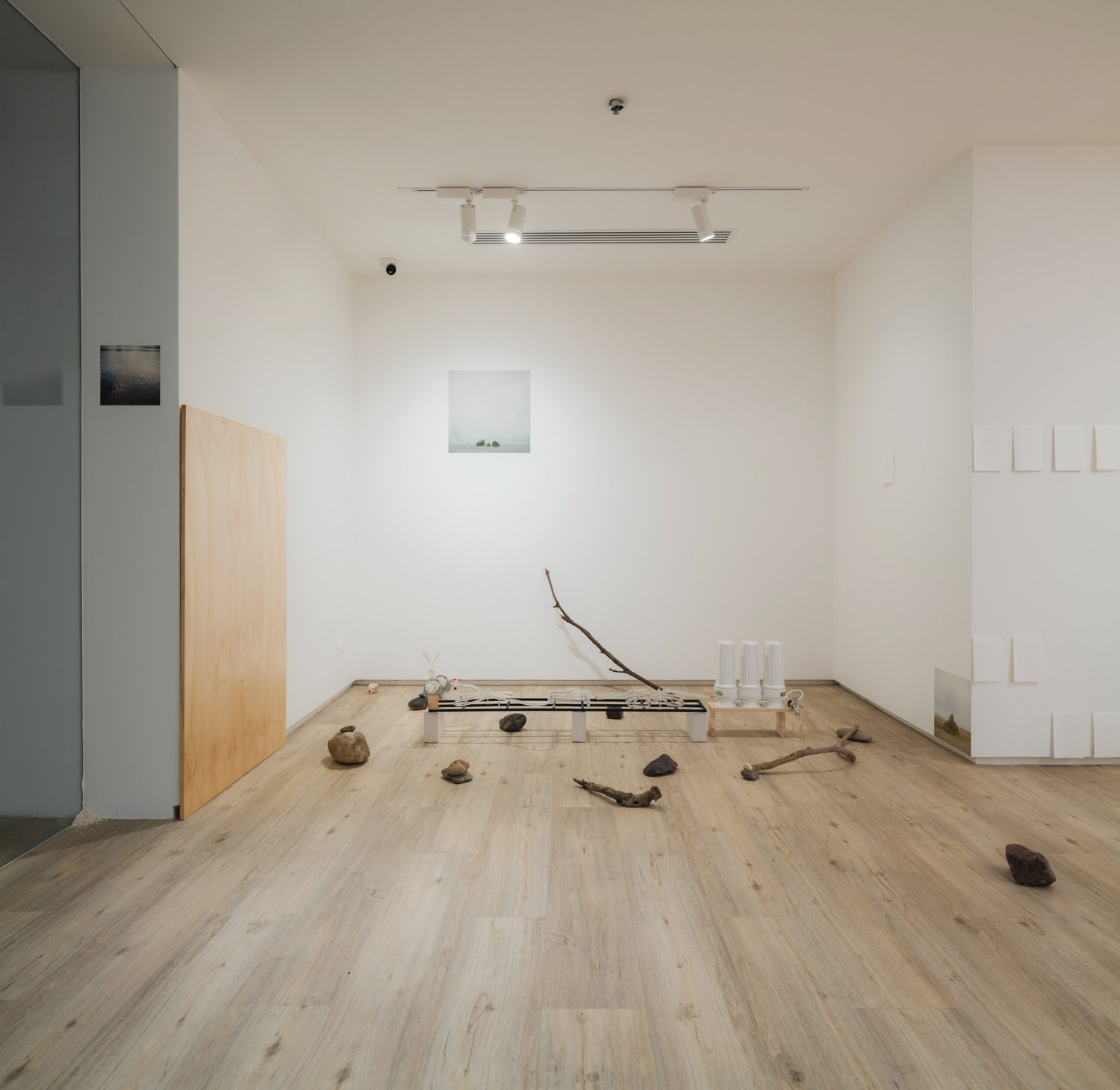
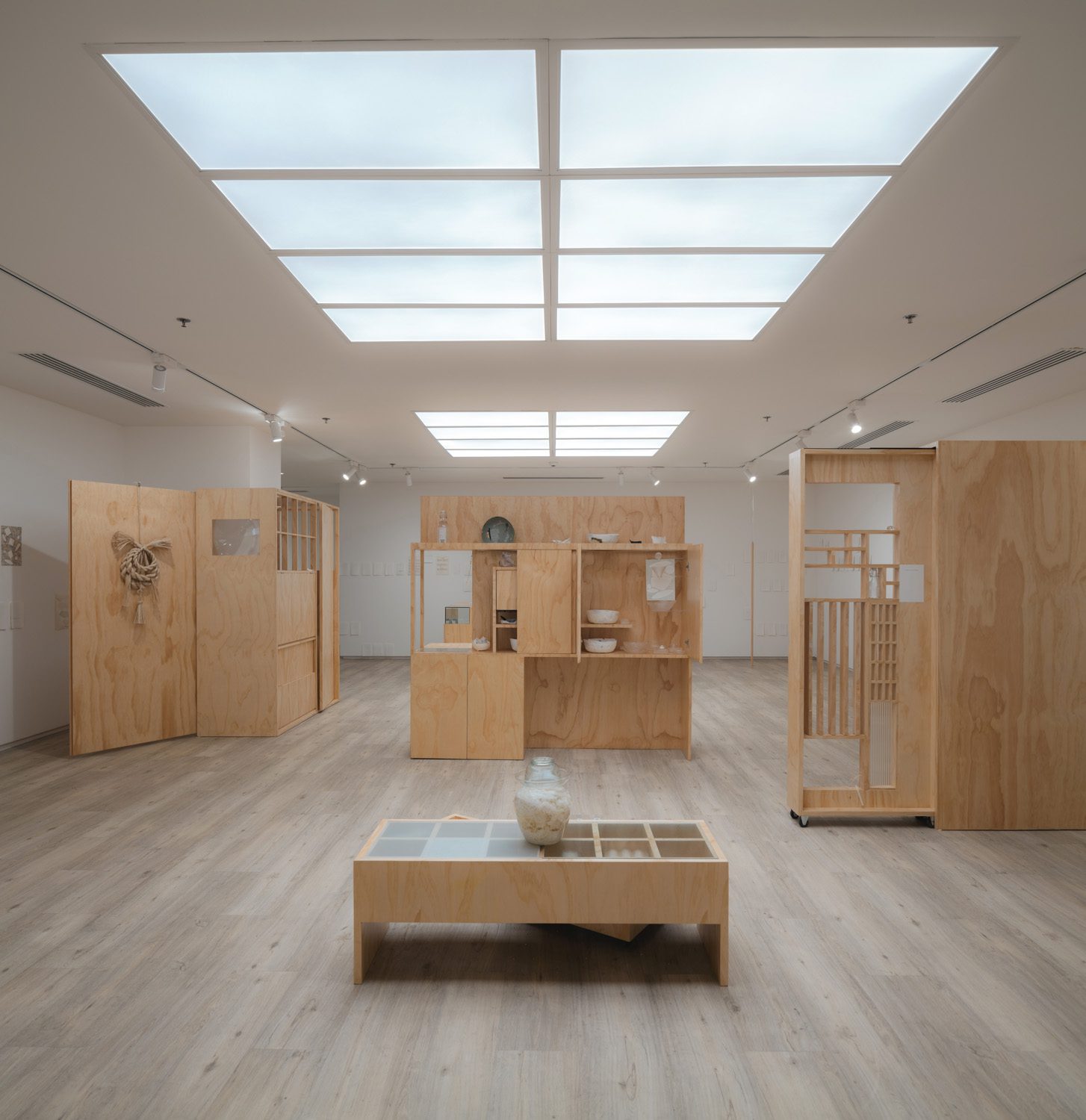
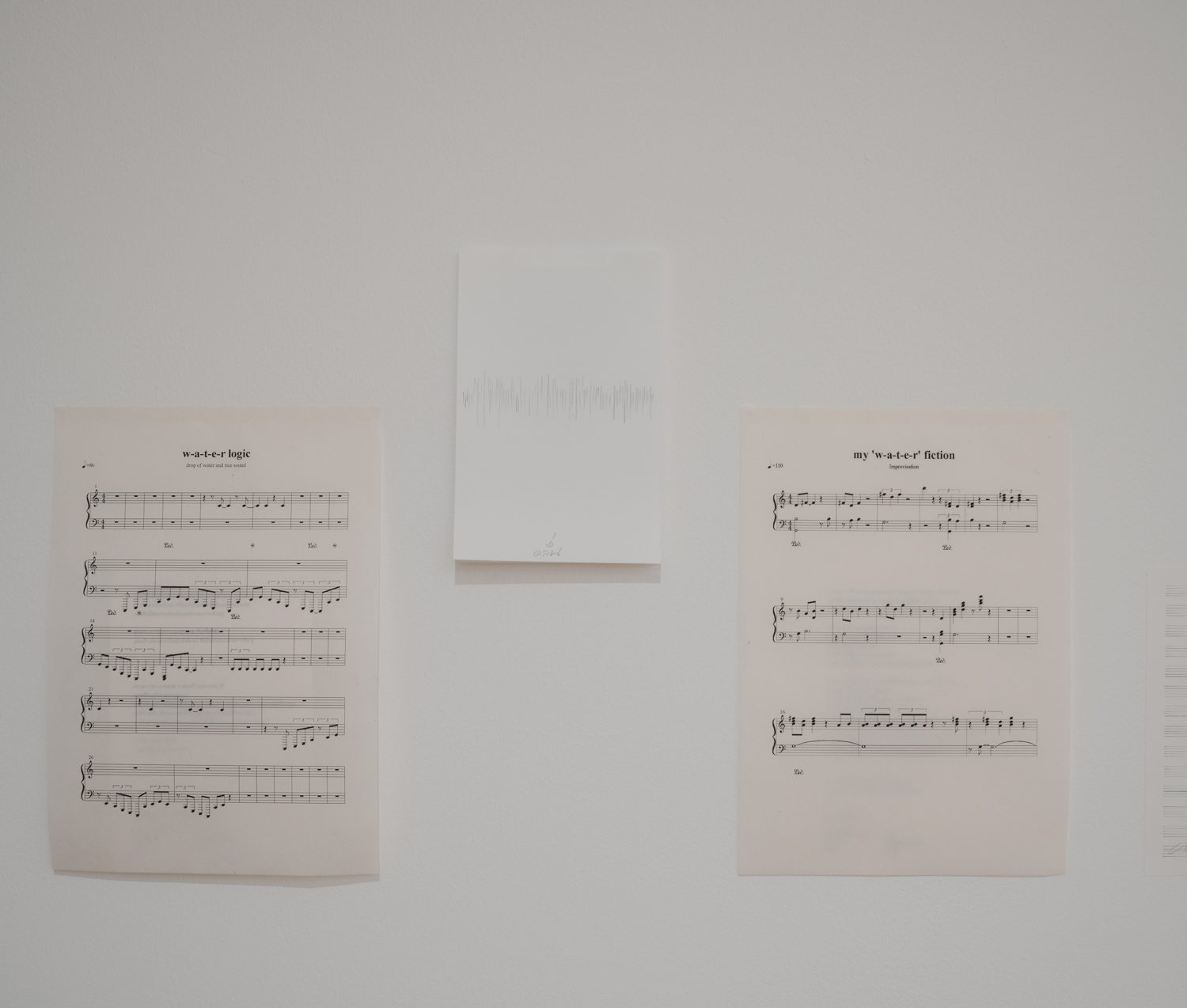
At the entrance, we are met by the work of the Doomsday Collector: a water purifier filtering water from the Mekong River, visibly clear yet laden with toxins. Nearby are photographs of water and sky seen through the eyes of the Walker. Looking further into the room, we find the earthen jars of the Farmer & Sato Maker standing prominently at the center, accompanied by Washi Paper and Vietnamese rice paper sheets folded into vessels by the Maker. Around them, the pale brown tones of simple wooden furniture crafted by the Carpentry Team are set against the whiteness of paper and light, while a small robotic vacuum mouse scurries back and forth, recalling the old observation that a house of abundance is a house where mice appear. Beneath it all runs an ambient composition by the Sound Collector, built from the falling weight of water droplets. Together, these elements form a space that invites us to enter with our own imagination and lived experience, to search for memories that may have slipped into forgetfulness, or for stories once alive that might begin to move again.
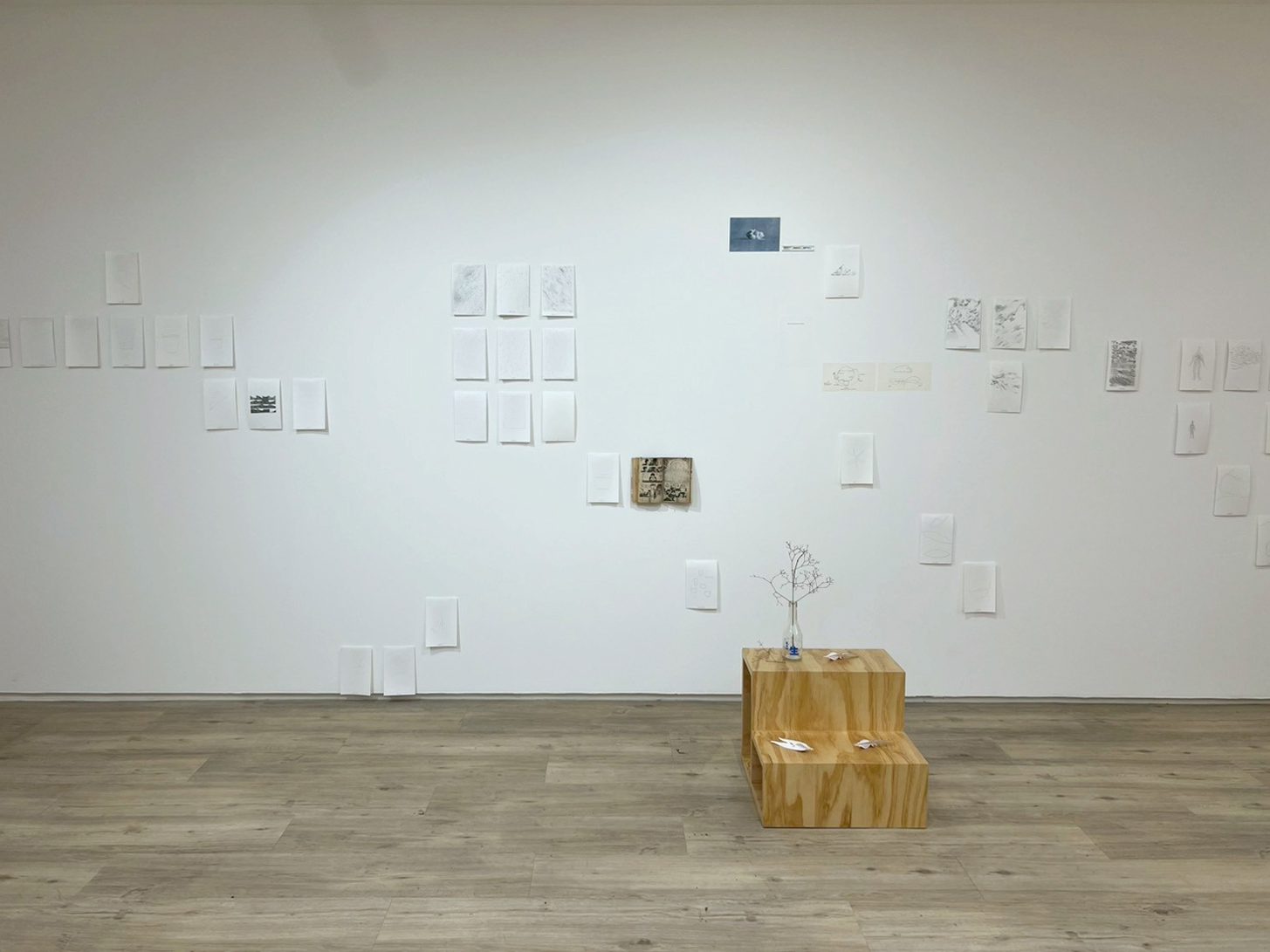 Photo: Sarunkorn Arthan
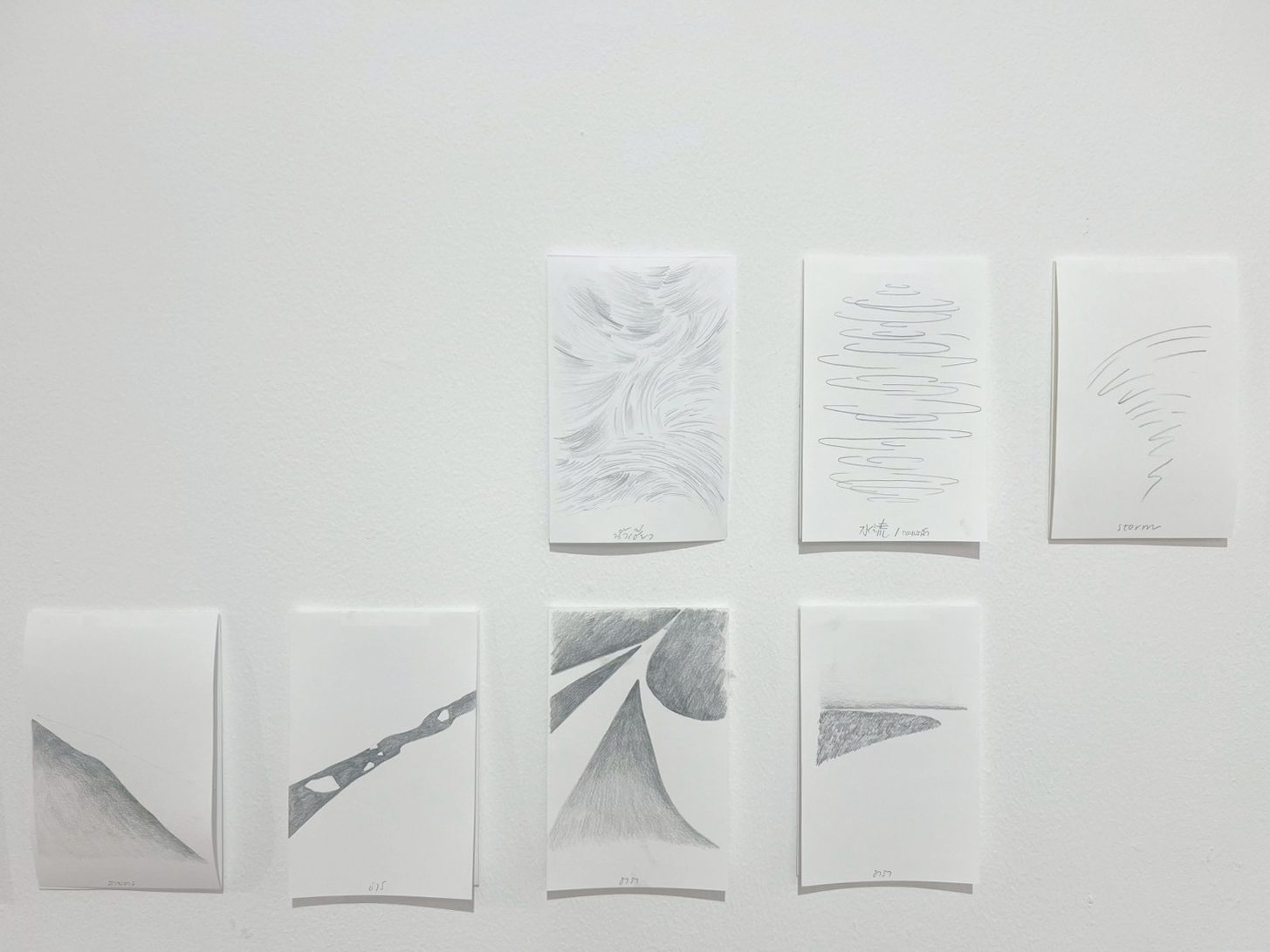
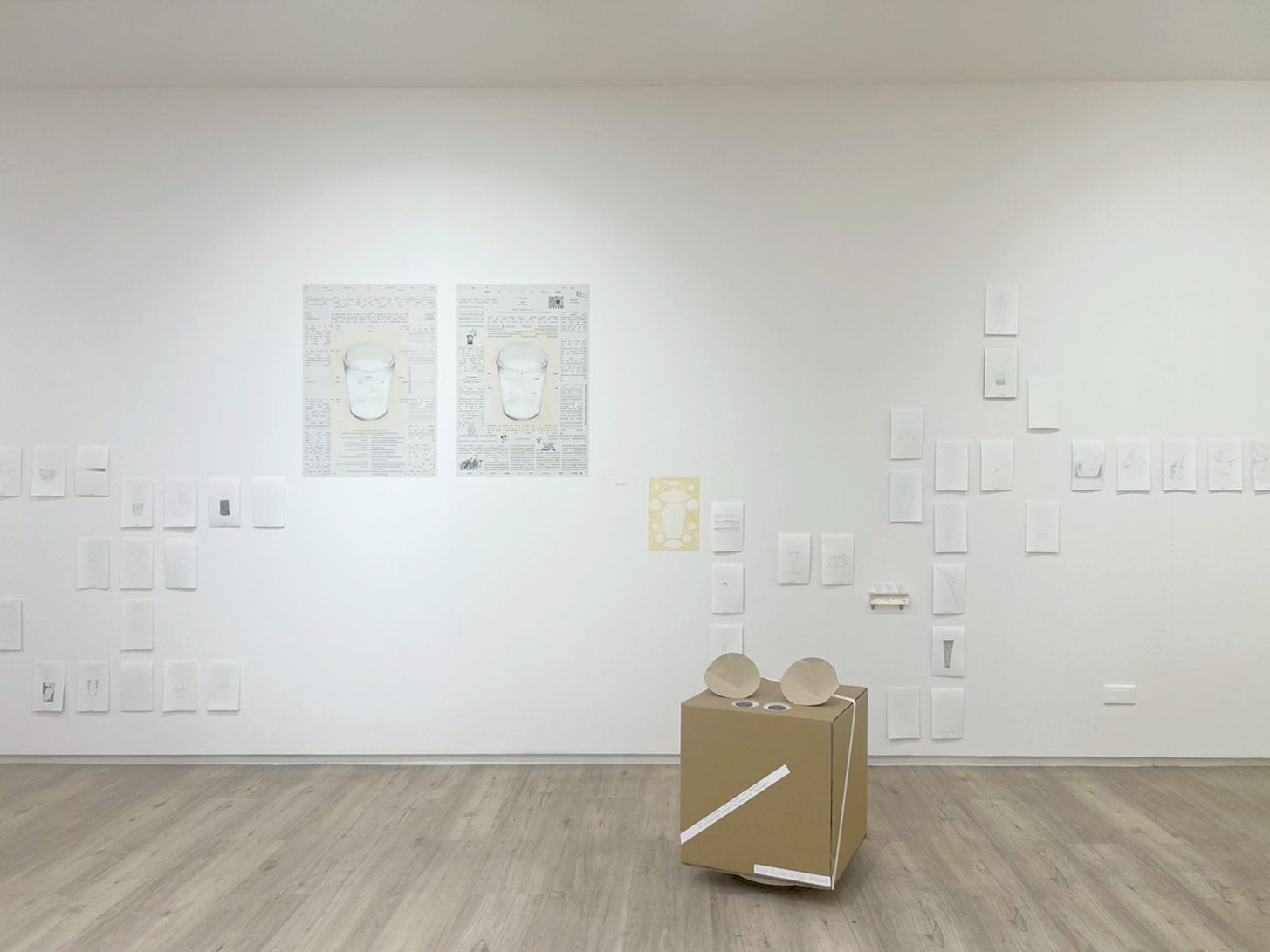
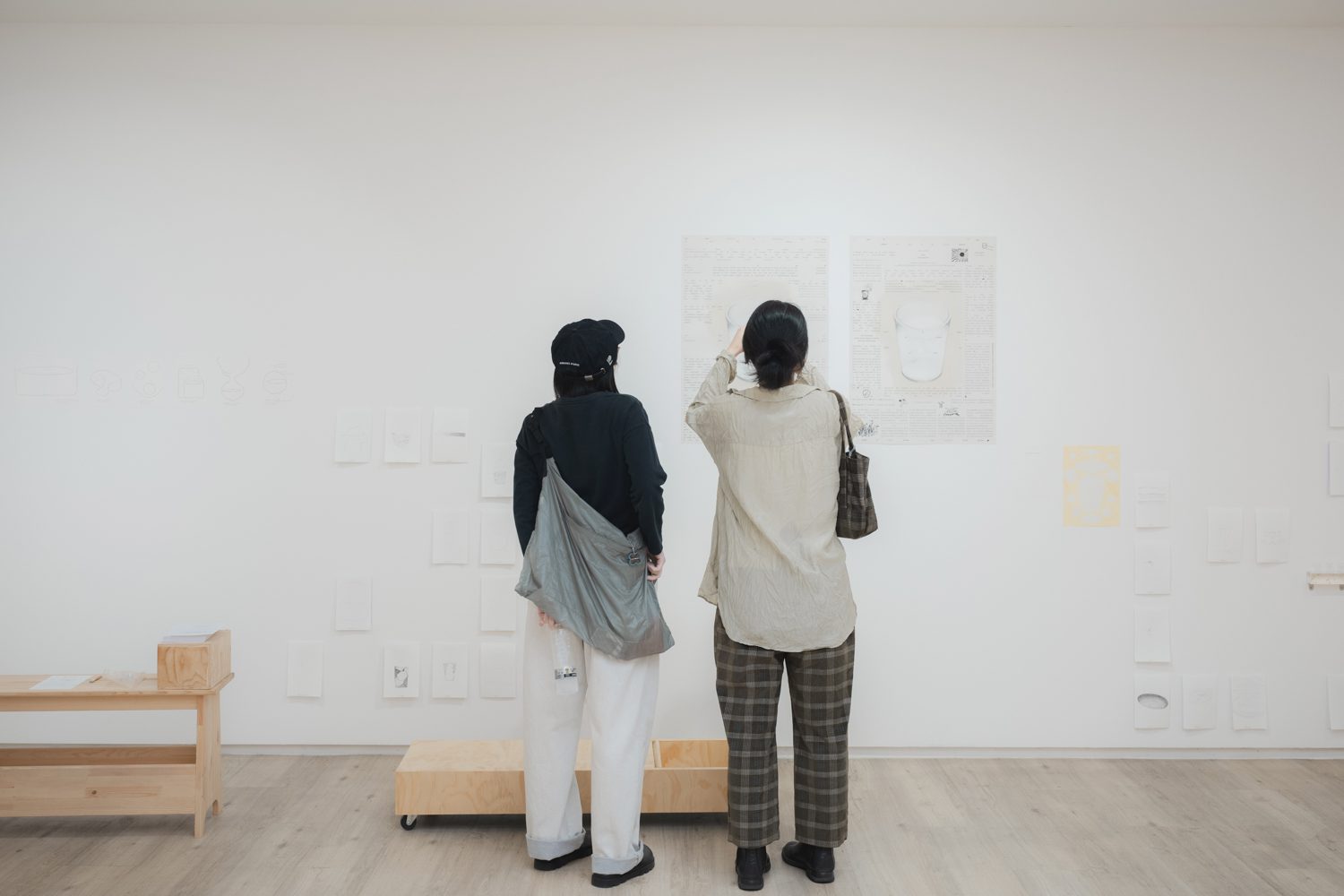
Along the length of this elongated hall, we also encounter other ‘streams’ of water through Benjarat’s drawings. These works originate from the questionnaires that have long served as one of the tools in her NAM-SAI project. For Steam Stream, she turns to people’s personal attachments to water through their nicknames, names such as Nam or Num, both meaning ‘water’; Namcha, or ‘tea’; Yard, meaning ‘droplet’; Fon, ‘rain’; Phayu, ‘storm’; and Saithan, ‘stream,’ transforming each completed questionnaire into drawings. Visitors are invited to pick them up and read them, absorbing the many stories of water contained within. At the same time, they may distill their own ‘water,’ drawn sincerely from memory, and write it into Benjarat’s current set of questionnaires. As the artist shares with us, everyone’s ‘water data’ and ‘water recipes’ will certainly continue to evolve further as part of the project’s future iterations.
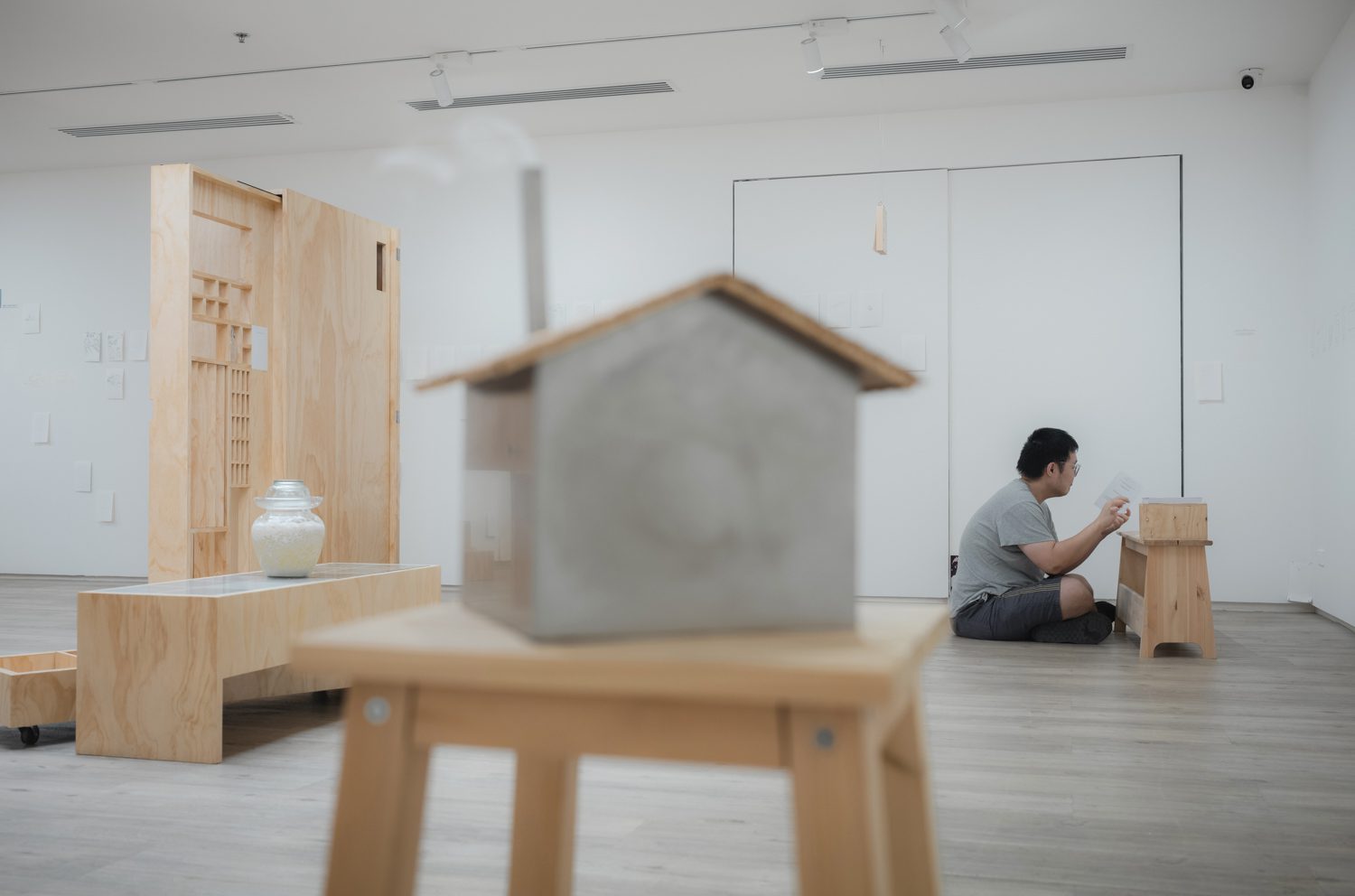
By the time we arrive at the exhibition’s exit, which is also its entrance, we may find ourselves thinking about the back-and-forth movement of water through its various states. There is the water in the works, drawn from other people’s memories, alongside the water held within our own. In this, the exhibition reflects on the significance of water as something far more than liquid. It is an element woven into every dimension of life, from ecology to the deep roots of culture, and even to memory itself.
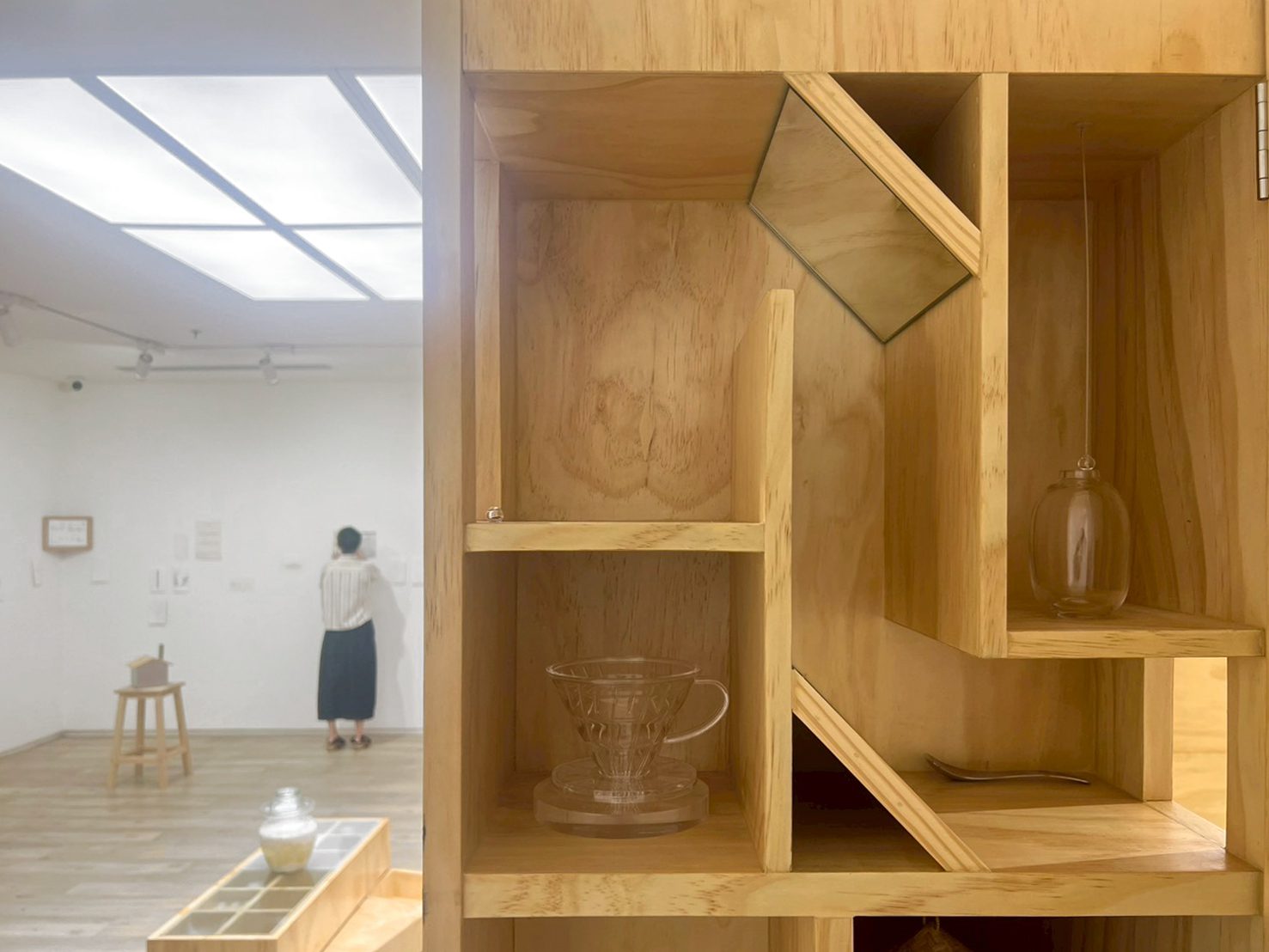
Photo: Sarunkorn Arthan
Steam Stream, created by Benjarat Aiemrat and co-curated by Pearamon Tulavardhana, is currently on view at MMAD Gallery (Room 4, 2nd Floor), MunMun Srinakarin, Seacon Square Srinakarin, from 7 May to 21 June 2026.
_
Co-Creations:
Studio hand – Chanintorn Polsomboon (ARCHITECT) and Varissara Karavanich (INTERIOR DESIGNER) in collaboration with CARPENTER
Nanuanchun (FARMER & SATO MAKER)
Danittha Limakaraungkul (TEA CURATOR)
Phantipa Thanchookiet (CRAFTSMAN) in collaboration with Kozo Studio (PAPER MAKER)
Nuttapong Daovichitr (MAKER)
Ruangsak Anuwatwimon (DOOMSDAY COLLECTOR & ARTIST)
Witsara Intharat (SOUND COLLECTOR & LISTENER)
Romrawin Pipatnudda (DOPPELGÄNGER and INVENTOR)
Natkritta Narapornpipath (FACILITATOR)
Nattapol Rojjanarattanangkool (OBSERVER & COMMUNICATION DESIGNER)
Peerapat Wimolrungkarat (WALKER & LEICA AMBASSADOR THAILAND)
Co-Curation (As Anonymous Anomaly):
Pearamon Tulavardhana
Creator (As Circumstance):
Benjarat Aiemrat