
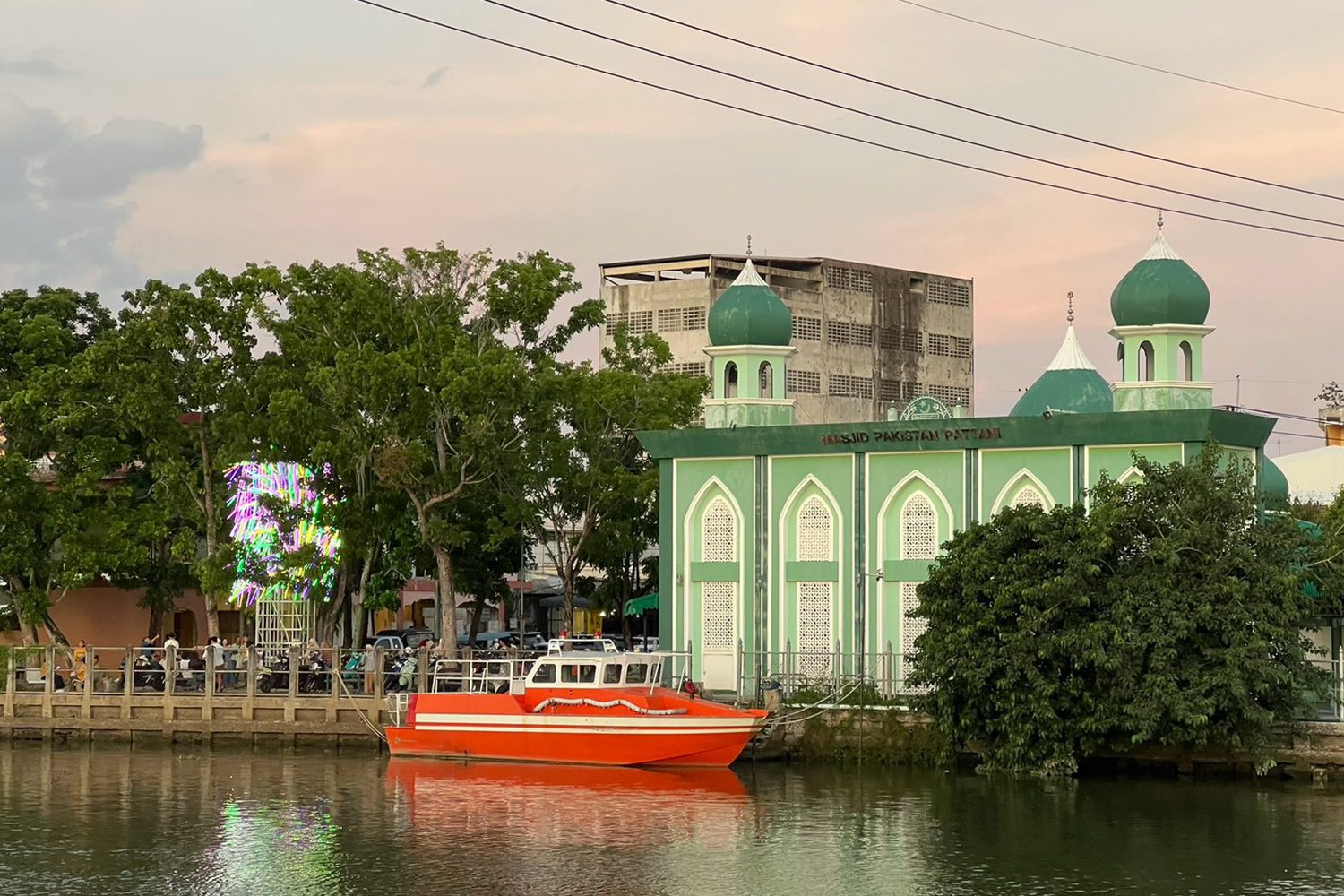
 Photo: Sarunkorn Arthan
 EXPLORE 6 WORKS AT PATTANI DECODED 2026 THAT TELL THE STORIES OF THE PEOPLE OF PATTANI THROUGH DESIGN, CONNECTING THE RIVER, PEOPLE, MEMORIES, AND CULTURE WITH CONTEMPORARY PERSPECTIVES
TEXT: SARUNKORN ARTHAN
PHOTO COURTESY OF CREATIVE ECONOMY AGENCY EXCEPT AS NOTED
(For Thai, press here)
When we speak of ‘decentralization’ in political terms, the conversation usually turns to structures of governance, administration, or the distribution of public resources to local authorities. Yet over the past few years, another form of decentralization has been unfolding across Thailand’s cultural and social landscape, as design increasingly moves beyond the gravitational pull of the capital. In a world where geographic boundaries carry less weight than they once did, creative practice no longer needs to be anchored in, or defined by, major urban centers such as Bangkok.
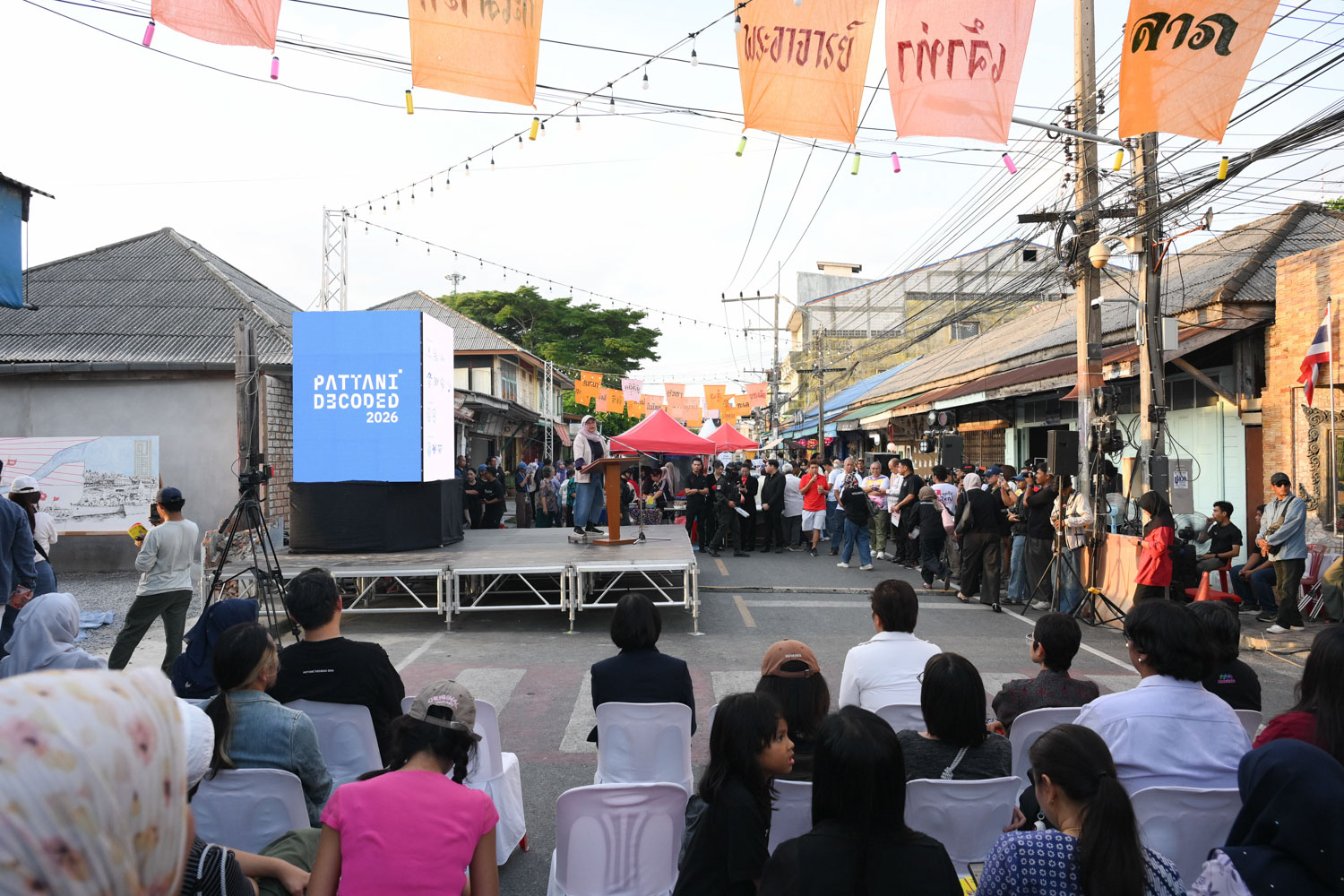
Creative energy is taking shape across the country, with distinct voices emerging from places once peripheral to Thailand’s mainstream design discourse. This is particularly evident in the three southern border provinces, where a new generation of designers and communities, both within Pattani and beyond, has steadily demonstrated the role design can play in shaping urban life and steering a city’s future. Practitioners from varied backgrounds have begun to challenge entrenched perceptions of the region, drawing on cultural resources accumulated over layers of history to open new conversations articulated from within the place itself. This gradually intensifying movement has, in turn, laid the groundwork for Pattani Decoded 2026, known in Thai as Pattani Dee Kod.
The name itself rewards a closer look. Dee kod plays on an emphatic colloquial expression loosely meaning ‘damn good,’ an affectionate nod to a city distinguished by its cultural inheritance, food, warmth, and distinctive diversity. Yet many of these qualities remain waiting to be ‘decoded’: reinterpreted as resources for contemporary creative practice and made tangible in the life of the city. This year, the festival turns its attention to one of Pattani’s most enduring presences: the Pattani River. Under the theme ‘Riversation,’ the old town and its riverside communities become the terrain for a renewed dialogue between people and the waterway that has sustained, connected, and shaped the city for generations.
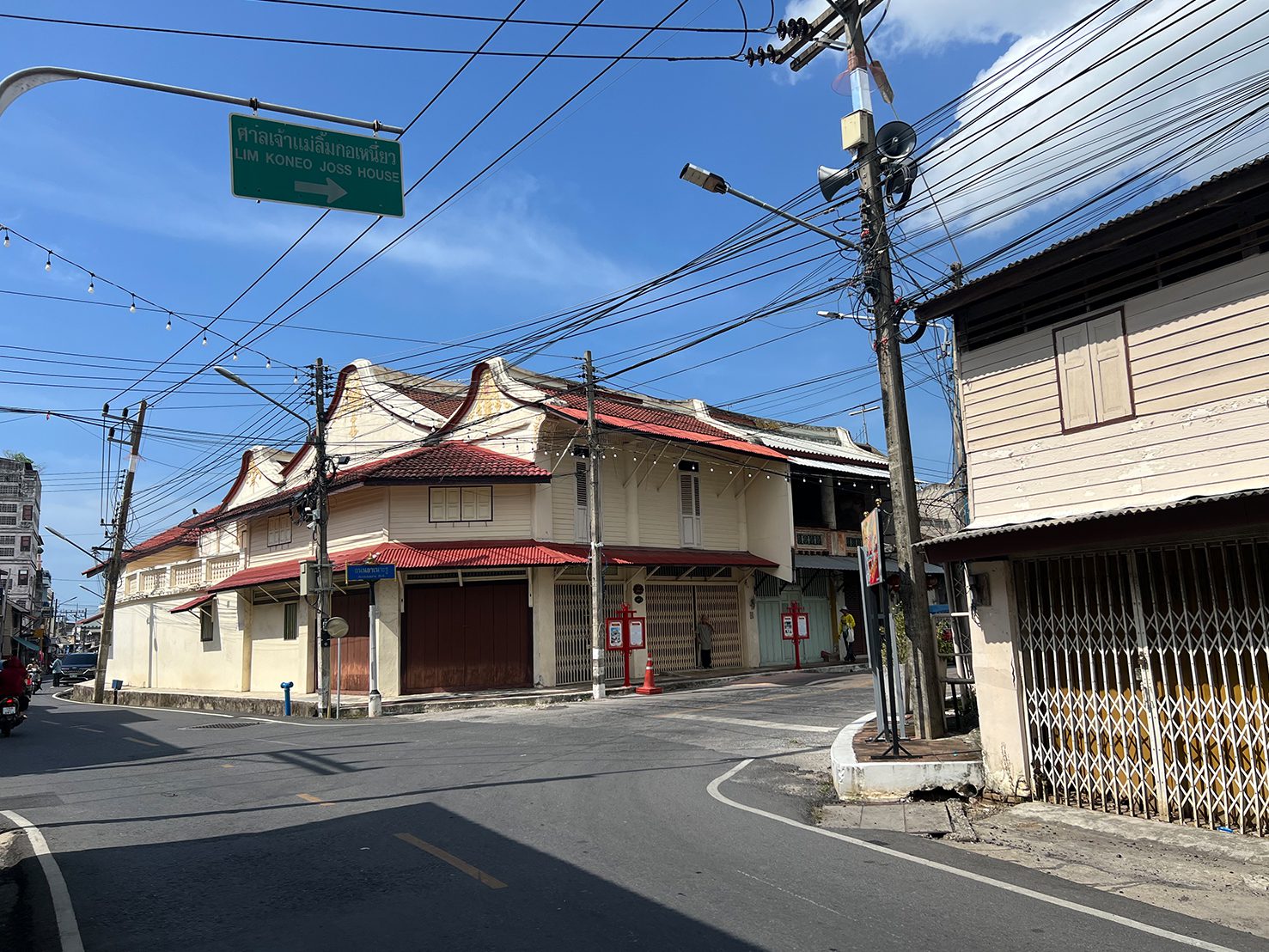 Photo: Sarunkorn Arthan
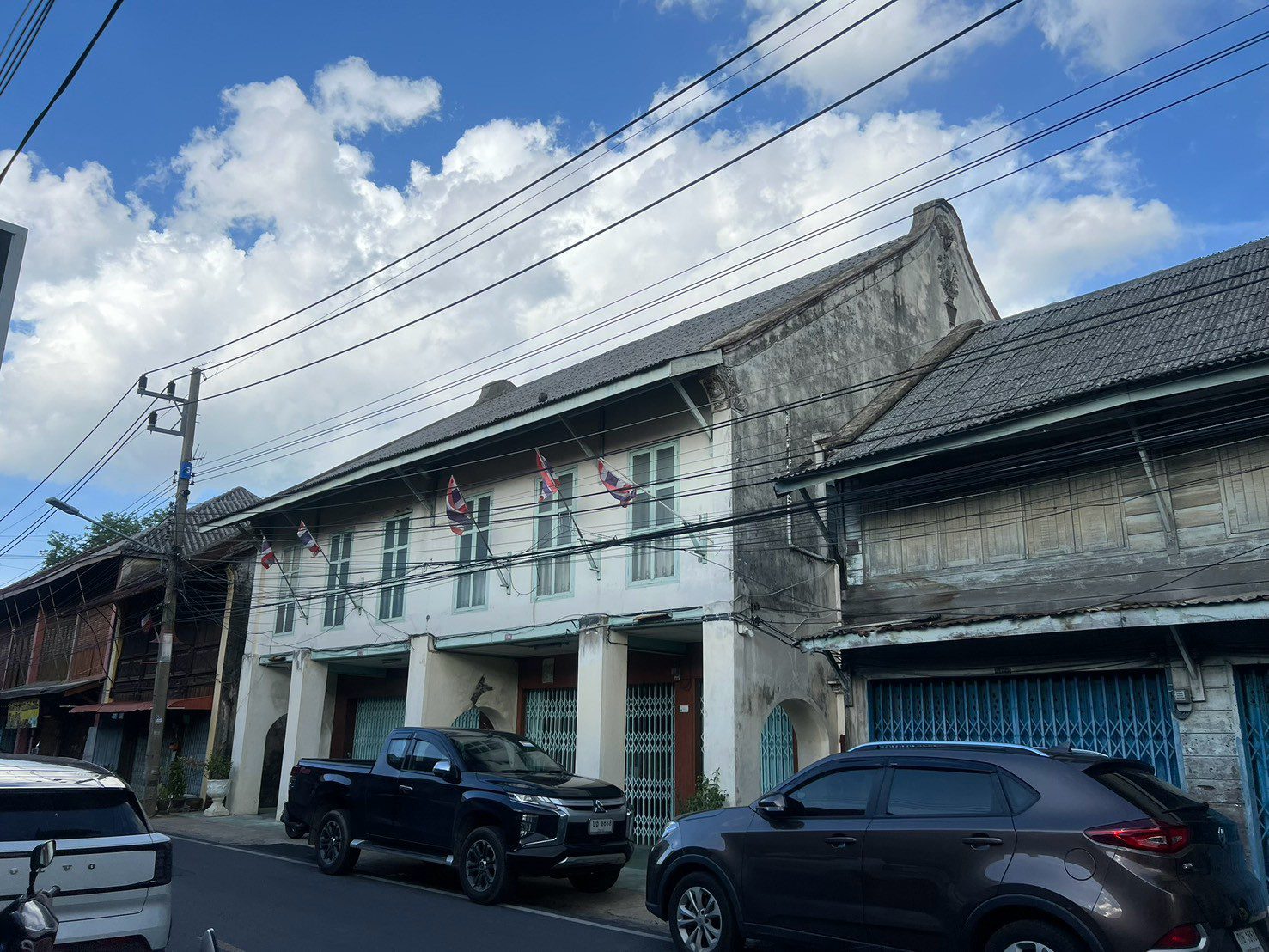
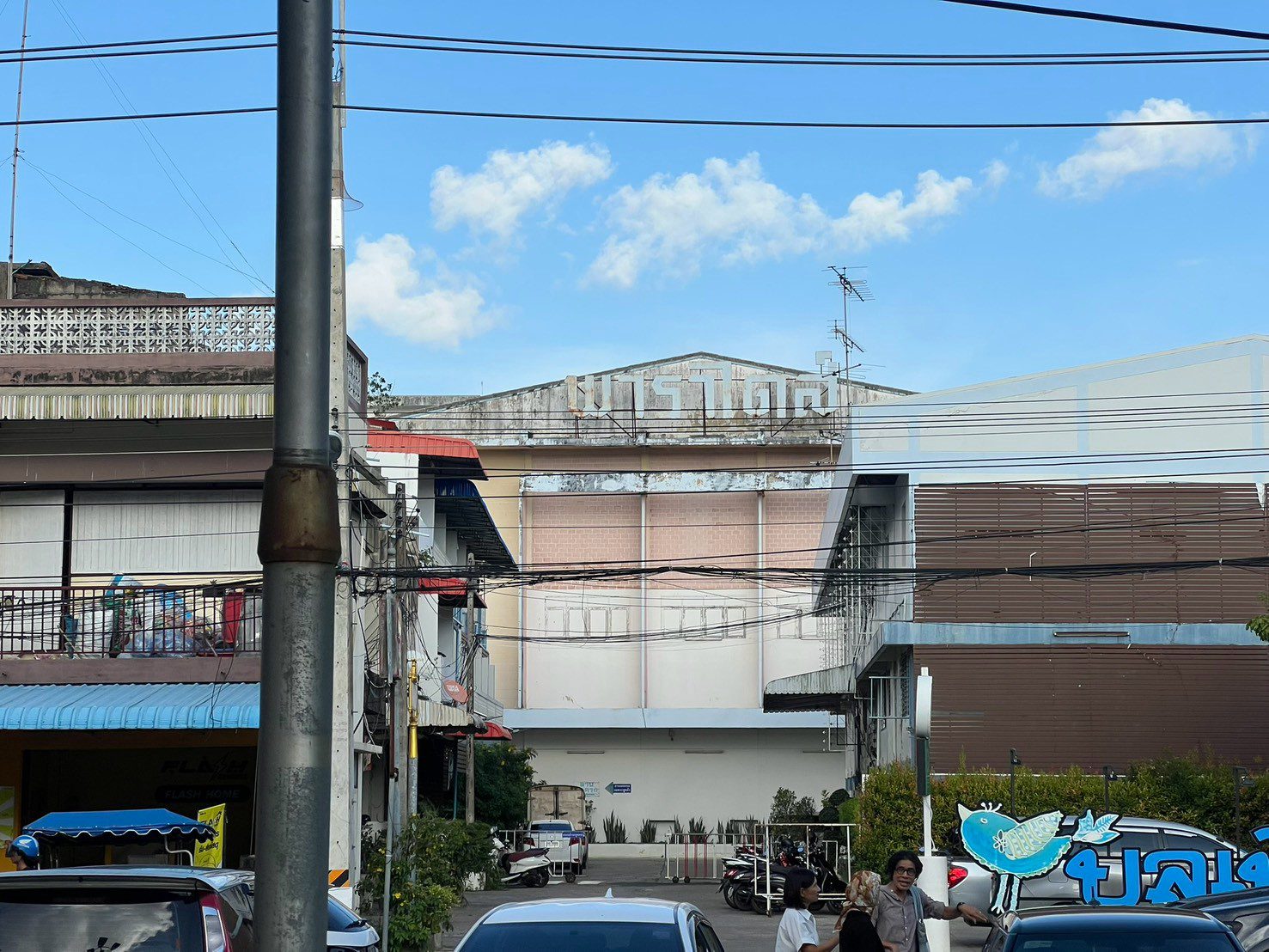
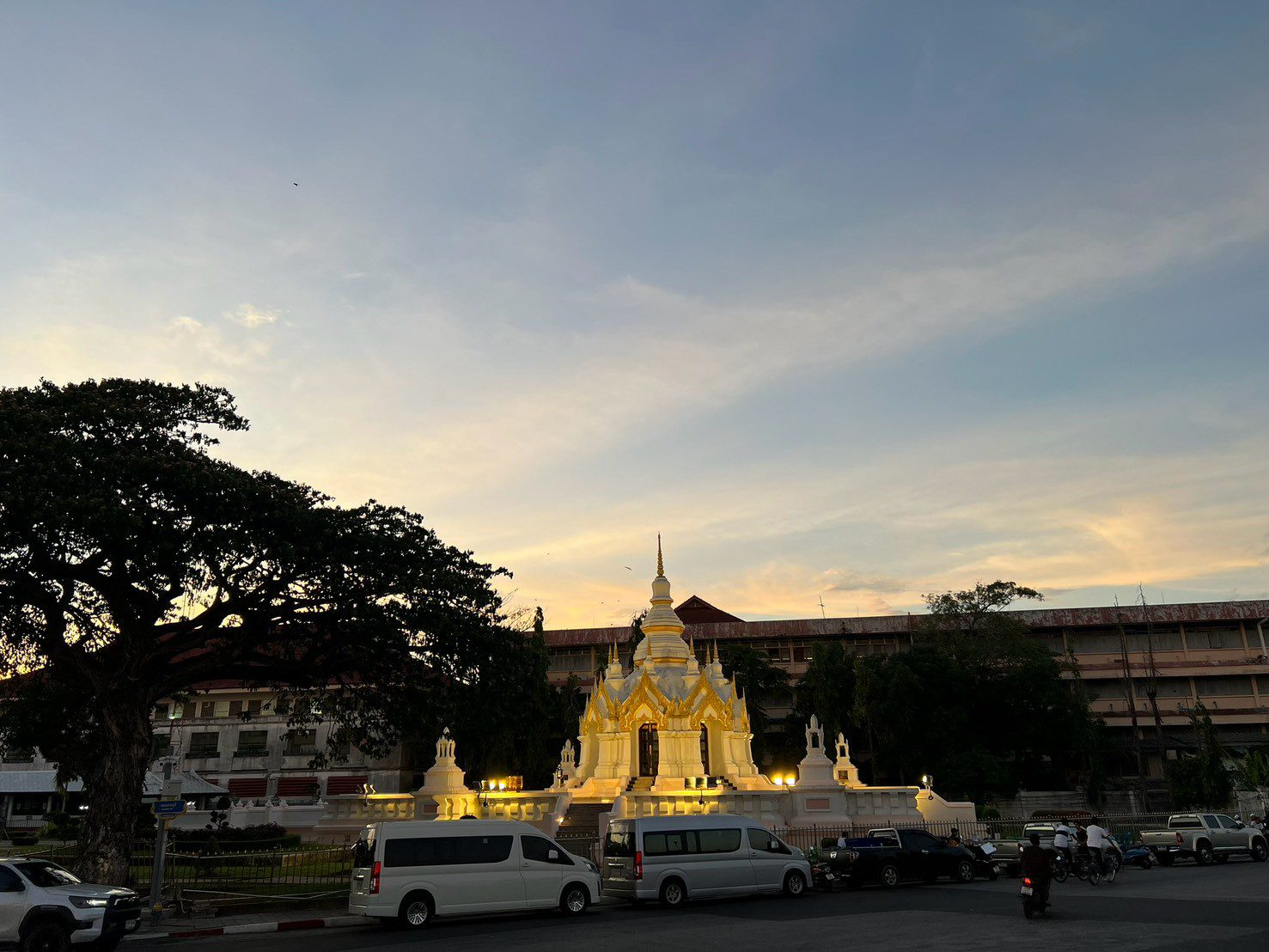
‘Riversation,’ a portmanteau of river and conversation, lies at the heart of this year’s festival. It asks us to listen again, and to begin asking questions about the Pattani River itself: the great waterway that has long functioned as the city’s lifeline, sustaining its people, carrying its history, and shaping its spirit. More than a physical presence, the river has become a cultural space in which communities of different faiths and backgrounds, including Thai Buddhists, Muslims, and Thai-Chinese residents of the old town, have grown alongside one another through generations of coexistence and mutual dependence. This revived conversation with the river unfolds through design processes embedded directly within the lived conditions of its banks. By working with the sites themselves, the festival draws out the ‘voices’ of riverside communities, memories that have slipped from view, and everyday ways of life that continue to animate the water’s edge. These fragments are then recast as a new set of codes through which Pattani can be read, allowing the city to be understood more deeply through the river that has shaped it.
Across the many sites and works presented at Pattani Decoded 2026, art4d has selected five projects that offer particularly resonant perspectives on memory, nature, and Pattani’s identity. Seen through the practices of local designers as well as collaborators from elsewhere, the works span three areas of Pattani’s old town: A-Rom-Di, whose name brings together syllables from three streets in the area: ‘A’ from Anoru Road, ‘Rom’ from Pattani Pirom Road, and ‘Di’ from Ruedi Road; Cabang Tiga; and Sabarang.
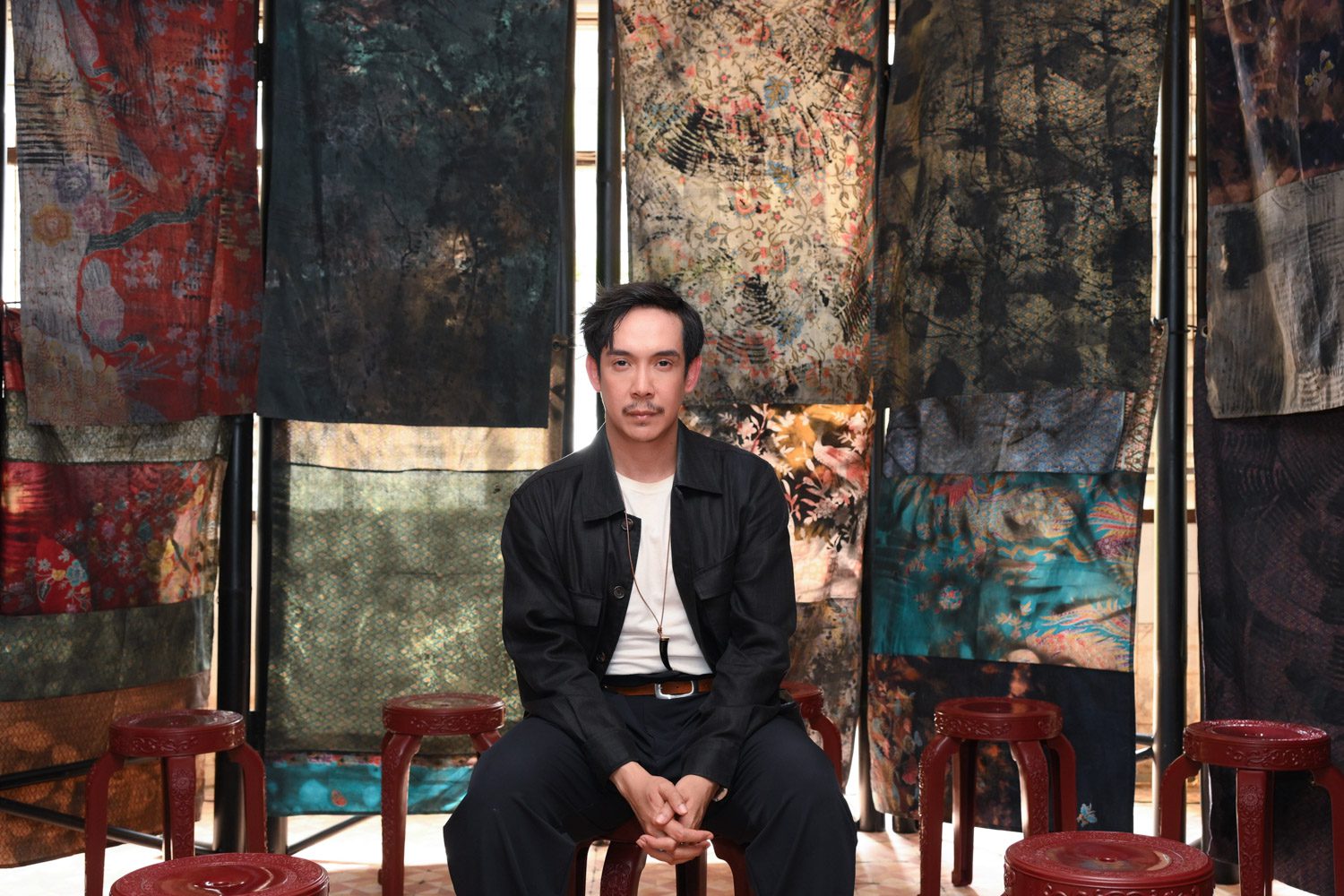
Charif Lona
The Missing Cannon
by Studio Act of Kindness
at Nayok Direk’s House, Pattani Pirom Road
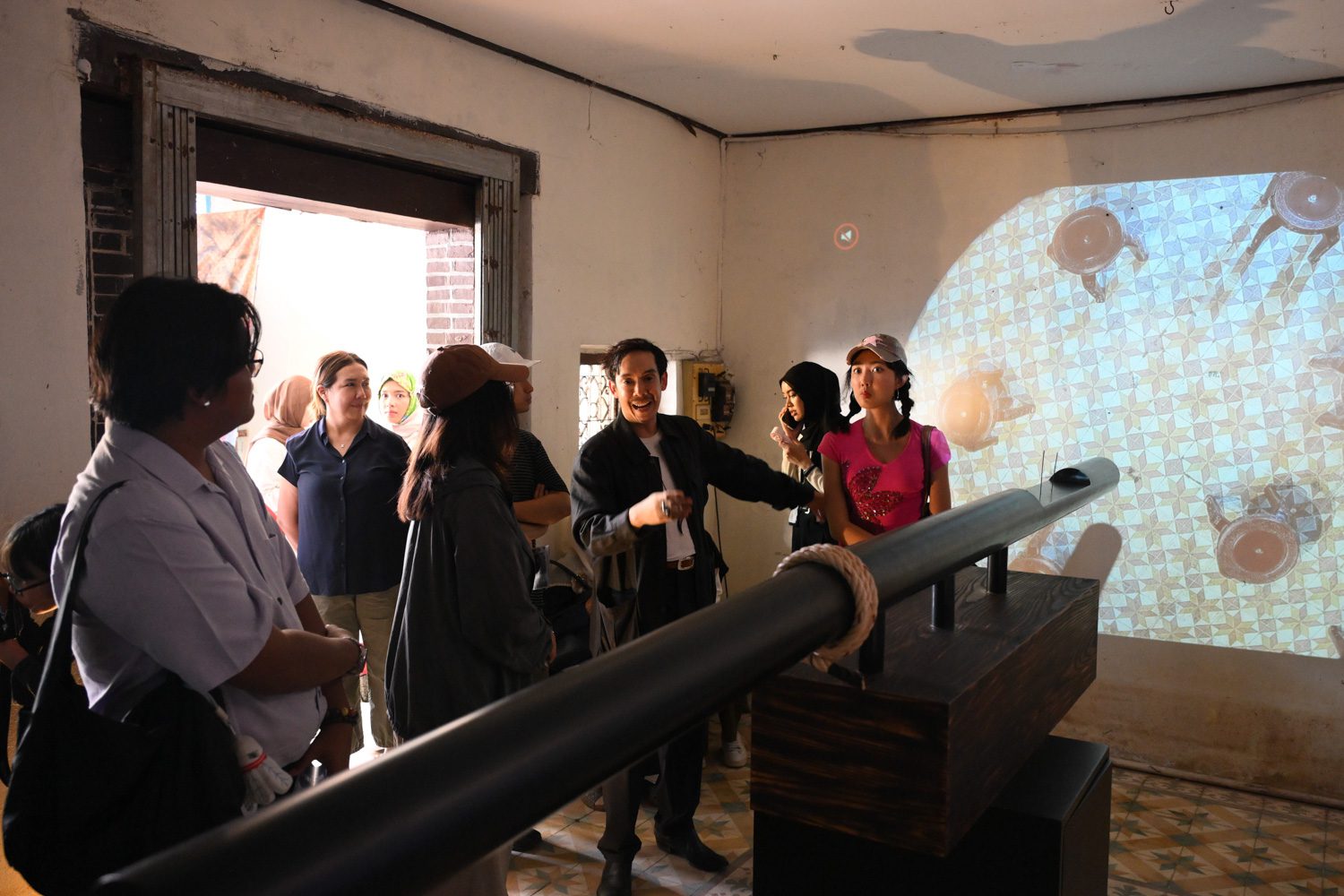
We meet Charif Lona, designer and founder of Studio Act of Kindness, who walks us through the spatial experience conceived for Nayok Direk’s House, a historic Chinese residence on Pattani Pirom Road that once belonged to Direk Kananurak, former mayor of Pattani City.
Charif begins with an old legend surrounding the disappearance of Maha Lela and Maha Nakara, two cannons belonging to the historic state of Patani that were said to have vanished beneath the water during the early Rattanakosin period. No one living today has actually seen the cannons themselves. Yet what surfaced through Charif’s conversations was not simply the story of a half-mythical object, but rather the voices of riverside communities that have been omitted, suppressed, or rendered silent within dominant historical narratives. Drawing on interviews with three residents from the Sabarang and Pattani Pirom neighborhoods, Charif interweaves their testimonies with the story of the missing cannons, translating them into a spatial experience that unfolds across three successive scenes.
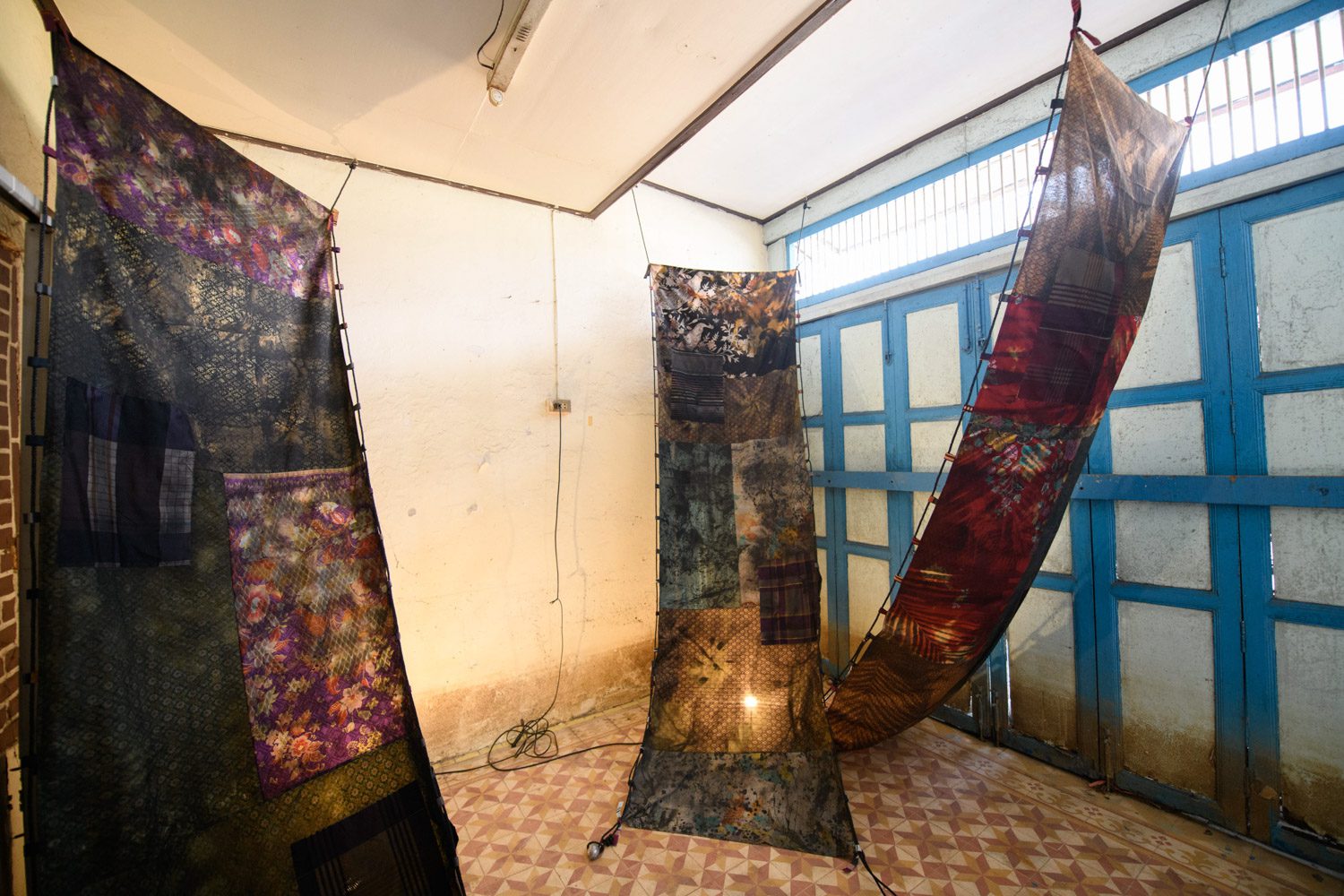 Patching Memories
Awakening Voices
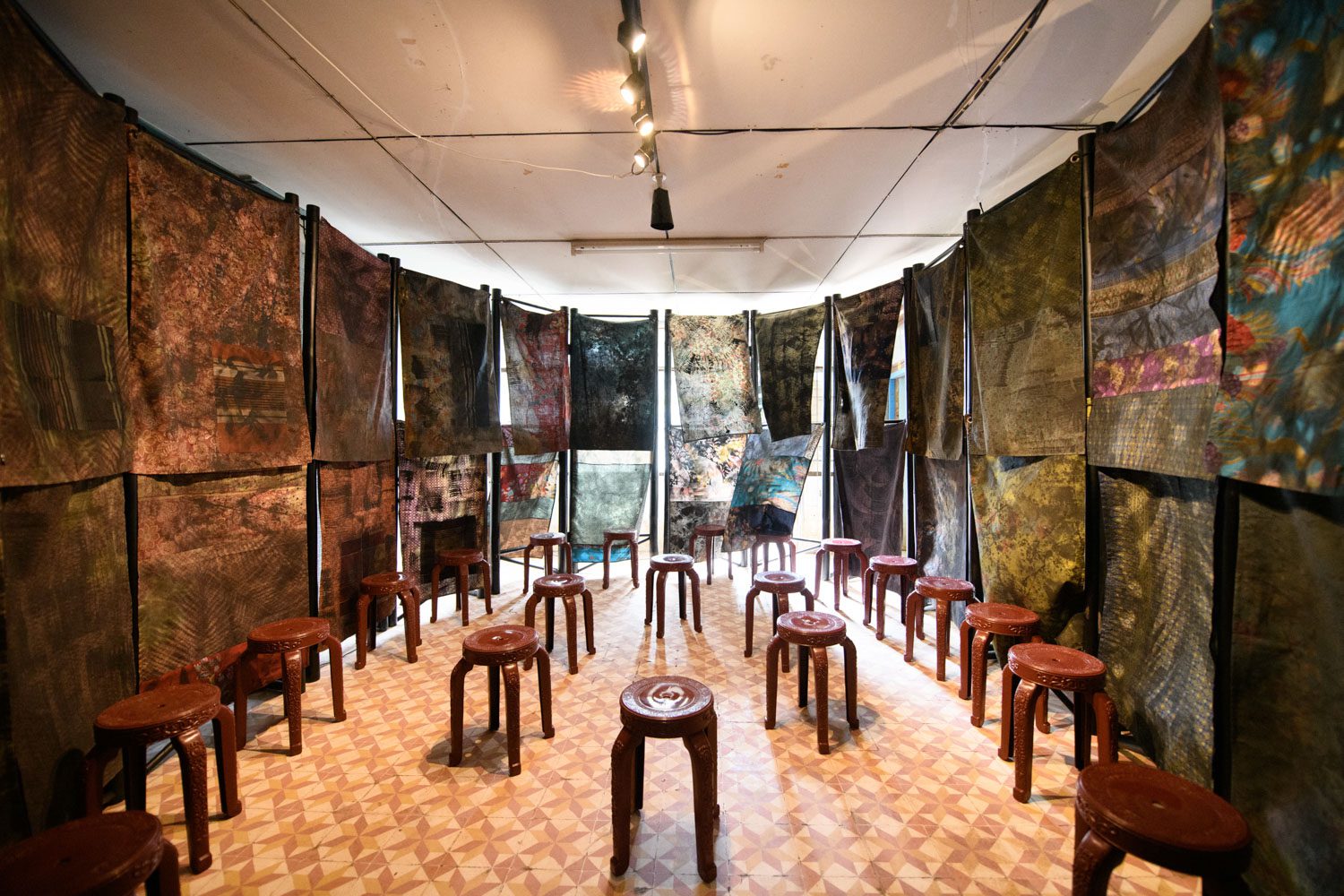
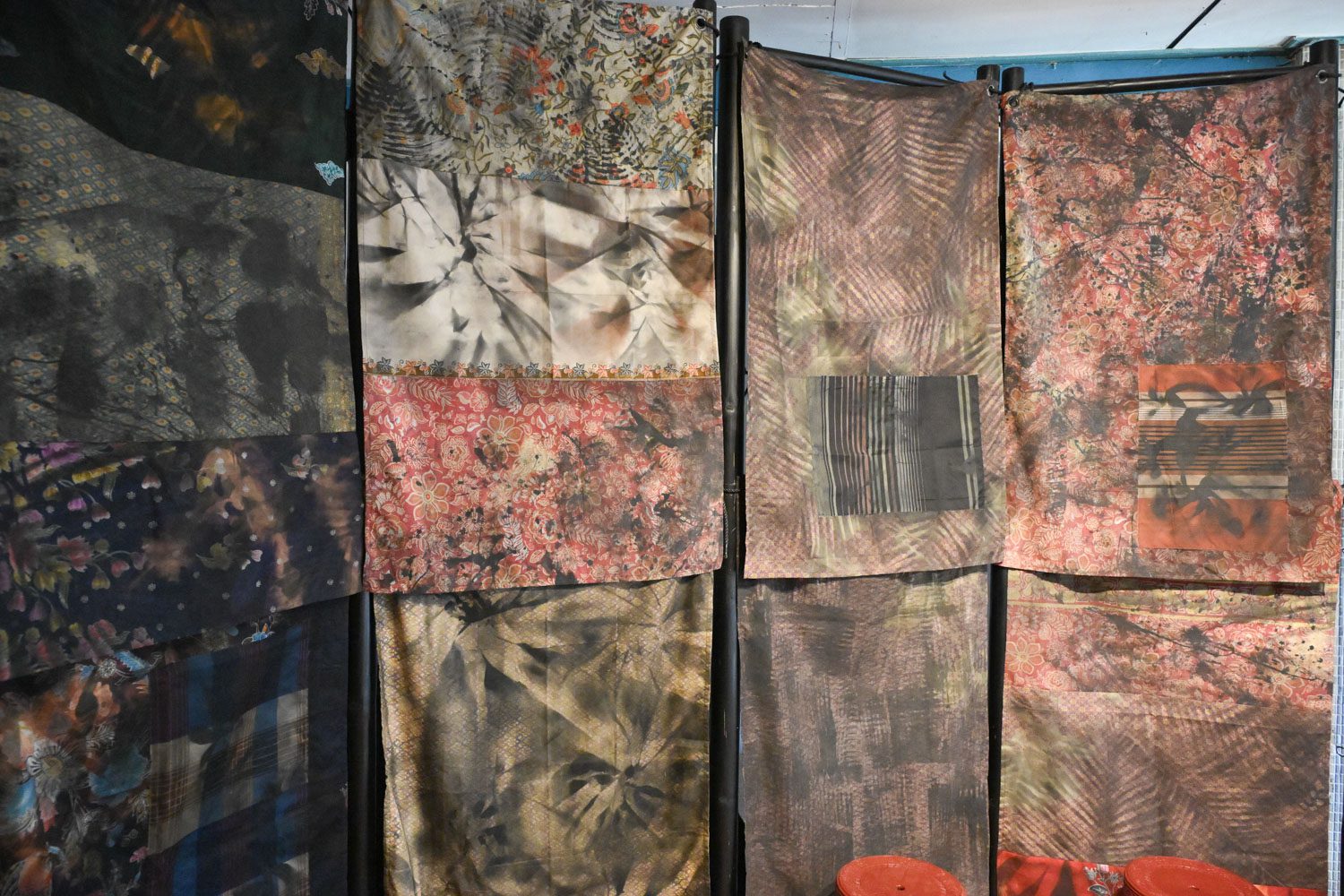
The first, ‘Patching Memories,’ gathers fragments of Pattani’s collective memory through sarong textiles and objects associated with fishing. The second, ‘Echoes of Change,’ centers on a sculptural evocation of the cannon: an elongated black barrel that prompts questions about what has been carried forward through time, from its imagined appearance and ornamentation to the forms it assumes in memory, and the place those memories hold in the lives of Pattani’s riverside communities. The final space, ‘Awakening Voices,’ is enclosed in fabric and lined with chairs, creating a setting in which visitors can exchange memories of their own. Its apparent sense of refuge, however, is unsettled by the presence of surveillance cameras trained on the space, extending the work into a pointed reflection on what safety means for communities in Thailand’s three southern border provinces when everyday life remains subject to the gaze of the state.
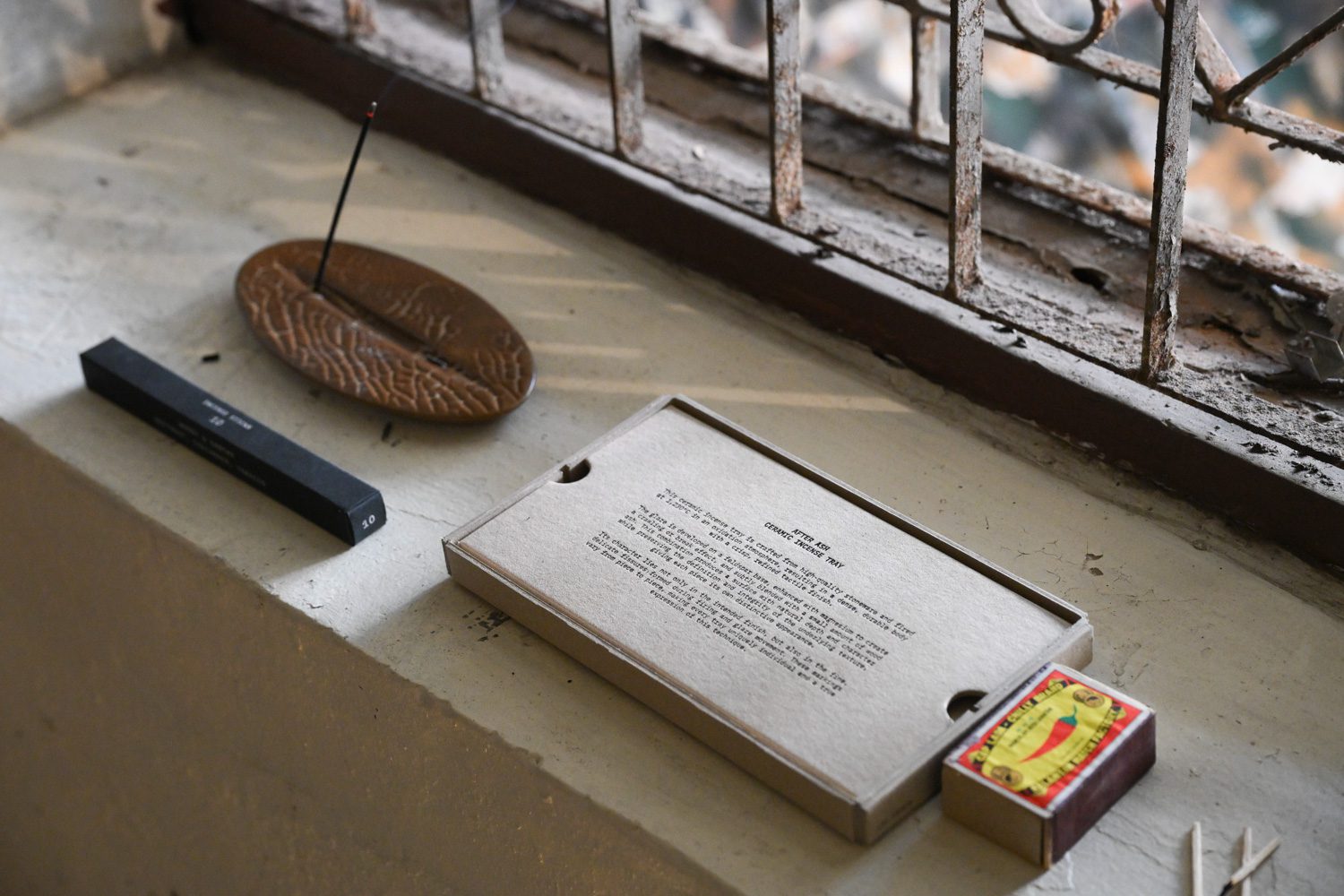
Studio Act of Kindness further deepens the work’s emotional register through a collaboration with Copenn., a fragrance brand invited to distill ‘riverside memories’ into a distinct scent for each space. In the third room, for instance, citrus notes mingle with sweet florals, recalling fragrances familiar to Pattani’s local Chinese community. Scent becomes another vessel for memory: intimate and involuntary, drawing personal recollections to the surface while deepening visitors’ connection to the cultural context of the place through a different sensory register.
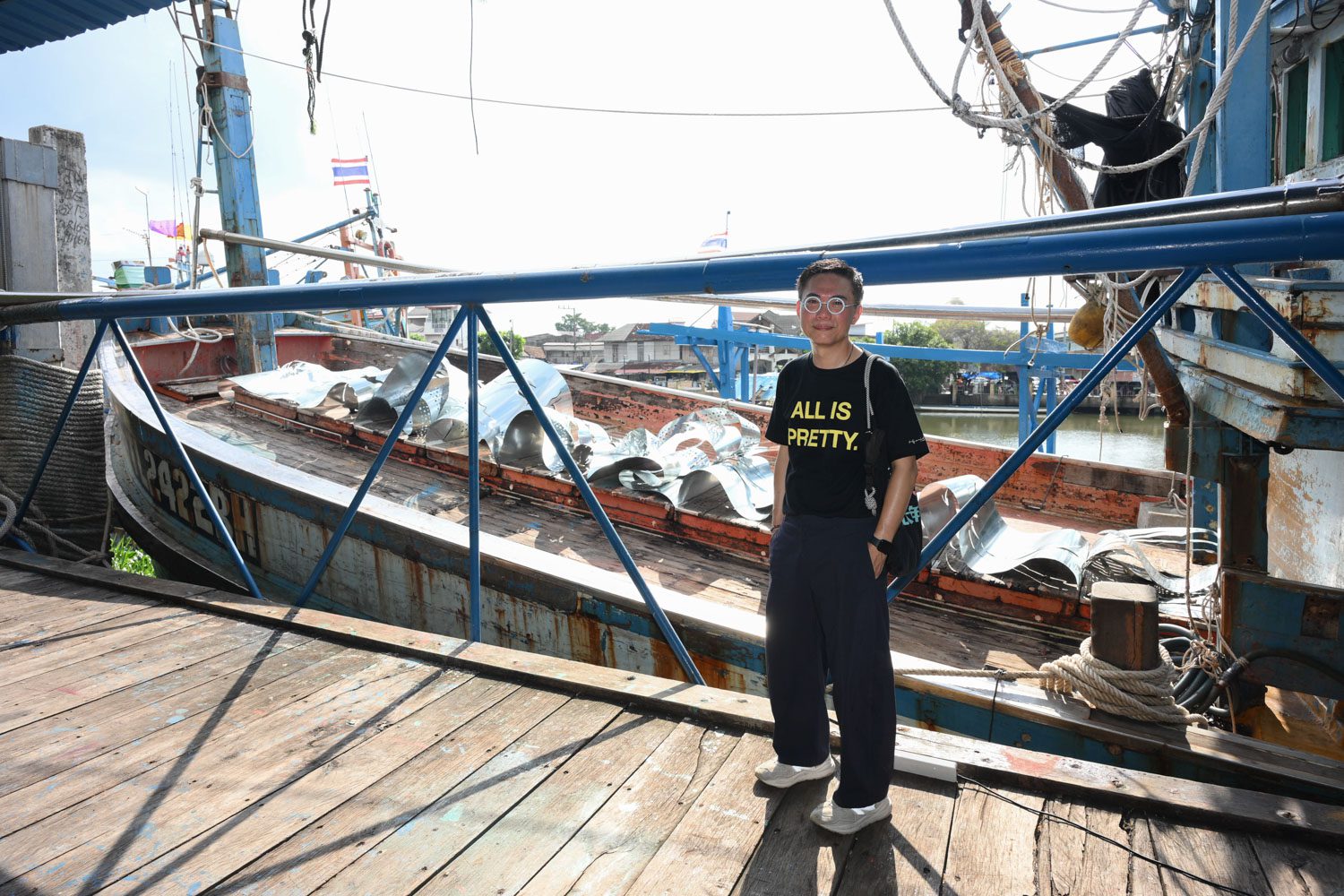
Santi Lawrachawee
(Another) Memory of Pattani Bay
by Santi Lawrachawee
at Pakdeeporn House (Tani Bay)
Pakdeeporn House occupies a substantial site along the Pattani waterfront and remains one of the few fishing piers in the area still in operation today. For generations, it has served at once as a place of work, shelter, habitation, and memory for the Pakdeeporn family and the fishing communities around it. This layered relationship to place perhaps forms the point of departure for Santi Lawrachawee’s reading of ‘another’ memory of Pattani Bay, one that looks beyond distant histories of conflict between states or the recurring politics of maintaining ‘peace’ across the Malay region.
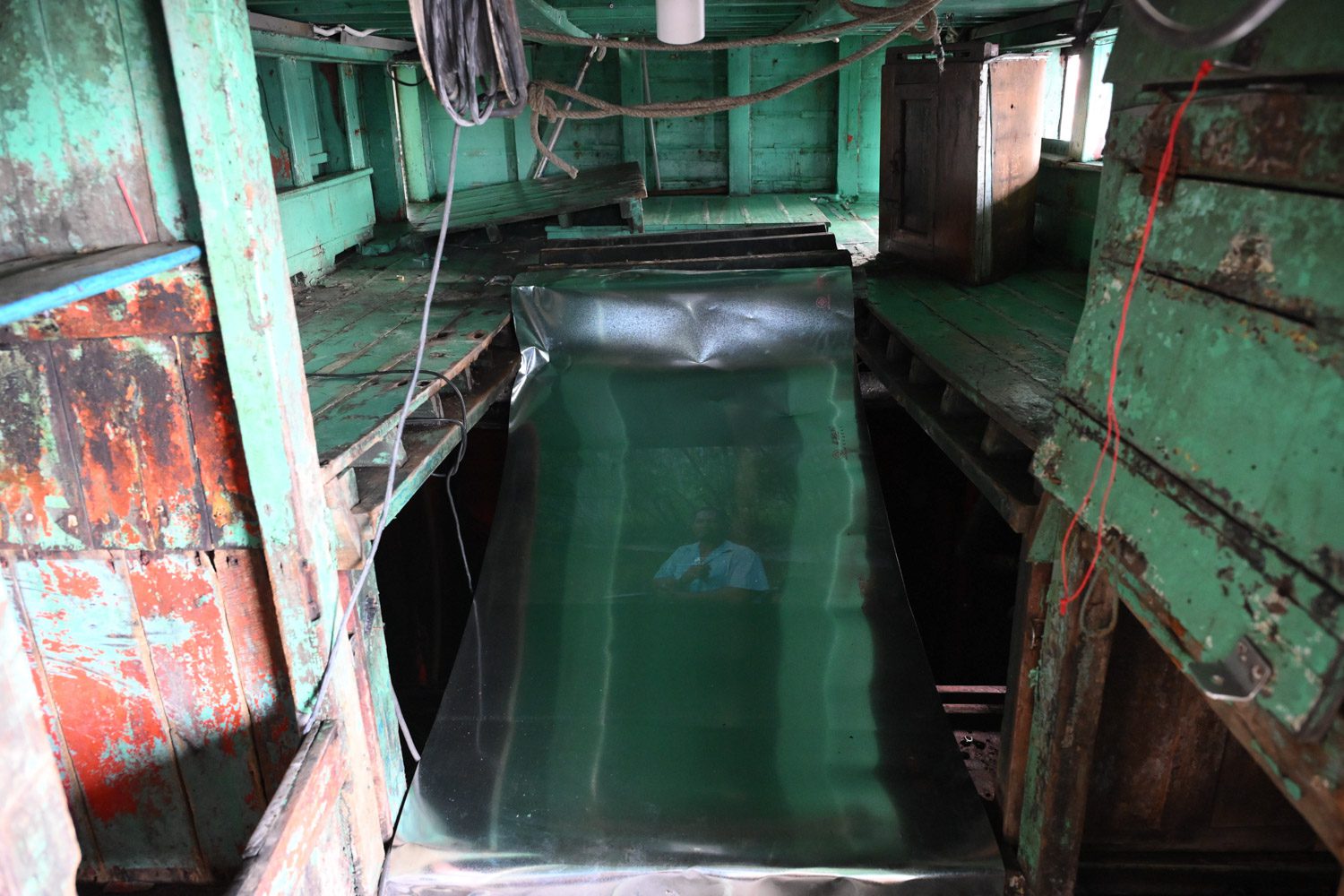
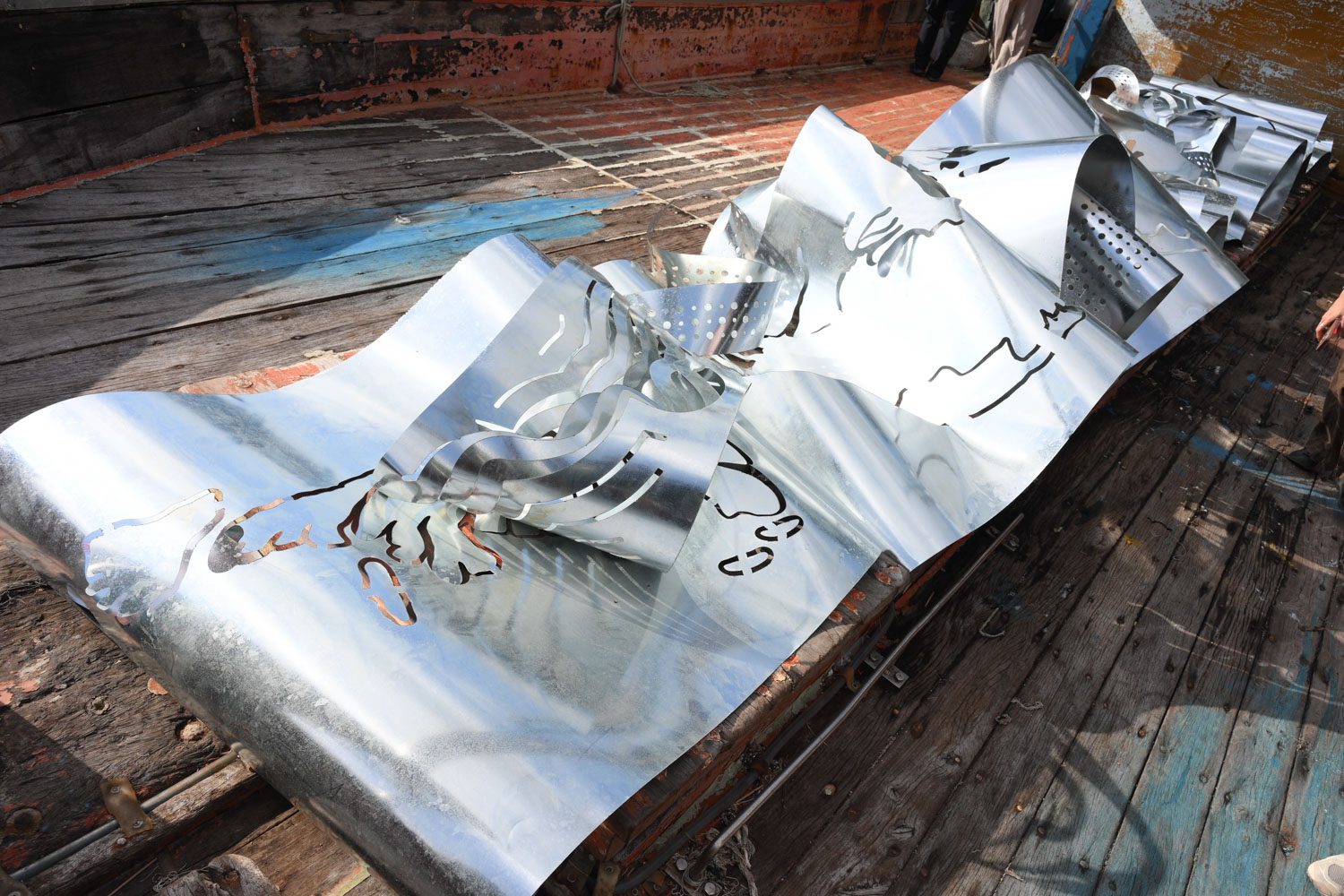
Santi’s work is installed aboard the largest fishing vessel still in active use at the site, temporarily brought back to shore for the duration of the festival. It comprises two parts. The first occupies the wheelhouse, where a film documenting fishing life around Pakdeeporn House and Pattani is projected onto a sheet of galvanized metal. The image becomes most legible in the late afternoon and early evening, a temporal condition that quietly echoes the rhythms of vessels setting out to sea. The second work, positioned on the upper deck, consists of sheets of galvanized metal cut and contorted into a series of irregular forms. Some retain a reflective sheen; others are marked by streaks and traces resembling water stains. This is the conceptual core of the installation. Santi derives the shapes by superimposing three maps from markedly different moments in time: a 16th- to 17th-century map of the Malay Peninsula; a map charting transformations in Pattani Bay by Doloh Chetae, a fisherman and local knowledge keeper from Yaring; and a contemporary GPS map defined by present-day cartographic precision, layered over one another and then cut into unfamiliar silhouettes.
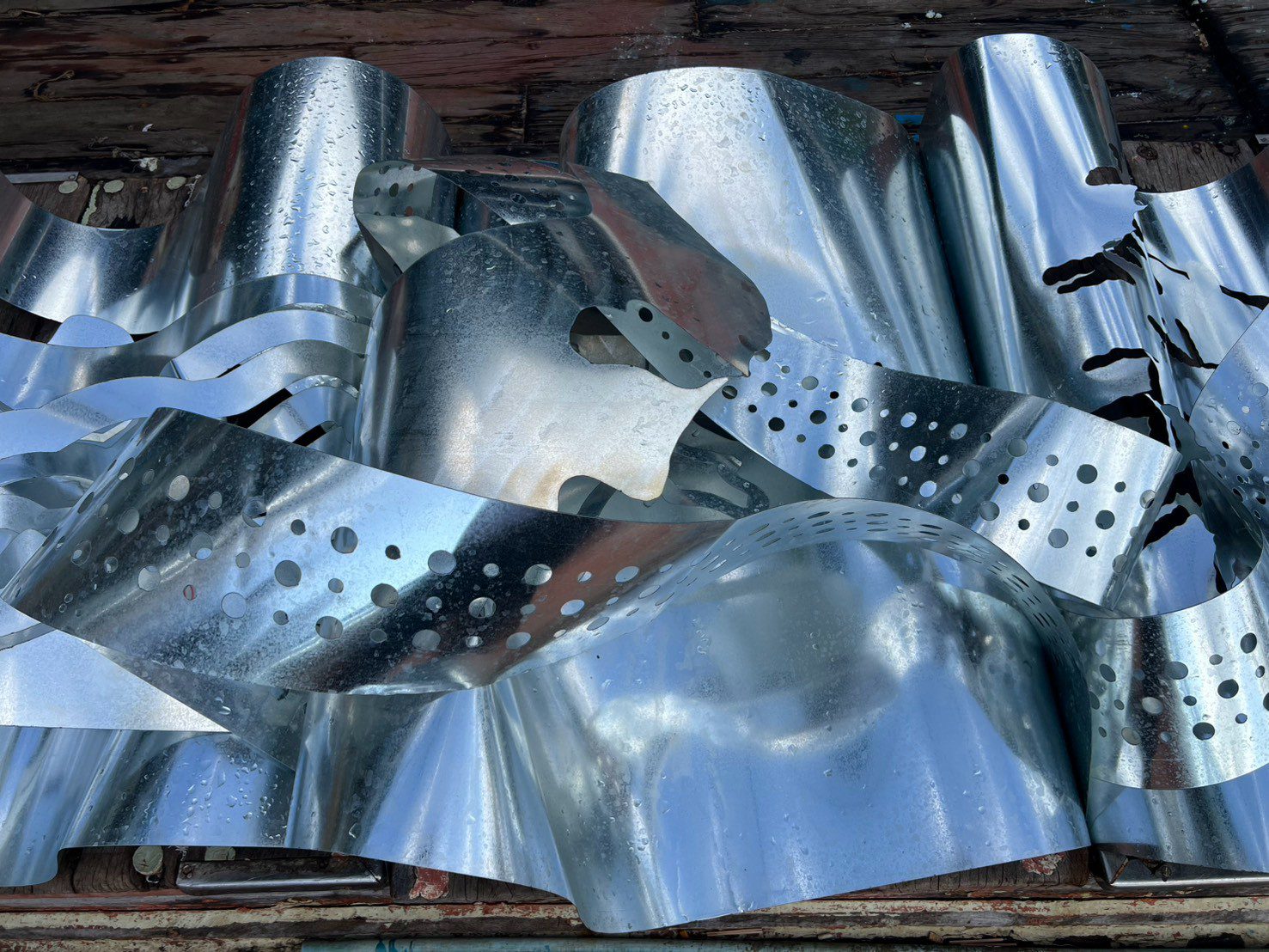 Photo: Sarunkorn Arthan
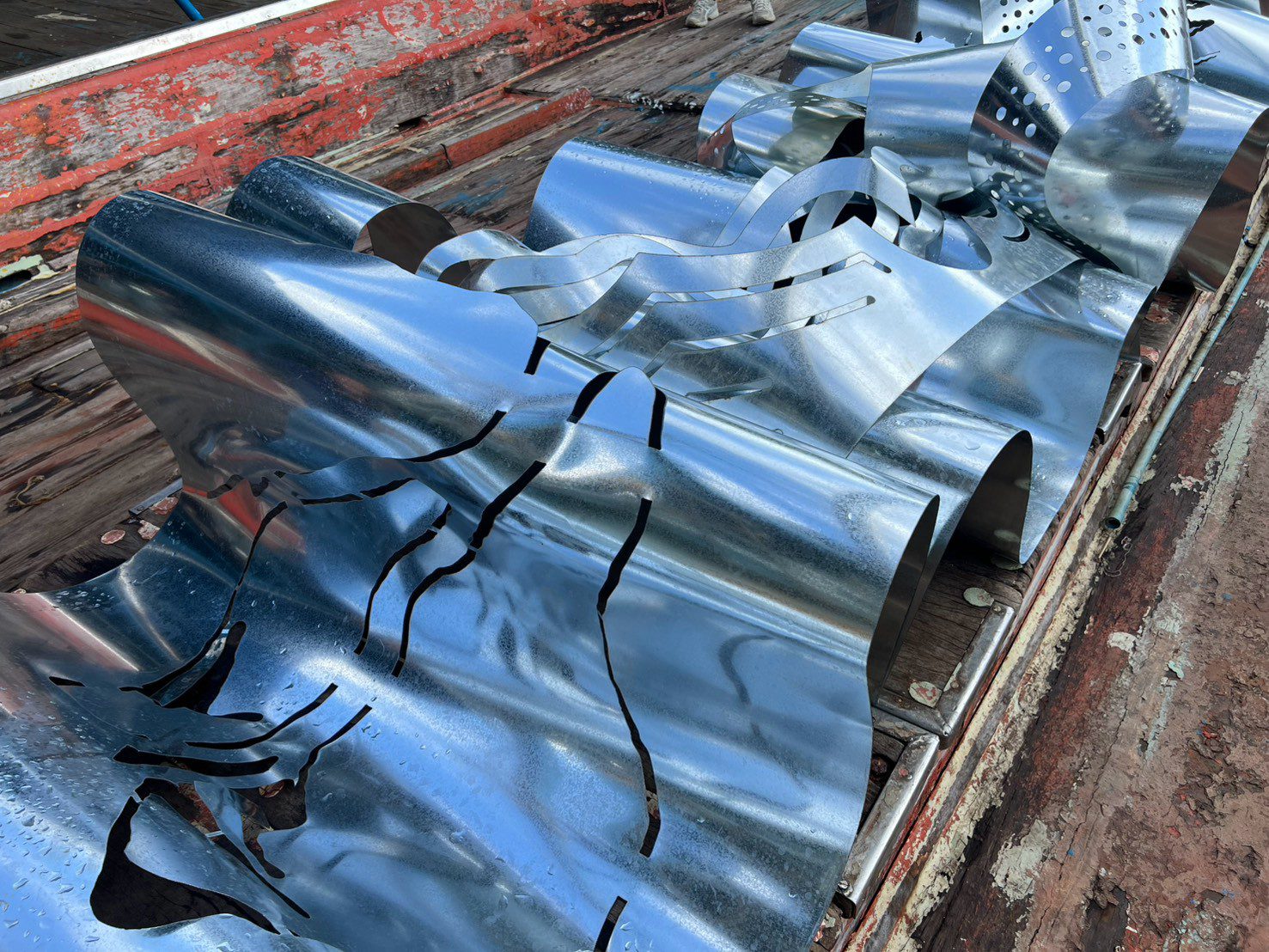
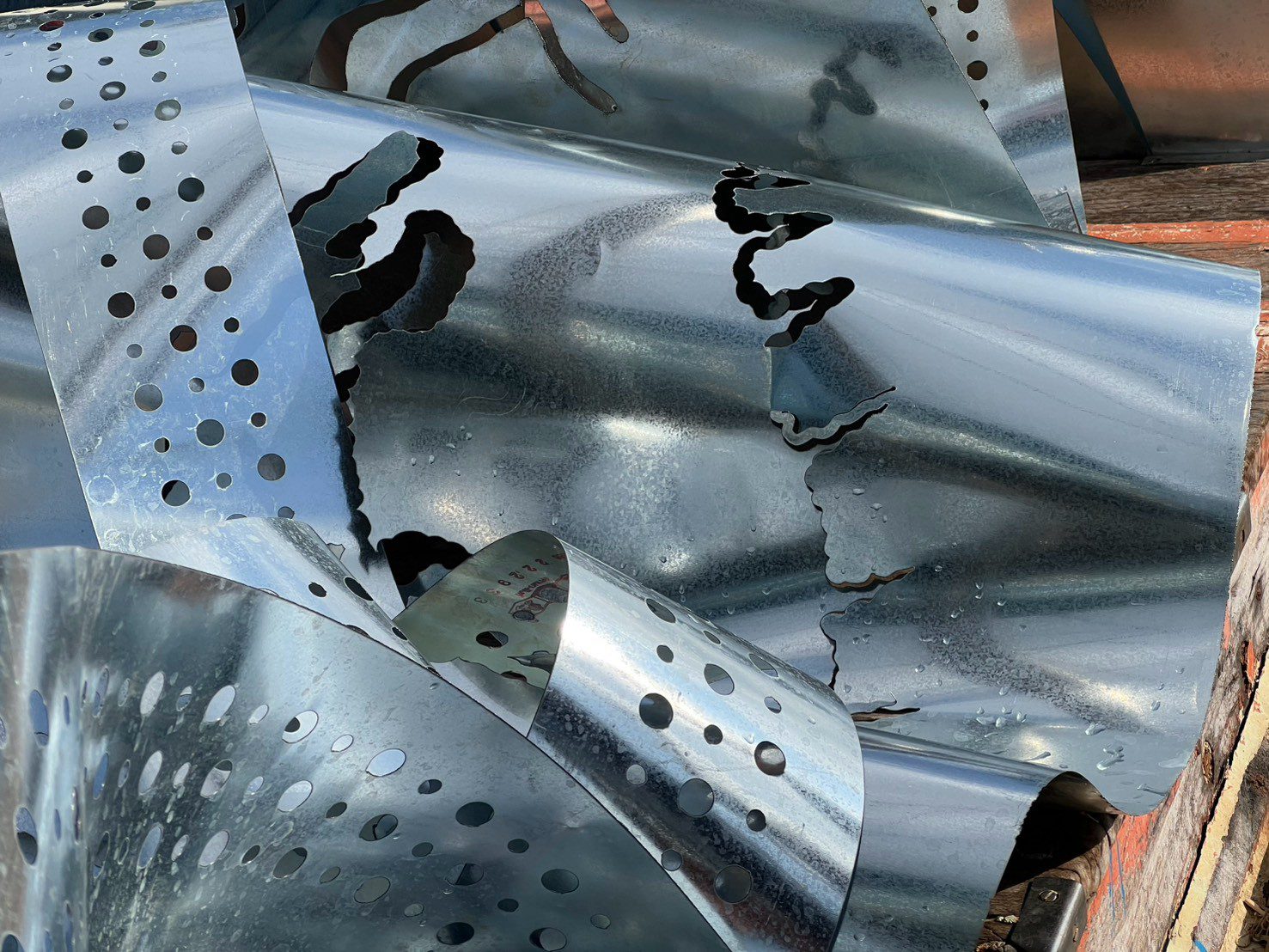
Photo: Sarunkorn Arthan
At the heart of Santi’s work is the idea of memory held within memory, refracted through human perception at different points in time and, like memory itself, never permanent or immutable. This sense of impermanence led him to galvanized metal, a material whose relative fragility allows it to echo the way memories gradually weather and fade. Because the installation is staged aboard a working vessel, the act of reaching it becomes part of the experience itself. Boarding can be precarious at low tide and considerably easier when the water rises, with visitors required to cross a long wooden plank whose angle shifts with the river’s level. The work is therefore encountered under conditions that are never quite the same. Arriving at different times, under changing light, wind, and tides, each visitor experiences and perceives the installation differently.
Kannikar Saengchan
RIVER PEOPLE: Lives Woven by the Pattani River
by Kannikar Saengchan and Anon Singthongla
at Sai Nam House
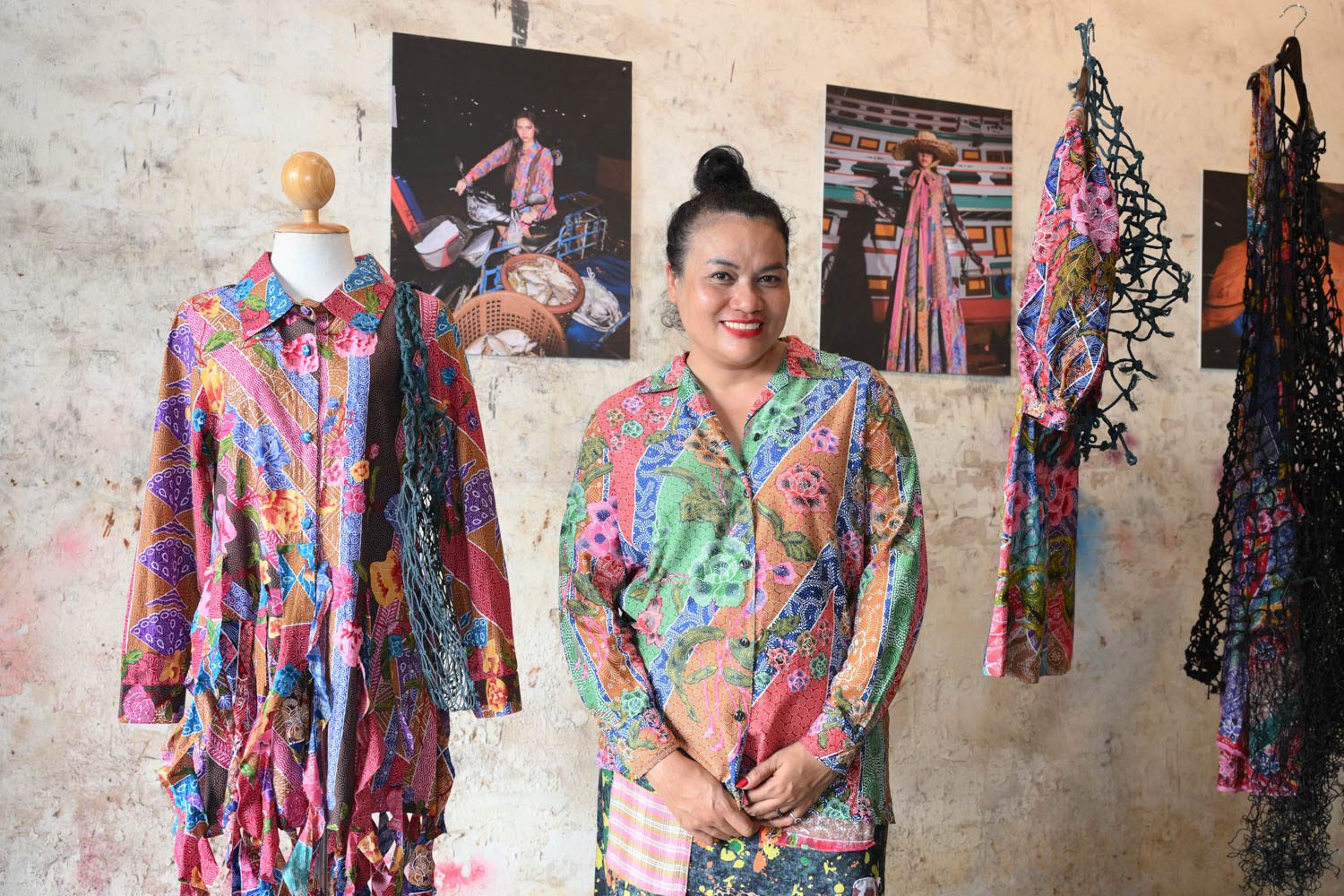
Kannikar Saengchan, founder of Made by Hotcake, develops a new sartorial language by decoding the ways of life along the Pattani River, a waterway that has long served as an economic artery, a site of faith, and a repository of history for communities of diverse cultural backgrounds. Her starting point is the overlooked residue of local fishing practices: discarded nets and cast nets, which she revives and invests with new value by cutting and sewing them alongside pateh cloth, a distinctive form of dress and a shared cultural inheritance among Buddhist and Muslim communities across the Malay Peninsula.
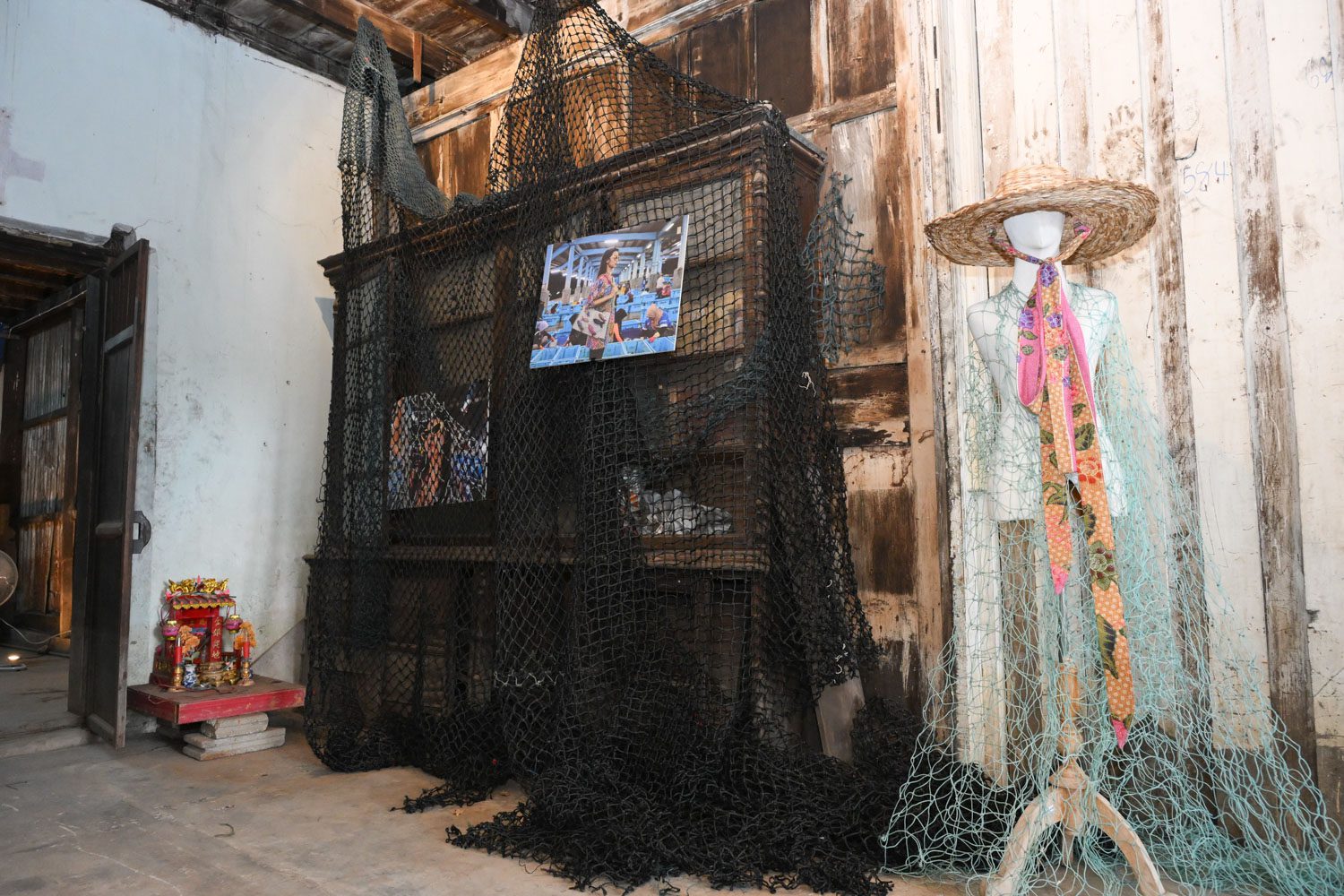
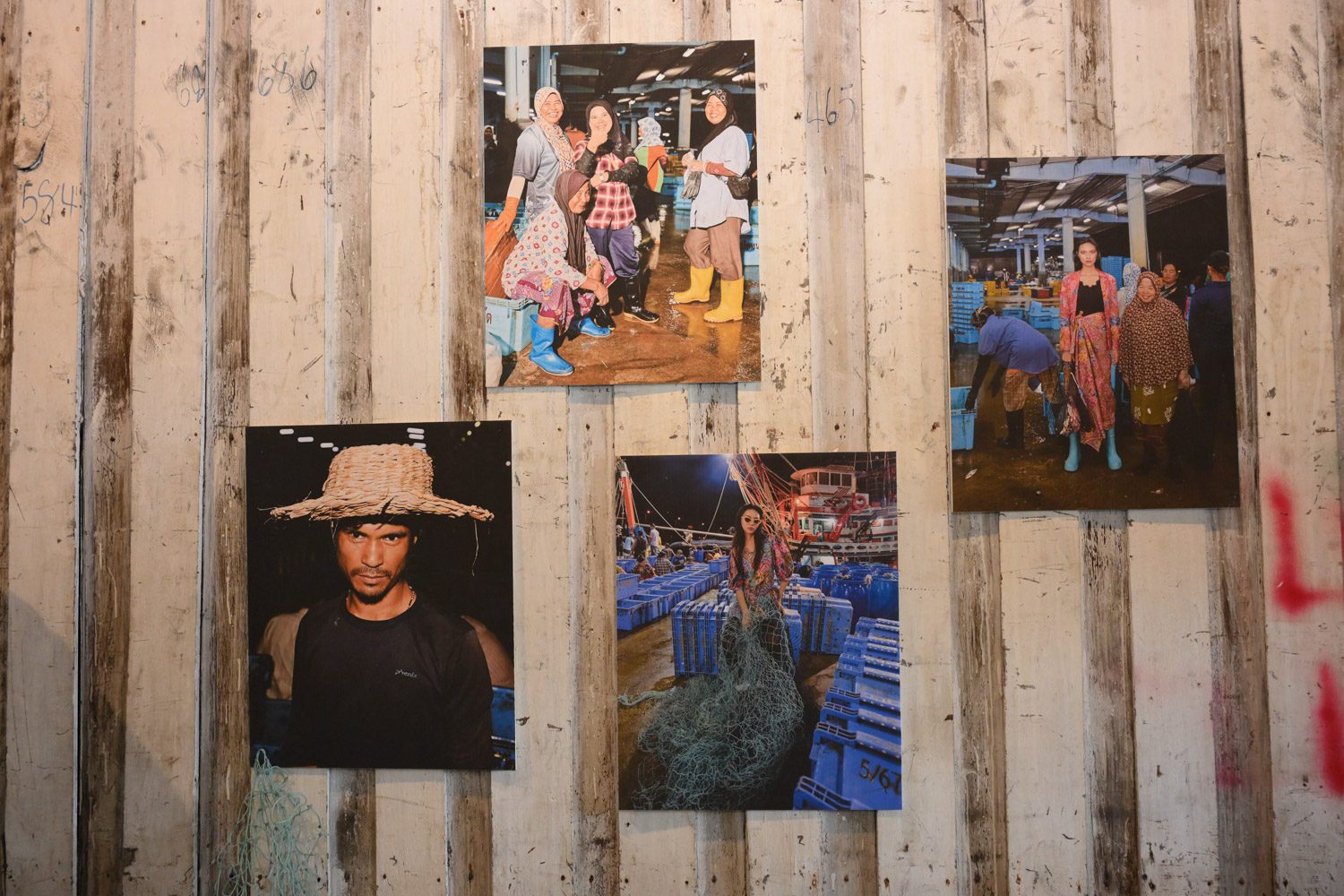
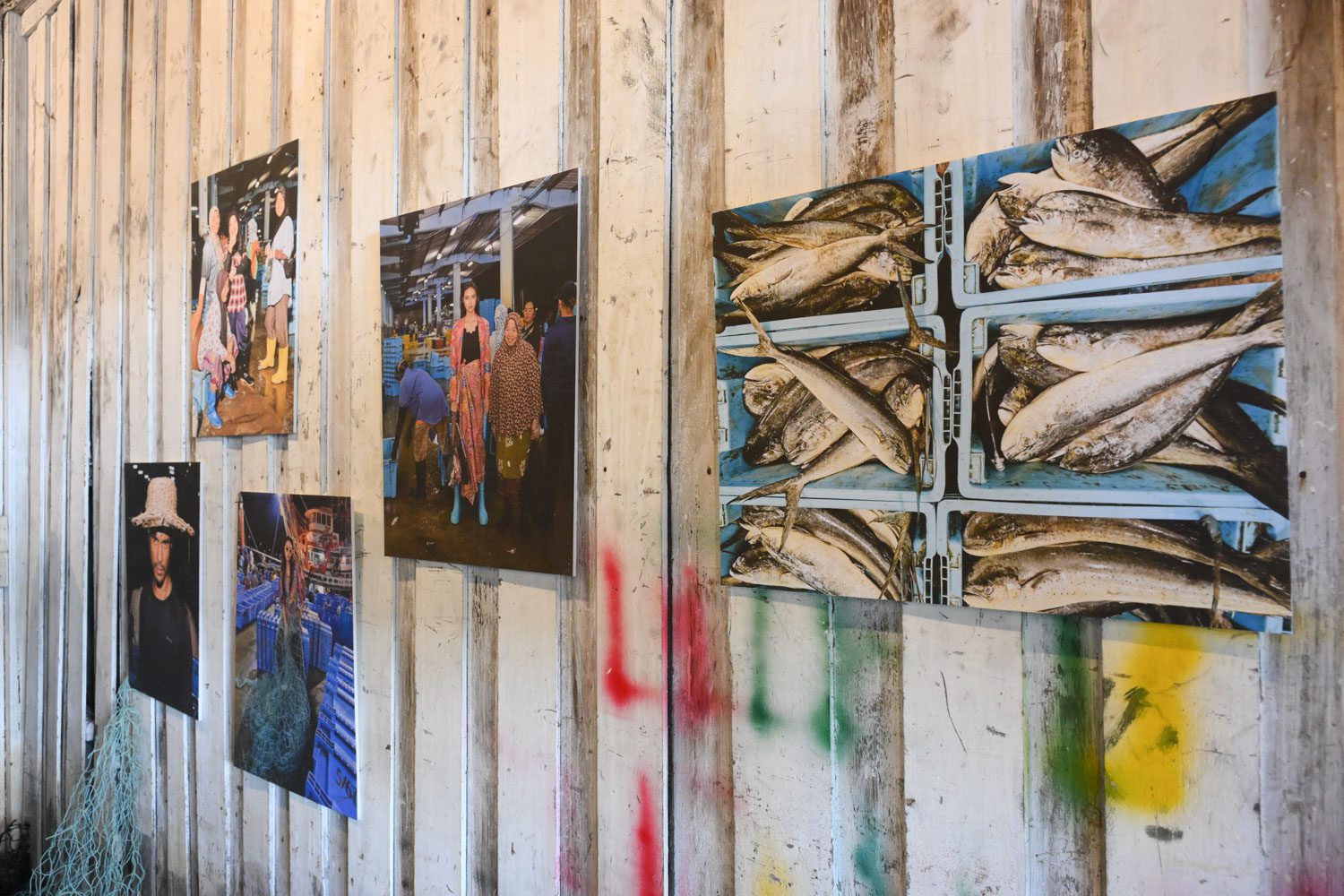
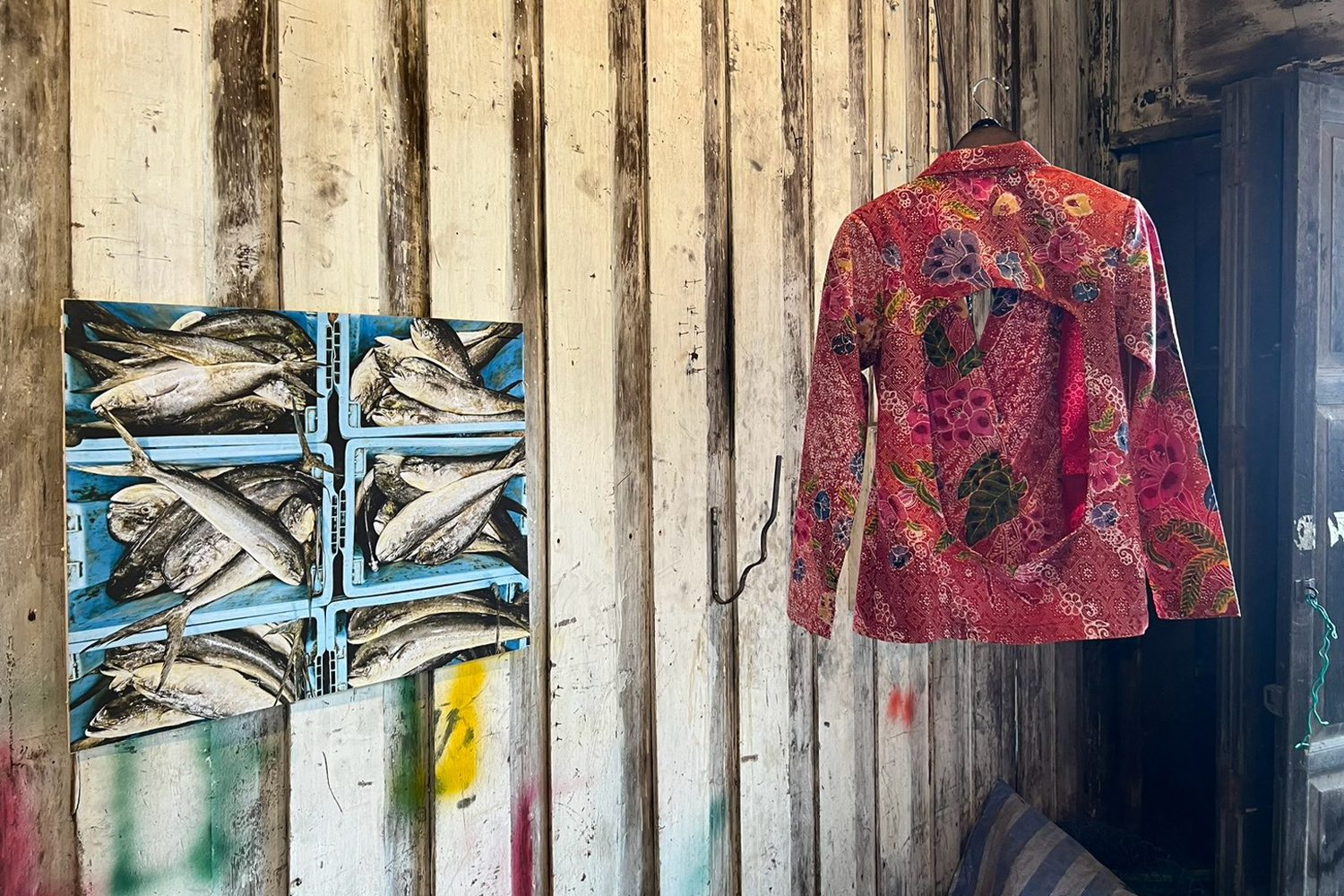
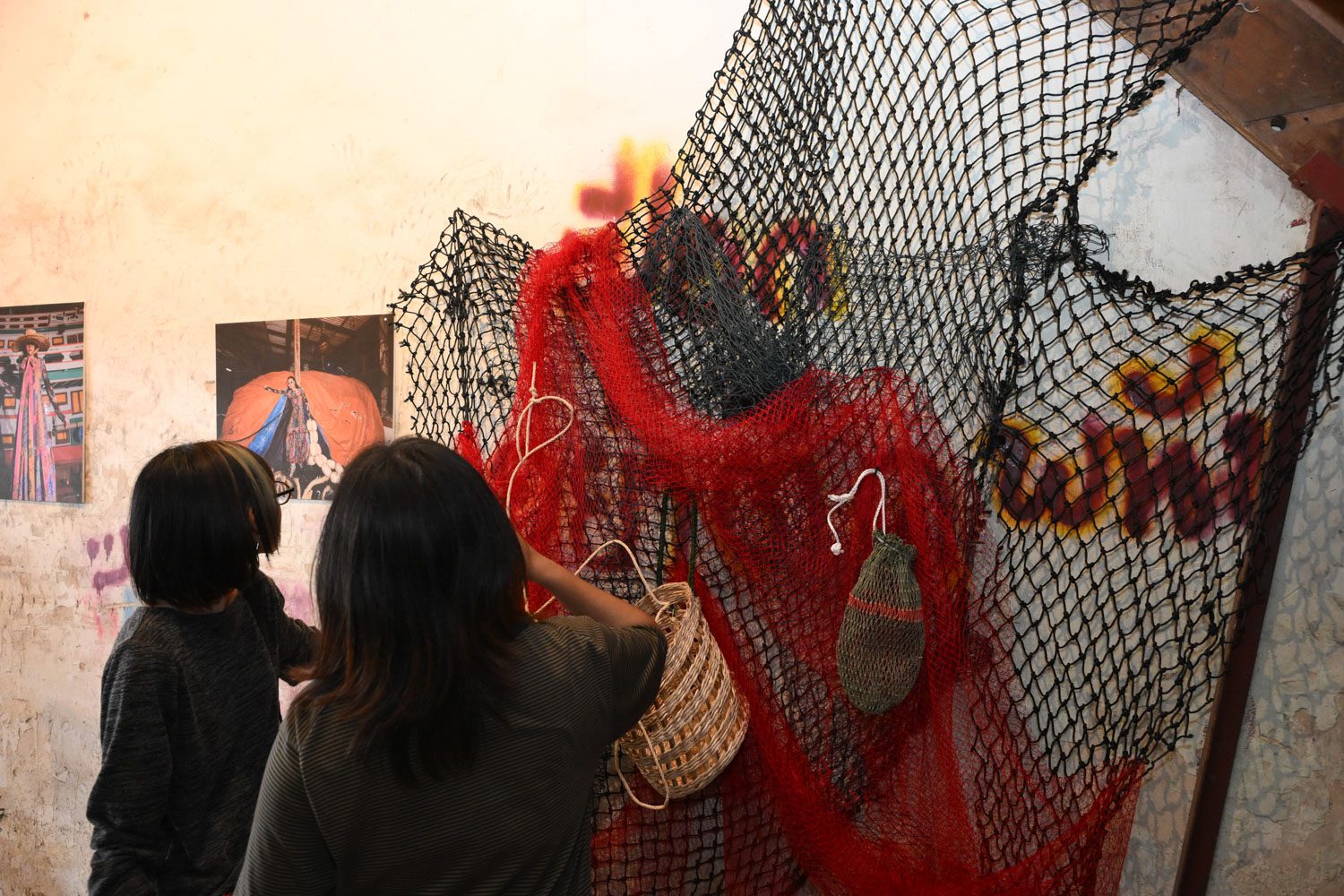
These threads come together in RIVER PEOPLE, a fashion collection accompanied by a photographic series created with Anon Singthongla, also known as SUPERVERYSNAPSHOT. The models were photographed at a fish landing pier in Thailand’s southern border provinces, where the collection’s vivid, bold designs are placed directly within the bustle and texture of everyday life at the fish market. The presentation is accompanied by woven bags made from fibers reclaimed from used fishing nets, developed through a collaboration between the Ban Nam Sai community group in Mayo District, Pattani, and Ramai, a brand based in Yala. Together, the works demonstrate how material once discarded along the waterfront can be recast as contemporary design, extending its value beyond the object itself to generate new possibilities for the local economy.
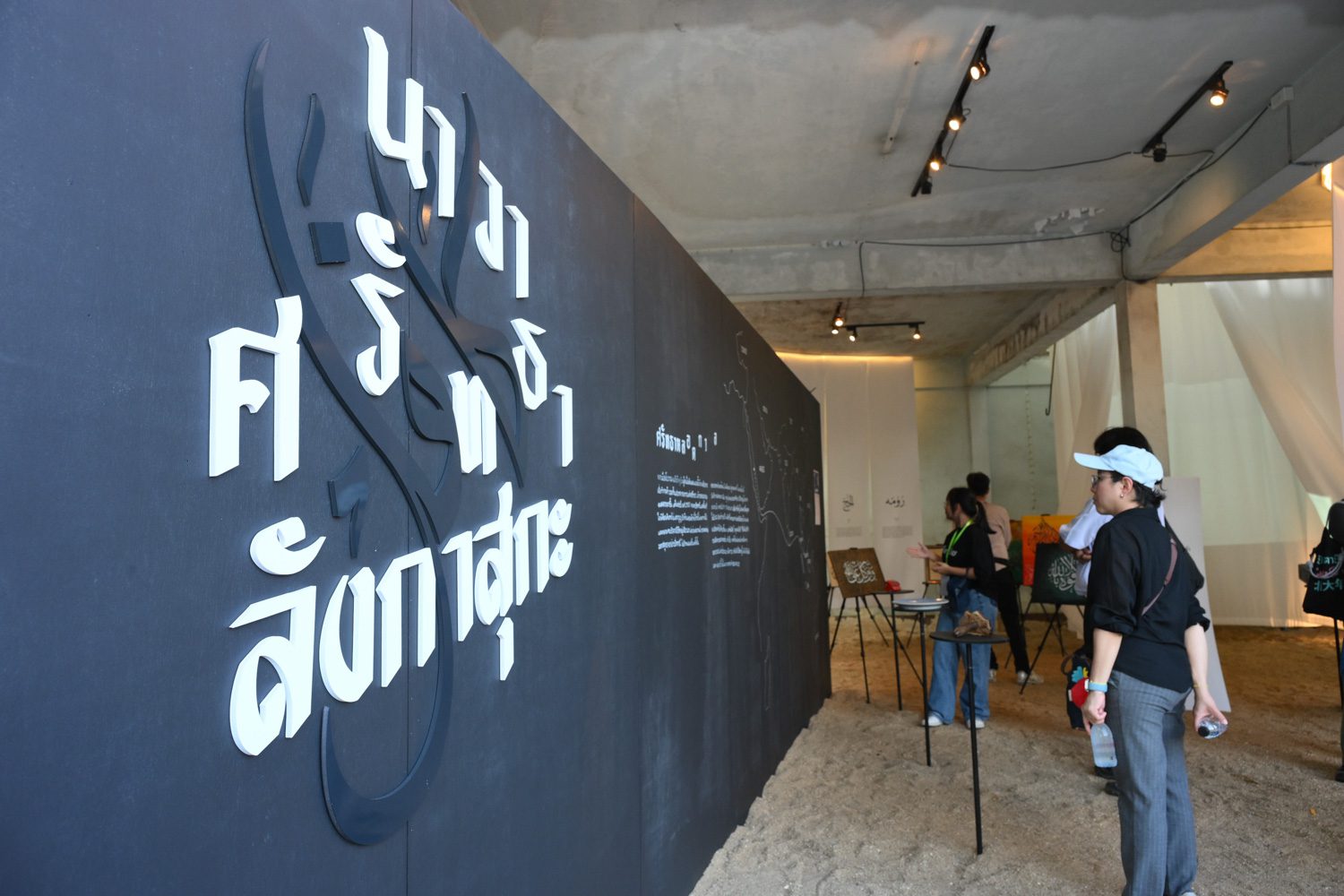
Nava Srattha Langkasuka
at Nawa House
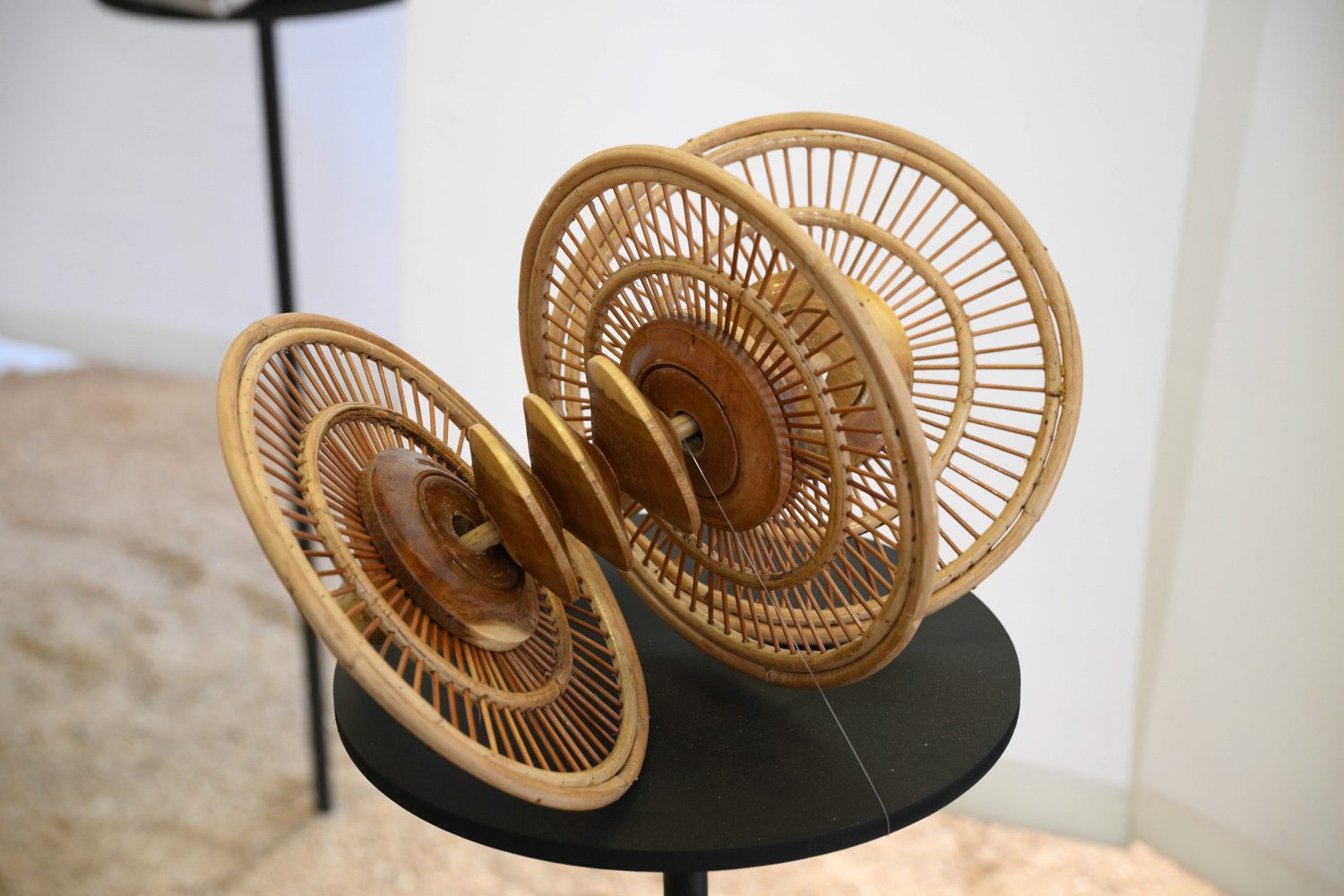
Set on a bed of sand within an old building, the exhibition takes us back more than a millennium, tracing Pattani’s deep-rooted history through archaeological remains from Yarang Ancient City. The site is widely associated with the once-flourishing Langkasuka Kingdom, which preceded the establishment of the Patani Sultanate. Together, these historical traces evoke Pattani as an important maritime crossroads, where civilizations from India, China, and Persia converged through networks of trade, drawn in part by the search for aromatic woods and spices whose value extended beyond commerce into the realm of ritual and belief.
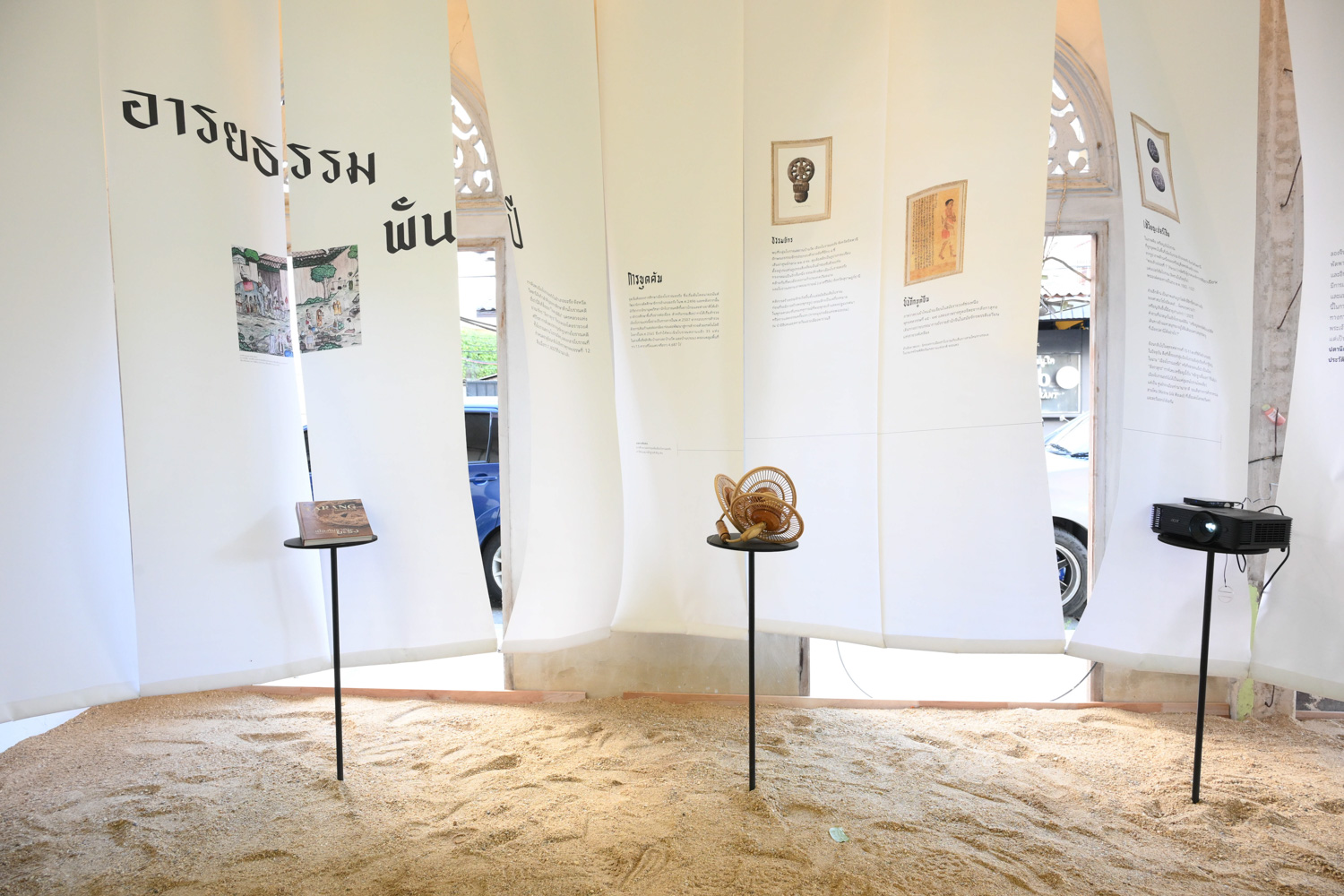
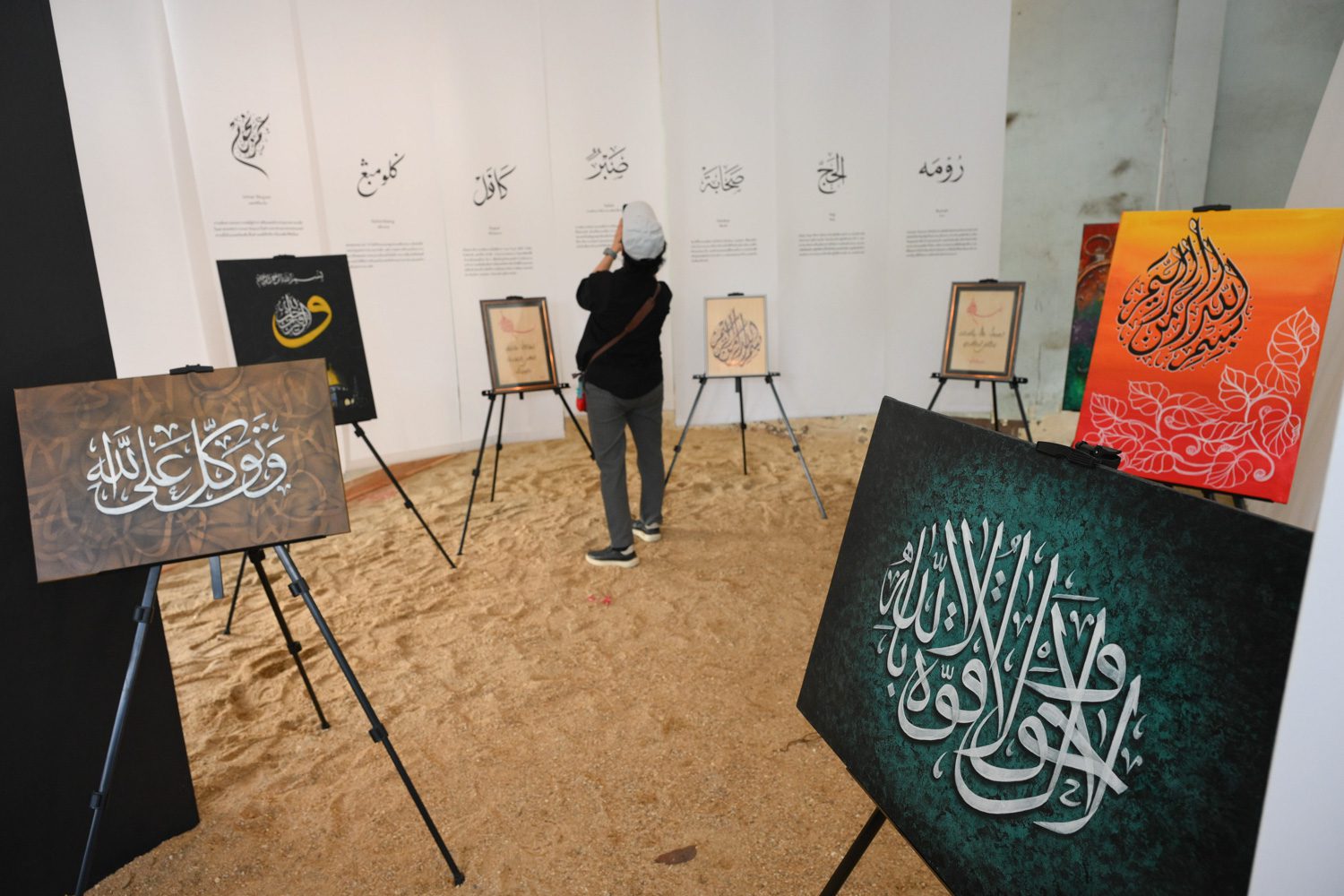
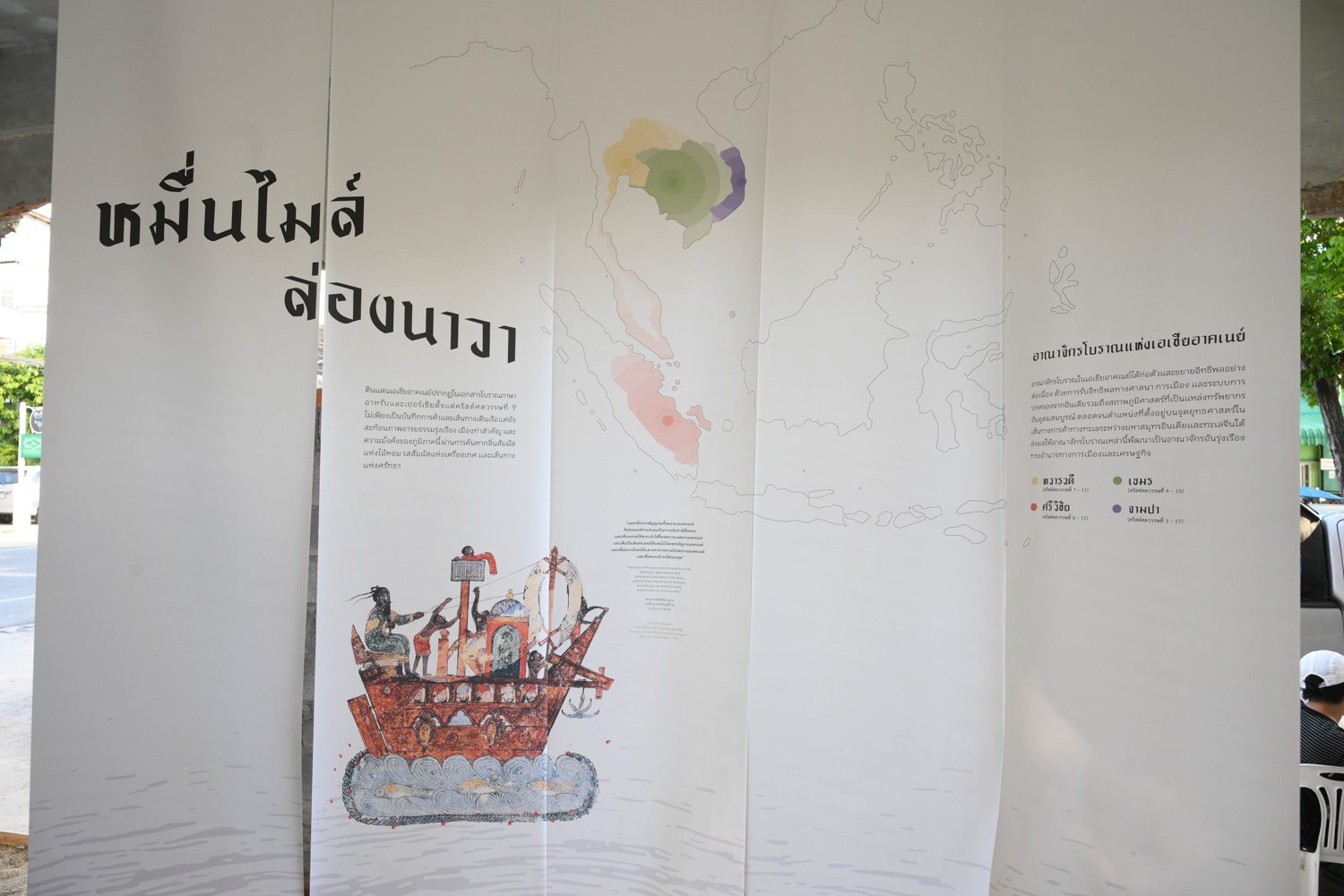
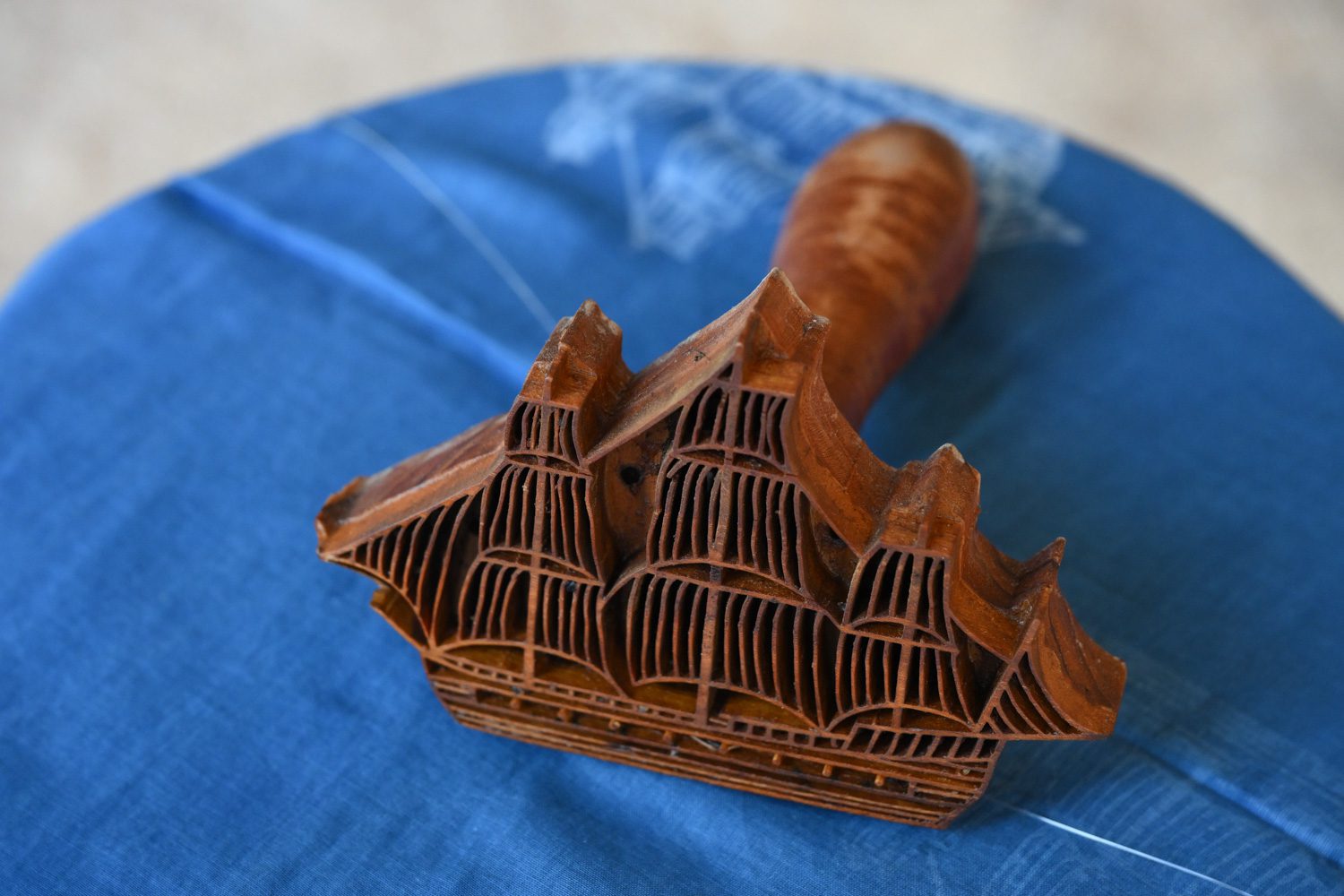
Memories carried across the waves continued to accumulate into more recent history. Around the late 1950s, Pattani Bay served as a point of departure for major pilgrimages undertaken by people from the region, who embarked from local waters and journeyed toward the Red Sea to perform the Hajj. These voyages left behind stories of extraordinary journeys that remain alive today, passed down through the recollections and oral accounts of those who lived close enough to remember them.
Scattered throughout the exhibition are an assortment of modest objects, fragments, and archival traces. Like pieces of a larger puzzle, they invite the imagination to fill in what history can no longer show in full, gradually bringing into view a vivid impression of Pattani’s prosperity and far-reaching connections in earlier times.
Wit Pimkanchanapong
MYARAB
by Wit Pimkanchanapong
at Pakistan Mosque Garden
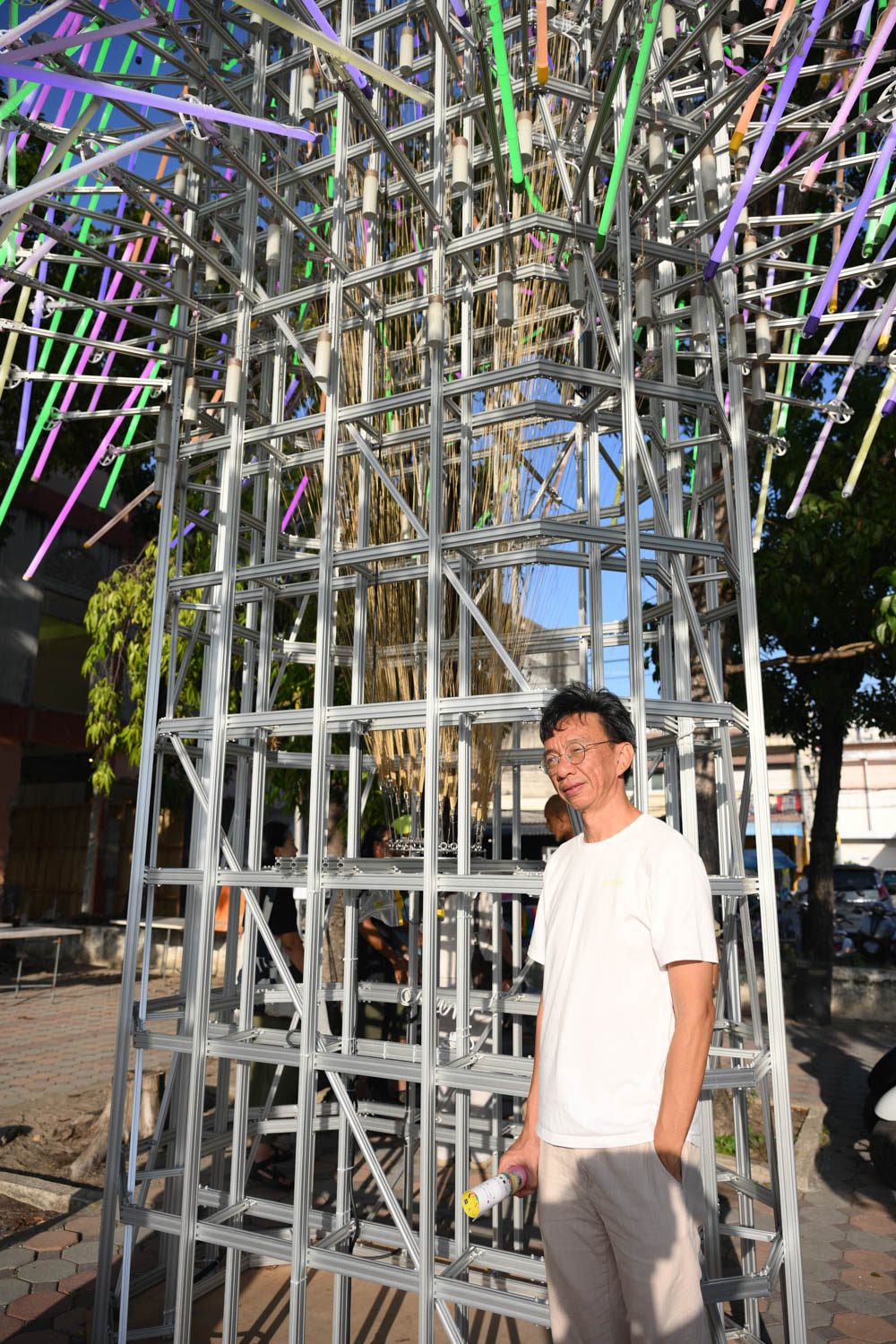
A clear, birdlike chirping carries through the air not far from Nawa House. In the small garden fronting the adjacent Pakistan Mosque stands MYARAB, its title referring to mai yarap, the sensitive plant whose leaves fold inward at the slightest touch. The kinetic installation by Wit Pimkanchanapong develops an idea that can be traced back to some of his earliest works: a lightweight constellation of geometric components suspended and interconnected in midair, contracting and unfurling in rhythmic sequence as tension travels through a network of cords. Their movement recalls the responsive leaves of the sensitive plant, closing and opening as though animated by touch. For this iteration, Wit has also pared back the work’s reliance on electricity, moving deliberately toward a more analog mechanism in which a single motor sets the entire system of cords in motion.
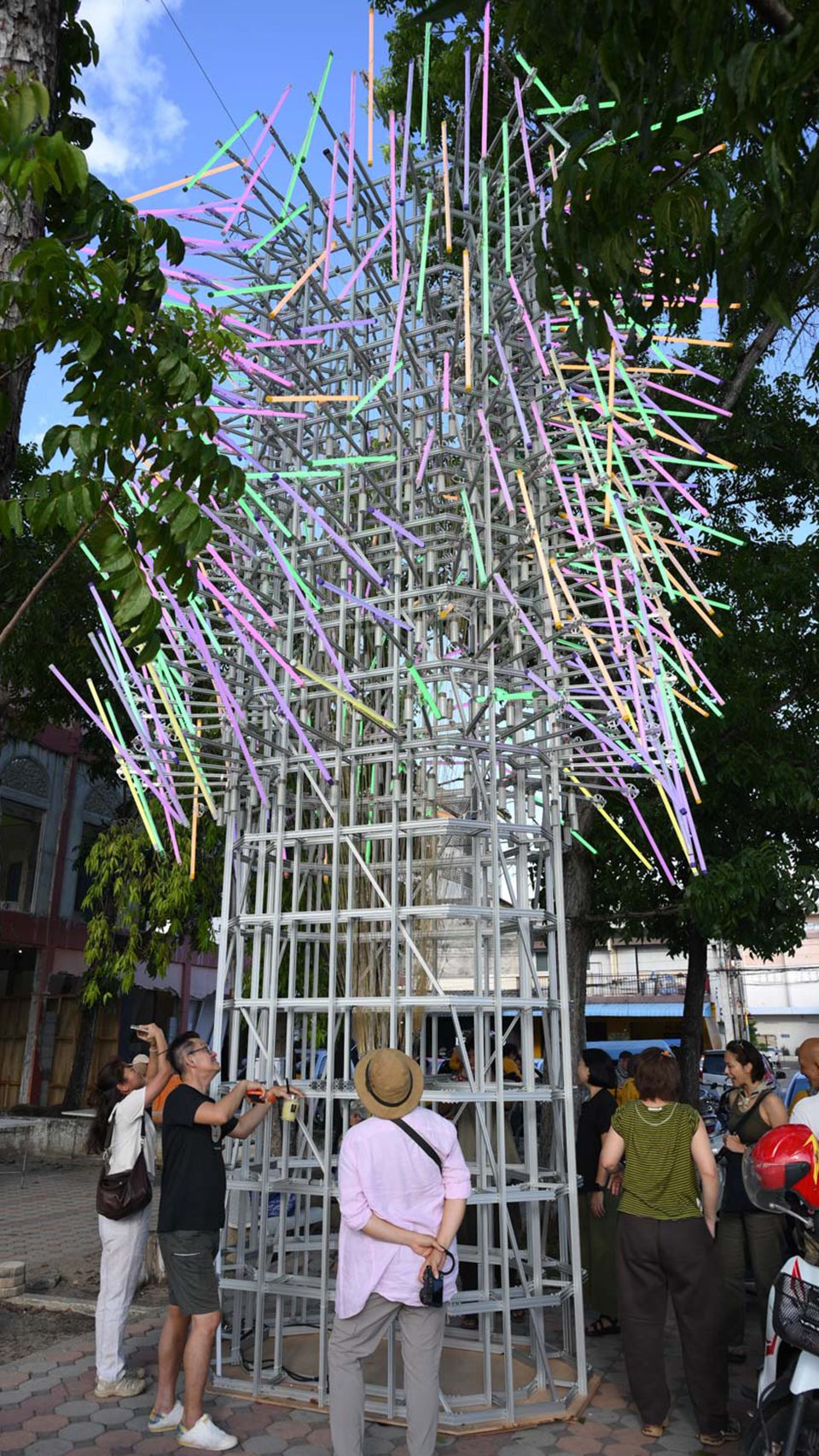
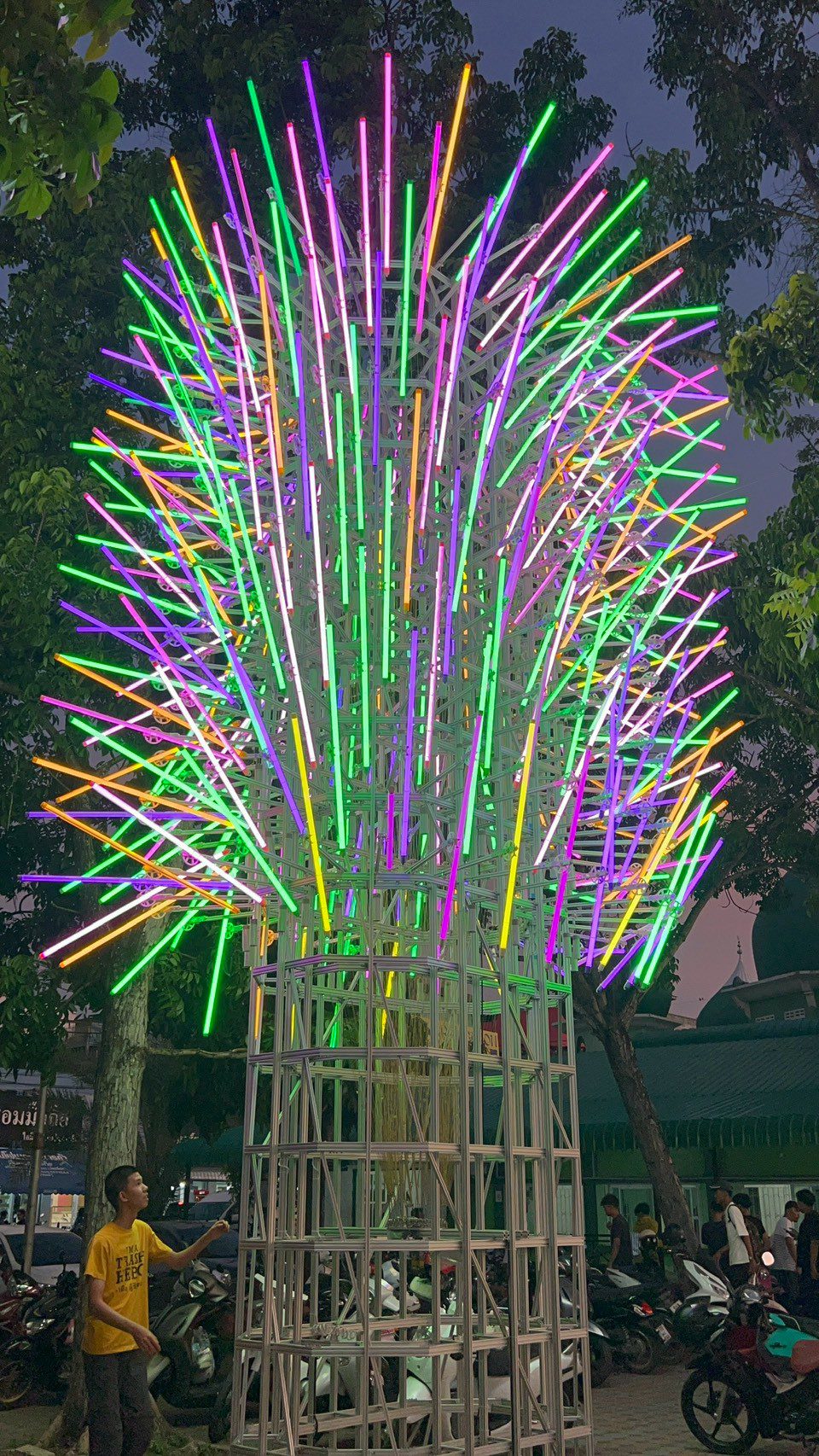
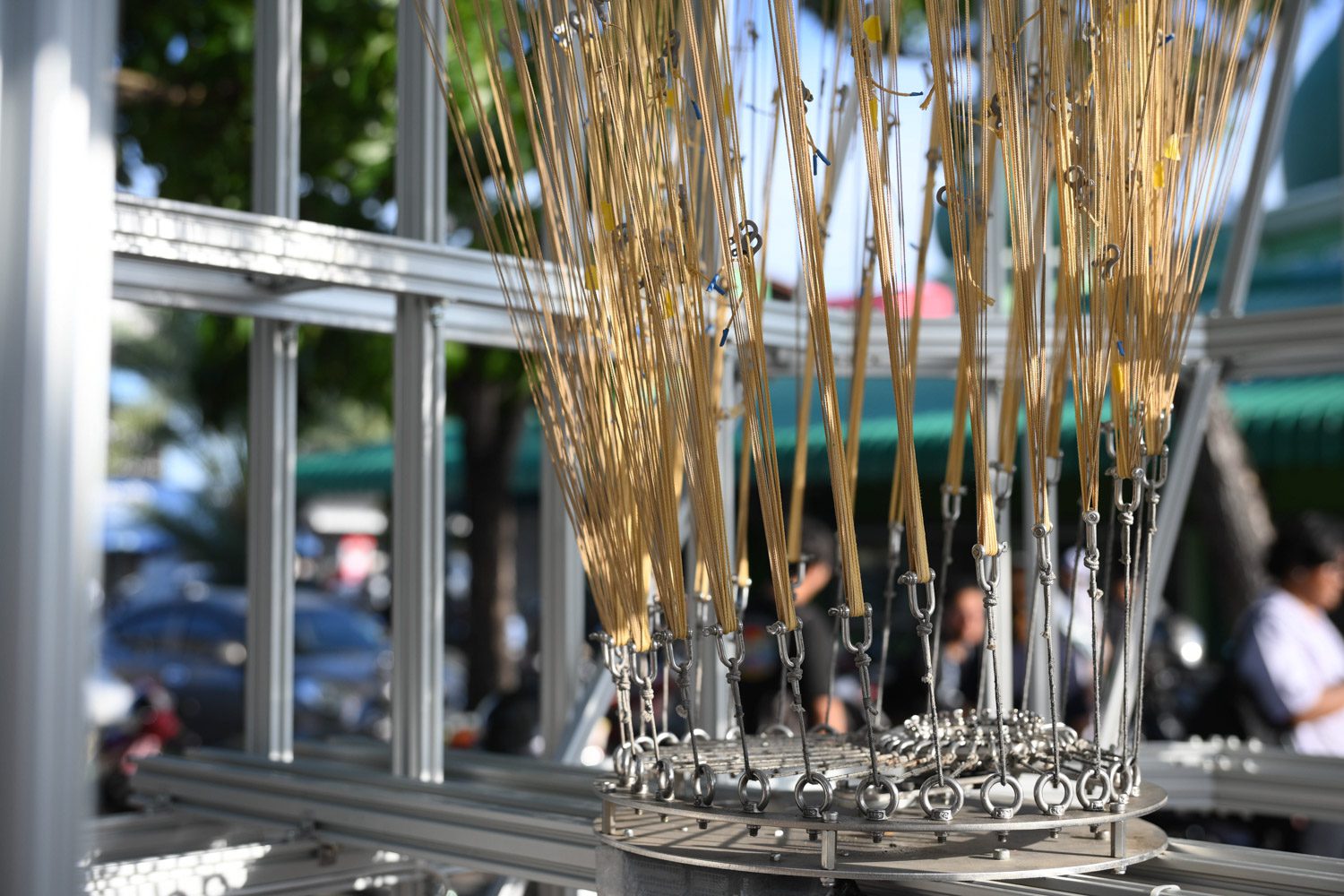
MYARAB has previously appeared in an enclosed setting, notably at the former New World Department Store. Installed here on the banks of the Pattani River, however, the work enters a very different field of experimentation, exposed directly to shifting sunlight and natural wind rather than being insulated from them. The site introduces another, less visible layer. The garden where MYARAB now stands was once a pier from which local pilgrims departed by boat to undertake the Hajj, a history that may have gradually receded from collective memory. The coincidence is particularly resonant given that the work itself is due to travel onward to Riyadh, Saudi Arabia. Faith, history, and cross-border movement are thus layered within this site, producing a particularly compelling convergence of meanings.
Emsophian Benjametha
LAUT DAMAI
by Emsophian Benjametha
at Whale House
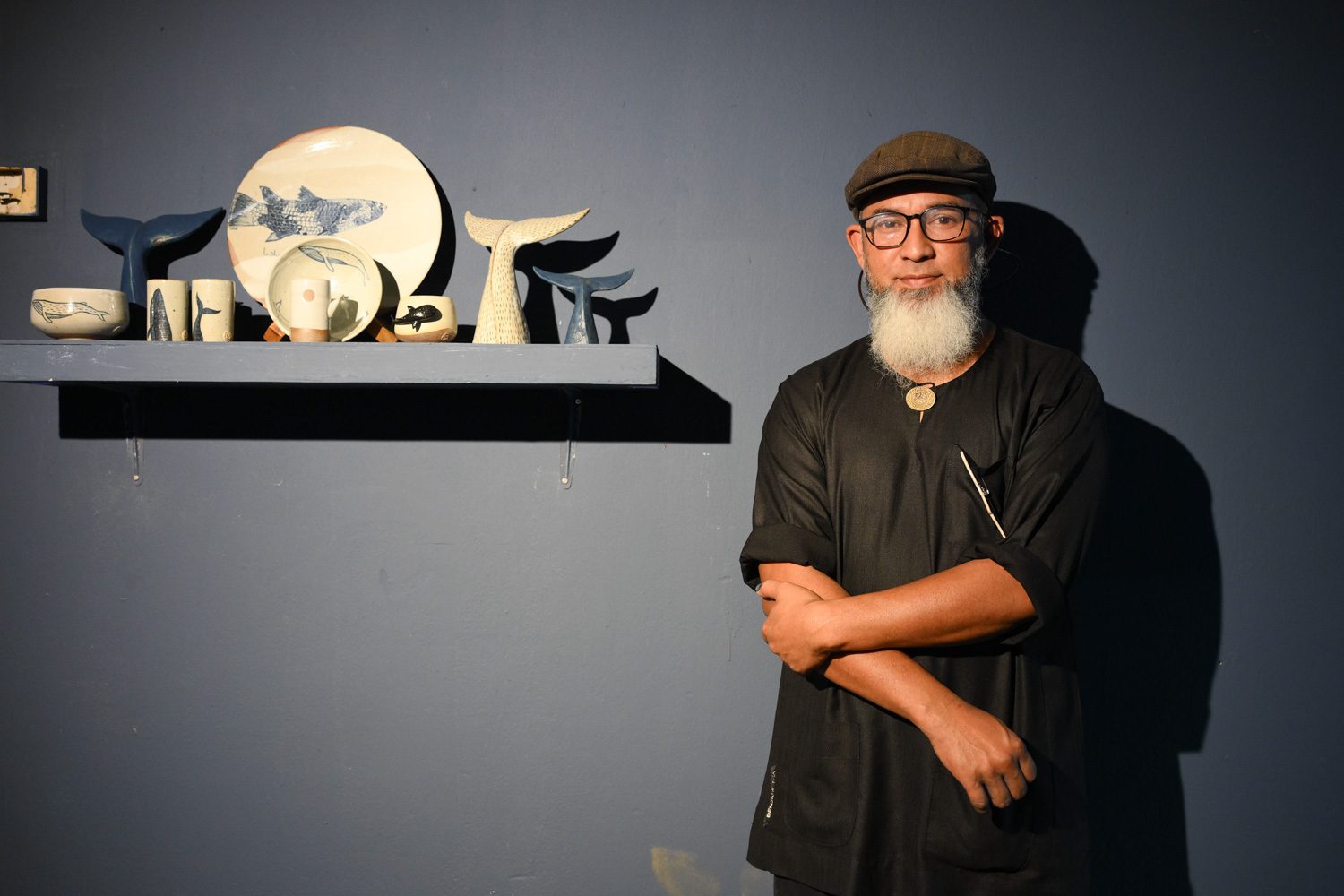
Laut Damai, or Ocean of Peace, begins with a simple observation: within the vastness of the deep sea, countless species move according to their own rhythms and patterns of behavior. Some travel alone; others gather in great schools. Human life, by contrast, is often measured against a common standard, leaving many people feeling disoriented or estranged simply because they are trying to grow within environments that were never truly their own.
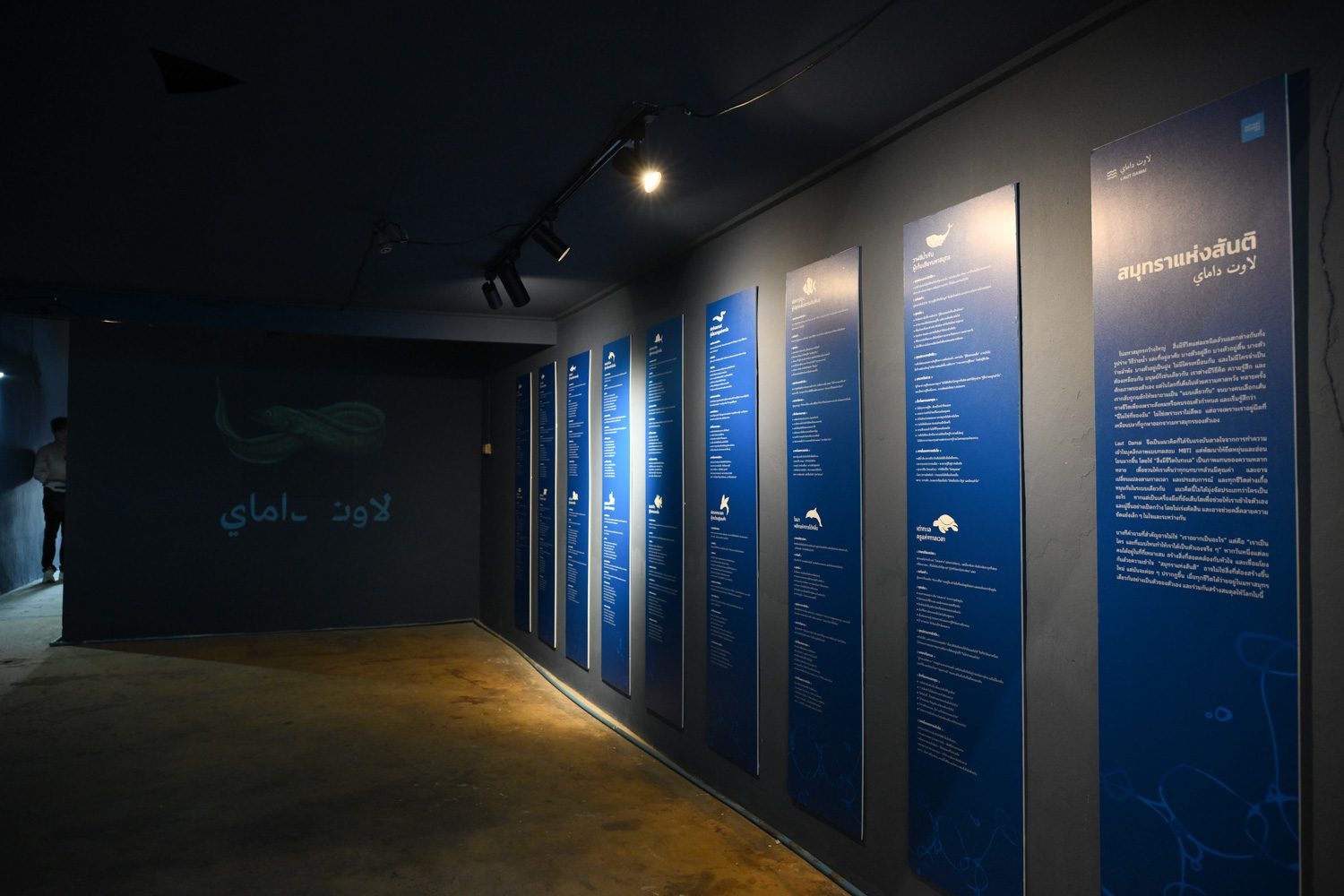
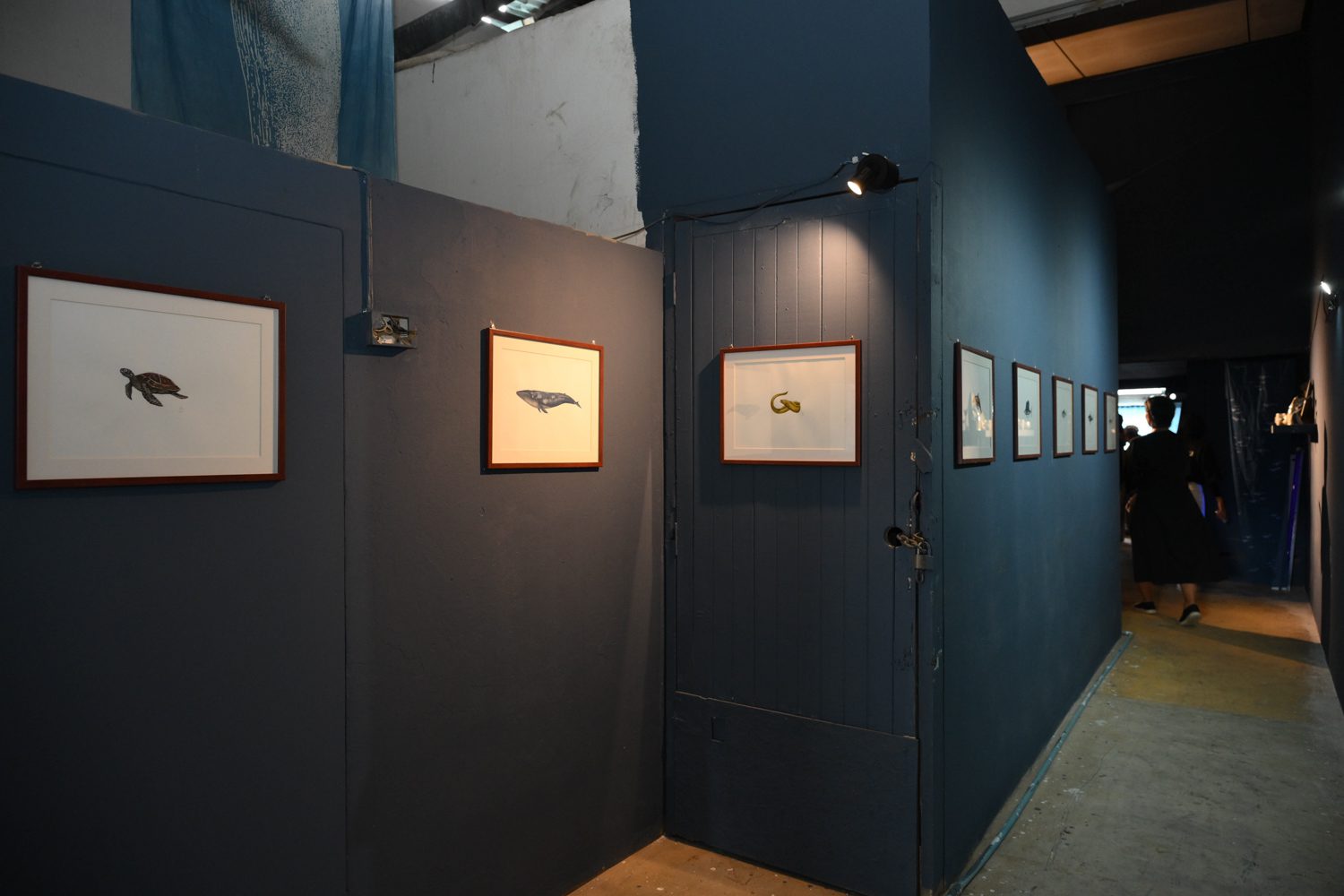
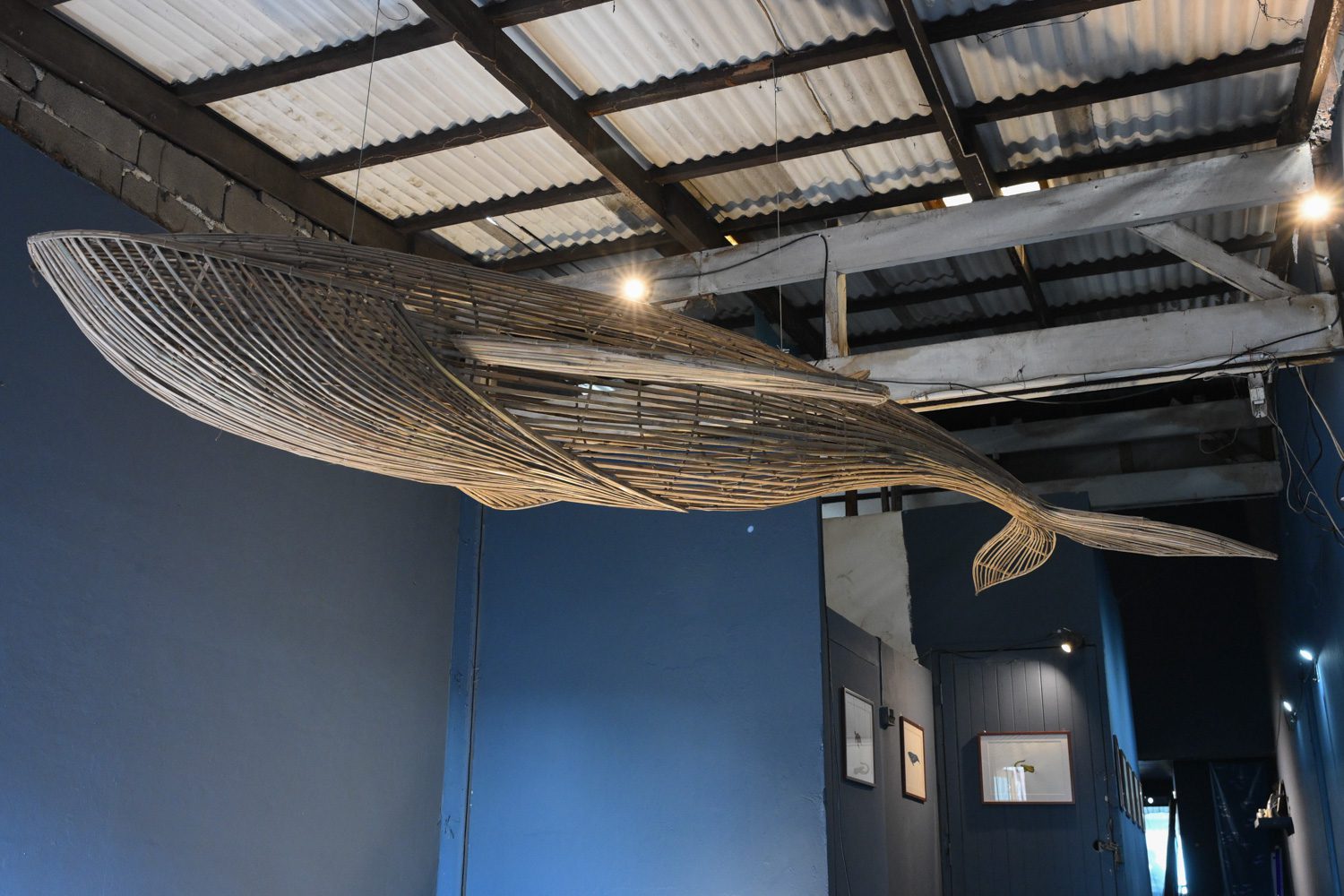
The exhibition reinterprets the MBTI personality framework as a more open and approachable method, using marine animals as metaphors for the diversity found in nature. Conceived as a tool for self-reflection rather than categorization, the project invites visitors to embrace difference, resist the impulse to judge too quickly, and seek out the conditions in which they can inhabit their own identities more fully. An online questionnaire at lautdamai.com allows each visitor to discover the marine creature that most closely reflects their personality.
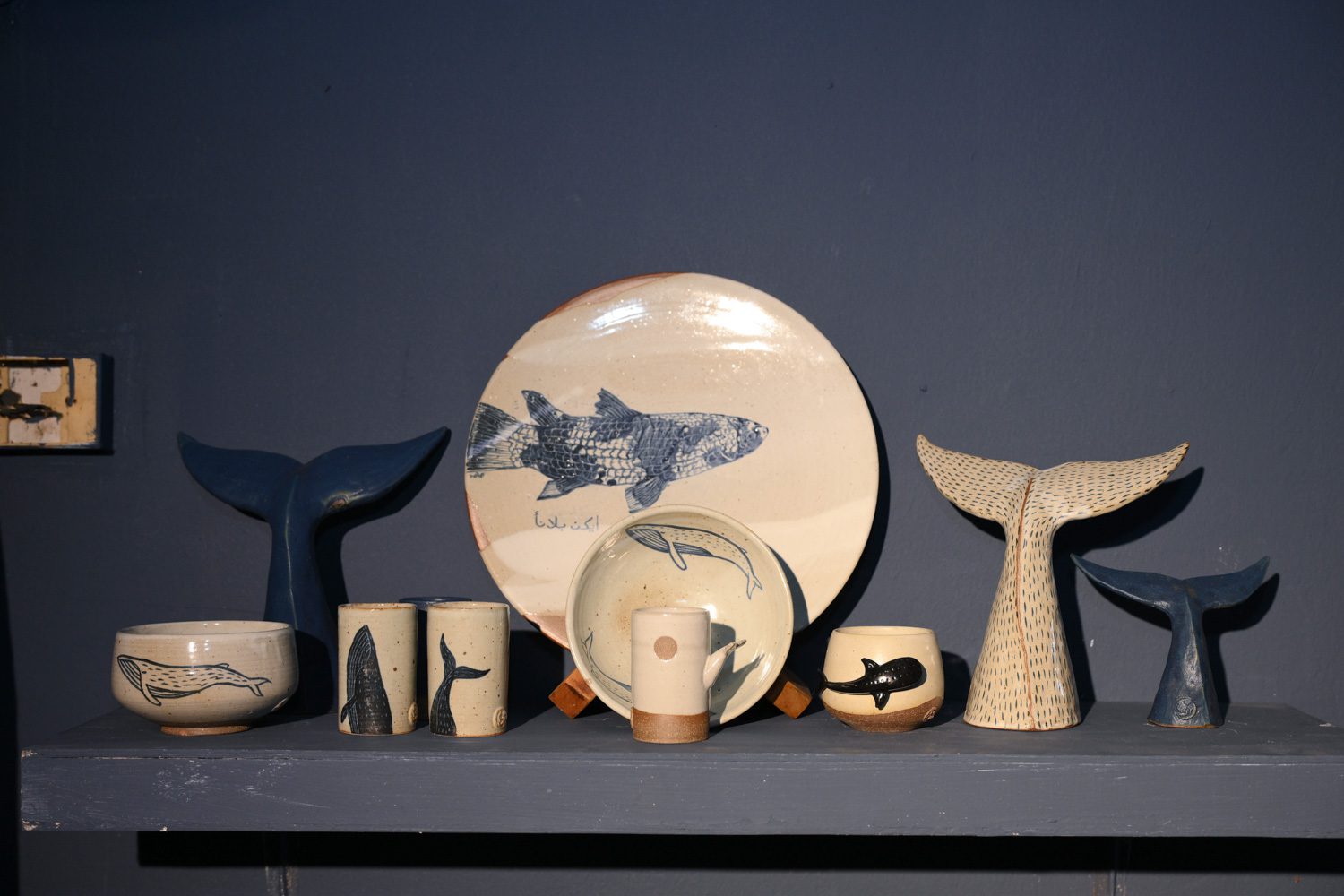
This premise extends into the interior of Whale House, where an underwater atmosphere is constructed through subdued aquatic sounds, deep yet restful shades of blue and navy, and playful illustrations of whales, moray eels, and other sea creatures, accompanied by ceramic works from Benjametha Ceramic. The idea of plurality is developed further through the Laut Damai Shadow Puppet Tale, a narrative performance that uses light and shadow to evoke the ecology of the sea. Children, young people, and other visitors are invited to work through inner tensions alongside the story and to consider a broader proposition: when each individual is able to move within an environment suited to them, while learning to coexist and support others, peace need not remain a distant ideal. It can emerge naturally when different forms of life are allowed to flourish on their own terms within the same ocean, the ocean we call the world.
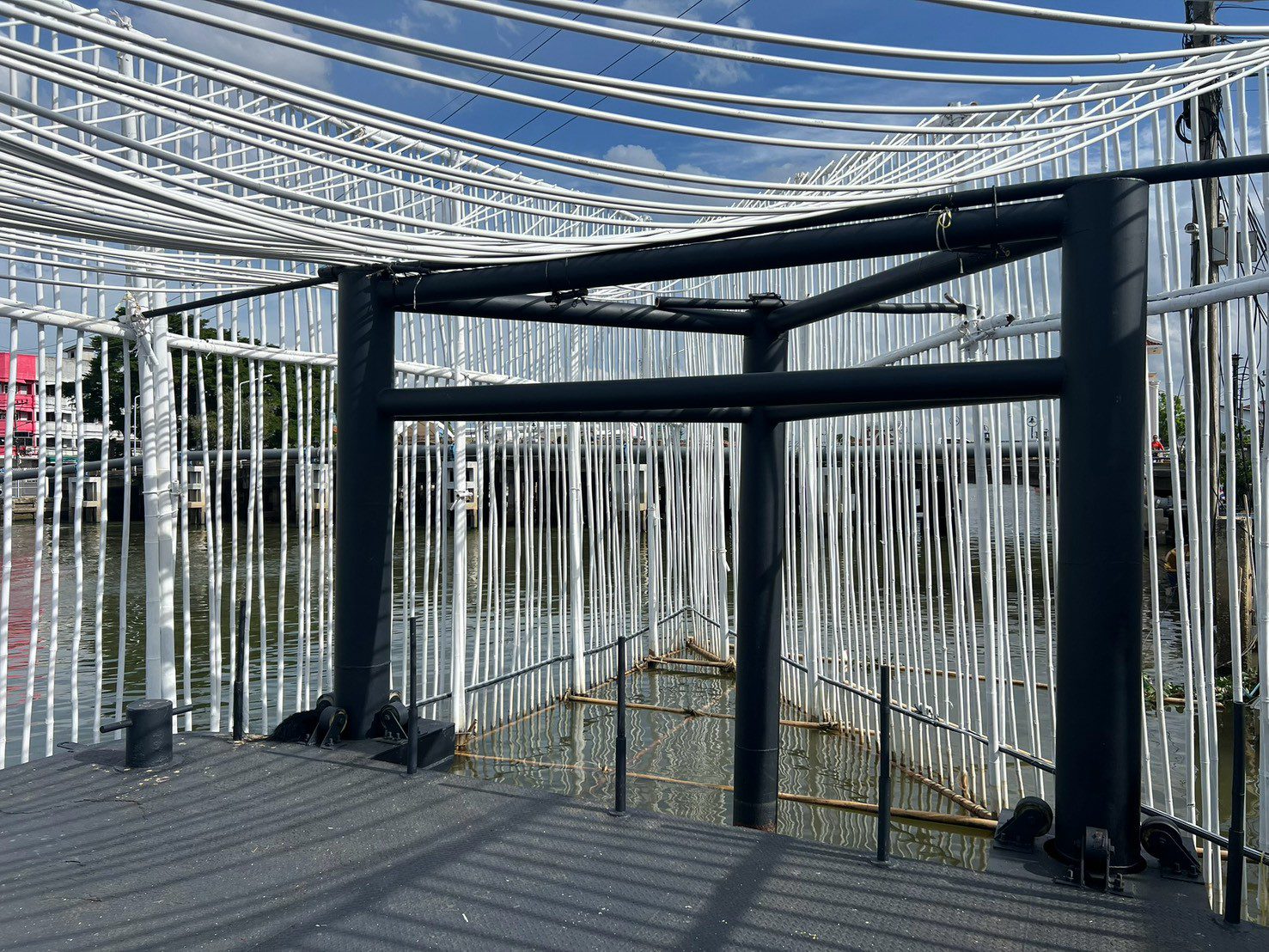
Photo: Sarunkorn Arthan
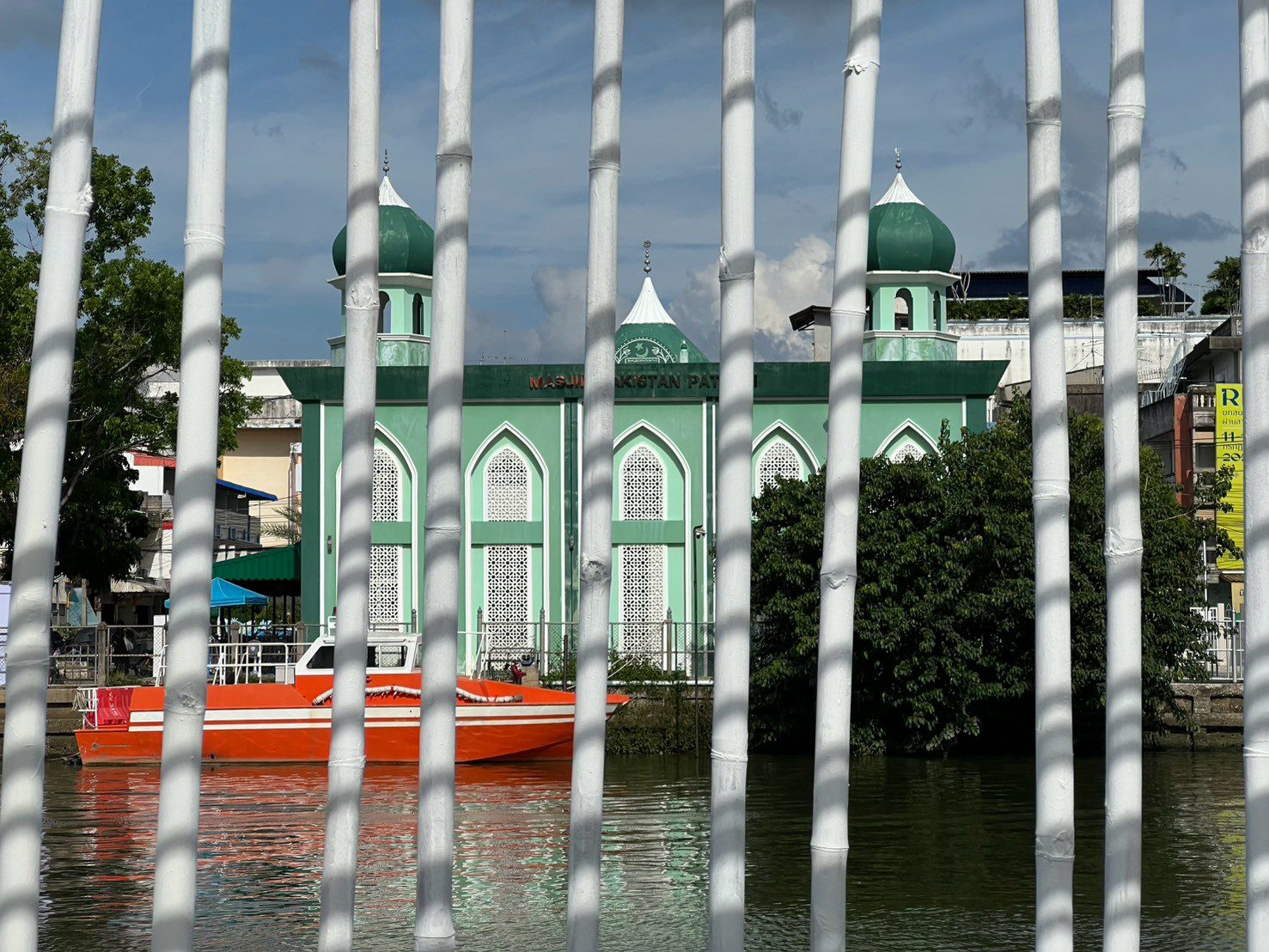
Photo: Sarunkorn Arthan
Beyond these five featured projects, Pattani Decoded 2026 offered numerous other works and encounters worth seeking out. Among them were demonstrations of Khat, the art of Arabic calligraphy, by Nurhayatee Wado, and the Pattani Fisherman Community Hub, a pavilion by Jenchieh Hung + Kulthida Songkittipakdee / HAS design and research that brought visitors into closer contact with the Pattani River. Together with the many other works dispersed throughout the festival, they underscored something already implicit in this year’s return of Pattani Decoded: the river continues to sustain not only the communities along its banks, but also new stories, interpretations, and possibilities. Design, in turn, becomes a means of carrying that conversation between the city and its people forward, keeping it in motion and alive.
Pattani Decoded 2026 was held from July 11–19, 2026, in Pattani Old Town, Mueang Pattani District, Pattani Province.