
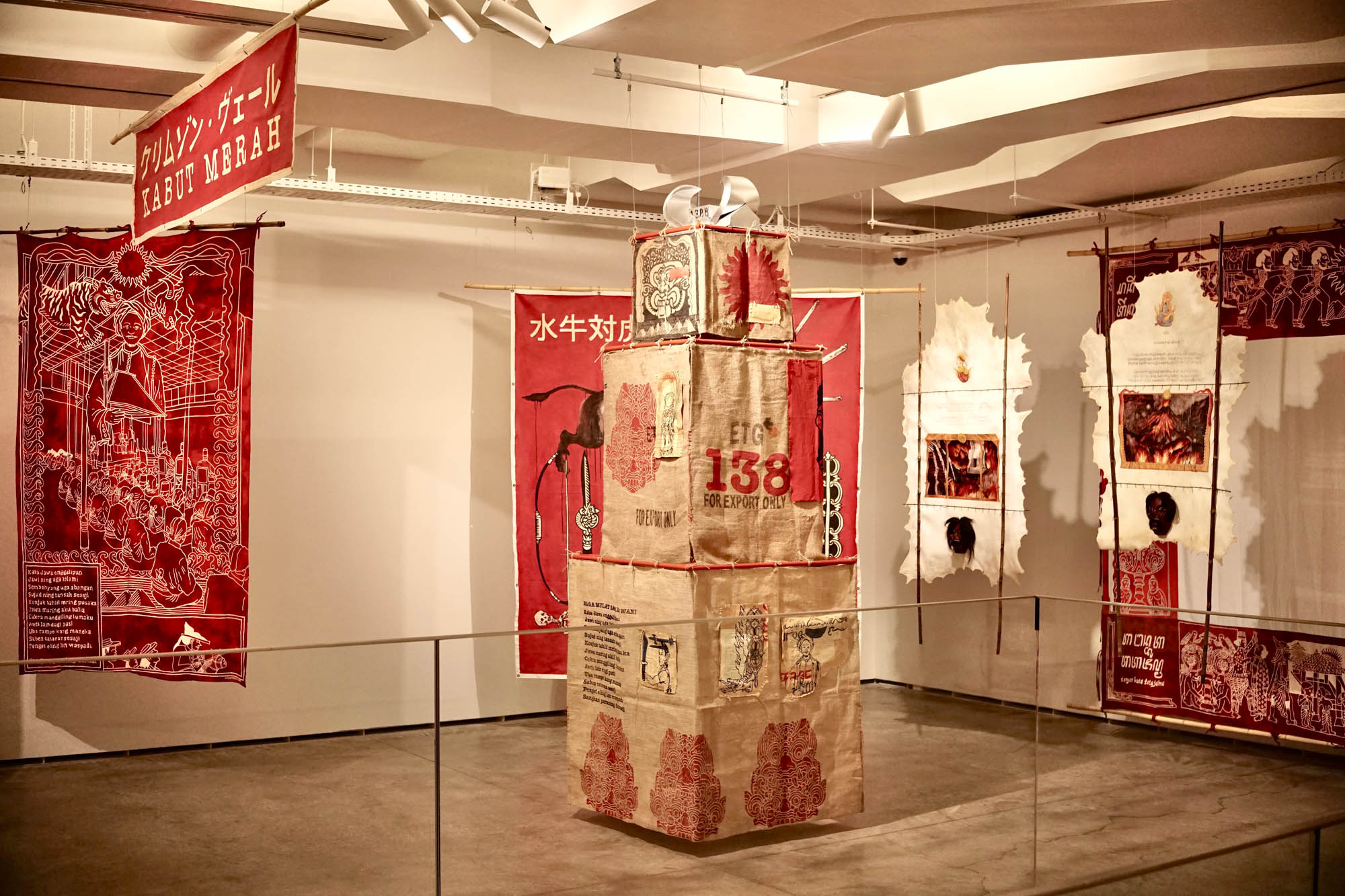
 GEGERBOYO, Crimson Veil, 2024
WEAVING ASIA’S STORIES INTO A SHARED TAPESTRY, 2026 ASIAN ART BIENNIAL BRINGS TOGETHER ART, MEMORIES, AND DIVERSE VOICES IN A SPACE OF CULTURAL CONNECTION
TEXT: THAN DEESAMER
PHOTO COURTESY OF 2026 ASIAN ART BIENNIAL
(For Thai, press here)
Mark your calendar for one of the major art events of late 2026 as the 10th edition of the Asian Art Biennial returns to the National Taiwan Museum of Fine Arts (NTMoFA) in Taichung, Taiwan. This year’s exhibition invites audiences to reimagine the meaning of ‘Asia’ through the interconnected threads of relationships, cultures, and communities.

Labay Eyong, Weaving Mountain, 2024
Against the backdrop of a rapidly changing world, the 2026 Asian Art Biennial turns once again to cultural roots under the theme ‘Mrahul Tminun · 共織 · Co-Weaving,’ which evokes the image of people coming together to weave a piece of fabric collectively. The term ‘Mrahul Tminun’ originates from the Truku language, spoken by the Truku (Taroko) Indigenous people of Taiwan, and conveys the warmth of people gathering to create something together through the act of weaving.

Labay Eyong, Weaving Ocean, 2023
One of the defining aspects of this edition is its commitment to bringing together artists from diverse backgrounds and amplifying the voices of marginalized communities, including women, Indigenous peoples, and queer communities. Through their practices, the exhibition seeks to generate new forms of collective knowledge, or ‘Woven Knowledge,’ within the museum space.
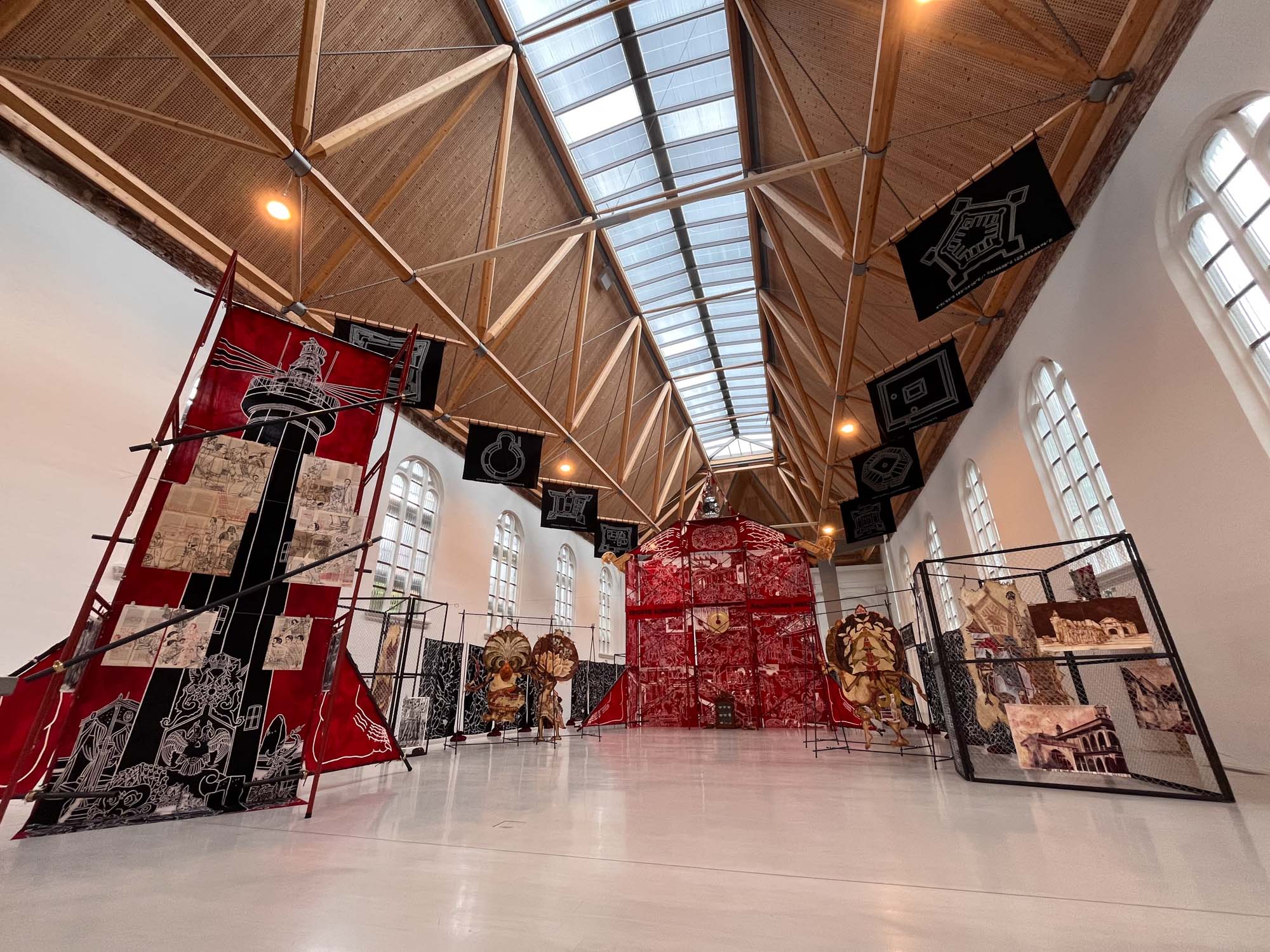
GEGERBOYO, Eroded Borders, 2025
Moving beyond the conventional boundaries of gallery spaces, the exhibition unfolds across a variety of settings. The museum’s central hall serves as a venue for large-scale art installations, while the galleries and shared learning spaces accommodate a diverse range of works, including textiles, embroidery, paintings, archives, videos, and indoor installations. These spaces also host the ‘Co-Learning Project,’ an initiative that encourages collective learning through workshops, discussions, and public programs. Meanwhile, the museum’s outdoor central hall is brought into the exhibition as an often-overlooked space, further challenging the conventional boundaries of the white cube gallery.
The exhibition brings together artists and collectives from across the world, with three featured participants particularly worth looking out for:
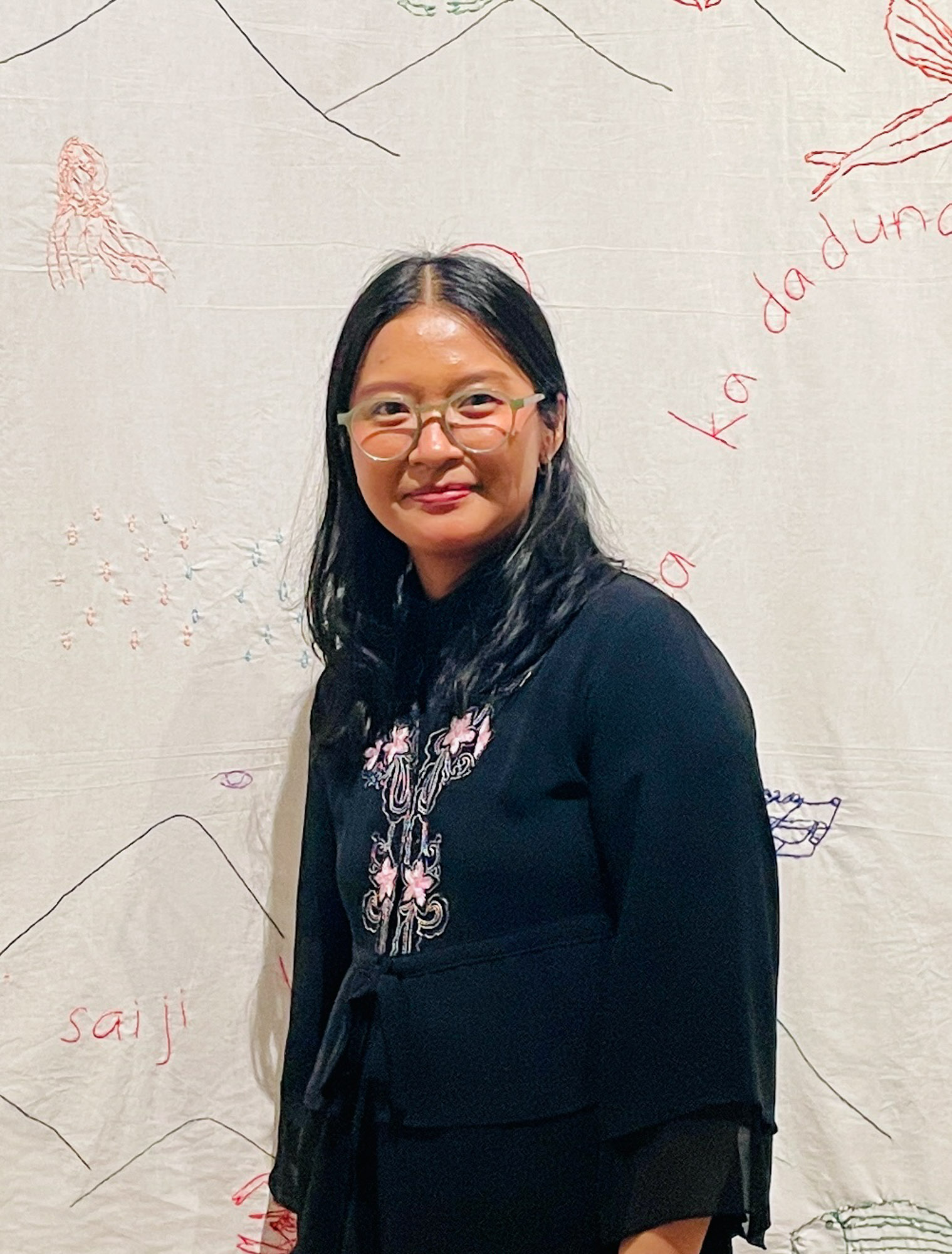
Meita Meilita
Meita Meilita, an Indonesian artist who explores memory and history through embroidery. In her practice, thread becomes a form of archival tool, preserving the voices of women and individuals often overlooked in mainstream historical narratives. For this exhibition, she has conducted field research with the Kebalan Indigenous community in Taiwan, producing embroidered works that incorporate endangered Indigenous words onto fabric as a reflection on cultural continuity and vulnerability.

GEGERBOYO
GEGERBOYO, an Indonesian art collective based in Yogyakarta, works across installation art, batik textiles, and Wayang (traditional puppet theatre). Drawing on the collaborative working methods of Ketoprak, a form of Javanese folk theatre, the collective playfully challenges and critically examines the concept of Gotong Royong (mutual cooperation and shared responsibility), questioning how it has also been used as a means of social control. Their installation takes shape as a ‘monument to psychological wounds.’
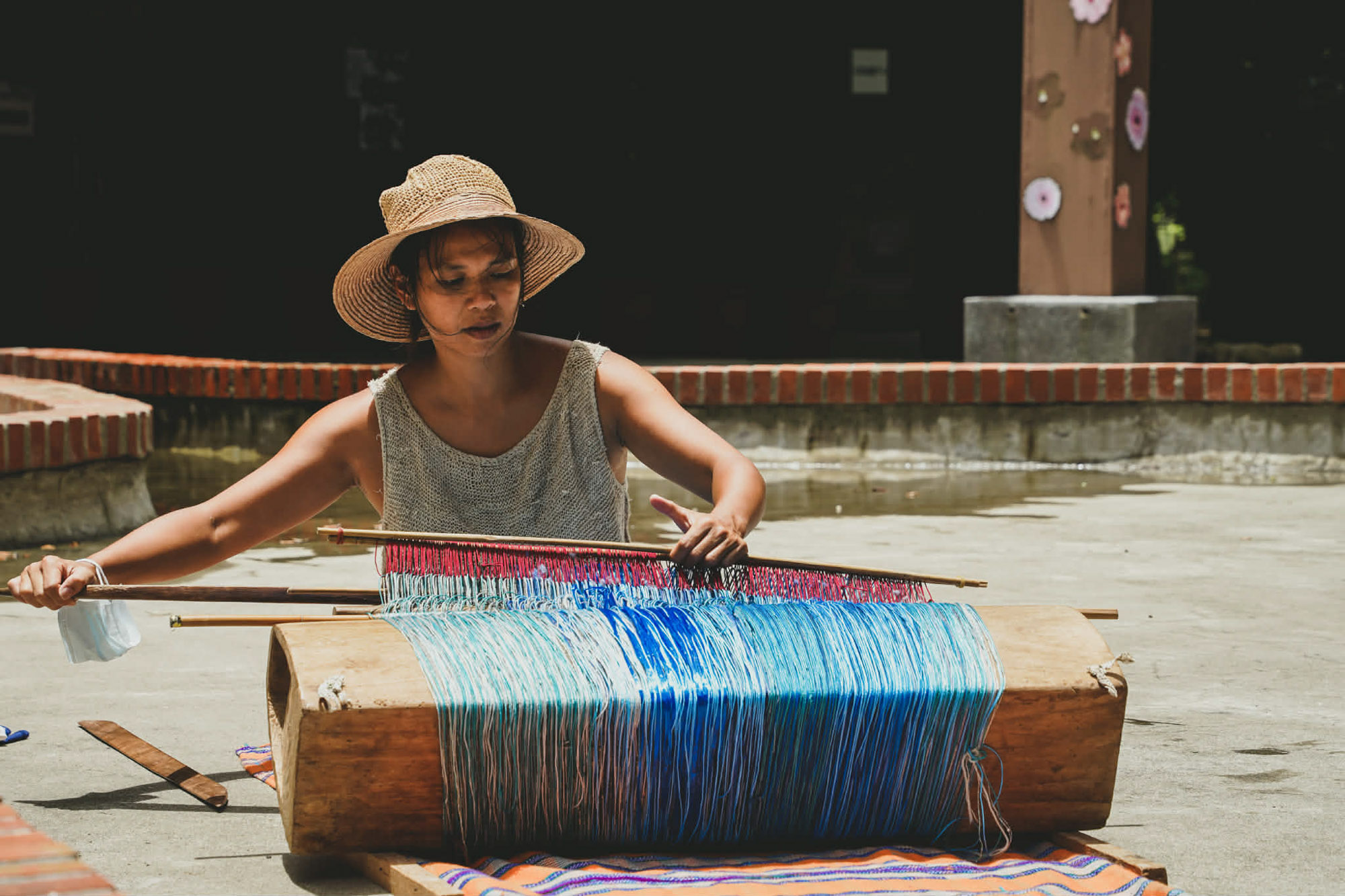
Labay Eyong
Lin Chieh-Wen / Labay Eyong, a Taiwanese Indigenous artist, collaborates with local weavers to create large-scale textile sculptures, including ‘Weaving Ocean’ 〈晒海〉 and ‘Weaving Mountain’ 〈織山〉. Transforming natural landscapes, environmental disasters, and traces of human development into handwoven textiles, her works invite audiences to reconsider humanity’s relationship with nature and the importance of approaching it with humility.
Another highlight, particularly for Thai audiences, is the participation of artists and collectives from Thailand, including Womanifesto, Speedy Grandma, Busui Ajaw, and Phaptawan Suwannakudt. Through their respective practices, they bring forward conversations surrounding women’s labor, independent art culture, community spirit, and cross-cultural memories.
Joining them are more than 30 artists and collectives from across Asia and beyond, including Gudskul, Citra Sasmita, Hylozoic/Desires, Cian Dayrit, Yee I-Lann, and Yamanaka Suplex. Together, they transform the museum into a shared space for exchange, collaboration, and collective learning.

Meita Meilita, Wanai Saiji: The Shape of Being, 2025
The 2026 Asian Art Biennial will take place at the National Taiwan Museum of Fine Arts (NTMoFA) in Taichung, Taiwan, from November 7, 2026, to February 28, 2027. For more information, visit: https://www.ntmofa.gov.tw